Tag: facebook

  • Facebook launches Instagram Lite for improved experience on budget phones

    Facebook launches Instagram Lite for improved experience on budget phones

    Since the start of the COVID-19 pandemic everyone has become strongly dependent on their smartphone and internet connection. While many of us are used to upgrading their phone regularly (even when we might not need to), those in developing countries aren’t as fortunate.

    As you may know, smartphone innovation is mainly driven by hardware, which gets assembled in places like India, Vietnam, Taiwan and more. China is still the main smartphone-making hub, but this is slowly changing, with manufacturers like Samsung and Apple moving production away to other Asian countries mostly for economic reasons.

    While hardware is an asset, which involves a number of stakeholders, software is much easier to distribute. it can reach many more people, much quicker. That’s exactly what Facebook’s team is trying to achieve with the introduction of Instagram Lite.

    In a nutshell, this is a less demanding version of the Instagram app, which happens to cut only a few corners. Why? Well… not every country boasts yearly deals on the latest smartphones with unlimited data plans. Moreover, Apple simply isn’t a brand that fits everyone’s economic status. Brands like Xiaomi, VIvo and Oppo dominate markets like India, where the best-selling smartphones are budget models. They often offer less processing power, less storage and lower-tier connectivity hardware, which makes for limited performance under heavier load.

    You might not realize how demanding an app like Instagram or Facebook is, if you are using a high-end device (even if it’s from 2019). Running multiple apps, using navigation, taking photos etc., can quickly cause a budget phone to start acting up, so the Instagram Lite app will require only 2MB to download on Android (versus nearly 30MB for Instagram). Important features for the user experience such as dark mode, GIFs and Reels (Facebook’s version of TikTok, which is banned in countries like India and Pakistan), are kept in-tact. Corners are cut where it matters least: animations, icons, transitions are stripped-back and simple.

    This isn’t Facebook’s first attempt at such an app – Facebook Lite and Messenger Lite are great alternatives to the main versions of their full-sized brothers (or sisters!?). Speaking of family members, the main goal of the team behind this ‘lite’ idea is simple: help families and friends stay connected, despite the slower internet speeds and modest devices.

    Apps aren’t the full story. Google has made similar efforts to equip lower-end devices with Android Go, a much less-demanding version of Android, which is made to run apps like Instagram Lite, which is now rolling out in more than 170 countries worldwide, and will soon be available virtually anywhere with the upcoming global version.

    Tech can change the world, but the world can change tech too. It’s important to make phones and apps that can be used by anyone and anywhere!

  • Instagram introduces Live Rooms

    Instagram introduces Live Rooms

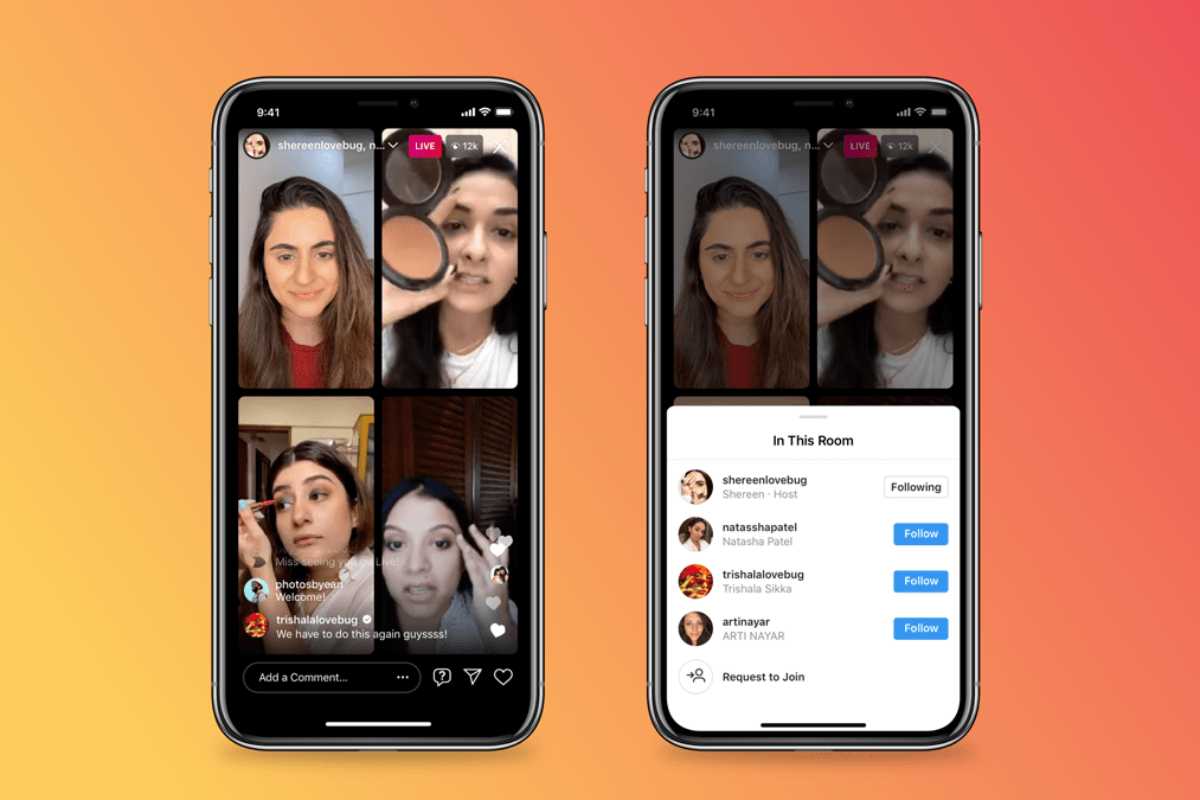
    Instagram is further improving the live features of its app with new functionalities that allow up to four people to go live at the same time. The new feature is called Live Rooms and bumps up the number of Instagram users that could go live at the same time from two to four.

    Furthermore, Instagram revealed that Live Rooms offers creators additional ways to earn money and built their businesses. For example, Live viewers will now be able to purchase badges for the hosts and use other interactive features like Shopping and Live Fundraisers.

    At the moment, Live Rooms lacks any moderation controls, but Instagram announced that it’s “exploring more interactive tools such as offering moderator controls and audio features.” However, these won’t be available until at least a few months from now.

    Instagram users who’d like to take advantage of the new Live Room feature can easily swipe left and pick the Live camera option. Next, simply add a title and click on the Rooms icon to add your friends who you wish to join the live chat. As mentioned earlier, you can add up to three other people when you start a Live Room, but you don’t have to add them all at once.

  • Facebook releases BARS, the rap app

    Facebook releases BARS, the rap app

    Apps for creating short musical, visual, attention-grabbing clips have been all the rage these years. We’ve been through viral platforms such as Vine, Musical.ly, TikTok, and now, we’ve got BARS. Facebook seems to want in on the fad as it just came out with a new app that allows you to release the rapper within you by easily recording and sharing up to 60-second-long clips. The experimental app, currently in its beta version, is only available in the App Store for iPhone users—but who knows where time will take it.

    The way the app works is very simple. It’s got a database of hundreds of professionally created beats to choose from and rap to. Rather than creating music alongside friends, as in Facebook’s similar app Collab, BARS aims to offer an easy and accessible platform for aspiring rappers to share their individual talent. It offers features like autotune, and auto-suggestion of rhymes for your lines as you rap. The app also offers an entertaining “Challenge” mode, made to feel more like a game and which provides word cues for freestyling. There are plenty of customizations available, including a variety of visual and audio filters, to personalize the production.

    The app was developed by a team of aspiring rappers who are also part of Facebook’s NPE (New Product Experimentation) development team. They personally realized the value such a platform could bring to young musicians, perhaps green in the music world but passionate about sharing their talent. The pandemic lockdown, which has closed performance venues and formerly available public platforms to musicians, influenced the app’s creators to allow artists to share their work online even if they could not do so live.

    As the app is still being perfected, it remains to be seen how well BARS will do in the App Store. Although it is publicly available for download, there is a growing waitlist which new users must join to participate in a closed beta test before full public access.

  • Most APAC Institutionals Undergo ESG Conversion

    Most APAC Institutionals Undergo ESG Conversion

    Sustainable investing continues to establish roots within the industry especially in Asia where over half of the region’s institutional investors will have largely implemented related factors in their processes by the end of the year.

    Almost 60 percent of APAC investors expect to have incorporated environmental, social and governance (ESG) factors completely or «to a large extent» within their own investment analysis and decision-making processes by 2021-end, according to a recent survey by MSCI.

    The combination of climate-related events, such as devastating wildfires, floods and droughts, and a global pandemic have accelerated the paradigm shift on ESG and climate change, MSCI president and chief operating officer Baer Pettit, highlighting outperformance by sustainable investing during the pandemic. Once an issue for ‘green funds’ and side-pockets, ESG and climate are now firmly established as high priority issues.

    The survey involved 200 institutions, including 70 from the APAC region, with approximately $18 trillion of assets under management.

    Although Asia is a relative laggard in sustainable investing compared to more mature markets, it is rapidly accelerating efforts.

    According to the survey, 79 percent of APAC investors increased ESG investment significantly or modularity in repossess to the coronavirus, compared to the 77 percent average worldwide. This figure rises to 90 percent for the largest institutional investors (more than $200 billion of assets).

    General growth aside, the region is also particularly focused on risks related to climate change.

    50 percent of APAC ex-Australia, New Zealand and Japan investors consider climate change metrics for decision-making compared to the global average of 42 percent.

    The reality is, climate change links to a rapidly shifting social context that in turn drives changes to investor demands, all within a very dynamic regulatory environment, Pettit added. These trends are amplified by technology innovation, adding significant cost and time pressure. Quite simply, investing has never been a more complex ecosystem.

  • Facebook to launch smartwatch with focus on fitness, messaging in 2022

    Facebook to launch smartwatch with focus on fitness, messaging in 2022

    Last month, Facebook called Apple a ‘significant’ future competitor. Those comments were understood to be a reference to their respective AR/VR efforts, but a new report adds another layer to the matter.

    The Information reports that Facebook is building a smartwatch as part of its ongoing hardware efforts, which already include Oculus VR headsets and the Portal smart display.

    It will use an open-source version of Google’s Android software and include its own cellular connection, meaning owners won’t need to rely on a smartphone for internet access.

    Feature-wise, the Facebook watch is set to focus on messaging through Messenger and other Facebook platforms. The social giant is also planning several fitness & health features including the ability to track workouts and connect to services from Peloton and others.

    Facebook’s watch, which will have to compete with top smartwatches from Apple and Fitbit, is scheduled to launch in 2022 with a successor planned for as soon as 2023. We don’t know how much it’ll cost yet, but the company will reportedly price it near the cost of production.

    This ultimately suggests that Facebook is more interested in collecting valuable user data that can be leveraged with future services than generating profit through hardware sales.

    Whether the Facebook smartwatch will succeed remains to be seen. Facebook has a poor track record when it comes to user privacy, so handing over health data to the company might be off-putting for consumers.

  • Facebook is developing new Messenger features to protect minors

    Facebook is developing new Messenger features to protect minors

    Facebook wants to make the internet a safer place, especially for minors. In commemoration of this year’s Safer Internet Day, the company reminded everyone in a blog post about Messenger’s privacy features and also elaborated on what’s currently in the works.

    Last year, Facebook introduced a pack of safety features in Messenger, aimed to protect users from scams and abuse. These include more detailed message requests, Safety notices that provide tips to educate people on spotting suspicious activity, a limit on message forwarding (a message can only be forwarded to five people or groups at a time), and new ways to report abuse or harassment.

    The social network is taking things a step further, working on new Messenger features to protect minors in particular.

    “In addition, we’re developing more innovative features that use activity across our platforms to prevent harm or abuse before it happens. For example, we use behavioral signals like an adult sending a large amount of friend or message requests to people under 18 to share safety notices, identify and remove potentially harmful accounts and protect minors,” reads part of the blog post.

    There’s no information on when these new Messenger features would be arriving, but the desire to protect our kids from online creeps is commendable.

  • Facebook is reportedly developing a Clubhouse clone

    Facebook is reportedly developing a Clubhouse clone

    According to inside sources, Facebook is working on an audio chat app similar to the popular Clubhouse. The new app is probably under development in Facebook’s skunkworks division – the NPE Team (New Product Experimental).

    The information comes from two people in the industry, who were not authorized to speak publicly. As the story goes, Facebook high management was so impressed with Clubhouse that it ordered employees to create a similar app. Clubhouse gained popularity mostly with its exclusivity – the app is available only for iPhones and is currently in beta, requiring an invitation.

    Last month, Elon Musk appeared on Clubhouse being interviewed by two tech experts, boosting tremendously the app popularity. To the point where servers struggled to deal with the overload. Now, it’s interesting that Facebook is so eager to launch another voice chat app. Especially when the social network has already tried to do something similar in the past.

    Some of you might remember CatchUp – an advanced voice call app that offers one-on-one calls, dedicated groups, and users’ current status (muted, dialing, online, etc.). Facebook developed it under the same NPE Team last spring, but it quickly fell into obscurity. Some might argue that it’d be much easier for Facebook to just acquire Clubhouse while it’s still green (and cheap) like it did with Instagram and WhatsApp.

    The official comment from Facebook doesn’t bring anything to light, as expected. “We’ve been connecting people through audio and video technologies for many years and are always exploring new ways to improve that experience for people,” Emilie Haskell, a Facebook spokeswoman, said. In any case, it will be interesting to see where this one goes, so stay tuned.

  • Facebook appears to be using misleading data to attack Apple’s new privacy feature

    Facebook appears to be using misleading data to attack Apple’s new privacy feature

    Starting with iOS 14.5, iPhone users will be asked to decide whether they want to opt-in to getting tricked by third-party apps. Allowing the trackers to do their thing means that when users do make a purchase online or merely visit an online store, they will get inundated with ads for related products on their phones and tablets. Facebook, which generated nearly $85 billion in ad revenue during the fourth quarter of last year, says that its advertising business could shrink by as much as 50% because of Apple’s new feature. The social media network also claims to be concerned for small businesses that will be hurt if most iOS users, as expected, decide not to allow themselves to be tracked.

    Facebook has been giving evidence of the damage that Apple could do to small businesses by citing certain examples. However, a pair of marketing professionals have written a piece in the Harvard Business Review claiming that this so-called evidence uses figures that have been “overstated,” “cherry-picked,” “misleading,” and are part of a disinformation campaign.”

    For example, Facebook claimed in a full-page newspaper ad that “Without personalized ads, Facebook data shows that the average small business advertiser stands to see a cut of over 60% in their sales for every dollar they spend on ads.” However, as marketing pros Bart de Langhe and Stefano Puntoni wrote in the Harvard Business Review, this data is misleading because Facebook bases the data on a metric known as ROAS or return on ad spend. The information this provides is the amount of revenues associated by advertising as opposed to the amount of revenue caused by advertising.

    If certain consumers were going to make purchases anyway, their spending is not caused by the advertising and the resulting decline would be less than 60%. As the two marketing pros wrote, “The problem with the 60% figure is that Facebook doesn’t report anything about the two kinds of campaigns it was comparing. For all we know, they might involve different industries, different companies, different products, different times, different places — and if they did, then Facebook’s comparison wouldn’t mean much. In fact, it might just show that companies who knew their customers well achieved a higher return on advertising spend than companies that didn’t.”

    Besides the above example, Facebook also incorrectly repeated certain figures. For example, Facebook posted on its website and in its ads that “Forty-four percent of small to medium businesses started or increased their usage of personalized ads on social media during the pandemic, according to a new Deloitte study.” But that figure was misleading; the authors looked at Deloitte’s numbers which included the percentage increase in targeted advertising on social media for companies in nine industries. Telecom and Technologies had the largest increase at 34%. Facebook’s figure of 44% was not only overstated, the industry that Facebook chose to use was the one best suited to fit its argument.

    Let’s examine this again. Facebook said, “Forty-four percent of small to medium businesses started or increased their usage of personalized ads on social media during the pandemic.” If you read this without double-checking the figure, you’d believe that Apple’s new opt-in policy on targeted ads was affecting as much as 44% of small and mid-sized businesses. However, as noted above, the largest industry increasing its targeted advertising during the pandemic was Telecom and Technologies with a 34% hike. As de Langhe and Puntoni wrote, “Facebook, it seems, cherry-picked the data that best supported its case, and then increased the size of the cherries it picked by a third.”

    The authors say that they are not trying to dismiss the concerns that small businesses have over Apple’s new privacy policy. However, “Under Apple’s new plan, companies will have to explain their data-collection practices when submitting new apps or making updates, and many users won’t give permission to have their behavior tracked online. Facebook says it wants to stand up for small businesses in the face of these changes, which it is perfectly entitled to do. But disinformation about advertising effectiveness isn’t the way to do that.”

  • Tim Cook calls Facebook’s business model violent and says that it leads to divisiveness

    Tim Cook calls Facebook’s business model violent and says that it leads to divisiveness

    Earlier this morning, we told you that Facebook was reportedly planning to attack Apple-in court. The social media network is believed to be ready to accuse Apple of violating antitrust laws by using the iPhone’s popularity to force a major change on third-party app developers. In order to keep iOS users from constantly being served up targeted ads, iPhone and iPad users would have to opt-in and allow themselves to be tracked. Since you could assume that most iPhone users would prefer not to be tracked, this change is going to negatively impact outfits like Facebook that derive a large percentage of their business from posting online ads.

    Today, Apple CEO Tim Cook gave the opening address during a panel at the European Computers, Privacy & Data Protection (CPDP) conference. Cook discussed Apple’s privacy initiatives pointing out the dangers of business models that rely on collecting personal information from users. During his address, Cook stated, “As I’ve said before, if we accept as normal that everything in our lives can be aggregated and sold, then that we lose so much more than data. We lose the freedom to be human.” The executive did not mention Facebook specifically although those who have been following recent events had a good inkling about which company he was talking about.

    Discussing the dangers of businesses that collect personal user information, Apple’s CEO said, “If a business is built on misleading users, on data exploitation, on choices that are no choices at all, it does not deserve our praise. It deserves scorn.” Cook also said that such businesses could lead to polarization, distrust of life-saving vaccinations, and violence set off by extremist groups. Many of these outcomes are already being seen in the United States. Cook also spoke about Apple’s decision to protect its users’ privacy “to create ripples of positive change across the industry.”

    Cook said, “At Apple, we made our choice a long time ago. We believe that ethical technology is technology that works for you. It’s technology that helps you sleep, not keeps you up. It tells you when you’ve had enough, it gives you space to create, or draw, or write or learn, not refresh just one more time. It’s technology that can fade into the background when you’re on a hike or going for a swim but is there to warn you when your heart rate spikes or help you when you’ve had a nasty fall. And with all of this, always, it’s privacy and security first, because no-one needs to trade away the rights of their users to deliver a great product.”

  • Facebook reports strong Q4 and 2020 top and bottom line growth

    Facebook reports strong Q4 and 2020 top and bottom line growth

    Facebook reported its fourth-quarter and full-year earnings numbers today. The controversial social networking site reported advertising revenue of $27.19 billion for the fourth quarter running from October through December. That resulted in a 31% year-over-year gain from the $20.74 billion in advertising revenue that the company earned during last year’s fourth quarter. For all of 2020, Facebook grossed $84.17 billion, up 21% from 2019’s total of $69.66 billion.

    During the fourth quarter, Facebook garnered a total of $28.07 billion compared to the $21.08 billion it took in during the same quarter last year. If you’re counting, that is a 33% hike on an annual basis. For all of 2020, the company collected $86 billion dollars producing a 22% increase from 2019’s top line number of $70.70 billion.

    Let’s move on to the bottom line. For the period from October through December (yes, also known as the fourth quarter), Facebook earned $11.22 billion or $3.88 per share. Net income was up 53% from the previous year’s $7.35 billion while the per-share figure reflected a hike of 52% from the $2.56 per share figure attained during Q4 of 2019. For 2020, Facebook reported profits of $29.15 billion or $10.09 per share. That’s an annual gain of 58% and 57% respectively over 2019’s figures of $18.49 billion and $6.43 per share.

    Facebook achieved 1.84 billion Daily Active Users for December 2020, an 11% gain year-over-year. As of the end of last year, the number of Monthly Active Users amounted to 2.80 billion for a 12% annual gain.

    For the first half of 2021, Facebook expects revenue to be stable, or show a slight gain. CFO David Wehner said that Facebook expects some issues with ad targeting. As you might recall, Apple and Facebook are fighting each other over Apple’s change requiring iOS users to opt-in to receive targeted ads. Wehner says, “We also expect to face more significant ad targeting headwinds in 2021. This includes the impact of platform changes, notably iOS 14, as well as the evolving regulatory landscape. While the timing of the iOS 14 changes remains uncertain, we would expect to see an impact beginning late in the first quarter.”

    Besides owning Facebook, the company owns Facebook Messenger, WhatsApp and Instagram. It also runs VR headset producer Oculus and makes the Facebook Portal line of smart displays.

    The earnings report failed to excite Wall Street investors. During the regular trading session, Facebook (FB) shares closed down $9.91 or 3.51% to $272.14. After the report was released slightly after 4pm ET, Facebook dropped another $5.14 or 1.89% to $267.

  • Millions of WhatsApp users join Telegram as Facebook forces them to give up their data

    Millions of WhatsApp users join Telegram as Facebook forces them to give up their data

    Facebook informed WhatsApp users last week that in order to continue to use the app, they will have to agree with the company’s updated privacy policy. That wouldn’t be unusual unless the new policy requires WhatsApp users to allow the company to share their information with Facebook and its associated firms.

    About three years ago, WhatsApp introduced this option with the promise that it will “help operate, provide, improve, understand, customize, support and market it services and offerings,” but users could opt-out from this trial.

    Unfortunately, this has become mandatory this year, so those who don’t comply won’t be able to use WhatsApp starting February 8. Well, it looks like Facebook’s decision had drastic repercussions for its customer database.

    Telegram, a similar messenger service with a lot less users, has just announced a surge in the number of active users immediately after Facebook’s announcement. First, the founder of the company, Pavel Durov, pointed out that Telegram surpassed 500 million monthly in the first week of January 2021.

    More importantly, soon after WhatsApp announced the new changes, Telegram reported a massive surge in a number of users. No less than 25 million users joined Telegram in the last 72 hours. According to him, most of them are coming from Asia (38%), Europe (27%), and Latin America (21%).

    Apparently, this is an important increase compared to last year, when “just” 1.5 million users signed up every day. Durov went on to say that while Telegram had surges of downloads before, “this time is different.”

  • Facebook pissed at Apple’s new plan requiring users opt-in to receive targeted ads

    Facebook pissed at Apple’s new plan requiring users opt-in to receive targeted ads

    Apple and Facebook should not be invited to the same dinner party. Facebook fired another salvo at the iPhone maker on Wednesday accusing the company of anticompetitive behavior. Dan Levy, Facebook Vice President for Ads and Business Products, dropped the bomb in front of reporters when he said “Apple is behaving anti-competitively by using their control of the App Store to benefit their bottom line at the expense of creators and small businesses. Full stop.”

    Apple, which has been preaching privacy for its devices (especially the iPhone), is looking to prevent developers from using their apps to start tracking users and running targeted advertisements. Apple says that its new rules won’t force Facebook to change its “approach to tracking users and creating targeted advertising.” But it will force Facebook to give iOS users the option whether or not to opt in to these services. In a statement, Apple said, “We believe that this is a simple matter of standing up for our users. Users should know when their data is being collected and shared across other apps and websites — and they should have the choice to allow that or not.”

    Today, Facebook ran a full-page ad in major newspapers throughout the country. The ads criticized Apple for limiting apps from gathering information from others’ phones. This data is used to send targeted advertisements to consumers. But Facebook says that Apple is unfairly exempting its own ads platform from the new requirements it is imposing on other firms.

    During the summer, Apple said that a pop-up notification will ask iOS users for “permission to track them across apps and websites owned by other companies.” Most digital advertisers expect consumers to decline this request. Facebook’s Levy said that while his company doesn’t agree with Apple, it will comply with the new rules. “We don’t have a choice if we want our app to be available in the App Store, Levy stated. Apple and Facebook have also argued about the 30% cut of in-app purchases that Apple charges developers. Facebook has aligned itself with the small developers most affected by what is known as the “Apple Tax.” This is the same issue that has led Apple and developer Epic Games (creator of Fortnite), music streamer Spotify, and video streamer Netflix to complain about the 30% of in-app revenue that goes into Apple’s pockets.

    Facebook said today in its blog post that it was “committed to providing relevant information” in a “federal antitrust lawsuit filed by Epic Games.” Facebook wouldn’t specify how it planned to take part in the litigation.” The social media giant also paid for full-page ads in the New York Times, the Wall Street Journal and the Washington Post. The headline on the ads read, “We’re standing up to Apple for small businesses everywhere.” The ad says, “At Facebook, small business is at the core of our business. More than 10 million businesses use our advertising tools each month to find new customers, hire employees, and engage with their communities. Many in the small business community have shared concerns about Apple’s forced software update, which will limit businesses’ ability to run personalized ads and reach their customers effectively.

    Forty-four percent of small to medium businesses started or increased their usage of personal ads on social media during the pandemic, according to a new Deloitte study. Without personalized ads, Facebook data shows that the average small business advertiser stands to see a cut of over 60% in their sales for every dollar they spend.

    While limiting how personalized ads can be used does impact larger companies like us, these changes will be devastating to small businesses, adding to the many challenges they face right now. Small businesses deserve to be heard. We hear your concerns and we stand with you.”

    The bottom line is that Apple’s plan to beef up iPhone users’ privacy by asking them to opt in if they want to see targeted advertisements is not good for large or small businesses. And Facebook call this anti-competitive behavior on the part of Apple.

  • Facebook could be forced by the U.S. to sell Instagram and WhatsApp

    Facebook could be forced by the U.S. to sell Instagram and WhatsApp

    Facebook is going to be spending a lot of time in court after the U.S. Federal Trade Commission (FTC) and almost every U.S. state sued the social media company today. At issue is the “buy or bury” strategy used to snap up rival firms and keep smaller competitors away. Facebook was charged in two lawsuits of using its financial power to buy out rivals. In 2012, Facebook spent $1 billion to buy Instagram, which at the time was a photo-filter related app.

    Eventually, Instagram added a Stories feature that made it extremely popular. At the beginning of this year, Instagram had 1 billion monthly active users and an estimated valuation over $100 billion.. That means that Facebook was the beneficiary of one of the most profitable transactions ever made with a profit of more than $99 billion on paper. Two years later, Facebook paid $19 billion for the messaging app WhatsApp. By the time that deal closed, the rise in Facebook’s shares turned the value of the purchase to more than $21 billion.

    Both federal and state regulators want the deals to be overturned even though both were approved by the FTC years ago. If the regulators do agree to start the process of overturning the Instagram and WhatsApp deals, you can best believe that there will be legal challenges initiated by Facebook. 46 states are taking part in the suit with Alabama, Georgia, South Carolina and South Dakota sitting on the sidelines. New York Attorney General Letitia James, speaking on behalf of the coalition of the 46 states, Washington, D.C. and Guam that are suing Facebook, said, “For nearly a decade, Facebook has used its dominance and monopoly power to crush smaller rivals, snuff out competition, all at the expense of everyday users.” James said that Facebook acquired the companies before they got big enough to challenge Facebook.

    Jennifer Newstead, Facebook’s general counsel, called the lawsuits “revisionist history” and said that antitrust suits don’t exist to punish successful companies. She added that Instagram and WhatsApp became successful after Facebook spent billions of dollars on improving the apps. Newstead added that “The government now wants a do-over, sending a chilling warning to American business that no sale is ever final.” She pointed out that because of the merger, consumers benefited from the decision to make WhatsApp free. Prior to the deal, WhatsApp used to cost $1 to download and a dollar per year for service.

    Facebook co-founder and CEO Mark Zuckerberg did not help his own cause with a statement he made in 2008. According to at least one antitrust expert, Zuckerberg wrote in an email “it is better to buy than compete.” Seth Bloom of Bloom Strategic Counsel made an interesting point when he said that it will be hard for the government to “order divestitures of many years ago.” The transactions made by Facebook that are being challenged are six to eight years old and many courts would probably refuse to order Facebook to give up Instagram and WhatsApp. Daniel Morgan, a portfolio manager at Synovus Trust in Atlanta, Georgia, said, “I do not know if the FTC or DOJ will be successful in breaking Facebook up. I’m assuming this will be dragged out in the courts as FB defends itself.” Back in July, Zuckerberg made it clear that Facebook will “go to the mat” to defend itself against a federally ordered divestiture. The executive called the government’s actions “an ‘existential’ threat.”

    Interestingly, breaking up big tech seems to be something that both Democrats and Republicans are agreeing on. Both sides have been in favor of breaking up Google and Facebook. Many see the legal actions against the two tech firms as being the biggest antitrust cases against tech since Microsoft’s antitrust case from 1988.

  • Libra Set to Launch in Early 2021

    Libra Set to Launch in Early 2021

    The Libra coin may finally launch early next year, but in a slimmed-down version. Which of the original promises will be kept with such a watered-down coin?

    When the Libra Association first went public with its project, the coin was based on a broad basket of currencies. When governments, regulators, and central banks made abundantly clear that they were opposed to such a coin, the Geneva-based association reduced the reach to include several major currencies. Now, the launch seems imminent, but the coin will be based on the dollar only.

    The association, which was founded by Facebook, plans to launch its coin at the beginning of 2021. The story was based on information provided by three people.

    However, even this slimmed-down version of a Libra coin depends on the approval of Finma, the Swiss financial market regulator. Finma refused to comment on Libra’s plans. One can safely say that Finma won’t take any risks given the global attention paid to the plans of Libra.

    The authorities have to ensure that coins such as Libra won’t make it easier for criminals to wash their ill-gotten gains. In other words, the project sponsors must make sure that they adhere to the same strict standards set by money-laundering laws as any other financial-service provider.

    And, what’s more, the idea of a multinational coin may impact the ability of central banks to enforce their monetary policy. The latest version of a slimmed-down Libra may indeed allay such worries.

    But of course, what is the purpose of a single-currency coin? The Libra was an attractive proposition because it promised an easy digital payment system for all: The Libra payment system is built on blockchain technology to enable the open, instant, and low-cost movement of money. People will be able to send, receive, and spend their money, enabling a more inclusive global financial system. Will a dollar-based Libra be of any use to a consumer in the euro-region for instance?

    The private initiatives for digital currencies need to be seen in the context of state-sponsored projects. Some central banks have forcefully advanced their own projects for digital central bank currencies. Including the Swedish and Chinese, while the European Central Bank (ECB) recently made clear that it also aimed to speed up the process.

    The Swiss National Bank (SNB) is also working on a digital currency in the context of the innovation hub with the Bank for International Settlements (BIS). This digital franc project will be presented on December 3, according to people familiar with the plan.

  • Netflix and Zoom support coming to Facebook Portal

    Netflix and Zoom support coming to Facebook Portal

    The Portal products are getting another update that’s actually useful to those who own one of Facebook’s devices. The most important change is the addition to Zoom support. Although late to the party, Facebook’s Portal smart display joins that plethora of similar devices that offer Zoom support.

    Those who own a Portal Mini, Portal, or Portal+ in any of the countries where Portal is sold, will now be able to host video calls with up to 25 people on screen. On top of that, Facebook announced that it’s expanding the Story Time library with a new collection of stories.

    In addition, AR support is now available for four Dr. Seuss classics: Hop on Pop, Mr. Brown Can Moo! Can You?, The Foot Book, and There’s a Wocket in my Pocket! Keep in mind that these stories are not yet available, but they will be released on Portal sometime this fall.

    The ability to control AR Effects in Photo Booth with your voice via the “Hey Portal” command has been added too. You’ll also be able to take photos and videos with AR effects to share with friends and family via Messenger.

    For those who own a Portal TV, Facebook has finally added Netflix support, although you’ll still need a streaming subscription to watch the shows. Netflix joins other video streaming services already available on Portal TV, including Amazon Prime Video, SHOWTIME, and SLING TV.

    Finally, Facebook revealed that a new remote is now available for Portal TV owners, which features touch buttons for Prime Video, Facebook Watch, and Netflix. The new remote is shipping with Portal TV starting today and will arrive in brick and mortar stores in the coming weeks.