Retail News CRM

Tag: fast retailing

  • Uniqlo US quietly closing stores

    Uniqlo US quietly closing stores

    Tokyo-based fast-fashion brand Uniqlo US, a 1700-store global chain with 43 US outlets, has been retrenching amid slowing sales.

    It has quietly closed five stores in the US since January, all in suburban shopping malls.

    “The US is very important to the company,” says spokesman Aldo Liguori. “We are focussing on large cities where we can open large stores.”

    As well as urban markets, Uniqlo is beefing up its customer service, says Liguori.

    Chief executive Tadashi Yanai last year said brand penetration in big cities such as New York, San Francisco and Chicago was good, “but not in the suburbs”.

    Owned by Fast Retailing, which has seven clothing brands, Uniqlo said last year that it would be scaling back its US expansion after opening 17 stores in 2014. It opened four stores last year, and has announced that three stores will be opened this year.

    Meanwhile, the brand may face competition from Irish-based discounter Primark, which is expanding in the US.

  • Uniqlo Indonesian batik collection for good cause

    Uniqlo Indonesian batik collection for good cause

    Japanese apparel company Uniqlo has launched a special collection of items featuring traditional motifs of Indonesian batik, a heritage included on the UNESCO list of Intangible Cultural Heritages of Humanity in 2009.

    As part of a second program in the Uniqlo Factory Worker Empowerment Project, a portion of sales is be allocated toward helping with education for employees working in parent company Fast Retailing‘s affiliated factories in Indonesia. The special collection is available at five stores in Japan and on Uniqlo’s website.

    The batik patterns are part of Uniqlo’s LifeWear concept of offering clothes for a better life for everyone, every day. The collection of eight items includes men’s and women’s shirts as well as summer dresses. The batik patterns are original motifs jointly developed by Uniqlo and a designer recommended by the Indonesian Batik Foundation.

    The empowerment project was introduced last year, the first supporting female workers in sewing factories in Bangladesh through a women’s line featuring traditional Bangladesh clothing motifs. This sold in 14 markets worldwide, with a portion of sales being used for educational programs in such areas as nutrition, hygiene and health management.

    The education project is expected to run for about three years, and reach around 12,000 people.

  • Uniqlo sales bounce back

    Uniqlo sales bounce back

    Uniqlo sales have bounced back from decline, giving parent Fast Retailing a much-needed round of good news for May.

    Same-store Uniqlo sales in Japan rose 5.9 per cent year-on-year, even though customer traffic fell 3.6 per cent. The average purchase increased by 9.9 per cent to make up for the customer shortfall.

    Total sales including online increased by 7.6 per cent.

    The figures show only trading in Uniqlo’s Japan division.

    Analyst Masafumi Shoda of Nomura Securities said in a research note that Fast Retailing’s sales decline appeared to have bottomed.

    “While jogger pants remained strong, trendy merchandise such as women’s t-blouses and embroidered t-shirts also emerged as drivers. Another contributing factor was the successful expansion of the mainstay Airism line to bottoms. Even factoring out the boost from the customer appreciation sale at the end of the month, signs are beginning to emerge that the company is successfully asserting leadership on both price and fashion.”

    But Shoda said profitability will be likely to decline both overseas and in Japan in the March to May period, due to retooling, “but we think it will improve in June to August thanks in part to the likelihood of a rebound from prior-year results dampened by unseasonable weather”.

  • Uniqlo price-rise tactic fails

    Uniqlo price-rise tactic fails

    A tactic to move to high prices over the past year has failed for Japanese casualwear chain Uniqlo, admits the chairman of its parent company, Fast Retailing.

    Japan’s richest person, billionaire Tadashi Yanai says the company is considering how to sell value-added products for the lowest possible price.

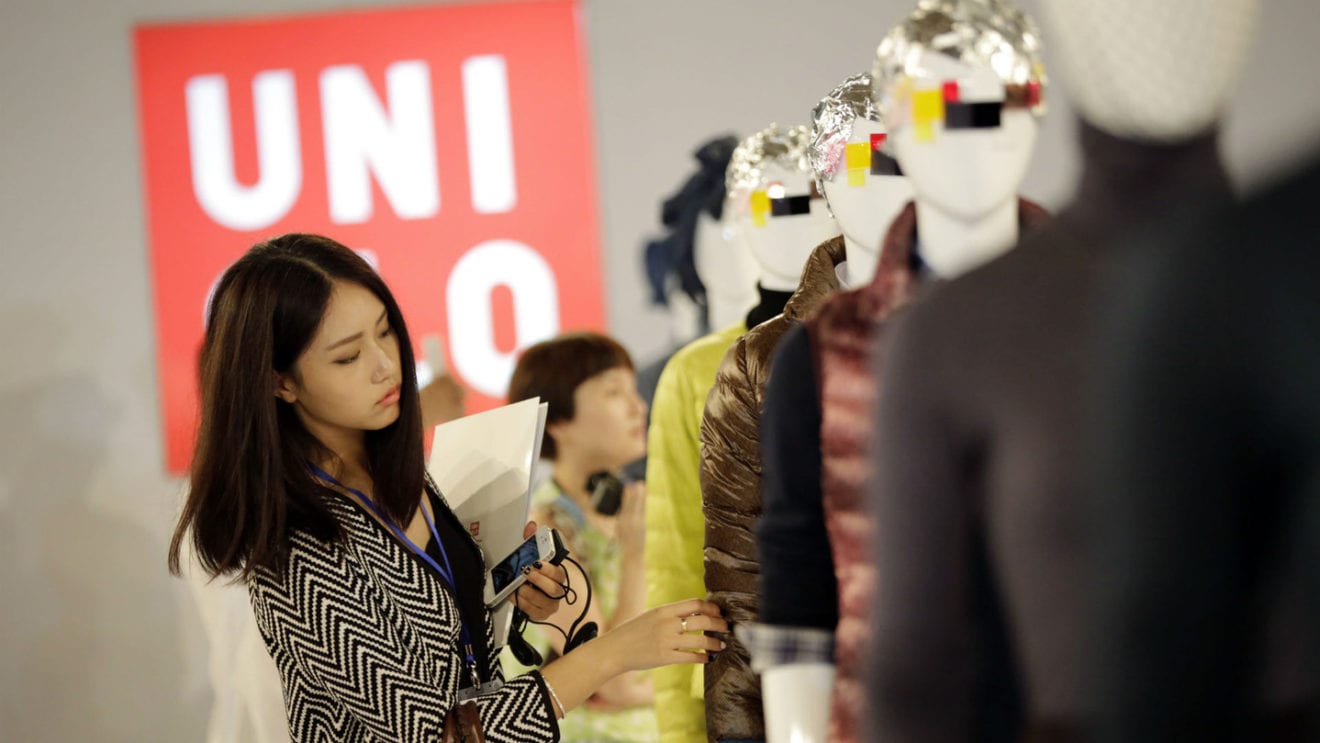
    “The world is flooded with clothes without added value,” he said at a fashion event in Tokyo’s Shibuya shopping district featuring Uniqlo’s latest seasonal styles.

    Japanese consumers are being cautious as the country’s financial situation tightens, and Fast Retailing has seen its overseas earnings hit by a stronger yen, compounded by China’s slowdown and losses in the US. Uniqlo lost some of its budget-minded customers in Japan after raising prices last year.

    Fast Retailing has cut back its operating profit forecast last month to 120 billion yen ($1.1 billion) for the year ending August, down 33 per cent from its estimate in January.

    In April, Uniqlo reported that its first-half year profits had plunged.

  • Uniqlo Philippines to open six new stores

    Uniqlo Philippines to open six new stores

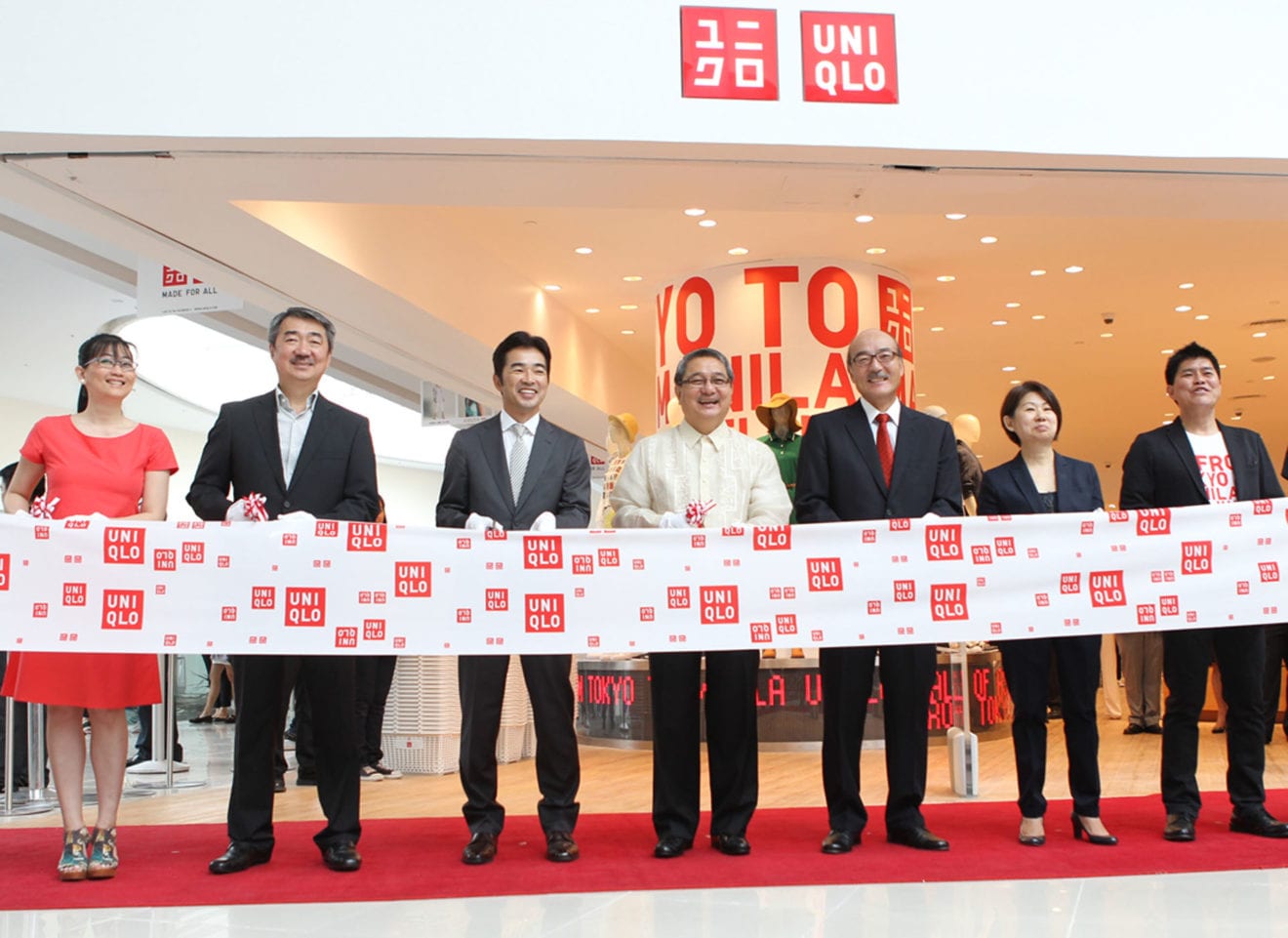
    Japanese fashion brand Uniqlo is opening six stores in the Philippines by June 2016.

    “We are thrilled to announce that Uniqlo will open four new stores in Luzon by May and two new stores in the Visayas by June, as we continue to bring high-quality and innovative clothing to Filipinos,” said Katsumi Kubota, COO of Uniqlo Philippines.

    The Luzon branches of Uniqlo Philippines will be in UP Town Center in Quezon City; Solenad 3 in Nuvali, Laguna; Evia Center Vista City in Daang Hari Rd, Cavite City; and SM City Cabanatuan in Nueva Ecija.

    The Visayas stores will be in Iloilo City and Bacolod City, adding to the existing outlets in SM City Cebu and SM Seaside City Cebu.

    Uniqlo is a brand of Japanese global retail holding company Fast Retailing, which designs, manufactures and sells clothing under seven main brands: Uniqlo, GU, Comptoir des Cotonniers, GU, Helmut Lang, J Brand, Princessetam.tam and Theory. It has global sales of about US$13.88 billion.

    There are more than 1700 Uniqlo stores in 17 markets, including Australia, China, Hong Kong, Indonesia, Malaysia, Philippines, South Korea, Taiwan and Thailand.

  • Uniqlo profit drops

    Uniqlo profit drops

    Uniqlo profit has plummeted in the Japanese fast fashion chain’s first half year.

    Parent Fast Retailing has revealed a 33.8 per cent decline in year-on-year surplus, despite a 6.5 per cent increase in sales from September 2015 to February 2016.

    Consolidated revenue reached JP¥1.0116 trillion (US$9.385 billion) and profit ¥99.3 billion (US$1.535 billion).

    While Global Brands reported a rise in both revenue and profit, Uniqlo Japan reported declines in both revenue and profit, and Uniqlo International reported a rise in revenue but a decline in profit.

    The company blamed the Japanese decline on poor sales of winter ranges and lower gross margin, with same-store sales down 1.9 per cent.

    “Subsequent stronger discounting in January and February contributed to a 3.5 per cent fall in the first-half gross margin.

    Uniqlo profit was down on weaker sales in Greater China, South Korea and the US in the company’s international division. However sales and profit rose in Southeast Asia, Oceania and Europe.

    In the Global Brands division, revenue and profit both rose on strong sales of GU ranges. “GU’s widely advertised campaign items such as knitwear and trendy bottoms such as wide pants and jogger pants all generated strong sales, fueling double-digit growth in same-store sales,” Fast Retailing reported.

    The company is predicting a better second half but has revised its earnings forecast to a 7 per cent rise in revenue and a 27 per cent decline in operating profit.

  • Uniqlo strengthens Toray partnership

    Uniqlo strengthens Toray partnership

    The partnership which pioneered Heattech and Airism garments have forged a new expanded relationship they say will create “a new industry for the future”.

    Fast Retailing’s flagship Uniqlo and Toray Industries first joined hands 10 years ago aimed at developing technological solutions to make clothing functional rather than just practical – and provide the Japanese fashion giant with a point of difference over fast fashion rivals.

    Uniqlo’s signature Airism garments are meant to be worn beneath any ensemble to keep you cool and dry, making heat and humidity more bearable with properties such as absorbency, breathability and odour control. Heattech garments come with features designed to make it the most comfortable innerwear, including sweat-wicking, quick-drying, anti-odour and anti-static features.

    The most recent seasonal Heattech lines contain camellia oil moisturiser to keep the wearer’s skin soft and supple in dry weather.

    In the new five year third stage of their working partnership, Uniqlo and Toray will work together to:

    Accelerate globalisation and digitalisation to create a new industry by:

    • Realising an end-to-end business model by utilising the Internet of Things (IoT).
    • Further reducing production lead time.
    • Further increasing globalisation of production sites and locations.
    • Optimising production in each location.
    • Expanding production sites to support business growth in Greater China (China, Hong Kong and Taiwan).

    Maximise LifeWear that is made for all by:

    • Improving comfort and functionality of all current products.
    • Adding value to products by conducting research and development.
    • Developing new sportswear to enhance daily lives.
  • Prolonged summer takes heat out of Uniqlo sales

    Prolonged summer takes heat out of Uniqlo sales

    Uniqlo parent, Japanese giant Fast Retailing, says its total sales dropped 8.1 per cent in November.

    “Same-store sales dipped year on year in November after unusually hot weather in mid-month stifled sales of winter clothing necessities,” the company said in a  brief trading statement which gave only percentages and not total sales data.

    The number of Uniqlo stores operating outside Japan exceeded the number of domestic stores last month – by 864 to 844.

    In November, same-store sales decreased by 8.9 per cent year on year while sales at its own-run stores (excluding franchises) decreased by 9.9 per cent. Total sales, including online, thus fell by 8.1 per cent.

  • Uniqlo parent commits to refugee support

    Uniqlo parent commits to refugee support

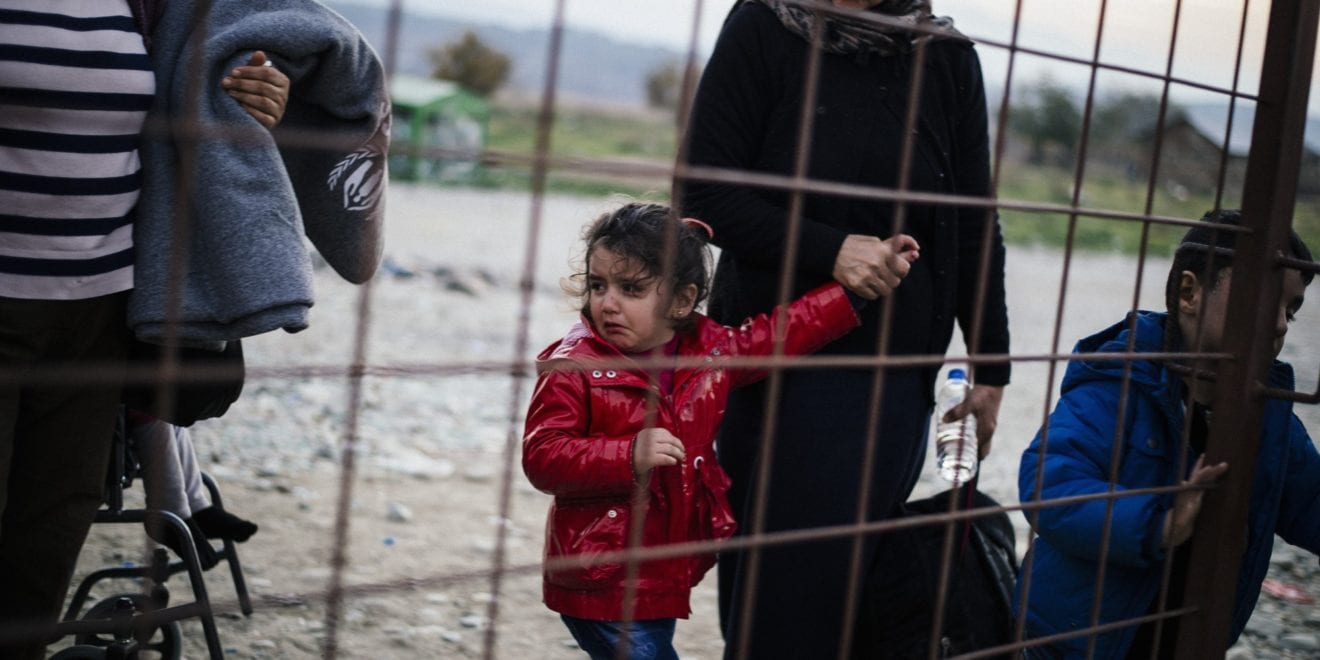
    Uniqlo parent Fast Retailing has committed US$10 million in cash and some 150,000 items of Heattech clothing to help keep newly arrived refugees warm in Europe.

    Fast Retailing will supply the support through the UNHCR, the UNited Nation’s refugee agency.

    As well as the donations, Uniqlo will provide internships with future employment possibilities to 100 refugees in Japan and abroad.

    “The refugee issue is one of the most difficult challenges the international community is facing today,” said Tadashi Yanai, chairman, president and CEO of Fast Retailing.

    “We must collectively tackle the constant threats that have forced so many people, including a large number of children, to flee. We have been providing refugees with emergency assistance, programs that promote self-reliance and donations of clothes for nearly 10 years. We will continue to supply refugees with the clothes they need and give them hope for better lives, in keeping with our never-ending desire for a sustainable and peaceful world,” he said.

    UNHCR spokesman Antonio Guterres said nearly 60 million people have been forced to flee their homes worldwide; the equivalent to almost half the population of Japan.

    “Twenty million of these people are refugees. In the face of such an unprecedented challenge, the robust support of the private sector is crucial for meeting the needs of the millions of families who have lost everything and who are seeking a safe place to restore their lives and build a better future.”

    Fast Retailing started its collaboration with the UN Refugee Agency in 2006 and entered into a global partnership in 2011, a first for a company headquartered in Asia. The new support being pledged this week is part of a global partnership aimed at assisting forcibly displaced people around the world, in recognition of the need for international organisations and private enterprises to collaborate more closely for the refugee cause.

    Under the new agreement, Fast Retailing commits to support the UN Refugee Agency with US $10 million over the next three years, starting from 2016. The funds will help UNHCR respond to emergencies and other acute humanitarian crises, and help refugees in Asia become self-reliant.

    The donation will also cover costs related to the distribution of donated clothing. To date, Fast Retailing has collected and distributed through UNHCR more than 10 million items of lightly used clothing to refugees across 37 countries and regions.

  • Uniqlo Philippines opens in Cebu

    Uniqlo Philippines opens in Cebu

    Uniqlo Philippines will open its first store in Cebu on Friday (October 23).

    The new 1000 sqm store is located in SM City Cebu shopping mall, on the first level of the north wing.

    It will be Uniqlo Philippines’ 25th shop and its first in the Visayas region.

    “We have opened 24 stores in Metro Manila and Luzon, entering the Visayas market is a milestone in our growth strategy,” said Katsumi Kubota, COO of Uniqlo Philippines.

    A second Cebu store will open in November in SM Seaside City Cebu.

    Uniqlo’s Lifewear concept, Simple Made Better, advocates apparel that comes from the Japanese values of simplicity, quality and longevity made with elegance.

  • Fast Retailing US to slow rollout

    Fast Retailing US to slow rollout

    Fast Retailing US, the North American business unit of Japan’s largest apparel retailer is to slow its Uniqlo store roll out program after heavy losses.

    The Japanese company missed its earnings target in the latest quarter and posted losses due to a US$134 million  impairment charge relating to its 42-strong US Uniqlo store network and the poor performance of other brands there, including the J Brand denim label.

    Last year, Uniqlo opened 15 new stores in the US market – this year it will open just five.

    But the company remains committed to the US market – last week it was announced it had signed a lease to take an anchor tenancy in a downtown Denver shopping mall.

    The Financial Times quoted CEO Tadashi Yanai: “The brand penetration in big cities such as New York, San Francisco and Chicago – where we will open a new store – is good, but not in the suburbs.

    “We need to overhaul our policy for opening new stores.”

    CFO Takeshi Okazaki admitted in an earnings briefing: “The brand also still doesn’t have a lot of recognition in the United States.”

    Yanai will relocate a management team to the US to review operations there and try to revive sales growth, with a fresh strategy to be developed. In the year to the end of August, Fast Retailing reported a 48 per cent growth in net profit to JPY110 billion, (US$914,685,200) 10 billion lower than its earnings guidance three months earlier. It also incurred losses on the refurbishment of its Oxford St, London, and Shanghai flagships.

    Annual sales rose 22 per cent to JPY1.68 trillion (US$13.9 billion) largely due to growing demand for its products in China and South Korea.

  • Fast Retailing launches refugee initiative

    Fast Retailing launches refugee initiative

    Japanese retail company Fast Retailing has launched HELP, a global initiative to help clothe refugees.

    The project – dubbed 10 Million Ways to HELP will be run in conjunction with the UNHCR.

    Collection starts at Uniqlo and GU on October 2 at stores around Japan and from mid-October in other markets.

    According to a Uniqlo statement, UNHCR estimates the number of women, men, and children forcibly displaced owing to armed conflict and other causes reached 59.5 million by the end of 2014 – the highest since the end of World War II – prompting Fast Retailing to respond.

    Fast Retailing has been implementing an All-Product Recycling Initiative to provide clothing to refugees since 2006, and in 2011 became the first company headquartered in Asia to establish a global partnership with UNHCR. As part of the initiative, Fast Retailing has also launched a drive to collect clothing from employees.

    Around 90 per cent of the clothing that Fast Retailing has collected to date through its All-Product Recycling Initiative has been in wearable condition. As of the end of April 2015, more than 10 million items from the company had been delivered to refugees in 37 countries by UNHCR, including those in Jordan, Syria, Thailand and Nepal.

    As another contribution to alleviate the plight of displaced people, from 2011 Fast Retailing has operated an internship program at Uniqlo stores in Japan for refugees and their family members, offering invaluable work experience to promote their self-reliance.

  • Uniqlo Belgium to launch in Antwerp

    Uniqlo Belgium is to open its first store – in Antwerp, on October 2.

    The opening will mark a further expansion of Uniqlo parent Fast Retailing’s European footprint as it tries to achieve its goal of becoming the world’s largest apparel retailer by 2020.

    The new Antwerp store will have a total sales floor area of about 1320 sqm over two levels and a mezzanine floor. It will be a “large-scale Uniqlo store” featuring men’s, women’s, and kids’ clothing. In addition to the 2015 Fall/Winter collection, customers will also find the collaboration line created jointly with apparel brand Lemaire, led by Christophe Lemaire and Sarah-Linh Tran.

    “Our first store in Antwerp, an important and influential fashion city, marks our arrival in the Benelux region,” said Takao Kuwahara, Fast Retailing Group senior VP and Uniqlo Europe COO. “Uniqlo has so far built a presence in London, Paris, Moscow and Berlin, and I am pleased that the time has come for us to expand on our success in Europe by opening a first store in Belgium. We are very excited to introduce our brand and our products to customers across Benelux.”

    Uniqlo, (an abbreviation for ‘Unique Clothing Warehouse’) was established in Japan in 1984 and now boasts more than 1600 stores across 16 countries. Belgium will be its 17th. In Europe, the company operates 26 stores in four countries, having launched in the UK in 2001, France in 2007, Russia in 2010, and Germany in 2014.

    To coincide with the store’s debut, Uniqlo has developed a marketing campaign centred around ‘Six Faces of Antwerp’.

    The six are Bent Van Looy, Helena Eeckeleers, (pictured above), Felix Denayer, Joke De Coninck, Mark Colle, and Francine Martens.

    Spanning across different parts of society, including musicians, sportsmen, craftspersons, models and entrepreneurs, each person in the campaign has a special connection and relevance to the scenery of Antwerp. They will showcase how Uniqlo’s LifeWear products fits seamlessly into the daily lives of every person, regardless of age, personal background or style.

    Bent Van Looy is a singer, musician, artist, style icon, and TV personality. As the frontman of Das Pop and the drummer of Soulwax, he travels regularly around the world. In 2013, he released ‘Round the Bend’, his first solo album. He is currently based in Paris but returns regularly to Antwerp, where he grew up and still has a strong connection with.

    Helena Eeckeleers combines her marketing studies at the Karel de Grote-Hogeschool with a modeling career. She is passionate about fashion and loves to spend time in the south of Antwerp.

    Felix Denayer is a professional field hockey player who won the ‘Golden Stick’ for Best Belgian Hockey player twice.

    Joke De Coninck is a barista who spends most of her time working in Caffenation, a renowned coffee bar in Antwerp.

    Mark Colle is one of the most sought-after florists in the world and the number one choice for haute couture houses.

    Francine Martens worked for 50 years at bakery Goossens, the smallest but most authentic bakery in the center of Antwerp where people queue all day long. Francine retired a few years ago, but is still very much linked to the bakery.

  • Uniqlo Malaysia plans seven new stores

    Uniqlo Malaysia plans seven new stores

    Japanese retail giant Fast Retailing is planning to open seven new Uniqlo Malaysia stores.

    Two of the stores are planned for Sabah and Sarawak in eastern Malaysia and will mark the brand’s first foray into the eastern region after establishing a strong network of stores in central Malaysia.

    The seven stores will begin trading between September and November this year.

    Uniqlo said they will be located in the Klang Valley (The Curve), Perak (Aeon Klebang), Kedah (Aman Sentral), Sabah (Imago KK Times Square and Suria Sabah) and Sarawak (The Spring Mall and Vivacity Megamall).

    “The new store openings mark Uniqlo Malaysia’s first entry into East Malaysia, as it looks to provide more Malaysians with high quality, comfortable and stylish clothing at affordable prices,” the company said in a statement.

    Uniqlo Malaysia currently has 25 stores located within the Klang Valley, Johor, Malacca, Pahang and Penang.

    “We are excited with the upcoming new store openings, as it means more Malaysians will be able to purchase and experience our product offerings,” said Uniqlo Malaysia’s co-COO Jocelyn Ng.

    “We remain committed to provide the best shopping experience and make our innovative products, such as Airism and Heattech, more accessible to the communities in these locations.”

  • Fast Retailing, Seven & I mull partnership

    Fast Retailing, Seven & I mull partnership

    Two of Japan’s largest retail businesses are eyeing a “comprehensive business alliance” according to Japanese news reports.

    A strategic relationship currently under discussion could see a range of mutually beneficial co-operations spanning physical stores and eCommerce.

    Details are still sketchy, but according to news reports, Fast Retailing, the parent of Uniqlo, could work with Seven & I, parent of 7-Eleven convenience stores and the Ito-Yokado supermarket chain, on areas including product design, house brands, marketing and distribution.

    Uniqlo may use 7-Eleven stores as collection points for online purchases.

    The two companies may also launch a joint venture clothing brand outside the Uniqlo network.

    To date, that’s as much information as has leaked out.