Tag: fedex

  • FedEx launches first Mercedes-Benz eVito vans in Asia Pacific

    FedEx launches first Mercedes-Benz eVito vans in Asia Pacific

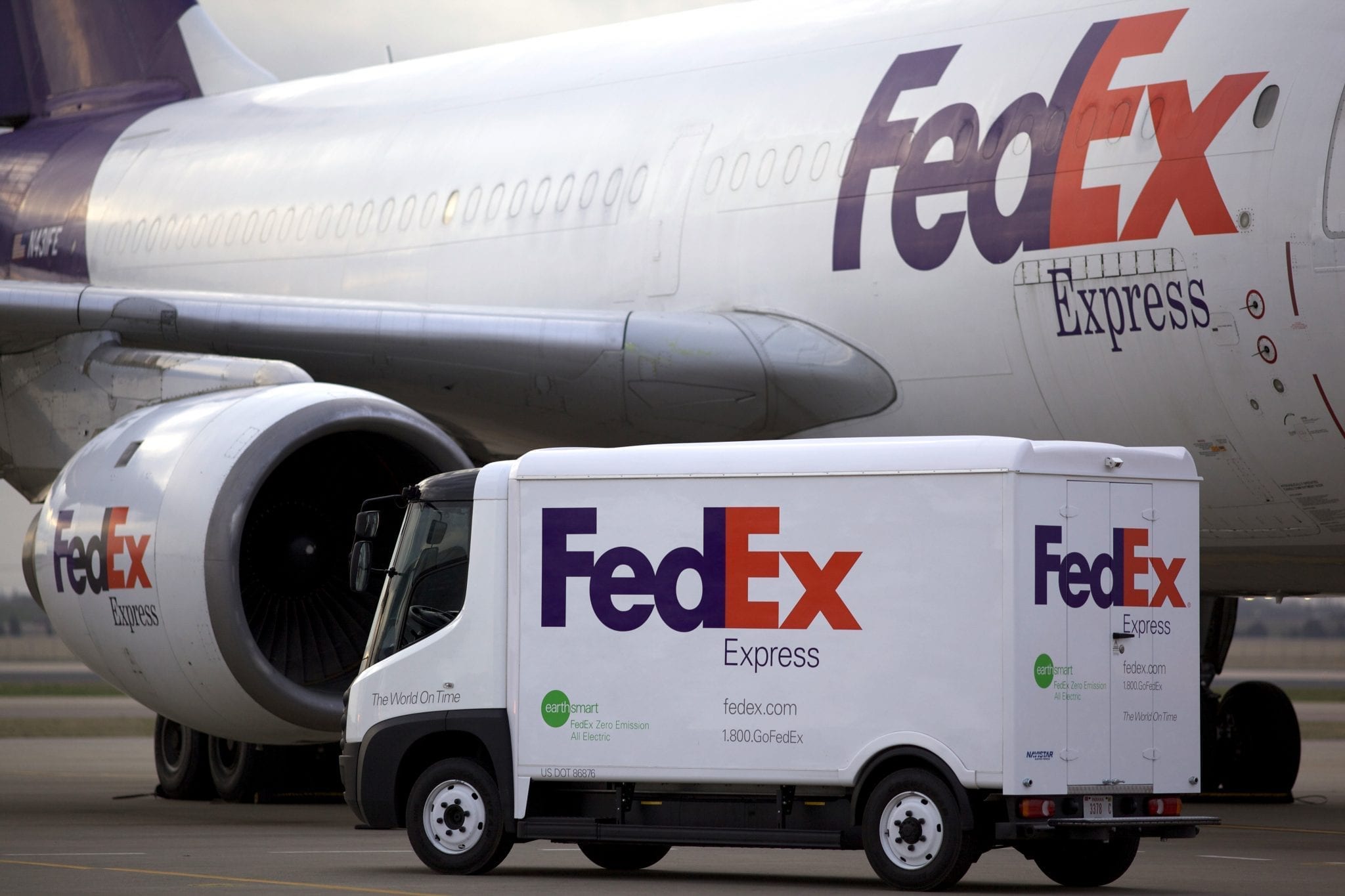
    FedEx Express Corporation, one of the world’s largest express transportation companies, is introducing 31 electric vehicles (EVs) into its existing fleet in Singapore. Singapore is the first market within the FedEx Asia Pacific network to deploy the custom-built Mercedes-Benz eVito 112 panel vans to support its parcel pickup and delivery operations across the country. The EVs offer a 923 kg load capacity and an estimated range of up to 321 kilometers on a full charge. Collectively, the vehicles are estimated to avoid around 148 metric tons of tailpipe emissions per year when compared to diesel-powered vans.

    FedEx Singapore is already replacing all its end-of-life vehicles used for parcel pickup and delivery with EVs, contributing to the company’s global goal to make 100% of new purchases of these vehicles electric by 2030. The addition of these new vehicles to its fleet marks a significant step towards the company’s commitment to sustainability in Singapore and its ongoing efforts to achieve zero-tailpipe emissions for last-mile parcel delivery operations across its global operations.

    FedEx continues to explore innovative solutions and collaborations to enhance the sustainability of its operations, including the company’s vision of integrating renewable energy and enhancing facility efficiency. The South Pacific Regional Hub in Singapore will soon be able to use solar energy to meet more than half of the facility’s total electricity demands, helping to charge the EV fleet in Singapore via clean energy beginning in January 2025. Overall, these projects support the Singapore Green Plan 2030, which aims to lower national carbon emissions and promote sustainability.

    FedEx’s transition to EVs in Singapore is part of its ongoing expansion across Asia Pacific markets including in China, Thailand, Japan, Malaysia and New Zealand. To further improve the efficiency of the Singapore fleet, including these new EVs, FedEx is using its AI-powered Stops Sequencing tool, which is designed to optimise delivery routes in real-time based on package volume and customer requests. By intelligently planning delivery stops, the tool helps reduce total mileage travelled each day, contributing to greater reductions in fuel and energy consumption and, as a result, carbon emissions.

    “FedEx is committed to connecting people and opportunities in smarter ways,” stated Kawal Preet, president of FedEx Asia Pacific. “With the introduction of these electric vehicles, we are taking meaningful steps to lower greenhouse gas emissions while improving our efficiency, directly supporting Singapore’s bold sustainability initiatives. This is an important milestone on our path to achieving carbon-neutral operations by 2040, as we work to build a cleaner and more efficient logistics network that promotes sustainable growth throughout the Asia Pacific region.”

    Earlier this year, FedEx completed the first cross-border delivery between Malaysia and Singapore with an EV, which was recognised by the Malaysian Book of Records. This initiative is part of the company’s broader efforts to reduce emissions for long-distance deliveries. In other Asia Pacific markets, electric tricycles were introduced for last-mile deliveries in congested urban areas in Taiwan, while electric trucks and vans have been introduced in Japan and Thailand, further advancing the company’s sustainability goals.

    In addition to vehicle electrification, the company has also launched a cloud-based carbon emissions reporting tool, FedEx® Sustainability Insights, giving customers access to historical emissions information on eligible shipments within the FedEx network. FedEx customers can use the data to h

  • FedEx strengthens healthcare capabilities in Asia Pacific with expansion of its Life Sciences center in Korea

    FedEx strengthens healthcare capabilities in Asia Pacific with expansion of its Life Sciences center in Korea

    Federal Express Corporation (FedEx), one of the world’s largest express transportation companies, has expanded its state-of-the-art Life Science Center in Gimpo, Gyeonggi-do, Korea. This strategic enhancement, along with FedEx Life Science Centers in Singapore and Japan, is addressing the rising demand for a robust logistics network with advanced capabilities to support the rapidly growing healthcare industry across the Asia Pacific region.

    The advanced FedEx Korea Life Science Center spans 2,288 square meters – almost triple the size of the previous facility. The new operation includes five temperature-controlled areas for temperatures ranging from -150°C to +25°C, which are monitored 24/7 to ensure continuous compliance with pharmaceutical cold chain requirements. The facility is also Korea Good Supply Practice (KGSP)-certified, in accordance with market-specific quality and regulatory requirements for the healthcare industry. Along with temperature-controlled Inventory management capabilities, the Korea Life Science Center is equipped to support both domestic and international transportation needs.

    By expanding its capacity, FedEx is strengthening its life sciences logistics expertise, ensuring seamless and reliable transportation of critical healthcare shipments including investigational medicinal products (IMP), biological samples, and biopharmaceutical product lines while enabling pharmaceutical and clinical trials customers to prioritize patient care.

    The pharmaceutical market in Asia Pacific is projected to reach USD 290 billion by 2028. Additionally, the region accounts for approximately 50% of global clinical trials, highlighting its increasing role in global pharmaceutical research and development. Customers in the healthcare and pharmaceutical sector need precise, temperature-controlled services to preserve product efficacy. With decades of experience, FedEx provides expertise in specialized healthcare and clinical trial solutions, enabled by its international Express network, customized Time Critical Special Services (SpS), and a global network of Life Science Centers with locations in Korea, Singapore, Tokyo (Japan), Mumbai (India), Memphis (United States), and Veldhoven (the Netherlands). The company’s extensive healthcare infrastructure also includes 130+ cold-chain facilities worldwide, ensuring continuous temperature integrity for shipments moving through our domestic and international networks.

    “Asia Pacific’s healthcare sector is evolving at an unprecedented pace, driven by demographic shifts, infrastructure investments, and rapid tech advancements,” said Kawal Preet, president, Asia Pacific at FedEx. “At FedEx, we are leveraging our decades of healthcare expertise, extensive global network and differentiated solutions to propel this growth. Through strategic investments in cutting-edge facilities and AI-driven smart logistics, we are reshaping healthcare supply chains and enabling the future of life sciences research and business innovation across the region.”

    FedEx Clinical Care, part of the company’s portfolio of dedicated healthcare transportation solutions, provides end-to-end delivery capabilities for time and temperature-sensitive healthcare shipments. This service ensures expedited delivery within 24 to 48 hours, leveraging specialized features including temperature-controlled packaging, priority handling and clearance, and 24/7 monitoring and intervention using sensor-based real-time tracking.

    Recently, FedEx was recognized for ‘Innovation in Clinical Supply Chain Logistics’ at the Korea Biopharma Excellence Awards 2024 for exceptional contribution to clinical supply chains in Korea. In August, the company introduced FedEx Surround®, an innovative monitoring and intervention solution for enhanced control and visibility for healthcare and other critical shipments.

  • FedEx appoints new Vice President for Southeast Asia

    FedEx appoints new Vice President for Southeast Asia

    Federal Express Corporation, one of the world’s largest express transportation companies, has appointed Bianca Wong as the new Regional Vice President for Southeast Asia. Bianca, previously Vice President of Human Resources for Asia Pacific, will now helm the operational strategies in one of the company’s fastest-growing markets. She succeeds Audrey Cheong, who assumed the role of Vice President for FedEx China in September 2024.

    With over 22 years of extensive experience in human resources and business partnership roles across different industries, Bianca has demonstrated a strong track record of strategic leadership and operational excellence. In her new role, Bianca will lead the overall planning and implementation of corporate strategies and operations to drive business transformation and will manage a team of more than 4,000 team members across markets and territories in the region.

    “I am honoured to take on this new challenge and to continue transforming FedEx for what’s next by driving our growth and commercial success,” said Bianca Wong, Vice President, Southeast Asia Operations.

    “Southeast Asia is a vibrant region with immense growth potential. Together with our strong and talented team, we will continue to deliver service excellence to meet the evolving needs of our customers while continuing our mission of connecting people and possibilities in this dynamic business environment.”

    Bianca’s appointment is a reflection of the company’s commitment to its People-First philosophy by nurturing leadership from within, and ensuring the talent is capable of steering the company through the evolving logistics landscape as FedEx strives to create smarter supply chains for all.

  • FedEx expands International Connect Plus service to the U.S. and Europe, boosting growth opportunities for Asian SMEs

    FedEx expands International Connect Plus service to the U.S. and Europe, boosting growth opportunities for Asian SMEs

    Federal Express Corporation, one of the world’s largest express transportation companies, is expanding FedEx® International Connect Plus (FICP), its international, day-definite, e-commerce shipping service. Already available for e-tailers to send shipments within Asia Pacific markets, the expanded service will now connect to destinations in the U.S. and Europe. Initially, this service expansion will be available to e-tailers operating in China, Hong Kong SAR, and Japan, with other Asia Pacific markets being added later this year.

    The expanded coverage of FICP is the company’s latest effort to support the growth of cross-border e-commerce from Asia to the U.S. and Europe. E-commerce sales in Asia are projected to reach $13,209 billion by 2030, growing at a CAGR of 17.6% from 2023 to 2030. China and Japan remain the largest Asian Pacific markets with robust cross-border e-commerce activity, providing extensive business opportunities for SMEs. With this expansion, e-commerce merchants in these markets can now offer their customers an international shipping solution with prices that offer greater value, while ensuring most shipments will be delivered between two to three business days to the U.S. and Europe.

    Greater value – The FICP allows businesses to enjoy greater savings at competitive day-definite transits and provide their customers greater value by matching attractive prices with their specific delivery needs.

    Flexibility and control – Besides home delivery, the FICP service enables e-tailers to give their end customers the flexibility to pick up their package from hundreds of available pick-up locations, and the option to change delivery date and location.

    Seamless Integration – Both online and offline shipping automation solutions are available for e-tailers to enjoy a paperless experience.

    Peace of mind – FedEx extensive parcel tracking capabilities gives e-tailers and customers visibility throughout the entire delivery journey.

    “FICP has been received enthusiastically by our e-commerce customers who value it as the optimal balance of expedited delivery and cost-effectiveness,” stated Salil Chari, senior vice president, Marketing & Customer Experience, Asia Pacific, FedEx. “At FedEx, we are focused on providing businesses with a comprehensive range of shipping solutions tailored to their specific requirements. The expansion of FICP, in conjunction with our other digital offerings, enhances our ability to support our customers and facilitate the continued growth of cross-border e-commerce from this dynamic region.”

    FedEx provides end-to-end e-commerce solutions that make order fulfillment easy and efficient for merchants while providing convenience and reliability for customers receiving deliveries. It recently launched cross-border e-commerce handbooks for merchants looking to expand in China and Japan. FedEx Picture Proof of Delivery was introduced to bolster e-commerce residential deliveries, in the company’s continued efforts to digitize its services and improve the customer experience while supporting e-commerce growth in the region.

    FICP also comes with the reliability of FedEx international, day-definite delivery service, coupled with its customs clearance expertise. It is further supported with capabilities including tracking, sending notifications to recipients, and flexible delivery options and visibility features via FedEx Delivery Manager® International.

  • FedEx appoints Sandeep Shahi as Chief Information Officer in Asia Pacific

    FedEx appoints Sandeep Shahi as Chief Information Officer in Asia Pacific

    Federal Express Corporation, one of the world’s largest express transportation companies, announced the appointment of Sandeep Shahi, CIO Asia Pacific. He will drive the company’s technology operations in Asia Pacific.

    Sandeep started his career in Germany with SAP AG before joining the logistics industry to lead digital transformation and the adoption of digital solutions playing a key role in the modernization of integrated IT architectures.

    Operating at the intersection of the physical and digital worlds, FedEx’s business strategy in the Asia Pacific region is deeply rooted in innovation. The company is dedicated to making supply chains smarter by deploying technology to enhance the service experience, automate processes, and improve efficiency for customers.

    Some examples include FedEx Dataworks which harnesses the company’s rich data ecosystem to help optimize internal operations, fuel innovation, and build more intelligent supply chains around the globe. FedEx new digital platform called fdx, will offer end-to-end e-commerce solutions for businesses of all sizes.

    This first-of-its-kind data-driven commerce platform will connect the entire customer journey and make it easier for SMEs to manage their supply chain. To enable transparency in sustainable reporting, FedEx has also introduced FedEx® Sustainability Insights. This innovative cloud-based data engine allows customers to measure the carbon footprint of their shipments using near real-time FedEx network data to estimate CO 2 e emissions.

  • Southeast Asia emerges as top growth market for APAC region, according to new FedEx survey

    Southeast Asia emerges as top growth market for APAC region, according to new FedEx survey

    FedEx Express, a subsidiary of FedEx and one of the world’s largest express transportation companies, today released findings from its latest research report conducted in partnership with Forbes Insights. The report aimed to identify key international growth trends for small and medium-sized enterprises (SMEs) in the Asia Pacific region over the next three years. The survey identified growth opportunities for small businesses as well as challenges to international cross-border commerce.

    The survey polled 250 small and mid-sized business leaders, including founders and C-suite executives, across a range of industry sectors in the Asia Pacific region.

    A key finding was that 68 percent of respondents see the greatest potential for growth in Southeast Asian countries such as Thailand, Vietnam, and Indonesia. Economic growth, cultural affinities, and improved regional trade deals are fuelling optimism around ASEAN markets, according to the report. While 88 percent of those surveyed said that they were planning customer base expansions globally over the next three years, APAC business leaders find it harder to do business with partners, suppliers, and customers in markets like Europe and North and South America.

    Challenges remain for truly realizing cross-border opportunities even within the APAC region. When asked about barriers to international expansion, half of the respondents cited complex customs requirements and documentation as their primary hurdles ahead of finding new customers (45%) and finding partners or suppliers in global markets (42%). With limited in-house trade compliance expertise, navigating different customs regulations across markets remains complicated, according to those surveyed.

    “Our data shows that economic headwinds and global competition are seen as the most pressing business challenges for Asia’s SMEs today. Southeast Asian markets are currently growing faster than in many other parts of the world, so it makes sense for them to focus on intra-Asia trade,” said Kawal Preet, president of Asia Pacific, Middle East & Africa region, FedEx Express. “Yet there remains work to do in surmounting barriers to entry into international markets despite the rising number of regional and bilateral trade agreements. Understanding how to navigate complex customs regulations is where expert partners like FedEx can add value allowing SMEs to concentrate on their core strengths.”

    According to Ross Gagnon, Executive Director of Research, Forbes Insights, “the findings provide valuable insights into high-growth areas and the continuing barriers facing export-driven SMEs. Collaborations focused on unlocking border compliance and bridging digital divides will be key to realizing their international ambitions.”

    Enhancing the customer experience was the most highly ranked business priority for SMEs (57%). While small businesses typically invest only five percent of the total revenue of their annual IT budget on digital transaction capabilities, digital technology was seen as instrumental in tackling customer experience challenges by applying analytics, machine learning, AI, real-time tracking and visibility solutions and technology training to upskill employees. Although the potential of technology is clear, nearly three-quarters (71%) of respondents stated that developing or implementing a digital strategy was their biggest challenge, followed by mitigating security threats (65%) and the cost of upgrading existing systems (64%).

    Where specialized skills and costs are prohibitive, digital transformation can be simplified by choosing partners that have their own digital tools and platforms they can use or incorporate into their own.

    The full FedEx research report is available at fedex.com and offers more data on trends to guide Asian SME strategies for success.

  • FedEx makes ‘historic’ cross-border delivery with electric vehicle

    FedEx makes ‘historic’ cross-border delivery with electric vehicle

    FedEx Express has set a record for successfully executing the first cross-border package delivery from Malaysia to Singapore with an electric vehicle.

    The attempt was recognized by the Malaysian Book of Records for ‘First Zero Emission Cross-Border Delivery.’ On 27 February 2024, the milestone journey commenced at a FedEx station in Shah Alam and concluded at Changi Airport in Singapore, spanning a total distance of 406 kilometres,

    “When we set our goal of carbon neutral operations by 2040, we knew we were setting a bold target that set us apart in our industry and across other industry sectors. Transitioning successfully to a zero emissions operating model means we need to think strategically about all of our ground operations, not just last mile delivery,” said Kawal Preet, president of Asia Pacific, Middle East, and Africa region.

    FedEx discovered that the zero-emissions package delivery, which was completed with just a single charge in Johor, demonstrated an approximately 100 kilogram reduction in tailpipe CO2 emissions compared to diesel-powered vans.

    “This cross-border trial has been a successful proof of concept that will help advance our fleet electrification program. This will be pivotal in shaping the future of its operations, which will not only benefit the environment, but also improve the efficiency of its fleet, while providing excellent service to its customers.”

    FedEx is using the insights gained from this trial to assess operational effectiveness for future cross-border pick-up and delivery operations. In addition to vehicle electrification, the company has a tailored approach to efficient and responsible resource management of both its air and ground operations. Specific sustainability efforts include fuel savings initiatives, renewable energy investments, and sustainable packaging solutions implementation.

    The company also recently launched a cloud-based carbon emissions reporting tool, FedEx® Sustainability Insights, giving customers access to historical emissions information on their shipments within the FedEx network.

  • FedEx speeds up Vietnam-Singapore service with B767F

    FedEx speeds up Vietnam-Singapore service with B767F

    FedEx Express is further enhancing its services between Vietnam and Singapore as well as the wider Asia, Middle East, Africa (AMEA) and Europe market, with the introduction of a new flight offering expedited delivery times.

    The new service will use a dedicated B767 freighter starting October 31 to fly four times a week in the evenings from Ho Chi Minh City to Asia and Europe through the FedEx hub in Guangzhou, China.

    Exporters shipping from Southern Vietnam will benefit from faster transit times for shipments to Singapore and major Asian markets in just one business day, and two business days to Europe.

    These new flights offer additional capacity on top of the current five flights to Asia, Europe, and the US. These include four daily morning services through the FedEx hub in Singapore and the existing evening flight through the Guangzhou hub.

    FedEx has been supporting cross-border trade to and from Vietnam since it established operations in the country in 1994.

  • FedEx launches ‘Picture Proof of Delivery’ in Singapore

    FedEx launches ‘Picture Proof of Delivery’ in Singapore

    FedEx is supporting e-commerce growth in Singapore and enhancing the customer experience of online shoppers in the city state with the launch of Picture Proof of Delivery (PPOD) for express residential deliveries.

    Customers in Singapore who choose the ‘no-signature-required’ delivery option can now receive a photo showing the exact location where their package was delivered, by tracking on the FedEx website and the FedEx Mobile app. The express operator said PPOD is a free delivery service option and will not require enrolment, an account, or login.

    The move comes amidst an increase in the number of deliveries spurred by growth e-commerce growth in Singapore, which is expected to jump 11 percent annually to reach US$16.4 billion in 2023. In November last year, it launched similar service option for Hong Kong and New Zealand.

    “We are witnessing an increasing trend of Singaporean consumers choosing to shop online. Picture Proof of Delivery (PPOD) is just one of the many steps we are taking to differentiate our service offerings and enhance the customer experience through our digital solutions,” said Eric Tan, Managing Director, FedEx Express Singapore.

    FedEx is committed to facilitating the growth of e-commerce and helping businesses succeed in cross-border trade in Singapore. In June 2023, FedEx announced the addition of 800 new collection points across the island. It also recently launched an e-commerce delivery solution with the integration of WhatsApp into FedEx Delivery Manager International.

  • John Dietrich to join FedEx as finance chief

    John Dietrich to join FedEx as finance chief

    Ex-Atlas CEO, John W. Dietrich, is set to join FedEx as executive vice president and chief financial officer, effective 1 August.

    With more than more than 30 years of experience in the aviation and air cargo industries, Dietrich held several leadership roles at Atlas Air Worldwide since 1999, including serving as president and chief executive officer, and member of the board of directors from 2020.

    Prior to Atlas Air, Dietrich was with United Airlines for 13 years. He currently serves as chairman of the National Defense Transportation Association, as a director on the board of AAR Corporation, as a board member of the International Air Transport Association, and a member and former chairman of the National Air Carrier Association.

    Together with Dietrich’s appointment, FedEx also announced strategic shifts within the finance organization to further bolster its ongoing transformation.

    “The evolution of our Finance leadership team is critical to our transformation as we continue to build a more intelligent, flexible and efficient network,” said Raj Subramaniam, president and chief executive officer. “I am pleased to welcome John to FedEx. He is an accomplished and seasoned leader in the transportation industry whose unique combination of financial and operational expertise is a strong complement to the existing executive leadership team at this important time for the company. His appointment, along with the other strategic changes within the Finance leadership team, will further strengthen our ability to generate efficiencies, improve margins, and enhance returns.”

  • FedEx expands its capabilities in Guangzhou

    FedEx expands its capabilities in Guangzhou

    FedEx Express recently signed a memorandum of understanding (MOU) with the Guangzhou Municipal Government to form an in-depth strategic collaboration.

    Under the MOU, FedEx and the Guangzhou Municipal Government will fully cooperate on customs clearance, cross-border e-commerce, and the establishment of the South China Operations Center.

    The two sides will jointly promote FedEx strategy and business development in Guangzhou, expand e-commerce logistic services, and support Guangzhou’s development as an international cargo hub.

    The FedEx APAC Hub is located at the Guangzhou Baiyun International Airport. Since its initiation in 2009 as a major hub in APAC, the facility currently operates more than 210 international flights weekly.

    In 2022, FedEx launched an AI-powered sorting robot at the company’s South China E-Commerce Shipment Sorting Center in Guangzhou to handle the ever-growing volumes of e-commerce-related shipments in the region. This was followed by the announcement that it would expand its Guangzhou Gateway by establishing a new South China Operations Center at Guangzhou Baiyun International Airport.

  • FedEx to cut global management jobs by over 10% as e-commerce demand wanes

    FedEx to cut global management jobs by over 10% as e-commerce demand wanes

    FedEx is cutting global officer and director jobs by more than 10 per cent, the courier’s latest cost-saving step as economic concerns and waning e-commerce weigh on demand for package delivery.

    The company plans to consolidate some teams and functions in addition to the headcount reduction, part of an effort to become a “more efficient, agile organisation”, chief executive Raj Subramaniam said on Wednesday in a memo to employees. The changes will align the size of the network with customer demand, he said.

    “This process is critical to ensure we remain competitive in a rapidly changing environment, and it requires some difficult decisions,” Mr Subramaniam said in the memo.

    The slump in parcels is industrywide, with rival United Parcel Service reporting on Jan 31 lower volumes in the United States and a forecast for declining sales in 2023.

    Couriers are facing a market in which consumers have returned to shopping in stores, inflation is eating away at purchasing power and companies are sending fewer goods by airfreight now that maritime shipping rates have plummeted and supply chain delays have been corrected.

    The latest cuts bring FedEx’s total employee reductions to 12,000 since June, a spokesman said. As at May, the company had 345,000 full-time workers, according to a regulatory filing.

    FedEx said the job losses include “executive management”, but did not give additional details on which units would be most affected. During an analyst call in December, the company said the Express unit requires more work to improve margins.

    “At Express, the team is transforming the network to be more agile, efficient and digitally led,” Mr Subramaniam said on the call. FedEx is also making changes at its Ground unit to weed out underperforming delivery contractors.

    FedEex shares rose 4.3 per cent on Wednesday in New York, bringing the gain in 2023 to 17 per cent.

    Since taking over as CEO from founder Fred Smith in June, Mr Subramamian has unveiled US$3.7 billion (S$4.8 billion) in cost cuts for this fiscal year in response to a rapid decline in parcel demand. The steps include worker furloughs, cutting cargo flights and parking some planes.

  • Global giants eye Vietnam e-commerce logistics market

    Global giants eye Vietnam e-commerce logistics market

    The world’s largest container shipping line Maersk and U.S. express delivery company FedEx are seeking to enter Vietnam’s e-commerce logistics market. Ditlev Blicher, regional managing director for Asia-Pacific, A.P. Moller – Maersk (Maersk), was in the country this week, three months after the Danish company spent US$3.6 billion on acquiring Hong Kong firm LF Logistics.

    He said with LF Logistics’ expertise in omnichannel orders, Maersk would have a better position in the global e-commerce market, including Vietnam. He said that his company plans to offer business-to-business (B2B) and business-to-consumer (B2C) delivery services.

    Hoan Dang, head of omnichannel order fulfillment at Maersk Vietnam and Cambodia, said with the acquisition of LF Logistics, his company could join hands with e-commerce platforms to handle goods orders in the Vietnamese market.

    FedEx is integrating its services with e-commerce platforms to enable online retailers to use them without leaving the platforms.

    Hardy Diec, managing director of FedEx Express Indochina, said e-commerce would continue to flourish in Vietnam.

    Earlier this month his company opened a new $2-million operations center in Hanoi’s Bac Tu Liem District. Vietnam will be one of the top 10 countries for FedEx in terms of trade volume growth over the next five years.

    Vietnam will achieve the highest growth in the digital economy in Southeast Asia between 2022 and 2025, a report by Google, Temasek and Bain & Company has forecast.

    Its digital gross merchandise volume is likely to reach $23 billion in 2022, and $32 billion by 2025.

    According to global firm Allied Market Research, Vietnam’s express delivery market is expected to be worth $4.88 billion by 2030 after growing at 24.1% annually, with the growth of e-commerce being one of the main drivers.

    Logistics firms are expanding their services and lowering prices.

    This month Lazada Logistics announced it would start offering omnichannel deliveries for online shops.

    J&T Express announced cuts of 10-20% in freight.

  • FedEx drafts on-ground team in Cambodia

    FedEx drafts on-ground team in Cambodia

    Recent data show that economic recovery in Cambodia is gathering speed with first-half exports up 20 percent over the same period last year, reaching US$27 billion.

    With this, FedEx Express is establishing a direct commercial presence in Cambodia, to meet the country’s growing international shipping demands.-

    FedEx has been operating in Cambodia since 1994, offering international shipping services through local company TSP Express.

    With a direct presence in the country, local customers will now have access to a range of digital tools for easier and more efficient shipping through the FedEx website. This includes opening a new account, tracking shipment status in real time, creating shipping air waybills, scheduling courier pickups, and managing billing.

    FedEx will now have dedicated sales and customer service team members on ground to interact and provide enhanced logistics expertise to help local businesses grow their cross-border trade.

    “FedEx continues to enhance its presence and services in emerging Southeast Asia markets like Cambodia to support the growth of small and medium sized enterprises (SMEs),” said Kawal Preet, president of the Asia Pacific, Middle East, and Africa at FedEx Express.

    “Many of Cambodia’s biggest trading partners are located beyond the Asia region, in North America and Europe making a network like ours essential to provide greater access to international markets.”

    “We’re making shipping easier for Cambodian customers as they look to export to more international markets,” added Hardy Diec, managing director, FedEx Express Indochina.

  • Fedex Express Expands It’s Direct Presence in Cambodia

    Fedex Express Expands It’s Direct Presence in Cambodia

    FedEx Express, a subsidiary of FedEx Corp., has  announced it is establishing a direct commercial presence in Cambodia, to meet the country’s growing international shipping demands.

    With a direct presence in the country, businesses in Cambodia gain greater access to a wider portfolio of FedEx shipping solutions, while the local service provider continues to provide the local infrastructure for ground operations. Local customers will have access to a range of FedEx digital tools that makes shipping easier and more efficient through the FedEx website. This includes opening a new account, tracking shipment status in real time, creating shipping air waybills, scheduling courier pickups, and managing billing. Additionally, FedEx will now have dedicated Sales and Customer Service team members on ground to interact and provide enhanced logistics expertise to help local businesses grow their cross-border trade.

    Economic recovery in Cambodia is gathering speed with exports up 20% over the same period last year, reaching USD $27 billion during the first half of 2022.

    “FedEx continues to enhance its presence and services in emerging Southeast Asia markets like Cambodia to support the growth of small and medium sized enterprises (SMEs). Southeast Asia is one of the world’s fastest growing regions and its young and increasingly urbanized population is estimated to grow by 140 million new consumers by 2030,” said Kawal Preet, president of the Asia Pacific, Middle East, and Africa, FedEx Express. “Many of Cambodia’s biggest trading partners are located beyond the Asia region, in North America and Europe3 making a network like ours essential to provide greater access to international markets. As Cambodia’s stature in global trade continues to grow, its businesses need a more comprehensive range of services to help fuel the local economy.”

    “Expanding our direct presence in Cambodia enables us to be closer to our customers and deliver greater support for their international shipping needs. With a dedicated FedEx support team offering logistics expertise and access to an extended portfolio of time-definite international shipping services, we’re making shipping easier for Cambodian customers as they look to export to more international markets,” said Hardy Diec, managing director, FedEx Express Indochina.

    FedEx has been facilitating trade in Cambodia since 1994, offering international shipping solutions and connectivity through local service provider TSP Express. FedEx supports Cambodia’s coordinated efforts outlined in its Industrial Development Policy 2015 – 2025 to build an efficient transportation network to drive the country’s future economic growth. The FedEx direct presence in the country will help local businesses trade with ease and expand their reach to over 220 countries and territories that FedEx serves.