Tag: fedex

  • FedEx to expand operations at Guangzhou hub

    FedEx to expand operations at Guangzhou hub

    FedEx Express announced last week it has signed an agreement with Guangdong Airport Authority Logistics Company to expand and upgrade the FedEx Guangzhou Gateway by establishing a new operations center at Guangzhou Baiyun International Airport.

    The new ‘FedEx South China Operations Centre’ will cover an area of over 41,000 square metrers, more than double the size of its existing gateway, and is scheduled for operations in 2027.

    The facility will connect outbound shipments from southern China with the FedEx international network through the Asia Pacific hub, where it will also receive and process inbound shipments.

    The operations center will include offices, state-of-the art sorting systems, operations areas and a warehouse with a capacity to sort up to 25,000 packages and documents per hour, three times the sorting efficiency of the current facility.

    FedEx’s Asia Pacific Hub at Guangzhou Baiyun International Airport connects Asian customers to the US and North American network through Anchorage and Memphis (USA), and the European network through Paris (France) and Cologne (Germany).

    The FedEx Asia Pacific Hub currently operates more than 210 flights per week, with the Guangzhou gateway handling approximately 40 percent of the hub’s import and export cargo volume.

  • FedEx and eBay Team Up to Boost APAC Businesses Through New E-commerce Offerings

    FedEx and eBay Team Up to Boost APAC Businesses Through New E-commerce Offerings

    FedEx Express, a subsidiary of FedEx and one of the world’s largest express transportation companies, announced a new alliance with eBay, a leading e-commerce marketplace platform for fast-growing and established brands worldwide. eBay sellers in the Asia Pacific region can now sign up for a FedEx account and gain access to the full spectrum of FedEx e-commerce delivery service options at competitive rates.

    Marketplace sales account for 67% of e-commerce globally, with the Asia Pacific e-commerce market expected to grow by about 14% annually, reaching US $352.68 trillion by 2030. This collaboration will help propel e-merchants – especially small business owners – amidst booming e-commerce in the region, driven by consumers’ changing behaviors toward shopping online accelerated by the pandemic.

    Through this collaboration, eBay sellers will be able to provide their customers with a more premium delivery experience powered by FedEx shipping solutions. Key benefits under the current strategic program include:

    • Competitive rates: eBay sellers will receive competitive discount rates on FedEx Express services.
    • Enhanced shipping capabilities: FedEx offers eBay sellers a wide range of services that are critical for cross-border e-commerce, including FedEx Electronic Trade Documents; FedEx Home Delivery, which now delivers seven days a week; a portfolio of flexible, simple returns options; and the FedEx Hold-at-Location which gives consumers a choice to have their packages delivered conveniently and safely to various grocery stores, pharmacies and FedEx Office locations.
    • Direct contact with FedEx: eBay sellers will get their own FedEx account to use any shipping solution from the vast portfolio that FedEx provides. Additionally, eBay sellers can contact FedEx directly for pickups and billing questions, as well as to order shipping forms or other delivery supplies, reroute packages and manage their My FedEx Rewards account.

    “E-commerce has become the new growth engine behind the APAC economy. Logistics services providers like FedEx, therefore, play a critical role in helping e-commerce businesses deliver seamless customer experiences from online to the physical world,” said Kawal Preet, president of Asia Pacific, Middle East and Africa (AMEA) at FedEx Express. “We’re thrilled about this collaboration with eBay that enables easier access to more markets through our international logistics services. By providing international shipping solutions at highly competitive rates, we are helping eBay sellers make the most out of our premium services and products as they continue expanding overseas.”

    “eBay has been driving retail export in the region and enabling our sellers to grow their business via our global marketplace,” said Jenny Hui, General Manager of Cross Border Trade, Hong Kong, Taiwan and Global Emerging Markets at eBay. “Shipping is a critical component of the cross border e-commerce ecosystem. Teaming up with FedEx, one of the world’s most well-respected e-commerce transportation and logistics carriers, gives our sellers access to a unique set of capabilities and rates, which ultimately enables them to provide their global customers with retail-standard buyer experience.”

    The collaboration reflects the latest effort in strengthening the FedEx leadership in the e-commerce ecosystem through strategic collaborations with leading marketplaces and technology providers. To date, FedEx has integrated with more than 17 marketplace providers, including BigCommerce, an open SaaS e-commerce platform, allowing hundreds of thousands of e-tailers across Asia Pacific direct access to FedEx services, using their FedEx account number, to manage shipments and grow their cross-border e-commerce business.

  • Innovative logistics models in great demand

    Innovative logistics models in great demand

    Hardy Diec, Managing Director of FedEx Express Indochina, predicts greater demand for innovative logistics models to enhance online to offline customer experience and support swift pivot businesses.

    What’s the status quo with the logistics industry?

    Supply chains have never been more important. More than that, reliability and accuracy in these supply chains have now become even more paramount. During this pandemic, the logistics industry has proven to be vital, whether in delivering critical healthcare shipments including vaccines and medicine, or delivering huge volumes of e-commerce shipments to end consumers.

    The pandemic has shifted consumer behavior greatly. The boom in e-commerce will continue to be a powerful engine of the global economy. We’re witnessing how essential supply chains are to business survival, success and growth – they are not just an opportunity to reduce cost.

    Businesses are rethinking their supply chains, moving to a “just in case” approach for inventory management to counter unplanned scenarios. Being able to receive products and critical components either by 10:30 a.m. or noon from overseas suppliers means businesses can now improve their competitiveness in the marketplace. In turn, it is driving demand for early-in-the-day delivery of time-sensitive shipments services like FedEx International Priority Express (IPE).

    Demand for cross-border e-commerce is expected to grow even post-pandemic in Vietnam and the region. Vietnam’s e-commerce market is forecast to grow by a staggering 300 percent, from $13 billion in 2021 to $39 billion in 2025, with more consumers shopping online. There will be greater demand for innovative logistics models for a seamless online to offline customer experience and to support the swift pivots businesses are taking to sell online, in step with customer demand.

    What solutions does FedEx provide, given the above insights?

    Firstly, investing in our air network enables us to move quickly to changes in supply chains. When we saw high demand for express air cargo, we were able to add six new flights, starting in August 2021, to enhance connectivity to Europe and the U.S. for customers in Asia Pacific -including Vietnam businesses – adding nearly 2,700 tons in capacity every week.

    To cater to different e-commerce shipping needs, we’re offering businesses in Vietnam more options using different modes of transport through our air, sea and road networks. This includes connecting regional and domestic cities through our FedEx Asia Road Network (ARN) – spanning more than 7,000 km – delivering to eight major locations: Hanoi, Guangzhou, Bangkok, Da Nang, Ho Chi Minh City, Penang, Kuala Lumpur and Singapore.

    We continue to enhance our regional and global network to enhance connectivity with other competitive markets for our customers to access and we are building solutions that will empower Vietnamese businesses to participate in cross-border trade particularly in the dynamic e-commerce marketplace.

    What advice do you have for business owners in Vietnam? What are the opportunities at the moment?

    Firstly, take advantage of free-trade agreements such as the Comprehensive and Progressive Agreement for Trans-Pacific Partnership (CPTPP), the Vietnam – EU (EVFTA), and the Regional Comprehensive Economic Partnership (RCEP), the world’s largest free trade agreement, which can boost investment access and freer trade with these trading partners. These FTAs enable Vietnam businesses to take advantage of reduced tariffs and at the same time attract companies to relocate or expand manufacturing in Vietnam and export to partners. Improved trading access will offer greater opportunities to grow cross-border trade for Vietnam.

    E-commerce and digitalization are key opportunities for Vietnam businesses particularly for small and medium-sized enterprises (SMEs) to spur growth. Vietnam has more than 870,000 enterprises, with SMEs accounting for more than 98 percent. While SMEs have been some of the hardest hit during the pandemic, by shifting to online business models and digitalization they have also been the community who stand to benefit the most and stay ahead and boost competitiveness.

    A key factor to winning in e-commerce, identified in our FedEx whitepaper “E-commerce Megatrends to watch” is making online shopping a more “connected” experience across platforms. This requires a smooth end-to-end shopping experience from the moment they enter the website or social channels all the way to fulfillment and finally delivery.

    To help Vietnam’s businesses, including SMEs, deliver a seamless e-commerce experience from online to offline, we’ve teamed up with more than 20 e-commerce platforms and marketplaces. Enabling customers and e-tailers to select our range of shipping capabilities and easily generate FedEx shipping labels or use additional specialized FedEx features without leaving those e-commerce platforms has become our priority.

    Moreover, we’re using digital solutions to make shipping smarter and easier. Our goal in digitization is to give greater control and visibility for businesses to manage e-commerce shipments. For instance, FedEx Delivery Manager International allows e-tailers to offer their customers the freedom to customize their delivery preferences. In addition, we improving easy-to-use online tools like FedEx ship manager, manager, online billing (FedEx Billing Online); FedEx electronic trade documents, helping both e-tailers and consumers save time when preparing shipments and stay competitive.

    What is the FedEx vision for the future?

    Trade, while being an important driver of Vietnam’s remarkable economic growth over the past two decades, is carbon-intensive – accounting for one-third of the country’s total greenhouse gas emissions. Addressing climate challenge is a very real need today, and an important and collective effort which will impact the future of the country and the health of our communities.

    That’s why we’re using our expertise in logistics to build more sustainable transportation solutions. In fact, we’re working our way toward delivering a more sustainable future including our goal of carbon neutral operations by 2040, which will outpace the targets set by the Paris Climate Agreement by a decade. To achieve this ambitious goal, we’re investing US$2 billion into three key areas that matter the most – vehicle electrification, sustainable energy, and carbon sequestration.

    At the same time, we’re looking to innovative technologies and Artificial Intelligence, including robotics and unmanned vehicles – to reduce road transportation costs and help tackle traffic congestion in cities. For instance, we’re testing zero-emissions autonomous delivery vehicle in China through collaboration with Neolix and battery powered robotics Roxo™, the SameDay Bot® to explore new ways of delivering to our customers’ door-step more sustainably. We will continue to look at ways to connect the world responsibly and resourcefully.

    As one of the world’s largest transportation providers, what role does FedEx play in terms of social responsibility?

    Using our network to deliver for good is what we do and who we are. Not only are we connecting trade and moving the world forward every day, but one of our most important roles is delivering critical aid. Since the start of the pandemic, we have transported more than 14,000 Covid-19 humanitarian aid shipments throughout the world including moving vaccines and test kits to support Vietnam’s fight against Covid-19. Most recently, we delivered 76 tons of critical medical aid for Ukrainian refugees to Poland via a FedEx humanitarian relief flight in March.

    Fostering future entrepreneurs in Vietnam is important to us because we see small business as a driver to creating new jobs, support their families and contribute to thriving communities. For more than a decade, we’ve been inspiring the next generation of leaders in Vietnam through the FedEx/Junior Achievement International Trade Challenge (FedEx/JA ITC) program. FedEx was founded by an entrepreneur with an innovative business idea, which is why we believe in giving resources to people with great ideas that have the potential to change the world for the better.

    Moreover, we support improving healthcare access for remote areas in Vietnam. Through the FedEx delivery heartbeats outreach clinic program, in collaboration with VinaCapital Foundation (VCF), we are bringing free specialty healthcare and medical treatment for congenital heart disease to children in rural areas of the country. We’re proud that our efforts are improving the lives of more than 200,000 children. To add, in May, we’re teaming up with Orbis to train eye care professionals across Vietnam on ways to prevent the worsening of vision loss due to glaucoma in our new virtual Flying Eye Hospital project. By combining online and practical training, we will enable more skilled eye care professionals to offer access to quality eye care for patients particularly in rural areas.

    Through collective efforts we will continue to deliver positive changes to help local communities, businesses and economies prosper.

  • Rivian Open Up Sales For Its Electric Van In 2023

    Rivian Open Up Sales For Its Electric Van In 2023

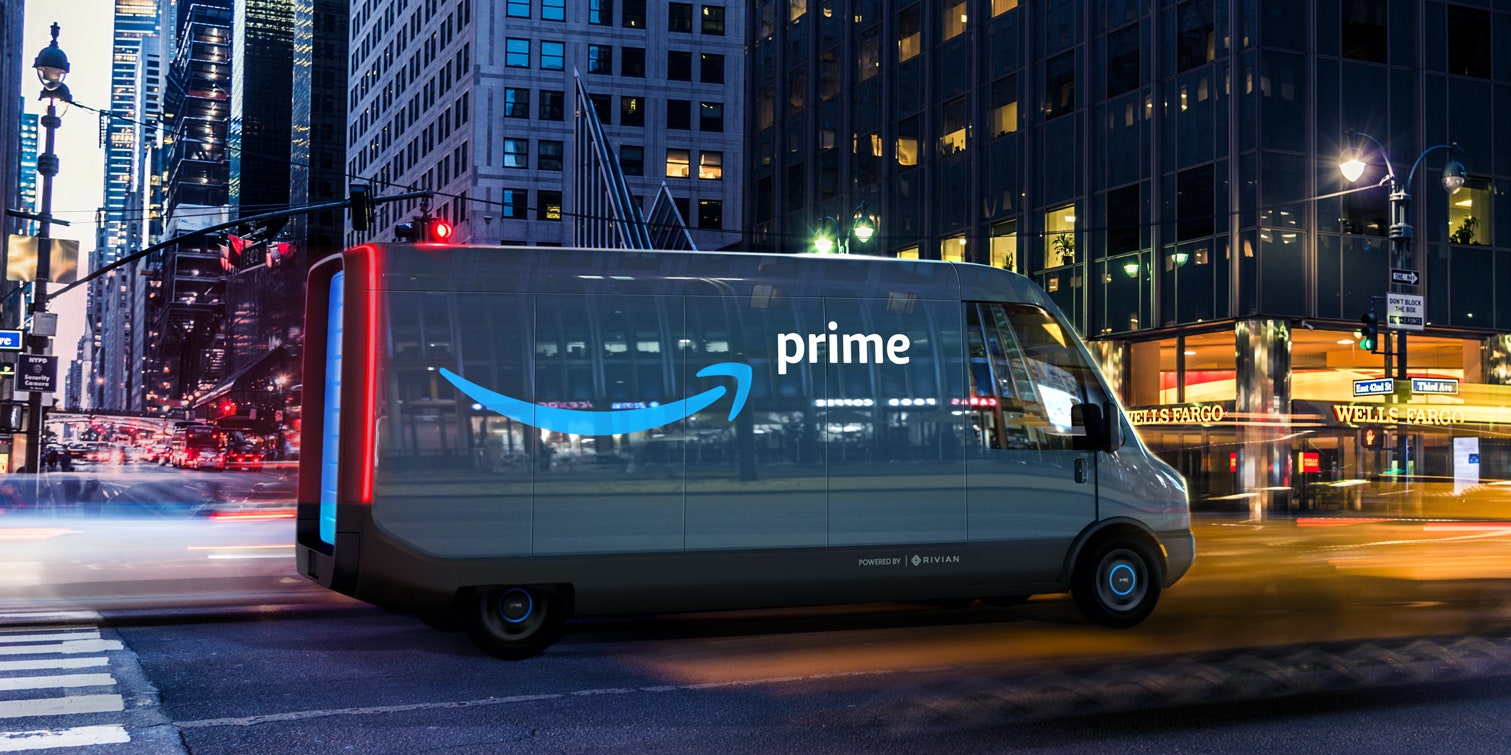
    Rivian which is one of the most well capitalized electric car startup’s has been making waves with its R1T and R1S electric pickup and SUV. But aside from this on the bedrock of a huge investment from e-commerce giant Amazon and Ford, Rivian has also been making an electric van which is meant for logistics operators that were originally meant just for Amazon. Now it has been revealed that it will be opening up sales for the electric van in 2023 after an order of 100,000 vans from the e-commerce giant.

    Rivian is slated to go public later this week with a valuation upwards of $60 billion. It quietly announced details about the plans for its fleet sales where it will even offer the R1T and R1S electric pickup and electric SUV and also has announced a new fleet management platform called FleetOS, alongside the electric van.

    Rivian is slated to be delivering 100,000 to just Amazon alone by 2024 as a part of its efforts to decarbonize its fleet. Amazon owns around 20 percent of Rivian after participating in multiple funding rounds and many had assumed the electric van was exclusive to Amazon, but seemingly that situation has changed which could allow Rivian to unlock more value.

    Rivian is slated to start production and deliveries of the electric van starting in December to Amazon.

    Apart from Amazon, FedEx has a deal with General Motors for EVs with its BrightDrop subsidiary. Even UPS has a deal with EV startup Arrival – so there is a trend that many logistics players are looking towards EVs which certainly is a big market for the EV players around the world.

  • FedEx’s bot opens possibilities for on-demand, same-day delivery

    FedEx’s bot opens possibilities for on-demand, same-day delivery

    Roxo is an autonomous specialty delivery device, designed to travel on sidewalks and along roadsides, safely delivering smaller shipments to customers’ homes and businesses. Its features include pedestrian-safe technology, multiple cameras and LiDAR allowing the zero-emission, battery-powered bot to be aware of its surroundings. These features are coupled with machine-learning algorithms to detect and avoid obstacles, plot a safe path, and allow the bot to follow road and safety rules. Proprietary technology makes it highly capable, allowing it to navigate unpaved surfaces, curbs, and to even climb deep flights of steps for an extraordinary door-to-door delivery experience.

    Roxo is currently undergoing testing in the U.S. to generate data to ‘train’ the self-driving software and validate safe performance, in compliance with all applicable safety regulations and guidelines. There is significant opportunity in Japan to identify local, case-specific applications to make the best use of the technology to benefit FedEx customers.

    “We are thrilled to have Roxo in Japan, a country that is a global leader in robotics implementation. The FedEx SameDay Bot is truly an innovation opening new possibilities for on-demand, same day, hyper-localized delivery,” said Kawal Preet, president of the Asia Pacific, Middle East, and Africa (AMEA) region at FedEx Express. “As we sit at the intersection of physical and digital networks, Roxo brings a glimpse of the future of logistics, where customers can enjoy same day, contactless delivery services at their doorsteps. With businesses of all kinds embarking on digital transformation, we look forward to collaborating with future-ready companies to advance delivery services in Japan and elsewhere in Asia Pacific.”

    The bot is being developed in collaboration with DEKA Development & Research Corp., a prominent research and development company which also produced the Segway. The bot uses DEKA’s established iBOT electric wheelchair base, capable of negotiating rough terrain, traversing steps, and steep inclines. Its sensors maintain 360-degree awareness of its surroundings and uses artificial intelligence, or AI, to choose the safest path or course of action. With a tall profile it is easy for pedestrians and road users to see. It also uses signals, lights and a signaling screen that clearly communicate its directional intent.

    Roxo was unveiled in February 2019 and has been undergoing tests with major retailers in the U.S. U.S. cities where Roxo has been tested include Memphis, Tennessee; Manchester, New Hampshire; and Plano and Frisco, Texas. It made its first international appearance in Dubai, United Arab Emirates in October 2019 for an experimental project with local businesses including Dubai Airports.

  • FedEx To Test Package Deliveries With Self-Driving Startup Nuro

    FedEx To Test Package Deliveries With Self-Driving Startup Nuro

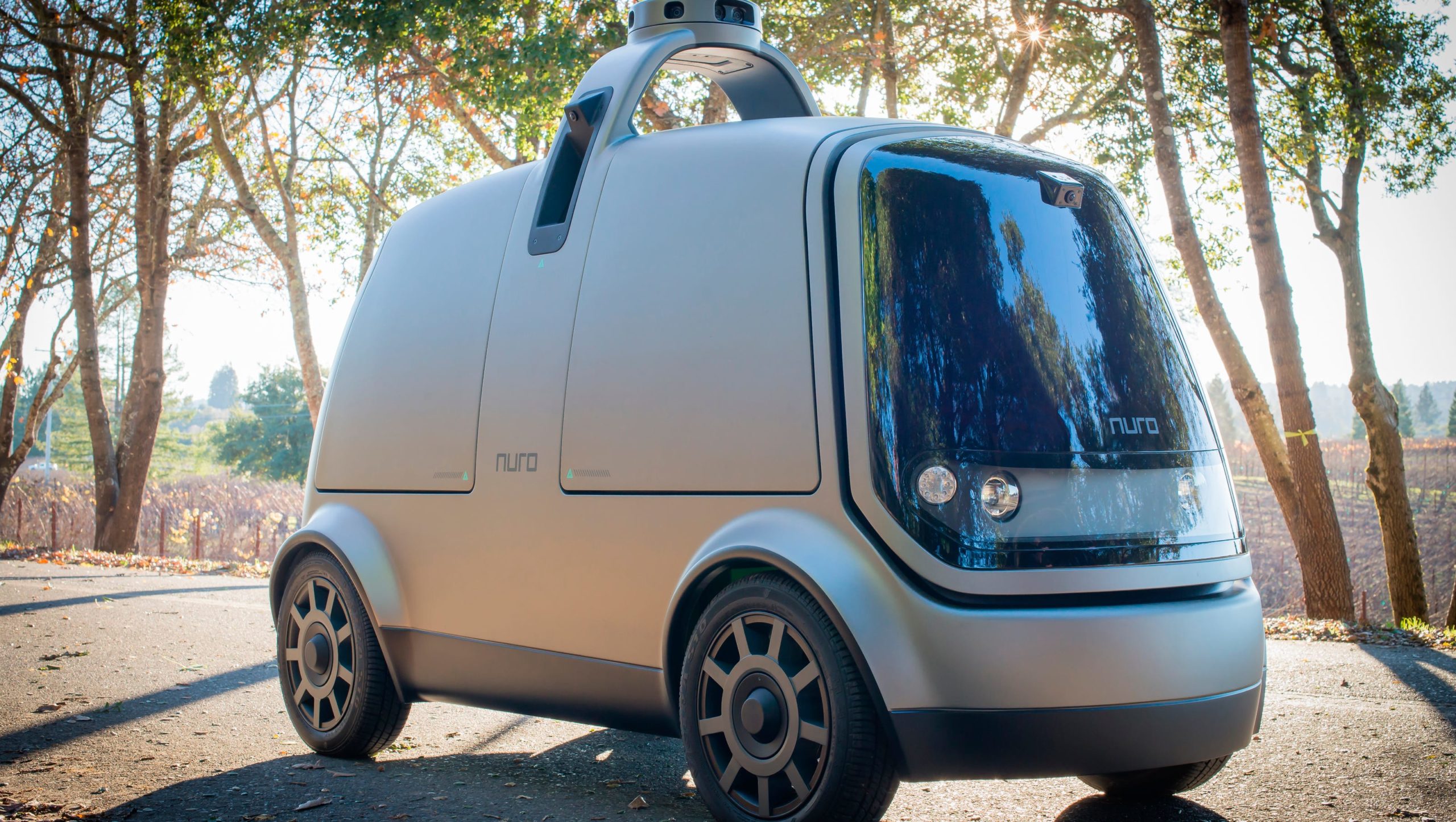
    FedEx Corp and robotics company Nuro on Tuesday announced a multi-year agreement to test self-driving vehicles in the package delivery company’s network, starting with a pilot program in Houston. The partnership comes as parcel companies race to reduce the cost of last-mile delivery, which surged during the pandemic. The companies will target delivery scenarios where Nuro’s low-speed, unmanned vehicle can provide “the biggest bang for your buck,” Cosimo Leipold, Nuro’s head of partnerships, told Reuters in an interview.

    That will likely include inefficient tasks like late-night pickups in out-of-the-way places, said Rebecca Yeung, FedEx vice president for advanced technology and innovation. “Instead of dispatching a driver to get those packages, a device like Nuro could be super helpful,” said Yeung, who called the FedEx/Nuro tie-up a “very serious, long-term commitment” that aims to reduce headaches, not human drivers.

    Nuro vehicles are already making deliveries for U.S. supermarket operator Kroger Co and Domino’s Pizza Inc in the Houston area. Nuro continues to test its technology in Arizona. Nuro, whose R2 unit has space for delivery cargo but not a human driver, said last year it has raised $500 million. In a separate project, FedEx is using DEKA Research & Development Corp’s smaller robot, dubbed “Roxo,” for on-demand, same-day deliveries in Plano, Texas.

    Nuro vehicles are already making deliveries for U.S. supermarket operator Kroger Co and Domino’s Pizza Inc in the Houston area.

    Rival United Parcel Service Inc is centering its unmanned delivery efforts on drones. UPS has ordered electric delivery vans from British startup Arrival. Those vehicles are fitted with sensors and cameras that should gradually enable autonomous features, but will still require a human driver.

    Transporting people via self-driving taxis is proving more difficult and expensive than delivering packages and food. As a result, freight and logistics companies are exploring ways to roll out the technology on predictable and simple routes, including on highways.

  • FedEx unveils autonomous delivery robot

    FedEx unveils autonomous delivery robot

    FedEx Corp has launched the FedEx SameDay Bot, an autonomous delivery device designed to help retailers make same-day and last-mile deliveries to their customers.

    Retailers will be able to accept orders from nearby customers and deliver them by bot directly to customers’ homes or businesses the same day. FedEx is collaborating with companies such as AutoZone, Lowe’s, Pizza Hut, Target, Walgreens and Walmart to help assess retailers’ autonomous delivery needs. On average, more than 60% of merchants’ customers live within three miles of a store location, demonstrating the opportunity for on-demand, hyper-local delivery.

    “The FedEx SameDay Bot is an innovation designed to change the face of local delivery and help retailers efficiently address their customers’ rising expectations,” said Brie Carere, executive vice president and chief marketing and communications officer for FedEx.

    “The bot represents a milestone in our ongoing mission to solve the complexities and expense of same-day, last-mile delivery for the growing e-commerce market in a manner that is safe and environmentally friendly.”

    The FedEx bot is being developed in collaboration with DEKA Development and Research Corp and its founder Dean Kamen, inventor of many life-changing technologies including the iBot personal mobility device and the Segway.

    “The bot has unique capabilities that make it unlike other autonomous vehicles,” Kamen said. “We built upon the power base of the iBot, an advanced, FDA-approved, mobility device for the disabled population with more than 10 million hours of reliable, real-world operation. By leveraging this base in an additional application, we hope that the iBot will become even more accessible to those who need it for their own mobility.”

    The FedEx bot is designed to travel on sidewalks and along roadsides, safely delivering smaller shipments to customers’ homes and businesses. The bot features include pedestrian-safe technology from the iBot, plus advanced technology such as surveying method lidar and multiple cameras, allowing the zero-emission, battery-powered bot to be aware of its surroundings.

    These features are coupled with machine-learning algorithms to detect and avoid obstacles, plot a safe path and enable the bot to follow road and safety rules. Proprietary technology makes the bot highly capable, allowing it to navigate unpaved surfaces, curbs, and even steps for an extraordinary door-to-door delivery experience.

    FedEx plans to test the bot this summer in select markets, including Memphis, Tennessee, pending final city approvals. The initial test will involve deliveries between selected FedEx Office locations.

    FedEx Office currently offers a SameDay City service that operates in 32 markets and 1,900 cities using branded FedEx vehicles and uniformed FedEx employees. The FedEx bot will complement the FedEx SameDay City service.

    “The FedEx SameDay Bot represents the next chapter in our long legacy of delivering innovation and outstanding service, supported by an already existing FedEx logistics ecosystem,” said Brian Philips, president and CEO of FedEx Office.

    “We are excited to bring this technology to address new markets and better support our customers. The companies who have provided feedback on its potential use have been instrumental in ensuring we are looking toward the future of e-commerce.”

  • FedEx QR Pay targets SMEs in five major Asian markets

    FedEx QR Pay targets SMEs in five major Asian markets

    Transport company FedEx has launched a QR-code based mobile payment system in Hong Kong, Malaysia, Philippines, Singapore, Thailand and Australia. The system, FedEx QR Pay (the QR stands for quick response), is targeted specifically at SMEs.

    Supplementing the firm’s existing online payment methods, FedEx QR Pay is a secure mobile payment option activated by QR codes embedded with unique payment links. QR Pay eliminates the need to have shopping carts, booking engines or checkouts, allowing customers to make payments with credit cards and e-wallet services.

    FedEx’s president for Asia Pacific Karen Reddington said: “FedEx is constantly looking for ways to innovate, pioneer new solutions and offerings to address customers’ evolving needs in the region … QR Pay provides greater flexibility and convenience for our customers, and ultimately a better experience when it comes to managing their logistics needs.”

    Asia Pacific leads the world in mobile payment with 53 per cent of connected consumers using their mobile devices to pay for goods or services at point of sale. Rising mobile penetration is a key driver, with the number of smartphone users across region now over a billion. Seeing the clear trend towards mobile payment adoption, SMEs are also harnessing new technologies to expand their business.

    According to a recent research commissioned by FedEx, 73 per cent of SMEs are already current users of mobile payments, with 69 per cent of these businesses likely to increase usage in the next 12 months. Thirty per cent of current non-users are likely to begin using mobile payments as well.

    FedEx QR Pay will soon be expanded to other markets in Asia Pacific.

  • FedEx Malaysia trains eye on growth post-merger

    FedEx Malaysia trains eye on growth post-merger

    Following the merger of its parent company with rival TNT Express a year ago at the global level, FedEx Malaysia is now positioning itself for greater growth in the country.

    “Our aspiration is to always be better than before,” FedEx Malaysia managing director Chong Siang-Chung told us in an interview, saying the group is focused on sustainable growth and contributing to the country’s gross domestic product (GDP).

    While declining to share the specific details of its growth target, Chong alluded to projections on the country’s GDP growth as a benchmark. The World Bank sees Malaysia’s GDP growing at 5.8% this year, while Bank Negara Malaysia forecasts the growth rate to come in between 5.5% and 6%.

    FedEx Malaysia currently operates a fleet of over 200 trucks and vans in the country and flies two of its four aircraft from Malaysia on a daily basis. Globally, FedEx Corp operates a fleet of over 660 planes and 170,000 vehicles, and delivers some six million parcels a day.

    It has two Malaysian gateways — Kuala Lumpur International Airport and Penang International Airport — both part of the group’s AsiaOne network that connects 20 major cities in the Asia-Pacific region for next-day deliveries.

    FedEx Corp acquired TNT for €4.4 billion in May 2016, which it said was to strengthen its European road network.

    In Malaysia, the merger of the logistics service providers’ operations has been going smoothly, according to Chong. Integration of their ground operations, which began on July 31 last year, is already completed. Its sales operations will be integrated by June this year.

    “Our customers already know by now that when they make their orders through FedEx or TNT, vans carrying either brand may show up,” shared Chong. On top of that, customers have been able to enjoy earlier shipping and response times as a result of both brands’ immediate coverage expansion, he said.

    FedEx first established freight operations in Malaysia in 1989 and introduced express operations in 1993, while TNT has had a presence here since 1976.

    Chong joined FedEx Malaysia in 1998 before moving to TNT Malaysia in 2003 as a sales and marketing director. He was later appointed TNT Malaysia managing director for Malaysia and Brunei in 2011.

    According to him, the shared values of both FedEx Malaysia and TNT, which place emphasis on prioritising people, have smoothed the merging of operations and his transition into his current role, to which he was appointed in November 2017.

    Going forward, Chong said FedEx Malaysia still sees much excitement in the last-mile delivery segment due to the e-commerce boom, which the group views as an opportunity.

    “We get many requests to change delivery addresses and time based on what is convenient to customers,” Chong said. With that in mind, the group is leveraging on technology to address this need through FedEx Delivery Manager, which offers SMEs (small and medium enterprises) and e-retailers flexible delivery options.

    The group is unfazed by the intense competition in the domestic market among courier service providers, which has crimped margins for companies such as GD Express Carrier Bhd and Nationwide Express Holdings Bhd.

    “We see it as a good thing that the industry is attracting more and more players,” Chong said, noting that this signals business is growing.

    FedEx Malaysia sees its own value proposition in providing “total custodial services”, Chong said, particularly to SMEs, for which it has developed various shipping options that include cost-effective alternatives, and web-based solutions.

    Although the group has historically served mostly large multinational corporations, Chong shared that it has seen an increasing number of SMEs relying on its services for e-commerce deliveries.

    “Our current portfolio is quite balanced between SMEs and big businesses,” he said, adding that FedEx Malaysia is still largely focused on business-to-business transactions.

    A 2016 Asia-Pacific survey by FedEx, which focused on SMEs, found that most of these companies had limited knowledge of overseas markets. FedEx, therefore, found that it could act as a source of sharing knowledge, Chong said.

    As for challenges the group faces in Malaysia, he said customer requirements are growing increasingly sophisticated based on industry-specific needs.

    “Some of our customers, such as those in the healthcare supply chain, want to know more about how their parcels are being transported,” he said. To cater to such requests, one of the products it has developed is FedEx SenseAware, which allows customers to monitor the temperature, humidity, light exposure, barometric pressure and location of their shipments using data collected from multiple sensors.

    Chong also said FedEx Malaysia is committed to supporting the government’s initiatives under the national Logistics and Trade Facilitation Masterplan, which aims to make Malaysia the “preferred logistics gateway to Asia” by 2020.

    This includes the establishment of a Digital Free Trade Zone by the Malaysian government in partnership with Alibaba, which Chong welcomes as a measure to promote trade.

    “We also have a responsibility to support this initiative seeing as how it is expected to benefit the economy of Malaysia,” he said, adding that FedEx Malaysia would therefore continue to provide strong support to businesses and SMEs here as a logistics service provider.
  • FedEx to link Guangzhou and Memphis hubs with air bridge

    FedEx to link Guangzhou and Memphis hubs with air bridge

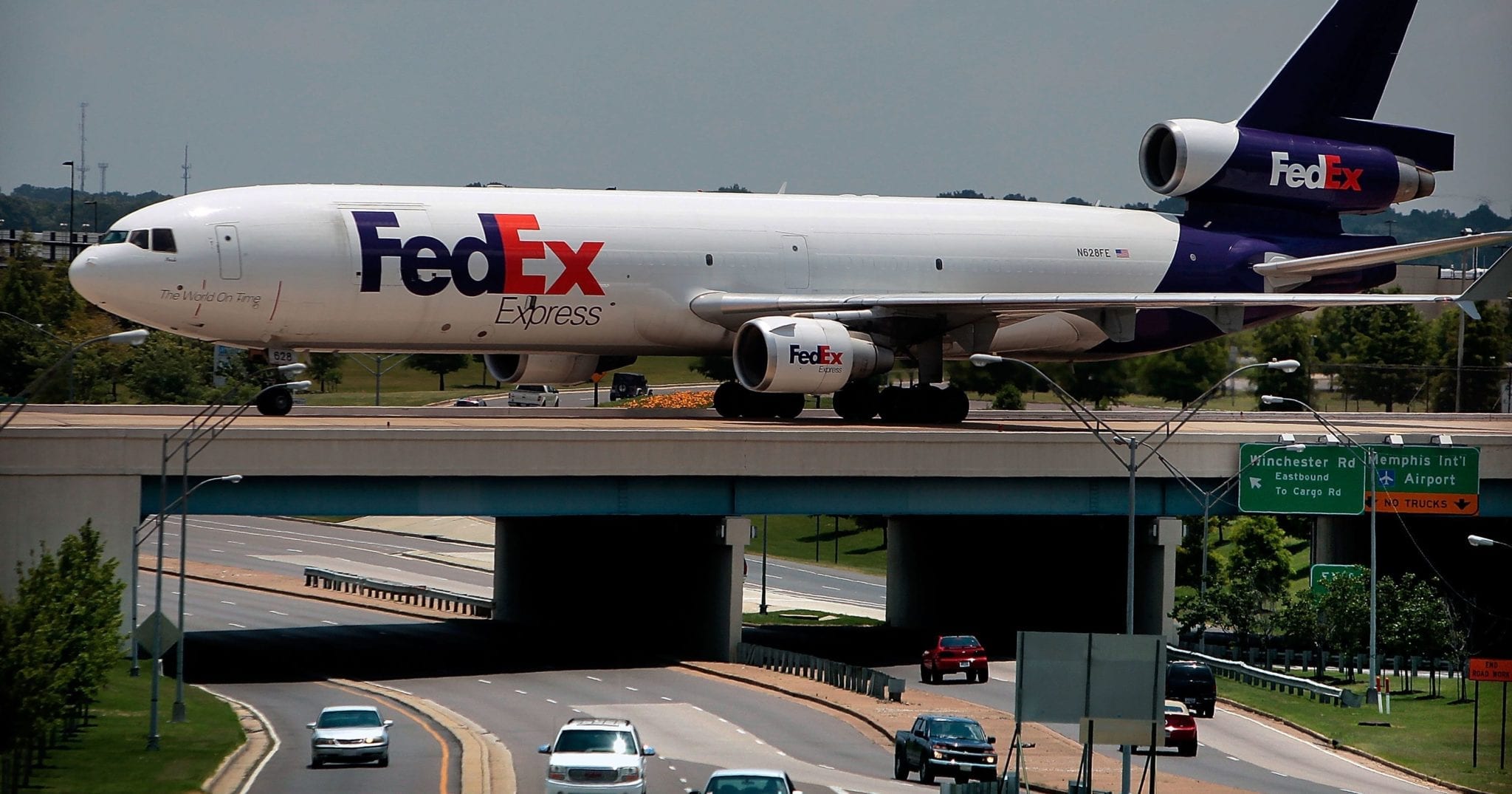
    FedEx Express has launched a new route connecting its Asia Pacific hub in Guangzhou with its global Memphis hub. Initially, an MD-11 freighter is being used for the five-times-per-week route, but it will be replaced with a B777 freighter in May, to meet increasing shipping demand.

    In April, the flight departing from Guangzhou stops in Osaka and Anchorage, but with the change of freighter in May, the Alaskan stop will be dropped on four of the five flights — the Saturday flight stops in Honolulu and Anchorage.

    “As our business continues to develop across the Asia Pacific region, we constantly adjust our network and routings to better meet dynamic market needs,” said Karen Reddington, president, Asia Pacific, FedEx Express.

    “Adding volume and a faster, more direct connection to our Memphis World Hub will give Asia Pacific businesses a stronger competitive advantage in connecting to customers in North America and beyond.“

    The express operator said that Asia Pacific region is predicted to grow at a rate of 6.5% in 2018, 2% faster than the projected global growth rate, according to the World Economic Forum.

    Meanwhile, Boeing forecasts that air cargo flowing from Asia to North America is expected to increase by 4.7% per year over the next 20 years.

    In addition, 2017 saw Guangdong’s total import and export value of goods grew by 8% year-on-year, while the total import and export value with the US grew by 10.4% year-on-year.

    FedEx Express launched two new routes last year – one connecting Liège, Belgium and Memphis, with stops in Seattle, Anchorageand Shanghai and another linking Shanghai and Oakland.

    Early this year, FedEx Express officially opened its FedEx Shanghai International Express and Cargo Hub, the second international hub in China.

    Currently, FedEx operates more than 250 flights per week in China, with more than 160 of these flights going through the FedEx Asia hub.

  • FedEx Express announces launch of new route

    FedEx Express announces launch of new route

    FedEx Express, a subsidiary of FedEx Corp. (FDX) and the world’s largest express transportation company, announced the launch of a new route which, for the first time, connects the FedEx APAC Hub in Guangzhou, China and the FedEx World Hub in Memphis, Tennessee, U.S.A.

    Currently, a FedEx Express MD-11 freighter is being used for the new route but it will be replaced with a B-777 freighter in May to meet increasing shipping demand. The new route has five flights per week from Tuesday to Saturday.

    In April, the flight departing from Guangzhou stops in Osaka, Japan and Anchorage, Alaska, U.S.A. Beginning in May, the flight from Guangzhou will stop in Osaka before flying directly to Memphis. From Tuesday to Friday, the flight returning from Memphis stops in Indianapolis, Indiana, U.S.A. and Anchorage before flying directly to Guangzhou, while the Saturday flight stops in Honolulu, Hawaii, U.S.A. and Anchorage.

    The Asia Pacific region is predicted to grow at a rate of 6.5% in 2018, 2% faster than the projected global growth rate. Boeing forecasts that air cargo flowing from Asia to North America is expected to increase by 4.7% per year over the next 20 years. In addition, Guangdong province, where the APAC Hub in Guangzhou is located is one of China’s major trade centers. In 2017, Guangdong’s total import and export value of goods grew by 8% year-on-year, while the total import and export value with the United States grew by 10.4% year-on-year.

  • FedEx boosts e-commerce capabilities with acquisition of P2P

    FedEx boosts e-commerce capabilities with acquisition of P2P

    Today, FedEx announced the acquisition of UK-based P2P Mailing Limited for £92 million, in a move that bolsters the global integrator’s worldwide e-commerce delivery capabilities.

    P2P facilitates cross-border e-commerce deliveries with an asset-light model that relies on a proprietary IT platform to string together final-mile delivery and customs partners in different regions to deliver e-commerce parcels. Like FedEx, P2P offers a range of delivery services targeting varying customer needs, including international, domestic, tracked, untracked and express delivery services.

    But unlike FedEx, which relies primarily on its own assets and infrastructure for deliveries, P2P leverages “relationships with private, postal, retail and clearance providers” to provide “plug-and play options with carrier networks and customer systems” in hundreds of markets, according to FedEx.

    Although on a smaller scale, P2P’s business model is somewhat similar to that of the Cainiao logistics platform owned by Chinese e-tailer Alibaba. Cainiao links fragmented logistics service providers together in order to ship goods sold on the company’s various e-commerce platforms.

    Moving forward, P2P will operate as a subsidiary of FedEx Cross Border, which following recent reorganization, operates as a unit within FedEx Trade Networks. Carl W. Asmus, president and CEO, FedEx Cross Border said, “Global e-commerce continues to grow at a rapid pace, and more and more merchants, marketplaces, e-commerce and social platforms are looking for innovative, cost-effective ways to get merchandise from distribution points in one country to customers in another.”

    Cross-border e-commerce is sure to be a hot topic at this year’s Cargo Facts Asia. We invite you to join us in Shanghai 23-25 April at the Mandarin Oriental Pudong to hear more from FedEx and other e-commerce giants, including Alibaba’s Lazada and JD.com Logistics.

  • FedEx Hacked, Says No Data Compromised

    FedEx Hacked, Says No Data Compromised

    FedEx said that it has found no evidence that private customer data was “misappropriated” when it was made visible on an unsecured server earlier in February.

    According to news from Reuters, the server that was made visible contained more than 119,000 scanned documents from U.S. and international citizens, including passports, driver’s licenses and security identification. The potentially compromised data had been stored on an Amazon S3 storage service and was collected by Bongo International, which FedEx had acquired in 2014. Bongo, which added up international shipping prices, was terminated by the company.

    “After a preliminary investigation, we can confirm that some archived Bongo International account information located on a server hosted by a third-party, public cloud provider is secure,” FedEx spokesman Jim McCluskey said in a statement. “We have found no indication that any information has been misappropriated and will continue our investigation.”

    The spokesman would not clarify which records were secure, and he wouldn’t disclose whether or not the company involved the authorities.

    The potential breach in data privacy comes as stocks from FedEx and its rival UPS have been under pressure after reports surfaced that Amazon was getting into the delivery market in a bigger way. The service, which is known as “Shipping with Amazon,” is launching in Los Angeles and possibly other locations, a person who has knowledge of the program told Reuters.

    Once investors got wind of the news, shares of both FedEx and UPS slid more than 4 percent late last week. Still, both delivery services — and analysts — are downplaying concerns the experiment is a threat to the business of FedEx or UPS in the near future. Cowen and Co Analyst Helane Becker, for example, said Amazon would have to spend an estimated $100 billion to build a network and acquire the equipment to go up against FedEx and UPS.

  • FedEx Opens Shanghai Hub, Prepares for A Surge On eCommerce in Asia

    FedEx Opens Shanghai Hub, Prepares for A Surge On eCommerce in Asia

    FedEx recently opened its 1.4 million square foot Shanghai Pudong International Airport hub on January 8. FedEx’s new hub is now considered as the largest of its kind, installed with the latest sortation technology temperature-controlled storage.

    FedEx Corp. anticipates a growth in online transactions in China as the company opens its new hub in the country. Air cargo volume in China has grown steadily together with the demand of cross-border eCommerce market.

    It is approximate that the value of goods to increase to at least 43 percent to $117 billion this year. China’s air cargo volume is projected to increase to at least 6.2 percent in 2018, which is now considered as the biggest gain in the past 7 years, according to China’s Civil Aviation Administration.

    “There’s an opportunity to bring a lot of products and a lot of convenience to the Chinese consumers… With the wealth of Chinese consumers and the worldliness of Chinese consumers, they’re going to demand goods from the U.S. and Europe and parts all over the world,” David Cunningham Jr. Chief Executive Officer of FedEx Express

    China’s growing demand for cross-border eCommerce

    FedEx says that their latest facility can send real-time information such as shipment and flight status to its customers’ mobile smartphone devices. The hub also has dedicated areas for entry-exit inspection and quarantine to speed the customs clearance process.

    China’s growing demand for cross-border eCommerce has generally increased for the past 10 years, urging carriers to reorient their operations to mainly focus on the Chinese Market.

    United Parcel Service Inc. has now set up at least $10 million venture with SF Holding Co. in Hong Kong in May to cater to the growing demand of the Chinese Market. FedEx currently operates 66 flights in and out of the Shanghai hub each week.

  • FedEx launches ‘crucial’ e-commerce service in Asia Pacific

    FedEx launches ‘crucial’ e-commerce service in Asia Pacific

    FedEx customers in the Asia Pacific market have a new e-commerce delivery option. FedEx Express — subsidiary of Memphis-based logistics and delivery powerhouse FedEx Corp. — announced Jan. 23 its FedEx Delivery Manager service would now be offered in Australia, China, Japan, Malaysia, New Zealand, Singapore, South Korea and Taiwan (Asia Pacific).

    Customers using the delivery manager service can request specific delivery times or have packages delivered to a different address as part of the free service. FedEx sends SMS or email notifications when it picks up a package; recipients can then change any delivery instructions as needed. This is also intended to reduce the amount of deliveries FedEx makes to people who are not home.

    “The last mile of delivery capability is crucial to e-commerce as consumers today view convenience as a necessity and not a luxury,” said Karen Reddington, president of FedEx Express Asia Pacific, in a release.

    FedEx recently confirmed the importance of an “efficient and flexible shipping process” to SMEs [small-to-medium enterprise] via a FedEx-commissioned research study. According to the company, study results showed that 79 percent of Asia Pacific SMEs generate revenue through e-commerce; 32 percent have had e-commerce growth in the past 12 months; and, of the businesses that reported e-commerce growth, 46 percent said they needed more flexible shipping options.

    The study, “Global Trade in the Digital Economy: Opportunities for Small Businesses” was commissioned by Harris Interactive on behalf of FedEx in September 2016.

    With this latest addition, FedEx Delivery Manager is now offered in 41 markets across the world, including Asia Pacific, Europe, North America, Latin America and the Middle East.

    “The flexible delivery options provided by FedEx Delivery Manager will give end-consumers the peace of mind and enhance their overall online shopping experience,” Reddington said. “This is crucial to businesses, especially SMEs, as this will help them meet customers’ expectations and stay ahead of the competition.”

    FedEx Corp. reported $60.3 billion in annual revenue for fiscal 2017. In total, FedEx has more than 400,000 employees across the world. FedEx reported $16.3 billion in revenue for its second quarter 2018 results.