Tag: fedex

  • FedEx ready for the Christmas rush

    FedEx ready for the Christmas rush

    FedEx expects says it expects to handle 380-400million packages on its global network between Black Friday (24 November) and Christmas Eve.

    It also predicts that it will more than double its average daily volume of 13 million shipments on three Mondays over the Christmas period.

    It attributes the surge to e-commerce-savvy consumers making more last-minute purchases.

    FedEx’s main European hub at Paris-Charles de Gaulle regularly handles over 300 aircraft per week and handles around 1,200 tonnes of freight per day. The Central and Eastern Europe hub in Cologne handles 58 weekly flights to and from Europe, the US, and Asia.

    Worldwide, over 400,000 team members are preparing for the peak season on the FedEx global network, which consists of more than 650 planes (the second largest airline in the world in terms of number of aircraft) and more than 150,000 motorised vehicles.

  • More online super sales for Asia online market

    More online super sales for Asia online market

    While the US formulated online super sales, such as this week’s Black Friday, Asia has adopted the concept with a vengeance.

    In fact, China has increasingly been exporting Alibaba’s Singles Day (11.11) event, which this month racked up a massive US$35 billion in sales. November is the favoured month for this new consumer mania, offering the Singles Day, Black Friday and Cyber Monday sales.

    Both Black Friday and Cyber Monday themselves have been catching on in the Asia Pacific, growing by 29 per cent last year, according to global payments company WorldPay.

    It says that despite forking out $17.8 billion on Singles Day last year, Chinese consumers still went hunting Black Friday bargains, with overall spending on the day up by 37 per cent from the previous year. In Hong Kong, the rate of growth was 32 per cent, and in Singapore 21 per cent.

    While retailers are among the biggest Black Friday winners, new WorldPay data suggests this year could also be a great opportunity for savvy APAC businesses in the travel and digital sectors. In Hong Kong, spending with travel and airlines saw a 30 per cent surge last year, with Singapore figures up 20 per cent as travellers jumped online to search for flight and hotel deals.

    Not just retailers

    Shoppers are also increasingly seeking out bargains for digital content such as subscriptions, e-books and on-demand box sets. Black Friday spending in this sector last year grew 62 per cent in Hong Kong and 14 per cent in Singapore.

    Not just retailers can benefit from Black Friday, but also a range of e-commerce businesses, says WorldPay Asia Pacific GM Phil Pomford.

    “While Black Friday and Cyber Monday have typically been the realm of retailers, a more diverse range of businesses are now recognising they can also take can take advantage of this special online opportunity.

    Shoppers during this time are highly engaged, proactive and looking for a wide range of online deals, so the potential to reach new customers and strengthen brand loyalty is huge, regardless of sector.

    “E-commerce businesses should set themselves up for success by ensuring their websites are prepared for heavy traffic, and offer simple payment options to drive shopping-cart conversions. They might also consider following the example of Amazon and kickstart Black Friday deals a week early.”

    Black Friday online sales surpassed $3 billion last year and are expected to rise this week, says Adobe Digital Insights, as buyers seek to avoid long queues and lost hours in retail stores.

    In Southeast Asia, Google searches for “Black Friday” have surged over the past five years, and 12 months ago major offline/online retailers like Robinsons, Sephora and Zalora offered generous discounts for the event.

    “Many industries rely on this event to make up a large portion of their fourth-quarter sales, in particular toys and games,” says Euromonitor International senior toys and games analyst Matthew Hudak.

    ‘Sure to jump on’

    Digital campaign company RTB House says Black Friday last year attracted 106 per cent more people to online stores, with 204 per cent more transactions.

    “We anticipate conversion rates surging this time,” says RTB House Southeast Asia country director Chandra Kuncara. “Customers who missed out on Singles Day will be sure to jump on this event.”

    He says personalised retargeting is an important selling tool during Black Friday. With AI technology and deep-learning algorithms, marketers can highlight most-desired products for each individual customer.

    More purchases mean more packages being shipped, and international courier service FedEx is again expecting to handle a record number of packages over the peak holiday shopping period, which starts on Monday and runs to December 24. This year it is expecting 380 to 400 million packages.

    The growth of cross-border e-commerce is turning the peak shipping season into a global phenomenon, says FedEx. For instance, 37 per cent of Singles Day purchases in China last year were from international brands or merchants. Cross-border shopping is expected to make up 20 per cent of e-commerce sales by 2022, led by Asia Pacific.

    “While an online purchase takes just a few clicks, logistics providers are working hard behind the scenes powering every moment,” says FedEx Express AsiaPacific president Karen Reddington. “Our business is the backbone of the e-commerce market.”

    Meanwhile, while shoppers scramble for Black Friday bargains this week, outdoor retailer REI is closing its 154 US stores for the third consecutive year, offering its nearly 12,000 employees a paid holiday. It is truly going against the tide by also putting a hold on online orders.

  • FedEx supports healthcare industry by providing end-to-end visibility for critical shipments

    FedEx supports healthcare industry by providing end-to-end visibility for critical shipments

    FedEx Express has announced the expansion of its SenseAware service in Asia Pacific. The launch in South Korea will help strengthen FedEx healthcare solutions and support the rising logistics demands of the burgeoning healthcare sector in the region.

    Healthcare is one of the world’s largest industry, with a value three times greater than the banking sector, and it is still growing rapidly. Driven by the global expansion, the associated spending on healthcare logistics is expected to rise exponentially. By 2020, clinical trials logistics spending is expected to reach US$3.4 billion and cold chain logistics spending is expected to increase to US$16.7 billion. Asia Pacific, which currently represents 30 per cent of global healthcare revenues, is expected to lead the global growth in 2017 at an eight per cent rate (global projected growth rate is 4.8 per cent).

    “The immense growth of the healthcare industry is driving the demand for highly sophisticated logistics and temperature-controlled transportation across Asia Pacific,” said Karen Reddington, president, FedEx Express Asia Pacific. “FedEx is constantly looking to strengthen the range of specialized solutions for our customers. The launch of SenseAware in Korea rides on the strong growth momentum of healthcare shipments, and aims to fulfil the unique supply chain needs of our healthcare customers.”

    SenseAware will be especially valuable to customers in the healthcare sector where shipments are often environment- and time-sensitive. A multi-sensor device that is deeply integrated with a powerful web-based application, SenseAware makes it possible for customers to stay connected to their high-value shipments. The SenseAware service can monitor current location, precise temperature, relative humidity, barometric pressure readings, light exposure and shock events, and provide real-time updates to customers.

    The SenseAware service is currently available in 43 markets worldwide. In Asia Pacific, the service is available in Australia, Guam, Hong Kong, Malaysia, New Zealand, Singapore and Taiwan. The service is also available on a growing list of air and ground transportation carriers, giving more transportation options to customers in order to better fit their specific needs, while still delivering the peace of mind and quality assurance provided by SenseAware.

  • FedEx recognised for global leadership, operational strength and services

    FedEx recognised for global leadership, operational strength and services

    FedEx Express (FedEx), a subsidiary of FedEx Corp, received the ‘Global Express Provider of the Year’ award at the Payload Asia Awards Ceremony held in Singapore on October 12. This award reaffirms FedEx global market leadership, operational strength and exceptional solutions and services.

    Mark Shorney, vice president, South Pacific, FedEx Express (L) receives the ‘Global Express Provider of the Year’ Award at the Payload Asia Awards 2017.

    “At FedEx, we are committed to providing best-in-class express services and a comprehensive solution portfolio to meet the diverse needs of our customers of all sizes,” said Karen Reddington, president, FedEx Express Asia Pacific. “This award serves as a testament to our strong and agile operations across the globe and an even greater incentive to all team members to continue to deliver on the Purple Promise of making every FedEx experience outstanding.”

    In its fourth year, the annual Payload Asia Awards is organised by Payload Asia and Logistics Insight Asia. The award winners are selected through a dual track programme comprising Customer Choice Awards and Industry Choice Awards – the former determined by public online voting and the latter through ranking by an esteemed industry panel including the International Air Transport Association (IATA), Airbus and Accenture Consulting.

  • FedEx to double size of air cargo facilities at Incheon airport

    FedEx to double size of air cargo facilities at Incheon airport

    FedEx Express has revealed it will double the size of its air cargo handling facility at Incheon International Airport as it looks to cater for rising volumes in South Korea.

    Establishing a new cargo facility at Incheon International Airport is a strategic move for FedEx — the airport has seen the volume of international shipments increase by 10.4% in 2016 from 2012 to 2.7m tons.

    When it is completed in 2021, the express giant’s FedEx Cargo Terminal will cover an area of 23,425sq m, more than twice the size of its existing facility.

    The terminal will feature warehouse, office and a canopy space and will offer an automated cargo sorting system to meet the fast-growing demand of express cargo.

    Once completed the new facility will have the capacity to sort up to 18,000 packages per hour.

    ”As one of the largest economies in Asia, Korea continues to build its trade connections internationally. FedEx is investing to support the robust demand in Korean imports and exports to better serve our customers in this important market.” said Eun-Mi Chae, managing director, FedEx Express Korea.

    “With the expansion of our FedEx facility at Korea’s main gateway, we will improve our operational capabilities and create greater access to the global market supported through our integrated network.”

    The express firm signed an agreement with Incheon International Airport Corporation to confirm the construction of the terminal last week.

  • FedEx Singapore named best employer by Aon for the sixth time

    FedEx Singapore named best employer by Aon for the sixth time

    FedEx Express has been named a Best Employer by Aon in Singapore. This year, FedEx is also awarded the Best Employer in Asia Pacific after it was named the Best Employer in three out of seven Asia Pacific markets that have announced the results – Malaysia, New Zealand and Singapore.

    Representatives from FedEx Express receive the awards for Aon Best Employers Singapore 2017 and the Aon Regional Best Employers in Asia Pacific 2017. Pictured from left: Jeremy Andrulis, Chief Executive Officer, Southeast Asia, Aon Hewitt; Audrey Cheong, Managing Director, FedEx Express Singapore; Mohamed Gani Bin Salleh, Operations Coordinator, FedEx Express Singapore; and Amy Leung, Managing Director, Human Resources Services, South Pacific Region, FedEx Express.

    “We are extremely honoured to be recognised as an employer of choice in Singapore by Aon. Ensuring that our employees are engaged and feel valued is one of our core focus areas, and this recognition further reinforces our commitment to continue moving in the right direction,” said Audrey Cheong, managing director, FedEx Express Singapore. “Credit goes to our employees who manifest their high level of engagement by consistently fulfilling our Purple Promise to deliver an outstanding experience to customers.”

    The Best Employers accreditation program evaluates organisations based on four critical areas: employee engagement, effective leadership, compelling employer brand and high performance culture.

    “The rapidly evolving business environment needs organisations to accelerate organic growth, digitise their business, reduce risk exposure and embrace change,” said Jeremy Andrulis, CEO of Aon Hewitt, Southeast Asia. “These themes demonstrate the importance of having a highly engaged, agile and productive workforce. Best Employer organisations like FedEx are able to identify the capabilities they need from their employees and create an environment conducive to their employees’ growth and productivity not just now, but in the years to come. As a result, they outperform the market in employee engagement while continuing to retain the exceptional talent they already have.”

    Prior to this year, FedEx Singapore was also in Aon’s Best Employers list in 2001, 2003, 2004, 2008, 2011. In 2016, the company received a Special Recognition for Commitment to Engagement by the Aon Best Employers – Singapore program.

  • FedEx supports young entrepreneurship

    FedEx supports young entrepreneurship

    A team of student entrepreneurs from Australia and Hong Kong were named the winner at the annual FedEx Express/JA International Trade Challenge (FedEx/JA ITC) Asia Pacific Finals in Singapore. This year, the finalists presented market entry strategy plans to export a pet product to the United States of America. Songen Yeung (Australia) and Manson So (Hong Kong) beat 29 teams from across the region with their eco-friendly cat litter, which is made of soybeans and is a first for the American market. The pallets are natural, safe for pets and bio-degradable, creating less harm to pets as well as the environment.

    To further promote cross culture exchange of ideas, individual finalists were randomly shuffled to form teams of two with each member from a different market. A total of 60 students from ten Asia-Pacific markets (Australia, mainland China, Hong Kong, Japan, Malaysia, the Philippines, Singapore, South Korea, Thailand and Vietnam) participated in the competition.

    “Winning wasn’t on my mind when I decided to participate,” said Songen Yeung. “I started off with the mindset to learn about doing business, meet new people from different places, and challenge myself to do something out of my comfort zone. I am thrilled that I have achieved all that, and won the competition.” Manson So added, “This is certainly an eye-opening experience for me. We learned a lot about global business and team work among different cultures. I’d strongly encourage my schoolmates and friends to join this competition next year.”

    The first runner up, Nathan Peadon (Australia) and SukHoon Chang (Korea), stood out with their proposal of uVET, a silicon microchip to be implanted into dogs to help owners keep track of their pets’ well-being and health, such as monitoring hydration levels, body fat and body temperature.

    Kevin Ho (Hong Kong) and Taishi Nishizawa (Japan) came in third with the idea of a multi-functional smart collar for dogs that owners can use to track the location of their pets. It can also measure the number of steps taken by a dog to ensure that the pet stays fit.

    “Technology is moving us towards an increasingly borderless world, and cross-cultural collaboration has become the order of the day,” said Karen Reddington, president, FedEx Express Asia Pacific. “We are thrilled that this year’s format reflected the increasing importance of international team-work. And FedEx is glad to be playing a part in providing a platform to nurture budding entrepreneurs. As part of our FedEx Cares commitment to invest $200 million in 200 communities worldwide by 2020, we are committed to giving entrepreneurs everywhere the tools they need to succeed.”

    “The FedEx/JA ITC aims to provide students with the opportunity to gain business knowledge and work as cross-border teams to create innovative business ideas and solutions, just like in the real business world. Looking at the students’ interactions and impressive presentations this week, we are proud to say that it has been a success. We would like to thank FedEx Express for their continued support of this program, giving us the opportunity to support the development of young minds every year,” said Vivian Lau, president, JA Asia Pacific.

    The FedEx/JA ITC program is jointly organized by FedEx Express, a subsidiary of FedEx Corp. (NYSE: FDX) and the world’s largest express transportation company, and JA Asia Pacific, a member of JA Worldwide. It aims to inspire and educate young entrepreneurs about global business and provide them with a solid foundation to build their future careers in business. The program has inspired more than 17,000 students in the region since its inception in 2007.

  • Young entrepreneurs impress at FedEx/JA ITC 2017

    Young entrepreneurs impress at FedEx/JA ITC 2017

    FedEx Express announced the winners of the Singapore FedEx Express/JA International Trade Challenge (FedEx/JA ITC) 2017.

    The three pairs of student business teams who advanced to the Asia Pacific FedEx/JA ITC in Singapore occurring from August 20 to 24, 2017 are:

    1. Ryan Ling and Dogiparthy Reshma Ishwarya – Anderson Junior College

    2. Darren Lim and Nabila Syuhada – ITE College Central

    3. Ang Swee Yang and Tjhe Paramita Devi – Nanyang Polytechnic

    The finalist teams presented their ideas to a judging panel composed of FedEx and Junior Achievement representatives, who evaluated them on their innovative ideas for a household product to be sold in India. The winning teams were assessed based on the originality of their concept, thoroughness of research for their business plans, and feasibility of their ideas. Outshining 12 other teams, the winning teams will now have the opportunity to compete in the prestigious regional finals.

    This year’s regional finals will feature an exciting change from the previous competition format. To further promote cross-border collaboration, finalists will not be competing in the same team but will instead go through a random shuffle to form a mixed team of two team members from different countries.

  • FedEx posts strong fiscal Q4 and FY 2017 earnings results

    FedEx posts strong fiscal Q4 and FY 2017 earnings results

    FedEx Corp. reported earnings of US$3.75 per diluted share (US$4.25 per diluted share on an adjusted basis) for the fourth quarter ended May 31, compared to a loss of US$0.26 per diluted share (earnings of US$3.30 per diluted share on an adjusted basis) a year ago.

    This year’s and last year’s quarterly consolidated earnings have been adjusted for:

    Impact per diluted share Fourth Quarter
    Fiscal 2017 Fiscal 2016
    Mark-to-market (“MTM”) pension accounting adjustments ($0.02) $3.47
    TNT Express integration expenses  0.32 —
    FedEx Trade Networks legal matters  0.09 —
    TNT Express intangible asset amortization  0.06 —
    FedEx Ground legal matters  0.05  0.02
    TNT Express expenses and operating results from the date of acquisition  —  0.34
    Tax impact – legal entity restructuring for TNT integration  —  (0.28)

    “Strong fourth quarter results completed a record fiscal 2017,” said Frederick W. Smith, FedEx Corp. chairman and chief executive officer. “We enter fiscal 2018 confident FedEx Corp. will continue to deliver outstanding value and opportunities for shareowners, customers, and team members for years to come.”

    Fourth quarter results
    FedEx Corp. reported the following consolidated results for the fourth quarter (adjusted measures exclude the items listed above for the applicable fiscal year):

    Fiscal 2017 Fiscal 2016
    As Reported
    (GAAP)
    Adjusted
    (non-GAAP)
    As Reported
    (GAAP)
    Adjusted
    (non-GAAP)
    Revenue $15.7 billion $15.7 billion $13.0 billion $13.0 billion
    Operating income (loss) $1.58 billion $1.76 billion ($68 million) $1.51 billion
    Operating margin 10.1% 11.2% (0.5%) 11.7%
    Net income (loss) $1.02 billion $1.15 billion ($70 million) $897 million
    Diluted EPS $3.75 $4.25 ($0.26) $3.30

    Operating results benefited from higher base rates, increased package volume and the inclusion of TNT Express results.  Net income and earnings per share reflect tax benefits of US$104 million, or US$0.37 per diluted share, related to the implementation of new foreign currency tax regulations, the adoption of a new accounting standard for share-based payments, and certain transactions related to the TNT Express integration.

  • Mighty Jaxx wins FedEx small business grant contest

    Mighty Jaxx wins FedEx small business grant contest

    Khoo Seng Thiam, managing director, FedEx Express Singapore congratulates Jackson Aw, Founder, Mighty Jaxx International Ptd Ltd who placed first in the 2017 Small Business Grant Contest in Singapore.

    FedEx Express recently announced the winners of the 2017 FedEx Small Business Grant Contest in Singapore. The winner of the contest was Mighty Jaxx International Pte Ltd, a design studio that specialises in developing art collectibles. The company was awarded a grant of S$25,000.

    Born out of pure love for designer toys, founder Jackson Aw has always been curious about the manufacturing process behind the toys he collects. Since their launch in 2012, the company has over produced 200 designs and delivered thousands of products to collectors in over 50 countries. Their limited-edition collectibles are designed in collaboration with world renowned artists and international brands such as DC Comics, Cartoon Network and New Balance. Mighty Jaxx International plans to use its grant to build new universes with original characters and to expand overseas to large-scale international events such as Comic-Con International.

    The First runner-up is E-TracX, a DJ academy. Its goal is to change people’s lives for the better through music. The company was awarded a grant of S$10,000. The second runner-up prize, worth S$5,000, was awarded to Xtreme DSP Global Pte Ltd, a company that sells lightweight, user-centric wireless communication headsets. The winning businesses were selected by a panel of industry leaders.

    “Small businesses make up the backbone Singapore’s economy and continue to play a vital role in an increasingly globalised marketplace. With the rise of e-commerce, it is a testament to the resilience of local SMEs that they continue to stay ahead, despite facing stiff competition within and outside the region,” said Khoo Seng-Thiam, managing director, FedEx Express Singapore. “In its second year, we hope that the FedEx Small Business Grant Contest can continue to encourage innovation and inspire small businesses in Singapore to dream big.”

    The contest was open to all for-profit small businesses that met the entry criteria, such as the number of employees in the organization and the length of time the companies had been established. Eligible SMEs were required to register online and outline their business plans to “go global”.

    Originally conceived in the US five years ago, the FedEx Small Business Grant contest has since expanded to include Brazil, France, Germany, Hong Kong, Singapore and the UK. This year, the contest made its debut in India, Italy, and China.

  • Why supply chain integration is crucial in the Industry 4.0 era

    Why supply chain integration is crucial in the Industry 4.0 era

    Local Motors is a carmaker with a difference. Rather than following the traditional vehicle design process, the Arizona-based micro-multinational instead crowd-sources its car designs from an online community. Once the design is chosen, the company harnesses advances in translating data from the digital to the virtual world to build cars almost entirely by 3D printing. This innovative process enables it to build a completely new model of car from scratch in just one year – far less than the industry average of six.

    This is a great example of the revolution that is sweeping the world of manufacturing. Not since the ‘lean revolution’ of the 1970s, often dubbed the ‘third industrial revolution’, have such radical changes been made to the way production is designed, monitored and executed, and the repercussions of this sea-change are being felt all the way down the value chain right into the hands of the end-customer. Today’s always-on, e-commerce-driven global economy is creating a brave new world known as the fourth industrial revolution, or ‘Industry 4.0’ – and businesses need to rapidly adapt  to avoid being left behind.

    Industry 4.0 is shorthand for applying new, digitally-driven capabilities to manufacturing and at each subsequent stage in the value chain. At its simplest, it can mean applying technology to a single stage in the chain – a gold mine in Africa leveraged big data from its sensors to discover an irregularity at a particular point in its production process, for example. Fixing this increased yield by 3.7 percent – or US$20 million – each year.

    However, to realize the full potential of Industry 4.0, companies are looking more holistically at their value chains. With four decades of experience in supporting customers’ supply chains, our business is uniquely positioned to observe how these changes are impacting supply chains everywhere. I believe that a rethink of supply chain management is needed if manufacturers and retailers are to successfully harness the possibilities of Industry 4.0.

    Making supply chains customer-centric

    Once viewed purely in terms of its potential to yield cost efficiencies, supply chain management has evolved. Thanks to big data analytics and changing customer expectations, demand forecasting is more sophisticated. This means that modern supply chains now have a vital additional role in ensuring customer satisfaction and retention.

    To achieve this goal, logistics now needs to work across the company from the front-end to the back-end, seamlessly integrating production, inventory, marketing, sales, payments, distribution and product returns to optimize the supply chain model that balances cost efficiencies with keeping customers happy.

    Embracing innovation

    Achieving this degree of integration is complex – in a recent research study, only 7 percent of business executives believed they had created fully-integrated businesses that could be regarded as Industry 4.0-ready. Access to the right technology is only one part of the puzzle; businesses also need a culture that embraces innovation and a workforce – from c-suites to general staff – that is willing to innovate to drive change.

    However, these barriers to implementing an Industry 4.0-ready supply chain have to be weighed against the potential benefits – and when they are, an almost unassailable business case emerges in favor of making the leap for businesses large and small. Consider the aircraft maker Airbus. The company has invested significantly in creating a “Factory of the Future” by building aircraft in virtual reality, with production lines that include computer-suited personnel and robots working side by side. As a result of these changes, which the company dubs ‘smart production’, Airbus is able to keep pace with increased demand, and also now manufactures its products in a more sustainable way.

    Moreover, the benefits of Industry 4.0. are certainly not confined to large multinational corporations. Closer to home, China-based furniture retailer Markor realized that it could innovate its supply chain to identify trends in customer purchasing behavior. The company created a smartphone app that interrogates big data to identify these trends, then make personalized recommendations to customers on product designs. Using mobile devices, sales staff can show products demos and 3D images of custom furniture. When sales are made, customer preferences and purchase details are saved automatically, and the company uses the information to drive future business.

    The next frontier for competition

    Of course, these are just some examples of technology overhauling the supply chain. Touch-screens, robotics and augmented reality can all be orchestrated to achieve value-creating supply chains capable of responding automatically to changes in end-demand. The central question is not what technology is harnessed, but whether you work with the right manufacturing, technology or logistics providers to enable your supply chain to be truly integrated and demand-driven.

    Get it right, and you’ll be on the way to achieving efficiencies, reduced time-to-market, cost savings, improved productivity and revenue gains. Despite the substantial investment involved, more than half of the respondents in a recent Industry 4.0 global survey anticipated return on investment in just two years.

    In a world where business is increasingly transacted digitally, preparing your supply chain for Industry 4.0 represents the next frontier in the battle for competitive edge.

  • FedEx documents global citizenship efforts

    FedEx documents global citizenship efforts

    FedEx Corp. announced the online release of its 2017 Global Citizenship Report (GCR), which details how the company connects the world responsibly and resourcefully.  The annual report includes updates on the company’s strategies, goals, programs and progress in three key areas: Economy, Environment and People.  The report also includes statistics that track the progress of the company’s citizenship goals in fiscal year 2016, which ended on May 31, 2016.

    Highlights from this year’s report include:

    Economy
    FedEx invested more than US$46 million in 97 global communities in FY16 as part of its newly-launched FedEx Cares charitable giving program.  The goal of the initiative: invest US$200 million in 200 communities by 2020 to create opportunities and deliver positive change around the world.  Through FedEx Cares, the company advances entrepreneurship, creates employment pathways for underserved populations, enhances sustainable transportation, makes roads and pedestrians safer, and uses its global network to deliver resources where they are needed most.

    “We constantly challenge ourselves to tackle big problems, in our own backyard and on a global scale, whether it’s helping small businesses expand market reach or investing in communities to help address youth unemployment,” said Neil Gibson, vice president, Corporate Communications, FedEx Services.  “Everything we do to support local economies goes back to our purpose–connecting people and possibilities.”

    A diverse workforce, supplier base and culture enabled FedEx to better serve customers.  In FY16, the company spent US$9.2 billion with small, women-owned and minority-owned suppliers, a 37% increase from FY15.

    Customers who sought information about the company’s corporate citizenship and carbon emissions data as part of their purchasing process accounted for US$6.7 billion in FY16 revenue.

    Environment
    FedEx Express raised the stakes and revised its vehicle fuel efficiency goal.  The company set a new goal to increase vehicle fuel efficiency by 50% by 2025 from a 2005 baseline.  In FY15, FedEx Express met its goal of increasing vehicle fuel efficiency by 30% by 2020, which was achieved five years early.

    “FedEx is committed to advancing our vision of practical sustainability,” said Mitch Jackson, vice president, Environmental Affairs & Sustainability, FedEx Corp.  “Thanks to the innovation and commitment of our team members, we’re changing what is possible and making our goals a reality.”

    As of 2016, the company has more than 2,700 alternative fuel vehicles in its fleet, which is an increase of nearly 44% since FY15.

    FedEx also saved more than 153 million gallons of jet fuel in FY16 by continuing to modernize its aircraft fleet and improve operations.  That’s the equivalent of 230 Olympic-sized swimming pools.

    In FY16, FedEx avoided more than two million metric tons of carbon dioxide emissions through fuel and energy saving initiatives across the company, which is the equivalent to the carbon sequestered by more than 1.9 million acres of U.S. forest in just one year.

    Three new solar installations came online in FY16 bringing the total to 18, helping maintain the company’s ranking as one of the top corporate users of solar power in the U.S., according to the Solar Energy Industries Association.

    People

    Fortune again ranked FedEx as one of the “World’s Most Admired Companies”.  The survey measures nine attributes related to financial performance and corporate reputation.  This is the 17th consecutive year that FedEx has ranked among the top 20.

    Fortune also named FedEx as one of the “10 Best Workplaces for African-Americans.”

    FedEx supports team members who wish to give back to the communities in which they live and work.  In FY16, team members volunteered more than 93,000 hours in more than 500 cities worldwide.

    The company retained 88% of its full-time U.S. team members, up 8% from FY15.

  • Giant panda Bao Bao arrives in Chengdu onboard FedEx Boeing 777F

    Giant panda Bao Bao arrives in Chengdu onboard FedEx Boeing 777F

    FedEx Express, a subsidiary of FedEx Corp., has donated the use of its extensive global transportation network to ship a giant panda from the United States to Chengdu, China.

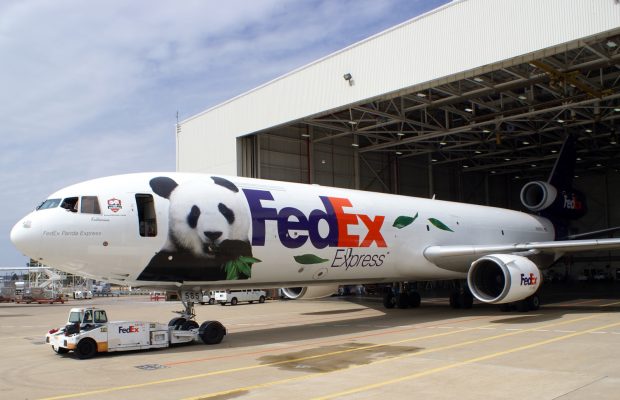
    The giant panda Bao Bao landed at China’s Chengdu Shuangliu Airport on 22 February 2017 at 6:59 pm onboard a custom-decaled FedEx B777 Freighter (B777F)—known as the FedEx Panda Express—from Washington D.C. in the US. Upon arrival, the panda was transported to her new home in Sichuan province, the China Conservation and Research Center for the Giant Panda’s Dujiangyan City Reserve.

    “It’s a great honor for FedEx Express to be able to support this latest mission by donating our expertise and resources, and to be entrusted once again with such a valuable and symbolic shipment,” said Karen Reddington, president, FedEx Express Asia Pacific. “We’ve assisted with giant panda shipments several times in the past and have considerable experience of managing the process, which involves months of planning and cross-disciplinary teamwork. Transporting Bao Bao is also an act of good global citizenship that leverages our unique network and specialized capabilities to help connect the world.”

    Bao Bao, a three-and-a-half-year-old female panda born in August 2013 at the Smithsonian’s National Zoo, is the offspring of Mei Xiang and Tian Tian, both currently living in the US.


    FedEx provided a dedicated aircraft to bring Bao Bao’s brother Tai Shan to China in 2010, and her parents, Mei Xiang and Tian Tian, to the United States in 2000.

  • FedEx transports giant panda from United States to China

    FedEx transports giant panda from United States to China

    FedEx Express, a subsidiary of FedEx, will donate its logistical services to transport a giant panda named Bao Bao from the United States to China on 21 February 2017. Working in conjunction with the Smithsonian’s National Zoo, FedEx Express will fly the panda on a direct charter flight non-stop from Washington’s Dulles International Airport to Chengdu, China.

    Bao Bao, a female panda born in August 2013 at the Smithsonian’s National Zoo, is the offspring of Mei Xiang and Tian Tian, both currently living in the U.S.  Bao Bao will be placed in a special crate provided by FedEx and travel onboard a custom-decaled FedEx Express 777 Freighter, known as the “FedEx Panda Express.”

    “The transport of Bao Bao represents the seventh time that FedEx is transporting a giant panda, a national treasure of China,” said Eddy Chan, senior vice president, FedEx China.  “We are honored and proud to serve as the trusted carrier.  Using our extensive global network and strong operations, our professional team will surely deliver Bao Bao to Chengdu, China fast and securely.”

    In addition to donating all the necessary air transportation for Bao Bao, FedEx Express will provide ground and logistical support in Washington, D.C., including a vehicle to deliver the panda from the Smithsonian’s National Zoo to the airport.  FedEx pilots, drivers and operations specialists selected to transport the panda are among the company’s most seasoned team members.

    FedEx Express, the Smithsonian’s National Zoo, and the China organizers will work collaboratively to ensure that all necessary precautions are taken to provide a safe and comfortable flight for Bao Bao.  The Smithsonian’s National Zoo is already preparing the panda for her move to make sure she is comfortable and safe throughout her journey.  Part of the preparations includes acclimating Bao Bao to a travel crate.

    One panda keeper and one veterinarian from the zoo have been granted special flight privileges to accompany Bao Bao onboard the aircraft.  The panda team will continuously monitor Bao Bao during the trip and will travel with a supply of water, bamboo and her favorite treats, including apples, pears and cooked sweet potatoes.

    Upon arrival in Chengdu, Bao Bao will be driven to one of the bases run by the China Conservation and Research Center for the Giant Panda.  A panda keeper from the Smithsonian’s National Zoo will follow and remain with Bao Bao for a short time while she acclimates to her new home.

    Due to security regulations, the departure and arrival events for the panda will be closed to the general public.

  • FedEx to bolster its e-commerce business in Asia

    FedEx to bolster its e-commerce business in Asia

    FedEx will expand its global e-commerce business in an effort to compete for the growing number of packages shipped to consumers from China and Japan, executives said Monday.

    The company, which in 2014 acquired Bongo International, a company that helps shoppers purchase goods from foreign retailers by automatically adjusting currencies, and customs and shipping costs, by location, is rebranding the business as FedEx CrossBorder. The company plans to expand its services to merchants in China and Japan by next June, said Chip Hull, vice president of the newly named division. The company already consolidates shipments for global e-commerce retailers in the U.S., Europe and Peru.

    Asia “is the second-largest region from an export perspective in the cross-border space, on par with Europe, and is growing at a faster rate,” Hull said. As global e-commerce grows at double-digit rates around the world, “Asia is certainly the 800-pound gorilla in the room.”

    FedEx’s international e-commerce efforts have come as other companies are investing in helping retailers with international online-shopping services. United Parcel Service acquired i-Parcel around the same time that FedEx bought Bongo, and Pitney Bowes acquired Borderfree last year. Deutsche Post AG’s DHL also offers international e-commerce services.