Retail News CRM

Tag: Fiber

  • SP Telecom to build alternative fiber network in Singapore

    SP Telecom to build alternative fiber network in Singapore

    Singapore-based telecommunications joint venture SP Telecom has engaged PCCW Solutions as a consultancy partner to help design and deploy the company’s planned alternative fiber network.

    The company has provided details of its plans to build an alternative to Singapore’s next-generation national broadband network (NG-NBN).

    SP Telecom, a joint venture between ST Engineering and Singapore Power Group, is deploying its network alongside the power lines operated by SP Group to create a separate fiber infrastructure to the NG-NBN.

    SP Telecom’s network will serve as the only rival to the NG-NBN common network infrastructure, offering route diversity and redundancy for enterprise customers.

    The alternative data fiber network will utilize SDN-NFV capabilities in a bid to allow users greater control, visibility and scalability of their network assets, as well as built-in cybersecurity capabilities.

    These capabilities will allow for the deployment of network functions as a service on demand without the need for costly hardware investment.

    SP Telecom plans to offer services including access to an IoT-as-a-Service platform, edge cloud resources, and bandwidth provision on demand.

    “An increasing number of businesses rely on their communications systems for mission-critical applications. They can no longer afford any downtime that can cause major problems and significant losses in terms of costs, productivity and reputation,” SP Telecom CEO Titus Yong said.

    “As SP Telecom forges forward towards providing an advanced solution that supports Smart City developments, we are confident that the consultancy partnership with PCCW Solutions will enable our plans of becoming an advanced network provider to meet fast-evolving digital needs globally.”

  • Singapore is APAC’s top Smart Fiber City

    Singapore is APAC’s top Smart Fiber City

    Singapore is the top Smart Fiber City in Asia-Pacific, according to a new ranking released at the FTTH Council Asia Pacific Conference in Wuhan, China.

    The inaugural Smart Fiber Cities ranking list Singapore as the region’s Champion, due to the city’s 93% FTTH/B coverage, 100% 4G coverage and its over 10,000 Wi-Fi hotspots.
    For the regional rankings, FTTH Council Asia-Pacific evaluated cities with high FTTH/B coverage based on the innovative and useful solutions that have been developed to take advantage of this infrastructure.

    Cities were raked in two categories – champs and challengers. Champs have almost complete fiber coverage city-wide and have reached maturity in smart projects that have been deployed. They also generally have a comprehensive smart city framework in place and smart projects already in operation.

    Challengers meanwhile are actively deploying fiber infrastructure to meet their smart city ambitions, but their fiber-based smart services are usually limited to specific domains.

    Behind Singapore in the Champs category are Tokyo in Japan and Seoul in South Korea with roughly 90% FTTH coverage, followed by Hong Kong, Busan in South Korea, and Melbourne in Australia.

    Chinese cities meanwhile took the first three spaces in the Challenger category, with Shanghai on top with round 90% FTTH/B coverage, followed by Hangzhou and Wuhan. Runners up included Malaysia’s Selangor, Jakarta in Indonesia, Bhubaneswar in India and Ho Chi Minh in VIetnam.

    “The research into Smart Fiber Cities shows that we are just at the beginning of these developments. Across APAC, we see many mature projects in areas such as e-government and security, with 5G-based applications in, for example, transport and disaster management coming up,” FTTH Council Asia-Pacific president Venkatesan Babu said.

    “We have great expectation for the large numbers of pilots in areas such as healthcare, smart grids and autonomous traffic. We look forward to closely follow new developments in the coming years.”

  • Indonesia’s FiberStar extends collaboration with Huawei

    Indonesia’s FiberStar extends collaboration with Huawei

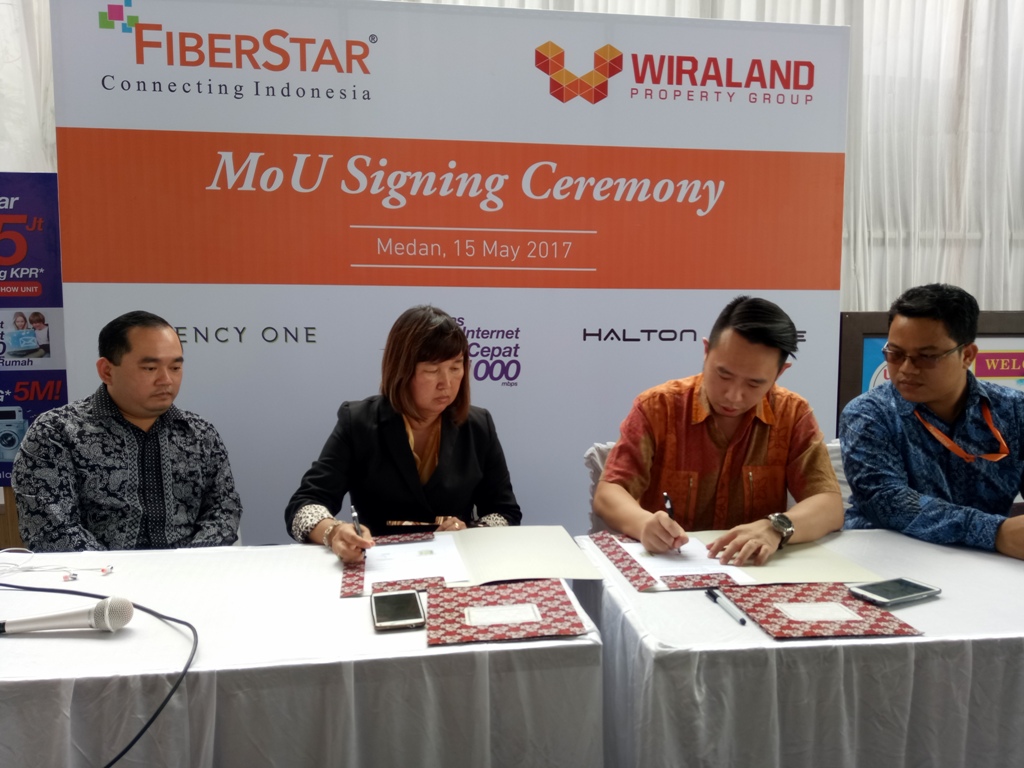
    Indonesia’s FiberStar has signed an agreement with Huawei to jointly expand high-speed fiber network services in the market.

    FiberStar recently partnered with Huawei to build a 1Tbps backbone DWDM network linking Jakarta with Surabaya. The network consists of submarine and terrestrial cables that form a ring network with a total length of more than 3000 kilometers.

    Building on this cooperation, the companies signed a memorandum of understanding at the Huawei ISP Summit Asia Pacific 2019 in Bali to strengthen collaboration in the field of fixed networks and data centers.

    FiberStar co-founder and director Thomas Dragono said Huawei shares the company’s vision for the digital transformation of Indonesia.

    “Being the pioneer of Indonesia’s neutral infrastructure service, and considering Huawei’s advancement in the optical communications field, we have both decided to explore a deeper and stronger partnership,” he said.

    “The consensus on the advantages of optical network technologies and evolution trends are the basis of cooperation between both parties. We will leverage the advanced DWDM and MPLS technology to expand the coverage of networks in Indonesia, and further facilitate the growth of the digital economy in Indonesia.”

    FiberStar was established in 2014 as a subsidiary of Indonesia’s biggest conglomerate the Salim Group.

    The company is Indonesia’s biggest carrier-neutral infrastructure provider, offering coverage to 92 Indonesian cities across the nation’s main islands including Sumatra, Java, Bali, Kalimantan, and Sulawesi.

  • Docomo trials fiber manufacturing IoT in Thailand

    Docomo trials fiber manufacturing IoT in Thailand

    NTT Docomo and its Singapore subsidiary NTT Docomo Asia have commenced a trial of an IoT monitoring system to improve the manufacturing performance of a synthetic-fibers factory in Thailand.

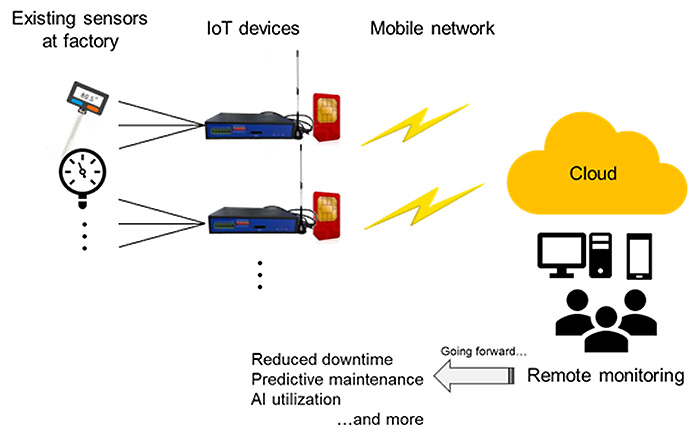
    In the trial, Docomo Asia is deploying the IoT Solution Platform to visualize the operational status of production operations in the Thai factory.

    Docomo said IoT devices equipped with up to 30 different sensors are collecting operational information on the factory floor and then transmitting real-time data to the cloud via a mobile network.

    “Technicians will be able to use PCs, smartphones or tablets to remotely monitor the status of production operations via the platform,” Docomo said in a statement.

    “The IoT Solution Platform enables manufacturers to digitalize their operations and rapidly gather information from factory floors for improved efficiency in production management.”

    It also helps to reduce production downtime by allowing manufacturers to closely monitor the status of their production equipment to detect malfunctions, maintenance needs and so on, the Japanese mobile carrier said.

    NTT Docomo fabric manufacturing IoT trial in Thailand

    Service scheme (Source: NTT Docomo)

    According to Docomo, the platform is already being used by an automotive plastic parts manufacturer and is now being introduced in the textile industry to enable manufacturers to realize more efficient and reliable production operations.

    The trial is part of Docomo’s global IoT initiative launched last July to provide global connectivity, operational support, and consulting to Japanese manufacturers with global IoT operations.

    The trial will be conducted until March 31, and is being conducted in collaboration with Teijin Polyester (Thailand) Limited, a Teijin Frontier subsidiary company that manufactures polyester fibers, filament yarn, chips and more.

    Docomo expects manufacturers of synthetic fibers and other products across Southeast Asia to increasingly adopt the IoT Solution Platform to increase the productivity and quality of their production operations going forward.

  • Indian telcos call for fiber deployment fund

    Indian telcos call for fiber deployment fund

    Indian operators are calling for the establishment of a fund to help incentivize deployments of fiber across the country ahead of the introduction of 5G.

    The Cellular Operators Association of India (COAI) has urged the government to offer incentives including tax relief, rationalization and reduced red tape on investments in order to encourage the deployment of more fiber.

    The industry body believes a national policy should be established that would include the introduction of uniform and reasonable approval processes and right of way policies.

    As part of the government’s National Digital Communications Policy, the government is considering introducing incentives, and establishing a special purpose vehicle to grant low-interest loans to operators to fund network expansion.

    The policy also calls for the introduction of a new National Fibre Authority to help meet operators’ needs for fiber backhaul. The government aims to increase India’s fiber footprint fivefold by 2022 to around 7.5 million route kilometers. According to the policy, less than a quarter of current telecom towers are connected to a fiber backbone.

  • Converge ICT Solutions launches all fiber network

    Converge ICT Solutions launches all fiber network

    Huawei has provided its Agile WAN Solution to the Philippines’ Converge ICT Solutions to support the operator’s goal of rolling out the Philippines’ first pure end-to-end fiber network.

    Converge, which started as a HFC-based cable TV operator, has deployed an extensive all fiber network covering Central Luzon, the Philippines’ Capital Region and South Luzon.

    The company has licenses to operate fixed networks, fiber optics, cable TV, enterprise private lines, fixed broadband, and wireless broadband services.

    The company is expanding on its MAN service market in Metro Manila with high speed optical services, and has been seeking a solution to deliver a reliable, high capacity and elastic network.

    Huawei recommended its Agile WAN Solution for the deployment. Huawei has mostly built Converge’s entire network, from its DWDM backbone and MPLS core through to the MAN and down to the access network.

    Converge COO Jesus Romero said the network upgrade will support the company’s future plans to expand into services such as FTTH, enterprise data services, data center services, cloud services, and smart city services nationwide.

    “Early on we felt we needed a network that was reliable, scalable, cost-effective, and allowed us to easily implement new products and services, and we are very pleased that we were able to, in fact, get that with Huawei,” he said.

    “Huawei has been responsive in terms of support. In terms of pricing, they remain competitive, and they help us a lot with strategy planning, what to do next, and where to go – which is one key area where we feel we should continue and expand cooperation.”

  • India’s Reliance Industries to invest in two MSOs

    India’s Reliance Industries to invest in two MSOs

    India’s Reliance Industries, parent company of operator Reliance Jio Infocomm, has announced strategic investments in two multiple system operators (MSOs) to accelerate the planned JioGigaFiber rollout. The company plans to invest 22.9 billion rupees ($311.48 million) to take a 66% stake in Den Networks Limited, India’s largest cable TV distribution company and a provider of high-speed broadband services in 100 cities nationwide.

    Reliance Industries will also invest 29.4 billion rupees for a 51.3% stake in Hathway Cable and Datacom Limited, a cable TV company providing high speed broadband in 21 cities.

    The company intends to make open offers for DEN and Hathway shares as well as two Hathway subsidiaries, as required by Indian takeover regulations.

    Announcing the planned investments, Reliance Industries said the acquisitions will accelerate Jio’s efforts to bring the JioGigaFiber service to a potential 50 million homes across 1,100 Indian cities and towns as quickly as possible.

    Jio will work with Hathway and DEN to bring the JioGigaFiber services to the two companies’ 24 million existing cable customers.

    Jio plans to use the JioGigaFiber network to offer high-speed broadband, ultra high definition video streaming, multi-party video conferencing, VR gaming, smart home and AI virtual assistant and fixed mobile convergence services.

    Reliance Industries chairman and MD Shri Mukesh said the acquisition is also expected to benefit the 27,000 local cable operators (LCOs) that are aligned with Hathway and DEN by enabling them to participate in India’s digital transformation. Indian LCOs provide coaxial cable connections on a per-neighborhood basis.

    “With Local Cable Operators now as part of the Jio ecosystem, we look forward to bringing Jio’s advanced JioGigaFiber and Smart Home Solutions to more Indian homes, even quicker,” he said.

    “We look forward to welcoming other MSOs and LCOs to be part of this partnership. This will result in growing wireline data connectivity in India and making state-of-the-art high-speed affordable internet and digital services accessible to the widest population in the shortest possible time.”

  • SLT expects fiber investments to boost broadband growth

    SLT expects fiber investments to boost broadband growth

    Sri Lanka Telecom expects its heavy investments in its fiber network to start paying off, with broadband revenues dominating the company’s balance sheet over the next three years.

    The operator has invested over 70 billion rupees ($446.25 million) to expand its fiber network over the past two years, and connected its 2 millionth household to the network in late 2017.

    Broadband and data services meanwhile accounted for nearly 60% of SLT’s total revenue of 44.5 billion rupees for 2017, up from 38% in 2012.

    The company also has also connected 315 government premises to its fiber network and plans to connect 545 more by the end of this year.

    But SLT noted that margins from data are decreasing even as infrastructure capex grows, and revenue from international voice and other traditional services is on the decline due to the threat from OTT players.

    The company said fiber adoption will also boost third party OTT service consumption, which may further threaten traditional revenue sources but will also contribute to a better return on investment on its fiber network.

  • New Zealand expanding national fiber network

    New Zealand expanding national fiber network

    The New Zealand government plans to extend its Ultra-Fast Broadband (UFB) national fiber network to 190 more small towns.

    The government has announced plans to spend NZ$130 million ($93.4 million) to extend the network to 60,000 new households and businesses across the nation and complete the UFB deployment by 2022.

    A further NZ$130 million will be spent to expand the concurrent Rural Broadband Initiative (UFB) to bring non-fiber broadband to another 74,000 rural premises, and to extend mobile coverage to an extra 1,000km of rural highways as part of the Mobile Black Spot Fund.

    The RBI involves a combination of upgrades to existing fixed line infrastructure and fixed wireless infrastructure.

    “We started UFB in 2010 with the original goal of connecting 34 towns to world-class fibre-to-the-premises. Earlier this year we expanded it to 200 more towns and today’s announcement will bring us to 390,” New Zealand communications minister Simon Bridges commented.

  • Australia’s Vocus gets two takeover bids

    Australia’s Vocus gets two takeover bids

    Australian fiber network operator Vocus Communications has revealed it has secured two competing non-binding takeover bids valuing the company at A$2.2 billion ($1.69 billion).

    Affinity Equity Partners has submitted a preliminary offer to acquire 100% of Vocus for A$3.50 in cash per share, subject to due diligence and other conditions. Vocus announced.

    The bid comes days after fellow private equity company KKR submitted a preliminary offer at the same A$3.50 per share price.

    Both private equity companies have been granted the chance to conduct due diligence on the potential takeover. The prospect of a bidding war has pushed Vocus shares on the Australian stock exchange up to A$3.595 as of around midday local time on Thursday.

    The price tag represents around a 16% premium on Vocus’ projected earnings for the current financial year, but the offer price may increase as negotiations progress.

    Vocus operates a range of telecoms brands serving enterprises, small businesses, government and residential customers, including Commander, iPrimus and Dodo.

    The value of the company has shrunk significantly lately due to concerns its profitability will be substantially reduced as customers migrate to the state-led national broadband network (NBN). A year ago the company has a valuation of around $5.5 billion.

  • WorldLink to build Nepal’s first 100G OTN

    WorldLink to build Nepal’s first 100G OTN

    Nepal’s WorldLink has engaged Nokia to deploy the nation’s first 100G optical network.

    WorldLink, Nepal’s largest fixed broadband operator, is upgrading its 650km backbone network with Nokia’s PSS DWDM technology.

    The backbone network spans from capital Kathmandu to the cities of Bhairahawa and Birgunj, and provides international connectivity between Nepal and countries including India.

    WorldLink has an estimated 120,000 residential broadband subscribers and 5,000 enterprise broadband circuits. The operator is currently connecting 10,000 residential FTTH subscribers per month, and is conducting the upgrade to help meet the fast-growing demand for network capacity.

    “WorldLink has a commitment to Nepal to transform the communications landscape so that our people and enterprises thrive,” the operator’s CTO Samit Jana said.

    “This is our largest project to date and it will allow us to provide ultra-fast broadband services for our mobile and fixed network subscribers in cities as well as rural areas across the country.”

    Nokia head of India Sanjay Malik added that the company is “proud to be part of WorldLink’s vision to transform Nepal’s communications architecture by providing the first 100G transport network. Nokia’s highly scalable optical platform will ensure low latency and high resiliency, and allow WorldLink to cost-effectively increase network capacity as needed.”

  • Undersea internet cable out of action for another three weeks in Vietnam

    Undersea internet cable out of action for another three weeks in Vietnam

    Repair work on the broken international cable won’t start until July 3 and will take at least 10 days to complete. International internet connections in Vietnam are likely to remain slow for another three weeks with repair work to a major internet cable which broke off central Vietnam last week expected to take until July 14, a service provider said.

    The source told us that repair work on the Asia Pacific Gateway won’t start until July 3 and is expected to take 10 days. The cable should be fully reconnected by July 14, depending on the extent of the problem, said the representative.

    The cable snapped on Tuesday afternoon about 125 kilometers off the coast of Da Nang.

    Service providers such as Viettel and VNPT said they have prepared contingency routes to minimize downtime.

    No announcement on the cause of the problem has been made.

    The cable was officially launched on January 3, but was quickly hit by a technical problem that took two weeks to fix.

    The cable cost $450 million and has a capacity of more than 54 Tbps, promising to double internet speeds in Vietnam and ease reliance on the notorious Asia America Gateway, which has ruptured or been shut down for maintenance on numerous occasions since 2011.

    The new system took four years to build, and links Japan with Hong Kong, mainland China, Malaysia, Singapore, South Korea, Taiwan, Thailand and Vietnam.

    Nearly 49 million people in Vietnam, or more than half of the country’s population, are online.

  • Thailand to link 3,920 villages with fiber by mid-2018

    Thailand to link 3,920 villages with fiber by mid-2018

    Thailand’s first state-provided high speed fixed broadband services for rural areas are on track to launch by mid-2018, according to reports.

    The fiber-based service will be offered to 3,920 border villages across 62 provinces by this time, providing broadband at speeds of at least 10Mbps.

    The low cost services will start at just 50 baht ($1.47) per month for a 10Mbps connection with unlimited data, 150 baht or less for a 15Mbps connection and 200Mbps or less for a 20Mbps connection.

    An initiative of regulator NBTC, construction of the network will be funded as part of the 14 billion baht Universal Service Obligation (USO). It will also involve the construction of 5,229 free Wi-Fi hotspots, as well as 763 public internet centers that will fuction as community centers for 2-4 villages.

    The NBTC has just launched a tender process to select the project’s contractor, and plans to hold an online auction to choose a winning bidder in July. Networks must be capable of a minimum 30Mbps connection speed, and the service packages must be offered for at least five years.

    The NBTC is also finalizing the details of construction of a broadband network for an additional 15,732 villages, as part of its plan to deploy a low-cost broadband infrastructure spanning 40,432 underserved villages nationwide to help bridge the digital divide between urban and rural Thailand.

  • NEC, Netcracker hold joint trial optical fibre network

    NEC, Netcracker hold joint trial optical fibre network

    NEC and Netcracker Technology have successfully conducted a trial, in collaboration with K-Opticom, for a system combining NFV and 10G-EPON technologies.

    The companies said the trial verified for the first time ever that virtualized customer premises equipment (vCPE) can be successfully applied to 10Gbps Internet connections.

    K-Opticom provides telecommunications services based on its independent optical fiber network. The company operates the “mineo” mobile phone service as a MVNO, and “eo denki,” an electric power retailing service for household use.

    VCPE provides CPE and other top-layer functions, such as Dynamic Host Configuration Protocol (DHCP) and Network Address Translation (NAT), from data centers via the Internet.

    Based on the results of this trial, further trials are being planned in preparation for the full-scale application of vCPE to 10Gpbs Internet services.

    Takamitsu Fukunaga, SVP for K-Opticom, said communication traffic volumes for home-use connections are increasing year by year, and K-Opticom estimates that these traffic volumes will continue to grow.

    “As a result, we are considering the provision of a 10Gbps service. We are engaged in continual efforts together with NEC to enable us to offer this service to our customers as soon as possible,” the executive said.

    NEC senior vice president Shigeru Okuya claimed the trial with K-Opticom is the industry’s first of its kind to validate that vCPE can be applied to 10G-EPON.

    “Moving forward, we will continue to proactively advance the development of solutions that contribute to the improvement of service quality for K-Opticom, and to make use of these results in providing SDN/NFV solutions globally,” Okuya said.

  • HKT to build fiber super highway for Hong Kong DCs

    HKT to build fiber super highway for Hong Kong DCs

    PCCW’s HKT has revealed plans to build what it is calling a “fiber super highway” connecting the Tseung Kwan O Industrial Estate (TKOIE) with the Chai Wan area.

    The Ultra Express Link will be a 3km high-capacity, low-latency subsea cable system spanning the Junk Bay. The cable system has a target ready for service date in 2017

    HKT group managing director Alex Arena said the system will provide additional diversity in connectivity for the multiple data centers in TKOIE, and serve to position the estate as Asia’s data center hub.

    “The building of Ultra Express Link demonstrates once again not only our leading position in solid fiber infrastructure in Hong Kong, but also our dedication to build Hong Kong into a regional data center hub,” he said.

    “The new cable, together with the existing extensive fiber infrastructure provided by HKT, will allow us to meet the rising demand for high speed and high capacity connectivity from data center operators.”

    Arena said HKT is the only operator to provide full fiber coverage in all data centers in Hong Kong with diversity paths in all data centers in TKOIE.

    HKT is a quadruple-play operator in Hong Kong serving both consumer and enterprise customers.