Tag: Finance

  • VN-Index plunges with rising trade

    VN-Index plunges with rising trade

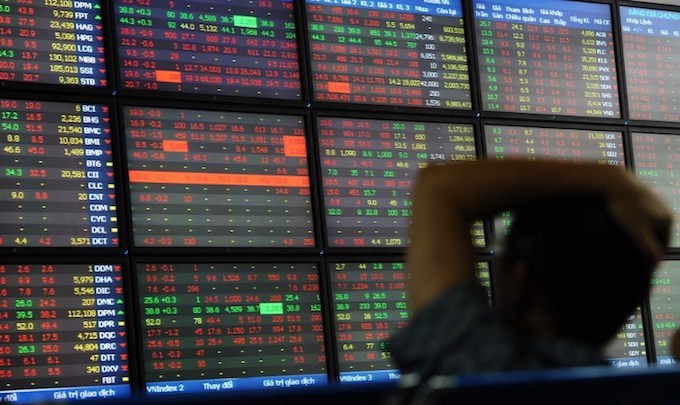
    Vietnam’s benchmark VN-Index dropped 1.56 percent to 1217.30 points Friday with trading value rising double-digit.

    The index closed 19 points lower after gaining nearly 23 points on Thursday. It has lost 67 points this week as global markets plunged due to concerns of inflation and disrupted supply chains.

    Trading on the Ho Chi Minh Stock Exchange (HoSE) increased by 17.5 percent to VND17.33 trillion, highest in four sessions. The VN-30 basket, comprising the 30 largest capped stocks, saw 22 tickers dropped.

    SSI dropped 7 percent to the lowest since March last year in its seventh losing session in a row.

    It was followed by eight banking stocks, losing between 6.4 percent and 3.6 percent, including MBB of lender MB, TPB of private TPBank and CTG of state-owned lender VietinBank.

    Five blue chips rose, with MSN of conglomerate Masan Group rising 5.7 percent and GAS of state-owned Petrovietnam Gas gaining 4.7 percent.

    Foreign investors were net buyers to the tune of VND309.68 billion, mainly picking up HPG of steelmaker Hoa Phat Group and VND of brokerage VNDirect.

    The HNX-Index at the Hanoi Stock Exchange, where mid and small caps list, was down 2.68 percent while the UPCoM-Index at the Unlisted Public Companies Market was down by 2.41 percent.

  • UBS to Stand Trial in French Harassment Case

    UBS to Stand Trial in French Harassment Case

    The French subsidiary of UBS must stand trial on suspicion of harassment. The focus is on the French subsidiary’s alleged crackdown on whistleblowers.

    UBS has suffered a defeat in France before the country’s Court of Cassation, one of the four courts of last resort in the country. The French branch of Switzerland’s largest bank must now stand trial for the alleged harassment of two whistleblowers who revealed tax fraud. The focus is on the French subsidiary’s alleged crackdown on whistleblowers.

    The decision of the court was viewed by the «AFP» news agency on Thursday. In a ruling on Tuesday, France’s highest court rejected appeals by the bank against its summons to appear before the Paris criminal court, according to Swiss news agency AWP.

    The former head of internal audit, Nicolas Forissier, as well as former event and communication manager Stéphanie Gibaud, helped get the tax fraud case against the major Swiss bank rolling in France, resulting in UBS being investigated for tax fraud.

    A lawyer for UBS France did not respond to inquiries from the French news agency AFP.

  • UBS Adds Private Banking Trio for Southeast Asia

    UBS Adds Private Banking Trio for Southeast Asia

    UBS’ global wealth arm has expanded its coverage of Southeast Asian high net worth individuals with the appointment of three new private bankers.

    Maria Lourdes Kristen Quintos joins UBS as a senior client advisor focusing on ultra-high net worth (UHNW) clients, according to an internal memo.

    Quintos has over 35 years of banking experience, most recently at Maybank ATR Kim Eng Capital Partners Inc. where she was its president and chief executive officer. Previously, she was also a chief representative at Bank of Singapore in Manila serving high net worth (HNW) clients, institutions and pension funds.

    In addition, Nicolo Nicandro and Natalie Boey have also joined UBS as client advisors focusing on HNW and UHNW clients in the Philippines.

    Nicandro was previously a senior associate and investment counselor at Bank of Singapore in Manilla where he advised and managed global multi-asset portfolios for private clients. Boey held a similar role at Citi where she spent nearly 15 years, including 10 years of focus on Philippines market coverage.

    The three new additions join the bank’s global wealth management APAC Thailand and Philippines business sector.

    A spokesperson for the bank confirmed the contents of the memo.

  • Hong Kong Must Reopen to Remain a Financial Hub

    Hong Kong Must Reopen to Remain a Financial Hub

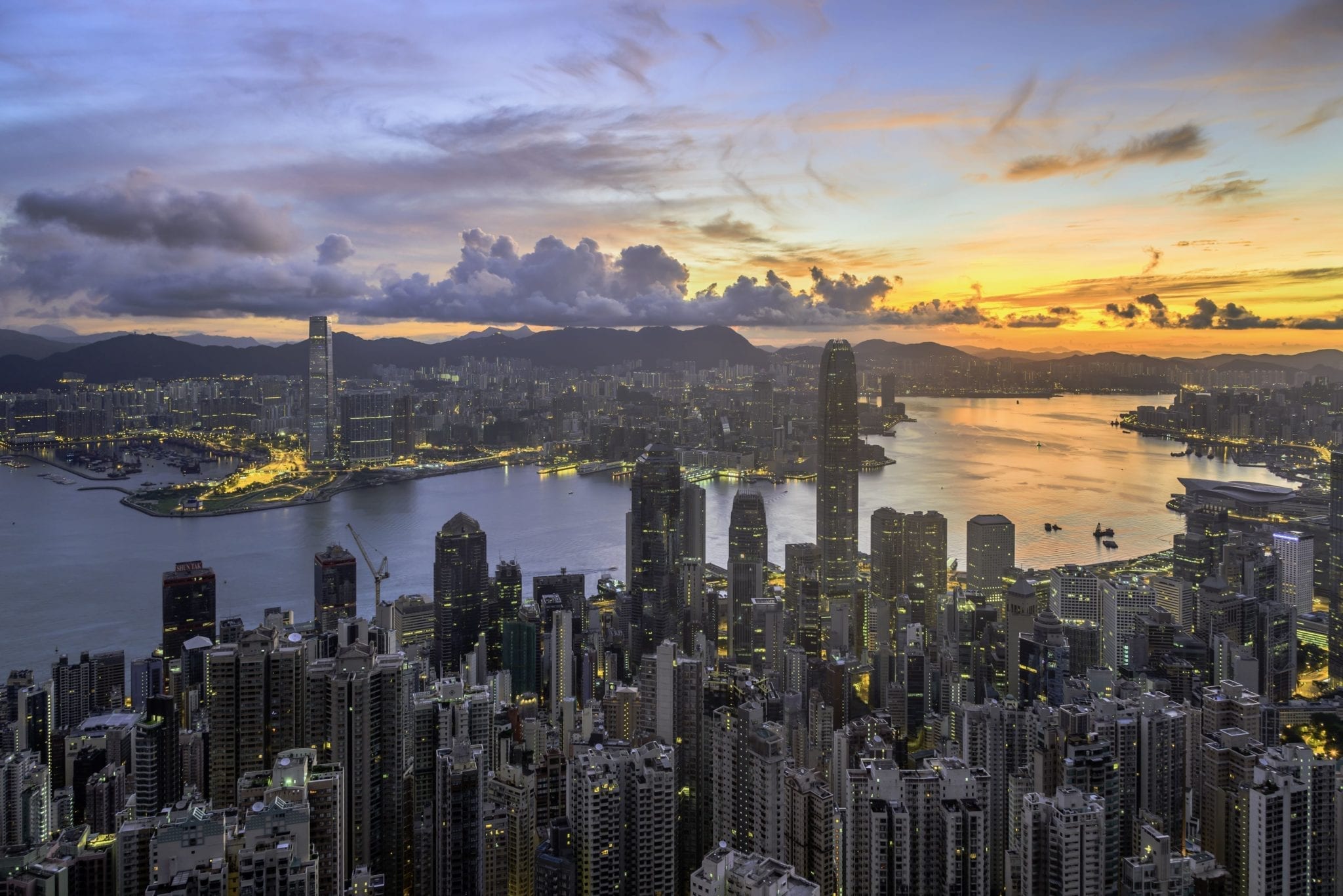
    Outgoing city chief executive Carrie Lam makes frank comments to CNBC before her departure at the end of the month.

    Hong Kong’s embattled chief executive Carrie Lam, who has faced a difficult, tempestuous five-year term that included the 2019 pro-democratic protests, the subsequent introduction of the city’s National Security Law, and the Covid-19 pandemic, appeared to be more forcefully speaking her mind than had previously been the case in an interview with CNBC on Friday.

    She apparently indicated to viewers that the city could not continue to function as a financial hub if the current border controls remain in place, as this has made people impatient.

    The border control measures have really made people very impatient. Of course, they’ve undermined Hong Kong’s status as a hub. If you cannot travel freely to other places and into the mainland, how could you be a hub?

    Despite recent steps to relax some pandemic restrictions, Hong Kong continues to require a 7-day quarantine for any foreign arrivals. It also continues to employ extensive contact tracing and testing requirements city-wide, among other measures.

    Lam discussed the departure of foreigners and expatriates, saying that this was not due to the National Security Law, but the extent and duration of the strict pandemic controls. Other topics that were discussed included the one country, two systems governing principle in Hong Kong, which she believed had been mischaracterized by overseas media.

    I sometimes find it very disturbing that a lot of Western media try to portray Hong Kong as just another Chinese city and have no proper recognition or understanding of one country, two systems, Carrie Lam said.

    She maintained that freedom of expression, assembly and media continued to be upheld in the city.

  • Vietnam urges banks to merge, become more competitive

    Vietnam urges banks to merge, become more competitive

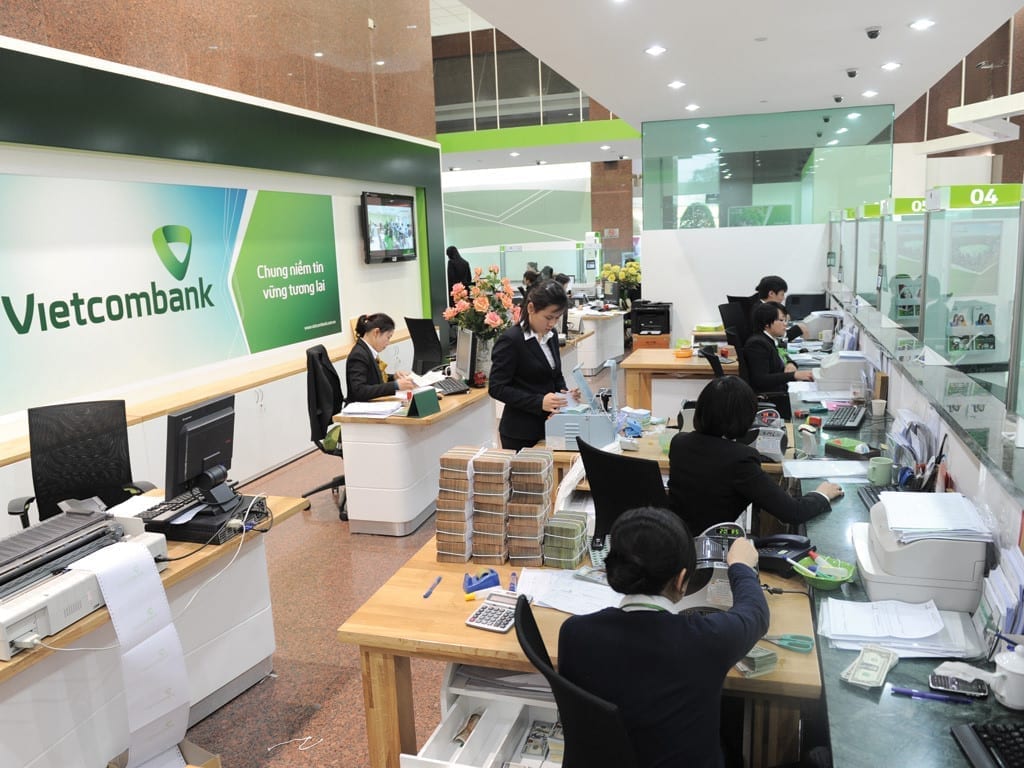
    The Vietnamese government is urging banks to merge and increase their scale toward becoming more competitive. It wants to make Vietnam an ASEAN leader in the banking sector.

    The government wants banks to have a capital adequacy ratio of at least 10-11 percent by 2023, and 11-12 percent by 2025, according to a recent plan to restructure credit organizations and handle bad debts during the 2021-2025 period.

    The capital adequacy ratio is a measure of how much capital a bank has available to handle a certain amount of loss before facing the risks of becoming insolvent.

    The government has said it wants Vietnam’s banking sector to become a top four leader in the ASEAN bloc. It has asked banks to make plans to increase their charter capital and improve their management.

    Big banks should have a minimum charter capital of VND15 trillion by 2025, and small and medium banks, VND5 trillion, it said.

    The government also wants banks to have a bad debt ratio of under 3 percent by 2025.

    Vietnam has 31 domestic commercial banks, with the biggest in terms of charter capital being state-owned lenders BIDV, Vietinbank and Vietcombank, according to the State Bank of Vietnam.

  • A German Bank Wants its Customers to go Cashless

    A German Bank Wants its Customers to go Cashless

    In a country where cash has been king for decades, Deutsche Bank will stop allowing customers to pick up cash at its counters.

    There is a German adage that Geld Stinkt Nicht, which translates into money doesn’t stink, and helps to explain the country’s strong, and perhaps a stereotypical, preference for cash over the years. Deutsche Bank is seeking to change that.

    In tapping into another German trait, that of frugality, Lars Stoy, who heads domestic retail banking operations of Germany’s largest commercial bank said at an investor conference that «In the future, I don’t want to offer cash in the branches anymore, because holding cash incurs costs.

    While not specifying a timeline for the changes, Stoy said that cash would only be offered in a few large centers and that generally, he wants to further reduce the number of branches in Germany.

    The main task of the branch is sales along with “advising customers on investments, mortgages, to a certain extent on consumer loans and insurance. Once that is the case, then the branches will be profitable again, Stoy said.

    Moreover, the plans are in response to changes in customer behavior, with the trend toward cashless payments significantly increasing, while at the same time demand for personal advice is also on the rise, Stoy said.

    In terms of cash supply, Deutsche Bank will maintain a nationwide network of ATMs adding that money can also be withdrawn at supermarkets or gas stations.

  • Rumors, manipulation plague Vietnam markets

    Rumors, manipulation plague Vietnam markets

    Vietnam’s stock and corporate bond markets are heavily affected by rumors and sophisticated manipulation, which pose the need for more transparent and thorough regulations, a minister has said.

    Many tickers have been pushed up to new peaks without improvement in business results, with many companies failing to submit their earnings in time, Minister of Finance Ho Duc Phoc informed the National Assembly in a recent report.

    “The stock market is still in an early stage of development and is therefore heavily affected by investor sentiment. Rumors, fears of cash flow and inflation pressure have caused the market to plunge recently.”

    Vietnam’s benchmark VN-Index hit this year’s bottom on May 16, the lowest in 11 months. The plunge came after VN-Index increased by nearly 36 percent last year as one of the best performers globally. The number of new stock accounts opened last year alone equaled that of the previous 10 years.

    But the market turned bearish in April and has struggled to recover since.

    Phoc is also concerned about risks faced by a speeding corporate bond market.

    Many amateurs who fail to meet government criteria have cheated to secure bonds, made possible by the violations of commercial banks and stock brokerages, he said.

    One typical example involves property developer Tan Hoang Minh, whose chairman Do Anh Dung was arrested in early April on suspicions of “fraudulent appropriation of assets,” he added.

    Governor of the State Bank of Vietnam Nguyen Thi Hong called for more thorough solutions to prevent future violations.

    In the long run, the government needs to make the corporate bond market a key capital mobilization channel for the economy, she added.

    Phoc said changes will be made to tighten regulations on bond issuances, listed on a dedicated market for corporate bonds.

  • Blue chip stocks hit highest in weeks

    Blue chip stocks hit highest in weeks

    Vietnam’s benchmark VN-Index rose 0.16 percent to 1290.01 points Monday with a double-digit surge in trade as blue chip stocks climbed to the highest in weeks.

    The index closed two points higher after losing nearly one point on Friday. Trading on the Ho Chi Minh Stock Exchange (HoSE) increased by 31 percent to VND16.94 trillion ($730.64 million).

    The VN-30 basket, comprising the 30 largest capped stocks, saw 11 tickers gained. GAS of state-owned Petrovietnam Gas rose 4.6 percent to a new peak, having increased by 37 percent in the last three weeks. MSN of conglomerate Masan Group went up 3.7 percent to the highest in over a month.

    PLX of fuel distributor Petrolimex gained 3.2 percent to the highest in over a month. Sixteen blue chip stocks fell, with TPB of private TPBank losing 3.6 percent. STB of Ho Chi Minh City-based lender Sacombank dropped 3.1 percent, while NVL of real estate developer Novaland Group lost 1.5 percent.

    Foreign investors were net buyers to the tune of VND44 billion, mainly buying DPM of Petrovietnam Fertilizer & Chemicals Corporation and Binh Son Refining and Petrochemical Jsc (BSR).

    The HNX-Index at the Hanoi Stock Exchange, where mid and small caps list, was down 1.18 percent while the UPCoM-Index at the Unlisted Public Companies Market fell 0.29 percent.

  • Deutsche Bank Raided Over Alleged Greenwashing

    Deutsche Bank Raided Over Alleged Greenwashing

    German prosecutors raided the offices of asset manager DWS and its controlling shareholder Deutsche Bank over allegations of «greenwashing,» according to media reports.

    Deutsche Bank and its around 80 percent-owned asset manager DWS were raided over allegations DWS misled investors about how green the investments marketed as green or greener really were, the reports said.

    The move may send shivers down the spine of investors globally as green investments, or investments marketed as using environmental, social and governance (ESG), indicators have surged in popularity. In early 2021, global ESG assets were projected to top US$53 trillion by 2025, or more than a third of the projected total of assets under management of US$140.5 trillion in that timeframe.

    The German authorities said they were responding to news reports and a whistle-blower’s allegations about DWS’ marketing tactics greenwashing its offerings, adding sufficient factual evidence has emerged about how little ESG factors were allegedly used to determine investments.

    DWS and Deutsche Bank have previously said they would cooperate with authorities, and DWS repeated its denial of the allegations. Deutsche Bank said the raid was directed at unknown people in connection with the DWS allegations.

    DWS has stopped using the label ESG integrated, in a move that came after DWS’ former sustainability head, Desiree Fixler, alleged the label didn’t result in meaningful moves by fund managers. Fixler was fired last year, and lost her unfair dismissal case in Frankfurt in January.

    Both U.S. and German regulators had begun investigations in 2021 into allegations from Fixler over potential greenwashing, «Reuters» said, noting both U.S. and EU regulators are working to create rules to define greenwashing.

  • UBS to Launch Banking App in Singapore

    UBS to Launch Banking App in Singapore

    UBS will soon be launching a new app in Singapore, CEO Ralph Hamers announced. UBS CEO Ralph Hamers announced that the world’s largest wealth manager will launch its Circle One digital product in Singapore on Tuesday. If successful, the new app which is designed to connect investors with ideas in a global ecosystem could be used in other markets.

    The offering is the latest digital effort from UBS, having launched its Key4 initiative last week.

    Hamers also commented on the financial markets during the interview at the World Economic Forum in Davos, noting investors are inclined to stay at the moment, given the market volatility. While clients are not necessarily exiting the market, they’re not exactly investing either, noting they are more or less sidelined and waiting for things to clear up, he said.

  • For Investors: The Good & Bad of Asian Markets

    For Investors: The Good & Bad of Asian Markets

    What’s going on in Asia’s markets? Apparently, they’re following the lead of Western nations’ securities indices and losing significant value. There’s a lot more going on in Japan, China, Korea, and other central trading zones in the hemisphere, but that’s the overall view. However, for anyone intent on getting involved in the region’s economy as an investor or trader, it’s essential to gather all the facts.

    Are you interested in taking advantage of the unique opportunities in Asia in 2022? If so, be certain to find out about the potential pitfalls as well. What’s the most comprehensive way to acquire the core facts and make informed decisions? It’s a three-step process that begins with making a tally sheet of pertinent Asia market facts.

    Next, develop a shortlist of hazards that investors might encounter. Finally, create a preference list of the one or two opportunities that suit your investing style, budget constraints, and risk tolerance. Use the details below to get started with each step.

    New and experienced traders interested in using CFDs (contracts for difference) or following cryptocurrencies and forex usually operate from a major online brokerage site in order to maintain the ability to buy and sell in all international markets in a variety of ways.

    Overview of Asia’s Current Markets

    All the major Asian indices were off recently, partly in reaction to US and European declines the previous week but also from a range of local factors that had varying levels of severity. Japan is a case in point as the nation’s domestic economy is starting to show signs of rising inflation alongside weak GDP growth. By definition, the condition is stagflation, but the question is whether Asia’s downturn will mimic those in Western nations. What’s the relevant trading news from Japan, Korea, and nearby economies?

    The last half of May was brutal, as inflation finally began to take hold in otherwise healthy financial conditions. Major corporations in the region posted negative earnings reports, and domestic inflation indicators revved up. The Nikkei index, lost a full three percent of its total value before bouncing a bit just before the May 20 closing bell. News out of South Korea was equally bad, with that nation’s index, the KOSPI, losing more than one percent of its value. The story repeated itself all over Asia as nation after nation endured a truly awful week that began on May 16.

    How did all the down sliding begin? Apparently, Japan and Korea were simply following suit after Wall Street posted one of its worst days in history on May 18. It’s possible to point to a string of corporate earnings troubles as the source of all the Asian financial problems. In the majority of those cases, the companies that reported negative news were some of the world’s largest retailers. Those giant retail corporations are hurting as a result of inflation induced price hikes.

    Possible Risks for Participants

    • Taiwan: Risks in Asia-based economies are often obvious but sometimes can be quite complex and subtle. The ongoing political tension between Communist China and Taiwan could ignite a regional military conflict at any moment. Based on recent statements by mainland officials and members of the Communist Party, Taiwan’s leaders have taken defensive military positions to stave off a possible act of unwarranted aggression.
    • Japan: Once the shining star of the world economy, Japan has fallen on hard times. Amid a national depopulation crisis in which older retirees are not being replaced by young workers at a fast enough rate, domestic production is expected to suffer over the next decade. Additionally, the formerly hot economy is experiencing US-like stagflation amid tepid corporate growth and rising consumer prices.
    • China: The world’s largest dictatorship and centrally controlled economy, China is facing a reckoning that goes to the very core of its political system. Besides the inherent flaws of collectivism, the heavy-handed rule by the one-party government has outlawed private ownership of cryptocurrency and a long list of financial transactions. Investing in China has never been riskier, especially as COVID continues to wreak havoc throughout the country. The government has worked hard to prop up its currency, the yuan, to no avail. In fact, the currency recently posted its weakest month in history. Likewise, the nation’s commodities have suffered their worst fate in years.

    Potential Opportunities

    In Southeast Asia, Indonesia is the current success story of the region. Now coming out of the COVID-induced lag, its banking and manufacturing sectors are largely isolated from the effects of European wars and US-based inflationary pressures. Along with India and Vietnam, Indonesia represents a bright spot in an otherwise downtrodden Asian economic environment.
  • Julius Baer Outlines its New Targets

    Julius Baer Outlines its New Targets

    Bank Julius Baer announces new targets for 2023 to 2025 and will sharpen its capital distribution policy, and focus on the development of a pure wealth management business model. Swiss Julius Baer is looking to return more capital to its shareholders, targeting an adjusted return on common equity tier 1 capital (CET1) of at least 30 percent during its medium-term time frame running from 2023 through 2025, the private bank announced Thursday.

    It said it updated the capital distribution policy with a clear commitment to return capital exceeding a CET1 capital ratio of 14 percent through annual share repurchases, in addition to the 50 percent dividend payout ratio.

    The bank said it would focus on sustainable profit growth and the development of a pure wealth management business model.

    It will focus on improving earning quality by increasing its ability to improve recurring revenues, including increasing its wealth management mandate by offering a strong value proposition to complement its advisory solutions.

    We are embarking on a new phase of profitable growth, building on the transformation we have successfully pursued since 2020. Our unique client-centric business model with dedicated focus on high net worth and ultra-high net worth clients gives us a strong competitiveness to shape our future. Building on this strength, we will consolidate our position as the leading international wealth manager by the end of the decade. To do so, we will grow business volumes and profitability, improve earnings quality and evolve the way we do business, said CEO Philipp Rickenbacher.

    The strategy will be supported by a binding sustainability strategy and strong risk management, the statement said.

    The bank aims to save 120 million Swiss francs on a gross basis by 2025, by streamlining its geographic footprint and market coverage.

  • HSBC Veteran Taking Over at Quintet

    HSBC Veteran Taking Over at Quintet

    A change of leadership is underway at Luxembourg-based private bank Quintet after the previous CEO’s surprise exit. Luxembourg-based Quintet Private Bank is appointing Briton Chris Allen as CEO effective July 1, the firm said in a statement released by the firm on Monday. Allen, who most recently headed private banking in Europe, the Middle East, and Africa at HSBC, spanning a 15-year career there, is replacing Jakob Stott.

    Stott, who joined Quintet in 2019 has stepped down as CEO and will leave the company after a short transition period, although no mention was made of any future roles. Stott was appointed by ex-UBS manager Juerg Zeltner, who died in 2020, and relaunched the former KBL Group as Quintet.

    During his tenure, Stott merged Quintets EU-based subsidiaries and strengthened core operations at the firm where he presided over a rise in total client assets from, around €72 million ($75 million) at the end of 2018 to nearly €100 billion by the end of last year.

    The banking group which is controlled by the ruling family of the Emirate of Qatar had entered the Swiss market with the ambition of becoming a major voice in the local wealth management industry. But just 16 months after opening following the acquisition of Bank am Bellevue, it closed shop and referred its clients to a competitor.

    After reaching an agreement with the Ticino-based private bank PKB at the end of last year on the sale of its remaining client assets, Quintet is expected to disappear from the Swiss scene by the fall at the latest.

    The private banks under Quintet’s umbrella include the following:

    • Brown Shipley (UK)
    • InsingerGilissen(Netherlands)
    • Merck Finck (Germany)
    • Puilaetco (Belgium)
    • Quintet Danmark (Denmark)
    • Quintet Luxembourg (Luxembourg)
  • UBS Data Thief Headed for Prison

    UBS Data Thief Headed for Prison

    An appeal by a former UBS banker who was convicted in absentia of espionage was denied by Switzerland’s highest court.

    The banker, only known as Rene S. was convicted of selling the data of wealth clients to tax authorities in Germany, and sentenced to 40 months in prison and fines and court costs of over 125,000 Swiss francs.

    In 2020, the verdict was upheld by an appeals court, and was again by the Swiss Federal Court, dismissing an argument that the lower appeals court did not correctly conduct the proceedings.

    At the heart of the case was the accusation that Rene S. pocketed 1.1 million euros ($1.14 million) from the sale of the documents and moved to a small town in Germany near the Swiss border.

    Swiss banks have paid billions in settlements related to charges they made it possible to wealthy foreigners to hide their wealth.

    Earlier this week, an attempt to change Swiss banking secrecy laws to exempt whistleblowers and journalists was blocked by lawmakers

  • UBS Appears to be Mapping out a Digital Roadmap

    UBS Appears to be Mapping out a Digital Roadmap

    Many banks are making digital products an essential part of their offerings. It looks like UBS is joining the fray. UBS, Switzerland’s largest bank as registered several new brand names in the Swiss trademark register.

    Among the new brands are UBS Key4 banking, UBS Key4 wealth, and UBS Key4 business, which have been registered and are now legally protected product names of the bank.

    To date, however, Key4 is only the name of the online portal by which UBS has been selling its own and third-party mortgage loans since 2020. According to the report, the registrations of the new trademarks could indicate UBS is in the process of building additional brands for a future digital business.

    UBS rival Credit Suisse launched a digital product in 2020 and trades under the name CSX.