Tag: Finance

  • Petrovietnam reports 26 percent hike in revenues last year

    Petrovietnam reports 26 percent hike in revenues last year

    Vietnam National Oil and Gas Group has announced its 2018 results, which show it exceeded its revenue and state budget contribution targets. The state-run giant (Petrovietnam or PVN) reported revenues of VND626.8 trillion ($26.92 billion), 18 percent higher than the target and a year-on-year rise of 26 percent. As of December 10 it had achieved its domestic crude oil production target of 11.31 million tons. Total oil and gas output reached 23.98 million tons (gas converted into oil equivalent).

    The group contributed VND121.3 trillion ($5.22 billion) to the state coffers, exceeding the target by 64.3 percent and 24.3 percent more than the previous year.

    “These achievements came at a time when global oil price movements were difficult to predict, production in mature fields were in rapid decline while new fields brought on stream were small and marginal and there was pressure to minimize costs per barrel,” CEO Nguyen Vu Truong Son said in the company’s 2018 business performance report.

    These are large enterprises with the state equity estimated at VND89 trillion ($3.83 billion), according to auditors’ conclusion.Last year the group wrapped up equitization of three of its subsidiaries: PetroVietnam Power Corporation (PV Power), Vietnam Oil Corporation (PVOIL) and Binh Son Refinery and Petrochemical Joint Stock Company (BSR).

    The proceeds from their IPOs reached VND16.5 trillion ($710 million). Petrovietnam managed to raise VND18.6 trillion ($801 million) from the three firms’ equitization and state divestments.

    With a capacity to process 200,000 barrels of crude a day, it, along with Dung Quat, can meet more than 80 percent of the country’s petroleum demand, reducing dependence on imports.In late last year, the $9 billion Nghi Son Refinery and Petrochemical Complex, one of the key national oil and gas projects, began commercial operation.

    Situated in the Nghi Son Economic Zone, 200 km south of Hanoi in the central province of Thanh Hoa, Nghi Son is invested by Idemitsu Kosan Co, Kuwait Petroleum, Petrovietnam and Mitsui Chemicals Inc.

  • US retail sales expected to grow at slower rate in 2019

    US retail sales expected to grow at slower rate in 2019

    US retail sales are expected to climb between 3.8 per cent and 4.4 per cent to more than US$3.6 trillion ($4.97 trillion) in 2019, according to data from the National Retail Federation (NRF). The predicted rise in retail sales, which is excluding automobile dealers, gasoline stations and restaurants, however, would be less than the 4.6 per cent growth in 2018, citing threats from an ongoing trade war, the volatile stock market and the effects of the government shutdown.

    NRF said in August of last year it expected 2018 retail sales to be up at least 4.5 per cent.

    The retail industry group says the 2018 figure is its preliminary estimate for retail sales last year, pending the release of December data from the Commerce Department that was stalled from being announced during the government shutdown.

    Matthew Shay, NRF president and CEO, said the biggest priority is to ensure that the economy continues to grow and to avoid self-inflicted wounds.

    “It’s time for artificial problems like trade wars and shutdowns to end, and to focus on prosperity not politics,” Shay said.

    Shay said despite fears in the industry that a trade war in China or an economic slowdown might impact consumer spending, they believe the underlying state of the economy is sound.

    “More people are working, they’re making more money, their taxes are lower and their confidence remains high,” he said.

    Preliminary estimates, according to the NRF, show that retail sales during 2018 grew 4.6 per cent over 2017 to US$3.68 trillion ($5.08 trillion), exceeding NRF’s forecast of at least 4.5 per cent growth.

    The figures include online and other non-store sales, which were up 10.4 per cent to US$682.8 billion ($942.6 billion). That met NRF’s forecast of 10-12 per cent online growth, and online is expected to grow in the same 10-12 per cent range again this year. The numbers exclude automobile dealers, gasoline stations and restaurants.

    Growth of between 3.8 per cent and 4.4 percent would result in total 2019 retail sales of between US$3.82 trillion and $US3.84 trillion ($5.27 trillion to $5.3 trillion). Based on growth of 10-12 per cent, online sales would total between US$751.1 billion and US$764.8 billion ($1.03 trillion and $1.05 trillion), which are included in the total.

    The 2018 results are based on Commerce Department data up through November but include NRF estimates for December because the agency was closed during the recent government shutdown and has not yet released December figures.

    The NRF said the results are subject to revision once December numbers become available, and government numbers are revised again each spring regardless of the shutdown.

    “We are not seeing any deterioration in the financial health of the consumer,” said Jack Kleinhenz, NRF chief economist.

    “Consumers are in better shape than any time in the last few years,” Kleinhenz said. “Most important for the year ahead will be the ongoing strength in the job market, which will support the consumer income and spending that are both key drivers of the economy.”

    Kleinhenz said the bottom line is the economy is in a good place despite the ups and downs of the stock market and other uncertainties.

    “Growth remains solid,” he said.

    NRF said it expects the overall economy to gain an average of 170,000 jobs per month, down from 220,000 in 2018, and that unemployment – currently at 4 per cent – will drop to 3.5 per cent by the end of the year. Gross domestic product is likely to grow about 2.5 per cent over 2018.

    Kleinhenz said inflation and interest rates are expected to remain low this year and that retail sales have been helped by recent reductions in gasoline prices.

  • Oil prices edge lower, tightening supply outlook supports

    Oil prices edge lower, tightening supply outlook supports

    Crude oil prices edged lower on Monday after sharp gains during the previous session but were supported by expectations of shrinking supply and signs that China-US trade tensions could ease. International Brent crude oil futures on Monday were down 20 cents, or 0.32% at 0339 GMT to $62.54 a barrel, after closing up 3.14% in the previous session to their highest close since Nov 21.

    US West Texas Intermediate (WTI) futures were at $55.13 per barrel, down 13 cents, or 0.24%, from their last settlement. WTI settled 2.73% higher in the last session at its highest close since Nov 19.

    Output declines from the Organization of the Petroleum Exporting Countries (OPEC) as they make good on their pact to curb a supply overhang were compounded by falling US oil rig counts and sanctions on Venezuelan oil sales.

    “While Venezuela’s output reportedly rose last month, fresh US sanctions on the country could see 0.5 to 1% of global supply curtailed,” said Vivek Dhar, commodities analyst for Commonwealth Bank of Australia in a note on Monday.

    The sanctions will sharply limit oil transactions between Venezuela and other countries and are similar to those imposed on Iran last year, experts said after examining details posted by the Treasury Department.

    OPEC oil supply fell in January by the largest amount in two years despite sluggish production declines from Russia, according to a Reuters survey.

    However, Russian oil output in January missed the target for the output cuts, Energy Ministry data showed on Saturday. Production last month declined to 11.38 million barrels per day (bpd), but that was only down by 35,000 bpd from its October 2018 level that is the baseline for the pact.

    Russian Energy Minister Alexander Novak has said the country’s overall cuts from the October baseline would total 50,000 bpd in January. Russia has pledged to reduce oil output by 230,000 bpd from October.

    US energy firms last week cut the number of oil rigs operating to their lowest in eight months as some drillers followed through on plans to spend less on new wells this year.

    “The collapse in oil prices late last year has resulted in more cautious spending by US oil explorers,” said Dhar.

    Meanwhile, hopes for thawing China-US relations have also helped ease concerns over slowing economic growth.

    “While the US and China have yet to reach a deal, markets were buoyed by reports that they have made significant progress,” ANZ Bank said in a research note.

    US President Donald Trump last week said he would meet with Chinese President Xi Jinping, perhaps twice, in the coming weeks to try to seal a comprehensive trade deal with Beijing, but acknowledged it was not yet clear whether a deal could be reached.

  • Foreign buying on Bursa slows to RM146.8m last week

    Foreign buying on Bursa slows to RM146.8m last week

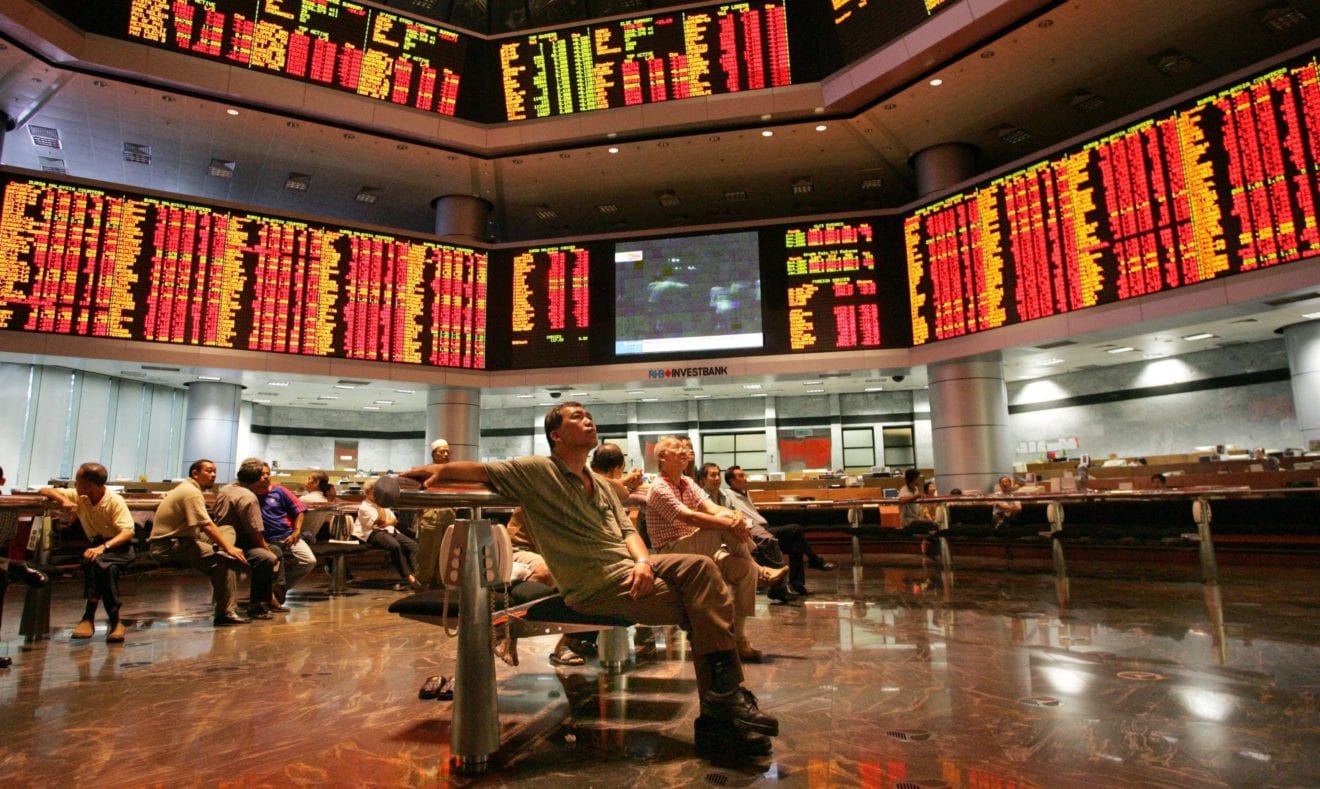
    Foreign funds snapped up RM146.8 million net of local equities last week during the holiday-shortened week. “Foreign funds resumed their entry into stocks listed on Bursa for the fourth consecutive week albeit at a slower pace compared to the preceding week,“ MIDF Research said in its weekly fund flow report.

    It said last Monday saw a moderate net inflow of foreign funds worth RM37.3 million, extending the daily buying streak to nine days. However, this foreign buying spree came to an end on the next day as international funds sold RM12.8 million net, coinciding with the local bourse’s 0.4% slide to settle at 1,690 points.

    Risk appetite was weak on Tuesday following the overnight 2.8% slump in Brent crude oil price combined with the anticipation ahead of the Sino-US trade negotiations.

    Notwithstanding this, offshore investors returned to Bursa on Wednesday at a tune of RM65.1 million net, the highest foreign net inflow during the week.

    The catalyst responsible for the boost of foreign net inflows on that day was 0.4% increase in Brent crude oil price as US President Donald Trump’s administration slaps sanctions on Venezuela’s state-owned oil company while Saudi Arabia had a deeper output cuts in January than initially pledged.

    The momentum of foreign net inflows continued on the last trading day of the week as foreign investors bought RM57.2 million net.

    “We opine that the sentiment was partially supported by the Malaysia’s exports in 2018 which grew by 6.7% to reach almost RM1 trillion. Meanwhile, the FBM KLCI was little changed, declining by less than 1% on Thursday ahead of the long weekend and festive season.”

    The month of January 2019 saw a foreign net inflow of RM1.03 billion or US$249.3 million, the first monthly net inflow since September last year.

    “In comparison with the three other Asean markets we monitor, Malaysia has the second lowest foreign net inflow while Indonesia leads,“ said MIDF.

    Foreign investors were the only group which saw a weekly increase in average daily traded value, jumping by 21.0% to remain above RM1 billion for the second week running.

  • The world’s largest free trade blocs between Japan and EU

    The world’s largest free trade blocs between Japan and EU

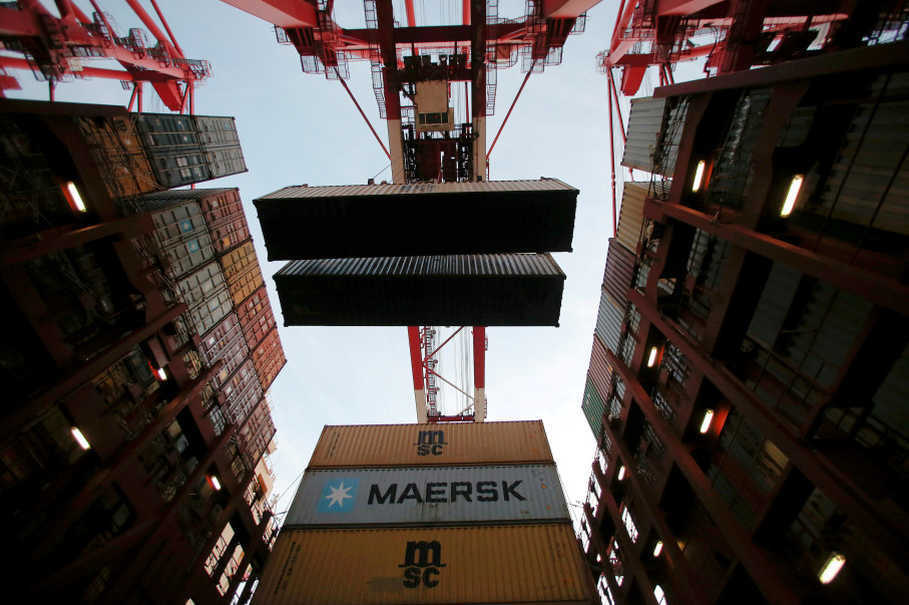
    The economic partnership agreement between Japan and the European Union not only forms one of the world’s largest free trade blocs, but also sets digital and copyright rules that will serve as an international template. The EPA will ultimately eliminate EU tariffs on about 99% of imported products from Japan, and Japanese tariffs on roughly 94% of products imported from the EU. It also incorporates wide-ranging regulations on data transfer and intellectual property protection. The aim is to drive the debate on other multinational trade pacts, especially against the backdrop of rising protectionism.

    A centerpiece provision is a ban on governments forcing companies to reveal source code. Chinese cybersecurity legislation that took effect in 2017 empowers the government to request source code from foreign enterprises doing business within its borders. The law also requires “operators of key information infrastructure” to locally store personal information and important data collected and produced by their services in China.

    The Japan-EU trade deal is essentially a rejection of such digital protectionism, instead encouraging the free and secure cross-border flow of data. Companies in participating countries can operate in other members without risking mandatory disclosure of trade secrets.

    The trade deal “will become a precedent for the data field, which is becoming increasingly important, and will lay the groundwork for the creation of subsequent rules,” said Keisuke Hanyuda, partner at Deloitte Tohmatsu Consulting.

    Japan, the EU and other like-minded trading partners seek to craft similar rules for the World Trade Organization, which includes the U.S. and China. But speedy rule-making may be all but impossible at a WTO that has been criticized as dysfunctional. The alternative strategy is to first implement high-quality rules for the Japan-EU trade deal, as well as the 11-member Trans-Pacific Partnership, and bring other countries into the fold.

    Japan and the EU agreed not to levy tariffs on the transfer of data between the two sides. Copyrights on literary works will expire 70 years after the death of the author. Alcoholic-beverage and food brands tied to a region of origin will be mutually protected as well. Authorized producers of Kobe beef and Champagne would be shielded from imitations, for example.

    The EPA covers 27.8% of global gross domestic product by 2017’s number, and 36.9% of worldwide trade. The TPP-11 — formally the Comprehensive and Progressive Agreement for Trans-Pacific Partnership — accounts for 13.3% of global GDP. Japan sees the EPA and the TPP-11 together adding 13 trillion yen ($119 billion) to its real GDP and creating 750,000 jobs.

    “On top of the short-view effect of stimulating consumption, the inflow of services and investment from the EU will increase competitive pressures inside Japan, and we can expect the effect of prices going down,” said Junichi Sugawara, senior research officer at the Mizuho Research Institute.

    Tariff elimination is expected to have a significant economic impact. EU exports to Japan could jump as much as 34%, while European companies will save an annual 1 billion euros ($1.15 billion) on duties, the EU estimates. Hopes are particularly high for expanded food and agricultural exports to Japan.

    The EPA lowers tariffs on Camembert and other soft cheeses — something Japan did not do for the TPP-11 — up to a certain quota. Japan will eliminate soft-cheese duties for in-quota imports altogether in year 16. Other items, such as European wine, will immediately become duty-free, resulting in a wider selection and lower prices for Japanese consumers.

    Many see the EPA and its benefits as a counterweight to the Trump administration’s anti-globalism. “This is an act of enormous strategic importance for the rules-based international order, at a time when some are questioning this order,” European Council President Donald Tusk said last July, when the agreement was signed. “We are sending a clear message that we stand together against protectionism.”

  • Asia stocks quiet, dollar firm after upbeat US job data

    Asia stocks quiet, dollar firm after upbeat US job data

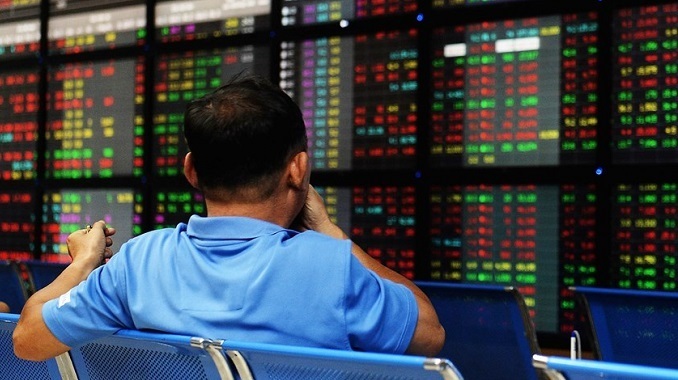
    Asia stocks hovered near four-month highs on Monday after a mixed performance on Wall Street at the close of last week, while the dollar firmed against the yen following strong US job and manufacturing data. MSCI’s broadest index of Asia-Pacific shares outside Japan was almost flat. It had scaled a four-month peak on Friday along with a surge in its global peers.

    Trade was subdued with many of the region’s markets closed for the Lunar New Year. China’s financial markets are closed all week, while those in South Korea are shut until Thursday.

    Hong Kong’s Hang Seng, which is trading for only half a day, edged up 0.2%.

    Japan’s Nikkei added 0.5%.

    On Wall Street on Friday optimism from a surge in January US job growth was offset by a weaker-than-expected outlook from Amazon.com Inc that battered retail stocks. The Dow nudged up 0.26% while the Nasdaq shed 0.25%.

    “Key points for the markets this week will be how the remaining US corporate earnings releases turn out, and whether they are in line with recent upbeat data,” said Junichi Ishikawa, senior FX strategist at IG Securities in Tokyo.

    “While corporate earnings and fundamentals remain key, political developments, notably the US-China trade situation, remain potential risk factors,” he said.

    A US Labor Department report on Friday showed nonfarm payrolls jumped by a stronger-than-forecast 304,000 jobs last month, the largest gain since February 2018.

    That report, along with better-than-expected ISM manufacturing activity numbers for January, pointed to underlying strength in the world’s biggest economy.

    “After last week’s risk appetite revival, the data pulse and the tone of Fed speakers will be important. For the Goldilocks market to continue, we need to find a delicate balance between improving data and still-neutral central banks,” strategists at ANZ wrote.

    Global equity markets performed strongly last week after the Federal Reserve pledged to be patient with further interest rate hikes, signalling a potential end to its tightening cycle.

    Friday’s robust economic data triggered a sharp rebound in US Treasury yields, in turn lifting the dollar.

    On Monday, the US currency was a shade higher at 109.555 yen after advancing 0.6% on Friday.

    The euro was little changed at $1.1456 after getting pulled back from a high of $1.1488 on Friday.

    The Australian dollar was mostly steady at $0.7244 after slipping 0.4% the previous session.

    The benchmark 10-year U.S. Treasury yield was at 2.686% after climbing nearly 6 basis points on Friday to pull away from a four-week low of 2.619% earlier last week.

    West Texas Intermediate (WTI) US crude oil futures extended Friday’s rally and were last up 0.3% at $55.42 per barrel.

    On Friday, WTI futures had rallied 2.7% on the upbeat US job report, signs that Washington’s sanctions on Venezuelan exports have helped tighten supply and data showing US drillers cut the number of oil rigs.

  • Vietnam per capita income matches Malaysia’s 20 years ago

    Vietnam per capita income matches Malaysia’s 20 years ago

    Vietnam’s recent economic achievements notwithstanding, much effort is needed for it to close the gap with other countries, a minister has said. Minister of Planning and Investment Nguyen Chi Dung said at a conference Wednesday that while Vietnam’s GDP per capita had surged by 27.4 times in the last 30 years to almost $2,590 last year, Malaysia had achieved this figure 20 years ago.

    Thailand had done so 15 years ago and Indonesia 10 years ago.

    The main limitations of its economy were low labor productivity, economic efficiency and competitiveness, and the country also faced the risk of being stuck in the middle-income trap.

    According to the 2018 Vietnam Annual Economic Report, average productivity per worker was VND60.73 million ($2,600) in 2017, lower than that of China, Japan, the Philippines, Thailand, and Cambodia.

    Currently the country also faced challenges like the U.S.-China trade war, the minister said.

    For these reasons, institutional reforms were necessary to achieve a more sustainable economy, he noted.

    Macroeconomic stability and high economic growth with innovation in science and technology were imperative.

    The private sector had to remain one of the pillars of the economy in future, Dung said. “If Vietnam doesn’t catch the 4.0 train, the gap between it with other countries will become wider. Vietnam needs to narrow that gap.”

    Vietnam’s GDP has grown at 6.8 percent a year on average for the last 20 years, and the economy has grown 39 fold in the period to $245 billion last year.

    Growth last year was 7.08 percent, the highest in a decade.

  • Vietnam’s exports slow down

    Vietnam’s exports slow down

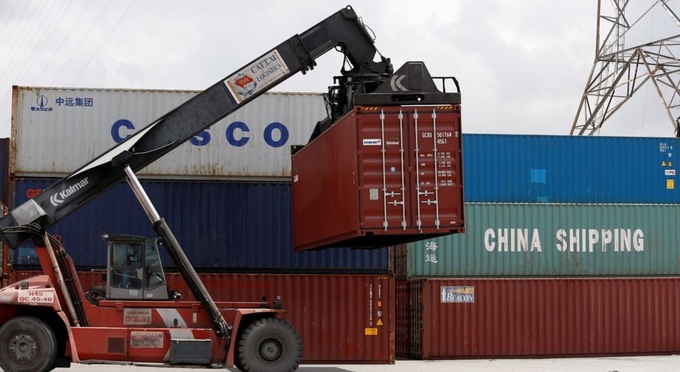
    Vietnam’s exports fell by 1.3 percent year-on-year in January to $20 billion as phone shipments fell sharply. Exports of phones were 27.5 percent down at $2.9 billion, according to the General Statistics Office. Computer and electronics exports fell 5 percent to $2.3 billion.

    But exports of textiles and garments rose by 6.7 percent to $2.7 billion, footwear by 12.8 percent to $1.6 billion and machinery and equipment by 15.2 percent to $1.4 billion.

    The U.S. was the biggest importer ($4 billion) followed by China ($3.8 billion) and the EU ($3.2 billion). The country’s Southeast Asian neighbors only accounted for $2 billion.

    Meanwhile, Vietnam’s imports rose by 3.1 percent to $20.8 billion.

    Last year exports were worth $244.72 billion, up 13.8 percent, and imports cost $237.51 billion, giving Vietnam its highest trade surplus ever of $7.21 billion.

  • Korean firms team up on insurance

    Korean firms team up on insurance

    SK Telecom, Korea’s top mobile carrier, and Hyundai Motor will jointly enter the insurance business, partnering with Hanwha General Insurance to bring their technology expertise to the industry. The Financial Services Commission (FSC), the country’s top financial regulator, said Wednesday it has given preliminary permission for SK Telecom, Hyundai Motor and Hanwha General Insurance to build an online insurance company that primarily deals with miscellaneous non-life insurance on digital platforms.

    “If the process goes smoothly, it can open in the fourth quarter of this year,” said a spokesperson at SK Telecom.

    In six months, the investing units are required to raise the promised capital, complete recruiting and have the physical operation in place, after which it will file for final approval.

    The companies said the unit will focus on cars, pets and travel.

    Hyundai Motor said the insurer will develop a product that differentiates insurance fees depending on a policy holders’ mileage and other driving behavior. Also on the cards is a system that discounts fees when subscribers are found to drive in a safe manner by adopting a real-time analytical technique to monitor driving habits.

    The insurance firm aims to carve out its own niche with lower fees and relatively short contracts.

    “We want to offer attractive alternatives for consumers who found existing insurance products expensive and requiring long-term commitment,” said Jang Yoo-seong, head of the artificial intelligence (AI) and mobility division at SK Telecom.

    The idea is based on InsurTech, a combination of insurance and technology that has quickly risen to prominence in the global financial industry.

    According to a study by the Korea Insurance Research Institute, the market has been rapidly growing in recently years. Investment in InsurTech start-ups, which amounted to $2.6 million in 2013, surged to $11.9 billion in 2017.

    The global InsurTech market revenue is valued at $532.7 million in 2018 and is expected to reach $1,119.8 million by 2023, according to Research and Markets, a U.S. market tracker.

    Hanwha General Insurance will raise 75.1 percent of the capital while SK Telecom puts in 9.9 percent. Hyundai Motor invested 5.1 percent and Altos Ventures Korea, an investment firm, 9.9 percent.

    In total, the companies will funnel in a total of 85 billion won.

    If passed, the new insurer will be the country’s second internet-only insurance company after Kyobo Life Planet.

  • Hong Kong retail rents tipped to turn

    Hong Kong retail rents tipped to turn

    Hong Kong retail rents are tipped for a modest rise of up to 5 per cent this year according to a research report from real estate advisor Savills. But the authors, Nick Bradstreet, MD, head of leasing and Simon Smith, senior director, research & consultancy, noted that this year has already got off to a positive start. “Landlords and retailers are wary given current uncertainties surrounding trade, stock market valuations, a weak renminbi and rising interest rates among other factors,” said Bradstreet. “But early indications are that the year has got off to a positive start.”

    Smith added: “The well-observed shift towards higher same day mainland visitor numbers and lower per capita spending continued last year and we believe that this year can expect more of the same.”

    Both prime street-shop and shopping-centre rents remained flat last year and rental growth had all but ground to a halt by the fourth quarter due to a weak sales performance, the report said.

    However, the new cross-border bridge and rail link led to a 40.3 per cent year-on-year rise in same-day mainland visitor arrivals in November to 3 million. The number of mainland tourists actually rose during the first 11 months of last year by 14 per cent.

    Smith said the increasing number of same-day visitors and a weak renminbi meant lower per-capita spending and unchanged retail rents by year end.

    “Retail sales growth decelerated to only 1.4 per cent in November, the slowest growth rate registered since June 2017; yet most retailers reported a better-than expected performance over the Christmas holiday period.”

    Thanks to the strong tourist demand, cosmetics and personal care products retailers are expanding rapidly in popular tourist districts such as Causeway Bay, Tsim Sha Tsui and Mong Kok. Food and beverage stores benefited, too, the report said.

    On the contrary, the fourth quarter saw zero rental growth over the previous quarter in prime street shops in most districts, except Tsim Sha Tsui (down -0.9 per cent quarter on quarter). Whilst shopping malls in Kowloon were largely responsible for the marginal decrease with a negative 0.3 per cent change over the third quarter, mall rents remained unchanged on Hong Kong Island and in the New Territories.

    “As a total of 2.3 million sqft of new supply will come on stream this year – the highest level since 2006 – the market fundamentals are expected to remain relatively stable.

  • Oil rises as traders expect Venezuelan supply disruptions amid U.S. sanctions

    Oil rises as traders expect Venezuelan supply disruptions amid U.S. sanctions

    Oil prices rose on Wednesday as concerns about supply disruptions following U.S. sanctions on Venezuela’s oil industry outweighed downward pressure from a darkening outlook for the global economy. U.S. West Texas Intermediate (WTI) crude futures were at $53.54 per barrel at 0455 GMT, up 23 cents, or 0.4 percent, above their last settlement.

    International Brent crude oil futures rose 37 cents, or 0.6 percent, to $61.69 per barrel.

    The gains followed a 2 percent price jump in the previous session, when markets first digested the U.S. sanctions on Venezuela’s oil exports.

    Washington on Monday announced export sanctions against state-owned oil firm Petroleos de Venezuela SA (PDVSA), limiting transactions between U.S. companies that do business with Venezuela through purchases of crude oil and sales of refined products.

    “The sanctions so far have been mostly disruptive for refiners on the U.S. Gulf Coast, who are being forced to seek alternative heavy crude supplies, and have stepped up purchases from Canada,” said Vandana Hari of Vanda Insights, an energy consultancy.

    She added, however, that Canadian oil exports would be “constrained by pipeline capacity bottlenecks.

    The sanctions aim to freeze sale proceeds from PDVSA’s exports of roughly 500,000 barrels per day (bpd) of crude oil to the United States.

    Although the move pushed up oil prices, markets appeared relatively relaxed as the sanctions only affect Venezuelan supply to the United States.

    “The (Venezuelan) export volumes will not be eliminated from the market, but rather rerouted to other countries,” said Paola Rodriguez-Masiu, an analyst at consultancy Rystad Energy.

    With the United States dropping out as a customer for Venezuelan oil, she added that “China and India … will be able to pick up these oil volumes at great discounts.”

    Despite this, some analysts said that non-U.S. oil trading firms with operations in the United States may still avoid dealing with Venezuelan oil.

    The Schork Report, a daily oil and gas trading publication, said on Wednesday that many “international oil traders … have significant trading operations in the U.S. … At least in the short-term, these traders will undoubtedly quit buying from Venezuela until such a time that they are assured that they are not running afoul of U.S. sanctions.”

    TRADE TALKS

    Other analysts also pointed to economic weakness as countering supply-side efforts to tighten the market such as the voluntary supply restraint by the Organization of the Petroleum Exporting Countries (OPEC).

    “Pulling in the opposite (oil price) direction are heightened concerns about global growth, particularly that of China,” said Ole Hansen, head of commodity strategy at Denmark’s Saxo Bank.

    Global economic growth and fuel consumption are expected to slow this year amid a trade dispute between the United States and China, the world’s two biggest economies.

    Officials from Washington and Beijing are set to launch a new round of trade talks on Wednesday aimed at resolving their disputes amid which both sides have slapped hefty import tariffs on each other’s goods.

  • Apple sales and profit slip as demand falls

    Apple sales and profit slip as demand falls

    Tumbling iPhone demand drove an uncharacteristic decline in Apple sales in the first quarter trimming back its profit for the period. Sales of its iPhone range slumped 15 per cent year on year, and although burgeoning revenue from services like digital media subscriptions – up 19 per cent to a new high of US$10.9 billion – and other products compensated, total sales were down 5 per cent to $84.3 billion.

    Sales in China slumped 26.6 per cent during the period.

    Net income fell by $100 million, from $20.065 billion in the December 2017 quarter to $19.965 billion in the latest quarter. While the company championed setting “an all-time earnings per share record” that was a consequence of a share buyback program reducing the share pool rather than an improved bottom line.

    Commenting on the results, GlobalData Retail MD Neil Saunders said while Apple is still a money-making machine, the sales decline “symbolises a company that is starting to run out of steam”.

    “In our view, this is something to be corrected, not least because Apple is a costly company to run and it relies on strong revenue growth to drive up the bottom line. As this quarter’s figures show, failure to achieve that results in profit erosion.”

    Saunders said the slowdown in iPhone sales reflected Apple’s inability to come up with meaningful and valuable innovations that wow consumers.

    “The latest iPhones might be works of art from an engineering perspective, but they are essentially incremental products that lack the excitement and newness of earlier models. With the higher price points of top-end models, consumers expect a lot more for their money. The blunt truth is, Apple’s latest line up of phones doesn’t do that much more than the generations that came before.”

    He said the slowdown in China is a problem Apple shares with many other companies.

    “The country is suffering from more sluggish consumer demand which has put the brakes on retail growth rates across many sectors. However, the issue for Apple is that this has coincided with a rise in competition from local phones and devices which has helped to eat into its own growth. In short, China is no longer the engine of growth for Apple that it once was and this makes Apple uncomfortably more reliant on mature markets to drive revenues. Some of those markets, like Europe, are also not delivering – thanks to very high price points and consumers that are hesitant to spend on big-ticket items.”

    From must have to might buy

    Saunders said Apple’s iPads and some of its Macs are good, quality items, however they are simply not impressing the market and Apple is losing its lustre in terms of producing compelling products.

    “In our view, Apple has moved from a position of ‘must have this and must have it now’ to ‘might buy this at some point in the future’. Price increases may mitigate this but, ultimately, such a shift can only ever result in a softer sales performance.”

    While services are performing well, Saunders said Apple must push much harder.

    “Amazon is successfully creating an ecosystem of services through Prime. Apple needs to do something similar by building on its Apple Music subscription and its App Store offering. Movies and television content are also needed to propel sales.

    “In our view, Apple should seriously consider a big acquisition such as Netflix. Content is a big growth area and is becoming increasingly linked to devices. Apple needs to play more heavily in this space both to generate new opportunities but also to defend its own device business.”

    While Apple remains a solid and financially successful company, he said, a lack of serious and significant innovation means it runs the risk of diluting future earnings.

    “Apple thrives off serving a mass market; at the moment its moves to provide more expensive items to fewer people will ultimately do further harm to the bottom line. The clear blue water that once existed between Apple and its rivals is much diminished. The company has time to reopen the gap, but to do so, it needs to pull something new and unique out of its hat sooner, rather than later.”

    Cook’s positive spin

    Apple CEO Tim Cook delivered a positive spin on the results: “While it was disappointing to miss our revenue guidance, we manage Apple for the long term, and this quarter’s results demonstrate that the underlying strength of our business runs deep and wide. Our active installed base of devices reached an all-time high of 1.4 billion in the first quarter, growing in each of our geographic segments. That’s a great testament to the satisfaction and loyalty of our customers, and it’s driving our services business to new records thanks to our large and fast-growing ecosystem.”

    At the end of the quarter, Apple’s net cash balance was $130 billion.

  • Puregold reveals expansion plan

    Puregold reveals expansion plan

    Philippines’ retail chain Puregold will open 25 outlets this year to boost its nationwide footprint. Parent company Puregold Price Club also plans to open four more S&R Membership warehouse stores. Planned locations include Metro Manila, Southern Luzon, and outside Metro Manila. Puregold VP for investor relations John Marson Hao said the company would use proceeds from the recently-concluded P4.69-billion public offering to fund the construction of the new outlets.

    The Puregold group operates 397 stores nationwide, including 345 Puregold stores, 16 S&R membership shopping warehouses and 36 S&R New York Style outlets.

  • Gold scales 8-month peak on Fed rate pause hopes, trade woes

    Gold scales 8-month peak on Fed rate pause hopes, trade woes

    Gold prices edged up on Wednesday to hit their highest since May, supported by uncertainty over U.S.-China trade relations and expectations the U.S. Federal Reserve will keep rates on hold later in the day. Spot gold was up 0.2 percent at $1,313.91 per ounce by 0245 GMT, after touching its highest since May 15 at $1,314.10 early in the session. U.S. gold futures rose 0.3 percent to $1,312.30 per ounce.

    “For the short-term gold is going to move higher as the Federal Reserve will have a dovish tone, which should weaken the dollar and give gold a bit of a move up,” said INTL FCStone analyst Edward Meir.

    The absence of an agreement in U.S-China trade talks should also benefit gold, he said.

    Investors are waiting on the Federal Reserve’s policy decision later in the day, with expectations officials will reinforce their recent dovish stance given a stalemate on global trade, signs of a slowdown in the U.S. economy, and waning business and consumer confidence.

    The Fed raised interest rates four times last year.

    Investors are also concerned that criminal charges against China’s Huawei Technologies Co. Ltd. for violating U.S. sanctions against Iran could complicate U.S.-China trade talks.

    China’s Vice Premier Liu is due to meet with U.S. Trade Representative Robert Lighthizer later in the day.

    “Gold also looks good on the charts … Physical demand seems to be improving in some markets and ETF buying has been increasing. In general the path of least resistance is probably higher from here,” Meir said.

    Underscoring investor interest in the bullion, holdings of SPDR Gold Trust, the world’s largest gold-backed exchange-traded fund, rose 1 percent to 823.87 tonnes on Tuesday, to their highest since June.

    SPDR gold holdings have risen 4.6 percent so far this month, their best since September 2017.

    “A combination of falling treasury yields, anxiety over Brexit and Venezuela is all helping gold,” said Nicholas Frappell, global general manager at ABC Bullion.

    British lawmakers rejected most amendments that aimed to keep Britain from leaving the European Union without a deal, reviving worries of a chaotic withdrawal from the trading bloc that would damage the UK economy.

    Silver rose 0.3 percent to $15.88 per ounce, having hit its highest since July 2018 at $15.92 in the prior session.

    Palladium fell 0.2 percent to $1,343.50, while platinum was up 0.4 percent at $813.

  • Vietnam foreign investment skyrockets in January

    Vietnam foreign investment skyrockets in January

    FDI pledges for new projects, increased capital and stake acquisitions in Vietnam rose 51.9 percent year-on-year to $1.9 billion in January. In a statement Monday, the Ministry of Planning and Investment said the manufacturing sector attracted the most interest from foreign investors, accounting for $1.19 billion or 62.4 percent of the total FDI. Science and technology ranked second with $185.8 million, followed by real estate with $179.1 million.

    Japanese were the top investors with nearly $364 million. South Korea and China were next with $349.1 million and $307.8 million.

    Ho Chi Minh City is the most attractive location for FDI investors in January, accounting for around 39.1 percent of the total FDI. Southern Binh Duong Province ranked second, accounting for 12.5 percent, followed by northern Hai Duong Province with 6.5 percent.

    As of January 20 authorities had issued licenses for 226 new projects with a total capital of $805 million. Meanwhile, another $340.2 million was pledged for existing projects this month.

    The two biggest projects were Kyoshin Vietnam’s $134.7 million investment expansion in HCMC by Japanese investors to produce, process and export electrical components and molds, and Katolec Global Logistics Vietnam’s $65 million investment for warehousing and storing goods in the northern province of Ha Nam.

    Estimated FDI disbursement for the month was $1.55 billion, up 9.2 percent year-on-year.

    Vietnam reported FDI disbursement of $19.1 billion last year, up 9.1 percent.