Tag: flipkart

  • Flipkart launches 20 pick-up centres to mitigate delivery issues

    Flipkart launches 20 pick-up centres to mitigate delivery issues

    A pilot project, Flipkart claimed, has received an overwhelming response from customers with more than 80% of shipments picked up through the stores over a period of 6 months. Banking on the success of the first phase launch, the company aims to open 100 such centres by March 2016.

    Logistics and good customer experience are the most common sticking points for e-commerce companies in India. As a result, most online retailers are increasingly partnering with logistics firms to address the problem.

    “Our efforts are focused on expanding our delivery network without compromising on the customer service levels and expectation,” said Neeraj Aggarwal, Senior Director (Delivery Operations) at Flipkart. “We also plan to offer several value added services like instant returns, spot trials, open box deliveries and exclusive product demos at these experience zones to enhance customer engagement.”

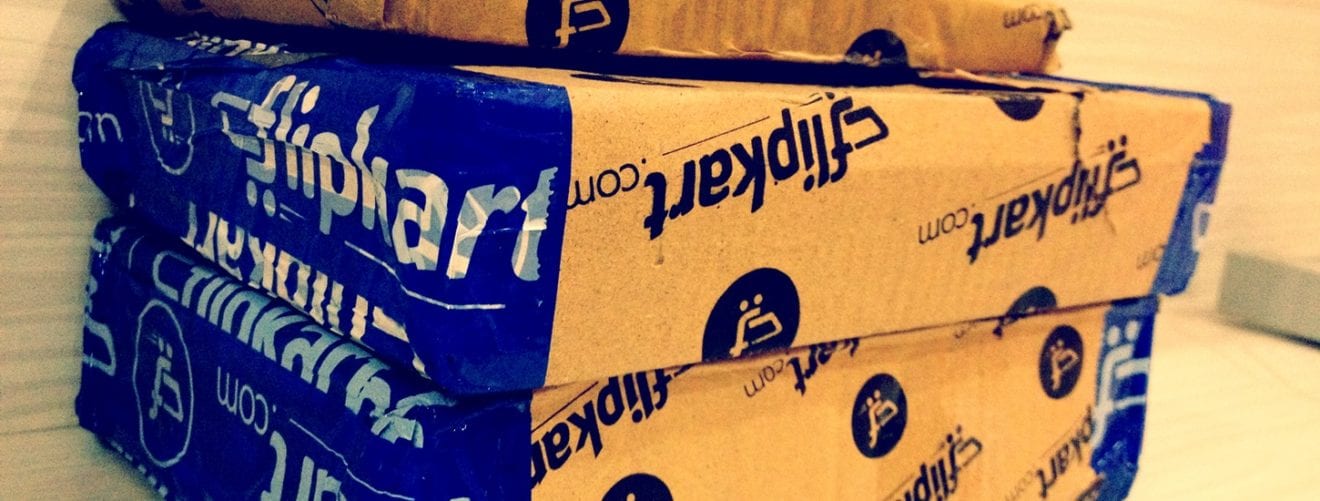
    Online retailer Flipkart on Tuesday introduced 20 pick-up centres for its customers in 10 cities across the country. These so-called ‘experience zones’ will allow customers to walk into a centre at their own convenience and collect products ordered online.

    The centres have been set up by Flipkart’s logistics and delivery unit Ekart.

    Unavailability of customers during delivery and restricted entry of delivery boys into informationtechnology parks, gated communities and educational institutions are among the primary reasons that leads to customer dissatisfaction with the delivery process, Flipkart said in a statement.

    Flipkart expects this alternative delivery model to catapult customer convenience, while enhancing scale and reach in supply chain expansion.

    The company said these collection points will form a key element of Flipkart’s rural expansion strategy. “Flipkart plans to expand their reach into Tier 4 towns and rural areas by making the entire town serviceable from a pick-up centre, a reliable alternative to door delivery in small towns,” it said.
  • Flipkart launches financial assistance programme for vendors

    Flipkart launches financial assistance programme for vendors

    Online retail major Flipkart on Friday launched its financial assistance programme Growth Capital Initiative for sellers across the country. The company has tied up with leading banks and financial institutions such as Bajaj Finserv, Axis Bank, NeoGrowth, Lendingkart and Capital First, for the same.

    The platform will compare lending services between different financial players and enable access to capital. While Flipkart will play the role of a curator, the platform will create an arena and ecosystem of financial services for sellers that will be governed by the market forces.

    “Lack of funding has often emerged as one of the key hurdles for small businesses. In fact, most of the lending organisations consider them as ‘un-bankable’ which results in a lot of SMEs/units closing down or borrowing from other sources at higher rates. We see a huge unmet demand in this sector. Our initiative will provide simple, hassle-free and competitive options to sellers to avail financial services,” said Ankit Nagori, Chief Business Officer at Flipkart.

    With this initiative, sellers across India will be able to gain quick access to loans with basic documentation and within minimum turn-around-time. Our focus is to simplify the whole capital fund gathering process so that they can make timely investment and focus on developing their businesses, added Nagori.

    Rivals Snapdeal already has a financial assistance arm for vendors in place since last year while Amazon has tie-ups with various financial institutions in the country for the same. In addition, there are start-ups like Lendingkart.com and Capital Float that assist vendors in online e-commerce to seek easy loans.

  • Flipkart to use Singapore image search tech

    Flipkart to use Singapore image search tech

    Flipkart, India’s largest online marketplace, has started rolling out image searching on its mobile shopping app which it clams will revolutionise the shopping experience.

    Flipkart is using ViSenze technology developed in Singapore for visual search and image recognition.

    The image search system allows users to upload photos of fashion items and find similar products in terms of color, pattern or style inside the Flipkart merchandise database. This eliminates keywords guessing when searching for a product, thereby simplifying the search process.

    Additionally, users browsing Flipkart’s catalogue can find visually similar products with a single tap. This brings offline-like shopping experience to mobile, acting as a virtual “shop assistant” who would show products of same color or design when users see something they like.

    This simplified search experience comes handy on the online marketplace that lists over 30 million products and is accessed by 45 million registered users, 75 per cent of them via smartphones. These new features are currently in beta and are due to be released to all users in the upcoming days.

    “We are proud we have managed to offer a solution that is also capable to handle unique needs for the Indian market such as ethnic wear,” said Oliver Tan, CEO and co-founder of ViSenze.

    The tech company originates from an R&D spin-off from the National University of Singapore, and develops highly advanced visual search algorithms, combining state-of-the-art deep learning with the latest computer vision technology to solve search and recognition problems faced by businesses in the visual web space.

    The company provides its visual technology APIs through a Software-as-a-Service offering to online retailers, content owners, brands and advertisers, app developers and digital publishers, enabling their platforms to recognise products for retrieval purposes or instant purchases.

    “The partnership with Flipkart not only attests to the strength of our products, but also reinforces our mission to enable retailers to capitalise on smart innovations in visual technology to uplift conversions, while empowering shoppers with real-time ability to search without the hassle of keyword guessing. And we will continue to innovate in this area,” said Tan.

    Key clients using the company’s image search service include internet retailers and marketplaces like Caratlane, Zalora (a Rocket Internet company), Reebonz, and Rakuten Taiwan, as well as patent search engines like PatSnap.

  • Authorities turns down FDI in retail e-commerce

    Authorities turns down FDI in retail e-commerce

    The Union authorities won’t ease overseas direct funding (FDI) guidelines for digital commerce.

    Minister of State for Commerce and Business Nirmala Sitharaman final month met executives of Flipkart andSnapdeal and representatives from the Confederation of Indian Business (CII) and the Federation of Indian Chambers of Commerce and Business (Ficci) to evaluate the impression of FDIon Indian e-commerce corporations.

    The assembly spawned hypothesis that the Nationwide Democratic Alliance (NDA) authorities may permit overseas e-commerce corporations to function in India. New Delhi can also be underneath strain from Washington and Tokyo to chill out its FDI coverage for e-commerce.

    “B2B (business-to-business) is one of the best coverage. We’ll simply not permit B2C (business-to-consumer). India strongly believes that B2C is towards the buyer’s curiosity. If China and Japan haven’t opened up, why ought to we?” a prime official with the division of commercial coverage and promotion (DIPP) informed Enterprise Normal.

    Extra conferences on playing cards
    Throughout Sitharaman’s assembly a number of the factors that emerged have been permitting FDI in e-commerce would face assault from small retailers and the market can be flooded with imported items. Sitharaman deliberate to carry extra conferences on this problem, the official stated.

    The NDA authorities needs the ‘Make in India’ marketing campaign to achieve success earlier than opening up B2C e-commerce to overseas retailers. In addition to, Indian business just isn’t enthusiastic concerning the transfer.

    In a illustration to the DIPP, the CII said overseas corporations must be allowed after Indian e-commerce gamers had acquired the power to tackle the competitors. The chamber sought safeguards for Indian corporations like native sourcing, privateness, security towards tax evasion and checking e-wastage.

    At current, 100 per cent FDI is allowed in business-to-business (B2B) e-commerce, whereas it’s banned within the business-to-consumer (B2C) phase. Apart from, there’s a 30 per cent native sourcing rule for overseas gamers.

    Market set off
    Giant Indian e-commerce corporations like Flipkart and Snapdeal have grown considerably since their inception in 2007 and 2010, respectively. International e-commerce giants like Amazon can function in India beneath the marketplace mannequin. In some instances, overseas gamers have tied up with native corporations to enter the Indian market.

    In response to a report by Technopak, the adoption of market fashions by e-tailers is fuelled principally by enterprise scalability and FDI coverage compliance.

  • Grocery to be next gateway for Paytm

    Grocery to be next gateway for Paytm

    Alibaba-backed payment platform Paytm is set to enter the online grocery market under a new business vertical to be headquartered in Bengaluru. The development, at a time when domestic e-commerce giant Flipkart is also preparing to start grocery retailing, a space currently dominated by small and mid-sized players, suggests investors and analysts are viewing grocery as the next big growth avenue in e-commerce.

    Through affiliate Ant Financial Services, Chinese e-commerce giant Alibaba is infusing USD575 million in Paytm, whose wallet user base recently touched 50 million. Paytm is going to use part of the fresh funding for its foray into the new business of grocery retailing.

    Paytm’s grocery segment, initially with a team of about 20, is likely to begin operations soon. Online grocery is expected to help boost its transaction rates and customer acquisition, both important benchmarks for investors at the time of valuing a company for fresh funding.

  • Flipkart to create 2 million jobs in 2015

    Flipkart to create 2 million jobs in 2015

    Indian leading e-commerce company Flipkart on Wednesday said it would directly and indirectly create about two million jobs in 2015 through its marketplace and ancillary services.

    Among other segments, logistics and warehousing would be key employment generators, the company said. In 2014, the e-commerce industry created about half a million jobs, according to Flipkart.

    The Bengaluru-based company employs about 33,000 people. Earlier this week, Flipkart said it planned to double the size of its technology team in 2015 to 2,000.

  • Flipkart may be readying itself for Nasdaq listing

    Flipkart may be readying itself for Nasdaq listing

    E-commerce major Flipkart is believed to be working on an international listing, with Nasdaq in the US emerging as the preferred destination. Experts say before an initial public offering (IPO), expected in 12 to 18 months, the Bengaluru-based company must strengthen its financials and organisational structure.

    “The choice of stock exchange will be a challenge, as listing in India is fairly impossible because of issues such as profits and the traditional definition of promoter, etc,” said Harish H V, partner at Grant Thornton. He added Nasdaq seemed the best choice, considering it was known for listing technology companies and the fact that it was much easier to list there. Flipkart might consider Singapore, too, as listing norms in that country aren’t as strict as in many others, it is learnt.

    Consultants said if an IPO was launched in the next six to eight quarters, Indian stock exchanges wouldn’t be considered, considering the requirements related to a company’s profits. For public issues of companies without a three-year ‘profitability’ record, the Securities and Exchange Board of India had, in 2012, reduced the retail investor quota from 35 percent to 10 percent of the issue size. The move, aimed at protecting retail investors (those investing up to INR2 lakh) from IPOs of loss-making companies, limited the participation of small investors in successful IPOs such as those of Just Dial and Snowman Logistics.