Tag: fraud

  • HSBC Profit Falters Amid UK Fraud Charge and Rising Middle East Tensions

    HSBC Profit Falters Amid UK Fraud Charge and Rising Middle East Tensions

    HSBC Holdings Plc recently announced financial results that fell short of projections, impacted by unexpected fraud-related charges in the UK and escalating economic uncertainties due to the Middle East conflict.

    Financial Outcome Below Expectations

    In the first quarter, HSBC’s pretax profit plummeted to $9.4 billion, falling short of the anticipated $9.6 billion. Despite the disappointing results, resilience was observed in the bank’s wealth and Hong Kong sectors. The bank’s net interest income outlook also experienced an upswing, which provided some balance to the outcome.

    The London-headquartered bank reported $1.3 billion in anticipated credit losses for the quarter, a major component of which was a $400 million charge associated with a fraudulent securitization exposure involving a UK financial sponsor. Furthermore, HSBC had to manage a $400 million fallout related to the collapsed mortgage lender MFS.

    The bank also noted a $300 million augmentation in allowances due to a worsening global economic forecast triggered by the initiation of strife in the Middle East.

    Revenue and Net Interest Income Experience Growth

    Despite the challenges, HSBC’s revenue observed a 6% increase year-on-year to $18.62 billion, surpassing estimates. This was largely due to robust wealth fees and other income. Simultaneously, net interest income also experienced an 8% growth year-on-year, reaching $8.9 billion. However, operating expenses mirrored this increase, also growing by 8% as a result of inflation, forex, increased planned expenditure, and performance-related pay.

    The bank flagged potential risks associated with the Middle East conflict such as surging oil prices, heightened inflation, and a significant GDP slowdown. Should these factors transpire, the bank warned of a “mid-to-high single digit percentage” negative impact on its pre-tax profit.

    Although HSBC maintained its target return on tangible equity (RoTE) of 17%, it cautioned that the negative repercussions of the Middle East crisis, if realized, could potentially push RoTE, excluding significant items, below this target in 2026. The annualized RoTE for the reported quarter, excluding items, was 18.7%.

    HSBC expressed confidence in its commitment to deliver $1.5 billion in annualized cost reduction by the end of June 2026. The board also approved its first interim dividend for 2026 of 10 cents per share.

    Questions & Answers

    What was the pretax profit for HSBC in the first quarter?
    HSBC’s pretax profit for the first quarter was $9.4 billion.

    What financial impact was caused by the Middle East conflict on HSBC?
    HSBC noted a $300 million increase in allowances related to a worsening global economic forecast due to the conflict in the Middle East.

    What is HSBC’s target return on tangible equity (RoTE)?
    HSBC has maintained its targeted return on tangible equity of 17%.

  • Apax Leaders English School Chief Faces Charges for $291M Investment Fraud Scheme: Over 10,000 Investors Duped

    Apax Leaders English School Chief Faces Charges for $291M Investment Fraud Scheme: Over 10,000 Investors Duped

    Nguyen Ngoc Thuy, owner of the English language school Apax Leaders, is facing allegations of defrauding 10,123 investors out of VND7.68 trillion (US$291 million) by selling fraudulent shares in his company, Egroup.

    The Investigation

    The Ministry of Public Security has finalised its probe into the activities of Egroup’s chairman, Mr. Thuy. It has recommended charges of bribery and wrongful misappropriation of assets against him and 29 of his associates.

    The Accusations

    Authorities claim that Thuy and his accomplices misrepresented the financial status of Egroup. They allegedly claimed the company had a charter capital of VND963 billion ($36 million) to appeal to potential investors.

    The reputation of the Apax English school, which Mr. Thuy owned, was also utilised to lure victims. At one point, the school boasted 120 centres scattered across the country, adding to its credibility. Some investors even traded real estate for the supposed shares.

    The 10,123 individuals who invested in Egroup were promised that the company would repurchase the shares after one year at a higher price.

    The Aftermath

    However, the police have discovered that 8,926 of these investors never received any return on their investment, essentially losing their money.

    Questions & Answers

    Who is Nguyen Ngoc Thuy?
    Nguyen Ngoc Thuy is the owner of the English language school, Apax Leaders. He is also the chairman of Egroup, a company involved in this alleged fraudulent case.

    What activities of Egroup is Nguyen Ngoc Thuy being investigated for?
    Thuy is being investigated for allegedly selling fraudulent shares of Egroup to over 10,000 investors, defrauding them of a total of VND7.68 trillion ($291 million).

    What was the false promise made to the investors?
    Investors were assured by Thuy and his associates that the company would repurchase the shares sold to them after one year at a higher price. However, the majority of these investors never received any return on their investments.

  • Indosat’s AI-Driven Shield: Blocking 200 Million Spam & Scam Contacts in 90 Days!

    Indosat’s AI-Driven Shield: Blocking 200 Million Spam & Scam Contacts in 90 Days!

    Indosat Ooredoo Hutchison (IOH) has announced significant success in the initial months following the launch of its AI-powered Anti-Spam and Anti-Scam feature. Just three months after its introduction, the feature has blocked hundreds of millions of potential digital fraud attempts. Launched on August 7, 2025, the tool has intercepted more than 200 million potentially harmful calls, flagged over 90 million dubious messages, and safeguarded an average of 11.5 million customers per month from possible scams.

    Artificial Intelligence Meets 5G

    This anti-fraud feature is a key component of Indosat’s AIvolusi5G program, an initiative that combines the power of artificial intelligence with cutting-edge 5G technology to enhance the safety and dependability of the network. This system works automatically on a network level, screening calls and messages for possible fraudulent activities. This does not necessitate the installation of additional applications or the use of specific devices by customers.

    According to the Global Anti-Scam Alliance’s 2025 State of Scams in Indonesia report, 66% of Indonesian adults have been the target of scam attempts in the past year, with 14% suffering financial losses totaling IDR 49 trillion (USD 3.3 billion). The majority of these scams have taken place through direct-messaging channels like SMS and chat platforms.

    Impressive Results

    Indosat’s internal data has revealed that the company’s VoLTE network alone has detected over 290 million spam calls. When expanded to encompass Indosat’s entire customer base, this results in more than 500 million identified scam and spam calls and messages within just two and a half months. Additionally, the system has flagged over 145 million spam and scam messages, which includes 110 million confirmed fraudulent messages.

    Bilal Khazmi, Director and Chief Commercial Officer of Indosat Ooredoo Hutchison, commented on the results, saying: “Our technology is designed to help customers of all age groups navigate the digital world with increased confidence. By offering fast connectivity, accessible products, and robust protection, we remain dedicated to delivering superior digital experiences that connect and empower every Indonesian.”

    While the system has not managed to block all malicious communications, Indosat has noted that its early warning alerts have contributed to reducing financial losses and increasing public awareness of online threats. Customers receive alerts about potentially harmful numbers or messages before they interact with them, enabling them to take preventative measures.

    Indosat’s approach to cybersecurity follows the Zero Trust principle, which emphasizes verification over trust assumptions. This principle forms the foundation of Indosat’s efforts to combine technological safeguards with continuous digital literacy programs.

    Questions & Answers

    What is the AIvolusi5G program?
    The AIvolusi5G program is an initiative by Indosat that merges artificial intelligence with 5G technology to improve the security and reliability of their network.

    What is the primary goal of Indosat’s Anti-Spam and Anti-Scam feature?
    The primary goal of this feature is to protect customers from potential digital fraud attempts by screening calls and messages for suspicious activity.

    How does Indosat’s cybersecurity approach work?
    Indosat follows the Zero Trust principle, prioritizing verification over trust assumptions. This approach underpins their efforts to combine technological safeguards with ongoing digital literacy programs.

  • China, Myanmar, Thailand Unite to Combat Rising Telecom Fraud Threats Together

    China, Myanmar, Thailand Unite to Combat Rising Telecom Fraud Threats Together

    In a decisive move against burgeoning criminal enterprises, China, Myanmar, and Thailand have committed to strengthening their collaboration in dismantling elaborate scam networks proliferating across Southeast Asia, with a particular focus on the notorious Myawaddy region. This area has gained infamy as a major hub for fraudulent activities, and the three nations aim to eradicate such operations.

    Strengthening Cross-Border Alliances

    China’s Ministry of Public Security unveiled this agreement following a recent trilateral ministerial meeting dedicated to intensifying efforts against telecom fraud. Attended by law enforcement officials from each country, the high-level gathering was a platform for discussing comprehensive action plans to apprehend suspects and obliterate scam centers in Myawaddy and other known hotbeds of deceit. The endeavors have already seen over 5,400 Chinese nationals repatriated to China for investigation linked to their involvement in fraud schemes.

    Past Success Fuels Future Initiatives

    This isn’t China’s first foray into collaborative law enforcement; the nation has previously allied with its Southeast Asian neighbors to tackle telecom fraud. In 2024 alone, joint operations between Chinese and Myanmar police led to the arrest of more than 53,000 suspects within major scam compunds along the China-Myanmar border. China’s effectiveness in this realm was further demonstrated by the successful repatriation of 268 suspects engaged in cross-border telecommunications fraud, through cooperation with Laos.

    A Call for Broader Alignment

    China’s strategy is not limited to these three nations. The government is actively encouraging additional Southeast Asian countries, such as Cambodia and Vietnam, to partake in its crusade against online gambling and telecom scams, which frequently operate in tandem. Guo Jiakun, spokesperson for the Chinese Foreign Ministry, articulated that engaging in these battles is essential for protecting the common interests of China and its regional partners. It’s a bit like forming a super team against digital villains, where every country’s participation can tilt the scales of justice.

    Supporting Regional Frameworks

    International support for this trilateral initiative has been forthcoming. Benedikt Hofmann, Acting Regional Representative of the United Nations Office on Drugs and Crime (UNODC) for Southeast Asia and the Pacific, deemed the cooperation as “encouraging,” highlighting its potential to pave the way for deeper, sustained regional cooperation in the fight against crime.

    Questions & Answers

    How are China, Myanmar, and Thailand planning to strengthen their cooperation against telecom fraud?
    The three nations recently met to agree on intensified joint crackdowns on telecom fraud, including the commitment to arrest all suspects and eliminate scam operations, particularly in Myawaddy.

    What past successes have contributed to the current efforts against scam networks?
    In 2024, a collaborative effort led to the arrest of over 53,000 suspects in Myanmar, as well as the repatriation of 268 suspects involved in cross-border telecom fraud.

    Which other countries is China encouraging to join this fight against online scams?
    China is inviting Cambodia and Vietnam to participate in the fight against telecom scams and online gambling, emphasizing the need for a united front in safeguarding regional interests.

  • Google wins US court case over gift card fraud

    Google wins US court case over gift card fraud

    A federal judge dismissed a proposed class action lawsuit accusing Google of illegally profiting from Google Play gift card scams by refusing to refund millions of dollars stolen from victims.

    In a late Monday decision, US District Judge Beth Labson Freeman said the plaintiff Judy May lost money because scammers induced her to buy gift cards, and failed to show that Google caused her losses or knew it was receiving stolen funds.

    The San Jose, California-based judge also said Google was not liable for keeping 15 percent to 30 percent commissions on purchases that scammers made with the gift cards because Google’s conduct was unrelated to the original fraud.

    May said she lost $1,000 in April 2021 when a scammer posing as a relative instructed her to contact a supposed government agent, who told her she was eligible for federal grant money if she bought Google Play gift cards.

    The Brownsville, Indiana resident said she provided the codes on the back to cover supposed upfront costs, but the scammers used the codes to make purchases.

    May said she would not have bought the cards had Google warned on the packaging about scams, and that anyone demanding payment with the cards was a scammer.

    Lawyers for May did not immediately respond on Tuesday to requests for comment. Google, a unit of Alphabet, did not immediately respond to similar requests.

    Freeman said May could try to refile her lawsuit, but dismissed a claim seeking triple damages for good. Alphabet is based in Mountain View, California.

    In 2023, Americans lost $217 million in gift card or reload card fraud, according to the Federal Trade Commission.

    The actual amount is likely much higher because the data cover only reported cases. Citing FTC data from 2021, May said Google Play cards account for about 20 percent of gift card scams.

  • Uber Ex-Security Chief Accused Of Hacking Coverup Must Face Fraud Charges

    Uber Ex-Security Chief Accused Of Hacking Coverup Must Face Fraud Charges

    A federal judge on Tuesday said a former Uber Technologies Inc security chief must face wire fraud charges over his alleged role in trying to cover up a 2016 hacking that exposed personal information of 57 million passengers and drivers.

    The U.S. Department of Justice had in December added the three charges against Joseph Sullivan to an earlier indictment, saying he arranged to pay money to two hackers in exchange for their silence, while trying to conceal the hacking from passengers, drivers and the U.S. Federal Trade Commission.

    U.S. District Judge William Orrick in San Francisco rejected Sullivan’s claim that prosecutors did not adequately allege he concealed the hacking to ensure that Uber drivers would not flee and would continue paying service fees.

    Orrick also rejected Sullivan’s claim that the people allegedly deceived were Uber’s then-chief executive, Travis Kalanick, and its general counsel, not drivers.

    “Those purported misrepresentations, though not made directly to Uber drivers, were part of a larger scheme to defraud them” according to the indictment, Orrick wrote.

    Lawyers for Sullivan did not immediately respond to requests for comment. Sullivan also faces two obstruction charges.

    The defendant was originally indicted in September 2020, and is believed to be the first corporate information security officer criminally charged with concealing a hacking.

    Prosecutors said Sullivan arranged to pay the hackers $100,000 in bitcoin, and have them sign nondisclosure agreements that falsely stated they had not stolen data.

    Uber had a bounty program designed to reward security researchers who report flaws, not to cover up data thefts.

    Dara Khosrowshahi, Uber’s current chief executive, fired Sullivan after learning the extent of the breach.

    In September 2018, the San Francisco-based company paid $148 million to settle claims by all 50 U.S. states and Washington, D.C. that it was too slow to reveal the hacking.

  • Toku Steps Up Efforts to Eliminate Call Frauds in Singapore

    Toku Steps Up Efforts to Eliminate Call Frauds in Singapore

    Toku has become the first telco-service provider in Singapore, and Southeast Asia, to join the global AB Handshake Community. Asia Pacific’s cloud communications and Singapore-licenced telecom service provider, Toku is currently the leading provider of virtual numbers in Singapore, providing 60% coverage of all virtual numbers in the country.

    The Infocomm Media Development Authority (IMDA) welcomes Toku’s move to join the AB Handshake Community to proactively fight against fraudulent calls. It represents a timely intervention within the Singapore telco space. According to the Singapore Police Force, victims lost at least S$633.3 million to scams in 2021. Many of these scams relied on voice calls to dupe victims, such as banking-related phishing scams, fake friend call scams and impersonating foreign government officials.

    Findings in a new survey commissioned by Toku also revealed that out of the 1,000 respondents in Singapore, 87% have received a scam call recently, and 75% actually answered the call, with 10% of all the respondents have fallen prey and suffered monetary loss. These figures suggest that people in Singapore are still largely vulnerable to phone scams if they are not vigilant.

    “As a Singaporean company, we are committed to finding new ways of protecting the Singapore community from fraudulent calls that are affecting almost everyone. Call frauds are responsible for the loss of personal information, and the loss of billions of dollars for companies. As phone scammers are increasingly using sophisticated tactics to run their call scams, we strive to restore trust back in phone calls by eliminating fraudulent calls. As we gain momentum and work towards building a stronger, safer and fraud-free telco community, we strongly urge other telco players in Singapore to join in the ongoing efforts,” said Thomas Laboulle, Founder and CEO of Toku. “Looking beyond Singapore, we are prepared to take this initiative to the other countries in the region where we operate, starting with Malaysia and Vietnam. With the telco players in these countries on board, we would be able to ensure that 179.58 million numbers are protected from fraud calls by the end of 2024.”

    Nadejda Papernania, Founder of AB Handshake said, “We are pleased to be joining forces with Toku to expand the fraud-free global community to prevent fraudulent scam calls in the telecom industry, particularly in the Southeast Asia region. Our partnership with Toku will leverage the company’s industry expertise and in-market knowledge to encourage a growing community for other telecom players to join the community, which is an important step towards achieving a fraud-free community.”

    As the Asia Pacific region is a highly fragmented telco market, Toku is currently in discussions with other telco players and regulatory bodies to build a framework that will provide an additional layer of validation to prevent call frauds, and instil trust in the system for users and businesses to interact seamlessly without worry or concerns.

    Toku’s business in Singapore is already adhering to local telco regulations and licensing requirements. The InfoComm Media Development Authority (IMDA) of Singapore has recognised Toku as a Tier 1 Aggregator, which permits Toku to handle commercial SMS traffic. This includes anti-spoofing protocols for protected SMS.

  • Upgrade to Apple Pay tightens fraud prevention features

    Upgrade to Apple Pay tightens fraud prevention features

    Apple Pay is the company’s mobile payment platform. It’s a brilliant money-making scheme because Apple receives a cut of .15% of the value of each transaction that uses the feature (15 cents for each $100 purchase). With more than a million retail stores, gas stations, supermarkets, and restaurants accepting Apple Pay in the U.S. alone at the start of this month, the volume of transactions that run through the platform is large enough to generate big bucks for Apple.
    Some Twitter users noted that a notification badge showed up on their payment credit card inside the Wallet app today. That is because Apple has upgraded Apple Pay to improve the fraud prevention for some credit cards. According to Apple, “For cards with certain enhanced fraud prevention, when you attempt an online or in-app transaction, your device will evaluate information about your Apple ID, device, and location (if you have enabled Location Services), to develop fraud prevention assessments which are used by Apple to identify and prevent fraud.”
    Apple adds that it will share “fraud prevention assessments as well as information about your transaction (such as purchase amount, currency, and date) with your payment card network for fraud prevention.” You can avoid having to share this data with your payment card’s network by changing the payment card that you use for purchases made with Apple Pay to one that doesn’t sport the notification.

    To remove your payment card on the Wallet app, open the app and tap on the image of that card. Press on the three dots in the upper right of the display and when the new page loads, scroll to the bottom and tap on Remove This Card to well, remove this card. To add a new card, open the Wallet app and tap the “+” icon on the upper right of the display. You then scan the card and follow the directions to add it to the Wallet app.

    While this writer doesn’t see the notification badge on a Visa card placed in the Wallet app, some Visa users worldwide have started to see the badge. With so much cash tumbling into Apple’s coffers from Apple Pay, anything that Apple can do to get more users to pay using the platform brings more money to Apple’s bottom line. If that means making the card used for Apple Pay transactions safer to use thanks to enhanced fraud notification, so be it.


  • Product fraud could be costing Australia $3bn a year

    Product fraud could be costing Australia $3bn a year

    Fibre fraudulence involving the ‘high risk’ commodities of veal, wine, fish and mollusks fell between $700 million to $1.3 billion.

    According to the report, the cost of fraud in the sheep meat, wool, wheat, horticulture and dairy products sectors is believed to cost the industry up to another $700 million annually.

    Georgia Townsend, Agrifutures’ National Rural Issues Manager said producers’ pockets are at risk of being raided if the fraudulent activity isn’t addressed:

    “Farmers can’t combat this issue alone; a coordinated supply chain approach is needed if we are to overcome the billion-dollar problem and stamp out fraudulent practices.”

    “This work is important in quantifying the situation and gives producers, exporters and retailers market mechanisms and technologies to detect and mitigate fraudulent activity.”

    The report was conducted by Deakin University and Professor Rebecca Lester, Director of Deakin University’s Centre for Regional and Rural Futures said it is vital that the industry mitigates risks attached to high-level fraud:

    “Guaranteeing a product’s origins can be costly, but authenticity testing places emphasis on early detection and prevention, rather than responding to problems once they occur.”

    “Fortunately technology has come a long way and avenues now exist to guarantee product authenticity through analytical testing of the product itself. Technologies such as next-generation DNA sequencing, DNA chips, and lab-on-a-chip technology offer great potential for effective, low-cost and rapid onsite solutions for a broad range of authenticity testing of products.”

    aware of the risk of food fraud once their product leaves the farm or boat, but it may be costing them dearly. Industry must arm itself with better information about what to look for and strategies to respond if confronted by fraudulent activity. Getting on top of the problem could save the sector up to $3 billion annually.”

  • Hong Kong chain AbouThai raided over labelling breaches

    Hong Kong chain AbouThai raided over labelling breaches

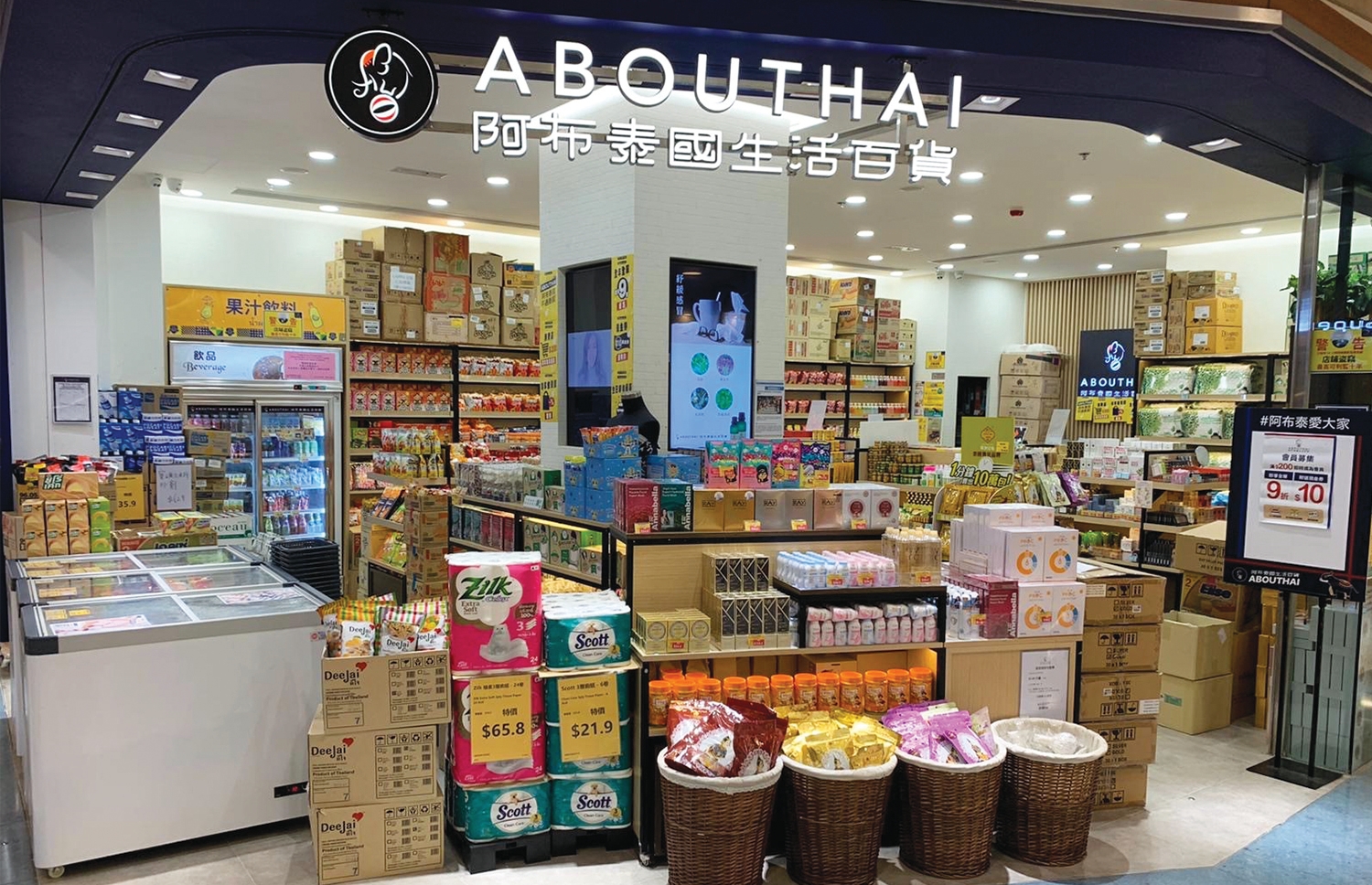
    Hong Kong authorities have seized nearly 9000 Thai cleaning products suspected to have wrong labeling from a shop founded by a pro-democracy activist facing charges under the city’s contentious national security law. Customs officers on Thursday raided 25 shops belonging to the chain, AbouThai, and arrested a 33-year-old male director of the group, the government said in a statement.

    The suspect had been released on bail and further arrests had not been ruled out, it added.

    “The product information marked on the packages of the products involved failed to bear Chinese and English bilingual warnings or cautions,” it said, adding the estimated market value of the 8805 products seized was about HK$400,000 (US$51,400).

    Under Hong Kong’s Consumer Goods Safety Ordinance, warnings or cautions on products must be in both English and Chinese and are required to be “legibly and conspicuously shown on the goods”.

    Customs chiefs said the raids were carried out in connection with missing safety warnings on cleaning products, with some only having warnings or cautions in Thai, while others bore warnings or cautions in Thai and English.

    The company’s founder, Mike Lam, is among 47 democrats charged under the city’s national security law on a charge of conspiracy to commit subversion and is currently on bail.

    Crowds queued outside branches of the shop across the city on Friday to show support for Lam, with some saying they believed the raid was politically motivated.

    “I find it unreasonable that the Customs targeted AbouThai. That’s why I come here to support. I am quite touched that many people come,” said Chris, who declined to give his full name due to the sensitivity of the national security law.

    The legislation punishes what Beijing broadly defines as secessionism, subversion, terrorism and collusion with foreign forces with up to life in jail.

    Local broadcaster RTHK quoted Vincent Chan, from the customs consumer protection bureau, as saying the department condemned any “false accusation” that the raid was an “act of repression”.

    Hong Kong anti-government protesters have queued outside businesses that openly support the democracy movement since anti-government protests flared in 2019.

    The former British colony returned to Chinese rule in 1997 with a promise of safeguards for its wide-ranging autonomy. Democracy activists say authorities are chipping away at those freedoms, accusations which officials in Beijing and Hong Kong reject.

  • Ministry wants social networks used to sell goods treated as online marketplaces

    Ministry wants social networks used to sell goods treated as online marketplaces

    Social networks that enable trading of goods should be regulated like e-commerce trading platforms, a draft decree by the Ministry of Industry and Trade proposes.

    It seeks to expand the scope of online marketplace regulations to include social media that allows people to create pages to sell goods, enter into contracts with customers or post articles offering goods or services for sale.

    But Nguyen Quang Dong, director of the Institute for Policy Studies and Media Development, said there is no basis to treat social networks as e-commerce platforms.

    They do not have physical stores or goods, or an obligation to provide support in cases of complaints or fraud, and charge fees for advertising as opposed to sales, he pointed out.

    “Viewing social networks as e-commerce trading sites would be incorrect, they are closer to advertising services. It is necessary to clarify the nature of social networks, instead of trying to have overarching regulations governing everything.”

    Some European countries treat social networks as digital services, a concept with a wider scope than e-commerce platforms, and allows them to collect taxes based on this definition, he added.

    Another provision in this draft that raises concern among analysts is that only foreign investors considered by the ministry to be “reputable global technology companies in the field of e-commerce” will be allowed to enter the Vietnamese e-commerce market.

    It will periodically publish a list of eligible companies, according to the draft decree.

    Nguyen Thanh Ha, chairman of law firm SB Law, warned this would limit the entry of foreign capital.

    “The definition of ‘reputable global tech company’ is ambiguous and subjective, and it is difficult to identify the standards of that qualify a company, and makes it difficult for businesses to interpret.”

    Dong too said this provision is not feasible and should be deleted.

    Global data firm Statista estimated Vietnam’s e-commerce market to be worth $6 billion last year and projected it to grow to around $9 billion by 2025.

  • Wirecard Seeks Buyer in Singapore

    Wirecard Seeks Buyer in Singapore

    The firm was ordered to cease payment services in the country in October, and to return all customers’ funds, amid an investigation into missing funds.

    Payments services provider Wirecard is seeking a buyer for its Singapore entity and has at least one party interested in acquiring the business, according to a report on Tuesday.

    The company has lost about one-third of its staff since it was ordered to cease its core business activities in Singapore, where it provided payment processing services to 1,900 companies, a report said.

    At its peak, Wirecard employed more than 350 people in Singapore, where it has a call center, sales deployment team, regional commercial team, and project management office. As of October, it still had 250 people, including 180 locals, on its payroll, who are working from home and supporting its businesses in Hong Kong and Indonesia.

    Wirecard is at the center of one of the region’s biggest corporate accounting scandals in recent years, having admitted that €1.9 billion ($2.25 billion) is missing from its financial accounts.

    Its parent company in Germany has filed for insolvency, and its CEO Markus Braun as well as other top executives have been arrested, while former operating chief Jan Marsalek remains missing.

    So far, one Singaporean has been indicted – a director of a local accounting firm that allegedly helped Wirecard falsify letters about the funds held in its escrow accounts.

  • Scary Android malware targets hundreds of popular apps

    Scary Android malware targets hundreds of popular apps

    Another day, another major Android threat discovered by security researchers as it lurks in the shadows in anticipation of its time in the mischievous limelight. In a way, this BlackRock malware detected and rigorously documented by the folks over at ThreatFabric can be considered even scarier and more dangerous than the Joker virus that made headlines recently or other similar security vulnerabilities found to stem from largely shady apps in the past.

    That’s because BlackRock was exposed as targeting a long list of reputable and crazy popular Android apps, including everything from PayPal to Gmail, Yahoo Mail, Uber, Netflix, eBay, Amazon, Telegram, WhatsApp, Twitter, Snapchat, Skype, Instagram, Facebook, YouTube, Reddit, TikTok, Tumblr, Pinterest, Tinder, Grindr, and even Google’s own Play Store. In total, we’re talking no less than 337 potential victims.

    For many people, that might be pretty much everything they use on their mobile devices on a regular basis, so obviously, the solution to this problem is not to delete all these apps and seek less popular alternatives. Instead, you should merely be careful about what you install and especially where you install your apps and updates from.

    As you can imagine, the aforementioned apps, social networking, communication, and dating services are not dangerous by themselves, rather being targeted precisely due to their worldwide success and mass appeal by a banking Trojan that hasn’t managed to slip through Google’s Play Store filters yet.

    In other words, you have nothing to worry about, at least as far as this particular virus is concerned, if you download everything from an official source. The danger surfaces when you’re prompted to install “Google updates” from third-party sources, which is a massive red flag.

    Unfortunately, it’s not entirely clear what you can do to clean your phone of the BlackRock malware if you fall prey to such a vicious and insidious attack that will quickly spread across your system without leaving a trace. That’s because the Trojan will prevent most antivirus programs from starting in addition to phishing everything from your financial information to social media usernames and passwords.

    Naturally, the main goal is to steal credit card details, but various app credentials will also do for the bad actors behind BlackRock, and you can expect your text messages to be hijacked as well.

    While far from new or innovative at its core, this chilling banking Trojan does a few things differently from its forerunners, dubbed LokiBot, MysteryBot, Parasite, and Xerxes. Instead of adding new features and increasing its complexity, which is usually the case in this dark and malevolent world, BlackRock is actually keeping things simpler than ever, with a focus on the most “useful” functions in terms of stealing personal information.

    What is expanded compared to previous banking malware is the target list, with an unusually high number of “trending” social and dating apps joining the typical group of financial services from institutions located in the US, as well as Australia, Canada, and various European countries.

    Basically, BlackRock is casting a wider net than any of its predecessors, making sure pretty much no one that uses an Android phone nowadays is safe, no matter where you live, what device you use, how you like to connect with friends and make new ones, or what online banking channel you prefer.

    Still, the simplest, safest, and most foolproof way to stay protected from this type of threat remains to never rely on a third-party app store, as well as install a reliable antivirus solution before suspecting a cyberattack, and periodically check your app permissions, as well as your credit card statements for any unauthorized or shady transactions.

  • Money Laundering’s Last Bastion Set to Fall

    Money Laundering’s Last Bastion Set to Fall

    Financial regulators are cracking down on the opaque international fine art market’s untoward methods and loopholes for money laundering. The Swiss «Bouvier case» was the trigger.

    Prosecutors in Geneva and New York are wading through reams of evidence allegedly documenting one of the largest frauds in the secretive market for fine art. Russian oligarch Dmitry Rybolovlev is suing Swiss art dealer Yves Bouvier as well as auction house Sotheby’s.

    Rybolovlev alleges that he was cheated of $380 million in superfluous payments for artworks because of market collusion. In a separate complaint against Bouvier, he is suing for $1 billion, which is what the Russian alleges is how much he overpaid for a total of 38 pieces of fine art.

    The document-rich Bouvier case has preoccupied courts for years – and is exemplary for how opaquely the market for international art is. The cash-friendly marketplace is closely linked to private banking – and art has grown in importance as an asset class.

    A European money-laundering rule aimed at shutting loopholes for fine art came into force two weeks ago. The changes including similar «know your client» rules as apply in banking, for transactions of more than 10,000 euros ($11,084). That means galleries, dealers, agents, and other intermediaries to the rich must apply a type of due diligence to their clients before buying and selling.

    Regulators have also drawn up an extensive list of fine art of various mediums which are subject to value-added tax at purchase. It is meant to force buyers as well as sellers into a regulatory framework, and to cleanse the market of improprieties.

    Glitzy art fairs in Basel, Geneva, Hong Kong, and Miami have until now been accompanied by lots of cash – as well as more than a whiff of scandal. The specter of sudsing out ill-gotten money with a few pricey art buys is one that clashes with the image of well-heeled, refined culture mavens that galleries and auction houses have long cultivated.

    The estimated $70 billion annual art market until now has operated largely outside the purview of international regulators – as well as to its own capitalist tune. «It can be hidden or smuggled, transactions often are private, and prices can be subjective and manipulated— and extremely high,» former U.S. prosecutor Peter Hardy said.

    In other words, a valuable work of art is the perfect vehicle to conceal untaxed assets, or to launder dirty money.

    Commissions in art deals can be astronomical, while collusion and price-fixing through agents and intermediaries are reportedly rampant – and until the Bouvier case blew open, super-wealthy art clientele had rarely complained about it.

    Undoubtedly wounded in pride over being hoodwinked, Rybolovlev was the first major art buyer to blow the whistle, so to speak. Bouvier is known more as «king of Swiss freeports», tax-free storage facilities that play a huge role in stowing illicit loot, than as an art dealer. The Swiss government estimates that the country’s freeports hold more than $100 billion in assets – in secret, and untaxed.

    A Louvre director called the facilities «the biggest museums that no one can visit». The European rules are set to rob art sellers and auction houses one of their biggest advantages: vendor anonymity.

    The move comes as private banking is forced to abandon secrecy in major jurisdictions like Switzerland – a bid to crack down on lost tax income. It remains unclear whether customs and tax officials have the resources to enforce compliance in the art market – but the new money-laundering rules are a first step to force the industry into an era of oversight.

  • Google removes apps from the Play Store for Ad fraud

    Google removes apps from the Play Store for Ad fraud

    A successful Android app developer with over half a billion installs to its credit is having its apps removed by Google from the Play Store. DO Global, based in China, has had 46 apps erased from Google’s Android app storefront after an investigation conducted by BuzzFeed found serious issues with the apps. Before Google started taking action against the developer, DO Global had approximately 100 apps in the Google Play Store making this one of the biggest actions ever taken against an app developer by Google. The remaining apps will be removed shortly. DO Global had been a wholly owned subsidiary of well know Chinese internet firm Baidu. But last year, the unit was spun off and Baidu kept a 34% stake.

    The initial report from BuzzFeed said that at least six of the apps from DO Global would click on ads even if the app was not being used. Online security firm Checkpoint, in partnership with BuzzFeed, found the apps loaded with malware that it dubbed PreAMo.That’s because the apps fraudulently clicked on banner ads served up by mobile ad networks Presage, Admob, and Mopub. Checkpoint states that the malware was installed from these six apps a total of 90 million times.

    Some of the apps involved were credited to developers like “Pic Tools Group” and “Photo Artist Studio,” and their true ownership was hidden by DO Global. That’s another violation of Play Store rules. The developer contact information was also different on several of the apps, obfuscating their true owners. The actual titles include apps like RAM Master-Memory Optimizer; Photo Editor-Makeup Camera & Photo Effects and Crashy Cops. DO Global claims that its apps have 250 million monthly active users, and said that its mobile ad platform reaches 800 million people.

    “We fully understand the seriousness of the allegations. Therefore, after reading the reports about our apps, we immediately conducted an internal investigation on this matter. We regret to find irregularities in some of our products’ use of AdMob advertisements. Given this, we fully understand and accept Google’s decision. Moreover, we have actively cooperated with them by doing a thorough examination of every app involved…moving forward, we will strictly follow relevant regulations and continue conducting a comprehensive review of our products. Lastly, during this process, we have caused misunderstandings and great concern due to our being unable to communicate in a timely manner and provide complete information. We offer our sincere apologies.”-DO Global

    In a statement, Google said that it will always investigate malicious behavior by apps. When it finds violations, it will prevent a developer from monetizing an app through AdMob and/or remove an app from the Play Store.