Retail News CRM

Tag: fraud

  • Oculeus introduces real-time fraud traffic blocking

    Oculeus introduces real-time fraud traffic blocking

    OSS/BSS vendor Oculeus has introduced real-time traffic fraud blocking capabilities to its Oculeus Anti-Fraud offering.

    The new capabilities are designed to eliminate or significantly reduce revenue losses caused by fraudulent traffic by conducting the fraud evaluation and blocking in real-time before the start of a call.

    The new functionality, introduced in the new version 5.0 of Oculeus Anti-Fraud, uses a SIP redirect server and pre-call fraud detection engine to monitor and evaluate pre-call attempts.

    “Combating fraud and finding a solution to stop the severe revenue losses that fraud is causing are high on the agendas of executives and account managers of most providers of voice-based communications services in all regions around the world,” Oculeus CEO Amd Baranowski said.

    “The new Live Traffic Fraud Blocking capabilities will uniquely help services providers prevent more fraud than ever, even before revenue losses occur.”

    Baranowski said demand for Oculeus’ anti-fraud solution is high in Asia, and that as well as traditional operators, the company is experiencing demand from OTT players.

    “As many OTT players expand their services and functionality, their exposure to fraud also grows,” he said.

    “For instance, when the incoming and outgoing calls from an OTT service interact with the telephony network, the OTT is exposed to fraudulent activity, especially to expensive call durations and destinations.

  • Australia sues Volkswagen over alleged emissions fraud

    Australia sues Volkswagen over alleged emissions fraud

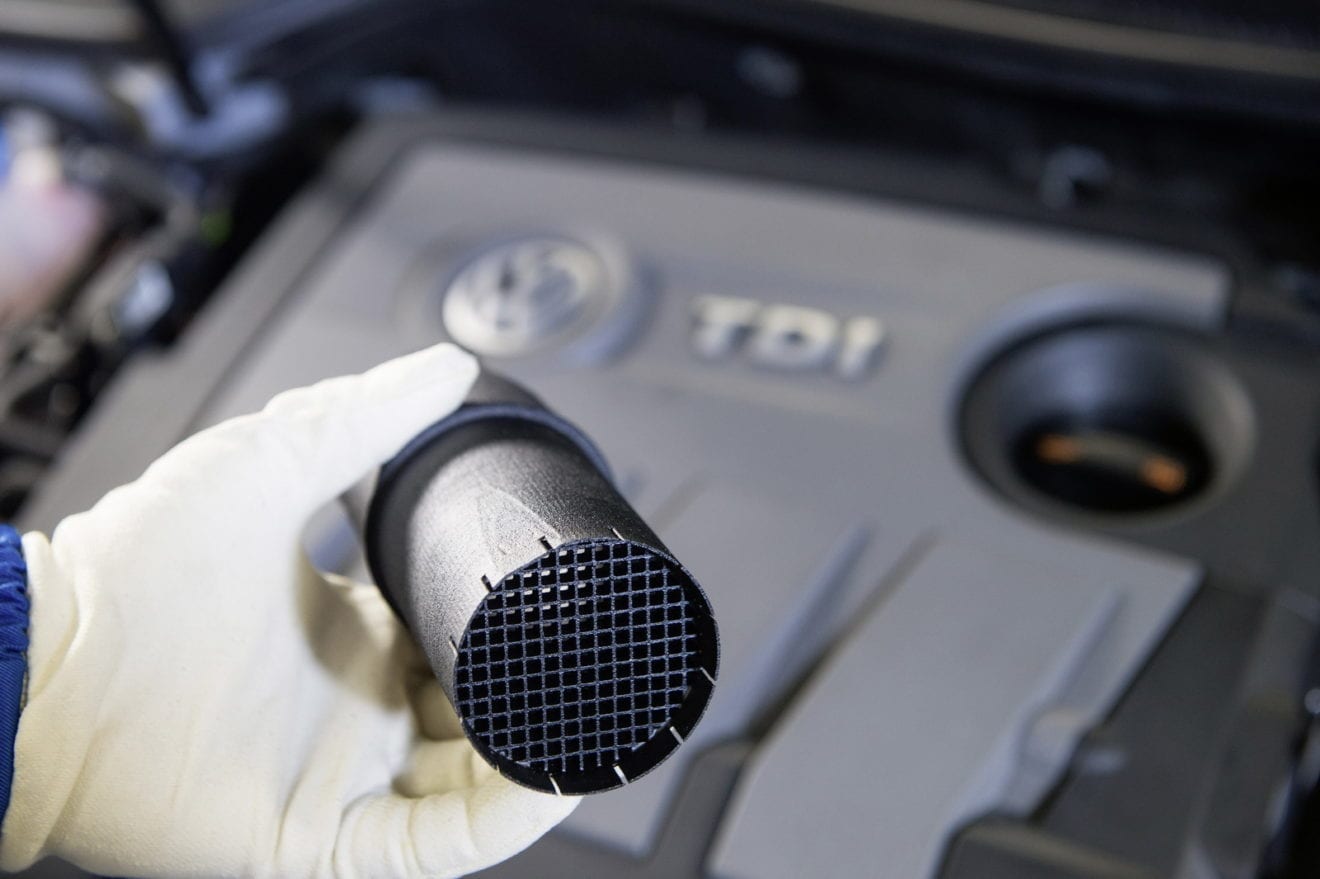
    The Australian consumer watchdog on Thursday said it had sued the Australian arm of world No. 2 carmaker Volkswagen AG (VOWG_p.DE) for intentionally selling more than 57,000 vehicles with software which lied about levels of toxic emissions.

    “These allegations involve extraordinary conduct of a serious and deliberate nature by a global corporation,” Australian Competition and Consumer Commission Chairman Rod Sims said in a statement.

    The Federal Court action adds to what is already proving to be costly legal fallout for the German company as it faces class action lawsuits in Australia and around the world over emissions fraud, as well as penalties from antitrust authorities.

    Already in Australia, law firm Maurice Blackburn is seeking more than A$100 million ($75 million) from the company, including the full replacement cost of some 90,0000 vehicles, while the auto giant has agreed to pay its 650 U.S. dealers $1.2 billion in compensation.

    In Australia, the ACCC said it wanted the company to make public declarations of misconduct, pay unspecified financial penalties and issue corrective advertising in relation to its actions over five years.

    “Volkswagen engaged in multiple breaches of the Australian consumer law by concealing software in their vehicles to cheat emissions testing and misleading consumers about the vehicles’ compliance,” Sims said.

    “Consumers rightly expect that their vehicle’s emissions would operate as advertised during their day-to-day use and we allege that this was not the case.”

    Volkswagen Group Australia said in a statement that it doubted the ACCC’s action would benefit consumers since it planned to give them software which corrected the emissions data as soon as it was approved by the government – likely by year-end.

    The Volkswagen unit, which is defending the private class action, said it was reviewing the ACCC’s claims.

  • Chopard Singapore fails to notice missing millions

    Chopard Singapore fails to notice missing millions

    Geneva-based luxury goods company Chopard Singapore failed to notice it was missing S$11.2 million until a government investigator started looking into the embezzlement after a tip-off.

    Now the former accounting manager of the luxury goods company, known for its watches and jewellery, has been sentenced to 15 years’ jail for siphoning the money from her employer over nearly seven years.

    Chew Siew Lang, 53, misappropriated most of the money using erasable ink to write on cheques made out to Chopard suppliers for bogus transactions. After gaining the required two signatures on the cheques – Chew herself was an authorised signatory – she replaced the payee’s names with her own.

    The offences took place between January 2006 and August 2012, and Chew spent at least $2.1 million on lottery bets – she wrote 76 cheques of between $20,000 and $68,000 to a Singapore Pools retailer.

    In December, she pleaded guilty in the High Court to 56 charges – six counts of criminal breach of trust, 30 counts of falsification of accounts and 20 counts of using the benefits of her criminal conduct. A further 187 similar charges were taken into consideration.

    The prosecution had sought 18 to 20 years’ jail, but the defence argued that Chew has an impulse control disorder that turns her into a pathological gambler. The case was adjourned after Justice Woo Bih Li asked if there was a causal link between her mental disorder and her offences.

    In her latest appearance, Chew’s lawyer, Daniel Chia, told the court his client was not pursuing the point about her disorder after the prosecution submitted two psychiatric reports. He sought a jail term of 12 years.

    In sentencing, Justice Woo noted it was good Chew has the support of her family. “However, I also have to take into account that you misappropriate a very huge sum for which only a small portion has been recovered.”

    Chopard found out about the embezzlement only after the Commercial Affairs Department started investigating Chew. The company sacked her in August 2012, and two months later filed a civil suit against her. It has managed to recover only $197,000.

  • 9 in 10 telcos go Hadoop to fight revenue fraud

    9 in 10 telcos go Hadoop to fight revenue fraud

    Telecoms revenue fraud is a primary driver for increased Apache Hadoop adoption, according to a recent poll of telco and enterprise users by Cloudera and Argyle Data.

    Communication service providers lose around $38 billion to fraud every year.

    Conducted during a recent webinar to introduce Cloudera and Argyle Data’s joint fraud prevention platform, the survey indicated that over 90% of attending organizations already use or intend to use Hadoop for fraud prevention.

    About one-third (34%) of attendees said they already have Hadoop in place and may use the platform in their fraud prevention efforts.

    “Fraud prevention is a textbook use case for Hadoop-based analytics because the ROI is immediately visible,” said Vijay Raja, solutions marketing manager at Cloudera. “Real-time machine learning relies on large amounts of data to detect sophisticated revenue threats, making Cloudera the ideal platform on which to run Argyle Data’s threat analytics.”

    The platform enables mobile operators to reduce loss by detecting previously undiscoverable revenue threats, promising to deliver up to 350% improvement over rules-based offerings. The platform uses a native Hadoop architecture, combined with real-time data ingestion, analytics, and machine learning.

    “Unsupervised machine learning delivers everything telco fraud analysts need to be efficient at and deliver immediate ROI,” said Arshak Navruzyan, vice president of product management at Argyle Data.  “The Cloudera-Argyle Data solution interoperates seamlessly with all participants in the Hadoop cluster.

  • China court jails 24 people over $1.5-bln financial fraud

    China court jails 24 people over $1.5-bln financial fraud


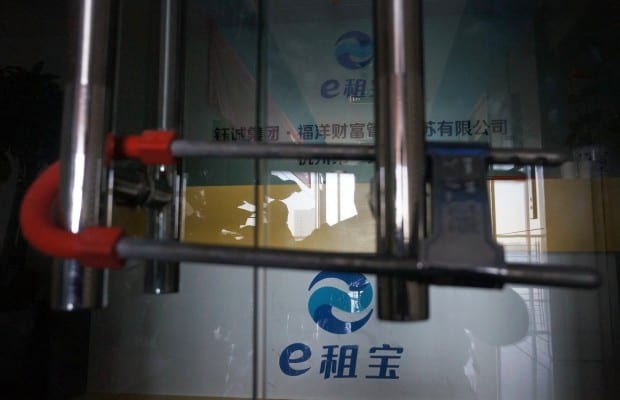
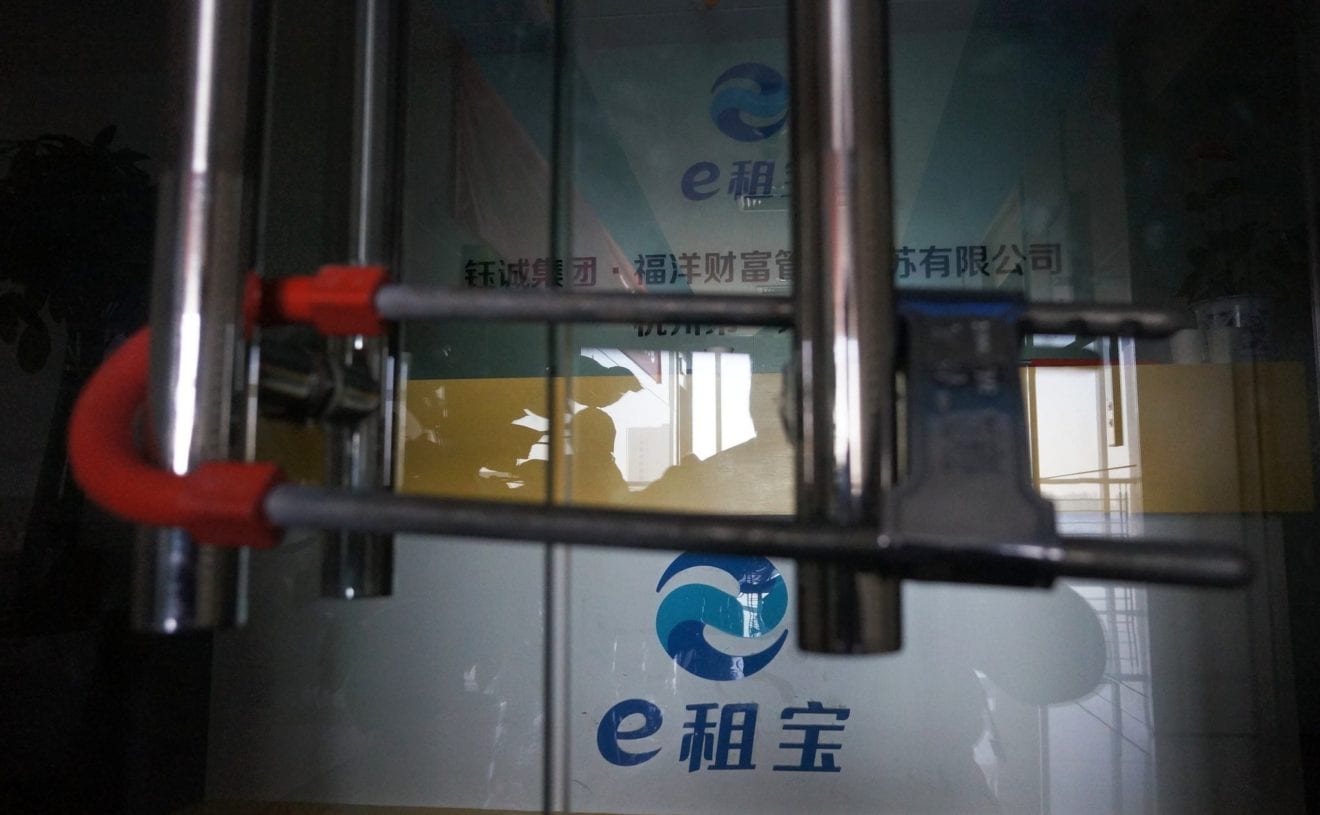
    A court in southern China has jailed 24 people for fraudulently raising nearly 10 billion yuan ($1.5 billion) in one of the country’s biggest financial scams, the official Xinhua news agency said.

    The group was convicted of illegally raising funds during the decade to 2012 from more than 230,000 investors, mainly senior citizens who put in their life savings, it said, citing the court.

    Guangdong Bangjia Leasing Co set up four firms in the southern province and many branches and subsidiaries across China, luring retail investors to buy memberships and fund nonexistent loans by promising returns of as much as 47 percent.

    The case spotlights growing risks in a loosely regulated wealth management products industry, which lures millions of unsophisticated retail investors to high-yield products offered by opaque online finance firms and privately run exchanges.

    In February, authorities arrested 21 officials of Ezubao, once China’s biggest peer-to-peer lending platform, which collected $7.6 billion in less than two years from more than 900,000 investors.

    Ezubao used savvy marketing, authorities said, to fund “a complete Ponzi scheme”, that used investor funds to support a lavish lifestyle for company executives.

    Last year, hundreds of angry investors also hit the streets in Beijing and Shanghai after losing $6 billion from the Fanya Metals Exchange, which offered investment products promising an annual return of up to 14 percent.

    The Guangzhou Intermediate People’s Court on Monday sentenced the main suspect in the Guangdong fraud, Jiang Hongwei, to life in prison, while the others received terms ranging from 3 years to 14 years, Xinhua said.

    The court has frozen and seized their assets, including 127 vehicles and 43 villas, but prosecutors said few victims might get their money back, since Jiang had squandered millions on luxuries, the agency added.

    Some older investors who lost money in the Guangdong fraud said they were attracted by its fancy branding.

    “Their grand exhibition occupied six halls,” Xinhua quoted one elderly woman from Jiangsu province as saying.

    “After attending it, I felt assured and decided to invest 700,000 yuan,” she added. “It was all the savings my husband and I had.”

    ($1=6.5397 Chinese yuan)


  • Is Xinqi Asset another Ezubao?

    Is Xinqi Asset another Ezubao?

    An asset management company backed by property projects has defaulted on wealth management products worth 1.9 billion yuan (HK$2.27 billion), affecting more than 5,000 retail investors across mainland China and triggering more concerns about its property and financial markets.

    Xinqi Asset held a meeting to discuss solutions with its investors in Shanghai on Wednesday, sources said. Retail investors have been unable to redeem their investments and earnings since Sunday.

    A final solution has not been confirmed. It remains unknown whether other assets managed by Xinqi are safe. An earlier company statement said assets under management stood at around 4 billion yuan. Shanghai police have been taking complaints from investors and looking into the matter.

    More defaults and scandals have been exposed in the mainland’s thriving wealth management business in recent months as the economy slows down, revealing scams in the innovative and less regulated sector. Late last year, the mainland’s largest peer to peer lending company, Ezubao, defaulted on HK$59 billion owed to more than 900,000 investors across the mainland. Xinhua said 95 per cent of the projects on the platform were fake.

    Xinqi Asset sold wealth management products to individual investors, with the investments put into commercial and residential development in second-tier cities including such as Xian and Zhengzhou, and promised annual interest rates as high as 15.6 per cent, according to its official website and documents about its products.

    Worse still, there is no specific regulator overseeing these companies

    The wealth management products issued by Xinqi Asset were used to finance big property developers.

    Xinqi would buy properties under development from the developers, and then transfer ownership to retail investors. Investors would be repaid with their capital and earnings after the project was finished and the developer bought back the properties.

    Xinqi Asset lists mainland China’s leading property developer, Greenland, as a partner on its official website.

    Greenland denied raising funds through Xinqi Asset as early as September, although it did sell some property units to it.

    “It seems Xinqi Asset has been using offline selling, rather than online selling to promote its products, which makes it different from the popular peer to peer lending companies,” said Abner An, an independent financial commentator in Beijing. “However, China’s offline asset management companies have even bigger problems with lack of transparency in capital flow.

    “Worse still, there is no specific regulator overseeing these companies. It is crucial to find out the capital flow under Xinqi Asset. It is possible that their investments in property are eroded by sluggish selling in second-tier cities. But the problem will be bigger if the money is embezzled to do other high-yield investment.”

    Calls to Xinqi’s headquarters in Zhengzhou, Henan province on Thursday, failed to reach management.

    Xinqi Asset, registered in Xian, Shaanxi province, has registered capital of 200 million yuan.

  • Diesel targets China in copy clampdown

    Diesel targets China in copy clampdown

    Italian lifestyle brand Diesel says it is initiating legal action against an average of three Chinese companies every week in its war against copycats selling copies of its apparel.

    “Hundreds of legal actions are in place against usurpatory brands, especially in China,” the company said in a statement outlining the enormous scale of the counterfeit goods trade and its astonishing campaign to fight back.

    Last year, Diesel says it started a legal action by the US Federal Court in New York, against 83 sites, which were illegally selling counterfeited products by using the cybersquatting technique – registering domain names with “Diesel” in the address.
    So far Diesel closed 3346 sites, sent 4000 ‘cease and desist’ letters, and de-listed 19,000 sites from Google. Just 131 of those sites were in Asian countries.

    “It has been calculated that in this way the company has avoided about 700,000 visits to illegal marketplaces; 9200 bids [from prospective buyers] have been removed completely,” the company said.

    Fake Diesel jeans seized in a raid.

    In Asia, over the past year Diesel obtained to remove 6786 listings on marketplaces, for a total of 1.7 million items.

    Diesel has worked with Customs agencies to seize more than 60,000 items coming from China in 2013, and another 75,000 last year, and more than 80,000 items in the European Community.

    In China, 1300 items have just been confiscated in a factory producing counterfeited t-shirts, and in another factory the police seized 910 pairs of shoes with Diesel logo, along with a quantity of unfinished products worth US$155,000.

    Last month, Diesel successfully closed the case of the ‘Diesel Cluthing’ line, which was signalled by Diesel business partners who found infringing products circulating in the Colombian market. After thorough investigation, the Chinese authorities confiscated 520 jeans infringing the Diesel trademark: the company, who registered this logo, is now under an opposition process.

    On top of these activities, Diesel says it has established a system to register its iconic products and therefore ensure that any potential copy is identified and sequestrated (in the last six months only, four cases have been closed successfully). The latest triumph took place earlier this year, when Diesel finally won back the property of its brand in Indonesia – a legal battle which has lasted 23 years.

  • EcoWaste Coalition calls for crackdown on fake cosmetics in the Philippines

    EcoWaste Coalition calls for crackdown on fake cosmetics in the Philippines

    The call comes after the watchdog found seven beauty and herbal vendors at the Guadalupe Commercial Complex selling cosmetics that had been banned by the Food and Drug Administration.

    Beauty brands Erna, Jiaoli and S’zitang were among the skin whitening creams found to have dangerously high levels of mercury.

    To curb this illegal trade of dangerous products that had no FDA notification, we request the Makati government seize the unregistered items, issue formal warning against non-compliant vendors and/or shut retail outlets engaged in such illicit business,” says Ecowaste project coordinator Thony Dizo.

    In-organic mercury in face cream is absorbed following application to the skin and toxic levels in the body can develop gradually with prolonged use.

    The signs and symptoms of mild to moderate toxicity due to exposure in skin lightening products may include nervousness and irritability, difficulty with concentration, headache, tremors, memory loss, depression, insomnia, weight loss, fatigue, numbness or tingling in hands, feet, or around the lips.

    Nanotech tracker to change how the industry tackles counterfeit goods

    Sydney-based YPB Group announced last year that it had bought tracer patents developed by China’s Dalian Maritime University to pair with its own scanners to determine counterfeit goods.

    The Australian company claims the cheap tool will initially change how the industry will tackle fake goods from China.

     The nanotech tracer is invisible to the naked eye and can only be read by a YPB-developed scanner that costs about $35. The material can be applied to any product and costs less than 50¢.

    According to John Houston, chief executive YPB Group; “Only two people in the world know the tracer formula.” 

    PB Group also acquired Brand Reporter, a US-based start-up that developed a platform for companies to identify and track counterfeit products in the supply chain and at retail points.

    The tracer can be put into fibers, plastics and inks to determine a product’s authenticity,” Mr Houston said.

  • Chinese shoppers feel safer online

    Consumers across Southeast Asia and Greater China feel safer paying in a brick and mortar environment as opposed to online; sole exception is China

    According to the inaugural MasterCard Safety and Security Index, consumers across Southeast Asia and Greater China cited identity theft and ATM-related fraud as the top two security concerns when it comes to electronic payments.

    Some 42 per cent of consumers in Southeast Asia (Indonesia, Malaysia, Philippines, Singapore Thailand, and Vietnam) were most concerned with ATM-related fraud such as a stolen card, card cloning or skimming. In the Greater China markets (China, Hong Kong and Taiwan), this figure was 31 per cent.

    But the biggest surprise was in confidence in shopping online. The Index showed that in general, consumers across Southeast Asia, and the markets of Taiwan and Hong Kong still feel safer paying in a bricks and mortar environment than buying online. China differed, being the only market where consumers felt paying online was safer than in a physical store; even more so than in Singapore.

    Almost every consumer polled in the Greater China markets had made an online payment in the past year. Consumers in China (62 per cent) particularly favored the use of digital wallets in online electronic payments over those in Hong Kong (14 per cent) and Taiwan (29 per cent).

    Consumers across Southeast Asia (35 per cent) and Greater China (32 per cent) were almost as equally concerned about identity theft in relation to data breaches. This includes personal data such as bank details, personal IDs, addresses, and signatures that are stolen or compromised through websites. In both regions however, it appears that these concerns do not directly stem from consumers’ own personal experiences but rather, as a result of the perceived severity of fraud based on what was reported in the media.

    MasterCard chart1

    Meanwhile, the Index also reinforced that banks continue to play a critical role in ensuring payment safety and security for consumers in Southeast Asia. This is both, because of the high levels of trust consumers place in banks as well as the reliance that consumers have on banks to help them resolve issues that crop up in this area.  Banks are often the first line of defense and recourse for the affected consumer – nearly half of all consumers in Southeast Asia who experienced ATM fraud first approached their card-issuing banks for advice.

    “The fact that most cardholders have a primary relationship with their banks, has an obvious and deep-rooted correlation to their sentiment, around who they trust most when it comes to ensuring the safety and security of electronic payments,” said Ari Sarker, oo-president, Asia/Pacific, with MasterCard.

    “This was emphatically reflected in the feedback from all the markets in Southeast Asia and Greater China. However, in Singapore in particular, in addition to banks, consumers also placed significant trust in the government, which is a natural outcome given the country’s strong regulatory environment and overall reputation around safety and security.”

    None of the respondents surveyed in Southeast Asia placed any trust in local websites, suggesting that there is still a lot of work to be done by local eCommerce merchants to ensure that they meet global security standards for payments and build consumer confidence on this front.

    In Greater China, aside from banks and governments, merchants were also seen to have a growing responsibility in ensuring payment safety and security, with 28 per cent of consumers in these markets going to merchants as their first recourse in seeking resolution for payment safety and security issues. Furthermore, merchants in these markets were instrumental in solving 40 per cent of all online electronic payment disputes.

    These and other key findings of the MasterCard Safety and Security Index will be discussed at the MasterCard Global Risk Leadership conference in Singapore on August 26 – 27. The 20th edition of this conference will gather global payment risk leaders to share best practices in fighting fraud together, as an industry. The conference demonstrates MasterCard’s commitment in helping partners and customers fight fraud using the latest tools, processes, and technologies so there is no one weak link in the payments ecosystem.

    The survey was carried out across in six markets in Southeast Asia (Indonesia, Malaysia, Philippines, Singapore, Thailand, and Vietnam) as well as three markets in Greater China (China, Hong Kong, and Taiwan). A total of 6600 consumers and 100 merchants were polled online and face-to-face between January and May 2015 on questions relating to the payments security landscape, payments in brick and mortar and online, safety and security payment concerns and experience with payment fraud, among others.

  • New technology can identify fakes

    New technology can identify fakes

    Luxury brands affected by Asia’s burgeoning multi-billion dollar piracy trade will soon have a new weapon.

    NEC has revealed new technology that can distinguish even the most sophisticated counterfeit products.

    The technology can read microscopic patterns on anything from luxury handbags to mechanical component.

    And it can track the origin of mass-produced items like clothing by examining what it describes as “object fingerprints” – three-dimensional patterns or irregularities found on the surface of items.

    Tohihiko Hiroaki, assistant GM at NEC’s Information and Media Processing Laboratories, says a customers officer at an airport terminal could take a photo of a specific part of an item using a smartphone, which can then be matched with a database supplied by the manufacturer.

    NEC claims its technology can tell the time and place a product was manufactured.

    “You can identify offspring that come from the same parental mould,” said Hiroaki. “If you take a close look, you can tell one child from another.”

    Further testing lies ahead before the technology is released commercially next year.