Retail News CRM

Tag: fraud

  • Jail Sentence for trade-show Fraudsters

    Jail Sentence for trade-show Fraudsters

    Two trade-show fraudsters have received jail sentences after Customs caught them selling fake goods at the Hong Kong Convention & Exhibition Centre.

    A person in charge of an exhibition booth and a salesperson were sentenced to three months’ imprisonment and three months’ imprisonment suspended for 12 months respectively on March 15 and April 12 at the Eastern Magistrates’ Courts for offering to supply goods with false trade description and possession of goods with a forged trademark for the purpose of trade or business.

    They had contravened the Trade Descriptions Ordinance (TDO), according to a spokesperson for Customs.

    The sentence imposed on the person in charge of the exhibition booth is the heaviest penalty in the past decade among similar cases of infringement that took place at exhibition fairs.

    Customs earlier received the trademark owner’s information alleging the display of counterfeit handbags for order at a booth in a leather fair held at the Hong Kong Convention and Exhibition Centre.

    After investigation, Customs officers conducted a test-buy operation and successfully ordered 500 counterfeit handbags and seized five counterfeit handbag samples at a booth with an estimated market value of about $40,000 in total. A 36-year-old man in charge and a 29-year-old saleslady were arrested and prosecuted.

    The Customs spokesperson promised to continue to take “stringent enforcement action” to combat infringing activities. Booth exhibitors are reminded to respect intellectual property rights and not to sell counterfeit goods.

    Under the TDO, any person who sells or possesses for sale any goods with a forged trademark commits an offence. The maximum penalty upon conviction is a fine of $500,000 and imprisonment for five years.

    Despite stringent vetting of exhibitors, fake products at major Hong Kong exhibitions has been concerning authorities for some time. In September 2016, Customs officers seized a fake branded jewellery at a trade show in the Hong Kong Convention & Exhibition Centre.

  • Twitter makes a change in Limiting your Followers

    Twitter makes a change in Limiting your Followers

    In an effort to stop spammers from taking over Twitter, the social media app is limiting the number of followers that can be added to an account on a single day. Previously that number was 1,000 and a tweet from the Twitter Safety account reveals that the new cap is 400. This is supposed to prevent spammers from adding a large number of followers and then deleting them in a “bulk, aggressive or indiscriminate manner” that violates Twitter’s rules.

    By adding all these followers, spammers hope that the majority will follow them back. Those that do will soon find a number of spams in their timeline. Those that don’t will soon be unfollowed by the spammers. This is a cycle that continues over and over again. In a series of tweets, Twitter’s Yoel Roth explains that lowering the number of followers a day from 1,000 to 400 won’t stop the spammers, but it will slow them down. The 400 limit will “make each spam account less effective, slower, and more expensive to operate.”

    Roth adds that Twitter decided to make the new cap 400 because it allows people to follow the accounts they’re interested in while it stops the most spam. Almost half of the accounts that were following 400 Twitter users per day were engaged in churning, which is defined as “repeatedly following and unfollowing the same accounts” in an attempt to grow the number of followers that a Twitter subscriber has. He adds that 99.87% of Twitter use will be unaffected by this new rule.

  • Telcos to use AI to fight SMS fraud and drive A2P messaging revenue

    Telcos to use AI to fight SMS fraud and drive A2P messaging revenue

    Juniper Research is forecasting that total operator revenues from A2P (Application-to-Person) messaging services will reach $62 billion by 2023, up from $43 billion in 2019.  This represents a growth of 42% over the next 4 years.

    The research firm also claimed that revenue growth will be driven by operator efforts in mitigating messaging fraud over grey routes, alongside the emergence of rich-media messaging technologies including RCS (Rich Communications Suite).

    The Juniper research, A2P Messaging: SMS, RCS & OTT Business Messaging 2019-2023, also found that increased investment in SMS firewalls and AI (Artificial Intelligence) will drive down operator loss due to grey route SMS messages to $4 billion by 2023. This represents a fall from $10 billion in 2019, further contributing to operators’ messaging revenue growth over the next four years.

    Grey route SMS includes A2P messages disguised as P2P (Peer-to-Peer) traffic to exploit the lower costs compared to directly connected A2P SMS. Juniper estimates that 24% of A2P SMS messages will be delivered via grey routes in 2019, however efforts in improving SMS firewall capabilities will drive this down to below 10% by 2023.

    Meanwhile, RCS business messaging will account for under 10% of operators’ A2P messaging revenue by 2023. However, the research claimed that RCS business users will continue to use SMS for simple notifications, such as OTPs (One Time Passwords) owing to the low cost and simplicity. The research identified the integration of mobile payment capabilities directly into the RCS client to provide a differentiation point to SMS and increase RCS traffic.

    Research author Sam Barker added “RCS will provide operators with additional revenue opportunities beyond simple message termination. Operators must explore the advertising ecosystem and mobile payments over RCS to exploit their substantial subscriber bases to generate fresh revenue streams.”

  • Bonjour family to jail for Fraud

    Bonjour family to jail for Fraud

    A family of swindlers who stole more than HK$40 million (US$5 million) from cosmetics retailer Bonjour have been imprisoned for their crimes.

    The highest sentence of 11 years behind bars was dealt out to the Bonjour fraud scheme ringleader Kiu Mei-ling, 64, a Bonjour employee in charge of payroll who funnelled company funds into her family’s personal accounts. Her son Ha Ting-pong, who was also an employee of the firm, received a sentence of seven years, while her husband received a 6½-year sentence.

    Kiu used falsely-inflated salaries and fake employee identities to siphon money from the business between 2004 and 2011. She was caught when a company manager noticed an unusually high salary was being paid to a new member of staff. Most of the funds were not recovered, leading lawyers for the retailer to file a claim for the bail money posted by the family, which is pending further judgement.

    Deputy judge Michael Lunn called the scam a “gross breach of trust” that exploited the firm’s weak internal processes.

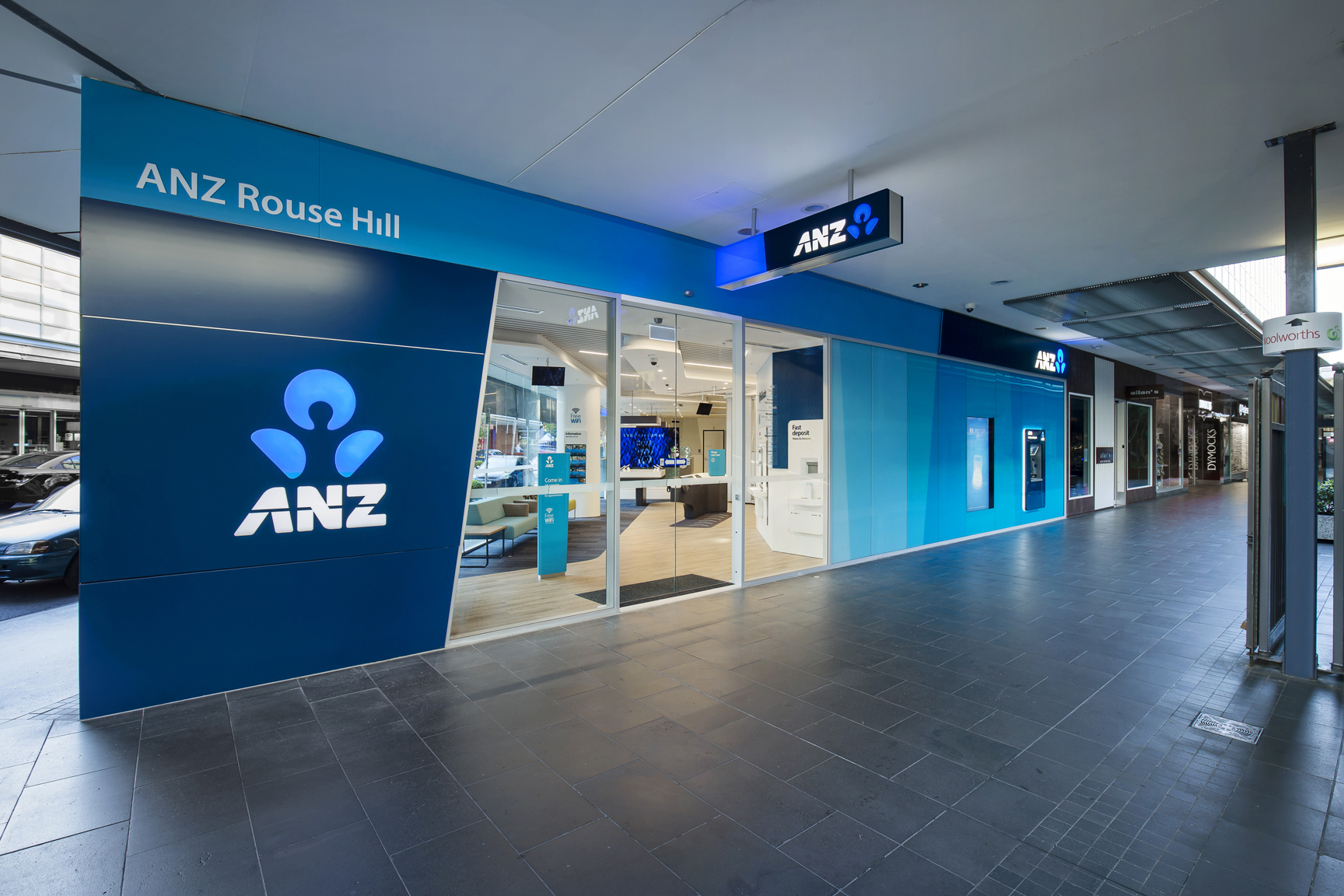
  • Former ANZ employee to stand trial in million dollar fraud case

    Former ANZ employee to stand trial in million dollar fraud case

    A former ANZ Bank employee will be tried for allegedly falsifying customers’ signatures and misappropriating over VND91.3 billion ($4 million). Ho Chi Minh prosecutors have submitted to the court an indictment against Nguyen Pham Gia Tho, a former employee of ANZ, and his sister-in-law Nguyen Tuong Vi, director of an agricultural product export/import company, for appropriating property through fraud.

    According to the indictment, in 2015, Tho was head of customer relations at ANZ’s South Saigon branch in District 7 and was tasked with mobilizing savings deposits, providing insurance sales advice and proposing mortgages.

    During his time, he allegedly falsified signatures of customers with saving accounts to register for internet banking service and then transferred their money into his or his relatives’ accounts. Specifically, in early 2016, Tho was asked by a customer named Mai to help manage her bonds worth VND3 billion ($130,000) with securities firm VPBS. Abusing her trust, he falsified six contracts to mortgage the bonds and secure loans from VPBS.

    Tho asked his mother to impersonate Mai and register for internet banking service, then transferred the VND3 billion to her account so that he could withdraw from it. In July 2017, to have money for a fruit trading business with his sister-in-law Vi, Tho falsified signatures of several ANZ customers to open joint bank accounts in their names and one of his relatives.

    He then falsified documents to secure loans from the bank for the joint accounts before appropriating the money by transferring them into Vi’s and his own accounts. In total, Tho was determined to have misappropriated a total of VND91.3 billion (nearly $4 million), with Vi an accomplice in the misappropriation of over VND80 billion of this money. The relatives of Tho and Vi, whose identities were used to open the joint accounts, will not be prosecuted as investigators concluded they were unaware of the fraud and did not benefit from it.

  • Kathmandu suffers a data breach, customers potentially exposed

    Kathmandu suffers a data breach, customers potentially exposed

    An unidentified third-party has breached Kathmandu’s website and potentially accessed customers’ personal information and payment details, the outdoor retailer revealed on Wednesday.

    The business was alerted to the breach, which took place between January 8 and February 12, 2019, through bank fraud monitoring.

    A Kathmandu spokesperson told that the business is currently investigating how many customers are affected by the breach, but that it remains an ongoing process.

    “Whilst the independent forensic investigation is ongoing, we are notifying customers and relevant authorities as soon as practicable,” Kathmandu chief executive Xavier Simonet said.

    “As a company, Kathmandu takes the privacy of customer data extremely seriously and we unreservedly apologise to any customers who many have been impacted.”

    The business has enlisted the help of external IT and cyber security experts to assist in investigating the circumstances, and to confirm which customers have been impacted.

    While the financial impact of the incident is still unclear, the dual-listed retailer saw its stock price fall to $2.31 per share after the announcement, though rebounded to $2.37 by the end of trade.

  • Card-not-present fraud will cost retailers US$130 billion

    Card-not-present fraud will cost retailers US$130 billion

    Increasingly complex card-not-present fraud will cost retailers US$130 billion globally in digital sales over the next five years. A Juniper Research study predicts that retailers’ slow pace in keeping up with new fraud prevention requirements will allow cybercriminal practices to become more widespread as more and more consumers shop online. It observes that established point-of-sale vendors will need to move towards mobile POS technology in order to expand their reach into fresh markets and reduce their exposure to card-not-present fraud.

    “A layered fraud detection and prevention (FDP) solution naturally helps directly preventing fraud, but it also offers major gains in terms of recovering potentially lost revenue through false positives,” said the report’s author Steffen Sorrell. “This is something about which retailers remain undereducated, and has allowed fraudsters to capitalise on relatively low FDP spend”.

    An implication of the Juniper research is that a low understanding of FDP investment return is causing the low uptake of the technology. the report anticipates digital payment players will be spending $9.6 billion annually on FDP solutions by 2023.

  • Ride-Hailing Firms Enjoy Growth in Indonesia, but Face Fraud Challenge

    Ride-Hailing Firms Enjoy Growth in Indonesia, but Face Fraud Challenge

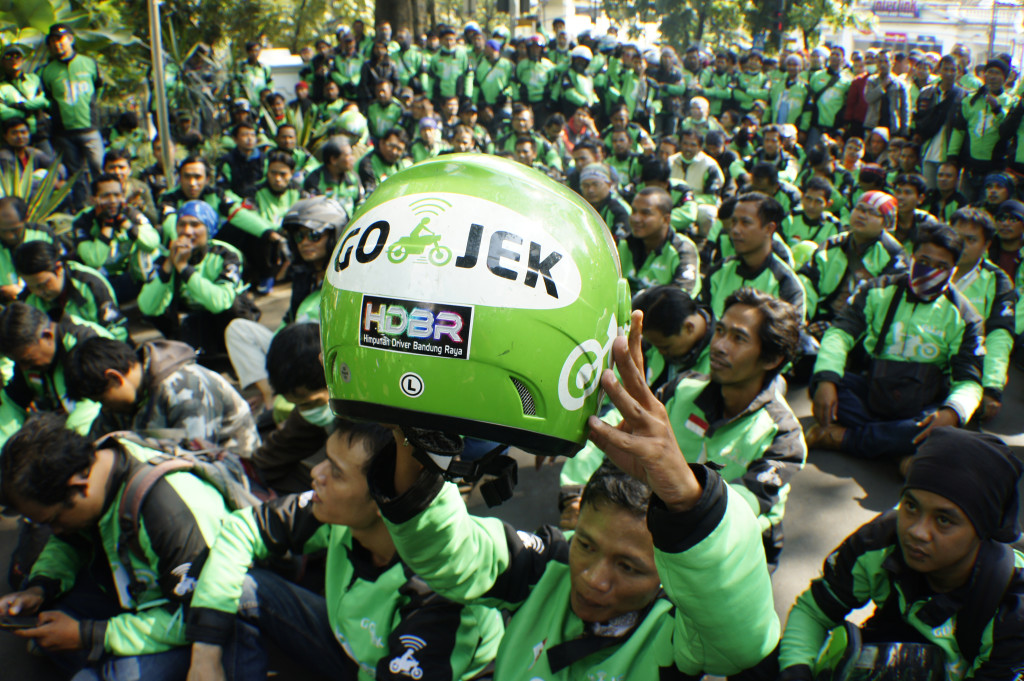
    Grab and Go-Jek, two of Southeast Asia’s biggest technology startups, have successfully grown their food delivery and ride-hailing services, but both must pay special attention to better detection of fraudulent orders, a recent study by Spire Research and Consulting Indonesia showed.

    The local unit of the Tokyo-based research company surveyed driver partners and customers to establish what ride-hailing services they prefer, based on various criteria, including consumer awareness, usage frequency and the use of e-money.

    Grab Leads in Product Usage

    Based on Spire’s consumer awareness survey, 75 percent of respondents said they used Grab’s services over the past six months, while 61 percent indicated that they had done so in the past three months.

    For Go-Jek, it was 62 percent and 58 percent, respectively.

    “Regardless, 50 percent of respondents agree that both Grab and Go-Jek are their favorite brands,” the consultancy said.

    Regarding product usage frequency, customers more often used Grab’s services than those of Go-Jek in the last quarter of 2018.

    The survey also found that 34 percent of GrabCar customers were more likely to use the service three to four times a week on average, while for Go-Car, 25 percent of customers were more likely to use the service once or twice a week on an average.

    Grab Leads in Four-Wheel Segment, Go-Jek Leads in Two-Wheel

    On the other spectrum of the survey, it found that Go-Jek’s Go-Ride was still the customer favorite, with 64 percent saying that they use the service once or twice a day, while for Grab it was 58 percent.

    “When it comes to food delivery, Go-Food is in the lead with 35 percent of respondents saying Go-Food was the brand they most often used, but Grab is catching up quickly with 27 percent saying they used GrabFood the most,” Spire said in a press release on Tuesday.

    E-Money

    As of 2018, both services introduced the use of e-money to facilitate digital payments.

    Grab launched an e-payment service in cooperation with OVO, while Go-Jek established its own, Go-Pay.

    “Based on the survey results, OVO usage exhibits strong O2O [online-to-offline] usage, while Go-Pay’s strength is in Go-Jek’s mobile app ecosystem. For example, OVO is the preferred payment for offline items like phone balance, parking bills and bills for nonfood merchants, while Go-Pay is used to pay food-merchant bills [Go-Food] and electricity bills through the Go-Jek app,” Spire said in the statement.

    Natural Selection

    Indonesia has seen monumental growth in the ride-hailing sector over the past few years, with the mergence of dozens of startup companies. However, natural selection resulted in only two surviving and dominating the market.

    Indonesia is still a magnet for tech companies, including ride-hailing services, thanks to the high consumption rate and mobility of its citizens.

    The two survivors have seen intense competition, with both drastically increasing their product offerings.

    Their services such as food delivery and ride-hailing are similar in nature, but the two companies’ more unique offerings are distinguishing factors.

    Fraud

    Spire said the most interesting finding of its study was the prevalence of fraud.

    “The most interesting finding by Spire is the existence of fraud and how the drivers perceive it,” Jeffrey Bahar, group deputy chief executive of Spire Research and Consulting, said in the statement.

    Spire said fraud in online ride-hailing services is an open secret among drivers and that most who commit it gave similar reasons for doing so, which is to increase their monthly earnings.

    Fraud is seen as a major threat to the industry as it results in economic losses to the companies and highlights vulnerabilities in their systems.

    Spire’s research showed that nearly 30 percent of Go-Jek’s total transportation orders might be fraudulent, compared with 5 percent for Grab.

    “This is based on an estimation of fraudulent orders against total orders. This is a systemic problem for both companies and one that Go-Jek needs to address,” Spire said in the statement.

    According to Spire’s driver survey, “as of 2018, nearly 60 percent of Go-Jek’s drivers say they commit fraud on a daily basis to boost their order numbers, which affect their bonuses and daily income.”

    The drivers who were surveyed said Go-Jek’s system was easier to trick by using applications that modify their location data. On the other hand, less than 10 percent of Grab’s drivers admitted to committing fraud.

    Grab’s drivers said the company’s system was not easy to trick and that the sanctions imposed for such offenses was a deterrent. Drivers also commented that both companies had been improving their systems to better detect fraud.

    “Overall, both companies are growing rapidly in food delivery and ride-hailing but special attention must be paid to the issue of fraud to ensure the healthy development of the technology ecosystem in the country,” Spire said.


  • Retailers to lose US$130 billion from card-not-present fraud: Juniper

    Retailers to lose US$130 billion from card-not-present fraud: Juniper

    Increasingly complex card-not-present fraud will cost retailers US$130 billion globally in digital sales over the next five years. A Juniper Research study predicts that retailers’ slow pace in keeping up with new fraud prevention requirements will allow cybercriminal practices to become more widespread as more and more consumers shop online. It observes that established point-of-sale vendors will need to move towards mobile POS technology in order to expand their reach into fresh markets and reduce their exposure to card-not-present fraud.

    “A layered fraud detection and prevention (FDP) solution naturally helps directly preventing fraud, but it also offers major gains in terms of recovering potentially lost revenue through false positives,” said the report’s author Steffen Sorrell. “This is something about which retailers remain undereducated, and has allowed fraudsters to capitalise on relatively low FDP spend”.

    An implication of the Juniper research is that a low understanding of FDP investment return is causing the low uptake of the technology. the report anticipates digital payment players will be spending $9.6 billion annually on FDP solutions by 2023.

  • Unilever Vietnam owes over $25mln in back taxes: state audit

    Unilever Vietnam owes over $25mln in back taxes: state audit

    The state auditing agency says Unilever Vietnam should pay over $25 million in back taxes for the 2009- 2013 period. Speaking at a National Assembly session on the draft bill on Tax Administration, State Auditor General Ho Duc Phoc pointed to the Holland-backed personal care products maker Unilever Vietnam as an example of taxes overlooked by the authorities.

    Phoc submitted an audit report that says Unilever Vietnam had under-declared its tax dues. The company took the case to the Prime Minister and the National Assembly’s Budget and Finance Committee. After re-examination, the State Audit concluded that the company had under-declared its tax dues by VND584 billion ($25 million).

    The auditor general said the company had accepted this figure, but requested that it is not charged for late payment.

    “Whether the company is fined will be decided by the General Department of Taxation, not us,” Phoc said.

    However, tax department officials as well as Unilever Vietnam representatives said that the company had not accepted the above figure despite the parties having discussed the issue many times.

    “The determination of the amount of tax arrears arising from errors in calculating the preferential tax rate that applies to Unilever Vietnam for its expansion activities in 2009-2013 is not related to transfer pricing,” said a representative of the General Department of Taxation.

    Representatives of the HCMC Taxation Department also confirmed that the decision to collect this sum from Unilever Vietnam has been made, but has not been accepted by the company.

    Unilever Vietnam denies having under-declared any tax obligation. Tran Vu Hoai, the company’s vice president of Sustainable Development and Public Relations, said the outstanding tax issue in question is “due to the differences in the stipulations of the Investment Tax Law and the Corporate Income Tax Law for the period before 2014.”

    “Such differences in the stipulations of the relevant laws have led to different interpretations, causing difficulties for businesses and relevant agencies in the implementation of the laws,” Hoai said.

    The crux of this issue lies in the differences that existed in terms of investment incentives between “new projects” and “expanded investment projects” between 2009 and 2013.

    Then, “expanded investment projects” were only entitled to a three-year corporate income tax (CIT) exemption, and a 50 percent CIT reduction in the five following years. Meanwhile, “new projects” could enjoy a preferential CIT rate of 15 percent for 12 years, three-year tax exemption, and a 50 percent reduction over the next seven years.

    Tax men and companies are divided over the definition of “new project” and “expanded investment project” as they apply to tax incentives.

    Unilever Vietnam has petitioned the Government, the Ministry of Finance and State Audit to find a satisfactory solution in compliance with Vietnamese laws and international regulations.

    Unilever Vietnam is not the only company that’s faced this problem. Suntory Pepsico Vietnam Beverage, GE, Piaggio Vietnam and Yamaha Motors have reportedly fought similar battles.

    Hoai said the matter is being handled by the Ministry of Planning and Investment, in collaboration with the Ministry of Finance and other agencies.

    In September, Prime Minister Nguyen Xuan Phuc assigned the Ministry of Planning and Investment the task of coordinating and working with the Ministry of Finance to resolve such issues for enterprises, in the spirit of ensuring non-retroactivity of the law.

  • Lotte’s Shin returns to work after early release

    Lotte’s Shin returns to work after early release

    Lotte Group Chairman Shin Dong-bin returned to the office on Monday, getting back to work immediately to resolve issues that were put on hold while he was imprisoned until Oct. 5.

    Shin was spotted heading to his office on the 18th floor of Lotte World Tower in Songpa District, southern Seoul, Monday morning without responding to questions from reporters.

    The 62-year-old Lotte head’s return to work comes just eight months after he was sentenced to 30 months in prison in February for bribing former President Park Geun-hye. On Friday, the Seoul High Court replaced the prison sentence with four years of probation.

    On his first day back, Shin was scheduled to meet with top executives for business updates, including heads of Lotte Group’s four main business units and Vice Chairman Hwang Kag-gyu, who was the de facto leader of the conglomerate during Shin’s vacancy.

    “We plan to speed up examinations of business agendas that were put on hold in order to normalize the company’s management,” a Lotte spokesman said.

    Shin was a core decision maker for multiple large-scale projects inside the group, and his imprisonment put a halt on many of those plans. Earlier this year, Lotte was looking into investing a total of 11 trillion won ($9.6 billion) in domestic and foreign companies, but the decisions had to be postponed.

    Among the large-scale construction projects waiting to restart is Lotte Chemical’s massive oil complex in Indonesia, in which the company planned to invest 4 trillion won by 2023. This was the largest ongoing investment when Shin was detained in February. Lotte finalized procedures in purchasing land for the site last year, but its construction was indefinitely postponed.

    Another problem left to untangle is the Lotte World project in Shenyang, China. The ambitious 3-trillion-won plan to build a mall, theme park, hotel and residencies inside one complex was stopped during construction by Chinese officials in November 2016. The apparent reason was safety violations, but it was thought to be part of unofficial sanctions on Lotte for having approved a land swap with the then-government for the deployment of the U.S.-led Thaad antimissile system.

    Lotte’s organizational reform also has a chance of moving forward now that Shin is back in control as he can mediate between Korean and Japanese shareholders. Since 2016, Shin has led efforts to cut cross-shareholding among affiliates and rearrange them under Lotte Corporation, a Korean holding company.

  • More complaints over foreign purchases online and fraud

    More complaints over foreign purchases online and fraud

    As more South Korean consumers opt to make online purchases through overseas websites, complaints related to direct foreign purchases are also rising.

    A 305 per cent rise in complaints last year has been noted by the Korea Consumer Agency’s Cross Border Transaction Consumer Portal, with 1463 cases, up from 361 in 2016. Between January and May, 1306 cases were filed.

    The agency said many complaints regarded lodging, plane tickets and other services as well as consumer goods such as shoes and clothes.

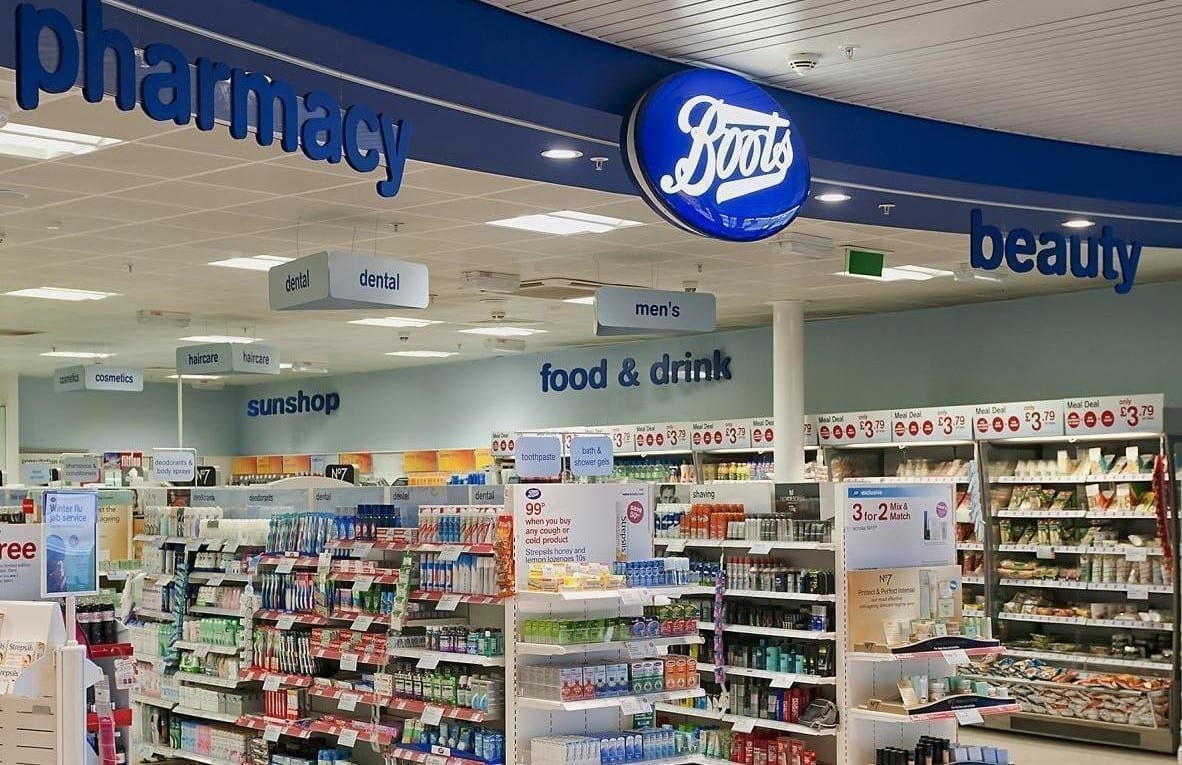
  • Boots’ owner accused of hiking medication prices

    Boots’ owner accused of hiking medication prices

    A supplier then owned by Walgreen Boots Alliance, BCM Specials, charged extortionate amounts to the health service for 500ml tubs of skin cream in 2016.

    A swathe of similar cases has been revealed whereby the NHS has been charged excessive prices for drugs dubbed “specials” which are often available elsewhere for a fraction of the price.

    Specials are custom-made treatments for patients requiring non-standard medications, and their prices are unregulated, allowing the supplier to dictate their price.

    This leads to the NHS paying varying prices for the same products from different suppliers.

    In October 2016, it allegedly paid £45.47 for preservative-free eye drops to Unichem, another wholesaler owned by Boots.

    A larger quantity of the same product was reportedly bought for £1 at a different time, though Boots disputed this figure.

    These are reportedly a drop in the ocean and the exploitation of the loophole in price regulation is understood to be rife.

    Walgreen Boots Alliance has denied the allegations, stating that it complied with all regulations.

    A spokeswoman said: “Specials are unique items ordered at short notice. They are made by highly trained technicians in dedicated laboratories in the UK that source ingredients, produce and quality-check often on the same day, and as a single item.

    “This process incurs high overheads, reflected in the final cost, which is set in line with the sector to reflect the bespoke nature of the products.”

    The British Association of Dermatologists chairwoman Deirdre Buckley said: “For many dermatology specials the ingredients aren’t expensive and it’s inexplicable why they cost so much.

    “It is not right. We have a duty to conserve the resources of the taxpayer so that the money is used to actually care for patients.”

    The Department of Health and Social Care said that from April the law will be changed to put suppliers and pharmacies under greater scrutiny.

  • Nokia demonstrates XGS-PON for mobile fronthaul

    Nokia demonstrates XGS-PON for mobile fronthaul

    Nokia Bell Labs has announced the first successful demonstration of ultra-low latency 10G passive optical networks (PON) for mobile fronthaul.

    In the demonstration, Nokia Bell Labs showed how it is possible to use a commercial next-generation PON to transport ultra-low latency CPRI streams via a standard single fiber running between the Baseband Unit (BBU) and the Remote Radio Head (RRH).

    The proof-of-concept demonstration indicates how existing fiber networks can be used to cost-effectively transport mobile traffic, which could accelerate the transition to 5G.

    The trial used XGS-PON technology that runs on existing fiber access networks and allows operators to use GPON platforms to deliver high-capacity services.

    “This is an important milestone in the industry and in the advancement of 5G, showing for the first time how a PON network can effectively be used to support very high capacity, low latency applications,” Nokia Bell Labs head of access research Peter Vetter said.

    “It demonstrates the flexibility of PON to support traditional CPRI and evolving mobile specifications, such as fronthaul over simpler native Ethernets, and validates the readiness of PON for the 5G era.”

  • Swan Mobile picks Subex for fraud management

    Swan Mobile picks Subex for fraud management

    Swan Mobile, a Slovak telecommunications service provider, has selected Subex to provide its ROC Fraud Management Solution.

    As part of the implementation, Subex’s ROC Fraud Management will cover Voice, SMS and mobile data services for pre-paid and post-paid subscribers of Swan Mobile.

    “Being a progressive organization, we understand the significant impact fraud can have on telecom operators, from both a financial and operational perspective,” said Swan Mobile CTO Patrik Kollaroc.

    “This fact, coupled with the rapid growth we have been seeing, led to us to proactively look for an industry leading fraud management solution and we believe Subex’s Fraud Management solution will enable us to safeguard our business from the implications of fraud effectively,” said Kollaroc.

    Vinod Kumar, COO of Subex, said  the deployment of ROC Fraud Management will help Swan Mobile protect their business revenues and safeguard them against the threat of fraud.

    Subex’s ROC Fraud Management solution promises to ensure a rapid return on investment (ROI) by offering the strongest fraud management capabilities, increasing compliance, reducing risk, and providing economies of scope.

    Subex’s detailed business benefit modelling tools allow customers to determine ROI, build reliable business cases, and explicitly see the value that our solution can bring to their business.