Tag: fries

  • Burger King unveils ‘touchless’ hamburger ordering concept

    Burger King unveils ‘touchless’ hamburger ordering concept

    Burger King has unveiled a new ‘touchless’ concept store, designed to meet the challenges of business during a pandemic and adapt to the future “new normal”.

    The US store features physically contactless experiences such as mobile ordering and curbside pick-up areas and drive-in and walk-up order areas.

    “In March our in-house design and tech team accelerated new restaurant design plans and pushed the limits of what a Burger King restaurant could be,” said Josh Kobza, COO at Restaurant Brands International.

    “We took into consideration how consumer behaviors are changing and how our guests will want to interact with our restaurants. The result is a new design concept that is attractive to guests and will allow our franchisees to maximize their return.”

    Designed in-house, the store is expected to provide multiple ordering and delivery modes and highlight a physical footprint 60-per-cent smaller than a traditional Burger King restaurant.

    A ‘drive-in’ service allows customers to park under canopies doubling as solar power harvesting panels and place orders by scanning a QR code from the Burger King app. For mobile and delivery orders, customers can pick up their orders at coded food lockers.

    To reduce its physical footprint, the store features a “suspended” kitchen and dining room located above the drive-thru lanes. Orders will be delivered from the suspended kitchen by a conveyor belt system, and each lane has its own pick-up spot.

    “The designs we’ve created completely integrate restaurant functionality and technology, said Rapha Abreu, global head of design at Restaurant Brands International. “We designed the interior and exterior spaces like we had a blank sheet of paper, designing without preconceived notions of how a Burger King restaurant should look.”

    Burger King’s first new design stores will be built next year in Miami, Latin America and the Caribbean.
  • Maxim set to open 15 Shake Shacks in Southern China

    Maxim set to open 15 Shake Shacks in Southern China

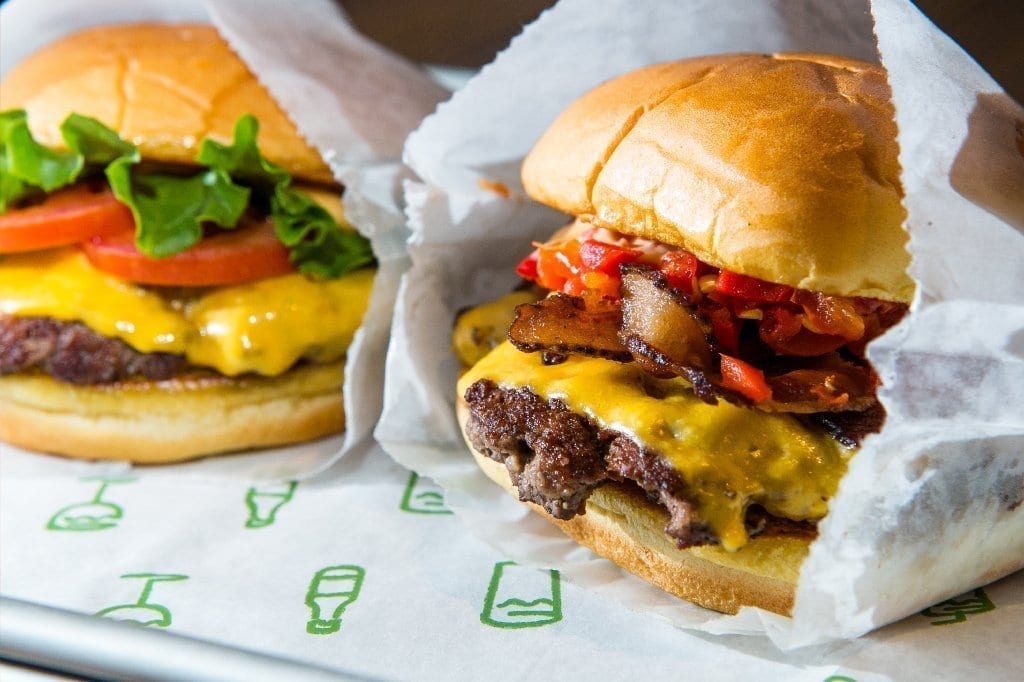
    American fast-casual restaurant chain Shake Shack is planning to open at least 15 new venues in South China by 2030.

    The chain, working through local licensee Maxim’s Caterers, a company controlled by Hong Kong’s Dairy Farm Group, will open restaurants in cities including Shenzhen, Guangzhou, Fuzhou, and Xiamen, with a goal of 55 Shake Shacks nationwide by 2030.

    Maxim’s currently operates Shake Shacks in Shanghai and Hong Kong, with Beijing and Macau under development and due to open later this year.

    “We remain humbled by our fans in China and continue to be encouraged by the performance of our Chinese business through this recovery,” said Shake Shack chief global licensing officer Michael Kark.

    “It’s a great time to deepen our roots in this market.”

    “Maxim’s partnership with Shake Shack has taken the brand on an exciting journey to Hong Kong in 2018 and Shanghai in 2019, with Beijing and Macau on the horizon,” said Maxim’s Caterers chairman and MD Michael Wu.

    “We look forward to bringing our boundless hospitality to more guests across South China in 2021 with our new expansion plans.”

  • McDonald’s sales figures show marked improvement as Covid-19 lockdowns eased

    McDonald’s sales figures show marked improvement as Covid-19 lockdowns eased

    Newly released McDonald’s sales figures have shown a marked global improvement for the business sequentially from late March through May despite the continuing impact of the coronavirus pandemic.

    The information released ahead of the firm’s second-quarter earnings announcement, showed sales steadily improving throughout the period however they still remain negative compared to last year’s figures.

    Comparable McDonald’s sales figures across international markets for both April and May were heavily impacted by temporary restaurant closures in the UK and France, and to a lesser extent Italy and Spain. The firm saw strong drive-thru performance in Australia, and negative comparable sales in Germany, Canada and Russia.

    Sales in international licensed markets were primarily impacted by temporary restaurant closures across nearly all regions, most notably in Latin America. The results reflected continued negative comparable sales in China and positive comparable sales in Japan.

    The vast majority of markets are operating with drive-thru and delivery with limited menus and hours.

    A breakdown of figures for international licensed markets was not provided by the firm.

    “Our strong foundation and the unique advantages of the McDonald’s System, including a high percentage of drive-thru restaurants and investments in delivery and digital, have enabled us to adapt to the changing landscape presented by the Covid-19 outbreak,” said McDonald’s president and CEO Chris Kempczinski.

    “The steps we are taking in response to the pandemic and to accelerate recovery while continuing to serve the great and familiar taste of a meal from McDonald’s, will position us well for the next phase of this crisis.”

    The report shows 95 percent of McDonald’s restaurants around the world are currently open to serve customers.

  • Yum China Lifts Off Beyond Burger in KFC, Pizza Hut, Taco Bell

    Yum China Lifts Off Beyond Burger in KFC, Pizza Hut, Taco Bell

    Yum China has entered into a partnership with plant-based meat manufacturer Beyond Meat to trial a burger at selected KFC, Pizza Hut, and Taco Bell locations within the country.

    The agreement marks the introduction of Beyond Meat’s Beyond Burger in Mainland China.

    “We see great potential for the plant-based meat market in China,” said Yum China CEO Joey Wat. “This latest introduction … is expected to capture valuable consumer feedback across different regions in China. It will enable us to optimize flavors and processes and help assess the potential for larger-scale rollouts in the future.”

    Beyond Meat founder and CEO Ethan Brown said Chinese consumers are seeking out the nutritional and environmental benefits of plant-based meats.

    The burger will be available at five KFC locations in Beijing, Chengdu, Hangzhou and Shanghai. The Pizza Hut offering will launch at six Shanghai locations and will constitute part of the brand’s first-ever burger offering. Taco Bell will offer a taco made with the plant-based Beyond Burger patty at three stores in Shanghai.

    All Beyond Burger promotions will be sold as a three-day limited offer.

    The move follows Starbucks China launching a range of foods using plant-based meat alternatives, including two pasta dishes and a wrap featuring Beyond Meat and another dish using OmniPork.

  • Burger chain Eggslut set to open in Korea and Singapore

    Burger chain Eggslut set to open in Korea and Singapore

    SPC Group, operator of Shake Shack in South Korea, is bringing Eggslut, the California-based egg sandwich chain, to Seoul.

    The group has acquired the rights to exclusively operate in South Korea and Singapore. The first Korean Eggslut store will be launched at the Starfield Coex Mall in Seoul in June.

    Details of a Singapore launch have yet to be revealed.

    “We are pleased to show Korean guests the special taste of Eggslut, which means someone who loves eggs,” said Jeff Vales, co-founder of Eggslut.

    “SPC Samlip has the standout production and supply chain of eggs, meat processing, vegetables, sauces, etc. based on baking technology. Therefore SPC Samlip is the best partner to maintain the high quality of the Eggslut menus,” he added.

    Founded by chef Alvin Cailan in 2011, Eggslut is famous for its egg sandwich made with a brioche bun, coddled egg and sriracha mayo sauce. The chain now operates stores in four countries including the UK and Japan.

  • Jollibee Singapore fined for flouting social-distancing rules

    Jollibee Singapore fined for flouting social-distancing rules

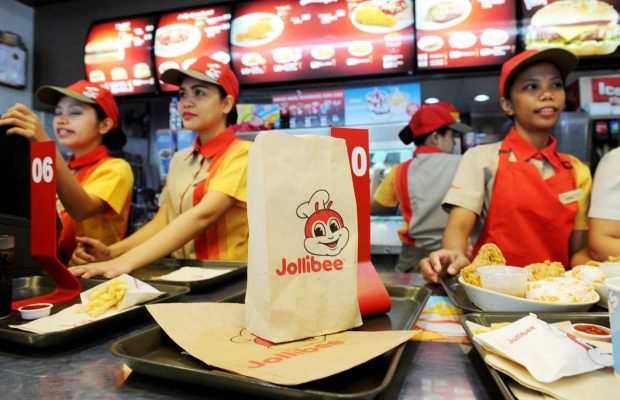
    A Jollibee Singapore outlet is among several businesses fined SG$1000 for breaches of the government’s social distancing mandate.

    Official enforcement measures found the franchise’s Woodlands MRT branch had neglected to ensure queueing customers and food delivery workers maintained one-meter spacing between them, despite issuing previous warnings.

    “The infringements included failure to implement a crowd management system and allowing customers and delivery personnel to crowd together without one-meter spacing between one another,” read a statement by the Singapore Tourism Board and Enterprise Singapore. “If these stores continue to flout the rules, they will face higher fines and can be charged in court.”

    In an official apology, Jollibee explained that a staff member on duty had been unable to control the queue due to “a strong surge in delivery orders and a corresponding increase in third-party delivery riders in the store.”

    The one-meter distance requirement, as well as mandatory wearing of face masks, has been in effect since April 12. Members of the Singapore public are encouraged to report infringements by email to Covid_GoBusiness@mti.gov.sg.

  • KFC Singapore launches contactless takeaway service

    KFC Singapore launches contactless takeaway service

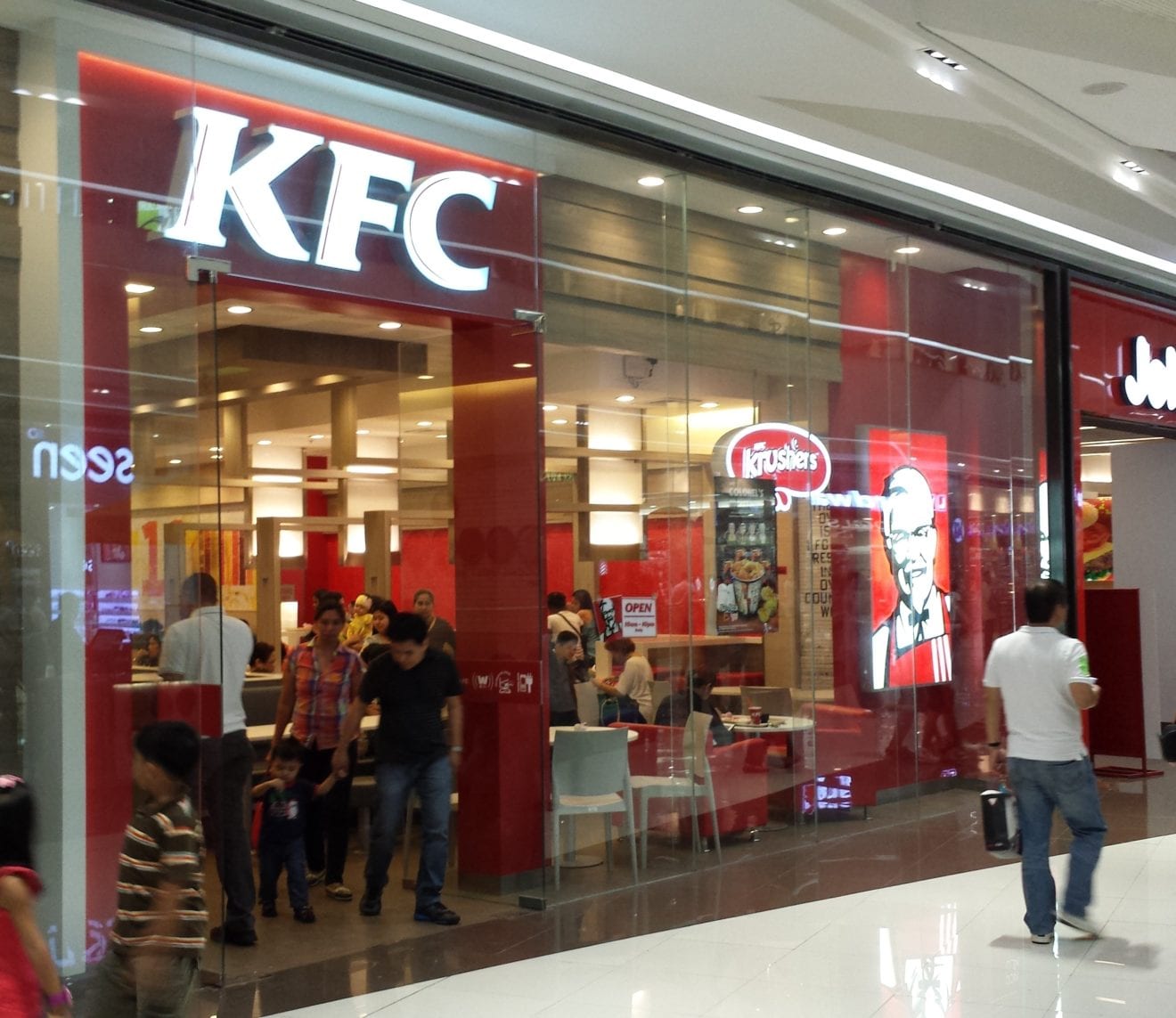
    KFC Singapore has launched a contactless takeaway service, allowing customers to purchase safely during the circuit breaker period in the city.

    According to KFC, it is the first fast-food restaurant brand in Singapore to launch such a service. With “Contactless Takeaway”, customers can place orders via KFC Singapore’s app or its website and pick up the food at contactless pick-up tables in the chosen store.

    These contactless pick-up tables will be sanitised after each order is completed, the company said in the statement.

    “With the ‘Contactless Takeaway’ and ‘Contactless Delivery’ options, we are doing our very best to ensure that our famous fried chicken will be as accessible as always even during these trying times,” said Lynette Lee, GM at KFC Singapore.

    The ‘Contactless Takeaway’ service follows the ‘Contactless Delivery” option launched early last month.

  • Yum China reopens most stores, reports recovering footfall

    Yum China reopens most stores, reports recovering footfall

    Yum China says it is witnessing “early signs of recovery” in Mainland China as business gradually resumes and people return to work.

    However, the company, which operates KFC, Pizza Hut and Little Sheep chains, said in an update to shareholders that restaurant traffic remains “heavily impacted” as people continue to implement social-distancing measures.

    Store closures peaked in mid-February when about 35 percent of the company’s network was closed, the remainder offering only delivery and takeaway services. However, trade for those still trading significantly declined. Same-store sales for Yum China were down by between 40 percent and 50 percent year on year during the Chinese New Year holiday period.

    This week, about 95 percent of Yum China’s stores had reopened either fully or partially and about 15 percent of those continued to offer only takeaway or delivery services.

    In its update, Yum China said that while customer volumes were slowly building, they remained well down on pre-outbreak levels.

    “The pace of recovery varies by region and is slower during weekends as people avoid going out. In recent days, same-store sales were down approximately 20 percent. Sales performance fluctuates as the recovery is uneven, and the situation continues to evolve,” the company said.

    Yum China launched contactless delivery in late January, which proved popular and supported the delivery business during a period of lower dine-in traffic. “Delivery sales grew year over year, and its mix as a percentage of company sales approximately doubled.”

    Yum China also launched contactless pick-up and corporate catering services as highly sanitary options for consumers and corporate customers.

    Now that the coronavirus crisis appears to have passed its peak in Mainland China, the company is considering resuming its network expansion program. Currently paused – largely due to a shortage of construction workers and traffic restrictions – the company says it will “continue to monitor the situation and work with local authorities, resuming new store openings when conditions allow”.

    “Despite a challenging start to the year, Yum China is here for the long run, and will ensure that it remains well-positioned for the long-term growth opportunities in China.”

  • McDonald’s UK to scrap plastic Happy Meal toys

    McDonald’s UK to scrap plastic Happy Meal toys

    McDonald’s UK is ditching its plastic Happy Meal toys in favor of more sustainably produced alternatives in its stores.

    In a move to reduce the firm’s plastic waste by more than 3000 tons, from May onwards the firm will phase out the playthings it provides with its children’s meals and instead offer books, stuffed items or paper-based toys.

    Simultaneously, the restaurant chain will be collecting plastic toys back in its UK and Ireland restaurants to be recycled into play equipment for its children’s charities.

    McDonald’s UK has already been providing books as an option with its Happy Meals for several years under its Happy Reader program.

    “We care passionately about the environment and are committed to reducing plastic across our business,” said McDonald’s UK marketing chief Gareth Helm.

    “Families have high expectations of us and we’re working as hard as we can to give them the confidence that their Happy Meal is as sustainable as possible.”

  • First MOS Burger store opens in Manila

    First MOS Burger store opens in Manila

    The first MOS Burger store in the Philippines opened this week, on the second floor of Robinsons Galleria, Ortigas Center.

    MOS Food Services Inc chairman Atsushi Sakurada said the store is just one of many branches planned for Metro Manila this year.

    MOS Burger Philippines was formed last year by MOS Food Services Inc of Japan and Tokyo Coffee Holdings in a joint venture agreement.

    The first MOS Burger store in the Philippines brings the chain’s internationally popular burgers to the local market, including cheeseburgers, Wagyu Burger and Wagyu Rice Burger.

    Founded in 1972, MOS Burger describes itself as fast casual. It is now Japan’s second-largest fast-food chain with 1300 stores domestically and 300 others around the world. In Asia it already has outlets in Thailand, Singapore, Hong Kong, Indonesia and South Korea and it plans to launch in Vietnam later this year.

    Like other fast-food chains targeting rapidly growing Southeast Asian markets, MOS Burger faces a challenge in changing local consumers’ habits of eating cheap street food to trade up to burger meals which are comparatively expensive.

    The chain’s unique selling point is its burger buns, which are made of rice mixed with barley and millet. It positions its meals as healthier than traditional fast-food fare.

    Prior to its Philippines opening, MOS Burger offered the public burgers for two days last month to tease the market and test its operations.

    Alongside burgers, the first MOS Burger store in the Philippines serves fried chicken, coffees, teas and its signature lemonade. Burgers are priced from PHP 189 (US$3.72) to PHP 309 ($6.08) for the upscale Wagu burger, with beverages from PHP 68 ($1.34) to PHP 149 ($2.93).

    MOS stands for Mountain, Ocean and Sun.

  • Mos Burger launching in Vietnam

    Mos Burger launching in Vietnam

    Mos Burger in Vietnam will open its first store in Ho Chi Minh City later this year.

    The company plans to set up a joint venture in the country next month and open 10 outlets in the next three years.

    Last October, Mos Burger partnered with Danang Tourism College to run a training program called Bentonamu Kazoku where Vietnamese candidates could undertake training courses at Mos Burger stores in Japan before returning home to work as managers.

    The company said it will recruit 350 people in four years under its work-visa program.

    Mos Burger in Vietnam’s recruiting strategy is not only to enhance the quality and training of staff there but also to help its Japanese franchisees address labor shortages arising from the country’s ageing population.

    While Vietnam may be the fast-growing retail market in Southeast Asia, it could prove a challenge for Mos Burger as other fast-food franchises have discovered that changing local consumers’ habits of eating cheap street food to relatively expensive burgers is not an easy mission.

  • Jollibee profit slides despite strong last quarter

    Jollibee profit slides despite strong last quarter

    Philippine restaurant brand Jollibee Foods suffered a 14.4-per-cent drop in earnings last year after operating income fell by 25.1 percent.

    However, a strong fourth quarter prevented a worse annual result, with operating income up 11.6 per cent on a 23.2-per-cent boost on systemwide sales.

    “Practically all brands in the Philippines improved their same-store sales growth quarter on quarter, led by Jollibee, Red Ribbon, Greenwich and Burger King,” said a spokesperson from the firm.

    “Same-store sales growth in the Philippines was driven by the continued growth in the volume of customer visits in the stores compared to a year ago and strong growth in the delivery business for all brands.”

    Jollibee Foods president and CEO Ernesto Tanmantiong said that despite a tough year, the current turnaround is being brought on by an increase in customers’ in-store and growing demand for its delivery business.

    Favorable returns on the firm’s investments – including a notable expansion of Jollibee’s newly acquired The Coffee Bean and Tea Leaf chain – have helped improve the pace of earnings.

    Jollibee Foods is targeting opening 600 more outlets this year, a little more than half of those abroad.

    “We look forward to a much stronger sales and profit performance in 2020 and the years ahead even as we consolidate the financial performance of CBTL into our financial results,” said Tanmantiong.

  • Shake Shack Singapore opens second store

    Shake Shack Singapore opens second store

    Burger chain Shake Shack has opened its second store in Singapore, in the city’s CBD.

    Taking over the Tiger Balm factory on Neil Road, the new Shake Shack Singapore store design was inspired by its vibrant Chinatown neighborhood and colorful Peranakan architecture.

    Designed by Singaporean artist Sam Lo, the store’s interior features a tiger mural inspired by the history of Tiger Balm factory.

    To mark the opening, Shake Shack has launched The Chick’n Shack, an antibiotic-free slow-cooked chicken breast crisp fried.

    “The Chick’n Shack embodies our modern approach to fine-casual American cooking,” said Mark Rosati, culinary director at Shake Shack. “It’s about providing a simple, pleasurable, uncomplicated experience, but with high-quality, responsibly sourced ingredients.”

    The burger chain also introduces two new local dishes, Eye of the Tiger and Open Sesame, based on local flavors.

    To support the local art community, 5 percent from sales of the local products will be contributed to Very Special Arts Singapore (VSA), a non-profit organization providing opportunities for the disabled through arts.

  • First franchised KFCs open in Chinese gas stations

    First franchised KFCs open in Chinese gas stations

    Yum has announced the opening of its first franchised restaurants in Chinese gas stations, in collaboration with China Petrochemical Corporation (Sinopec) and China National Petroleum Corporation (CNPC).

    The first franchised KFC restaurant has been launched in a CNPC gas station in Yunnan Province while the first one in a Sinopec gas station is set to open its doors Liaoning Province next week.

    “The first franchised gas station restaurants represent an important milestone in our long-term strategic partnership with both companies,” said Joey Wat, CEO of Yum China. “Together with Sinopec and CNPC, we are committed to building a successful business model and creating innovation-driven growth together.”

    The partnership with Sinopec and CNPC will enable Yum China to expand its retail network into a previously underserved segment of the market as both companies collectively operate more than 50,000 Chinese gas stations.

    With the partnership, Yum China aims to open more than 100 stores in the next three years and create more opportunities to collaborate in other fields.

  • KFC urban concept unveiled in The Bronx

    KFC urban concept unveiled in The Bronx

    KFC has unveiled its newest urban inline restaurant design in the Bronx, NYC. Influenced by Colonel Sanders-inspired hospitality and the hustle and bustle of the Bronx, KFC’s new concept design illustrates “the borough’s fast-paced, eclecticism”.

    Designed by FRCH Nelson, KFC in the Bronx features a brick wall with KFC’s signature red and white stripes and tagline “It’s finger-licking’ good”. Different pictures of Colonel Sanders hung on the other white focal wall.

    “The Bronx neighborhood has a rich history and has seen a great deal of urban renewal in recent years,” said Lauren Moorehead, associate design manager of KFC. “It is important for us to reach our customers where they are and through our work with FRCH Nelson we’ve been able to create our first urban inline design that makes our brand more accessible for residents of the Bronx community and nearby Fordham University.”

    The design features a modern style that “captures the Colonel’s vintage flavor while marking a stark departure from the chain’s early decor, modeled on Sanders’ first restaurant”.

    Design director at FRCH Nelson, Marty McCauley, said working with a brand historically known for its southern hospitality, the agency created a design that maintained the great experience, but also looked to fold in a distinctly edgier attitude to deliver on the feistiness of what guests see from KFC in commercials and on social media.”

    KFC operates more than 23,000 restaurants in 140 countries and regions around the world under fast-food operator Yum! Brands.