Retail News CRM

Tag: funding

  • Every Half Brews Fresh Success: Scores $8M Series A Funding for Rapid Vietnamese Coffee Expansion

    Every Half Brews Fresh Success: Scores $8M Series A Funding for Rapid Vietnamese Coffee Expansion

    Vietnamese coffee brand, Every Half, has recently raised a total of US$8 million in a Series A funding round. The considerable investment comes courtesy of existing investors Openspace Capital and DSG Consumer Partners.

    The new capital will be used to facilitate comprehensive expansion across Vietnam, as well as deepening the company’s investment into its vertically integrated supply chain. Plans are also in place to increase the reach of its packaged coffee business.

    Diversifying the Coffee Sector

    Every Half is well on its way to extending its business operations beyond traditional cafes. The company is actively investing in coffee farming, proprietary fermentation technology, e-commerce, and business-to-business distribution.

    As of now, Every Half manages 36 stores in numerous locations including Ho Chi Minh City, Hanoi, Danang, and Hoi An. The company is projected to almost triple its revenue this year. In addition to this, it has expanded its range of consumer products. From selling roasted coffee beans and brewing equipment online to exporting to markets such as Singapore, Thailand, and Taiwan.

    The latest funding round builds on previous investments from Openspace and DSG Consumer Partners. This follows an undisclosed seed round in 2024 topped by a $3 million pre-Series A funding round last year.

    Every Half was established in 2021 by ex-The Coffee House executives Vo Duy Phu and Tran Le Minh Truc. The company’s primary aim is to promote Vietnamese-grown specialty coffee through a wide-ranging business model that covers sourcing, processing, roasting, and retail.

    In 2024, when Openspace made its initial investment, it expressed support for Every Half’s ambition to transform Vietnamese coffee from a mere commodity export into a globally recognized premium brand. This highlighted the founders’ extensive experience in coffee sourcing, product development, and retail.

    DSG Consumer Partners echoed this sentiment, emphasizing the firm’s focus on specialty coffee, sustainable sourcing, and brand building as essential drivers of its long-term growth potential.

    Questions & Answers

    What is the primary focus of Every Half?
    Every Half aims to transform Vietnamese-grown specialty coffee into a globally recognised premium brand.

    How does the company intend to use the funds from the recent Series A funding round?
    The brand plans to use the funds to facilitate expansion all over Vietnam and to deepen their investment in their vertically integrated supply chain.

    What are some of the additional business avenues Every Half is exploring?
    Every Half is diversifying with investments in coffee farming, proprietary fermentation technology, e-commerce, and business-to-business distribution.

  • Pickup Coffee Eyes Explosive Growth with Anticipated $8M Funding Boost from Convertible Notes

    Pickup Coffee Eyes Explosive Growth with Anticipated $8M Funding Boost from Convertible Notes

    Pickup Coffee, a budget coffee chain based in the Philippines, is reportedly seeking additional funding. This endeavor includes issuing up to $8 million in convertible notes to Venturi Partners and new investor Antler.

    The Equity Fundraising

    It is believed that this equity fundraising could potentially bring in an extra $20 to $40 million. Reports suggest that this process was successfully finalized a few months earlier.

    The Birth of Pickup Coffee

    Pickup Coffee was founded in 2022 by Diego Lorenzo and Jamie Fernandez. Initially, it operated as a delivery-only coffee brand. However, the business eventually transitioned to a hybrid model, launching food-truck-style stalls. This innovative format allowed Pickup Coffee to sell its beverages at prices lower than those usually seen in traditional coffee chains.

    Menu Offerings

    Pickup Coffee’s menu offers a range of traditional coffee drinks, iced teas, hot chocolates, and unique specialty mixes. The latter includes the Ube Latte, Iced Pistachio Milk, and Avocado Latte.

    Company Growth

    Since its launch, Pickup Coffee has seen significant growth. The company has opened approximately 500 stores in the Philippines and has broadened its reach on an international scale, establishing 50 outlets in Mexico.

    The new capital injection is predicted to help support Pickup Coffee’s expansion plans. The company is concentrating on fortifying its operations in existing markets.

    Questions & Answers

    Who are the founders of Pickup Coffee?
    Diego Lorenzo and Jamie Fernandez founded Pickup Coffee.

    What is Pickup Coffee’s business model?
    Initially, Pickup Coffee operated as a delivery-only coffee brand. However, the business eventually transitioned to a hybrid model, launching food-truck-style stalls, which allows them to offer drinks at lower prices than traditional coffee chains.

    What is the purpose of the additional funding that Pickup Coffee is seeking?
    The new capital injection is predicted to help support Pickup Coffee’s expansion plans, particularly focusing on strengthening its operations in existing markets.

  • Jago Coffee Brews up $12.5M in Series B Funding for Nationwide Mobile Expansion

    Jago Coffee Brews up $12.5M in Series B Funding for Nationwide Mobile Expansion

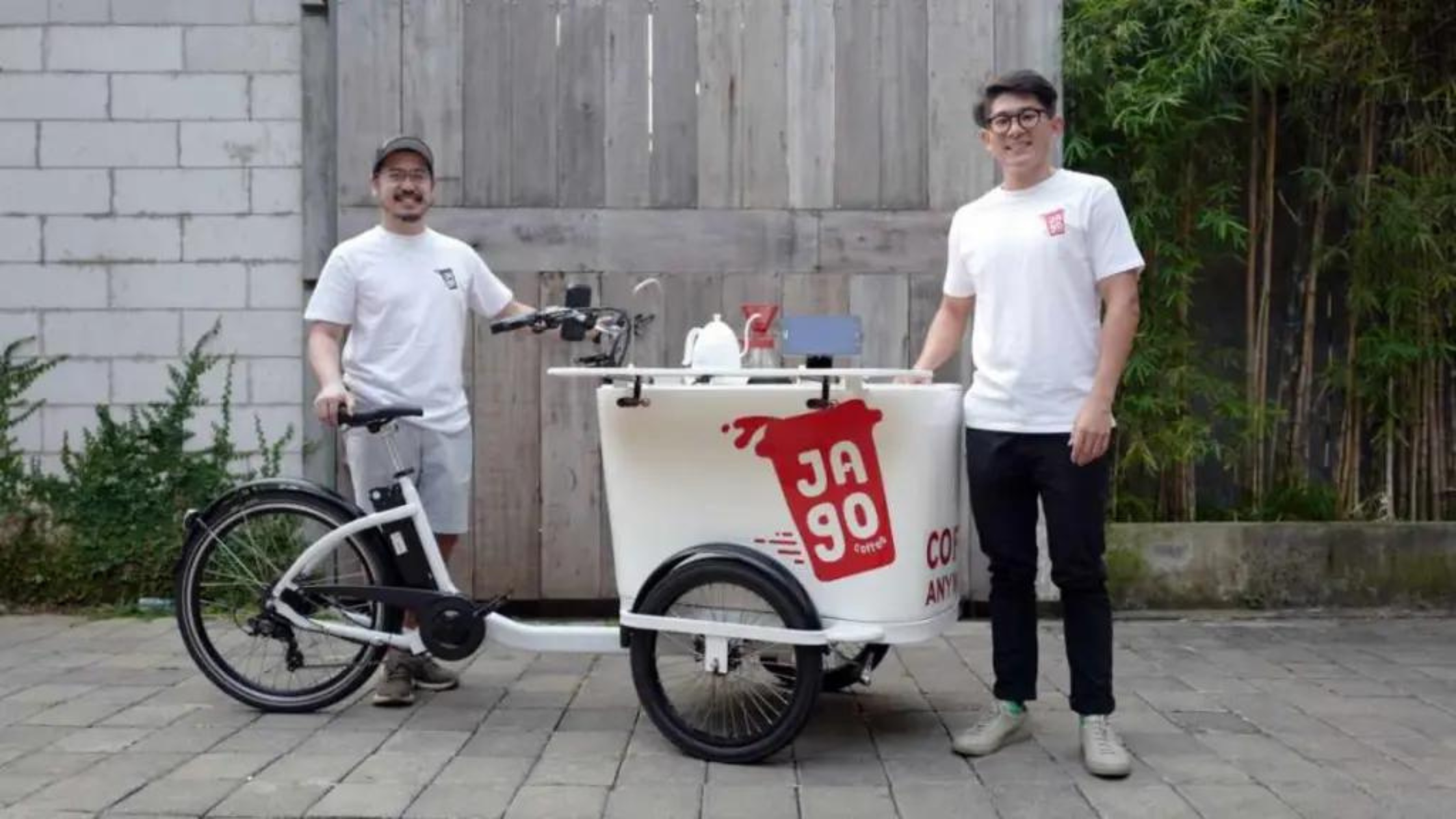
    Jago Coffee, an Indonesian-based mobile coffee startup, recently secured a significant financial boost of US$12.5 million in a Series B funding round. This recent round of funding will enable the company to progress with its expansion plans. The focus is on increasing its fully electric coffee cart network and bolstering its proprietary technology platform across Indonesia.

    Investment Details

    The Series B round received significant support from a trio of investors, namely Beenext, Intudo Ventures, and Orzon Ventures. This follows a Series A round, which saw Jago Coffee secure US$6 million in funding in 2024.

    Jago Coffee’s Business Model

    Founded in Jakarta, Jago Coffee operates an extensive network of fully electric carts. These mobile units serve fresh, cafe-quality beverages in various settings, from residential neighbourhoods to commercial districts and transit hubs.

    The coffee startup’s strategy is to offer high-quality beverages at competitive prices, targeting a mass-market consumer base. The company’s innovative service model eliminates the overhead costs associated with traditional brick-and-mortar storefronts. It prioritizes convenience and accessibility while maintaining cost efficiency.

    Customers have two options to order from Jago Coffee. They can either purchase directly from the mobile carts or use the company’s dedicated app. The app allows customers to request the nearest barista to be dispatched directly to their location.

    Questions & Answers

    What is the business model of Jago Coffee?
    Jago Coffee operates a fleet of fully electric coffee carts that serve fresh beverages in various locations. The company targets mass-market consumers with cafe-quality drinks at affordable prices. It emphasizes convenience, accessibility, and cost efficiency by eliminating the need for physical storefronts.

    Who led the recent funding round for Jago Coffee?
    The latest funding round, Series B, was led by Beenext, with participation from Intudo Ventures and Orzon Ventures.

    How do customers order from Jago Coffee?
    Customers have two options for ordering from Jago Coffee. They can either order directly from the roaming coffee carts or use the company’s dedicated app to have the nearest barista delivered to their location.

  • Jago Coffee: Indonesia’s Innovative Cart Startup Brews Up $12M in Latest Funding Round

    Jago Coffee: Indonesia’s Innovative Cart Startup Brews Up $12M in Latest Funding Round

    Jago Coffee, an Indonesian mobile coffee service, recently raised $12 million in a Series B funding round bringing its total capital to over $20 million. The company is known for dispensing reasonably priced beverages from fully electric carts, making it an accessible option for a broad range of consumers.

    Funding Details

    The primary investors in the recent funding round were Beenext, alongside other contributors such as Intudo Ventures and Orzon Ventures. The infusion of capital is planned to support and accelerate the company’s expansion efforts, despite the recent financial figures indicating an increase in losses alongside growing revenue.

    Jago’s Unique Approach

    Jago Coffee has a unique business model that aligns closely with local street vendor practices. The company operates fully electric carts and offers coffee that is affordable, with prices starting at approximately $0.50. This approach makes its service accessible to a large segment of consumers.

    The company has also invested in technology, developing its own tech stack. This includes the use of machine learning to pinpoint potential areas for expansion. The company also prides itself on its dedicated applications for both baristas and customers, further enhancing its service delivery.

    Growth and Financial Performance

    Despite the challenges, Jago has experienced significant growth. There was a more than thirteenfold increase in size in 2023. Moreover, the company reported a 17% rise in revenue in December 2024. However, it should be noted that during the same period, the company’s losses more than doubled.

    This investment in Jago indicates a shift in the venture capital landscape. Investors are becoming more interested in companies that use software to manage local, physical operations, rather than placing their sole focus on digital products.

    Questions & Answers

    What is Jago Coffee’s business model?

    Jago Coffee operates fully electric carts, similar to local street vendors, to deliver affordable coffee to a mass market of consumers.

    How much has Jago Coffee raised in its recent Series B funding round?

    Jago Coffee has recently raised $12 million in a Series B funding round.

    How is venture capital shifting in relation to companies like Jago Coffee?

    Investors are increasingly interested in businesses that use software to manage physical, local operations, as opposed to focusing solely on digital products.

  • Coolmate, Vietnam’s Digital Fashion Powerhouse, Secures Series C Funding for Global Expansion and Women’s Line Launch

    Coolmate, Vietnam’s Digital Fashion Powerhouse, Secures Series C Funding for Global Expansion and Women’s Line Launch

    Coolmate, a Vietnamese brand known for its digital-first approach in fashion, has successfully completed its latest Series C financing. The specific details of the funding have been kept under wraps, but it is understood that the funds will be used to fuel both global expansion and the brand’s entrance into women’s fashion.

    The fundraising effort was spearheaded by Vertex Growth Fund and saw contributions from Cool Japan Fund, YoungOne CVC, and other pre-existing investors such as Vertex Ventures SEA & India and Kairous Capital.

    Nhu Chi Pham, the CEO and founder of Coolmate, expressed her gratitude for the investment. She asserted, “This financial boost enables us to further endorse our vision, break into new markets, and continue to cultivate a brand that is a true symbol of Vietnamese ingenuity.”

    A Look at Coolmate’s Journey

    Established in 2019, Coolmate has quickly made its mark on the industry, having already fulfilled over 5 million orders across the nation. It operates using a technology-aided local supply chain, allowing for efficient and effective business transactions.

    This latest influx of capital will be strategically funneled into three main areas: Women’s fashion, global market penetration, and the establishment of physical retail outlets.

    Detailed Expansion Plans

    Coolmate launched its “Go Women” initiative in March, introducing a new line of activewear for women. The company has a 2030 target of generating 40% of its total revenue from women’s products.

    The “Go Global” strategy has been initiated with Coolmate’s debut on Amazon US where it has quickly gained a “Best Seller” status and now processes over 25,000 orders monthly. The next phase of this strategy involves expanding throughout Southeast Asia in an effort to reach 30% international revenue by the year 2030.

    Finally, with the “Go Offline” strategy, Coolmate plans to open brick-and-mortar stores, aiming to enhance customer experience, and projecting to obtain 40% of its revenue from offline sales by 2030.

    It’s worth noting that Coolmate secured a $6 million investment in a Series B fundraising round last year, led by Vertex Venture Southeast Asia and India.

    Questions & Answers

    What is Coolmate’s business model?
    Coolmate operates with a digital-first approach in fashion, utilizing a technology-enabled local supply chain to conduct business transactions efficiently.

    What are the future expansion plans of Coolmate?
    Coolmate plans to venture into women’s fashion, expand its brand globally, and establish physical retail outlets to enhance customer experience.

    What are the goals set for 2030 by Coolmate?
    Coolmate aims to achieve 40% of its total revenue from women’s products, 30% international revenue, and 40% of its revenue from offline sales by 2030.

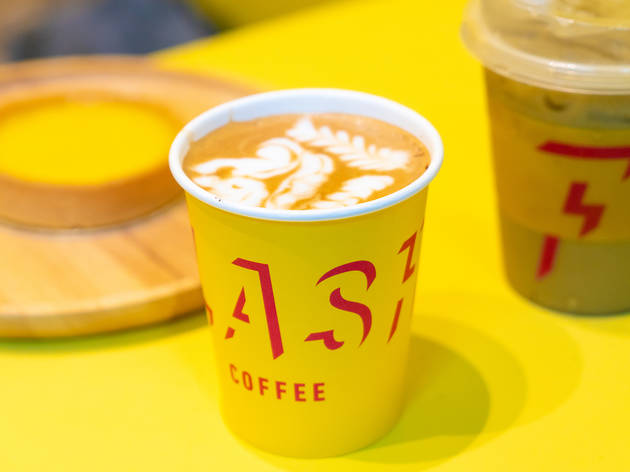
  • Flash Coffee Raises $3M to Propel Indonesian Expansion Efforts

    Flash Coffee Raises $3M to Propel Indonesian Expansion Efforts

    Flash Coffee Secures $3 Million in Funding to Accelerate Expansion in Indonesia

    Investment Fuels Ambitious Growth Strategy

    Flash Coffee has successfully raised $3 million in a recent funding round, spearheaded by TA Ventures and supported by White Star Capital. This investment comes on the heels of a robust performance, showcasing the coffee brand’s resilience and promising revenue potential.

    Strong Performance Underpins Brand’s Expansion Plans

    After a remarkable year, Flash Coffee reported an impressive average store-level EBITDA of 22%, with new stores achieving an extraordinary 36% EBITDA—figures that surpass industry expectations. With these promising metrics in hand, the company is set to expand its footprint to 70 stores across Indonesia by 2025, in addition to venturing into two new cities.

    “Our strategy has prioritized solidifying our foundation—profitable stores, enhanced team dynamics, enriching menus, and spaces that resonate with modern Indonesian aesthetics,” remarked Jakob Angele, Executive Chairman of Flash Coffee.

    Innovative Store Concept Enhances Consumer Experience

    As part of its growth strategy, Flash Coffee is introducing a redesigned store concept that features natural textures, local materials, and abundant greenery. The brand’s fresh logo and the slogan “Kebanggaan Indonesia” (Proudly Indonesian) emphasize its deep connection to Indonesian culture and heritage.

    “Today’s Indonesian consumer is cross-generational, actively seeking experiences that are both meaningful and personal,” noted Richard Armstrong, Venture Partner at TA Ventures. This insight aligns with the brand’s ongoing commitment to adapt to evolving consumer trends.

    Implications for the Retail Sector

    Flash Coffee’s ambitious expansion and strategic pivot toward personalized consumer experiences signal significant shifts within the retail sector. As competition intensifies, brands must stay attuned to consumer preferences, balancing profitability with enriching visitor experiences. This funding reflects not just the brand’s ambition but also the growing consumer demand for quality and authenticity in the coffee retail space.

  • Dott To Roll Out E-Scooter Expansion With Extra $70 Million Funding

    Dott To Roll Out E-Scooter Expansion With Extra $70 Million Funding

    Electric scooter rental firm Dott said on Tuesday it had raised an extra $70 million which it will use to roll out new e-bikes, expand into new cities and countries and offer more services. Amsterdam-based Dott had announced $85 million in the Series B funding last year and the extra amount brings the total the start-up has raised so far to around $210 million. “We’re all on this crusade against personal cars. We want to make it super simple for anyone who wants to ditch their own car to have other transportation modes,” Dott Chief Executive Henri Moissinac said.

    The two largest global e-scooter rental operators are Bird Global Inc, which was listed in November, and Lime, which aims to go public this year. The business is expected to see further consolidation as larger players scale up to navigate tougher regulations from cities trying to adapt to e-scooters. Ride numbers rebounded in 2021 after the COVID-19 pandemic virtually shut down operators for lengthy periods in 2020.

    And the scooter rental business is expected to undergo further consolidation as larger operators seek greater scale to handle tougher regulations from cities

    Dott, which has a fleet of 40,000 e-scooters and 10,000 e-bikes, is operating in 36 cities across nine European countries

    Dott said its extra funding was led by new investors abrdn and existing investor Sofina. Its existing investors including Prosus Ventures, the venture capital arm of Prosus NV also participated in the latest round. I declined to comment on the company’s current valuation.

    Dott, which has a fleet of 40,000 e-scooters and 10,000 e-bikes operating in 36 cities across nine European countries, recently partnered with FREE NOW, a European platform that offers ride-hailing and taxi services.

    Moissinac said Dott is seeking more partners “to offer as many options as possible for shared mobility to consumers”, adding that it will expand in France and Scandinavia, the Netherlands with e-bikes only and possibly Israel.

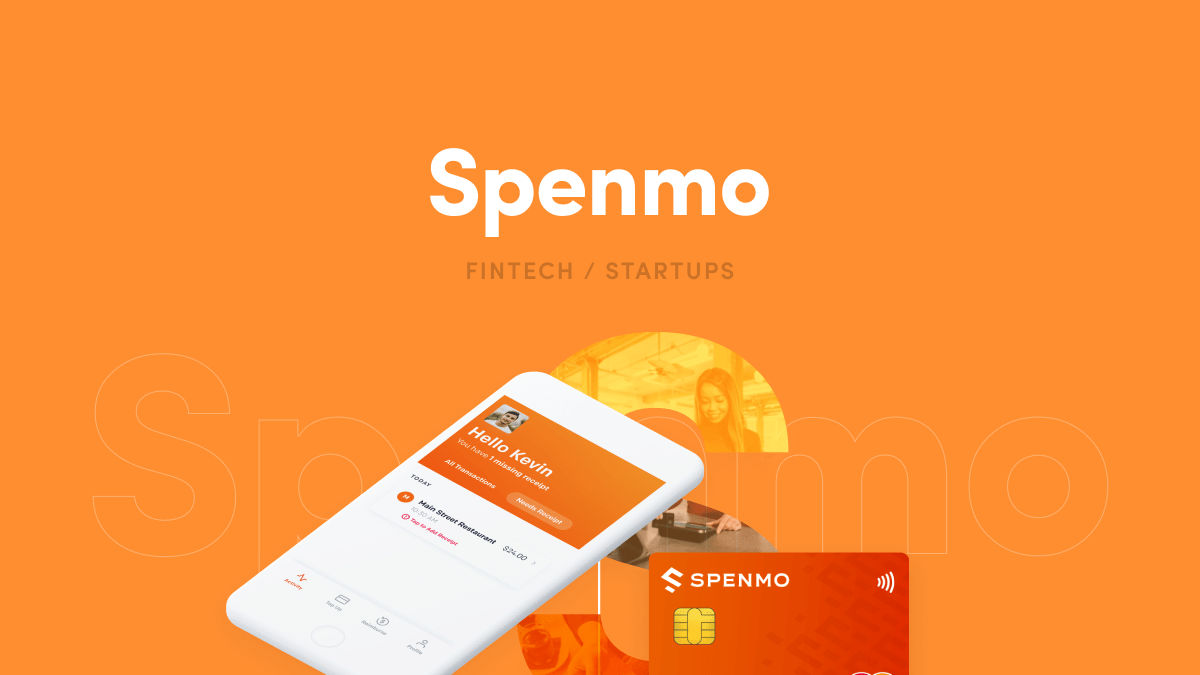
  • B2B Payments Firm Spenmo Receives Funding for Regional Build-Out

    B2B Payments Firm Spenmo Receives Funding for Regional Build-Out

    The Singapore-based startup has secured one of the largest Series A funding rounds to date in the country, which will allow it to expand in Southeast Asia.

    Spenmo has announced a $34 million raise in a Series A investment round led by New York-based private equity and venture capital firm Insight Partners, according to a statement on Wednesday.

    The fundraising round, which was oversubscribed by a multiple of five, saw the participation of Lee Fixel’s Addition, Salesforce Ventures, Alpha JWC, Global Founders’ Capital, Broadhaven, Operator Partners and Commerce Ventures, alongside several high-profile angel investors.

    Spenmo helps businesses manage payments, and its products include smart corporate cards and automated bill payments. It graduated from the Y-combinator startup accelerator in 2020. Since its launch in Singapore last year, it has expanded across Southeast Asia, bringing on several thousand customers, Spenmo said.

    The company said it sees growth opportunities in the region, which has over 20 million small and medium sized businesses that  largely do not use any software to manage their payables other than piecemeal solutions such as spreadsheets or manpower.

    Our space has typically been thought of as a back-office function, but finance and accounts payables is a critical part of running a business, Mohandass Kalaichelvan, CEO and Founder of Spenmo, said.

  • Vitamin subscription service Vitable raises $5.5m venture funding

    Vitamin subscription service Vitable raises $5.5m venture funding

    Australian vitamin retailing disruptor Vitable has secured $5.5 million in a series A funding round, drawing interest from a raft of recognized investors including Germany’s Rocket Internet, parent of Global Fashion Group and Hello Fresh, among others.

    Founded by Larah Loutati and Ilyas Anane (pictured above) just two years ago, Vitable operates a subscription-based service in Australia, New Zealand and Singapore, creating personalized vitamin and health supplement recommendations for customers who complete an online questionnaire. The monthly orders can be adjusted as the customer’s health needs change and the mobile app provides notification reminders to help build a daily routine and track progress.

    The company says the fresh funds will allow expansion into the wider Asia-Pacific region as it aims to take a share of a global dietary supplement market projected by Grand View Research to be worth US$230 billion by 2027.

    “Ultimately Vitable will grow beyond its core vitamin offer towards a broader vision of a personalized and holistic health and wellness experience, an industry McKinsey recently valued at US$1.5 trillion,” said Loutati, announcing the closing of the funding round.

    Led by Brenteca Investments, other investors include former MD of LinkedIn ANZ and serial tech investor, Clifford Rosenberg, and venture capital firm Artesian.

    Besides boosting geographic expansion, the money will be allocated to product and app development and the recruitment of key personnel.

    “Personalisation and honest guidance through selection and purchase are the future of vitamins and mineral supplements,” said Loutati.

    “This mix of personalization and convenience increases engagement, education, and ultimate user wellbeing.”

    Dave Fenlon, Group CEO BWX Brands and Oliver Samwer, CEO, Rocket Internet, are both members of Vitable’s board of advisors.

    “Vitable is growing rapidly and disrupting a traditional business model that is inefficient and expensive,” said Alexandra Clunies-Ross of Artesian. “The world is increasingly digital, and consumers no longer want to buy supplements from traditional suppliers. Instead, they are looking for more personalized services that can tailor high-quality products to their individual lifestyle and have them delivered to their home for convenience.”

  • E-payment startup Gpay bags funding from South Korean investor

    E-payment startup Gpay bags funding from South Korean investor

    Vietnamese e-wallet provider Gpay has received an undisclosed amount in Series A funding from South Korean listed bank KB Financial Group.

    The Series A round values the digital payment business at VND425 billion ($18.46 million), and the fresh funds will be used to expand its team and user base, as also upgrade its technology, Gpay said in a statement.

    G-Group Technology Corporation, Gpay’s parent, has also joined hands with KB Financial to launch a VND300 billion fintech joint venture, called KB Fina, which will provide financial services to unbanked or underbanked consumers, Gpay said.

    G-Group general director Phung Anh Tu said they expect the fintech platform, which incorporates financial and investment advisory products already provided by KB Financial Group in its home country, to come online in the second quarter this year.

    Established in 2018, Gpay obtained its e-payment license in April 2020. However, it faces fierce competition in the Vietnamese digital payment market, where there are currently 39 other licensed e-wallet service providers.

    Gpay said it will not be “burning cash” to fight for a higher market share, but will serve G-Group’s 30 million users currently using various services on its digital ecosystem, which includes peer-to-peer lending firm Tima, digital media firm Beat.vn, and social networking app Gapo.

    Last week, Momo, another payments app in Vietnam, raised an undisclosed amount in Series D financing from U.S.-based investment funds Warburg Princus and Goodwater Capital.

  • Chinese Startup Fundraising Plunges

    Chinese Startup Fundraising Plunges

    The ongoing coronavirus outbreak has caused capital flows into mainland China’s startups to plunge 60 percent year-to-date.

    Year-to-date, Chinese startup fundraising registered $1.79 billion from a 6-year low of 168 deals – a major plunge from last year’s $4.18 billion and 440 deals in the same period, according to alternatives data provider Preqin. Venture capitalists have only closed six funds thus far, raising $300 million.

    The capital slowdown will likely drag the broader outlook for private equity in the region. Within Asia Pacific, China accounted for around half of all private equity investments and 80 percent of the nearly 3,000 country-specific deals Preqin tracked since 2016.

    A partner at major Chinese venture capital firm SB China Capital, Zhao Chenxi, warned startups to brace for the potential of receiving no venture capital for all of 2020 in his social media account. Wu Shichun, founding partner of Plum Ventures, called the current period a test of the «hell model» for small and medium-sized enterprises that continue to bleed costs with no income.

    Despite assurances from Beijing and regulators about providing financial buffers, data signals a bleaker reality. A report by Tsinghua University and Peking University said that 85 percent of the 1,506 SMEs surveyed in early February expect to run out of cash within three months with one-third of respondents expecting a more than 50 percent cut to annual revenue.

    More mature startups have been the exception to the rule thus far as fundraising activities were relatively less affected. This is especially the case for businesses with strong digital capabilities to navigate around an outbreak that has created a market of 50 million homebound consumers in Hubei province.

    According to a China TH Capital survey, over 81 percent of the 40 late-stage private equity and venture capitalists saw no impact with the remainder seeking to cut back on investment plans for the year ahead.

  • Chinese baby products website Beidian gets Funding

    Chinese baby products website Beidian gets Funding

    Chinese maternal and child-care social-shopping site Beidian has attracted RMB860 million (US$126 million) in funding from leading investment firms.

    Hillhouse, Xiang He and Sequoia Capital are among the high-profile funders backing the social commerce enterprise. The online retailer focuses primarily on trading in mother and infant goods as well as other daily-use products.

    Any user can trade on the Beidian platform to sell and receive commissions from sales, with the opportunity to connect directly with suppliers and receive support for their marketing and distribution.

    The site has more than 50 million registered users, predominantly housewives, 20 per cent of whom are active on a monthly basis. More than 100 million purchases are processed on the site per business quarter.

  • Online food store Grain Expanding Rapidly

    Online food store Grain Expanding Rapidly

    Singapore-based online food store Grain has raised US$10 million in series B funding. The cash will be used to accelerate growth in Singapore, and expand into Thailand.

    To do that, the company will be cooperating with Thailand’s Boonrawd Brewery group’s subsidiary Singha Corporation.

    Singha will help Grain gain clearer insights into the target audience in Bangkok, and develop better products and services.

    “Grain will work with Singha by using Singha’s extensive F&B network across the country, including logistics and distribution, to bring delightful innovations to consumers,” said Bhurit Bhirombhakdi, chairman of the executive board at Singha Ventures.

    The collaboration between the two companies aims to help online food store Grain expand in Southeast Asia and realize its regional vision.

    “We want to disrupt the F&B landscape and evolve with consumer preferences, but also have solid fundamentals,” said Yi Sung Yong, Grain’s co-founder and CEO.

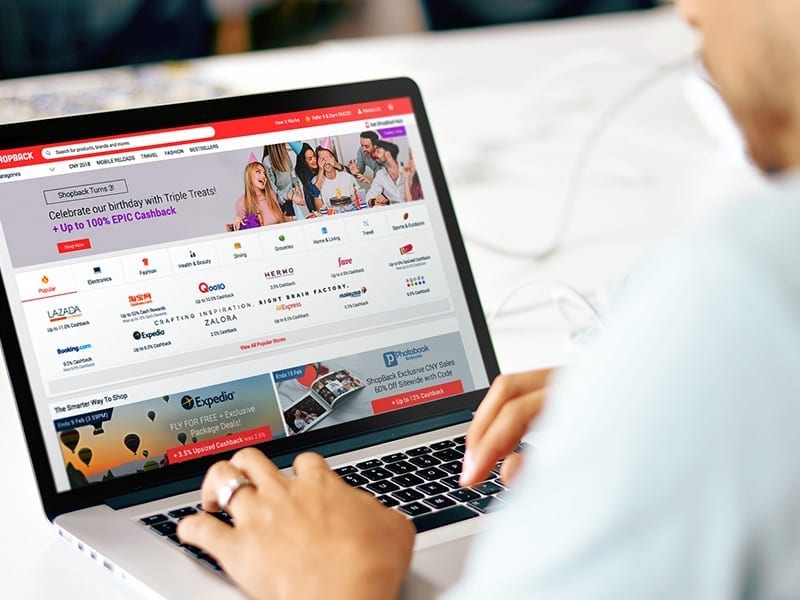
  • ShopBack Secures Fresh New Funding

    ShopBack Secures Fresh New Funding

    Rewards program ShopBack has secured a further US$45 million in its latest funding round.

    Joining the shareholders’ register are newcomers including Japanese e-commerce giant Rakuten, EV Growth, and EDBI, a Singapore government-linked strategic investor.

    Amit Patel, CEO of Rakuten subsidiary Ebates and Willson Cuaca, managing partner at EV Growth, will join ShopBack’s board of directors. The new funding round takes the total investment in Shopback to $83 million.

    ShopBack has recently been expanding its core services beyond its original cashback service for online shoppers. Among them, Shopback Go, in partnership with Visa and Mastercard, which enables users to dine out and earn rewards.

    Last year, ShopBack experienced 250 per cent year-on-year growth in both orders and sales. The company powered more than 2.5 million monthly transactions for more than 7 million users in seven Asia-Pacific markets, and delivering close to $1 billion sales for more than 2000 merchant partners, both online and offline.

    ShopBack also entered Australia last year, its first market outside Asia, and opened research and development hubs in Vietnam and Taiwan.

    The company says the fresh funding will be invested in “simplifying shopping experiences, expanding data capabilities to fuel personalisation and business insights, as well as accelerating growth in key markets”.

  • SoftBank Ventures invests in Trevari, a Korean book club

    SoftBank Ventures invests in Trevari, a Korean book club

    SoftBank Ventures announced Tuesday it invested 4.5 billion won ($4 million) in Trevari, a Korean book club operator. Fast Investment, another venture capitalist firm, invested an additional 500 million won in Trevari’s first publicly-announced funding round.

    “While adults today are reading less and less, the Trevari team has proven the success of its business model through quality book clubs,” said a spokesperson from SoftBank Ventures.

    Founded in 2015, Trevari operates paid membership-based book clubs. Members can sign up to join Trevari’s 300-plus book clubs located around Seoul and meet up with fellow members every month to discuss books on topics of their preference.

    Some of the book clubs are headed by special experts in the field, including former Naver CEO Kim Sang-hun.

    As of last August, over 13,600 individuals have participated in Trevari’s book clubs.

    A four-month membership costs between 190,000 won and 290,000 won.