Tag: funding

  • Chinese baby products website Beidian gets Funding

    Chinese baby products website Beidian gets Funding

    Chinese maternal and child-care social-shopping site Beidian has attracted RMB860 million (US$126 million) in funding from leading investment firms.

    Hillhouse, Xiang He and Sequoia Capital are among the high-profile funders backing the social commerce enterprise. The online retailer focuses primarily on trading in mother and infant goods as well as other daily-use products.

    Any user can trade on the Beidian platform to sell and receive commissions from sales, with the opportunity to connect directly with suppliers and receive support for their marketing and distribution.

    The site has more than 50 million registered users, predominantly housewives, 20 per cent of whom are active on a monthly basis. More than 100 million purchases are processed on the site per business quarter.

  • Online food store Grain Expanding Rapidly

    Online food store Grain Expanding Rapidly

    Singapore-based online food store Grain has raised US$10 million in series B funding. The cash will be used to accelerate growth in Singapore, and expand into Thailand.

    To do that, the company will be cooperating with Thailand’s Boonrawd Brewery group’s subsidiary Singha Corporation.

    Singha will help Grain gain clearer insights into the target audience in Bangkok, and develop better products and services.

    “Grain will work with Singha by using Singha’s extensive F&B network across the country, including logistics and distribution, to bring delightful innovations to consumers,” said Bhurit Bhirombhakdi, chairman of the executive board at Singha Ventures.

    The collaboration between the two companies aims to help online food store Grain expand in Southeast Asia and realize its regional vision.

    “We want to disrupt the F&B landscape and evolve with consumer preferences, but also have solid fundamentals,” said Yi Sung Yong, Grain’s co-founder and CEO.

  • ShopBack Secures Fresh New Funding

    ShopBack Secures Fresh New Funding

    Rewards program ShopBack has secured a further US$45 million in its latest funding round.

    Joining the shareholders’ register are newcomers including Japanese e-commerce giant Rakuten, EV Growth, and EDBI, a Singapore government-linked strategic investor.

    Amit Patel, CEO of Rakuten subsidiary Ebates and Willson Cuaca, managing partner at EV Growth, will join ShopBack’s board of directors. The new funding round takes the total investment in Shopback to $83 million.

    ShopBack has recently been expanding its core services beyond its original cashback service for online shoppers. Among them, Shopback Go, in partnership with Visa and Mastercard, which enables users to dine out and earn rewards.

    Last year, ShopBack experienced 250 per cent year-on-year growth in both orders and sales. The company powered more than 2.5 million monthly transactions for more than 7 million users in seven Asia-Pacific markets, and delivering close to $1 billion sales for more than 2000 merchant partners, both online and offline.

    ShopBack also entered Australia last year, its first market outside Asia, and opened research and development hubs in Vietnam and Taiwan.

    The company says the fresh funding will be invested in “simplifying shopping experiences, expanding data capabilities to fuel personalisation and business insights, as well as accelerating growth in key markets”.

  • SoftBank Ventures invests in Trevari, a Korean book club

    SoftBank Ventures invests in Trevari, a Korean book club

    SoftBank Ventures announced Tuesday it invested 4.5 billion won ($4 million) in Trevari, a Korean book club operator. Fast Investment, another venture capitalist firm, invested an additional 500 million won in Trevari’s first publicly-announced funding round.

    “While adults today are reading less and less, the Trevari team has proven the success of its business model through quality book clubs,” said a spokesperson from SoftBank Ventures.

    Founded in 2015, Trevari operates paid membership-based book clubs. Members can sign up to join Trevari’s 300-plus book clubs located around Seoul and meet up with fellow members every month to discuss books on topics of their preference.

    Some of the book clubs are headed by special experts in the field, including former Naver CEO Kim Sang-hun.

    As of last August, over 13,600 individuals have participated in Trevari’s book clubs.

    A four-month membership costs between 190,000 won and 290,000 won.

  • E-commerce firm Zilingo bags US$226m in funding

    E-commerce firm Zilingo bags US$226m in funding

    Singapore online fashion market Zilingo has achieved capital investment of $226 million in a Series D funding round. The investments were made by the firm’s existing backers, including Sequoia Capital, as well as newcomers Temasek Holdings and EDBI, and will support the business’s expansion into fresh markets in the Philippines, Indonesia and Australia, as well as build new infrastructure and modernise its supply chains.

    A report in DealStreetAsia last January suggested that Zilingo was considering listing an IPO with a view to developing offline retail.

    “Sequoia’s investment in Zilingo dates back to when the company wasn’t even yet incorporated and the name wasn’t finalised,” said Sequoia Capital (India) Singapore MD Shailendra Singh.

    “Ankiti and team have rapidly transformed their original ideas about Zilingo into a platform company that serves fashion consumers, merchants, retailers, brands and manufacturers, collectively representing a multi-hundred billion dollar market size.”

    Zilingo serves more than 20,000 merchants and retailers across Southeast Asia. It is currently valued at an estimated $1 billion.

  • Vietnamese logistics startup raises $5.5 mln in latest funding round

    Vietnamese logistics startup raises $5.5 mln in latest funding round

    Logivan, a web platform that helps trucks connect with potential customers, said it has raised $5.5 million in the latest funding round. The investment comes from two Asian angel investors and Indonesian venture capitalist Alpha JWC Ventures. One of the angel investors is David Su, a founding managing partner at private equity firm Matrix Partners China, who invested through his family office.

    He said: “Vietnam is the next rising star in the growing Southeast Asia region and it is well poised to experience a similar growth trajectory as we witnessed over the past years in China.

    “Vietnam’s logistics industry is highly fragmented, logistics costs make up 23 per cent of Vietnam’s GDP, with 90 per cent of trucks in Vietnam being owned by individuals. Given the success of Manbang (a Chinese truck-hailing firm), we believe that Logivan has the potential to emulate its success.”

    According to e27, an online Tech media platform for Asia, Logivan will be investing in data analysis to optimize user experience, artificial intelligence, truck-matching, and pricing algorithms to minimize empty trips and in human resources.

    Last year, Logivan raised $600,000 in April from Singapore-based Insignia Ventures Partners and $1.75 million in August from Singaporean private equity firms Ethos Partners and Insignia and Vietnamese investment fund VinaCapital Ventures.

    It has raised a total of $7.9 million to date.

    Founded in 2017 by Cambridge graduate Pham Khanh Linh, the company offers a logistics service which optimizes trucks’ routes and minimizes empty return trips.

    She came up with the idea after observing that 60-70 percent of trucks in Vietnam returned empty after dropping off their loads because they could not connect with potential customers.

    In 2018 Logivan claims to have connected more than 22,000 transportation partners with every major commercial truck type. It also has 10,000 shipping companies registered on its system.

  • Vietnam foreign investment skyrockets in January

    Vietnam foreign investment skyrockets in January

    FDI pledges for new projects, increased capital and stake acquisitions in Vietnam rose 51.9 percent year-on-year to $1.9 billion in January. In a statement Monday, the Ministry of Planning and Investment said the manufacturing sector attracted the most interest from foreign investors, accounting for $1.19 billion or 62.4 percent of the total FDI. Science and technology ranked second with $185.8 million, followed by real estate with $179.1 million.

    Japanese were the top investors with nearly $364 million. South Korea and China were next with $349.1 million and $307.8 million.

    Ho Chi Minh City is the most attractive location for FDI investors in January, accounting for around 39.1 percent of the total FDI. Southern Binh Duong Province ranked second, accounting for 12.5 percent, followed by northern Hai Duong Province with 6.5 percent.

    As of January 20 authorities had issued licenses for 226 new projects with a total capital of $805 million. Meanwhile, another $340.2 million was pledged for existing projects this month.

    The two biggest projects were Kyoshin Vietnam’s $134.7 million investment expansion in HCMC by Japanese investors to produce, process and export electrical components and molds, and Katolec Global Logistics Vietnam’s $65 million investment for warehousing and storing goods in the northern province of Ha Nam.

    Estimated FDI disbursement for the month was $1.55 billion, up 9.2 percent year-on-year.

    Vietnam reported FDI disbursement of $19.1 billion last year, up 9.1 percent.

  • Vietnam fintech startup raises $1 million from foreign venture capitalists

    Vietnam fintech startup raises $1 million from foreign venture capitalists

    Vietnamese fintech firm Finhay has raised $1 million in seed funding from Singapore’s Insignia Ventures Partners and other foreign investors. “Finhay will use the $1 million investment to expand its user base 10-fold to 100,000,” said founder and director of Finhay Nghiem Xuan Huy. Finhay was established in 2017 with capital of $100,000 as a micro-investment platform targeted at millennials. It allows customers to invest as little as VND50,000 ($2.17) in mutual funds from Finhay’s investment portfolio.

    Huy said the business model is very popular abroad, citing examples such as U.S. micro-investing apps Acorns and Stash.

    The application automatically analyzes the user’s risk appetite and suggests appropriate investment options and provides information to help improve users’ personal financial management.

    It has over 13,000 users and over VND7 billion ($303,590) worth of pooled capital.

    Insignia Ventures Partners, a venture fund which has already invested in popular transport apps Go-Jek and Traveloka of Indonesia, hopes “…[Finhay] will gradually layer on more products and services to become the Amazon of financial services in Vietnam.”

    Finhay also received seed capital from funds in Hong Kong and the U.S.

  • RAM Malaysia lowers inflation forecast for 2019 to 2%

    RAM Malaysia lowers inflation forecast for 2019 to 2%

    RAM Ratings, which expects inflation to inch up to 0.3% in December 2018 from 0.2% in the previous month, has revised its full-year headline inflation forecast for 2019 to 2.0% from 2.7%. The rating agency said in a statement that inflation in December 2018 is estimated to rise to 0.3% from 0.2% in the preceding month due to dissipation of deflationary pressures from the transport fuel component.

    The price of RON95 petrol fell 3.3% year on year in December, after a 4.5% drop in November.

    On that note, overall inflation is envisaged to come in at 1.0% in 2018.

    As for 2019, RAM Ratings has revised its headline inflation projection downwards to 2.0%, mainly due to changing expectations on global oil prices, which are increasingly pointing to a lower average range of US$60-US$65 (RM248-RM269) per barrel for 2019.

    RAM head of research Kristina Fong said the rating firm’s sensitivity analysis indicates that for every US$5/barrel move in the price of Brent crude, headline inflation potentially changes 0.3 percentage point.

    “The move back to the weekly Automated Pricing Mechanism for pump prices – effective January 2019 – is not expected to exert any significant downward pressure on inflation given the short period it will be in place ahead of the anticipated targeted fuel subsidy mechanism to be implemented in second quarter 2019.

    “Moreover, global oil prices are expected to trend a little higher compared to the start of the year, An escalation in oil (petrol) prices beyond RM2.20/litre will trigger the use of subsidies to maintain this ceiling. This will also contain inflationary pressure,” she added.

    The Department of Statistics released the December inflation data yesterday.

  • Flipkart secures more funding to face competition

    Flipkart secures more funding to face competition

    Indian e-commerce firm Flipkart has received US$201 million funding for its wholesale business from its Singapore-incorporated parent. The investment comes during a period of intensifying competition between the firm and its Amazon-backed competitor in a market estimated to be worth $18 billion. It signals a prioritising of sales growth by the retailer since its acquisition by Walmart.

    A report last year indicated that Flipkart has seen a more than 80-per-cent increase in transactions in recent months, prompting the company to expand into new business lines such as furniture and groceries over the next three years.

    Separate reports show that Amazon also looks to invest significant funds into the market in order to challenge Flipkart’s present lead in the territory.

  • Sears saved by chairman’s last minute $5.2 billion bid

    Sears saved by chairman’s last minute $5.2 billion bid

    Bankrupt US retailer Sears has been saved from liquidation following a successful, last-minute US$5.2 billion bid by chairman Eddie Lampert, subject to court approval. The acquisition includes substantially all of the company’s assets as an on-going concern and preserves the positions of 45,000 employees.

    “We are pleased to have reached a deal that would provide a path for Sears to emerge from the chapter 11 process,” Sears’ restructuring committee of the board of directors wrote in a release to investors.

    “Importantly, the consummation of the transaction would preserve the employment for tens of thousands of associates, as well as the relationships with many vendors and suppliers who provide Sears with goods and services.”

    Provided the sale is approved by the Bankruptcy Court, the transaction is expected to close on February 8, 2019.

    The retailer had previously announced plans to close up to 120 stores, though it is not clear whether these closures will go forward with the successful bid.

    Lampert made the last-minute bid after several prior offers were turned down for being “administratively insolvent” – unable to cover fees and vendor payments owed by the retailer.

    After initially offering US$4.4 billion to purchase the business, as well as a secondary offer to purchase just 250 of its locations, Lampert was forced to raise his bid to US$5 billion in an effort to get the sale completed.

    But even this bid was deemed insufficient, and Lampert, through bidding vehicle ESL Investments, upped the offer to US$5.2 billion.

    The new bid, while successful, will mean roughly 5000 fewer staff able to keep their jobs as a result of the bankruptcy.

    Sears applied for bankruptcy in October 2018, citing a failing turnaround effort to transform the business and unlock the value of its assets.

    GlobalData Retail managing director Neil Saunders pointed to Sears’ efforts to “shrink its way to profitability”, and that continuing to do so under the guise of bankruptcy was unlikely to result in a successful outcome for the business.

    “Ultimately, Sears needs not just to fix its financial problems,” Saunders said.

    “It also needs to repair the deficiencies in terms of retail strategy… only a complete change of management will bring this about.”


  • Malaysia won’t lose out to Vietnam: Council

    Malaysia won’t lose out to Vietnam: Council

    Malaysia will not lose its competitiveness to Vietnam even though it does not ratify the Comprehensive and Progressive Agreement for Trans-Pacific Partnership (CPTPP). Malay Economic Action Council researcher Mohd Effuan Aswadi Abdul Wahab said there was no significant proof that there would be an increase in investment once a country signed a free trade agreement (FTA).

    “It is said that many companies, especially manufacturing firms will move to Vietnam after the country has ratified the CPTPP as the trade agreement is being seen as opening doors for companies to go to countries which have ratified the FTAs. This is certainly not true,“ he said.

    He said investors would look into various factors, including political stability, better infrastructure, skilled workers and rule of law, before making any investment decision.

    “Investors will certainly look into Malaysia’s economic policies before they make any investment decision.

  • Ombre Lane India wins seed funding

    Ombre Lane India wins seed funding

    Indian women’s workwear brand Ombre Lane has received seed funding from a group of angel investors. The investment group includes ex-LinkedIn India CEO Akshay Kothari, LinkedIn general counsel Aditi Jha, and director at Bristol-Myers Squibb US Neeraja Balachander. The fashion start-up plans to use the funds to establish Ombre Lane as a go-to destination for modern Indian women seeking to buy functional office-wear styles. Forecasting a five-fold annual growth rate, the brand plans to scale significantly over the next year while staying focused on building the brand.

    The brand, launched by sisters Shweta and Prachi Sharma, launched with the motto of making women feel confident as well as comfortable at work. It conducted extensive surveys to establish average body shapes and sizes of Indian women, finding that more than 70 per cent of Indian women have a pear-shaped body and an average height of 5 feet 2 inches, while more than 75 per cent of Western workwear available on the Indian market is made for a woman with a height of 5 feet 7 inches and the more rectangular body shape common in the west.

    The market for women’s workwear in India is expected to grow in double digits over the next five years. Ombre Lane offers shipping throughout India via its e-commerce platform ombrelane.com.

  • Mr DIY mulls US$362 million float

    Mr DIY mulls US$362 million float

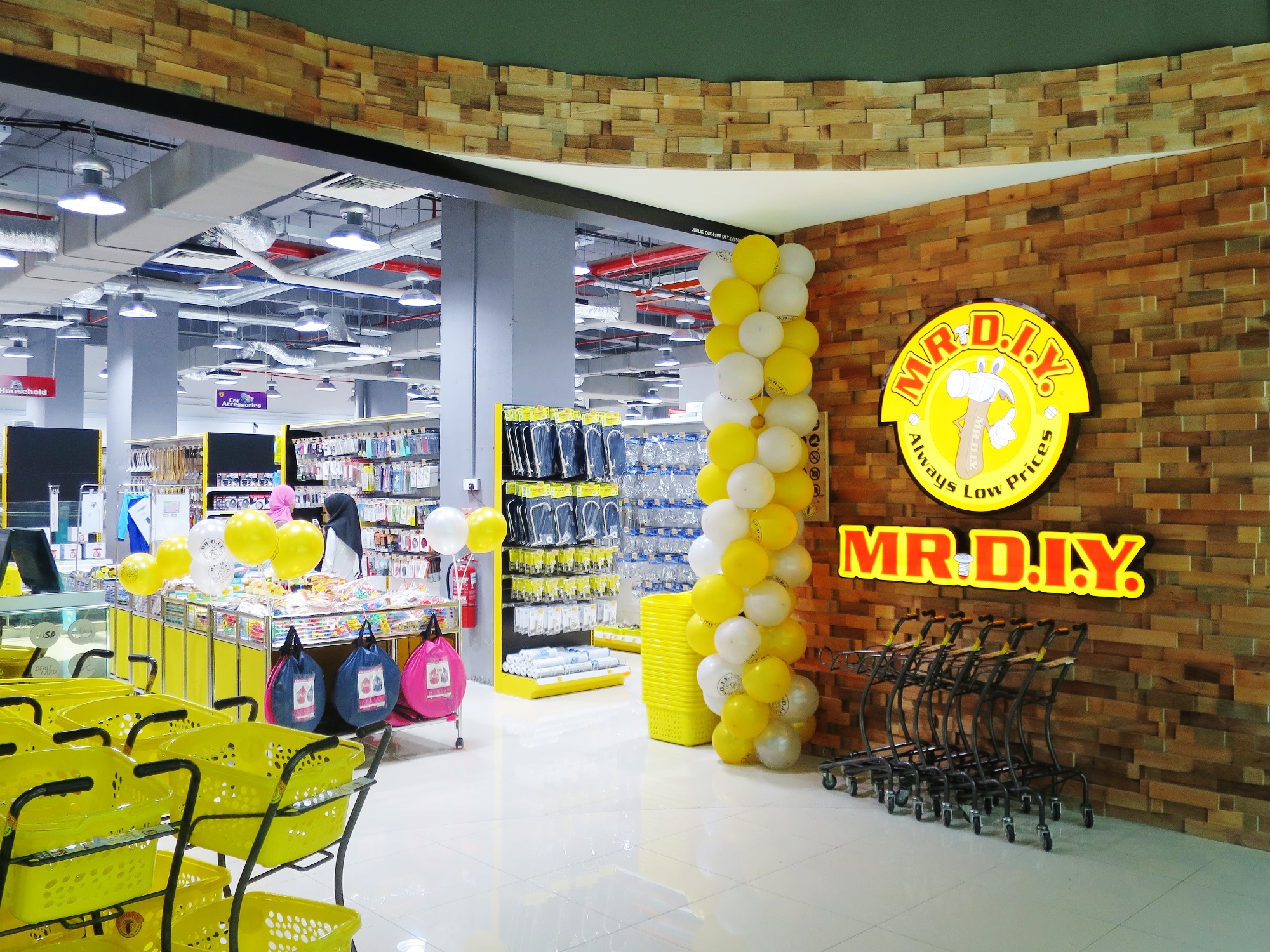
    Malaysian home improvement brand Mr DIY is considering an IPO to raise about MYR1.5 billion (US$362 million). An industry source has revealed that the firm intends to list its domestic operations later this year on either the Malaysian or Hong Kong exchange with backing from Malaysian private equity firm Creador, which invested in the brand over two years ago.

    A report stated the IPO could bring Mr DIY to a market value of MYR10 billion (US$2.426 billion).

    Mr DIY operates around 600 locations in Southeast Asia. Last October, the company revealed plans to open at least 1000 branches by 2020.

    Head of marketing Andy Chin said then: “We feel that our home improvement retail business model, offering a variety of goods at affordable prices, is suitable for better business growth in the country as well as the Asean market. At the end of this year, we target 700 global branches, and the number may reach 1000 or more by 2020. These will be based on an organic growth.”

    He added that the company’s prospect of Asean-level expansion will be focused on Indonesia, Thailand and the Philippines”.

    Mr DIY is the largest home appliance retailer in Malaysia with more than 20,000 SKUs.

  • IDG Capital and Hong Kong-based I.T Group invests in Acne Studios

    IDG Capital and Hong Kong-based I.T Group invests in Acne Studios

    Acne Studios has sold minority stakes to China-focused investment firm IDG Capital and Hong Kong-based I.T Group, ending almost a year of speculation that the brand would be acquired by a larger rival.

    Acne, one of the earliest and most successful purveyors of the “Scandinavian cool” style that has since become popular across fashion and design, had held talks with potential buyers as far back as 2013, from French luxury conglomerate Kering to private equity firms. Earlier this year, the company was working with Goldman Sachs on a possible sale, at a valuation of up to €500 million ($570 million).

    Instead, IDG and I.T Group will acquire stakes of 30.1 percent and 10.9 percent respectively, from Öresund, Creades and PAN Capital, Acne said in a statement Sunday. Founder Jonny Johansson and executive chairman Mikael Schiller will remain majority shareholders in the business.

    When Acne began shopping itself around earlier this year, the M&A market for fashion and luxury was booming, powered by perceived growth opportunities and increasing market complexity that made it harder and harder for sub-scale players to compete without greater access to the capital — and expertise — that sophisticated and deep-pocketed strategic or private equity investors can bring to the table. Over the course of 2018, Dries Van Noten sold a majority stake to Spanish luxury group Puig for an undisclosed sum, and Missoni sold a 41.2 percent stake to FSI Mid-Market Growth Equity Fund in transaction worth €70 million. Most recently, Michael Kors acquired Versace for $2.1 billion.

    But in recent months, the temperature of the market has changed. The ongoing trade spat between the US and China has fuelled economic uncertainty and raised questions about the future of luxury demand. Shares of publicly traded luxury brands have plummeted.

    The Stockholm-based label, founded in 1996, launched as a niche denim brand and has since built a strong modern contemporary-luxury name, well known for its upscale ready-to-wear and a distinct Scandinavian vibe that is popular with streetwear-attuned millennials. While the brand has yet to develop a strong leather goods offering, its sneakers are gaining traction. Last year, it generated $221 million in sales revenue with Ebitda, a measure of operating profit, of $35 million. It has over 50 own-brand stores in 13 countries.

    However, sales growth slowed at the brand last year, rising just 9 percent, the slowest pace in at least a decade, according to a Goldman Sachs presentation to potential buyers. The brand still generates 43 percent of its sales through a network of 600 wholesalers, a potential point of vulnerability in a world where direct-to-consumer fashion is stealing market share from department stores.

    Acne’s two new investors are likely to give the brand a leg up in Asia, already a key source of growth (Asia drove one-quarter of Acne’s sales last year, second only to Europe, according to the Goldman presentation). I.T Group has served as Acne’s Asian retail partner since the early 2000s. IDG Group, which has also invested in Farfetch and Moncler, specialises in expansion opportunities in China and the rest of Asia (10 of the firm’s 13 offices are based in the Asia region).

    “Acne Studios will greatly benefit from their extensive know-how within fashion and the rapidly evolving universe of online and offline retail,” Schiller said in a statement.