Retail News CRM

Tag: funding

  • Brewhouse Ice Tea secures US$ 2 mn loan

    Brewhouse Ice Tea secures US$ 2 mn loan

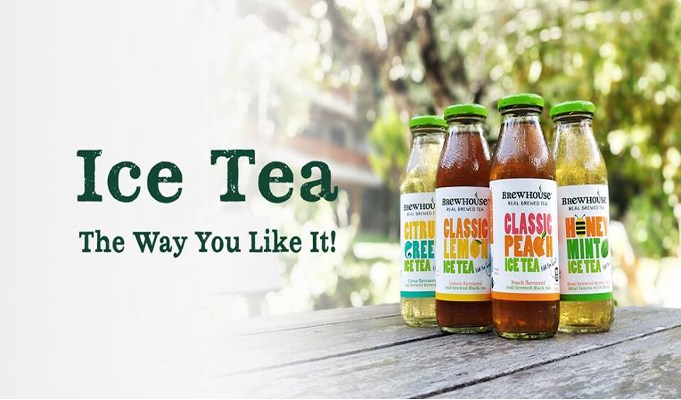
    Bottled ice tea brand Brewhouse Ice Tea Monday said it has secured US$ 2 million loan from Singapore-based FMCG firm Food Empire Group to expand its footprint and product offerings. Food Empire Group had previously invested US$ 6,00,000 in Positive Food Ventures in November 2017. Positive Food Venture Pvt Ltd, maker of bottled ice tea brand Brewhouse, has secured a loan of US$ 2 million from Food Empire Holdings, the company said in a statement.

    “Currently, we are present at over 2,000 points of sale in major cities and are expanding our operation pan India. We plan to invest the loan amount from Food Empire Group towards expanding our reach to 10,000 points of sale in 2020 and to introduce newer and interesting variants,” Siddharth Jain, Founder, Brewhouse Ice Tea said.

    The brand started operations in Delhi in May 2017 and at present has presence in over 10 cities, including Delhi, Chennai, Bangalore, Mumbai, Pune, Kolkata, Hyderabad, Jaipur, Chandigarh, Lucknow and are retailing with over 300 restaurant and cafe partners.

  • Zilingo raises $54 million in a new funding round

    Zilingo raises $54 million in a new funding round

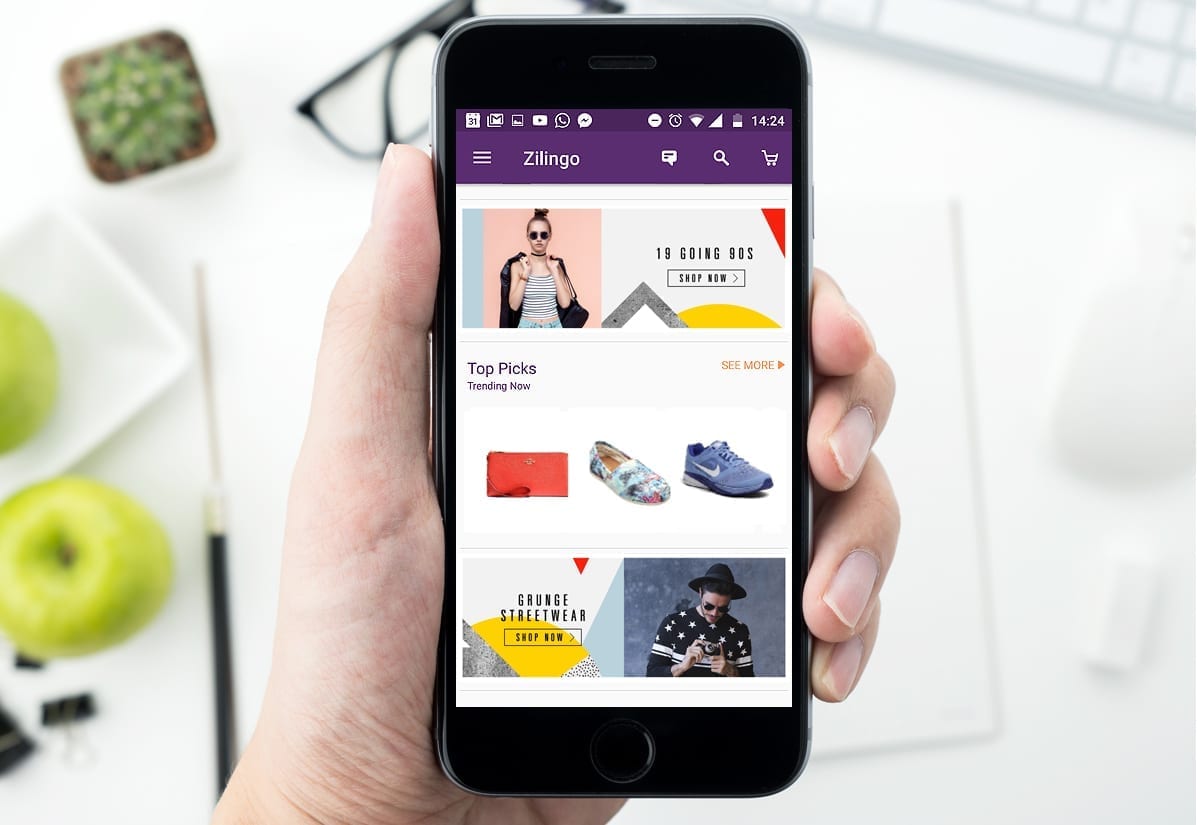
    Singapore-based lifestyle marketplace Zilingo has raised US$54 million in series-C funding, taking its total capital raised to $82 million.

    Zilingo was founded in October 2015 by Dhruv Kapoor and Ankiti Bose, who was inspired after seeing the clothing stalls in labyrinthine markets while backpacking across Indonesia and Thailand.

    Their idea was to connect a fragmented landscape of fashion supply for buyers across Asia.

    “Nowhere in the world has a horizontal e-commerce company also cracked fashion,” says Bose. “It’s a unique, high-margin category that is highly dependent on fast-moving cycles and has its own nuances. Unlike buying detergent or electronics, fashion is much more about your choice, individuality and trends. It requires a different approach than the rest of e-commerce.”

    Bose and Kapoor set out to build a proprietary platform where merchants could upload and manage their inventory in any language, using any currency, connecting them through 25 interfaces with logistics, warehousing and payment providers, as well as services like loans, cataloguing and insurance.

    They launched their B2C sites and apps in November 2015 across Southeast Asia, followed by their B2B business, Zilingo’s AsiaMall, where merchants internationally can buy wholesale from Asian suppliers.

    Zilingo is now selling in Indonesia, Singapore and Thailand, and ships internationally to four further countries. As well as Indonesia, Singapore and Thailand, Zilingo has supply bases in Bangladesh, Cambodia, China and Vietnam. There are more than 10,000 independent merchants using the platform to sell to millions of customers around Asia and the world.

    Revenue growth has growth tenfold, and during the past year Zilingo has launched a TV campaign in Indonesia and expanded its merchant ecosystem.

    Zilingo’s latest capital injection follows a $17 million series-B round five months ago.

    “We think the market is showing us the right signs in terms of adoption and retention, so it’s good to double down,” says Bose.

    Each Zilingo office has local leadership, and half the top leadership team are women. “Having so many women at the leadership level, despite being a tech company, gives us a special edge while scaling,” says Bose,

    “Our leadership team comes from 10 different countries in Asia, Europe and North America, and 15 languages are spoken. The cultural diversity gives the team a unique perspective on how to solve challenges creatively.”

  • Singapore’s MyRepublic denies reports of funding woes

    Singapore’s MyRepublic denies reports of funding woes

    MyRepublic’s CEO has rejected reports that the company is having difficulty raising funds required to make a bid to become Singapore’s fourth mobile operator, calling the claim “a bold-faced lie.”

    Malcolm Rodrigues told us that the company has already lined up $130 million worth of the $250 million in funding needed to roll out a network.

    Rodrigues was responding to a report stating that the company’s latest financial statement casts doubts onto whether the operator can afford to become a mobile operator.

    The report alleged that it had received a copy of the unlisted operator’s balance sheet that shows that MyRepublic lost S$9.36 million ($6.96 million) in Singapore last year, and has so far raised no funds required for the rollout.

    But Rodrigues denied this claim, asserting that the company has a loan facility for half the required amount, and expects DBS Group and Goldman Sachs to help the operator finish its fundraising for the mobile bid by the end of July.

    MyRepublic will be competing against Consistel, through subsidiary OMGTel, which has reportedly lined up at least S400 million worth of the S$1 billion in funding it plans to commit if it wins the mobile license.

  • Niologie China receives RMB20m. boost

    Niologie China receives RMB20m. boost

    Hong Kong women’s apparel company Niologie Limited has received a capital injection of RMB20 million (US$3.034 million) for its wholly owned subsidiary Niologie China from one of China’s largest fashion brands.

    Shanghai La Chapelle Fashion gains a direct holding of 16 per cent of the shares of Niologie China through the investment co-operative agreement with its wholly owned subsidiary Shanghai La Chapelle Enterprise Management.

    Originating in Hong Kong, Niologie China’s Tanni brand is a mid- to high-end lifestyle store brand with romantic European styling encompassing women’s apparel, handbags, footwear and accessories as well as houseware products. A significant characteristic of the brand, which entered mainland China in 2010, is its floral prints, designed exclusively by a UK team.

    Shanghai La Chapelle believes the investment complies with its “product-oriented, fashionable and high-quality” brand philosophy, and will help it consolidate its leading position in China’s apparel market. Through the investment in Tanni, the group aims to enrich its mid-range to high-end product mix and accelerate the development of its multi-brand strategy, while the brand itself can leverage the group’s channels and supply-chain management capability for expansion and improved margins.

    “With the constantly changing fashion trends in apparel and the need to satisfy consumers’ requirements for a more sophisticated shopping experience, apparel retailers have to adjust their sales model in order to capture first-mover advantages and expand market share amid intense market competition,” says La Chapelle executive VP Wang Yong.

    “The Tanni brand has an independent design team, offers individualised products, stable domestic and overseas product channels, an excellent marketing system and speedy and stable logistics systems enabling a fast market response.”

    Founded in 1998, La Chapelle designs, markets and sells apparel products with a focus on mass-market women’s casualwear. Its retail network comprises 7893 outlets in about 2500 locations across China.

    Founded in 2010, Niologie China is the first women’s apparel brand chain in China to introduce European lifestyle-brand shops. The company has directly run shops in major business districts in Beijing, Nanjing, Hangzhou, Shenyang, Dalian and Harbin.

  • Trade Minister Warns about E-Commerce Funding Crisis

    Trade Minister Warns about E-Commerce Funding Crisis

    Trade Minister Thomas Lembong asked Indonesia e-commerce companies to be careful in assessing risks posed by the e-commerce business.

    “What would happen if the funding stopped? In the United States, tech business boom has started to decline,” Thomas said at the Indonesia E-commerce Summit & Expo in BSD, South Tangerang, on Wednesday, April 27, 2016. “I’m always paranoid. As a risk manager, I always ask ‘what if’.”

    Thomas added the natural selection in online business would determine which companies would continue exist. According to him, a business with a fast downturn will have a short cycle. Therefore, Thomas suggested business owners to prepare for “rainy days”.

    The Trade Minister revealed that other ministers in President Joko “Jokowi” Widodo’s Working Cabinet were proud with Indonesia’s e-commerce rapid growth. Thomas said that he wanted his ministry to learn from former US President Bill Clinton’s administration that supported the development of the Internet. Thomas explained Clinton improved the Internet with ‘light touch’ and refused the temptation to regulate everything on the Internet.“Innovation can thrive without restrictions. There has to be a space to develop. Innovators are usually rebellious,” Thomas added.

  • Indonesian online retailer Bhinneka plans IPO to fund expansion

    Indonesian online retailer Bhinneka plans IPO to fund expansion

    Indonesian online retailer PT Bhinneka Mentari Dimensi is planning an initial public offering (IPO) in 2018 to widen its reach, one of its directors said on Thursday, as the e-commerce battleground heats up in Southeast Asia’s biggest economy.

    The e-commerce market in the country of 250 million people is ripe with potential but it is fragmented and comes with complex regulatory and logistical barriers.

    “Our objective to go public is for scaling,” director Andi Boediman said, adding that the company plans to expand its store network and strengthen its supply chain while investing in technology and marketing.

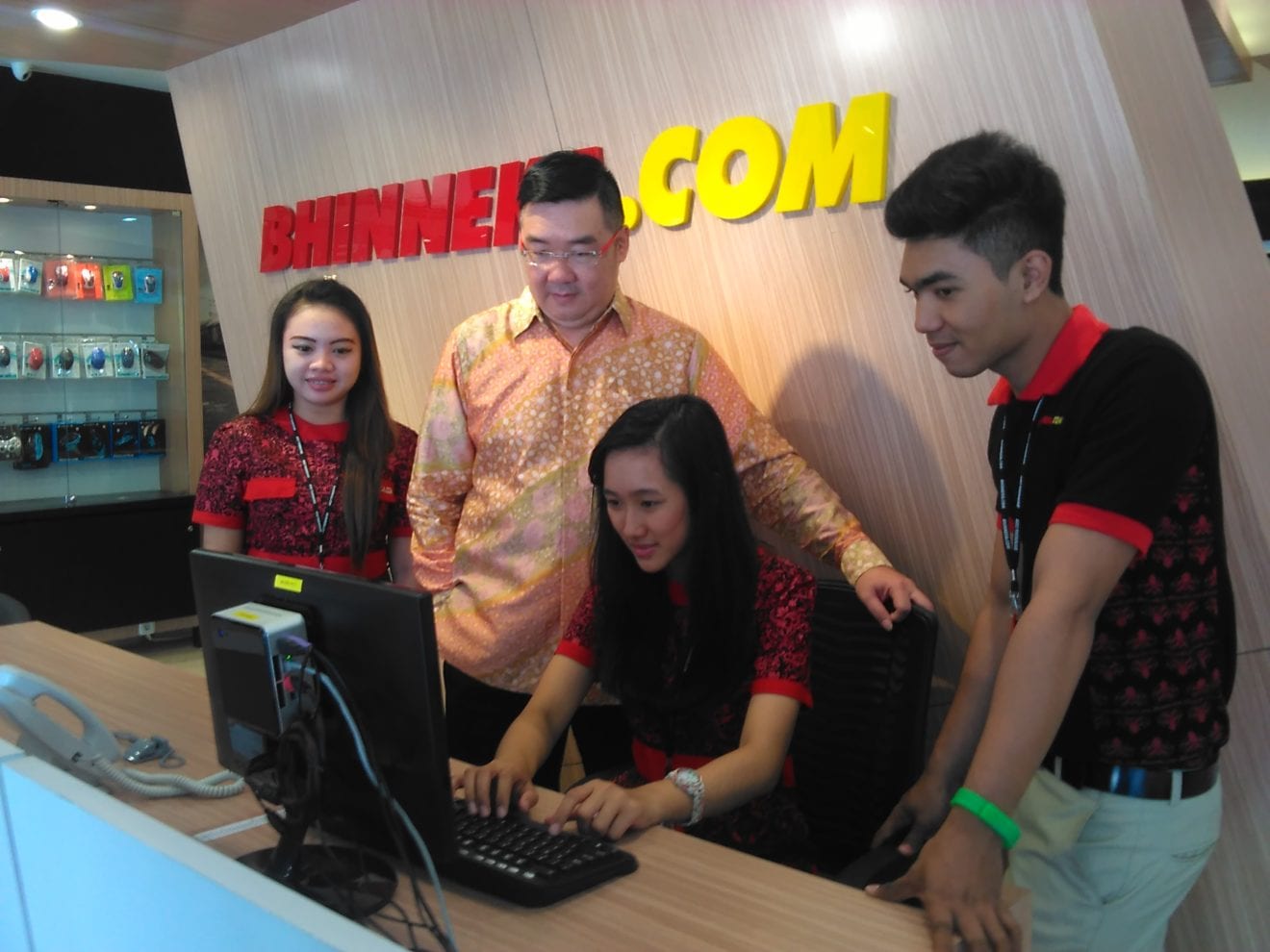
    The company operates online through Bhinneka.com, with customers able to have purchases delivered to their homes or its physical stores, which also serve as retail outlets for the electronic goods specialist.

    Bhinneka is in a good position to attract investors, Boediman told reporters on the sidelines of a conference in Jakarta.

    “We are an online retailer that is focused and reasonably sizeable,” Boediman said, adding that revenue “at least doubled” last year and that he expects a strong performance in 2016.

    Bhinneka decided to pursue an IPO in Indonesia because it can be a dominant player on its home ground, Boediman added. He declined to disclose how much the IPO is expected to raise or the company’s financial figures.

    The company’s domestic rivals include SoftBank-backed Tokopedia, Blibli and Indonesian conglomerate Lippo Group’s MatahariMall.com. Lippo is also considering an IPO for its e-commerce business, a director said in February

    The Indonesian market is still growing while being supported by a large consumer base, said David Rimbo, managing partner for transaction advisory services at Ernst & Young in Indonesia.

    “I think the timing is right for Indonesian players to actually realize basically decent valuations,” he said.

  • New EU funding to help boost Myanmar garment exports

    New EU funding to help boost Myanmar garment exports

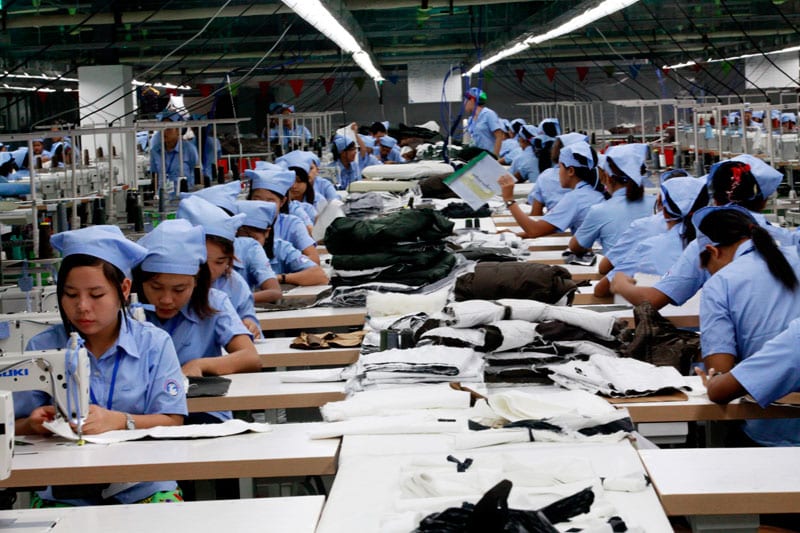
    Myanmar’s garment sector is targeting a 300% increase in garment exports to the European Union (EU) by end of 2019 thanks to a EUR2.8m (US$3m) funding boost as the second phase of the SMART Myanmar project gets underway.

    The EU-funded SMART Myanmar project – SMEs for Environmental Accountability, Responsibility and Transparency – aims to build the sustainable recovery of the Southeast Asian country’s garment industry.

    Phase two of the initiative launched last week, with the goal of boosting productivity and creating over 300,000 jobs for low-skilled workers during the next four years. It has been implemented by a consortium of partners including Germany’s Sequa, the Foreign Trade Association of German Retail Trade (AVE), sustainable fashion group Made-by, the Myanmar Garment Manufacturers Association (MGMA), and the Association of Development Financing Institutions in Asia and the Pacific (ADFIAP).

    More specifically, Jacob Clere, team leader with SMART Myanmar II, told just-style: “The project focus is on improving social and environmental compliance in garment factories, in particular, upscaling and mainstreaming some of the activities piloted and launched during the first project phase from 2013-2015. We’re targeting social compliance improvements in 100 factories during the next four years, as well as delivering HR management to 400 factory managers. As well, we plan to continue capacity building activities with the MGMA and with the training of local technical staff on compliance issues.”

    Other activities will include educating factory workers on labour and OHS laws, working with the government on public procurement procedures, and educating local banks on financial products and services – including introducing the concept of green finance.

    The ultimate goal of the SMART project, which has been running for three years, is to help Myanmar’s garment industry compete in the global market. At its inception, EUR2m was invested in a bid to improve the production and consumption of sustainably manufactured garments in the country.

    Project partners hope other results will be achieved, such as a 20% reduction in waste production in 100 garment factories. Garment exports are also targeted for a 300% increase from 2015 to the end of 2019.

    The consortium is also expecting that at least 150 garment factories will improve their working conditions as a consequence of participating in the SMART Compliance Academies, and that up to 30 banks will take part in at least eight workshops on green finance. In addition, the programme is targeting the training of 15 Safer Consumer Products (SCP) consultants to advanced level to deliver factory improvement programmes. And it is hoping the initiative will create new business opportunities, such as joint ventures between factories in Myanmar and EU brands.

    Speaking at the launch ceremony, EU Ambassador Roland Kobia celebrated the achievements of Myanmar’s garment industry, noting that the value of garment exports has more than doubled in recent years, making it “a catalytic sector of Myanmar’s economic transition”.

    SMART Myanmar is an EU-funded SWITCH Asia project, which, while promoting and supporting the sustainable production of ‘Made in Myanmar’ garments, strives to increase the international competitiveness of small and medium enterprises (SMEs) in the sector. It works alongside companies and business support organisations located in the country, helping build capacity and increase skills and knowledge in local partner organisations, facilitating the development of marketing and export strategies for the garment sector.

    From 2013-2015 the project engaged with dozens of local garment factories on social and environmental compliance issues, providing technical support and capacity building. The project also assisted in boosting the capacity of business associations, helping the Myanmar Garment Manufacturers Association (MGMA) draft a first-ever Code of Conduct for its members.

    Project director Simone Lehmann said at the press conference in Yangon that the focus of the next phase will be on “technical support and capacity building” through workshops engaging dozens of factory employers. She added that there will not be a focus on labour disputes in the sector, but instead, “developing the sector and providing professional support for MGMA”.

    She added: “The garment sector has quickly become Myanmar’s main export sector after oil and gas. The value of exports has more than doubled in less than two years and is projected to continue to grow almost exponentially for the next several years. The growth of the garment sector will contribute to the growth of the industrial sector and create many new jobs.”
  • Singapore startup Semantics3 in new funding round

    Singapore startup Semantics3 in new funding round

    Singaporean software startup Semantics3 Friday said it has successfully closed a $1.55 million round of bridge funding, with Brussels-based seed investor E-Merge bringing $1.5 million to the table.

    The company will use the latest funding, which also saw participation from early-stage investor Zillionize, to expand its business team and ramp up sales efforts. The company had raised $600,000 from the two investors in a previous financing round in March 2013.

    “We are at break even, but we’re not profitable yet,” chief executive Varun Sivamani told CNBC.

    Semantics3’s proprietary software allows companies to more efficiently track their products. Conventional barcodes are unable to track products and prices in real time across the internet, which creates a conundrum for e-commerce retailers.

    The four-year-old startup’s over-the-top software solves this problem by allowing them to use their barcodes to access detailed information about any item in their inventory, and track the price of their products in real time across a variety of websites.

    While competitors Indix and Factual have more funding and a larger share of the market, Semantics3’s software is currently being used by retailers, as well logistics, industrial supply, and insurance companies, including Liberty Mutual and American Family Insurance, the company said.

    The brain child of three students from the National University of Singapore, Semantics3 in 2013 became the first Singaporean startup to make it into the prestigious Y Combinator accelerator program that has also seen participation from bitcoin wallet provider Coinbase and Codeacademy.

    With some 99 percent of Semantics3’s customers based in the US, the company is looking forward to stress testing some of its software’s new features during the Black Friday sales in the US later on this month.