Retail News CRM

Tag: future

  • Signify launches Interact IoT platform in India

    Signify launches Interact IoT platform in India

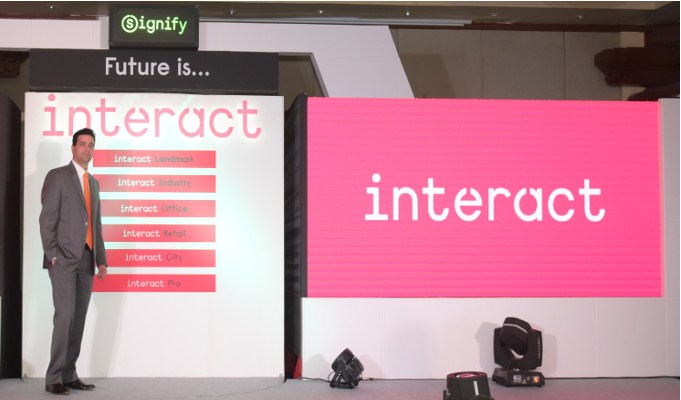
    Signify (formerly known as Philips Lighting), the world leader in lighting, has launched its new Internet of Things (IoT) platform, called Interact in India, which will enable its professional customers to unlock the full potential of connected lighting for the IoT.

    The platform delivers new insights to help customers drive operational efficiencies and take more effective decisions. It also supports the company’s strategy to deliver new data-enabled services as value expands from lighting products and systems to services.

    Signify has already installed 29 million connected light points worldwide and plans for every new LED product it produces to be connectable by 2020. This growing number of connected light points, sensors and devices, as well as systems, can collect large volumes of data for which Interact was designed to handle. The highly secure, scalable cloud-based Interact platform uses sophisticated and modern data management and data processing capabilities, including machine learning, to bring sense to all manner of data – creating data-enabled services for customers that will deliver benefits beyond illumination. It also offers a growing suite of licensed open application program interfaces (APIs) which will foster innovation from third-party developers, development partners and customers, enabling various data enabled services to be developed.

    A typical example of such a service is occupancy data from different buildings, combined and analyzed to help managers to understand and predict how people use office space. Such insights can help deliver savings by optimizing the use of existing office space and support better designed, more efficient buildings.

    In addition, data from authorized third-parties can also be analyzed by Interact. For example, for a municipal authority, news articles and social media posts, reacting to a new lighting installation on a bridge, can be analyzed and data sent to a social impact app dashboard that summarizes the public sentiment.

    Launching the platform in India, Sumit Padmakar Joshi, Vice Chairman and Managing Director of Signify’s operations in India said, “First, we led the way in energy efficient LED lighting, then in connecting lighting to deliver operational benefits for our customers. Now that light points are smart enough to collect data on their performance and the environment around them, we are tapping into that intelligence. By analyzing the data from our connected lights, devices and systems, our goal is to create safer cities, energy efficient buildings and industries and smarter retail stores in the country. We are confident that this platform will deliver immense value for our professional lighting customers in India”.

    Interact connected lighting systems

    These connected lighting systems, offering a unified user experience, feature applications that address industry-specific verticals. Available now are:

    – Interact Office – enables you to turn your office into a smart sustainable workspace with software that allows you to increase building efficiency and employee productivity.

    – Interact City – helps improve street lighting, safety, reduce energy consumption, improve efficiency and support your sustainability goals and beautify the urban landscape across roads.

    – Interact Retail – enables customers to group, zone and schedule connected lighting to create stopping power in stores. It also supports in-store location-based marketing services to increase shopper engagement and indoor navigation to improve staff productivity.

    – Interact Landmark – aids in managing and triggering light shows with dynamic architectural lighting to help increase tourism, regenerate downtown areas, and stimulate commerce.

    – Interact Sports – aids in monitoring, managing and coordinating across all lighting infrastructure from a single dashboard from pitch lighting, entertainment light shows, hospitality areas and exterior architectural lighting.

    – Interact Pro – an intuitive cloud-based software for small and medium enterprises that automates lighting and allows management via the Interact Pro dashboard.

    Signify became the new company name of Philips Lighting as of May 16, 2018. The legal name of Signify will be adapted in India in the beginning of 2019.
  • How Pizza Hut is mixing technology with pizza

    How Pizza Hut is mixing technology with pizza

    Yum! Restaurants-led Pizza Hut is betting big on technology. The brand is investing technology at each every step from taking orders to delivery of the pizza. Elaborating more on the same, Managing Director, Pizza Hut (India Subcontinent), Yum! Restaurants, Unnat Varma said, “We are using technology in sorting out our kitchens. So kitchens are becoming better in terms of layout, efficiency, optimising labour. Apart from this, we are also using technology to schedule riders to make sure that pizzas reach hot and fresh to the consumers.”

    “To ensure a seemless experience to the customers we have again using technology. We have a new online experience for customers, it is one of the best friction-less experience. From getting customer’s location to ordering the pizza, the entire process has been reduced to a four-step journey,” he added.

    The brand is also not shying away from using drones to deliver the pizzas in the near future.

    “We are closely watching the drone delivery space. However, there is no current successful model. There has to be regulation, approval from the Government that drones can fly in the air space and to understand that how does it work for food as food is very atypical, it cannot loose temperature and it has to be accurate, it has to reach in a certain stipulated time and it has be delivered straight. We will host the space, we are very open, we are transforming ourselves digitally and technologically, if this space helps us unlock some future possibilities, we will definitely go ahead with it,” Varma revealed.

    Enhancing Customer Experience

    To add to the overall consumer experience, the brand has been constantly improving its products.

    According to Varma, “These days the customer experience is always around product and product excellence and there we have been making a continuos effort to make our product more delicious, fresh and hot but in addition to that it is about the entire experience – how fast customer can place the order, how fast cusotmer can locate our store, can we give cusotmers a great value deal, can we understand their requirements, can we customise, can we help them earn and let them use some loyalty points in the future.”

    Expansion Plans

    Pizza Hut India plans to open over 200 more outlets in India by 2022 to expand its retail footprint. Currently, it operates 422 stores in the country.

    “‘Pizza Hut is a very democratic brand, it is used by segments of the consumers in the market, so our attempt is to go to as close to consumer as possible, it could be going after the shoppers in the shopping mall or it could be going close to residential areas, or going to captive locations where we have people working, so we are open to all kind of opportunities that exist. We are even open to open our outlets at airports and railway stations too,” asserted Varma.

    The pizza chain runs a franchise model in the country, where investments for opening new outlets mainly comes from franchise partner.

  • Xiaomi India to foray into appliances, white goods space

    Xiaomi India to foray into appliances, white goods space

    Xiaomi is all set to convert its India arm into an end-to-end consumer durables company. According to a report, Xiaomi officials are currently identifying potential categories including air-conditioners, washing machines, refrigerators, laptops and small appliances like vacuum cleaners and water purifiers for the Indian market. All the products will be smart appliances based on Internet of Things (IoT) or which can connect to the internet and other devices, and operated remotely.

    Xiaomi entered the Indian television market in February this year with products 30-50 percent cheaper than the top three brands — Samsung, LG and Sony. It eventually expanded TV sales to offline stores and started assembling them in India in partnership with contract manufacturer Dixon. It recently announced having shipped more than a million televisions into the Indian market.

    The company will follow the same model for appliances. The products will be priced aggressively in line with its announced strategy of keeping just 5 percent profit margin for itself and start local assembly after gaining some scale to take advantage of Make in India duty benefits, according to the report.

  • ‘E-commerce share in India’s FMCG retail sales triples in 2 years’

    ‘E-commerce share in India’s FMCG retail sales triples in 2 years’

    Growing consumer trust and confidence in online buying has helped e-commerce platforms expand their share in India’s total FMCG retail sales by as much as three times, according to market researcher Nielsen. This has led to online purchase of a broader range of categories, with a particularly interesting upswing seen in fresh and packaged groceries, Nielsen said in a report.

    It further stated that global online grocery purchasing is up 15 percent in the last two years, leading to an estimated US$ 70 billion additional sales in online FMCG.

    The 2018 Nielsen Connected Commerce Report said e-commerce categories — travel (69 percent), fashion (66 percent), and IT and Mobile (63 percent) continue to account for the largest proportion of online transactions in the country.

    Interestingly, categories posting the most significant growth in e-commerce channel included packaged grocery (where 40 per cent of respondents said they made a purchase), fresh groceries, and baby and children products.

    “From tracking the e-commerce evolution in pioneering countries like South Korea where online sales now account for a staggering 20 percent of the total FMCG sector, we know that consumers follow a certain pattern of online shopping behaviour,” Sameer Shukla, Executive Director (Retail Measurement Services), Nielsen South Asia said.

    Travel, fashion and IT/ Mobile products are typical categories for first-time online shoppers and as their familiarisation, comfort and trust levels increase, their category repertoire expands into areas like beauty, personal care and baby products, he added.

    “… and then moves even wider afield to packaged and fresh grocery categories, and this is evidenced in the significant jump we’ve seen in online purchasing within grocery and food delivery in recent years,” he said.

    The report also revealed that consumers are more open to purchase packaged and fresh groceries online when they are offered certain purchasing options and quality assurances.

    About 60 percent of consumers pointed towards the need to offer and improve hassle-free refund, replacement experience as well as free cost delivery, which if offered, would boost their confidence to buy online with higher frequency.

  • Food delivery start-up Swiggy raises US$ 1 billion from venture funds

    Food delivery start-up Swiggy raises US$ 1 billion from venture funds

    Leading food ordering and delivery start-up Swiggy has raised US $1 billion (Rs 7,000 crore) venture funds from existing investors led by Naspers, to strengthen its technology and hire talent, it said on Thursday. “Swiggy will use the funds to bring more quality food brands closer to consumers and address gaps in supply through delivery-only kitchens, as well as hire talent and strengthen the technology,” the city-based app provider said in a statement.

    The Series H round of funding, led by Naspers, also includes the participation of existing investors DST Global, Meituan Dianping and Coatue Management.

    The funding round saw the participation of new investors Tencent, Hillhouse Capital and Wellington Management Company, the company said.

    The firm will also use the capital to hire talent, especially for machine learning and engineering roles across mid and senior levels, as well as strengthen its technology backbone.

    “The company will focus on building a next-generation Artificial Intelligence (AI)-driven platform for hyperlocal discovery and on-demand delivery,” it added.

    Inclusive of the latest round, Swiggy said it has raised a total of US$ 1.26 billion (Rs 8,825 crore).

    In June, the food-tech start-up raised US$ 210 million (around Rs 1,500 crore) from multiple investment firms, including Naspers, DST Global in Series G funding and US$ 100 million (around Rs 700 crore) in Series F in February from multiple investors.

    Details of the promoters’ equity holding in their firm after the latest round of funding are not made public by the company.

    “As we add more firepower to our vision of elevating quality of life for urban consumers by offering unparalleled convenience, our global investors also share our purpose and have made a significant investment in our future,” Swiggy’s Chief Executive Sriharsha Majety said in the statement.

    Founded in 2014, Swiggy claims to have 50,000 restaurant partners across 50 cities, including New Delhi, Gurugram, Hyderabad, Bengaluru, Chennai, Mumbai, Kolkata and Pune, and receives about 25 million food orders a month.

    The company, which has over 4,000 employees, reported an operating revenue of Rs 442-crore for fiscal 2017-18.

  • 7-Eleven tests facial-recognition technology

    7-Eleven tests facial-recognition technology

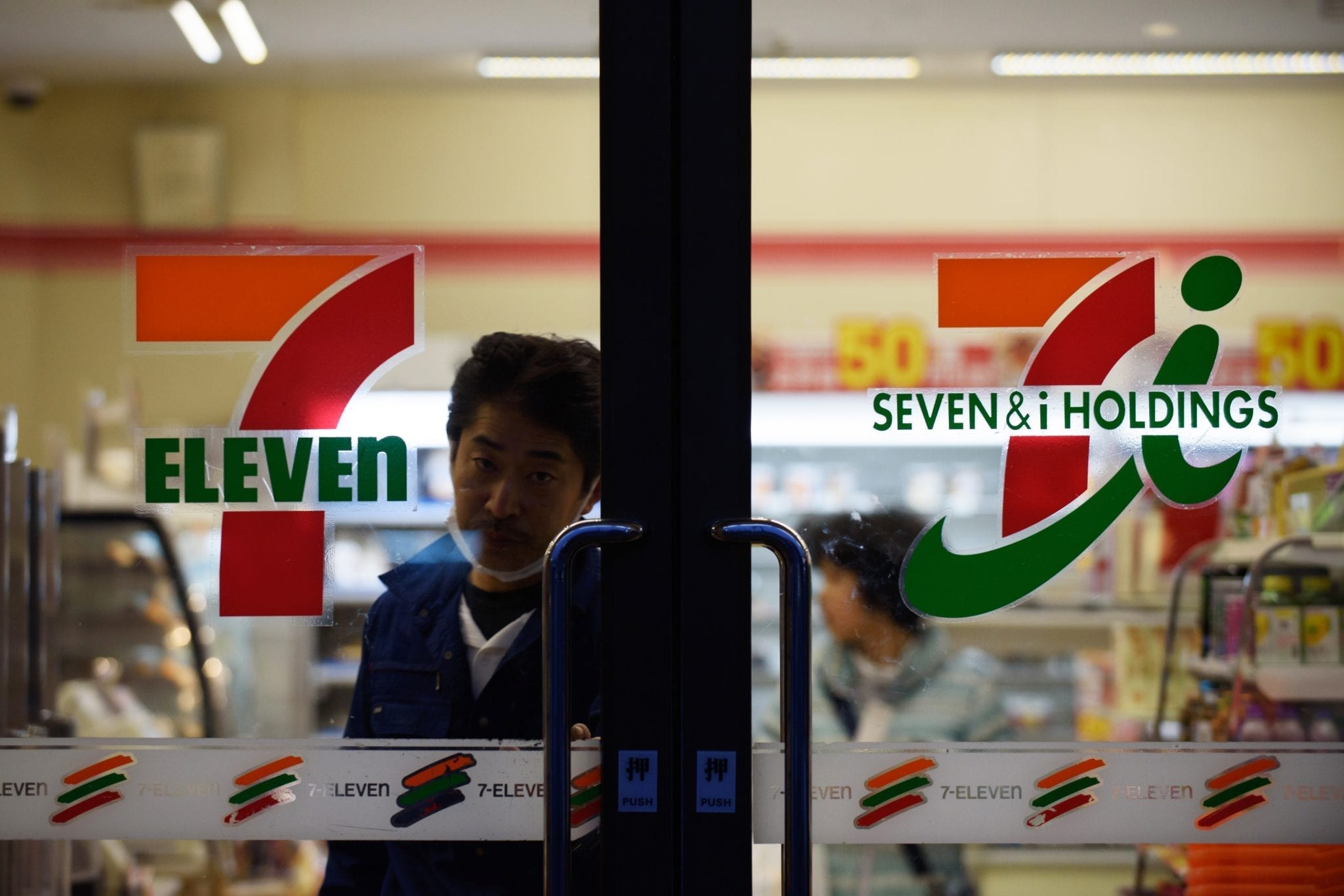
    7-Eleven Japan has opened an experimental concept store in Tokyo offering payment through facial-recognition technology developed by NEC. The trial is a precursor to a planned rollout of unmanned convenience stores in locations such as office buildings, car parks and factories allowing consumers to purchase essential items where it may not be commercially viable to operate a full-scale staffed store.

    The test store is located inside a building which is home to companies from the NEC group and can be accessed only by employees.

    Facial-recognition technology identifies shoppers when they enter the store and again when they make payment. The cost of purchases is deducted from their salaries.

    Rival retail groups including Aeon and FamilyMart have already adopted self-service payment checkouts and Lawson is trialling a scheme using barcodes scanned by smartphones.

  • Visa and The Mall Group collaborate to drive the future of retail in Thailand

    Visa and The Mall Group collaborate to drive the future of retail in Thailand

    Visa, the world’s leader in digital payments, and The Mall Group, Thailand’s leading retail and entertainment complex developer, last week announced a new long-term partnership set to drive the future of retail in Thailand.

    Building on their existing relationship, this partnership will see The Mall Group and Visa develop personalised shopping experiences for consumers, using Visa’s capabilities and exploring new technologies such as the Internet of Things (IoT), Artificial Intelligence (AI), Augmented Reality (AR), Virtual Reality (VR), biometrics, as well as data analytics to understand changing consumer behaviours.

    Chris Clark, Visa’s Regional President for Asia Pacific, said: “We believe payment technology can be a key differentiator for The Mall Group helping it to deliver a faster, more convenient and more personalised shopping experience for consumers. We’re looking forward to working together to drive payments innovation at The Mall Group’s expansive locations across Thailand.”

    Supaluck Umpujh, Chairwoman of The Mall Group, said: “The partnership with Visa represents a significant step into a new era of retail where customer experience is at the heart of everything we do. Our goal is to explore and leverage the latest innovations that will add value to our business. This will consequently benefit our shoppers and help strengthen our position as a world-class shopping destination among both local and international visitors.”

    Studies have shown that by 2020 AI will be responsible for managing 85 percent of retail customer interactions and as many as 100 million consumers will use AR to create a more novel shopping experience.

    For decades, Visa, together with its merchant partners, has consistently invested in growing electronic payments in Thailand. This has included educating consumers and merchants on the benefits of electronic payments, expanding the acceptance of electronic payments, and introducing new technologies to enhance the payment experience and make it more secure, such as EMV, contactless payment technology, tokenisation, and Visa QR payments.

  • ShopBack ventures offline with ShopBack GO

    ShopBack ventures offline with ShopBack GO

    ShopBack, the one-stop lifestyle platform that powers smarter purchase decisions, officially enters the offline space with the introduction of ShopBack GO. Launched in partnership with Visa and Mastercard, ShopBack GO enables users to earn between five to 10 per cent cashback on top of their existing card rewards at over 400 F&B brands concentrated in selected areas.

    With ShopBack GO, F&B partners will gain access to ShopBack’s existing base of over one million Singaporeans via its mobile app. The first-of-its-kind offline discovery and rewards platform in Southeast Asia fills the performance marketing gap in the ecosystem with zero disruption to business operations and consumers’ payment habits.

    “For the past four years, our core business model has succeeded in delivering cost-effective marketing for ecommerce merchants while delighting users with cashback for their online purchases,” said Vincent Wong, Country Head of ShopBack Singapore. “We have now replicated the experience offline with ShopBack GO, an omnichannel retail solution for offline merchants and rewards platform for users.”

    Partnering over 400 F&B brands from local favourites like Tiong Bahru Bakery to international establishments like Paradise Group, ShopBack GO rides on Singapore’s vibrant food scene to encourage wider adoption of cashless payment via Visa and Mastercard.

    ShopBack GO launches with a higher density of F&B brands in four areas: One-North, Buona Vista, Holland Village and Tanjong Pagar. The first three locations were selected for convenience in proximity to the office, allowing the start-up to conduct quick experiments with F&B brands in the area, while Tanjong Pagar gives ShopBack a flavour of the Central Business District crowd’s appetite.

    “Food is a part of Singapore’s DNA and Singaporeans increasingly love to dine out. Based on Visa’s data, the number of dining transactions have increased more than 30 per cent year-onyear and dining spend makes up almost 20 per cent of total card spend for Singaporeans. This partnership with ShopBack in launching ShopBack GO will drive more consumers to use digital payments for their dining purchases. More importantly, it encourages more merchants to accept electronic payments and also show their willingness to adopt digital payments. This is important as Singapore moves into a more digital and smart nation city,” said Kunal Chatterjee, Visa Country Manager for Singapore & Brunei.

    “Seven in 10 consumers are looking to find offers for their dining experience. We believe ShopBack GO’s reward-based model will appeal to the foodie in many Singaporeans who love a great deal for good food. Given how frequently local consumers dine out, solutions such as these will also go a long way to drive behavioural change towards a wider use of cashless payments in Singapore,” said Deborah Heng, Country Manager, Mastercard Singapore.

  • Google launches ‘Shopping’ in India to woo online shoppers

    Google launches ‘Shopping’ in India to woo online shoppers

    Tech giant Google Thursday unveiled ‘Google Shopping’ in India that will allow users to easily filter through offers, review prices from multiple retailers and find products that they are looking for. According to a report: The personalised experience will be available across various Google products — a Shopping home page, Shopping tab on Google Search and through Google Lens. Customers will be able to see trending products across different categories, various deals, and compare prices using the new offering.

    For retailers, the company will offer its ‘Merchant Center’ in Hindi, which will allow the sellers to list their products for Google Shopping, without paying for ad campaigns.

    “India has over 400 million internet users. However, only one-third of these have shopped online and that number includes those buying railway tickets online. From seasoned desktop shoppers to first-time users with entry-level smartphones, we hope this new shopping experience will make finding what people are looking for just a little bit easier,” Surojit Chatterjee, Vice President – Product Management, Google said.

    Google Shopping will be a connector between retailers and consumers, and the transaction and delivery of products will be handled by the merchant, he added.

    “There are an estimated 58 million small and medium businesses (SMBs) in India, of which 35 per cent are engaged in retail trade. However, a very small number of them have an online presence, this is a huge opportunity for retailers to surface their merchandise to the millions of online consumers,” Chatterjee said.

    Google aims to support the entire retail ecosystem — from shopping sites and large retailers to small local shops — by giving them access to the tools, technology, and scale to thrive in the new digital economy, he added.

    Chatterjee said merchants will not have to pay any fee for listing their products for Google Shopping.

    Under the Shopping tab in Google Search, users can search for products and see prices from across multiple retailers. The ‘Style Search’ option in Google Lens will allow users to find products such as clothes, furniture, and home decor, by simply pointing the Lens app from their smartphones.

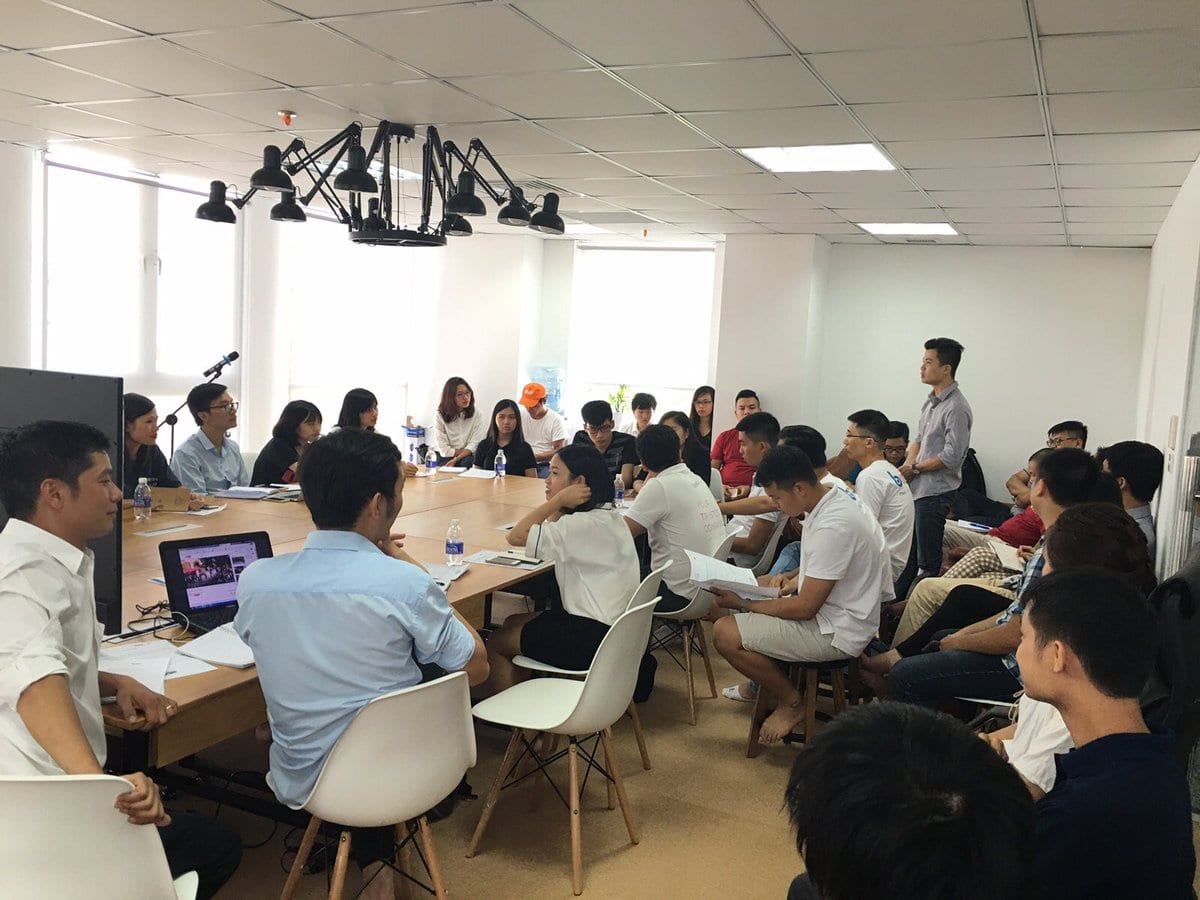
  • Most Vietnamese graduates interested in startups: survey

    Most Vietnamese graduates interested in startups: survey

    About 75 percent of Vietnamese graduates have either started their own business or are interested in opening one. A survey released Tuesday by Navigos, a leading provider of executive search services in Vietnam, also found hat 52 percent of fresh graduates want to attempt a startup in the near future.

    One in five respondents, or 22 percent, said they have attempted a startup at least once before. Only 26 percent said that they have no plans for a start-up. The survey polled over 1,600 fresh graduates with less than two years of working experience.

    It found that a high number of fresh graduates are not satisfied with their current salaries, incentives and promotion opportunities.

    On a scale of five, they rated their satisfaction with salary at 2.95, and incentives at 2.99. Long-term development opportunities scored lowest at 2.88.

    Salaries and incentives are important factors for graduates in choosing their first jobs. Seventy percent of respondents selected “income and welfare policies” as one of the top criteria for job selection.

    Compatibility with personal strengths came second at 55 percent, while career prospects and opportunities for development come third and fourth at 53 percent and 52 percent respectively.

    The majority of fresh graduates, 34 percent, make VND5-7 million ($215-300) a month. Twenty-nine percent said their monthly salaries were VND7-10 million ($300-430). Only 12 percent made VND10 million ($430) or higher.

    The survey also found that candidates who are proficient in foreign languages have higher salaries. Only five percent of those whose jobs don’t require foreign language skills earn VND10 million ($430) or higher, while this figure is 37 percent among candidates who can speak another language.

    Young employees changed jobs more frequently, posing a retention challenge for employers. Eighty-one percent of the respondents said that “jumping jobs” helps them avoid wasting time on unsuitable or unsatisfactory positions.

    Forty-three percent claimed that switching jobs helped them gain diverse working experience and expand networks.

    Although young candidates value high salaries and benefit packages when choosing jobs, 57 percent said higher earnings was not the motivation for jumping jobs.

    Of the respondents who’d quit their jobs, 45 percent said the reason was personal plans like education or family issues.

    Four out of ten graduates said that they quit because they didn’t like their daily tasks, while almost one in four said they could not fit in with the corporate culture.

  • Decathlon Japan first full store opens next year

    Decathlon Japan first full store opens next year

    Decathlon Japan will open its first full-sized store next year as the French sporting goods retailer continues its rapid global expansion. The Decathlon Japan debut will come just a few months after the company opened its first store in South Korea.

    The company has taken a careful, measured approach to Japan, launching a website in 2015 to build brand awareness and gauge consumer demand. A small test store popped up in Osaka last year, under the Decathlon Lab banner, offering a limited range.

    The first full-sized Decathlon Japan store will be opened in the Hankyu Nishinomiya Gardens shopping mall, in the city of Nishinomiya, located between Kobe and Osaka. It will sell the company’s own house brands Domyos, Quechua and Kalenji, and provide space for consumers to test products before buying.

    Data from BPI France shows Japan is the world’s second largest sport market after the US, and was worth US$12.6 billion last year.

  • After Flipkart, Walmart eyes another Indian startup that specialises in AI

    After Flipkart, Walmart eyes another Indian startup that specialises in AI

    Walmart Labs India, the local product development division of US retail giant Walmart, last week announced it would hire key tech team from Artificial Intelligence (AI) and data analytics start-up Int.ai — its second acqui-hiring in the country within three months.

    Three engineers — including co-founders Vinay Kumar NP and Praneeth Doguparthy — from Int.ai will join Walmart Labs India.

    They will be part of the health and wellness portfolio under Customer Technology at Walmart Labs, the company said in a statement.

    “We are glad to welcome the Int.ai team to the big Walmart Labs family and believe that their expertise will be a great addition to our data analytics capabilities,” said Hari Vasudev, Country Head and Vice President – Technology, Walmart Labs India.

    This is the second acqui-hiring Walmart Labs India has made — after micro-app startup Appsfly in September where it merged Appsfly’s six-member team into its customer experience engineering group.

    Founded in 2016, Int.ai has invested and built expertise in architecting an analytics automation framework which will support Walmart Labs in developing solutions and supporting large-scale businesses.

    “After working for almost 3 years on it, we are very happy to let you know that our entire team will be joining Walmart Labs, India,” Vinay and Praneeth said in a separate statement.

    “We started Int.ai in the beginning of 2016 with an ambitious mission to build an AI-powered personal data analyst for every business executive,” they added.

    Int.ai developed expertise in blending Machine Learning with data analytics to uncover insights that significantly impact business metrics.

  • First Binance Blockchain Week Set for Singapore Next Month

    First Binance Blockchain Week Set for Singapore Next Month

    About 2,000 people from around the world are expected to attend the inaugural Binance Blockchain Week in Singapore on Jan. 19-22. The conference, which will take place at the Sands Expo and Convention Centre in Marina Bay Sands, is presented by Binance, the world’s leading cryptocurrency exchange.

    The high-profile event will serve as a platform to bring together regulators, investors, academics, entrepreneurs and technologists to discuss the current blockchain ecosystem and encourage sustainable growth in the industry.

    Binance Blockchain Week will feature more than 70 speakers, including thought leaders, top executives, academics and heads of state in a productive, yet exciting program filled with keynote speeches, panel discussions, fireside chats and exclusive networking events.

    Confirmed speakers include Changpeng Zhao, the founder and chief executive of Binance; Genping Liu, partner at Vertex Ventures; Justin Chow, head of business development, Asia at Cumberland; and Sonia Bashir Kabir, managing director of Microsoft Bangladesh, Myanmar, Nepal, Bhutan and Laos.

    “We are thrilled to host the first ever Binance Blockchain Week in Singapore, the finance and technology hub of Asia. Gathering the most notable players and thought leaders in blockchain, this will be a defining event. We look forward to many thought-provoking discussions and debates on how we can further work together to move the industry forward,” Zhao said.

    There will also be an expo featuring more than 50 booths for sponsors to showcase the best blockchain and cryptocurrency technologies.

    Secure Asset Funds for Users Hackathon

    The inaugural Binance SAFU Hackathon, which aims to seek innovative blockchain solutions to secure crypto assets, will take place at the offices of PricewaterhouseCoopers Singapore in Marina One East Tower on Jan. 19-20.

    The panel of judges includes PwC, blockchain accelerator program Tribe Accelerator and Binance Labs. Participants will have the opportunity to receive mentorships from senior leaders at companies such as the Ethereum Foundation, Primitive Ventures, Earn.com, Binance Labs and IDEO CoLab.

    Individuals and teams interested in participating in the event can submit their applications between Dec. 10 and Jan. 6.

    Twenty developer teams will be selected via pre-hackathons and direct registration on the event website. Pre-hackathons will be held around the world between December and early January.

    Only winning teams will qualify for free passes to the final SAFU Hackathon in Singapore.

    The teams winning the final will share a prize pool of $100,000 in Binance Coin (BNB) courtesy of Binance.

    For more information, check out the Binance Blockchain Week Facebook page or the cryptocurrency exchange’s Twitter profile.

  • TikTok plans to expand in Vietnam

    TikTok plans to expand in Vietnam

    Short-form video hosting service TikTok is planning to step up its Vietnam operations, targeting a wider Vietnamese customer base. TikTok, a product of Bytedance, a Chinese software company headquartered in the U.S., offers a short video sharing application, 15 seconds per video for basic accounts. It’s initial content is primarily lip syncing, dancing, or recording with fancy stickers and other effects.

    The TikTok app has quickly attracted the attention of many young people, particularly at school age, but is yet to appeal to older adults.

    Diep Que Anh, national director of communications for TikTok Vietnam and other emerging markets, said that the application is trying to “age” its content to widen its user coverage.

    It has to do this before it can become an advertising platform that can satisfy the demands of its client brands, some experts and industry insiders have said.

    Not revealing specific numbers, Que Anh estimated that Vietnamese users spend an average of 28 minutes per day on TikTok. Its prime time, when the app sees the highest traffic in the country, is 6 p.m.-8 p.m. every Friday and Saturday.

    The platform is still in its ad-free phase. “There have been brands who have approached us regarding advertising, but we do not intend to monetize our service at the present time,” Que Anh said, adding that they were waiting for the market to mature.

    TikTok has opened its first representative office in Ho Chi Minh City with around 70 employees. Que Anh said this number will continue to grow to several hundred employees.

    “After just one year, Vietnam has become our biggest market in Southeast Asia,” she said.

    According to Que Anh, TikTok now covers Singapore, Thailand, Indonesia, Malaysia and the Philippines.

    The Telegraph reported that in October, after receiving an additional $3 billion in capital from firms led by Softbank, KKR & Co and General Atlantic, Bytedance boosted its valuation to $75 billion, officially surpassing Uber to become the most valuable technology startup in the world.

    The Telegraph and many other newspapers call Bytedance a Chinese tech firm, although Que Anh noted TikTok’s headquarters is in Los Angeles, the U.S., and that its products are already in 150 markets.

    TikTok’s strength in the global advertising market is growing rapidly. According to Google’s ‘Best of 2018’ list, TikTok is the only social networking application named in User’s Choice Awards App of the year, while Facebook, Instagram or Youtube are no longer in the list.

    Some reports estimate that the global audience for this app this year is about 500 million.

    In Vietnam, the most successful content trend of the year – the 2018 AFF Cup, resulted in more than 120,000 videos released on the event, which attracted 54.8 million views.

  • Indonesia’s Tokopedia Secures $1.1b From Alibaba, SoftBank

    Indonesia’s Tokopedia Secures $1.1b From Alibaba, SoftBank

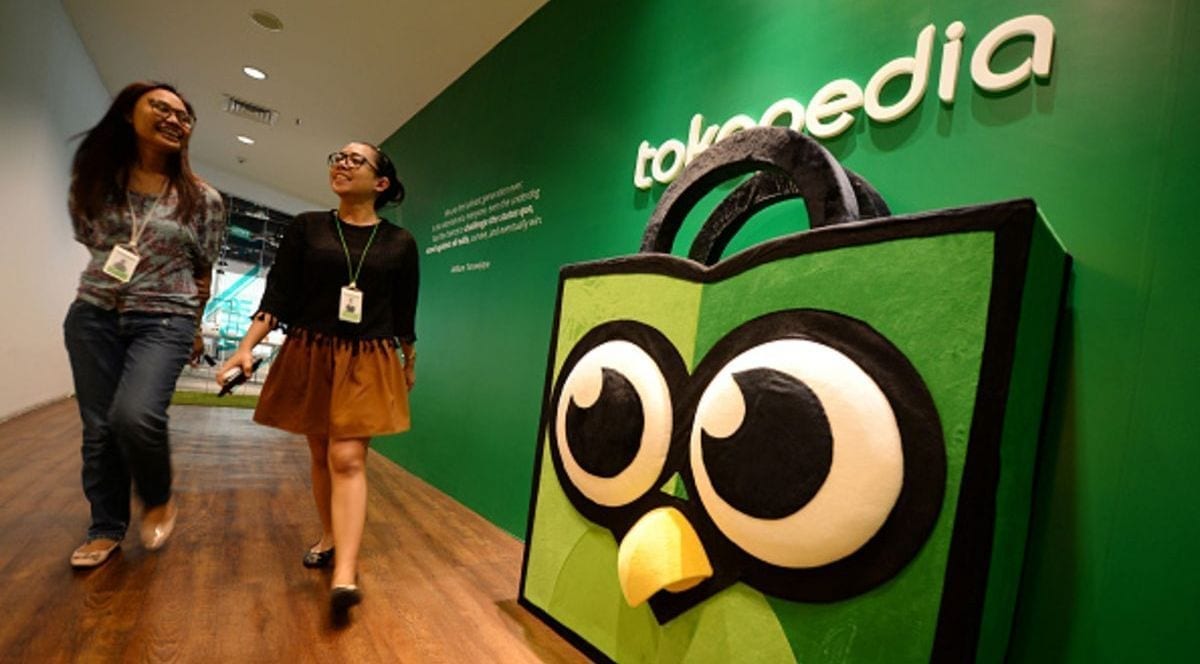
    Indonesian e-commerce company Tokopedia said on Wednesday that it had secured $1.1 billion in its latest funding round led by Chinese e-commerce giant Alibaba Group Holding and Japan’s SoftBank Group. This follows a similar investment in 2017, also led by Alibaba, which has been expanding rapidly into Southeast Asia amid slowing growth in China’s e-commerce market.

    Tokopedia said it planned to use the funds to invest in technology and infrastructure, adding that the firm would continue to focus on the Indonesian market and drive economic development and financial inclusion in the country.

    The investment would help “broaden Tokopedia’s scale and reach” besides improving its operational efficiency, chief executive and co-founder William Tanuwijaya said in a statement.

    Tokopedia did not confirm a valuation following the round. However, news website TechCrunch citing an unnamed source said the company was valued at around $7 billion.

    The latest funding boosts Alibaba’s share of the fast-growing Indonesian e-commerce market. The Chinese company is also the majority owner of Lazada, which is the Tokopedia’s top competitor in the market.

    Indonesia is also increasingly becoming a proxy battleground for Alibaba and JD.com, China’s second-largest e-commerce company, which has invested heavily in building a logistics network in the archipelago.

    Founded in 2009, Tokopedia is currently Indonesia’s largest online marketplace, drawing comparisons to Alibaba’s Taobao.

    The latest round includes investments from Softbank’s Vision Fund as well as Softbank Ventures Korea and Sequoia Capital.

    The company, which delivers to around 93 percent of Indonesian districts, says it has quadrupled its sales in the past year.