Tag: galaxy

  • Samsung’s Galaxy Watch Ultra 2 Set to Launch in Two Models: Unraveling the 4G and 5G Differences

    Samsung’s Galaxy Watch Ultra 2 Set to Launch in Two Models: Unraveling the 4G and 5G Differences

    Samsung is reportedly preparing to unveil the next version of the Galaxy Watch Ultra — the true successor to its previous model, which only received a memory upgrade. In response to its key competitor, the Apple Watch Ultra 3, the Galaxy Watch Ultra 2 had been rumored to feature a significant upgrade. However, it now appears that this anticipated change may not be guaranteed.

    Galaxy Watch Ultra 2: Potential 4G and 5G Variants

    A device thought to be the Galaxy Watch Ultra 2 recently appeared in the IMEI database bearing a model number that implies a 5G version. This development suggests Samsung is planning a second variant, potentially a 4G-only version of this forthcoming premium wearable.

    Software for a device with the model number SM-L715F was identified on Samsung’s servers. This is likely software for a version of the Galaxy Watch Ultra 2, which was listed under SM-L716 in the IMEI database.

    Samsung typically uses the number “6” to denote 5G models in its range, while “5” is usually assigned to devices with 4G/LTE connectivity. The number “0” is reserved to indicate a Wi-Fi-only device.

    Potential Dual Release

    It would not be surprising if Samsung decided to release two versions of the Galaxy Watch Ultra 2. It is probable that the 5G model will only be available in certain regions, with the 4G version being sold elsewhere.

    The more advanced model is likely to be made available to consumers in South Korea, the US, and a few other markets. It is unlikely that Samsung will release a Wi-Fi-only version of the Galaxy Watch Ultra 2.

    Pragmatic Choices

    Apple released the Apple Watch Series 11, Apple Watch SE 3, and the Apple Watch Ultra 3, all with 5G support, last autumn. Although all models sold globally have the technical capacity to connect to a 5G network, this feature is not supported in all markets where the watches are sold.

    Support for 5G connectivity depends on a variety of factors beyond a device’s technical capabilities, which may explain why Samsung has chosen to offer multiple versions of its upcoming watches.

    Expected Pricing

    The only reasonable explanation for a lower-spec version of a high-tier device would be to offer it at a reduced price. If Samsung were to charge the same for both versions of the Galaxy Watch Ultra 2, it would likely disappoint consumers.

    Questions & Answers

    What might be the key feature of the Galaxy Watch Ultra 2?

    An anticipated key feature of the Galaxy Watch Ultra 2 is its potential 5G connectivity. However, it’s also speculated that there may be a 4G-only version.

    Which markets might receive the more advanced model of the Galaxy Watch Ultra 2?

    The more advanced model, presumably the 5G version, would likely be offered to consumers in South Korea, the US, and several other markets.

    What could be Samsung’s rationale for potentially offering different versions of its upcoming watches?

    Support for 5G connectivity depends on a variety of factors beyond a device’s technical capabilities. This, in addition to market demand and network availability, could explain Samsung’s decision to offer multiple versions of its upcoming watches.

  • Revolution In Audio Broadcasting: Expanding Auracast’s Compatibility And Real-world Applications

    Revolution In Audio Broadcasting: Expanding Auracast’s Compatibility And Real-world Applications

    In March, we introduced our readers to a Bluetooth technology known as Auracast. This innovative feature, designed for Bluetooth Low Energy (LE), empowers a singular audio source, such as a phone, to transmit a high-quality audio stream to a limitless number of Bluetooth receivers in proximity. Instead of the traditional one-to-one Bluetooth connection (e.g., your smartphone to a pair of Bluetooth earbuds), Auracast transforms your device into a broadcasting station capable of delivering a one-to-many signal.

    Auracast Support for Hearing Aids

    Six months ago, Google initiated support for hearing aids using Auracast with the release of the Pixel 9 series. This support featured several preset settings tailored to assist those who have hearing problems. Recently, Google expanded this list to include Sony headphones among the hearing aids and earbuds compatible with Auracast. Other notable inclusions in this list are the JBL Tour One M3, the Samsung Galaxy Buds 3 Pro, and the Sennheiser Accentum True Wireless.

    Phones with Auracast Capability

    Among the smartphones equipped with the ability to utilise Auracast for audio broadcasting are the Google Pixel 8 and later models, the Samsung Galaxy S23, S24, and S25 series, and the Galaxy Z Fold 5, Z Fold 6, and Z Fold 7. Certain Xiaomi and Poco phones unavailable via U.S. carriers are also outfitted with Auracast support.

    Practical Applications of Auracast

    Auracast proves to be particularly useful in public places, such as airports and train stations, where public announcements are common. It also offers a solution for shared listening experiences, like when you want a nearby friend to hear a song you’re enjoying. Instead of sharing an earbud, a practice some might find unsanitary, Auracast lets you transmit the song directly to your friend’s headphones, earbuds, or even a compatible hearing aid.

    Users can also share their audio with members of a nearby group equipped with compatible Bluetooth devices. Simply scanning a QR code or tapping their phone using Google’s Fast Pair allows these group members to tune into the broadcast.

    At present, this feature is available only on certain phone models and Bluetooth-enabled audio devices.

    Questions & Answers

    What is Auracast?
    Auracast is a feature for Bluetooth Low Energy (LE) that allows a single audio source to broadcast a high-quality audio stream to an unlimited number of Bluetooth receivers nearby.

    Which phones are compatible with Auracast?
    Phones that are compatible with Auracast include the Google Pixel 8 and later models, the Samsung Galaxy S23, S24, and S25 series, and the Galaxy Z Fold 5, Z Fold 6, and Z Fold 7. Certain Xiaomi and Poco phones also support Auracast.

    Where could Auracast be useful?
    Auracast could be particularly useful in public places like airports and train stations, where public announcements are common. It’s also handy for shared listening experiences, allowing you to broadcast a song you’re listening to a friend’s headphones, earbuds, or even a compatible hearing aid.

  • Dior opens reinvented Galaxy Macau boutique

    Dior opens reinvented Galaxy Macau boutique

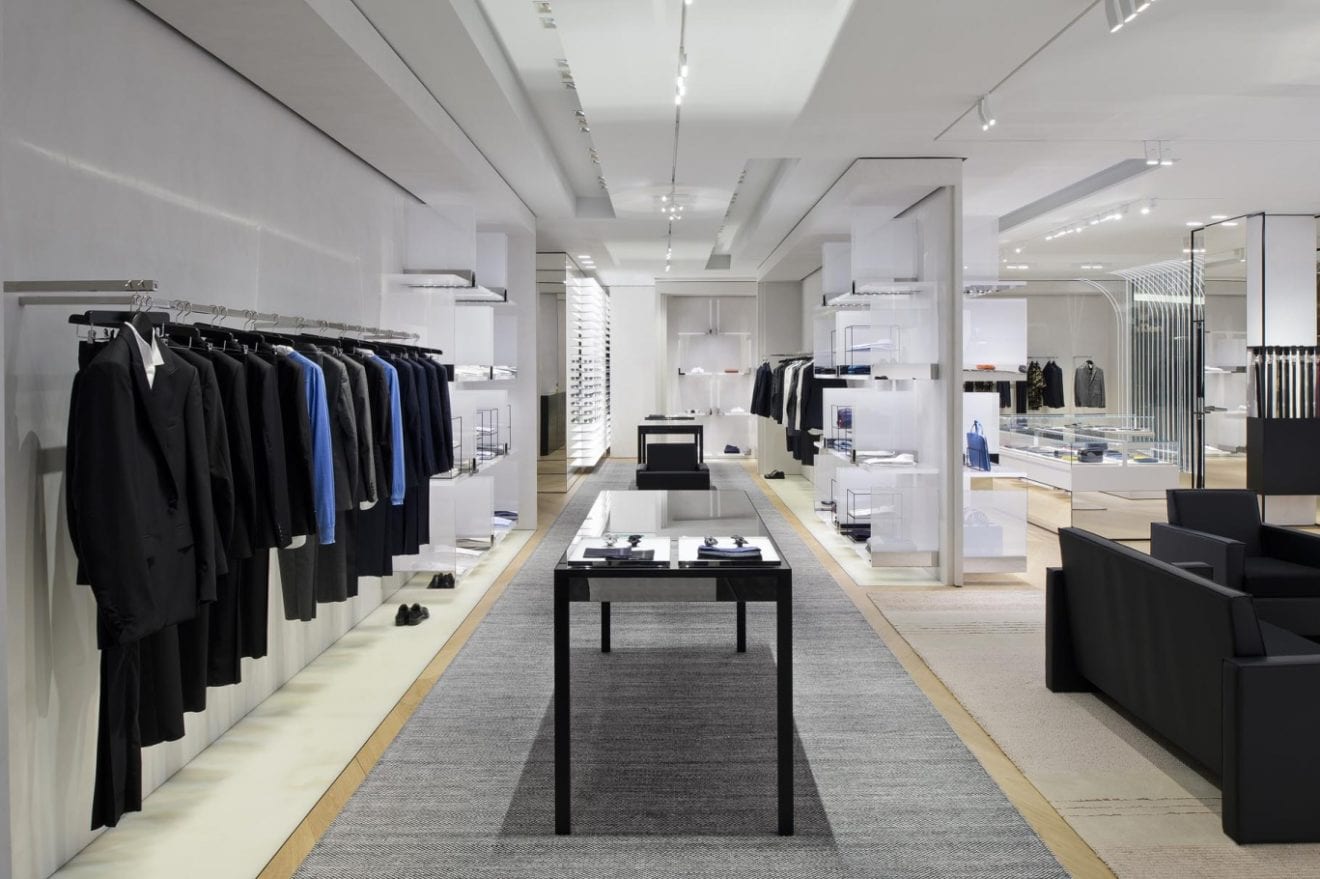
    Luxury fashion house Dior has launched its revamped Galaxy Macau boutique, offering more exclusive shopping experiences.

    The store, located at one of the finest shopping locations, Galaxy Promenade, has two floors and offers a varied range of items such as ready-to-wear and accessories designed by Maria Grazia Chiuri and Kim Jones, as well as watches and jewellery.

    The venue also features the My Dior fine jewellery line, the Dior autumn-winter 2024-2025 ready-to-wear collection with 30 Montaigne models, and Victoire de Castellane’s Rose des Vents and My Dior designs.

    The second store features men’s clothes from the Dior Winter 2024-2025 collection, as well as the Lifestyle Capsule, which focuses on board sports.

    In addition, the boutique offers VIP private shopping spaces.

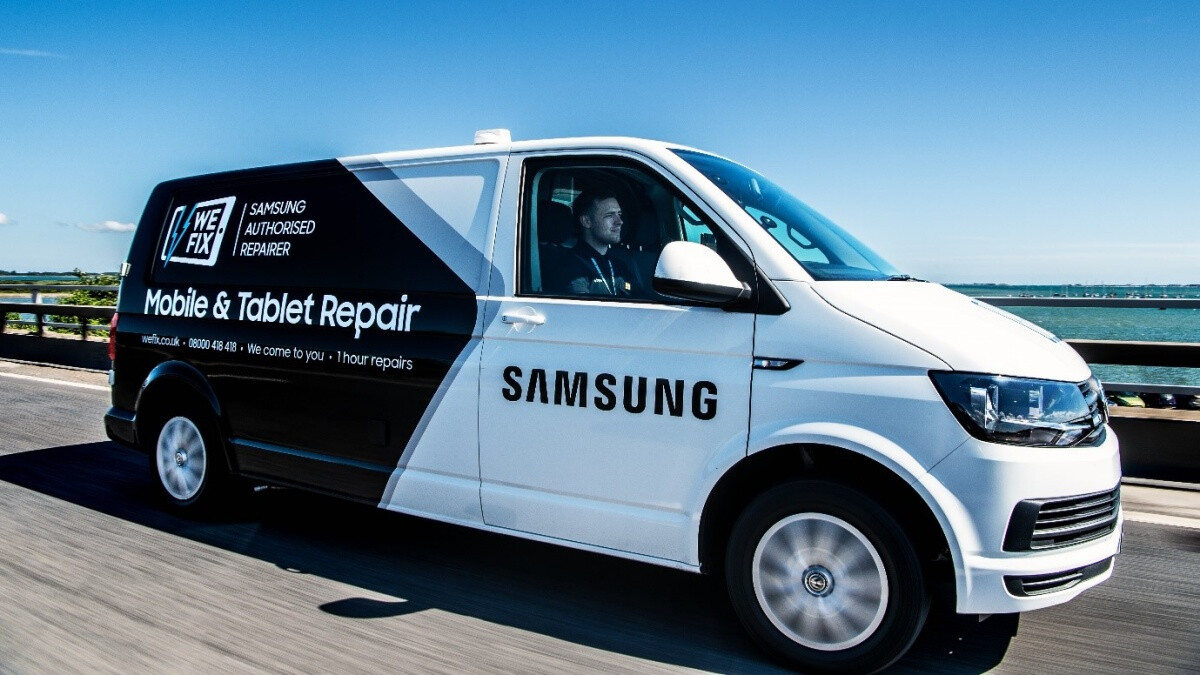
  • Samsung is deeply discounting Galaxy screen repairs in addition to actual phones now

    Samsung is deeply discounting Galaxy screen repairs in addition to actual phones now

    Kicked off just a couple of days ago, Samsung’s big fall Discover event has made plenty of headlines since then thanks to awesome new deals on devices as diverse as the Galaxy Z Fold 4, Tab S8 family, Z Fold 3, and the Galaxy Watch 4 duo.

    But from an existing Galaxy user perspective, the best special offer available through September 26 may not consist of a discount on a new product purchase at all. Instead, if you own a Galaxy S, Note, Flip, or Fold-series phone with a cracked screen and don’t want to trade that in for the chance to save $200 or $300 on a new member of the same family, now’s probably the time to get an authorized repair.

    That’s because damaged front display replacements are down to a flat $99 for “series 9 and up” Galaxy S and Note models, as well as “most” A-series mid-rangers, while the same kind of repair will set you back $249 for “all” Galaxy Flip and Fold devices, including the hot new Z Fold 4 and Z Flip 4.

    Although 250 bucks may still sound like a high price to pay to fix what’s certainly a very common issue, Z Fold 2, Z Fold 3, and Z Fold 4 “inner” screen repairs would normally cost an even higher $350 or so a pop. Meanwhile, cracking the beautiful display of the S21 Ultra or S22 Ultra can result in charge of around two Benjamins outside of this promotion, which verifies Samsung’s claim that you can save 50 percent on many screen replacements right now.

    The campaign’s terms and conditions, mind you, make it clear that uBreakiFix and Asurion Tech Repair & Solutions will replace your phone’s cracked display in their stores across the US as long as you book an appointment online while also specifying that water damage and other problems are not covered and your battery will not be replaced as part of this hot new deal.

    Still, the list of eligible devices alone makes the promo well worth taking into consideration for many people, including a whole bunch of oldies you may have gotten very close to giving up on entirely, like the Galaxy S9, S9+, Note 9, S10, S10+, S10 Lite, Note 10, Note 10+, Note 10 Lite, OG Fold, A01, A11, A20, A50, A51, A71, and A21.
  • Samsung executive says foldable phones are about to go mainstream

    Samsung executive says foldable phones are about to go mainstream

    Whether it’s because of the abrupt and satisfying way that you can hang up on someone who is being a pain in the ass, or because of the pocketability of such a device, consumers favor flip-style foldables like the Galaxy Z Flip 3 and the upcoming Galaxy Z Flip 4. In Roh’s blog post called “The Mainstream Moment for Foldable Smartphones Is Here,” the executive pointed out that last year 70% of Galaxy Z foldable phone buyers voted with their own money and picked the Galaxy Z Flip while the remaining 30% chose the Galaxy Z Fold.
    Of course, it did help that the Galaxy Z Flip 3 was priced at $999 and up, a nice-sized discount from the $1,380 price for the basic version of its predecessor. Samsung might not get as aggressive when pricing the Galaxy Z Flip 4 although a smaller decline to $899 is possible.

    While the Galaxy Z Flip can open from a device that fits comfortably in your pocket to become a tall and thin 6.7-inch handset. Roh writes that “Flip users love owning a device built for self-expression, whether choosing bold color options for their device or taking pictures in a new way with Flex mode.” He says that Galaxy Z Fold users also have their reasons to buy that model. “Fold users love the multitasking capability of a screen that doubles in size, so they can be more efficient and get things done faster,” Roh said.

    With the next Unpacked event taking place on August 10th, the Samsung executive states that the thing to watch is not what the latest technology can do. It is all about what you can do with the latest technology. He adds that Samsung customers are the muse that the company draws from to develop innovative new ideas for the company’s foldable handsets.
    Roh says, “I can’t wait to show you the potential of our new Samsung Galaxy foldables as the ultimate tool for both productivity and self-expression. Now, you can do more than you ever thought possible, all at once, on one device.”

    It seems that the head of Samsung’s Mobile Experience Business is happy to spread the credit for the success of Samsung’s foldable phones. Roh even called out Google and Microsoft as “industry leaders that are helping to expand the experiences that are now being made possible throughout the foldable ecosystem.”

    Samsung’s goal is to take the Galaxy Z Flip 4 closer to being a mainstream phone, something that seems much more possible with the Galaxy Z Flip 4 than the Galaxy Z Fold 4. Yeah, some of it is the pricing which is why the manufacturer is reportedly looking at building another line of foldable Flip and Fold handsets for its budget-priced Galaxy A line. But based on last year’s sales, the flip build is overwhelmingly the favorite foldable among consumers.
    Will there be a day when foldable smartphones dominate the landscape? It’s hard to see how until the most influential smartphone brand, the Apple iPhone, has its own foldable device. However, even Apple won’t be able to ignore the trend if foldables continue to be bought up by consumers. Last year 10 million foldable phones were shipped, up 300% year-over-year. Numbers like that cannot be ignored for long.
    As Roh writes in his post, “We are reaching the moment where these foldable devices are becoming widespread and staking a bigger claim in the overall smartphone market.” Consumers, keep your eyes on this area of the industry to find the fastest growing sector of the smartphone industry.
  • Samsung could release three Exynos chips this year

    Samsung could release three Exynos chips this year

    Samsung will unveil three Exynos chips this year, claims leaker Ice Universe. The 2021 lineup presumably includes a flagship SoC (Exynos 22xx), a mid-tier chip (Exynos 12xx), and an entry-level silicone (Exynos 8xx).

    The Exynos 22xx will likely succeed the Exynos 2100 that powers the European version of the Galaxy S21 series. It supposedly has the model number 9925 and it may feature an AMD GPU.

    The Exynos 12xx will apparently replace the Exynos 1080, and it will probably also swap out the Mali GPU for AMD’s graphics.

    The Exynos 8xx is new on the radar, and we wonder if it has anything to do with a chip recently spotted by Galaxy Club.

    The chip bears the model number S5E5515, which is not very telling, thanks to Samsung’s inconsistent naming convention.

    It does not seem to be a high-end SoC as the model number is not in line with recent flagship chips: Galaxy 10’s Exynos 9820 had the number S5E9820, Galaxy S20’s Exynos 990 had S5E9830, and Galaxy S21’s Exynos 2100 has S5E9840.

    S5E5515 is not consistent with recent mid-tier Exynos chips either. The Exynos 1080 is S5E9815, the Exynos 980 is S5E9630, and Exynos 850 is S5E3830.

    The publication has made a wild guess and believes that the S5E5515 is a lower-mid-tier chip that will sit between the Exynos 850 and Exynos 1080. It is also expected to have an integrated 5G modem.

    The SoC could also turn out to be a non-smartphone chip. Samsung is already believed to be working on a new processor for wearables like AR glasses.

  • Samsung’s official 5G Galaxy S21 teasers have leaked

    Samsung’s official 5G Galaxy S21 teasers have leaked

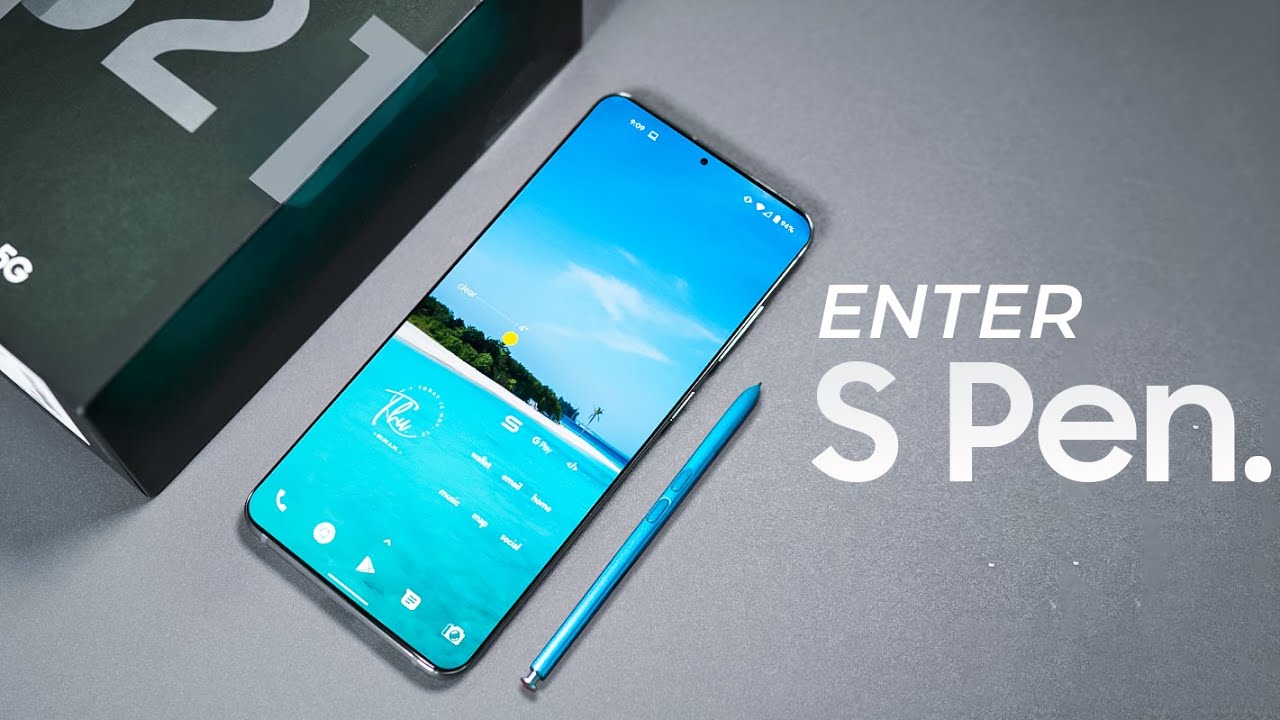
    It may be Tuesday, but this week is already proving to be a massive one for Samsung Galaxy S21 leaks. Concept renders based on photos of Samsung’s next-gen flagship lineup were published yesterday morning and were followed hours later by the first live image of the Galaxy S21+ and S21 Ultra.

    The teaser videos that show off the Galaxy S21 and Galaxy S21+ depict both smartphones in the new Phantom Violet finish, which is perhaps Samsung’s most adventurous colorway since the Galaxy Note 10’s Aura Glow.

    Rather than settling for a single color across the phone, Phantom Violet pairs a violet rear panel with a copper-colored frame. The latter is presumably made out of aluminum, whereas the rear panel is made out of plastic on the Galaxy S21 and glass on the Plus-branded smartphone.

    When it comes to the finalized design, Samsung’s decision to use a new camera design on its next flagship lineup has essentially been confirmed by the videos. The new camera module blends into the frame on both the left side and top edge.

    In the case of the Galaxy S21 and Galaxy S21+, it houses three cameras, although there is an LED flash positioned next to it too. On the hardware front, these cameras won’t introduce anything groundbreaking because they have been borrowed from the Galaxy S20. A range of software improvements is very likely, though.

    Coupled with everything mentioned above is a punch-hole display. The panel measures in at 6.2-inches on the Galaxy S21 and 6.7-inches on the S21+ and, as confirmed by the teaser videos, settles for flat edges.

    One-upping the vanilla models is the Galaxy S21 Ultra, which features a quad-camera setup on the back. It consists of a 108-megapixel main sensor, a 10-megapixel 3x telephoto zoom shooter, a 12-megapixel ultra-wide, and a 10-megapixel 10x periscope zoom.

    These components sit alongside an LED flash and a laser autofocus system. The latter was present on the Galaxy Note 20 Ultra as well and ultimately helps avoid the autofocus issues that plagued the Galaxy S20 Ultra earlier this year.

    Of course, due to the extra cameras and laser autofocus system, the overall camera bump is much larger, although it still blends into the frame. Speaking of which, the frame should be carved out of stainless steel and paired with a glass back panel.

    As for the color, the Galaxy S21 Ultra is shown off in Phantom Black, which is paired with a matte finish. On a separate note, the punch-hole display can be seen in the longer video with curved edges. It boasts a diagonal of 6.8-inches, per recent reports.

    Samsung is understood to have scheduled its next Unpacked event for Thursday, January 14. It will unveil the whole Galaxy S21 series at the event and its next pair of earbuds, the Galaxy Buds Pro.

    Pre-orders are rumored to kick off the same day ahead of shipments on Friday, January 29. The flagship lineup could start at $849, with the Plus-branded device landing at $1,049 and the Ultra coming in at $1,249.

  • Samsung Galaxy S20 FE owners are reporting touchscreen issues

    Samsung Galaxy S20 FE owners are reporting touchscreen issues

    Samsung recently launched the Galaxy S20 FE – a watered-down version of the Galaxy S20.  The phone sports a 6.5-inch display with a 120Hz refresh rate and it is powered by the Snapdragon 865. It features a triple camera system with a 12MP primary sensor, a 12MP ultrawide unit, and an 8MP telephoto module, and packs a 4,500mAh battery. The handset starts at $699, which makes it much more attractive than the Galaxy S20 which costs $999 in its entry-level configuration. Unfortunately, it seems to have a glaring flaw.

    Many Galaxy S20 FE owners have taken to Reddit and Samsung’s Community Forums to report issues related to the display. The problems differ from person to person but the common theme is that the touch responsiveness is glitchy, as a result of which sometimes the phone takes too long to recognize inputs or it responds to them erroneously. Other times, it ignores touches and swipes altogether or registers ghost touches.

    It is currently not known how widespread the problem is and whether it’s related to the hardware or software, although the latter seems more likely as a factory reset and software update resolved the issue for some people.

    Either way, it’s not a good look for Samsung. The Galaxy S20 FE was launched as a response to lower-than-expected sales of the Galaxy S20 series. It was released only recently and opened mostly to great reviews.

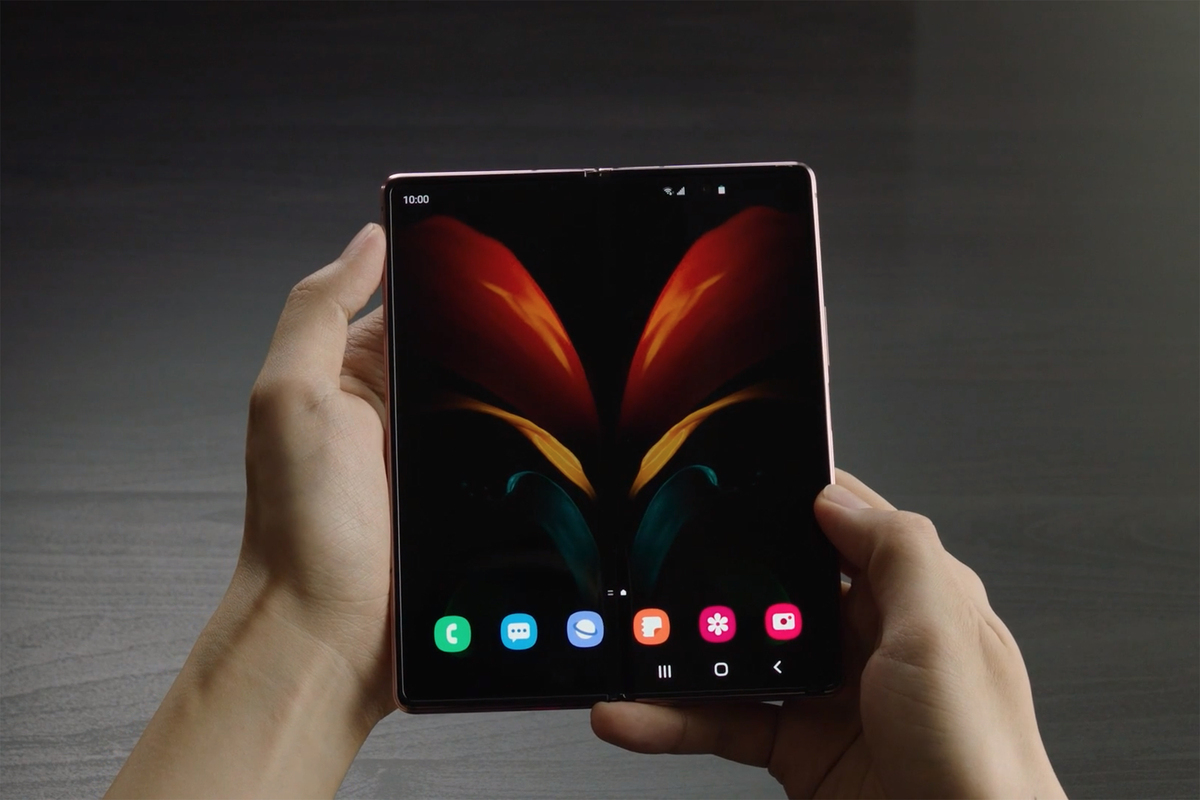
  • Samsung’s Galaxy Z Fold 2 5G is proving even more popular than expected

    Samsung’s Galaxy Z Fold 2 5G is proving even more popular than expected

    Priced at $2,000 in the US, the 5G-enabled Galaxy Z Fold 2 is not what we’d call widely accessible to the masses. But even though 2020 has been a tough year for high-end, high-priced smartphones in general and Samsung flagships in particular, this foldable beaut is sure shaping up to be a smash hit, at least by early foldable market standards.

    Forecasted ahead of its official announcement to rack up around 500,000 unit sales by the end of 2020 and tipped to cross 800,000 units manufactured in that same timeframe just last week, the Galaxy Z Fold 2 5G is today estimated to reach an “initial volume” of 10,000 copies or so in South Korea.

    That may not sound like an impressive number by itself, not to mention when you compare it to the other two figures above, but apparently, it’s triple the initial regional volume of the original Galaxy Fold last year. It’s also important to keep in mind that while Samsung cares a lot about its domestic market, this is only one of many major countries where the Galaxy Z Fold 2 5G could sell like hotcakes compared to its predecessor.

    In other markets, starting with the US, show a similarly “positive reaction” as the one reported in the tech giant’s homeland, the foldable device may well exceed 500,000 or even 800,000 shipments this year. More importantly, Samsung is proving by allotting three times as many second-gen Z Folds than OG Galaxy Folds to major South Korean carriers and independent stores that it can produce a significantly higher number of foldable smartphones during these challenging times for the mobile industry, contrary to rampant speculation from a few months back.

    At least for now, there are no reasons to expect substantial delays or particularly long shipping times for early adopters. That is, as long as you’re not looking to buy the luxury Thom Browne Edition.

    Believe it or not, around 230,000 people in Samsung’s homeland applied for a bank-breaking purchase in just two days, which means a lot of potential buyers will end up feeling terribly disappointed at missing their chance to spend the rough equivalent of $3,330 on, well, a phone.

    There are only 5,000 copies of this thing prepared to be distributed worldwide, mind you, including a measly 1,000 in South Korea. The Galaxy Z Fold 2 Thom Browne Edition is not up for grabs stateside yet, but as far as the standard version is concerned, you still have until September 18 to pre-order your copy in a Mystic Black or Mystic Bronze color.

  • Sales of Galaxy S20 underwhelm amid pandemic

    Sales of Galaxy S20 underwhelm amid pandemic

    Sales of Samsung Electronics’ latest flagship series Galaxy S20 are hovering below those of its predecessor as the global new coronavirus pandemic has led to a slump in demand for consumer products, industry sources say.

    South Korean sales of the Galaxy S20 series, which comes in three models — the S20, S20 Plus and S20 Ultra — are estimated to have accounted for only 60 percent of the sales of the Galaxy S10 series so far, according to sources from local mobile carriers.

    The South Korean tech giant, which has not been providing official numbers, estimated the sales were roughly 80 percent of the Galaxy S10 5G series.

    The decrease apparently came as consumer sentiment was seriously impacted by the Covid-19 pandemic, which led to economic jitters around the globe.

    Reflecting the weaker-than-expected performance, Samsung is estimated to have posted an operating profit of around 2.5 trillion won (US$2 billion) or below for the first quarter from the IT & mobile communications division, which oversees the smartphone business.

    The company will report its finalized earnings later this month.

    Samsung’s operating profit from the sector reached 2.9 trillion won in the third quarter of 2019, which slipped to 2.5 trillion won a quarter later

    Industry tracker Strategy Analytics earlier said global shipments of smartphones are estimated to reach 1 billion units, revising down its previous estimate of 1.3 billion units.

  • Samsung Galaxy Fold launched

    Samsung Galaxy Fold launched

    Samsung confirmed that the Galaxy Fold will be launched on the market in September, but it didn’t reveal an exact release date. Although reports pointed to a rather late September launch, it looks like Samsung has decided to greatly advance the launch schedule.

    The Korean media reports Samsung is ready to launch the Galaxy Fold on September 6, the first day of IFA 2019 trade fair. Even though pre-registrations for the foldable smartphone recently opened in China, South Korea will be the first country to get the Galaxy Fold.

    The same report claims Samsung Galaxy Fold will be released in September in the United States and China, although an exact release date hasn’t been unveiled yet. Samsung expects to sell around 20-30,000 Galaxy Fold units in South Korea by the end of the year.

    A Samsung official responded to the report by saying that “the specific launch schedule is not yet confirmed,” but if the information is accurate, we’ll learn more about the Galaxy Fold availability in less than a week from now.

  • Samsung unveils the chip that will be installed in the Galaxy Note 10 series

    Samsung unveils the chip that will be installed in the Galaxy Note 10 series

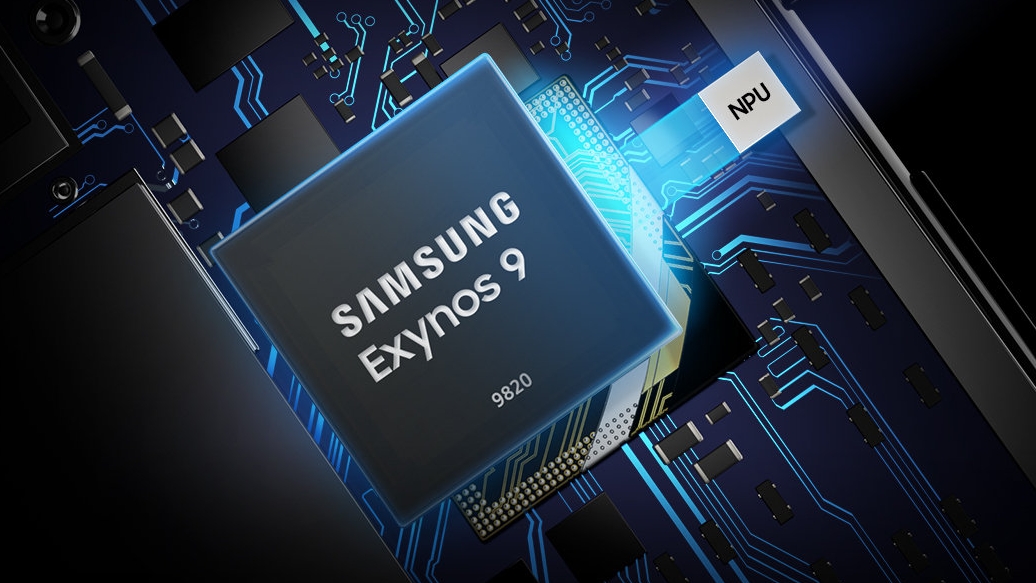
    Just hours before Samsung is set to unveil the Galaxy Note 10 line in the U.S., the manufacturer officially introduced the chipset that will power the phones outside of the U.S. The Exynos 9825 SoC is manufactured at Samsung’s own fabrication facilities using the 7nm EUV process. Using this process, more transistors fit inside the new chip than the number employed in the 8nm Exynos 9820. This should lead to performance improvements of 20% to 30% while the Exynos 9825 consumes 30% to 50% less power. The EUV stands for extreme-ultraviolet lithography. This is a technology that uses ultraviolet beams to etch silicon in finer details allowing for more precise placement of circuitry inside the chip.
    Samsung says that the Exynos 9825, similar to the Exynos 9820 it replaces, is equipped with two Samsung custom CPUs, two Cortex-A75 CPUs for complex tasks and four Cortex-A55 CPUs for less taxing demands. The graphics process unit (GPU) on the chip is the ARM Mali-G76 MP12 (also the same as the one on the Exynos 9820). The A-75 cores and the GPU will run at faster clock speeds than the same components on the Exynos 9820; the faster clock speeds and the use of 7nm EUV helped the newer chip to run faster in tests against its predecessor. The chip will have an integrated Neural Processing Unit (NPU) to help run Artifical Intelligence features for a smartphone camera allowing for the recognition of objects to optimize photographs. It also is used to learn user patterns and help apps pre-load faster. The NPU can also support Augmented Reality capabilities on a handset.
    The Exynos 9825 also comes with Universal Flash Storage (UFS) 3.0, which has twice the bandwidth and uses less energy than UFS 2.1. It also can run at higher temperatures, which is important considering all of the demands that are thrown at a smartphone these days. UFS 3.0 has a sequential read speed of almost 2280 MB/sec compared to roughly 800MB/sec with UFS 2.1. As for the modem on the Exynos 9825, it is an integrated 4G LTE-Advanced Pro modem with 8x Carrier Aggregation. The latter combines carriers to form larger data channels in order to increase capacity on a network. It is one of the tools used by wireless providers to increase data speeds. And when paired with Samsung’s Exynos 5100 5G modem (which supports both mmW and sub-6GHz 5G airwaves), the Exynos 9825 will support the next generation in wireless connectivity.
    The Exynos 9825 supports LPDDR4X memory and 22MP cameras in back and front. It also will work with a dual-camera setup (16MP + 16MP). Video can be shot in 8k at 30fps and 4K UHD video shoots at 150fps. Using a technology known as physically unclonable function (PUF), the chip isolates and secures users’ personal data.
    Historically, Samsung usually employs the latest Snapdragon Mobile Platform to run the latest Galaxy Note model in the U.S. with the Exynos chipset used just about everywhere else. However, a recent rumor called for all Galaxy Note 10 units (as opposed to the Galaxy Note 10+) in the states to also feature the Exynos 9825 SoC except for Verizon branded models. That rumor turned out not to be true, and all Galaxy Note 10 variants in the U.S. should be equipped with the Snapdragon 855 (+) Mobile Platform. The latter is manufactured by TSMC using its 7nm process.
    The last time that a Samsung Galaxy Note phone was sold in the U.S. with an Exynos chip was back in 2015 with the Galaxy Note 5. This was the year that the Snapdragon 810 had problems with overheating and the Galaxy S6 and the Galaxy Note 5 were both powered with the Exynos 7420 SoC in the states.
  • Samsung may launch new Galaxy Buds color to match the Note 10

    Samsung may launch new Galaxy Buds color to match the Note 10

    We’re less than two weeks away from Samsung’s big Galaxy Note 10 reveal, but information about the phone continue to pour in. But the Galaxy Note 10 might not be the only new product Samsung plans to reveal next month. The South Korean company is expected to introduce a brand new tablet, the Galaxy Tab S6, and a new set of accessories to go with its new flagship smartphone.

    A new pair of Galaxy Buds will be unveiled along with the Samsung Galaxy Note 10 on August 7. Unfortunately, these are not a new model, but a different color of the current model.

    The new Samsung Galaxy Buds earphones will match the Galaxy Note 10/10+ color, which is called “Aura Glow.” Both the buds and the carrying case will have the same white-silver color to match the Galaxy Note 10/10+.

    As far as price goes, these will cost the same as the original model that was launched back in April: €150/$150. It’s yet unclear whether or not they will be offered for free as an incentive for those who pre-order the Galaxy Note 10/10+, but we’ll most likely find out more about that on August 7.

    In the same piece of news, the same report claims Samsung plans to launch a few new in-ear headphones with AKG branding, created especially for the Galaxy Note 10/10+. The so-called Samsung ANC Wired Headphones will connect via USB Type-C port to the Note 10/10+ and will feature Active Noise Canceling technology for a low price. There will at least one other new pair AKG-branded headphones unveiled next month along with the Galaxy Note 10/10+, but that’s about all we know for now.

  • Samsung Galaxy S10 update adds Night mode improvements

    Samsung Galaxy S10 update adds Night mode improvements

    Samsung continues to improve the Galaxy S10 family with important new features and additional functionality. The upcoming update focuses on camera enhancements by adding a couple of nifty new features, as well as improvements to the phones’ performance when taking night shots.

    As the title says, it appears that the Galaxy S10’s decent Night mode has just been upgraded to very good. According to SamMobile, the May security update improves the Night mode by allowing users to take much cleaner pictures in low-light conditions.

    The differences are quite important as the update reduces noise that sometimes appears in night pictures. Moreover, Galaxy S10 users will now be able to use the Night mode with the ultra-wide camera, and even though noise still pops up in pictures taken with it, they are brighter and more detailed.

    Another important improvement is the fact that you can take Live Focus photos with the telephoto lens, something that was only possible with the Galaxy S10 5G. The new addition will allow users to take bokeh pictures of large objects much easier.

    Now, the update is currently being deployed in Switzerland as May 2019 security patch, but all three Galaxy S10 units should receive it worldwide in the coming days. We don’t have a release date for the United States, so you’ll just have to hope it will be rolled out sooner rather than later.

  • Samsung Galaxy Note 10 Supports 50W Charging

    Samsung Galaxy Note 10 Supports 50W Charging

    Samsung recently released two phones that support 25W fast charging, but you may have missed that because they are not available worldwide. Those are the 5G version of the Galaxy S10 and the Galaxy A70. More Samsung phones may get super-fast charging in the future, starting with this year’s Galaxy Note 10.

    We’ve already heard rumors that the Galaxy Note 10 is likely to great battery life, and it seems like Samsung is also planning to introduce 25W fast charging alongside the increased battery capacity. It’s too early to tell whether the base Note 10 will get super-fast charging, or whether it will be reserved for the “Pro” version only, but prolific leaker Ice Universe claims that the charge speed may actually exceed 25W. We may be talking about 50W, which is the current bar set by the competition.

    OnePlus’s DASH Charge works at 30W, while Oppo’s SuperVOOC charge can hit around 50W, and both have been tested with great results. Similarly, Xiaomi has an insane 100W prototype charging solution that’s said to be able to fully juice up a 4000mAh battery in just 17 minutes. Over the last three years, Samsung has understandably been a bit more careful in regards to battery capacity and charging speeds, as the memory of the ill-fated Galaxy Note 7 still lingers in the public mind.

    The Samsung Galaxy Note 10 and Galaxy Note 10 Pro are likely to launch in mid-August, and if recent rumors are to be believed, they won’t disappoint. The more expensive Pro variant is said to feature the same hexa-camera setup as the Galaxy 10 5G. That includes four cameras on the back (12MP primary with OIS + 12MP telephoto with 2x optical zoom + 16MP ultra-wide angle+ depth sensor) and two selfie snappers in front. The base Galaxy Note 10 will reportedly have a penta-camera setup that includes everything on the Note 10 Pro, except for the depth sensor. The U.S. version of all Note 10 units will be powered by the Snapdragon 855 Mobile Platform, equipped with at least 8GB of memory.