Retail News CRM

Tag: gas

  • Low imports cause gasoline shortage

    Low imports cause gasoline shortage

    The current partial shortage of gasoline and oil has been caused by wholesalers not importing sufficient amounts, says said Deputy Minister of Industry and Trade Do Thang Hai.

    Commissions for retailers being cut amidst fluctuating world prices is also a factor, Hai told the press reporters Tuesday. Fuel retailers said they suffer losses after their commissions were adjusted downward and many want to close down.

    Wholesalers were importing gasoline and oil when their global prices surged, sometimes by 57-85% against the same period last year, but they had to sell it at lower prices.

    Currently, Vietnamese authorities adjust fuel retail prices every 10 days based on the average prices of the previous 10 days. However, many people including lawmakers have said this cycle is no longer suitable because it leaves domestic prices outdated compared to global prices, which have been unstable of late.

    Hai said wholesalers have to cover different costs like freight to bring imported gasoline and oil to Vietnam or to transport domestically produced fuels to ports nationwide, but the costs used by the ministry to calculate the base price are smaller than actual costs borne by the wholesalers.

    For these reasons, he said that wholesalers have incurred losses, so they cut back on imports and slashed commissions for retailers.

    Hai said that other reasons for the partial fuel shortage include lower production by two domestic refineries and the absence of some wholesalers.

    The two refineries produced 9.7 million tons of gasoline and oil in the first 10 months, some 170,000 tons lower than the yearly plan, according to the Ministry of Industry and Trade.

    Several wholesalers in the south have had their business licenses revoked for administrative wrongdoings, and some others have had customs clearance of imported fuel suspended for failing to meet customs-related requirements like electronic data connections.

    The Ministry of Finance has agreed to factor in an increase in the transportation cost of importing fuel, enabling a hike in retail prices.

    The costs is VND290-560 (1.2-2.3 cents) higher for a liter of gas and VND160-660 for diesel, and reflected in retail prices from Nov. 11.

    Another solution is increasing national gasoline and oil reserves, Hai said, noting that current reserves were equivalent to just 5-7 days of consumption.
  • Gasoline tax cut not on National Assembly agenda this time

    Gasoline tax cut not on National Assembly agenda this time

    The proposal for cuts to special consumption tax and value-added tax on gasoline will not be reviewed in the upcoming National Assembly session.

    Addressing the press Monday afternoon, Nguyen Minh Son, vice chairman of the Economic Committee, said the government was yet to present a report to the National Assembly on decreasing the special consumption tax and value-added tax on gasoline.

    As a result, the National Assembly will not discuss the issue at the fourth session of the 15th National Assembly, which is set to begin on October 20.

    “When the government submits the proposal, the National Assembly’s agencies would consider verifying and submitting it to the National Assembly at the next earliest meeting,” Son said.

    The Ministry of Finance has prepared a proposal wherein the special consumption tax on gasoline will be halved and the value-added tax on gasoline and oil will be cut by 20-50%. The proposal has been submitted for review and inputs to the Ministry of Justice.

    A representative of the Ministry of Finance said Monday that they had developed a plan that contained different tax reduction measures in the event of gasoline prices rising in the future. It would be submitted to the National Assembly if the government demands it.

    The government determines the timing of measures to reduce VAT and excise duty, which is based on closely monitoring gasoline price changes and balancing the budget collection plan, the rep said.

    Referring to the recent swings in gasoline prices, Son said that it was an issue under the control of the government, including the ministries of Finance and Industry and Trade.

    Since major fluctuations in global gasoline prices would not immediately be reflected in domestic prices, he suggested that that the government initiates adjustments to the retail price management system in a more acceptable manner while protecting the interests of people, enterprises, retailers and importers and exporters.

    Since October 3, the petroleum market, particularly in the southern region, has been experiencing supply shortages.

    People in the south have had great difficulty getting gasoline in recent weeks with many gas stations running out of fuel or selling restricted quantities as a running battle over commissions with oil companies disrupted supply.

    In Ho Chi Minh City, for example, 137 outlets did not have gasoline to sell on October 11.

    Supply has also been scarce in other southern localities including the provinces of Binh Duong, Dong Nai, Binh Phuoc, Kien Giang and An Giang.

    However, supplies resumed October 12 with authorities guaranteeing there would be enough gasoline for the next 10 days.

  • Gasoline prices fall fourth consecutive time

    Gasoline prices fall fourth consecutive time

    Vietnam gasoline prices on Monday dropped 1.8 percent to the lowest since Feb. 21 as global rates declined.

    A liter of popular RON 95 gasoline now costs VND25,600 ($1.10), while that of biofuel RON 92 E5 costs VND24,620.

    This means prices have fallen 21.3-22.1 percent since this year’s peak on June 21.

    On the global market, gasoline prices have decreased by 1.22-1.54 percent in the last 10 days, according to data from the Ministry of Industry and Trade and the Ministry of Finance.

    WTI crude futures fell over 2 percent to below $98 barrel Monday as fears of a global slowdown outweighed continued supply disruptions and market tightness.
  • LNG power developers in troubled waters

    LNG power developers in troubled waters

    Liquefied natural gas (LNG) power has been considered a major part of Vietnam’s solutions for reducing carbon emission, but the country is facing several hurdles in using it.

    LNG emits half the amount of carbon compared to coal in electricity production, therefore several experts recommended that Vietnam focuses on it alongside renewable sources to achieve net zero carbon emissions by 2050, as Prime Minister Pham Minh Chinh committed at the COP26 late last year.

    Vietnam’s Power Development Master Plan 8 targets converting 18 gigawatts (GW) of coal-fired power into 14 GW generated from LNG and 12-15 GW from renewable sources.

    But for this, the country will have to import all of the LNG for generation – around 14-18 billion cubic meters in 2030 – at a time prices have it record highs following the Russia-Ukraine crisis.

    LNG prices have tripled in a year, according to the Institute for Energy Economics and Financial Analysis.

    In Europe, S&P Global Commodity Insights assessed LNG prices on a delivered ex-ship (DES) basis into north-west Europe (NWE) at $38.233/mmBtu on July 21.

    The competition between Europe and Asia at a time when global LNG supply is tight has recently pushed Asian LNG prices to a four-month high and close to record level seen in December at $44.35/mmBtu, according to Reuters.

    Nguyen Ngoc Hung, head of Energy Economics at the Vietnam Institute for Energy, cited international sources as saying prices would peak in 2023 before settling down.

    “LNG power plants will start operating in 2026-2030. Prices will be stable, and fall in the long term due to lower demand,” he said.

    The average LNG price for September delivery into north-east Asia was estimated at $38 per million British thermal units (mmBtu), down $2.5 or 6.2 percent, from the previous week, industry sources said.

    The Ministry of Industry and Trade has said the price rise would be manageable, with a 10-percent price hike only causing a 1.1-1.5 percent cost overrun.

    Determining prices to reach a power purchase agreement (PPA) is one of the key steps in developing a LNG power plant, but the unpredictability of prices is muddling the process.

    Half of the LNG projects under consideration in Vietnam are being delayed by unfinished PPAs.

    Responding to this situation, the Ministry of Industry and Trade said a few requests by LNG power developers are not in alignment with current regulations.

    It cited as an example the Bac Lieu gas plant, invested in by Singapore’s Delta Offshore Energy, which wants the state-owned utility Vietnam Electricity (EVN) to buy all the energy generated, apart from other incentives.

    Several LNG project developers have also said they are finding it difficult to mobilize capital with lenders focused on minimizing risks.

    Investors of the Hai Lang LNG power plant said the credit crunch was happening because projects implemented by independent power producers can only sell a limited output to EVN, making them less appealing in terms of profitability.

    Vietnam, a manufacturing powerhouse that currently generates most of its electricity from coal, is drafting a new national power development plan that includes 22 LNG-fired power plants. These will have a huge combined potential capacity of up to 108.5 gigawatts.

  • Gasoline price rises 1.5 pct

    Gasoline price rises 1.5 pct

    Vietnam’s RON 95 gasoline price increased by 1.54 percent Tuesday to a new record of VND32,870 ($1.42) per liter, having risen by 41 percent so far this year.

    This was the seventh increase in a row since mid-April of the popular gasoline, which accounts for 70 percent of total fuel consumption in the country.

    RON 92 biofuel also saw its price rising by 0.61 percent to VND32,370 per liter, having increased by 43.5 percent this year.

    Diesel increased by 3.4 percent Tuesday.

    Vietnam’s fuel stabilization fund, set up to contain price surges, is currently negative.

    The government has cut the environmental tax on fuel by half to VND2,000 from April for the rest of the year, and is considering cutting it by another VND1,000.

  • Asian Consumers Suffer From Record High Gas Prices In Domestic And Global Markets

    Asian Consumers Suffer From Record High Gas Prices In Domestic And Global Markets

    Asian gas consumers are facing hard times as they are forced to import spot LNG at record high prices. Experts believe this is likely to kill any demand for gas within the region and accelerate demand destruction for natural gas while also amplifying concerns about costlier goods and services. Emerging markets are the most hit as they are grappling with high spot LNG prices and oil prices staying above $100 per barrel, which makes LNG imports the most expensive they have been in years. ICE May Brent futures were trading above $121 per barrel in Asian hours yesterday, which means oil-linked LNG prices could be around $18/MMBtu. According to S&P Global commodity Insights, the plats JKM for May delivery was assessed at $33.841/MMBtu on Wednesday.

    A recent report indicates that LNG prices have halted spot trade for these commodities. However to trade derivative products attached to the assets on top of forex you can click here. One European utility claims that market players have been discussing possible transactions and trying to arrange swaps. Still, due to price volatility, nothing is being finalized, while Japanese and Korean utilities are less willing to procure more cargo because of high prices.

    One South Korean importer claims that they don’t want to buy any cargo even though the company’s inventories are not sufficient. The plan is to roll the requirements till later in June or July.

    Over this month, price-sensitive LNG importers such as Pakistan, India, and Thailand have had to pay around $33/MMBtu – $36/MMBtu for spot LNG cargoes which represent some of the highest LNG prices these countries have had to bear. According to S&P Global data, state-run Indian Oil Corp. bought two spot LNG cargoes from a trading house on March 21 for $33.7-$33.8/MMBtu and $33.3-$33.4/MMBtu, to be delivered on May 7 and June 4, respectively.

    PTT of Thailand bought three spot LNG cargoes for $35-$36/MMBtu for delivery in the second half of April. Also, on March 16, India’s Gujarat State Petroleum Corp bought a spot cargo for $35.2-$35.3/MMBtu from a trading house for delivery on March 28-April 15. And Pakistan bought a cargo for March delivery ranging in the mid-$20/MMBtu.

    Record High Global Gas Prices

    Most nations are witnessing record-high global gas prices as they slowly filter into the domestic markets. According to company officials, Reliance Industries Ltd., a diversified conglomerate based in India, sold natural gas from a coal-bed methane block in the central state of Madhya Pradesh for around $23.5/MMBtu. The price reflects a hefty premium over the base price of 14% Dated Brent as stated in the tender for a one-year supply of 0.65 million cubic meters of gas per day. The tender was awarded to gas companies, including state-run GAIL ltd., Gujarat State Petroleum Corp, and Shell.

    The quote received by Reliance for CBM gas is higher than the price state explorers such as ONGC and Oil India Ltd receive for gas nominated from their upstream fields, which is capped at $6.13/MMBtu. Even Reliance’s natural gas from its KG basin fields is sold at similar levels. According to one trader, a domestic gas tender priced in the low-to-mid $20s/MMBtu is still at a better price than spot LNG. The trader adds that it is still cheaper compared to spot LNG even though it’s costly, which explains why such a price was agreed considering the current high Brent crude and spot LNG prices.

    Another trader adds that high prices are determined by supply and demand. Also, the limited quantity offered through the domestic tender might be another factor. The trader adds that with an inadequate gas supply, if one can get gas in India domestically at lower prices than imported LNG, then why not take advantage of the situation.

    A third trader noted that India’s gas demand was hanging in the balance unless prices dropped and based on the forward curve. December 2022 JKM prices are still not affordable for India’s industrial sector compared to liquids like LPG. India is working to align natural gas prices with global markets. A government panel has submitted a price reform proposal for locally produced natural gas where the entire output can be sold on the domestic gas exchange platform for price discovery.


  • Gasoline prices surge 10 pct

    Gasoline prices surge 10 pct

    Vietnam gasoline prices skyrocketed by 10 percent to another new record Friday, after authorities adjusted them upward for the seventh time in three months.

    The price of popular gasoline RON 95 and biofuel E5 RON 92 both rose from VND26,830 per liter to VND29,820 per liter and from VND26,070 to VND28,980, respectively. ($1 = VND22,875)

    The price of other fuels, including kerosene, diesel, and mazut, also climbed by 12-16.5 percent. Friday’s was the seventh hike since Dec. 10, 2021 without a downward adjustment in between.

    Compared to December, RON 95 gasoline prices are already up by over 30 percent, while those of biofuel E5 RON 92 have risen 31.3 percent.

    Global oil prices fell on Wednesday by the most in nearly two years after OPEC member United Arab Emirates stated it supported pumping more oil into a market roiled by supply disruptions due to sanctions on Russia after it attacked Ukraine.

    Its prices settled at $109.3 per barrel Wednesday, down $18.7 or 14.6 percent, their biggest one-day decline since April 2020. At the time of writing, oil prices are hovering above $110 per barrel.

    Recently, the Ministry of Finance has proposed to halve the environmental tax on fuel, from VND4,000 to VND2,000 per liter on gasoline and from VND2,000 to VND1,000 on diesel.

    Environmental tax, together with other taxes and fees, adds up to 43 percent of gasoline retail prices in Vietnam.

    Vietnam authorities make gasoline price adjustments on the 1st, 11th and 21st day of the month; therefore, changes follow global movements after a certain delay.

  • Gas stations limit sales as supply shortage persists

    Gas stations limit sales as supply shortage persists

    Gas stations across the country are again complaining about supply shortages and losses due to surging prices, which are forcing them to limit sales. In the southern province of An Giang, some limited sales to VND30,000 ($1.32) per customer on Tuesday, forcing buyers to go to another station to fill the rest of their gas tank. Nine stations have closed down and it is confirmed they have run out of stocks, the province Market Surveillance Department said.

    In other southern localities like Binh Duong Province and Ho Chi Minh City too, some gas stations reported shortages.

    “Oil imports have fallen by 40-50 percent since before the price increase,” Do Thanh Han, CEO of Quoc Thang Ltd, which has eight gas stations in Binh Duong, said. He was referring to the 3.9-percent gasoline retail price hike the government affected last Friday. The CEO of a gasoline distribution company in HCMC said supply has fallen by 30 percent below normal.

    In Hanoi, Nguyen Van Tiu, CEO of Tu Luc Gas and Oil Co., said it has been very difficult to source supply in the last two days. With wholesalers increasing prices, his company’s commission has fallen from VND200 per liter to zero, he said. The increase last Friday was the fourth since December after a period of calm.

    The popular RON 95 gasoline is now at an eight-year high of VND25,320 per liter, having risen by 11 percent this year. The retail price surge has caused many gas stations to sell at a loss as they say wholesale price exceeds retail price and force them to have zero commission or less.

    Tran Thai Binh, owner of eight stations in the southern province of Dong Thap, said that the company has been losing nearly VND2 million a day for over a month due to falling commission.

    Some stations have closed down to avoid a bankruptcy.

    “We cannot hold on anymore”, said Hoang, owner of a gas station in the Central Highlands in his request to the Ministry of Industry and Trade for permission to stop selling for a week.

    Hoang has not been able to source inventory since last Friday.

    “If we continue to operate, we will go bankrupt”.

    Tran Duy Dong, head of the trade ministry’s domestic market agency, said that supply is low because the country’s biggest refinery Nghi Son is only operating at 55 percent of capacity.

    It is set to reach 80 percent by the end this month and 100 percent next month.

    Some consignments are arriving and the shortage will be eased in the next one or two weeks, he added.

    The reason stations report losses is because global rates increased during Vietnam’s Lunar New Year holiday Tet, which means authorities only raised prices up accordingly after, and by then stations have already been selling at a loss, Dong said.

  • Oil Falls In Biggest Weekly Decline In Months On Demand Worries

    Oil Falls In Biggest Weekly Decline In Months On Demand Worries

    Oil prices fell about 1% lower on Friday, posting to their steepest weekly losses in months, on worries that travel restrictions to curb the spread of the Delta variant of COVID-19 will derail the global recovery in energy demand. Crude futures also came under pressure as the dollar strengthened after monthly U.S. job growth came in higher than expected. A stronger dollar makes greenback-denominated oil more expensive for buyers in other currencies.

    Brent crude oil futures settled down 59 cents, or 0.8%, at $70.70, while U.S. West Texas Intermediate (WTI) crude futures fell 81, or 1.2%, to settle at $68.28 a barrel.

    For the week, global benchmark Brent shed more than 6%, its largest week of losses in four months, and WTI tumbled nearly 7% in its biggest weekly decline in nine months.

    “The price action we see now is really a function of the macro picture,” said Howie Lee, an economist at Singapore bank OCBC. “The Delta variant is now really starting to hit home and you see risk aversion in many markets, not just oil.”

    Growth in the rig count has slowed in recent months as drillers continue to focus on capital discipline.

    U.S. President Joe Biden said that COVID-19 cases in the United States, which have climbed to a six-month high, will go up before they come down and that the new Delta variant is taking a needless toll on the country.

    Japan is poised to expand emergency restrictions to more regions of the country, while China, the world’s second-largest oil consumer, has imposed curbs in some cities and canceled flights.

    “Increased travel restrictions in China have come under the microscope of traders and could become a key oil price mover as this month proceeds,” said Jim Ritterbusch, president of Ritterbusch and Associates LLC in Galena, Illinois.

    U.S. oil rigs rose two to 387 this week, energy services firm Baker Hughes Co said. Growth in the rig count has slowed in recent months as drillers continue to focus on capital discipline.

  • Electric cars fail to get charged up without policy support

    Electric cars fail to get charged up without policy support

    A lack of policies promoting battery production and building a charging station network is preventing the electric car market in Vietnam from hitting the road running.

    At the end of March, automaker VinFast began accepting pre-orders for its first electric cars. More than 4,000 orders were placed on the very first day.

    The company has requested several incentives for electric vehicle development, including scrapping special consumption tax and registration fees on electric cars for five years.

    Some brands have imported electric and hybrid vehicles into Vietnam earlier.

    In August last year, Toyota started selling its first hybrid cars in Vietnam with low fuel consumption, giving 100 km for 4.6 liters of fuel.

    Mitsubishi also distributed its i-MiEV cars in Vietnam in 2017 and installed charging stations in some localities. However, after 10 years of making efforts to distribute them to many different markets, the company has stopped manufacturing the vehicles now.

    Last year, around 1,000 electric and hybrid vehicles were sold in Vietnam, with the latter accounting for 99 percent. The figure for gas powered vehicles was over 296,000 units.

    The Ministry of Industry and Trade said in a recent report to the government that there has not been real support policy for electric cars.

    Apart from VinFast which is manufacturing the vehicles, foreign brands like Honda, Toyota and Mitsubishi have mostly been importing electric vehicles without any concrete plan to make them in Vietnam.

    Experts say that the lack of a systemic policy to support the industry concerning the manufacturing of battery, the development charging infrastructure, prices and emission.

    “Batteries need to have high durability and have quick charge function, while the charging station network should be widespread. These factors are what missing in Vietnam’s electric car industry,” said an expert in the auto industry who asked not be identified.

    VinFast is set to tackle these challenges with plans to set up over 2,000 charging stations nationwide by the end of this year.

    The industry ministry report said that prices for electric vehicles are not enticing enough compared to fuel vehicles.

    A 15 percent special consumption tax on electric cars, compared to 30-50 percent on fuel cars, is not enough to bring electric car prices down to an attractive level to customers, it said.

    Another challenge is electric vehicles will still be using coal-fired and oil-fired electricity which has high emission, as renewable energy is not stable and has high price tag, the it added.

    Dau Anh Tuan, head of the Vietnam Chamber of Commerce and Industry’s legal department, proposed that cars be applied a special consumption tax based on how much carbon dioxide they release into the environment, which will help encourage people to switch to electric vehicles.

    Policies should focus on supporting Vietnamese companies to make electric vehicles, not foreign ones, he added.

  • Petrol, Diesel Prices Stable Across All Metros

    Petrol, Diesel Prices Stable Across All Metros

    Oil marketing companies have left petrol and diesel prices unchanged across the country on Wednesday. According to Indian Oil Corporation website, a litre of petrol costs Rs 74.76 in Delhi, Rs 77.44 in Kolkata, Rs 80.42 in Mumbai and Rs 77.72 in Chennai on Wednesday. Dies el costs Rs 65.73 a litre in Delhi, Rs 68.14 a litre in Kolkata, Rs 68.94 a litre in Mumbai and Rs 69.74 a litre in Chennai on Wednesday.

    The fuel prices are the cheapest in Delhi compared to all metros due to lower taxes. As per the daily pricing mechanism, the fuel prices are dependent on the global crude prices and the rupee-US dollar exchange rate as India imports almost 80 per cent of its crude requirements. The benchmark Brent crude was $62.98 per barrel in international market on Tuesday.

    Deputy vice president of Angel Broking, Anuj Gupta said: “The report of increase in crude oil stock in America has led to the decline in the international prices. This is likely to continue as talks on tariffs between the US and China are also going on which may lead to de-escalation of tensions.”

  • Caltex set to float 49 per cent stake in 250 retail sites

    Caltex set to float 49 per cent stake in 250 retail sites

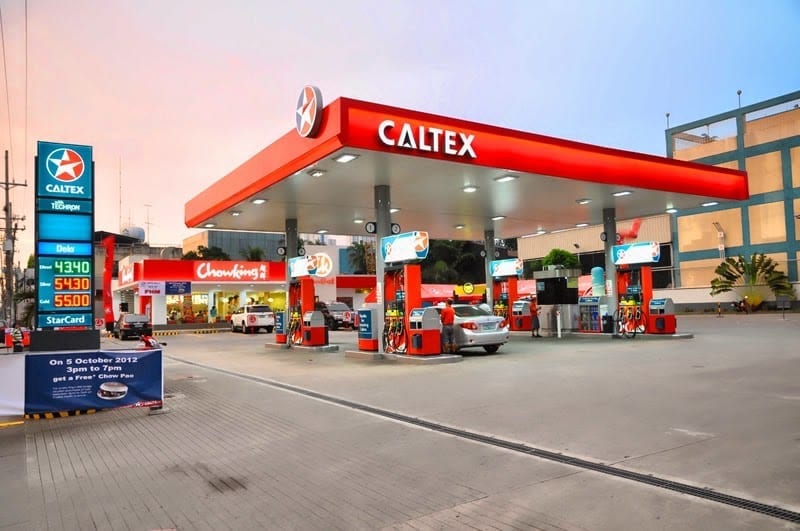
    Fuel and convenience retailer Caltex is planning to undertake an initial public offering (IPO) of up to a 49 percent stake in 250 retail sites.

    The retailer would retain a majority 51 percent interest and enter into a long-term lease agreement for each site. The 250 sites represent all the freehold sites in a core network of 500 sites.

    The retailer expects the proposed IPO to offer significant value for shareholders, while also allowing the company to maintain operational control of the core Convenience Retail network.

    “This transaction is expected to release significant capital that could be used to further strengthen the balance sheet, fund future growth opportunities and return capital to Caltex shareholders in a way that unlocks the franking credits balance, in line with our capital allocation framework,” Caltex chief financial officer Matt Halliday said in an update to the ASX on Monday.

    Caltex expects to make rental payments of between $80 million to $100 million to the property trust in the first year.

    At the company’s half-year results in August, a 54 percent drop in profit prompted plans to drive growth from an enhanced convenience offer through about 500 core sites. As part of its plans to reduce costs, the company is offloading 50 higher-value metropolitan petrol stations.

    Caltex issued an update on its convenience retail business on Monday morning, reporting that annual earnings before interest and tax is expected to be in the range of $190 ‐ 210 million, a significant increase on the first half of 2019, driven by an improvement in fuel margin.

    “Despite the softer conditions from ongoing Australian economic weakness, Caltex has continued to outperform our competitors in the retail fuel market by leveraging our fuel supply chain expertise and our high-quality retail network,” Caltex managing director and CEO, Julian Segal, said.

    Segal also pointed to the recent opening of the first Caltex Woolworths Metro store in North Ryde as another milestone for the retailer. A second store is set to launch in Kingsford, NSW, this week and a third will open in Melbourne early next year. A further update on the store rollout will be given at its Investor Day.

    If the proposed IPO is approved, the transaction is expected to be completed in the first half of 2020.

  • BP pulls sexualised magazines from stores

    BP pulls sexualised magazines from stores

    Fuel giant BP Australia has joined 7-Eleven and pulled two “M+” rated magazines from its 350 petrol outlets across the country after complaints they sexualized young girls and promoted harassment.

    People and The Picture magazines, published by Bauer, will be pulled from the shelves BP has confirmed.

    “M+ rated magazines will no longer be stocked at our 350 company-owned stores across Australia,” BP tweeted on Monday night.

    Its decision comes after activist group Collective Shout said it alerted BP to recent covers of the Australian magazines, which frequently publish pictures of glamour models and stories with a sexual element.

    Headlines on the covers included “Better Than Viagra” and featured a photograph of a young woman in pigtails with the caption “I have no gag reflex”, Collective Shout said.

    Now the group has set its sights on supermarket giant Coles, which still stocks the publications.

    “The display and sale of pornographic magazines in the public space creates a hostile environment for women and girls,” campaigns manager Melinda Liszewski said in a statement.

    “We urge other retailers selling these magazines – such as Coles Express – to follow the example set by 7-Eleven and BP and cease the sale of ‘unrestricted’ pornographic magazines immediately.”

    7-Eleven recently stopped selling the magazines in its 700 convenience stores.

    Collective Shout campaigns against the objectification of women and the sexualization of girls, according to its website.

  • Gull continues CEO search

    Gull continues CEO search

    The leader of Caltex Australia for the past decade has announced his upcoming retirement.

    Managing director and chief executive Julian Segal, who started at the petrol and convenience business in 2009, will stay on board until a suitable replacement is found.

    Caltex chairman Steven Gregg said Segal has made significant contributions to the company during his tenure.

    “Julian has delivered outstanding outcomes for Caltex’s shareholders, improving operational and financial performance and steering the company through a number of challenges and transitions,” Gregg said.

    “We are pleased that Julian will continue to work to execute our strategy and ensure continuity of leadership as we implement plans to find his successor.”

    Julian oversaw major milestones in the petrol business, such as the closure of the Kurnell refinery, the establishment of Ampol Singapore, our expansion into New Zealand and the Philippines, and developing Caltex’s international fuel sourcing and supply chain, as well as driving an improved convenience offer in Australia.

    According to Gregg, Segal will be leaving an agile and resilient Caltex that is poised for further growth.

    Segal said leading the business has been an honour, and that he is committed to leading the business through the search for his replacement.

    “I am proud of what’s been achieved for shareholders, customers, employees and our community partners,” Segal said.

    “Caltex’s strength has always been its ability to adapt and transform and the company has an exciting future. I look forward to continuing to work with my colleagues to deliver the Caltex strategy as the Board works through the succession process.”

    Caltex will deliver its half-year results later this month. It expects group earnings before interest and tax to be just $120-140 million, compared to the $443 million it reported in the 2018 half, due to difficult conditions rising from a slowing Australian economy.

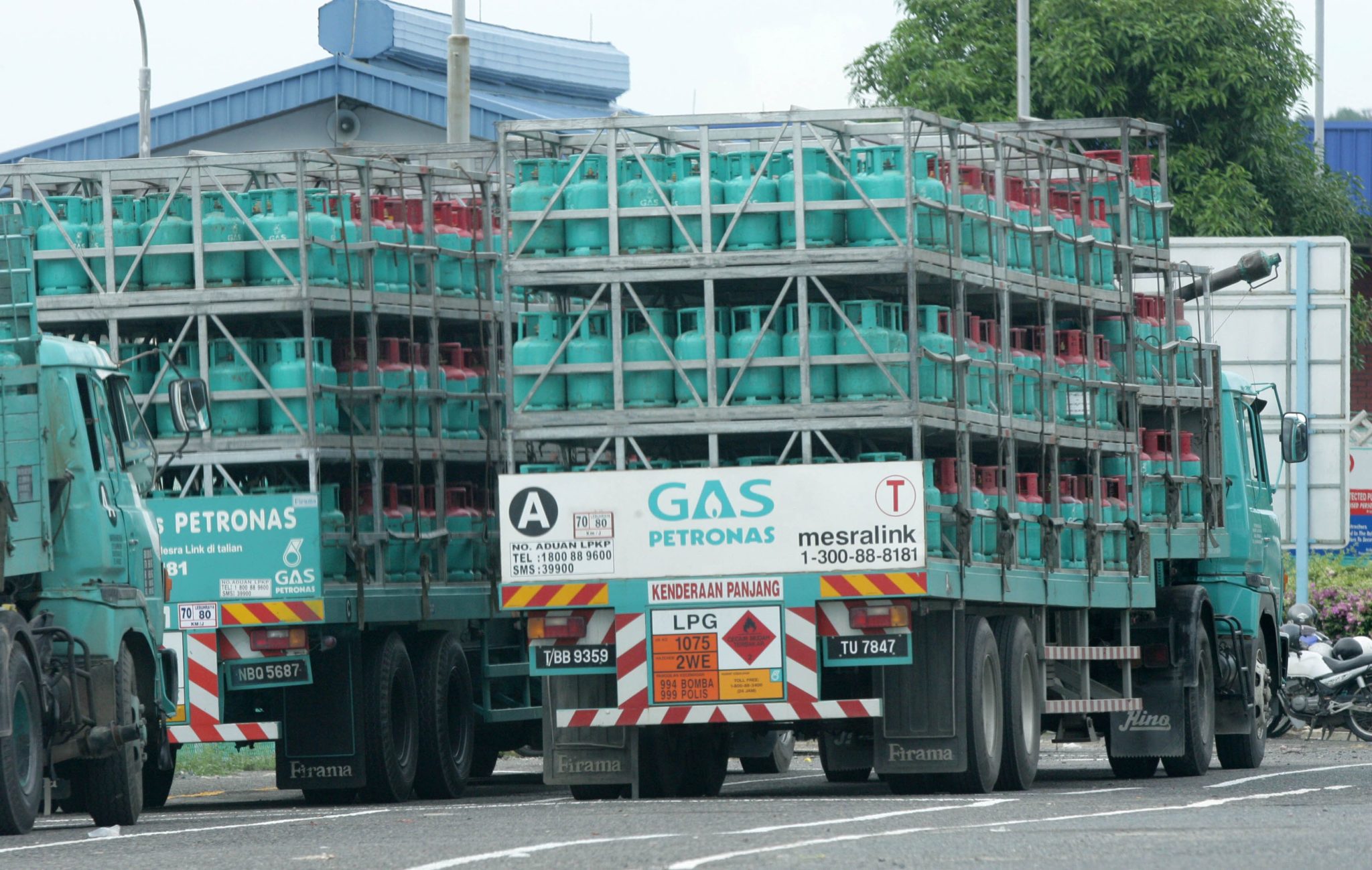
  • Petronas Gas Q4 profit weighed down by Kimanis Power

    Petronas Gas Q4 profit weighed down by Kimanis Power

    Petronas Gas Bhd’s net profit fourth quarter ended Dec 31, 2018 fell 34.7% to RM317.90 million from RM486.70 million a year ago, largely attributed to share of losses from a joint venture company, Kimanis Power Sdn Bhd. The losses were due to de-recognition of deferred tax assets amounting to RM124.3 million (being 60% share of the group) in relation to certain tax benefits which now have a seven-year utilisation limit under the new Finance Act 2018.

    Its revenue grew 4.9% to RM1.39 billion compared with RM1.32 billion in the previous year’s corresponding quarter mainly contributed by the second liquiefied natural gas (LNG) regasification terminal in Pengerang, Johor which commenced commercial operations in November 2017, coupled with higher revenue from utilities and gas transportation segment.

    The group has approved a fourth interim dividend of 22 sen per share amounting to RM435.3 million in respect of the financial year ended Dec 31, 2018.

    For the full-year period, Petronas Gas’ net profit grew 0.98% to RM1.81 billion from RM1.79 billion a year ago, while revenue of RM5.5 billion was the highest in history, an increase of 12.3% compared to RM4.90 billion last year.

    The Energy Commission has approved the tariffs for the gas transportation and regasification services for 2019. While the tariffs are expected to affect the group’s transportation and regasification business segment revenues in 2019, both segments are anticipated to continue contributing positively to its earnings.

    The group’s gas processing segment is expected to deliver improved earnings pursuant to the higher fixed remuneration charge under the second term of the 20-year Gas Processing Agreement effective from 2019 until 2023.