Tag: Giant

  • Dairy Farm struggles in SE Asia

    Dairy Farm struggles in SE Asia

    Dairy Farm International Holdings says softer sales growth and steep cost increases led to weakened margins in the third quarter.

    In an interim management statement, which does not include financial data, the Hong Kong-based pan-Asian retailer says the group faced more difficult economic conditions, and focused on building market share and investing for the long-term health of its businesses.

    Tighter margins and unfavourable exchange rate movements continued to affect the group’s US dollar reported results and led to lower underlying earnings for the period.

    “The group expects similar trading conditions to prevail for the remainder of the year.”

    Dairy Farm says profitability of its Singapore food business – where it owns the 7-Eleven franchise and Cold Storage supermarket chain – fell, principally due to weak performances from newly opened supermarkets and the impact on 7-Eleven of government restrictions on alcohol sales.

    In Malaysia, the introduction of GST and softer consumer confidence dampened spending at itsGiantstores.

    “In Indonesia, despite good sales momentum in July and August, higher labour costs and price investments to attract customers have reduced margins,” the company said.

    The Health and Beauty Division – led by the Guardian and Mannings brands – continued to perform well in Hong Kong, despite the slowdown in Mainland Chinese tourist arrivals, and has seen improvements in profitability in Singapore. The overall results were, however, held back by poorer performances in Malaysia and Indonesia.

    Both the Home Furnishings and Restaurants Divisions have increased sales and profits. Ikea performed well in both Hong Kong and Taiwan, and the new Ikea store in Indonesia continues to trade ahead of expectations.

    Restaurant group Maxim’s, which operates Starbucks amongst other brands,  maintained its consistent performance.

    The group is to invest a further US$210 million in Yonghui Superstores in early 2016 so as to maintain its 19.99 per cent stake following a placement by Yonghui of a 10 per cent shareholding to internet retailer, JD.com. The investment by JD.com will provide Yonghui with additional opportunities for expansion into eCommerce.

    “With respect to recent investments, there have been positive contributions from [supermarket chain] San Miu in Macau and from Yonghui in China, despite the challenging trading environment. Meanwhile, progress continues on the integration and repositioning of the Rose Pharmacy business in the Philippines,” the company said.

    “Notwithstanding the challenging conditions, Dairy Farm was able to maintain its cashflow from operating activities through better working capital management.

    Dairy Farm operates over 6400 outlets – including supermarkets, hypermarkets, convenience stores, health and beauty stores, home furnishings stores, cafes and restaurants – employing over 170,000 people, and had total annual sales in 2014 exceeding US$13 billion.

  • E-commerce startups: a wild card for the industrial market?

    E-commerce startups: a wild card for the industrial market?

    THE bulls and bears of Singapore’s industrial property market often reflect the pace of economic growth and the composition of the manufacturing sector. Since its post-independence days, the manufacturing sector in Singapore has evolved to be a key contributor to gross domestic product (GDP) at approximately 20 per cent with strong support stemming from the chemicals, electronics and precision engineering clusters in 2014.

    In recent times, however, the Republic’s manufacturing activities have slowed down due to the external and internal headwinds which this export-reliant nation is highly susceptible to.

    The government has long recognised the need to boost the island’s overall productivity and export competitiveness in the region to maintain economic growth. To this end, Singapore’s manufacturing sector has been undergoing economic restructuring to shift the value-chain upwards to focus on higher value-added industries. More emphasis is placed on higher automation and less labour-intensive manufacturing activities as firms grapple with rising labour costs and lean manpower.

    Post-Global Financial Crisis, the rapid recovery in GDP in 2010 was accompanied by a spike in manufacturing output. As one of the underlying demand drivers for industrial space, the increase in manufacturing activities propelled the demand for industrial space, as indicated by the positive net absorption islandwide. On the back of limited net supply, this translated to occupancy rates hovering above the range of 93 per cent until 2011.

    Subsequently, demand for space began to soften from 2012. The softening is primarily attributed to three key factors – the hike in labour costs, rising competition from neighbouring countries that offer an alternative cheaper manufacturing base and weakening external demand from Asian economies, especially China. Cost containment became a top priority, which led to existing demand being mainly driven by renewals and consolidations.

    On the back of rental and capital value escalations in 2011, the government introduced a slew of industrial property measures such as tighter occupation requirements for industrial space, seller’s stamp duty, shortened land tenures, and ramped up supply through the Industrial Government Land Sales (IGLS) Programme to cool the market. This eventually resulted in a surge of supply which far surpassed demand from 2013 onwards.

    Furthermore, a strong supply of industrial space is expected to be completed in 2015 and 2016. In the face of decelerating economic growth and contracting industrial output, it is likely that demand for industrial space will remain subdued in the near term, as the surge in supply corresponds to twice the amount of the 10-year average demand of 10.42 million square feet (see chart).

    Given this supply overhang situation and less favourable economic conditions, it is imperative to explore other complementary uses for industrial space while adhering to existing JTC Corporation and Urban Redevelopment Authority (URA) guidelines.

    ANCILLARY USE

    Under URA guidelines, industrial properties are segregated for use by a 60 per cent-40 per cent quantum, where 60 per cent is predominantly used for core industrial activities and 40 per cent for ancillary uses. To obtain Written Permission for the 40 per cent ancillary use such as industrial canteens, showrooms and selected commercial uses, occupiers have to comply with the following requirements:

    • Capping industrial canteens at 5 per cent of total proposed gross floor area (GFA) or 700 square metres, whichever is lower.
    • Showrooms are only allowed to display products which are typically not transacted over the counter and are predominately delivered and installed off-site.
    • Selected commercial uses include clinics, banking hall/ATMs, minimarts and fitness centres and are capped at 10 per cent of total proposed GFA per development or 200 sq metres, whichever is lower, on the first storey of the building only.

    As long as the proposed ancillary uses conform to the above guidelines, it provides landlords with the flexibility to revamp the use of existing industrial space and widen the pool of potential occupiers.

    In the past, industrial spaces were primarily used for core industrial activities namely, manufacturing and warehousing. However in 2004, the Economic Development Board (EDB) introduced the Warehouse Retail Scheme – an initiative which ended in 2007 – which led to megastores such as Ikea, Giant, Courts and Big Box operating in industrial locations.

    Notwithstanding the short-lived three-year tenure of this initiative, in 2015, Gain City and NTUC FairPrice incorporated retail components into their industrial developments under the 40 per cent ancillary use.

    While adhering to the 60 per cent allocation for warehousing, Gain City’s Sungei Kadut development, for instance, sets aside 20 per cent for retail, and incorporates other uses such as offices, café, sky terraces, a children’s play area and a diesel pump area. Consolidation of uses into one location enables industrialists to enjoy cost-saving benefits, which have been passed on to consumers. Gain City, in fact, reported 20 per cent in cost savings with its consolidation exercise.

    Through a similar re-adaptation of industrial spaces, it is plausible to extend the same cost-saving benefits to entrepreneurs. For one, e-retailers could potentially benefit from a re-think on warehouse space usage. By designating 60 per cent to store e-retailers’ inventories in self-storage, the remaining 40 per cent can be further proportioned to develop an all-encompassing pro-business environment with courier services, serviced offices, Wi-Fi-equipped cafés and showrooms.

    A development that has adopted a similar concept is the Entrepreneur Business Centre, a self-storage and serviced office facility with ancillary uses, namely baby-care retail and delicatessen.

    The purpose of incorporating Wi-Fi-equipped cafes and showrooms in industrial developments is to transform industrial estates into a one- stop e-commerce hub for startups.

    Firstly, business operations and logistics are supported through having 24/7 wireless access, storing inventories in self-storage and having shared in-built courier services. Secondly, it attracts clientele as displaying products in showrooms creates an experiential retailing concept for consumers to touch and feel e-retailers’ products prior to purchasing them online.

    One retailer that offers this omni- channel retailing experience through the online-to-offline (O-2-O) concept is Decathlon, a sporting goods firm which only had an online presence in Singapore. The introduction of the Decathlon eXperience showroom has encouraged customers to have more hands-on interaction with the products before proceeding to purchase them online. Undeniably, this creates a cost-friendly working environment as it promotes the growth of e-commerce by compressing e-retailers’ risks through reduction of overhead costs and lock-in periods.

    GATEWAY FOR E-COMMERCE

    There is strong support for Singapore to grow as an entrepreneurial hub. Firstly, more industrial spaces are being slated for entrepreneurial activities such as at JTC Launchpad @ one-north, and secondly, there is rising investment interest in Singapore’s startups, especially in the e-commerce sector.

    According to Techlist, 80 per cent of venture funds raised by Internet companies are being invested in Singapore where the beneficiaries are predominantly e-commerce players such as Lazada, Zalora and Reebonz.

    This is not surprising as Singapore is ranked 14th on the 2015 Global Retail E-commerce Index, indicating the strong fundamentals which have established Singapore as the gateway for e-commerce.

    According to Euromonitor International’s June 2015 study on retailing in Singapore, Internet retail sales grew 12.5 per cent year-on-year to S$1.08 billion, while mobile Internet retail sales expanded even more significantly by 53.9 per cent to S$280.9 million.

    All these indicate that Singapore’s e-commerce sector is poised to expand further, which could potentially be the next underlying demand driver for the industrial market.

    Leveraging on the aforementioned opportunities, the pool of end-users for industrial space may be extended further to include e-commerce startups. Previously, this group of users was hindered by barriers of entry such as high occupancy costs and inability to occupy the minimum GFA requirement in industrial developments. However, by consolidating uses and re-adapting the 40 per cent ancillary use, this creates a win-win situation for landlords, consumers and entrepreneurs.

    In addition to injecting fresh demand for a muted industrial market, it creates a viable operating business environment for startups, thus promoting the development of the e-commerce scene.

    Instead of depending on external trade and manufacturing to propel demand for the industrial market, widening the list of potential occupiers to startups may potentially inject life into industrial estates. That may be the solution to cost containment which businesses are seeking.

  • Hero to open more stores  to boost revenues

    Hero to open more stores to boost revenues

    Retail company PT Hero Supermarket (Hero) will spend up to Rp 640 billion (US$48 million) this year for business expansion with retail plans to open stores in several cities across the country.

    The move will be made to restore the company’s disappointing financial performance earlier this year.

    Hero, which operates hypermarkets, supermarkets, convenience stores, drug stores and furniture stores, plans to open four Giant Ekstra hypermarkets and six mid-sized Giant Ekspres supermarkets in several regions, including Bangka and Lombok. Arief Istanto, a director with Hero, said each Giant Ekstra would cost between Rp 100 billion and Rp 150 billion while the Giant Ekspres would cost about Rp 20 billion. It means the company will allocate between Rp 440 billion and Rp 640 billion in capital expenditure to build the stores this year.

    Arif said the company aimed to improve its financial performance and hoped to book profits like it did in previous years. The company will use its internal funds for the expansion.

    “We would like to expand our network so that it can attract more customers. Thus, our top line will also increase,” he said after an extraordinary shareholders’ meeting on Tuesday. At the meeting, they agreed not to disburse the Rp 43.75 billion in dividends to shareholders and instead spend it on the company’s business expansion plan.

    Hero Supermarket previously suffered Rp 33.19 billion in net losses during the first quarter of this year amid a 14 percent increase in net revenues of Rp 3.57 trillion, making it the worst performer in the country’s retail industry.

    Last year, the company saw its net profit dive to Rp 43.75 billion from Rp 671.13 billion in 2013. A 13.94 percent increase in revenues, which stood at Rp 13.56 trillion at that time, could not ease the ballooning operating expenses, which hit Rp 3.31 trillion.

    “Our 2014 financial results were disappointing with weak sales growth and a significant increase in operating costs across all businesses as well as higher overhead and store pre-opening costs,” Stephane Deutsch, Hero’s president director, said in a statement.

    In 2014, the company launched a flagship furniture store under Swedish brand IKEA in Alam Sutera, Tangerang, Banten, some 25 kilometers west of Jakarta’s city center.

    Arief confirmed Hero has planned to build five more IKEA stores in the future as the company was upbeat about the prospects of the franchise furniture store.

    “At the moment, we are looking for land for the second store. It is supposed to be done this year,” Arief said, adding that the second store would be located in Greater Jakarta.

    According to him, IKEA has contributed around Rp 200 billion to Hero’s revenues in the first quarter of this year,

    Hero says it hopes to book 30 to 40 percent growth in revenues during the fasting month of Ramadhan this year. The company currently operates 33 Hero supermarket stores, 341 Guardian healthcare stores, 98 Starmart convenience stores, 53 Giant Ekstra stores, 121 Giant Ekspres stores, two Jason supermarket stores and one IKEA store.

  • Dairy Farm Indonesia reviews struggling Starmart

    Dairy Farm Indonesia reviews struggling Starmart

    Dairy Farm Indonesia is reviewing the future of its Starmart convenience store chain after closing nearly a third of its stores in the latest half year.

    The chain has been hit hard by the Indonesian government’s moves to limit the sale of alcohol, banning liquor sales in c-stores in April.

    Since then, Hong Kong headquartered Dairy Farm Indonesia subsidiary PT Hero Supermarket group has closed 39 stores leaving just 95.

    “A detailed strategic review of this business is currently being undertaken,” the company said in its earnings statement released Tuesday.

    The company said the closures would improve the profitability of the banner, but its prospects do not appear bright.

    PT Hero operates 641 stores in all, including 53 Giant Ekstra hypermarkets, 155 Hero Supermarkets and Giant Ekspres stores, 337 Guardian health and beauty stores and one Ikea.

    Overall, the group experienced a 15 per cent increase in revenue in the first half year, with gross profit up nine per cent, but it still posted a net loss of Rp 32 billion (HK$18.4 million).

    Food and health & beauty sales, showed strong like for like growth in the half year, despite a soft trading environment, and Ikea showed “very promising” early trading figures, the company said.

    “Despite the sales momentum, profitability was negatively impacted by outpacing costs resulting from minimum wage increases, stocktake improvements and store rationalisations. Strong actions on energy saving and productivity are being taken to mitigate the impact of increasing costs. In Food, investment in price has led to a reduction in the gross profit margin.”Besides the Starmart closures, PT Hero shuttered another 24 stores across its brands.

    Stephane Deutsch, president director, said in food, the company was concentrating on increasing fresh produce sales.

    “This has helped to increase like for like sales, especially in Giant where progress is being made on growing its market share. Action is also being taken to improve the efficiency of the supply chain.”

    The hypermarket operation, Giant Ekstra, and the supermarket operation, Giant Ekspres, are both taking steps to improve the customer shopping experience in selected stores prior to rolling out the initiative more broadly across the country, he said.

    “The upscale format, Hero Supermarket, is continuing to enhance its offer across the fresh, imported and exclusive ranges to provide a more distinctive choice for customers.”

    In Health and Beauty, Guardian’s store expansion program is “progressing well” alongside the introduction of refreshed branding and increasing private label development, leading to further improvements in like for like sales.

    “The strategic partnership with the local pharmacy operator Apotik Melawai, which combines their local pharmacy strengths with the broader health and beauty offering of Guardian, is showing encouraging results.”

  • Tesco Asia carve up likely

    Tesco Asia carve up likely

    A carve-up of Tesco Asia operations seems increasingly likely with credible reports in three different nations now of serious expressions of interest.

    While markets await firm news of progress of HSBC’s quest to find a buyer for the Tesco Korea business, the latest news is that Japan’s Aeon has expressed interest in buying Tesco Malaysia, reportedly valued in the region of £900 million.

    That follows an approach from Thai billionaire Dhanin Chearavanont late last year who prepared a speculative bid by his company Charoen Pokphand Group (CP) to buy back the troubled Tesco Plc’s Thai business, which he sold during the Asian financial crisis. That bid was initially rejected but if Tesco is selling its Korean and Malaysian operations it is likely to let Thailand go as well if it can gain a fair price.

    If all three sales were to proceed, it would almost certainly see the Tesco Asia operations rebranded under new owners – in Thailand, most likely under the Lotus brand, in Malaysia stores would be merged into Aeon’s existing network and in Korea – that would entirely depend on the successful bidder.

    Reuters has reported reliable sources confirming Aeon’s interest in Tesco Malaysia. Aeon is cashed up, has a heavy focus on expanding across Southeast Asia and a merger of its network with Tesco’s would give it 29 stores, making it a formidable competitor to local hypermarket operator Giant, which has a lower market positioning to Aeon’s more premium offer.

    The Japanese retail and property giant entered Malaysia by acquiring the Carrefour operation in 2012 for €250 million.

    Meanwhile, KKR has reportedly rejoined the race to buy Tesco Korea’s Homeplus network which is estimated to be worth US$6 billion, after sweetening its preliminary offer. All the prospective shortlisted buyers reported by the UK and Korean financial press are private equity companies, including Affinity Equity Partners, Goldman Sachs, Carlyle Group and MBK Partners.

    However in a market as complex as Korea, it is highly likely any of those bidders would want to partner with a local retail operator for the business connections and local market knowledge.

  • Giant Chengdu book store opens

    Giant Chengdu book store opens

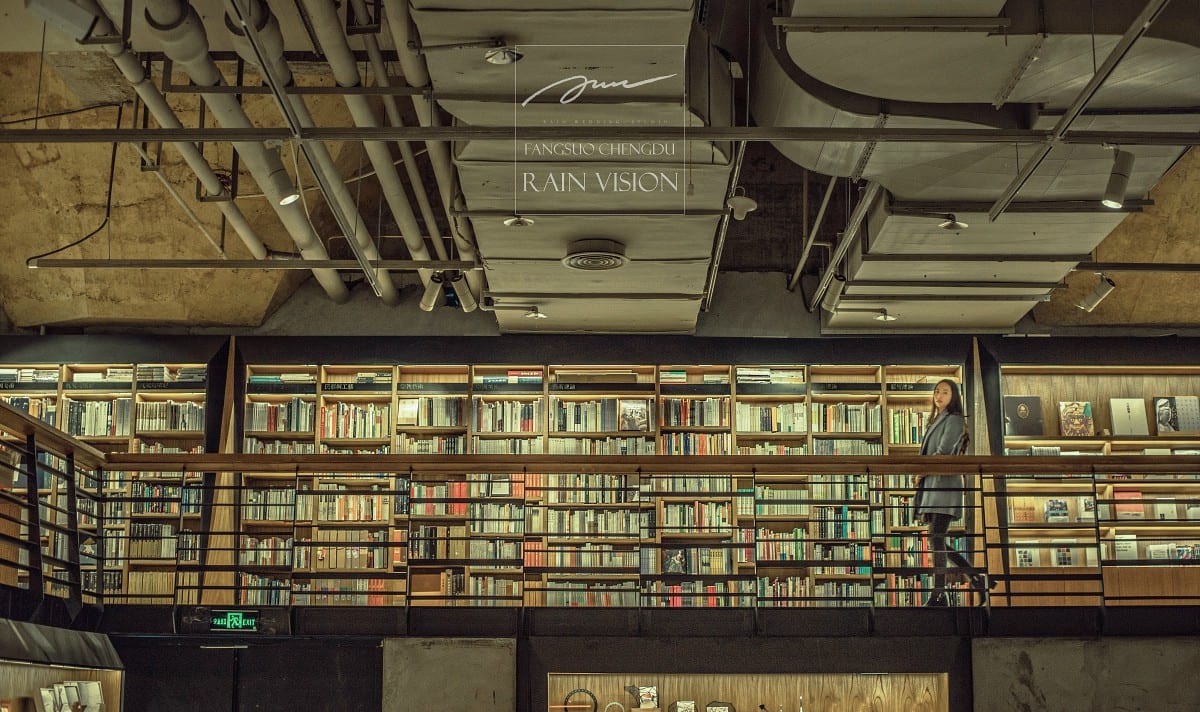
    Award-winning book retailer Fang Suo Commune has opened another stunning store – this time in Chengdu, China.

    Two more are planned later this year – one in Chongqing in March and another in Qingdao later in the year. It is already planning a Shanghai store for 2017.

    Fang Suo Chengdu 1- 215

    The original Fang Suo Commune store, in Guangzhou was named the world’s best retail store in 2013 in the prestigious World Retail Congress Awards. According to Chinese news reports the store turns over as much as 1.5 million yuan (US$240,000) a day, although books account for just 35 per cent of that figure.

    The Fang Suo concept is more than a retail store. The founders want to encourage shoppers to relax and ‘hang out’ in store, as well as to shop. It features a cafe, a home living collection and space for cultural events.

    Fang Suo Commune Chengdu 3 - 215

    The 4000sqm Chengdu store officially opened at the end of January but during a two-month long ‘soft opening’ it attracted between 7000 and 20,000 visitors per day – twice the number of Guangzhou.

    “A brick-and-mortar bookstore that only sells books is unable to survive in the digital age,” Fang Suo Commune chief consultant Liao Mei-li said at the Chengdu opening ceremony.
    “However, what’s amazing about the book industry is that it can do crossovers with many other industries such as beverages and movies. There is a market for such cross-industry bookstores,” Liao said.

    Fang suo commune Chengdu 2- 215

    “To achieve business success, a cross-industry bookstore needs a big enough scale. But most importantly, we need a professional team to operate it. The leading members in Fang Suo’s team all have more than a decade of experience in the book or retail industry,” Liao said.

    The two-storey store, located in Taikoo Li Mall, features a 100 metre long display of books on either side of a giant room and handcrafts selected from all over the world on display tables in the centre.