Retail News CRM

Tag: Giant

  • Metail signs partnership with South Korean tech giant

    Metail signs partnership with South Korean tech giant

    British fashion technology start-up Metail has signed a partnership agreement with Benit, the technology arm of South Korea’s fourth largest conglomerate Kolon.

    The deal means Metail’s technology, which allows consumers discover, shop and “try on” clothes online, will significantly increase its reach in the Asian market.

    The Kolon conglomerate has a presence throughout Asia and interests spanning multiple sectors, ranging from manufacturing to construction, trade, life sciences research, environment, retail and fashion. It is now setting its sights on the fast growing South-Korean fashion e-commerce market through its technology arm Benit.

    South Korea is the world’s 7th largest fashion market and APAC’s 3rd largest e-commerce market with 77% of all Koreans purchasing clothing items online in 2016. The South Korean fashion industry is expected to exceed $6.9bn this year and by 2021 it is predicted to hit $32bn. Benit’s clients alone account for $2.5bn of the market.

    Tom Adeyoola who founded London and Cambridge-based Metail said the deal would help the business achieve its mission “to digitise all of the world’s garments and people“. The Metail technology allows shoppers to create a bespoke 3D model of themselves, a Memodel, which they can use while shopping online to try on garments virtually. It rose to prominence in 2014 when it teamed up with Henry Holland’s House of Holland label to allow consumers to shop direct from the catwalk.

    “Following going viral in Korea with our mobile House of Holland offering for London Fashion Week in 2014 we’ve been looking for the right strategic partner to take advantage of what is clearly the most mobile-focused, tech-savvy and fashion-conscious market in the world,” Adeyoola said.

    “The Kolon group with their scale, fantastic stable of brands and market leading fashion focused IT services arm, Benit, quickly became the obvious choice. We’ve already placed a customer director on the ground and have built a strong working relationship with the consummate partner to help us perfect our offering for the Korean market and rapidly scale,” he said.

    Deputy general manager of Benit’s mobile convergence team Jaehoon Kang said it has been looking for “innovative and useful solutions to develop the South Korean market “and Metail’s solutions is the most valuable. We cannot try on clothes when buying clothes online. So often there are difficulties in sizing and styling; limitations which Metail help to overcome,” he said.

    “Through this agreement, fashion and distribution companies in the Korean market will be able to provide a useful and wonderful experience to customers. Benit is very excited to be adding such a great solution to its fashion-specific business portfolio,” he added.

    Metail was founded in 2008 and has gone on to develop an international customer base including House of Holland and Little Mistress in the UK as well as Abof in India and Princess Polly in Australia to name a few

    Yesterday luxury fashion etailer Mytheresa.com revealed a dedicated Korean language site for the South Korean market.

  • Peugeot poised to buy GM’s Opel, creating a car giant

    Peugeot poised to buy GM’s Opel, creating a car giant

    France’s PSA Group is set to announce a deal to buy Opel from General Motors (GM.N) on Monday after striking an agreement with the U.S. carmaker and winning the blessing of its board for the acquisition.

    The maker of Peugeot, Citroen and DS cars said on Saturday it would hold an early Monday press conference with GM, at which the transaction is expected to be presented after Reuters reported that a deal had been struck between the two automakers.

    By acquiring Opel, the French group will leapfrog rival Renault (RENA.PA) to become Europe’s second-ranked carmaker after Volkswagen (VOWG_p.DE) by market share. Between them, PSA and GM Europe recorded 71.6 billion euros ($76 billion) in revenue and 4.3 million vehicle deliveries last year.

    The tie-up was approved on Friday by the PSA supervisory board, on which the French government, Peugeot family and China’s Dongfeng (0489.HK) are represented as shareholders, one source with knowledge of the matter said.

    Spokespeople for PSA and Opel declined further comment.

    The two carmakers, which already share some production in an existing European alliance, confirmed last month they were negotiating an outright acquisition of Opel and its British Vauxhall brand by Paris-based PSA, sparking widespread concern over possible job cuts.

    In their jointly issued invitation to a Paris press conference at 0815 GMT on Monday, PSA and GM gave no indication of its subject. Separate briefings for the German press and Opel unions are expected to be held the same day.

    Sources close to the talks had reported progress on Thursday after the carmakers narrowed differences on a near-$10 billion Opel pension deficit and other issues. GM’s European arm recently posted a 16th consecutive year of losses.

    The negotiations had encountered problems over GM demands that a PSA-owned Opel be barred from competing against its own Chevrolet lineup in markets including China, they said.

    But the “non-compete” issues were finally resolved as GM agreed to inject “substantially more” into the pensions than the $1 billion to $2 billion it had initially offered, another person said. The sources declined to give further details. Detroit-based GM, which came close to selling Opel to Magna (MG.TO) in 2009, has faced investor pressure to offload its struggling European arm and focus on raising profitability rather than chase the global sales crown currently held by VW.

    After fending off 2015 merger overtures by Fiat Chrysler with support from her board, GM Chief Executive Mary Barra agreed to target a 20 percent minimum return on invested capital and pay out more cash to shareholders.

    For PSA, the Opel deal caps a stellar two-year recovery under cost-cutting CEO Carlos Tavares, who said on Feb. 23 he would apply the same methods to Opel if the deal went through. PSA averted bankruptcy by selling 14 percent stakes to France and Dongfeng in 2014, to match a diluted Peugeot family holding.

    The acquisition offered an “opportunity to create a European car champion” and quickly exceed 5 million annual vehicle sales, Tavares told analysts as he presented full-year earnings. PSA also expects savings of up to 2 billion euros ($2.1 billion) from the tie-up, sources have said.

    Tavares also told his board that PSA would redevelop the Opel lineup with its own technologies to achieve rapid savings, according to people with knowledge of the matter.

  • Solid year for revitalised Dairy Farm International

    Solid year for revitalised Dairy Farm International

    Hong Kong-headquartered multi-format retailer Dairy Farm International has celebrated its 130th anniversary with a strong set of results, with food, home furnishings and restaurants delivering higher profits.

    Total sales, including those of associates and joint ventures, rose 14 per cent in US dollar terms and 17 per cent on a constant-currency basis to US$20.4 billion. Sales of wholly-owned subsidiaries rose 1 per cent to $11.2 billion.

    Underlying net profit rose by 7 per cent to $460 million, partly due to a 13 basis point net improvement in operating margins as well as increased contributions from Yonghui and Maxim’s. Operating profit rose 6 per cent.

    Supermarkets & hypermarkets solid

    Total food division sales, which include Wellcome and Giant, were flat in US dollar terms, although up 1 per cent on a constant currency basis.

    “In an environment of severe pressure on pricing, sales growth in Hong Kong supermarkets and in the convenience store businesses in Hong Kong, Mainland China and Singapore helped to offset declines in the group’s supermarkets and hypermarkets in Singapore and Indonesia and largely flat sales elsewhere,” explained CEO Graham Allan.

    “The closure of a number of unprofitable stores in Singapore and Indonesia also weighed on sales performance. However, specific actions, including strategic store closures, prudent management of costs and more targeted promotional activity, delivered improved operating margins.’

    Operating profit from the food division rose 13 per cent to $267 million, with the largest gains coming from Singapore and Indonesia.

    Sales of $6.2 billion from supermarkets and hypermarkets (excluding Yonghui) were in line with last year in constant currency while operating profit increased by 13 per cent to $194 million.

    Wellcome in Hong Kong drove higher sales through strengthening its fresh offer and an enhanced merchandise assortment. Operating profit was lower, principally due to a continued rise in rental costs and competitor promotional activities. In Macau, San Miu achieved sales and operating profit growth in its first full year in the group with range enhancement and increased fresh participation.

    In Taiwan, sales and operating profit were ahead of last year. A new ‘superstore’ concept was introduced for Wellcome with two net new stores opening during the year, while Jason’s continued its store expansion.

    “The retail landscape in Indonesia was challenging with limited recovery in consumer confidence and significant competition from the continued rollout of mini-market stores across the country, which impacted sales growth at supermarkets and hypermarkets,” said Allan.

    “Nevertheless, improved margins, from pricing and promotional activities, the closure of a number of underperforming stores and tighter cost control boosted profitability. Improving the fresh assortment and revitalising the upscale Hero brand remain key focus areas for the business.”

    In Malaysia, sales and operating profit were behind 2015 due to persistent low consumer confidence together with ongoing price controls following the introduction of GST, which continued to weigh on performance.

    The Philippines recorded a strong year with all banners reporting like-for-like sales growth and improved profitability. “A more appealing fresh assortment coupled with tactical pricing and successful marketing activities underpinned an encouraging increase in footfall,” said Allan.

    “Rustan’s benefited from increased sales of its imported and exclusive brands, while measures to improve cost efficiency were also implemented.”

    In Singapore, sales were down year-on-year due to poor consumer sentiment and the impact of store rationalisation. “Cold Storage achieved an encouraging operating profit increase, despite reduced sales following the closure of underperforming stores. Giant saw steady sales and positive profit growth, driven by increased margins and lower operating costs.

    “In the coming year, we aim to invest in the renewal of customer facing and back office technologies to improve our customer experience and internal efficiency whilst optimising ranges and supply chain productivity.”

    In Vietnam, Giant posted sound sales growth, from its single store, with increased customer traffic being the main driver and in Cambodia, the group saw “encouraging increases” in like-for-like sales and operating profit.

    Convenience sales reach $2 billion

    Convenience stores reported $2 billion in sales, an increase of 5 per cent year-on-year in constant-currency terms. Operating profit increased by 15 per cent to $73 million.

    In Hong Kong, 7-Eleven outpaced the competition and grew sales and operating profit despite soft consumer sentiment and difficult market conditions. Like-for-like sales strengthened during the year supported by promotions, range improvements and new products. A slight gross margin improvement led to a higher operating profit despite cost increases from labour and rent. In Macau, sales were flat and operating profit was lower due to slowing tourist numbers and a substantial cigarette tax increase in 2015.

    In Mainland China, 7-Eleven continued its solid growth and passed its 800th store milestone. During the year, sales and operating profit increased, with store network expansion and like- for-like sales growth. This was driven in part by an expanded ready-to-eat (RTE) product range.

    In Singapore, 7-Eleven achieved positive like-for-like sales growth arising from a store re-ranging project with a strong focus on RTE, including the successful introduction of new private label products sourced from 7-Eleven Japan.

    “Operating profit was significantly ahead of 2015 due to these initiatives and the rationalisation of loss-making stores,” said CEO Graham Allan. “The RTE range will be further expanded in 2017 and there will be increased focus on acquiring new profitable sites.”

    Health & beauty sales rise

    Dairy Farm’s health & beauty division achieved $2.6 billion in sales, up 4 per cent on a constant currency basis, however profit declined 5 per cent to $175 million due to margin pressure and higher rents in Hong Kong.

    “Gains in Hong Kong, Mainland China, Singapore, Indonesia and the Philippines, offset disappointing sales in Malaysia,” said Allan.

    In Hong Kong, Mannings’ sales increased in 2016 despite a smaller store network. “As mainland Chinese tourist arrivals continued to decline, promotional campaigns and loyalty programmes were launched throughout the year targeting local consumers,” said Allan. “Sales were flat in Macau as mainland Chinese tourist arrivals remained soft.

    On the mainland, Mannings “showed gradual improvement” with solid sales growth, particularly in baby care, beauty care and personal care, while the contribution from corporate brands increased.

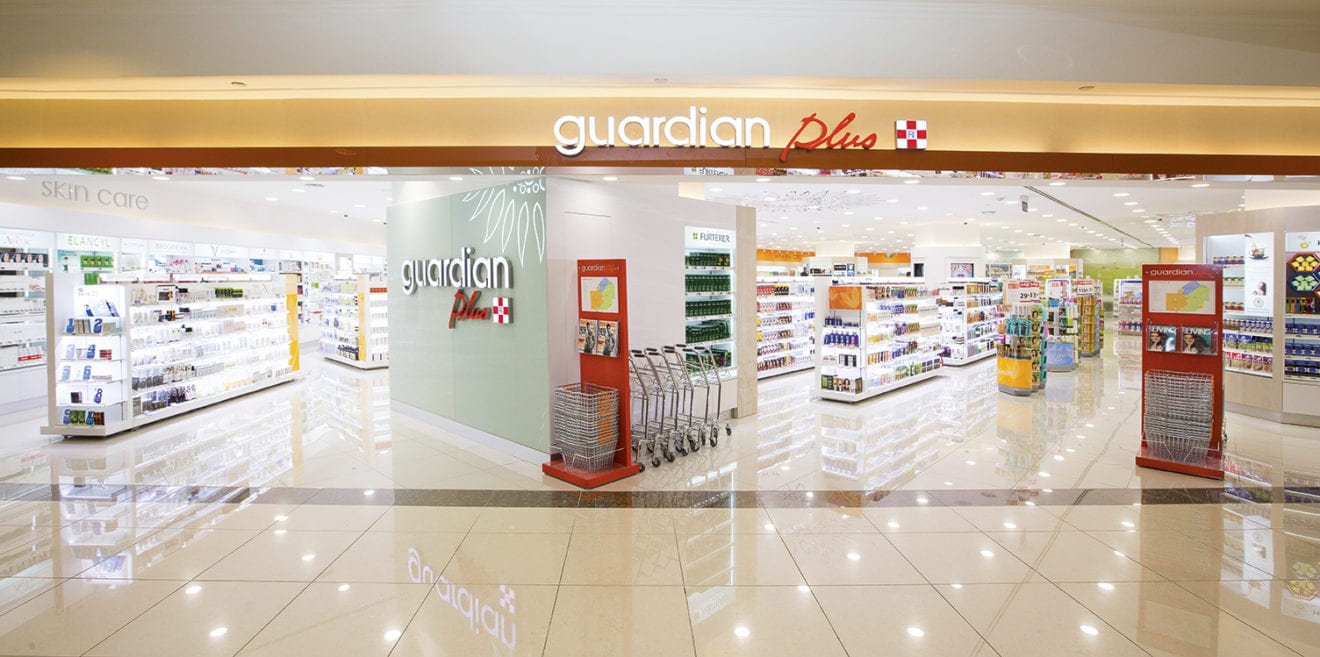
    In Singapore, Guardian reported growth in sales, while operating profit also increased with higher gross margins and greater focus on cost and shrinkage management, partially offset by higher rental costs, but in Malaysia, Guardian experienced “a challenging year” with lower sales and operating profit due to subdued consumer sentiment, increased competition and weakness of the ringgit.

    In Indonesia, Guardian posted double-digit sales growth for the fifth year in a row, despite the net closure of 73 stores. Operating profit was higher than in 2015 with higher gross margins.

    In Vietnam, Guardian recorded another strong year of double-digit sales growth and improvement in gross margin. Corporate brand penetration increased significantly as brands such as Botaneco Garden proved popular with local consumers and in the new market of Cambodia, progress was made through range expansion and increased corporate brand penetration supporting strong like-for-like sales.

    In its second year in the group, Rose Pharmacy in the Philippines delivered performance improvement through sales growth, gross margin enhancement, better cost efficiency and the closure of a number of underperforming stores. Guardian brand products were launched with encouraging early signs of customer acceptance.

    Home furnishings solid

    Home Furnishings, essentially the Ikea business in Hong Kong, Taiwan and Indonesia, recorded a 12 per cent rise in operating profit to $71 million driven by increased sales of $597 million, 6 per cent ahead of 2015.

    “Sales and operating profit were higher than last year in all three markets. Like-for-like sales growth was particularly strong in Taiwan and Indonesia.”

    Hong Kong led the group in introducing new concepts to increase consumer access, launching online shopping in April 2016 and opening two pick-up points in Macau and on Hong Kong Island. Indonesia introduced online shopping in July. Taiwan opened a pick-up point in Hsinchu and launched online shopping in February 2017.

    “We continued to strengthen our low price image through ongoing price investment, and increased our focus on market specific products to enhance our local consumer appeal.

    “In the coming year, Home Furnishings plans both to continue its push in consumer accessibility and to drive forward its expansion plans, having identified a second Indonesia store location and opening a fourth store in Hong Kong in the second half of 2017,” said Allan.

    Solid growth for Starbucks, Maxim’s

    Sales in Dairy Farm International’s restaurants division rose 7 per cent year-on-year to $2 billion and profit rose 4 per cent.

    “The business delivered another year of record earnings in a difficult market environment while continuing to expand outside Hong Kong,” said Allan.

    The division expanded its reach by acquiring Cova, a premium chain of cake shops and restaurants, and by opening its first Treats food hall.

    In China, Maxim’s added 16 new stores across its brands, including the first Cheesecake Factory franchise at Shanghai Disney Town.

    The company now operates 20 Starbucks cafes in Vietnam and Cambodia and describes their performance as “encouraging”. The group launched its first Thai franchise in September – MX Cakes and Bakery, a joint venture with ThaiBev, which has opened three outlets in Bangkok.

    “Looking ahead, the group continues to see various exciting opportunities, including entry into the Beijing market with the opening of Jade Garden, Cafe Landmark and The Cheesecake Factory planned in 2017. Maxim’s will also continue to explore franchise and acquisition opportunities across the region.”

    Dairy Farm will “compete aggressively”

    Chairman Ben Keswick said Dairy Farm International is “transforming itself to compete aggressively in a changing retail landscape”.

    “Central to this are a strong focus on understanding changing consumer behaviour, growing market share, building digital engagement with customers and sharing know-how across the group. Investment is being sustained in supply chain, IT infrastructure and systems, and the skills and expertise of our people to support this transformation. Each business is committed to optimising the shopping experience of its customers and to serving their evolving needs as efficiently as possible.”

    Keswick said increasing convenience through expansion and enhancement of the store network remains a high priority, although when necessary, underperforming stores will be closed. Last year the entire group added a net 114 stores, despite a number of closures across its divisions.

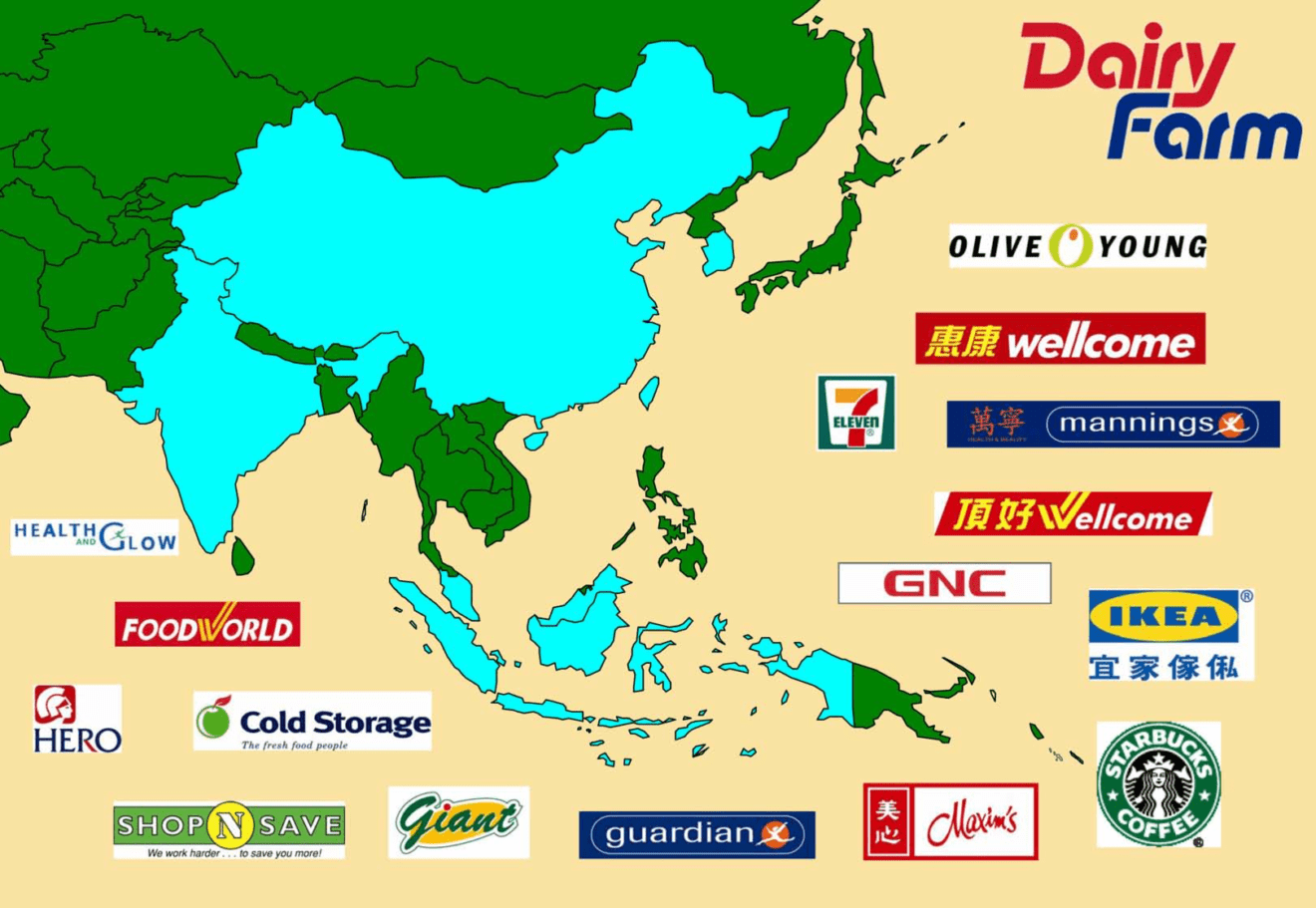
    At December 31, Dairy Farm International had 6548 stores in operation in 11 countries and territories, including its interest in 487 Yonghui stores in Mainland China.

    “Despite the uncertain economic outlook for 2017, the group continues to strengthen its businesses,” said Keswick. “Investments are being made to enhance its competitive position, increase customer convenience and adapt to emerging consumer trends. These investments, coupled with the exposure of its market-leading retail brands to Asia’s growth markets, will support Dairy Farm’s long-term success.”


  • Singapore online grocery market to triple by 2020

    Singapore online grocery market to triple by 2020

    The Singapore online grocery market is set to more than triple in size over the next three years, according to research house IGD.

    The global organisation expects sales will rise from the current S$130 million (US$91 million) to S$500 million (US$350 million) by 2020.

    At the end of 2016, IGD valued online grocery to have a 1.2 per cent share of the Singaporean grocery market. Reflecting rapidly changing shopper habits in the region and increased investment in the online channel from retailers and suppliers, IGD is further forecasting online to take a 4 per cent share of Singapore’s grocery market by 2020, with a compound annual growth rate of 39 per cent.

    Revealing the figures at this week’s IGD RedMart Trade Briefing, Nick Miles, IGD’s head of Asia-Pacific, said Singapore is hailing a new era of digital grocery retailing, driven by the entry of RedMart in 2011, Giant and Sheng Siong launching online grocery in 2013 and plenty of smaller start-up businesses also looking to grab a slice of the action.

    “Shopper habits are changing rapidly in Southeast Asia and in a compact city such as Singapore, with its relatively affluent population, big expat community and high penetration of internet and smartphone usage, there are huge opportunities for online grocery to meet these evolving needs. To make the most of this opportunity, retailers and suppliers must work together to ensure they really understand online shoppers and can tailor experiences and products to suit their personal preferences.”

    Miles says retailers are already clearly looking to improve the overall online experience, by getting the basics of search functions, favourites, images and information right for shoppers.

    “At the same time, they’ll be aiming to make delivery options as convenient as possible, whether that’s through shorter timespan delivery slots or greater choice of click and collect points throughout the region. Our UK data shows that 80 per cent of shoppers cite convenience as their number-one reason for shopping online, and we would anticipate Singaporean shoppers to have a very similar mindset when heading online for their groceries.

    “We also expect online grocery retailers in the region to encourage shopper loyalty through personalised offers and products, plus subscription models and delivery saver passes,” said Miles.

    “On top of that, shoppers in the region are increasingly connected via mobile, so ensuring a seamless shopping experience no matter what device they are using will be critical. Coupled with an increased focus on using innovations such as voice-activated technology, virtual reality and robotics, we predict huge opportunities for those retailers and suppliers who really invest in making the online grocery channel work for them in Singapore.”

  • Mixed fortunes for Dairy Farm Indonesia

    Mixed fortunes for Dairy Farm Indonesia

    Dairy Farm International’s Indonesia operation continues to struggle in food – but Ikea trades above expectations.

    The Hong Kong-listed company holds a controlling 83.9 per cent share in PT Hero Supermarket Tbk, which operates Giant hypermarkets and grocery stores, Guardian pharmacies and has the nation’s Ikea franchise, among others.

    Hero has reported a first quarter sales decline of 3 per cent to IDR3,409 billion (US$258 million), a 2 per cent improvement in gross profit, but a net loss of IDR 35 billion ($2.65 million).

    “While there are initial signs of margin improvement, the trading conditions for food are expected to remain challenging,” said president director Stephane Deutsch.  “Various initiatives are underway to improve the profitability of the Food business, and continuing progress is expected in both health and beauty and Ikea.”

    Although still relatively new, Ikea was the star of the quarter with sales up by double digits, exceeding both sales and profitability expectations.

    A total 28 net stores were closed in the first quarter, including one Giant Ekspres, 24 Guardian and five Starmart convenience stores. This was offset by the opening of one Guardian and 1 Giant Ekstra.

    In health and beauty, Guardian’s store rationalisation program is “progressing well”, said Deutsch. Together with the introduction of refreshed branding and increasing private label development, the restructure is leading to improvements in both sales and profitability.

    But profitability in the food operations was reduced due to the lower sales, higher stock provisions and increasing costs resulting from last year’s wage increases.

    “Significant attention continues to be given to driving sales growth, and several initiatives are underway to mitigate the effects of rising costs through energy savings and improved productivity,” said Deutsch.

    In food, the strategic decision to increase the focus on fresh produce is showing promising results with strong like-for-like sales growth.

    “Disappointing grocery and general merchandise sales, however, impacted negatively the overall food [division] performance during the quarter, especially in Giant. Action is also being taken to improve the efficiency of the supply chain, with increased centralisation through the group’s distribution centres,” he said..

    Both Giant Ekstra and Ekspres are taking action to improve their trading and their profitability.

    Dairy Farm Indonesia’s upscale format, Hero Supermarket, had stable like-for-like sales and continues to focus on enhancing its offer across the fresh, imported and exclusive ranges to provide a more distinctive choice for customers.

    At the end of the quarter (March 31), Hero operated 582 stores: 54 Giant Ekstra, 153 Giant Ekspres and Hero Supermarket, 295 Guardian Health and Beauty stores, one Ikea and 79 Starmart convenience stores.

  • Investors eye Jaya Grocer Malaysia

    Investors eye Jaya Grocer Malaysia

    Jaya Grocer Malaysia is attracting the interest of private equity firms wanting to buy a shareholding of up to 49 per cent.

    Creador, TPG Growth and a Japanese fund based in Singapore have been shortlisted in a deal said to value the supermarket chain at about RM175 million (US$43.8 million), reports The Star. It quotes sources as saying the exercise for the sale of an equity stake began last year.

    Other firms initially interested in a shareholding included the Abraaj Group and Navis Capital Partners.

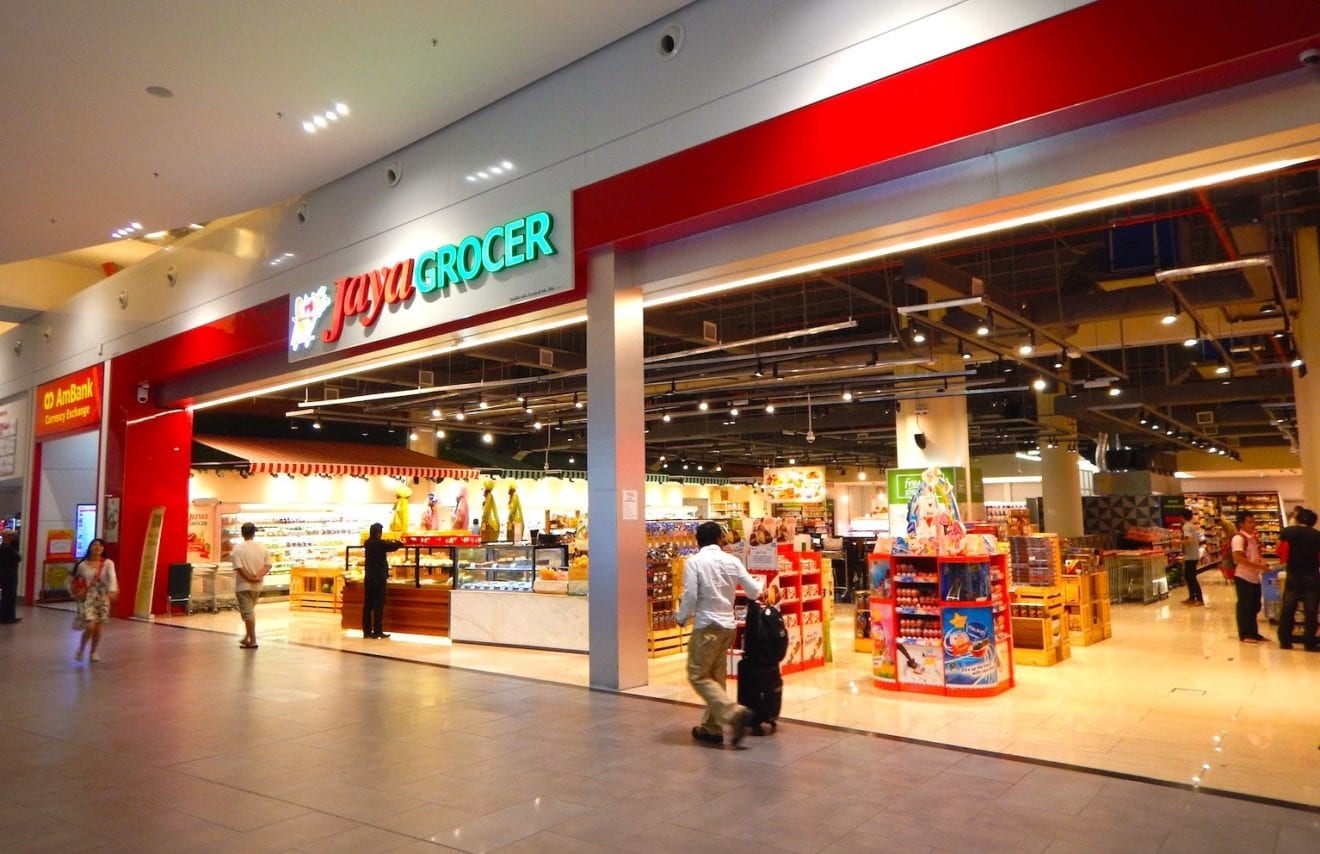
    Jaya Grocer is owned by Trendcell, with its 16 outlets posting RM18 million in earnings last year. The chain opened its first outlet in Petaling Jaya in 2007, and now has outlets in such malls as the Empire Shopping Gallery, KLIA2 and The Intermark.

    Jaya Grocer was founded by the Teng family, which also founded Giant Hypermarket and Teng MiniMarket Centre (TMC) in Bangsar. The family sold the Giant chain to Hong Kong-based Dairy Farm group in 1999 for an undisclosed amount. Meanwhile, TMC has been wholly owned and run by GCH Retail (Malaysia) since 1980. Also run by the Teng family is Pasaraya Hero, launched in 2010.

    It is unclear if the current sale process, being run through an open-bid system by Deloitte, includes these supermarkets.

    Meanwhile, Navis has invested in Jaya Grocer competitor Village Grocer the Big Group, which runs Ben’s Independent Grocer.

  • MRCB to build Giant’s RM56.8m processing and distribution centre

    MRCB to build Giant’s RM56.8m processing and distribution centre

    Malaysian Resources Corp Bhd (MRCB) will build a RM56.8 million cold storage processing and distribution centre in Kajang, Selangor, for the Giant retail chain.

    MRCB’s wholly-owned subsidiary MRCB Builders Sdn Bhd today signed a contract with GCH Retail (M) Sdn Bhd, through Jupiter Lagoon Sdn Bhd, a wholly-owned subsidiary of Hong Kong-based Dairy Farm International Holdings Ltd and an associate of GCH Retail.

    GCH Retail operates the Giant chain of hypermarkets and supermarkets in Malaysia.

    The 140,000 sq ft processing and distribution centre will be built on a five-acre site in Kajang. The distribution centre will be built on a 12-month fast track basis and is expected to be completed in August next year.

    Speaking to reporters after the signing ceremony, GCH Retail regional director for Malaysia and Brunei Datuk Tim Ashdown said it is an important development for the group as it currently has a small fresh food facility measuring 40,000 sq ft in the country.

    “This will allow us to control the supply chain much more actively,” he said, adding that the new facility will further bring down the cost of logistics and deliver lower prices to its customers.

    Ashdown also said the group plans to open five new Giant stores this year.

    Over the years, MRCB has constructed 12 Giant outlets in Malaysia, valued at over RM500 million. A RM52 million outlet in Setapak here is set to be delivered this month.

    MRCB shares closed unchanged at RM1.23 in the morning session with 259,300 shares traded, for a market capitalisation of RM2.2 billion.

  • Singapore, Indonesia drag Dairy Farm Group food division

    Singapore, Indonesia drag Dairy Farm Group food division

    Weak performances in Singapore and Indonesia eroded underlying profits in multinational retailer Dairy Farm Group’s food division last year.

    Last week, Dairy Farm reported a 5 per cent overall increase in sales on a constant currency basis, but a 14 per cent decline in underlying profit due to the “challenging” operating environment across Asia. Sales totalled US$11.137 billion, profit fell from $509 million to $424 million.

    Dairy Farm’s interests span convenience stores, hypermarkets, supermarkets, fast food restaurants, cafes, pharmacies, beauty stores and Ikea franchises. While all divisions reported mixed results by markets, it was the core food division where the gaps seemed widest.

    CEO Graham Allan said Wellcome supermarkets and 7-Eleven convenience stores in Hong Kong traded well, and Wellcome Taiwan also delivered encouraging results with its targeted focus on upscale customers.

    In Hong Kong, despite a competitive trading environment and declining Mainland visitor traffic, Wellcome achieved gains in both sales and market share, he said.

    “In the face of steep increases in rental costs, profitability remained strong due to sales growth and prudent management of other costs. In 2015, the group acquired and successfully integrated the San Miu supermarket business in Macau, which delivered a higher than expected profit contribution.”

    Food (excluding the Yonghui China business in which Dairy Farm acquired a 19.99 per cent stake during the year) reported US$8.2 billion in sales, a decrease of 2 per cent, while operating profit declined by 21 per cent to US$236 million principally driven by disappointing results for supermarkets and hypermarkets in Singapore and Indonesia.

    In Mainland China, 7-Eleven showed further improvement despite the market slowdown. But in Singapore, “further margin erosion resulted from higher labour costs and rents, soft consumer sentiment, a weaker Singapore dollar” and intense competition in the supermarket sector.

    “Operating profit was significantly lower than in 2014, mainly due to lower margins from Cold Storage’s price campaigns, a store rationalisation program and operational challenges. In a difficult segment, Giant ended the year with improvement in both sales and profits.”

    Allan says in 2016, the group will optimise its product offer with improved fresh items and ready-to-eat meals, with the aim of growing market share, boosting stock management capability and fine tuning brand positioning.”

    In Malaysia, the introduction of GST in April and weak consumer confidence dampened retail spending and profitability.

    “Post-GST consumer apprehension, currency weakness, lower subsidies and political uncertainty brought consumer sentiment to its lowest point in 10 years and negatively impacted sales in the remainder of the year.

    “Nevertheless, improved retail execution, assortment enhancements and tactical investments in margin to improve price perception have helped to maintain sales in a soft market,” said Allan.

    “In the Philippines, the upscale and community supermarkets reported sales growth, while hypermarket sales were slightly positive. The group opened three new Rustan’s and three new Wellcome stores, and ended the year with 56 outlets. Enhancing the quality and breadth of the fresh offer, embracing more impactful merchandising and display practices and building corporate brands are central to the group’s plans for 2016.”

    In Indonesia, profitability declined significantly as a result of higher labour costs, price investments to drive customer traffic and changes associated with more rigorous stock management, Allan said. While its Giant supermarkets there enjoyed a better year and produced double digit sales growth, and its larger Giant hypermarkets also grew, Hero supermarkets sales were steady.

    “While overall margins improved, partly due to excellent growth in fresh food, earnings suffered from increases in labour costs, stock clearance activities and store rationalisation.”

    Results from PT Hero were also depressed by 12 per cent with the weakening rupiah affecting the outcome on translation. Hero, majority owned by Dairy Farm Group, has sold the majority of its Starmart convenience stores and will close the remaining ones.

    And in Vietnam, Giant achieved strong like-for-like sales with increases in both customer traffic and basket size.

    “Facing strong competition from new entrants and existing players, the group repositioned its fresh strategy with lower prices and a wider product offer to grow market share.”

    Convenience stores

    Operating profit in the convenience store division of the broader food business dropped by 12 per cent to US$64 million.

    Allan said in Mainland China, 7-Eleven saw a pleasing increase in sales and profits over the previous year, with like-for-like sales growth and store network expansion. Despite signs of an economic slowdown in China, profitability improved. Ready-to-eat was the leading category in terms of sales and contribution and this category will continue to be a major area of focus in 2016.

    “In Hong Kong, the group achieved excellent like-for-like growth and gained market share across most categories. Rapidly escalating operating costs, especially store labour and rental expenses, crimped profit growth. Sales momentum in Macau slowed during the second half of the year due to an increase in cigarette taxes in July and reductions in tourist numbers from Mainland China,” he reported.

    In Singapore, 7-Eleven’s results were impacted by lower sales from the tourist segment, by lower liquor sales partly due to new regulations curtailing late night alcohol sales, and by increased store labour costs and operating costs in the Distribution Centre.

    “Major initiatives for the coming year will focus on strengthening the ready-to-eat supply chain.”

  • Giant Malaysia plans six new hypermarkets

    Giant Malaysia plans six new hypermarkets

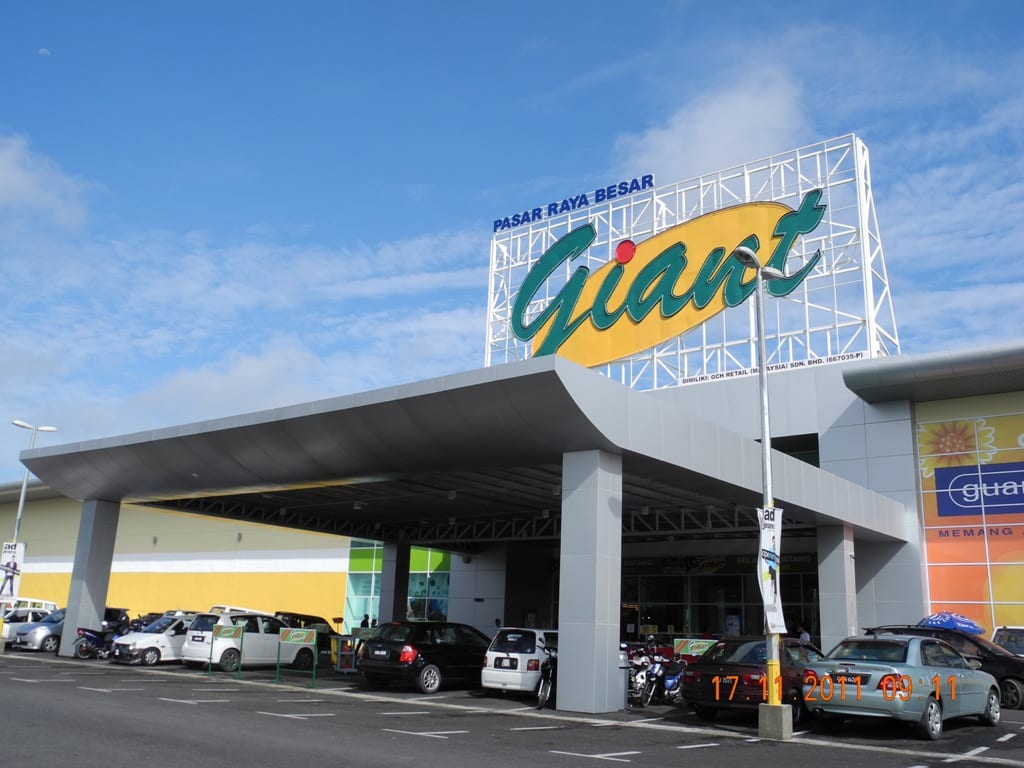
    Malaysian retailer GCH Retail plans to add six stores to its Giant hypermarket network this year and relaunch 28 outlets.

    The new Giant Malaysia stores will open in Setapak (Kuala Lumpur), ICangar (Kedah), Kota Baru (Kelantan) and Jeneh (Terenggam), with the other two sites yet to be revealed.

    Operations director Ernest Potgleter said this week that Giant decided to relaunch its stores after customer complaints they had started to look outdated.

    “We have to revive the business. The stores have not been refurbished for five years, and It is time for a new look.”

    Giant Malaysia serves 23 million customers a week, and Potgleter said the group has to be cheaper than other retailers while providing good service, good products and a good instore environment.

    He was speaking at the relaunch of Giant Hypermarket Shah Alam, in the Selangor state capital, which has been refurbished at a cost of RM2.5 million ($568,000).

    General merchandising director Lee Slew Mei said the store’s layout had been changed to make shopping a one-stop experience for its customers.

    “Child-related products are put together, and we have a seasonal promotional area. A back-to-school promotion is running for six weeks with related products, including stationery, school bags and uniforms, all in one place.”

    At the same time, Giant had brought in new ranges, some of them exclusive, said Lee Slew Mei.

    “We have the O’Fresh range which comes directly from farms in Cameron Highlands. The vegetables do not go through distribution centres so are of better quality and the price is also lower.”

  • Giant to open six new stores and relaunch 28 existing stores nationwide

    Giant to open six new stores and relaunch 28 existing stores nationwide

    Giant plans to open six new stores and relaunch 28 existing stores nationwide to provide a renewed shopping experience for customers next year.

    Among the six new stores to be opened are in Setapak, Kuala Lumpur, ICangar, Kedah; Kota Baru, Kelantan; and Jeneh. Terenggam while the remaining two have yet to be revealed.

    Giant operations director Ernest Potgleter said the company has decided to relaunch its stores after receiving complaints from customers that the stores have started to tool outdated.

    ‘Our customers said we look old. We have to revive the business. The stores have not been refurbished for the past five years and It Is time to give a new look.

    “Giant Malaysia listens to customers and the transformation is tailored with the customer in mind, aiming at providing greater value and customer friendly lay out.

    “We serve 23 million customers a week. You have to give them what they need and customers these days are very demanding. We have to be cheaper than other retailers and provide good service, good products and good environment in Giant stores,” he said at the relaunch of Giant Hypermarket Shah Alam, here, yesterday.

    Potgleter said Giant spent RM2.5 million in capital expenditure to re-furbish the Shah Aim store and the amount would differ according to the size of the stores.

    General merchandising director Lee Slew Mei said the relaunch embraced a change of layout making shopping a one-stop experience for customers.

    “Children-related products are put together and We have a dedicated seasonal promotional area. Now, there is a back-to-school pro-motion running for six weeks and all back-to-school retatect products including stationery, school bags and uniforms are in one place,” she said.

    At the same time, Lee said Giant has brought in many new ranges including those exclusive for Giant.

    We have the O’Fresh range which comes directly from the farms in Cameron Highlands. The vegetables do not go through distribution cen-tres, therefore they are of better quality and the price is also lower,” she said.

    Giant announced a special “Re-launch Promotion”, In conjunction with the relaunch of Giant Shah Alam from December 23 to January 31.

  • Dairy Farm struggles in SE Asia

    Dairy Farm struggles in SE Asia

    Dairy Farm International Holdings says softer sales growth and steep cost increases led to weakened margins in the third quarter.

    In an interim management statement, which does not include financial data, the Hong Kong-based pan-Asian retailer says the group faced more difficult economic conditions, and focused on building market share and investing for the long-term health of its businesses.

    Tighter margins and unfavourable exchange rate movements continued to affect the group’s US dollar reported results and led to lower underlying earnings for the period.

    “The group expects similar trading conditions to prevail for the remainder of the year.”

    Dairy Farm says profitability of its Singapore food business – where it owns the 7-Eleven franchise and Cold Storage supermarket chain – fell, principally due to weak performances from newly opened supermarkets and the impact on 7-Eleven of government restrictions on alcohol sales.

    In Malaysia, the introduction of GST and softer consumer confidence dampened spending at itsGiantstores.

    “In Indonesia, despite good sales momentum in July and August, higher labour costs and price investments to attract customers have reduced margins,” the company said.

    The Health and Beauty Division – led by the Guardian and Mannings brands – continued to perform well in Hong Kong, despite the slowdown in Mainland Chinese tourist arrivals, and has seen improvements in profitability in Singapore. The overall results were, however, held back by poorer performances in Malaysia and Indonesia.

    Both the Home Furnishings and Restaurants Divisions have increased sales and profits. Ikea performed well in both Hong Kong and Taiwan, and the new Ikea store in Indonesia continues to trade ahead of expectations.

    Restaurant group Maxim’s, which operates Starbucks amongst other brands,  maintained its consistent performance.

    The group is to invest a further US$210 million in Yonghui Superstores in early 2016 so as to maintain its 19.99 per cent stake following a placement by Yonghui of a 10 per cent shareholding to internet retailer, JD.com. The investment by JD.com will provide Yonghui with additional opportunities for expansion into eCommerce.

    “With respect to recent investments, there have been positive contributions from [supermarket chain] San Miu in Macau and from Yonghui in China, despite the challenging trading environment. Meanwhile, progress continues on the integration and repositioning of the Rose Pharmacy business in the Philippines,” the company said.

    “Notwithstanding the challenging conditions, Dairy Farm was able to maintain its cashflow from operating activities through better working capital management.

    Dairy Farm operates over 6400 outlets – including supermarkets, hypermarkets, convenience stores, health and beauty stores, home furnishings stores, cafes and restaurants – employing over 170,000 people, and had total annual sales in 2014 exceeding US$13 billion.

  • E-commerce startups: a wild card for the industrial market?

    E-commerce startups: a wild card for the industrial market?

    THE bulls and bears of Singapore’s industrial property market often reflect the pace of economic growth and the composition of the manufacturing sector. Since its post-independence days, the manufacturing sector in Singapore has evolved to be a key contributor to gross domestic product (GDP) at approximately 20 per cent with strong support stemming from the chemicals, electronics and precision engineering clusters in 2014.

    In recent times, however, the Republic’s manufacturing activities have slowed down due to the external and internal headwinds which this export-reliant nation is highly susceptible to.

    The government has long recognised the need to boost the island’s overall productivity and export competitiveness in the region to maintain economic growth. To this end, Singapore’s manufacturing sector has been undergoing economic restructuring to shift the value-chain upwards to focus on higher value-added industries. More emphasis is placed on higher automation and less labour-intensive manufacturing activities as firms grapple with rising labour costs and lean manpower.

    Post-Global Financial Crisis, the rapid recovery in GDP in 2010 was accompanied by a spike in manufacturing output. As one of the underlying demand drivers for industrial space, the increase in manufacturing activities propelled the demand for industrial space, as indicated by the positive net absorption islandwide. On the back of limited net supply, this translated to occupancy rates hovering above the range of 93 per cent until 2011.

    Subsequently, demand for space began to soften from 2012. The softening is primarily attributed to three key factors – the hike in labour costs, rising competition from neighbouring countries that offer an alternative cheaper manufacturing base and weakening external demand from Asian economies, especially China. Cost containment became a top priority, which led to existing demand being mainly driven by renewals and consolidations.

    On the back of rental and capital value escalations in 2011, the government introduced a slew of industrial property measures such as tighter occupation requirements for industrial space, seller’s stamp duty, shortened land tenures, and ramped up supply through the Industrial Government Land Sales (IGLS) Programme to cool the market. This eventually resulted in a surge of supply which far surpassed demand from 2013 onwards.

    Furthermore, a strong supply of industrial space is expected to be completed in 2015 and 2016. In the face of decelerating economic growth and contracting industrial output, it is likely that demand for industrial space will remain subdued in the near term, as the surge in supply corresponds to twice the amount of the 10-year average demand of 10.42 million square feet (see chart).

    Given this supply overhang situation and less favourable economic conditions, it is imperative to explore other complementary uses for industrial space while adhering to existing JTC Corporation and Urban Redevelopment Authority (URA) guidelines.

    ANCILLARY USE

    Under URA guidelines, industrial properties are segregated for use by a 60 per cent-40 per cent quantum, where 60 per cent is predominantly used for core industrial activities and 40 per cent for ancillary uses. To obtain Written Permission for the 40 per cent ancillary use such as industrial canteens, showrooms and selected commercial uses, occupiers have to comply with the following requirements:

    • Capping industrial canteens at 5 per cent of total proposed gross floor area (GFA) or 700 square metres, whichever is lower.
    • Showrooms are only allowed to display products which are typically not transacted over the counter and are predominately delivered and installed off-site.
    • Selected commercial uses include clinics, banking hall/ATMs, minimarts and fitness centres and are capped at 10 per cent of total proposed GFA per development or 200 sq metres, whichever is lower, on the first storey of the building only.

    As long as the proposed ancillary uses conform to the above guidelines, it provides landlords with the flexibility to revamp the use of existing industrial space and widen the pool of potential occupiers.

    In the past, industrial spaces were primarily used for core industrial activities namely, manufacturing and warehousing. However in 2004, the Economic Development Board (EDB) introduced the Warehouse Retail Scheme – an initiative which ended in 2007 – which led to megastores such as Ikea, Giant, Courts and Big Box operating in industrial locations.

    Notwithstanding the short-lived three-year tenure of this initiative, in 2015, Gain City and NTUC FairPrice incorporated retail components into their industrial developments under the 40 per cent ancillary use.

    While adhering to the 60 per cent allocation for warehousing, Gain City’s Sungei Kadut development, for instance, sets aside 20 per cent for retail, and incorporates other uses such as offices, café, sky terraces, a children’s play area and a diesel pump area. Consolidation of uses into one location enables industrialists to enjoy cost-saving benefits, which have been passed on to consumers. Gain City, in fact, reported 20 per cent in cost savings with its consolidation exercise.

    Through a similar re-adaptation of industrial spaces, it is plausible to extend the same cost-saving benefits to entrepreneurs. For one, e-retailers could potentially benefit from a re-think on warehouse space usage. By designating 60 per cent to store e-retailers’ inventories in self-storage, the remaining 40 per cent can be further proportioned to develop an all-encompassing pro-business environment with courier services, serviced offices, Wi-Fi-equipped cafés and showrooms.

    A development that has adopted a similar concept is the Entrepreneur Business Centre, a self-storage and serviced office facility with ancillary uses, namely baby-care retail and delicatessen.

    The purpose of incorporating Wi-Fi-equipped cafes and showrooms in industrial developments is to transform industrial estates into a one- stop e-commerce hub for startups.

    Firstly, business operations and logistics are supported through having 24/7 wireless access, storing inventories in self-storage and having shared in-built courier services. Secondly, it attracts clientele as displaying products in showrooms creates an experiential retailing concept for consumers to touch and feel e-retailers’ products prior to purchasing them online.

    One retailer that offers this omni- channel retailing experience through the online-to-offline (O-2-O) concept is Decathlon, a sporting goods firm which only had an online presence in Singapore. The introduction of the Decathlon eXperience showroom has encouraged customers to have more hands-on interaction with the products before proceeding to purchase them online. Undeniably, this creates a cost-friendly working environment as it promotes the growth of e-commerce by compressing e-retailers’ risks through reduction of overhead costs and lock-in periods.

    GATEWAY FOR E-COMMERCE

    There is strong support for Singapore to grow as an entrepreneurial hub. Firstly, more industrial spaces are being slated for entrepreneurial activities such as at JTC Launchpad @ one-north, and secondly, there is rising investment interest in Singapore’s startups, especially in the e-commerce sector.

    According to Techlist, 80 per cent of venture funds raised by Internet companies are being invested in Singapore where the beneficiaries are predominantly e-commerce players such as Lazada, Zalora and Reebonz.

    This is not surprising as Singapore is ranked 14th on the 2015 Global Retail E-commerce Index, indicating the strong fundamentals which have established Singapore as the gateway for e-commerce.

    According to Euromonitor International’s June 2015 study on retailing in Singapore, Internet retail sales grew 12.5 per cent year-on-year to S$1.08 billion, while mobile Internet retail sales expanded even more significantly by 53.9 per cent to S$280.9 million.

    All these indicate that Singapore’s e-commerce sector is poised to expand further, which could potentially be the next underlying demand driver for the industrial market.

    Leveraging on the aforementioned opportunities, the pool of end-users for industrial space may be extended further to include e-commerce startups. Previously, this group of users was hindered by barriers of entry such as high occupancy costs and inability to occupy the minimum GFA requirement in industrial developments. However, by consolidating uses and re-adapting the 40 per cent ancillary use, this creates a win-win situation for landlords, consumers and entrepreneurs.

    In addition to injecting fresh demand for a muted industrial market, it creates a viable operating business environment for startups, thus promoting the development of the e-commerce scene.

    Instead of depending on external trade and manufacturing to propel demand for the industrial market, widening the list of potential occupiers to startups may potentially inject life into industrial estates. That may be the solution to cost containment which businesses are seeking.

  • Hero to open more stores  to boost revenues

    Hero to open more stores to boost revenues

    Retail company PT Hero Supermarket (Hero) will spend up to Rp 640 billion (US$48 million) this year for business expansion with retail plans to open stores in several cities across the country.

    The move will be made to restore the company’s disappointing financial performance earlier this year.

    Hero, which operates hypermarkets, supermarkets, convenience stores, drug stores and furniture stores, plans to open four Giant Ekstra hypermarkets and six mid-sized Giant Ekspres supermarkets in several regions, including Bangka and Lombok. Arief Istanto, a director with Hero, said each Giant Ekstra would cost between Rp 100 billion and Rp 150 billion while the Giant Ekspres would cost about Rp 20 billion. It means the company will allocate between Rp 440 billion and Rp 640 billion in capital expenditure to build the stores this year.

    Arif said the company aimed to improve its financial performance and hoped to book profits like it did in previous years. The company will use its internal funds for the expansion.

    “We would like to expand our network so that it can attract more customers. Thus, our top line will also increase,” he said after an extraordinary shareholders’ meeting on Tuesday. At the meeting, they agreed not to disburse the Rp 43.75 billion in dividends to shareholders and instead spend it on the company’s business expansion plan.

    Hero Supermarket previously suffered Rp 33.19 billion in net losses during the first quarter of this year amid a 14 percent increase in net revenues of Rp 3.57 trillion, making it the worst performer in the country’s retail industry.

    Last year, the company saw its net profit dive to Rp 43.75 billion from Rp 671.13 billion in 2013. A 13.94 percent increase in revenues, which stood at Rp 13.56 trillion at that time, could not ease the ballooning operating expenses, which hit Rp 3.31 trillion.

    “Our 2014 financial results were disappointing with weak sales growth and a significant increase in operating costs across all businesses as well as higher overhead and store pre-opening costs,” Stephane Deutsch, Hero’s president director, said in a statement.

    In 2014, the company launched a flagship furniture store under Swedish brand IKEA in Alam Sutera, Tangerang, Banten, some 25 kilometers west of Jakarta’s city center.

    Arief confirmed Hero has planned to build five more IKEA stores in the future as the company was upbeat about the prospects of the franchise furniture store.

    “At the moment, we are looking for land for the second store. It is supposed to be done this year,” Arief said, adding that the second store would be located in Greater Jakarta.

    According to him, IKEA has contributed around Rp 200 billion to Hero’s revenues in the first quarter of this year,

    Hero says it hopes to book 30 to 40 percent growth in revenues during the fasting month of Ramadhan this year. The company currently operates 33 Hero supermarket stores, 341 Guardian healthcare stores, 98 Starmart convenience stores, 53 Giant Ekstra stores, 121 Giant Ekspres stores, two Jason supermarket stores and one IKEA store.

  • Dairy Farm Indonesia reviews struggling Starmart

    Dairy Farm Indonesia reviews struggling Starmart

    Dairy Farm Indonesia is reviewing the future of its Starmart convenience store chain after closing nearly a third of its stores in the latest half year.

    The chain has been hit hard by the Indonesian government’s moves to limit the sale of alcohol, banning liquor sales in c-stores in April.

    Since then, Hong Kong headquartered Dairy Farm Indonesia subsidiary PT Hero Supermarket group has closed 39 stores leaving just 95.

    “A detailed strategic review of this business is currently being undertaken,” the company said in its earnings statement released Tuesday.

    The company said the closures would improve the profitability of the banner, but its prospects do not appear bright.

    PT Hero operates 641 stores in all, including 53 Giant Ekstra hypermarkets, 155 Hero Supermarkets and Giant Ekspres stores, 337 Guardian health and beauty stores and one Ikea.

    Overall, the group experienced a 15 per cent increase in revenue in the first half year, with gross profit up nine per cent, but it still posted a net loss of Rp 32 billion (HK$18.4 million).

    Food and health & beauty sales, showed strong like for like growth in the half year, despite a soft trading environment, and Ikea showed “very promising” early trading figures, the company said.

    “Despite the sales momentum, profitability was negatively impacted by outpacing costs resulting from minimum wage increases, stocktake improvements and store rationalisations. Strong actions on energy saving and productivity are being taken to mitigate the impact of increasing costs. In Food, investment in price has led to a reduction in the gross profit margin.”Besides the Starmart closures, PT Hero shuttered another 24 stores across its brands.

    Stephane Deutsch, president director, said in food, the company was concentrating on increasing fresh produce sales.

    “This has helped to increase like for like sales, especially in Giant where progress is being made on growing its market share. Action is also being taken to improve the efficiency of the supply chain.”

    The hypermarket operation, Giant Ekstra, and the supermarket operation, Giant Ekspres, are both taking steps to improve the customer shopping experience in selected stores prior to rolling out the initiative more broadly across the country, he said.

    “The upscale format, Hero Supermarket, is continuing to enhance its offer across the fresh, imported and exclusive ranges to provide a more distinctive choice for customers.”

    In Health and Beauty, Guardian’s store expansion program is “progressing well” alongside the introduction of refreshed branding and increasing private label development, leading to further improvements in like for like sales.

    “The strategic partnership with the local pharmacy operator Apotik Melawai, which combines their local pharmacy strengths with the broader health and beauty offering of Guardian, is showing encouraging results.”

  • Tesco Asia carve up likely

    Tesco Asia carve up likely

    A carve-up of Tesco Asia operations seems increasingly likely with credible reports in three different nations now of serious expressions of interest.

    While markets await firm news of progress of HSBC’s quest to find a buyer for the Tesco Korea business, the latest news is that Japan’s Aeon has expressed interest in buying Tesco Malaysia, reportedly valued in the region of £900 million.

    That follows an approach from Thai billionaire Dhanin Chearavanont late last year who prepared a speculative bid by his company Charoen Pokphand Group (CP) to buy back the troubled Tesco Plc’s Thai business, which he sold during the Asian financial crisis. That bid was initially rejected but if Tesco is selling its Korean and Malaysian operations it is likely to let Thailand go as well if it can gain a fair price.

    If all three sales were to proceed, it would almost certainly see the Tesco Asia operations rebranded under new owners – in Thailand, most likely under the Lotus brand, in Malaysia stores would be merged into Aeon’s existing network and in Korea – that would entirely depend on the successful bidder.

    Reuters has reported reliable sources confirming Aeon’s interest in Tesco Malaysia. Aeon is cashed up, has a heavy focus on expanding across Southeast Asia and a merger of its network with Tesco’s would give it 29 stores, making it a formidable competitor to local hypermarket operator Giant, which has a lower market positioning to Aeon’s more premium offer.

    The Japanese retail and property giant entered Malaysia by acquiring the Carrefour operation in 2012 for €250 million.

    Meanwhile, KKR has reportedly rejoined the race to buy Tesco Korea’s Homeplus network which is estimated to be worth US$6 billion, after sweetening its preliminary offer. All the prospective shortlisted buyers reported by the UK and Korean financial press are private equity companies, including Affinity Equity Partners, Goldman Sachs, Carlyle Group and MBK Partners.

    However in a market as complex as Korea, it is highly likely any of those bidders would want to partner with a local retail operator for the business connections and local market knowledge.