Tag: globe

  • Globe and NCS Seal PHP 1.73B Joint Venture, Boosting Yondu’s Digital Services Capability in Asia Pacific

    Globe and NCS Seal PHP 1.73B Joint Venture, Boosting Yondu’s Digital Services Capability in Asia Pacific

    Globe Telecom Inc. has finalized its business arrangement with Singapore-based company, NCS Pte. Ltd., through their joint venture with Yondu Inc., valued at PHP 1.73 billion. This venture was first established on March 26, 2025, and was made public in a disclosure to the Philippine Stock Exchange by Globe.

    The Deal

    NCS, through its subsidiary NCSI Holdings Pte. Ltd, now holds a 51% majority stake in Yondu, leaving Globe with the remaining 49% shares. Concurrently, NCSI Philippines Inc. was acquired by Yondu from NCSI, making it a wholly-owned subsidiary. Yondu will be rebranded as NCS Philippines.

    Globe’s third-quarter financial report indicates the joint venture’s value sits at about PHP 1.73 billion, encompassing PHP 349.06 million in cash and cash equivalents. This figure is a 7.5% decrease from the initial estimate of PHP 1.87 billion in March 2023.

    Impact of The Joint Venture

    Post the completion of the joint venture, Globe’s President and CEO, Carl Raymond Cruz, expressed confidence in Yondu’s enhanced capability to offer superior solutions to customers. Cruz highlighted that the partnership will facilitate service expansion and help reach more customers across the Asia Pacific, leveraging NCS’s regional presence and partner networks.

    Yondu, functioning as Globe’s information and communications technology division, specializes in wireless products and digital services for clients. It concentrates on custom software development, managed security, e-commerce solutions, cloud services, and pre-built platforms. Joint venture partner NCS, owned by Singtel, views this venture as a crucial step in its regional expansion strategy.

    NCS’s CEO, Ng Kuo Pin, anticipates that the expanded team will enhance the company’s digital, cloud, and data services, including those employing artificial intelligence. The team’s size is expected to increase from roughly 150 employees last year to over 1,200.

    Expected Benefits

    In addition to regional expansion, Juan Carlo Puno, Globe’s Chief Finance Officer, stated that the joint venture will ensure more efficient capital use and provide consistent revenue growth support. He emphasized that the venture’s key objective is to create a platform with financial resilience that can deliver long-term shareholder value while ensuring investment capability for next-generation ICT solutions.

    From January to September 2025, Yondu’s non-telecom revenues were reported at PHP 1.7 billion by Globe, showing a 4% decrease from PHP 1.81 billion during the same months of 2024. During this same period, Globe’s total gross service revenues stood at PHP 121.7 billion, with net income falling to PHP 17.7 billion.

    Questions & Answers

    What is the objective of the joint venture between Globe Telecom and NCS?
    The joint venture aims to enhance Yondu’s ability to offer superior solutions to its customers and to expand services across the Asia Pacific region.

    How will the joint venture impact Yondu?
    Yondu will now become a wholly-owned subsidiary called NCS Philippines, and its workforce is expected to grow from about 150 employees to over 1,200.

    What financial impact is expected from this partnership?
    The partnership is anticipated to facilitate more efficient capital utilization, support consistent revenue growth, and offer long-term value to shareholders.

  • Revolutionizing Connectivity in Southern Philippines: Globe’s Groundbreaking Mindanao Submarine Cable Project Begins 2026

    Revolutionizing Connectivity in Southern Philippines: Globe’s Groundbreaking Mindanao Submarine Cable Project Begins 2026

    Globe Telecom has announced plans to implement a new submarine cable system in Mindanao, set to begin in early 2026. This advancement highlights the ongoing commitment to strengthen network resilience and extend capacity in Southeast Asia’s archipelagic markets.

    Project Details

    The forthcoming project involves the installation of a 48-core, 175-kilometer submarine cable that will link Zamboanga to Isabela City in Basilan, with an extension to Sulu. According to Globe, the infrastructure will bolster both broadband and mobile services by incorporating submarine and inland cable systems, landing stations, fronthaul facilities, and core and access network nodes.

    Survey activities for the submarine cable are slated to commence in early 2026, with full construction anticipated by mid-2027. The operational hub in Isabela City is set to function as a regional aggregation point for high-capacity internet traffic. This will enhance redundancy and service stability in parts of Mindanao and the broader southern Philippines region.

    This innovative initiative aligns with the Philippine government’s National Broadband Plan. It reflects the concerted regional effort to extend digital infrastructure to remote and underserved communities, a persistent challenge for many ASEAN countries with dispersed island geographies.

    More than Infrastructure

    Carl Cruz, President and Chief Executive Officer of Globe Telecom, emphasized the significance of the project beyond its physical infrastructure. He stated, “This is more than infrastructure; it is a bridge to opportunity.” Cruz added that the average monthly data consumption has skyrocketed beyond 30 gigabytes per user, necessitating sustained investment in fiber and broadband networks to support digital services, small businesses, and economic participation.

    The Mindanao submarine cable is part of Globe’s broader network modernization program, which has already transitioned more than 600 towns across 70 provinces to full-fiber infrastructure. This shift from legacy copper networks has enhanced service reliability and reduced energy usage, aligning with regional operators’ sustainability goals.

    Impact on Communities

    Jowin Marquez, Senior Director and Territory Lead for Globe’s Network Technical Group, highlighted the transformative potential of reliable connectivity. He noted that it empowers communities with access to education, bolsters local businesses, and fosters greater participation in the digital economy.

    In the past three years, Globe has invested PHP 228 billion in capital expenditures and PHP 236 billion in operating expenses to fortify and future-proof its network. Its GFiber Prepaid service – a reloadable, no-contract broadband offering – experienced a 53% growth in early 2025. It currently serves approximately 400,000 households nationwide, contributing to Globe’s total broadband subscriber base of 1.83 million.

    Questions & Answers

    What is the purpose of Globe Telecom’s new submarine cable system?
    The new submarine cable system aims to strengthen network resilience and expand capacity in archipelagic markets, particularly in Mindanao, Philippines.

    What does the project entail?
    The project involves the deployment of a 48-core, 175-kilometer submarine cable connecting Zamboanga to Isabela City in Basilan, with an extension to Sulu. It will enhance both broadband and mobile services.

    How does this initiative align with broader efforts in the region?
    The project is consistent with the Philippine government’s National Broadband Plan and mirrors a wider regional effort to extend digital infrastructure to geographically isolated and underserved communities.

  • Revolutionizing Connectivity: Globe and Nokia Launch 5G mmWave for Enhanced Broadband Performance in the Philippines

    Revolutionizing Connectivity: Globe and Nokia Launch 5G mmWave for Enhanced Broadband Performance in the Philippines

    Globe has announced the successful completion of 5G mmWave trials using Nokia’s Fixed Wireless Access (FWA) technology alongside Wi-Fi 7 equipment. The trials achieved peak download speeds of up to 4.3 Gbps. According to the operator, this level of performance can bolster mission-critical services, optimize enterprise operations, and improve broadband connectivity for end-users.

    5G FWA Subscriptions Projected to Double by 2030

    Gerhard Tan, Senior Director and Head of Technology Strategy and Innovation at Globe, shared his perspective on the development. He emphasized the company’s forward-thinking approach and commitment to pushing connectivity boundaries. The successful implementation of the 5G mmWave and Wi-Fi 7 with the Philippine Marines demonstrates how advanced connectivity can revolutionize mission-critical operations. Moreover, this technology paves the way for a truly digital and interconnected Philippines.

    Field tests in Zamboanga City yielded consistent outcomes even in complex settings. The trial conducted at the Marine Battalion Landing Team-1 headquarters in Naval Station Rio Hondo clocked 4.3 Gbps at a distance of 2.1 kilometers. Another test site, approximately 9 kilometers away, registered speeds nearing 1 Gbps.

    The Philippine Marines are the inaugural users of the system, utilizing Globe’s 5G mmWave platform to fortify communications for national security and public service.

    Lt. Col. Nepthalie Papa, Commanding Officer of Marine Battalion Landing Team-1 of the Philippine Marines, expressed gratitude to Globe for their continued support in providing reliable communication solutions. Through Globe’s commitment to innovation, connectivity has been bolstered even in the most challenging environments.

    The Philippines’ Broadband Transformation: The Impact of Fiber and 5G FWA

    Globe has confirmed that 5G mmWave sites are now operational in Zamboanga City, Quezon City, and the Rizal province. The company plans to extend the deployment in response to increasing device compatibility.

    According to Globe, the expansion will support applications such as high-speed broadband in urban and rural areas, private 5G networks, industrial automation, and secure enterprise communications.

    Questions & Answers

    What was the result of Globe’s 5G mmWave trials using Nokia’s Fixed Wireless Access (FWA) technology?
    The trials achieved peak download speeds of up to 4.3 Gbps. Such performance can bolster mission-critical services, optimize enterprise operations, and improve broadband connectivity for end-users.

    Who are the inaugural users of the 5G mmWave platform?
    The Philippine Marines are the inaugural users of the system, utilizing Globe’s 5G mmWave platform to fortify communications for national security and public service.

    What applications will the expansion of the 5G mmWave sites support?
    The expansion will support applications such as high-speed broadband in urban and rural areas, private 5G networks, industrial automation, and secure enterprise communications.

  • AI-Driven Defense: Globe Business and Cyble Unite to Reinforce Enterprise Cybersecurity in the Philippines

    AI-Driven Defense: Globe Business and Cyble Unite to Reinforce Enterprise Cybersecurity in the Philippines

    Globe Business has forged a groundbreaking alliance with global cybersecurity powerhouse, Cyble, to launch an innovative AI-focused threat intelligence platform in the Philippines. This collaboration is designed to fortify enterprise cybersecurity and arm organizations with the tools necessary to proactively address emerging cyber threats.

    This strategic partnership emerges amidst an escalating rise in cyberattacks across the nation. During the initial quarter of 2025, it was uncovered that over 1.2 million Filipinos’ credentials had been compromised and found on the dark web. Furthermore, the Philippines continues to grapple with a significant influx of phishing and credential theft incidents, while the evolving use of malware-as-a-service has rendered conventional network defenses increasingly fraught.

    Leveraging AI for Threat Detection

    The partnership leverages Globe Business’s in-depth local enterprise knowledge and Cyble’s cutting-edge AI-driven risk intelligence to enhance early threat detection and response capabilities. The newly introduced platform will collate and scrutinize data from various internet strata, alerting organizations to potential attacks, data breaches, or instances of brand impersonation before they escalate into major crises.

    KD Dizon, the Head of Globe Business, noted:

    “The battle against cybercrime is a contest of intelligence and speed. Our alliance with Cyble is about democratizing that power. It’s about equipping Philippine enterprises with AI-driven foresight, enabling them to transition from merely reacting to breaches to proactively leveraging data-informed resilience.”

    Cyble’s platform employs agentic AI and its unique BlazeAI engine, which continually learns from emerging threat patterns. This system scans over 20 billion pages daily and monitors in excess of 15,000 cybercrime sources in real-time. This robust strategy allows security teams to identify exposed data, fraudulent domains, or network vulnerabilities at an early stage.

    Facilitating Secure Digital Transformation

    Beenu Arora, the Co-founder and CEO of Cyble, remarked:

    “The Philippines confronts some of the world’s rapidly growing cyber risks. By marrying the scale of AI with Globe Business’s local expertise, we aim to help enterprises always maintain a step ahead of attackers.”

    Globe Business emphasizes that this partnership underscores its commitment to facilitating secure digital transformation. It also highlights the increasing demand for AI-driven prevention strategies in cybersecurity, as these strategies offer wide-ranging support for various industries. Banks and financial institutions can identify compromised data early on and halt fraudulent activities, while retail and e-commerce companies can keep an eye on brand misuse and counterfeit products. Additionally, government agencies can also leverage this platform to detect signs of planned breaches or cyberattacks.

    Questions & Answers

    What is the purpose of the partnership between Globe Business and Cyble?
    The partnership seeks to strengthen enterprise cybersecurity in the Philippines by introducing an AI-native threat intelligence platform.

    What capabilities does Cyble’s platform offer to security teams?
    Cyble’s platform uses agentic AI to process over 20 billion pages daily and monitor more than 15,000 cybercrime sources in real time, allowing early identification of exposed data, fraudulent domains, and network vulnerabilities.

    How does this partnership benefit different industries?
    This collaboration supports a variety of sectors. Financial institutions can detect compromised data early on, retail companies can monitor brand misuse, and government agencies can detect signs of planned cyberattacks.

  • Globe Business and Blackpanda Unveil Budget-Friendly AI Cybersecurity Solutions for Philippine Enterprises

    Globe Business and Blackpanda Unveil Budget-Friendly AI Cybersecurity Solutions for Philippine Enterprises

    Globe Business has joined forces with Blackpanda, the region’s premier cyber incident response specialist, to provide affordable, enterprise-grade cybersecurity solutions tailored for businesses in the Philippines. Their innovative partnership promises a fixed-cost incident response and digital forensics service designed to help organizations promptly detect, contain, and recover from cyberattacks. This offering, fondly dubbed a “cyber fire department,” includes continuous vulnerability scanning, dark web monitoring, and seamless access to cyber insurance, making it an invaluable resource for local enterprises aiming to neutralize digital threats swiftly.

    KD Dizon, Head of Globe Business, emphasizes the growing urgency of the situation:

    Cyber threats remain a pressing challenge for businesses of all sizes, and AI is amplifying both the sophistication and frequency of these attacks. Our partnership with Blackpanda makes immediate, expert incident response—once prohibitively expensive—accessible to organizations across the Philippines.

    The Rising Tide of Cyber Risks in Southeast Asia

    The threat landscape is escalating in the Philippines and Southeast Asia, fueled by inadequate cybersecurity preparedness, AI-driven vulnerabilities, and skyrocketing costs of attacks. Globe underscores the necessity for robust threat intelligence, skilled incident responders, collaboration, and the latest security technologies. In 2024 alone, 85% of Philippine firms reported AI-related attacks, while 84% faced supply chain breaches, with almost a third unable to detect these intrusions. The cost of breaches across ASEAN averaged an alarming USD 3.23 million last year, with the financial services sector suffering the most, racking up an average cost of USD 5.57 million. The region also witnessed a staggering 29% uptick in cyber incidents, accompanied by a rise in ransomware and phishing activities.

    Transforming Cybersecurity Accessibility with IR-1

    Historically, enterprise-level incident response services have been financially out of reach for many businesses, with hourly rates soaring to USD 500 and annual retainers typically ranging from USD 25,000 to USD 100,000. Blackpanda aims to disrupt this trend with its flagship solution, IR-1, which blends incident response, continuous vulnerability scanning, and cyber insurance support into a budget-friendly subscription model. This transformative approach lowers the financial barriers for firms, enhancing their operational resilience and cybersecurity posture.

    Gene Yu, CEO of Blackpanda, shares the vision behind this collaboration:

    Globe’s reach and trust in the Philippine market make them the ideal partner to scale our IR-1 cyber emergency subscriptions nationwide. By delivering always-on access to expert response through Globe’s trusted network, we’re ensuring that a small manufacturer in Cebu or a growing fintech in Makati can access the same level of cyber emergency support as multinational corporations.

    The IR-1 solution boasts automated access to cyber insurance with coverage up to USD 10 million, continuous monitoring for potential risks, and elite response teams located across Asia—Manila, Singapore, Tokyo, and Hong Kong. Unlike its competitors, IR-1 supports any endpoint detection and response (EDR) solution, offering enterprises maximum freedom and flexibility.

    Questions & Answers

    How will the partnership between Globe Business and Blackpanda benefit Filipino companies?
    The partnership aims to provide accessible, enterprise-grade cybersecurity solutions to Filipino businesses, allowing them to swiftly detect and respond to cyber threats without the prohibitive costs historically associated with such services.

    What are the key features of the IR-1 solution offered by Blackpanda?
    IR-1 includes automated access to cyber insurance, continuous attack surface monitoring, dark web scanning, and support for any endpoint detection and response solution, ensuring comprehensive coverage and flexibility for businesses.

    What trends are driving the increase in cyber incidents in Southeast Asia?
    The rise in cyber incidents is largely attributed to low cybersecurity readiness, the growing number of AI-related threats, and the increasing costs of attacks, necessitating urgent action and investment in cybersecurity measures.

  • PLDT and Globe Launch Exciting Laser Internet Pilots, Connecting Remote Areas with Cable-Free Access

    PLDT and Globe Launch Exciting Laser Internet Pilots, Connecting Remote Areas with Cable-Free Access

    The Philippines is witnessing an exciting technological leap as leading telecommunications operators PLDT and Globe Telecom embark on trials and initial deployments of Taara, a cutting-edge laser internet system developed by Google’s ambitious X Moonshot Factory. Launched as an independent Alphabet company in March 2025, Taara leverages free-space optical communication (FSO) to transmit data using invisible light beams, bypassing the hefty costs and logistical hurdles associated with traditional underground fiber cables.

    Redefining Connectivity with Laser Internet

    Often dubbed “fiber without the cables,” laser internet employs concentrated beams of light as “light bridges” to relay data between terminals. Each terminal can connect over a distance of up to 20 kilometers, with extended links achievable by sequentially placing additional terminals. Taara’s innovative Lightbridge system incorporates mirrors, sensors, and precision optics, all governed by smart software that tracks and locks onto light paths. Once aligned, this technology can deliver impressive speeds of up to 20 Gbit/s—providing a fiber-like performance that turns the traditional challenges of installing cables across rivers and rugged terrains into a problem of the past. Of course, if it starts raining cats and dogs, users will have to wait a while for the connection to clear up.

    Strategic Deployments Across the Archipelago

    PLDT is leading the charge with the activation of three strategic Taara sites: Talim Island in Rizal, Dipaluda in Isabela, and Bagong Pag-asa in Quezon City. The link on Talim Island stretches an impressive 11.8 kilometers across the waters of Laguna de Bay, directly connecting the island to the mainland. In Isabela, the system covers a mountainous 13-km stretch, where conventional fiber installation would be prohibitively expensive. Meanwhile, the deployment in Quezon City aims to mitigate single-point-of-failure (SPOF) risks within its metro network, ensuring a more resilient connectivity infrastructure.

    Butch Jimenez, PLDT’s Chief Operating Officer and Head of Network, expressed the significance of the project: “This is a game changer for us in connecting remote areas. It simplifies the process of providing fiber-like internet to new locations. We’re excited for the residents of Talim Island and Dipaluda to experience the benefits of fiber-to-the-home connectivity.”

    Erick Santiago, who heads Network Strategy at PLDT-Smart, emphasized the company’s proactive stance: “We’ve evaluated this technology for over a year. I’m proud of our network team, who made it viable for us to launch it while others are still in the testing phase.”

    Pioneering Technology in Action

    On the other hand, Globe Telecom is also making strides through its subsidiary, Fiber Infrastructure and Network Services Inc. (FINSI). The company recently reported promising results from a pilot run of the Taara system over Laguna Lake. The trial spanned 11 kilometers, with approximately 80% of the connection floating across open water, achieving wireless optical connectivity of 10 Gbit/s. The trials adhered to the Enhanced RFC 2544 test suite for throughput, latency, jitter, and frame loss, alongside a rigorous 24-hour bit error rate test (BERT), all of which met Globe’s stringent technical standards. In short, the future of internet in the Philippines is looking abundantly bright, if not a little sparkly!

    Questions & Answers

    What is Taara and how does it work?
    Taara is a laser internet system that transmits data using invisible light beams, bypassing the need for traditional underground fiber cables. It uses “light bridges” to connect terminals over distances of up to 20 kilometers, delivering speeds comparable to fiber-optic systems.

    What areas in the Philippines are benefiting from Taara’s deployment?
    PLDT is activating Taara in Talim Island, Dipaluda, and Quezon City, targeting remote areas that struggle with conventional fiber internet installation.

    How has Globe Telecom tested the Taara system?
    Globe successfully completed a pilot run across Laguna Lake, covering 11 kilometers with 80% of that distance over open water, achieving connectivity speeds of 10 Gbit/s while meeting technical performance standards.

  • Globe Telecom Aims for 100% Renewable Energy in Over 3,000 Cell Sites by 2028

    Globe Telecom Aims for 100% Renewable Energy in Over 3,000 Cell Sites by 2028

    Globe Telecom is set to revolutionize its energy sourcing by transitioning more than 3,000 cell sites in Metro Manila and the Calabarzon region to renewable energy by 2028. This ambitious initiative aims to eliminate approximately 5.5 million kilograms of greenhouse gas (GHG) emissions annually while tapping into around 80 million kilowatt-hours of clean electricity each year. Talk about a telecom company with an environmental conscience!

    Yoly Crisanto, Globe’s Chief Sustainability and Corporate Communications Officer, emphasized the significance of this move. “By expanding our sourcing of renewable energy to thousands of additional sites, we are taking deliberate steps toward our net-zero goals and proving that clean energy is not only viable but necessary across all operational levels,” she stated.

    Pioneering the telecom sector, Globe has become the first operator in the Philippines to embrace the Energy Regulatory Commission’s Retail Aggregation Program (RAP), which allows companies to merge their energy demand across multiple facilities within the same franchise area. By participating in RAP, Globe gains greater flexibility in selecting its power supplier, accelerating its clean energy transition.

    The company has teamed up with ACEN Renewable Energy Solutions (ACEN RES), part of the Ayala Group, to facilitate this extensive shift toward sustainable energy.

    Irene Maranan, Senior Vice President and Head of Communications & Sustainability at ACEN, remarked, “By enabling the shift of over 3,000 sites to renewable energy, we are not only accelerating Globe’s Scope 2 emissions reduction but also advancing our collective net-zero ambition as a group.”

    Since 2019, Globe has ramped up its decarbonization strategy, becoming a participant in the Green Energy Option Program (GEOP) and the Retail Competition and Open Access (RCOA) framework. The company currently powers 33 high-consumption facilities with renewable energy, 22 of which operate under power purchase agreements (PPA) with ACEN RES.

    In a concrete demonstration of its commitment, Globe sourced 24% of its electricity from renewable sources in 2023. Moreover, it has deployed over 38,000 green network solutions, including energy-efficient hardware and alternative fuel systems, to enhance operational efficiency and reduce emissions.

    With ambitious sustainability goals, Globe aims to cut both direct and indirect emissions by 42% and reduce emissions from its value chain by 25% by 2030, using 2021 as a baseline. By 2050, the company is targeting a staggering 90% reduction in its total carbon footprint.

    Questions & Answers

    How does Globe Telecom plan to reduce its greenhouse gas emissions?
    Globe aims to transition over 3,000 cell sites to renewable energy by 2028, which is projected to eliminate around 5.5 million kilograms of greenhouse gas emissions annually.

    What is the Retail Aggregation Program, and how does it benefit Globe?
    The Retail Aggregation Program allows Globe to consolidate its energy demand across facilities, providing flexibility in energy sourcing and accelerating the move to clean energy.

    What sustainability targets does Globe have for the coming years?
    Globe aims to cut direct and indirect emissions by 42% and reduce value chain emissions by 25% by 2030, with a long-term goal of achieving a 90% reduction in its total carbon footprint by 2050.

  • Globe Business Harnesses Data-Driven Strategies to Fuel Growth in the Digital Marketplace

    Globe Business Harnesses Data-Driven Strategies to Fuel Growth in the Digital Marketplace

    As the digital economy rapidly transforms industries across Southeast Asia, the Philippines is strategically positioning itself to become a pivotal hub for innovation, data, and connectivity. With soaring digital consumption and an advantageous location, the country stands at the forefront of this technological wave.

    In an exclusive interview with Telecom Review Asia, Raymond Policarpio, Vice President and Head of Strategy Management and Business Investments at Globe Business, the corporate arm of Globe Telecom, shed light on the Philippines’ journey to becoming a cornerstone in the global digital economy.

    Charting the Philippines’ Path in the Global Digital Economy

    The Philippines is primed to emerge as a major regional digital hub, bolstered by soaring data consumption rates. Among international data consumers, Filipinos rank high, particularly on platforms like Meta and YouTube. However, to fully realize this potential, robust infrastructure development is essential.

    While neighboring Southeast Asian nations such as Malaysia, Indonesia, Singapore, and Hong Kong are stepping up as regional leaders, the Philippines offers unique advantages, including a strategic location and a sizeable, predominantly working-age demographic. The pivotal challenge lies in enhancing the country’s infrastructure capabilities.

    At Globe Business, addressing this infrastructure gap is a top priority. The company is heavily investing in modernizing its digital infrastructure, encompassing expansive domestic fiber networks and international subsea cables. Additionally, investments in cable landing stations (CLS) and data centers are paramount to ensure the infrastructure remains modern, reliable, and prepared for future needs. These developments are critical not just for technological progress, but positioning the nation in the global digital landscape.

    The Role of Data Centers and Subsea Cables in Digital Advancement

    In today’s data-driven world, information is the new gold, yet it requires the right storage and access solutions. The adage “build it and they will come” rings true—the current volume of data already flowing through the Philippines promises to multiply as we introduce enhanced data centers. Access to this information hinges on robust cable systems, both domestically and internationally.

    Globe Business is actively developing these vital data centers through its subsidiary, STT GDC Philippines, while also forming strategic partnerships for broader infrastructure cooperation. This initiative promises to propel the nation’s digital transformation.

    In the past year, the company launched a domestic submarine cable network to handle rising local data traffic. On the international front, the Asia Link Cable (ALC), expected to connect the Philippines with regional powerhouses Singapore and Japan by 2026/2027, exemplifies these efforts. With several additional cable systems in progress, Globe is focused on scaling infrastructure to keep pace with America’s data surge.

    Infrastructure Investments: Balancing Profit with Purpose

    At Globe Business, the evaluation of infrastructure investments encompasses not only financial returns but also broader societal impact. Leading the Strategy Management team means emphasizing the importance of value creation. Policarpio highlights that when establishing subsea cables, for example, it can take five to seven years for them to come online, necessitating forward-thinking vision to unlock their true potential, not just for Globe but for the entire country.

    The company opts to prioritize sustainability and nation-building, focusing on expanding accessibility for consumers and enterprises alike. This strategic value-driven approach underpins their infrastructure investments.

    The Cloud Revolution: Embracing Trends in Local Business

    Data remains the linchpin, propelling the rise of cloud adoption among businesses. The burgeoning data ecosystem not only fuels interest in cloud computing but also in cybersecurity and artificial intelligence.

    Large enterprises are increasingly embracing cloud solutions, yet what’s particularly intriguing is the rapid cloud uptake among small and medium-sized enterprises. Many SMEs may not fully grasp the intricacies of cloud technology, but they unknowingly leverage it through AI-driven tools and cloud applications from providers like Google and Microsoft.

    Globe Business is responding with comprehensive solutions spanning connectivity, cloud services, and security while offering guidance to SMEs navigating their digital transformation journeys. Helping these businesses thrive is integral to Globe’s mission, as the adoption of cloud and AI technologies becomes an everyday reality.

    Collaboration: The Key to Infrastructure Growth

    Within the competitive telecommunications landscape, collaboration stands crucial at Globe Business. Policarpio asserts that authentic infrastructure growth can stem only from cooperative partnerships, aligning shared objectives among global and local players alike.

    Ongoing Projects to Fortify the Digital Landscape

    Globe Business is diligently engaged in enhancing the country’s digital infrastructure through various significant initiatives. A cornerstone project is the Philippine Domestic Submarine Cable Network, built in partnership with local collaborators to create a fiber-rich and reliably modern backbone tailored to the archipelago’s diverse connectivity needs.

    The company continues to expand its fiber network across the nation while establishing more cable landing stations to meet rising data demands from global titans such as Microsoft, Google, and Meta. The upcoming ALC will link the Philippines to regional hubs like Singapore and Japan, reflecting shifting internet traffic trends driven by geopolitical dynamics. Furthermore, sustained investments in data centers are vital to nurturing this thriving digital ecosystem.

    Questions & Answers

    How is Philippines’ digital infrastructure progressing and what role does Globe Business play?
    The Philippines is advancing as a digital hub, with Globe Business investing heavily in infrastructure such as data centers and subsea cables to support its burgeoning data consumption.

    What impact do data centers have on the country’s digital growth?
    Data centers act as essential receptacles for the ever-increasing data flow, enhancing access and storage capabilities crucial for the Philippines to thrive digitally.

    How does Globe Business measure the success of its infrastructure investments?
    Globe Business emphasizes sustainability and societal value over mere profitability, measuring success by how its investments contribute to accessibility and nation-building.
  • EdgePoint Philippines’ CEO Fuels Digital Infrastructure Expansion Across the Nation

    EdgePoint Philippines’ CEO Fuels Digital Infrastructure Expansion Across the Nation

    In a region where digital demand is skyrocketing, EdgePoint Philippines is stepping up its efforts to roll out next-generation infrastructure that promises to close connectivity gaps across the country. Leveraging shared infrastructure models alongside advanced technologies like 5G, the company is redefining the telecommunications landscape and empowering service providers to scale their operations effectively while serving underserved communities and enterprises.

    In an exclusive discussion with Telecom Review Asia, William Walters, the Chief Executive Officer of EdgePoint Philippines, unpacked the company’s ambitious infrastructure strategy for emerging markets. He emphasized how the firm is rapidly fostering digital connectivity through co-location partnerships and 5G-compliant solutions.

    Rapid Growth and Strategic Partnerships in the Philippines

    Since its entry into the Philippine market in 2022, EdgePoint has quickly ascended to become the fourth-largest independent tower company in the country. Today, it operates 3,000 active sites, including over 150 customized build-to-suit structures, and boasts a tenant count exceeding 3,300. While its focus has predominantly been in Luzon, the company has also made significant strides in Visayas, enhancing connectivity across these regions.

    “Our strategy revolves around forming strategic partnerships with established cellular operators, like Smart PLDT, to facilitate the rollout of organic sites and co-location,” Walters explained. “Co-location stands out as a crucial element, enabling mobile network operators to cut costs and bolster their coverage through shared infrastructure at designated locations.”

    The Philippines’ common tower policy, introduced in 2020, has proved a pivotal driver of scalable infrastructure development, enabling multiple mobile network operators to optimize shared assets.

    “With the current tower-to-population ratio being one tower for every 3,500 people, our mission is laser-focused on addressing this gap through a combination of strategic tower construction and co-location solutions,” Walters added.

    Advancing 5G Connectivity Through Collaboration

    Partnerships play a significant role in EdgePoint’s quest to propel 5G forward. As the demand for more robust infrastructure mounts, the company finds itself uniquely positioned to meet the soaring calls for network densification.

    “To address the needs of tomorrow, we focus on identifying gaps and collaborating with key stakeholders to create solutions,” he noted. “Our engagement with customers and local authorities is continuous, and we leverage data analytics to uncover high demand areas, allowing us to prioritize infrastructure enhancements where they are needed most.”

    A particularly creative approach involves augmenting their Remote Monitoring Systems with specialized expertise, facilitating real-time operations and maintenance across their widespread infrastructure. This move not only trims operational costs but enhances efficiency and responsiveness as well.

    Moreover, through the Connectivity for Communities (CFC) program, EdgePoint partners with local NGOs to better connect underserved regions, aiming to equip schools and communities with digitally enabled facilities.

    Bridging the Digital Divide: A Commitment to Community Development

    For EdgePoint, bridging the digital divide isn’t just a project; it’s a core value. Walters outlined that the company’s vision extends beyond mere infrastructure: “We believe everyone should have reliable connectivity. The Philippines, with its unique geographical challenges, presents both challenges and opportunities for achieving digital equity, a significant catalyst for social and economic development.”

    The CFC initiative has positively impacted over 6,500 students by establishing twelve digital classrooms in collaboration with local organizations, facilitating access to online education, healthcare services, and more. Notably, three of these classrooms are in the Philippines, with plans to double that number by year-end.

    “We know that infrastructure alone isn’t enough; that’s why we released a white paper earlier this year proposing essential policy reforms for advancing digital equity in Southeast Asia,” Walters explained, highlighting the necessity of collaborative approaches among industry stakeholders and policymakers.

    Scaling Operations with Local Insight

    As EdgePoint continues its expansion across Southeast Asia, the company is keen on striking a balance between scaling operations and adapting to the nuanced demands of each local market. “We believe sustainable growth is built on understanding the unique dynamics of each region,” Walters asserted.

    This philosophy is evident in their approach to staffing. Strong local teams bring invaluable insights into regulatory landscapes and customer preferences, while regional resources help ensure timely, effective deployment.

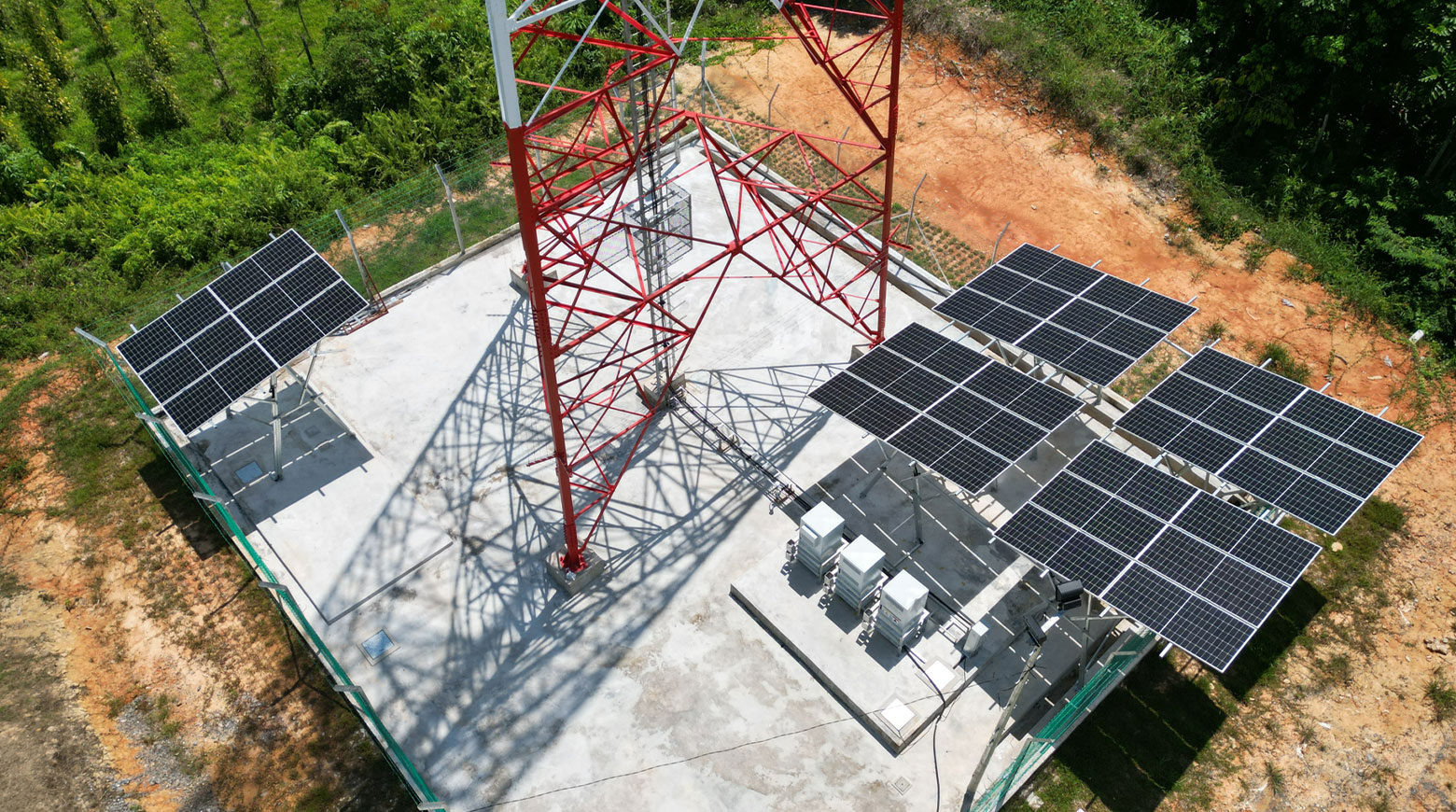
    For instance, tower designs and energy solutions are tailored to local needs, an urgent necessity in the Philippines where renewable energy is essential. Currently, EdgePoint boasts 24 solar hybrid sites across the archipelago.

    “We actively collaborate with regulators, local authorities, and industry partners to align our efforts with national digital goals, ensuring we create a meaningful impact that goes beyond mere network coverage,” Walters concluded. Perhaps, in this interconnected world, the true victory lies in empowering communities—one digital classroom at a time.

    Questions & Answers

    How has EdgePoint positioned itself in the Philippines since its entry?
    EdgePoint has quickly risen to become the fourth-largest independent tower company in the Philippines, operating 3,000 active sites and expanding its footprint in both Luzon and Visayas since entering the market in 2022.

    What role does co-location play in EdgePoint’s strategy?
    Co-location allows mobile network operators to share infrastructure at designated sites, reducing costs and improving coverage, which is a central part of EdgePoint’s infrastructure strategy.

    How is EdgePoint addressing the digital divide in underserved communities?
    Through its Connectivity for Communities program, EdgePoint is establishing digital classrooms and providing connectivity and digital tools to underserved areas, positively impacting over 6,500 students and enhancing their access to education and essential services.

  • Globe Business Calls on Enterprises to Steer Innovation and Embrace Disruption in Today’s Market

    Globe Business Calls on Enterprises to Steer Innovation and Embrace Disruption in Today’s Market

    Globe Business, the enterprise arm of Globe Telecom, gathered industry leaders and tech innovators at its G Summit 2025 with an uncompromising message: embrace disruption as an opportunity, not a threat. This year’s summit, themed ‘Disrupt,’ focused on the imperative for Philippine industries to adopt bold transformation strategies and weave disruption into their ongoing narratives.

    “Disruption is not a fleeting trend. At Globe Business, it’s a foundational belief that encourages us to think boldly, act swiftly, and foster meaningful connections with our customers,” said KD Dizon, Vice President and Head of Globe Business. The summit invited participants to reconsider not just their business models but their roles in shaping the future.

    The era of disruption demands proactive leadership. We can either wait for disruption to happen to us or be architects of disruption through bold, decisive action.

    Leaders from both international and local arenas delved into topics like redefining business models, data transformation, and the intricacies of AI-powered innovation. A standout feature of the event was the introduction of the Spectrum Code, an interactive tool that allowed participants to identify their core values surrounding digital leadership. Responses created a live “spectrum cloud,” illuminating each participant’s Core Spectrum Persona and directing them to tailored breakout sessions.

    The sessions, infused with insights from Globe’s technology partners including Google, ZScaler, Zimperium, Orca, Hexnode, Zoom, Versa Networks, Aruba, Ciena, Blackpanda, and Huawei, explored crucial themes such as cloud-first strategies, cybersecurity challenges, and innovation pathways for growth. It’s clear that collaboration is key—even tech companies know that great things happen in tandem.

    Participants also had the opportunity to engage with the Experience Labs, a hands-on demo arena showcasing the practical applications of Globe Business’s offerings. Live demonstrations illustrated how the company and its partners harness secure cloud operations, AI-driven productivity, and cyber defense, all bolstered by Globe’s robust connectivity infrastructure.

    Ultimately, G Summit 2025 underlined Globe Business’s commitment as a driving force in the realm of digital transformation. As enterprises navigate the increasingly intricate digital landscape, the call was clear: act with resolve and take the reins of innovation.

    “Disruption begins with leadership, not merely in title, but through the daily choices we make,” Dizon continued. “G Summit serves as our rallying cry for enterprises to stop waiting for change and to become catalysts for it. Together, we can lead with purpose and redefine the landscape of Philippine business.”

    Questions & Answers

    What was the main focus of G Summit 2025?
    The summit centered on urging Philippine industries to embrace disruption as a continuous strategy for transformation, encouraging proactive leadership.

    What was the Spectrum Code, and how did it enhance participants’ experiences?
    The Spectrum Code was an interactive tool that helped participants identify core values guiding their digital leadership, which informed their breakout session placements.

    How did Globe Business illustrate its offerings at the summit?
    Through the Experience Labs, Globe Business showcased live demonstrations of secure cloud operations, AI-driven productivity, and cyber defense solutions, emphasizing the importance of connectivity.

  • Globe Teams Up with Bridge Alliance and Thales for Innovative Enterprise IoT Proof of Concept Launch

    Globe Teams Up with Bridge Alliance and Thales for Innovative Enterprise IoT Proof of Concept Launch

    In a significant leap towards advancing the Internet of Things (IoT) landscape in the Philippines, Globe Telecom has joined forces with Thales, a global leader in eSIM technology, and the regional telecom consortium Bridge Alliance. This partnership is set to kick off a groundbreaking proof of concept (PoC) for the GSMA SGP.32 standard, marking a first for the country and opening new avenues for businesses seeking enhanced connectivity solutions.

    New Frontiers in Connectivity

    This collaboration allows Globe to pilot the latest GSMA specifications, offering scalable, flexible, and secure connectivity tailored for enterprise IoT applications. Central to this initiative is Thales’s Adaptive Connect Services, which will facilitate the integration of the SGP.32 eSIM IoT Remote Manager and Fleet Manager—tools designed to tackle a variety of regional and local challenges head-on.

    Building a Regional Network

    Bridge Alliance, which includes notable telecom operators like Singtel from Singapore, Optus from Australia, and AIS from Thailand, will oversee the project management. The consortium is committed to ensuring the technology’s regional readiness while simulating cross-border applications among its members. This collaborative effort will also enable Thales to showcase the interoperability of its platform with the new SGP.32 standard, a move that could set the stage for a game-changing shift in enterprise connectivity.

    Empowering Enterprises with eSIM Technology

    The PoC is poised to demonstrate how businesses can efficiently manage IoT devices via eSIMs, enabling features such as remote bulk provisioning, SIM profile switching, seamless interconnectivity, and rapid activation. “With the PoC, we are laying the groundwork for IoT deployments that meet the evolving needs of Philippine enterprises,” stated Globe President and CEO Carl Cruz. “Our goal is to simplify how businesses connect their devices and help them unlock greater efficiency, flexibility, and reach.”

    Security and Seamlessness for Client Success

    Jon Cahilig, Thales Asia’s Head of Sales for Mobile Connectivity Solutions, praised the integration of Thales’s solutions with Globe and Bridge Alliance services. He emphasized that this collaboration will offer enterprise clients a secure and seamless platform to manage their IoT connectivity needs. “This also provides an opportunity for all IoT companies to introduce their SGP.32 devices to a broad market when they participate in this collaborative project,” he added, hinting at an expansive future for IoT innovations.

    Looking ahead, Globe plans to launch the PoC in the third quarter of 2025, following final development steps. The initiative will continue until SGP.32-compatible devices are commercially available. Upon readiness, Globe intends to invite original equipment manufacturers (OEMs) and its business clients to explore and test their IoT devices on the new platform.

    Questions & Answers

    How does the partnership between Globe Telecom and Thales enhance IoT connectivity in the Philippines?
    The partnership allows Globe to test advanced GSMA specifications for secure and scalable IoT solutions, simplifying how businesses connect their devices and increasing efficiency.

    What is the role of Bridge Alliance in this collaboration?
    Bridge Alliance will manage the project and ensure regional readiness of the technology, facilitating cross-border enterprise applications among its member operators.

    When will the proof of concept begin, and what will it offer to businesses?
    The PoC is set to launch in the third quarter of 2025; it will provide businesses with a platform to manage IoT devices through features like remote provisioning and SIM profile switching.

  • Globe launches Future Makers 2019 accelerator

    Globe launches Future Makers 2019 accelerator

    The Philippines’ Globe Telecom has launched the latest round of its accelerator program for startups working to tackle some of the market’s most challenging social problems.

    The Globe Future Makers 2019 program will be open to all Philippine-based individuals, groups, or organizations with solutions that use technology to achieve wide-scale positive impact.

    The technology can include devices, platforms, hardware, or software. The solution developed must be a functional product or service that has been working for at least two years, and be able to address one or more of the United Nations’ Sustainable Development Goals.

    Successful applicants will receive technology support from Globe Telecom as well as access to mentorship, collaboration and related support from industry partners.

    The Globe Future Makers program was first introduced in 2017 with the goal of helping encourage businesses to use technology for social good. This year’s event is being jointly implemented by Philippines’ based crowdfunding website and community for social projects The Spark Project.

    “Globe Future Makers offers a unique opportunity for our small enterprises using digital technology to scale up and test if their businesses are replicable in global markets. We encourage social innovators and startups to participate in GFM 2019.”

  • Globe, GoTyme Bank Partner to Strengthen Anti-Scam Measures

    Globe, GoTyme Bank Partner to Strengthen Anti-Scam Measures

    This collaboration will comply with the Data Privacy Act and streamline the process of investigating suspected scammers by eliminating the need for warrants or subpoenas to access their information.

    Globe’s Chief Privacy Officer, Irish Salandanan-Almeida, emphasized, “This partnership reflects our ongoing commitment to championing cybersecurity and protecting our customers from the growing threats in the digital world. Through collaborations, we can combine our expertise and resources to better safeguard the financial sector and our customers from cybercrime.”

    In the first half of last year, Globe blocked 2.7 million bank-related spam and scam messages, investing around USD 20 million in scam detection and prevention systems to protect consumers from deceptive messages. A study by Kaspersky revealed that Filipinos encountered 14.1 million web threats last year, a decrease from 26.6 million in 2023.

    Yeo Siang Tiong, Kaspersky’s General Manager for Southeast Asia, suggested that this decline in cyber threats could be due to improved detection and prevention methods. However, Tiong cautioned that hackers might be targeting specific high-value individuals rather than launching widespread cyberattacks.

  • Globe Telecom Accelerates Connectivity through PPPs

    Globe Telecom Accelerates Connectivity through PPPs

    Engr. Emmanuel Estrada, Vice President, Globe Telecom, stressed the significance of collaboration between the government and private sector, addressing the evolving digital needs of Filipinos.

    Globe Telecom noted its active participation in initiatives, such as the Connectivity Plan Task Force, spearheaded by the Private Sector Advisory Council.

    The initiative, comprising mobile network operators, tower companies, and government stakeholders, aims to maximize the capacity of the existing networks by constructing more than 150 new sites and exploring cutting-edge technologies, including satellite services, for geographically isolated and disadvantaged areas (GIDA).

    Estrada highlighted the significance of government policies in effectively driving PPPs and the need to revise outdated regulations.

    These strategies focus on creating transparent, consistent, and stable policy frameworks to attract private sector investment and foster mutually beneficial long-term partnerships.

    Estrada accentuated, “The old, antiquated policies are no longer effective and relevant in today’s digital economy. Once that is addressed, let’s streamline all the processes.”

    Estrada also noted Globe Telecom’s progress, particularly EO (Executive Order) 32, which has accelerated the company’s network developments over the last three years.

    “Those antiquated polices, some dating back to 1931, are the ones that we need to really work on together with the government,” he added.

    Globe Telecom reported a 20% improvement in processing permits from 2022 to 2024, thanks to simplified procedures introduced by various local government units. This progress is credited to Executive Order (EO) 32, which streamlined the permitting process for telecommunications infrastructure.

    Underscoring the importance of the synergy between technology and valuable real-world applications, Estrada stressed that PPPs must provide innovative solutions to meet the digital needs of the public.

    While 96% of the Philippines’s total population is covered by at least 3G or 4G, only 63% have active subscriptions.

    The Globe Telecom VP emphasized the importance of enhancing network usability beyond social media platforms, prioritizing applications that add value to areas, including education, healthcare, and finance.

    “First, let’s fix connectivity, and once that’s done, let’s improve usability,” Estrada stressed. “It’s one thing to have the connection but us

  • Globe Expands Network with New Cell Sites in Central Luzon

    Globe Expands Network with New Cell Sites in Central Luzon

    Globe Telecom has constructed six new towers in Bulacan, including two in Marilao and one each in Angat, Doña Remedios Trinidad, Hagonoy, and San Jose Del Monte, while expanding a total of 22 additional sites across the province.

    In Nueva Ecija, the company has built six new towers, located in Aliaga, Gapan City, General Tinio, San Isidro, Santa Rosa, and Talavera, and expanded 11 existing sites to provide enhanced digital services to both urban and rural areas.

    Globe Telecom has added five new cell towers in Apalit, Floridablanca, Mexico, San Luis, and Sasmuan in Pampanga to improve network coverage.

    In Tarlac, three new sites were added in Bamban, Concepcion, and Tarlac City, with additional site upgrades further improving the province’s overall network coverage. Approximately 15 existing sites were upgraded to boost network capacity and coverage.

    Joel Agustin, Globe’s SVP of Service Planning and Engineering, emphasized that the company’s network expansion across Central Luzon highlights its dedication to delivering world-class connectivity to all Filipinos.

    Agustin noted that the addition of the new towers and expansion sites aims to improve connectivity and empower communities to prosper in the digital age.

    Globe’s ongoing network expansion aligns with its mission to close the digital divide in the Philippines. The company aims to offer all Filipinos access to digital benefits, promoting inclusive growth nationwide through continuous infrastructure upgrades and network expansion.