Retail News CRM

Tag: globe

  • Globe launches first 700-MHz base station

    Globe launches first 700-MHz base station

    Philippine operators Globe and PLDT have wasted no time in taking advantage of their newly-acquired 700-MHz spectrum holdings.

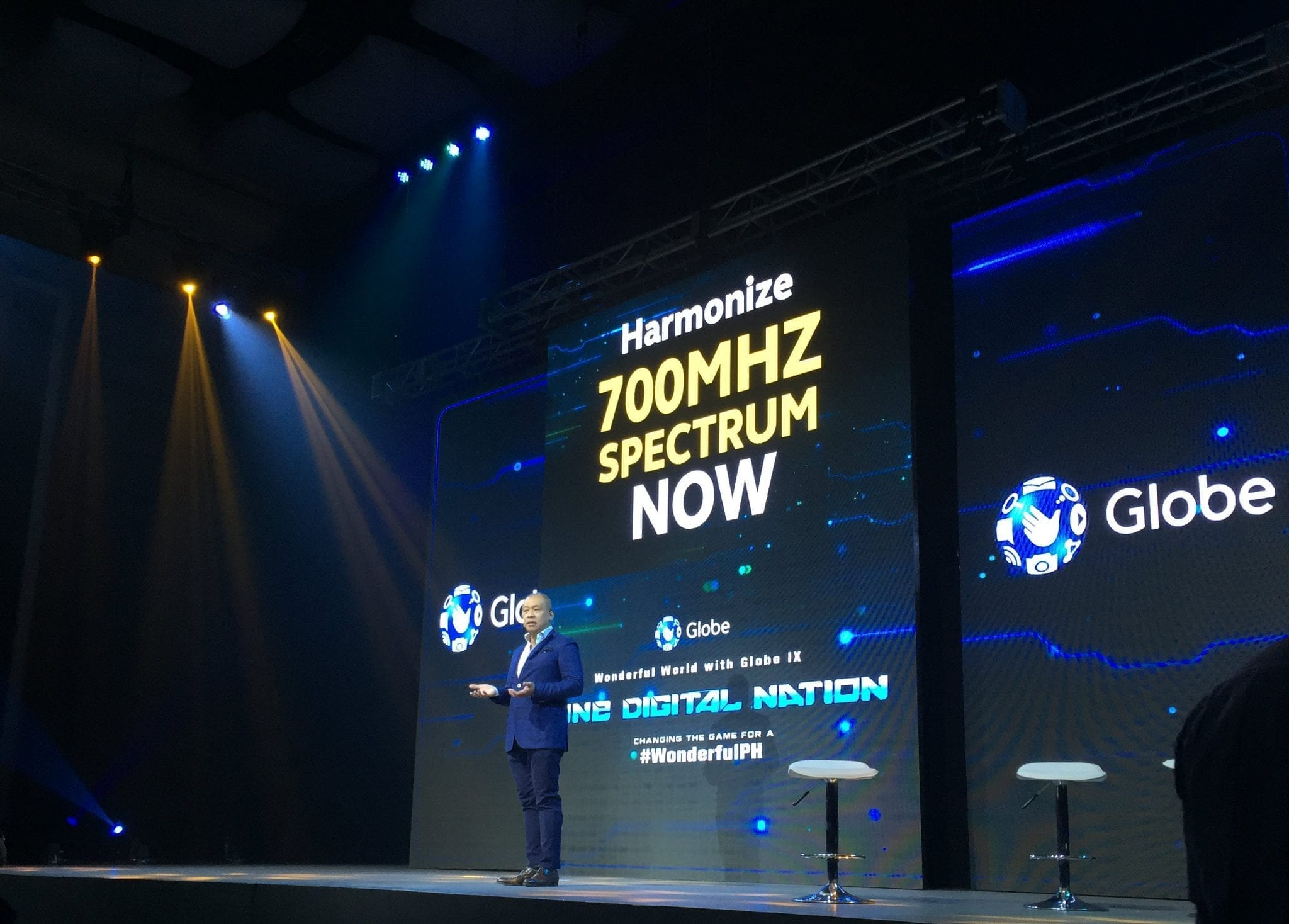
    Globe Telecom has announced it has activated the nation’s first cell site that utilizes the 700-MHz band, less than a week after Globe and PLDT each acquired half of San Miguel Corporation’s (SMC) telecom assets.

    Globe executive Joel Agustin said the company plans an initial rollout of around 200 sites using the 700-MHz band.

    “The intention is that the first batch of the 200 sites we plan to roll out will be in areas where connectivity matters most to our customers as well as in locations with high convergence of users like here in the National Capital Region,” he said.

    Agustin said the 700-MHz band will be essential for the company’s efforts to improve indoor data coverage and to deploy LTE-based broadband in rural areas.

    PLDT separately announced that its wireless broadband unit Smart Communications will start using the 700-MHz spectrum it acquired through the SMC transaction this year as part of the accelerated deployment of its LTE service.

    The operator revealed it has been holding discussions with device manufacturers to introduce more affordable LTE smartphones and tablets compatible with the 700-MHz band into the country.

    Around 45% of subscribers to PLDT’s two wireless brands – Smart and Sun Cellular – are now using smartphones, up from 30% in 2015. But at present the majority of these are 3G/HSPA only handsets.
  • San Miguel selling telco assets to PLDT & Globe

    San Miguel selling telco assets to PLDT & Globe

    Philippine conglomerate San Miguel corporation is selling its telecom business to incumbent operators PLDT and Globe following the collapse of its JV negotiations with Telstra.

    Under the agreement, San Miguel will sell its telecom unit Vega Telecom for 69.1 billion pesos ($1.48 billion) inclusive of 17.02 billion pesos worth of liabilities. PLDT and Globe will each acquire half of the business.

    Vega Telecom owns controlling stakes in multiple telecom-related units. These are BellTel, Eastern Telecommunications, Cobaltpoint Telecommunication (formerly Extelcom), Tori Spectrum Telecommunication (formerly Wi-Tribe) and Hi-Frequency Telecommunication.

    The acquisition will finally grant PLDT and Globe access to radio spectrum in the coveted 700-MHz band, which San Miguel currently holds a monopoly on.

    PLDT and Globe have been petitioning the government for years for access to this spectrum, but the regulator had so far declined to act to recall the spectrum.

    In addition to the 700-MHz spectrum the acquisition also covers frequencies in the 900-MHz and 1800-MHz bands, PLDT said in a stock market filing.

    But as part of the deal, PLDT and Globe have agreed to relinquish part of the 700-MHz, as well as 850-MHz, 2500-MHz and 3500-MHz bands to regulator NTC to allow the potential entry of a third operator into the market.

    “This transaction offers a breakthrough opportunity, not only for the companies involved but also for the industry and the country. This will enable existing operators to provide significantly improved Internet and data services to the public and to our customers in the shortest possible time,” PLDT CEO Manuel V Pangilinan said in a statement.

    “ At the same time, it leaves the door open for new entrants into the industry. Taken together, thiswill enable the industry to better support the country’s development efforts – especially significant with the onset of a new government.”

  • Globe trials use of TV white space for broadband

    Globe trials use of TV white space for broadband

    The Philippines’ Globe Telecom has become the first operator in the nation to pilot using TV white space frequency for mobile broadband.

    The operator is collaborating with the ICT office of the Department of Science and Technology to trial use of the spectrum for broadband service delivery in multiple areas of the Philippines.

    Globe senior vice president for network technologies strategy Emmanuel Estrada said building additional cell sites to meet demand has proven to be a major challenge, with construction of a single site typically involving around 25 permits and at least 8 months of lead time.

    “We hope that making use of available spectrum would enhance bandwidth capacities and allow our network to transmit enormous amount of data at faster speeds,” he said.

    Estrada added that TV white space technology is also expected to help Globe roll out broadband to rural areas with low population density, where it is not economically viable to used fixed broadband technology.

    TV white spaces are the unused frequencies between UHF and VHF broadcast TV channels, located in the range of 54-MHz to 806-MHz. The long range and strong signal penetration of these frequencies make them well suited to telecoms services.

  • Globe urges govt to establish Department of ICT

    Globe urges govt to establish Department of ICT

    The Philippines’ Globe Telecom is encouraging the government to establish a new Department of ICT to help improve the state of local internet services and the nation’s digital readiness.

    Globe general counsel Froilan Castelo urged outgoing president Benigno Aquino to sign the bill that would create the new department before he leaves office next month.

    “The Philippines is in urgent need of an agency that will drive the country’s ICT development and help steer the country to realize its full potential as a digital economy where homes, businesses and individuals have access to fast and reliable data connectivity,” Castelo said.

    “We are hopeful that enhancing ICT development in the country by creating the DICT would enable more business organizations to work more efficiently, maximize productivity and contribute to sustaining the country’s economic growth.”

    Castelo said a policy framework for ICT development is sorely needed to help develop the nation’s internet infrastructure.

    Globe, for example, has faced regulatory hurdles inhibiting it from building more cell sites as part of its latest nationwide infrastructure program.

    The proposed bill would abolish the Information and Communications Technology Office, National Computer Center, National Computer Institute, Telecommunications Office, National Telecommunications Training Institute and all communications units of the current Department of Transportation and Communications.

    The functions of these departments would instead be taken up by the new DICT, which would also take responsibility for telecom regulator NTC, the National Privacy Commission and the Cybercrime Investigation and Coordination Center.

  • Globe rolls out fiber in world’s oldest Chinatown

    Globe rolls out fiber in world’s oldest Chinatown

    Globe Telecom has entered a collaboration with the city government of Manila to roll out fiber broadband technology in Binondo. This initiative will provide internet connectivity with speeds of up to 1Gbps to the world’s oldest Chinatown.

    Early this year, Globe made a call for local governments’ support for its initiative to build on its network infrastructure and provide better a internet experience for its customers, as part of efforts to transform the Philippines into a digital nation by 2020. The city government of Manila, led by Mayor Joseph Estrada, was the first government to respond to the call.

    The fiberization of the entire Binondo district, an age-old center of commercial activities in the capital, is expected to benefit business and residential establishments in the area and is expected to drive business growth in the district. The project will be completed in the third quarter of the year.

    “Globe is able to deploy fiber broadband technology in Binondo only because we are united with the local city government in realizing a vision of developing ‘connected communities’ where both enterprise clients and customers at home get to experience the full benefits of having world-class data connectivity,” Globe chief commercial officer Albert de Larrazabal said.

    “We hope to replicate the realization of this vision in many other areas in the country as we all aspire to further drive local economic growth.”

    The deployment of fiber broadband technology in Binondo will deliver ultra- fast internet to at least 5,000 new business and home subscribers as part of the initial rollout, Larrazabal said.

    Globe will also roll out small cell technology in various parts of Binondo as part of its efforts to expand network coverage and capacity.

    The pilot rollout of fiber broadband technology in Binondo forms part of Globe Telecom’s initiative of creating an internet super highway nationwide. By forming partnerships with other local government units, the operator plans to deploy fiber in 20,000 districts by 2020 that will provide internet access to around 2 million homes nationwide.

    Parallel to this, Globe will also invest in capacity enhancement for both mobile and wireline using different technologies that include 3G, LTE and Wi-Fi.

  • Globe’s GCash adapted for tax payment

    Globe’s GCash adapted for tax payment

    The Philippines’ Bureau of Internal Revenue (BIR) has teamed up with Globe Telecom to improve tax collection via the GCash mobile money service.

    Under the partnership, Globe’s GCash and the BIR have relaunched the Philippines’ first electronic tax filing and payment system.

    Together with the USAID Facilitating Public Investment Project and the USAID E-PESO Activity, Globe relaunched the electronic filing and payment system on Tuesday with more enhanced features.

    The goals of the project are to improve tax collection and administration, curb corruption, and strengthen the business climate in the country.

    “The continuous payment of right taxes will continue and sustain the growth of the Philippines,” said BIR Commissioner Kim Henares in a statement. “The bureau aims to increase funding contribution for the country’s growing needs for basic infrastructure and social programs necessary to reduce poverty, thus, the government continues to push for the growth of the country’s fiscal space.”

    GCash was first introduced for national tax payments in 2005 when BIR’s thrust was to expand the provision of electronic services, most notably with the release of eBIRForms v6, an improved e-filing software that can serve all taxpayers.

    The use of GCash has now been expanded to allow payments for all types of taxes and also works with local and national government agencies to increase public’s awareness through the e-Bayad campaigns and enable usage of electronic payments in government transactions.

    GCash President Albert Tinio said GCash also helps the government utilize mobile money for collections and disbursements of social welfare benefits, government fees, and taxes. By limiting face-to-face transactions, the service is able to increase access to government services and reduce potential leakages especially in hard to reach areas.

    With the partnership in place, all Philippine taxpayers can use their mobile phone to pay for all types of taxes instead of going to BIR regional district offices or authorized agent banks with their cash or check.

    The Gcash mobile app can be downloaded from the Google Play Store for Android. Users need to register for the service and fund their Gcash account in any partner outlet.

  • Globe open to pursuing M&As over 700-MHz spectrum

    Globe open to pursuing M&As over 700-MHz spectrum

    The Philippines’ Globe Telecom has revealed it is open to the possibility of acquiring conglomerate San Miguel Corporation’s (SMC’s) telecom subsidiaries to give it access to valuable 700-MHz spectrum.

    Globe’s CEO Ernest Cu said the company would be open to acquiring SMC’s Wi-Tribe and High Frequency Telecommunications units, considering that efforts to appeal to regulator NTC to allocate it a portion of the spectrum have repeatedly been rebuffed since as early as 2005.

    He said the prospect of buying the companies comes up occasionally and the company is always open to considering a deal.

    SMC controls the entire 700-MHz band via its ISP subsidiaries. The company had been planning to form a joint venture with Australian operator Telstra to become the Philippines’ third mobile operator, but this partnership was called off last month after negotiations stalled.

    According to the report, SMC still plans to use the spectrum to launch a mobile venture this year, initially targeting the metro Manilla region.

    Globe and rival PLDT are meanwhile persisting in efforts to convince the NTC to assign portions of the band to them. The most recent attempt involved an appeal to the Philippine Competition Commission filed in February.

  • Globe upgrading GCash to support bulk payments

    Globe upgrading GCash to support bulk payments

    The Philippines’ Globe Telecom is upgrading its GCash mobile money service to allow it to support expanded services such as bulk payment services for salaries.

    The operator’s dedicated G-Xchange Inc (GXI) subsidiary will deploy the latest version of Amdocs’ Mobile Financial Services (MFS) suite, which has been powering the GCash money service since 2004.

    By conducting the upgrade GXI aims to be able to deliver services faster ad more efficiency and to be able to scale up the service to bulk transactions when needed.

    Amdocs will also provide end-to-end delivery services including development, deployment, testing and support as part of the contract.

    “GCash has come a long way in solving financial inclusion challenges in the Philippines,” GXI CEO Albert Tinio said.

    “This key system enhancement will enable us to realize new revenue streams with new services targeting new segments, while boosting GCash’s ability to deliver a highly scalable and efficient mobile financial services solution for consumers, merchants and organizations, meeting the business need of the evolving marketplace.”

  • Globe launches Mobile Connect in Philippines

    Globe launches Mobile Connect in Philippines

    The Philippines’ Globe Telecom has launched Global Connect, the GSMA-led platform that seeks to protect users from the risk of online fraud and scams.

    GSMA’s Mobile Connect aims to securely authenticate, authorize and identify subscribers accessing content by using the mobile device owned and carried by the end-user.

    Customers can create and manage a digital universal identity using a single sign-in system. Users can digitally confirm their identity and credentials to access mobile and digital services including e-commerce, banking and health via their mobile phones.

    The user’s unique mobile number, combined with a unique PIN, is used for this authentication process.

    “As the mobile ecosystem rapidly expands, consumers are increasingly demanding robust privacy safeguards and personal data protection. With Mobile Connect, Globe is adopting a globally-accepted standard to protect the digital identities of customers from the various cases of cybercrimes via a safe and secure platform,” Globe VP for digital media Glenn Estrella said.

    “In today’s digital world, this initiative will definitely bring about sustainable and long-lasting impact to the global economy, and we at Globe are very happy to bring this innovation to Filipinos to ease them away from the worries of online fraud.”

  • PAL, Air Asia cancel 300 flights for Apec

    PAL, Air Asia cancel 300 flights for Apec

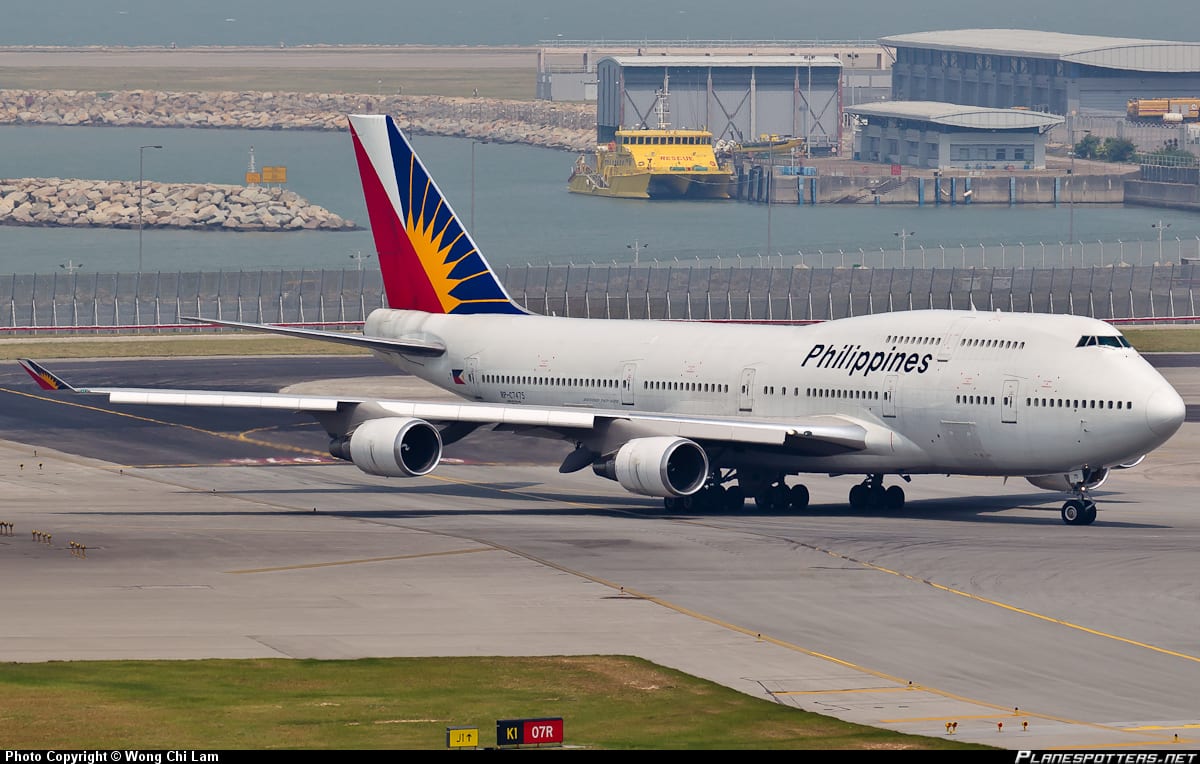
    The country’s flag carrier Philippine Airlines (PAL) and Air Asia Philippines cancelled nearly 300 domestic and international flights in anticipation of disruptions in runway operations on the week of the Asia-Pacific Economic Cooperation (Apec) Summit.

    In an advisory, PAL announced it was grounding 115 domestic and 96 international flights from Nov. 15 to 20 “to give way to the arrival and departure of Apec leaders.”

    The Manila International Airport Authority (MIAA) had announced periods of temporary runway closure at the Ninoy Aquino International Airport as part of the protocol for the arrival and departure of world leaders.

    Heads of state are expected to arrive on Nov. 16 and 17 for the summit which will be held on the 18th and 19th. They are expected to leave Manila on Nov. 19 and 20.

    “PAL assures affected passengers that the airline will reschedule their flights with rebooking and penalty charges waived,” the advisory said.

    Likewise, passengers with confirmed flights on Nov. 15, 16, 17, 18, 19 or 20 have the option to rebook within 30 days from their original schedule “for as long as the new schedule falls within the ticket validity period.”  They can also refund the full  ticket cost.

    PAL said that it may cancel more flights depending on the flight movements of the heads of state attending the summit.

    Meanwhile, Air Asia cancelled 74 domestic and 10 international flights from Nov. 17 to 20, also to give way to the arrival of heads of state.

    The airline gave passengers on the cancelled flights the option to rebook within 30 days of the date of their original flight schedule or get a refund.  Affected flyers may also avail of a credit shell within 90 days of the cancelled flight.

    A credit shell, according to Air Asia, is “a credit account where monies paid towards a booking  are stored.” The number issued, which is practically the booking number, in a credit shell account that may be used by passengers to transfer flights.

  • Globe Telecom partners with Lazada for mWallet service

    Globe Telecom partners with Lazada for mWallet service

    Globe Telecom recently partnered with online retailer and marketplace Lazada to bring its GCASH mobile wallet to the e-commerce space in Southeast Asia.

    Under the agreement signed by Globe Telecom President and CEO Ernest Cu and Lazada Founder and CEO Maximilian Bittner in Seoul, Korea, GCASH will be used as a mode of payment in Lazada’s eCommerce website through an open integrated mWallet platform.

    “By increasing transactions through mWallet, we will expand the online ecosystem of Globe and provide our customers with a full digital lifestyle experience,” said Cu. GCASH is a product of Globe Telecom’s wholly-owned subsidiary G-Xchange, Inc. (GXI) and is among the pioneers of telco-led mWallet.

    GXI’s partners today include government agencies, utility companies, cooperatives, insurance companies, remittance companies, universities, banks, and commercial establishments which accept GCASH as a means of payment for products and services via mobile phone or the Internet.

    Through mWallet, Globe customers no longer need to own a credit card or even have a bank account to shop online. Instead, they can turn their mobile phone into a virtual wallet to shop at the speed of a text message.

    Lazada has over 15,000 merchants in Southeast Asia, and 1.4 million active customers. In the Philippines, mobile traffic constitutes more than 50 percent of its daily traffic. According to Inanc Balci, CEO of Lazada Philippines, the Lazada Mobile App downloads have grown 18 percent month-on-month since its launch in early 2014.

  • TELIN: Indonesia As A Global Hub For Worldwide Telecommunications

    TELIN: Indonesia As A Global Hub For Worldwide Telecommunications

    The consortium of submarine cable communication system by the Southeast Asia-United States (SEA-US), which consist of global telecommunications company, announced the commencement of construction of the submarine cable projects that directly connects Indonesia to the United States. The construction project undertaken by the NEC Corporation and NEC Corporation of America with an investment of 250 million dollars is expected to be completed in the fourth quarter of 2016.

    The SEA-US consortium consist of PT. Telekomunikasi Indonesia International (Telin), Globe Telecom, RAM Telecom International (RTI), Hawaiian Telcom, Teleguam Holdings (GTA), GTI Corporation (a member of the Globe Telecom group), and Telkom USA.

    Director of Telin, Syarial Sharif Ahmad said, the construction of submarine cable communication system has become one of the important steps to meet the needs of rapid communication in Indonesia as well as proving Telin’s commitment in bringing high-tech telecommunications infrastructure.

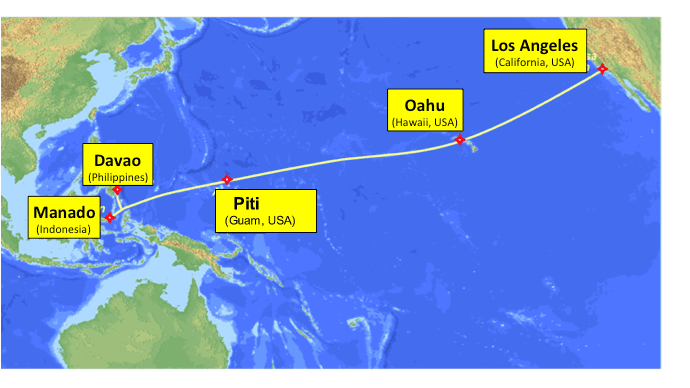
    This submarine cable system will connect five regions of Manado (Indonesia), South Davao (Philippines), Piti in Guam, Honolulu of the island of Oahu Hawaii, and Los Angeles, California in the united states.

    The long submarine cable construction is estimated to reach 15,0000 km and has been designed to avoid areas prone to natural disasters, so as to provide a different route than the existing cable system and ensure a more stable reliability service.

    The cable system provides an additional capacity of terabyte per second (Tb/s) by using technology of 100 gigabyte per second (Gb/s). With this capacity, SEA-US will be able to provide the bandwidth needs of Southeast Asia and North America, which are always increasing with unmatched performance, especially for the two ASEAN countries. The construction of the system will also benefit other countries such as Singapore, Malaysia, Brunei, Papua New Guinea, and Australia.

    The construction of the SEA-US project will later be connected with the SEA-ME-WE 5 (South East Asia – Middle East – West Europe) project by connecting Manado and Dumai via submarine cable communication system “Indonesia Global Gateway” (IGG). The overall submarine cable communication system by Telin is the reflection of Indonesia Global Networks (IGN) that highlights the real role of Indonesia as a global hub for worldwide telecommunications.

  • Google unveils 2 affordable smartphones in Philippines

    Google unveils 2 affordable smartphones in Philippines

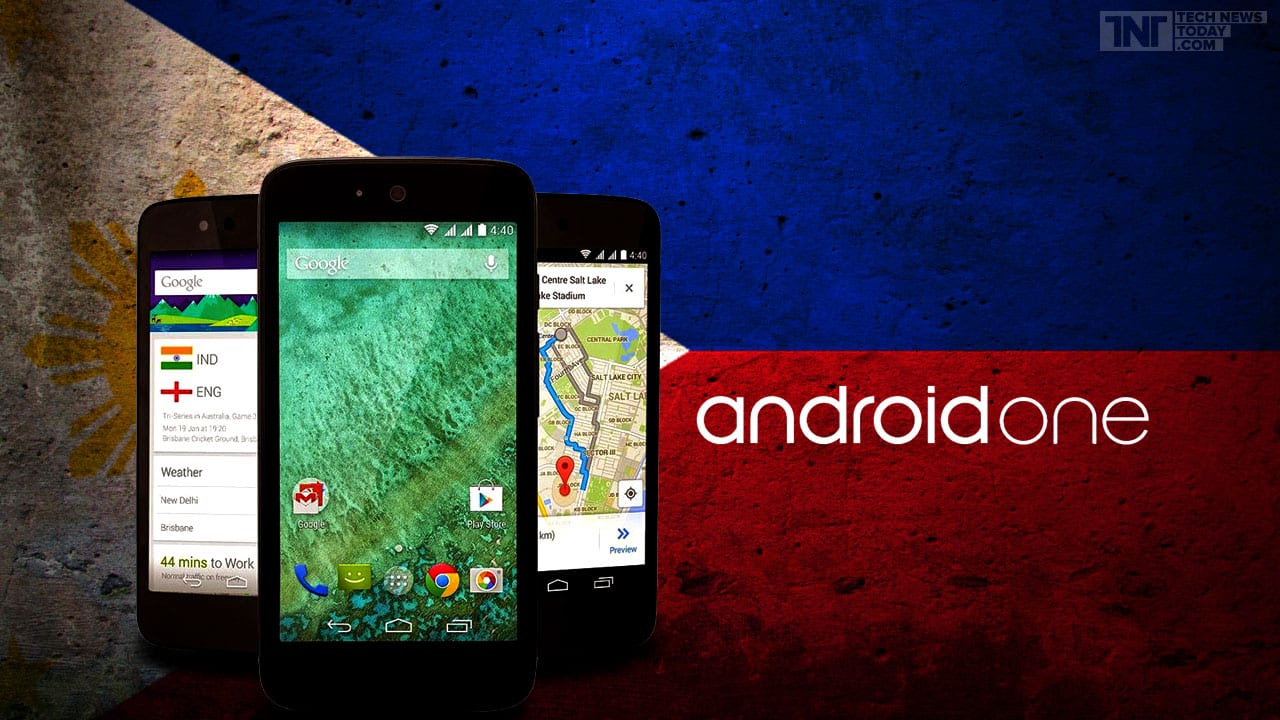
    Google unveiled two affordable smartphones in the Philippines built from the Android One program, a global initiative to bring high-quality smartphones to emerging markets.

    The two phones, developed by local manufacturers Cherry Mobile and MyPhone, will retail for PHP5,000 (USD113.4) in the coming weeks.

    Caesar Sengupta, Vice President, Product Management, Google, said the Philippines is the sixth country in Asia where the Android One program was rolled out, after India, Bangladesh, Nepal, Sri Lanka and Indonesia.

    Android One phones come with the latest version of Android Lollipop and the two phones that will sell in the Philippines will both have 4.5” FWVGA display, Cortex A7 1.3 GHz Quad-Core processor, 1GB RAM, 2 SIM card slots, and front and rear facing cameras and 4GB and 8GB storage (expandable to 32GB).

    Sengupta said Google is also working to reduce data costs for Android One users in the Philippines. For one, the data compression feature on the Android One Chrome browser helps compress the amount of data flowing between the phone and the Internet.

    The Philippines is one of the few countries where YouTube users can take videos offline to watch later during periods of low or no Internet connectivity.

    Telecommunications companies Smart Communications Inc, and Sun Celluar are pitching in effort to make the mobile experience better for users through free over-the-air (OTA) updates to the Android operating system and certain amounts of app downloads from Google Play for the first six months.

    Globe Telecom, on the other hand will be working with Android One users to better access the Internet through its network.

    Ken Lingan, Google’s Country Manager for the Philippines, said during the launch that the country now has over 44 million Internet users. The projection is that by 2016 there would be 66 million Filipinos online.

    “Currently, the Philippines is already the second largest Internet market in Southeast Asia, the 6th largest in Asia. The numbers are growing. There is a massive potential that we see for e-commerce and growing content online because as we see more Filipinos going to the Internet primarily through a mobile device,” he said.

    Sengupta said that it is part of Google’s mission to help connect the four billion or so people around the world who still do not have access to smartphones and are not yet online, mostly in emerging markets like the Philippines.

    “There are lots of first smartphone users do not really get a very nice experience with their gadgets, the software are pretty old and connectivity is expensive and the bandwidth limited,” Sengupta added. “We put together this programming called Android One as an integrated approach to try to solve these problems.”

    Mobile Internet in the Philippines is growing 112 percent year-on-year. By the end of this year, Google expects 50 percent of the population with smartphones. This growth is largely being powered by Android.

  • Philippine telcos unveil more payment options for digital goods

    Philippine telcos unveil more payment options for digital goods

    Telecommunications companies in the Philippines are making it easier for Filipino shoppers to purchase digital goods such as apps, games, books, magazines, music and movies.

    With only around four percent of Filipinos owning credit cards, according to the CIA Fact Book in 2013, it is difficult for consumers to participate in e-commerce and fully enjoy a digital lifestyle.

    With the direct carrier billing service now provided by both Smart Communications Inc. the and Globe Telecom, it is expected that

    The pay-with-load service of Smart Communications, dubbed Pay-With-Mobile, unveiled on Friday, allows subscribers to purchase from the App Store and iTunes using prepaid load or to charge the purchase to their monthly phone bill.

    The service, which Smart said will be fully available on 18 February, eliminates the need for a credit card to make in-app purchases, which has long been a barrier for many Philippine shoppers.

    Smart said a 15 percent premium will be charged on top of the published App Store and iTunes rates to account for VAT (value-added tax) and foreign exchange rate difference in US dollars.

    To get started, users need to register their mobile number to get a Pay-With-Mobile number, which they can enroll in their Apple ID account to start making purchases.

    “Smart understands that not everyone owns a credit card, but that shouldn’t stop people from realizing the full potential of their mobile devices,” said Charles Lim, EVP and Wireless Consumer Division Head at Smart.

    Globe Telecom, for its part, has earlier launched its own direct carrier billing services for in-app purchase on Google Play last October.

    For Apple customers, Globe susbscribers can purchase from the Apple App store through the GCash American Express Virtual Pay, a service it introduced in 2012.

    Globe said app purchases comprise 27 percent of total GCash American Express Virtual Play purchases. Meanwhile, Google Play Store app purchases has more than doubled since its launch last October.