Retail News CRM

Tag: globe

  • Globe deploys CEM suite from NICE

    Globe deploys CEM suite from NICE

    Globe Telecom has become the Philippines’ first operator to implement NICE’s Total Voice of the Customer (TVOC) suite to help improve the customer experience.

    The operator has deployed the suite across seven of its customer-facing touchpoints, including the contact center, retail centers, self-service points and outbound calls.

    NICE TVOC combines instant solicited feedback with interaction analytics for insight into the drivers of customer satisfaction.

    This improved visibility has given Globe the ability to take immediate action for recovery, when necessary, as well as to identify best practices to be shared with all service representatives. Insights from the TVOC solution are being used to bring company services in line with customer expectations.

    TVOC is the latest addition to the portfolio of NICE enterprise solutions Globe has implemented, which also include applications for workforce management, interaction analytics and quality optimization.

    “Seeing that telco is a very dynamic space to be in, it is important for us get as much insight as we can about our customers so we can engage them at their ‘moment of truth’ and deliver real impact,” said Rebecca Eclipse, chief customer experience officer at Globe Telecom. “Eventually, this will be our competitive edge, as we can quickly identify opportunities to better serve our customers and immediately take action.”

  • Globe to deploy fiber in 20,000 villages

    Globe to deploy fiber in 20,000 villages

    The Philippines’ Globe Telecom has committed to connect 2 million Filipino homes with high-speed internet access with a speed of at least 10Mbps and above by 2020.

    The operator plans to deploy fiber in 20,000 villages across the country to achieve this goal.

    “That will change a lot for families because families today are so dependent on the internet,” said Globe President and CEO Ernest Cu at an event on Friday night.

    “Industries and Business Process Outsourcing (BPO) also cannot flourish without dependable connection to the United States, the UK, Australia and to the rest of the world.”

    “We are committed to spending $500 million to upgrade the network of Globe to enable continuous growth among enterprises in the Philippines,” he added.

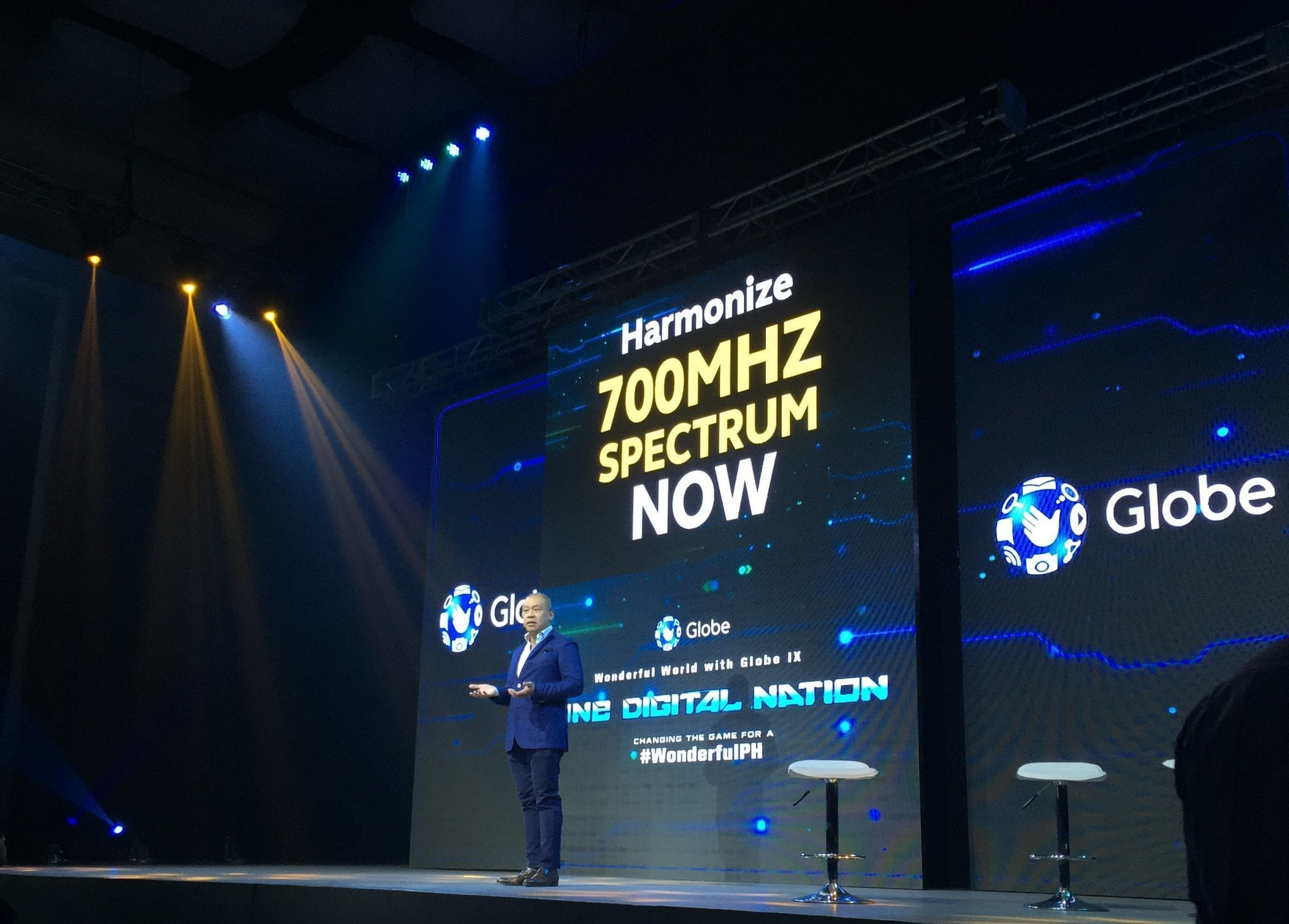
    Since the joint purchase of the telco assets owned by San Miguel Corporation (SMC) by Globe Telecom and PLDT last May, both companies have been rolling out LTE 700-MHz cell sites across the country. In the Globe network, around 250 such cell ties will have been activated in Metro Manila by the end of this month, at least 188 of which will be active in the National Capital Region.

    Cu said the goal is to deploy at least 500 LTE 700-MHz cell sites nationwide by the end of 2016.

    The majority of these sites will cover major business districts and highly urbanized and populated areas in the country, including Metro Manila, Metro Cebu, and Metro Davao.

    Globe’s chief executive emphasized that the company is maximizing the use of the previously idle 700-MHz band in fulfillment of its commitment to the National Telecommunications Commission to improve the overall internet experience of its customers following the sell-out of SMC’s telco assets.

    “One of our goals its to try to create an experience as close to first world internet as possible. You can now do this with mobile, given the amount of spectrum that we have,” he said.

    Parallel to this, Globe has also started rolling out a capacity expansion program for its corporate data network to address the bandwidth requirement of its enterprise clients. The company will be equipping 61 of its corporate sites with fiber technology.

  • Globe fast-tracking LTE 700 rollout

    Globe fast-tracking LTE 700 rollout

    The Philippines’ Globe Telecom is fast-tracking the rollout of LTE over its recently-acquired 700-MHz spectrum.

    The operator revealed it has recently rolled out more than 150 700-MHz base stations, mostly in Metro Manila.

    The new sites cover major business districts and populated areas in the country. Globe launched its first 700-MHz base station Quexon City in June, and the company said its LTE 700 sites now cover the majority of the city.

    Globe is planning an initial rollout of 200 compatible LTE 700 base stations, and has committed to deploying around 4,500 multiband, multimode software defined radio base stations covering 95% of municipalities and cities in the country.

    “We are confident that more and more of our customers will experience improved services as adoption of LTE-capable devices increases and as we continue to deploy LTE 700 in more sites,” Globe senior vice president for network technical group program governance Joel Agustin said.

    “This is consistent with our strategy of continuously improving internet services using the previously idle 700 MHz spectrum that the NTC now allowed us to co-use.”

    Globe acquired rights to co-use the 700-MHz spectrum after joining with rival Smart to acquire San Miguel Corporation’s telecoms assets for a combined 69.1 billion pesos ($1.5 billion) earlier this year.

  • Globe to provide free Wi-Fi in LRT1 stations

    Globe to provide free Wi-Fi in LRT1 stations

    The Philippines’ Globe Telecom has agreed to provide free Wi-Fi services in all 20 stations of metro Manila’s Light Rail Transit System-Line 1 (LRT1).

    The company has agreed to provide Wi-Fi services to the roughly 400,000 daily LRT-1 passengers as well as Light Rail Manila Corp (LRMC) employees.

    Globe will also provide a fiber network extending the length of the system, covering all LRT-1 stations and LRMC’s depot in Pasay City, and deploy cell sites in each station to improve wireless connectivity.

    Globe Network Technical Group’s SVP for program governance Joel Agustin said the company will use its newly-acquired spectrum in the 700-MHz, 1800-MHz and 2600-MHz bands to provide the capacity required to handle the massive mobile traffic volumes at the stations.

    “As the purveyor of the Filipino digital lifestyle, we, at Globe recognize customer demand for constant connectivity even as they are on the go,” he said. “We are confident that the deployment of free Wi-Fi services in all LRT stations will bring better communication or even improve work productivity for our customers.”

    The operator separately announced that data traffic through the Globe Telecom network grew 35% year-on-year in the first half of 2016 to 151 petabtyes.

    Mobile data revenues surged 46% over the same period to 17.8 billion pesos ($3.66 billion), the operator revealed in its recent results. This comprised 39% of total mobile revenues, up from 27% in 1H15.

  • Globe, PLDT cleared to consolidate SMC case

    Globe, PLDT cleared to consolidate SMC case

    The Philippines’ Court of Appeals has approved an application from the nation’s two major operators to consolidate their legal challenge against the Philippine Competition Commission (PCC) over their acquisition of the telecoms assets of conglomerate San Miguel Corporation.

    Both Globe and PLDT have petitioned the court to compel the PCC declare the San Miguel transaction as “deemed approved.”

    The PCC is conducting a comprehensive review of the potential impact of the acquisition, which includes large allocations of spectrum, on competition and the public benefit.

    The regulatory body had been opposing efforts by the two operators to consolidate their petition into a single case.

    Globe general counsel Froilan Castelo said the court’s decision contradicts the PCC’s claim that the operators have been engaged in forum shopping.

    “Globe has followed the rules, and that motion to consolidate is just in accordance with Rule 31 of the Rules of Court,” he said.

    “This is only but fitting as all Globe’s actions on this matter are well within the bounds of the rules…  We are disappointed that it is the PCC itself that does not follow the rules – the rules of court when it opposes the consolidation of the cases; and their own rules.”

    Castelo also disputed the PCC’s claim that the operators have been uncooperative during the investigation process. He said Globe has cooperated fully with the government body, providing more information than required.

    “These submissions were done in good faith and went beyond what the PCC actually requires by their own rules.  In addition to these, Globe even sought a dialogue with the PCC to explain its position and answer any concern the PCC may have regarding the transaction,” he said.

  • Globe lifts 1H16 profit by 3%

    Globe lifts 1H16 profit by 3%

    The Philippines’ Globe Telecom has reported a 3% year-on-year increase in net profit and an 11% increase in revenue for the first of the year despite heightened competitive intensity.

    The operator recorded net income of nearly 9 billion pesos ($191.4 million), on the back of revenue of 53.8 billion pesos. Mobile revenue also grew 3% year-on-year to 45.7 billion pesos.

    Globe’s prepaid brands drove revenue growth for the quarter, with TM revenues up 5% and Globe Prepaid revenues growing 3%. Postpaid revenues grew a more modest 2%.

    Mobile data service revenues swelled 46% year-on-year to 12.2 billion pesos, offsetting an 11% decline in mobile voice revenue and a 16% slump in SMS revenues. Mobile data comprised 39% of total mobile revenues for the half-year period, up from 27% a year earlier.

    Home broadband revenues meanwhile grew 49% year-on-year to 7 billion pesos, while total subscribers increased 38% over the same period to 1.14 million.

    Corporate data revenues were up 55% to 5.9 billion pesos, driven by strong demand among Philippine enterprises for data connectivity and other telecoms services.

    “We are proud that the company’s overall results in the first half remained robust amidst the heightened competitive intensity and the unique challenges and opportunities posed by increasing levels of smartphone penetration and mobile postpaid ownership in the market,” Globe president and CEO Ernest Cu commented.

    “We believe that with the aid of the additional frequencies that we have recently acquired, Globe Telecom’s leadership as the preferred brand for Filipinos’ digital lifestyle choices will be strengthened moving forward.”

    The operator recently committed to use its newly-acquired spectrum to achieve coverage of 95% of the Philippines’ municipalities and cities by end-2018.

  • Globe targets 95% mobile coverage by end-2018

    Globe targets 95% mobile coverage by end-2018

    The Philippines’ Globe Telecom has laid out a plan to extend mobile coverage to 95% of the nation’s municipalities and cities by end-2018.

    The operator has submitted a proposal with regulator NTC to use the spectrum due to be acquired through the co-purchase of conglomerate San Miguel Corporation’s telecoms assets, including its valuable 700-MHz spectrum, to help achieve its coverage target.

    Under the plan, Globe will deploy around 4,500 SDN-enabled base stations and upgrade the capacity of its existing equipment to improve the customer experience.

    By the end of the year, Globe plans to upgrade around 30% of its network nationwide, or around 2,200 existing cell sites, to support the new spectrum.

    With the submission the operator is implicitly making the case for being allowed to proceed with the purchase of the SMC telco assets.

    Antitrust body PCC plans to conduct a full investigation into the buyout, and the chief of the new Department of Information and Communications Technology recently ordered a spectrum audit as a result of the deal.

    Globe has also committed to providing ultrafast broadband in 2 million households by 2020, and plans to invest $2 billion for its fixed broadband expansion program.

  • Turner, Globe launch Cartoon Network on mobile

    Turner, Globe launch Cartoon Network on mobile

    Turner Asia Pacific and Globe Telecom in the Philippines are making available to Globe customers two upgraded Cartoon Network apps.

    An authenticated version of the Cartoon Network Watch and Play app unlocks its full functionality, including a live stream of the channel and additional video-on-demand content. Cartoon Network Anything will also be bundled, showcasing the network’s best short-form content on mobile devices.

    “Offered to Globe customers, these products provide a convenient avenue for Filipinos to enjoy the most popular kids’ content wherever they are, and in a safe and flexible way,” said Phil Nelson, Turner’s managing director for Southeast Asia.

    This year, Cartoon Network also ranks as a top-5 channel across all genres, showing the local appetite for cartoons and a brand of entertainment that the whole family enjoys.

    “Globe strives to provide the best service that includes premium entertainment from strong international partnerships like Turner’s Cartoon Network,” said Globe chief commercial officer, Albert De Larrazabal.

    “We look forward to the many possibilities this partnership offers as both companies are committed to provide valued customers with a unique digital entertainment experience,” said de Larrazabal. “Moving forward, customers can also expect more good news from Globe and Cartoon Network.”

  • Philippines’ new ICT chief orders spectrum audit

    Philippines’ new ICT chief orders spectrum audit

    The chief of the new Philippines Department of Information and Communications Technology (DICT) has ordered the inventory of used and unused telecoms spectra.

    In his first public speaking engagement and media interview since assumption into office on July 1, DICT Secretary Rodolfo Salalima said frequency is a scarce public resource and the patrimony of the nation.

    “I do not want public telephone entities to be warehousing frequencies, meaning getting assigned frequencies from the government, storing it without using it but using it for speculative purposes,” he said.

    He clarified that this act is contrary to the Philippine Constitution and a public service law which states that frequency must be assigned only to those who can make it effective and efficient use of it.

    “If they (telecommunications companies) have not used these frequencies within a reasonable time as stated in the position of giving or assigning to them the frequency, we better start revoking these frequencies because it ought to be assigned to telcos that can effectively and efficiently utilize them,” he added.

    The DICT Chief, however, gave assurances that due process will be observed if the department will resort to revocation of spectrum licenses or permits if some telcos are found to have not used them within the prescribed period.

    “We will hear them out,” he said, further clarifying that what telcos pay for is only the use of the frequency. “They do not become owners of these frequencies because they can never be owned under the Philippine Constitution.”

    The issue stemmed from the recent co-purchase of the telco business of San Miguel Corporation (SMC) by the country’s two dominant carriers – PLDT and Globe Telecom, which the government’s antitrust body, the Philippine Competition Commission (PCC) now wants investigated.

    Salalima said frequency is crucial to the operations of telecommunications companies in servicing the public.

    “This is the reason why to my mind, PLDT and Globe have to purchase control of the holding company of SMC so that at least they can have part of the frequency (not the entirety) needed for them to further improve the service,” he said.

    He clarified though that he is leaving it to the PCC to decide on the issue of whether the telco buyout deal is in the best interest of the public. His concern is the efficient use of spectrum, especially in light of the need to improve internet connection speed in the country and public services.

    Newly elected President Rodrigo Duterte has given local telecommunications players one year to shape up telco services and internet speed or ship out.

    The DICT, which was given the mandate to make policies and plans in regard to telco services and the country’s ICT infrastructure, is still in the transition period. It is currently awaiting the Implementing Rules and Regulations (IRR) of the law that created the new department only last May.


  • Netflix teams with Globe in the Philippines

    Netflix teams with Globe in the Philippines

    Netflix has entered into a partnership with Globe Telecom, to provide access to viewers the Philippine telco’s mobile or broadband service.

    Globe customers will be able to subscribe to Netflix through Globe, and enjoy its content anytime, anywhere, on nearly any internet-connect screen, while conveniently charging the monthly subscription to their Globe mobile or broadband accounts.

    “The Filipino’s swift adaption to the digital lifestyle and our shift to smartphones also changed the way we enjoy entertainment,” said Globe chief commercial officer Albert de Larrazabal.

    “Our partnership with Netflix gives us this extensive library that will allow us to give our customers their much-awaited TV and movie titles whether they are at home or on-the-go,” said Larrazabal.

    Tony Zameczkowski, Netflix VP of business development in Asia Pacific, said Netflix content is now available to over 81 million members in 190 countries.

    “Our partnership with Globe brings us closer to consumers who love entertainment and enables us to connect even more Filipinos to our top-quality Netflix original shows and movies like Marvel’s Daredevil, Orange is The New Black, Narcos and many more,” said Zameczkowski.

    Netflix will also soon be available to customers on Globe’s new customized Broadband plans. Customers can now mix and match their preferred internet speeds that can be bundled with access to  content and entertainment devices ranging from smart HD TVs, speakers, streaming devices, gaming consoles and even security cameras.

  • Globe defends need for 700-MHz to ISOC

    Globe defends need for 700-MHz to ISOC

    Globe Telecom has challenged the Internet Society-Philippines Chapter (ISOC) move to oppose Globe and PLDT’s proposed joint acquisition of San Miguel Corporation’s telecoms assets, including its 700-MHz spectrum holdings.

    ISOC recently wrote to the Philippine Competition Commission opposing the planned acquisition on grounds including the argument that there is nothing special about the 700-MHz band in particular.

    Globe chief technology and information officer Gil B. Genio has written his own letter to the society to clarify what the company called “erroneous facts” presented in the society’s objections.

    He said the 700-MHz band would allow the operator to expand its LTE footprint to areas that were previously unserved even by 3G.

    “The 700-MHz provides an additional capacity layer over existing 3G and LTE capacity layers using frequencies on the 1800-MHz, 2100-MHz band and the 2500-MHz bands. As a result of this layer, customers at the cell edge coverage of the high frequency capacity layers are served by the 700 MHz providing better experience to these customers,” he said.

    “As an off-shoot of these, the 3G and 4G layers using high frequency band are offloaded, providing additional capacity for better mobile data experience of our customers. Aside from its ability to carry information, the use of the 700-MHz band provides better coverage versus higher frequency bands (such as 2300 or 2600), and therefore mobile service providers can support more high speed users using the same tower or cell site footprint that currently exists today.”

    In response to ISOC’s argument that it is possible to deliver strong wireline connectivity without specturm assets, Genio said Globe has been seeking to aggressively roll out fiber in key cities.

    But he added that these efforts have been hampered by bureaucratic red tape as well as the challenges of providing effective backhaul to an archipelagic country.

    “We want to underscore the fact there has been a history of underinvestment in fixed broadband infrastructure in this country, which is why we are on catch up mode to lay down as much fiber optic cables in our primary cities and key development areas as we can,” he said.

    “Our situation in the Philippines is different compared to others as our primary means of broadband access remains wireless (mobile) broadband for now. In using wireless technology, it is more pervasive, however over the long term, it will have difficulty in matching the throughput rates or speed of fixed broadband network. Hence our desire to build more infrastructure as fast as we can.”

  • Globe expands operations in Japan, refocuses Europe retail operations

    Globe expands operations in Japan, refocuses Europe retail operations

    Globe Telecom announced that it has expanded its operations in Asia with the establishment of GlobeTel Japan, Inc.  With this office in Tokyo, the company is in a better position to serve the communications needs of customers in the Philippines as well as the 180,000 overseas Filipinos in Japan.

    globe logo

    “We will continue to provide affordable and high-quality telecom services to our kababayans in Japan. We will also be adopting new business models to deliver meaningful products to overseas Filipinos,” said Nikko Acosta, Globe SVP for International Business.

    With the changing competitive landscape in Europe, Globe also announced it will close its offices in the UK, Italy, and Spain.  However, to continue serving its customers in the said countries, Globe maintained its popular telebabad service, DUO International, in the said markets through existing partnerships with telecom providers.

    The three offices are UK Globetel Limited and Globe Mobile Italy s.r.l., both opened in 2013, and Globete Internacional European Espana S.L. which started operations in 2014.  They are all members of the Globe Group of Companies.

    In accordance with its international business alignment, Globe will retain its offices in the USA, Singapore, and Hong Kong, as well as retail presence across key markets such as the Kingdom of Saudi Arabia and the United Arab Emirates. For more information on the international services of Globe, visit www.globe.com.ph/international.


  • Globe picks NetApp SolidFire for cloud storage

    Globe picks NetApp SolidFire for cloud storage

    The Philippines’ Globe Telecom, via its Globe Business group, has deployed NetApp SolidFire’s all-flash scale-out storage platform to support its virtual private cloud and dedicated private cloud services.

    Globe Business provides a suite of products and services for mobile, fixed, broadband, data connections, internet and managed services.

    In order to accelerate its cloud offerings and give it a better competitive edge, Globe Business turned to NetApp SolidFire to modernize its data center infrastructure.

    With NetApp SolidFire’s scale-out design, customers can scale and control performance and capacity independently, without downtime or disruption. Data can be protected using NetApp SolidFire’s always-on data-at-rest encryption and real-time replication.

    “With its flexibility and cost efficiency, more and more companies in the Philippines are taking advantage of cloud computing,” said Mike Frausing, Globe senior advisor for enterprise and IT enabled services group. “As they demand higher performance versus just capacity, we realized that adding more disks to the rack was too expensive and inefficient.”

    Frausing said that with NetApp SolidFire, Globe customers have confidence that their needs for guaranteed levels of performance can be met. “We can offer reliable cloud services at a better price, providing a competitive — and a domestic — alternative to foreign cloud providers.”

  • Globe Telecom offers new-gen Chromecast

    Globe Telecom offers new-gen Chromecast

    Globe Telecom in collaboration with Google now offers the new generation Chromecast, with the promise for a connected life for the home.

    Globe’s broadband subscribers can avail of the new and improved Chromecast for an add-on of only P99 (about $2) per month.

    The company said its customers today are no longer just tied in using their smartphones and PC’s at home for personal consumption, they also demand better content to share and experience on a bigger screen.

    The new Chromecast offers the solution to “cast” content from their personal device such as movies, shows, music, games to a bigger screen TV using their HDMI connection.

    The solution is now equipped with better connectivity with the latest 802.11ac dual band Wi-Fi and three antenna structure for a more faster, stable and less buffering streaming using the latest mobile devices.

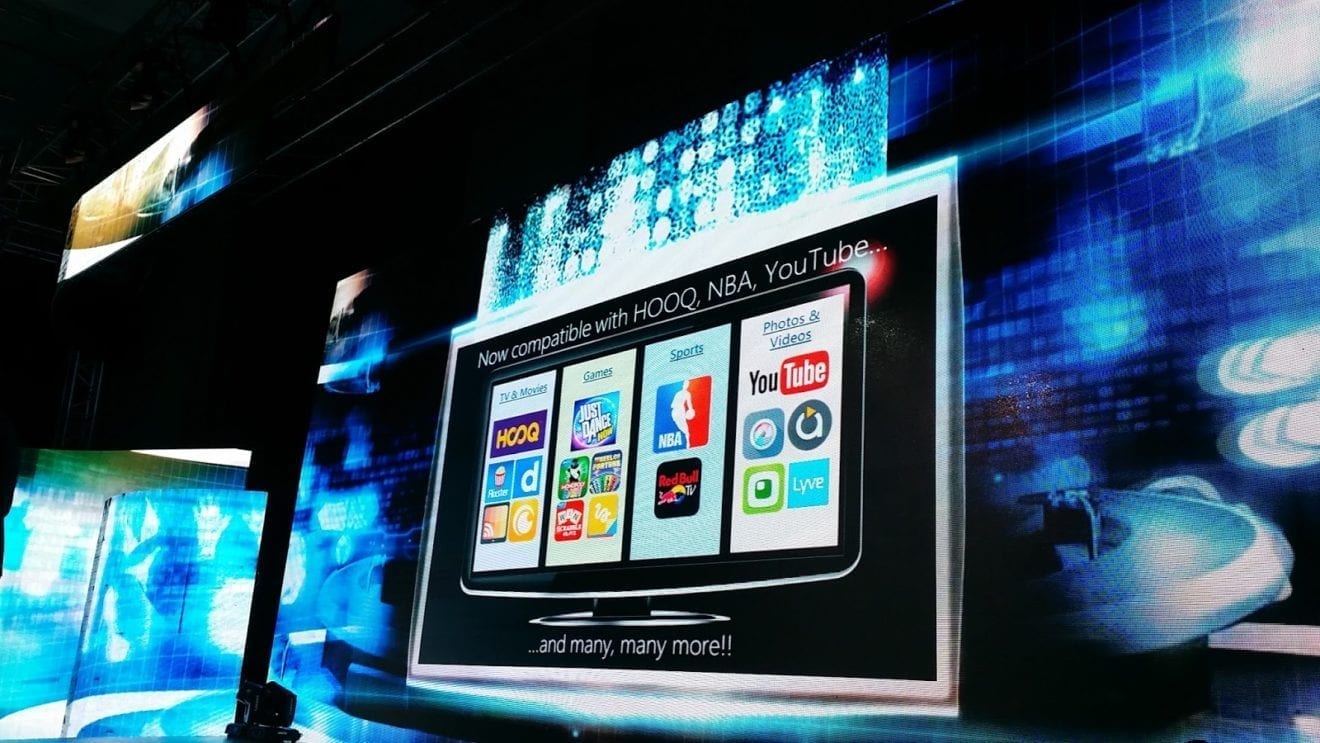
    Aside from being a better hardware, the new Chromecast is also fully compatible to cast with the latest entertainment apps including Globe exclusive digital content partners such as HOOQ, NBA and Spotify.

    “With our continuous partnership with Google, we stay true in providing new and meaningful innovations to fully maximize the digital lifestyle of our customers,” said Martha Sazon, Globe SVP for broadband business.

    “The latest installment in this is the new Chromecast, now with better features and compatibility to our content partners such as Spotify, HOOQ, NBA to a more immersive casting experience,” said Sazon.

  • Globe taps Fortumo for enhanced direct carrier billing service

    Globe taps Fortumo for enhanced direct carrier billing service

    Globe Telecom in the Philippines and the mobile payments company Fortumo have sealed a partnership to launch enhanced direct carrier billing in the country.

    With this collaboration, over 52 million Globe customers will be able to use their mobile phones to make payments in various app stores, as well as for digital services and games.

    Direct carrier billing, significantly increases the amount of users who are able to make online payments. In the Philippines, only 3% of Filipinos have access to a credit card while smartphone penetration has reached 40% and is forecasted to grow to 70% during the next two years.

    With Fortumo and Globe, more people will be able to make payments online through carrier billing compared to bank-based payments.

    Dan Horan, Globe senior advisor for consumer business said the continuous rise in smartphone penetration alongside the drastic adoption of the digital lifestyle has made more and more Filipinos dependent on their mobile devices. Customers continue to be on the lookout for a better mobile experience including conveniences such as making payments.

    “With Fortumo, we will be able to provide our customers an improved experience by providing the convenience of making payments on any app store, including the in-app purchases,” said Horan.

    In addition to digital content, Fortumo’s direct carrier billing platform also supports payment processing for financial services, such as topping up virtual credit cards or wallets. This is achieved through token-based, two step charging.