Retail News CRM

Tag: globe

  • Globe Deploys 252 More 5G-Ready Cell Sites on Philippines’ Southern Island

    Globe Deploys 252 More 5G-Ready Cell Sites on Philippines’ Southern Island

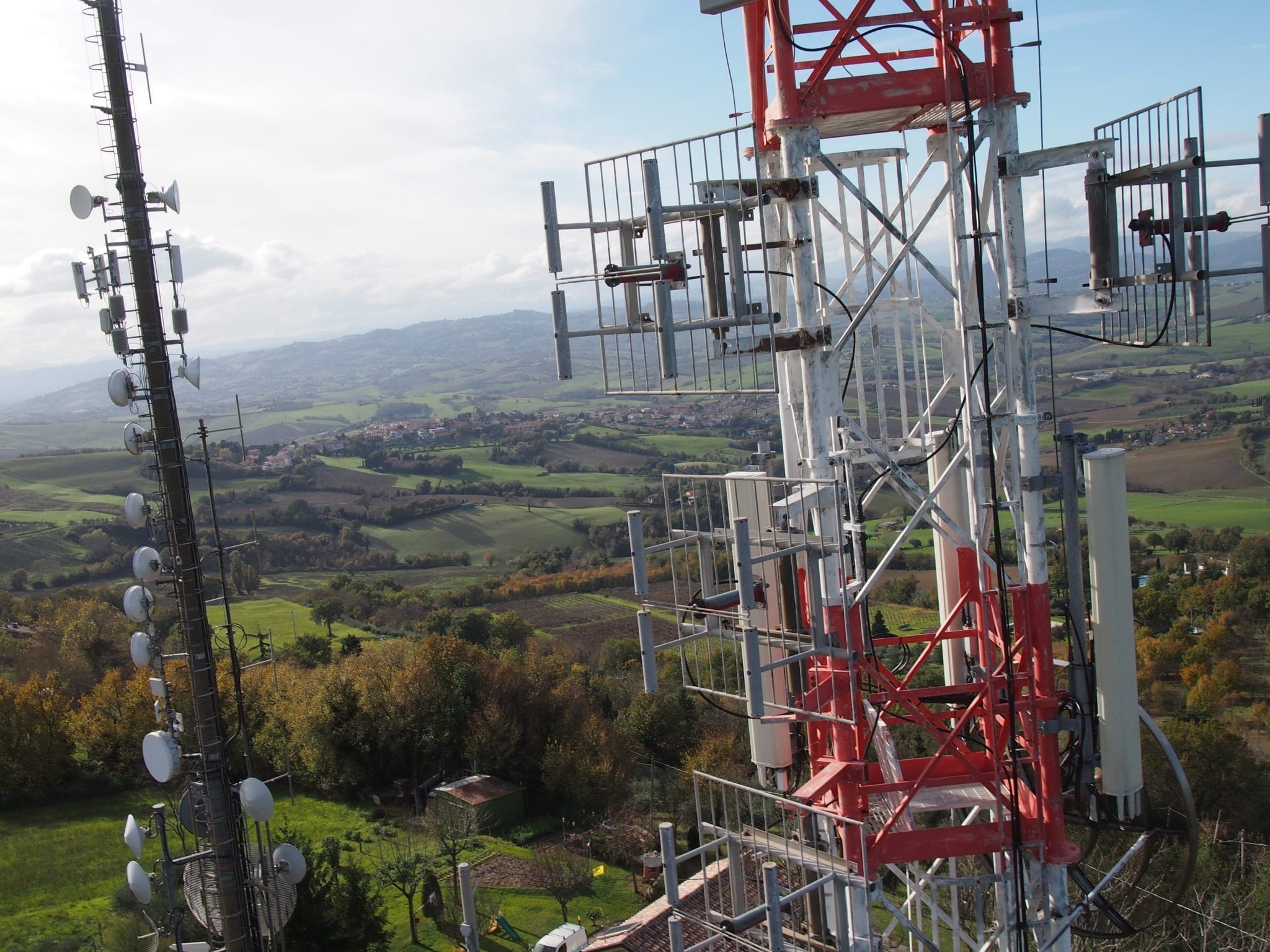
    Globe announced it has deployed 252 5G-ready cell sites on the Philippines’ southern island of Mindanao. The telco giant’s scaled-up deployment of 5G wireless technology across the country has yielded 933 cell sites in the first half of 2022.

    As of June 30, Globe’s 5G network had reached 85.8% of key cities in Visayas and Mindanao and 96.6% in the National Capital Region in terms of 5G outdoor coverage.

    Data showed a steady hike in 5G usage in Mindanao, particularly in Davao City, which almost tripled in June from the January figures. Likewise, hefty increases were registered in June by Cagayan de Oro and the town of Libona.

    Nationwide, Globe saw a 73.4% increase in 5G data traffic from January to June this year.

    “We continue to invest in the latest mobile technologies like 5G as part of our commitment to bring better mobile experiences that can uplift the lives of our customers no matter where they are in the country,” said Darius Delgado, head of Globe’s consumer mobile business.

    So far, Globe has already spent more than half, or 50.5 billion pesos, of its 89 billion-peso budget for capital expenditures this year. It was used to build new cell sites, upgrade existing sites to 4G/LTE, accelerate the rollout of 5G connectivity and ramp up the fiberization of Filipino homes nationwide, as part of Globe’s commitment to the United Nations Sustainable Development Goals.

    By the end of the first half of 2022, the number of devices serviced by Globe’s 5G network had increased by 52.6%, to 2.7 million, from 1.62 million in January.

    Globe 5G has fiber-fast download speeds of up to 156.84 Mbps (nationwide average) and even higher in Metro Manila at 167.63 Mbps on average as of May this year. These speeds peak at 342.7 Mbps nationwide and 347.2 Mbps in the capital region.

  • SIM Cards Must Now Be Registered With Telcos in the Philippines

    SIM Cards Must Now Be Registered With Telcos in the Philippines

    Mobile phone users in the Philippines must now register their SIM cards with their telecom provider after the country’s President, Ferdinand Marcos Jr., signed into law the SIM Card Registration Act.

    According to the official dispatch, the new measure aims to promote accountability in the use of SIM cards and help law enforcement to track those involved in crimes committed through mobile phones.

    Under the new law, all public telecommunications entities or direct sellers must require the SIM card user to show a valid identification document with a photo.

    The registered SIM card details will not be disclosed unless the user authorizes access to his information.

    Law enforcement agencies that conduct probes on purported crimes committed through phones may also submit a written request to telco firms to disclose the details of the SIM card holder.

    The two telecom giants in the Philippines, Globe Telecom and PLDT Group, had previously expressed support for this measure, saying they would be helping the government in preventing crimes committed electronically.

    The law consolidates the bills approved by the House of Representatives and the Senate.

  • Globe’s ‘Historic’ Subsea Cable Project to Be Completed by April 2023

    Globe’s ‘Historic’ Subsea Cable Project to Be Completed by April 2023

    Globe has announced that it has landed fiber optic cable in eight provinces within just two months, on track to complete the landmark project by April 2023.

    The $150-million Philippine Domestic Submarine Cable Network (PDSCN), the longest domestic subsea cable project in the Philippines, has landed in Lucena City, Boac in Marinduque, Calatrava in Romblon, Placer in Masbate, Iloilo City, Bacolod City, Roxas City and most recently, the tourist island of Siargao in Surigao del Norte.

    “This is a historic subsea cable project that will bring better connectivity and data capacity to several communities who rely on communications for their day-to-day needs, including education, work and livelihood,” announced Globe Group President and CEO Ernest Cu.

    The sites are among 33 landing points of PDSCN, which has a total cable distance of about 2,500 kilometers. The project commenced in July and is set to finish covering all sites by April next year.

    “Despite disruptive weather events this wet season, our PDSCN project has been touching down its landing points as planned, bringing reliable fiber connectivity to remote and underserved areas,” said Arlene Jallorina, vice president for strategic infrastructure investments for Globe Business, Enterprise Group.

    The project kicked off in July at the Subic Bay when Globe, Infinivan, Inc. and Eastern Communications, along with Japanese vendor partner Kokusai Cable Ship Co., started transporting fiber optic cable manufactured by global firm Nexans to the landing points across the country.

    The project is seen to deliver connectivity crucial to the country’s recovery from the pandemic, as it will support the government, education, business and even recreational needs for reliable communication facilities.

    Further cable landings will be made in the coming months, including in Mactan, Cebu and Boracay, Aklan. Fiber connections will be activated thereafter.

  • Globe Deploys 933 5G Sites in 1st Half 2022

    Globe Deploys 933 5G Sites in 1st Half 2022

    Globe Telecom has announced that it has built 933 base stations in the first half of 2022 as part of its continued 5G rollout across the Philippines.

    Globe’s 5G network outdoor coverage has reached nearly 97% of the National Capital Region and 86% of key cities in Visayas and Mindanao.

    “Globe has been ramping up its rollout amid rising demand for 5G connectivity. The drive to build more and faster is fueled by our desire to deliver more improvements in our customer service experience that are consistent and reliable,” said Joel Agustin, SVP and head of network planning and engineering at Globe.

    As of end-June 2022, Globe has logged approximately 2.7 million devices on its 5G network.

    The telco giant is also accelerating its 5G roaming rollout to more countries in Asia, the Middle East and Europe to enable the connectivity experience for travelers and overseas Filipino workers.

    For data-related upgrades and expansion, Globe has already spent P50.5 billion out of its P89 billion capital expenditure allocation for 2022. The majority of the amount was used to build its fiber assets further, put up more cell sites, upgrade towers to 4G LTE and roll out 5G technology and in-building solutions.

  • Globe Gains Approval to Sell 7,000 Towers

    Globe Gains Approval to Sell 7,000 Towers

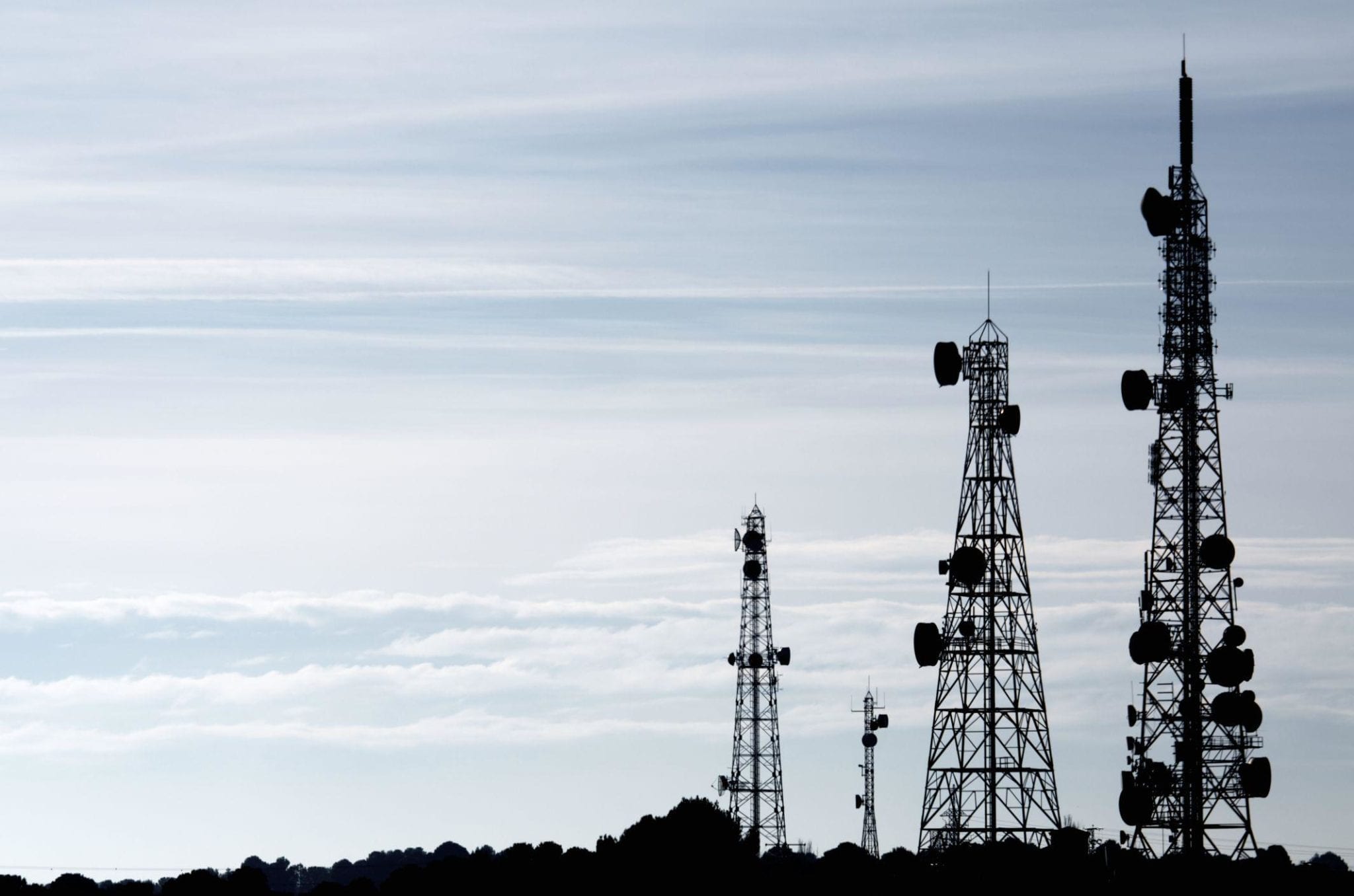
    Globe announced that it received board approval to sell over 7,000 towers in what is to be the largest ever tower sale and leaseback deal in the Philippines.

    In a company disclosure, Globe said the tower assets offered for sale are comprised of 79% ground-based towers and 21% rooftop towers. The sale has been grouped into three distinct portfolios assigned to three different tower companies representing local and international groups.

    Globe said it expects to raise a significant amount of capital over the next few quarters by executing these transactions. Of the total proceeds, approximately 75% will be used to fund capital expenditures      to support ongoing network expansion and sustain industry-leading network consistency and reliability scores. The balance of 25% will be earmarked to cover 2023 debt servicing requirements.

    Globe said that this will significantly improve the overall health of its balance sheet and provide sufficient flexibility to properly compete in a dynamic market as well as further expand its digital ecosystem.

    As the biggest milestone of this initiative, Globe signed two sale and leaseback agreements for two portfolios consisting of 5,709 telecom towers and related passive telecom infrastructure for over 71 billion pesos.

    The first portfolio being sold consists of 2,180 telecom towers in Luzon, which will be acquired by MIESCOR Infrastructure Development Corp. (MIDC) for a total consideration of 26 billion pesos and be leased back to Globe for an initial period of 15 years. The first close for this portfolio is targeted      within the 3rd quarter of the year, with subsequent closings happening as and when closing conditions are met.  MIDC is a joint venture between investment firm Stonepeak and the country’s largest electric distribution utility company, Meralco.

    The second portfolio consisting of 3,529 towers will be sold to Frontier Tower Associates Philippines Inc. for 45 billion pesos and also leased back over an initial period of 15 years. The first closing target for this portfolio is set for the late third quarter, with subsequent closings happening as and when closing conditions are met.

    Globe is also in advanced discussions with one other tower company for the potential sale and leaseback of an additional ~1,350 telecom towers and related passive telecom infrastructure. This last portfolio is comprised of towers located in the Visayas and Mindanao islands. Globe expects to sign the sale and leaseback agreement with this tower company within the third quarter, with the first closing happening within the 4th quarter of the year.

    “These expanded long-term relationships with the tower companies show Globe’s commitment to help improve the Philippines’ internet condition, as well as our desire to have as many Filipinos enjoy the benefits of having access to reliable internet. We also believe that through these monetization efforts, Globe will be able to further improve overall operational efficiency, allowing us to serve our customers better, and supporting our goal of enabling the digital lives of Filipinos,” said Ernest Cu, Globe President and CEO.

    “We are very pleased with this landmark deal with Globe that marks a critical milestone in MIDC’s strategy to enter digital infrastructure space, which plays a pivotal role in driving economic growth and social well-being through digital inclusion. This also gives momentum to pursue more opportunities that will help us achieve our aspiration to become a trusted telco tower operator in the Philippines and eventually, a market leader in the digital infrastructure business,” MIDC Chairman, Ray Espinosa stated.

  • Globe Telecom Earns MEF 3.0 Ethernet Services Certification

    Globe Telecom Earns MEF 3.0 Ethernet Services Certification

    Globe Telecom announced that it has passed the MEF 3.0 Carrier Ethernet services certification for transformative ethernet services.

    In a company press release, it said that the award was given for its “conformance to rigorous specifications established by MEF.”

    MEF’s President, Nan Chen, extended his congratulatory message to the Philippine’s telecom operator. He said, “Companies who purchase from a certified MEF 3.0 service provider can have confidence that they will receive services which conform to MEF’s industry-leading global standards. Companies like Globe understand the value that certification provides—simplified, pre-validated functionality for buyers and simplified, frictionless implementation and partnering.”

    MEF 3.0 Carrier Ethernet certified services indicate the benchmark for connectivity, delivering the maximum level of performance, assurance and agility offered in the market.

    Globe had earlier achieved MEF CE 2.0 certifications for its E-Access, E-LAN and E-Line services. Raymond Policarpio, the Vice President for Product Management and Marketing at Globe Business, Enterprise Group said that this new recognition shows their commitment to providing maximum connectivity solutions to their users. “As network transformation continues at a rapid pace, these MEF industry standards eliminate confusion regarding service components, core capabilities and concepts.”

    He added, “We’re especially honored to be the first in Asia to achieve a MEF 3.0 Certification for Globe’s 100G E-Line services. Meeting these standards allows us to become a trusted partner in network-based enterprise services. Access to MEF’s ecosystem of frameworks, training programs and expert partners empowers us to provide quality services to businesses as we guide them through their digital transformation.”

  • Globe Backs Digitalization Plans Of New Philippine Government

    Globe Backs Digitalization Plans Of New Philippine Government

    Globe Telecom has announced that it supports the digitalization plans of the Philippines’ new administration.

    One of the leading digital solutions providers, Globe stated that it is ready to collaborate with the government to provide its industry leading product line and services to improve digitalization in public offices and agencies, as well as deliver speedier and more reliable transactions to the public.

    Globe’s CEO, Ernest Cu, said in a statement, “We welcome the new administration’s goal of increasing digitalization in government for streamlined processes. This will ultimately redound to improved public service– an aspiration that Globe deeply shares with the government as we serve a customer base of 92 million people.”

    He added, “Our network and infrastructure are ready to support the government and we look forward to working closely with the new administration to achieve this shared goal.”

    Globe has so far installed 234 additional cell sites across the country as of the first quarter of 2022, pursuant to its goals of 1,700 new sites this year. And it has put up 91 new tower companies, each on air since the beginning of this year.

    The company also upgraded more than 3,500 mobile sites, and accelerated its 5G coverage by installing 380 new 5G sites, all by the end of the first quarter of this year.

  • Globe debuts Asia’s first eco-SIM

    Globe debuts Asia’s first eco-SIM

    net-zeronet zero carbon emissions by 2040, and we align with the ambitions of many organizations to work for the better good and build a sustainable future.  The Eco-SIM card is small, but it has a big impact on plastic and polymer waste and is another example of how we innovate to drive change. We are excited to partner with Globe on this pioneering initiative in the Philippines with a goal to roll it out throughout Asia,” said  Jon Cahilig, head of mobile connectivity solutions for Asia, Thales Digital Identity & Security.

    In 2019, Globe became a signatory to the United Nations Global Compact, committing to implement universal sustainability principles on human rights, labor, environment, and anti-corruption in its operations. In January 2021, Globe formally expressed its support to the globally-recognized Task Force on Climate-Related Financial Disclosure (TCFD) in January. Along with more than 1,800 companies worldwide, Globe supports the framework set by TCFD and is committed to following recommendations towards effective climate-related disclosures.

    To further this commitment in 2021, Globe became the first publicly-listed Philippine company to be listed by the Science Based Target initiative (SBTi) committed to set science-based targets, in line with the 1.5°C global warming scenario of the Paris Agreement and the #RacetoZero Campaign. These commitments cover both the mid-term (2030) and long-term (2050) targets.

    “In order for us to truly move the needle in the fight against climate change, we all must take on the responsibility to act sustainably. This partnership with the Thales Group not only enables us to come up with a solution for our telco business, but it also gives our customers the opportunity to step up and choose to live more sustainably,” said Yoly Crisanto, Globe’s chief sustainability officer and SVP for corporate communications.

    In 2018, Globe was also the first in the country to introduce electronic SIMs or eSIM, as another alternative to the physical SIM cards. eSIMs are digital SIMs embedded in compatible mobile phone models, allowing its users to manage multiple profiles using different mobile numbers on just one device and effortlessly switch lines that fit their purpose. It also allows gadgets like smartphones and smartwatches to be connected under one mobile number.

    Globe strongly supports the United Nations Sustainable Development Goals, particularly UN SDG No. 12, which highlights the roles of responsible consumption and production patterns as crucial steps toward building a circular economy. Globe is committed to upholding the 10 United Nations Global Compact principles and 10 UN SDGs.

  • Globe Telecom deploys Infinera’s Auto-Lamda for 5G network upgrades

    Globe Telecom deploys Infinera’s Auto-Lamda for 5G network upgrades

    Infinera announced that Globe Telecom, Inc. (Globe), a major provider of telecom services in the Philippines, deployed Infinera’s Auto-Lambda solution, featuring autotuneable optics, to upgrade its existing 4G access and aggregation networks and in anticipation of providing future 5G services. By upgrading its access network with Infinera’s autotuneable optics technology, Globe can deliver more capacity on its existing network and scale to address bandwidth growth within its current network architecture while reducing both capital and ongoing operational expenses.

    Globe is the leading mobile network operator in the Philippines and offers one of the largest fixed line and broadband networks in the country. With what is believed to be the industry’s first widescale deployment of autotuneable optics over sophisticated amplified ring architectures, Globe is advancing innovation in its access network to address growing capacity demands while evolving its previously deployed IP network to support the increasing demands in mobile backhaul capacity for 5G. Utilizing Infinera’s Auto-Lambda solution, Globe can easily plug autotuneable dense wavelength-division multiplexing (DWDM) optics directly into its existing aggregation and access nodes, allowing its network to automatically tune each of the optical signals to the appropriate wavelength, which significantly simplifies deployment while increasing capacity.

    “In today’s environment, our customers are always online and want unhindered access and capacity. As one of the leading telecom services in the Philippines, we seek the best technology to support our nation’s connectivity needs,” said Jaeson Evangelista, Head Transport Planning at Globe Telecom.

    “Our network requires a solution that is easy to deploy and scalable to meet the increasing capacity needs of our customers. We chose Infinera’s Auto-Lambda solution because it provides the innovation and benefits our network needs, from operational simplicity and ease of deployment to cost savings and eliminating the need for new networking hardware. Additionally, Infinera’s autotuneable optics provide a unique solution that enables DWDM upgrades directly into third-party devices in our network, making installation and deployment easy for our engineers.”

    “Globe has a rich legacy in the Philippines for its telecommunication services and providing the country with unmatched connectivity,” said Nick Walden, Senior Vice President, Worldwide Sales at Infinera. “Globe’s deployment of Infinera’s Auto-Lambda solution highlights the benefits provided by Infinera’s innovation, including autotuneable optics that provide high-capacity access and aggregation DWDM networks without an extensive overhaul to an operator’s existing network infrastructure.”

  • Nokia chosen by Globe Telecom for 5G rollout in the Philippines

    Nokia chosen by Globe Telecom for 5G rollout in the Philippines

    Under the terms of the agreement, Nokia will provide equipment and services from its comprehensive 5G AirScale portfolio to build out the Radio Access Network (RAN), including base stations and other radio access products. Globe Telecom will also use Nokia’s high-capacity AirScale massive MIMO Adaptive Antenna solution, which utilizes the latest 64TR radios, to boost coverage and performance.

    Utilizing the new 3.5GHz spectrum band for dense urban coverage, Globe Telecom will be able to provide end-users with high peak speeds typical on 5G network. The deal will also see the expansion of the existing FDD/TDD LTE network infrastructure. These solutions will enable Globe Telecom to roll out 5G services across the two major islands of the Philippines and offer customers superior speeds, capacity, and lower latencies while reducing complexity.

    Nokia will provide its NetAct solution for network management and seamless daily network operations as well as deliver digital design and deployment and optimization and technical support services.

    Nokia is an existing partner of Globe Telecom and provides a wide range of solutions including wireless, IP, optical, and fixed network products, and services.

    Ernest Cu, President and CEO, Globe Telecom, said:“We’re pleased to continue our partnership with Nokia to deliver compelling 5G experiences to our customers. We are going full steam ahead in delivering 5G in more areas, as this technology brings us closer to our goal of providing #1stWorldNetwork in the Philippines.”

    Tommi Uitto, President of Mobile Networks, Nokia, commented: “It’s exciting to be part of this project to deliver 5G services to citizens across the Philippines and see our industry-leading 5G RAN solutions underpin the network. The expanded and upgraded 5G network will deliver exciting new solutions to even more people and businesses and our technology will play a fundamental role in delivering these compelling connectivity experiences.”

  • Singapore digital accessories chain Uniq enters the Philippines

    Singapore digital accessories chain Uniq enters the Philippines

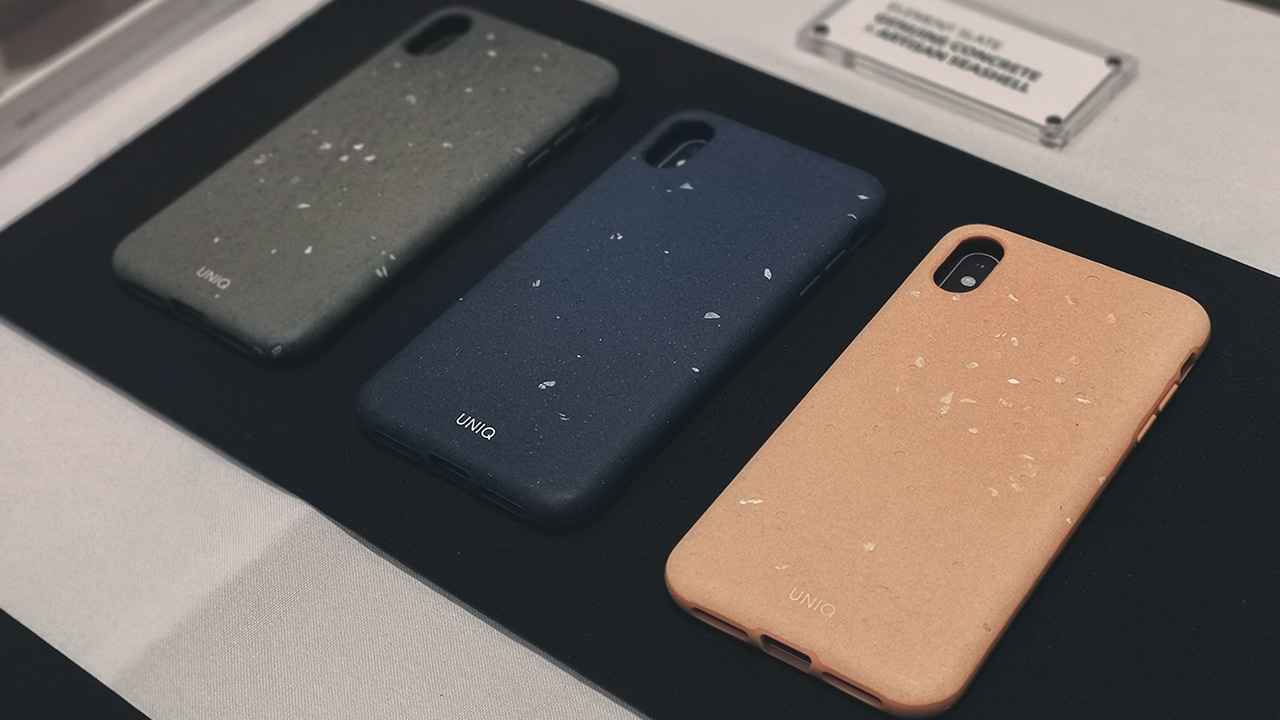
    Singaporean gadget and mobile-accessories retailer Uniq has opened its first Philippine store.

    Located at Cyberzone in Quezon’s SM North Edsa Annex, the store targets young professionals who are particular about style.

    Its products known for their “minimalist mobility” and “smart simplicity” to the country’s digitally connected populace.

    “Most of our products are for iPhones and Mac but we also have charging solutions that are more universal,” said Andy Wong, MD and co-founder of Uniq.

    Established in Singapore in 2010, Uniq started out as a phone-case design company.

    The company has entered the Philippines with the help of Macpower Marketing Corporation, which is also partner of Globe, Power Mac Center, and Lazada.

    Uniq products are available in 22 countries via an online store and the company plans to partner with online stores such as Shopee and Lazada.

  • Alipay’s e-wallet partner GCash introduces GCash Forest in the Philippines

    Alipay’s e-wallet partner GCash introduces GCash Forest in the Philippines

    Filipinos who want to contribute to environmental preservation can now conveniently use an innovative mobile phone app to help plant trees and increase the Philippines’ forest cover.

    Leading mobile wallet, GCash, is introducing an exciting “green” feature on the app called GCash Forest, which lets subscribers plant virtual trees that will have real-life counterparts. By the end of 365 days, GCash Forest aims to plant 365 thousand trees with the help of GCash subscribers.
    According to the Department of Environment and Natural Resources’ Forest Management Bureau (FMB), the Philippines is losing 47,000 hectares of forest cover every year. The FMB also reported the need to rehabilitate 1.2 million hectares of forest lands by 2022 to prevent landslides, ensure water availability, and preserve biodiversity.

    “GCash Forest is about making it easier, more convenient, and even rewarding for everyone to take care of our environment for the benefit of future generations,” said Mynt CEO Anthony Thomas. “GCash is no longer just providing an excellent platform for accessible financial products and services but also enabling Filipinos to be more active in responding to real-life issues, such as climate change mitigation through reforestation.”
    GCash considers GCash Forest as the last mile initiative that fully recognizes the emergence of an all-digital Filipino lifestyle.

    To implement its tree-planting initiatives, GCash Forest partnered with the Department of Environment and Natural Resources (DENR), World Wildlife Fund (WWF) and The Biodiversity Finance Initiative (BIOFIN). The DENR will provide land resources in Ipo Watershed, an essential component of the Angat-Umiray-Ipo watersheds system supplying 98 percent of Metro Manila’s water. WWF will be providing trees and manpower while BIOFIN will provide expertise on monitoring.

    Thomas added that recent findings on the Philippines’ vulnerability to climate-related hazards call for greater collective action. Results of the Global Peace Index 2019 identified the Philippines as the most susceptible country to the adverse effects of climate change. By leveraging the GCash platform and scale, GCash Forest aims to rally a coalition of individuals, non-government organizations, and international organizations to meet its 2020 targets.
    To plant trees through GCash Forest, GCash users need to collect “green energy” by frequently using the app. Users who get enough green energy can choose which species of trees they want to plant in a selected area at the Ipo watershed. Once the trees are physically planted, users get to receive a certificate of ownership with a serial number, fun facts and updates on the growth of their trees on their GCash apps.

    “Many Filipinos, especially the younger ones, care about the environment but a lot of them don’t know how they can actively take part in environmental protection. This is a barrier that GCash Forest addresses because they only need to use their smartphones—an already integral part of their daily lives—to make a difference,” concluded Thomas.

    The new feature is inspired by Alipay Ant Forest, a product operates by Ant Financial, an Alibaba affiliate and the parent company of the world’s leading payments and lifestyle platform, Alipay. Via the mobile platform, more than 500 million users have planted 100 million real trees and advanced a shared vision of sustainable and inclusive development.
  • Globe Telecom launches SE Asia’s first 5G broadband service

    Globe Telecom launches SE Asia’s first 5G broadband service

    Philippines’ Globe Telecom Inc on Thursday launched Southeast Asia’s first 5G broadband service, with embattled Huawei Technologies Co Ltd providing the equipment, a win for the Chinese firm despite cybersecurity worries from Western nations.

    The telecoms firm aims to offer high-speed internet to tens of thousands of homes and offices in key urban centres as part of its $1.2 billion capital spending this year, Alberto de Larrazabal, Globe’s chief commercial officer, told reporters.

    Globe would use Huawei’s equipment like radios and modems to deliver 5G quality broadband internet, he added. Huawei and Finland’s Nokia were Globe’s equipment providers for its 4G service.

    The United States had warned that next-generation 5G equipment, which some telecoms experts see as more vulnerable to attack than previous technology, could be exploited by the Chinese government for spying if supplied by Huawei, which the company denies.

    Washington, a treaty ally of Manila, had persuaded governments and telecoms operators to shun Huawei, the world’s largest maker of telecommunications equipment.

    Globe hired independent firms “to ensure that our security protocols are up to date, to make sure privacy and security issues are addressed,” de Larrazabal said.

    Philippine consumers, the world’s top social media users, often get frustrated with slow and choppy internet connections. The Philippines’ mobile internet and fixed broadband speeds lag behind its neighbours, data from Ookla’s Speedtest Global Index showed.

    It ranks 107th among 178 countries in terms of fixed broadband speed at 19.55 megabits per second (Mbps) versus the global average of 59.6 Mbps. Among 140 countries, it ranks 107th in terms of mobile internet speed at 15.10 Mbps, nearly half of the 27.22 Mbps global average.

    Globe is owned by Philippine conglomerate Ayala Corp, with Singapore Telecommunications Ltd holding a minority stake.

  • Globe to ramp up network expansion program

    Globe to ramp up network expansion program

    The Philippines’ Globe Telecom has pledged to ramp up its network expansion and modernization program to cater to soaring demand for mobile data.

    The operator revealed that mobile data traffic on its network grew to 370 petabytes during the first three months of 2019.

    This represents a 105% increase from the 180 petabytes recorded a year earlier, and a 421% increase from the first three months of 2016.

    Data traffic growth is also driving revenue growth, with Globe Telecom reporting consolidated service revenues of the quarter of 36 billion pesos – up 13% year-on-year – and mobile data traffic accounting for 16.5 billion pesos of this total.

    “With the explosion of data traffic consumption, building more cell towers and modernizing our network infrastructure will continue to play a fundamental role in delivering superior quality of experience to our customers,” Globe CEO Ernest Cu said.

    “This is why we will continue ramping up our network rollout and utilizing next-generation technologies to enhance the way our customers experience mobile data.”

    Around 68% of Globe’s total capex budget for the first quarter of 8.8 billion pesos was allocated towards enhancing data-related services. During the quarter the company escalated its cell site deployment and invested in improving its network capacity.

  • Globe digitally transforms Semirara Island

    Globe digitally transforms Semirara Island

    The Philippines’ Globe Telecom worked with the nation’s largest coal producer Semirara Mining and Power Corporation (SMPC) to digitally transform Semirara Island in Antique.

    The 55 square kilometer island is home to the Philippines’ richest coal reserves, and is home to a number of coal workers and their families who rely on mobile connectivity a digital applications in their daily life.

    As part of the project, Globe, SMPC and the local government collaborated to upgrade all mobile towers in the island with LTE technology.

    The partners are also adopting a modern payroll solution for the mining company in collaboration with Ant Financial subsidiary Mynt and Ayala that takes advantage of Globe’s GCash mobile money service.

    In addition, Globe will work with public and private high schools in the island on digitally-enabled education initiatives.

    The Digital Thumbprint Program, developed by Globe in conjunction with Singtel and its Australian subsidiary Optus, has already been used to aid the education of 1.9 million students across the Philippines.