Tag: GoJek

  • Gojek Co-Founder Sentenced to Decade Behind Bars, Stirs Investor Anxiety Amid Corruption Scandal

    Gojek Co-Founder Sentenced to Decade Behind Bars, Stirs Investor Anxiety Amid Corruption Scandal

    Nadiem Makarim, a co-founder of tech giant Gojek and former education minister, has been found guilty of some charges in a corruption case by an Indonesian court and sentenced to ten years in prison. Makarim, aged 41, has contested the charges, declaring that the case against him is politically driven, an opinion that has garnered support from scholars and rights activists.

    The Potential Impact on Investor Confidence

    This verdict could potentially further weaken investor confidence in Indonesia. The nation’s currency, the rupiah, and stocks have seen a downturn this year following cuts to projections by credit rating agencies due to erratic policy decisions and governance worries. Additionally, the index provider MSCI is considering downgrading Southeast Asia’s largest economy due to concerns over market transparency.

    Makarim was accused of profiting from the government’s decision to purchase Google Chromebook laptops for Indonesian schools during his tenure as education minister from 2019 to 2024 under the former administration of Joko Widodo. This decision allegedly resulted in state losses amounting to US$125 million.

    Details of the Verdict

    Delivering the ruling at Indonesia’s Corruption Court in Jakarta, Chief Judge Purwanto Abdullah declared that a panel of judges had found Makarim guilty of misusing his authority and causing state losses. However, Makarim was acquitted of the charge of directly seeking personal enrichment.

    Makarim was ordered to pay a fine of 1 billion rupiah and return over 800 billion rupiah (US$45 million), an amount the judges determined was personal gain from the deal. Failure to return the money would add an additional five years to his prison term, the judges said.

    Surrounded by his family and friends, a tearful Makarim expressed his intention to appeal the verdict. He claimed the facts supporting the sentence were unreasonable, adding that he couldn’t meet the payment amount ordered by the court.

    Prosecutors alleged that Gojek’s parent company’s investment from Google influenced the procurement decision. They also claimed that Makarim created tender specifications that only matched the Chrome system, making Google the sole controller of the educational environment in Indonesia.

    Google, however, wasn’t indicted. Makarim has refuted these allegations, stating there was no personal enrichment, and the investment from Google in Gojek’s parent company had no relation to the procurement.

    Questions & Answers

    What were the charges against Nadiem Makarim?
    Makarim, former education minister and co-founder of Gojek, was found guilty of abusing his authority and causing state losses.

    What are the potential ramifications of this ruling on Indonesia’s economy?
    This ruling may further weaken investor confidence in Indonesia, exacerbating existing concerns over unpredictable policymaking, governance issues, and market transparency.

    What was the penalty imposed on Makarim by the court?
    Makarim was sentenced to ten years in prison and ordered to pay a 1 billion rupiah fine. He was also directed to return over 800 billion rupiah, an amount the judges said he personally gained from the deal.

  • Former Uber Executive Ascends to the Helm of Gojek Singapore: Janine Teo Steps in as New General Manager

    Former Uber Executive Ascends to the Helm of Gojek Singapore: Janine Teo Steps in as New General Manager

    Gojek Singapore, a leading ride-hailing platform, has made significant changes to its top leadership, appointing Janine Teo as its new General Manager. Teo is succeeding Lien Choong Luen, who decided to step down in February after steering the company for seven fruitful years.

    Teo is not new to Gojek; she has held multiple operational leadership positions within the company for over seven years. The company is confident in her capabilities to drive its business forward, thanks to her extensive experience. Teo’s main focus will be to continue enhancing Gojek’s platform, ensuring it remains a reliable tool that supports driver-partners and their livelihoods, and delivers dependable services to Singaporean consumers.

    Before her recent promotion, Teo held various roles, including Country Lead of Driver Experience and Operations Manager at Uber, where she served from 2017 to 2018. Later, she became the Head of Supply in Singapore at GoTo Group, the technology group overseeing Gojek, starting from 2020.

    Lien Choong Luen’s Departure

    Reflecting on his tenure, Lien has remarked that he had the privilege of witnessing the maturation of the ride-hailing industry during an especially intense period characterized by increased competition and stricter regulations.

    Navigating the challenges presented by the Covid-19 pandemic, including supporting drivers amid a sharp decrease in demand, was one of the significant hurdles that the company had to overcome under his leadership.

    Lien has shared that he plans to take a sabbatical and dedicate more time to his board roles, serving as the President of Singapore Athletics being one. Additionally, he is exploring fresh opportunities in the technology sector while catching up on the regional developments.

    After seven years at the helm of Gojek Singapore, with the business in a robust position, the company believes that it was an opportune moment for Lien to exit the role and follow his personal interests.

    Questions & Answers

    Who has been appointed as the new General Manager of Gojek Singapore?
    Janine Teo is the new General Manager of Gojek Singapore.

    What was Janine Teo’s position prior to her promotion?
    Teo previously held the position of Head of Supply in Singapore at GoTo Group, the technology group that oversees Gojek.

    Why did Lien Choong Luen step down from his role at Gojek Singapore?
    Lien decided to step down from his role at Gojek Singapore to focus on his personal interests, including his board roles and exploring opportunities in the technology sector.

  • Gojek Co-founder And Ex-education Minister, Nadiem Makarim, Detained In $121 Million Corruption Probe

    Gojek Co-founder And Ex-education Minister, Nadiem Makarim, Detained In $121 Million Corruption Probe

    Former Indonesian Education Minister and co-founder of the ride-hailing company Gojek, Nadiem Makarim, has been detained and named a suspect in a corruption case. The case involves allegations of malfeasance concerning laptop procurement. Makarim will be held for 20 days while the investigation progresses.

    Makarim’s Role in the Alleged Corruption

    Makarim served as the Education Minister from 2019 to 2024 and is accused of misconduct in the procurement of Google’s Chromebook laptops for his ministry and students. According to Nurcahyo Jungkung Madyo, the lead investigator, Makarim is believed to have misused his ministerial authority for personal enrichment or the benefit of a company, in violation of Indonesia’s anti-corruption laws. The damages from this case are estimated to have cost the state around 1.98 trillion rupiah (US$121.85 million).

    Before his detention, local media reported that Makarim stated, “I did not do anything. God will protect me, the truth will come out,” as he was leaving the prosecutor’s office for the detention house. No comment has been received from his legal representative.

    Procurement Specifications and Meetings with Google

    Prosecutors claim that Makarim had issued a directive in 2021, specifying procurement conditions that only the Chromebook laptop could meet. Furthermore, it is alleged that Makarim had six meetings with representatives from Google Indonesia prior to the selection of the Chromebook. Google Indonesia, however, declined to comment on the case involving Makarim, emphasizing that it operates with resellers and partners to provide its technology, and government agencies transact with them, not directly with Google.

    Gojek and the Investigation

    In July, the attorney general’s office conducted a search at the offices of Indonesian tech firm GoTo Gojek Tokopedia as part of the investigation. GoTo’s director of public affairs and communications, Ade Mulya, clarified that Makarim’s duties as education minister, including the procurement of Chromebooks for the ministry, were never related to GoTo’s operations. Makarim had withdrawn from Gojek in 2019 when he was appointed minister. In 2021, Gojek merged with the e-commerce startup Tokopedia to form GoTo Gojek Tokopedia, becoming Indonesia’s largest tech company.

    Questions & Answers

    Who is Nadiem Makarim?
    Nadiem Makarim is the co-founder of ride-hailing company Gojek and former Indonesian Education Minister.

    What are the allegations against Makarim?
    Makarim is accused of corrupt practices in the procurement of Google’s Chromebook laptops for his ministry and students. He is alleged to have misused his ministerial authority for personal or company enrichment.

    What is the potential cost of the alleged corruption?
    The estimated damages from the case are around 1.98 trillion rupiah (US$121.85 million).

  • Grab, Gojek to hike fees in Singapore by up to 37 cents

    Grab, Gojek to hike fees in Singapore by up to 37 cents

    Ride-hailing operators Grab, Gojek, TADA and CDG Zig in Singapore will hike their platform fees by up to 50 Singapore cents (37 U.S. cents) starting Jan. 1, 2025.

    Grab, the largest ride-hailing firm, will raise its platform fee from 70 cents to 90 cents per trip. For its food, groceries and parcel delivery services, fees will go up from 40 cents to 60 cents.

    It said the new “platform & partner fee” will support Central Provident Fund contributions, work injury compensation coverage and other welfare initiatives for its platform workers, as well as platform maintenance and service improvements.

    Similarly, Gojek will raise its platform fee from 30 cents to 50 cents per trip, saying these changes are to “protect drivers and their earnings in support of the Bill” on top of improving and maintaining its services.

    ComfortDelGro, the largest taxi operator in Singapore, will follow suit and raise its platform fee from the current rate of 70 cents to S$1-1.2, based on factors such as distance and travel time.

    As for TADA, fees per ride will go up by 50 cents, excluding goods and services tax. It noted that besides maintaining current features and developing new ones to provide a better ride-hailing experience, this adjustment is also essential to support the implementation of the government’s Platform Workers Bill.

  • Gojek to exit Vietnam

    Gojek to exit Vietnam

    Indonesian ride-hailing and delivery company Gojek has announced it will stop operating in Vietnam starting Sept. 16 after 6 years in the market.

    It said the decision, made by its parent company GoTo after assessing its market presence in Vietnam, aims to strengthen business operations and aligns with the company’s long-term growth strategy.

    “We will provide the necessary support to all affected parties and comply with current regulations and laws throughout this transition.”

    Gojek was founded in 2010 with a focus on delivery and ride-hailing services, and its app was launched in January 2015 in Indonesia.

    Since then it has grown to become that country’s leading on-demand service platform.

    It entered Vietnam in 2018 as GoViet, which merged with the Gojek brand in 2020.

    It offers two-wheel (GoRide) and car (GoCar) rides, food delivery (GoFood) and parcel delivery (GoSend), and operates in HCMC and Hanoi and Binh Duong and Dong Nai provinces.

    According to market research company Mordor Intelligence, Vietnam’s ride-hailing market is expected to be worth US$880 million in 2024 and grow to $2.16 billion by 2029.

    Another market research company, Q&Me, found that 42% of users in Vietnam favor Grab for motorbike rides followed by Be with 32% and Xanh SM with 19%. Only 7% said they frequently use Gojek.

    With the Vietnamese operations accounting for less than 1% of GoTo’s gross transactions in the second quarter of this year, the exit from the market is expected to have little impact on its financial situation.

    Gojek previously pulled out of Thailand in 2021 and is focusing on its home market and Singapore.

    In Indonesia, Gojek’s gross transaction value increased by 18% year-on-year in the second quarter of this year while its number of completed orders rose 24% to reach record levels. It also saw a 3 percentage point increase in market share in Singapore.

  • Gojek Vietnam’s co-founder resigns

    Gojek Vietnam’s co-founder resigns

    Indonesian ride-hailing and delivery service company Gojek has named Sumit Rathor as the new GM of its Vietnam operations.

    Rathor has succeeded Tuan Duc Phung, former GM of Gojek Vietnam since 2020. According to a Gojek statement, Phung has decided to pursue other professional challenges outside the company.

    With over 20 years of experience in strategic planning, operations and finance, Rathor joined Gojek in 2019 as a regional manager for Indonesia, in charge of the Central and East Java areas.

    “Vietnam is an important market for Gojek, and we expect that our energy and acumen, along with our market experience, inherited from our previous triumphs, will enable us to maximize the market’s potential,” said Rathor.

    After entering Vietnam in 2018 under the name GoViet, Gojek Vietnam rebranded in 2020 to attract more customers and grow the business. The Indonesian company provides transportation, food delivery, and logistics services and has offices in Vietnam, Thailand, Singapore, and Indonesia.

    According to local sources, this is Gojek Vietnam’s third CEO change since its establishment.

    Last month, Grab Vietnam also appointed former MD at Grab Thailand, Alejandro Osorio, as MD at Grab Vietnam, supervising overall company operations and the development of the Vietnam business.

  • Gojek drives car service into Hanoi

    Gojek drives car service into Hanoi

    Ride-haling platform Gojek has launched its GoCar Protect service in Hanoi a month after introducing it in HCMC.

    The Indonesia-headquartered company guarantees that all its drivers have got two doses of Covid-19 vaccines and all cars are equipped with an air purifier and a transparent protective shield to separate drivers and passengers.

    Drivers must take a selfie to prove they have a mask on at the start of the day.

    Gojek Vietnam general manager Duc Phung called the launch in HCMC a success after seeing a “multifold increase” in the number of bookings.

    “The risk of infection continues to be our users’ top concern when considering mobility options,” and that this is why the company continues to adopt stringent safety practices, he said.

    The launch adds a third car ride-hailing option in Hanoi after GrabCar and beCar.

    Gojek, which entered Vietnam in 2018, introduced its car services much later than its competitors, who have been at it for years.

    Ride-hailing and food delivery revenues rose by 35 percent in 2021 to $2.4 billion, according to a report by Google, Temasek and Bain & Company.

  • Indian car rental company zooms into Vietnam

    Indian car rental company zooms into Vietnam

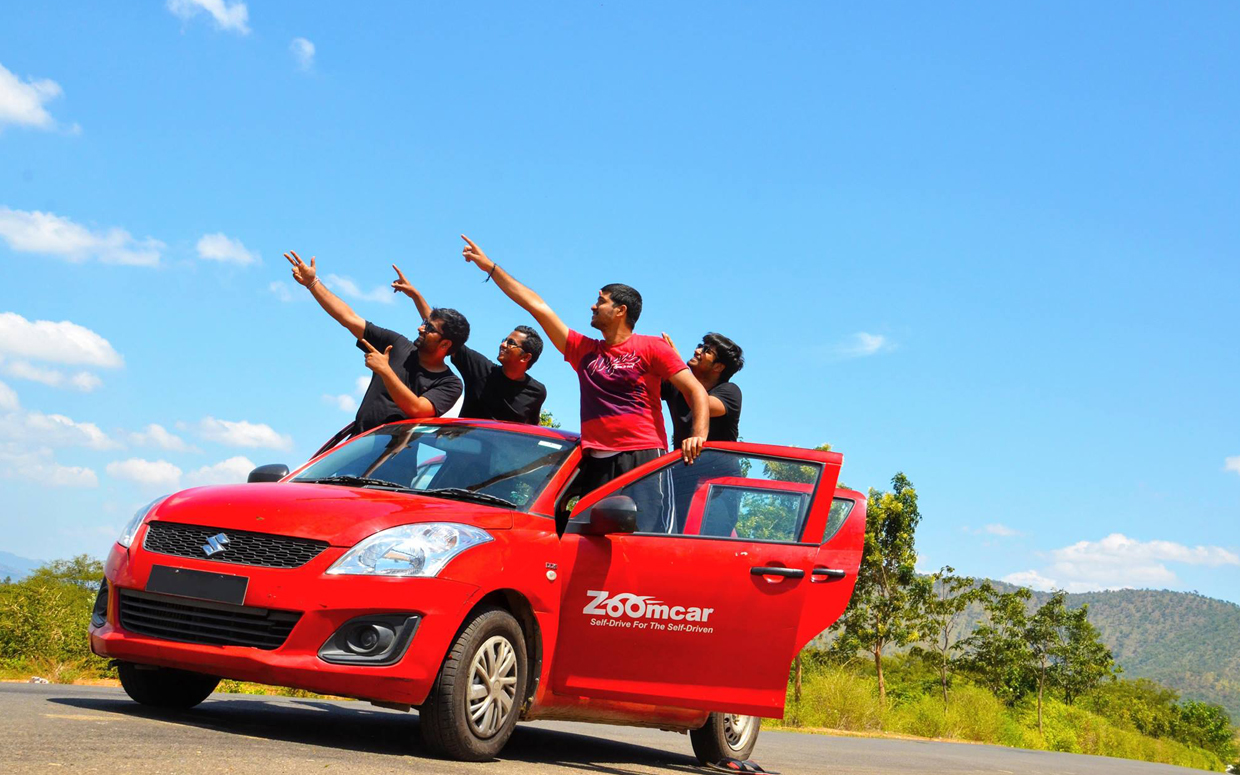
    Leading Indian car rental platform will begin operations in Vietnam next week.

    Users can start booking cars, including SUVs and hatchbacks, on its website and smartphone app starting Monday, a media representative said.

    “We hope to reach 2,000 vehicles on the platform by March next year.”

    The company has appointed Kiet Pham as its vice president and country director.

    Kiet used to hold senior management positions at Indonesian ride-hailing platform Gojek and Indian hotel booking company OyO.

    The rollout is part of Zoomcar’s plan to enter the Southeast Asian market, where it plans to invest more than $100 million in the next two to three years.

    Zoomcar launched its car rental service in India in 2013 and has become a leading company there in the industry.

    It has 10,000 cars for rent in Asia, the Middle East and North Africa. Its headquarters in India has 300 employees.

    The company recently raised US$92 million from several investors led by U.S.-based SternAegis Ventures.

  • Gojek Vietnam GM reveals ambitions after launch of car service

    Gojek Vietnam GM reveals ambitions after launch of car service

    Launched amid the Covid-19 pandemic, GoCar is one of two big products Gojek planned to introduce this year to complete its golden triangle in Vietnam, including transportation, food delivery and payment.

    Phung Tuan Duc, Gojek Vietnam GM shared stories behind the launch of car service during the Nguy – Co talk show hosted by Thai Van Linh.

  • Ride-hailing services back on the road in HCMC

    Ride-hailing services back on the road in HCMC

    Ride-hailing firms have resumed their services in HCMC at a significantly lower scale than pre-pandemic times.

    Vietnam-based Be Group, which runs the eponymous ride-hailing app, has reopened its ride-hailing taxi service in Ho Chi Minh City with just 10 percent of its original fleet strength using 50 percent of its capacity.

    The Be Group said its car-hailing service beCar has begun operating in HCMC again on Tuesday, with drivers being given several financial incentives.

    Drivers who are online to receive a pick-up for a total of 48 hours will receive a support package worth VND1 million ($43.91).

    The GrabCar service has been functioning since Oct. 7 with a limited number of drivers as decided by the municipal transport department.

    GrabCar’s four-seaters can only carry one passenger per ride and a seven-seater can only carry two.

    Meanwhile, Gojek’s four-wheel ride-hailing service GoCar is operating on a trial basis since Tuesday. In the first stage of implementation, GoCar will serve customers who have participated in surveys and registered to experience the service.

    The service had been launched on Aug. 19 to provide free transportation for frontline medical workers to participate in epidemic prevention work.

    From Oct. 1, operators of tech-platforms operating vehicles with less than nine seats have been permitted. They can only use 10 percent of their registered number of vehicles.

  • Gojek launches car service in HCMC

    Gojek launches car service in HCMC

    Gojek on Thursday debuted its four-wheel ride-hailing service GoCar, first prioritizing healthcare workers before expanding to the public later this year.

    The Indonesian ride-hailing company started the service with 50 vehicles in Ho Chi Minh City dedicated to serving healthcare workers from five hospitals and medical command centers.

    All driver-partners are required to test Covid-19 negative before their first trip and on a weekly basis after that.

    Gojek has arranged for drivers to stay at hotels from now until late September when the city’s social distancing campaign is set to end.

    “We have made all the necessary preparations to launch GoCar this year,” said Duc Phung, Gojek Vietnam general manager.

    “When the pandemic escalated in HCMC and social distancing regulations were put in place, we pivoted quickly, adjusting the service to focus on supporting healthcare workers.”

    GoCar is the latest addition to Gojek’s line-up of offerings in the Vietnamese market, which include on-demand services for motorbike-hailing (GoRide), parcel delivery (GoSend) and online food delivery (GoFood).

    Its competitors Grab and Be have been offering car services for years.

  • Malaysia’s AirAsia to buy Gojek’s Thai business for $50 million in shares

    Malaysia’s AirAsia to buy Gojek’s Thai business for $50 million in shares

    Malaysian budget carrier AirAsia Group will buy Indonesian ride-hailing and payments firm Gojek’s business in Thailand in return for $50 million of shares in part of the airline’s digital business, the companies said on Wednesday.

    The deal will give Gojek a 4.76% stake in AirAsia SuperApp, valuing the division at around $1 billion, more than the pandemic-hit airline’s current market value of $868 million at a time when it has been looking to raise more capital.

    The agreement with the Indonesian startup unicorn comes just a week after AirAsia applied for a digital banking licence in Malaysia, signaling a shift in focus towards digital business as most of its fleet remains grounded amid coronavirus restrictions.

    “By taking on Gojek’s well-established Thai business, we’ll be able to turbocharge our ambitions in this space to become a leading Asean challenger super app,” AirAsia Chief Executive Tony Fernandes said in a statement.

    AirAsia SuperApp, a lifestyle platform for travel, e-commerce and financial services, is one of three companies under the AirAsia Digital group. The others are logistics venture Teleport and the BigPay fintech business.

    Gojek’s Thai business, which includes ride-hailing, food delivery and payments, is its smallest overseas operation and has a far smaller share of that market than food delivery market leader Grab.

    Gojek will focus on increasing investment in Vietnam and Singapore after the deal is completed, the statement said.

    Gojek’s Thai business was loss-making in 2019 and 2020, according to accounts provided with the deal announcement.

    Nikkei Asia earlier reported that AirAsia was in talks with Gojek to acquire its Thai business.

  • Gojek and Tokopedia formally announce merger

    Gojek and Tokopedia formally announce merger

    Indonesian ride-hailing and payments firm Gojek and e-commerce leader Tokopedia formally announced their merger today in a transaction that will create a technology powerhouse in the country’s largest deal.

    Sources familiar with the situation had earlier said the companies were seeking a $18 billion merger. Neither firm confirmed a valuation for the merged group, named GoTo.

    The deal comes as Gojek and Tokopedia seek to boost profitability some 10 years after they were founded by offering a bouquet of services under a single platform, extending a regional trend.

    Alibaba Group Holding and SoftBank Group Corp are among Tokopedia’s investors, while Gojek’s include Warburg Pincus and Tencent Holdings.

    Last month, Southeast Asia’s biggest ride-hailing and food delivery firm, Grab, clinched a $40 billion merger with a special purpose acquisition company. Meanwhile Singapore-based regional internet firm Sea Ltd, which operates e-commerce platform Shopee, is also muscling into food delivery and financial services.

  • Gojek shifts gears to introduce car rides in Vietnam

    Gojek shifts gears to introduce car rides in Vietnam

    Indonesia-based ride-hailing company Gojek will start offering car rides service in Vietnam in the next few weeks and allow cashless payments later this year.

    Gojek Vietnam CEO Phung Tuan Duc said Wednesday that the new service will be called GoCar.

    He did not mention a specific date for the launch but said the service will comply with all pandemic prevention measures.

    Duc said that although Gojek is a latecomer for its GoCar service, “the ride-hailing market and on-demand services will continue to flourish, with lots of space for other ride-hailing players to develop. So we have confidence in expanding the business.”

    Administrators of Gojek drivers’ official group on Facebook announced that car drivers introduced to Gojek by transport cooperatives can become the riders for the GoCar service. A total of 17 transport cooperatives have been working with Gojek.

    Gojek entered Vietnam in August 2018 as GoViet. The company became Gojek Vietnam last year. It offers three services at present – motorbike rides (Gojek), delivery of goods (GoSend), and food delivery (GoFood). Other ride-hailing companies like Singapore’s Grab and Vietnam’s Be have all these three services plus car rides.

  • Gojek Vietnam drives past a driver milestone

    Gojek Vietnam drives past a driver milestone

    The number of motorbike taxi drivers riding for ride-hailing firm Gojek Vietnam has crossed the 200,000 mark with millions of commuters using its app.

    Competitor Be said last month it had 100,000 motorbike and car drivers.

    Singapore’s Grab, the market leader, has not released its driver figures for the two years. It had reported in May 2019 that it had 195,000 driver associates in Vietnam.

    But Gojek and Grab have different interpretations of their figures. Gojek’s 200,000 drivers are “registered and active,” meaning they have recently turned on their apps, but it does not necessarily mean they have necessarily served a customer.

    Grab drivers are categorized as “transacting users,” or those who have served a customer in a recent period of time.

    Gojek is currently focused on three services – motorbike rides and delivery of goods and food. Grab and Be have all of these three services plus car rides.

    Gojek entered Vietnam in August 2018 as GoViet. The company became Gojek Vietnam last year.

    Vietnam’s transport and food Internet market grew by 50 percent year-on-year to $1.6 billion last year, according to a study by Google, Temasek and Bain & Company.