Retail News CRM

Tag: GoJek

  • Vietnam ride-hailing app FastGo to hit Singapore streets

    Vietnam ride-hailing app FastGo to hit Singapore streets

    Vietnamese ride-hailing firm FastGo is set to launch Singapore operations in April as part of its regional expansion plans. The nine-month old Vietnamese start-up has announced that drivers will be able to register on its ride hailing application from April 1, and customers can use the service from April 30. Diep Nguyen, country manager for FastGo Singapore, said the company’s fleet size will be at least 3,000 cars.

    Singapore is the third country in which FastGo will operate, after Vietnam and Myanmar. The firm is expected to face fierce competition from market incumbents including  Singapore’s Grab, Indonesia’s Go-Jek, as well as local startups Ryde and TADA.

    FastGo, which is part of Vietnamese technology startup NextTech Group, has plans to launch in five other countries in the region, including Indonesia and the Philippines, by the end of 2019.

    While FastGo has not yet publicised fares, but the ride-hailing app will not charge peak period surcharges, and customers can tip drivers. FastGo aims to undercut competitors like Grab and Go-Jek, who collect 20 percent of ride fares from drivers, by charging them a fixed daily subscription fee of $5 if a driver’s income exceeds $30 a day.

    However, an associate professor at the Singapore University of Social Sciences, as saying “another small entrant” will not make a difference to the local ride-hailing market, unless the new player is financially backed by a strong sponsor or a well-known Singaporean firm.

    “Other than GoJek and Grab, the other (existing) players have very small market share and have difficulty making much impact locally. The market is easy to enter but it’s very hard to get a substantial market share,” he said.

    Founded in April 2018, FastGo Vietnam JSC launched its service after Uber’s exit from Southeast Asia last June. With almost 60,000 drivers onboard, the company claims to be the second most popular ride-hailing firm in Vietnam, following Grab. After receiving an undisclosed sum in a Series A investment from venture capital platform VinaCapital Ventures in August last year, FastGo is aiming to raise another $50 million in its Series B investment round over the next few months.

    According to the company’s statements, FastGo will diversify its services to include food delivery and financial services.

  • Ride-Hailing Firms Enjoy Growth in Indonesia, but Face Fraud Challenge

    Ride-Hailing Firms Enjoy Growth in Indonesia, but Face Fraud Challenge

    Grab and Go-Jek, two of Southeast Asia’s biggest technology startups, have successfully grown their food delivery and ride-hailing services, but both must pay special attention to better detection of fraudulent orders, a recent study by Spire Research and Consulting Indonesia showed.

    The local unit of the Tokyo-based research company surveyed driver partners and customers to establish what ride-hailing services they prefer, based on various criteria, including consumer awareness, usage frequency and the use of e-money.

    Grab Leads in Product Usage

    Based on Spire’s consumer awareness survey, 75 percent of respondents said they used Grab’s services over the past six months, while 61 percent indicated that they had done so in the past three months.

    For Go-Jek, it was 62 percent and 58 percent, respectively.

    “Regardless, 50 percent of respondents agree that both Grab and Go-Jek are their favorite brands,” the consultancy said.

    Regarding product usage frequency, customers more often used Grab’s services than those of Go-Jek in the last quarter of 2018.

    The survey also found that 34 percent of GrabCar customers were more likely to use the service three to four times a week on average, while for Go-Car, 25 percent of customers were more likely to use the service once or twice a week on an average.

    Grab Leads in Four-Wheel Segment, Go-Jek Leads in Two-Wheel

    On the other spectrum of the survey, it found that Go-Jek’s Go-Ride was still the customer favorite, with 64 percent saying that they use the service once or twice a day, while for Grab it was 58 percent.

    “When it comes to food delivery, Go-Food is in the lead with 35 percent of respondents saying Go-Food was the brand they most often used, but Grab is catching up quickly with 27 percent saying they used GrabFood the most,” Spire said in a press release on Tuesday.

    E-Money

    As of 2018, both services introduced the use of e-money to facilitate digital payments.

    Grab launched an e-payment service in cooperation with OVO, while Go-Jek established its own, Go-Pay.

    “Based on the survey results, OVO usage exhibits strong O2O [online-to-offline] usage, while Go-Pay’s strength is in Go-Jek’s mobile app ecosystem. For example, OVO is the preferred payment for offline items like phone balance, parking bills and bills for nonfood merchants, while Go-Pay is used to pay food-merchant bills [Go-Food] and electricity bills through the Go-Jek app,” Spire said in the statement.

    Natural Selection

    Indonesia has seen monumental growth in the ride-hailing sector over the past few years, with the mergence of dozens of startup companies. However, natural selection resulted in only two surviving and dominating the market.

    Indonesia is still a magnet for tech companies, including ride-hailing services, thanks to the high consumption rate and mobility of its citizens.

    The two survivors have seen intense competition, with both drastically increasing their product offerings.

    Their services such as food delivery and ride-hailing are similar in nature, but the two companies’ more unique offerings are distinguishing factors.

    Fraud

    Spire said the most interesting finding of its study was the prevalence of fraud.

    “The most interesting finding by Spire is the existence of fraud and how the drivers perceive it,” Jeffrey Bahar, group deputy chief executive of Spire Research and Consulting, said in the statement.

    Spire said fraud in online ride-hailing services is an open secret among drivers and that most who commit it gave similar reasons for doing so, which is to increase their monthly earnings.

    Fraud is seen as a major threat to the industry as it results in economic losses to the companies and highlights vulnerabilities in their systems.

    Spire’s research showed that nearly 30 percent of Go-Jek’s total transportation orders might be fraudulent, compared with 5 percent for Grab.

    “This is based on an estimation of fraudulent orders against total orders. This is a systemic problem for both companies and one that Go-Jek needs to address,” Spire said in the statement.

    According to Spire’s driver survey, “as of 2018, nearly 60 percent of Go-Jek’s drivers say they commit fraud on a daily basis to boost their order numbers, which affect their bonuses and daily income.”

    The drivers who were surveyed said Go-Jek’s system was easier to trick by using applications that modify their location data. On the other hand, less than 10 percent of Grab’s drivers admitted to committing fraud.

    Grab’s drivers said the company’s system was not easy to trick and that the sanctions imposed for such offenses was a deterrent. Drivers also commented that both companies had been improving their systems to better detect fraud.

    “Overall, both companies are growing rapidly in food delivery and ride-hailing but special attention must be paid to the issue of fraud to ensure the healthy development of the technology ecosystem in the country,” Spire said.
  • Singaporean ride-hailing startup TADA launches in Vietnam

    Singaporean ride-hailing startup TADA launches in Vietnam

    Singapore-based tech firm Mass Vehicle Ledger (MLV) launched its ride-hailing app TADA in Ho Chi Minh City Monday. HCMC is the third Southeast Asian market that the firm is entering after Singapore and Cambodia. Instead of billing commissions from drivers like other major players Grab and Go-Viet, the app aims to profit off advertising as well as fees from B2B (business to business) partners that participate in their ecosystem.

    This ecosystem will operate on blockchain technology to store records such as payments and vehicle maintenance, and will engage transport-related companies such as traditional taxis, insurance, repair services, and car dealers.

    Kay Woo, the South Korean founder of MLV, said that among its current partners are Lotte Rental, a rental company of cars and equipment belonging to South Korean conglomerate Lotte Group, local insurance provider PTI and local taxi firm Vinataxi.

    The app will also not offer promotions like its rivals.

    “They throw promotions everyday but this won’t last forever, and prices will eventually go up. We focus on stability, and without commission our prices will be lower.”

    The MLV founder revealed that over 2,000 drivers had signed up with the company. After HCMC, the firm plans to expand the app to Hanoi and Da Nang.

    TADA plans to get 25,000 drivers to register this year but has no plans to join the motorcycle segment in the near future.

    Currently, MVL is registered as a technology company in Vietnam. Operations manager Peter Nguyen explained that because it does not charge drivers, it is only a technological solution. However, the company is willing to comply with transport tax and regulatory guidelines should they apply, he said.

    TADA, which means “let’s ride” in South Korean, opened in Cambodia just last month, and in Singapore in July 2018.

    MVL Technology Co., Ltd, formerly known as MVL Foundation Pte. Ltd, was founded in March 2018 in Singapore by Kay Woo.

    It aims to connect different sectors in the car industry.

    TADA has over 25,000 registered drivers and made more than 970,000 trips in the last 6 months.

    Vietnam’s ride-hailing market has seen new entrants after Uber’s departure early this year, including Vietnamese firm FastGo, GoViet – a subsidiary of Indonesia’s Go-Jek, Aber, Be Group, and the latest, TADA.

    Grab, which counts Chinese ride-hailing firm Didi Chuxing and Japan’s SoftBank Group Corp among its backers, had 175,000 drivers and bikers in Vietnam as of last September and is the most prominent player in Vietnam after it pushed out Uber.

    Rival GoJek entered Vietnam last August, eyeing to grab a share of the fast-growing market. Vietnam has 95 million people, most of whom use smartphones.

    A number of local taxi companies in Vietnam have come together to compete against ride-hailing firms, Grab has been in a legal battle for more than a year with local taxi firm Vinasun Corp.

  • Indonesia to Regulate Ride-Hailing Rates Threatens Grab, Go-Jek Expansion

    Indonesia to Regulate Ride-Hailing Rates Threatens Grab, Go-Jek Expansion

    The government is preparing to launch regulations fixing the rates drivers and riders for ride-hailing services such as Grab and Go-Jek receive, two officials said this week, creating potential obstacles for the companies’ expansion. The regulations would meet drivers’ demands for more oversight and higher rates but there are concerns that the rising costs to the companies could stifle their development as they battle to dominate the ride-hailing market in Southeast Asia’s biggest economy.

    Singapore-based Grab and homegrown Go-Jek have been locked in price wars in Indonesia, part of a wider fight to bring banking, e-commerce, ride-hailing, food-delivery and other services to every corner of Southeast Asia.

    However, since 2018, motorcycle taxi drivers working for Grab and Go-Jek in Jakarta have held protest rallies calling for higher fares and better conditions.

    The Ministry of Transportation plans to implement minimum and maximum tariffs for car and motorbike ride-hailing that will be “higher than Go-Jek and Grab’s current rates” and impose limits on promotional price cuts, said Budi Setyadi, director general of land transportation at the ministry.

    “This is for the safety and protection of drivers,” he said.

    Ahmad Yani, public transportation director at the ministry, said dependency on incentive-driven payments and low fixed rates per kilometer created a safety risk as it led to drivers overworking.

    He said Grab paid Rp 1,200 (8 US cents) per kilometer with a focus on bonuses, while Go-Jek’s rate was Rp 1,400 per kilometer.

    The officials said fixed fare ranges for motorbikes were still being finalized but would be implemented from March.

    Fixed rates for ride-hailing cars will start in June and be set at between Rp 3,500 and Rp 6,000 per kilometer on the islands of Java, Sumatra and Bali.

    The drivers were pushing for increases to a standard fare of Rp 3,000 to Rp 4,000 per kilometer.

    New Rules

    The firms said they welcomed the new rules, though they had not seen details of the motorbike regulations.”Grab believes the government will develop the best regulatory framework and hopes that all stakeholders will be included in the process,” said Tri Sukma Anreianno, the company’s head of public affairs .

    A Go-Jek spokesman said: “We support the government’s spirit to encourage our driver partners … and hope the regulation will have a positive impact on the sustainability of drivers’ income … and fair business competition.”

    However, both transportation officials said the companies are worried about the pending regulation since they have spent heavily on driver subsidies to slash their customer rates and build their businesses.

    “Grab and Go-Jek have told me they would prefer there was no regulation,” Ahmad said. “Due to the competition between them … they are scared what could happen if they don’t keep up with each other.”

    The Supreme Court blocked a previous attempt in 2017 by the transportation ministry to fix ride-hailing rates after drivers sued, saying the rules favored the taxi firms.

    Both ministry officials said the new regulations met anti-competition standards and followed extensive discussions with driver syndicates.

    Grab and Go-Jek drivers welcomed the prospect of standard fares.

    “I have been working for Grab since 2015. Before, I could earn Rp 300,000 to Rp 400,000 per day. Now, I can only get Rp 150,000,” said Hermansyah, a Grab motorcycle driver partner.

    Another driver, who had worked for both companies, said neither provided much protection, leading drivers to bear operational costs. He asked not to be identified since he had a role in organizing protests.

    The fixed rates will be a challenge to a business model that has depended on cheap passenger prices for growth and could undermine innovation.

    “Cheap fares has been the firms’ main way to attract customers,” said Yayat Suprityatna, urban and transportation observer at Trisakti University in Jakarta.

  • Indonesia’s Go-Jek rejected in the Philippines

    Indonesia’s Go-Jek rejected in the Philippines

    Indonesia’s Go-Jek suffered a setback to its expansion plans on Wednesday after the transportation regulator in the Philippines rejected its application to launch a ride-hailing service, saying its domestic unit did not meet local ownership criteria. However, the setback may only be temporary as the firm, whose backers include Google, could appeal the decision or team up with Philippine investors.

    “Go-Jek can get a local partner that will own at least 60 percent of the ride-hailing entity to comply with the law,” said January Sabale, head of communications at the Land Transportation Franchising and Regulatory Board (LTFRB).

    The decision comes as Go-Jek seeks to expand in Southeast Asia, having evolved from a ride-hailing service founded in 2011 to provide a one-stop app through which users can order food and services such as massages and make payments online.

    The firm has raised billions of dollars from investors such as Tencent Holdings, JD.com and Temasek Holdings to challenge market leader Grab.

    Several Philippine ride-hailing firms have been operating in the capital Manila and in major provinces since March 2017, but have had limited success in wresting domestic market share away from Singapore-based Grab, which stands at over 90 percent.

    “Homegrown firms are not making a dent on early player Grab, because the cars they can enroll now have to go through the LTFRB’s filtering hurdles,” said Rene Santiago, a transportation expert and president of Bellwether Advisory in Manila.

    Go-Jek applied for a license to operate in Manila in August through wholly owned subsidiary Velox Technology Philippines. Later the same month, ride-hailing was added to a list of industries where foreign ownership is limited to 40 percent.

    Velox “did not meet the citizenship requirement and the application was not verified in accordance with our rules,” regulator chairman Martin Delgra said

    A spokesman for Go-Jek said: “We continue to engage positively with the LTFRB and other government agencies, as we seek to provide a much-needed transportation solution for the people of the Philippines.”

    There are around 37,000 registered ride-hailing vehicles across eight accredited firms, Delgra said. The Department of Transportation has capped the total at 65,000.

  • Indonesia’s Go-Jek Starts Trial Launch in Singapore, Challenges Grab

    Indonesia’s Go-Jek Starts Trial Launch in Singapore, Challenges Grab

    Indonesian ride-hailing firm Go-Jek kicked off a trial launch in parts of Singapore on Thursday and plans to roll out an array of services through its app in early 2019, challenging dominant player Grab in the small city-state. Both Go-Jek and Grab are raising billions of dollars and investing aggressively in the race to corner a bigger share of Southeast Asia, as more of the region’s 640 million consumers go online and use smartphones to shop, commute and make payments.

    Go-Jek, backed by the likes of Tencent Holdings, Alphabet Inc’s Google and Singapore state investor Temasek Holdings, is initially launching ride-hailing service in parts of Singapore after forming a partnership with DBS Group Holdings, the region’s biggest bank.

    “As this is a new product, we will obviously give promotions, but at the end of the day, it shouldn’t only be pricing that differentiates our services,” Go-Jek’s president, Andre Soelistyo said on Thursday.

    Grab, backed by Japan’s SoftBank and Chinese ride-hailing firm Didi Chuxing, bought Uber Technologies’ loss-making Southeast Asian business this year, marking the first big consolidation in the region.

    Following this, Singapore’s anti-trust watchdog slapped Grab and Uber with fines and imposed measures to open up the local market to competitors after concluding that their merger had driven up prices.

    Go-Jek’s executives declined to give any details on how many drivers it had signed up or a target for market share in Singapore but said payment services would be launched later.

    Started in 2011 in Jakarta, Go-Jek has evolved from a ride-hailing service to a one-stop app through which its customers can make online payments and order everything from food, groceries to massages.

  • Experts fear foreign rivals too strong for Vietnam ride-hailing firms

    Experts fear foreign rivals too strong for Vietnam ride-hailing firms

    Vietnamese ride-hailing services are struggling to compete with foreign firms Grab and Go-Viet due to a lack of resources.

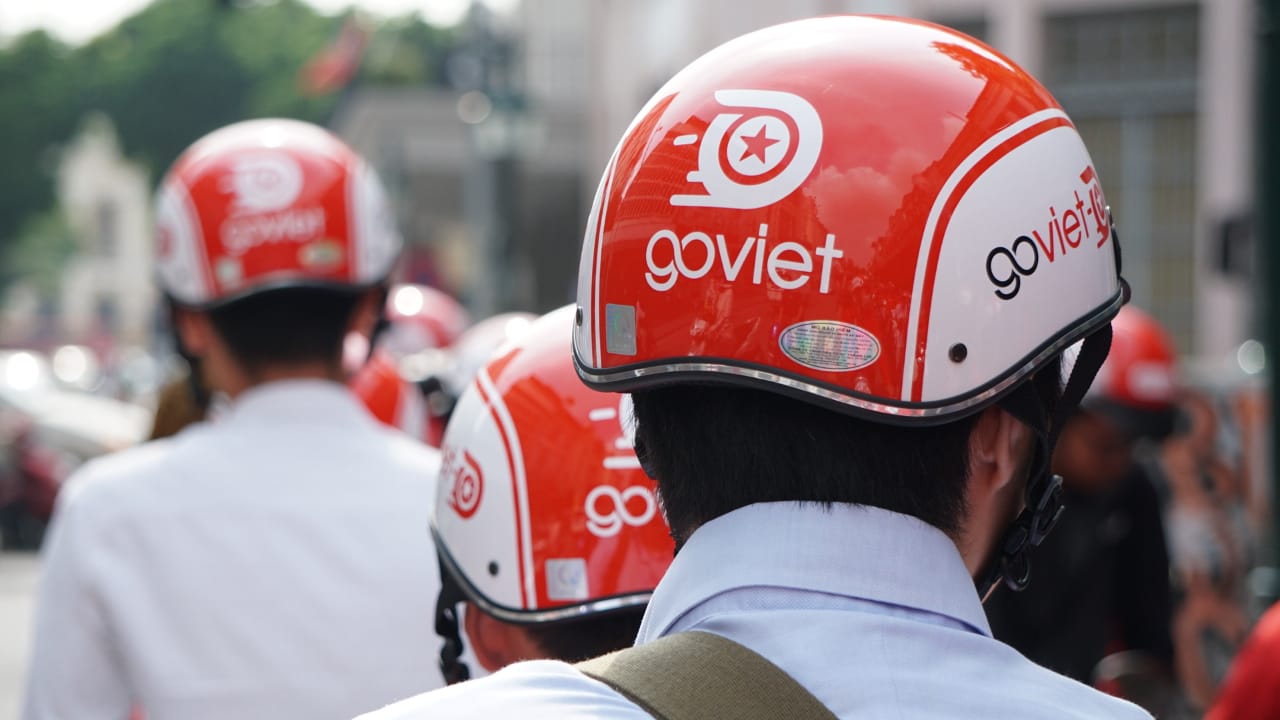
    FastGo last month claimed to have 15,000 taxi and motorbike partner drivers in Hanoi and Ho Chi Minh City, but they are not a common sight on the streets unlike the ubiquitous red and green uniforms of Go-Viet and Grab drivers.

    VATO, which received funding of $100 million from local transportation firm Phuong Trang, is also having trouble expanding after launching in May, its CEO Tran Thanh Nam admitted to the media.

    Another competitor, Aber, run by a group of young Vietnamese based in Europe, had said August 10 it would “temporarily cease app operations for an upgrade.” It has not made a return so far.

    Bui Danh Lien, former chairman of the Hanoi Transport Association, said operators need to give drivers a steady income to keep them and at the same time offer customers plenty of discounts and cheap fares, and “this is a tough challenge.”

    Economist Do Hoa told local media that the ride-hailing market is “a race to spend money”, and those without deep pockets won’t be able to compete.

    Grab and Go-Viet are willing to charge their customers as low as VND1,000 (4.3 cents) for a ride, he pointed out.

    “Vietnamese ride services are not financially capable of sustaining such losses like the foreign companies.”

    Even major players like Grab and Uber report big losses in Vietnam. According to the General Department of Taxation, Grab, with a total registered capital of only VND20 billion ($881,000), has incurred losses of nearly VND1 trillion ($43.48 million) during its three years in Vietnam.

    But this cash burn strategy is how Grab and Uber are eating up traditional taxi firms’ market share. In 2014-15 they launched promotion after promotion, including free rides and discounts, to attract customers. They expanded their driver networks by offering subsidies and big rewards based on performance.

    Other options

    Though the lack of funding is a weakness of local ride-hailing firms, there are other ways for them to grow, Dr Nguyen Duc Thanh, head of the Vietnam Institute for Economic and Policy Research said.

    “Since the lack of resources is a disadvantage for Vietnamese ride-hailing apps, they should not enter the cash burn race.”

    Going head-to-head with bigger rivals is not the right strategy to follow, he said.

    “They can enter niche markets like delivery, car rentals and long-distance ride services. Instead of trying to divide market share in the beginning, newcomers should think of a long-term strategy to build a solid foundation.”

    Nguyen Manh Hung, former chairman of the Vietnam Automobile Transport Association, was quoted by Tuoi Tre newspaper as saying local firms are unable to compete with Grab and Go-Viet because they are divided.

    If they join hands they could compete, he said.

    Go-Viet, the Vietnamese operation of Indonesia’s Go-Jek, came early last month seeking a share of the market that Grab has been dominating after the departure of Uber.

    Go-Jek founder and chief executive Nadiem Makarim said Go-Viet has grabbed a 35 percent share of the motorbike ride-hailing market in HCMC within six weeks of its launch on August 1.

  • Go-Jek launches services in Hanoi amid $500 million overseas expansion drive

    Go-Jek launches services in Hanoi amid $500 million overseas expansion drive

    Indonesian ride-hailing firm Go-Jek on Wednesday launched its services in Vietnam’s capital of Hanoi under the brand Go-Viet.

    The move is part of Go-Jek’s $500-million international expansion.

    The app-based on-demand service Go-Viet, driven by a Vietnamese founding team, with Go-Jek providing technology, expertise and investment, offers services ranging from transport and logistics to food-delivery and mobile payments.

    Go-Viet grabbed a 35 percent share of the market for motorbike ride-hailing services in the economic hub of Ho Chi Minh City just six weeks after launching there on August 1, Go-Jek founder and chief executive Nadiem Makarim said.

    “We are proud to have seen positive development in Ho Chi Minh City market, and this paves the way for us to expand our services to Hanoi,” Go-Viet co-founder and managing director Nguyen Vu Duc said at Wednesday’s launch.

    The launch followed an announcement by the company in May that it would invest $500 million to enter the Philippines, Singapore, Thailand and Vietnam, following Uber’s deal to sell its Southeast Asian operations to bigger regional player Grab.

    On Tuesday, Grab announced a partnership with Vietnam’s MOCA Technology and Service company (Moca) for a mobile payment service, as the ride-hailing firm pushes to cement its position.

    The launch was attended by Indonesian President Joko Widodo, who is in Hanoi for an official state visit and a meeting of the World Economic Forum.

    More Indonesian businesses are seeking to expand their operations in Vietnam, Widodo told reporters on Tuesday, after a meeting in Hanoi with his counterpart Tran Dai Quang.

    “We expect bilateral trade to reach $10 billion a year by 2020…and I hope president Tran Dai Quang would work to remove trade barriers for Indonesian products, including automobiles,” he said.

    Trade between the countries rose to $6.5 billion last year from $5.6 billion in 2016, says Vietnam, which exports rice, crude oil, cement and farm produce to Indonesia, and imports fertilizer, oil products, machinery and fabric from it.

  • Go-Jek Indonesia to Partner With Peer-to-Peer Lending Firms

    Go-Jek Indonesia to Partner With Peer-to-Peer Lending Firms

    Indonesian ride-hailing and online payment company Go-Jek said on Tuesday (04/09) that it will partner with three peer-to-peer lending firms as the startup looks to expand its financial technology services in Southeast Asia’s biggest economy.

    Go-Jek, whose backers include Google and China’s Tencent Holdings, has grown rapidly since launching eight years ago in Indonesia, a country with a population of more than 250 million people.

    The company already offers a wide range of app-based services outside of ride-hailing, such as food delivery or movie tickets, as it competes with the other main ride-hailing app operating in Indonesia, Singapore-based Grab, which bought the Southeast Asian business of Uber Technologies earlier this year.

    Go-Jek said it had formed a strategic partnership with Indonesian peer-to-peer lenders Findaya, Dana Cita and Aktivaku.

    “We believe that a strong collaboration between financial services providers and technology companies can reach a wider range of people who have difficulty accessing financial services, such as unbanked communities,” Go-Jek president Andre Soelistyo said in a statement.

    P2P lending is an internet-based business where small-business owners or individuals usually without access to bank credit can seek loans – helping alleviate a financing shortfall estimated at more than $73 billion in Indonesia.

    The emergence of P2P lending platforms has so far been welcomed by Indonesia’s financial regulators which see them as offering a much needed service to cash-strapped businesses and consumers at a time when Indonesia’s economy has been hobbled by sluggish bank lending.

    “This collaboration is very positive to increase financial inclusion in Indonesia,” said Hendrikus Passagi, who oversees fintech at the Financial Services Authority (OJK).

    Go-Jek founder Nadiem Makarim said in August that the platform has 20 million to 25 million monthly users, for whom it processes more than 100 million transactions.

    Go-Jek’s payment system, known as Go-Pay, has emerged as one of the most popular mobile payment platforms in Indonesia and last year Go-Jek acquired three smaller payment system fintech firms.

    Go-Jek said the partnership with P2P lenders would be separate from its Go-Pay payment vertical.

  • Indonesian ride-hailing app revs up to join Vietnam’s transport market

    Indonesian ride-hailing app revs up to join Vietnam’s transport market

    Indonesian ride-hailing app Go-Jek will officially launch in Vietnam this July, bringing more competition to the market currently dominated by Grab after it had acquired Uber’s Southeast Asia operations in March.

    Founded in 2010, the Indonesian transport startup has since raised over $1.5 billion from investors such as Google or China’s Tencent Holdings, as reported by Reuters.

    Starting out as a phone-based motorbike ride-hailing app, Go-Jek is now a digital platform which offers transportation, logistics and delivery services.

    To attract Vietnamese drivers, Go-Jek won’t initially charge drivers 20 percent commission fee and is offering free installation of its geographical positioning system.

    “This looks like an attractive offer, as I currently have to pay a commission fee of 28 percent for Grab,” Tuan, a Vietnamese Grab driver said.

    Singapore-based blockchain-powered ride-hailing app MVL is also reported to be entering Vietnam’s market in July.

    MVL would not require its driver to pay any commission, but instead generate a profit through selling data generated from its daily operations to insurance and market survey companies, said its CEO Kay Woo during a conference in HCMC earlier this month.

    Ever since Uber left the Vietnamese market last month, Grab has raised suspicions about creating a monopoly in Vietnam, now that one of its biggest rivals is gone.

    An investigation conducted by Vietnamese authorities has said that the deal between Grab and Uber showed signs of breaching Vietnam’s antitrust laws, as reported by local media on Wednesday.

    Preliminary investigation results showed that Grab’s share in Vietnam exceeds 50 percent of Vietnamese market after acquiring Uber, which is a potential sign of violating Vietnam’s regulation on economic concentration.

    Vietnam’s Competition and Consumer Protection Department is considering opening an official investigation into the deal.

  • More funding comes for Go-jek Indonesia

    More funding comes for Go-jek Indonesia

    Go-Jek has raised a higher than targeted $1.5 billion in a fundraising round from a dozen investors, including BlackRock and Google, as the Indonesian ride-hailing firm builds its war chest to fight deep-pocketed rivals.

    Go-Jek had planned last year to raise $1.2 billion, and, with the 25 percent extra funds it has received, it is now valued at about $5 billion.

    Reuters Breakingviews said last month that Go-Jek was valued at roughly $4 billion compared with over $6 billion for Grab, Southeast Asia’s largest ride-hailing firm.

    The additional funds and backing of well-known investors, including Singapore’s Temasek Holdings and Chinese technology giant Tencent Holdings, will help Go-Jek to better compete in Southeast Asia’s cut-throat market where incentives to drivers and passengers are used to build loyalty.

    Singapore-based Grab was expected to have raised $2.5 billion last year and Uber Technologies has pledged to invest aggressively in Southeast Asia – home to 640 million people – even though the US firm expects to lose money in the fast-growing market due to costly battles with rivals.

    Both companies are expanding in Indonesia, Southeast Asia’s most populous country, where Go-Jek, a play on the local word for motorbike taxis, is transforming the local economy, economists say.

    Go-Jek and Grab are also investing heavily in expanding their mobile payments platform.

    “Go-Jek is far beyond a ride-hailing app, it’s a digital platform that dominates consumers’ daily lives, including transportation, food delivery, logistics, and payment, etc.,” said Xiaofeng Wang, senior analyst at consultancy Forrester.

    “That’s also the key value that its key investors like Google and Tencent see. They know well about the power of the digital ecosystem, and Go-Jek has built it in Indonesia, like Google in the US and WeChat in China,” Wang said.

    Go-Jek told Reuters that some investments that came in this year were part of the funding round that kicked off last year but it declined to comment on the amount raised or the names of investors.

    It said the funding was aimed at developing technology for micro, small and medium enterprises in Indonesia.

    Go-Jek delivers everything from meals and groceries to cleaners, masseuses and hairdressers across Indonesia’s capital city Jakarta, all at the touch of a smartphone app – helping it become a crucial workaround in a city with some of the worst traffic in the world.

    Rumours said BlackRock and Temasek are investing about $100 million each in Go-Jek’s latest fundraising.

    BlackRock declined to comment. A Temasek spokesman confirmed participation in the fundraising but declined to say how much it had invested.

    This month, Indonesian conglomerate Astra International said it would invest $150 million in Go-Jek, while  Djarum Group’s Global Digital Niaga is putting in $100 million.

    Go-Jek’s payment system, known as Go-Pay, has emerged as one of the most popular mobile payment platforms in Indonesia. Grab, which bought Indonesian payment service Kudo last year, also sees its future in mobile payments as much as in transport.

    Go-Jek is expanding in other Indonesian cities and has said it plans to start operations in the Philippines this year, followed by other Southeast Asian countries.sou

  • GO-JEK acquires Pune-based mobile app developer Leftshif

    GO-JEK acquires Pune-based mobile app developer Leftshif

    Indonesia-based leading startup GO-JEK on Tuesday announced that it has acquired Pune-based mobile application developer Leftshift for upscaling its product development, design and engineering platforms.

    This is the fourth Indian start-up acquisition by the Indonesian startup.

    “Our partnership with Leftshift over the last one year has been an amazing experience, they are arguably among the best mobile app developers in the country. We look forward to their team becoming a part of the GO-JEK family,” said Sidu Ponnappa, Managing Director, GO-JEK Engineering India, in a statement.

    Leftshift was started in 2007 with the intent of creating “loveable apps” that people would find easy and convenient to use.

    “The opportunities and challenges at GO-JEK are beyond thrilling. Our resources and technology would certainly complement and accelerate product development at GO-JEK,” added Sudhanshu Raheja, founder and CEO, Leftshift.

    According to GO-JEK, it intends to continue shoring up its India operations as it eyes more talent for key processes like data science, mobile, security and DevOps.

    The financial details of the acquisition were not disclosed.

  • Ride-hailing app Grab brings GrabBike services to Bali

    Ride-hailing app Grab brings GrabBike services to Bali

    Watch out Gojek, competitor GrabBike has come to Bali. Ride-hailing app Grab has announced that it launched both GrabBike and GrabExpress services in Bali, as of Oct. 22. 

    Like Gojek, GrabBike allows you to order motorbike taxis, while GrabExpress is Grab’s courier service. Also in common with Gojek, the app’s drivers use black and green colors.

    Similar to Uber, the app has provided its GrabCar driver services in some time in Bali (they launched in 2015)—to the frustration of competing taxi and other drivers operating on the island. 

    As with GrabCar, the GrabBike and GrabExpress options will be most available in Badung and Denpasar. 

    Grab started in Malaysia but has quickly spread throughout the region, with notable success in Jakarta, its first Indonesian city. 

    “Bali is dominant in growth and tourism potential, so we saw an opportunity to improve the quality of daily trips in Denpasar and Badung. The launching of two-wheel services in Bali will complement GrabCar, which previously launched in 2015.

  • UberJEK Launched in Jakarta

    UberJEK Launched in Jakarta

    UberJek, an app-based transport service, has officially started operation on Sunday, May 15. Aris Wahyudi, UberJEK’s co-founder, claims cheaper tariffs compared to its competitors.

    “Our tariff is different from those of the competitors. Our tariff will continue to drop from the first kilometer,” Aris said after UberJEK launch at Euro Management Indonesia, Sunday, May 15, 2016.

    He illustrated that on kilometer 1-5, the tariff is Rp2,500 per kilometer; on kilometer 6-10, it’s Rp2,000; above 11 kilometers, customers will be charged for Rp1,500 per kilometer.

    He added, other benefit of using UberJEK is no minimum tariff set for short distance travels. Thus, customers wanting to travel within 1 kilometer can pay Rp2,500. “We do not set a minimum distance, unlike our competitors. The benefit of using UberJEK is in short distance travels.”

    To attract customers, in addition to cheaper tariffs, UberJEK also entices its customers with giveaways. It is part of the promotional strategy to introduce UberJEK to the market. UberJEk claims to have earmarked seven million smartphones as giveaways for customers.

    UberJEK was founded by Aris and three other Indonesian businessmen in late October 2015. Aris said UberJEK services can now be enjoyed in 30 cities in Indonesia with a total of 2,200 drivers.

  • Jakarta Motorcycle Taxis Get an App Lift

    Jakarta Motorcycle Taxis Get an App Lift

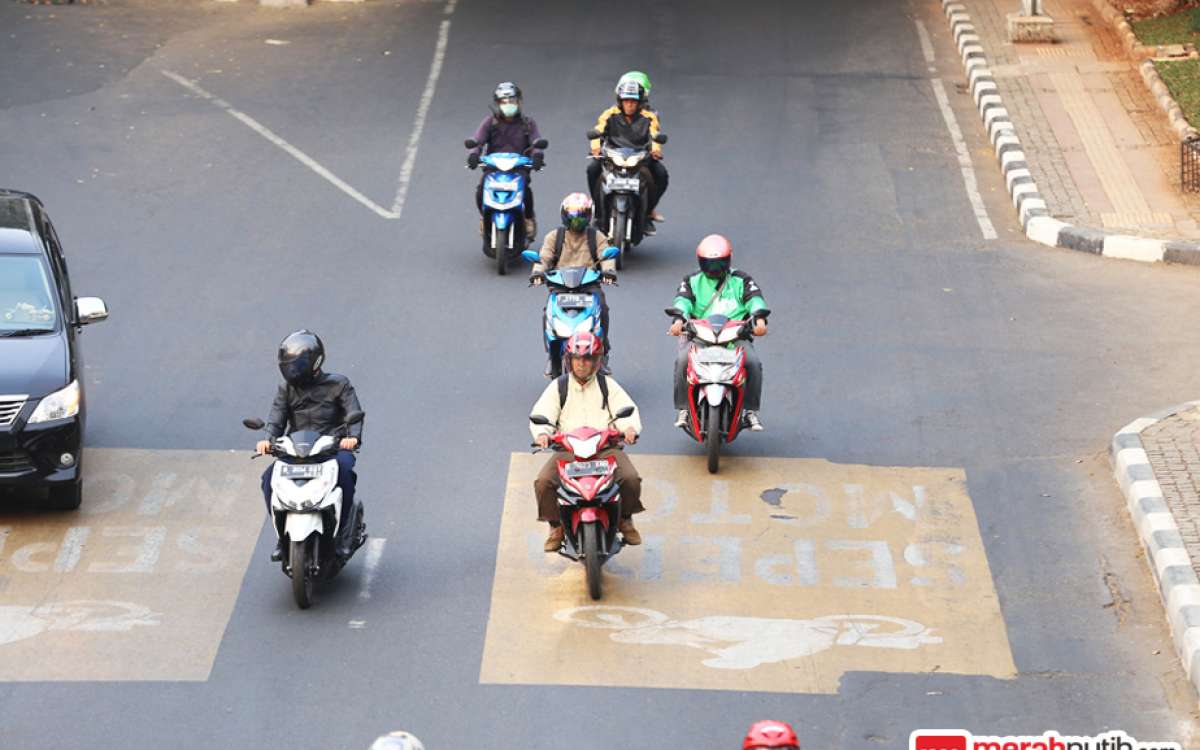
    Motorcycle taxis, known as ojeks, have long offered a fast way for residents to cheaply zigzag through gridlocked roads in Jakarta, a city knocked for having the world’s worst traffic.

    But, until recently, they were informal and inefficient – ojek drivers would queue at taxi lines or troll streets to negotiate fluctuating fares with potential riders. Some joined courier companies or delivery fleets working with restaurants to zip around fried noodles, chicken sate and other food orders.

    Now startups are trying to capitalize on those inefficiencies, launching mobile applications that connect those needing a ride to available motorcycle taxis.

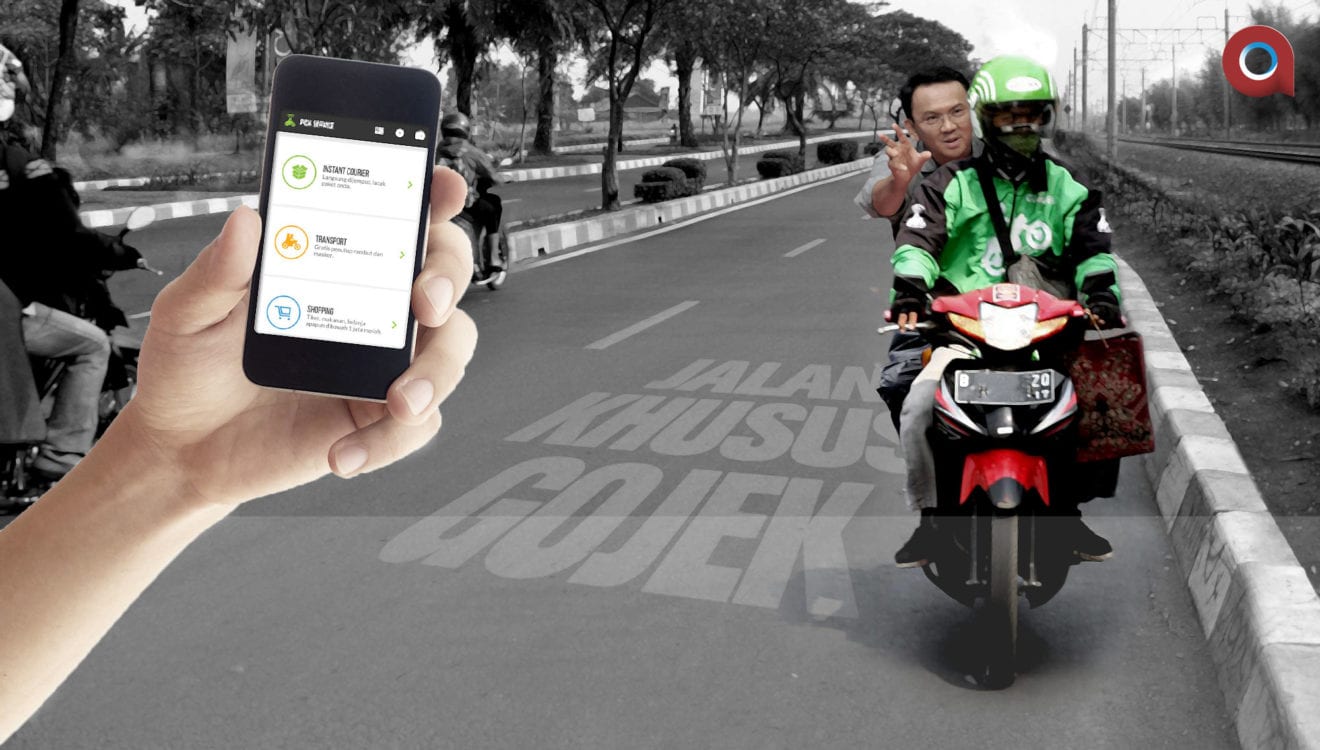
    New app-based ojek businesses like Go Jek and GrabBike see huge potential in the world’s second-largest city, with 10 million people, whose road commuters log the most stops and starts anywhere—33,240 a year, according to a ranking by Castrol in February.

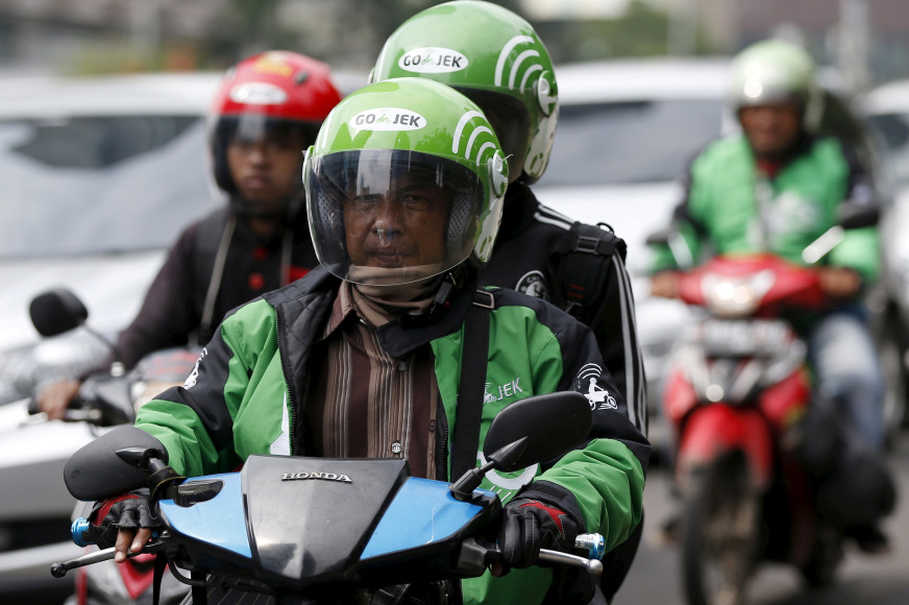
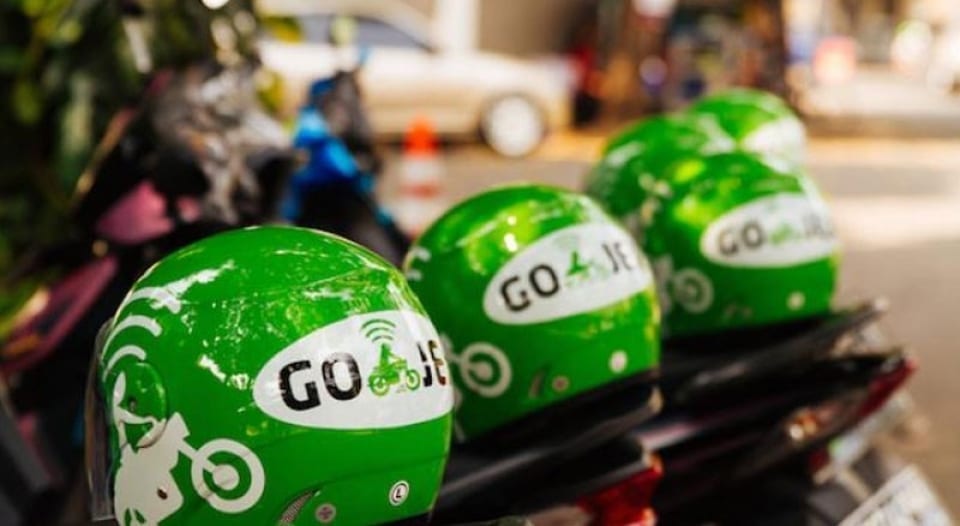
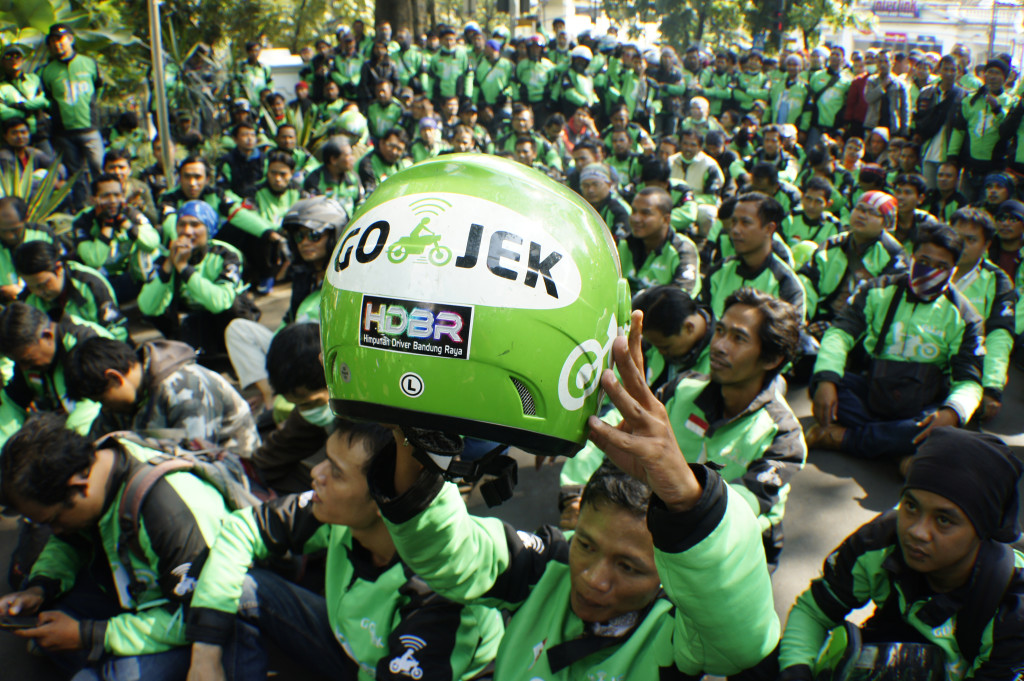
    Once these companies enlist them, they hand out jackets, helmets and smartphones so they can receive ride requests through their apps. They also set base fares and provide insurance. The system is good for customers and companies, which don’t have to buy fleets of motorcycles, and the ojek drivers, who end up making more money by getting more business and a set part of each fare.

    Venture capitalists have begun pumping money in, and Jakarta Gov. Basuki Tjahaja Purnama is so taken by the possibility of reducing some of the city’s congestion that he is in talks with Go Jek to feed commuters into the public bus system or coming light rail.

    Go Jek is  a “very smart solution for the city,” Gov. Purnama told reporters this week, adding the city might provide ojek drivers with special parking near bus stations.

    App-based motorcycle taxis also operate in other low-cost labor markets with intractable traffic, such as Hanoi and Uganda.

    It’s a market with huge potential given the growing number of cars and the lack of public transportation.

    While it’s difficult to quantify the number of ojeks on the road, groups of them gather on almost every corner of the city. Blue Bird, which runs the largest taxi fleet in the country with 37% of market share, has 16,000 cars in Jakarta. Its app gets between 8,000 and 12,000 orders each day, said President Director Noni Purnomo.

    Greg Lindsey, a senior fellow with the New Cities Foundation mobility initiative, says these startups are bringing hidden resources to the surface. “Every vehicle in the city is potentially part of its transportation network.”

    It helps that most urbanites have access to apps through their smartphones.

    Go Jek says glitches have arisen since it launched its app back in January. The app sometimes malfunctions. Customers complain they’ve gotten wrong food orders or had to deal with rude drivers. And fares are still being set by the market. Go Jek, for example, recently raised its starting price from $1.87 (25,000 rupiah) to $2.63 during peak hours over complaints by drivers.

    Jakartans like Amalia, who like many Indonesians goes by one name, feel the app-based ojeks are safer and more reliable than pickup versions. “It’s faster” than a standard taxi, she said, as she climbed off the back of an ojek summoned on her smartphone.

    For now, only a few motorcycle transport companies are competing in Jakarta with their apps: Go Jek, believed to be the largest and the first to launch, says it has recorded more than 250,000 app downloads since January and has expanded its network of drivers from 300 to 6,000 in the past year.

    It offers rides, as well as personal shopping and, as of March, food delivery. The starting price is a bit more than a standard cab – around $1.80 versus 60 cents —but ends up being much cheaper.

    “We are essentially a one-stop shop for transport and logistics and personal shopping in Jakarta,” said its founder and CEO, Nadiem Makarim.

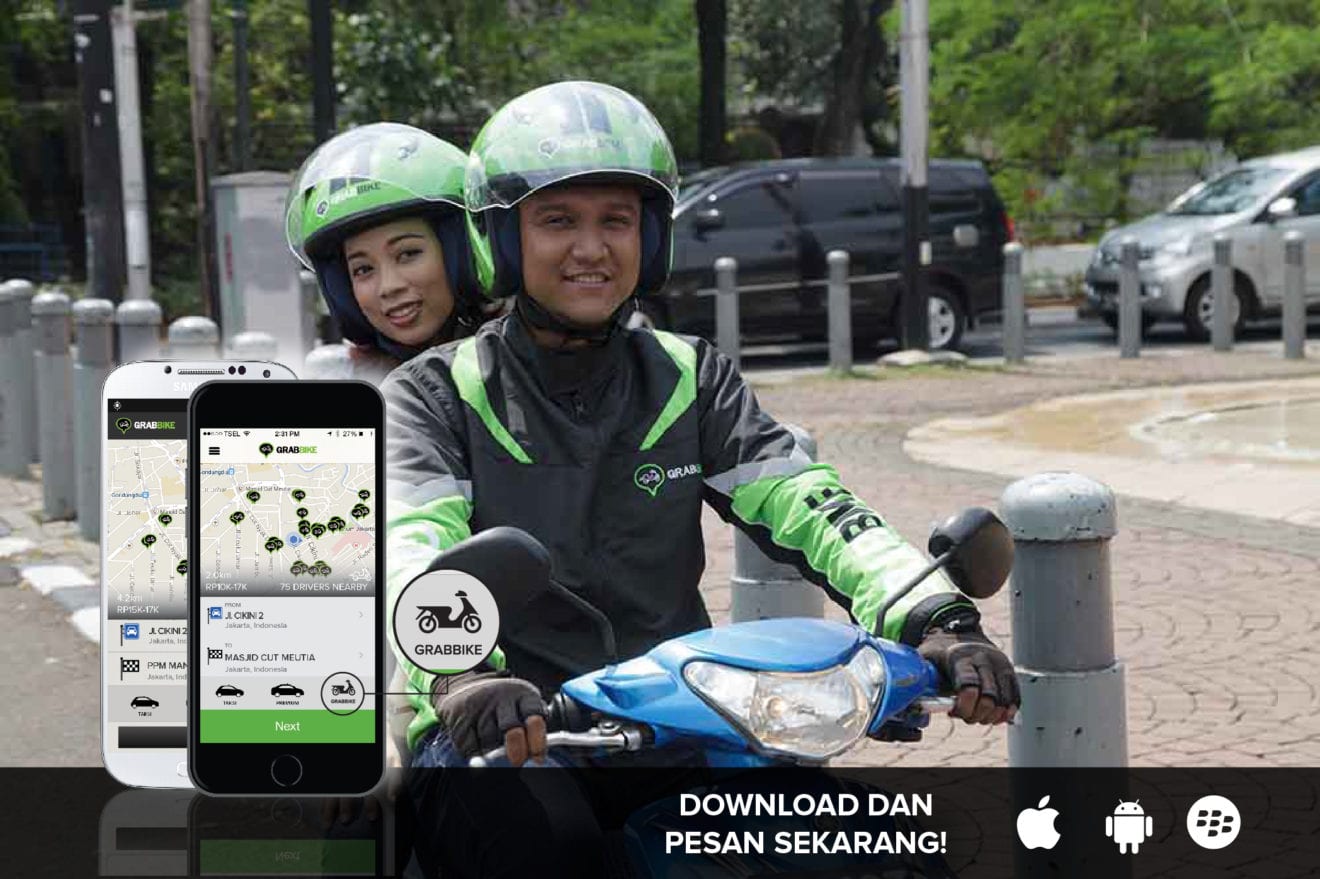
    Grab Bike, launched on May 20 by the taxi-booking app from Malaysia Grab Taxi, valued at $1 billion, so far offers only rides. But Cheryl Goh, its marketing vice president, sees “a lot of opportunity” for expansion in Jakarta.

    The company said it recorded more than 8,000 rides in its first week. Go Jek declined to say how many rides it averages a week.

    Other players trying to provide convenience through two-wheeled delivery include Happy Fresh, which launched in March, offering personal shopping that could eventually compete with Go Jek’s soon-to-launch Go Cart. Antar.id is getting off the ground and the app-less HandyMantis both offer rides as well as courier services.

    “If I take a bus, it takes too long to get through the traffic,” said Musrifah Kuswadinata, who works at a souvenir shop in a central Jakarta mall. Before she took the bus and then had to take a car the last few miles to  home. “If I take a Go Jek, I can take it straight home,” she said.