Retail News CRM

Tag: gold

  • The Indian Luxury Outlook 2019

    The Indian Luxury Outlook 2019

    As 2018 comes to a cold & wintry end, as political environment hots up, as new alliances, mergers and acquisitions take shape in business & politics, as GST corrections & FDI norms in ecommerce are tinkered, what is it that the Indian Luxury Industry can look forward to?

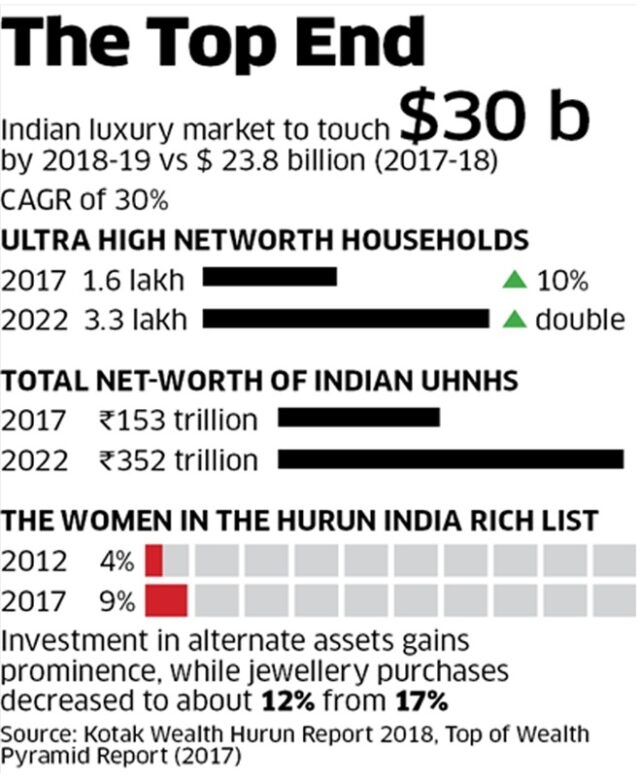
    Assocham figures continue to be optimistic and bullish. As per last projection, not only is the industry expected to be of a size of USD 30b by the year end 2018, but is also to continue its growth trajectory unhindered. But alas, the suddenly disturbed seemingly stable political applecart, the floundering rupee, the growing uncertainty, and the eminent global slowdown of 2020 looms large. Ground reality for luxury could be different. Industry insiders, trade analysts and brands all alike seek the pot of gold at the end of the rainbow.
    A seeming direction that the Indian Luxury Industry could take or adopt from the rest of the world appears as under:

    1. Consolidation is the key: With Reliance brands having taken over Genesis Retail in 2018, the largest fashion and accessory conglomerate of Indian Luxury and premium space has taken shape. With almost no competition, the all-powerful group is set to be the only point of entry into India. Surely independent brands and smaller groups continue to offer their wares, the sheer strength, negotiation powers and might of Reliance will perhaps be the single most driver of the fashion & Luxury space.
    2. Power of the Common Man: Someone wise enough once said ‘don’t underestimate the power of the common man’. Sure enough, luxury has slowly spread its wings to the hitherto sleepy tier I & tier II towns. The fast emerging Indian market is not only witnessing demand for luxury products from the Metros but also Tier I and Tier II cities which have a sizable number of HNIs (High Net-worth Individuals). Alongside, an increase in wealth for the middle class coupled with internet penetration has resulted in newer segments of first-time luxury buyers. This has given ample space for a whole lot of brands to set up shop in India, retail their brands through distribution networks. This surely will be the next growth driver for Luxury in India.
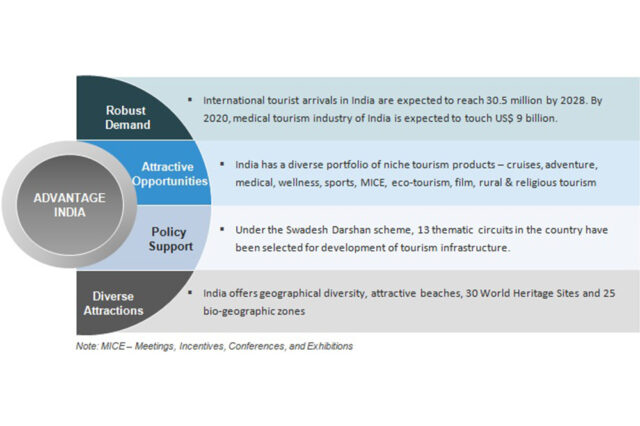
    3. Travel, Tourism &Hospitality will drive further growth to the value pie: With increased e-visa processing, faster on the ground arrival support, eye catchy Incredible India campaigns, the tourist inflow from within and outside is likely to further increase. Statistics according to a new report of the World Travel and Tourism Council (WTTC) reveal that India’s travel and tourism sector ranks 7th in the world in terms of its total contribution to the country’s GDP.During January-October 2018 FEEs from tourism increased 8.30 per cent year-on-year to US$ 23.54 billion.

      Source : www.ibef.or


    4. The Great Big Fat Indian Wedding carnivals will drive luxury: The wedding industry and the wedding service industry sets unprecedented benchmarks. According to a 2017 KPMG report titled Market Study of Online Matrimony and Marriage Services in India, the marriage services industry is estimated to be worth approximately US $53.77 billion (Rs 3, 68,100cr).This is one sector which adds incremental sales to all sectors of the industry – from beauty, fashion, accessories,  photography, jewellery, travel, hospitality, gifting to also the cuisine segment. With high standards being set by the likes of stars like Anushka Sharma – ViratKohli ; Priyanka Chopra – Nick Jonas& finally the Ambani weddings, the aspiration of average Indian to splurge on weddings is reaching a new peak. With Rolex watches as gifts to the entire wedding procession to bespoke clothing from super luxury brands to not only the entire family but the whole procession adds further fillip to the trade.
    5. Technology and Luxury: From high end home appliances such as Sub Zero Wolf to tech controlled homes like Home Automat, luxury and technology seem to marry and create an inseparable union. What was earlier restricted to high end laptops and computer systems demand has now invaded the mobile space, the home entertainment space besides the affluent kitchens. Super expensive mobiles from Iphone X to Hanmac are finding a demand que beyond their imagination in India.
    6. Technology and Retail: Omni-presence now means beyond just available everywhere to also be ‘Phygital’. A merger of the physical and digital retail is quietly invading the global retail. Amazon Go has already launched 8 number of cashier less stores& plans to ramp up to 3000 by 2021. Can India, the tech brain of the world be far behind? In Bangalore, Decathlon launched a similar store by introducing a ‘phygital experience’- an innovative mix of physical retail and digital touch points. From virtual reality to digital payments the intent is to create a fun, unique and immersive user experience designed to engage and add value to for them at every step of the way while choosing their favourite sports gear.On other hand, another concept store called ‘Watasale’ went further to create cashier less store, its first store in Kochi and have plans to expand to other cities including Bengaluru and New Delhi in the near future. Can Indian Luxury ignore this anymore?
    7. Predictive Analysis to Predictive Selling: The Indian fashion industry proudly receives its first futuristic analysis software, ‘Stylumia’. Created by ex Myntra founder Ganesh Subramanium, the software will assist in better buying to be able to improve efficiencies and sell through ratios. Most Luxury brands dependent on the human predictions of the buyer can now resort to technology and manage their budgets better. This coupled with predictive selling, could bring in the much needed correction in stocks over load with luxury brands.
    8. Experiential retail, Virtual Reality and Artificial Intelligence: These three aspects will come to the forefront: Brands like Arvind have introduced Magic Mirrors through its brand Creyate Custom Clothing. Also, Shoppers Stop has launched an innovative augmented reality-based dressing room: ‘The Magic Mirror’. It is an intelligent photo booth that gives customers the option to select and view apparel and accessories on themselves without having to physically ‘try on’ the desired products. Apart from this, ecommerce players such as Lenskart(Eyewear) and Caratlane (Jewellery) are already into Virtual trial of the products by customers.
    9. Rent a Luxury / Reusable Luxury are a reality: What started as a trickle two years back, is now a stream with more ventures offering specialised product categories arriving at the horizon.Websites such as Confidential Couture offer usable Luxury Goods while Ziniosa & Rent A Closet offer fashion on rent.And now, even the affluent women are renting high end jewellery for their wedding. The fashion rental market is becoming the biggest trend. A wedding suit or gown worth Rs. one lakh could be rented for as low as Rs. 2000 to Rs. 2500! It is estimated that the online wedding rental  business is worth Rs. 100 crore and the existing players have claimed a 25 to 50 per cent year-on-year surge in business (Black Book).
    10. Sustainable, Authentic and Responsible Luxury is being sought forGrassRootby Anita Dongre and Nicobar by Good Earth are few names that are famous for their Sustainable offerings.Slowly but surely, the well exposed Indian consumer seeks value over mere brand name. Value definitions are shifting rapidly in line with global shifts. A brand who pays heed to such demands will perhaps go a long way.
    11. SUVs take over the roads Various variants of SUVs have been introduced by automakers of all categories. From Mahindra XUV 500 to Lamborghini Urus, Rolls Royce Cullanin to Porsche Cayenne, almost all Luxury brands have come up with their SUV variant. Sale of SUVs grew seven times faster than that of passenger sedans. While small cars and sedans managed a growth of 3% in the last financial year, the sales of SUV grew 21%. The share of SUVs in overall passenger vehicle sales rose to nearly 30 % in 2017-18, compared to 14% recorded at the end of March 2017-18.According to numbers released by Society of Indian Automobile Manufacturers (Siam), 9.2 lakh SUVs were sold in 2017-18 against 7.6 lakh units in the previous year.

  • Malabar Gold to expand into Hong Kong market

    Malabar Gold to expand into Hong Kong market

    Indian jewellery firm Malabar Gold & Diamonds is making plans to open 500 more outlets globally over the next five years – and Hong Kong is among the targets. The jeweller currently operates more than 250 outlets in 10 countries, 75 of which are in the Gulf region, including 12 in Qatar.

    The firm’s immediate expansion plans are to open more branches in Malaysia in the coming months, where the group started operations last year.

    Malabar Group chairman M P Ahammed said jewellery customers in Malaysia are showing enormous interest in the company’s ornaments and now the brand is gaining remarkably good acceptance in the country.

    “As part of our expansion, we are also looking at markets such as Hong Kong where there is increasing activity at present. The Chinese are buying both gold and diamonds in large quantities unlike what they used to, say, some three decades ago.”

    Speaking about the state of the business in general, Ahammed said: “From a modest beginning in Kozhikode in 1993, we have now expanded our operations even to the US, where our first outlet was opened earlier this year in Chicago.

    “Wherever there are strong family traditions and customs, there is hope for expansion in this business. A husband may want to gift something precious to his wife on a memorable occasion, a mother to his daughter and a son to his mother. No wonder, the choice of everyone in such moments – of strengthening bonds – continues to be gold or diamond.’

  • Chow Tai Fook reveals massive China expansion plan

    Chow Tai Fook reveals massive China expansion plan

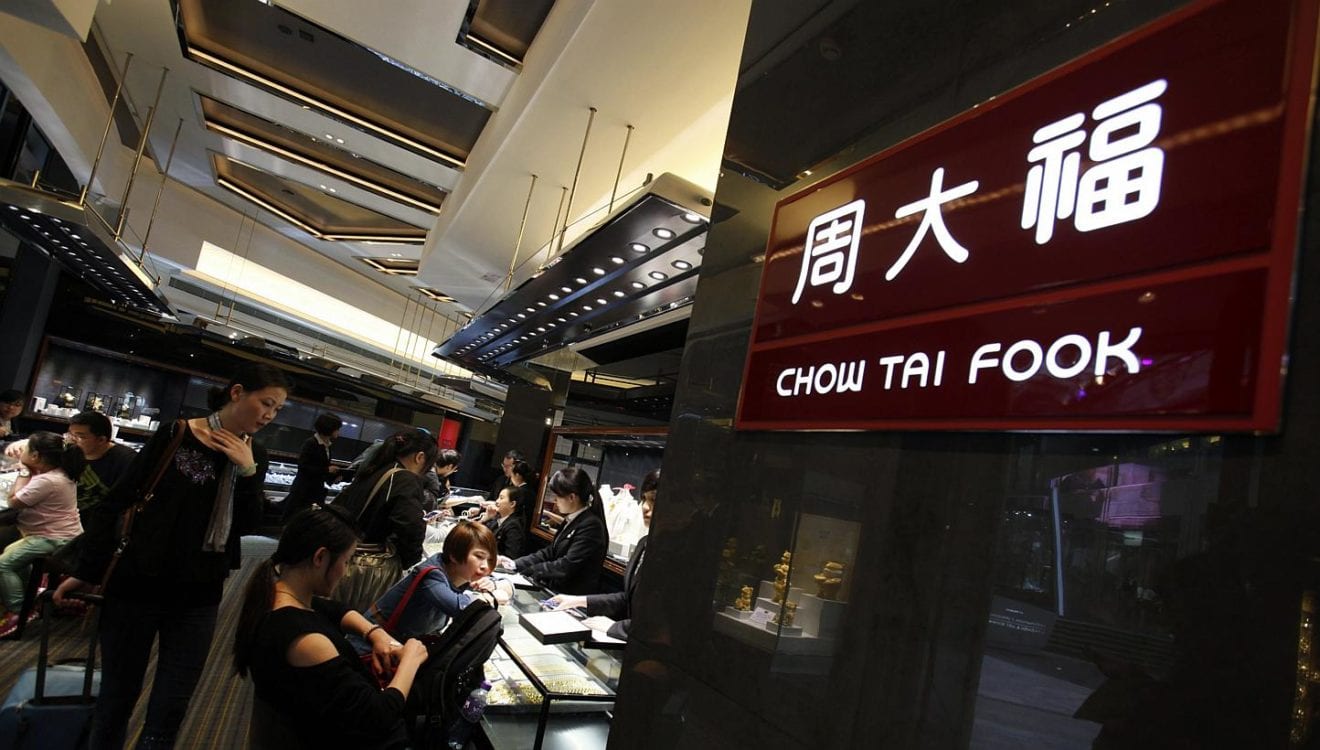
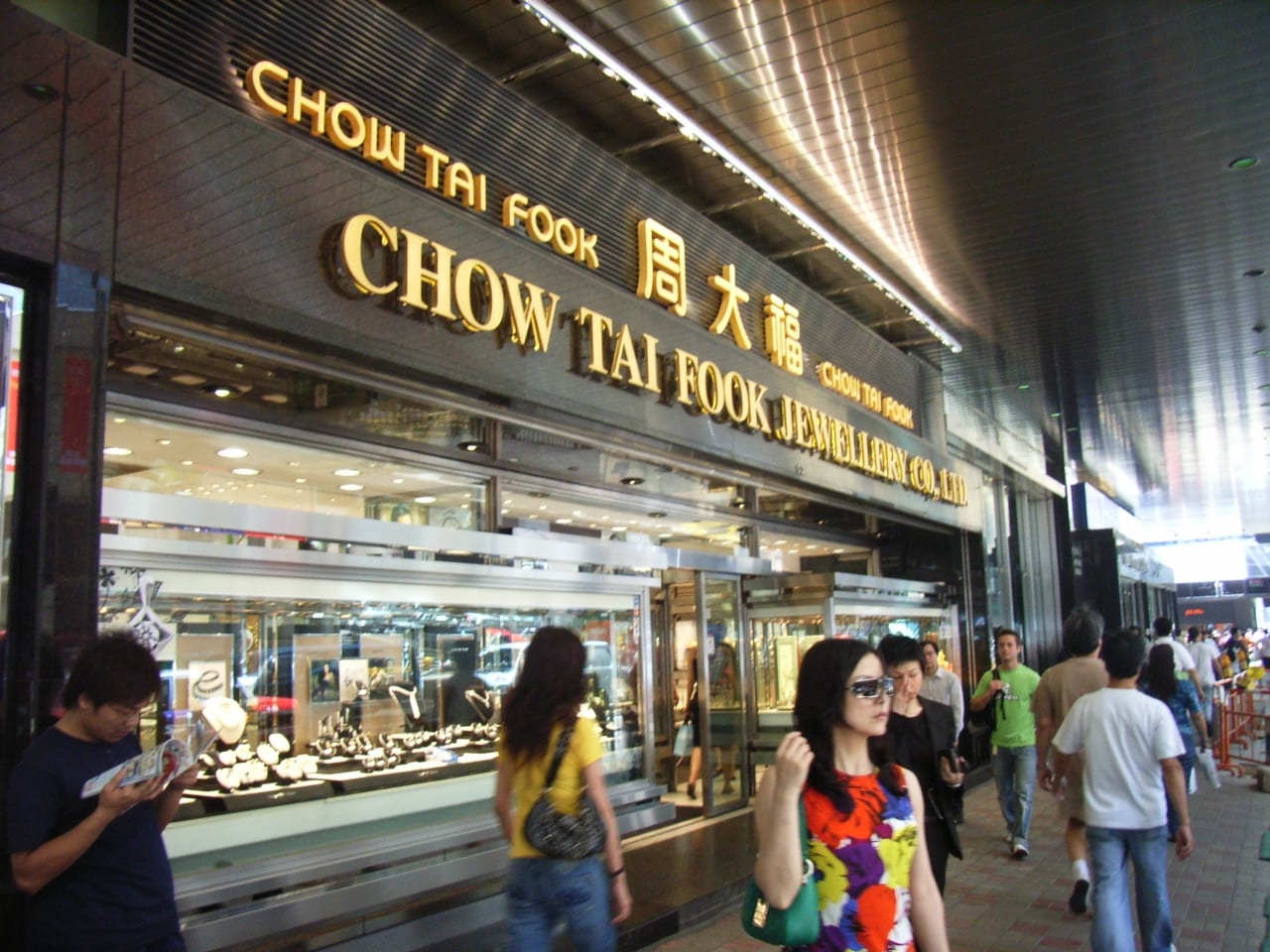
    Chow Tai Fook opened 233 stores in Mainland China in the first half – and is planning another 400 next financial year. The Hong Kong-listed jeweller is targeting shopping malls for its new stores, and second-tier cities. The latest additions took the company’s global network to 2822, with 2682 of those located on the mainland. By the end of the 2020 financial year, the company will have more than 3000 stores on the mainland alone.

    In Hong Kong and Macau, the network remained stable during the first half, the company closing one store in Hong Kong’s tourist district and opening another in a residential neighbourhood targeting locals.

    The jeweller has reported robust growth of 20 per cent year-on-year backed by the buoyant consumer demand. Same-store sales in Hong Kong and Macau soared 24.4 per cent in what the company described as “stellar” growth, driven by gold products, gem-set jewellery and platinum/karat gold products.

    On the mainland, same-store sales were up 4.9 per cent. Core operating profit rose 24.7 per cent to HK$2.989 billion.

    However the company has warned of a slowdown in sales growth in the second half of the year “as the escalating comparison base, rising US-China trade tensions and foreign exchange fluctuations could cloud the performance”.

    Meanwhile, the company says its new jewellery retail brand Monologue, targeting younger customers, is going well and the T Mark diamond brand achieved a 134 per cent increase in sales in Mainland China and 156 per cent increase in Hong Kong and Macau.

  • Luk Fook sales soar despite challenges ahead

    Luk Fook sales soar despite challenges ahead

    Thanks to positive Hong Kong market sentiment and lower gold prices, Luk Fook Holdings has reported a 25.1 per cent boost in sales in the September half year. The company says sales totalled HK$7.859 billion (US$1 billion) compared with $6.283 billion in the same period last year. Profit attributable to shareholders soared 27.9 per cent to $665.4 million.

    Sales in the Hong Kong market, the company’s key source of revenue, rose 31.2 per cent as mainland Chinese visitor numbers continued to grow and retail sentiment improved.

    Sales in Macau rose 19.9 per cent.

    However the company has warned that the US-China trade war and the depreciation of the Renminbi are starting to impact on sales in the second half.

    “Same-store sales growth in the Hong Kong and Macau markets … started to see a decline since the second half of October and recorded a single-digit drop for the period from October to [the] first three weeks of November,” the company said. “In Mainland China there was a double-digit drop.

    “Therefore, the group remains prudent about its business development in the second half of the financial year. Nevertheless, with the anticipated considerable growth of the middle-class population in Mainland China, the group remains optimistic about the mid- to long-term business prospects.”

    Luk Fook said that during the coming year, it will focus on enriching its product offer, expanding its footprint in Mainland China and adopting market-oriented strategies to penetrate into the mass market, covering the middle-class, wedding couples as well as kids.

    “The group’s target for net shop addition in Mainland China for this financial year will maintain at not less than 120 shops. The group is also committed to further developing its e-commerce business and strengthening cooperation with e-commerce platforms in Mainland China.”

    Targeting younger shoppers

    In light of the enormous spending potential of young consumers on online sales platforms, the company plans to step up its efforts to promote the sales of affordable-luxury jewellery products to expand its footprint in the young consumer market.

    “By understanding customers’ spending habits, the group will adopt holistic approach to penetrate into the markets for the middle-class, wedding couples and kids. It will also continue to attract customers and encourage local consumption by visual merchandising enhancement, cross-selling boosting and VIP promotional activities, so as to improve sales and profits. Given the importance of social media in product promotion, the group will continue to showcase and promote its products on mobile applications and social media platforms such as Facebook and WeChat.”

    During the first half of the financial year, Luk Fook added a net 94 stores to its ever-growing network, including 90 in Mainland China, where is closed six self-operated stores and opened 96 licensed stores. Two company-owned stores opened in Hong Kong, one in Macau, and one in Malaysia, with a new licensed shop opening in the Philippines, However, one licensed store closed in South Korea.

    The group now boasts a global network of 1725 Lukfook shops spanning Hong Kong, Macau, Mainland China, Singapore, Malaysia, Cambodia, the Philippines and the US.

  • Tse Sui Luen Jewellery sales rise boosted by tourist

    Tse Sui Luen Jewellery sales rise boosted by tourist

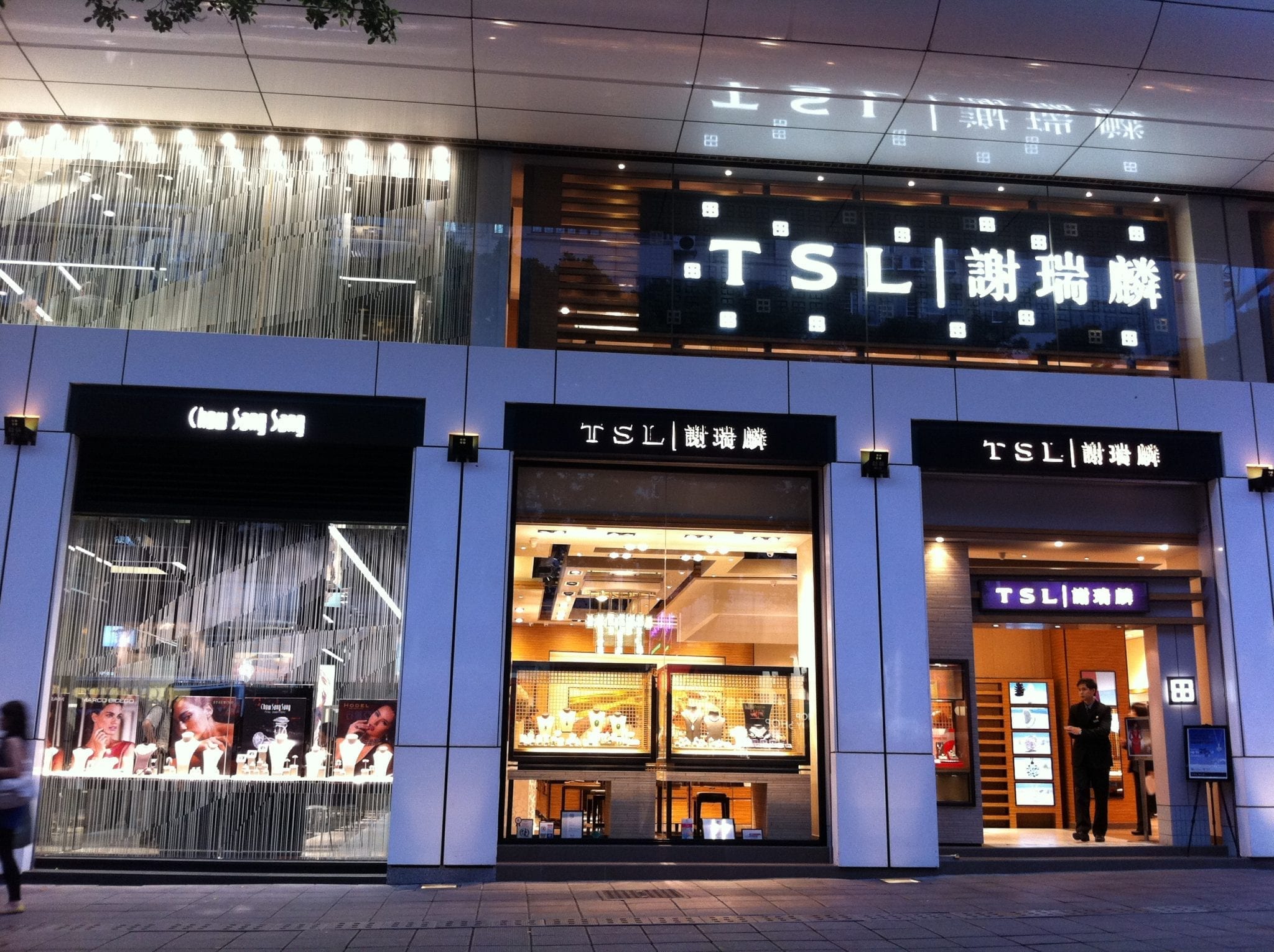
    Tse Sui Luen Jewellery sales and profit both rose in the first half year – but the company has tempered the good news by expressing concerns about the impact of the US-Sino trade war. Chairwoman Annie Yau said in a stock exchange filing that the improved retail sentiment in Hong Kong since September last year due to increased numbers of mainland tourists and growing consumption appetite of local customers, the city’s retail market has continued to progress “in an L-shape”.

    “However, the recent outbreak and escalation of trade dispute between China and the US has cast some doubts on the economic outlook for both the global and local economies going forward. One consequence has been the devaluation of Renminbi during the period, which could bring certain influence to our business in Hong Kong and Mainland China during the remainder of this financial year.

    “While it is still too early to conclude the actual impact on the group’s performance, we will continue to take a cautiously optimistic approach in our major operating regions, namely Hong Kong and Mainland China,” said Lau.

    Tse Sui Luen Jewellery sales increased by 10.2 per cent to HK$1.91 billion in the six months to July (the company has changed its financial year to September, so comparative figures are based on the six months to August 31 last year).

    Profit attributable to owners of the company increased by 38.9 per cent to $24.3 million.

    Sales in Hong Kong and Macau rose by 15.3 per cent during the half year, while same-store sales growth for all businesses in the territories rose 14.8 per cent. Retail rentals in Hong Kong remained static and “at a more reasonable level than that experienced in past years”, allowing the company expand its retail business in the city and enlarge the shop area of some of its existing stores, including those in Times Square in Causeway Bay and Plaza Hollywood in Diamond Hill.

    “We will continue to identify other suitable high-traffic shopping arcades and on-street stores in order to further penetrate tourist and residential precincts as applicable,” said Lau. “Nevertheless, the ongoing manpower shortage situation in Hong Kong remains a concern in setting the pace of expansion. In respect to Macau, due to a steady increase in tourists from Mainland China and their spending powers, our business in Macau achieved an increase of 8.7 per cent in turnover during the period.”

    In Mainland China, where its self-owned stores account for 37.3 per cent of Tse Sui Luen Jewellery sales, sales rose 4.2 per cent, but fell 3.5 per cent on a same-store basis. The company is expanding its network of franchised stores, adding 25 during the period taking the number to 207. After adding 197 self-run stores, Tse Sui Luen now has 404 outlets on the mainland.

    In Malaysia, Tse Sui Luen has five stores, including the latest to open in Genting. Sales rose 13.9 per cent.

  • Chow Tai Fook sales rises

    Chow Tai Fook sales rises

    Chow Tai Fook sales soared 25 per cent in Hong Kong and Macau in the September quarter.  On the mainland, sales rose by a solid 15 per cent. Same-store sales rose 23 per cent in Hong Kong and Macau and by 6 per cent on the mainland, according to a stock exchange filing by the company.

    But same-store volume growth told a different story: down 2 per cent in Hong Kong and Macau and up 1 per cent on the mainland, reflecting weaker gold prices which correspondingly drove more customers into stores.

    Chow Tai Fook’s sales of gold products grew by 41 per cent in Hong Kong and Macau and by 11 per cent in Mainland China

    Chairman, Dr Henry Kar-Shun, described the Hong Kong and Macau market growth as “impressive” during the quarter, “benefitting from buoyant consumer spending and resilient mainland visitation”.

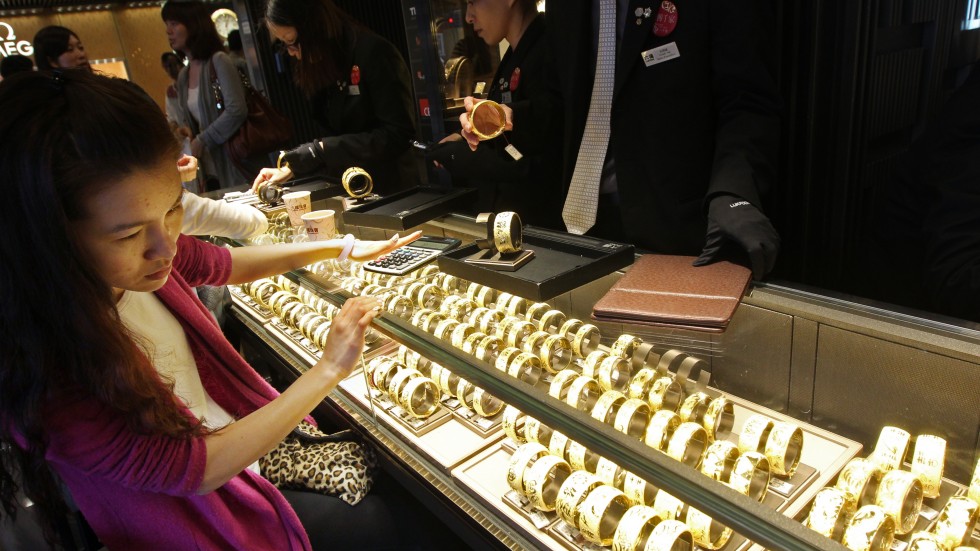
    He said the same-store sales performance of gold products in both markets was driven by the increase in weight per piece sold. The company’s same-store average sale value on the mainland was HK$4000 compared to $3600 in the preceding quarter, while in Hong Kong and Macau, it rose from $7100 to $8500.

    The average international gold price declined by 5 per cent year on year during the quarter to September 30.

    Chow Tai Fook opened a net 162 points of sale in Mainland China during the quarter, which

    included 158 new Chow Tai Fook Jewellery spaces, three SoInLove spaces and one Chow Tai Fook T Mark space.

    In Hong Kong, Macau and other markets, the group opened one Hearts On Fire space and closed two CTF Watch stores in Hong Kong, and opened one Chow Tai Fook Jewellery space in South Korea. As at September 30 the company had 2822 points of sale globally.

  • Easing price of gold gives Luk Fook sales some shine

    Easing price of gold gives Luk Fook sales some shine

    Luk Fook achieved same-store sales growth of 14 per cent in its latest quarter, thanks to lower gold prices, good market sentiment and a successful sales strategy. In a note to shareholders, chairman and CEO Wai Sheung Wong said same-store sales of gold products rose by 23 per cent and of gem-set jewellery by 5 per cent.

    Luk Fook Hong Kong and Macau sales led the way, rising 17 per cent, with gold products up 30 per cent, during the three months to September 30.

    However, depreciation of the Renminbi led to a higher tendency for customers to purchase lower-value items, resulting in a single-digit drop in the average selling price of gem-set jewellery products.

    The jeweller’s fortunes appear to have endured after the quarter ended.

    “In the first two weeks of October, the growth momentum of Hong Kong and Macau market

    continued, with same-store sales sustained at a double-digit growth. As for the mainland market, because of the large number of outbound travellers during the long holiday period and a high base, same-store sales of self-operated shops recorded a double-digit drop in the first two weeks of October,” said Wong.

    During the quarter, there was a net addition of 57 Lukfook shops on the mainland: 62 more licensed shops and five fewer self-operated shops.

    At the end of the quarter, Luk Fook had 223 self-operated shops, including 151 in Mainland China, 50 in Hong Kong, 11 in Macau and 11 overseas. It had a further 1500 licensed shops on the mainland, one in Cambodia and one in the Philippines, taking the total network to 1725.

  • Gold price swings take shine off Malaysia’s Poh Kong Q3

    Gold price swings take shine off Malaysia’s Poh Kong Q3

    Poh Kong Holdings Bhd’s net profit for the third quarter ended April 30, 2018 fell 41.8% to RM4.31 million from RM7.4 million a year ago, as the fluctuation of gold prices affected the group’s operating profits.

    Revenue, however, increased 17.2% to RM240.44 million compared with RM205.23 million in the previous year’s corresponding quarter due to the increase in demand for gold jewellery and investment products, and additional revenue contribution from new outlets in the current quarter under review.

    For the nine-month period, Poh Kong’s net profit dropped 5% to RM14.48 million from RM15.24 million a year ago, while revenue jumped 18.5% to RM731.35 million compared with RM617.01 million in the corresponding period last year.

    The group is optimistic in maintaining its growth and leading position in Malaysia despite more challenging and competitive conditions in the domestic jewellery market.

    “Notwithstanding uncertainties in the global and regional economies, fundamentals in Malaysia remain resilient, which have enabled corporate and industry players to meet their challenges and business performance.”

    Barring unforeseen circumstances, Poh Kong is confident of its resilience to weather the challenges ahead for financial year ending July 31.

  • Asian buyers unimpressed by gold price dip

    Asian buyers unimpressed by gold price dip

    Physical gold demand lacked vigour in most Asian hubs this week amid a slight dip in prices, while the yellow metal switched to a premium in India for the first time in over 1-1/2 months due to a correction in local rates.

    In India, dealers were charging a premium of up to $1 an ounce over official domestic prices. This compared to a discount of $1 last week as the country celebrated the annual Akshaya Tritiya festival, when buying gold is considered auspicious.

    However, retail demand in India, the second-biggest gold consumer after China, remained subdued.

    “Many retail consumers made purchases last week during the Akshaya Tritiya festival. Now retail buying is weak,” said Daman Prakash Rathod, a director at MNC Bullion, a wholesaler in Chennai.

    In the local market, gold futures were trading at around 31,186 rupees per 10 grams, after rising to 31,620 last week, their highest since August 2016.

    “Jewellers were waiting for a price correction. As prices are falling, they could start replenishing inventory in coming weeks,” said a Mumbai-based dealer with a private bullion-importing bank.

    Meanwhile, physical gold markets remained quiet in most other Asian regions, except for Singapore, which saw a slight pick-up in buying.

    Benchmark spot gold prices were on course for an over 1 percent decline this week, pressured by a thaw in tensions on the Korean peninsula and a stronger dollar as investors looked to riskier assets such as equities.

    In China, premiums ranged between $8 and $9 an ounce over the benchmark, versus $5 to $7 previously.

    “Demand in China is slow, not too much activity,” said Ronald Leung, chief dealer at Lee Cheong Gold Dealers in Hong Kong.

  • India shifts to gold discount but Akshaya Tritya seen reigniting demand

    India shifts to gold discount but Akshaya Tritya seen reigniting demand

    Gold was sold at a discount in India as demand remained subdued for a fourth straight week while buying in the rest of Asia picked up as prices fell for a third consecutive week.”Many consumers are busy in paying advance tax. Since this is last month of the fiscal year, they have to pay taxes by March end,” said Ashok Jain, proprietor of Mumbai-based wholesaler Chenaji Narsinghji.India’s fiscal year runs from April to March.Dealers in India were offering a discount of up to $3 an ounce over official domestic prices, compared with a premium of $2 last week. The domestic price includes a 10 per cent import tax.”Retail demand is very weak.

    Despite the correction in prices, consumers are showing little interest in buying,” said Harshad Ajmera, the proprietor of JJ Gold House, a wholesaler in the eastern Indian city of Kolkata.In the local market, gold was trading at 30,405 rupees per 10 grams, after hitting a 15-month high of 30,839 rupees last month.India’s gold imports in February dropped a quarter from a year ago to 63 tonnes as higher prices curtailed demand in the world’s second-biggest consumer of bullion, provisional data from precious metals consultancy GFMS and bank dealers showed.

    Weddings and Akshay Tritiya festival, when buying gold is considered auspicious, could lift demand in April, Ajmera said.Meanwhile in China, there was some good buying through the mid week, with gold selling at a premium of $6-$8 over benchmark rates this week, down slightly from $8-10 last week.

    Gold prices extended losses into a third session on Friday as the dollar strengthened against the yen on hopes of easing tensions between the United States and North Korea and ahead of U. S. non-farm payroll data later in the day.Benchmark spot gold prices have fallen for a third straight week.

    Premiums of 70 cents to a $1.20 were being charged in Hong Kong last week, while in Singapore, premiums were unchanged at the 80 cent level.”There was a pick up in demand when prices fell below $1,320 last week … There is buying on dips and we expect prices to go down further, which should see some buying,” said Ronald chief dealer at Lee Cheong Gold Dealers in Hong Kong.

    In Japan, premiums were unchanged from last week at 50 cents despite good demand.The demand in Japan was strong due to lower prices in Japanese yen terms, but have started to wane towards the end of the week, a Tokyo-based trader said.

  • Asia gold demand picks up as prices fall

    Asia gold demand picks up as prices fall

    Physical gold demand in Asia picked up towards the end of the week, as a pullback in prices spurred purchases ahead of the Lunar New Year in China and the wedding season in India.

    Spot gold has declined about 1% so far this week and was headed for a second straight weekly drop due to a recovery in the dollar. 

    “Retail buyers are comfortable with the current price range,” said Aditya Pethe, a director at Waman Hari Pethe Jewellers in Mumbai. Local gold prices have declined more than 2% since rising to Rs30,720 per 10 gram last week, the highest since November 9, 2016.

    Dealers were charging a premium of up to $1.5 an ounce yesterday over official domestic prices, down from $2 last week. The domestic price includes a 10% import tax.

    “Demand is not great but the market is still in premium due to limited supplies. Imports were lower last month,” said a Mumbai-based dealer with a private bank. India’s gold imports in January dropped 37% from a year earlier to their lowest in 17 months as buyers postponed purchases in expectation of a cut in the import tax.

    Gold demand in India is likely to remain below its 10-year average for a third year in 2018 as higher taxes and new transparency rules on purchases may cap last year’s rebound in buying, the World Gold Council said on Tuesday.

    In top consumer China, premiums rose to $9-$10 an ounce from $6-$8 last week as demand picked up after prices fell later in the week, traders said.

    In Hong Kong, premiums remained unchanged from last week at between 60 cents and $1 an ounce. Demand in Southeast Asia remained strong ahead of the Chinese New Year that starts from February 16, as dealers stocked up in anticipation of strained supply during the festival week when gold refineries and businesses will be on holidays.

    “Supply-wise, we see some issues… That’s why the market is getting squeezed a bit and premiums are a little higher now,” said Brian Lan, managing director at dealer GoldSilver Central in Singapore.

    “Dealers generally try to get in more inventory during this period to at least get through the one tight week during the Chinese New Year.”

    Premiums for the precious metal in Singapore were slightly higher this week at between 80 cents and $1 an ounce, compared with 60-80 cents last week.

    “There’s no shortage of gold or anything, but it’s because of the festival season and the production schedule,” said Lan.

    In Japan, gold was sold at par after being on discount for the past few weeks, according to a Tokyo-based trader.

    India’s gold imports in January dropped 37% from a year earlier to their lowest in 17 months as buyers postponed purchases in expectation of a cut in the
    import tax.

  • Asia Gold-Price gain keeps buyers at bay; market eyes China holiday boost

    Asia Gold-Price gain keeps buyers at bay; market eyes China holiday boost

    Demand for physical gold remained lacklustre across top Asian centres this week as buyers were put off by a rally in prices, but an approaching Chinese New Year could reignite appeal for the yellow metal.

    Gold prices rose for a third session on Friday to hit their highest since September, with a slump in the U.S. dollar helping drive bullion towards its fifth straight weekly gain.

    High prices are weighing on physical demand for gold, but demand is expected to rise ahead of the Chinese New Year, according to Brian Lan, managing director at dealer GoldSilver Central in Singapore.

    In top consumer China, the range for premiums broadened to about $5-$8 an ounce from $6-$7 last week.

    The Chinese New Year holiday will kick in by the middle of next month.

    There is not too much demand currently and if prices come down to the $1,300 level, demand and premiums will increase, said Ronald Leung, chief dealer at Lee Cheong Gold Dealers in Hong Kong.

    Premiums of 60-80 cents an ounce were being charged over the benchmark in Singapore this week, while in Hong Kong, premiums ranged between 60 cents and $1.20, against 70 cents previously.

    Demand remained subdued in India, the world’s second largest consumer of the metal, as well, since jewellers and retail buyers were postponing purchases due to a rally in local prices to the highest level in 1-1/2 months.

    Jewellers need to buy gold for the next month’s jewellery exhibition, but they are postponing purchases due to the price rise, said Mukesh Kothari, director at bullion dealer RiddiSiddhi Bullions in Mumbai.

    “They will wait for a week or so for price correction. Then they have to make purchases.”

    Local gold prices jumped to 29,550 rupees per 10 grams, the highest level since Nov. 20, 2017.

    Dealers in India were offering a discount of up to $2 an ounce this week over official domestic prices, unchanged from last week. The domestic price includes a 10 percent import tax.

    Jewellers were keeping a lower inventory as some people are speculating the government will reduce import duty in the budget on Feb. 1, said a Mumbai-based dealer with a private bank.

    India’s gold imports surged 67 percent in 2017 from the previous year to 855 tonnes, provisional data from precious metals consultancy GFMS showed.

    Meanwhile, in Japan, public selling volumes rose, causing sellers to keep offering discounts of 50 cents, unchanged from the previous week. (Reporting by Nithin Prasad in Bengaluru, editing by David Evans)r

  • Demand for gold in China lifts profit at world’s top jeweller

    Demand for gold in China lifts profit at world’s top jeweller

    Chow Tai Fook Jewellery Group’s profit increased for a second consecutive six-month period as demand for gold products lifted sales at the world’s leading jewellery retailer.

    Shares jumped after the company reported net income rose 46 per cent to HK$1.78 billion (S$308 million) in the six months through September. The stock rose 4.4 per cent to HK$9.19 as of 11.03am in Hong Kong on Wednesday (Nov 22), heading for its biggest two-day gain in a year.

    The results mirror the continued recovery in demand for luxury goods in China after a two-year slump amid a corruption crackdown in the country.

    Sales at the company’s stores are picking up and more customers are also purchasing its products online as the world’s second-largest economy is on track for its first full-year acceleration in seven years.

    Revenue climbed 15 per cent to HK$24.8 billion, the Hong Kong-based company said on Tuesday. Retail sales of Chow Tai Fook in mainland China increased 16 per cent, and 13 per cent in Hong Kong and Macau. Growth momentum was fuelled by gold products, the company said.

    The current financial year “will be a turning point for our business given the nascent jewellery market recovery”, the company said. “Although the recovery is gradual and mild, the industry is expected to return to a stable yet sustainable growth.”

    The retailer expanded the number of outlets in mainland China to 2,358 at the end of September. It will continue the expansion “in view of the improving general consumer sentiment, coupled with the rising opportunities from the development of shopping malls in the region”, Chow Tai Fook said.

    In Hong Kong and Macau, the company will optimise outlets in tourist centres and selectively open stores in residential neighbourhoods.

    The company expects its total rent cost declining 15 per cent in the current financial year, finance director Hamilton Cheng said at a press briefing in Hong Kong on Tuesday after the results.

    Demand for jewellery, watches and clocks, and valuable gifts has been picking up. Sales of these products in Hong Kong rose 4.3 per cent this year through September, compared with a 17 per cent plunge in all of 2016.

    Luxury-watch retailer Hengdeli Holdings said this month that it is boosting orders for the upcoming Chinese New Year, expecting stronger demand from shoppers in Hong Kong.

    Tourists from mainland China, who account for more than three quarters of arrivals to Hong Kong, grew in the nine months through September.

    With more Chinese tourists likely to travel to Hong Kong next year as the yuan strengthens against the Hong Kong dollar, retailers are poised to benefit from the rise in store sales and falling rents, according to Ms Catherine Lim, an analyst at Bloomberg Intelligence.

  • Degussa GoldHandel exits Singapore after two years

    Degussa GoldHandel exits Singapore after two years

    Two years after opening its first precious metals store in Asia, on Orchard Road, German company Degussa GoldHandel has decided to close it at the end of the month.

    Its website carried the surprise one-sentence announcement.

    When it opened the branch in October 2015 as part of an international expansion strategy, the company said it saw Singapore as an “ideal market”.

    Near Dhoby Ghaut MRT station, the 93sqm Degussa Singapore store was run by Degussa Precious Metals Asia, offering branded precious-metal bars, coins and collectibles, plus safety deposit boxes and other secure storage.

    Degussa GoldHandel has 10 bullion product stores in Germany as well as branches in Spain and Switzerland.

    Degussa Precious Metal Asia last year had a net loss of S$2.8 million (US$2 million) on revenues of $59 million. At the same time, Degussa Singapore’s total liabilities exceeded total assets by $4.35 million.

    World Gold Council (WGC) data shows overall gold demand in Singapore this year totalled 17.1 tonnes, compared to 18.1 tonnes last year, while the demand for gold bullion has dropped to five tonnes from 5.9 tonnes.

  • Puregold Price Club enters Western Visayas

    Puregold Price Club enters Western Visayas

    Puregold Price Club has bought five supermarkets in Roxas City, its first move into the Western Visayas.

    This takes the group’s nationwide store network to 313. The cost of the acquisitions has not been disclosed.

    Puregold has been expanding outside Luzon with construction of its second store in Leyte expected to finish next month.