Tag: gold

  • Asian buyers unimpressed by gold price dip

    Asian buyers unimpressed by gold price dip

    Physical gold demand lacked vigour in most Asian hubs this week amid a slight dip in prices, while the yellow metal switched to a premium in India for the first time in over 1-1/2 months due to a correction in local rates.

    In India, dealers were charging a premium of up to $1 an ounce over official domestic prices. This compared to a discount of $1 last week as the country celebrated the annual Akshaya Tritiya festival, when buying gold is considered auspicious.

    However, retail demand in India, the second-biggest gold consumer after China, remained subdued.

    “Many retail consumers made purchases last week during the Akshaya Tritiya festival. Now retail buying is weak,” said Daman Prakash Rathod, a director at MNC Bullion, a wholesaler in Chennai.

    In the local market, gold futures were trading at around 31,186 rupees per 10 grams, after rising to 31,620 last week, their highest since August 2016.

    “Jewellers were waiting for a price correction. As prices are falling, they could start replenishing inventory in coming weeks,” said a Mumbai-based dealer with a private bullion-importing bank.

    Meanwhile, physical gold markets remained quiet in most other Asian regions, except for Singapore, which saw a slight pick-up in buying.

    Benchmark spot gold prices were on course for an over 1 percent decline this week, pressured by a thaw in tensions on the Korean peninsula and a stronger dollar as investors looked to riskier assets such as equities.

    In China, premiums ranged between $8 and $9 an ounce over the benchmark, versus $5 to $7 previously.

    “Demand in China is slow, not too much activity,” said Ronald Leung, chief dealer at Lee Cheong Gold Dealers in Hong Kong.

  • India shifts to gold discount but Akshaya Tritya seen reigniting demand

    India shifts to gold discount but Akshaya Tritya seen reigniting demand

    Gold was sold at a discount in India as demand remained subdued for a fourth straight week while buying in the rest of Asia picked up as prices fell for a third consecutive week.”Many consumers are busy in paying advance tax. Since this is last month of the fiscal year, they have to pay taxes by March end,” said Ashok Jain, proprietor of Mumbai-based wholesaler Chenaji Narsinghji.India’s fiscal year runs from April to March.Dealers in India were offering a discount of up to $3 an ounce over official domestic prices, compared with a premium of $2 last week. The domestic price includes a 10 per cent import tax.”Retail demand is very weak.

    Despite the correction in prices, consumers are showing little interest in buying,” said Harshad Ajmera, the proprietor of JJ Gold House, a wholesaler in the eastern Indian city of Kolkata.In the local market, gold was trading at 30,405 rupees per 10 grams, after hitting a 15-month high of 30,839 rupees last month.India’s gold imports in February dropped a quarter from a year ago to 63 tonnes as higher prices curtailed demand in the world’s second-biggest consumer of bullion, provisional data from precious metals consultancy GFMS and bank dealers showed.

    Weddings and Akshay Tritiya festival, when buying gold is considered auspicious, could lift demand in April, Ajmera said.Meanwhile in China, there was some good buying through the mid week, with gold selling at a premium of $6-$8 over benchmark rates this week, down slightly from $8-10 last week.

    Gold prices extended losses into a third session on Friday as the dollar strengthened against the yen on hopes of easing tensions between the United States and North Korea and ahead of U. S. non-farm payroll data later in the day.Benchmark spot gold prices have fallen for a third straight week.

    Premiums of 70 cents to a $1.20 were being charged in Hong Kong last week, while in Singapore, premiums were unchanged at the 80 cent level.”There was a pick up in demand when prices fell below $1,320 last week … There is buying on dips and we expect prices to go down further, which should see some buying,” said Ronald chief dealer at Lee Cheong Gold Dealers in Hong Kong.

    In Japan, premiums were unchanged from last week at 50 cents despite good demand.The demand in Japan was strong due to lower prices in Japanese yen terms, but have started to wane towards the end of the week, a Tokyo-based trader said.

  • Asia gold demand picks up as prices fall

    Asia gold demand picks up as prices fall

    Physical gold demand in Asia picked up towards the end of the week, as a pullback in prices spurred purchases ahead of the Lunar New Year in China and the wedding season in India.

    Spot gold has declined about 1% so far this week and was headed for a second straight weekly drop due to a recovery in the dollar. 

    “Retail buyers are comfortable with the current price range,” said Aditya Pethe, a director at Waman Hari Pethe Jewellers in Mumbai. Local gold prices have declined more than 2% since rising to Rs30,720 per 10 gram last week, the highest since November 9, 2016.

    Dealers were charging a premium of up to $1.5 an ounce yesterday over official domestic prices, down from $2 last week. The domestic price includes a 10% import tax.

    “Demand is not great but the market is still in premium due to limited supplies. Imports were lower last month,” said a Mumbai-based dealer with a private bank. India’s gold imports in January dropped 37% from a year earlier to their lowest in 17 months as buyers postponed purchases in expectation of a cut in the import tax.

    Gold demand in India is likely to remain below its 10-year average for a third year in 2018 as higher taxes and new transparency rules on purchases may cap last year’s rebound in buying, the World Gold Council said on Tuesday.

    In top consumer China, premiums rose to $9-$10 an ounce from $6-$8 last week as demand picked up after prices fell later in the week, traders said.

    In Hong Kong, premiums remained unchanged from last week at between 60 cents and $1 an ounce. Demand in Southeast Asia remained strong ahead of the Chinese New Year that starts from February 16, as dealers stocked up in anticipation of strained supply during the festival week when gold refineries and businesses will be on holidays.

    “Supply-wise, we see some issues… That’s why the market is getting squeezed a bit and premiums are a little higher now,” said Brian Lan, managing director at dealer GoldSilver Central in Singapore.

    “Dealers generally try to get in more inventory during this period to at least get through the one tight week during the Chinese New Year.”

    Premiums for the precious metal in Singapore were slightly higher this week at between 80 cents and $1 an ounce, compared with 60-80 cents last week.

    “There’s no shortage of gold or anything, but it’s because of the festival season and the production schedule,” said Lan.

    In Japan, gold was sold at par after being on discount for the past few weeks, according to a Tokyo-based trader.

    India’s gold imports in January dropped 37% from a year earlier to their lowest in 17 months as buyers postponed purchases in expectation of a cut in the
    import tax.

  • Asia Gold-Price gain keeps buyers at bay; market eyes China holiday boost

    Asia Gold-Price gain keeps buyers at bay; market eyes China holiday boost

    Demand for physical gold remained lacklustre across top Asian centres this week as buyers were put off by a rally in prices, but an approaching Chinese New Year could reignite appeal for the yellow metal.

    Gold prices rose for a third session on Friday to hit their highest since September, with a slump in the U.S. dollar helping drive bullion towards its fifth straight weekly gain.

    High prices are weighing on physical demand for gold, but demand is expected to rise ahead of the Chinese New Year, according to Brian Lan, managing director at dealer GoldSilver Central in Singapore.

    In top consumer China, the range for premiums broadened to about $5-$8 an ounce from $6-$7 last week.

    The Chinese New Year holiday will kick in by the middle of next month.

    There is not too much demand currently and if prices come down to the $1,300 level, demand and premiums will increase, said Ronald Leung, chief dealer at Lee Cheong Gold Dealers in Hong Kong.

    Premiums of 60-80 cents an ounce were being charged over the benchmark in Singapore this week, while in Hong Kong, premiums ranged between 60 cents and $1.20, against 70 cents previously.

    Demand remained subdued in India, the world’s second largest consumer of the metal, as well, since jewellers and retail buyers were postponing purchases due to a rally in local prices to the highest level in 1-1/2 months.

    Jewellers need to buy gold for the next month’s jewellery exhibition, but they are postponing purchases due to the price rise, said Mukesh Kothari, director at bullion dealer RiddiSiddhi Bullions in Mumbai.

    “They will wait for a week or so for price correction. Then they have to make purchases.”

    Local gold prices jumped to 29,550 rupees per 10 grams, the highest level since Nov. 20, 2017.

    Dealers in India were offering a discount of up to $2 an ounce this week over official domestic prices, unchanged from last week. The domestic price includes a 10 percent import tax.

    Jewellers were keeping a lower inventory as some people are speculating the government will reduce import duty in the budget on Feb. 1, said a Mumbai-based dealer with a private bank.

    India’s gold imports surged 67 percent in 2017 from the previous year to 855 tonnes, provisional data from precious metals consultancy GFMS showed.

    Meanwhile, in Japan, public selling volumes rose, causing sellers to keep offering discounts of 50 cents, unchanged from the previous week. (Reporting by Nithin Prasad in Bengaluru, editing by David Evans)r

  • Demand for gold in China lifts profit at world’s top jeweller

    Demand for gold in China lifts profit at world’s top jeweller

    Chow Tai Fook Jewellery Group’s profit increased for a second consecutive six-month period as demand for gold products lifted sales at the world’s leading jewellery retailer.

    Shares jumped after the company reported net income rose 46 per cent to HK$1.78 billion (S$308 million) in the six months through September. The stock rose 4.4 per cent to HK$9.19 as of 11.03am in Hong Kong on Wednesday (Nov 22), heading for its biggest two-day gain in a year.

    The results mirror the continued recovery in demand for luxury goods in China after a two-year slump amid a corruption crackdown in the country.

    Sales at the company’s stores are picking up and more customers are also purchasing its products online as the world’s second-largest economy is on track for its first full-year acceleration in seven years.

    Revenue climbed 15 per cent to HK$24.8 billion, the Hong Kong-based company said on Tuesday. Retail sales of Chow Tai Fook in mainland China increased 16 per cent, and 13 per cent in Hong Kong and Macau. Growth momentum was fuelled by gold products, the company said.

    The current financial year “will be a turning point for our business given the nascent jewellery market recovery”, the company said. “Although the recovery is gradual and mild, the industry is expected to return to a stable yet sustainable growth.”

    The retailer expanded the number of outlets in mainland China to 2,358 at the end of September. It will continue the expansion “in view of the improving general consumer sentiment, coupled with the rising opportunities from the development of shopping malls in the region”, Chow Tai Fook said.

    In Hong Kong and Macau, the company will optimise outlets in tourist centres and selectively open stores in residential neighbourhoods.

    The company expects its total rent cost declining 15 per cent in the current financial year, finance director Hamilton Cheng said at a press briefing in Hong Kong on Tuesday after the results.

    Demand for jewellery, watches and clocks, and valuable gifts has been picking up. Sales of these products in Hong Kong rose 4.3 per cent this year through September, compared with a 17 per cent plunge in all of 2016.

    Luxury-watch retailer Hengdeli Holdings said this month that it is boosting orders for the upcoming Chinese New Year, expecting stronger demand from shoppers in Hong Kong.

    Tourists from mainland China, who account for more than three quarters of arrivals to Hong Kong, grew in the nine months through September.

    With more Chinese tourists likely to travel to Hong Kong next year as the yuan strengthens against the Hong Kong dollar, retailers are poised to benefit from the rise in store sales and falling rents, according to Ms Catherine Lim, an analyst at Bloomberg Intelligence.

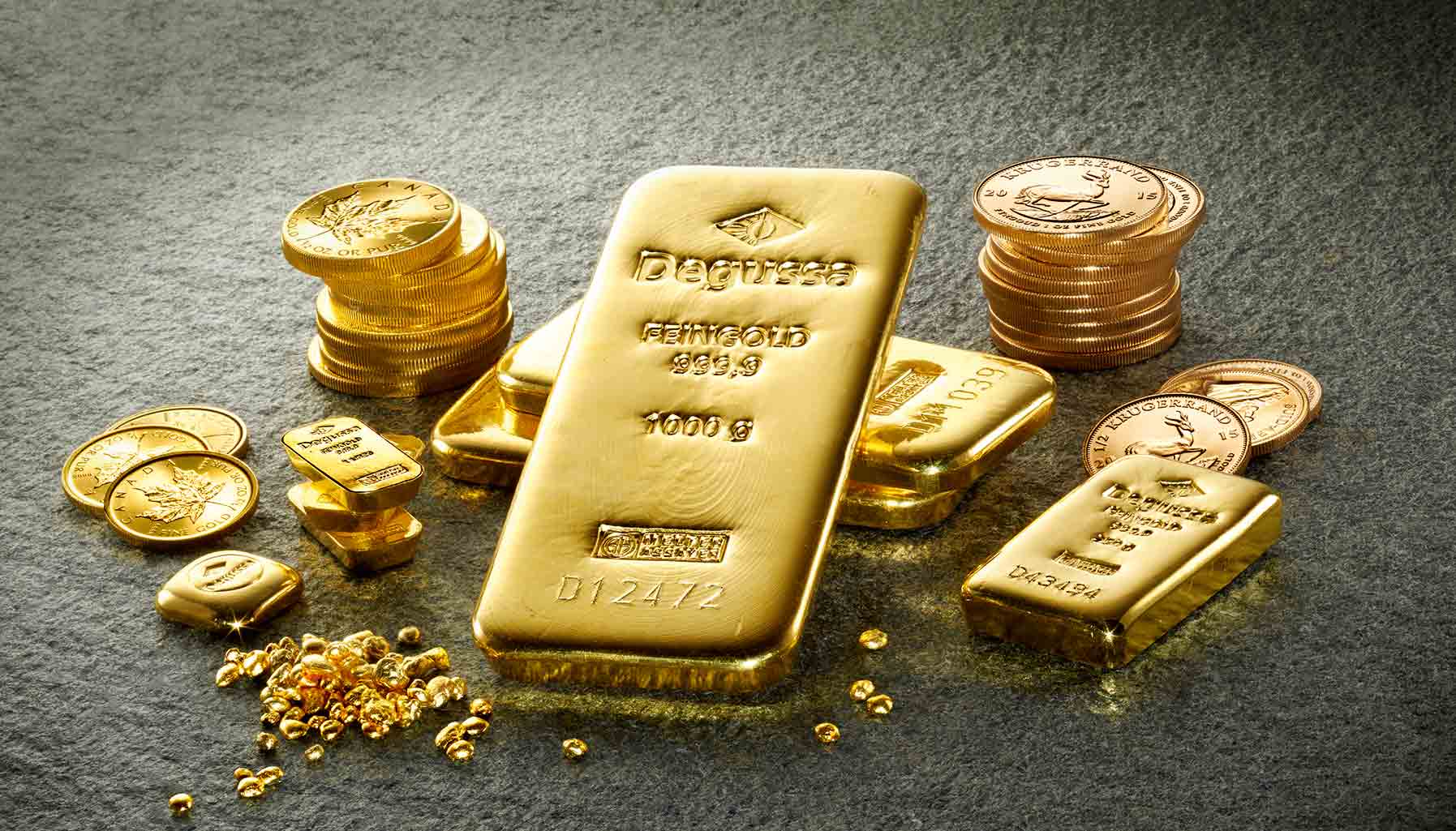
  • Degussa GoldHandel exits Singapore after two years

    Degussa GoldHandel exits Singapore after two years

    Two years after opening its first precious metals store in Asia, on Orchard Road, German company Degussa GoldHandel has decided to close it at the end of the month.

    Its website carried the surprise one-sentence announcement.

    When it opened the branch in October 2015 as part of an international expansion strategy, the company said it saw Singapore as an “ideal market”.

    Near Dhoby Ghaut MRT station, the 93sqm Degussa Singapore store was run by Degussa Precious Metals Asia, offering branded precious-metal bars, coins and collectibles, plus safety deposit boxes and other secure storage.

    Degussa GoldHandel has 10 bullion product stores in Germany as well as branches in Spain and Switzerland.

    Degussa Precious Metal Asia last year had a net loss of S$2.8 million (US$2 million) on revenues of $59 million. At the same time, Degussa Singapore’s total liabilities exceeded total assets by $4.35 million.

    World Gold Council (WGC) data shows overall gold demand in Singapore this year totalled 17.1 tonnes, compared to 18.1 tonnes last year, while the demand for gold bullion has dropped to five tonnes from 5.9 tonnes.

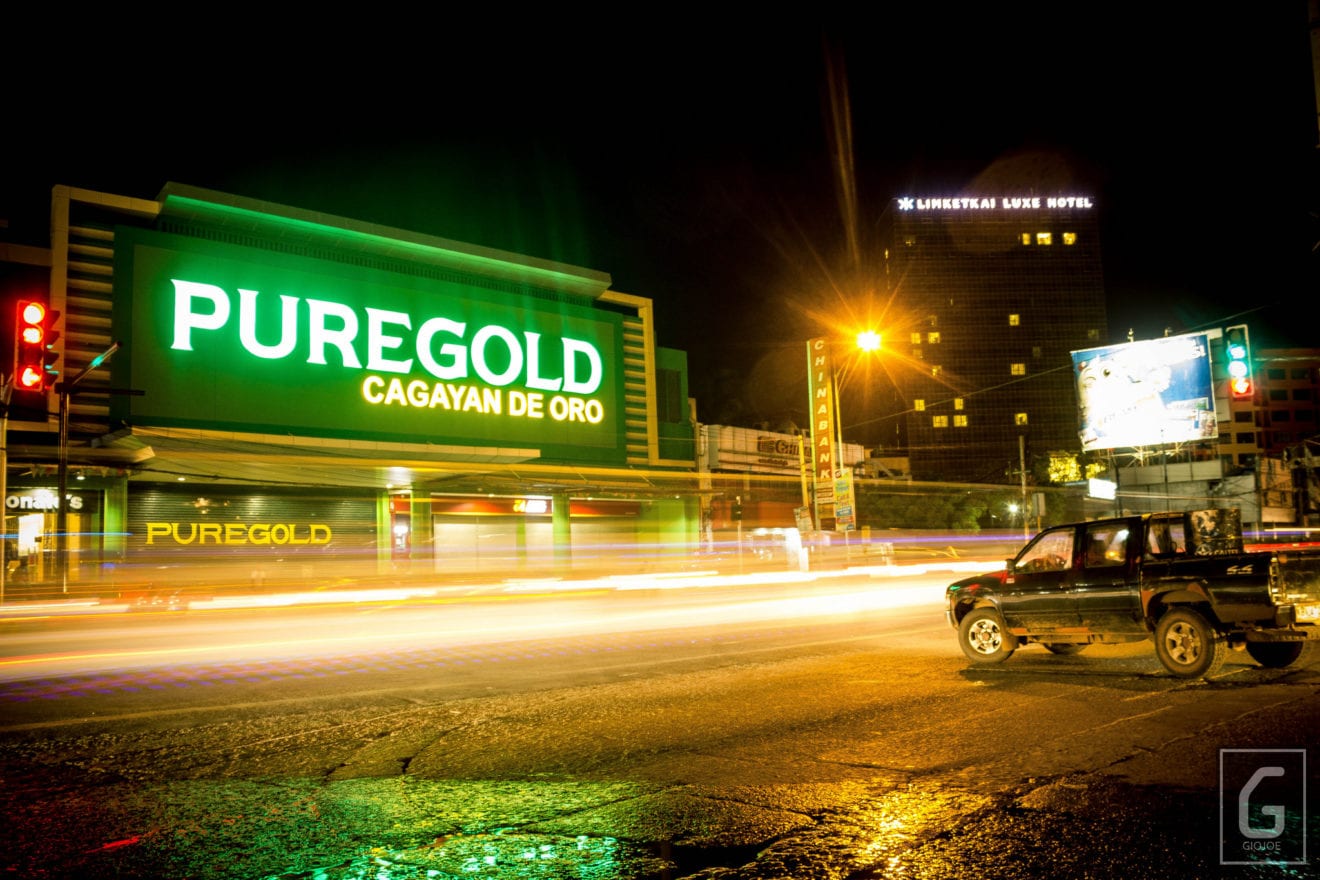
  • Puregold Price Club enters Western Visayas

    Puregold Price Club enters Western Visayas

    Puregold Price Club has bought five supermarkets in Roxas City, its first move into the Western Visayas.

    This takes the group’s nationwide store network to 313. The cost of the acquisitions has not been disclosed.

    Puregold has been expanding outside Luzon with construction of its second store in Leyte expected to finish next month.

  • Domestic gold prices fall sharply

    Domestic gold prices fall sharply

    Gold prices slumped in the Vietnamese market on Tuesday morning. On the Hà Nội market, selling price of one tael, or 1.205 ounces, of State-owned SJC’s gold declined by VNĐ190,000 (US$8.3) to VNĐ36.75 million.

    On the buying side, the price of each tael also fell VNĐ160,000, trading at VNĐ36.53 million.

    In the southern cities of HCM and Cần Thơ and central Đà Nẵng City, one tael of SJC’s gold declined VNĐ250,000 during selling, trading at VNĐ36.73 million. Meanwhile, one tael was being bought at VNĐ36.53 million.

    Bảo Tín Minh Châu Gold Jewellery Company and Doji Gold and Jewellery Corporation (DOJI) listed their selling prices at VNĐ36.68 million and VNĐ36.70 million, respectively. Buying rates of their gold were listed at VNĐ36.62 million and VNĐ36.60 million, respectively.

    On the Asian market, gold is trading at some $1,325 per ounce, equivalent to VNĐ36.36 million per tael.

    On global gold trading website Kitco.com, the price of gold slipped 1.2 per cent per ounce to end at $1,330.24 per ounce, the largest drop since July 3. Last Friday, global gold price hit a yearly peak of $1,357.54 per ounce.

    Thus, the price of one tael of gold in Việt Nam is some VNĐ410,000 higher than that on the world market.

    Global gold prices declined due to an upward trend in the dollar rate following an uptick in risk appetite fuelled by relief that North Korea did not test-fire missiles or conduct nuclear tests over the weekend as some had feared, Reuters reported.

    Assets traded primarily in dollars, such as gold, are very sensitive to currency fluctuations. An increase in the dollar rate will lead to gold becoming more expensive compared with other currencies and the demand for gold also decreases, the website said.

    Meanwhile, the worst-case scenario due to Hurricane Irma’s impact, the most powerful hurricane ever recorded in the Atlantic, looked to have been avoided, easing concerns of investors about the negative impact of the storm on the US economy.

  • Golden sales for Luk Fook’s first quarter

    Golden sales for Luk Fook’s first quarter

    Same-store sales of gold products have restored growth, jewellery retailer Luk Fook says in announcing the performance of its self-run retail shops for the first quarter, to the end of June.

    It says a relatively low base and “an effective strategy of an enhanced offering of good-value-for-money gold products” helped boost SSSG 5 per cent, a progression over the previous quarter.

    SSSG of 32 per cent in China and 10 per cent in Hong Kong/Macau for gold and gemset jewellery led to 23 per cent growth overall for the period, a significant improvement over the previous quarter.

    On the other hand, the SSSG of gemset jewellery products in the Hong Kong/Macau market rose 9 per cent while gold products stayed flat, a turnaround from a declining trend for more than a year. This resulted in a 3 per cent improvement in the market overall.

    While the group closed two shops in Hong Kong during the quarter, the number of shops in Hong Kong and Macau for the whole year is expected to be about the same. During the period, 14 Luk Fook shops were added on the mainland, five of these licensed outlets.

    As at the end of last month, the group had a total 206 self-run shops – 142 in China, 45 in Hong Kong, 10 in Macau and nine overseas. There were also 1301 licensed shops in China and one in Korea, making a total of 1508 outlets worldwide, of which 1443 were on the mainland.

  • Vietnam ranks 8th among world’s top gold consumers

    Vietnam ranks 8th among world’s top gold consumers

    Vietnam ranks eighth among the countries in the world with the highest gold consumption in the first quarter of 2017, shows a recent report by the World Gold Council.

    Vietnam ranks eighth among the countries in the world with the highest gold consumption in the first quarter of 2017.

    As per the report, the demand for gold in Vietnam in Q1 was close to 17 tonnes, a slight rise compared to last year.

    In the first quarter, China topped the list, with a total demand of 280 tonnes of gold, an increase of 8 per cent compared to the same period last year. India came second with 123 tonnes.

    Overall, the total global demand for gold touched 1,035 tonnes in the first quarter of this year, an 18 per cent drop against the same period in 2016.

    Vietnam’s gold consumption has declined over the years, from nearly 100 tonnes in 2013 to 58 tonnes in 2016.

  • Chow Tai Fook Shows Long-Awaited Sales Gains

    Chow Tai Fook Shows Long-Awaited Sales Gains

    Chow Tai Fook saw positive retail sales growth in the fiscal fourth quarter, ending a long run of declines at the Hong Kong-based jeweler. Retail sales in mainland China increased 16%, with same-store sales rising 12% during the three months that ended March 31, the company reported Wednesday. Overall retail sales in Hong Kong and Macau grew 1%, and same-store sales rose 4% — the first quarterly increase in three years in Hong Kong and Macaua, Chow Tai Fook said.

    Driving this growth were sales of gold products – up 17% in mainland China and 19% in Hong Kong and Macau – as the jeweler benefited from a 3% rise in gold prices and a higher average weight per gold product sold. Gem-set jewelry sales rose 5% in mainland China, but fell 17% in the municipalities due to a decline in the average selling price: The company had sold a number of big-ticket items in Hong Kong the previous year that it was unable to match during the reporting period, management explained.

    Chow Tai Fook’s ecommerce sales spiked 85% in mainland China, strengthened by its cooperation with existing online platform partners.

    The company, considered the largest jeweler in the Asia Pacific region, operated 2,381 points of sale at the end of March, of which 2,129 were jewelry locations in mainland China. It opened six jewelry points of sale in China and closed two watch locations during the quarter.

  • When a gold retailer starts selling sunglasses

    When a gold retailer starts selling sunglasses

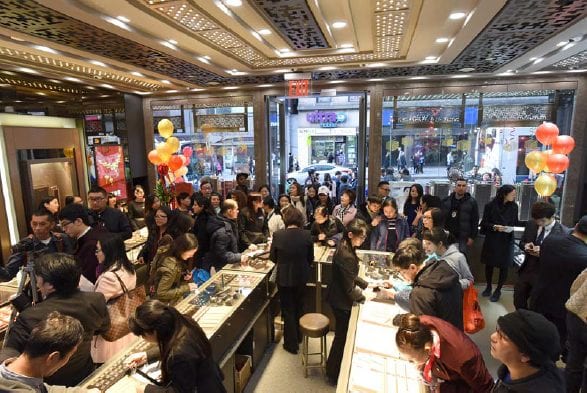
    Warmer than expected Christmas weather appears to be providing little comfort for Hong Kong’s retail sector this year. Business has been cold at many outlets despite a projected rebound in mainland visitor arrivals.

    Otherwise, what can explain a gold shop branching out into sunglass sales and news that the city’s biggest karaoke operator is scaling down its operation?

    Let’s talk about the gold retail chain first.

    I’m referring to Luk Fook Jewellery, which has just opened its first eyewear store — “Vision Gallery”.

    The new venture comes after the company announced last month a 31.5 percent slide in same-store sales for the six months ended September compared to the same period a year ago.

    The eyewear store has been put up in a prime location, next to an H&M outlet, on Dundas Street in Mongkok.

    Luk Fook is said to have signed a two-year lease for the 600-square-foot retail space, offering a monthly rental of HK$128,000.

    Though the rent is just half what the previous tenant, bankrupt home appliance chain DSC, was paying earlier, there is still this question: why an eyewear shop, instead of another gold store?

    Well, the answer lies in economics.

    Chairman Wong Wai-sheung told Ming Pao that a 1,000-square-foot gold shop, in terms of costs, would be equivalent to opening 10 eyewear stores.

    Guess what? Luk Fook, which currently has 47 gold shops in Hong Kong, has earmarked HK$20 million to open 10 eyewear stores next year, with a focus on the middle class.

    Last year, the company had 50 gold shops in the city.

    To boost Christmas sales at the new eyewear outlet, Luk Fook is giving away a pair of pearl earrings to the customers.

    We are not sure if this is a nice cross-selling idea but would reckon this is a defensive move.

    Luk Fook as well as its competitors such as Chow Tai Fook and Tse Sui Luen have seen their same-store sales fall steeply this year, with 20-30 percent slide in many cases.

    In comparison, an eyewear retailer such as Stelux Holdings has seen its sales dip just 5 percent.

    During its interim results, Luk Fook said it will strive to broaden its income sources, enhance the operational efficiency and reduce costs in order to minimize the impact of the business downturn.

    The foray into eyewear retail is part of that strategy.

    Elsewhere in the city, Karaoke operator Neway has also come up with a new way to survive.

    Rather than open a new venture, Neway is leasing the 4,000 square-feet lobby and first floor at its Causeway Bay flagship store CEO Neway, according to Apple Daily.

    By sub-leasing 30 percent of the original floor area, Neway is trying to shore up revenues which have been hit by a decline in night-time singing parties at its karaoke outlets.

    The plan will also help the company save some HK$1.8 million in monthly rental.

    The sub-leasing of Causeway Bay shop space comes after the group shut down an 18,000-square-foot Mongkok facility last year.

    As much as we miss the grand lobby of CEO Neway and the good old days of group singing, we cannot help but admit that Karaoke outlets are now a bit out of fashion after they dominated the social scene for about twenty years.

    This year, one of the best-selling items at the Golden Computer Arcade in Sham Shui Po is a microphone with karaoke function that sells at no more than HK$500.

    The made-in-China product, which connects through bluetooth with iPad and the home stereo system, has become an immediate hit and is now a must-have during family gatherings.

    If you can get the same kick at home, why bother spending money on a karaoke shop? This seems to be the view of a growing number of people.

    Given this reality, Neway may need to find something else to sell other than songs.
  • Gold down in Asia after China industrial output

    Gold down in Asia after China industrial output

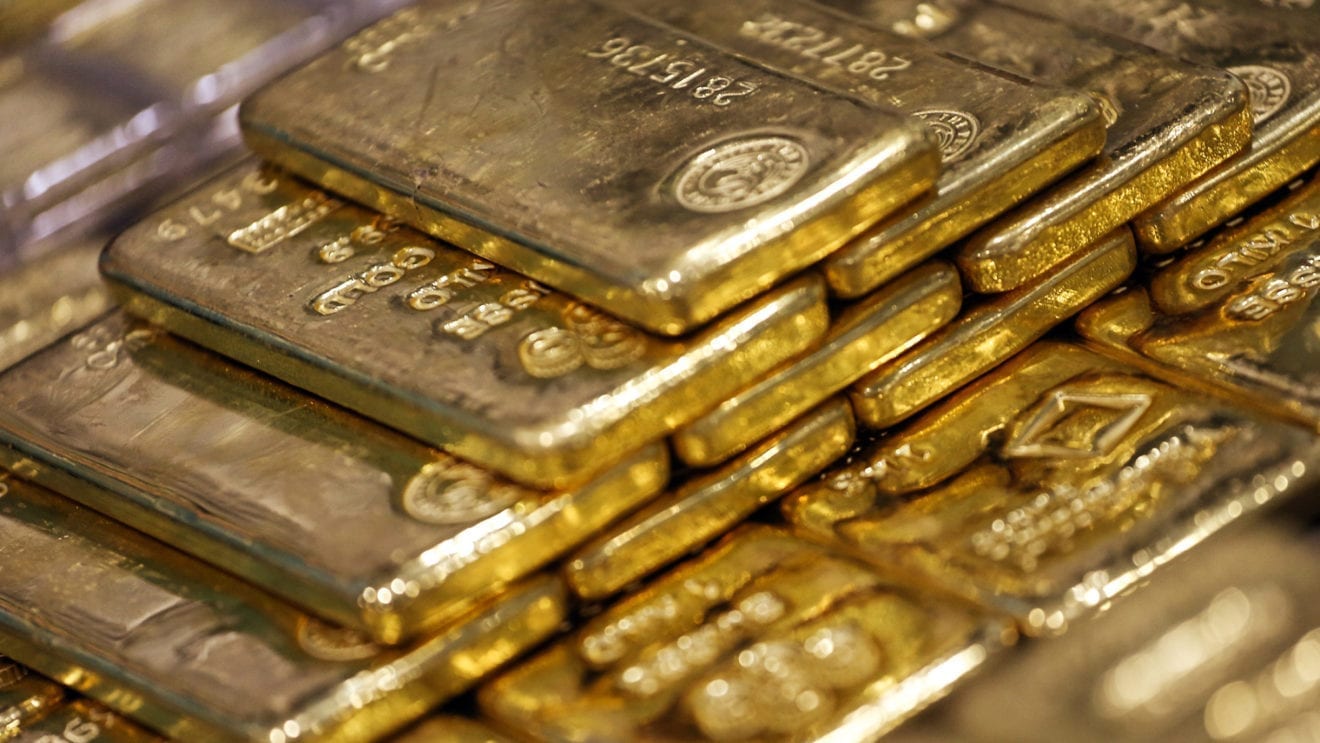
    Gold prices fell in Asia on Monday after China data mildly disappointed and investors infrastructure spending plans by president-elect Donald Trump with the Republican part in control of both house of the U.S. Congress.

    China said fixed asset investment for October rose 8.3%, beating the 8.2% rise seen year-on-year and industrial production gained 6.1%, below the expected 6.2% rise seen and retail sales increased 10.0%, below the 10.7% increase seen.

    Earlier, Japan reported third quarter GDP jumped 0.5% quarter-on-quarter and at a 2.2% pace year-on-year, handily beating expected gains of 0.2% and 0.9% respectively. Separately, comments from Bank of Japan Governor Haruhiko Kuroda on inflation were noted.

    Gold for December delivery on the Comex division of the New York Mercantile Exchange fell 0.55% to $1,217.55 a troy ounce. Also on the Comex, silver futures for December delivery dropped 1.03% to $17.203 a troy ounce, while copper futures jumped 2.31% increase to $2.565 pound.

    Copper was boosted last week after Trump raised the prospect of increased infrastructure spending, while recent signs of strengthening demand in China have also underpinned prices.

    Later this week, investors will be looking to congressional testimony by Fed Chair Janet Yellen on Thursday for fresh indications on whether interest rates will rise next month.
    Last week, gold prices fell to five month lows on Friday as risk appetite recovered following Trump’s victory in the U.S. presidential election, sapping investor demand for safe haven assets.

    Market sentiment was boosted by optimism that increased fiscal spending and tax cuts under a Trump administration will spur economic growth and inflation.

    Gold prices were also pressured lower by the stronger U.S. dollar and ongoing expectations for a Federal Reserve interest rate increase in December.

    Expectations for higher U.S. interest rates remained intact amid optimism that a pick-up in growth will allow the Fed to tighten borrowing costs.

    Investors currently price an 81.1% chance of a rate hike at the Fed’s December meeting; according to federal funds futures tracked Investing.com’s Fed Rate Monitor Tool.

    Gold is sensitive to moves in U.S. rates, which lift the opportunity cost of holding non-yielding assets such as bullion, while boosting the dollar in which it is priced.

  • Rising price of gold leaves hefty dent in jeweller Luk Fook’s sales

    Rising price of gold leaves hefty dent in jeweller Luk Fook’s sales

    Surging gold prices, and a mini gold rush in 2015 have been blamed by leading Hong Kong jewellery retailer Luk Fook Holdings for a sharp fall in sales during its second quarter.

    The retailer which operates over 1,400 retail outlets in mainland China, Hong Kong, Macau, Singapore and North America, saw same store sales decline 37 per cent in the three months to September (its second quarter) on the same period last year, which was weaker than expected, Bank of America Merrill Lynch analyst Tina Long said in a note.

    Much of the decline was due to gold sales, which recorded a 47 per cent fall in same store sales in the second quarter year on year , worse than competitor Chow Tai Fook’s 36 per cent decline.

    Sales of gemsets, items designed using various types of gem stones, fell 14 per cent, better than the 23 per cent drop seen by peers, but started moving into single digit growth in September and October.

    Sales were better in the mainland than in Hong Kong, which still accounts for 75 per cent of its revenue. Mainland sales fell 23 per cent, while combined sales for Hong Kong and Macau fell 37 per cent in the second quarter.

    Luk Fook’s management said in a statement the deterioration in gold sales this year was being compared with what had been a high base in 2015, thanks to the mini gold rush in July and August.

    That had been coupled with “overall sluggish retail sentiment” and the gold price rally in the same period this year.

    Daiwa analyst Jamie Soo noted that Hong-Kong based competitor Chow Tai Fook had released sales performance figures for the same period which showed a “similarly lacklustre performance”.

    Gold prices rallied to a three-year high in July as investors chose “safe haven” assets following Britain’s vote in June to leave the European Union.

    Gold futures were trading at over US$1,370 per ounce in July and August, but have dropped back down to $1,267.

    Both Long and Soo expect things to get brighter for the jewellery retailer, with Soo noting September had seen low single digit growth, mainly driven by an improvement in sales of gemsets.

    “Management also indicated that there has been slight improvement in gemset sales in Hong Kong and Macau,” he said.

    This momentum had continued into China’s national “golden week” holiday in October, and the management has said they believe there were signs of stabilisation, Soo said.

    Long expected a more favourable movement in the gold price and a better-than-expected recovery in consumer sentiment to help push the price objective up.

    “We think that sales bottomed in July, and kept improving thereafter with positive growth for gemsets seen in both September and October in Hong Kong and mainland,” Long said.

    Long estimated this year’s net income to slip from HK$959 million last year to HK$951 million before bouncing up to HK$1,072 million next year, still down on 2015’s HK$1,615 million.

    Long expected the share price to trend upward, helped by lower rental costs for retail outlets, although she lowered her price objective for Luk Fook from HK$21.70 to HK$21.00.

    “Luk Fook would be the biggest beneficiary from the recent upward trend of gold price due to its smallest hedging ratio of 15 per cent to 20 per cent,” she said.

    “We see re-rating more likely as sentiment towards gold stocks improves.”

    But Long warned that there were a number of risks to the rating, including a slowdown in Hong Kong tourist growth and depreciation of the yuan and gold prices.

    Retail sales in Hong Kong plunged 10.5 per cent in August on dwindling visitor numbers – the steepest decline since February, and the 18th consecutive monthly contraction.

    Luk Fook Holdings was trading at HK$20.25 on Monday, while Chow Tai Fook was trading at HK$5.63.

  • Indonesia, Australia Cooperates on Mining Gold, Copper

    Indonesia, Australia Cooperates on Mining Gold, Copper

    National mining company PT. Aneka Tambang (ANTAM) and Australian mining company Newcrest Mining Ltd. are building a partnership in order to explore gold and copper potential in Indonesia.

    A statement released by the Australian Embassy on Sunday, November 6, 2016, mentioned that the collaboration document between both countries was signed by Indonesian Trade Minister Enggartiasto Lukita and Head of the Investment Coordinating Board Thomas Lembong in Sidney.

    Australian Ambassador to Indonesia Paul Grigson, who was present during the document signing, also welcomed the collaboration. “Two-way investment is a form of acknowledgment that both countries’ economics have many potential to offer,” Paul said.

    Indonesia and Australia have decided to raise economic issues in both countries’ bilateral partnership by reviving the Indonesia-Australia Comprehensive Economic Partnership Agreement (IACEPA), according to Grigson.

    “More investment means joint prosperity,” Grigson said, while adding that increasing investments will create new job opportunities for both countries.

    Indonesia-Australia partnership in the gold and copper mining sector has been established since late 2015 in the form of preliminary studies.

    The preliminary studies were later followed up with a joint exploration in Indonesia.