Tag: hamburger

  • McDonald’s Singapore: Lock up your phone

    McDonald’s Singapore: Lock up your phone

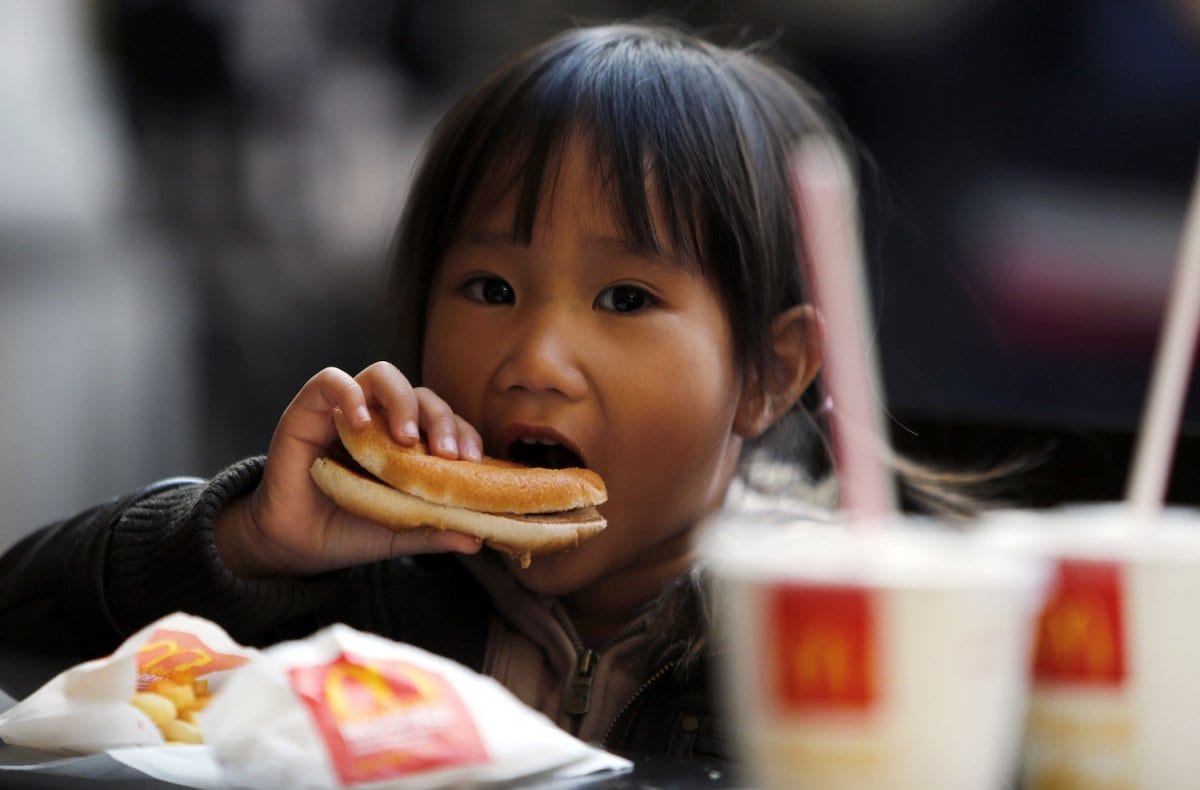
    In a bid to help families reconnect, McDonald’s Singapore has introduced a locker for mobile phones at its Marine Cove flagship.

    Its new“Family Playdate” concept includes table service with the aim of promoting human interaction.

    McDonald’s says a survey it ran shows that more than 90 per cent of parents and children use their mobile devices when they’re together, despite most parents wanting to be “more disciplined in staying away from digital distractions during family time”.

    Rather than go hi-tech, the 100 clear lockers have physical keys, and staff members will remind customers to take their phones when they leave.

    Staff members will also act as “guest experience leaders”, says the fast-food company. They will “engage with families”. When ordering at a self-service kiosk, customers can select the table-service option at no extra charge
    A McDonald’s Singapore says the restaurant will gather feedback on the initiatives to decide whether or not to expand them to other outlets.

  • Jollibee Foods knocking on door in UK

    Jollibee Foods knocking on door in UK

    Jollibee Foods may open its first store in the UK by next year, says British Ambassador to the Philippines Daniel Pruce.

    This followed him visiting Jollibee’s 1000th branch in a “show of support” for plans by the Philippines’ largest fast-food company to expand to the UK, where tens of thousands of Filipinos are living.

    The Philippine company has already sealed a deal with Singapore’s Blackbird Holdings which will see it enter continental Europe, starting with Italy.

    Jollibee is also reportedly in talks to acquire a stake in British-based sandwich and coffee chain Pret-A-Manger.

  • Triple O’s to expand in Hong Kong

    Triple O’s to expand in Hong Kong

    To celebrate its 20th anniversary, Canadian burger chain Triple O’s plans a five-year expansion that includes four more outlets in Hong Kong.

    Created by restaurant chain White Spot in 1997, Triple O’s already has six locations in Hong Kong since arriving in 2004, and this month will launch in Macau.

    “We are looking for more growth in all of our markets,” says White Spot/Triple O’s president Warren Erhart. “Asia has some of our top locations. Our restaurants in Pacific Place and Shatin do more sales on a per-unit basis than any of our stores in British Columbia.”

    The brand’s 67 locations include two in Singapore.

    While other US fast-food chains adapt their offering for international market, Triple O’s has done little to change the original Canadian taste for Hong Kong consumers, says Triple O’s owner/franchisee Cynthia Suen. She says one of the key points that led her to bring the chain to Hong Kong was the familiarity of the product, driven by the heavy flow of Hong Kong residents travelling and moving to Vancouver since the 1970s and 1980s.

    Suen says she might consider taking Triple O’s to China, with the blessings of Erhart and White Spot owner Peter Toigo. It depends on the success of the Macau outlet.

  • Fast food outpaced in new delivery boom

    Fast food outpaced in new delivery boom

    Restaurants are cashing in on the food delivery boom driven by the likes of Deliveroo and UberEATS, as the fast food industry proves slow to adapt.

    Financial researcher IBISWorld forecasts revenue growth of two per cent for the restaurant industry in 2017/18, with the combined takings of 28,252 businesses to reach $21 billion.

    IBISWorld expects that growth to reach 5.8 per cent in 2018/19, and revenue to surpass $30 billion in 2021/22.

    Revenue for fast food establishments is forecast to rise by only 1.2 per cent in 2017/18, to $19.5 billion, while growth for cafes is forecast to be 0.8 per cent, to $8.1 billion.

    Senior IBISWorld analyst Bao Vuong says food delivery apps including UberEATS, Deliveroo, Menulog and Foodora have changed the way time-poor customers dine, and how restaurants are run.

    They allow customers to search beyond cuisine, price or rating, filtering options based on how quickly the food can be delivered, how close a restaurant is to their location, or whether delivery is free.

    Vuong said some businesses have created delivery-only menus, pop-up shops without tables and seating, or separate pick-up counters for delivery drivers to cater to the growing trend.

    The researchers found only a quarter of fast food restaurants have integrated new ordering and delivery platforms, and low revenue growth is a result of their lukewarm response to the innovative business methods.

    McDonalds and KFC secured partnerships with UberEATS and Foodora respectively in June, Vuong said, despite both delivery applications launching in Australia in early 2016.

    Red Rooster also recently appeared on Menulog, moving out of its suburban stronghold to feed customers in inner-city Sydney and Melbourne for the first time.

    The new platforms have also prompted fine dining businesses – 39 per cent of Australia’s restaurants – to lift.

    “Small tweaks such as improved customer service and enhanced ambience through lighting and increased customer interaction with chefs can go a long way towards combating these apps,” Vuong said.

    In addition, hatted eateries including Sake (Sydney, Brisbane, Melbourne), Three Blue Ducks (Sydney) and Esquire (Brisbane) have all launched on UberEATS with scaled-down menus.

    “The outlook for fine dining restaurants is strong because they place a premium on taste, while new ordering and delivery platforms mainly focus on convenience and price,” added Vuong.

  • Burger brand charts big expansion plans

    Burger brand charts big expansion plans

    Gourmet burger brand, Burger Urge, has opened a Sydney office and revealed plans for eastern seaboard expansion, including the roll-out of 37 new restaurants by 2020.

    Burger Urge has announced it will open five new restaurants in the second half of the year, will additional openings along the east coast including Port Macquarie, Toowoomba and Brisbane CBD.

    Sean Carthew, Burger Urge director, said the brand’s expansion plans follow a period of significant restructure and refocus.

    “Like any fast-growing business, we’ve made our fair share of mistakes and have learned a lot,” Carthew said. “Most significantly, we learned that we need to be very careful who we take advice from and who we let into our inner circle.”

    Carthew said part of Burger Urge’s restructure would see the company “return to its roots.”

    “When Burger Urge began 10 years ago, we made absolutely everything from scratch – we made our own patties, we hand-cut the chips, we even made sauces in-house,” he said. “It was the focus on the integrity of our food that generated lines down Brunswick Street every Saturday. It sounds simple, but by returning to our roots, we’ve not only won back the hearts and bellies of our regular customers but attracted a new legion of Burger Urge fans.”

    With its recent menu refresh, Burger Urge is now heading south – physically – in a bid to grow the brand’s national presence.

    “We are proud to have 22 restaurants throughout Queensland but it’s now time to stretch our wings and seek out the next opportunity,” Carthew said.

    The brand has launched a Newcastle restaurant last May and will open its second NSW site in Port Macquarie next month.

  • Designer Julien Macdonald beefs up McDonald’s burger offering

    Designer Julien Macdonald beefs up McDonald’s burger offering

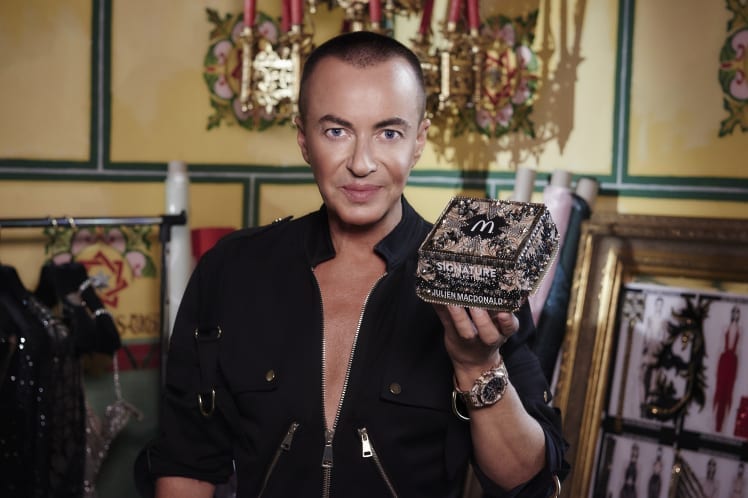
    Fashion designer Julien Macdonald has created a special-edition box for McDonald’s UK new Signature Collection range of “gourmet” burgers, described in a press release as “McDonald’s’ first foray into the world of luxury and fashion”.

    Following a trial in selected restaurants, the range is being released in more than 900 McDonald’s eateries across the UK.

    Unveiled in London, the box has a limited release of 1000, with fans being invited to sign up online if they want one. One special box, customised by Macdonald himself, will be auctioned to raise money for the fast-food chain’s Ronald McDonald House Charities.

    “I drew inspiration from my fashion creations and iconic embellished red-carpet dresses,” says Macdonald, who has dressed such celebrities as Beyoncé, Kylie Jenner, Madonna, Mick Jagger, Puff Daddy, Shirley Bassey and Taylor Swift.

    The result is a gold baroque-style crystal-encrusted box, described as “the perfect packaging for the luxury McDonald’s Signature Collection burger”.

    “It’s a brave and exciting move,” says McDonald’s UK VP of marketing Emily Somers. “Julien Macdonald’s beautifully designed star-studded box complements the Signature Collection perfectly.”

    The box complements the “luxury” positioning of the product as demonstrated by this promotional video which is – well, unlike anything we’ve seen from McDonald’s before…:

    One blogger has commented: “You haven’t enjoyed a burger until you’ve eaten it out of a box which has crystal detailing, embellishment and bespoke digital print.”

    Facebook users have been a little less kind (or ironic), one asking, “And the point of it is exactly what? … Congratulations, you have just polished a turd.”

    Another asked, “Is it April 1st already?”

    Meanwhile, Etihad Airways has given its in-flight safety video a makeover by setting it backstage at one of Macdonald’s runway shows. Models put on oxygen masks to escape a cloud of hairspray, they wear life jackets as if they were the season’s must-have accessory, they buckle up safety belts over embellished couture gowns, and move into brace position as they have their hair done.

    Unveiled during New York Fashion Week, the promotional film will not replace Etihad’s safety video, but will be shown on-board from next month and be used to highlight the airline’s ties to the fashion world (it sponsors 17 fashion weeks and events internationally).

  • Shake Shack to open Hong Kong location

    Shake Shack to open Hong Kong location

    Shake Shack, the burger-and-fries chain founded in New York, will open its first location in Hong Kong next year, setting the stage for a push into the fast-food hotbed of mainland China.

    The restaurant will be opened with licensee Maxim’s Caterers Ltd. and a total of 14 locations are planned in Hong Kong and Macau through 2027, Shake Shack said Wednesday.

    The chain’s upscale burgers and fries will appeal to the population there, and the restaurants will provide a base for eventually going into China, according to Chief Executive Officer Randy Garutti.

    “You’re seeing changing preferences for what was traditional fast food,” he said in an interview. “There’s a continued thirst for great brands and a premium level of food at an approachable price.”

    While about 90 percent to 95 percent of the menu will be the same as in the U.S., there may be more chicken items, said Garutti, who sees opportunities in mainland China, where Maxim’s operates other dining brands including Cheesecake Factory Inc.

    Shake Shack may look to grow overseas as the U.S. market becomes increasingly saturated with restaurants offering fast-food burgers. The company’s same-store sales fell 2.5 percent in the latest quarter, missing analysts’ projections, as cold weather hurt some locations.

    A recent report also found that the chain is suffering from a lack of customer loyalty in the U.S. despite its more upscale image.

    Shares of the company have declined 3 percent this year through Tuesday’s close, while the Standard & Poor’s 500 Restaurants Index has jumped 17 percent.

    China Challenges

    Expanding into China comes with challenges as other fast-food companies have faced supply-chain scandals and anti-Western sentiment there. Last year, Yum! Brands Inc. spun off its China unit to focus on turning around its U.S. business. The owner of KFC and Pizza Hut had struggled to boost sales in China as local competitors offer discounted prices and gain market share.

    Shake Shack already has some locations in Asian countries, including Japan and South Korea, among its 135 restaurants. Still, Garutti said the U.S. is its main avenue for growth.

    Domestic sales will be the “lion’s share” of the business going forward, he said. “We have massive growth ahead here in the states.”

  • Burger King Landside Opens at Airport

    Burger King Landside Opens at Airport

    American global fast food chain, Burger King has opened its third local outlet at the Nadi International Airport yesterday.

    The new outlet known as the “landside” restaurant will be accessible to all customers who visit the airport.

    Burger King initially started its Fiji operations at the Nadi International Airport on November 16, 2015 with the opening of its first outlet which is only accessible to customers departing our shores via the international departures lounge.

    The second outlet was opened at Martintar, Nadi in February last year.

    Burger King Fiji General Manager, Akash Narsey said they’ve worked very closely with Airports Fiji Limited to make sure the new site was delivered on time and the handover was as smooth as possible.

    “Today has been the first day of operation, it has been very positive. We haven’t really advertised to say this is where we are but the number of guests that have come in since we opened at 5.30am this morning, it’s very positive, a lot of locals and those that work around here as well,” Mr. Narsey said.

    With interior designs designed by a New Zealand based company, natural copper brick walls, and furnishing pieces shipped from China and Thailand and world-class standard kitchen fit outs, Mr. Narsey said the construction of the outlet costs about $1million including labour.

    He said the features of the restaurants are mostly similar to the already existing outlets with minor differences which includes the selling of draught beer at the new restaurant.

    The restaurant is open from 5.30am to 10pm daily.

    “It’s not open 24  hours, at the moment it is tied with the flight departures, we will most definitely change those times depending on what our customer demands are,” Mr. Narsey said.

  • A&W to return to Singapore in 2018

    A&W to return to Singapore in 2018

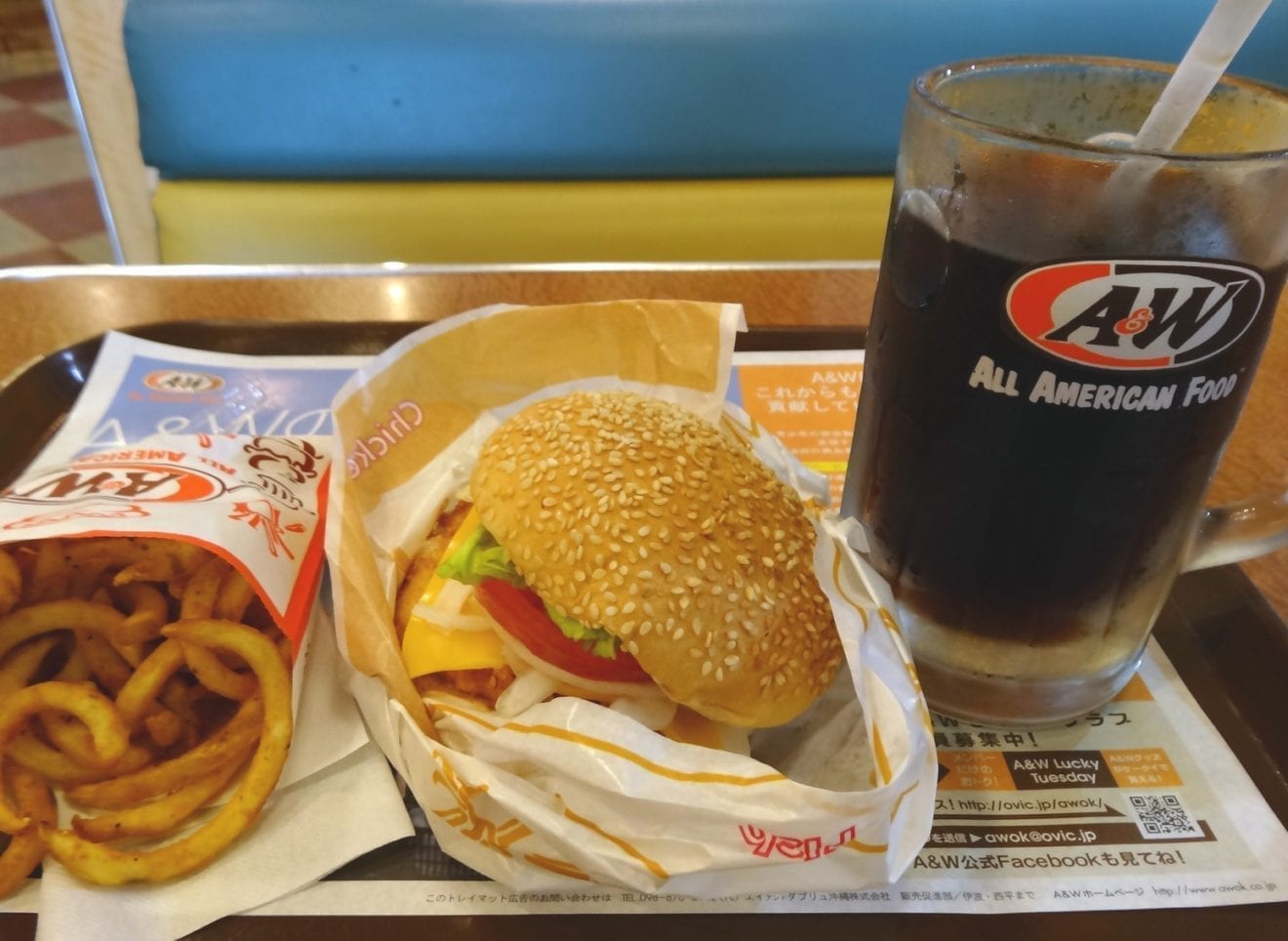
    he American fast-food chain’s root beer float, coney dog and curly fries are making a comeback. American fast-food chain A&W will set up shop in Singapore again, after exiting the market more than 10 years ago.

    A&W CEO Kevin Bazner said that A&W has had an office in Singapore since 2016, and that the company is looking to open 30 to 40 new restaurants a year across Indonesia, Malaysia, Singapore and Thailand.

    The company is currently looking for a retail space for its flagship in Singapore, which is scheduled to open next year. This flagship will also serve as a training store for other Southeast Asia outlets.

    A&W – which stands for “Allen and Wright” – made its debut in Singapore in 1966 at Dunearn Road, and the first A&W drive-through opened in 1970 at Bukit Timah Road.

    The fast-food joint’s hamburgers, hot dogs and root beer soon became hugely popular among Singaporeans and it is believed its success helped pave the way for other fast-food establishments to set up shop in Singapore, including McDonald’s (1979), Kentucky Fried Chicken (1977) and Burger King (1982).

    However, by 2003, A&W faced stiff competition from its competitors and shuttered its remaining outlets in the same year.

  • Burger King GM talks Myanmar expansion plans

    Burger King GM talks Myanmar expansion plans

    Biting into a Burger King in Myanmar for now requires a passport, with the country’s only restaurant located past customs at Yangon International Airport. But franchise operator Minor Food Group is hoping local appetite will merit many more outlets.

    Thai firm Minor Food Group (MFG) opened Myanmar’s first Burger King in Terminal 1 on July 1 – with very little fanfare. There was no press release, no ceremony.

    By comparison, rival fast-food giant KFC opened its first Myanmar branch almost exactly a year earlier, inviting a host of local media and offering free food. Local KFC franchise holder Yoma Strategic also started its operations with a clear plan to open several outlets, first in Yangon and then across Myanmar. The group says it is on track to have 12 KFC restaurants open by March next year.

    MFG, however, only sought approval from the US Burger King company for a single outlet in Yangon International Airport, Prapat Siangjan, the firm’s general manager for Burger King Thailand, said.

    The firm has specialised in running Burger Kings in airports – it started its Thai operations with restaurants at Suvarnabhumi Airport, and its first expansion outside of Thailand was into airports in the Maldives, he said.

    Myanmar’s new international airport Terminal 1 and anticipated tourist growth prompted MFG’s decision to make the country its second overseas location, he added.

    The lack of publicity was down to two factors. Firstly, when the outlet opened in July not all Terminal 1 operations were online, said Mr Siangjan. Only two carriers were using the new space, although more have since moved in. MFG is also entering a new market and wants to make sure its operations are running smoothly and service standards are up to scratch before the official launch, he added.

    A PR announcement and opening in expected due course, he said.

    Mr Siangjan hopes MFG will be able to open many more outlets outside of the airport. But expansion will depend partly on how well the initial branch does, which will help MFG gauge demand. It is likely to be at least a year before the firm decides to expand, he added.

    One issue with the initial location is that many of the customers are likely to be departing tourists, which Mr Siangjan admitted could make it hard to assess local appetite. The prices at the airport outlet – which are denominated in dollars – have also raised eyebrows, with a standard value whopper meal going for US$8.50.

    One potential plan is to open a second Burger King at the domestic terminal next door, which would have prices in kyat and cater more to locals, but negotiations for a second outlet are at a very early stage, he said.

    Applying for permission for the first airport outlet was relatively smooth, he said. MFG applied towards the end of 2015, and received the green light early this year. The Thai firm runs the Yangon airport Burger King without a local joint venture partner, he added.

    Mr Siangjan could not comment on whether the approvals process would be any different for opening an outlet outside of an airport.

    Keeping an eye on the new Myanmar operations should be straightforward, as Yangon is closer to MFG’s head office than some of the outlets it operates in Thai provinces, he said.

    But MFG is not guaranteed to remain the only franchisee authorised to operate Burger King in Myanmar, and Mr Siangjan said MFG has to keep in close contact with Burger King headquarters to make sure they know if a competitor arrives.
  • Jollibee to continue stinging McDonald’s despite labor issues

    Jollibee to continue stinging McDonald’s despite labor issues

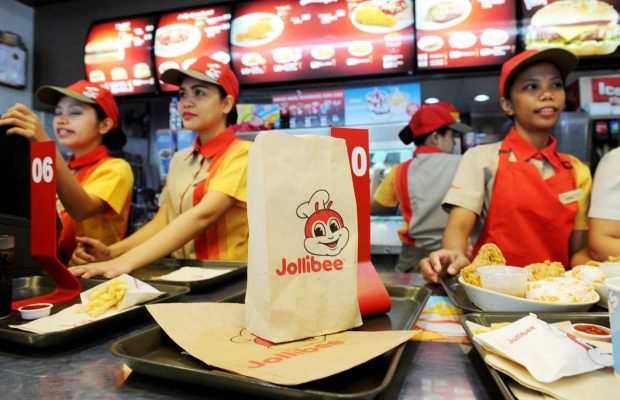
    Jollibee Foods Corporation’s largest brand has been experiencing some financial challenges since July 2016 due to the rising cost of raw materials and contractualization issues in the Philippines. But despite these, the homegrown fast-food chain expects to maintain its lead against rival McDonald’s Philippines, driven by its network expansion and product innovation.

    Jollibee, known for its Chickenjoy fried chicken and sweet spaghetti, told the Philippine Stock Exchange that the brand expects to maintain a “significant lead” over its key competitor in the coming years.

    This was despite two price increases last year due to higher raw material costs and the Philippines’ new regulations on contractualization, which resulted to increased labor expenses.

    “These price increases did not adversely affect consumer purchase volume regardless of income class. Over the past years, the pricing of Jollibee had been at parity with key competitors,” Ysmael Baysa, chief finance officer and corporate information officer of Jollibee, told the local bourse on Wednesday, March 29.

    Baysa said this in reaction to an analyst report from Macquarie, saying that McDonald’s has been closing in on Jollibee in terms of preference and that the new labor rules could affect its leading position in the Philippine market.

    Baysa said Jollibee has been incurring the costs of those steps since the 3rd quarter of 2016.

    Because of this, Jollibee said the cost of labor will be higher in the first half of 2017 versus the same period in 2016. However, the labor cost increase in the 2nd half of 2017 over the same period of 2016 will be at a normal rate.

    At present, Jollibee already has 978 stores nationwide, while McDonald’s has 521 stores.

    David and Goliath

    McDonald’s had said that it plans to open 45 stores this year, while Jollibee said it continues to enjoy higher sales in the Philippines based on its latest financial report.

    Jollibee’s same store sales growth in the Philippines in 2016 stood at 8.3%, driven by higher customer traffic and higher amount of purchases per visit per customer compared with a year ago.

    Moving forward, Jollibee said the growth in its brand in the Philippines will continue at a strong pace, at least sustaining the number of new store openings in the past two years.

    “The Jollibee Group of Companies had faced many challenges in the past. It had emerged stronger from these challenges and its profit recovered quickly. It has one of the most consistent sales and profit growth track records among all public companies in the Philippines, while sustaining one of the highest returns on equity (ROE) at 18% to 22% annually over different economic cycles,” Baysa told the local bourse.

    Overall, Baysa said Jollibee’s share in burgers, fried chicken, and spaghetti “actually increased in 2016 from its key competitor,” which is McDonald’s.

  • Does your fish burger contain mercury-tainted shark meat?

    Does your fish burger contain mercury-tainted shark meat?

    A study of shark meat in Indonesia – the world’s largest shark fishery – has found dangerously high levels of mercury build-up in catches bound for overseas fish markets.

    Research conducted at the Seafood Inspection Laboratory in Bali found that mercury concentrations in processed, export-ready shark tissue exceeded twice the commonly accepted safe consumption limit.

    This is the first time that mercury levels have been tested in Indonesia-caught sharks bound for markets overseas, where importers and consumers are unaware that the fish that goes into fish burgers and fish and chips meals is shark.

    Bull shark meat tested on 26 January 2017 was found to contain 2.431 parts per million (PPM) of mercury. The consumption limit for predatory fish species in key Indonesian export markets such as Australia, Singapore and New Zealand, and also Indonesia, is 1.0 PPM.

    Bronze whaler meat – commonly sold as “flake” in Australia and cooked in batter for fish and chips dish- tested a week earlier was found to have a mercury concentration of 1.829 PPM.

    Bull shark meat sourced from the same location just a year ago was found to contain a significantly lower concentration – 1.368 PPM.

    Green School of Bali taking shark samples at Jimbaran fish market, Bali, Indonesia. Image: Bali Shark Rescue Center

    “Consumers are being deceived and are unaware of the type of fish being sold and ultimately ingested,” commented Paul Friese, founder of Bali Shark Rescue Center, whose non-government organisation partnered with sustainability college Green School of Bali to conduct the study.

    In Indonesia, most sharks are harvested for their valuable fins and liver first, and those parts sold to specialist buyers. The animal is then skinned, beheaded and the meat is filleted and moved back into the fish market unmarked.

    Shark fin can fetch up to IDR 2,500,000 (US$200) for a set, but locally sold shark meat sells for as little as IDR 25,000 (US$2) per kilo, and is used in street foods such as sate, fish cakes and meat balls. Overseas, shark meat is typically breaded and deep fried as fish burgers or used in the classic fish and chips dish.

    The sale of shark meat is also masked by transshipping, the process of transferring fish caught at sea from ship to ship, which makes the source harder to trace.

    Shark is particularly risky to eat because mercury bioaccumulates – the concentration of the heavy metal increases as it passes along the food chain, from plankton to shellfish, to small fish and onto larger predatory species.

    Mercury has entered marine ecosystems as a result of discharge from coal-fired power stations, residential heating systems, waste incinerators and mining, and also from volcanic activity.

    The main health risk from mercury consumption is damage to the nervous system. Unborn babies are particularly at risk from mercury pollution and, if exposed, may suffer impaired cognitive thinking, memory, attention, language, and fine motor and visual spatial skills in childhood.

    Meanwhile, shark populations in Indonesia have been under increasing pressure, as more than three million sharks are killed every year for their fins alone. Sharks are a tempting target for fishermen, particularly in remote island areas where the fins of the predators can bring lucrative returns.

  • Wahlburgers starts Asia expansion with 3 new restaurants in China

    Wahlburgers starts Asia expansion with 3 new restaurants in China

    US burger restaurant brand Wahlburgers is set to expand to Asia in 2017 through a joint venture with Cachet Hospitality Group (CHG), a Hong Kong-based international hospitality branding and management company.

    The first three restaurants are slated to open in Hangzhou, Wuhan, and Shanghai in China.

    Founded by chef Paul Wahlberg and celebrity brothers Mark and Donnie in Hingham, Massachusetts, Wahlburgers offers fresh burgers, housemade condiments, crispy haddock, seared chicken and vegetarian options. Other signature items include Mom’s Sloppy Joe, thin crispy onion rings, tater tots and thick creamy frappes and floats.

    Under the joint venture agreement with CHG, the restaurant will open 100 restaurants in China and the surrounding region over the next five years.

    CHG has signed major agreements with developers who have committed to including Wahlburgers restaurants in their projects. World Packaging Center, an existing CHG developer, agreed to sign the first restaurant in Hangzhou while Shanghai-based naked Hub has agreed to open 20 Wahlburgers in their office building complexes throughout Shanghai and Hong Kong.

    Thailand’s Big Ho Corporation will also open 20 Wahlburgers in its franchise location of Big C Supercenter stores throughout northern Thailand.

    “This is an excellent time to enter the Asia market, especially China, where dramatic growth in US-style destination malls with increasing space committed to restaurants as mall owners see both traffic and income rise dramatically,” said CHG CEO Alexander Mirza in a media statement.

    A third partner, the Arjomand Group, a holding company with businesses based in the Middle East and Africa regions, includes diverse industries such as real estate and manufacturing, is an investor in CHG and will add financial expertise and strength to the expansion plans.

    “We’re excited about this wonderful opportunity to grow in Asia,” said Wahlburgers CEO Rick Vanzura. “Having a savvy, financially strong partner is essential and we have a great partner in the Cachet Hospitality Group, which will bring an unprecedented level of service and strength to the Wahlburgers brand.

  • McDonald’s trims plans to sell parts of Asian operations

    McDonald’s trims plans to sell parts of Asian operations

    McDonald’s has downsized plans to sell parts of its Asia franchise after failing to find a suitable buyer in South Korea. The world’s largest fast-food retailer has a stringent list of terms for the deal, including keeping management and existing suppliers in place for a period of time in the hope of protecting the brand.

    Potential buyers balked at those demands, and prompted the decision to cut the country out of the current deal, said two people close to the matter.

    McDonald’s also plans to take a minority stake in the sale of the franchise in China and Hong Kong of up to 25 per cent, in an attempt to exercise greater control over the business that has in the past suffered from food safety scandals.

    The changes to the deal, which is near closing, with China’s Citic Group Corp and US private equity house Carlyle as the buyers, would reduce the size of the transaction to between $1bn and $2bn from what was originally expected to be as much as $3bn.

    The deal could close by the end of the month, said one of the people close to the deal.

    The sale of the 20-year franchise of 2,400 stores in China and Hong Kong has forced McDonald’s to strike a balance between reducing its exposure to China while also protecting its brand in the region.

    The deal attracted several Chinese bidders but people close to the process said the company turned many of them away because they were not deemed suitable to run the operation. The list of bidders included Sanpower Group, the owner of UK retailer House of Fraser, as well as Cinda Asset Management, a state-run bad-debt investor.

    The terms of the deal were unappealing to some of the private equity funds that originally were interested because McDonald’s has insisted the franchise not be publicly listed. Some private equity investors hoping to squeeze value out of the franchise considered terms such as maintaining management and suppliers for two years oppressive.

    US private equity house TPG, which partnered with Chinese retailer Wumart Stores, dropped out of the process at an early stage, followed later by Bain Capital and Shanghai-based partner GreenTree Hospitality.

    Yum Brands, which is nearly double McDonald’s presence in China, struggled with similar problems earlier this year.

    Yum Brands spun off its China business in a New York Stock Exchange listing in October with China-based private equity fund Primavera Capital and Ant Financial Services, an affiliate of Alibaba, taking a $460m stake in the operation.

    One investor has raised concerns about McDonald’s Latin American partner’s performance and whether McDonald’s would face similar issues in Asia by stepping back from operations on the ground.

    CtW Investment Group, which has a 0.2 per cent stake in McDonald’s and is affiliated to a federation of unions representing more than $250bn in assets, wrote to McDonald’s earlier this year citing worries over corporate governance at the fast-food chain’s master franchiser in Latin America, Arcos Dorados, which it says is hampering the chain’s performance in the market.

  • Burger King sets up second store at new domestic terminal

    Burger King sets up second store at new domestic terminal

    Myanmar is getting its first ever publicly-accessible Burger King outlet, although whopper-enthusiasts will have to make their way to Yangon International Airport’s new domestic terminal to slake their hunger.

    The new Asia World-built domestic terminal – T3 – opened yesterday, with the first flights scheduled to take off later this week, according to Asia World.

    T3 spans some 44,000 square metres, boasts 38 check-in counters and will offer domestic passengers a “well-curated mix of world-renowned and local retail outlets and food and beverage options”, the firm said.

    Among the food options is the country’s “first public Burger King outlet”, according to Asia World. The new international terminal, T2, which opened earlier this year, hosts the country’s first Burger King. But that store is only accessible after going through passport control and customs.

    Thai firm Minor Food Group (MFG) has the franchise rights for Burger King in Myanmar, but could not be reached for comment on the new store. Asia World was also unavailable for comment on whether the new outlet was already up and running.

    Prapat Siangjan, MFG’s general manager for Burger King Thailand, told in August that MFG was considering a second outlet in the domestic terminal. That store would have prices denominated in kyat, and help MFG better gauge public demand, he said.

    Prices at the international terminal restaurant are dollar-denominated and geared towards international tourists, with a standard value whopper meal going for US$8.50.

    The new domestic terminal will also boast international brands including Gloria Jean, Coffee Bean and KFC. The latter chain, operated by Yoma Strategic, is well established in Myanmar, with seven outlets in Yangon and a new store in Mandalay scheduled for 2017.

    T3 opens just a few months after T2 – also Asia World-built – started operations. Passenger numbers at Yangon International Airport terminals have risen three-fold over the past five years, according to Asia World. Yangon’s airport handled 4.68 million passengers in 2015, the firm said.

    All domestic airlines are expected to move their operations to the new terminal, Department of Civil Aviation deputy director general U Ye Htut Aung previously told us. Asia World said the first domestic flights are scheduled to take place from December 9.

    Myanmar has 10 airlines operating domestic flights to 26 local destinations, according to Asia World.