Tag: Hema

  • Costco China opens first store in Shanghai

    Costco China opens first store in Shanghai

    US warehouse retailer Costco opened its first store in China today, against a background of an escalating trade war between the US and China and at a time the local economy is showing signs of slowing.

    The giant store will open in a suburb of Shanghai boasting a catchment of 2 million consumers and follows a four-year program by Costco to build brand awareness among local consumers through a presence on Alibaba’s Tmall Global.

    The company has a target of signing up at least 100,000 members to make the venture viable.

    Costco’s business model relies largely on the sale of memberships giving consumers the right to shop there, with tight margins on products and large pack sizes giving the brand a cost advantage over traditional supermarkets.

    Richard Zhang, Costco’s senior vice president for Asia, said the membership model was not foreign to locals.

    “Chinese consumers are ready to pay for a membership card that grants them an exclusive privilege to buy at a warehouse store, it’s not a new concept in the country,”

    Costco also takes encouragement in that – despite the failures of European hypermarket chains Carrefour, Tesco and Metro in the Chinese market – its US rival Sam’s Club, operated by Wal-Mart on a similar business model, has been trading there for 20 years.

    “A mature market saves us efforts in educating customers.”

    However Jason Yu, GM of Kantar Worldpanel China, is less bullish about Costco’s prospects there.

    “The Chinese market is very complicated and requires retailers to innovate and localise,” he said.

    Local retailers like Hema, Alibaba’s tech-enhanced food store network, are proving popular with consumers and can adapt quickly to changing consumer preferences.

    “Local retailers are reaching out to customers via all distribution channels while foreign retailers are not so flexible to adapt to new situations,” he said. “The old way of a large and all-inclusive hypermarket doesn’t work in China.”


  • Hema Fresh eyes 2000 stores by 2022

    Hema Fresh eyes 2000 stores by 2022

    Alibaba’s grocery-store network Hema Fresh (Hema Xiansheng) is targeting at least 2000 stores across China by 2022.

    With the current network at 160, expansion of the two-year-old chain is now being ramped up after Alibaba worked to refine the format. According to senior executives of Alibaba, quoted in Chinese news media reports, Hema Fresh will have stores in 200 cities by 2030. It is currently in 21, including Shenzhen, Shanghai and Beijing.

    Hou Yi, Hema Fresh’s CEO and VP of Alibaba, says the company will be targeting cities with populations in excess of 1 million as it achieves critical mass.

    As Pascal Martin and Jack Chuang, partners at OC&C Strategy Consultants, described in a deep dive into the Hema format published early this year, the Hema concept was developed from scratch by Hou Yi, a logistics expert hired from rival Jing Dong.

    The Hema store’s value proposition is built on three pillars:

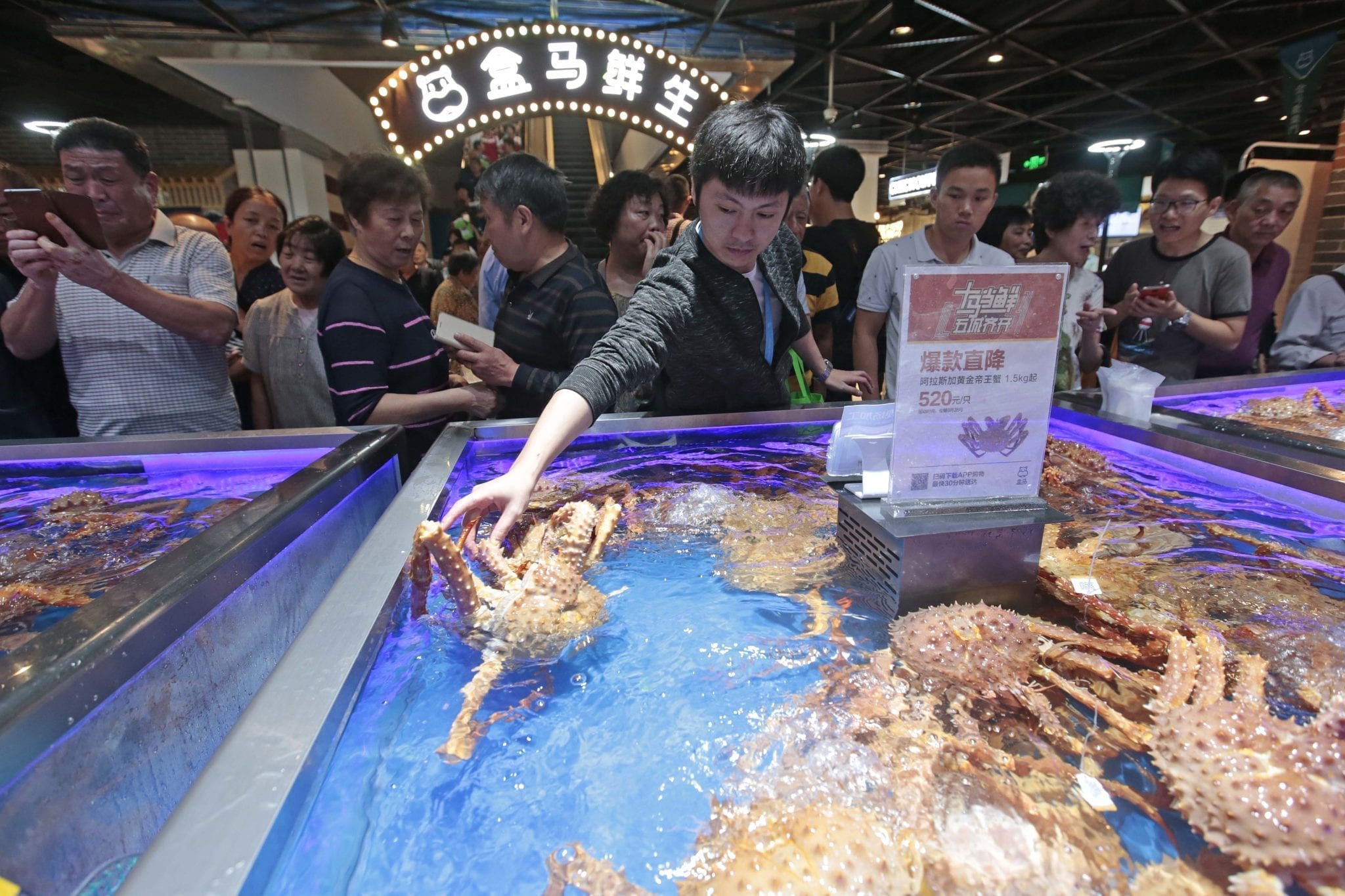
    * Superb quality fresh food – particularly seafood – at an attractive price, that you can pick and have cooked to dine in the store or to go.

    * A completely integrated smartphone-centric experience, from product information (by scanning QR codes on product labels) to automated check-out enabled by RFID tags, to payment through Alipay (although Alibaba was recently forced by regulators to accept other payment platforms and cash).

    * An extended shopping experience with the download of an application that allows online ordering and free home delivery within 30 minutes within a 3km radius of each store.

  • A deep dive into Alibaba’s Hema Concept

    A deep dive into Alibaba’s Hema Concept

    The omnichannel buzz word has been omnipresent in most retailers’ vocabulary in recent years. A majority of them are painstakingly trying to integrate multiple online and offline touchpoints from discovery to purchase and services into a seamless and convenient journey for the customer, which is often a costly and difficult job.

    Then in 2017, in a letter to shareholders, Jack Ma announced the “end of E-Commerce as we know it” and the emergence of New Retail, thereby introducing an entirely new buzz word to the world.

    Is New Retail just another avatar of omnichannel or is it something profoundly different? What exactly is New Retail? How does it address customer needs? How does it work? Does it make economic sense? How is it likely to impact our retail environment – if at all?

    To answer these questions, we took a deep dive into Alibaba’s New Retail mothership, the Hema grocery supermarket chain launched in 2016, with its familiar Hippo face logo.

    The Hema concept was developed from scratch by Hou Yi, a brilliant logistics expert hired from rival Jing Dong.

    The Hema store’s value proposition is built on three pillars:

    1.  Superb quality fresh food – particularly seafood – at an attractive price, that you can pick and have cooked to dine in the store or to go.

    2. A completely integrated smartphone-centric experience, from product information (by scanning QR codes on product labels) to automated check-out enabled by RFID tags, to pay through Alipay (although Alibaba was recently forced by regulators to accept other payment platforms and cash).

    3. An extended shopping experience with the download of an application that allows online ordering and free home delivery within 30 minutes within a 3km radius of each store.

    Hema has already opened 88 stores in 14 Mainland China cities and built a customer base exceeding 10 million, generating an average daily revenue per store of RMB800,000 to 1 million.

    Customers love it

    The first thing we looked into was whether customers like the Hema experience. In a nationwide survey of grocery store customers across multiple grocery retailers, we found that the answer was a loud and clear “yes”: They rate Hema above every other grocery chain on almost all criteria: freshness, quality, choice, convenience, service (including in-store cooking and dining), and…. price.

    A lot of this perception is the result of Hema’s smart positioning. A typical Hema store product range is in fact quite limited compared to other grocers, but it is broad in fresh food, particularly in seafood. Also, Hema is a price leader only in fresh (although still 15 per cent higher than at RT-Mart). The company has chosen that as their customer-acquisition weapon focused on health-conscious affluent families.

    Hema is more expensive in almost every other category, yet once a customer is “hooked” on affordable fresh food and downloads the Hema application, they become a regular online customer including for dry food and “long-tail” products (those products that customers don’t buy on a daily basis but often replenish between longer intervals), delivered through Hema’s cloud supermarket platform.

    Customers love that! Hema wins in repeat purchase intention and preference, online and offline, against every competitor. To understand this, we asked a group of customers without Hema experience where they buy their grocery: they nominated a mixture of online and offline retailers, without anyone destination standing out.

    Then we asked the same group after a Hema experience to tell us where they intend to shop for groceries going forward: the answer was an overwhelming 50 percent-plus favoring Hema. Such is the nature of market research, we note these are self-declared intentions and there may be gaps between intent and action. But the message is quite clear: with extended deployment, Hema seems to have the potential to grab massive market share of China’s grocery market.

    First, a Hema store layout is very particular: 50 percent of the store space is dedicated to the “back office” – a huge proportion compared with the 10 percent or so of a traditional grocery store. This back office supports the “front end” store and most importantly the fulfillment of online orders delivered to the local neighborhood. The front end is split between regular retail space and the cooking and in-store dining space, which takes up a third of it.

    Then, there is Hema’s Cloud Supermarket accessible through the Hema application, which gives customers access to a much broader range of products – 20,000+ SKUs, including dry food, non-food and appliances in addition to the stock available in the store. Hema has a next-day delivery promise for these goods, compared with the 30-40 minutes estimate of deliveries from in-store range. Goods from the Cloud Supermarket are shipped from a traditional-style remote warehouse using a similar approach to e-commerce logistics to Tmall’s.

    With this configuration, online is absolutely key to the Hema business model. Based on our analysis, the best-performing Hema stores generate close to 70 percent of their revenue online, compared with about 50 percent for a traditional store.

    Tellingly, based on our estimates, few customers retain an offline-only shopping attitude after experiencing a Hema store. Most of them become omnichannel shoppers and a hefty 25 percent become online-only shoppers. This is an amazing outcome in any retail category: to a retailer, it is a dream come true where you acquire customers using a limited physical footprint and nurture them online!

    Leveraging data

    A disappointing feature of the Hema concept is in the area of leveraging data in order to customize a store offer based on different regional preferences or customer buying patterns.

    In theory, with all the digital integration happening along the Hema value chain, we should see a lot of this… yet we did not. There are no significant differences in stock ranging between stores in different regions, and almost no changes in the products recommended to customers online who adopt different basket habits.

    It is one thing to generate a lot of data, it takes a lot more to dig into it efficiently to create value.

    Many revenue sources

    Thanks to its hybrid business model, Hema has created a broad range of revenue sources: beyond in-store and online retail, Hema generates revenue from processing fresh food, which partially compensates for low margins resulting from its attractive price position. Hema is also offering cooked food and ready-to-eat meals under its private label. And it is generating commission fees from inviting third-party food and beverage brands to operate small stalls on its premises. Already, Hema has collaborated this way with more than 200 restaurant brands, including Starbucks Coffee.

    Beyond retail, Hema has started to leverage its integrated supply chains from farm to store. For example in seafood and pork meat, it has become a B2B supplier to restaurant businesses.

    In future, Alibaba may also start to exploit its comprehensive set of capabilities – cloud computing, software, DC network, ultra-fast delivery, integrated supply chains and access to data to enable better forecasting and planning, etc… then start marketing them to other retailers anxious to enter the New Retail era.

    The profit conundrum

    But how does this all stack up financially? How is Hema performing versus other grocery retailers? And is it making money?

    Based on our analysis, Hema’s best stores are more than twice as productive as RT-Mart’s best-performing stores, and about 50 percent more productive than the average one. Admittedly this is achieved with a different business mix, which includes in-store dining and a large percentage of online sales generated by the store customers.

    However, profitability remains a challenge. Based on our estimates, most of the stores are making a loss before the application of any depreciation and amortization costs. Even best-in-class stores do not generate enough operating margin to absorb their high overheads.

    One of the main reasons is that Hema’s hybrid online-offline business model implies high rent and high labor cost. The rent is high rent because they are basically operating a back-office warehouse in 50 percent of what would otherwise be prime retail space in expensive residential areas. High labor costs because you need a lot of staff to operate a premium retail environment as well as online fulfillment logistics, with a high variable component for deliveries.

    Economies of scale come into play: the larger the online revenue, the better the profitability. As customer density increases within each store’s 3km radius, delivery routes will be able to serve a higher number of customers each trip, thereby reducing the per-delivery cost. But one must expect this customer “densification” will happen at a faster pace than the inflation of labor costs, which is highly speculative. This is an old challenge of last-mile delivery economics.
  • Meituan Scaling down Ella Supermarket Outlets

    Meituan Scaling down Ella Supermarket Outlets

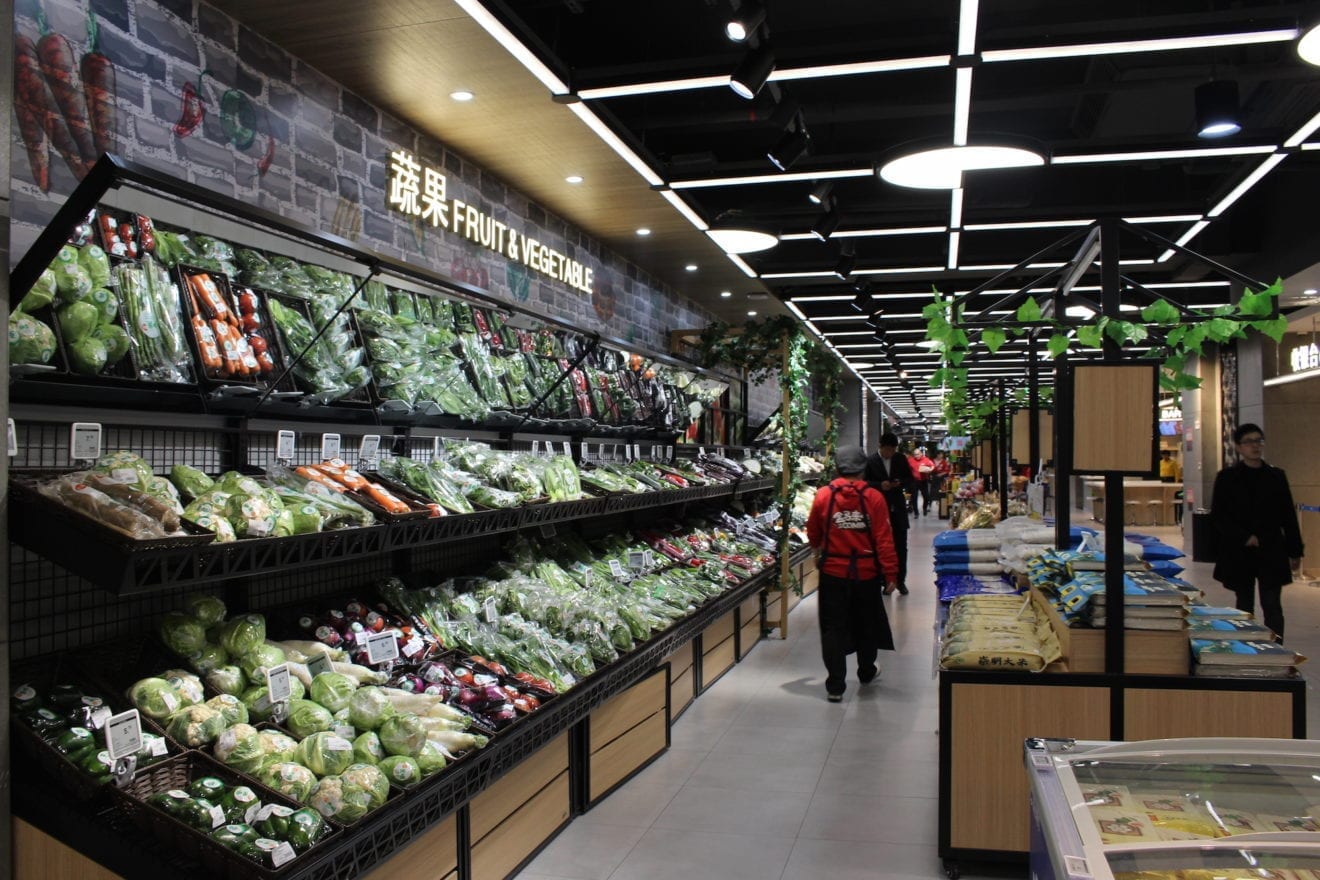
    Chinese food-delivery website Meituan has closed three of its Ella Supermarkets in Jiangsu, almost halving its network of outlets.

    The business initiative, which sells fresh supermarket produce online for fast home delivery, has just four remaining locations in Beijing and Wuxi.

    The closures were reportedly put down to mismanagement, and stand in stark contrast to the company’s stated plans to open 20 outlets within last year.

    Its shortcomings are reflected by competing brands, however, with rival groups Yonghui Super Stores, 7Fresh and SuFresh also performing under par. Alibaba’s Hema offering is an exception with reportedly strong trading.

  • Alibaba Group sales jumps high

    Alibaba Group sales jumps high

    Alibaba Group sales soared 41 per cent in the December quarter as its customer based neared 700 million. The Chinese company’s turnover for the three months reached US$17.057 billion and its net income attributable to shareholders $4.807 billion. “Our resilient operating and financial performance is a direct reflection of our persistent focus on better serving our growing base of nearly 700 million consumers across retail, digital entertainment and local consumer services,” said CEO Daniel Zhang. “Our growth is also driven by the power of Alibaba’s cloud and data technology that helps expedite the digital transformation of millions of enterprises.”

    Alibaba group sales from core commerce increased 40 per cent to $14.958 billion, while the cloud-computing division posted 84 per cent growth, turning over $962 million. The digital media and entertainment division achieved 20 per cent growth to reach $944 million.

    In a statement, Alibaba said its Taobao platform achieved “robust user growth and enhanced engagement”. Last December, its China retail marketplaces had 699 million mobile monthly average users, representing a quarterly net increase of 33 million. The annual active consumers on its China retail marketplaces was 636 million for the 12 months ended December 31, compared to 601 million for the 12 months ended September 30 last year, “reflecting successful user acquisition programs, such as referrals through the Alipay app”.

    More than 70 per cent of the increase in annual active consumers was from third-and-lower tier cities.

    Tmall thrives

    Alibaba said GMV on its Tmall business grew 29 per cent year on year in the December quarter, outpacing the industry.

    “This robust growth was driven by strength in the fast-moving consumer goods (FMCG), apparel and home furnishing categories,” the company said.

    During the quarter, Tmall signed up new brands to the platform including Valentino, Ermenegildo Zegna, Stuart Weitzman and Sergio Rossi which opened flagship stores and joined the Tmall Luxury Pavilion.

    Meanwhile, Alibaba’s proprietary grocery retail chain Freshippo (formerly Hema) continued to expand its footprint, “optimise its stores and introduce new initiatives that improve customer experience”. As of December 31, there were 109 self-operated Freshippo stores in China, primarily located in tier 1 and tier 2 cities, which continued to achieve “robust same-store sales growth” through the quarter.

    ‘Robust’ Lazada growth

    Alibaba’s Southeast Asian e-commerce platform Lazada achieved what the company described as “robust growth” in GMV. The company upgraded Lazada’s technology, which resulted in boosting the number of active users and achieved greater user engagement on Lazada’s mobile app.

    “We continue to invest resources to integrate Lazada’s business and technology operations into Alibaba with the aim of building a strong foundation for us to extend our offerings in Southeast Asia.”

  • Thai’s The Lobster Lab expands to China

    Thai’s The Lobster Lab expands to China

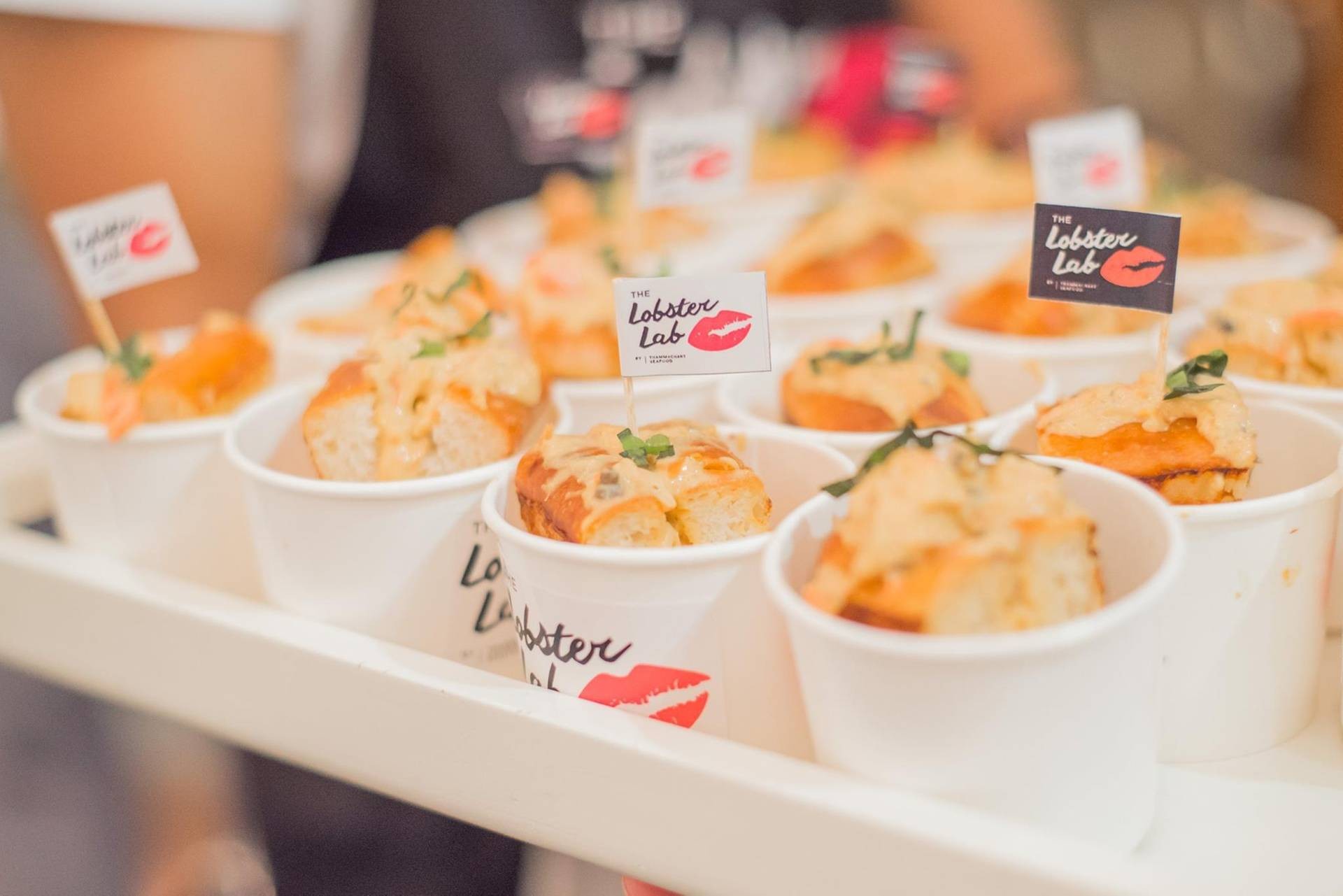
    Thai restaurant concept The Lobster Lab has opened its first outlet in Shanghai.

    The restaurant, operated by Bangkok-based Thai Union Group opened inside one of Alibaba’s Hema supermarkets last month. It serves lobster rolls, seafood chowder and some western dishes.

    The concept is based on Thai Union’s King Oscar brand, a dine-in and takeout restaurant which serves fresh lobsters imported from the US and Canada to meet “the growing Chinese consumer’s demand for tasty and nutritious seafood”.

    Thai Union also owns the American-style seafood restaurant chain Red Lobster and plans to open one of those stores inside IFC mall in Shanghai soon.

    The Lobster Lab is part of Thammachart Seafood Retail, of which Thai Union owns 25 per cent.

  • 7Fresh to open store in Shanghai

    7Fresh to open store in Shanghai

    E-commerce giant JD’s offline retail store 7Fresh is set to launch at Shangbin Plaza in Shanghai’s Hongkou District. The move is regarded as a step towards expansion nationwide beyond the firm’s home base in Beijing, as well as an attempt to follow recent trends to diversify from online-only business models. The high spending power of Shanghai residents was key in determining the store’s location.

    JD expects to be operating 1000 outlets with three to five years, using insights learnt from trading online to tailor product ranges popular locally. It will be taking on rival Alibaba’s Hema Market, which has already grown to more than 100 outlets.

    JD’s senior VP Wang Xiaosong said: “JD’s online fresh food business provides an advantage in terms of merchandise selection when we’re expanding into offline retail.”

    Shangbin Plaza is due to open early next year.

  • Alibaba’s second-quarter revenue jumps high

    Alibaba’s second-quarter revenue jumps high

    Alibaba’s second-quarter revenue grew 54 per cent year on year, reaching RMB 85.1 billion ($US12.3 billion). Net income attributable to shareholders was RMB 20 billion ($2.9 billion), a 13 per cent year-on-year increase. “Alibaba had another strong quarter of rapid growth,” said Alibaba Group CEO Daniel Zhang.

    “Annual active customers increased by 25 million to reach 601 million in the year ended September 30.”

    “Annual active customers increased by 25 million to reach 601 million in the year ended September 30.”

    Alibaba’s cloud-computing arm saw 90 per cent year-on-year growth to RMB 5.6 billion, launching more than 600 products and features during the quarter ranging from big data analytics, AI application innovation, security and internet-of-things enhancements.

    The business’s online Tmall operations saw a 30 per cent increase in gross merchandise value, driven by improved conversion rates and increased traffic in the fast-moving consumer goods, home furnishings and apparel categories.

    Alibaba’s New Retail strategy has continued to pay off across its Hema supermarkets network, with stores that have been in operation for at least 1.5 years seeing online sales account for 60 per cent of turnover for the September quarter. By the end of the quarter, 77 Hema stores had been opened in China.

    The group has dropped its forecast revenue guidance for the full year by 4 to 6 per cent to between RMB 375 billion and RMB 383 billion. As it stands, the group expects revenue to grow by 54 to 56 per cent.

  • Singles Day 2018 faces delivery challenges

    Singles Day 2018 faces delivery challenges

    Alibaba and its partner retailers will face a massive challenge ensuring flawless delivery of millions of parcels all over China and beyond given the expectations of further growth on Singles Day 2018 next week.

    “As the event grows, the logistics challenge becomes bigger and bigger,” observes retail analyst Pascal Martin, partner at OC&C Strategy Consultants.

    “During last year’s event 812 million parcels were delivered just on Tmall. Observers are betting that this year’s milestone might be more than 1 billion parcels.”

    And, says Martin, although brands don’t like to talk about it, there is also a huge challenge in taking care of large quantities of returned goods.

    “11.11 is a massive test bed for Alibaba’s backbone infrastructure: the network of partners that make it all possible, from payment to delivery to data management, as well as AI and cloud technologies that are put to work to ensure a successful event.”

    Alibaba’s Cainiao Smart Logistics Network says it has upgraded its technology to cope with the expected increased volumes from 11.11 this year. The company boasts more than 30 million sqm of warehousing worldwide and a logistics field force of more than 3 million people.

    Domestically, Cainiao has opened a new robotic warehouse, expanded its Internet of Things (IoT) systems and built out its platform’s last-mile reach. For cross-border deliveries, more than 1000 shipping containers and 51 charter planes are booked, ready to speed orders across the world.

    Cainiao VP Ben Wang says while nobody knows how many orders Singles Day 2018 will generate, the logistics company needs to keep upgrading systems, anticipating growth and seeking higher efficiency, because of customer expectations.

    “It was only five years ago that parcel orders surpassed 100 million for the first time. Back then it took nine days to deliver the first 100 million parcels,” said Wang. “Last year, it took less than three days (2.8 days) to deliver the same number of parcels. Consumers increasingly want faster, better delivery, so that’s what we’re doing. This year, we’re striving to achieve a new high, leveraging the beauty of scale and technology.”

    Delivery “within minutes”

    Cainiao’s preparations this year also reflect the changing demands of logistics in the New Retail era. For the first time, goods ordered during 11.11 will be delivered directly from stores to customers during the Festival – sometimes within minutes. Short-distance delivery services will be available in more than 280 cities.

    “Cainiao is the logistics backbone of Alibaba’s New Retail strategy,” Wang said. “We are providing an online and offline, cross-platform supply-chain solution to merchants and enabling them to cut inventory costs, while increasing operating efficiency, especially around 11.11 ­– the busiest season of the year. Ultimately, consumers will enjoy a brand-new shopping experience, as delivery service will always be on-demand.”

    Martin expects Singles Day 2018 to include more partners, not only online but also offline, leveraging Alibaba’s New Retail ecosystem. For example, Tmall 3000+ convenience stores, Hema and RT Mart supermarkets, Suning and Auchan, will be fully integrated into the event.

    The event will also be expanding beyond China through Lazada, the Southeast Asia online platform owned by Alibaba.

    “We expect to see participation of an increasing number of international brands that are taking advantage of the Tmall Global platform – number one by far among Chinese cross-border platforms – to get introduced to Chinese consumers without any direct presence in China for many of them.”

    And diversification will be another key factor in this year’s event, he says.

    “It’s not just about purchasing products, it’s also increasingly about purchasing a variety of services, from videos on Youku to mobile games on UC, theatre tickets on Taopiaopiao, music on Xiami music, travel on Feizhu, etc… All of this will not happen without challenges.”

    Yet another test, says Martin, is for Alibaba to expand the event beyond its group companies.

    “Right now, most of the non-Tmall companies participating in the 11.11 event are Alibaba Group companies. Getting non-group companies to embark on the 11.11 band wagon will be the next step to sustain continued growth of the event in future years.

    “Finally, to keep the event fresh and exciting, Alibaba will need to continue to surprise increasingly demanding Chinese consumers with entertainment and festivals to delight them around the event. 11.11 has become much more than a commercial fair, it is now a major annual milestone in China’s cultural calendar.”

    Last year’s 11.11 event saw GMV reach 254 billion RMB (US$36.6 billion) including 168 billion RMB on Tmall alone. That turnover represented a 43.5 per cent increase over the 2016 GMV.

    Singles Day 2018 will mark the event’s 10th anniversary.

  • Hema Customers Can Track Farm-to-Shelf Food Journey

    Hema Customers Can Track Farm-to-Shelf Food Journey

    Seventeen Hema supermarkets in Shanghai have launched a food-provenance feature that tells customers about an item’s farm-to-shelf journey.

    The information includes verifications such as photos of the distributor’s business licenses and food-safety certificates complete with an official government seal.

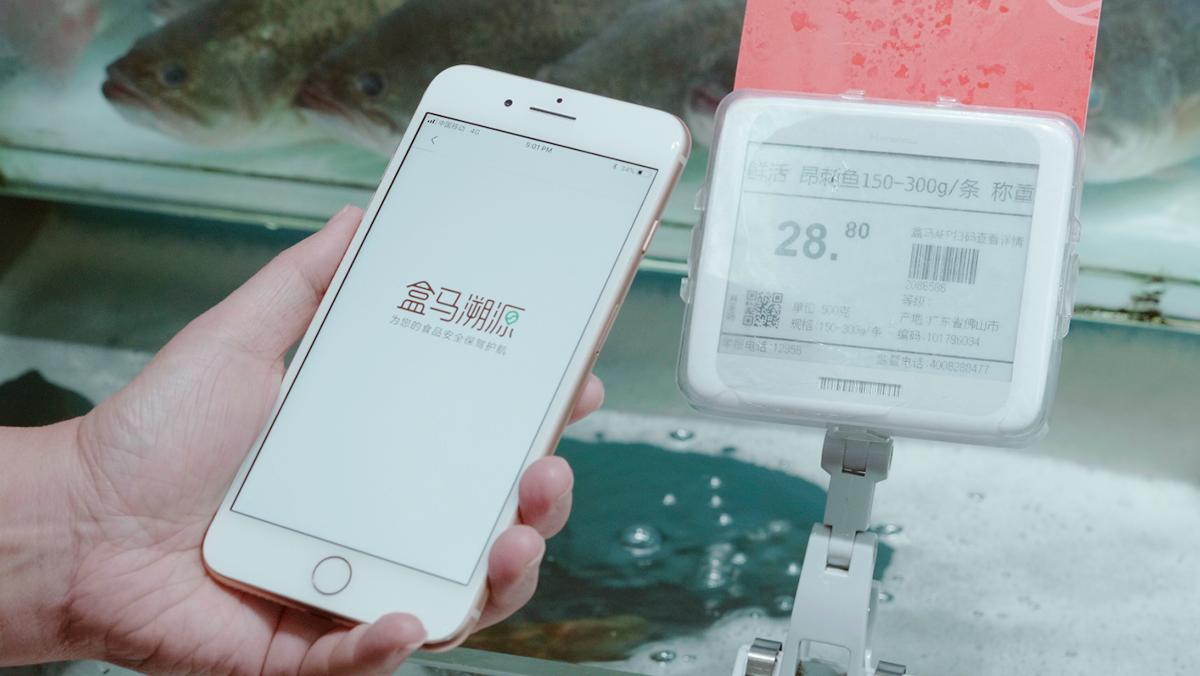
    To access the function, in-store customers use the Hema mobile app to scan a food’s QR code, which brings up the provenance details. Because the information lives on the product page of each item, consumers shopping from home via app have access to it as well.

    Watch: Hema’s Food-Tracing System

    The New Retail-driven supermarket chain’s food-tracking system comes as Chinese consumers grow more sophisticated in their food choices and embrace a healthier lifestyle.  Hema is among the first grocery chains in China to offer such service. Since its implementation in January, more than 1700 items in nine categories – including meat, seafood, rice, tofu and soy products, fruits, vegetables, poultry and eggs, dairy and cooking oil – have been included in the system.

    That includes watermelon. For Hema customers who want to know more than the place of origin, the system can tell them when a particular batch of watermelons was harvested – and by which farming collective. They can also find out the exact date when the watermelons were delivered to the store to assess freshness.

    For products that need to be kept under a certain temperature, such as meat and fish, the system can even tell customers how cold it was inside the delivery truck. Hema said it plans to roll out the system to all of its 64 stores, in 13 cities, in China by year-end.

    Established in early 2016, Hema integrates online and offline shopping into one seamless experience for customers, allowing to shop with a few clicks on their phones. With its in-store fulfilment system, orders can be delivered in as little as 30 minutes to those who live within three kilometres of a Hema. The supermarket chain also has opened a “robot restaurant” at one of its stores, in Shanghai, as part of its continued push to create new consumer experiences.

    Hema’s food-tracking system is one of several key features Alibaba has introduced to ensure customers are getting high-quality products. In April, Alibaba teamed up with a consortium of four Australian and New Zealand companies to introduce a food-tracking system using blockchain.

  • Robots replace waiters in Alibaba diners

    Robots replace waiters in Alibaba diners

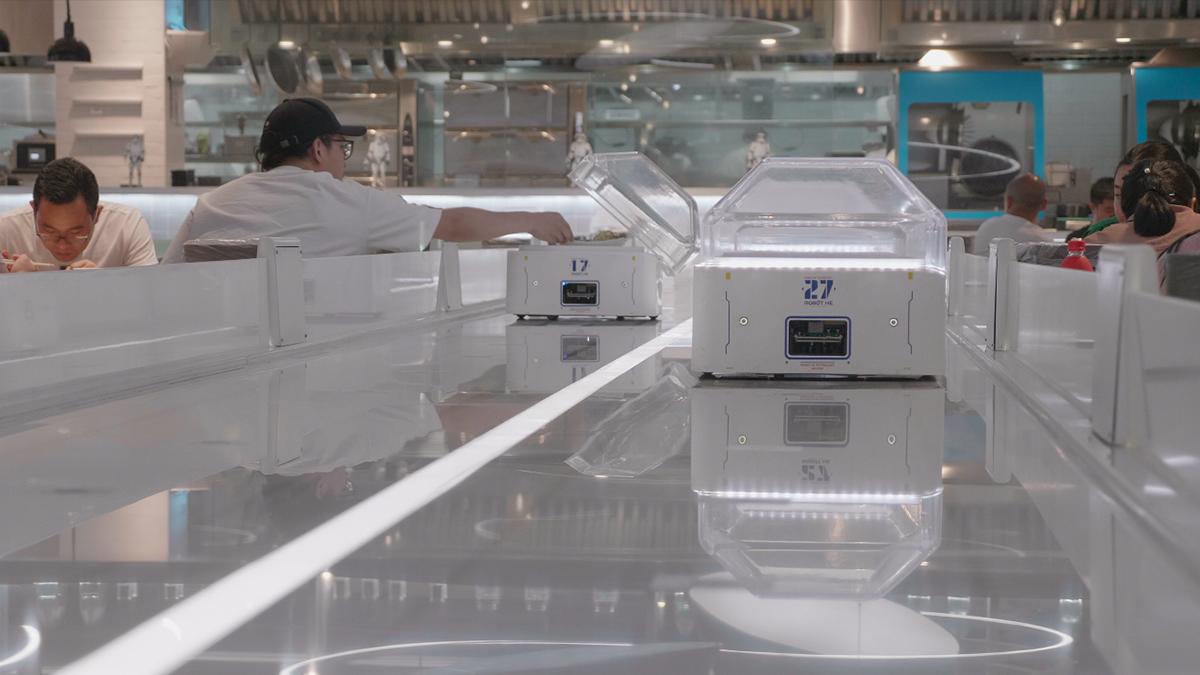
    Alibaba has launched a series of diners staffed by robotic waiters.

    The initiative is designed to offer a restaurant service with higher efficiency and lower overheads on staff.

    Alibaba product manager Cao Haitao, who brought the concept to fruition, said, “In Shanghai, a waiter costs up to 10,000 yuan (US$1465) per month. That’s hundreds of thousands in cost every year. And two shifts of people are needed. But we don’t need two shifts for robots and they are on duty every day.”

    The diners are linked to another Alibaba-backed semi-automated business concept, Hema supermarkets, in which goods are brought to customers on a conveyor track when ordered in-store via a mobile app. There are currently 57 Hema supermarkets throughout China, and all of these will eventually launch diners with robotic waiters.

    The serving robots are comparable in size to a microwave oven and navigate the restaurants on purpose-built tracks at table height.

  • Starbucks and Alibaba form New Retail Partnership in China

    Starbucks and Alibaba form New Retail Partnership in China

    Starbucks China and Alibaba have announced an alliance that stretches way beyond the latter’s online delivery platform Ele.me.

    The two companies describe their pact as “a deep, strategic New Retail partnership” that will enable a seamless Starbucks experience and transform the coffee industry in China.

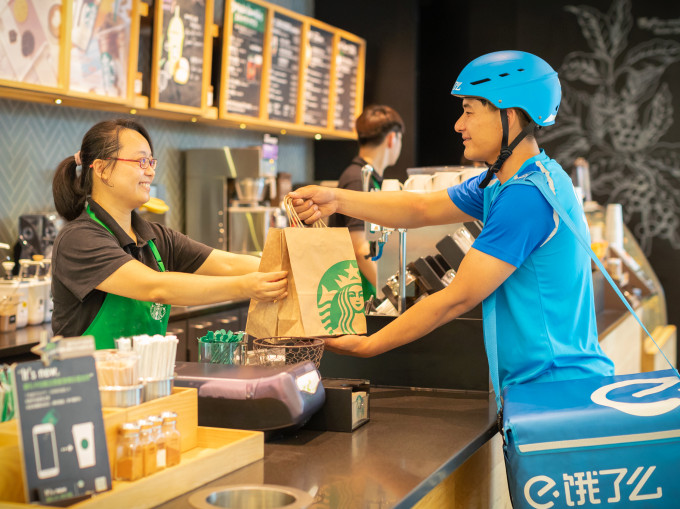
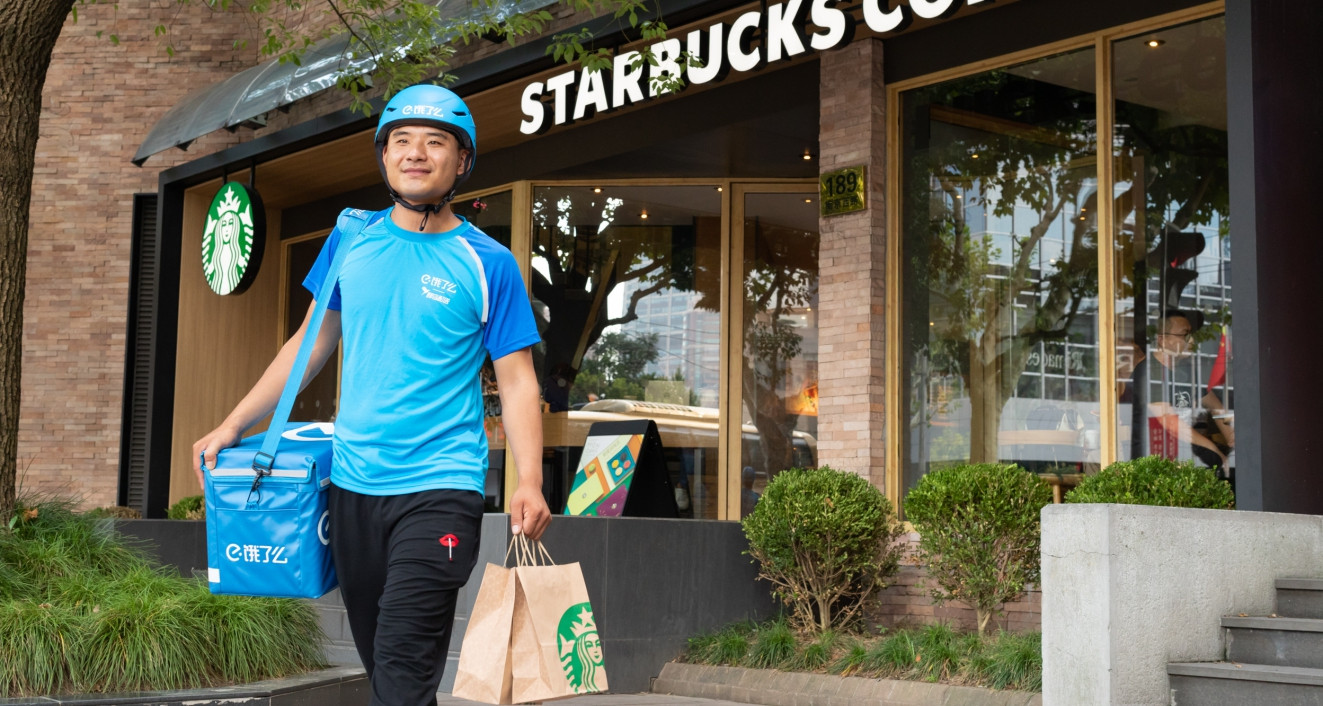
    The partnership spans Ele.me, the food delivery platform acquired by Alibaba last month, Hema supermarkets, Tmall, Alipay and Taobao. Pilot delivery services by Starbucks China will start next month with the coffee company opening delivery kitchens to fulfil orders and “co-create an unprecedented virtual Starbucks store”.

    Starbucks China CEO Belinda Wong says the partnership with Alibaba breaks the physical and virtual barriers between the home, office, in-store and digital space.

    “It will make China the first Starbucks market to deliver a seamless Starbucks experience across all facets of our customers’ lives.”

    Alibaba CEO Daniel Zhang said Starbucks is more than a destination for premium coffee “and we share the same vision to pioneer a new coffee culture and lifestyle through innovation and technology”.

    It starts with Ele.me

    Ele.me, China’s largest on-demand food delivery platform with 3 million registered delivery riders, will start delivering Starbucks orders from 150 stores in key trading zones in Beijing and Shanghai next month. By the end of the year, that service is expected to expand to more than 2000 Starbucks stores across 30 Chinese cities.

    The two companies have worked together to develop what they describe as “a unique, customised delivery infrastructure” including dedicated delivery riders, precise delivery times, and custom carriers. They believe they will be able to offer “a best-in-class coffee delivery service standard for Chinese customers” which could well be interpreted as a challenge to local startup Luckin Coffee which has grown into a US$1 billion company in less than a year, based on a mixed delivery and in-store model.

    Starbucks will partner with Hema supermarkets to open dedicated “Starbucks Delivery Kitchens” within stores. The kitchens will use Hema’s fulfillment and delivery capabilities to complement the delivery of Starbucks beverages offered through existing Starbucks stores. Starbucks will also use Hema’s consumer insights and fulfillment expertise to reach more communities across China.

    Data from Hema stores will be used to help plan the location of future Starbucks cafes, combined with delivery kitchens. The first delivery kitchens will open in selected Hema supermarkets in Shanghai and Hangzhou next month.

    Digital transformation

    Starbucks China and Alibaba say the creation of a ‘virtual Starbucks store’ in China is a key strategic initiative under the partnership.

    Alibaba will develop a centralised online management hub, with the capability to integrate and deliver a consistent Starbucks experience across multiple digital platforms. “This innovation will transcend the traditional limitations of a single-app visit by providing the consumer an elevated, and even more personalised Starbucks digital experience across the Starbucks app and Alibaba’s customer-facing mobile apps, including Taobao, Alipay, Tmall and Koubei,” the companies said in a statement.

    “This latest innovation will revolutionise the traditional offline-to-online model by effectively extending the reach of the Starbucks experience into the everyday lifestyle ritual of the Chinese consumer, regardless of time or place. Whether it is at home or in the office, within a Starbucks store or online, Starbucks customers will be able to access and enjoy a one-stop Starbucks experience when purchasing merchandise online, buying a Starbucks handcrafted beverage to be delivered to a friend or sending a Starbucks gift of love on the “Say it with Starbucks” social gifting platform.”

    Starbucks will progressively integrate its Starbucks Rewards membership platform onto the centralised system to use its consumer insights to deliver a personalised experience to customers.

    “Starbucks China and Alibaba are trusted business partners who share common values in the spirit of innovation and the unrelenting pursuit of product and service excellence,” the statement said.

    “Thanks to the elevated customer experience delivered by our more than 45,000 partners, Starbucks is growing and innovating faster in China than anywhere else in the world,” said Kevin Johnson, president and CEO at Starbucks Coffee Company. “Our transformational partnership with Alibaba will reshape modern retail, and represents a significant milestone in our efforts to exceed the expectations of Chinese consumers. Starbucks China is one to watch, and I have full confidence in the team that will bring the new innovation behind the Starbucks Experience to life.”

  • Alibaba shows off automated wine store in Hong Kong

    Alibaba shows off automated wine store in Hong Kong

    Alibaba’s Tmall, China’s leading B2C online marketplace, wants to give wine selection and consumption a 21st century upgrade.

    At Vinexpo Hong Kong this week, Tmall unveiled a host of new technologies for the industry, including an automatic wine store, initiatives far from the grape-stomping and oak barrels of old.

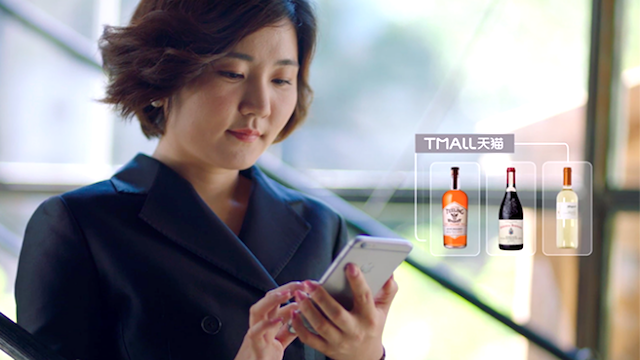
    Tmall showcased a “Future Bar,” which included facial-scanning for entry, a robot waiter, RFID technology to enhance browsing, touch-screen displays for product research and a “Smart Wine Cooler.” The technologies are part of a larger trend in “New Retail,” an initiative in China led by Alibaba to merge the best of online and offline commerce for the benefit of both consumers and merchants.

    Mike Hu, a senior director at Tmall, said the goal of New Retail is to make shopping more personal, more engaging and more convenient – even in traditionally stodgy industries such as wine.

    “China really is at the forefront of consumer engagement right now,” Hu said. “Shopping here is mobile, it’s fun, it’s interactive, and the wall between e-commerce and brick-and-mortar stores is coming down. This kind of comprehensive shopping experience is what Chinese consumers have come to expect, so wine sellers need to adapt if they want to be successful here.”

    Upon arriving at Alibaba’s booth, attendees were greeted by the Tmall Robot Waiter, who asked, “Hey, don’t you want to have a drink?” – in multiple languages. The advanced human-computer interaction offered a glimpse of the future for wine merchants and their customers, Hu said.

    Facial scanning

    Facial scanning, meanwhile, offered entry to the booth and pointed a still-growing but soon-to-be important part of the consumer experience in China: facial-recognition payments, Hu noted. Already, Alibaba’s supermarket chain, Hema, has implemented the technology in one of its Shanghai stores. It is being tested in a cashierless store at Alibaba’s Hangzhou headquarters as well.

    The RFID technology was embedded in the foil wrapping that covers the cork so that when they were picked up from a shelf, their product information was displayed on a nearby screen. So, too, were recommendations for food pairings.

    Touchscreens at the booth allowed visitors to research a wine’s home chateau and place orders through the brand’s Tmall flagship store. This kind of setup would save much-needed stock and shelf space for retailers, Hu said, while providing greater selection for consumers visiting the shop and offering delivery direct to their homes.

    Users of Tmall’s Smart Wine Cooler scanned a QR code to open the cooler door, after which they could choose their favorite bottle and then simply close the door again to pay automatically. Or, as Tmall put it, “close the door, the deal is done.”

    Ecommerce marketplaces, such as Tmall, are playing an important role in China’s wine market, said Guillaume Deglise, CEO of Vinexpo. Not least because the brick-and-mortar retail business is not on par with other markets.

    “It’s very difficult to find very good shops in China, especially in tier-two and tier-three cities,” Deglise said. “So, e-commerce is changing this.”

    Also, younger consumers in China are more used to online shopping than their peers in the US and Europe, he said, “so the distribution will be different in China than the rest of the world.”

    Asia, overall, is driving global growth in the wine market, according to a new report from Vinexpo. And China is leading that trend. The country was the world’s third-largest importer in 2017 by value, at $16.41 billion, behind only the US and UK By 2021, however, China will overtake the UK in the number-two spot with $22.97 billion – a near 40 per cent jump.

    Deglise points to the middle class for these increases, especially those in urban centers, such as Beijing and Shanghai. An uptake among women is also playing a role, as is a general trend toward wellness in China that has people reaching for vino instead of the country’s traditional “baijiu” hard liquor.

    Then, there’s travel to markets where wine is already popular, such as the US, Europe and Australia, which gives Chinese consumers the chance to try new varieties.

    “When they come back home they tend to drink more wine than before,” Deglise said.

    This means that wine-producing countries will benefit, he added. Vinexpo expects almost all producing countries to increase their exports to China over the next five years, making China the only market to prompt such demand.

    “All producing markets are depending on China,” Deglise said. “It’s a huge market with tremendous potential.”

    Alibaba signed two memoranda of understanding at Vinexpo on Wednesday, with governmental organisation Wine Australia and French wine critics Bettane & Desseauve. Tmall will work to market Australian wines on the platform and support Wine Australia’s marketing efforts around major events such as the 11.11 Global Shopping Festival. For Bettane & Desseauve, Tmall will use their reviews to complement its wine listings while also hosting their annual top wine lists as they are released. They will also partner on offline wine events in China.

  • Hema now delivering 24 hours a day

    Hema now delivering 24 hours a day

    Alibaba’s Hema supermarkets have launched 24-hour delivery services in a move to bolster the brand’s “New Retail” services.

    Initially the round-the-clock service is limited to the 25 Hema stores in Beijing and Shanghai. Consumers who live within 3km of a Hema store will be able to shop via the mobile app and order items for delivery between 10pm and 7am, when the bricks-and-mortar store is closed.

    Most items in store can be delivered with the exception of some fresh produce. Cooked meals will be available for delivery until 1am.

    “We found that New Retail doesn’t only merge online with offline, but also connects day and night,” says Hema chief executive Hou Yi. “There are definitely consumer demands that are specific to night time.”

    More than 80 million Taobao and T-mall users visit the sites between midnight and 4am, says Alibaba.

    Meanwhile, Alibaba has taken full ownership of the Ele.me online delivery service.

  • Here’s how BigBasket is riding on Alibaba’s offline retail strategy

    Here’s how BigBasket is riding on Alibaba’s offline retail strategy

    After raising $300 million last month, Indian online grocery startup BigBasket is entering the offline sector. The company is looking to transform its core online business to offline centres that will store daily moving consumer goods, groceries, fruits and vegetables. These offline stores will be placed in apartments and various office complexes. The Bengaluru based firm has already rolled out a new app called BB Instant. To increase offline purchases it is also planning to start subscription based services on FMCG goods.

    Founded by Abhinay Choudhari, Hari Menon, Vipul Parekh and VS Sudhakar in 2011, BigBasket is an online grocery company, which now is looking to exploit the brick-and-mortar space. The company recently raised $300 million in a round led by Chinese giant Alibaba, which contributed $146 million. The company has raised close to $885.7 million in total disclosed investments.

    BigBasket claims to have an average of 3 orders per user every month with the average ticket size ranging from Rs 1,400-1,500. Further the company claims to have monthly sales of over Rs 200 crore.

    This investment comes in at a time when Indian and foreign behemoths are heavily investing in the sector. Recently, Flipkart restarted its grocery business, with the like of Amazon planning to enter the offline stores in India.

    This is not the first time Alibaba has invested in an offline strategic move. The Chinese giant has been looking into physical stores for years, now, in an effort to engage customers to its ecommerce platforms by helping to digitize traditional merchants. It has pumped billions into investments including its own grocery chain, a shopping mall group, Walmart-like chains, among others.

    With the move, BigBasket may be following the footsteps of Hema, the first digital supermarket incubated in China by Alibaba. Consumers shopped using an app, either in person or remotely. Shopping options included buying food to carry out, purchasing in store and buying online with a 30-minute delivery. Similarly, BigBasket has launched a 60-120 minute express delivery through its stores.