Tag: h&m

  • H&M introduces interactive mirrors in US stores

    H&M introduces interactive mirrors in US stores

    Swedish clothing brand H&M has introduced an interactive mirror with speech and face recognition features that kicks into gear automatically as a customer walks up to it. It has been developed by Microsoft.

    The mirror is programmed to take selfies if directed and interact with customers.

    “For starters, you can talk to it and it’ll talk back. Ask it to take a selfie, for example, and it will happily oblige, capturing your graceful pose before immortalising your beauty on the front cover of a virtual fashion magazine,” Microsoft said in a blog post.

    The mirror, designed for H&M’s flagship store at Times Square in New York, can provide fashion advice and allow QR code scanning for discounts, offers, automated shopping lists and newsletter subscription options.

    “With the interactive mirror, we want to showcase new opportunities for voice assistants and inspire how to interact with their customers in a creative, modern and fun way,” said Linda Pimmeshofer, Business Developer at Microsoft.

    The mirror has been created using Cloud computing platform Microsoft Azure.

    “We are delighted with our collaboration with Microsoft, where we learn how fashion and technology create new ways of interacting with customers,” said Daniel Kulle, President, H&M North America.

  • H&M’s Nyden founder leaves

    H&M’s Nyden founder leaves

    Oscar Olsson, managing director of Nyden, H&M‘s latest brand start-up, is leaving the organisation to pursue other projects, according to the Business of Fashion.

    As confirmed by Olsson’s LinkedIn profile, the entrepreneur has moved on from the Millennial-targeted venture, putting the strategy and future of the Swedish project in serious doubt.

    Despite Olsson being the central person of Nyden, it is understood that the existing leadership team will assume his duties until a replacement is found.

    Olsson started his journey with H&M in 2013, serving as Global Controller. Soon after, he became Head of Expansion in Switzerland for the Swedish group, before taking charge of the group’s expansion for the region comprising France, the Netherlands, Austria, Belgium and Switzerland.

    In January 2017, he created and directed H&M’s innovation lab, which grew in the summer of 2017 to become Nyden. In April 2018, Nyden released its first capsule line. The collection was made up of a series of five t-shirts for women and four for men.

    Self-described as “not a traditional fashion brand,” Nyden avoids dropping seasonal collections but instead enlists the creative talents of ‘co-creators’ to develop capsule collections for its customers.

    Four celeb collaborators already tapped by Nyden include Justine Skye, Dua Lupa, Dr Woo and Jerome Boateng. According Nyden’s website, there remain three more big-name collaborators “to be announced.”

    Nyden’s collections are all designed from its Los Angeles studio.

    For the six months ending May 31, H&M group, which also operates Monki, Cheap Monday and & Other Stories, said sales including VAT were SEK 114.017 billion (US$13.11 billion), up from SEK113.907 billion a year earlier.

    The group did not disclose sales figures for its individual brands.

  • H&M reports 21 pc fall in second quarter net profit

    H&M reports 21 pc fall in second quarter net profit

    Hennes & Mauritz AB on Thursday reported a 21 percent fall in second quarter net profit, missing estimates, as the retailer increased clearance sales to shift unsold stock and experienced logistical problems in it shifts to a more efficient supply chain.

    The Swedish fashion retailer said it entered the second quarter carrying too much stock, blaming imbalances in its product ranges, combined with interruptions to its flow of goods in a number of its major sales markets.

    The high inventory level will mean increased markdowns in the third quarter 2018 compared with the same quarter the previous year, it said.

    According to the release, The H&M group is going through a period of transformation to make the company even more customer-driven, efficient and flexible. This includes necessary transitions to new logistics systems that will allow even better availability, speed and transparency. However, sales and profits were temporarily affected by interruptions in connection with such transitions carried out in the second quarter in major markets such as the USA, France, Italy and Belgium.

    According to Karl-Johan Persson, CEO “The rapid transformation of the fashion retail sector continues, and we are in a transitional period that is both exciting and challenging. Challenging because it is complex, extensive and the pace of change is fast. Exciting because we can see positive trends and big potential in connection with our improvement work and investments.”

    Persson further added, “As we signalled previously, it was going to be a tough first half-year. We went into the second quarter carrying too much stock and we still had some imbalances in the H&M assortment – something that we are gradually correcting. As part of our transformation work we are transitioning our logistics systems to make our supply chain even faster, more flexible and more efficient. These transitions are complicated and can result in temporary interruptions, as unfortunately occurred during the second quarter in some of our major sales markets. This negatively impacted sales in the USA, France, Italy and Belgium, as well as online sales in the Nordic region.”

    H&M Home will broaden its product range in the second half of 2018 to include lamps and furniture.

    For 2019 Bosnia-Herzegovina is planned to become a new H&M store market and Mexico a new H&M online market.

    “Yet in a number of markets sales developed positively; in Sweden, Norway, Denmark and Eastern Europe we grew considerably faster than the market. This shows that we are on the right track and that our digital investments and improvement work are starting to have results. Overall, however, total sales for the quarter were not satisfactory, which meant that inventory levels were still too high at the end of the period,” said Persson.

  • Why fast-fashion brands like H&M are losing millennial customers in Malaysia and Singapore

    Why fast-fashion brands like H&M are losing millennial customers in Malaysia and Singapore

    Melissa Chi, 30, remembers when her wardrobe was full of H&M clothing and accessories. After discovering the Swedish brand during an internship in Washington, the Singaporean, who runs an online healthy lifestyle store, quickly became a fan of its smart design, decent quality and affordable prices.

    Today, however, Chi rarely wears fast-fashion items, H&M or otherwise. Since she became a convert to sustainable living two years ago, she has learned just how damaging the fast-fashion industry is for the environment.

    “The whole mentality that we should buy more because it’s cheap just didn’t seem right any more,” she says.

    It was a 180-degree sartorial turn for Chi, one that many other young Singaporeans and Malaysians are going through.

    More than 1,000 shoppers queued outside H&M’s Singapore flagship store when it opened in 2011, excited to become its first customers. The following year, about 1,500 people did the same at its Kuala Lumpur flagship on its first day of business. And when H&M collaborated with luxury brands Balmain and Kenzo, launching the collections in 2015 and 2016 respectively, similar frenzies occurred.

    Fast forward and H&M’s quarterly report ending February 28 indicates Asian millennials’ appetite for the brand’s trendy apparel may be on the wane. Malaysia recorded a 1 per cent drop in sales over the quarter, while the Singapore operation saw sales fall by 10 per cent.

    A similar downward trend is being seen in other parts of Asia, including China. That’s after two decades of strong growth globally during which the company regularly reported double-digit sales increases.

    In the three months to February 28, H&M’s operating profit fell by 62 per cent, causing its shares to hit a 13-year low on Stockholm’s bourse. A US$4.3 billion stockpile of clothing and accessories had accumulated in thousands of warehouses and stores around the world, the company reported.

    What had happened? Business analysts say the company failed to adapt to fierce competition from the boom in online retail and lower prices offered by a growing number of similar fast-fashion outlets. Chi agrees that these have been factors in Singapore and Malaysia.

    “I definitely think the demand [for fast fashion] is cooling off and not just because of the growing awareness that fast fashion is bad,” she says, referring to allegations of abuses against workers and environmental concerns. “It is also because of intense competition from all sorts of brands online, globally.”

    Abby Wee, communications manager for H&M Singapore and Malaysia, said that 2018 is a “transitional year” for the brand, adding that the fashion retail landscape is changing rapidly.

    “While there is a decline in sales in Singapore and Malaysia, we don’t see that as an indication that we are not one of the top fashion destinations for our customers,” she says in an email.

    Wee points to last year’s launch of the online store hm.com, and the positive reviews that it has been getting in both Singapore and Malaysia, as proof that its “omnichannel presence” is expanding.

    However, hm.com is competing in a crowded online market of brands that have had a web presence for years. Singapore government data shows that as early as 2011, 50 per cent of the country’s internet users aged 15 years and older were already shopping online. In 2012, regional e-retailer Zalora set up operations in both Malaysia and Singapore. Other e-retailers, such as Asos and American Apparel, had been targeting Singaporean shoppers by offering free shipping long before hm.com came along.

    Sarah Kok, a 22-year-old broadcast journalism student in Malaysia, says she no longer shops at H&M for several reasons. Since Uniqlo, the Japanese mass-market clothing brand, expanded in Malaysian malls several years ago, Kok now does most of her shopping for daily work outfits there. She says it offers more comfort, better quality and greater diversity than H&M.

    Environmental sustainability and a fair supply chain matter, too. These are Kok’s main reasons for shunning H&M today, she says.

    H&M has been accused of using prison labour in China, employing children in Myanmar, firing Cambodian women who got pregnant, suppressing unions, and causing environmental damage, among other issues.

    “If you can sell things at such a cheap price overseas, that means you’re getting it cheap as well,” Kok says. “So, that equals cheap labour.”

    Uniqlo may not be entirely innocent, either. A report by anti-poverty charity War on Want asserted in 2016 that Chinese factories making clothes for Uniqlo were abusing workers’ rights. Despite the brand’s commitment to “corporate social responsibility” and “making the world a better place”, undercover investigations by Students and Scholars against Corporate Misbehaviour said it found excessive overtime, low pay, dangerous working conditions and oppressive management practices in Uniqlo’s supplier factories in China.

    In an emailed statement, Wong Xinyi, sustainability manager for H&M Southeast Asia, points out that the company has signed a “global framework agreement” with workers’ organisations based in Sweden aimed at improving workers’ rights in the supply chain.

    It is also one of a number of global brands that have initiated the ACT (action, collaboration and transformation) agreement, which aims to ensure fair wages and better working conditions in the supply chain.

    Wee claims that the supplier factories H&M works with the most through long-term partnerships – representing 50 per cent of its product volume – have democratically elected representatives who can speak on behalf of the workers, achieving one of the company’s 2018 goals.

    To address the issue of environmental pollution, Wee points to the brand’s collaboration with the Zero Discharge of Hazardous Chemicals Programme to raise awareness and industry standards, and its partnership with the organisation Changing Markets to implement the “road map towards responsible viscose and modal fibre manufacturing” within its existing sourcing policy.

    H&M has also set 2030 as a target date to have all products made from recycled or otherwise sustainably sourced materials. By 2040, it aims to become “climate-positive” throughout its value chain.

    “Our customers in Malaysia and Singapore trust our brand and they have also responded positively towards our sustainability initiatives,” Wee says. “Therefore, it is clear to us that our customers expect us to operate our business responsibly and we are determined to exceed their expectations in this area.”

    However, whether all this means we are seeing a new dawn for fashion in Southeast Asia, with fast-fashion companies complying with a more sustainable and ethical framework in their production lines, is questionable. So, too, is whether there is really enough demand for more conscionable clothing among Malaysian and Singaporean millennials – known for being materialistic – to encourage companies to follow more sustainable practices.

    Both are highly unlikely, according to Nicholas Harrigan, a senior lecturer in sociology at Sydney’s Macquarie University.

    “Unfortunately, not enough young people in Singapore and Malaysia are conscious enough about ethical fashion for it likely to make much of an impact on sales,” says Harrigan, who previously lectured at Singapore Management University.

    Google “sustainable fashion in Malaysia and Singapore” and a few brands with limited offerings will pop up. Biji-Biji Design, arguably Malaysia’s most prominent eco- and labour-friendly company, sells bags and accessories made using discarded advertising banners, car seat belts and even old kimonos, with some products at prices comparable to H&M. Such companies, however, are few and far between.

    Harrigan believes other factors could be at play, such as the growing influence of blogshops – retailers operating on blogging platforms – on Singaporean youth, which provide more variety and are more convenient than going out shopping.

    Price could be another issue. Harrigan posits that despite H&M’s products being cheaper than brands such as Zara, they are still expensive given the quality.

    Still, sceptics note that the relatively low prices of fast-fashion brands will continue to be attractive to young people.

    Norashahera Hakem, head of fashion at Biji-Biji, remains optimistic. Although it is difficult for a brand like hers to survive in Malaysia, there are signs of a shift in mindset. People are starting to care more about quality and the effect of their unused piles of clothes on the environment, she says. Price is no longer the sole factor, as millennials are looking at the stories behind a product.

    “It is possible to survive with a lot of hard work and determination, as the concept is still quite new in this region,” she says. “People need to realise that quality and sustainability have an extra cost and [be] willing to pay for it.”
  • H&M sales stagnates due to record inventory

    H&M sales stagnates due to record inventory

    H&M sales worldwide – in local currencies – stagnated in the second quarter, reaching SEK 51.98 billion (US$5.88 billion).

    The poor figure was achieved despite a net increase of 303 stores between May 31 this year and the same time last year, taking the network to 4801.

    H&M was carrying record levels of inventory estimated at US$4 billion at the end of the first quarter and had to resort to discounting in the second quarter to shift stock.

    Analysts were unimpressed by the figure. “It’s worrying,” Magnus Raman, an analyst at Handelsbanken told Bloomberg. He estimated the fall in like-for-like sales over the past year at 6.8 per cent.

    “The consensus estimate was already at very low levels and still the company doesn’t manage to meet them.”

    “H&M is undertaking a series of turnaround initiatives,” said a Barclays analyst. “Although many of these sound sensible in the longer term, we think they will take time to materialise and continue to view the next 12 months as challenging.”

  • H&M and Gap to Probe Violence, Sex Abuse in Asian Factories

    H&M and Gap to Probe Violence, Sex Abuse in Asian Factories

    Fashion giants H&M and Gap vowed on Tuesday (05/06) to investigate reports that Asian garment workers who supply their high-street stores routinely face sex abuse, harassment and violence.

    Based on interviews with some 550 workers in 53 H&M and Gap supplier factories in Bangladesh, Cambodia, India, Indonesia and Sri Lanka, rights groups said women were at “daily risk” of violence and faced retaliation if they reported the attacks.

    The coalition has investigated the factories for several years as efforts mount to push Western brands into improving safety along their supply chains and render them slave-free.

    Clothes stitched by low-paid Asian workers – part of a complex global supply chain – end up on high-priced Western high streets, with some 4,750 H&M stores located in 69 countries and about 3,700 Gap shops operating in about 90 nations.

    Sweden’s H&M — the world’s No. 2 clothes group after Zara owner Inditex — said it would review the findings of the recent report by the civil society groups and unions.

    “We will go through every section of the report and follow up on [a] factory level with our local teams based in each production country,” a company spokesman said in a statement.

    “All forms of abuse or harassment are against everything that H&M group stands for.”

    US retailer Gap said it was “deeply concerned about the troubling allegations raised by this report.”

    “Our global team is currently conducting our due diligence to investigate and address these issues,” a spokeswoman said.

    The charities said they had found widespread sex harassment, verbal and physical abuse – such as slapping – and threats of retaliation when women refused sexual advances from bosses.

    Forced Labor

    A separate report published last month by the coalition of rights groups found similar abuse of women at supplier factories in Asia for US-based Walmart, the world’s largest retailer.

    Walmart said last month that it was reviewing the “concerning” accounts cited in the report.

    The Ethical Trading Initiative (ETI), a group of trade unions, firms and charities of which both Gap and H&M are members, said it expected the retailers to work with the suppliers to ensure that women have swift access to remedy.

    “These allegations are deeply concerning,” said Debbie Coulter of the ETI. “Gender-based violence is unacceptable under any circumstances, and brands need to make sure that women working in their supply chain are protected.”

    Campaigners told the Thomson Reuters Foundation last month that the level of pressure and harassment faced by the workers in the three separate reports was approaching forced labour.

    “Any time you have retaliation against workers, and coercion and control … you are coming close to the line of forced labour,” Jennifer Rosenbaum of Global Labor Justice, a network of worker and migrant organizations, said last month.

    The reports have been published amid meetings hosted by the United Nations’ International Labor Organization to work on the first global convention against workplace harassment after the #MeToo campaign thrust the issue into the spotlight.

  • Adidas, H&M best students of the class in supply chain transparency

    Adidas, H&M best students of the class in supply chain transparency

    Adidas and sister business Reebok have topped a list of 150 of the world’s largest brands and retailers measured on supply chain transparency, according to Fashion Revolution’s 2018 index.

    Released overnight in the UK, the sixth edition of the Fashion Transparency Index has tracked an increase in industry stakeholders disclosing their suppliers, but the average score across all 150 brands and retailers surveyed was just 52 out of a possible 250 points, or 21 per cent.

    Adidas Group scored 58 per cent to top the list, beating the likes of H&M, Gap and Puma – who all scored lower in the 51-60 per cent range.

    The most improved brands on the list were The North Face, Timberland and Wrangler, which saw their scores increase by 22 per cent compared to last year’s index.

    The international transparency findings come less than a week after Baptist World Aid’s local report found that a large portion of Australian retailers are still failing the ethical grade when it comes to supply chain ethics.

    Fashion Revolution, which is partly funded by the charitable arm of global fashion retailer C&A, scores some of the world’s largest retailers and brands on five areas, including governance, policy & commitments, traceability, the ability to spotlight issues and the capacity to identify and address problems.

    Traceability and capacity to identify and address supply chain issues are weighted most heavily, accounting for 64 per cent of total scoring.

    Brands scoring between 51-60 per cent provide detailed supplier lists, including manufacturers and processing facilities.

    The likes of Zara, ASOS, G-Star, Levi Strauss & Co and The North Face all scored in the 41-50 per cent range, which is described as being likely to provide detailed supplier lists, as well as information about policies, procedures and goals.

    Further down the list in the 31-40 per cent category are a myriad of luxury and premium brands, including Gucci, Hugo Boss, Burberry and Hugo Boss, as well as sneaker giant Nike and Target (US).

    At the bottom in the 0-10 per cent range are those who have either not published supplier lists or publish little information, which is by far the largest category on the index at 48 brands.

    Amazon, Neiman Marcus and Forever 21 all scored between 10-5, while Dior and Nine West both scored 0, among others.

    Of the 98 brands and retailers on the list that were scored last year there was a 5 per cent average increase in scores, while 22 brands (or 15 per cent) have increased their traceability score by more than 10 per cent.

    Fashion Revolution said the results indicate that there’s still a “long way to go”, but that an influx of additional brands onto the index had weighed down 2018’s average score.

    “This year, 65 brands and retailers (or 43 per cent) have scored 21 per cent or higher — above the mean average score — compared to 43 brands and retailers (or 43 per cent) in 2017. 42 brands and retailers (or 28 per cent) have scored 31 per cent or higher, compared to 20 brands and retailers (or 20 per cent) in 2017,” it said.

    Overall higher scored were achieved in the areas of governance and policy & commitments than actioned traceability and a demonstrated ability to identify and address problems.

    H&M, which scored 92 per cent in policy & commitments and a 77 per cent in governance scored a much lower 47 per cent in traceability.

  • Unexpected revelation by H&M and Moschino

    Unexpected revelation by H&M and Moschino

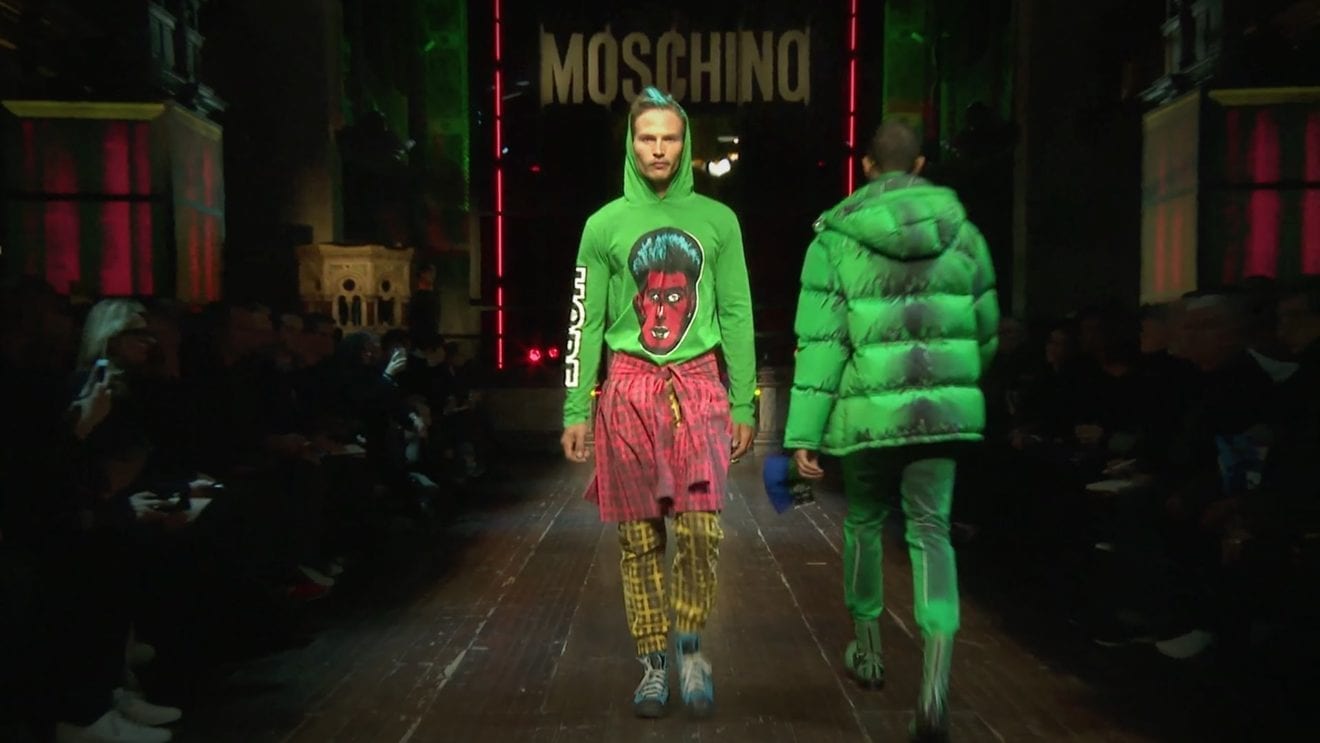
    An Instagram call has revealed a designer collaboration by Swedish fast-fashion brand H&M and Moschino.

    Projected on digital screens at the Italian fashion brand’s annual party in Coachella, California, the Instagram conversation was between US model Gigi Hadid and her friend Jeremy Scott, creative director at Moschino.

    They discussed the release of the Moschino + H&M collection online and in selected H&M stores worldwide from 8 November.

    Hadid’s call and the news surprised guests at the event. The two friends were dressed in the first looks from the collection, designed by Scott for both women and men, as well as a full range of accessories and extra surprises.

    “It is the perfect collaboration for fashion right now, mixing together pop, street culture, logos and also glamour,” says H&M creative adviser Ann-Sofie Johansson. “Jeremy Scott is amazing – he knows how to have fun with fashion.”

    An innovative TV concept is being used for the collection’s campaign, enmeshing social and traditional media.

  • H&M to launch new marketplace Afound

    H&M to launch new marketplace Afound

    Swedish fashion retailer H&M will launch an off-price marketplace later this year featuring discounted fashion and lifestyle brands, both external and those from the H&M group.

    Afound, which will be introduced as a new brand, will be launched both online and with physical stores, starting in Sweden in 2018.

    H&M’s ANZ communications manager Elizabeth Cave said there are still no details on whether the retailer will open an Afound store in Australia.

    The company’s first store will open in Drottninggatan, Stockholm in parallel with the launch of the digital marketplace in Sweden.

    H&M has not specified which brands, or how many, will be featured on Afound, but Cave said the retailer will reveal more details closer to the launch date which would probably include a list of all participating brands.

    Cave said Afound will be a “style- and deal-hunting paradise”, a marketplace selling discounted fashion and lifestyle products, with both external and the H&M group’s own brands, offering a wide range of well-known, popular brands for both women and men.

    “Afound will present a carefully selected, season-less range from Swedish and international brands in a variety of price segments both online and in physical stores,” she said.

    Fredrik Svartling, managing director of Afound, said in a statement that there’s big potential for Afound and that the business is looking forward to introducing the marketplace.

    “Afound cares about both the value of the products and the mix,” Svartling said. “And by offering personal style inspiration, quality labels, and the sense that you’re getting a really good deal, Afound will offer a new form of off-price experience.”

    According to H&M Group CEO Karl-Johan Persson in an earlier statement, H&M is branching out into new concepts, like Afound, in order to keep up with the fashion industry’s ever-changing pace and to increase its market share.

    “We constantly work on new ideas and innovations that will drive us forward – and there are many in our pipeline for 2018 and the years to come,” Persson said.

  • Weak sales brought H&M to bad raport

    Weak sales brought H&M to bad raport

    Swedish fashion retailer H&M has posted a decline in its first quarter profit and has warned that it may need to cut prices to clear unsold stock.

    H&M posted a 61 per cent drop in profit for the three months to February. Pretax profit fell to 1.26 billion crowns ($154 million). The clothing retailer’s net profit of 1.37 billion crowns was boosted by a one-off positive tax income of 399 million crowns related to US tax reform.

    The company had warned recently that markdowns due to weak demand in its main H&M brand stores would hit earnings, and this month said quarterly sales had fallen by two per cent.

    Online sales increased by approximately 20 per cent year on year.

    “As communicated previously, the start of the year has been tough,” said Karl-Johan Persson, company CEO. “2018 is a transitional year for the H&M group, as we accelerate our transformation so that we can take advantage of the opportunities generated by rapid digitalisation.”

    “The weak sales development combined with substantial markdowns had a significant negative impact on results in the first quarter,” Persson said.

    But, the retailer had said it expected sales and profits to return to growth.

    “Many of our ongoing initiatives are giving good indications and results, even though they have not yet been implemented at a large enough scale to have a decisive effect on the overall results,” Persson added.

    This year, H&M announced it is planning to open 220 new stores. Most will be H&M stores, but 90 will be its newer spin-offs including & Other Stories, Cos and Monki.

  • Nike is world’s most valuable apparel brand, says Brand Finance Top 50

    Nike is world’s most valuable apparel brand, says Brand Finance Top 50

    Despite losing popularity with American teenagers and a drop in brand value of 41 per cent, Nike is still way out in front in the Brand Finance Top 50 list of the most valuable apparel brands in the world.

    In the list, just been release by the independent brand valuation and strategy consultancy, Nike’s main competitor Adidas was fourth behind H&M and Zara with an increase in brand value of 41 per cent.

    In the realm of luxury brands, Hermes overtook Louis Vuitton, jumping two spots from 7th to 5th from last year. Luxury brands including Cartier, Gucci, Hermes and LV had strong growth in value as more consumers in emerging markets buy into the market.

    Japan’s Uniqlo was the only Asian brand in the top 10, with Hong Kong jeweller Chow Tai Fook and China’s Anta Sports taking up the 13th and 33rd spots respectively.

    These are the top 50 most-valuable apparel brands in the world this year:

      1. Nike (brand value, US$2.8 billion)
      2. H&M ($1.8 billion)
      3. Zara ($1.7 billion)
      4. Adidas ($1.4 billion)
      5. Hermes ($11.3 billion)
      6. Louis Vuitton ($10.4 billion)
      7. Cartier ($9.8 billion)
      8. Gucci ($8.5 billion
      9. Uniqlo ($8 billion)
      10. Rolex ($6.3 billion)
      11. Coach ($6.1 billion); 12. Victoria’s Secret ($6.1 billion); 13. Chow Tai Fook ($5 billion); 14. Tiffany & Co ($4.6 billion); 15. Burberry ($4.5 billion);16. Christian Dior ($4 billion); 17. Polo Ralph Lauren ($4 billion); 18. Prada ($3.8 billion); 19. Under Armour ($3.7 billion); 20. Armani ($3.5 billion)
      12. Puma ($3.3 billion); 22. Ray-Ban ($3.2 billion); 23. Omega ($3.1 billion); 24. The North Face ($3.1 billion); 25. Pandora ($3 billion); 26. Michael Kors ($2.7 billion); 27. Tommy Hilfiger ($2.6 billion); 28. Anta ($2.6 billion); 29. Old Navy ($2.3 billion); 30. Bulgari ($2.2 billion)
      13. Bershka ($2.2 billion); 32. Calvin Klein ($2.2 billion); 33. Levi’s ($2.2 billion); 34. Primark/Penneys ($2.1 billion); 35. Moncler ($2 billion); 36. Boss ($2 billion) 37. Gap ($2 billion); 38. Ferragamo ($1.9 billion); 39. Saint Laurent ($1.8 billion); 40. Bottega Veneta ($1.8 billion)
      14. Valentino ($1.8 billion); 42. Skechers ($1.6 billion); 43. Swatch ($1.6 billion); 44. Tag Heuer ($1.5 billion); 45. Timberland ($1.4 billion); 46. Massimo Dutti ($1.3 billion); 47. Reebok ($1.3 billion); 48. Woolworths ($1.2 billion); 49. Stradivarius ($1.2 billion); 50. Pull and Bear ($1.2 billion).
  • H&M opened on Tmall

    H&M opened on Tmall

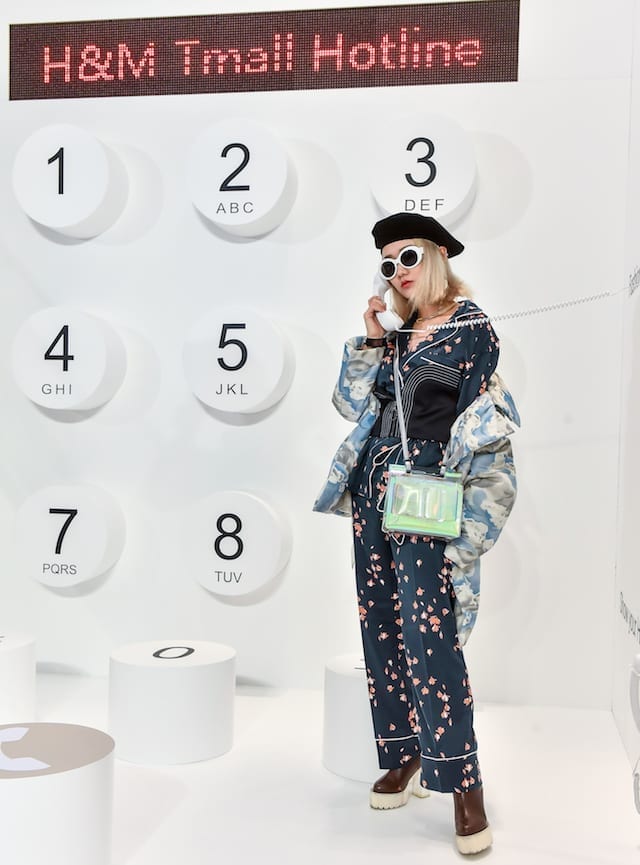
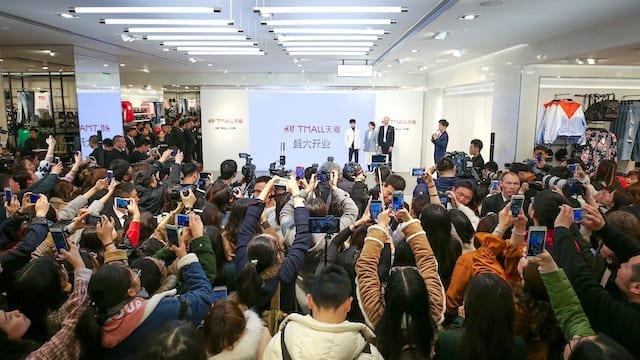
    H&M China launched on Chinese e-commerce platform Tmall, complementing the Swedish clothing retailer’s 400-plus physical stores and HM.com Shop Online.

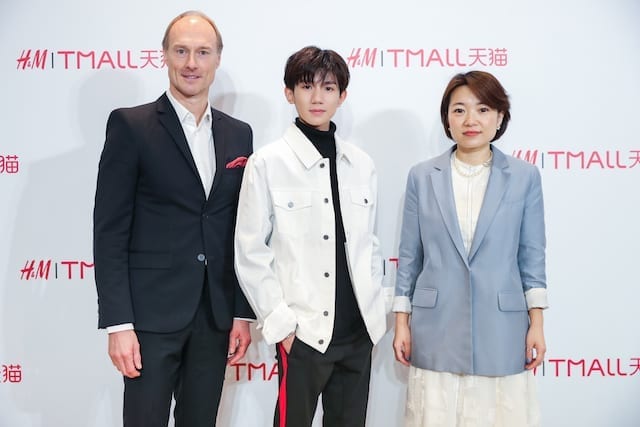
    “We are very happy to extend our collaboration with Alibaba by launching H&M and H&M Home on Tmall,” says H&M Greater China country manager Magnus Olsson.

    H&M opened its first store in Mainland China in 2007 and launched its online shop in 2014. The H&M group brand Monki has had strong development in China since its launch on Tmall, and this collaboration between the two groups, touted in December, is being extended to include both the H&M brand and H&M Home.

    During the launch period, H&M’s Tmall shop is offering more than 10,000 styles of fashion items including women’s, men’s, teens’ and children’s styles, plus H&M Home. As well as special opening offers, Tmall and H&M is offering exclusive pieces featured by TF Boys singer Wang Yuan, one of the stars in a H&M/Tmall campaign film.

    “With H&M’s experience in online and offline fashion retail, this collaboration signifies an important milestone for Tmall’s expansion, allowing more customers to enjoy the pleasure of interactive shopping,” says Alibaba VP for Tmall fashion and luxury Lv Jianmei.

    Procurement centres

    Meanwhile, Tmall Global plans to open six procurement centres across the world to help overseas vendors capture Chinese consumers’ booming appetite for newer and better imported goods, says Tmall president Jet Jing. They will be established in Japan, South Korea and Hong Kong, as well as regions of North America, Europe and Oceania.

    Jing’s announcement, at the annual Tmall Global 2018 Global Partners Summit in Hangzhou, did not disclose a time frame.

    Launched in 2014, Tmall Global is Tmall’s channel for cross-border e-commerce. The platform controls nearly a quarter of the market. With Alibaba’s expansive consumer analytics, Tmall Global provides overseas vendors insights into Chinese consumers’ shopping behaviour and preferences.

    China is the world’s second-largest consumer market following the US, according to Boston Consulting Group. The research consultancy notes China will see nearly $2 trillion in new consumption by 2021, and also projects China’s e-commerce cross-border trade to more than double to RMB620 billion (US$98 billion) in gross merchandise volume by next year from RMB305.5 billion in 2016.

    Global commitment

    Tmall Global, which already offers more than 18,000 brands from 74 countries and regions, is committed to attract even more international brands and vendors to sell their goods into China in the coming year, says Tmall Global GM Alvin Liu.

    New Retail, which harnesses new technologies to unify online and offline shopping, will serve as an important driver to power such growth by allowing vendors to engage with their customers in both spheres, Liu says.

    “Our goal is to give Chinese consumers the best shopping experience, so we select only the best quality for China,” says Liu.“We must discover new categories and find new products so Chinese consumers can find items that are best suited to their needs.”

    To achieve these goals, Tmall Global has pledged to boost the traceability of items sold on the platform. By using blockchain technology, consumers will be able to track their orders throughout every stage of the delivery process, starting from the factory at the country of origin.

    Secondly, the platform seeks to expedite the expansion of overseas fulfillment centres so smaller foreign brands can introduce their products to the Chinese market more quickly.

    The platform will also increase the use of bonded warehouses, where imported goods can be stored securely without import duties until the items are sent.

  • Online sales surge boosts Zara owner Inditex

    Online sales surge boosts Zara owner Inditex

    Surging online sales have boosted Zara parent’s Inditex’s net profit in the past fiscal year by 7 per cent.

    Inditex, which also owns brands including Pull & Bear, Bershka and Massimo Dutti, reported an increase in net profit for the 12 months ending January 31 to €3.37 billion (A$5.27 billion) from €3.16 billion a year earlier.

    Sales rose 9 per cent to 25.34 billion euros in the fiscal year, with revenue for online sales growing by 41 per cent.

    In FY17, Inditex invested €1.8 billion in further developing its integrated stores and online model and upgrading its technology. Specifically, the rollout of RFID technology has improved flexibility and response times by integrating stores and online inventories, the company said.

    Pablo Isla, chairman and CEO of Inditex, described it as a year of “solid growth”, and highlighted, “the unique strength” of their integrated stores and online model and its significant growth potential.

    He added that “the prescient investments made in technology and logistics in recent years,” coupled with space optimisation, had positioned the company for continued growth across all its markets.

    The group, which during 2017 opened its first stores in Belarus and launched its online sales platform in India, Vietnam, Singapore, Thailand and Malaysia, was founded in 1975 by Amancio Ortega and has become the world’s largest clothes retailer with eight brands.

    Inditex owns 7,475 shops worldwide, an increase of 183 stores from the previous year when factoring in shop closures, but 29 less than three months earlier.

    Florence Allday, beauty and fashion associate at Euromonitor International, said Inditex faces a period of uncertainty as the changing retail environment and globally volatile currencies make this rapidly evolving market sector even more competitive.

    The fashion conglomerate may be one of the most dynamic players in the industry, Allday said, but the past few months have seen Zara and its direct global competitors vie to remain in favour with their female, millennial demographic in a market that is fast-maturing and reaching saturation.

    Currently, Zara has the fourth largest global market share in the apparel and footwear category, behind Hennes & Mauritz (H&M), Adidas and Nike. Other significant competitors include Asos, Boohoo and Primark.

    Allday said rankings and shares in the global apparel and footwear market remained static in 2016, with sportswear giants taking the top two spots.

    Inditex ranked fourth, maintaining its positioning as one of the leading non-sportswear companies in the world. Inditex’s key rival is H&M, which slightly outperformed Inditex due to more dynamic store expansion and an aggressive pricing strategy. H&M also utilises far more visible marketing, including collaborations with high-profile designers that attract widespread fashion press.

    “Although Inditex does rank higher than H&M in the global footwear market the company will need to utilise its vertical operations and exploit its widespread geographic coverage, to overtake H&M in apparel, capitalising on the narrowing gap between the two rivals,” Allday said.

    “Further still, players such as Fast Retailing [Uniqlo parent] continue to move up the ranks, capturing consumers’ demand for value-orientated product offerings, threatening the dominance of Inditex and H&M.”

    Allday said despite Zara’s status as the world’s largest fast fashion retailer, its sales slowed last year due to a lack of distinction between seasonal collections, and general market saturation.

    “To continue to be a key player in the fast fashion arena, Zara needs to ensure that its constant, uninterrupted flow of new designs and products is matched by a digital retail experience that is equally seamless,” she said.

    “With competitors like Asos, Amazon and Missguided enjoying enormous sales and growth, thanks to their sleek online platforms, Zara must streamline its payment and delivery options to ensure that its online shoppers remain loyal. Consumer attitudes are shifting, preferring to pay more for quality over quantity.”

    “To ensure that it remains relevant, Zara must emphasise the quality and longevity of its garments and justify its low price points to ethically-conscious consumers.”

  • Turnover soars 94 per cent for H&M India

    Turnover soars 94 per cent for H&M India

    With store openings and competitive pricing, H&M India has upped its turnover 94.5 per cent in India for the year to the end of November.

    The Swedish fast-fashion retailer’s turnover reached INR955 crore (US$148 million) for the 12 months.

    Its growth follows it opening more stores in India, taking the count from 15 to 27. It entered small markets such as Coimbatore, Indore and Raipur, as well as adding outlets in Mumbai and the Delhi-National Capital Region, where it has had a presence since 2015.

    In its earning release, H&M says it plans to launch an e-store later in India this year.

    Meanwhile, Inditex-owned Zara crossed INR1000 crore in sales last year, seven years after arriving in India, and last year opened an e-commerce portal.

    But H&M is confident its low-priced apparel and wide variety will help it win in India. “I think our business concept is working,” says country manager Janne Einola.

  • Apparel has lost its appeal

    Apparel has lost its appeal

    The apparel industry has a big problem. At a time when the economy is growing, unemployment is low, wages are rebounding and consumers are eager to buy, Americans are spending less and less on clothing.

    The woes of retailers are often blamed on Amazon.com Inc. and its vise grip on e-commerce shoppers. Consumers glued to their phones would rather browse online instead of venturing out to their local malls, and that has crushed sales and hastened the bankruptcies of brick-and-mortar stalwarts from American Apparel to Wet Seal.

    But that is not the whole story. The apparel industry seems to have no solution to the dwindling dollars Americans devote to their closets.

    Many upstarts promising to revolutionize the industry drift away with barely a whimper. Who needs fashion these days when you can express yourself through social media? Why buy that pricey new dress when you could fund a weekend getaway instead?

    Apparel has simply lost its appeal. And there does not seem to be a savior in sight. As a result, more and more apparel companies—from big-name department stores to trendy online startups—are folding.

    The ingredients for this demise have been brewing for decades. In 1977, clothing accounted for 6.2 percent of U.S. household spending, according to government statistics. Four decades later, it is plummeted to half that.

    Apparel is being displaced by travel, eating out and activities—what’s routinely lumped together as “experiences”—which have grown to 18 percent of purchases. Technology alone, including data charges and media content, accounts for 3.4 percent of spending. That now tops all clothing and footwear expenditures.

    Several reasons are behind this shift. Some are beyond the control of apparel companies, as societal changes drove different shopping behavior. But missteps by these companies along the way have hastened the death of clothing.

    It used to be that office workers needed suits and ties or pleated pants, long skirts and heels to get through the week. By the early 1990s, that seemed to change. The genesis is debatable, but many chalk it up to tech firms in Silicon Valley pushing a business-casual look dominated by khakis. That trickled into other industries, as casual Fridays became common. Now, office apparel is just as casual on Monday as on Friday for many workers.

    Over the past five years, there has been a 10 percentage point spike in employers that permit casual dress any day of the week. The upshot of this is that Americans increasingly need just one wardrobe, because there is so little differentiation between what people wear to work and on the weekends.

    Neckties are disappearing, even in industries such as finance. Sneakers can be worn to any occasion, including weddings and religious services. And about half of Americans say they can wear jeans to their professional offices, according to a survey by NPD Group.

    It is easy to see why this is bad news for apparel companies. When you cut out an entire category of attire, there’s less need to buy new clothes when fashions change. When there’s a hot new color or pattern, maybe a twentysomething buys one new blouse to stay on trend and wears it to work and out at night. Before, she might have purchased two pieces, one for each setting.

    There has been general deflation in the clothing industry. Apparel has become cheaper to make in recent years, especially as more production shifts to less expensive labor markets.

    Take a pair of men’s Levi’s 501 original-fit jeans. The price of this wardrobe staple used to steadily climb, but no longer. They cost $58 in 2009, then rose to $64 three years later, only to fall back down to $59.50 last year.

    This downward price pressure coincides with the emergence of low-cost, fast-fashion retailers in the U.S. Walmart and Target have long conditioned Americans that they can get items they want without spending a lot. Now, retailers such as H&M can mimic runway fashions for $35, or men’s jeans for $25, and can typically beat other retailers to market with trendy designs.

    For years, this seemed like a recipe for success. The chain expanded rapidly in the U.S. and generated $3.2 billion last year. Its growth coincided with the rapid expansion of fast-fashion competitors Forever 21 and Zara, too.

    But cracks and chasms are emerging in fast-fashion’s success story. While the number of U.S. H&M locations is still growing, the pace of new store openings is at a two-decade low. The retailer has struggled to clear out products that shoppers didn’t want, in part because customers are skipping messy stores in favor of a streamlined online experience.

    The fashion industry used to have a lot of sway over how people dressed. Retailers, magazines and high-end designers were fashion kingmakers. From their lofty perches, they dictated a season’s trends, and shoppers largely abided. A decade ago, teens wore Abercrombie & Fitch from head to toe.

    But in today’s consumer-driven economy, social media influencers often call the shots. These online personalities build followings with posts of their outfits, makeup routines and lifestyles. And they’re less loyal to upscale brands.

    An Instagram celebrity might combine Tory Burch, T.J. Maxx finds, consignment wares and basics from Target. Consumers have discovered they can invest in certain pieces and buy runway knockoffs to put together a unique, selfie-worthy look. With smartphones, these same shoppers easily compare prices, even using apps to snap a picture and find a cheaper alternative.

    Retailers are devoting more of their marketing spending to digital ads, developing a social media image, paying for promoted posts and conscripting influencers to endorse their products. The hope is that these ads seem more authentic and intimate than a television ad featuring a celebrity.

    But because there are now millions of tastemakers online—with a hodgepodge of aesthetics—it’s harder for new trends to really break through. That has made many apparel brands gun-shy and less prone to taking design risks. Designers used to spend months working on a collection of boundary-pushing styles in an attempt to make a statement for the brand.

    The variety came with the risk of sinking a lot of time and money into a design that flops. To cut costs and speed up products that are known to sell, many brands now buy fabrics in bulk that can be made into multiple designs and patterns, resulting in fewer, “safer” options for consumers. With fewer fashion changes, there are fewer reasons to replenish wardrobes.

    Micro-trends tend to flare up and flame out quickly, leaving larger trends in place for a longer time. Take skinny jeans, which roared onto the fashion scene in 2006 and haven’t left. They’re more distressed than ever, but the silhouette remains the same.

    When you consider all these varied pressures on the clothing industry, it’s not surprising that apparel store closures peaked last year. This doesn’t simply reflect a shift to online shopping. E-commerce startups were founded to take advantage of the disruption in retail. But even they have stumbled, a sign of the deeper problems plaguing apparel.

    Online darling NastyGal went bankrupt in 2017. Others have sold out to established retailers, rather than making it on their own. That includes Bonobos, the once-hot menswear brand that was bought by Walmart last year.

    Stitch Fix Inc., an e-commerce clothing seller that was founded in 2011, has been an exception. The retailer pairs algorithms and data to select customized outfits for its subscribers, giving shoppers a feeling of personalization and an easy, at-home experience. The company had its debut on the Nasdaq Stock Market in November, and the shares have gained 34 percent. Experts have said more retailers should learn from Stitchfix’s ability to leverage technology for customization, though they face the added challenges of a store base that e-commerce companies largely avoid.

    Even if retailers can thread that needle, the underlying problem of weak demand is expected to dog the apparel industry for years, meaning more store closures and more bankruptcies lie ahead—with or without Amazon.