Tag: h&m

  • H&M hoping to recover profits from its Tmall launching

    H&M hoping to recover profits from its Tmall launching

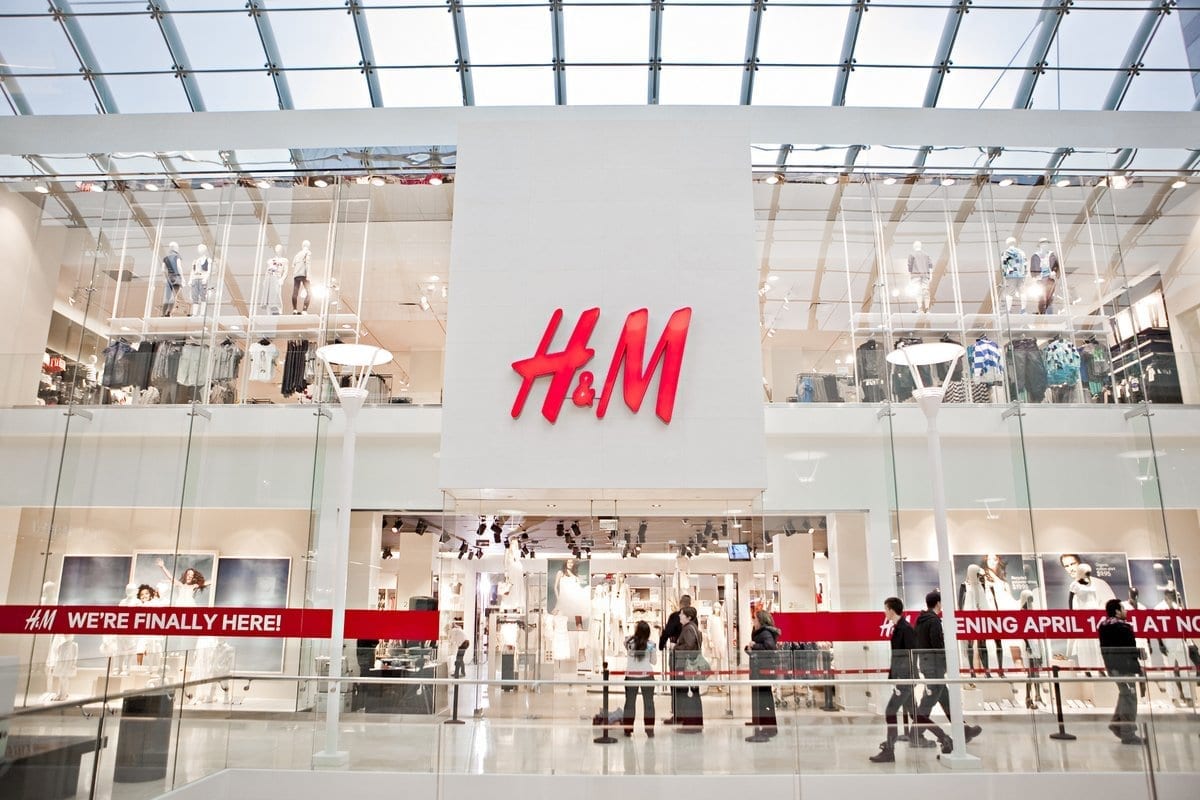
    Stung by a profit slump, the H&M group is pinning its hopes on China by launching a store on Alibaba’s Tmall next month.

    As well, the Swedish fast-fashion retailer is targeting India, Saudi Arabia and the UAE with new digital stores this year.

    Releasing its full-year report yesterday, H&M admits it has been struggling to keep pace with evolving shopping habits that have depressed sales in its physical stores.

    Sales grew 4 per cent last year but profit after taxes slumped 13 per cent, with CEO Karl-Johan Persson saying the fashion industry is “changing fast”.

    “At the heart of the transformation is digitalisation, and it is driving the need to transform and rethink faster and faster,” he says.

    With physical stores in 69 markets, H&M has an online presence in 43.

    Full-year global sales (to November 30) including VAT increased by 4 per cent to SEK231 billion (US$29 billion). This was a 3 per cent rise in local currencies. Sales excluding VAT reached SEK200 billion.

    Gross profit increased to SEK108 billion, corresponding to a gross margin of 54 per cent, down from 55.2 per cent the previous year.

    Profit after financial items amounted to SEK20.8 billion, down from SEK24 billion. The group’s profit after tax amounted to SEK16 billion, down from SEK18.6 billion.

    Final-quarter fall

    For the fourth quarter, H&M group sales including VAT were down 4 per cent to SEK58.4 billion (2 per cent in local currencies). Sales excluding VAT fell from SEK52.7 billion to SEK50.4 billion.

    Gross profit fell to SEK27.9 billion from SEK30 billion, corresponding to a gross margin of 55.4 per cent (57 per cent). Profit after financial items amounted to SEK4.8 billion, down from SEK7.4 billion.

    Profit after tax was SEK3.9 billion, down from SEK5.9 billion.

    Weak store sales led to increased markdowns and handling costs, impacting the quarter’s results.

    During the year H&M opened 479 stores (497 the previous year) and closed 91 (70), resulting in a net addition of 388 outlets. Eight online markets were launched and the brand entered five new markets. It ended the year with 69 sales markets, 43 of them including an online presence.

    This year the group plans to add about 390 stores to its network and close about 170, a net addition of about 220 stores. On Tmall it will have both H&M and H&M Home.

    At home in Sweden it will also introduce the Afound brand, an off-price marketplace offering products from fashion and lifestyle brands.
  • Daiso stores to penetrate Israeli retail market

    Daiso stores to penetrate Israeli retail market

    Japanese “dollar store” chain Daiso is about to enter the Israeli retail market, to be run by the Union Group, the franchise holder for Cos and H&M in Israel and the official importer for Toyota and Lexus.

    Founded in 1977, Daiso will be competing in Israel with chains such as Hastock and Max Stock. It is expected to offer 100,000 products at a fixed low price, including designer products and accessories for the home, toys, design aids, work tools, gardening tools, electronic products, auto products, sewing tools and animal accessories. Most are made exclusively for the Japanese chain’s private label.

    Daiso has 4900 stores in 26 markets, 3000 of them in Japan. The company’s revenue totalled $4 billion in 2015.

    Daiso’s most popular items are batteries and small products for the home.

  • Uniqlo to expand to Sweden

    Uniqlo to expand to Sweden

    Japan’s Fast Retailing plans to launch its Uniqlo clothing brand in Sweden with an initial store in Stockholm this year.

    Taking on its rival H&M in its home market, it marks the cut-price brand’s debut in the Nordic region.

    Uniqlo has fewer than 70 stores in all of Europe, and Fast Retailing CEO Tadashi Yanai says he wants to overtake H&M and Zara parent Inditex of Spain as the world’s top apparel retailer.

  • Vietnam to celebrate its new retail sales highest record US$129 billion

    Vietnam to celebrate its new retail sales highest record US$129 billion

    Spurred by a rising middle class and influx of international retailers, Vietnam retail sales hit a record US$129.6 billion last year.

    This was growth of 10.9 per cent over 2016, according to the Vietnam General Statistics Office (GSO).

    Vietnam’s largest real estate company, Vingroup, starting expanding its Vinmart Plus convenience store chain in 2016 and has already topped 1000 stores – it opened 100 last month alone. It is predicted the store network could reach 3000 this year.

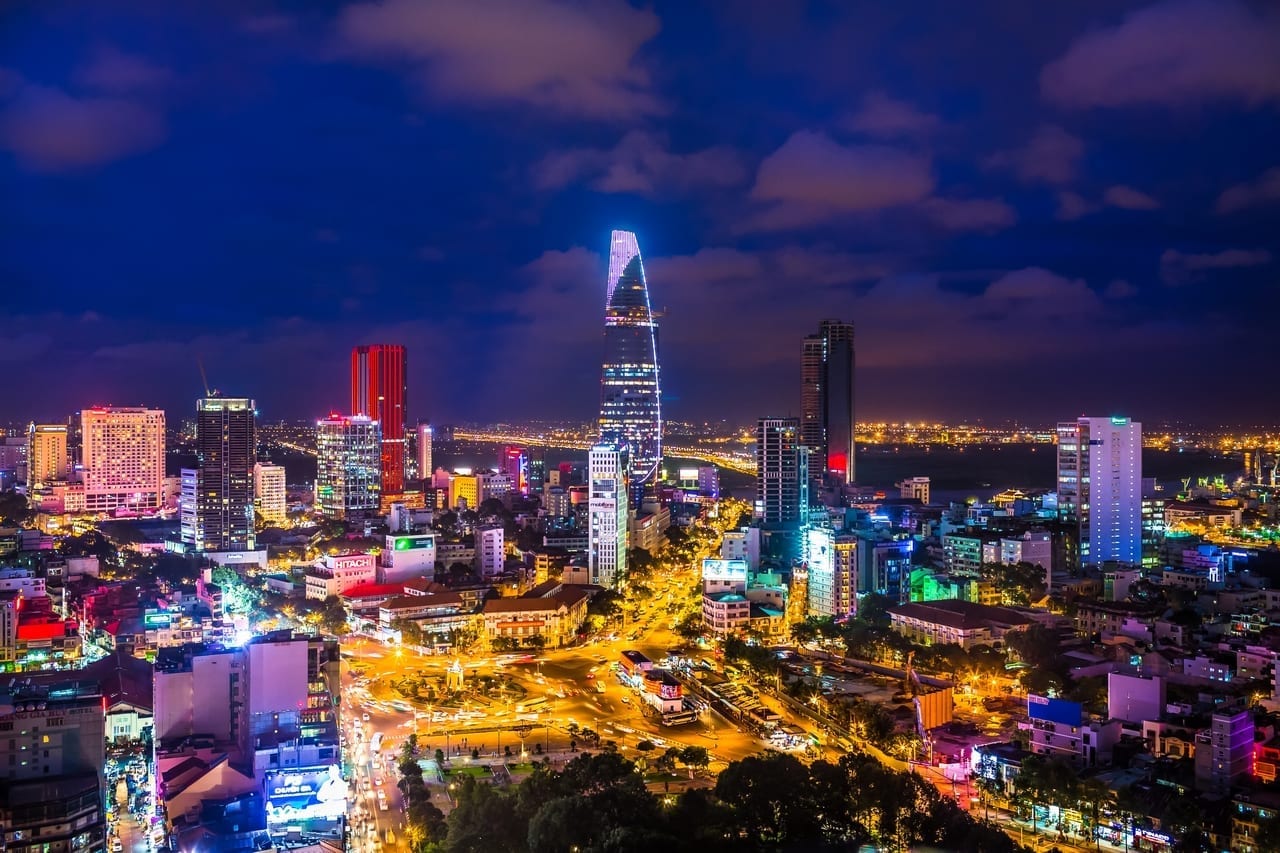
    Meanwhile, Vietnam last year saw the arrival of a slew of foreign retail brands, headed by Japan’s Seven & I Holdings opening its first Vietnamese 7-Eleven convenience store in Ho Chi Minh City in June.

    Swedish fast-fashion brand H&M followed in September with a store in the same city, while Zara, the chain of Spanish rival Inditex, opened its second Vietnam location in Hanoi in November (its first store, covering two levels, launched at Vincom Centre Dong Khoi in Ho Chi Minh City in September 2016).

    Thailand’s Central Group has made several acquisitions in Vietnam, including the Big C supermarket chain and electronics retailer Nguyen Kim Trading. It also launched its first stationery and office supplies store in Vietnam last year.

    South Korea’s GS Retail partnered with Vietnam’s Son Kim Group 12 months ago to open the first of their convenience stores in Ho Chi Minh City this month. They plan to open 2000 locations within 10 years.

    Double-digit growth

    Since joining the World Trade Organisation in 2007 and opening up to foreign goods and businesses, Vietnam has seen continued double-digit growth, led by a 31.5 per cent spike in 2008. With the Association of Southeast Asian Nations Economic Community taking full effect this month, Vietnam has eliminated nearly all tariffs on goods from within the region.

    Meanwhile, supermarkets and convenience stores are selling meat and vegetables at prices that are 20 to 30 per cent higher than at traditional markets, and the number of specialty shops selling organic vegetables is growing.

    Spending on cars, home electronics and other consumer durables is also brisk, with 70 per cent of Vietnam’s GDP coming from personal consumption.

    The GSO says auto sales grew by 14 per cent in value, gemstone and precious metals by 13.2 per cent, food and foodstuffs by 11.1 per cent, cultural and educational products by 10.2 per cent, apparel by 9.6 per cent, and home products by 8.5 per cent.

    Vietnam still has room for growth as modern retail channels like supermarkets and shopping centres account for only a quarter of total retail sales, and most of these businesses are in big cities, reports VIetnamNet. By 2020, the proportion of modern retail channels is forecast to rise to 45 per cent.

  • H&M apologizes for ‘coolest monkey’ racist campaign

    H&M apologizes for ‘coolest monkey’ racist campaign

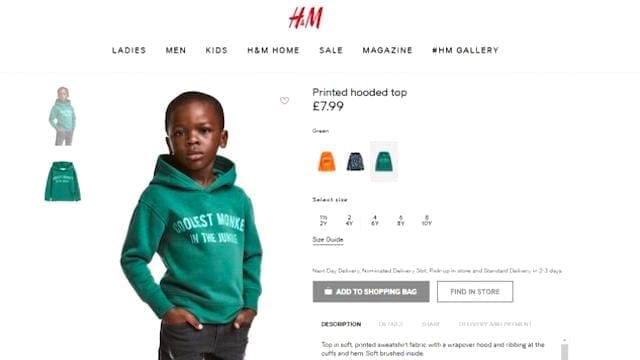
    Swedish fast fashion chain H&M has apologised for featuring a black child modelling a garment with the text “coolest monkey in the jungle”, also removing the advertisement and item from stores.

    H&M was forced to apologise following widespread backlash from consumers, staff, stakeholders and the media.

    “Our position is simple and unequivocal – we have got this wrong and we are deeply sorry,” the retailer stated.

    “H&M is fully committed to playing its part in addressing society’s issues and problems, whether it’s diversity, working conditions or environmental protection – and many others. Our standards are high and we feel that we have made real progress over the years in playing our part in promoting diversity and inclusion. But we clearly haven’t come far enough.”

    The retailer said it agreed with all the criticism that the controversy had generated and stated that “even if unintentional, passive or casual racism needs to be eradicated wherever it exists.”

    The item will be recycled after being removed from shop floors.

    “We appreciate the support of those who have seen that our product and promotion were not intended to cause offence but, as a global brand, we have a responsibility to be aware of and attuned to all racial and cultural sensitivities – and we have not lived up to this responsibility this time,” the retailer stated.

    “Racism and bias in any shape or form, conscious or unconscious, deliberate or accidental, are simply unacceptable and need to be eradicated from society. In this instance we have not been sensitive enough to this agenda.”

  • H&M to open its third store in Vietnam

    H&M to open its third store in Vietnam

    H&M Vietnam is opening its third store, at Ho Chi Minh City’s Vincom Mega Mall Thao Dien.

    The fast-fashion outlet will open on January 27 with limited-edition gifts for its first customers.

    The Swedish brand arrived in Vietnam four months ago, launching at Vincom Dong Khoi in Ho Chi Minh City. A second store followed at Vincom Mega Mall Royal City Hanoi, with more planned to open across Vietnam in the next two years.

    H&M has more than 4500 stores in more than 63 countries.

  • H&M activewear goes sustainable

    H&M activewear goes sustainable

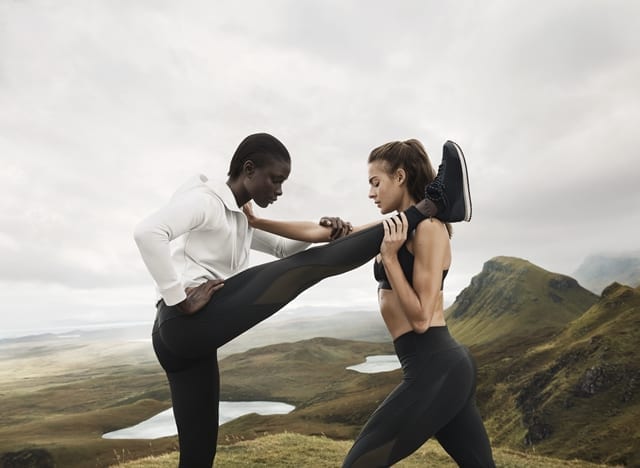
    Blending fashion and practicality, H&M activewear is using sustainable materials in its latest collection.


    With the theme “In it for the long run”, the Swedish fast-fashion brand’s collection includes tights, sports bras, hoodies and tops for training, running and yoga. As well as nature and sustainability being underlined through the prints and colour palette of green tones, black and beige, every piece predominantly uses recycled polyester and elastane.

    The garments are quick-dry and seamless for maximum comfort, offering built-in support and ventilation. The designs feature contrast panelling, criss-cross backs and decorative webbing.

    “By bringing together the functional and feminine, the aim is to give customers a stylish, eco-conscious sports collection,” says H&M head sportswear designer Petra Smeds. “We used a new knitting technique that creates seamless garments using less yarn and producing less fabric waste.”

    Ultimately, H&M aims to create a closed loop for textiles in which unwanted clothes can be reused or recycled.

  • H&M to close stores and expand on Tmall

    H&M to close stores and expand on Tmall

    It is normal practice to use Tmall to test the Chinese market. Is H&M tinking of using Tmall to replace its physical stores?

    As inventories rose and sales tanked in the fourth quarter, H&M announced it is picking up the pace on a transformation plan.

    Q4 sales fell 4% to $5.97 billion from the same period a year ago and foot traffic to stores declined, according to a company press release.

    CEO Karl-Johan Persson said the company would scale back its physical expansion and close some stores, but its collaboration with Alibaba is expanding.

    H&M and H&M Home brands will begin selling on Tmall and the company is in “far advanced discussions” to sell the rest of H&M’s brands through the Chinese e-commerce marketplace, according to another press release.

    Also last week, H&M rival Inditex reported a net sales rise of 10% to €17.96 billion ($21 billion) in the first nine months of fiscal 2017.

    The Spanish apparel company, owner of Zara, also announced the rollout of same-day delivery, automated in-store pick-up points for online orders and next-day delivery in six markets, including in Spain, France, the U.K. and China.

  • H&M will start selling on China’s Tmall in spring 2018

    H&M will start selling on China’s Tmall in spring 2018

    H&M China will open on Alibaba’s Tmall during spring next year.

    “We are very happy to be able to make H&M even more accessible in mainland China,” said  Karl-Johan Persson, CEO of the Swedish fast-fashion retailer.

    “Tmall is an important complement to our existing physical and digital stores. We see great potential for substantial future growth and Tmall will be an important part of this.”

    After opening its first store in mainland China 10 years ago H&M China sales now amount to SEK 11 billion (approximately US$1.3 billion) in over 500 physical stores and online.

    H&M said subsidiary brand Monki has had strong development in China since its launch on Tmall and the collaboration between the two groups is now being extended to include both the H&M brand and H&M Home.

    There are also far advanced discussions regarding the launch of the remaining brands in the H&M group on Tmall.

    “As one of the world’s most innovative fashion companies, H&M is a perfect fit for Alibaba’s Tmall platform,” said Michael Evans, president of Alibaba Group.

    “We are honoured to expand our cooperation with H&M and host their flagship store, enabling H&M brands to engage with our half a billion consumers.”

    However it’s not been all positive news for H&M recently, after the fast fashion giant saw sales slow over the last three months, sending its shares down 13 per cent to its lowest level since 2009.

    In the fourth quarter of 2017, sales excluding VAT amounted to SEK 50,390m (52,720), a decrease of 4 per cent compared to the corresponding quarter last year. In local currencies, sales decreased by 2 per cent.

    Persson said although the group continued to grow during the year, “growth was dampened by the fact that the sales development in the fourth quarter was significantly below the company’s own expectations.”

    “The H&M brand’s online sales and sales of the group’s other brands continued to develop well,” he said.

    “Meanwhile, the quarter was weak for the H&M brand’s physical stores, which were negatively affected by a continued challenging market situation with reduced footfall to stores due to the ongoing shift in the industry. In addition, there have been imbalances in parts of the H&M brand’s assortment composition.

    “In order to respond even quicker to customers’ fast-changing behaviour the company’s ongoing transformation journey is being accelerated. Among other things, this includes continued integration of the physical and digital stores, and intensifying the optimisation of the H&M brand’s store portfolio – leading to more store closures and fewer openings.”

  • H&M Suffers From Online Disruption

    H&M Suffers From Online Disruption

    Shares of the world’s second-largest fashion chain, H&M, have hit its lowest in eight years as the retailer reports plummeting sales at the conclusion of a despondent year.

    In the three months to the end of November 2017, H&M reported a 4 percent drop in sales, and on Friday its shares traded 15 percent lower than its lowest level from back in May 2009.

    Like many high-streets fashion brands H&M is having a difficult year, struggling to cope with the shift to online shopping. The retail giant blamed online shopping as well as “imbalances in parts of the H&M brand’s assortment composition”.

    The company says as a result it would focus more on integrating its online and brick and mortar stores, and re-strategise its physical store footprint by closing more stores and opening fewer.

    “In order to respond even quicker to customers’ fast-changing behaviour the company’s ongoing transformation journey is being accelerated. Among other things, this includes continued integration of the physical and digital stores, and intensifying the optimisation of the H&M brand’s store portfolio – leading to more store closures and fewer openings,” it said in a statement on Friday.

    H&M was one of the first retailers to sell online, but due to slowing its digital stride, it had been quickly overtaken by both pureplays, such as ASOS, and high-street fashion labels such as Zara, Gap and Uniqlo. H&M also had a plan to aggressively grow its physical stores, which clearly now has been reconsidered.

    In a separate note, H&M also announced on Friday that it would start selling its merchandise on China’s Alibaba-owned Tmall e-commerce platform by the second quarter next year. It currently sells its Monki brand on the site, however it’s in negotiations at the moment about selling all of its eight brands on the world’s largest e-commerce platform.

    “We are very happy to be able to make H&M even more accessible in mainland China. Tmall is an important complement to our existing physical and digital stores. We see great potential for substantial future growth and Tmall will be an important part of this,” says Karl-Johan Persson, CEO of the H&M group.

    Controlled by the Pearson family, which still provides the company with a CEO and a chairman, H&M has been under pressure from its minority shareholders, and in February 2018 it will hold its first-ever investor day.

  • Fast Retailing to launch in India

    Fast Retailing to launch in India

    Uniqlo parent Fast Retailing has applied to open stores in India.

    The Japanese fast-fashion giant has filed an application with India’s Department of Industrial Policy & Promotion to do business in the country under the Uniqlo brand.

    “India is a market with great potential,” says Fast Retailing spokeswoman Pei-Chi Tung. The company has long been interested in entering India, but has been beaten by H&M and Zara which are already established in the apparel market Euromonitor International has predicted will grow 29 per cent to INR3.76 trillion (US$58 billion) by 2021.

    Zara owner Inditex opened a flagship in Mumbai in May, which CEO Pablo Isla says has had a strong reception. It has just started online sales as well in India.

    Fast Retailing last month reported its biggest jump in annual earnings in more than a decade, driven by a near doubling of operating profit at Uniqlo stores outside of Japan. Operating profit for the brand in China jumped 37 per cent for the year ended August 31, compared with a 6.4 per cent slump in Japan.

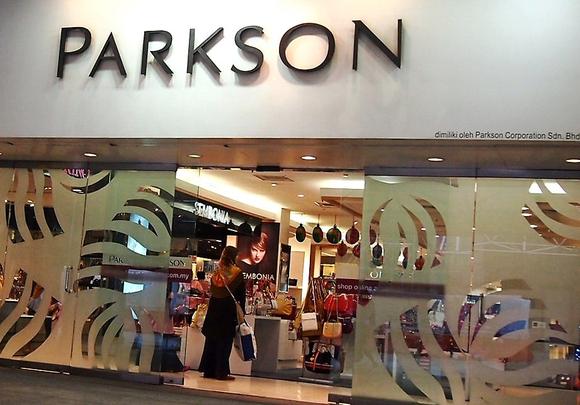
  • Parkson Retail Asia 1Q Net Loss Widens On Year As Sales Decline

    Parkson Retail Asia 1Q Net Loss Widens On Year As Sales Decline

    Parkson Retail Asia has had a lacklustre start to its fiscal year, its unaudited first-quarter figures show.

    Gross sales proceeds fell by 8.3 per cent year on year to S$202.4 million (US$148.9 million) for the quarter.

    Total merchandise sales generated $198.1 million, with concessionaire sales contributing 74.2 per cent, down from 77.9 per cent for the same period last year, and direct sales contributing the balance of 25.8 per cent.

    Attributable net losses to the owners of the company for the period, to September 30, reached $12.9 million. The group also had net current liabilities of $67.9 million at the end of September, the result of investments in new stores and ventures yet to reach optimal level. This was an increase of 22.5 per cent from its June 30 position.

    Same-store sales in Indonesia and Malaysia were impacted during the quarter by the absence of Lebaran/Hari Raya festival buying following a shift in the calendar.

    Malaysia remained challenging, with the country’s consumer sentiment index, at 77.1, continuing to register below the 100-point confidence threshold for the 13th consecutive quarter.

    Consumer spending appears to have also softened in Indonesia, where retail spending has been declining, while Parkson’s same-store sales in Vietnam dropped by 7.8 per cent. This is attributed to the “fading of novelty effects” arising from the entry into the market of such international players as H&M, Takashimaya and Zara.

    “Competition in Vietnam’s retail market remained intense,” says Parkson.

    In Myanmar, the group closed its store at FMI Centre, Yangon, in January with a new store at Junction Square in the city opening two months later.

    Parkson says its performance in the next quarter is expected to benefit from year-end school holidays and festive buying. However, it expects challenges with fragile consumer sentiment and stiff competition.

  • CapitaLand hits record with Suzhou Center Mall

    CapitaLand hits record with Suzhou Center Mall

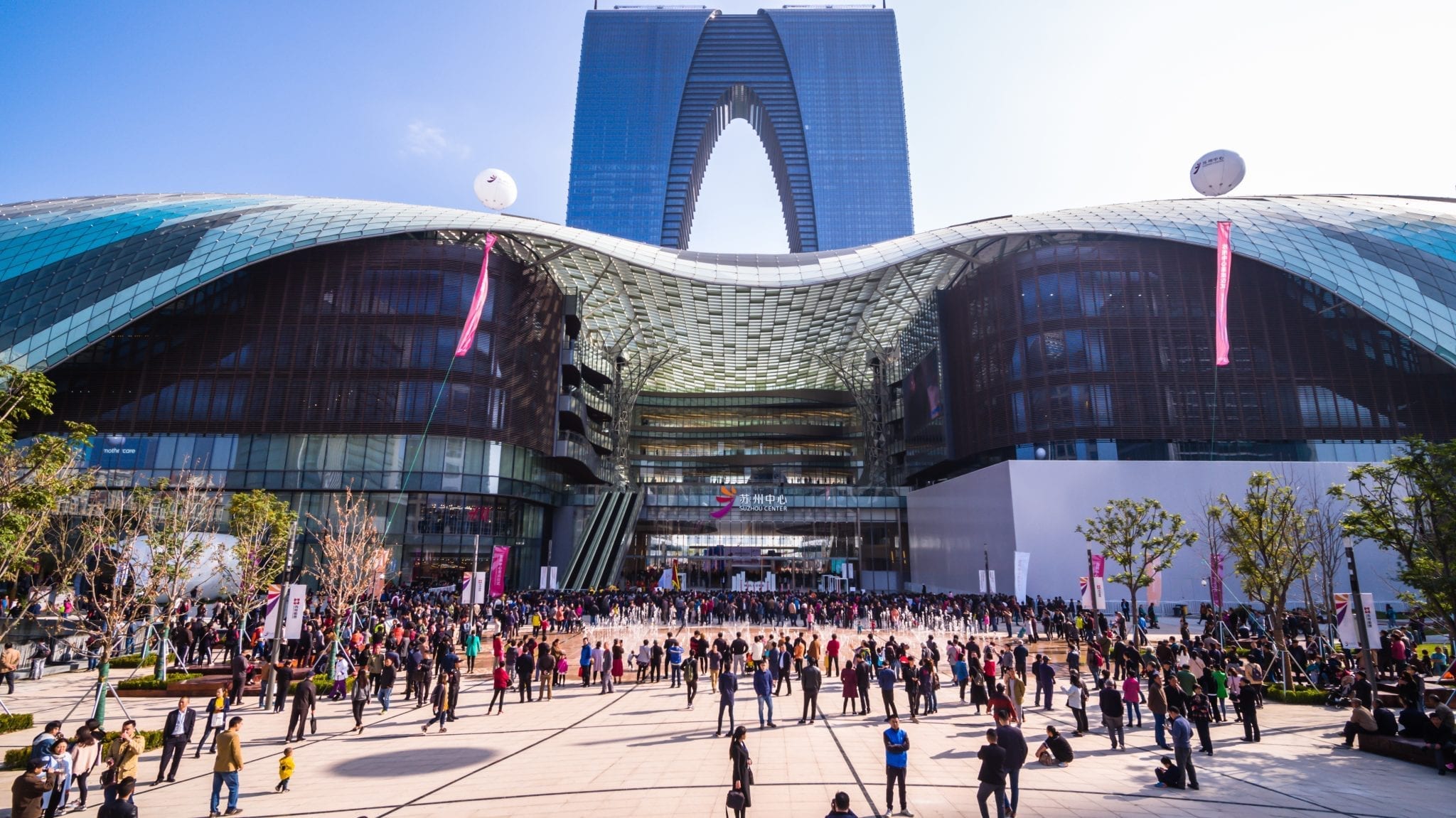
    With the opening of its largest shopping centre yet, Suzhou Center Mall, Singapore retail-estate company CapitaLand has marked a record year of a million square metres of retail space.

    More than three times the size of Ion Orchard in Singapore, the mall is also the largest shopping centre in the Chinese city. It spans nearly 300,000sqm in gross floor area (GFA), excluding car park.

    More than 600 retail brands are housed within the mall, in the heart of the western CBD of Suzhou Industrial Park, next to the historic Jinji Lake. It is the centrepiece of the Suzhou Center integrated development that also comprises four grade-A office towers, two luxury residential towers and the W Suzhou hotel tower, which are all interconnected.

    With a total GFA of 1.13 million square metres served by a 1570m tunnel leading to its basement car park and directly linked to two metro lines, Suzhou Center was master developed by Suzhou Hengtai Holding Group, owned by the Suzhou Industrial Park.

    CapitaLand, through its wholly owned shopping business CapitaLand Mall Asia, is co-owner and co-developer for the mall and two 21-storey office towers.

    World’s largest

    Designed by multiple award-winning architectural firm Benoy, the seven-storey Suzhou Center Mall has an undulating roof that is the world’s largest free-form monocoque roof at more than 36,000sqm. Shaped like a pair of phoenix wings to symbolise Suzhou’s growth taking flight, the multi-coloured roof comprises 6947 pieces of uniquely shaped glass.

    Suzhou Center Mall also boasts 60,000sqm of greenery across terraces, rooftops and the landscaped cantilever bridges that extend from two ends of the mall to the lakefront. A 45m-wide, 25m-high water curtain is a feature of the mall’s facade facing Jinji Lake.

    The mall opened with more than 90 per cent lease commitment for its net lettable area of about 152,000sqm. Anchor tenants include more than 600 brands including Suzhou’s first CGV cinemas, its first Fanpekka children’s theme park, first indoor simulated gaming centre, an Olympic-size ice rink, a gourmet supermarket and a food court.
    Nearly a third of the mall’s offerings are new to Suzhou, including Forever 21 and Victoria’s Secret. H&M and Zara will run triplex stores in the mall, their biggest outlets in the city.

    Suzhou center mall

    CapitaLand says that with the opening of Suzhou Center Mall, 61 of its total portfolio of 69 owned and managed malls in China are up and running.

    CapitaLand CEO Lim Ming Yan says the mall’s opening caps a record year for the company. “Nearly 1 million square metres of retail GFA across eight developments came on line this year, marking our largest-ever retail offering in a single year.”

    CapitaLand Mall Asia CEO Jason Leow says that about 85 per cent of the group’s total assets contribute to recurring income, of which shopping malls and integrated developments form the bulk. “As we increase CapitaLand’s recurring income base with mall openings, we will also continue to enhance our retail scale and network through acquisitions and management contracts, as well as reconstitute our portfolio to achieve an optimal asset mix.”

  • New store for Zara Vietnam

    New store for Zara Vietnam

    Zara Vietnam opens its first Hanoi store tomorrow in Vincom Centre Ba Trieu.

    According to an announcement on the Spanish fashion brand’s website, the three-storey store will face Doan Tran Nghiep street and offer styles for women, children, teens, and men. It will feature hoodies and coats as the capital faces winter.

    Zara arrived in Vietnam two months ago, launching at Vincom Centre Dong Khoi in Ho Chi Minh City, covering 2400sqm over two levels.

    Swedish fast-fashion brand H&M, which also entered Vietnam with a store in Vincom Centre Dong Khoi, will follow on Saturday with its first Hanoi store at Vincom Mega Mall Royal City Thanh Xuan.

  • H&M invests in ‘new unique’ recycling technology

    H&M invests in ‘new unique’ recycling technology

    H&M Group has also invested in new unique recycling technology, after partnering with Swedish company re:newcell whose unique technology recycles used cotton, viscose and other cellulosic fibers into a new, more sustainable dissolving pulp.

    The pulp can be turned into new textile fibers and be fed into the textile production cycle.

    H&M said the partnership is another step towards H&Ms goal to use 100 per cent recycled or other sustainably sourced material by 2030.

    “Re:newcell´s technology has the potential to become a commercial and scalable solution for the industry and accelerate the journey from a linear fashion industry towards a circular one”, said Cecilia Brännsten, acting environmental sustainability manager and circular economy lead, at H&M group.

    Earlier this month, the fast fashion giant reported a quarterly earnings drop after reduced footfall in stores and increased competition in the fashion sector.

    Net profit for the three months to end-August, the third quarter of the retailer’s financial year, came in at 3.84 billion kronor ($470 million), a drop of 20 percent. Sales grew 4.6 percent to 51.23 billion kronor.

    The fast fashion giant recently  confirmed it will open its first Wellington store at Queensgate Shopping Centre in Lower Hutt on October 26.

    Queensgate will be the site of H&M’s third store in New Zealand and span 2,700sqm over two levels.