Tag: honda

  • Honda recalls 221 of its most expensive motorcycles for faulty fuel pump

    Honda recalls 221 of its most expensive motorcycles for faulty fuel pump

    Honda Vietnam is recalling 221 of its two most expensive motorcycles, the CBR1000RR Fireblade and Gold Wing, for faulty fuel pumps that could cause their engine to stall.

    The 74 CBR1000RRs and 147 Gold Wings were manufactured in Japan between September 2017 and March 2023 and imported to Vietnam.

    Due to changes in production methods, the faulty fuel pump impeller could get deformed, preventing fuel from flowing into the engine, Honda Vietnam said.

    This could make starting the engine difficult and potentially cause the vehicle to shut down, it said.

    While no accidents have been reported in Vietnam due to the defect, the company advised owners to bring their vehicles to authorized dealers to get them fixed, a task that should take around an hour.

    The recall started on March 29 and will go on for two years.

    CBR1000RRs were once previously recalled in April 2022 for faulty oil cooler pipes that could overheat and melt, causing oil leakages.

    The CBR1000RR is currently priced at VND1.05 billion (US$41,400) and the Gold Wing at VND1.23 billion ($48,500).

  • 2024 Honda Dream arrives from Cambodia

    2024 Honda Dream arrives from Cambodia

    A motorbike dealer has just imported a batch of the latest model of the Honda Dream, an iconic vehicle that was all the craze a few decades ago.

    Previously the bike used to sell for VND100 million (US$3,970), while the new one is marked at $2,500 in Cambodia, from where they are imported.

    The Dream was a classic vehicle near and dear to many generations of Vietnamese, but was discontinued long ago in many countries, leaving Cambodia the sole manufacturer in Southeast Asia.

    The 2024 model retains its nostalgic long, sleek body with the name “Dream” etched right beneath its rear seat handle. However, the traditional square panels are replaced with more low-key rounded ones, a design choice that does not sit well with the majority of Vietnamese bike enthusiasts due to the striking similarity to SYM motorbikes.

    The Dream utilizes a combination of imported and locally produced parts.

    Honda and Yamaha are the two largest imported motorbike brands.

    Some dealers speculate that the new Dream, like the previous Wave 125i imported from Thailand, will fetch a hefty VND80 million, twice the price of similar models assembled locally.

    With a barely noticeable difference in horsepower, technology or design priced like a premium automatic or performance motorcycle, the 2024 Honda Dream will have a hard time attracting young customers who usually lean toward sleek and modern designs.

    It will likely only attract wealthy collectors nostalgic for the good old days.

  • Honda Vietnam’s automobile, motorbike sales drop in October

    Honda Vietnam’s automobile, motorbike sales drop in October

    Honda Vietnam has revealed that its retail sales of motorcycles and automobiles in October dropped by 7.5% and 15.9% respectively compared to previous month due to market difficulties.

    In the reviewed period, Honda Vietnam sold 180,881 motorbikes, with 18,452 exported and 2,148 automobiles of all kinds.

    In the fiscal year of 2024 (from April 2023 to March 2024), the company has posted sales of 1,171,108 motorbikes, marking a year-on-year decrease of 12.9%.

    It has sold 12,850 automobiles of all kinds in the fiscal year, a decline of 27.3% over the same period in fiscal year 2023.

    The Honda City sedan continued to be its best-seller with 751 units sold, followed by Honda CR-V and Honda BR-V with 477 units and 468 units, respectively.

  • Honda To Pull The Plug On Car Sales In Russia In 2022

    Honda To Pull The Plug On Car Sales In Russia In 2022

    Honda Motor Company has said that it won’t be supplying new cars to its authorized dealers in Russia in 2022 as the company is trying to restructure its operations. The Japanese automaker has confirmed that it would keep its presence in the Russian market with motorcycle and power equipment sales only. The news comes after a drastic drop of 50 percent in its sales operations last month in Russia.

    Even in India, Honda has shut down its Greater Noida plant and has shifted its entire production unit to the company’s other facility in Tapukara, Rajasthan. The carmaker has said that it has realigned its production operations “to maintain sustainability by leveraging production and supply chain efficiencies.” From this month, the manufacturing operations for vehicles and components will happen at the Tapukara plant for all domestic sales and exports. Until last month, the Greater Noida plant produced models like the Honda City sedan, CR-V SUV, and the Civic sedan. While the transition will see the production of the City move entirely to the Tapukara unit, at present, the company has also stopped the production of its flagship models, the Civic sedan and CR-V SUV.

    As far as the Russian market is concerned, Honda does not have any manufacturing unit in Russia, unlike its other Japanese counterparts like Toyota and Nissan. All Honda models are sold as CBUs in the Russian market, and the carmaker sold just 79 units last month. Its sales from January to November were down by 15 percent at 1,383 units, while over 1.3 million new cars were sold in Russia during that period.

  • Honda raises motorbike prices across the board

    Honda raises motorbike prices across the board

    Honda Vietnam has hiked the prices of most motorbikes following an increase in costs, the biggest hike being of VND2 million ($85).

    The price of the Vision 110cc, its best-selling automatic model, has risen by 1.37% to VND37.09 million.

    The Air Blade 125cc, a powerful city motorbike favored by men drivers, is up 1.62% to VND43.99 million.

    The LEAD, a vehicle known for its large storage space, has seen its price go up by 1.16% to VND43.59 million.

    The SH350i, Honda’s most expensive city motorbike, is up 1.32% to VND152.49 million.

    With global economic trends affecting the parts market, costs have increased, Honda said.

    Last year Vietnam’s biggest motorbike seller saw sales grow by 20.9% to 2.4 million units, accounting for 80.7% of the market.

  • Honda Vietnam’s motorcycle, automobile sales continue to drop in February

    Honda Vietnam’s motorcycle, automobile sales continue to drop in February

    Honda Vietnam has reported its fall in motorcycle and automobile sales at 36.8% and 7.3% respectively in February.

    That is the second month in a row the company recorded sale falls after seeing a growth of nearly 19% for motorcycles and 62% for the automobile last December.

    In February, it sold 140,669 motorcycles, down 36.8% compared to the previous month. Specifically, the sale of Wave Alpha – its best-seller semi-automatic model, decreased by 42.6% compared to that in January.

    Similarly, Vision – its best-seller scooter model – also saw a sales decrease of 34.9%, and Winner X clutch 27% compared to the previous month.

    Previously, the Vietnam Association of Motorcycle Manufacturers (VAMM) forecasted that the Vietnamese motorcycle market had entered a period of saturation and was shifting from manual transmission motorbikes to automatic ones. Currently, the automatic transmission motorbike lines account for more than 45% of the market share and will be a strongly growing segment soon when Vietnam’s per capita income increases.

    In February, Honda Vietnam also exported 23,917 motorcycles.

    Meanwhile, the Japanese manufacturer last month sold 1,385 automobiles, down 7.3% from the previous month. Honda City and Honda CR-V continued to be the two best-selling models of Honda Vietnam with 1,235 vehicles, accounting for 89.2% of its total car sales in February.

  • Honda Motorcycles And Scooters India Twitter Page Hacked

    Honda Motorcycles And Scooters India Twitter Page Hacked

    The official Twitter account of Honda Motorcycles and Scooter India was hacked over the weekend. The company today put out a statement on social media asking people to stop any interactions with its Twitter handle until further notice and disregard any posts or communications on the page since Sunday, March 5. The company also said it contacted Twitter to re-establish control of its account.

    A look at the official Twitter handle of HMSI shows that the page has since lost the blue tick that identified it as the official handle as well as dropped the profile image. The link to the official website has since been rand another while the latest retweeted story is to a third-party NFT page. Similarly, the section under likes are filled with tweets of third-party art creator pages.

    Honda has said it is looking to re-establish its control over its Twitter account as soon as possible.

    The company has recently been teasing a new motorcycle for the Indian market. The new model is expected to sit in the 100cc commuter segment and be called the Shine. The model is set to be launched in India on March 15.

  • Chinese carmaker Haima returning to Vietnam

    Chinese carmaker Haima returning to Vietnam

    After first unsuccessfully entering the Vietnamese market a dozen years ago, Chinese automaker Haima plans to begin selling cars here again later this year.

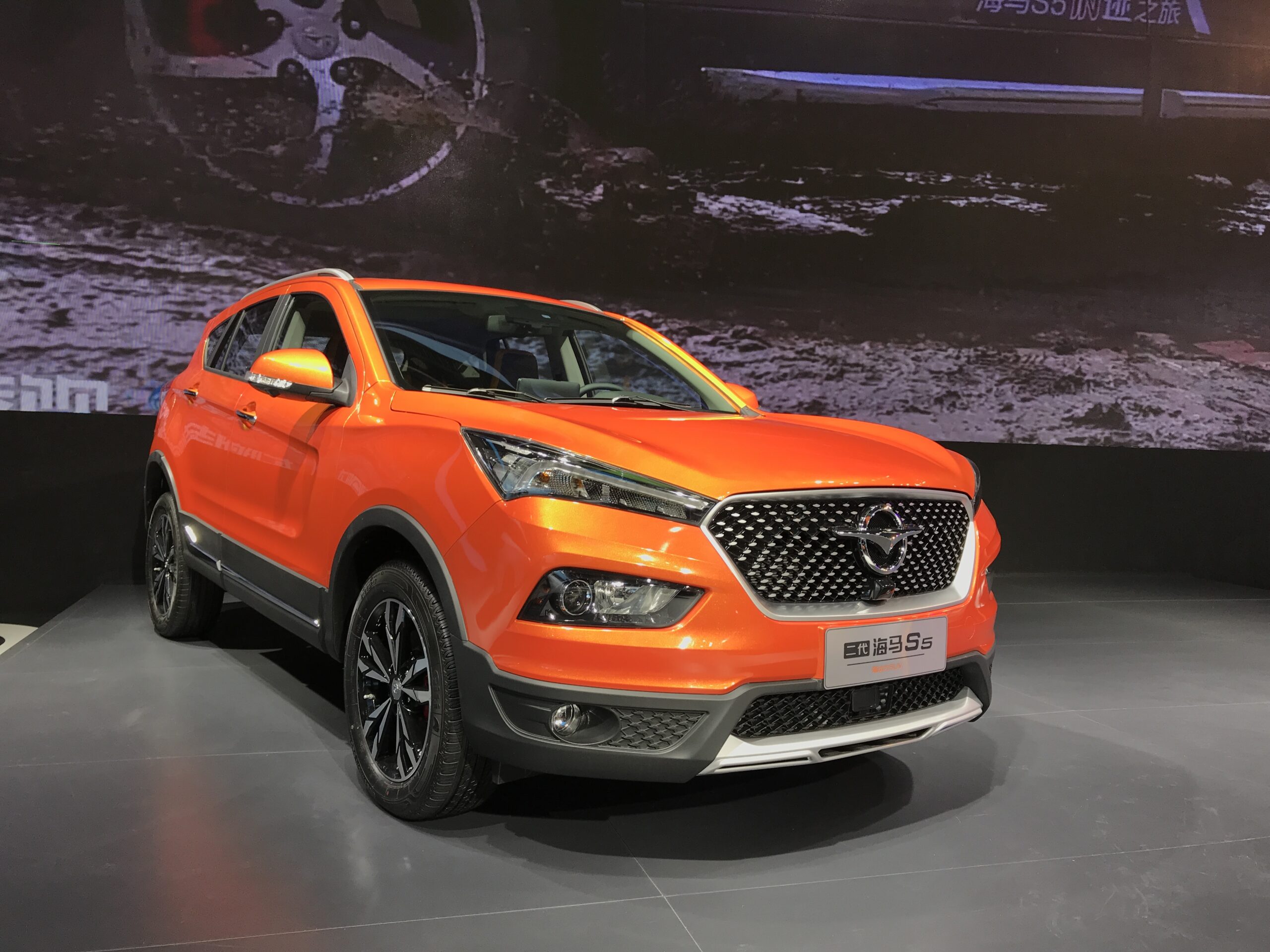
    Tran Viet Son, sales director at Carvivu, Haima’s new distributor in Vietnam, said the company will import 3 Haima models, namely the 8S, 7X and 7X-E.

    The 7X will be the first model released in Vietnam beginning in the second half of 2023. The car is slated to compete with the Mitsubishi Xpander and the Toyota Veloz, Son said. Haimas will be sold at two showrooms in Hanoi and one in HCMC.

    The distributor expects the 7X to be Haima’s biggest seller in Vietnam due to the popularity of multi-purpose vehicles (MPV).

    Son said the car would probably sell for around VND700-800 million (US$29,700-33,900) each. The most popular MPV models in Vietnam currently sell for significantly less than that.

    The Mitsubishi Xpander costs VND555-688 million per unit, while the Toyota Veloz sells for VND658-698 million.

    The most expensive MPV model in Vietnam is the is Kia Carens, which lists at around VND619-859 million.
    The electric variant of the 7X, the 7X-E, is expected to cost VND1 billion or more.

    Haima’s small car offering, the 8S, will also be available on the Vietnamese market in the second half of this year. The 8S will be competing with the Mazda CX-5 (VND839-1,059 million) and the Hyundai Tucson (VND845-1,060 million).

    The Chinese automaker first entered the Vietnamese market in 2011, only to soon exit quietly after failing to compete with stronger, more durable Japanese cars

    However, over the past two years, Chinese automakers such as Beijing, Hongqi and BAIC have begun to reach Vietnamese customers.

    Automobile manufacturer Chery has announced plans to build a factory in Vietnam to assemble cars for export.

    And Vietnamese firm TMT Motors will also begin assembling and distributing Chinese Wuling Hongguang Mini EV electric cars late this year.

  • Honda To Cut Car Output At Two Japanese Plants In October

    Honda To Cut Car Output At Two Japanese Plants In October

    Honda Motor Co said on Thursday it would reduce car output by up to 40% at two Japanese plants for the rest of October from its earlier plans, as the company battles with persistent supply chain and logistical problems.

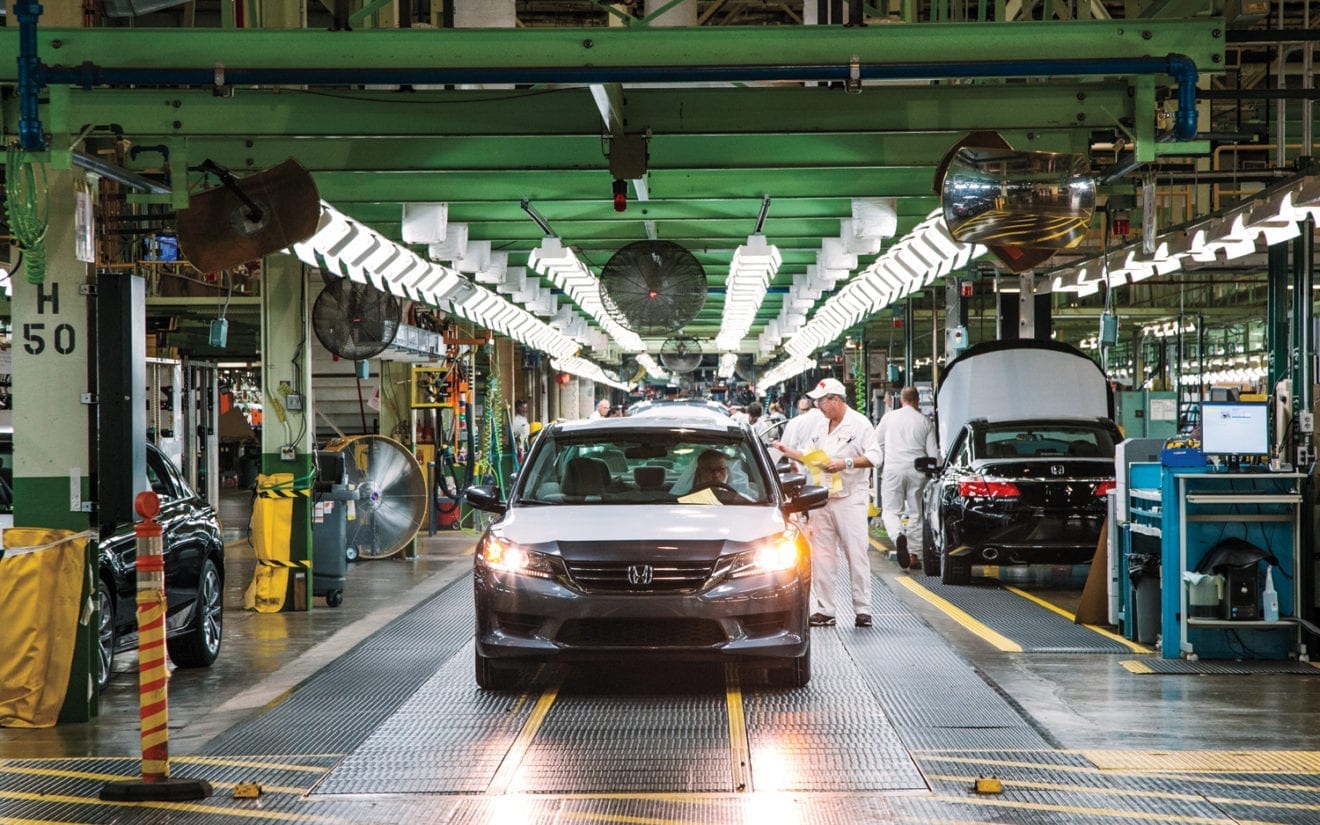
    Two lines at Honda’s Suzuka plant in western Japan will cut production by about 20% in October, while its assembly plant in Saitama prefecture, north of Tokyo, will lower production plans by about 40% for the month.

    The automaker said it would cut vehicle production at Suzuka by 40% and Saitama by 30% in early October last month.

    Honda blamed delays in receiving parts and logistics on COVID-19 outbreaks and semiconductor shortages. The output reduction will affect vehicles, including the Vezel sport-utility vehicle, Stepwgn minivan, and Civic compact car.

    Honda’s production at the two plants returned to normal for June after an earlier reduction, but it began adjusting again for July.

    Last week, Honda’s rival Toyota Motor Corp lowered its October production target by 6.3% to about 750,000 vehicles because of a shortage of semiconductors.

    That announcement came about a week after it had lowered the production target for that month to around 800,000, about 100,000 short of its average monthly production plan. (This story has been corrected to fix the month Honda began cutting production to July from August in paragraph 5)

  • Honda Motorcycle and Scooter India To Launch Flex-Fuel Engined Motorcycle

    Honda Motorcycle and Scooter India To Launch Flex-Fuel Engined Motorcycle

    Honda Motorcycle and Scooter India (HMSI) confirmed that will launch motorcycles with flex-fuel engines in the next two years. Atsushi Ogata, President, MD & CEO, HMSI, said that the company’s internal target is to launch at least one commuter motorcycle with flex-fuel engine by the end of 2024, although he did not mention which model will it be. Honda already has motorcycles with flex-fuel engines, which it sells in Brazil.

    TVS Motor Company was the first two-wheeler company to launch a flex-fuel motorcycle, which was the Apache RTR 200 Fi E100 in July 2019, which could run on petrol as well as Ethanol. It had an E100 200 cc single-cylinder engine which has a power output of 20.7 bhp at 8,500 rpm and peak torque of 18.1 Nm at 7,000 rpm. TVS claimed a top speed of 129 kmph. The ethanol powered Apache gets electronic fuel injection with twin-spray-twin-port system that ensures better power delivery while burning cleaner and emitting up to 50 per cent less Benzene and Butadiene gases.

    HMSI’s announcement comes at the same time as Toyota showcasing the Corolla Altis Flex-Fuel model, earlier this month, which will be launched soon. The new Corolla Altis is powered by a 1.8-litre flex fuel engine paired with the company’s self-charging strong hybrid system. The debut marks the return of name plate to India after Toyota pulled the plug on the previous generation model in 2020. The flex fuel

  • Honda runs out of motorcycle parts, buyers take hit

    Honda runs out of motorcycle parts, buyers take hit

    Honda, which has an 80 percent share of the motorbike market in Vietnam, faces a shortage of parts. After years of using a semi-automatic motorcycle, Huy Manh of Hanoi decided to buy an automatic one, a Honda Vision listed at VND32-35 million (US$1,400-1,530).

    But the price quoted at HEADs (Honda Exclusive Authorized Dealers) was VND44 million, and he has to wait for two or three weeks for delivery.

    The production shortage and long queues in HCMC mean many showrooms have stopped taking deposits since they cannot guarantee delivery in time. It used to take buyers only around two or three days, and up to two weeks in case of special options, to get a Honda bike delivered. The waiting time is now two weeks to a month.

    Honda blamed it on a global disruption in the supply of parts and materials. Its locally assembled models like Vision, Lead and SH Mode are the worst affected. It is impossible to know when supply would return to normal levels, it said, adding it is trying its best to ensure supply to dealers.

    Buyers have to pay 20-30 percent more than the listed prices for a motorbike. They had been hiked by 1-5 percent only last month.

    Honda sold two million vehicles last year, or 80 percent of the market share, according to the Vietnam Association of Motorbike Manufacturers, whose members include all major companies.

    Supply is more stable for other producers, but their shares are too small to satisfy the market.

    Honda’s shortage not only affects its own sales but also related businesses such as accessories, painting and maintenance.

  • GM and Honda To Produce ‘Attainable EVs’ In Bid To Surpass Tesla Sales

    GM and Honda To Produce ‘Attainable EVs’ In Bid To Surpass Tesla Sales

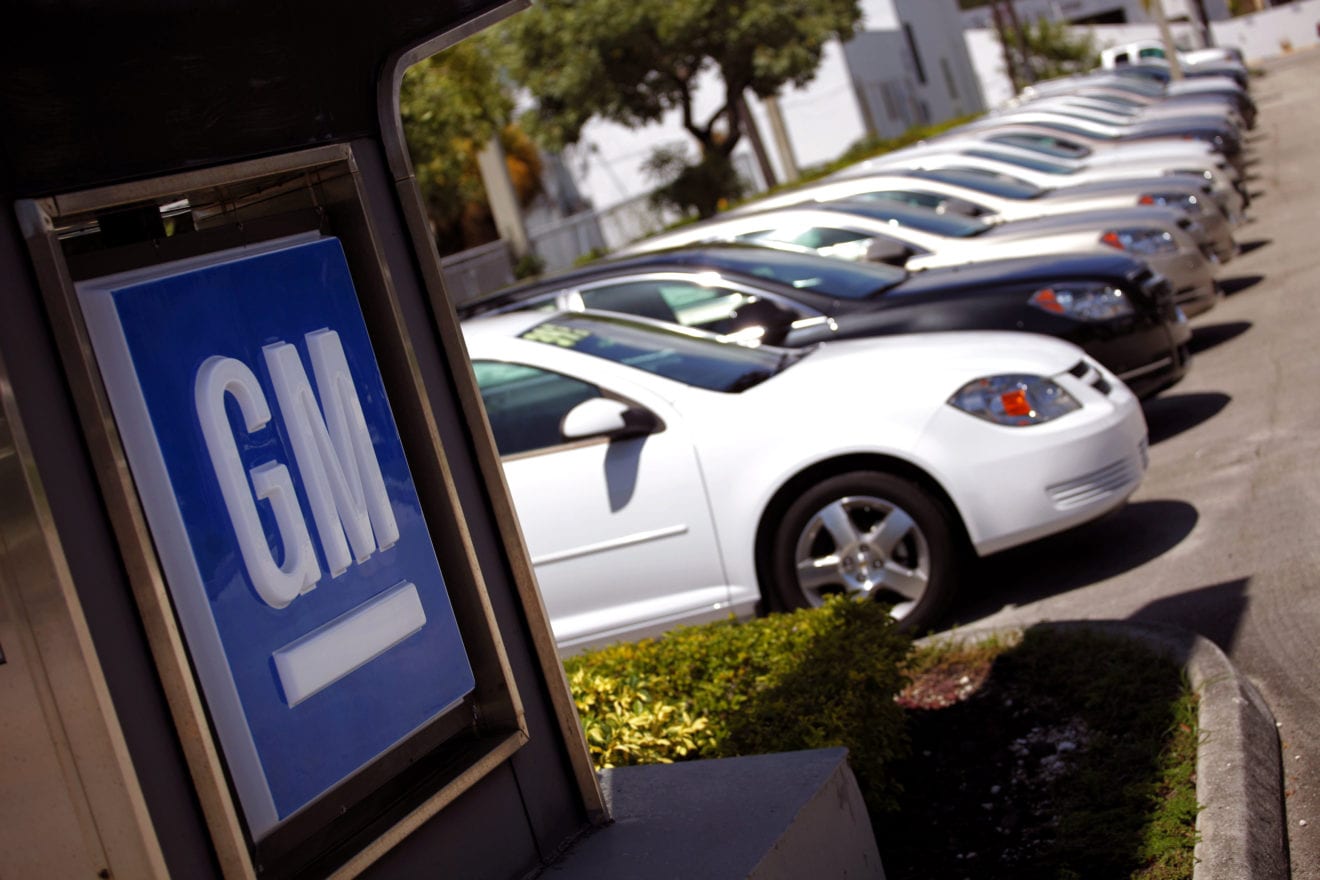
    General Motors and Honda Motor Co said on Tuesday they will develop a series of lower-priced electric vehicles based on a new joint platform, producing potentially millions of cars from 2027 in a bid to beat Tesla in sales.

    The announcement expands on plans for GM to begin building two electric SUVs for Honda starting in 2024 – the Honda Prologue and an Acura model.

    The automakers said the new deal is for “affordable” EVs, including compact crossover vehicles, built using GM’s Ultium battery technology. The compact crossover is the biggest selling auto sector in the world with annual volumes of more than 13 million vehicles, the companies said.

    The companies declined to say how much they are investing as part of the new collaboration.

    GM Chief Executive Mary Barra said Tuesday at an Axios event the pricing will come in below the $30,000 price tag planned for the electric Chevrolet Equinox SUV. She said the new lower-priced vehicles would be “attainable EVs.”

    She said the new vehicle is part of GM’s plan to surpass Tesla in EV sales.

    “We have a very important goal… that by mid-decade, by 2025, we’ll sell more EVs in the U.S. than anyone else and to do that, you need to have a portfolio of vehicles,” Barra said, noting GM plans a wide range of small to large EVs. “We definitely can scale and can do it quickly.”

    The companies said they will also discuss future battery technology collaboration for electric vehicles in a push to drive down costs.

    The deal is part of GM’s push to achieve carbon neutrality in its global products and operations by 2040 and eliminate tailpipe emissions from light-duty vehicles in the United States by 2035.

    Honda has said it aims to reach carbon neutrality on a global basis by 2050.

    The Japanese carmaker owns a stake in GM’s Cruise self-driving car subsidiary and the carmakers are co-developing the Cruise Origin autonomous EV. The companies also have a joint venture to develop and produce hydrogen fuel-cell systems at a plant in Brownstown, Michigan.

    “Honda and GM will build on our successful technology collaboration to help achieve a dramatic expansion in the sales of electric vehicles,” Honda CEO Toshihiro Mibe said.
  • Qualcomm Inks Car Chip Deals With Volvo, Honda And Renault

    Qualcomm Inks Car Chip Deals With Volvo, Honda And Renault

    Qualcomm Corp on Tuesday announced deals to supply chips to automakers Volvo Group, Honda Motor Co Ltd and Renault SA, accelerating its push to partner with legacy automotive firms digitizing their product lines.

    The San Diego, California, company once known for its mobile phone chips has created a range of automotive offerings, from self-driving car brains to chips that operate digital dashboards and infotainment systems. But the chips are all aimed at the same goal of helping automakers transform their vehicles into rolling computers that can be updated over the air with paid upgrades that generate revenue for carmakers long after a vehicle has left dealer lots, a business model pioneered by Tesla Inc.

    At the Consumer Electronics Show in Las Vegas, Qualcomm said it has reached a deal with Geely Holding-backed brands Volvo and Polestar to use Qualcomm’s “Snapdragon Cockpit” chips and an operating system from Alphabet Inc’s Google in vehicles starting later this year.

    The deal will allow Volvo’s electric SUV to tap into hands-free use of Google Assistant and navigation with Google Maps

    The deal will allow Volvo’s electric SUV, which is to begin production this year, to tap into hands-free use of Google Assistant and navigation with Google Maps. The companies said that future upgrades will be sent out over the air.

    Qualcomm also said that Honda will start using its “cockpit” chips in vehicles that will hit roads in 2023. Qualcomm also said Renault has agreed to use its automotive technology, but did not give specifics of which chips or when vehicles using them would arrive.Qualcomm said on Tuesday that it has created a new chip and system for computer vision, which uses cameras on the car and artificial intelligence to help with safety functions like automatic lane control. The new “Snapdragon Ride Vision System” uses software from Arriver, which was part of Qualcomm’s $4.5 billion purchase of automotive technology firm Veoneer Inc last year.

  • Honda China JV Announces 120,000 Units-A-Year EV Factory

    Honda China JV Announces 120,000 Units-A-Year EV Factory

    Honda Motor and its Chinese joint venture partner Dongfeng Motor said on Thursday they would build a new factory in Wuhan to exclusively manufacture electric vehicles (EVs) from 2024.

    The factory would have a production capacity of 120,000 vehicles a year, Honda said in a statement.

    Honda, Japan’s second-largest automaker, is set to launch a new EV brand in China this year called e:N Series with plans to roll out 10 models with partners Dongfeng and GAC.

  • Honda Sets Up Battery Sharing Subsidiary In India

    Honda Sets Up Battery Sharing Subsidiary In India

    Honda has announced setting up a new subsidiary in India, which will focus on the supply chain side of the electric vehicle industry. Called Honda Power Pack Energy India Private Limited, the new subsidiary for battery sharing service in India will offer service for small mobility players. In a statement, Honda has said that the company plans to start battery sharing service for electric auto-rickshaws from the first half of 2022 in Bengaluru, Karnataka, and expand the operations in other Indian cities in a phased manner.

    Swappable batteries will offer subscribers fully-charged batteries at the stations which can be swapped in a matter of minutes, instead of waiting to charge the vehicle.

    “The company will offer battery sharing service for small mobility, which will accelerate the penetration of electric vehicles by solving three issues of electric vehicles: limited range, long charging time, and high cost of batteries,” Honda said in the statement.

    Honda’s all-new portable and swappable batteries will be called “Honda Mobile Power Pack e,” and the company’s battery sharing service subscribers can avail of the services from the nearest battery swapping station. At the battery swapping station, subscribers can swap the used batteries with fully charged ones, and need not wait for charging and can get back on the road in marginal time.

    The company has invested ₹ 135 crore, and will work closely with original equipment manufacturers (OEMs) who wish to integrate Honda’s battery into their vehicles, by providing necessary technical information for an interface. By expanding vehicle OEMs, applications, and service areas, the company aims to onboard more drivers which will further enhance service convenience.