Tag: Hong Kong

  • Heron Preston makes debut in Hong Kong

    Heron Preston makes debut in Hong Kong

    U.S. brand Heron Preston which, as Vogue defines it, finds the interface of luxury and streetwear has arrived in Hong Kong. The New York-based designer announced on Instagram that his Hong Kong debut also served as Heron Preston’s first-ever storefront anywhere.

    “I can’t believe I started hand printing t-shirts in San Francisco and now I’m here. I want to thank my amazing team for the love and support!” he said.

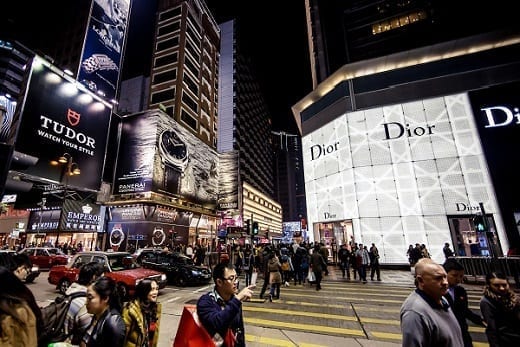
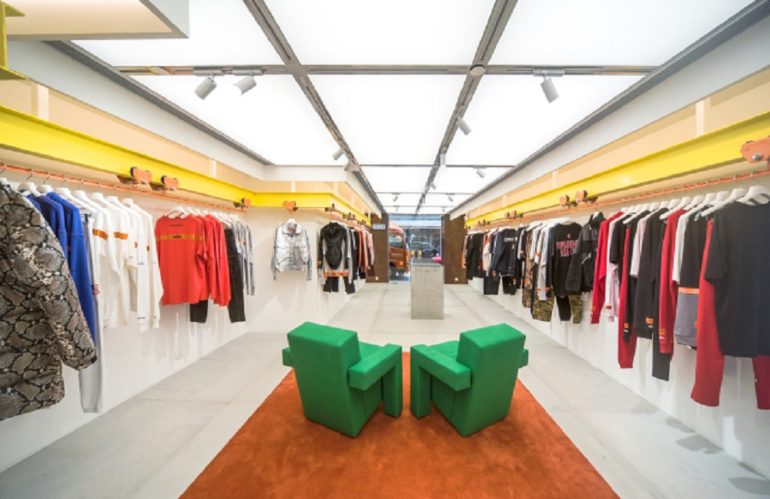
    Located on Paterson Street, Fashion Walk, in the city’s Causeway Bay area, the new Heron Preston store was designed by the contemporary designer too.

    Inside, Hong Kong shoppers are greeted by industrial interior fixtures such as steel shelving, painted wooden crates and licks of safety orange throughout.

    An emerald green chair is set up in the centre of the shop next to the concrete sales counter. The light is bright and remainder of the store minimal in design, allowing the Heron Preston collections to speak.

    Offering a full selection of the designer’s wares, clothes are displayed hanging from the racks, with accessories kept under the glass shelf of a table and hosted on shelves.

    Marking the store opening, Heron Preston has teamed up with fellow American and sportswear heavyweight Nike for a limited edition eyewear collection.

    Dubbed “Nike Tailwind HP Sunglasses”, the glasses are lightweight and wrap-around style, the frames mimicking the brand’s innovative rubber ventilation. The collection comes with interchangeable lenses too.

    A standout piece is the Nike MAX Optics glass, which comes with an anti-fog Flying Lens setting.

    The collection dropped worldwide November 29 and is available at Nike store and Heron Preston sales points.

  • Shanghai, Singapore is now Asia’s most expensive city

    Shanghai, Singapore is now Asia’s most expensive city

    Asia’s most expensive city for high net worth individuals is no longer Hong Kong. Both Shanghai and Singapore have overtaken it, with property costs alone pushing it beyond capital cities across the region. Wealth Report Asia, published annually by financial services company Julius Baer, measures the price of a basket of items including property prices, a degustation dinner, cars, a piano, wine, jewellery and even botox.


    Shanghai is now Asia’s most expensive city to buy six of the 22 items Julius Baer surveys (a hospital room, watch, handbag, wine, jewellery and skin cream). In addition, it has grown more pricey on a relative basis to buy property (from fifth to fourth most expensive), and legal fees have lept from 10th to second.

    Singapore is the most expensive city to buy a car or a degustation dinner, and ranks in the middle of the list on every other item, its best result eighth for a piano.

    Property prices and business class air fares have skewed Hong Kong’s position on the list – they are more expensive there than elsewhere. But in contrast, Hong Kong is cheapest city to buy skin cream, the second cheapest for wine and jewellery and the fourth cheapest for men’s suits, womens shoes and watches.

    The region’s least expensive city is Kuala Lumpur, Malaysia’s capital. According to Julius Baer, it is the most competitive city to buy property, wine, jewellery, a piano and cigars or to rent a hotel suite.

    Price deflation of items onshore such as legal fees (down four spots) and jewellery (down three spots) offset a recovery in the value of the ringgit against the US dollar.

    The data was calculated on a price-weighted basis.

    Chinese luxury consumption slowing

    Meanwhile, the report says the “China express” driving the world’s luxury retail market is slowing.

    Chinese nationals accounted for just 2 per cent of luxury spending in 2003 yet by last year that share had soared to 32 per cent – and they account for more than 70 per cent of global growth.

    But Julius Baer says recent signs “are pointing to an outlook that will be less spectacular”.

    “Amid the ongoing trade conflict with the US and a softening growth dynamic, the Chinese stock market has come under significant selling pressure this year. Chinese consumer confidence, which has been a good leading indicator for luxury goods performance trends, appears to have rolled over.

    The weakness in Chinese consumer confidence has weighed on the sector of late, and is likely to remain a drag going forward if Chinese consumption trends continue to slow.”

    The report also noted that Chinese retail sales growth has also been moderating in recent months.

    “We believe China is going through a self-induced slowdown as the economy transforms from investment-led to consumption-led growth. Reforms are currently taking a back seat in favour of selective and measured easing but [we] still expect 6.5 per cent growth this year, before a slowdown to 6.2 per cent next year.

    “Following a strong recovery since 2015, it is reasonable to expect global luxury consumption to slow in the near-term from a high base and moderating Chinese demand. Yet we remain upbeat in the longer term premised on structural growing demand from Chinese millennials and a more prominent female presence in the luxury market.”

  • Spending Power of a Secretive Billionaire

    Spending Power of a Secretive Billionaire

    The lifestyles of the world’s billionaires reflect celebrity status globally, with the super-wealthy amongst us as scrutinized for their ability to perform as athletes, actors and politicians. The best in the business are some of the richest, most powerful people on the planet, yet many billionaires are reserved when it comes to the media spotlight, managing to stay below the public radar. We’re not talking about being famous and reclusive. We’re talking about being flat-out unknown among the masses.

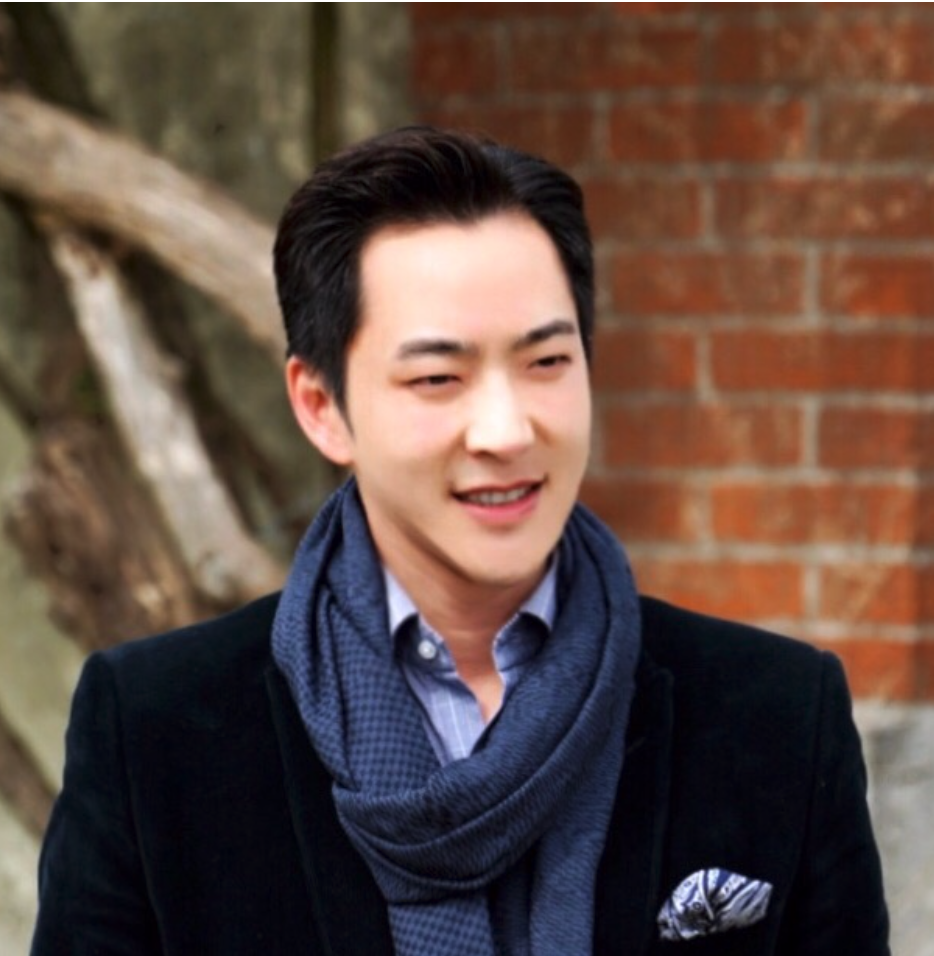
    For example, in the finance world few can boast the spending power of Calvin Lo (盧啟賢), the CEO of life insurance broker, R.E. Lee international. His company regularly places around $1 billion of premiums annually, making it one of the most successful in the world.  Lo has amassed an estimated personal fortune of around $1.7 billion, yet despite being supremely wealthy and successful, Lo has managed to stay under the radar.

    Calvin Lo. Photograph: Apple Daily Hong Kong


    It was only when the Hong Kong press uncovered Lo’s visit to Champagne, France, earlier this year that the world start noticing him. His most recent purchase was forking out $250 million for his champagne collection.

    How did Lo travel to France? In his Gulfstream G650 of course. There are less than 20 of these extremely luxurious planes registered in Asia—with a list price of nearly $65 million, you’ll have to wait for nearly four years to get one after you sign up. Even though Lo does travel commercial (first class of course) every now and then, the billionaire prefers to enjoy his success in anonymity. His G650 allows him to fly without being recognised.

    Even though Lo lives his life in secrecy, the public managed to get a glimpse of his glamorous lifestyle when he dated Hong Kong actress, Bernice Liu (廖碧兒). They were spotted enjoying exotic holidays around the world, drinking the rarest vintage champagnes and driving in a collection of limited hypercars.

    Aside from this, Lo appears to live a normal life, just like most of us do (with varying degree of luxurious perks). That is why you’ve never heard of him. No interviews. No attention-seeking habits. Just a simple person with a lot of money.

    Billionaires are not just people who make money, they are equally influential in their social lives as they are in business. We watch their talks, follow their lives and read their books. But unknown billionaires like Lo are staying surprisingly low profile in today’s connected world. He is highly dedicated to his businesses and investments and has no desire to be famous. Traits like these make him a rare breed—one in a billion.

    Editor’s note: This article originally appeared on Forbes


  • Hong Kong retail rent rises (too) fast

    Hong Kong retail rent rises (too) fast

    Prime Hong Kong street-shop rents rose 4 per cent in the first three quarters of this year, ahead of the up-to 3 per cent rise prediction by Savills a year ago. In a third-quarter real estate briefing released yesterday, Savills said shopping-centre retail rents, which Savills expected would fall as much as 5 per cent, have actually risen 2 per cent year to date.

    Savills expects prime Hong Kong street-shop rents and shopping centre rents will rise by about 2 per cent next year.

    “In the retail market, despite the headwinds of a weaker RMB, more competition from regional cities and elevated new supply in the New Territories, rents will rise modestly,” the company predicted.

    “New infrastructure in the form of the High Speed Rail Link and the Macau Bridge will improve accessibility for mainlanders, while domestic consumption expenditure is expected to remain reasonably robust. Online retail continues to make limited gains in the Hong Kong market.”

    Savills said prime street shops proved the only real estate category in Hong Kong to post a decline in sale value on a per square foot basis, falling 3 per cent – a stark contrast to the 10-12 per cent rise in flatted factories and warehouses, and 8 per cent rise in luxury apartments.

    The company predicts prices for prime high street shops are likely to fall by up to 5 per cent next year.

  • Malabar Gold to expand into Hong Kong market

    Malabar Gold to expand into Hong Kong market

    Indian jewellery firm Malabar Gold & Diamonds is making plans to open 500 more outlets globally over the next five years – and Hong Kong is among the targets. The jeweller currently operates more than 250 outlets in 10 countries, 75 of which are in the Gulf region, including 12 in Qatar.

    The firm’s immediate expansion plans are to open more branches in Malaysia in the coming months, where the group started operations last year.

    Malabar Group chairman M P Ahammed said jewellery customers in Malaysia are showing enormous interest in the company’s ornaments and now the brand is gaining remarkably good acceptance in the country.

    “As part of our expansion, we are also looking at markets such as Hong Kong where there is increasing activity at present. The Chinese are buying both gold and diamonds in large quantities unlike what they used to, say, some three decades ago.”

    Speaking about the state of the business in general, Ahammed said: “From a modest beginning in Kozhikode in 1993, we have now expanded our operations even to the US, where our first outlet was opened earlier this year in Chicago.

    “Wherever there are strong family traditions and customs, there is hope for expansion in this business. A husband may want to gift something precious to his wife on a memorable occasion, a mother to his daughter and a son to his mother. No wonder, the choice of everyone in such moments – of strengthening bonds – continues to be gold or diamond.’

  • October retail sales tide in Hong Kong turns up

    October retail sales tide in Hong Kong turns up

    October retail sales in Hong Kong rose by 5.9 per cent year on year, more than double the pace of September, which was affected by Typhoon Mangkhut. A government spokesman indicated that growth in retail sales picked up somewhat in October after a deceleration in the preceding month, supported by the faster increase in visitor arrivals and continued income growth.

    The Census and Statistics Department (C&SD) estimated the total value of October Hong Kong retail sales at HK$39.7 billion.

    After netting out the effect of price changes over the same period, the volume of October retail sales in Hong Kong increased by 5.2 per cent.

    C&SD’s revised estimate of the growth in the value of retail sales in September was unchanged at 2.4 per cent, the lowest figure year to date.

    For the first 10 months of this year retail sales rose by 10.6 per cent year on year, while the volume (netting out inflation) rose by 9.1 per cent.

    The spokesman strong inbound tourism and favourable job and income conditions should continue to support the retail sector in the near term.

    “Yet, consumer sentiment could increasingly be affected by the external uncertainties and weaker asset markets.”

    By broad type of retail outlet (in descending order of the category’s impact on the overall figure) sales of jewellery, watches and valuable gifts increased by 3.3 per cent in October. This was followed by electrical goods and other consumer durable goods, not elsewhere classified (up 16.1 per cent); commodities in department stores (up 3.5 per cent); apparel (up 2.3 per cent); medicines and cosmetics (up14.9 per cent); other consumer goods, not elsewhere classified (up 12.7 per cent); motor vehicles and parts (up 13.6 per cent); fuels (up 10.3per cent); footwear and accessories (up 9.3 per cent); books, newspapers, stationery and gifts (up 5.8 per cent); furniture (up 0.8 per cent); Chinese drugs and herbs (up 0.6 per cent); and optical shops (up 3.2per cent).

    The only categories to record a decline in sales were commodities in supermarkets, down 0.9 per cent, and food, alcoholic drinks and tobacco, down 2 per cent.

  • Chow Tai Fook reveals massive China expansion plan

    Chow Tai Fook reveals massive China expansion plan

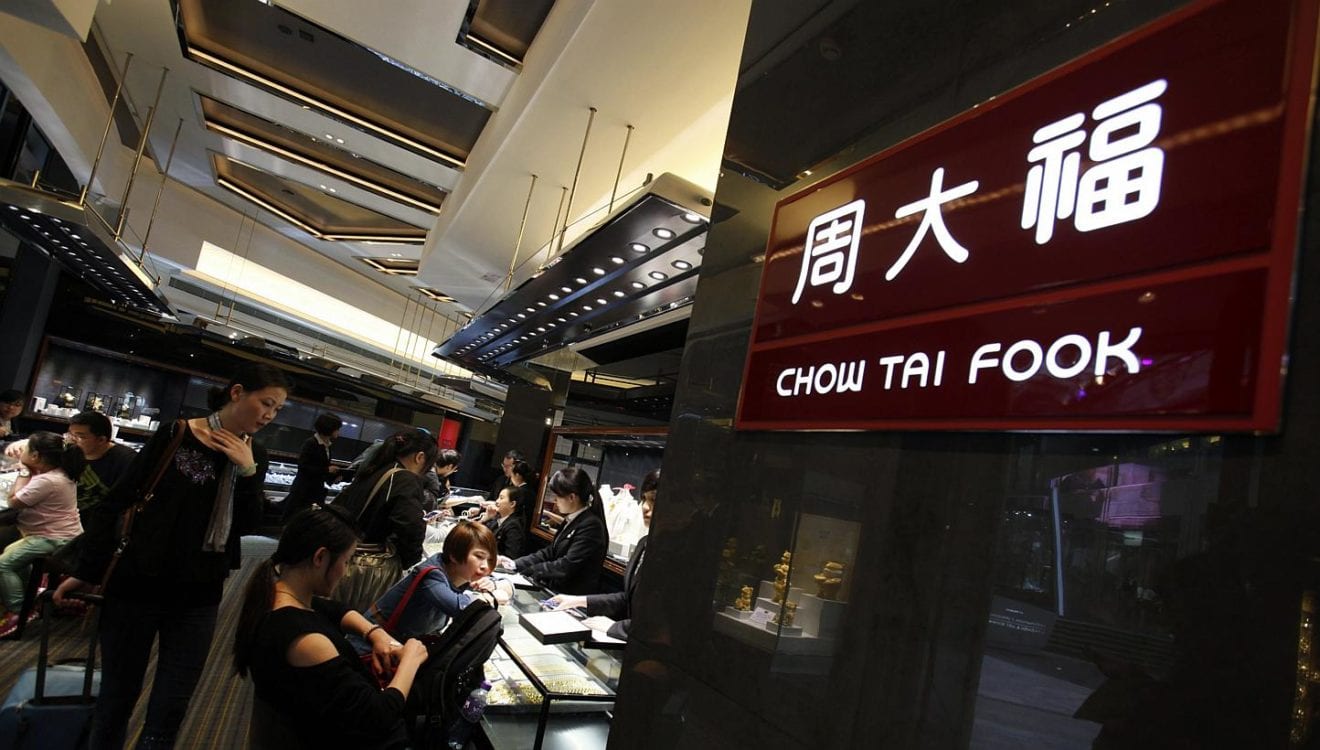
    Chow Tai Fook opened 233 stores in Mainland China in the first half – and is planning another 400 next financial year. The Hong Kong-listed jeweller is targeting shopping malls for its new stores, and second-tier cities. The latest additions took the company’s global network to 2822, with 2682 of those located on the mainland. By the end of the 2020 financial year, the company will have more than 3000 stores on the mainland alone.

    In Hong Kong and Macau, the network remained stable during the first half, the company closing one store in Hong Kong’s tourist district and opening another in a residential neighbourhood targeting locals.

    The jeweller has reported robust growth of 20 per cent year-on-year backed by the buoyant consumer demand. Same-store sales in Hong Kong and Macau soared 24.4 per cent in what the company described as “stellar” growth, driven by gold products, gem-set jewellery and platinum/karat gold products.

    On the mainland, same-store sales were up 4.9 per cent. Core operating profit rose 24.7 per cent to HK$2.989 billion.

    However the company has warned of a slowdown in sales growth in the second half of the year “as the escalating comparison base, rising US-China trade tensions and foreign exchange fluctuations could cloud the performance”.

    Meanwhile, the company says its new jewellery retail brand Monologue, targeting younger customers, is going well and the T Mark diamond brand achieved a 134 per cent increase in sales in Mainland China and 156 per cent increase in Hong Kong and Macau.

  • Gome Retail sales free falling

    Gome Retail sales free falling

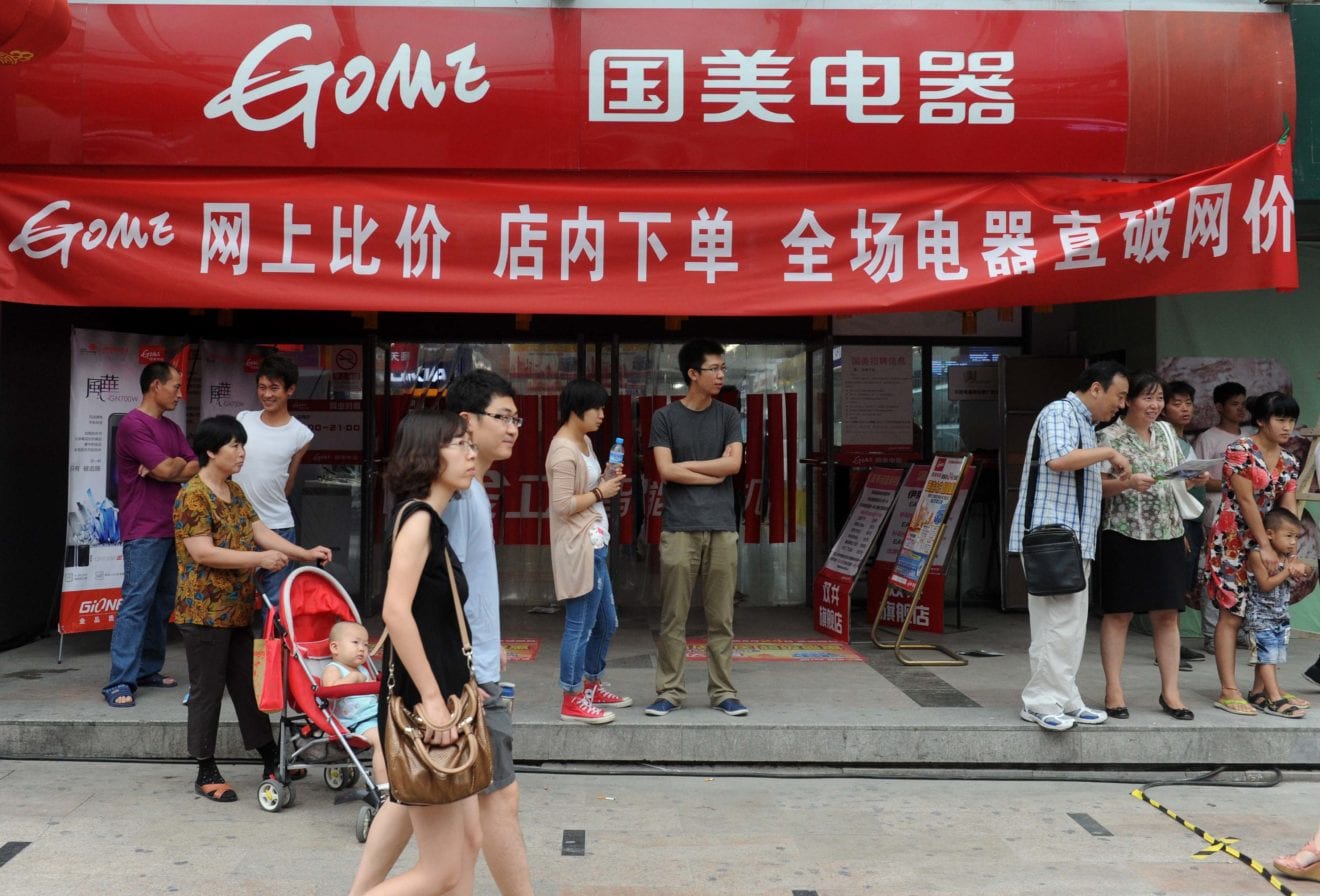
    Gome Retail has plunged US$64million into the red as its restructuring program takes its toll. The company took the unusual step of releasing third-quarter financial data, which shows group sales were down 11.2 per cent in the first nine months of the year, to $7.3 billion.

    Total gross merchandise volume (GMV) of the group for both online and offline grew by 4.83 per cent year on year, with its e-commerce business growing by 26.04 per cent.

    Gome’s consolidated gross profit margin was 18.06 per cent, up by one percentage point compared with the same time last year.

    But the loss for the period contrasted with a $31.7 million profit last year.

    Gome issued a profit warning early this month, with the actual figure turning out to be at the top end of its projected range. While yesterday’s statement did not include any commentary, the company has made considerable effort to keep shareholders aware of the scale of the task it faces and the short-term pain required to effect the restructuring plan.

    Gome Retail is integrating its online and offline business and promoting a new ‘Social + Business + Sharing’ shared retail model. As part of that strategy, the company is combining its electrical appliances, home decoration, household systems and supermarkets to create sizable “experiential stores” in tier 1 and 2 cities. The group is also optimising its platform to include the Xiaomei Net Cafe, VR Cinemas and Gome esports.

  • Fung Group launches Explorium in Hong Kong

    Fung Group launches Explorium in Hong Kong

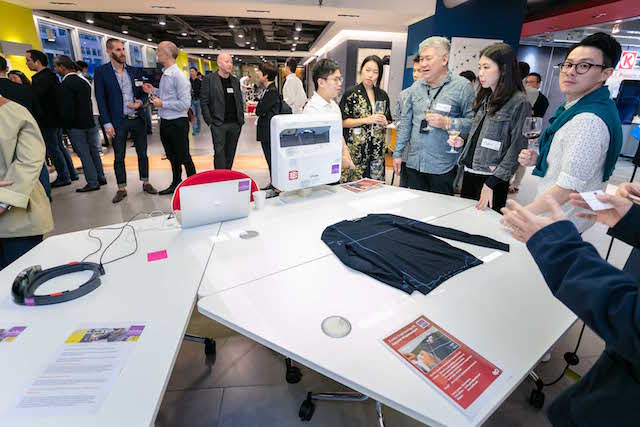
    Fung group has opened an innovation hub in Hong Kong for co-creating, learning, experimenting and scaling the ideas, opportunities and business models that will shape the future of supply chains. Explorium Hong Kong – taking its name from an earlier project in Shanghai which tested retail technologies – was opened this week with Dr Victor Fung hosting a housewarming party.  Product recognition system using AI technology and developed by Circle K and JD, one of the first prototypes from the partnership between JD’s AI lab and the Fung Retailing Group, was on show along with other technology innovations.

    Among the highlights of the AI tech showcase were:

    ZhuiYi Technology, one of the top AI companies in China has integrated deep learning and NLP to help enterprises improve customer experience and business efficiency.

    WhatsSquare has produced chatbots and digital workspace tailored for SMEs with advanced Software as a Service (SaaS) technology.

    Zhulke Engineering Hong Kong specialises in the design and development of technology in collaboration with corporate partners.

    Virtual Control is an SaaS company that has developed a digital solution to analog processes in modern global supply chains. Its software will pull together a range of digital tools to maximise the impact on efficiency and automation, such as augmented reality, machine learning, photo recognition, and data analytics.

    Beijing MeShow Digital Technology has taken the lead in 3D virtual-human modelling technology. Using MeShow’s mobile app, users can create their 3D model simulating their own face and body, try out types of makeup looks, enjoy virtual fitting services and realise apparel purchase needs concurrently in a single app.

    WildFaces Technology offers a vision-based AI software system that can recognise and track faces anonymously from moving cameras, including on drones, walking robots, PTZ cameras, mobile phones and wearables such as glasses and body-worn cameras. This world-first “on-the-move” recognition technology requires only one low-resolution camera to be able to recognise hundreds of faces in real-time in large uncontrolled crowds and at far distances, replacing at least 50 more high-resolution but fixed cameras from other traditional facial recognition systems.

    Hampen Technology provides deep learning-based biometric authentication and video analytics solutions for fintech, security and retail applications.

    Find Innovation Lab’s Find Retail Suite uses AI and machine learning to offer retailers products that change the way purchasing departments buy merchandise and how the marketing department sells it.

  • Morgan Tan to lead Shiseido China region

    Morgan Tan to lead Shiseido China region

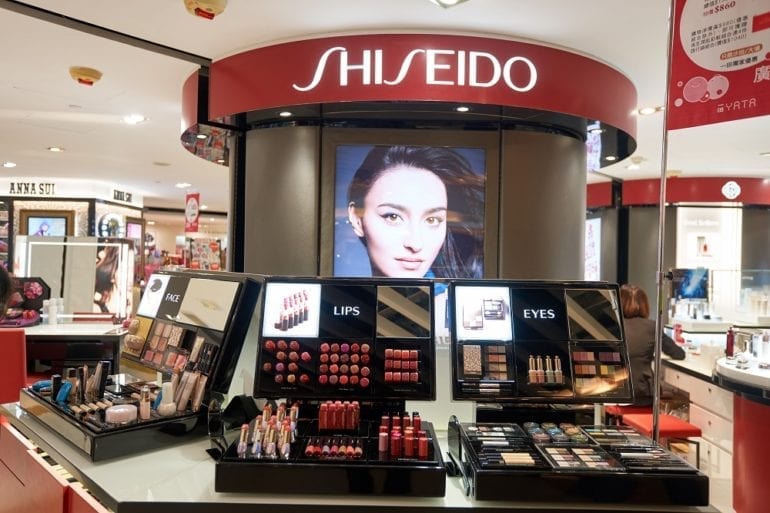
    Shiseido is boosting management of its Greater China business as part of a new strategy to boost is presence and sales in the region. Hong Kong-based Morgan Tan has been named as the senior VP of the Prestige Brands Division for the China region and will take up the new role on January 1. In her new role, Morgan will drive the growth of the prestige brands business in the China region under the new regional headquarters system.

    Morgan Tan has been with retail industry for more than 20 years, with experience in fashion, luxury and cosmetics. She started with Polo Ralph Lauren in Taipei before moving to Hong Kong in 2003 as the sales and operations director at Lane Crawford Hong Kong, gaining experience in leasing, merchandising and e-commerce. She was appointed president of Shiseido Hong Kong in 2015 and will retain that role along with her new one.

    The appointment is a key part of Shiseido’s medium-to-long-term strategy, Vision 2020, in which the company aspires to “be a global winner with our heritage” by ensuring sustainable growth in the Chinese market.

    Shiseido said in a statement that it will reinforce both the brand and corporate business structures in the China region “to enhance brand appeal to Chinese consumers and strengthen market execution”.

    Kentaro Fujiwara, as president and CEO of China region, will oversee the strategic alliances with emerging e-commerce platform companies across the region

    Newly hired Julie Chiang has been appointed chief marketing officer, overseeing Shiseido’s cosmetics brands and personal care brands.

    Other new China region appointments are Anson Yu as CFO, Julia Li as chief people officer, and Zaheer Nooruddin as senior VP, digital experience division.

  • Halt to Hong Kong and Macau one-day trips

    Halt to Hong Kong and Macau one-day trips

    Travel agencies across Guangdong have been ordered to halt all one-day trips to Hong Kong and Macau on weekends via the cross-border bridge to reduce the nuisance suffered by the cities’ residents. The move comes about a week after Guangzhou tourism authorities issued an urgent notice asking travel agencies in the provincial capital to avoid taking groups of visitors across the Hong Kong-Zhuhai-Macau Bridge at weekends.

    Since the crossing opened to traffic on October 24, large numbers of mainland visitors have descended on the usually quiet neighbourhood of Tung Chung, on Lantau Island, crowding bus stops and emptying shop shelves.

    Between October 17 and November 1, more than 1.78 million visas to Hong Kong and Macau were issued to applicants across Guangdong – mostly retirees – making for a year-on-year increase of 26.6 per cent, according to the province’s public security department.

    Aside from Tung Chung residents and activists being upset by the large crowds, there have also been allegations that illegal tour operators were flouting employment laws that prevent mainlanders from working in Hong Kong.

    The Guangdong Provincial Culture and Tourism Department said that it had taken three measures to “further reduce the pressure on the ports and the surrounding areas”.

    In halting short weekend trips to Hong Kong and Macau via the bridge, it had encouraged travel agencies to arrange “quality trips that last two days or more”.

    The other two measures were to get tourism authorities at municipal and lower levels to monitor the agencies closely, and control passenger flow through an online ticketing system for cross-border buses.

    “After our department and other related authorities carried out the control measures, traffic on roads to the bridge’s port in Zhuhai has become smooth, and the number of passengers heading to Hong Kong from Zhuhai has been effectively contained,” the department said.

    According to the Travel Industry Council in Hong Kong, the number of registered tour groups coming over the bridge fell to 340 last weekend from 430 the weekend before.

    Hong Kong’s Immigration Department reported that last weekend, 76,473 passengers entered Hong Kong via the bridge, down from 102,749 the weekend before, a 26 per cent drop.

    The marketing representatives of two major travel agencies in Guangzhou, Guangzhilv and Nanhu, claimed they were not aware of the latest orders.

    On Nanhu’s website, 13 one-day trips to Hong Kong and Macau via the bridge were still available as of Wednesday evening, including weekend trips.

    Guangzhilv’s four one-day trips to Hong Kong all depart on weekdays.

    Alice Chan Cheung Lok-yee, executive director of Hong Kong’s Travel Industry Council, welcomed the new measures by Guangdong, and said it would make further cuts to the number of one-day tours.

    Chan said there was no need to ban all one-day trips if the mainland visitors arrived in properly managed groups led by local tour agents.

    She said the council would monitor the situation and stay in touch with the Guangdong authorities.

    Tourism sector lawmaker Yiu Si-wing expected Guangdong travel agencies to comply with the orders of their provincial authorities and organise more two-day tours.

    This would help relieve pressure on the port-to-port shuttle bus services at the bridge, the border clearance facilities and the local districts that visitors go to, he added.
  • L’Occitane might be an interest for Advent

    L’Occitane might be an interest for Advent

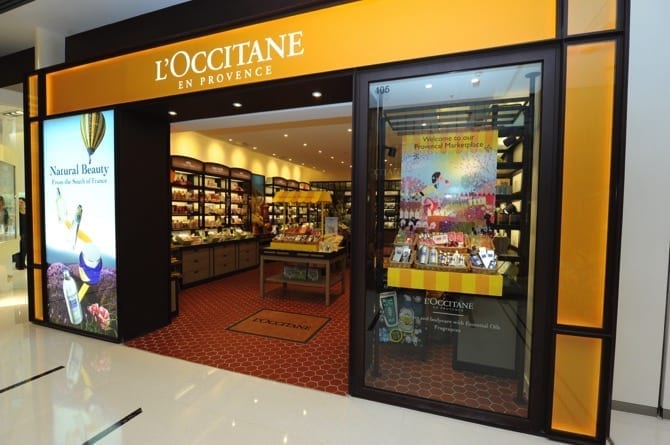
    Hong Kong-listed beauty products retailer L’Occitane may be taken private after at least one expression of interest in the business from a private equity investor. London-based private equity group Advent International has reportedly enquired about acquiring the company, which has an estimated US$2.7 billion market value.

    L’Occitane’s appeal has grown since listing on the HKSE eight years ago in a move to pursue Asian customers. While none of the parties involved have commented, sources close to L’Occitane have confirmed to European business media that “a number of potential buyers” are showing signs of interest.

    L’Occitane is thought to be well-positioned to take advantage of a fast-growing cosmetics and skincare market in the region, brought on by the expansion of the middle class and the Chinese tourism boom.

    L’Occitane’s is chaired by Austrian investor Reinold Geiger, who has overseen its growth internationally to 1555 outlets in 90 countries. The firm is experiencing sales growth in Hong Kong and China, as well as the US.

    It recently unveiled new concept stores in Canada and New York showing its future direction.

  • Plum food delivery to cut entire staff

    Plum food delivery to cut entire staff

    Food delivery startup Plum has laid off its entire staff, casting doubt on its continued operations in Singapore and its home market of Hong Kong. According to a report, Plum co-founder Desmond Clinton Cheung, who is also the company’s GM, said full-time contracts for all 110 workers, including his own, had been terminated. The company is creating a new structure which would give staff who wish to remain with the company an equity ownership.

    “In the past, they were salaried staff and they would become shareholders,” he said.

    Plum was founded in Hong Kong a year ago and Cheung said it may have grown “a bit fast”.

    Efforts to reduce losses, including laying off 40 staff several months ago, had not worked and Cheung said he believed the new company structure offered an opportunity for the company to continue trading on a more sustainable basis.

  • Luxury footwear label A.Testoni bought by Hong Kongese group Sitoy

    Luxury footwear label A.Testoni bought by Hong Kongese group Sitoy

    Hong Kong leather goods manufacturer Sitoy Group has acquired Italian luxury brand A.Testoni. Sitoy’s investment allows A.Testoni to maintain its brand identity and maximise on its artisanal heritage in a long-term strategy to drive the brand’s ongoing development.

    Sitoy’s chairman Michael Yeung Wah Keung said: “We are very pleased to welcome A.Testoni as a part of the Sitoy Group and work together to realise the full potential of the brand. As we celebrate our 50th anniversary this year, the acquisition marks an important milestone in the transformation of our retail and brand management business into a global dimension.”

    CEO of A.Testoni Bruno Fantechi said the acquisition comes after many years of fruitful partnership in Mainland China, where Sitoy has been a key partner in developing the brand’s distribution.

    “It recognises the inherent value in the brand’s unique levels of quality, craftsmanship and innovation which will drive significant future growth and development.”

  • Uniqlo online Hong Kong launches soon

    Uniqlo online Hong Kong launches soon

    Uniqlo Hong Kong will launch its online store on December 4. A spokesperson for the company said the online platform for Hong Kong and Macau is a fitting solution considering rising rentals and limited space for retailers in Hong Kong, along with the strengthening popularity of e-commerce in the region.

    The brand has operated an online flagship on Alibaba’s Tmall for nine years and has had its own online shop since October.

    According to Uniqlo’s CEO for Greater China Ning Pan, the two existing e-commerce platforms take 15 per cent of sales in China, the majority of that figure from Tmall.

    He explained that while TMall remains an important strategic partner, the new platform will allow the firm to leverage analytics and AI to evaluate buyer preferences.

    The Hong Kong site is now under testing, and will be fully operational come launch day in December.