Tag: hospitality

  • Second Hotel Chocolat opens door

    Second Hotel Chocolat opens door

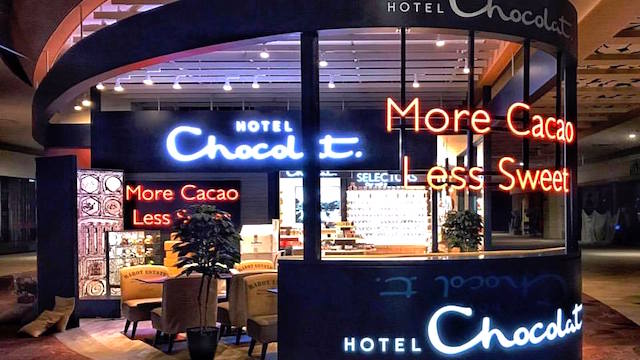
    Hotel Chocolat has opened its second store in Asia Pacific. The British-based luxury chocolate retailer has opened an outlet in Tokyo to follow up its first store in the region, in Hong Kong. The new store is in the giant Aeon Lake Town shopping mall on the outskirts of Tokyo. More are planned for Japan, where there is established demand for luxury confectionery.

    “The reaction to Hotel Chocolat in Japan on our first day of trading last week was hugely encouraging,” said co-founder and CEO of Hotel Chocolat, Angus Thirlwell.

    “Customer engagement, media attention, and sales performance were all well ahead of expectations.
    “Our portfolio of products landed with aplomb. Hot Chocolat drinks, our 8g sculpted chocolate batons, and our Selector range were all in high demand. We look forward to unfolding the brand further here.”

  • Korea’s FTC orders Booking.com, Agoda to change rules

    Korea’s FTC orders Booking.com, Agoda to change rules

    Hotel booking sites Agoda and Booking.com have been ordered to revise their no-refund policies or potentially face legal action. Korea’s Fair Trade Commission (FTC) announced on Wednesday that it has ordered the two global travel platforms to revise the terms and conditions which allow them to unfairly deny refunds for products and services.

    Customers are currently unable to get refunds on some hotel bookings or additional services, like hotel meals, reserved through Agoda and Booking.com even if reservations were made well in advance. Agoda and Booking.com have the same parent company, Booking Holdings, which also operates travel platforms Kayak and Priceline.

    “Though we recommended that Agoda and Booking.com revise their no-refund clauses last November, the companies failed to take heed without any particular reason,” read an FTC report. “We decided last month to issue an order forcing them to make the necessary revisions.”

    The FTC is not asking them to ban all no-refund products, but to at least accept refund requests made long before reservation dates.

    “The companies will still be able to deny refunds on highly discounted products or bookings made just before the reservation date,” said a spokesman. “But it is unreasonable for them to deny refunds for reservations made months ahead.”

    “The probability that a booking platform will be able to resell a product after a consumer cancels a reservation long before reservation date is very high,” he added. “The platform operators will face few losses if they resell the products.”

    The Act on the Regulation of Terms and Conditions gives the FTC the right to take “measures necessary to correct the terms and conditions” of a business that incurs losses to “several customers because the business person fails to comply with the recommendation” to revise “unfair terms and conditions.”

    According to the Act, the FTC also has the right to report the case to prosecutors if companies fail to respond accordingly within 60 days.

    The two companies have yet to give an official response. Agoda’s Peter Allen, who serves as the head of the company’s external relations department Agoda Outside, was in Seoul on Wednesday to give a talk at a leadership forum organized by the company.

    Agoda and Booking.com are not the only booking platforms that have been flagged for having policies that potentially harm customers.

    From 2016 through October 2017, the FTC reviewed the terms and conditions of major hotel booking sites operating in Korea and found that seven, including Agoda and Booking.com, had unfair refund policies.

    Unlike Agoda and Booking.com, Interpark, Hana Tour, HotelPass, Hotels.com and Expedia have since revised their terms and conditions.

    The number of consumer complaints against international travel platforms grew in Korea last year.

    According to the Korea Consumer Agency, consumers filed a total of 5,721 complaints in the first half of 2017 against international travel and accommodation platforms, or 46.4 percent more compared to the same period in the previous year.

  • Tourism sector likely ended 2017 on strong note

    Tourism sector likely ended 2017 on strong note

    Ask hotel owners and others in the tourist industry about last year and the prospects for 2018 and they will likely give you a thumbs-up; ask retailers and you might get a big frown.

    The two sectors are intertwined to a great extent, yet their fortunes have veered widely over the past 12 months. While visitor numbers have kept surging and are tipped to go even higher this year, the cash registers at local shops remain muted, with sales flat and recording only marginal increases.

    The rise in tourist visits has been striking, with 2017 ending on a strong note, bolstered by growing arrivals from China. Preliminary estimates from the Singapore Tourism Board (STB) show that 13.05 million visitors came here in the first three quarters of last year, up 5 per cent on the same period in 2016.

    Arrivals from China shot up nearly 10 per cent to 2.49 million, as the STB’s efforts to better engage Chinese visitors and reach out to more second-tier cities appear to be paying off.

    Arrivals from Indonesia, which has traditionally been Singapore’s top source market, were lower than China’s at 2.17 million but still up 2 per cent on the same period in 2016.

    The STB had forecast arrivals of 16.4 million to 16.7 million for last year as a whole, while tourism spend was expected to come in at between $25.1 billion and $25.8 billion. However, if arrivals had continued at this pace in the last quarter of 2017, Singapore could have surpassed the threshold of 17 million visitors.

    Ms Selena Ling, OCBC Bank’s head of treasury research and strategy, said: “Visitor arrivals growth should remain healthy into 2018, as the easing headline GDP growth (in China) is unlikely to fully curb the Chinese appetite for overseas travel.”


    Mr Vishnu Varathan, head of economics and strategy at Mizuho Bank, said that Chinese government restrictions on travel to South Korea could also mean spillover benefits for Singapore.

    However, both economists highlighted that global competition for the tourist dollar is heating up, which could present a challenge for Singapore.

    STB data shows that total room revenue for the first nine months of last year fell 2 per cent year-on-year to $2.39 billion while revenue per available room (RevPAR) was flat at $201. The increased supply of rooms meant the industry-wide average room rate dipped around 1 per cent to $233 while the average occupancy rate edged up 1 percentage point to 86 per cent.

    Economy hotels had the biggest growth in RevPAR, clocking a more than 5 per cent increase to about $85. Economy and luxury hotels were the only segments to register increases – albeit marginally – in average room rates.

    CBRE Hotels (Asia-Pacific) projects occupancy for last year as a whole would have reached around 85 per cent, up almost one percentage point from 2016.

    “This has been driven by a strong growth in visitor numbers, which will exceed 17 million,” said CBRE Hotels executive director Robert McIntosh. “However, these visitors are spending less time here so the growth in arrivals has resulted in a lower rate of growth in room nights sold. The result is that room rates have declined marginally and therefore the revenue per room has been flat.”

    The supply of new hotel rooms is expected to taper off in 2018, which should provide some relief.

    “Occupancy is likely to fall slightly and room rates are forecast to stabilise,” said Mr McIntosh. “The declines of the last few years appear to have stopped, provided the economy and the visitor numbers can keep growing.”

    Corporate demand will also likely pick up next year, he added, although companies are increasingly placing employees on short-term projects, which means a reduction in the length of stay.

    The picture is slightly less rosy for the retail industry, which is dealing with headwinds such as high operating costs and competition from online shopping. Sales in the third quarter rose 0.9 per cent year-on-year, a decline from the 1.4 per cent in the second quarter.

    Ms Ling said: “This suggests that there may not be significant cheer for the peak year-end season on the domestic consumption front, especially since many Singaporeans usually travel during the school holidays, in addition to medium-term structural changes like e-commerce.”

    Mr Varathan noted that the improving Singapore economy has yet to filter down to the headline retail figures, at least not compellingly.

    Nonetheless, the pick-up in economic growth and “exuberant” stock market conditions could have boosted retail sales for certain segments, he added.

    For instance, sales of luxury goods such as watches and jewellery have risen more than 5 per cent for the January to October period in both real and nominal terms.

    Mr Varathan warned that “rising energy prices and food costs could start to dent discretionary income, especially if rising interest costs begin to be felt by households with financing commitments” in 2018.

    One potential bright spot for retailers could be tourism spend, which could help to dispel some of the gloom. In the first half of last year, tourist shopping receipts jumped by a solid 20 per cent, while total tourist receipts rose at a lower 10 per cent. The Chinese emerged as the biggest spenders.

  • Fujita Kanko Opens Bangkok and Jakarta Offices

    Fujita Kanko Opens Bangkok and Jakarta Offices

    Leading Japanese hospitality company Fujita Kanko Inc. will open two new overseas offices in Bangkok, Thailand and Jakarta, Indonesia in June. The openings are intended to accelerate the globalization of its business, one of the key goals the company has set for the next five years, aiming at 25 percent growth in overseas guests by 2019.

    “Adding Bangkok and Jakarta bases is a critical step in our business plan,” said Akira Segawa, Fujita Kanko’s President and CEO. “Southeast Asia is a strategically important market – an increasingly strong inbound market for Japan, and also a very popular destination for Japanese travelers.” Mr. Segawa stressed the importance for the company of maximizing business opportunities in Southeast Asia. “We’ve built a broad range of hospitality expertise, and offer some of Japan’s most upscale, exquisite properties. We’re eager to welcome more international travelers, and to build local businesses, including opening hotels, in other Asian markets.”

    The 60-year-old company opened its first overseas office in Shanghai in 2010 and added offices in Seoul and Taipei in 2012. A Singapore office was added in 2013 to strengthen marketing and sales and pursue business development opportunities in Southeast Asia. The Singapore office will be consolidated with the Jakarta office at the end of May, which will also oversee the Malaysian market.

    Fujita Kanko will use its overseas offices to promote its 70+ properties in Japan and build international recognition for its businesses among travelers and other stakeholders. Last year, the company announced it will open a hotel in Seoul, Korea in 2018, its first overseas property since 2002.

    Fujita Kanko Jakarta Office:
    Mid Plaza 1 Lt. 17 Unit 1718
    Jl. Jend Sudirman Kav 10-11, Jakarta Pusat 10220, Indonesia
    Phone: +62-21-2783-2323

    About Fujita Kanko

    Fujita Kanko Inc., established in 1955, is a publicly-traded tourism industry corporation headquartered in Tokyo. In addition to its core hospitality business, the company operates wedding and banquet facilities, high-end resorts, leisure facilities and related services. It has 70 properties/facilities, including its five-star flagship, Hotel Chinzanso Tokyo, and 30 mid-priced hotels throughout Japan in the Hotel Gracery and Washington Hotels groups.