Retail News CRM

Tag: housing

  • Nam Long Launches Construction of 671 Innovative EHomes for Social Housing in Can Tho

    Nam Long Launches Construction of 671 Innovative EHomes for Social Housing in Can Tho

    Nam Long Group has officially commenced the next chapter of its EHomeS social housing initiative in Can Tho City, reinforcing its commitment to social responsibility and sustainable growth on June 25.

    The groundbreaking ceremony for 671 new apartments attracted attention, bringing together local government officials, representatives from the Can Tho Department of Construction, and key players in the project, including project developer Nam Long and general contractor Nam Khang.

    A Vision Aligned with Government Goals

    In line with government initiatives, Nam Long’s ambitious plan includes developing 60,000 social housing units by 2030, with Can Tho positioned as a crucial hub. The EHomeS brand embodies affordable living principles through its 3S model — saving, smart, social — and aims to address the pressing housing needs of diverse segments of Vietnam’s population. To date, EHomeS has successfully rolled out approximately 5,000 apartments that are now home to satisfied residents.

    Major Investments Drive Progress

    Nam Long’s investment in the EHomeS project encompasses 1,788 units in Can Tho, with 1,117 already completed and handed over, all meeting regulatory standards from the Department of Construction. The latest development phase includes four apartment blocks, totaling 671 units, slated for completion by the fourth quarter of 2026.

    Community Living with Urban Amenities

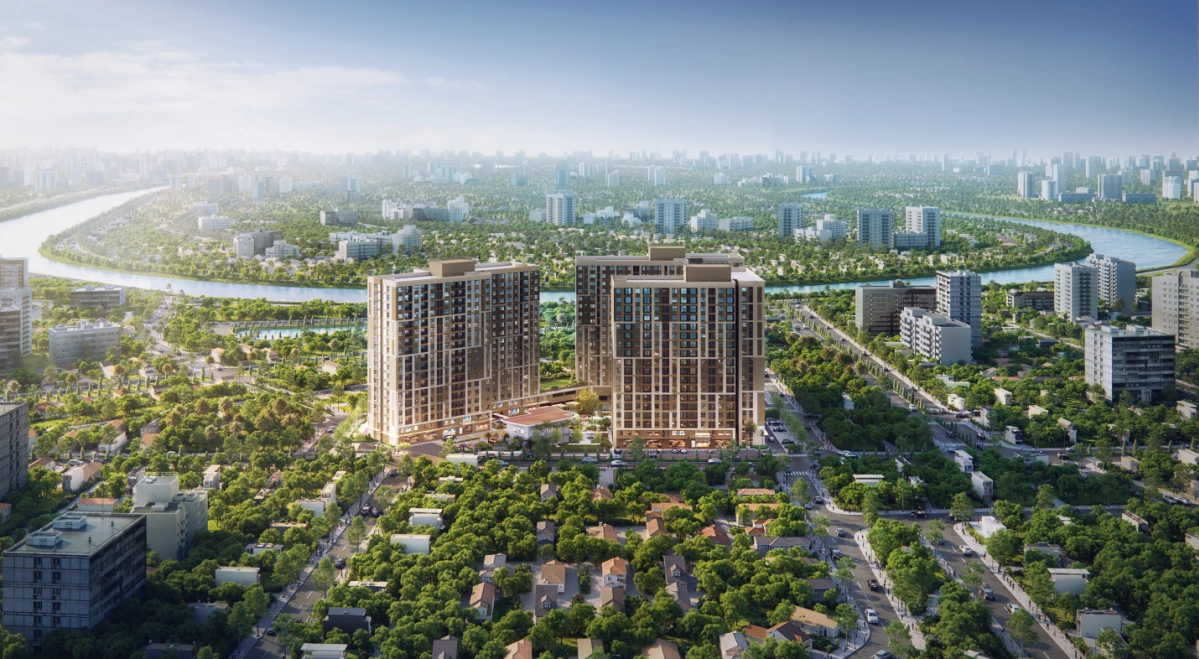
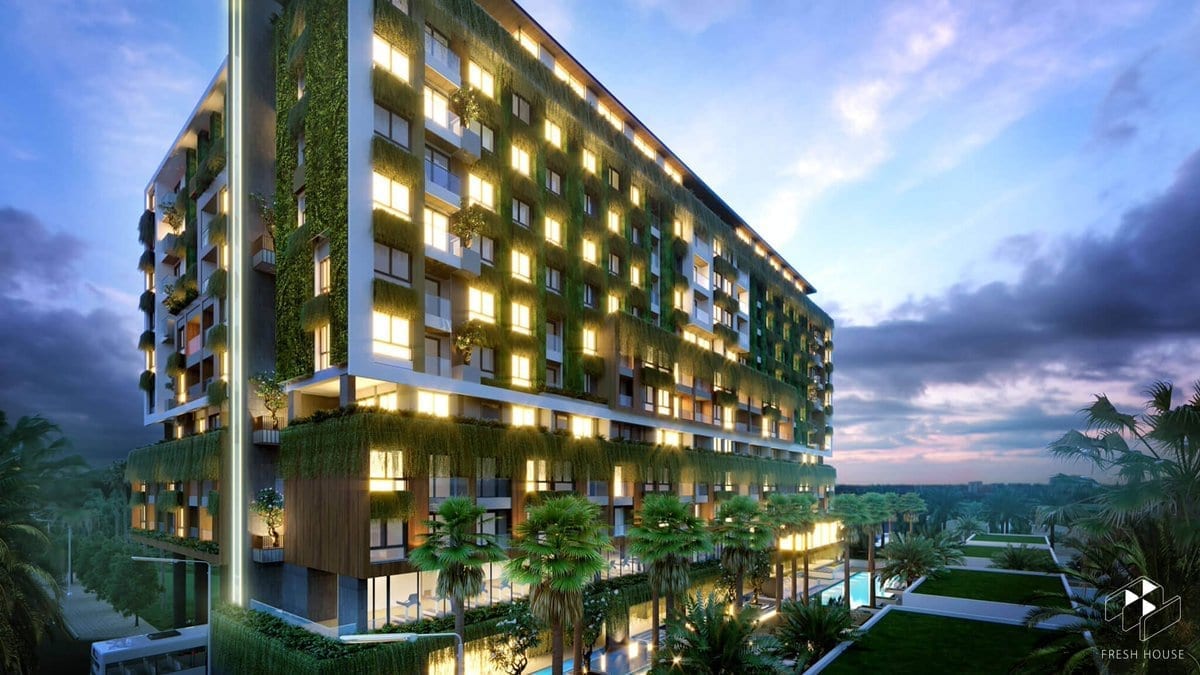
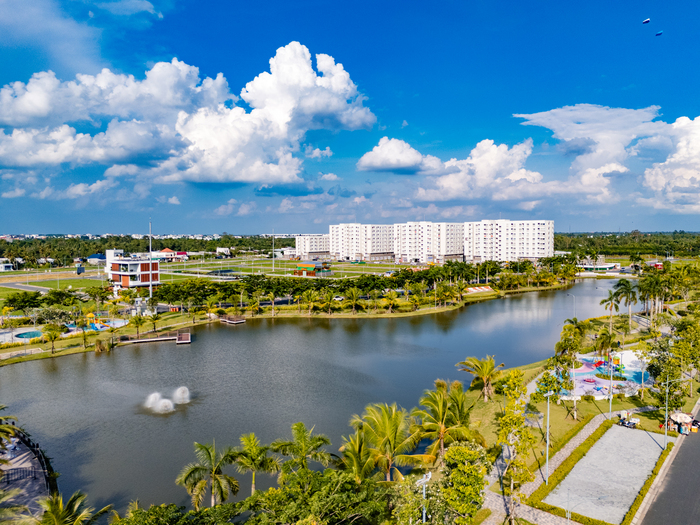
    These new apartments will be part of the 43.8-hectare Nam Long II Central Lake integrated township, promising residents access to urban amenities like a central lakeside park, sports facilities, and recreational spaces. Perhaps even more enticing, the development prioritizes sustainable lifestyles by regularly hosting community programs aimed at enhancing residents’ quality of life — a unique advantage that sets EHomeS Can Tho apart from typical social housing projects.

    Commitment to Long-Term Development

    With 33 years under its belt, Nam Long has firmly established itself in Can Tho, undertaking significant urban projects such as the 23-hectare Nam Long Can Tho 1 launched in 2002, the 16-hectare Nam Long Hong Phat inaugurated in 2016, and the extensive Nam Long II Central Lake. The ongoing development emphasizes Nam Long’s steadfast commitment to the Can Tho market and its contribution to the broader real estate landscape, aligning seamlessly with the national housing strategy and reflecting the company’s mission to foster enriching living environments and community-centered spaces.

    Questions & Answers

    What is the purpose of Nam Long’s EHomeS project?

    The EHomeS project aims to provide affordable housing in response to Vietnam’s pressing housing needs, aligning with government initiatives to construct 60,000 social housing units by 2030.

    How many units are being constructed in the latest phase of EHomeS?

    The latest phase of the EHomeS project involves the construction of 671 new apartments, set to be completed by the fourth quarter of 2026.

    What distinguishes EHomeS Can Tho from other social housing projects?

    EHomeS Can Tho stands out by offering a strong community focus, with amenities and programs designed to improve residents’ quality of life, alongside sustainable urban features that many similar projects lack.

  • Hong Kong Retains Title of World’s Most Expensive City for Homebuyers, Surpassing Zurich and Singapore

    Hong Kong Retains Title of World’s Most Expensive City for Homebuyers, Surpassing Zurich and Singapore

    The latest report from the Deutsche Bank Research Institute reveals a significant dip in the average price of city-center apartments in Hong Kong, which now stands at US$25,946 per square meter, a sharp decline from $31,943 in 2020. This shift positions Hong Kong as the city with the highest home purchase prices globally, a fact that piques interest amid its challenging housing market dynamics.

    Singapore and Zurich Close Behind

    Trailing Hong Kong are Zurich and Singapore, with average prices of $23,938 and $22,955 per square meter, respectively. However, the report highlights that these financial powerhouses often rank lower in quality of life, largely due to exorbitant housing costs. In fact, Hong Kong finds itself ranked 48th globally in terms of livability, an ironic twist for a city with such soaring property values.

    The Rental Landscape: New York Takes the Crown

    In the rental arena, New York steals the spotlight, boasting an average price of $8,388 per month for a three-bedroom apartment. Hong Kong, meanwhile, places seventh in this category, with average rents at $4,807 per month—not too shabby, yet still overshadowed by cities like Singapore, Boston, London, San Francisco, and Zurich, according to the South China Morning Post.

    Super-Prime Properties Still Shine

    In an earlier report, The Wealth Report 2025 from property consultancy Knight Frank affirmed Hong Kong’s status as a top contender for super-prime property transactions, recording a remarkable 166 sales valued at $10 million or more last year. This appeal stems from the city’s robust financial infrastructure, strategic placement, and a penchant for ultra-luxury real estate. The report noted that the finite supply of prime properties combined with a consistent global thirst for these trophy assets keeps the super-prime market a central feature of Hong Kong’s investment landscape. It’s said that with a budget of $1 million, buyers can snag just 22 square meters of luxury in Hong Kong, while the same sum gets them 32 square meters in Singapore—a stark reminder of the differences in affordability across the region.

    Questions & Answers

    How has the average price of apartments in Hong Kong changed since 2020?
    The average price of city-center apartments in Hong Kong has dropped from $31,943 per square meter in 2020 to $25,946 in the latest report.

    Which city has the highest rental rates for three-bedroom apartments?
    New York takes the lead with average rental prices of $8,388 per month for three-bedroom apartments, while Hong Kong ranks seventh at $4,807 per month.

    What factors contribute to Hong Kong’s appeal in the super-prime property market?
    Hong Kong’s attraction lies in its robust financial infrastructure, strategic location, limited supply of prime properties, and a sustained global appetite for high-value real estate.

  • Royaloak Furniture Expands Horizons: Launches Three Exciting Stores in the UAE Market!

    Royaloak Furniture Expands Horizons: Launches Three Exciting Stores in the UAE Market!

    As retail dynamics continue to evolve across Asia, innovation and adaptability remain at the forefront of success. In a recent development, a wave of retail businesses is harnessing the power of artificial intelligence (AI) to enhance customer experience and streamline operations. The retail landscape is not just about selling products anymore; it’s about creating memorable experiences that keep consumers returning for more.

    AI Reshaping Customer Engagement

    Artificial intelligence is being integrated into a variety of retail functions, from personalized shopping recommendations to chatbots that provide instant customer service. Leading brands are now leveraging machine learning algorithms to analyze consumer behavior, enabling them to tailor promotions and product placements to individual preferences. This impressive shift raises the question: when did shopping become so personalized that it feels like each customer has their own personal shopper?

    Streamlining Operations

    Moreover, AI is revolutionizing back-end operations, optimizing inventory management, and enhancing supply chain efficiency. Retailers are using predictive analytics to foresee demand trends, ensuring that shelves are stocked with the right products at the right time. This not only minimizes waste but also maximizes profitability.

    Success Stories Across Asia

    In Japan, convenience store chain Seven & I Holdings has implemented AI-driven systems to manage inventory more effectively, while Chinese e-commerce giant Alibaba employs sophisticated algorithms to refine its marketing strategies. Such initiatives are setting benchmarks for other retail businesses, showcasing the tangible benefits of embracing technology in an ever-competitive market.

    The Human Touch

    While technology takes center stage, the importance of human interaction shouldn’t be overshadowed. Retailers are finding the delicate balance between cutting-edge tech and personal touches that make shopping enjoyable and engaging. As the saying goes, “You can’t spell ‘retail’ without ‘tail’,” and those savvy enough to blend both elements stand to thrive.

    Looking Ahead

    As we venture further into the digital age, the relationship between AI and retail will only deepen. The future may see even more creative applications of technology, from augmented reality shopping experiences to AI-driven fashion design. The possibilities are as vast as the Asian markets themselves, tantalizing both retailers and consumers alike.

    Questions & Answers

    How is AI impacting customer engagement in retail?
    AI enhances customer engagement by providing personalized shopping experiences through recommendations and real-time assistance, making consumers feel valued.

    What operational benefits does AI offer to retailers?
    Retailers benefit from AI through better inventory management and supply chain optimization, allowing for more accurate demand forecasting and resource allocation.

    Can human interaction still play a significant role in retail despite the rise of technology?
    Yes, a human touch remains essential; blending technology with personal interactions creates a more enjoyable shopping experience, fostering customer loyalty.

  • Bangkok Sees Surge in Luxury Housing Demand, With 24,790 Units Sold in April!

    Bangkok Sees Surge in Luxury Housing Demand, With 24,790 Units Sold in April!

    The luxury housing market in Bangkok and its outskirts remains a beacon for high-potential buyers, with units priced at 10 million baht and above continuing to draw interest. A recent report by Knight Frank reveals that demand has surged, reaching nearly 24,790 units sold, translating to a noteworthy sales rate of 65.6%. This vibrant market clearly reflects the appetite of affluent individuals and senior executives for spacious, fully functional homes nestled in prime locations.

    Mid-to-Upper Luxury Appeal

    The report highlights that around 75% of total sales fall within the price segment of 10 to 40 million baht. This concentration underscores a clear trend toward mid-to-upper luxury housing, designed to entice High Net Worth Individuals (HNWIs) who are actively seeking upscale residences.

    Challenges Amid Economic Uncertainty

    Despite this robust demand, the outlook for luxury housing sales has encountered a bump in the road. Between 2024 and April 2025, sales are projected to range from only 1,000 to 1,500 units, a drop from the averages seen in prior years. Buyers appear to be exercising caution, taking their time to weigh purchasing decisions in light of ongoing economic uncertainties. Power isn’t the problem—purchasing decisions are just taking a leisurely stroll.

    Geographic Demand Distribution

    Analysis of accumulated luxury housing demand indicates that Eastern Bangkok has captured the lion’s share, accounting for 28% of the market. This area has become increasingly popular due to its connectivity to major expressways, the airport, and burgeoning business hubs, particularly around the Krungthep Kreetha–Rama IX corridor.

    Following closely are Western Bangkok and the Western Suburbs, which command 21% and 16% of the demand, respectively. Factors driving this interest include spacious living environments, competitive pricing, and the expansion of the electric train network. In stark contrast, the Downtown zone has witnessed a mere 4% of demand, largely attributable to limited land availability and exorbitant prices steering buyers towards more budget-friendly suburban options.

    Price Range Trends

    A closer look into price ranges reveals that demand stays robust between 10 and 30 million baht. Notably, homes priced between 10 and 20 million baht achieved remarkable sales, comprising 38% of total transactions in the latter half of the year. This trend illustrates buyers who, despite their financial clout, emphasize value for money. Typical buyers in this range are usually executives, entrepreneurs, or young families on the hunt for exceptional residences.

    Interestingly, while luxury homes exceeding 70 million baht are scarce, they boast an impressive sales rate of 84%, particularly in the 71–99 million baht range. This segment is sought after by ultra-affluent clientele desiring properties that cater to their distinct tastes in location, privacy, and status. These buyers, often disinclined to use mortgages, make choices driven by lifestyle aspirations rather than financial constraints.

    Questions & Answers

    What drives the demand for luxury housing in Bangkok?
    The demand is largely driven by affluent individuals and executives seeking spacious and well-located homes, with a significant portion of sales concentrated in the mid-to-upper luxury segment.

    How does economic uncertainty affect buyer behavior in the luxury market?
    Buyers are currently hesitant, taking longer to make purchasing decisions amid economic uncertainty, despite having strong purchasing power.

    Which areas in Bangkok are most popular among luxury homebuyers?
    Eastern Bangkok tops the demand chart, favored for its connectivity to expressways and emerging business centers, while Western Bangkok also shows strong buyer interest.

  • Bangkok’s Luxury Housing Market: Discover the Stunning Growth Since 2019!

    Bangkok’s Luxury Housing Market: Discover the Stunning Growth Since 2019!

    The residential landscape for luxury housing in Thailand is witnessing a remarkable transformation. A recent report by Knight Frank reveals that the number of luxury properties valued at 10 million baht and above has surged from 12,349 units in 2019 to an impressive 37,775 units today. This growth trajectory is set to continue, particularly from the latter half of 2024 through April 2025, reflecting an enduring demand for upscale homes in the market.

    Market Trends Indicate a Shift Towards Mid-Luxury

    The report highlights an intriguing trend: over the recent period, houses priced between 10 and 30 million baht made up a whopping 78% of new supply, with the 10 to 20 million baht segment alone capturing 48%. This strategic focus by developers on the mid-luxury market speaks to an increasing awareness of buyer sensitivities to interest rates and economic fluctuations.

    The Niche of Ultra Luxury

    On the other end of the spectrum, homes priced above 70 million baht accounted for less than 5% of new offerings. This stark contrast underscores the ultra-luxury market’s status as a specialized niche, necessitating bespoke strategies and access to premium locations to truly flourish.

    Where is the Luxury Housing Supply?

    When we zoom in on geographical distribution, Eastern Bangkok emerges as a leader, claiming 26% of the total luxury housing supply. Developers are drawn to this area, attracted by its proximity to expressways, Suvarnabhumi Airport, and burgeoning commercial hubs like Rama IX – Krungthep Kreetha – Lat Krabang. Following closely are the Western Suburb and Western Bangkok, which together account for 41% of the market—ideal spots for expansive low-rise developments showcasing comprehensive infrastructure.

    In stark contrast, the Downtown zone, with a mere 3% share, reflects the challenges posed by limited land availability and soaring costs, prompting developers to pivot towards more suburban options. Interestingly, the Southern and Northern Suburb areas represent the least supply, together making up less than 2%, signaling that these locales are currently off the luxury housing radar.

    In a city where skyscrapers often steal the limelight, it turns out that spacious low-rise developments are quietly stealing the show!

    Questions & Answers

    What does the recent Knight Frank report reveal about luxury housing in Thailand?
    The report shows that the supply of luxury housing priced at 10 million baht and above has grown significantly, from 12,349 units in 2019 to 37,775 units today, indicating robust long-term demand.

    Which segments of the market are developers focusing on?
    Developers are increasingly targeting the mid-luxury segment, particularly houses priced between 10 and 30 million baht, which accounted for 78% of new supply during the analyzed period.

    Where are the most sought-after areas for luxury properties?
    Eastern Bangkok stands out with 26% of the luxury housing supply, while the Downtown zone only captures a modest 3%, reflecting developmental shifts towards suburban locales.

  • May CPI Rises 0.16% as Housing and Utility Costs Surge

    May CPI Rises 0.16% as Housing and Utility Costs Surge

    Vietnam’s consumer price index (CPI) experienced a modest bump of 0.16% in May compared to the previous month, largely fueled by rising costs in rental housing, home maintenance materials, electricity, and dining out. This increase marks an ongoing trend in the Asian nation’s economic landscape, as the National Statistics Office, under the Ministry of Finance, reported that for the first five months of 2025, the CPI escalated by 3.21% year-on-year. During this same period, core inflation surged by 3.1%.

    Food and Housing Drive Inflation

    Food and catering services recorded a notable year-on-year increase of 3.83%, with pork prices soaring by 13.53%, attributing this spike to strict supply constraints paired with high demand during the holidays. Housing and utilities contributed significantly to the inflation narrative, climbing 5.43% and pushing the CPI up by a hefty 1.02 percentage points. Notably, rental costs ascended by 6.84%, while electricity expenses rose by 4.93%, and home maintenance materials saw a 2.71% uptick.

    As the cost of living rises, healthcare services and pharmaceuticals experienced a significant spike of 14.07%. This increase was primarily fueled by a recent pricing circular from the Ministry of Health. Household equipment and appliances were not spared from this upward trend either, facing a price increase of 1.58%.

    In a twist of fortune, transportation costs fell by 3.97%. Fuel prices took a dive of 13.39%, providing a much-needed reprieve for consumers. Additionally, postal and telecommunications services saw a modest decline, decreasing by 0.49%, mainly owing to the lower prices of older-generation mobile phones.

    Gold Prices Reflect Global Trends

    Gold prices mirrored global market movements, with domestic prices soaring by 10.47% month-on-month in May and a staggering 45.95% year-on-year. Over the five-month span, domestic gold prices surged by 35.37%. Meanwhile, the US dollar index trended downward, decreasing by 0.82% globally as market speculation suggested a possible interest rate cut by the US Federal Reserve. However, the demand for import-export payments in Vietnam caused the dollar index to rise by 0.68% month-on-month, showcasing a 2.69% year-on-year increase.

    The National Statistics Office also noted that core inflation in May saw a month-on-month growth of 0.33%, while year-on-year figures climbed to 3.33%. As the economy adjusts, consumers are left watching the prices, mentally preparing for their next shopping excursion where prices are anything but mundane.

    Questions & Answers

    What contributed to the recent rise in Vietnam’s CPI?
    The CPI rose mainly due to increased costs in rental housing, home maintenance materials, electricity, and dining out.

    How does core inflation compare from year-on-year in May?
    Core inflation climbed by 3.33% year-on-year in May, marking a steady rise alongside the overall CPI.

    What trends were observed in commodity prices over the first five months?
    Transportation costs decreased by 3.97% due to lower fuel prices, while food prices, particularly pork, saw significant increases driven by demand and supply issues.

  • Nam Long Unveils EHome Expansion in Northern Vietnam: A New Chapter in Affordable Housing

    Nam Long Unveils EHome Expansion in Northern Vietnam: A New Chapter in Affordable Housing

    As part of its ambitious expansion strategy, Nam Long ADC—the real estate arm of Nam Long Group—has announced that the EHome product line will play a vital role in targeting the homeownership aspirations of young families in bustling urban centers and emerging metropolitan areas.

    Over the past decade, EHome has successfully delivered tens of thousands of quality apartments at price points that resonate with the financial realities of urban dwellers. Not merely housing units, these developments have cultivated vibrant, interconnected communities, encapsulating Nam Long’s ethos: “Creating living environments and valuable products for the community.”

    Nam Long ADC stands as one of the pivotal players within the Nam Long Group’s ecosystem, sitting alongside Nam Long Capital, Nam Long Land specializing in township development, Nam Khang Construction, and Nam Long Commercial Properties. With a core focus on affordable and social housing, Nam Long ADC is instrumental in fine-tuning project costs while ensuring high construction quality and offering adaptable housing solutions that meet the diverse needs of city residents.

    Sustainable Living, Affordable Solutions

    EHome’s development model champions sustainability, affordability, and practicality—all while strictly adhering to national construction standards. As the brand ventures into northern Vietnam, it plans to tailor its designs and facilities to accommodate multi-generational living and local preferences. Even with these adjustments, EHome promises to uphold its commitment to high-quality housing and provide “easy-to-own” options for buyers.

    A Vision Beyond Boundaries

    Nam Long’s launch of EHome in northern Vietnam isn’t merely a change of scenery; it’s a strategic move toward realizing the company’s vision of becoming a preeminent and innovative real estate developer, not just in Vietnam, but across the region. With a varied product lineup, Nam Long is keen to adapt to the changing demands of its customers while simultaneously contributing to the national housing goals.

    EHome is one of the essential components in Nam Long’s vast portfolio, which also includes mid-to-high-end Flora condominiums, Valora townhouses and villas, and the eagerly anticipated The Legacy Collection.

    Questions & Answers

    Questions & Answers

    What role does EHome play in Nam Long’s strategy?
    EHome is crucial for reaching young families in urban areas and aligns with Nam Long’s vision of providing affordable housing solutions.

    How has EHome impacted community development?
    EHome has fostered stable, interconnected communities, demonstrating Nam Long’s commitment to creating living environments that enhance community value.

    What can we expect from EHome’s entry into the northern market?
    As it expands, EHome will adapt its designs to embrace local living preferences while ensuring high-quality housing and affordable ownership options.

  • Singapore tops Asia-Pacific with highest private home prices

    Singapore tops Asia-Pacific with highest private home prices

    For the second year in a row, Singapore’s private residential homes were the most expensive in the Asia-Pacific region, with a median price of US$1.3 million in 2023.

    The price is the highest out of the 48 cities in 11 countries in the report published Tuesday by global non-profit research organization Urban Land Institute (ULI).

    Hong Kong, with a median home price of US$1.15 million, and Sydney, Australia, at US$1.06 million, followed closely.

    As for rental housing, the median monthly rent for two-bedroom private apartments in Singapore was also the highest at US$2,897, far surpassing Hong Kong (US$1,725) and Japan’s Tokyo (US$613) in the second and third spots, respectively.

    The city-state was also rated by ULI in last year’s report as the region’s most expensive private housing market, with a median price of US$1.2 million and a median rent of US$2,596.

    However, Singapore has the “most attainable” public housing in this year’s ranking list.

    The report showed that the country has a homeownership rate of nearly 90%.

    Affordability in home ownership is defined by a median home price to median annual household income ratio below 5.

    The median price of Housing & Development Board flats, which make up 90% of the city-state’s housing stock, has a ratio of 4.7, according to the report.

    Among the cities studied by ULI, Singapore boasts the highest median annual household income at US$97,124.

    The average private home price in Singapore has been rising in recent years. It went up 1.5% in the first quarter of this year after increasing 2.8% in the last quarter of 2023. It has jumped 34.5% since the first quarter of 2020.

  • Co-Working Spaces vs Serviced Offices in Hong Kong: Which is Right for Your Business?

    Co-Working Spaces vs Serviced Offices in Hong Kong: Which is Right for Your Business?

    As the business landscape in Hong Kong continues to evolve, the demand for flexible and cost-effective office solutions has increased, leading to the rise of co-working spaces and serviced offices. While both options offer several benefits, it is important to understand the differences between them to determine which one is best suited for your business needs. In this article, we will compare and contrast co-working spaces and serviced offices in Hong Kong to help you make an informed decision.

    What’s the difference between a co-working space and a serviced office?

    A co-working space is a shared workspace popular among freelancers and entrepreneurs looking for an affordable workspace used by individuals who work independently but in the same space. Co-working spaces feature modern, plug-and-play collaborative amenities, including communal areas, breakout spaces, meeting rooms, internet access and other essential support. Co-working offices are often in central locations, making them ideal for networking and convenient access to transportation services.

    A serviced office is a more traditional, fully furnished, managed space available for short-term rent, yet flexible. It is ideal for businesses that need a dedicated workspace with the convenience of having all their needs taken care of in one place. The provider typically offers various services, including reception, mail handling, cleaning, telephone answering, and other essential administrative services. They are a popular choice for small and medium-sized businesses that need the flexibility to scale up or down as their business changes.

    Discover Bela Offices Flexible Serviced Offices

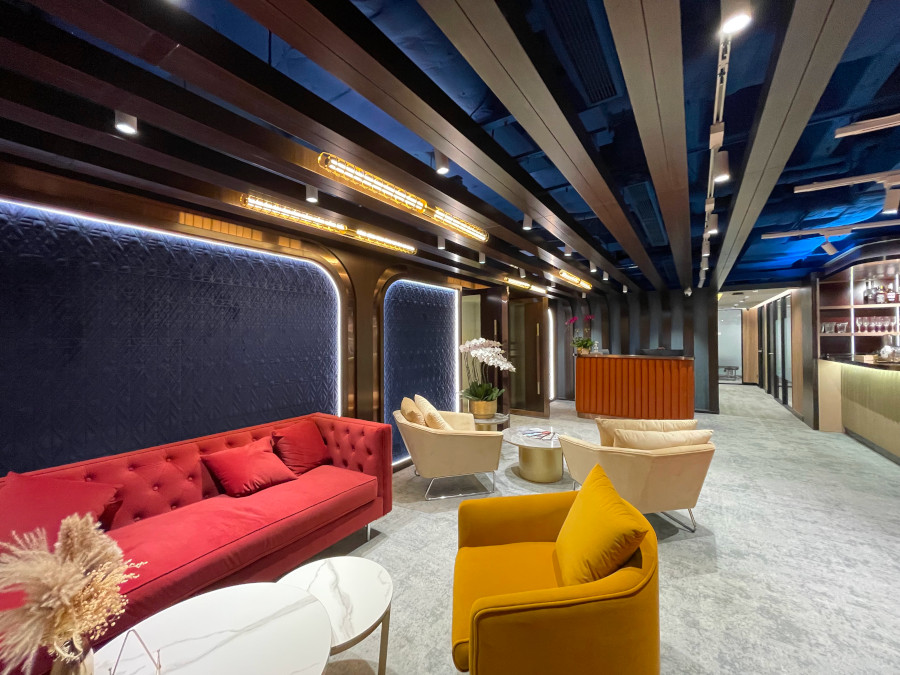
    Bela Offices is one of the leading providers of serviced offices in prime business locations in Hong Kong. Established in 2021, The Bela portfolio of offices was designed with your efficiency and productivity in mind, with a range of services and features affording you the best possible working environment. The state-of-the-art contemporary offices have various amenities, including administrative support, high-speed internet, meeting rooms and networking facilities. Whether you seek a hot desk or a larger private office, Bela Offices has a solution, with uniquely designed workspaces, a first-class lounge, and a talented, dedicated barista.

    Bela Offices offers tailored workspace, access to meeting rooms, secretarial services and networking facilities. You can customise your office space with your own brand identity. With flexible sizes, you can accommodate a sole entrepreneur or an entire team. The inspiring environments allow your teams to work more productively with no hidden costs, no long-term commitments, and no need to worry about maintenance or repairs.

    Bela Offices proposes flexible contracts, so you have peace of mind that you can scale up or down during the contract period and grow flexibly at your own pace allowing you to manage your overhead costs, maximise your budgets and elevate your productivity. Each office boasts electronic sit-to-stand desks and ergonomic office chairs for comfort.

    Bela Offices offers an excellent solution for businesses seeking flexible, serviced office solutions. You can enjoy a comfortable and professional working environment tailored to your needs with bespoke designs, support services and amenities.

    Contact Bela Offices: https://www.belaoffices.com/contact


    https://www.pexels.com/photo/man-with-headphones-facing-computer-monitor-845451/

  • Taxing housing necessary but challenging

    Taxing housing necessary but challenging

    Experts say that taxing housing will help make the real estate market more transparent and prevent speculation, but it is necessary to digitize data, ensure fairness, and avoid overlapping taxes.

    The government plans to enact a new law on real estate taxation in place of the Law on Agricultural Land Use and the Law on Non-Agricultural Land Use, and separating houses and land for tax purposes.

    There is currently a very low tax on lands and, unusually for any country, none on houses.

    The Government is on course to submit the bill to the National Assembly for comments in October 2024 and approval in May 2025.

    Several experts said they agree that taxing houses and lands is necessary in the context that the property market is opaque and plagued by speculation, lack of systematization and ineffective management.

    Le Hoang Chau, chairman of the Ho Chi Minh City Real Estate Association, said taxing housing and land would help make the real estate market fairer and more transparent.

    Nguyen Van Duoc, general director of Trong Tin Accounting and Tax Consulting Company, supported an increase in the tax rates on lands but warned it is necessary to safeguard the interests of the public and not adversely affect the market.

    “Taxing houses and other construction is also reasonable. Many countries around the world have done it for a long time.”

    Nguyen Mac Hoai Nam, general director of Nam Phat Investment Consulting Company, said tax policies often have a direct and almost immediate impact on investment behavior, speculation and buying and selling of properties.

    He explained that taxing houses and lands would enable authorities to monitor the market closely, increasing its transparency and making policymaking and management more efficient.

    But analysts also warned there would be many challenges in doing this.

    Duoc pointed out that taxing depends on databases and the capability of management agencies.

    Chau said to tax houses and other properties, it is necessary to reduce land-use fees to avoid excessive taxation.

    The land-use fee is collected once and not annually and accounts for 10% of the value of an apartment and 30% of a townhouse.

    In the case of villas, it accounts for 50%.

    If land-use fees remain high, the addition of property tax would make the burden excessive, he said, pointing out that developed countries collect house and land taxes annually.

    Nam suggested starting taxes on housing and land at moderate rates and then gradually increasing them so that people could get used to it.

    “It is also necessary to consider lowering the land-use fee.”

    First, government agencies need to get comprehensive data on housing and lands and come up with a convincing valuation method for the taxes.

    The data should be collated in time to ensure the new law is passed by mid-2025.

    Huynh The Du, a lecturer in public policy at Fulbright University Vietnam, said the database cannot be completed anytime soon.

    The country has over 27 million households living in more than 2.5 billion square meters of housing, but data on their prices is scant and many houses have not been traded for decades, he pointed out.

    In any case, the prices registered during transactions are much lower than market rates, he further pointed out.

    Dang Hung Vo, a former deputy minister of natural resources and environment, said the government should not rush to tax houses and apartments, but focus on taxing lands.

    This is more feasible because the country has an established land management system, he said.

    Urban residential lands are managed relatively well, and so taxing them is easy and efficient, he said.

    Meanwhile, it is necessary to perfect the system for assessing land prices to ensure they are close to market rates.

    “This is the first step before thinking about taxing houses.”

    It is difficult and complicated to tax housing due to the lack of an effective management system, he said.

    Analysts said local governments should collect the housing tax for investing in infrastructure and utilities like bridges and roads and planting trees.

  • Housing liquidity in 2022 lowest in 5 years

    Housing liquidity in 2022 lowest in 5 years

    The number of house and apartment transactions in the north and the south in 2022 fell to the lowest level in 5 years, according to report by real estate agencies.

    The report said that the apartment market in Ho Chi Minh City and in some southern provinces has been on the decline throughout the year.

    In the first two quarters, nearly 14,000 new apartments were put up for sale, and some 75% were sold. In the third quarter, 1,250 apartments went on the market, and the absorption rate dropped to about 52%.

    In the fourth quarter, 100 new apartments were sold, the lowest number for the year. Furthermore, the number of units sold during the peak sales season at the end of this year was far below the expectations of investors.

    According to Batdongsan, this is an unprecedented situation in the pre-Tet period over the past 5 years. The period before Tet (Lunar New Year holidays)is the peak time for yearly real estate transactions. Many businesses have already increased discount rates to 40-50%, but the liquidity has not shown any improvement. Tet falls in late January 2023.

    According to a market report by real estate services provider DKRA Vietnam, the apartment market showed that 1,385 units were sold in HCMC in the first quarter of this year, down 68% compared to the previous quarter. The liquidity improved in the second quarter, but weakened in the third quarter.

    In August, in the primary market, only 177 apartments in the city were sold, the lowest number in three years, and down 4.6 times against July. The absorption rate in December was around 20%, the lowest in three years.

    Over 200 apartments were sold in November in HCMC and southern provinces, dropping nearly 90% against the same period last year.

    In the south, just four houses were sold in August, down 23 times against July, and down over 70 times compared to April.

    In the secondary market in the south, many apartment and house investors have offered high discount rates to cut their losses, but liquidity has remained low in the second half of this year, according to VnExpress’ observation. The housing market remained quiet in December.

    In the north, housing liquidity has also decreased sharply this year.

    According to Savills Vietnam, in Hanoi, some 4,000 apartments were sold in the first quarter, while sales dropped 45% in the second quarter against the previous one, and decreased 10% in the third quarter.

    In the third quarter, 299 semi-detached houses and villas in Hanoi were sold, down from 666 units in the first quarter.

    Nguyen Van Dinh, president of the Vietnam Association of Realtors, said since the second quarter, the real estate market in the north has decelerated due to the impact of the credit tightening policy.

    The market’s absorption rate in the third quarter decreased 66.5% against the first half of the year, and the number of transactions dropped over 50% against the same period last year.

    The cash flow has slowed down in the real estate market, causing a marked decrease in liquidity, Dinh said.

    Batdongsan’s southern regional manager Dinh Minh Tuan explained that transactions were frozen because some investors and buyers had difficulty accessing bank loans, while others were shocked at increasing interest rates. This situation has caused people to delay purchases in the short term while they assess the market.

    Many well-off people are hesitant to disburse money, expecting housing prices to fall further and discount rates to increase in the coming time, Tuan said.

  • Pergola kits are a rising choice in Asian commerce

    Pergola kits are a rising choice in Asian commerce

    When beautifying our homes, we have many options to choose from. Among the most popular choices for home gardening improvements, though, includes the use of pergolas. When fitted and installed correctly, pergolas can add freshness and charm to our outdoor spaces that we did not previously utilize. Today, you can find many places providing pergolas for sale. Across the Asian retail sphere, there has been a growing interest in using pergolas as the ideal outdoor home decoration.

    This has come for various reasons, but the ease of finding pergolas for sale online has become a common reason. Another reason is that pergolas, once seen as expensive and often unaffordable, are now much cheaper to invest in. Online specialists like Sunset Pergola Kits have become a common choice for Asians looking to buy affordable DIY pergola kits.

    A big reason for the popularity of pergolas is their commonality in the Western world. While Asia has its own cultures and customs, the globalized nature of life today means it is common for nations to borrow from other cultures. Across Asia, this has seen a rise in the number of Western-inspired designs. It is more common today to find pergolas in the gardens and landscapes of many Asian homes purely because they are so commonly found across Western culture.

    Add in the functional nature of a pergola, and it is easy to see why so many Asian shoppers see them as the ideal add-on to their garden space. If you are looking for a way to change your outdoor space this year, then you might wish to consider following this trend and investing in some pergolas.

    Pergola ease of setup helps to fuel interest

    Another reason for this growth is that a pergola can be easily set up. Compared to other outdoor fixtures, it would not take many challenges at all to set up a pergola and see how it looks. This is one of the main reasons pergolas are a big part of the current aesthetic trend across the continent; people like to have easy-to-arrange and manage outdoor furnishings.

    Pergolas are one of the easiest-to-assemble add-ons that one can add to their garden. When set up correctly, a pergola can be the perfect way to help add some functional coverage without having to close off the entire outdoor space.

    In a part of the world where so many of us focus heavily on functionality, something like a pergola can be game-changing. It offers a comfortable aesthetic change without being excessive, and it can easily be fitted into place even by non-professionals.

    For those looking for ways to change their garden and landscape, it might be worth keeping an eye on this trend. Asian retail sectors are seeing increased demand for pergola kits with good reason – this might be the new landscaping trend for the future.


  • Ikea Sweden to sell sustainable energy to locals

    Ikea Sweden to sell sustainable energy to locals

    As of September this year, furniture giant Ikea will offer sustainably generated energy to Swedish households in a move to diversify its business and offer a green approach to power supply.

    The STRÖMMA offer will be made in partnership with local energy supplier Svea Solar, and will eventually brand out into other markets.

    “At Ikea, we want to become fully circular and climate positive by 2030, built on renewable energy and resources,” Ingka Group new retail business manager Jan Gardberg said in a statement.

    “We believe the future of energy is renewable and we want to make electricity from sustainable sources more accessible and affordable to all.”

    Through the STRÖMMA offer, customers that have already purchased solar panels from Ikea can connect the panels to an app to track their own generation, and sell back electricity they don’t use themselves, while customers without such panels can still use the app to track their energy usage.

    “We’re a home furnishing company, and we want to make it easier for people to live a more sustainable life at home,” Ikea Sweden sales manager Bojan Stupar said.

    “Today we offer smart and energy-efficient products and services that contribute to prolonging the life of products, reducing waste, saving water, and eating more healthily, as well as reducing electricity usage, [and] providing solar and wind power at a low price to more people feels like the natural next step on our sustainability journey.”

    Ikea started selling solar panels in Australia, and introduced over 30 global initiatives to reduce its carbon footprint and help customers lead more eco-friendly lives, in the past year.

  • Ikea’s malls arm branches out into housing with new China centre

    Ikea’s malls arm branches out into housing with new China centre

    Ikea’s shopping malls business – one of the world’s largest – has kicked off the sales process for some 500 flats at its first-ever mixed-use retail and residential development, in Changsha, southern China.

    Cindy Andersen, MD at Ingka Centres since February, said in an interview she expected flat buyers to start moving in during March next year, after the adjacent mall opened last month following pandemic-related delays.

    Ingka Centres has 45 malls, or “meeting places” as it calls them following a strategy tweak a few years ago, anchored by Ikea furniture stores across Europe and Russia, and in China where they are branded Livat.

    The company has shifted towards more entertainment and social spaces in its developments as consumers, in China in particular, increasingly shop online, visiting malls more for food or movies. Andersen told Reuters a third of tenants at the Livat Changsha mall were retailers currently.

    With housing, it is testing yet another income leg, banking on the rapid urbanization in China. Livat Changsha’s residential building, besides the flats, also sport common living and workspaces designed and decorated in co-operation with Ikea that it hopes will appeal to people working from home.

    Andersen said the Livat Changsha mall – Ingka Centres’ fifth in China and its first development across markets to also offer housing – had around 95-per-cent occupancy in July, with tenants ranging from restaurants and sport and entertainment outlets to around 350 retailers including Decathlon and Uniqlo across 130,000sqm.

    “I think we had a really relevant strategy even before the pandemic, and now the trends we saw already then have accelerated.”

    The atrium of the Livat shopping centre in Changsha, China. Image: Ingka Centres.

    She said that Ingka Centres, along with parent Ikea, still has great belief in a future of physical shopping, including in China, as long as it is tailored to consumer expectations around services, omnichannel and convenience.

    “There is a need to include retail experiences in the meeting places also going forward. We have a lot of confidence this is a need for the consumer also in China,” she said, adding that Ingka Centres had added 50 international retail brands to its portfolio in China over the past year.

    “I think it very much comes down to the fundamental needs of people. We like to be with other people and we like to be in environments where we can experience, where we can touch and feel,” she said.

    Across markets, Ingka Centres is trying various omnichannel models and digital services at its malls with tests ranging from local e-commerce platforms to live shopping events.

    At Livat Changsha – where it has invested more than US$616.8 million to date – the focus initially will be on a loyalty scheme app that is connected to Chinese social media WeChat, sporting services such as virtual reality centre navigation, online restaurant queuing and cinema ticket purchases.

    Andersen said the program currently has around 2.3 million members in China, compared with 1.5 billion in May last year.

  • Top 5 Locations to Live in the Philippines

    Top 5 Locations to Live in the Philippines

    The Philippines is an Asian country in the Pacific Ocean. It is made up of around 7400 islands and is categorized into three geographical divisions known as Luzon, Visayas, and Mindanao. The country covers an area of 300,000 square kilometers and has a population of approximately 109,000,000. The landscape of the Philippines is diverse: from the green mountain villages to white sandy beaches to busy, crowded cities such as the capital city, Manila. If you would like to visit the beautiful islands and experience the fascinating culture of this country, here is a guide to the Top 5 Places to Live in the Philippines.

    Mandaluyong

    If you like shopping, you will love Mandaluyong – a city directly east of Manila. The city is well developed and is home to the Ortigas Centre, which is a huge business and commercial building. The number of shopping centers is vast, and you can pick up some real bargains in malls such as SM Megamall, The Podium, and SM Light Mall.

    Those who love a good pampering will love this city as it has many luxury spas and salons where you can receive anything from a pedicure to eyelash extensions. Lovers of music can sing their hearts out at one of the many karaoke bars or dance the night away in a nightclub such as Z Roof Deck.

    If you plan to visit the Philippines soon, you may want to consider looking for long term accommodation in various locations that appeal to you and that way you can try before you buy. For example, if Mandaluyong sounds like a great place to live you could look for a place to rent and see how you enjoy living there before you invest in a property. Try to find an apartment for rent in Mandaluyong which will allow you to get to know the city better and decide which districts would make the perfect location for your permanent abode.

    Tagaytay City

    Tagaytay is around 60 kilometers from Manila and is a beautiful city with lots of parks and greenery. The most popular attraction in Tagaytay is Taal Volcano. This relatively small volcano is the most active of several volcanos in the Philippines.

    If you like a cooler climate, Tagaytay is a great place to live as it isn’t as hot as other parts of the Philippines due to its high altitude.

    During the Christmas season and Holy Week, hundreds of tourists flock to the beautiful churches and shrines in this city.

    Boracay

    If you are a beach lover, you must visit the beach capital of the Philippines – Boracay. This beautiful island has over 12 beaches, including White Beach, which, as its name suggests, is a lovely beach with pale white sand, edged with clean, azure water. Some of the luxury beach resorts along the coast are well worth a visit if you want some pampering in luxurious surroundings.

    Bohol

    Bohol is situated in the central geographical belt of the Philippines, known as Visayas, and is known for its natural beauty. It is an excellent place for nature lovers to visit and Bohol island is home to unique natural wonders known as the Chocolate Hills. These are a collection of 1200 grassy hills which turn brown during the dry season on the island and look like lumps of chocolate formed from the landscape.

    A tiny primate called the Philippine Tarsier is native to the country, and a sanctuary dedicated to caring for these cuddly critters with enormous eyes can be found in Bohol. Visitors can enjoy a night walk through the shelter where they may catch a glimpse of this nocturnal creature.