Tag: HSBC

  • Hong Kong stocks extend sell-off as banking giant HSBC tumbles to 7-year low

    Hong Kong stocks extend sell-off as banking giant HSBC tumbles to 7-year low

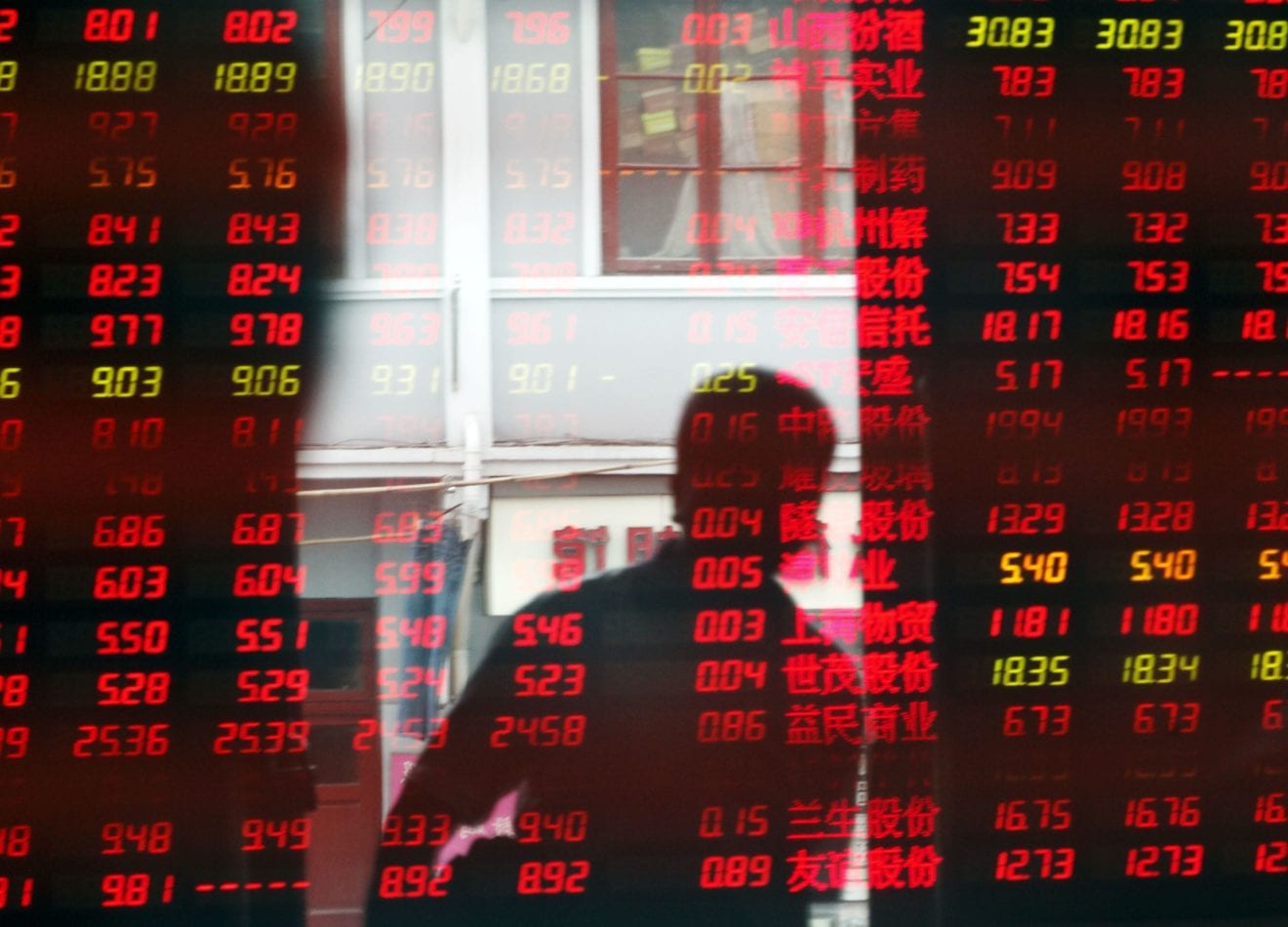
    Hong Kong stocks closed at their lowest level since mid-2012 on Friday, extending steep declines from the previous day in a holiday shortened week, as index heavyweight HSBC tumbled to a seven-year low after the company decided to scrap a pay freeze plan aimed at cutting costs due to staff protests.

    The Hang Seng Index was down 1.2 per cent or 226.22 points at 18,319.58, the lowest close since June 2012. The index fell 3.9 per cent on Thursday after returning from the three-day Lunar New Year break, posting the worst loss to start a Chinese new year since 1994.

    For the week, it was down 5 per cent.

    So far this year, the Hang Seng Index has plunged more than 16 per cent, already more than doubling the annual loss of 7.2 per cent it rang up in 2015.

    The Hang Seng China Enterprises Index, or the H-shares index, settled 2 per cent lower at 7,505.37.

    Sino-British banking giant HSBC Holdings, one of the most-widely held stocks by Hong Kong retail investors, tumbled 2.7 per cent to HK$48.1, the worst level it has seen since April 2009.

    HSBC’s chief executive Stuart Gulliver wrote Thursday in a memo that the company would drop a pay freeze announced recently to cut costs, following feedback from its employees.

    Gulliver said the company would use the cash from the 2016 bonus pool to fund the pay rises, while also expressing his concerns for the bank’s revenue outlook in 2016 due to uncertainty around the global growth outlook and the interest rate environment.

    Among other market movers, Asian life insurer AIA Insurance fell 2.4 per cent to HK$37.25, and Chinese online major Tencent Holdings dropped 1.9 per cent to HK$133.3.

    Ben Kwong Man-bun, executive director and head of research of KGI Asia, said the Hong Kong market lacked clear direction and was taking its cue from hobbled overseas markets.

    “The global equity market is still under selling pressure. It’s because of the fearful sentiment of investors. They prefer to hold cash rather than assets,” Kwong said.

    The broader weakness in regional markets also added to the selling pressure on Hong Kong stocks. Japan’s Nikkei Average finished below 15,000 for the first time in 16 months, down 4.8 per cent at 14,952.6, as the yen, a traditional safe-haven currency, soared against the US dollar.

    On Thursday, global stocks entered a bear market, as the MSCI All-Country World Index, a gauge of global stock markets, had fallen more than 20 per cent from its most recent high in May 2015. US and European equities both took a hard hit, spurred by heavy selling in the banking sector on worries negative interest rates and low economic growth could hurt banks’ earnings.

    Going forward, analysts said stock markets still face a battery of threats ranging from slow growth, interest rate uncertainty, emerging market turmoil and heightened bad loan risks.

    “The global economy is really weak. Even after they did quantitative easing, it seems the central banks have failed to stop the slowdown,” Kwong said.

    However, Macau casino stocks bucked the weak trend, after Wynn Macau reported its operating revenues dropped by a less-than-expected 37 per cent in the fourth quarter of fiscal 2015. Shares of Wynn Macau jumped 3.6 per cent to HK$7.77, rival Galaxy Entertainment climbed 3.1 per cent to HK$23.25, and Sands China advanced 2 per cent to HK$24.75.

    Offshore oil producer CNOOC also recovered 0.4 per cent to HK$7.48 after crude futures bounced back in international markets.

    Chinese stock markets were still closed for the holiday on Friday and will reopen on Monday.

    However, some analysts expressed concerns A-shares may catch up with the global stock rout and fall sharply when they start trading next week.

    “It’s concerning,” said Li Tao, an analyst for Citic Securities. “The external markets were quite volatile during the Chinese new year break, particularly in the US, where stocks continued falling. The depressed state of the global economy may have a negative impact on the A-shares market.”

  • HSBC setting up local subsidiary to handle retail and wealth business

    HSBC setting up local subsidiary to handle retail and wealth business

    HSBC’s Singapore branch is spinning off its retail banking and wealth management division into a local subsidiary.

    This locally incorporated unit, which will be operational from May 9, will oversee the running of all operations of the retail banking and wealth management business here.

    All other lines of business of HSBC in Singapore, which include commercial banking, private banking and global banking and markets, will continue to operate under the existing Singapore branch.

    Mr Guy Harvey-Samuel, HSBC’s chief executive officer for Singapore, said the move reflects the success of the bank’s retail business here.

    “More importantly, this move demonstrates HSBC’s strong and long-term commitment to the Singapore market,” he added.

    “Singapore is a top-seven priority country for the HSBC Group globally and we will continue to invest in our business here. We are excited about new opportunities to further expand our presence.”

    The move to locally incorporate the retail banking and wealth management business follows an announcement by the Monetary Authority of Singapore (MAS) in April last year that HSBC is considered one of seven domestic systemically important banks in Singapore.

    Such banks could have a significant impact on the Singapore financial system’s stability and the proper functioning of the broader economy.

    All banks here have to undergo an annual assessment of their systemic importance.

    Banks with a significant retail presence are required to locally incorporate their retail operations.

    In line with this, HSBC’s new subsidiary will be subject to additional MAS regulatory requirements aimed at strengthening the resilience of the banking system and boosting protection of retail customers.

    The subsidiary will hold a full bank licence with qualifying full bank privileges. These privileges include being able to open more branches than other foreign banks.

    Qualifying full banks are also allowed to conduct the full range of banking businesses permitted under the Banking Act, including taking retail deposits.

    Once the new subsidiary is up and running, it will be business as usual, HSBC said.

    Mr Matthew Colebrook, the head of retail banking and wealth management for HSBC in Singapore, added: “Our customers remain central to HSBC and we will ensure that the transfer of customer accounts to the subsidiary is a seamless and largely behind-the-scenes process.

    “More broadly, HSBC aims to be a primary bank for affluent and aspirant Singaporeans and those with international needs.”

  • HSBC to locally incorporate its Singapore retail operations in May

    HSBC to locally incorporate its Singapore retail operations in May

    In order to follow new MAS regulations.

    HSBC will transfer its local retail banking and wealth management business, which is currently under the HSBC Singapore Branch, to a locally incorporated subsidiary, HSBC Bank (Singapore) Limited.

    The transfer of HSBC’s retail banking and wealth management business is expected to take effect on 9 May 2016, subject to the receipt of regulatory and court approvals.

    The move comes after Monetary Authority of Singapore tagged HSBC as one of seven domestic systemically important banks (D-SIBS). Under a new regulatory framework announced in April 2015, all D-SIBS should locally incorporate their retail operations to allow the MAS to set targeted and appropriate policy measures specifically for the systemically important banks.

    The other D-SIBS are DBS, OCBC, UOB, Citibank, Malayan Banking and Standard Chartered.

  • Sales slide worst in 13 years for Hong Kong

    Sales slide worst in 13 years for Hong Kong

    Hong Kong retail sales fell 3.7 percent last year the worst in 13 years, including the 2.3 percent slide during the 2003 SARS epidemic with a gloomy outlook also forecast for this year.

    Retail sales fell to HK$475 billion, with volume slipping 0.3 percent, a second straight annual decline, the Census and Statistics Department said.

    In December, when the tourism board counted nearly 11 percent fewer visitors from a year earlier, total sales value fell 8.5 percent much worse than the 4.3 percent drop projected by analysts. The slump widened from 7.8 percent in November, and was the largest since January 2015.

    Sales of jewelry, watches, clocks and valuable gifts were among the hardest hit, slumping 17 percent in December and 16 percent for the full year. Clothing and department store sales also declined.

    Hong Kong Retail Management Association chairman Thomson Cheng said the situation, which fell back to the level seen in 2002, is “worrying.”

    Cheng expects a high single-digit slump in retail sales for the first quarter this year, and full-year retail sales to drop at least 3 percent.

    Erwan Rambourg, a retail analyst at HSBC in Hong Kong, said high-end watch and jewelry sellers suffered as mainland shoppers avoided lavish purchases, while falling currencies in other Asian nations reduced prices for goods bought elsewhere.

    Visitors from the mainland fell 16 percent in December from a year earlier, the tourism board said last week. Total visits to Hong Kong fell 2.5 percent last year to 59.3 million.

    ANZ noted visitor spending made up a large portion of more than 42 percent of retail sales in 2014.

    “Given the depreciation of the yuan and other currencies against the Hong Kong dollar, the tourism and retail sector will continue to face headwinds in 2016,” ANZ said.

    Retail sales were down on an annualized basis every month from March through December, according to Bloomberg data.

    Chow Tai Fook Jewellery Group (1929) said last month that sales during Lunar New Year would be challenging.

  • HSBC Singapore plans to transfer retail, wealth business to local subsidiary

    HSBC Singapore plans to transfer retail, wealth business to local subsidiary

    The Hongkong and Shanghai Banking Corporation (HSBC) Singapore is planning to transfer its retail banking and wealth management (RBWM) division to a locally incorporated subsidiary named HSBC Bank (Singapore).

    Expected to become operational from 9 May this year, the subsidiary will be responsible for managing all the accounts, assets and security arrangements associated with the RBWM unit.

    The transfer of operations is subject to regulatory and court approvals.

    HSBC Bank (Singapore) will possess a full bank license with qualifying full bank privileges, which will allow the subsidiary to open more branches than other foreign banks, straitstimes reported.

    The move follows an announcement by the Monetary Authority of Singapore (MAS) in April last year that HSBC is considered one of seven domestic systemically important banks in Singapore, according to media sources.

    According to MAS, banks with a significant retail presence must locally incorporate their retail operations, a move that could help the Singapore financial system to function properly.

    HSBC Singapore CEO Guy Harvey-Samuel was quoted by Channel NewsAsia as saying: “The transfer of our retail banking and wealth management business in Singapore to a locally incorporated subsidiary reflects the success, scale of growth and significance of our retail business in this market.”

    HSBC’s other activities including commercial banking, private banking and global banking will continue to operate under the existing Singapore branch.

    “Singapore is a top-seven priority country for the HSBC Group globally and we will continue to invest in our business here. We are excited about new opportunities to further expand our presence,” Harvey-Samuel was quoted by straitstimes.

  • China is facing into a period of painful economic adjustments

    China is facing into a period of painful economic adjustments

    On February 8th, China will celebrate the Year of the Monkey. The monkey is famously a smart, naughty, wily and vigilant animal, and anybody trying to make money in the rest of 2016 will have to learn how to outsmart the animal.

    A useful barometer of the Chinese economy is always to look on the streets and see what cars are clogging up the dual carriageways and main roads of the big cities like Beijing, Shanghai and Guangzhou.

    By this measure, the world’s second largest economy is doing pretty well.

    Sentiment is not good as far as monkeys go – it has remained below 90 since June 2014, far below the 100 breakeven level. According to the China Auto Purchase Sentiment Report, people are buying cars, but they are buying smaller, cheaper vehicles. Despite the fall in sentiment, this sees more Chinese households reporting that they currently own a vehicle.

    The Car Purchase Indicator is a composite indicator designed to gauge future demand for cars and it fell 4.5 per cent to 83.2 in December from 87.1 in November, the lowest reading since April 2012.

    But yet there is still obvious strength in the market. Despite a damaging emissions scandal, Volkswagen continues to lead the passenger car market in China, with deliveries of 2.63 million units from January to December. And while this is down 4.6 per cent, the fourth quarter of 2015 was a very successful one for the carmaker.

    But then you look at the stock market.

    With the nightmare of summer 2015 still fresh in the minds of badly burned retail investors, China’s stock market opened 2016 with a stark reminder that the fundamental situation in the markets remained deeply unstable.

    China was forced to twice deploy its “circuit breaker” mechanism to halt trading as stock markets nose-dived by 10 per cent in the first week of the year.

    After the second time, Beijing scrambled to abandon the mechanism, which the markets, especially overseas, had always considered a weak and useless measure. By abandoning the “circuit breaker”, the regulators appeared clueless on how to stabilise the market and the situation appeared to go back to square one.

    Unlike many western economies, the stock market in China does not offer a bellwether of the overall health of the economy and even a massive slide on the stock market would be tolerable were the data coming out of the world’s second largest economy inspiring confidence on the future outlook.

    New normal

    However, these are the days of the “new normal” when the Chinese government is trying to sell the idea of slower, consumption and services-based growth and move away from the heady days of double-digit expansion which defined the economy for the past two decades.

    Gross domestic product growth fell to a six-year low of 6.9 per cent in the July-September quarter and is forecast by the International Monetary Fund to decline further to 6.3 per cent in 2016. This level of growth is not enough to keep generating new jobs – there are more than 7.5 million graduates expected to enter the labour market later this year and robust growth is needed to keep the economy expanding at a rate that will maintain stability for the ruling Communist Party.

    Cheng Shi from ICBC international research group expects growth to continue to slow in 2016.

    “Firstly, the global economic recovery means weaker external factors for China’s economic growth. Secondly, for the last 30 years, China has accumulated massive capacity and the difficulty of keep on growing is increased and the growth rate declines naturally. Thirdly, it is affected by the ageing population and the labour cost has been growing for a long time. Fourth, the real estate market is going through an adjustment period,” said Cheng.

    In the short term, the risks caused by structural economic adjustments will keep on showing and the pain is unavoidable, said Cheng.

    “In the long run, the opportunities brought by deepening economic reform will gradually start to appear and the rise won’t stop,” he said.

    “I think at the bottom of this is a fundamental story about a slowdown in China,” Peter Oppenheimer, chief global equity strategist at Goldman Sachs told CNBC. “The focus at the moment is the ongoing weakness in the manufacturing sector but also the lack of evidence that traditional policy easing is really stabilising the economy.”

    He underlined concerns about further weakness in exchange rates, and the possibility for that to flow through the broader markets.

    The collapse in growth shows that investors are reluctant to buy into the government vision of the “new normal”.

    China’s stock market more than doubled between late 2014 and June, then dived by 30 per cent, an event that caused deep pain among retail investors.

    “We expect growth momentum to slow in the first half of 2016, and for headline growth to fall to 6.4 per cent in the second quarter of 2016, before recovering in the second half of 2016 as more easing measures kick in,” HSBC said in a research note.

    “Policymakers need to strike a balance between financial and SOE reforms and the need to reflate the economy,” HSBC said.

    To this heady brew, add in the slide in the Chinese yuan currency to a five-year low against the dollar, which has forced the government to spend tens of millions of dollars from its foreign currency stockpile to defend it, and you can see a perfect storm of negative factors clouding the outlook for the Monkey Year.

    Overall it was the worst beginning to the year for the Chinese yuan since 1994, on growing concerns that the economy is weakening further.

    The government last week guided the yuan 1.5 per cent lower to give a boost to the country’s export sector, which is bearing the brunt of China’s goods becoming expensive overseas compared to other Asian neighbours. The move to lower the yuan was not deftly done, and the resulting nervous reaction further weighed on share prices.

    “Upbeat trade data could go some way to reassure global investors that China’s economy is stabilising,” said Tom Rafferty, lead China analyst at the Economist Intelligence Unit. “The data is in line with other indicators that suggest China’s economy is stabilising on the back of sustained stimulus measures, some of which have been targeted at the external sector.”

    “There will be some qualms expressed about the reliability of the data, given the weaker performance in December of other major Asian exporters. However, China has consistently outperformed the region in what was a difficult year for global trade,” he said.

    Then you have other anomalies.

    During 2015, seven property developers reported annual sales of more than 100 billion yuan (€14 billion) as the property market continued to perform strongly, despite a slowdown, while a total of 104 developers reported annual sales of over 100 billion (€1.4 billion) in the same period.

    The top three by sales were Vanke, with 261 billion yuan (€36.6 billion), Greenland with 230 billion (€32.3 billion) and Evergrande with 200 billion yuan (€28 billion). All involved will be hoping they can outsmart the monkey again in 2016.

  • Battle for young customers heats up in HSBC’s Asia stronghold

    Battle for young customers heats up in HSBC’s Asia stronghold

    HONG KONG Banks in Hong Kong are intensifying the battle for young customers key to their future retail profit, offering online perks and mobile banking products in a bid to erode the dominance of HSBC in its Asian stronghold.

    Like peers around the world, banks operating in Hong Kong including Bank of China Ltd (601988.SS) (3988.HK) and Citigroup Inc (C.N) are trying to improve their online banking products to lure tech-savvy students and young professionals as they are about to open their first bank account.

    For HSBC the battle to win the hearts of young Hong Kongers is particularly important as retail banking activity in the Asian financial centre helped drive its overall profit up 2 percent in the first half of this year.

    The London-based bank, which has put China at the centre of its global strategy, is also in the process of deciding whether to move its global headquarters to Hong Kong.

    A survey of 2,500 people conducted in November by specialised research firm RFI, gave Bank of China a bigger market share among bank customers aged 18-24 than HSBC, which dominates in all other categories.

    These customers loathe spending time at bank branches and seek a lender that can allow them to carry out multiple transactions from their smartphone. “I would rate both the online and mobile services offered by Bank of China as good as they allow me to pay my parking tickets instantly, and this is very important to me,” said Chun Hoi Lau, a 23-year-old student at the University of Hong Kong.

    Bank of China, which says the young generation is a key customer segment, allows clients to carry out cross-border payments through an app, uses the popular WeChat social media platform to handle customers’ queries and has introduced a popular virtual securities investment contest for students.

    “We have been developing a comprehensive strategy with a set of products and services delivered through their preferred channels to suit their life styles,” the bank told Reuters.

    BANK FOR LIFE

    The jury however is still out on which lender is making effective inroads among the young, a segment targeted because people often stick with a bank for life once they have made their choice, analysts said.

    In a detailed survey commissioned by HSBC, and conducted by Nielsen last year, the bank said its market share of 18-24 year olds was nearly double that of Bank of China. It said it was aware of the increasing need to offer more online services.

    “We are investing heavily in developing new capabilities to meet customers’ needs,” said Kevin Martin, HSBC’s head of retail banking and wealth management, Asia Pacific.

    HSBC will next year launch more products for smartphones and digital payments as well as new security features, Martin added.

    Citibank is also appealing to younger customers with 19 “smart” branches in Hong Kong that boast the sleek lines of Apple Inc’s retail stores, touch panels, video conferencing facilities and iPads to access a wide range of banking services. Hong Kong spokesman James Griffiths said Citibank was also offering customers discounted fees on stock and forex trading via digital platforms to encourage more transactions.

    The question now for HSBC’s challengers is whether they can convert young people lured by attractive rates or flashy online offerings into lifelong customers.

    “HSBC isn’t that popular among young people,” said John Pang, a 24-year-old civil servant who banks with the lender. “It hasn’t changed a lot in the past 5-10 years, the online interface still looks the same.”


  • What if…HSBC sold Hang Seng for BoCom deal?

    What if…HSBC sold Hang Seng for BoCom deal?

    Companies of China are increasingly focused on international expansion, at the exhortation of Beijing. Its desire to expand has helped support the international ambitions of local insurers such as Anbang and Fosun International, or securities firms such as Citic and Haitong. But one vital part of this sector has yet to demonstrate such assertiveness: China’s banks.
    Chinese individuals are remarking upon their meekness. The South China Morning Post reported that Li Ruogo, former chairman of the Export-Import Bank of China and now an executive vice-president at the International Financial Forum, claimed the international capabilities of China’s banks is not suitable for the needs of the nation’s outbound investments and acquisitions.

    Similarly, the newspaper reported that Ma She, deputy director of European affairs at the Ministry of Commerce, as criticising the banks for “underdeveloped” overseas branch networks and poor data sharing management.

    To date China’s banks have embarked on tentative acquisitions offshore, in South Africa and South America. But these have been small, and piecemeal.

    It looks unlikely the banks would ever unveil grandiose plans to buy a Deutsche Bank, or a Standard Chartered. Instead, for a truly transformational purchase they would be most likely to seek targets close to home.

    Hong Kong would be the most obvious immediate candidate, boasting geographic, financial and cultural ties. However, the city has relatively few decent-sized candidates that are obvious acquisition prospects.

    Bank of East Asia might be the most obvious potential target. However, the bank recently issued an exchangeable bond in its shares to Sumitomo-Mitsui Financial Group, effectively raising its stake to around 17.5%. That, combined with the Li family’s 11%, might make a takeover bid highly challenging, particularly given the likely reluctance of the Li family to sell out.

    But there is another possibility: Hang Seng Bank.

    Appealing acquisition

    Hang Seng’s biggest shareholder is HSBC. It bought a 51% stake in Hang Seng in 1965, after the latter was tottering following a bank run, and has subsequently raised this stake to 62.14%.

    As a result HSBC, which is by far Hong Kong’s largest retail bank, was responsible for 52% of Hong Kong loans (HSBC 40% and Hang Seng 12%) and 55% of deposits in 2014 (HSBC 44% and Hang Seng 11%), according to a report by Dagong Securities, published in May.

    The UK-headquartered bank holds Hang Seng at arm’s length, no doubt in order to avoid accusations of monopolistic practices. But it would be very reluctant to sell it. Understandably so; Hang Seng reported a profit of HK$20.05 billion ($2.59 billion) for the first half of 2015, had total assets of HK$1.3 trillion, while it was trading at 1.93 times price to book value on Wednesday, according to Bloomberg. It enjoys strong retail banking and insurance businesses and is growing in wealth management too.

    Acquiring Hang Seng would make a potentially appealing addition to a Chinese state-owned bank. It would offer the lender immediate scale in Hong Kong, North Asia’s leading financial centre. More importantly, Hang Seng would provide expertise in international banking practices and customer services.

    For Hang Seng, the backing of mainland lender with international aspirations would offer it the opportunity to flourish into commercial and retail banking outside of Hong Kong.

    Getting a sale done

    Hang Seng’s strength and financial stability means HSBC would be very reluctant to part with it. Yet it might be persuaded to do so for a large enough incentive.

    As it happens, Beijing could give HSBC what it may want most of all:  ownership of a local nationwide bank.

    The most likely is Bank of Communications. HSBC has owned around 19% of BoCom for years, and hoped to eventually get majority control, but these plans are currently impossible due to China’s 20% foreign ownership limit in its banks.

    Beijing could offer HSBC an exemption to its foreign ownership limits (potentially utilising the idea that HSBC’s local Hong Kong bank unit, The Hong Kong & Shanghai Banking Corporation, is applicable to buy larger stakes in China banks). Then it could sell HSBC enough shares to give it a controlling interest at a competitive rate (following, no doubt, a very thorough audit).

    In return, HSBC would agree to relinquish Hang Seng to a local bank for a similarly competitive valuation.

    The biggest challenge would be building enough political support for such a deal.

    It would likely require sanctioning by the State Council, plus the Ministry of Finance, State-owned Assets Supervision and Administration Commission and the China Banking Regulatory Commission. Additionally, the Chinese bank would need to agree to the purchase of Hang Seng Bank.

    However, if the political will could be found, it should be relatively straightforward to sell shares in BoCom to HSBC. The Chinese government owns 46.3% of BoCom, with the National Council for Social Security Fund owning another 4.78% and Sasac holding a further 4.66%, according to 4-traders.com.

    Securities fast track

    HSBC might ask for another favour in return for giving up BoCom: rapid approval of its new securities joint venture.

    The bank HSBC agreed to establish a joint-venture securities company with Shenzhen Qianhai Financial Holdings, of which it would own 51%, on November 2. However, the deal is subject to regulatory review and approval, which can take a long time – some JV players have been waiting years to get final approval on certain licences.

    Therefore HSBC would likely want fast-tracked approvals that gave its JV full underwriting, trading and wealth management access to China’s local capital markets.

    In addition to offering HSBC incentives, Beijing could also – if it so chose – place pressure on it to divest Hang Seng via the compliant politicians who run Hong Kong’s government.

    For all the operating separation of HSBC and Hang Seng, the fact remains the two comprise a dominant percentage of Hong Kong’s retail banking sector. In most countries this would cause antitrust concerns.

    Coincidentally, Hong Kong’s government introduced a new Competition Ordinance on December 14. International law firm Linklaters noted “the impact of the new law will grow over time, but it will ultimately lead to a more mature marketplace in which consumers will benefit through enhanced competition.”

    Costly acquisition

    Aside from political will, the biggest sticking point of any deal over bank acquisitions would be cost.

    Neither purchase would be cheap. BoCom had a market capitalisation of Rmb416 billion, or $64.13 billion, as of Thursday, giving it a price-to-book valuation of 0.94 times. Assuming BoCom’s balance sheet didn’t raise any major concerns, HSBC might spend $21.8 billion to raise its stake from 19% to 51%, assuming it paid on a par price-to-book valuation.

    Hang Seng is a bit cheaper. Its market capitalisation was HK$281.4 billion ($36.3 billion) on Thursday, giving it a price to book valuation of 1.98 times. At that valuation, a Chinese bank would need to pay $18.5 billion to gain a simple 51% majority stake from HSBC.

    To put those price tags into perspective, the largest banking M&A on record in Asia-Pacific, Westpac Banking Corporation’s $17.9 billion purchase of St. George’s Bank in 2008. Malaysia’s CIMB, RHB and Malaysia Building Society did discuss a three-way merger worth $22.3 billion in 2014, but the plan was scrapped early this year.

    Beijing would need to have a truly unshakeable desire to get one of its banks to expand internationally to sanction such an expensive M&A. And it would be hard for the Chinese government to cajole HSBC into such a sale without giving it in return the sort of local bank control it has thus far been unwilling to allow.

    But China appears keen to get its banks to support the expansion of its companies and the usage of its currency overseas. And HSBC really wants more mainland access.

  • HSBC results hit by Asia market falls

    HSBC results hit by Asia market falls

    HSBC has reported a 14% drop in profits for the third quarter of 2015 after adjusting for foreign currency movements, as the sharp falls in stock markets across Asia hit revenues in its retail banking and wealth management division. The overall adjusted profit was $5,5bn (£3.56bn, €5.0bn) compared with $6.4bn in the third quarter of 2014.

    The global bank said adjusted revenues were down 4% in the three months to the end of September to $14bn, mainly because of the drop in the Principal Retail Banking & Wealth Management division. Revenue was also lower in Global Banking & Markets operation.

    Operating expenses were also up 2% in the third quarter at $8.58bn, mainly due to increased spending on regulatory programmes and compliance.

    “Despite slowing growth in the mainland Chinese economy and market volatility in Asia, there has been no visible impact on our Asian credit quality in 3Q15,” group chief executive Stuart Gulliver told an investor briefing.

    Hong Kong hit

    Iain Mackay, HSBC’s group finance director, said the reduction in revenue in the wealth management operation mainly reflected lower earnings in Hong Kong.

    “This was caused by the stock market correction in Asia, which reduced asset valuations in our life insurance manufacturing business,” Mackay said.

    Profit from retail banking and wealth management operations also fell 32.8% in the third quarter when compared to the previous quarter. While for the Asia region as a whole profits were down 30% in Q3 compared to Q2.

    The bank also reported a 19.1% drop in profits from the Middle East and Africa region during the latest quarter compared with the previous one.

    Overall HSBC ‘s results were better than expected after costs related to fines and compensation for customers fell by $1.4bn. However, its shares weakened by 1.2% in London morning trade.

  • HSBC Global AM names Puneet Chaddha Singapore CEO

    HSBC Global AM names Puneet Chaddha Singapore CEO

    HSBC Global Asset Management (HSBC Global AM) has appointed Puneet Chaddha as chief executive officer (CEO) of HSBC Global Asset Management (Singapore) Limited, with effect from November 1 this year – he succeeds Kalen Lim, who will move to another senior role within HSBC. Mr. Chaddha will also take up the position of head of Southeast Asia of HSBC Global Asset Management.
    Mr. Chaddha was previously CEO of HSBC Asset Management (India) Private Limited – the firm says his successor in India will be announced in due course.

    Operating out of Singapore, Mr. Chaddha will report to Pedro Bastos, CEO, Asia-Pacific of HSBC Global AM and Matthew Colebrook, HSBC’s head of retail banking and wealth management in Singapore.

    Mr. Chaddha’s new roles will have him drive the growth of HSBC’s asset management business in ASEAN, supporting the wealth management and investment needs of HSBC’s key clients across retail, commercial, corporate, institutional and private banking primarily in Indonesia, Singapore, Malaysia, Thailand and the Philippines.

    “The emerging middle class in ASEAN is expected to double by 2025 and wealth creation will continue to accelerate. The increasingly affluent domestic population will have greater need for investment products presenting significant growth opportunities to our business. As Asia faces the challenge of ageing segments, pension management and the shift to long-term, diversified investment strategies are needs that HSBC Global Asset Management is strongly positioned to support,” said Mr. Chaddha.

    Mr. Bastos remarked: “Puneet has been with the HSBC Group for over two decades and has worked in several of our global businesses. He has successfully transformed the business in India in line with HSBC’s commercial and governance strategy. We are determined to expand our presence in Asia-Pacific and capitalise on our leading expertise and capabilities as a global asset manager to provide innovative products and bespoke solutions to meet our clients’ long-term investment goals.”

    And Mr. Colebrook added: “HSBC’s retail strategy is to use our international network to capture the wealth flows and people-to-people links between the faster-growing markets. Singapore’s sophisticated and world-class wealth and asset management sector makes it the nexus for wealth flows within Southeast Asia. Singapore’s status as the regional centre for asset management also reinforces why it is a top-seven priority market for HSBC globally. I am pleased to welcome Puneet to lead our asset management team as we continue to support our clients achieve their wealth goals.”

  • HSBC to rebrand Britsh retail operation as HSBC UK..

    HSBC to rebrand Britsh retail operation as HSBC UK..

    The bank, which is based in Britain and has operations in 73 countries, announced in June that it would rebrand its UK business – and fuelled speculation it could potentially sell them off – as a result of the rules that require high street banking to be ringfenced from investment banking.

    HSBC announces today that the name of its UK ring-fenced bank will be HSBC UK.

    It was not immediately clear whether the red and white logo that HSBC uses across its global operations, and which features on airbridges at Heathrow airport, will remain part of its UK facias.

    “Adding “UK” [will] distinguish the ring-fenced bank from the non-ring-fenced bank”, it helpfully pointed out.

    The famous old Midland Bank name will NOT be revived on the high street after finance giant HSBC decided against restoring the brand.

    Feedback indicated that the HSBC brand represents strength and connectivity, supporting the domestic and global ambitions of our customers.

    The news comes just days after HSBC became the latest UK bank to be affected by a processing error which temporarily affected payments to customers.

    However, a person close to the bank said the decision about the branding of its ring-fenced operation should not lead investors to draw conclusions about the outcome of the domicile review.

    But in a statement this morning, HSBC said that after a “consultation process with retail, private and commercial banking customers, as well as customer-facing staff” (we wonder how much that cost), it had chose to opt for HSBC UK.

    But the business was bought by HSBC in 1992 and branches were re-named in 1999.

    It has been hit by the banking levy introduced since the financial crisis – seen as a key reason why HSBC is considering relocating away from London and possibly back to Hong Kong where it originated.

    While HSBC’s bill from the Bank Levy will reduce over time, the impact on its overall tax burden remains unclear because of a new Corporation Tax surcharge that the Chancellor has also chose to implement on banks which make profits of more than £25m.

  • Banks in Singapore staring to offer higher fixed deposit rates

    Banks in Singapore staring to offer higher fixed deposit rates

    The upcoming Singapore Savings Bonds and stricter rules on how much capital banks must hold may be driving lenders to offer enticing promotional rates for fixed deposits.

    A shortage of funds on deposit available to banks for lending might also have prompted them to step up the competition for cash.

    Putting $25,000 into a 12-month fixed deposit now yields 1.5 per cent at OCBC and 1.45 per cent at Maybank, up from around 0.25 per cent to 0.7 per cent a year.

    Ms Kum Soek Ching, head of South-east Asia research at Credit Suisse, noted that banks could be offering promotions to prepare for the sale of the Singapore Savings Bonds (SSB), which could attract investments that would normally go into a fixed deposit.

    The bonds offer investors with a longer horizon a higher yield than fixed deposit rates, she said.

    Singapore Savings Bonds will start being issued in October and have a term of up to 10 years. They offer yields linked to long-term Singapore Government Securities, which have been between 2 and 3 per cent over the past 10 years.

    SSBs will start being issued in October and have a term of up to 10 years.

    They offer yields linked to long-term Singapore Government Securities, which have been between 2 and 3 per cent over the past 10 years.

    Dr Chua Hak Bin, head of emerging Asia economics at Bank of America Merrill Lynch, noted that the sale of SSBs would “intensify competition for retail deposits and pressure rates higher”.

    He added that the Government intends to issue up to $4 billion of bonds this year, an amount roughly equal to the increase in retail deposits over a six-month period.

    But some analysts believe SSBs will likely only marginally impact bank deposits in the short term.

    Mr Kumar Rachapudi, senior rates strategist for Asia at ANZ Research, said the amount of SSBs to be issued this year is small compared to total bank deposits, which are about $550 billion.

    The total bank deposits would at most be reduced by the amount of SSBs issued – only up to $4 billion – he added.

    Furthermore, retail investors are allowed to buy only up to $100,000 worth of SSBs, he said, adding: “There is no such cap on deposits.”

    Increasing liquidity requirements may also pressure foreign banks into raising rates, analysts here noted.

    Foreign banks deemed systemically important – such as Citi, HSBC, Maybank and Standard Chartered – will have to hold more high quality assets, like deposits, from January next year, noted Mr Chan.

    Ms Kum added that foreign banks could feel the pressure of increased deposit competition more, as they have a much smaller base of low-cost Singdollar deposits.

    However, local banks enjoy this larger base because of their home town advantage.

    The reduced pace of retail deposits, in the light of slower economic growth and a rate hike in the United States, would put further pressure on short-term rates, Dr Chua said.

    Local and foreign banks The Straits Times spoke to said their promotions were part of regular efforts to keep fixed deposit interest rates competitive.

    They also said they expected the SSBs to complement, not compete, against fixed deposits.

    Mr Matthew Colebrok, head of retail banking and wealth management at HSBC Singapore, said fixed deposits offered investors flexibility on terms while not limiting deposit amounts.

    They complemented saving bonds, which are used to meet long-term needs, he added.

  • Rising wealth in Hong Kong, mainland China boosts Hang Seng Bank

    Rising wealth in Hong Kong, mainland China boosts Hang Seng Bank

    From its base in Hong Kong, Hang Seng tops Bloomberg Markets’ ranking of the world’s strongest banks for the second year in a row —by being everything HSBC isn’t. While the two share roots in Hong Kong, HSBC embarked on a global expansion to become Europe’s largest lender. It moved its headquarters to London in 1993 and set up shop in almost every major country.

    Now, HSBC is struggling to reduce costs. The 150-year-old bank, which bought its first stake in Hang Seng in 1965 and today owns 62 per cent, has announced about 87,000 job cuts since 2011. “The time of the global financial conglomerates is coming to an end,” says Ismael Pili, a Hong Kong–based analyst at Macquarie Group who rates Hang Seng underperform. “What you should really be doing is trying to be strong in your domestic market.” Gareth Hewett, an HSBC spokesman in Hong Kong, declined to comment.

    Hang Seng is embracing that strategy, Bloomberg Markets magazine reports in its September issue. It has peppered Hong Kong’s subway stations and malls with its lime-green signage. More than half of residents 18 and older bank at its 240 outlets in Hong Kong. That presence makes Hang Seng Hong Kong’s No. 2 bank in terms of branches and provides a solid base of deposits from which to expand corporate lending and wealth management. CEO Rose Lee, 62, caters to her most-valued clients in the company’s 24th-floor dining room over a broth infused with five kinds of finely chopped snake meat. Hong Kongers swear the brew nourishes their blood.

    The invigorating powers of snake soup aside, Hang Sengis benefiting from rising wealth in Hong Kong and mainland China. It’s one of six Asian banks in Bloomberg’s top 20—five of them in the top 10. Japan’s Norinchukin Bank repeats in second place, after having tied for that spot a year ago.  Singapore’s Oversea-Chinese Banking is No. 3 in our fifth annual ranking of lenders whose assets total US$100 billion (RM381.37 billion) or more. Two other Singapore banks are ninth and 10th.

    Across Asia, the International Monetary Fund expects gross domestic product growth to average 5.6 per cent this year, triple the European Union’s 1.8 per cent. And Asia’s rich are getting richer. The 4.69 million individuals in the Asia-Pacific area with at least US$1 million in assets boosted their combined wealth11 per cent last year to a total of US$15.8 trillion, the fastest pace in the world, Royal Bank of Canada and Cap Gemini say. “Asian banks stand out because of the huge wealth creation in the region,” says Arthur Kwong, head of Asia-Pacific equities at BNP Paribas Investment Partners in Hong Kong. “A lot of the banks are well capitalised.”

    Asia’s strongest lenders, and their global counterparts, are improving the quality of their capital. Cooperative bank Norinchukin lost ¥1572 billion (RM17.54 billion) in the fiscal year that ended in March 2009 when it bet the cash of its members, mostly farmers and fishermen, on toxic US mortgage-backed securities. Today, CEO Yoshio Konois investing in high- grade bonds at home and abroad, including sovereign debt. “Our goal is to keep capital at a level that’s sufficiently above what is required globally,” says Shinichi Saitoh, a senior managing director at Norinchukin. The bank has a 17.6 per cent ratio of Tier 1 capital to risk-weighted assets for the ranking period, putting it fifth in the high-quality-capital category that includes equity and some subordinated debt.

    The Basel Committeeon Banking Supervision has been pushing all banks to improve capital standards. The latest measures, known as Basel III, more than triple the minimum amount of core capital lenders need to at least 7 per cent of their risk- weighted assets. National regulators can set stricter rules. Bloomberg’s ranking considers capital strength among its five ranking criteria. The others are nonperforming assets, loan-loss reserves, deposits, and efficiency. Bloomberg is displaying a bank’s assets in the chart for the first time this year.

    If Hang Seng has a weakness, it’s mainland China. Its Shanghai-based unit has about 50 outlets in major cities. The bank focuses largely on Hong Kong companies that want to do business on the mainland rather than on retail customers. Those companies are facing slowing growth: China’s GDP increased 7.4 per cent last year, down from an average of 9.8 per cent during the past four decades. Chinese banks’ bad loans surged in the first quarter by the most since at least 2004, with defaults spreading to state-owned giants. Because of China, Hang Seng more than doubled its provision for bad loans last year to HK$1.14 billion (RM560.61 million). Even so, it isn’t retreating from the world’s second-largest economy. “We won’t scale back our China business,” Lee said during an earnings press conference in February. “Instead, we will focus more on customers that are doing business in both China and Hong Kong.” She declined to comment for this story.

    Capital strength buoyed the top banks of Europe. No. 13 Swedbank suffered the biggest losses of any major lender in the Nordic countries in 2009. CEO Michael Wolf took the helm that March and raised a total of 27.5 billion kronor (RM12.20 billion) in two share sales to improve the bank’s capital ratio. Today, Swedbank is the ranking’s best capitalized, with a 22.4 per cent Tier 1 capital ratio.

    Europe tied Asia with six lenders in the top 20 — thanks primarily to Nordic banks. Sweden’s regulator has been raising capital requirements for the biggest banks since 2011. Swedbank and two other Swedish banks posted the highest capital ratios in our ranking. “Nordic banks are as safe as they could be,” says Wilhelm Heinrichs, a fund manager at Allianz Global Investors in Frankfurt.

    It wasn’t always that way. Annika Falkengren, chief executive of No. 12 SEB, is focusing on high-quality capital and cautious domestic lending after leading the bank through the financial crisis. When Falkengren, 53, became CEO in 2005, she says, she knew of potential risks in the Baltic states of Estonia, Latvia, and Lithuania from a credit-fueled housing boom. But she didn’t anticipate the shock that followed Lehman Brothers’ bankruptcy in 2008. To shore up the bank after losses in the Baltics, Falkengren raised 15.1 billion kronor in a 2009 share sale. She cut 1,500 jobs and reduced the bank’s reliance on short-term borrowing to improve its funding profile. Then she began building capital buffers and has continued to bolster equity to this day. “Ever since Lehman, I had a very strong focus on creating a rock-solid balance sheet,” Falkengren says.

    At the end of 2014, SEBhad a 19.5 per cent Tier 1 capital ratio, a low ratio of nonperforming assets to total assets, and a 15.3 per cent return on equity, profitability most major European banks can only dream of. HSBC and Deutsche Bank, Germany’s biggest bank by assets, are struggling to hit 10 per cent.

    Falkengren remains careful as she seeks to grow in the Nordic countries and Germany and slowly moves into the U.K. In corporate banking, SEB lends mainly to blue-chip clients such as Electrolux, Europe’s biggest home appliance maker, and others it knows well. For retail customers, it’s limiting the sum Swedes can take out in mortgage loans to five times their household’s gross annual income. “We’re trying to make sure our clients are not taking too much risk,” she says.

    Like Hang Seng and Norinchukin, Singapore’s strongest banks are targeting markets they know well. That’s helping them curb bad debts and build a strong capital base, says Jean-Charles Sambor, Asia-Pacific director at the Institute of International Finance. The Tier 1 capital ratio at Oversea-Chinese Banking and the other Singapore banks exceeded the Basel III guideline at the end of 2014.

    Oversea-Chinese Banking, Southeast Asia’s second-largest lender by market value, has ambitions beyond plain banking in Asia. It operates in 18 countries and territories from Malaysia to China and was among the first to reopen a branch in Myanmar this year after 49 years of military rule. “Our strategic direction is to become a leading, well-diversified Asian financial services group with a broad geographical footprint,” CEO Samuel N. Tsien says. He says the ability to get funding and revenue from both developed and emerging Asian markets helps stabilize the bank’s capital base when regional economies fluctuate.

    Canada, which dominated the 2012 ranking that considered banks’ 2011 fiscal years, has two entries in the top 20: Desjardins at No. 5 and Canadian Imperial Bank of Commerce at No. 18. CIBC is the only North American bank to appear in the ranking all five years.

    The US has three entries: newcomer Capital One Financial in McLean, Virginia, at No. 6; No. 14, Citigroup; and No. 15, Winston-Salem, North Carolina–based BB&T, the ninth-largest US commercial bank by assets. New York–based Citigroup, the world’s twelfth-largest bank in terms of assets in the ranking period, is the only large global lender among the 20 strongest. The biggest US banks by assets, led by JPMorgan Chase and Bank of America, didn’t make the list.

    Capital One—with its quirky ads that ask, “What’s in your wallet?”— gets its strength from US consumers and their prolific credit card spending and abundant auto loans. Richard Fairbank, the only CEO of a top US lender who’s still running the company he founded, has transformed the business. Starting with a credit card consulting firm in 1988, Fairbank has built one of the biggest US regional banks and consumer finance companies. His method: announcing acquisitions including Hibernia in 2005, North Fork Bancorp in 2006, and biggest US online lender ING Direct in 2011.

    Capital One’s consumer push helped it top the loan-loss- reserves-to-nonperforming-assets category. It’s benefiting from low credit card delinquencies as US banks’ quarterly write- offs on the cards slid to less than 3 per cent last year, the US Federal Reserve says. The bank’s consumer focus has also brought scrutiny. In 2012, the Consumer Financial Protection Bureau ordered Capital One to pay US$210 million to settle charges of deceptive marketing of such credit card products as identity theft monitoring. The bank didn’t admit or deny wrongdoing. The US Justice Department and others are investigating Capital One’s subprime-auto-financing business. Julie Rakes, a spokeswoman for Capital One, declined to comment.

    Another newcomer, National Commercial Bank, joins the top 20 at No. 4, the only Saudi Arabian lender ever to make the ranking. Controlled by the government, it’s the second-largest Middle Eastern bank, with assets of almost US$120 billion. Saudi oil wealth — a projected US$172 billion in export revenue this year — buoys the bank: About 8.4 per cent of its deposits, or 28 billion riyals (RM28.69 billion), come from the government.

    NCB has taken a conservative approach to investments. Its rising nonperforming loans, a significant portion made to the former owners, led the government to take over the bank in 1999. Since then, it’s pushed into Saudi Treasuries and expanded retail outlets. “The bank has maintained a very liquid balance sheet,” says Murad Ansari, director of equity research at EFG Hermes Holding in Riyadh, Saudi Arabia. “It uses its scale to its advantage, whether that’s in retail, where it can attract inexpensive deposits and do more lending, or in corporate, where it uses its large equity base to do bigger deals.” The bank could suffer from declining oil prices and slow loan growth amid an economic downturn, Ansari says.

    Even top banks in Asia face similar risks. Sluggish credit growth, rising competition, nonperforming loans, and the challenge of maintaining high-quality capital are potential problems, BNP’s Kwong says. Macquarie’s Pili attributes his underperform rating on Hang Seng to its declining interest margins and shrinking market share in non-consumer loans, among other things.

    For Rose Lee and Hang Seng, such issues might mean it’s time to reach out to clients over a few more bowls of strength- promoting snake soup.
  • Tesco Korea technique paying off

    Tesco Korea technique paying off

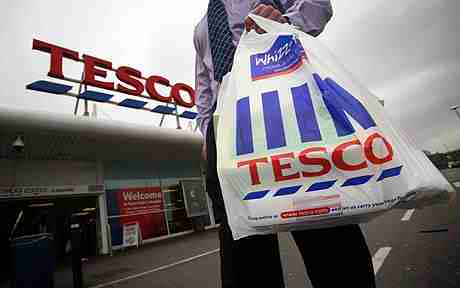
    Tesco’s obvious technique to attract out bidders for its Korean Homeplus operation is already paying off.

    Whereas personal fairness gamers have been apparently despatched invites to bid, the best way the information of the as but formally unconfirmed sale plan has unfold, has drawn two public declarations of curiosity.

    One is decidedly mischievous – from snack maker Orion, well-known for its “Choco Pie” dessert bought in supermarkets throughout Asia. Simply the place it might discover £6 billion to purchase Tesco Korea is unclear.

    The opposite is from Korea’s Hyundai Division Retailer (no relation to the automotive firm). Hyundai is value about US$three billion, so the probability of it pulling off a reverse takeover in its personal proper is slim. However it might make a worthy companion for a personal fairness investor, comparable to KKR, Carlyle, Affinity Fairness Companions, CVC or MBK, all of whom have been formally invited to bid. Native information, overseas capital and the looks of native possession to a finicky native shopper base would show a strong basis for progress and capital achieve.

    The top results of these two declarations creates the looks that there’s robust curiosity and demand within the Tesco Korea operation which, whereas worthwhile, faces challenges in sustaining market share.

    At the very least one of many events says it has acquired an info memorandum which tends to place past doubt Tesco Plc’s intentions.

    Tesco CEO Dave Lewis has already confirmed at Unilever he was unafraid of robust selections. And he’s dealing with many in his new position – his largest but to place Tesco Korea on the block.

    With a worth of circa £6 billion, it brings an entire new definition to the time period ‘hearth sale’. But when consumers are in search of a reduction given Tesco’s UK operational woes, they’ll be disenchanted.

    The method has been managed by HSBC and an obvious collection of leaks to information media, which, to date, are working properly, presents a protected and risk-free technique of testing the water. If the bids are available and the provides appear affordable, Tesco has a excellent news story of a robust return, a big discount in its debt and a stronger monetary base with which to proceed its residence market reforms and strengthen market share and income. If nobody significantly bites, Tesco can break its silence, deny a sale was ever on – and blame the media and market hypothesis for a misunderstanding.

    Our prediction: Tesco will promote the Korean operation and it’ll get a great worth for it, as a result of one or two or extra of these personal fairness gamers, working with a Korean associate with information of the retail business, will be capable of extract worth out of the enterprise that has hitherto eluded Londoners pulling strings from afar.

  • Asean: The Future in Wealth Management

    Asean: The Future in Wealth Management

    Southeast Asia’s economic boom is resulting in the emergence of a new middle class, heralding vast opportunities for global wealth management.

    Since the 1970’s, growth in this region was primarily driven by exports and manufacturing.

    Today, the Association of Southeast Asian Nations is on its way to become one of the world’s leading consumption hubs, fuelling demand for a variety of goods and services, including financial services.

    Asean is composed of Brunei, Cambodia, Indonesia, Laos, Malaysia, Myanmar, the Philippines, Singapore, Thailand, and Vietnam.

    We believe Asean’s middle class will play an increasingly important role in the shift in the balance of global demand over the next few decades, opening up new and unprecedented opportunities for the region and the world.

    With about 600 million people, Asean countries represent only half of India’s population but collectively generate a larger gross domestic product. By 2020, Asean GDP is expected to grow at an annual average of 6 percent and reach $4.7 trillion.

    By 2020, Asia is likely to contribute to more than half of the total global middle class population, with Asean accounting for more than $ 2 trillion of new consumption, according to the International Monetary Fund. Half of Asean’s projected population will be aged under 30.

    With growing purchasing power comes greater aspirations among Asean consumers, driving stronger demand for property, cars, quality education and health care as well as financial services and wealth management.

    Consumption patterns in Asean, however, are not even across this expansive and diverse region. We expect consumers in developing economies to continue directing a large portion of their disposable income towards improving general living standards whilst those in mature markets will forge ahead in consumption and investments.

    For example, discretionary spending by more affluent middle class populations in Singapore, Malaysia and Thailand is far more pronounced in the region; while spending in Indonesia and the Philippines is focused on vehicles, appliances and education services to enhance quality of life.

    Whilst Vietnam has the highest rate of credit card ownership, its emerging middle class is only starting to develop an appetite for luxury goods.

    As populations across Asean become more affluent and the region’s emerging middle class continues to expand, there is a pressing need for services that will help individuals and families preserve, protect and perpetuate their new found prosperity.

    As Southeast Asian populations age, they will need new channels to save for retirement, fund rising costs of health care and ensure adequate insurance protection in the absence of well-established social security systems.

    We expect financial wealth in Asean to grow even faster than in China over the next five years, creating opportunities in international wealth and asset management. Asean has one of the highest saving rates in the world at around 30 percent and international reserves amounting to $800 billion.

    While financial assets remain heavily concentrated in cash and in some markets, concentrated on single assets such as stocks, we expect investment behavior among Asean savers to eventually build a diversified portfolio of assets and move away from home biases.

    Regional financial integration and market liberalization such as what is unfolding in China will allow for more efficient risk diversification of assets.

    The development of its financial systems will also provide easier access to financing.

    We see a future where wealth growth, protection and financing retirement, education and lifestyle needs will become priority goals for Asean consumers. It is critical that financial solutions are designed to meet these long term saving needs, offer transparency and fair value.

    It is important that consumers have access to timely and relevant market information to help them make informed investment decisions either through self-directed channels or through qualified advisors.

    There is also a need to ensure banking and wealth management cater to new consumer behavior.

    As the new Asean working class gains greater financial independence, they seek new experiences through travel, education and employment opportunities overseas. They are also among the most active online users, accessing news and information, doing their shopping and conversations virtually — given social media’s deep penetration in the region, particularly in Indonesia, the Philippines and Vietnam.

    The rise of the middle class will continue to be the big story for Southeast Asia’s economies over the coming years. The promise of growth will transform one of the most overlooked regions in the world to one of the most important.