Tag: Huawei

  • Huawei sells Honor to consortium of resellers including Suning

    Huawei sells Honor to consortium of resellers including Suning

    Huawei Technologies Co Ltd is selling its budget brand smartphone unit Honor to a consortium of over 30 agents and dealers in a bid to keep it alive, the company and the consortium said on Tuesday.

    The deal comes after U.S. government sanctions have restricted supplies to the Chinese company on grounds the firm is a national security threat – which it denies. The consortium issued a statement on Tuesday announcing the purchase, which will be made via a new company, Shenzhen Zhixin New Information Technology. Huawei will not hold any shares in the new Honor company after the sale, the statement said.

    In Huawei’s statement, the company said its consumer business has been under “tremendous pressure” due to the “persistent unavailability of technical elements” for its phone business.

    “This move has been made by Honor’s industry chain to ensure its own survival,” Huawei said.

    The change of ownership will not impact Honor’s development direction, both statements said. Sources with knowledge of the matter say U.S. government restrictions have forced the world’s second-biggest smartphone maker – after South Korea’s Samsung Electronics – to focus on high-end handsets and corporate-oriented business. One source said on Tuesday the U.S. government will have no reason to apply sanctions to Honor after it separates from Huawei.

    Honor sells smartphones through its own websites and third-party retailers in China, where it competes with Xiaomi, Oppo and Vivo in the lower-priced handset market. It also sells phones in Southeast Asia and Europe, and ships 70 million units annually, according to the Huawei statement.

    Electronics products and appliance store Suning.com is listed among the buyers, which include several state-owned investment firms in Huawei’s hometown of Shenzhen.

    Honor will look for more investment partners in the future, with the possibility of an eventual listing, the source said.

    Reuters reported earlier this month that Huawei was in talks to sell Honor in a 100 billion yuan ($15.2 billion) deal to a consortium led by handset distributor Digital China and the Shenzhen government.

    Digital China was not part of the final buyer group, the source said.

    Huawei has said its higher-end smartphone line is also under threat from the U.S. sanctions, with the head of its consumer business saying in August that it would be unable to continue making the Kirin chips that power its premium models.

    Offloading Honor will give Huawei some “breathing room” on the sourcing side for its premium business while it focuses on developing its proprietary HarmonyOS for smartphones, said Nicole Peng, vice president of mobility at industry research consultancy Canalys.

    The sale will help to sustain the brand, while allowing the possibility of buying Honor back some day, said Will Wong, an analyst at IDC.

    “It will be easier for Huawei to make a potential buyback in the future from this consortium, which might not be so easy if they sell it to other smartphone or electronics makers,” he said.
  • Huawei’s breakthrough Petal Search app helps users install content banned by the U.S.

    Huawei’s breakthrough Petal Search app helps users install content banned by the U.S.

    You might remember that back in May, we told you about Huawei’s plan to work around the manufacturer’s inclusion on the U.S. Commerce Department’s Entity List. The U.S. put the company on this list because it considers the firm to be a national security threat. Placed on the Entity List, Huawei is not allowed to access its U.S. supply chain which means that it cannot license the Google Mobile Services version of Android. It also means that Google’s Android apps like Search, Maps, YouTube, the Play Store, Drive, and Gmail can not be installed on a Huawei phone. Most of Google’s apps are banned in China anyway, so only the international variant of the company’s phones are impacted.

    The Entity List placement also means that Huawei cannot work with U.S. firms including app developers. So Huawei’s phones, both inside and outside China, do not give users a selection of popular U.S. based apps to use. For example, in Huawei’s own AppGallery Android app distribution platform, you won’t find apps like Amazon, Snapchat, Speedtest.net, and AccuWeather. But as we pointed out in May, Huawei developed a new search engine called Petal Search. Petal Search will not only list “daily weather forecasts and top news; live sports scores and schedules; video, image, and music searches; and financial news and stock market updates.” When it comes to travel, it will “search millions of hotels worldwide and book rooms; and check flights and travel info for top global destinations.” Petal Search will also “look up local services and businesses with comprehensive directories.” But that isn’t the exciting cool feature.

    When you open up Petal Search and tap in the name of an app, the search engine looks for the one that you have in mind. If it finds the title in the AppGallery, it will be installed on your Huawei handset. If Petal Search can’t find a listing, it will search for it on third-party app stores. If it finds the app, a simple tap of the Install button will handle the task of downloading it on your phone.

    When we first heard about Petal Search, we told you that the idea behind it was to help Huawei customers find and install apps that are blocked due to the U.S. ban. These include Google’s own Android apps and U.S. developed social media and entertainment apps. And now, according to Forbes, Petal Search has become a full-service search engine as well. Petal even got some promotion during last week’s unveiling of the new flagship Mate 40 series.

    With the U.S. continuing to be offended by Huawei’s will to survive, the company could end up having to leave the smartphone industry and concentrate on providing an ecosystem to other phone manufacturers. Huawei created its own Mobile Services ecosystem that has over 700 million users, a 32% annual gain from last year. More importantly, the number of app developers registered by Huawei has risen 76% year-over-year to 1.6 million. This is of major importance because the larger the number of developers working on content for HMS, the more of a challenge Huawei becomes to other phone manufacturers.

    The main challenge that Huawei has at the current time is finding a foundry that can produce cutting-edge chips without using American-made technology. Back in May, the U.S. Commerce Department changed its export rules preventing foundries like TSMC from shipping chips to Huawei without a special license issued by the U.S. Recently it was discovered that the Chinese manufacturer ordered 15 million units of its 5nm Kirin 9000 chipset but received only 8.8 million of them. The new export rule started to take effect on September 15th.

  • Huawei welcomes a thorough examination of its 5G technology to prove it’s not a security threat

    Huawei welcomes a thorough examination of its 5G technology to prove it’s not a security threat

    Since 2012, Chinese phone and networking equipment manufacturer Huawei has been considered a national security threat. Perceived ties with the Communist Chinese government have the current administration concerned that Huawei collects personal and corporate data using back doors placed inside the company’s handsets and networking gear. Even though this has never been proven and has been denied by the company, President Donald Trump cited “security” for placing Huawei on the Entity List last year preventing the firm from accessing its U.S. supply chain.

    Being placed on the Entity List forced Huawei to scramble to find replacement suppliers for some of the key parts it needs to build phones and networking gear. Losing the ability to license the Google Mobile Services version of Android also meant that Google’s Android apps like Search, Maps, YouTube, Gmail, Drive, and others could not be installed on Huawei phones. In China, where Google’s apps are banned anyway, the absence of these apps wouldn’t affect sales of the manufacturer’s phones. But outside of the firm’s home country, sales of the International Models were reportedly impacted by Huawei’s inability to license Google’s Android ecosystem.

    On the first anniversary of its placement on the Entity List, the U.S. tightened the screws a little more by changing certain export rules. Now, a foundry anywhere in the world must obtain a license before shipping chips made with U.S. technology to Huawei. That includes new cutting-edge 5nm Kirin 9000 semiconductors that are supposed to power Huawei’s most technologically advanced phones this year, the Mate 40 series. These chips are also vital to the production of two-way radios and other gear required for the firm’s 5G networking equipment. The number one provider of such equipment worldwide, the U.S. had asked its allies last year not to use Huawei gear for their 5G networks. Some countries followed the U.S. request while others, like Britain, did not. But now Britain is feeling buyer’s remorse and is thinking about stripping Huawei’s parts out of its new networks.

    According to Reuters, the head of Huawei’s Italian unit, President Luigi De Vecchis, said that the company is ready and willing to have its facilities examined with a fine-tooth comb to prove that its technology does not create a security risk to those countries that use Huawei’s gear in their 5G networks. In Rome on Wednesday, De Vecchis spoke at the opening of the company’s new cyber-security center and stated, “We will open our insides, we are available to be vivisected to respond to all of this political pressure. I am speechless that a country the size of the United States attacks another country through the demolition, via groundless accusations, of a company of that country.”

    Coincidentally, U.S. Secretary of State Mike Pompeo arrived in Italy to begin a two-day visit to the country at the same time that Huawei was opening its cyber-security center. De Vecchis added that the company will not leave the Italian market and in fact is looking to create products for the country in different fields including the energy industry. The Huawei executive said, “It’s extremely unlikely Huawei will leave the market because of the current situation.”

    The U.S. continues to put pressure on Chinese tech firms. U.S. companies now need a license to export certain materials to SMIC, China’s largest foundry (SMIC). And the Trump administration is thinking about adding SMIC to the Entity List as well. Of course, we’ve been closely following what is going on between the White House, short-form video app TikTok, and the latter’s parent ByteDance. Once again it comes down to the same fear over the safety of personal data belonging to American consumers and corporations. And yet, there has been no smoking gun to date.

  • Huawei says that it will release a HarmonyOS phone next year

    Huawei says that it will release a HarmonyOS phone next year

    Last year, after the U.S. Commerce Department banned Huawei from its U.S. supply chain, the Chinese phone and networking equipment manufacturer scrambled to find new sources. The one stateside supplier that it missed the most was Google since the ban prevented the latter from delivering the Google Mobile Services version of Android to Huawei. While it didn’t matter in China where most of Google’s Android apps are banned, not being able to equip its international models with the Google ecosystem might have cost the manufacturer some sales.

    In August of 2019, Huawei announced that it had developed a new operating system called Harmony. Many assumed that this new operating system would be immediately used by Huawei to replace Android. This turned out not to be the case. Richard Yu, CEO of Huawei’s consumer group, pointed out that Harmony is based on a microkernel allowing it to be used on a wide range of devices such as smart speakers, tablets, smartwatches, computers, autos, and smartphones. Huawei also noted that HarmonyOS will work on devices equipped with a small amount of RAM and those requiring hundreds of gigabytes of memory. Thus far, Harmony OS has been available for consumers only on television sets.

    Mr. Yu said today that in 2021, Huawei will ship its first handset powered by HarmonyOS. What set off this announcement by the long-time Huawei executive was the word that the company plans on introducing a second version of Harmony OS this coming Thursday, September 10th, during the 2020 HDC Developers Conference. Several new devices powered by the operating system will soon be announced and this year Huawei says that its new smartwatches will be driven by HarmonyOS.

    Yu did admit that Huawei has been sitting on a phone running HarmonyOS, but the company has had to wait because of an agreement it has with Google. But that doesn’t mean that the company doesn’t have high hopes for the platform in the future. The executive says that HarmonyOS will eventually become a worldwide platform.

    In a previous speech, Yu said that the upcoming Huawei Mate 40 series will be powered by a new series of 5nm Kirin chips, the Kirin 9000. Not only will these components be produced using the new 5nm process, but they will also have more powerful 5G and AI capabilities, CPUs, and GPUs. But a new export rule put into place by the U.S. prevents foundries from shipping chips to Huawei that were made using U.S. technology. Yu notes, “Unfortunately, under the sanctions of the United States, TSMC only accepted orders before September 15th. By September 15th, it will not be able to produce chips for Huawei. So Kirin 9000 may be our last generation of Huawei Kirin high-end chips.”

    Huawei was TSMC’s second-largest customer after Apple last year but the world’s largest individual foundry will not be allowed to ship to the Chinese manufacturer after September 14th. Until that date, TSMC is reportedly running its assembly line 24 hours a day to produce as many as chips that it can until it isn’t allowed to ship to Huawei. China’s largest foundry, SMIC, is not a viable replacement since it is several process nodes behind TSMC. Chip designer Mediatek has reportedly been seeking permission to develop cutting-edge chips for Huawei. It would seem unlikely for the company to get that permission from the U.S., especially considering that Mediatek relies on TSMC to produce its chips. Additionally, administration officials in the U.S. have complained about Huawei’s ability to skirt the Entity List ban.

    Assuming that Huawei has been able to stock up on 5nm chips, the company has a little time-not much mind you-to find a new source of 5nm SoCs.

  • Huawei says existing devices will continue receiving Android updates

    Huawei says existing devices will continue receiving Android updates

    Huawei has confirmed that its devices will continue to receive software and security updates, reports Huawei Central. Last year, Google stopped providing non-public software to the company to comply with a US blacklist.

    The company was provided a temporary relief which allowed it to provide software updates to its existing phones. Handsets launched after the trade ban come with an open-source version of Android and lack key services and apps.

    The temporary general license expired recently and this raised speculations that older Huawei and Honor phones would stop receiving Android updates from Google.

    Huawei says that phones that were released before it was put on the entity list have not been impacted and will keep getting updates.

    As for the new devices which do not feature Google Mobile Services (GMS), updates will be managed through Huawei’s AppGallery. Google had previously said it would keep providing updates as long as the government lets it do so. There is no indication from its side that it will continue sending out updates now that the temporary general license has expired.

    The Commerce Department recently said that the license will not be extended.

    The US shows no intention of letting Huawei off easily as is evident by a recent move that aims to make it even harder for the company to source chips. The company recently said it could no longer make its own chips because of restrictions imposed by the US government and that the Mate 40 will be its last phone to have a Kirin chip.

    Later this year, the manufacturer is expected to launch its first phone with Harmony OS, its own operating system.

  • Despite strength from Huawei, smartphone shipments are expected to drop in China

    Despite strength from Huawei, smartphone shipments are expected to drop in China

    The world’s largest smartphone market is going to report a drop in shipments during the current quarter. The report states that the Q3 decline will show up both year-over-year and month-over-month (aka sequentially) and would appear following a huge sequential second-quarter surge of 104.6%. The strong smartphone market in China during the three months covering April through June was fueled by the lessening of negative impacts from the coronavirus, economic stimulus measures, and the launch of new handset models. While the growth in second-quarter smartphone shipments was in triple digits compared to Q1 deliveries, on a year-over-year basis the Q2 growth in smartphone shipments was a puny 1.4%.

    The top five smartphone manufacturers based on shipments in the country during Q2 were Huawei, Vivo, Oppo, Xiaomi, and Apple. The top five were responsible for 98.1% of smartphone deliveries in China from April through June, up 1.4 percentage points from the previous quarter. For the current quarter, Digitimes expects smartphone shipments in China to contract 7.9% as some of the effects of the stimulus measures imposed in the country have started to fade.

    Despite the expected decline in shipments, Huawei’s shipments are supposed to remain strong in the current quarter. During Q2, research firm Canalys said that Huawei overtook Samsung to become the largest smartphone manufacturer globally. In 2016, the head of Huawei’s consumer division, Richard Yu, predicted that Huawei would become the top smartphone manufacturer in the world by 2021. Despite losing access to its U.S. supply chain and the Google ecosystem, Huawei has become number one thanks to its own rapidly growing Huawei Mobile Services.

    700 million people are using Huawei’s ecosystem and with that number growing, Huawei is expected to own nearly half of the Chinese smartphone market during the third quarter.

  • Huawei is retreating from a key market

    Huawei is retreating from a key market

    Troubles continue to mount for Huawei as India joins the US and Europe in banning Chinese firms over espionage fears. The company has reportedly slashed its revenue target in India by 50 percent for the current year and is also laying off up to 70 percent of its staff in the country. The manufacturer will apparently be retaining employees in research and development and the Global Service Centre.

    Tensions between the two countries have been rising ever since a border clash resulted in the death of 20 Indian soldiers. Consumer sentiment has turned sour against China and there all calls to boycott goods such as smartphones originating from the country.

    Another setback for Huawei’s 5G plans

    The Indian government has already stopped state-run carriers from getting equipment from Huawei and ZTE and is seemingly requesting private telecoms to do the same. They have supposedly been requested to phase out Chinese equipment gradually so that consumer services are not disrupted.

    Reliance Jio, the country’s largest mobile network, sourced components from Samsung for its 4G network. The other two dominant companies, Bharti Airtel and Vodafone Idea, got their equipment from various vendors including Huawei. According to research, the Chinese giant’s gear makes up 40 percent of Vodafone Idea’s network and around 33 percent of Bharti Airtel’s existing network.

    All of these telecom companies have submitted applications to carry out 5G tests with different manufacturers including Huawei.

    Whether Huawei will make the cut remains to be seen, but it seems highly unlikely. According to an insider, the company currently has no new projects in India and there is no clarity on any new business from carriers.

    Huawei was earlier expecting India to generate nearly $700-800 million in revenue in 2020, a far cry from sales of $1.2 billion posted in 2017. Now, it has revised those expectations and is only forecasting sales of around $350-500 million.

    As grim as the situation may sound, experts believe it would be an uphill task for India to disengage from China as the later’s influence in investments, trade, and technology has grown significantly over the years. Per an estimate, Huawei’s India unit employs nearly 700 people and this figure doesn’t include the hundreds of people working for the company through third-party firms.

    That said, telecommunication is one sector where alternatives are available and thus Huawei will probably not be included in India’s 5G rollout.

  • Britain close to final decision on whether to ban Huawei from its 5G networks

    Britain close to final decision on whether to ban Huawei from its 5G networks

    Despite constant pressure applied by the U.S. not to allow Huawei’s networking equipment inside Britain’s 5G networks, in January the British announced that it would not heed the warning. Gear from the world’s largest networking equipment supplier would be used on the country’s 5G networks although the parts would be placed away from sensitive areas. At the time, a spokesman said, “The United States is disappointed by the U.K.’s decision.” British Prime Minister Boris Johnson felt that there was no other decision he could make because of Huawei’s technological and financial advantages over the competition.

    But according to the U.S. government, Huawei is a national security threat because of its rumored ties to the communist Chinese government. Huawei, of course, has denied this repeatedly. The U.S tried to convince Britain that it wouldn’t be able to pass along the intelligence to its allies if Huawei was involved in the country’s 5G network. And finally, there were some cracks in the prime minister’s resolve. Johnson could announce as soon as this coming Tuesday’s National Security Council meeting that Huawei equipment will be banned from British networks before the end of next year.

    In the U.S. Huawei products, including both phones and networking gear, are banned from use by the military and by telecom firms. Some rural wireless providers have Huawei equipment in their older networks which the current administration would like to see removed.

    While the U.S. did apply enough pressure to get the ball rolling in Britain, what really convinced the Brits to think twice about Huawei’s presence in its 5G networks was the recent export rule change by the U.S. Under the new rules, a foundry using American technology to produce chips cannot ship any product to Huawei without a license from the U.S. As a result, Huawei could be forced to use “untrusted” chips which greatly lessens the security of any 5G network that employs Huawei’s gear. A review in Britain concluded that under these conditions, the country will not be able to control the security of its 5G networks.

    The Conservative Party that Prime Minister Johnson belongs to has been pushing for a reversal of the decision to allow Huawei equipment to be used. Bob Seely, a member of the Conservative Party, praised the U.S. sanctions for getting Britain to revisit its initial decision. “The sanctions have changed the dynamic, he said. “The government is listening, and it’s important to give them credit for trying to do the right thing.” Seely said that Members of Parliament want a “no new kit date” and a “rip out date.” After the former date, no company would be able to install Huawei equipment in Britain. By the latter date, all Huawei equipment would have to be removed in the country. The politician would like to see the “no new kit date” set for late 2021 while there is a debate over where the “rip out date” should fall on the calendar. The range under consideration is a date between 2023 and 2025.

    Some Conservatives aren’t pushing for such draconian terms. Neil O’Brien said he wasn’t so concerned about the timing of the removal of Huawei gear and is also not terribly worried about the removal of equipment from older networks. That’s because the latter “will come to the end of its life over a couple of years.” That mirrors the comments made by Damian Green who also isn’t worried about older equipment. He simply wants to see a new equipment ban “in this parliament by 2024.

    The next generation of wireless connectivity, 5G will deliver download data speeds up to ten times faster than 4G LTE. Not only will it allow users to download movies in seconds instead of minutes, but it should also help to create new technologies and businesses.

  • France won’t ban Huawei gear from its 5G networks but will ask carriers not to install it

    France won’t ban Huawei gear from its 5G networks but will ask carriers not to install it

    Huawei is the world’s largest supplier of networking equipment although some countries like the U.S. are worried about how close the company is to the communist Chinese government. Just the other day we told you that England is now looking to stop the installation of Huawei gear in its 5G networks and also plans on pulling out the company’s equipment that has already been installed. The New York Post published a story about how France is going to handle the use of Huawei’s industry-leading technology in the country’s 5G pipelines.

    Guillaume Poupard, who runs French cybersecurity agency ANNSI, says that the country won’t “totally” ban Huawei from 5G networks in France although it will try to get French carriers not to use the Chinese manufacturer’s gear. Poupard said to a French newspaper, “What I can say is that there won’t be a total ban. (But) for operators that are not currently using Huawei, we are inciting them not to go for it.” He also said, “For those that are already using Huawei, we are delivering authorizations for durations that vary between three and eight years.”

    Earlier this year, sources told Reuters that while France wouldn’t ban Huawei, it would try to keep its gear out of the country’s core mobile networks. These networks carry the personal data belonging to customers of the country’s wireless companies which means that keeping Huawei equipment from these networks is of paramount importance. That’s because Huawei has been accused of using its networking gear to spy on consumers and corporations and send the data to Beijing. No evidence of this has ever been discovered and Huawei has repeatedly denied the allegations.

    What France decides to do will be critical to half of the country’s four major wireless providers; about 50% of the networks employed by carriers Bouygues Telecom and SFR use Huawei’s technology. Orange, which is controlled by the French government, has decided to use equipment supplied by Huawei rivals Nokia and Ericsson.

    The head of ANNSI said that starting next week, wireless operators who have yet to receive authorization to use Huawei equipment for their 5G networks should consider a non-response to be a rejection of their request. Poupard stated, “This is not Huawei bashing or anti-Chinese racism. All we’re saying is that the risk is not the same with European suppliers as with non-Europeans.”

  • Huawei opens its largest flagship store in Shanghai

    Huawei opens its largest flagship store in Shanghai

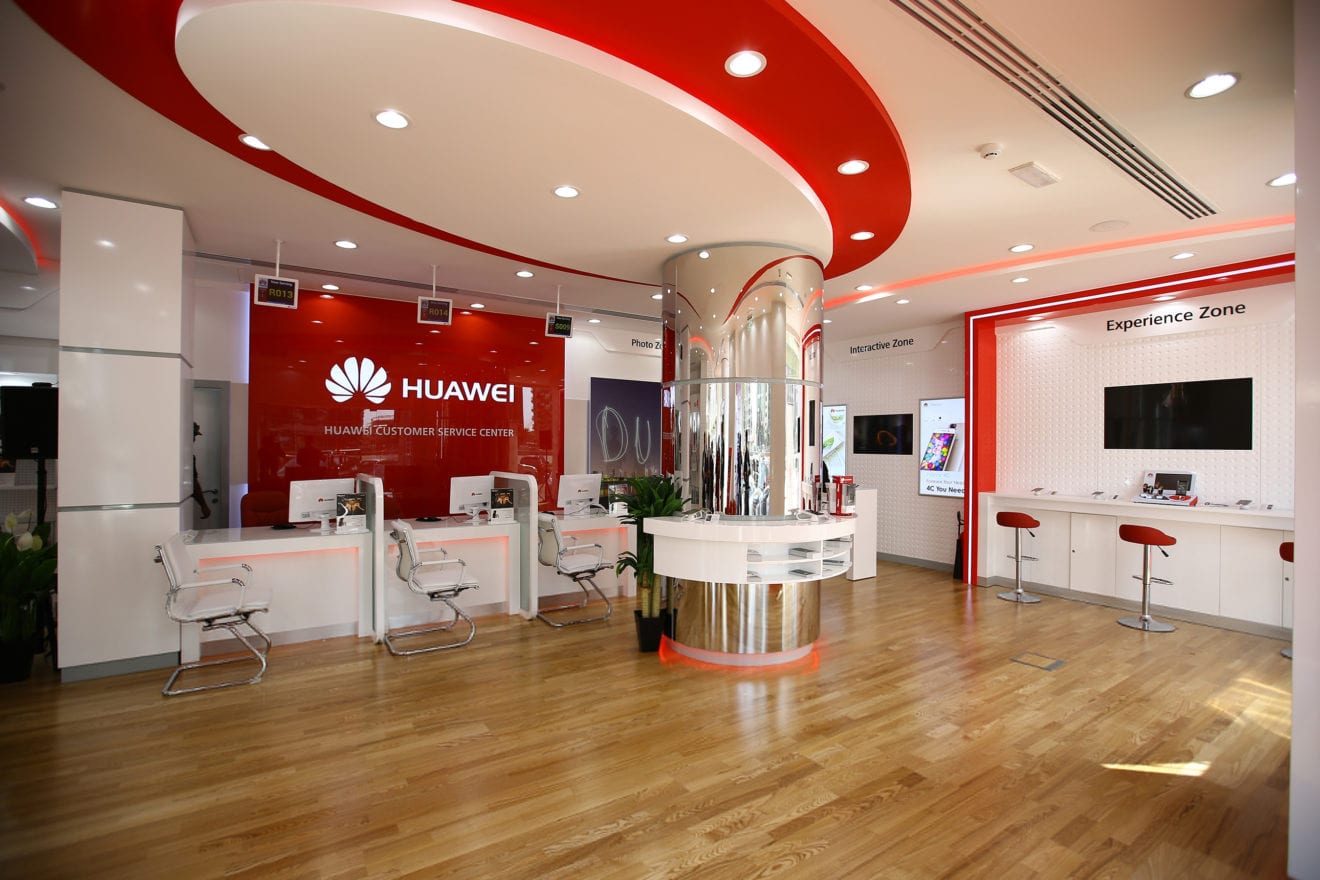
    The new Huawei Shanghai store, the Chinese smartphone and electronics brand’s largest yet, opened its doors this week. The three-story Huawei Shanghai flagship covers 50,000sqm – equivalent to the size of a small to medium shopping mall. It houses the full product range, experience zones and an exhibition area

    Construction of the flagship began during February and is said to have cost more than US$42 million to complete.

    Taking over the space once housing a giant Forever 21 store, the Huawei Shanghai flagship is built in an art deco-style building, incorporating modern design while preserving its original form.

    The store is adjacent to Apple and neighbor to Samsung and Gucci on the city’s oldest commercial street. Its location is part of the current Nanjing Road extension project, connecting the pedestrian mall to the Bund.

    Consumer products can be found on the first floor spanning 12 categories, from phones to smart wearables. Some 220 consultants work in the store, with skillsets including music, dance and v-logging. The theory is that by sharing common interests and hobbies with customers, they can offer suggestions on product use and technical support.

    Staff are able to provide services in more than 10 languages, including the local Shanghainese dialect. There are 19 checkout counters and 12 repair stations

    The second floor features a “Seamless AI Life Zone” encompassing smart experiences in different scenarios such as a smart home, mobile office, fitness and health, travel and entertainment. Products are placed in settings to enable guests to experience the Internet of Things paired with Huawei’s proprietary 5G technology.

    Meanwhile, the upper floor debuts a multi-functional experience zone as an exhibition space for films, paintings and art. Customers can also view Huawei’s first smart vehicle, HiCar.

    The flagship houses many public spaces with the patio of the building functioning as an atrium. Customers are invited to relax and roam around the store, socialise with friends and chat to consultant experts as part of the brand’s community-building initiative.

    More than 60 lectures every week will be available free, covering topics including video production, programming, fitness, and music. Creators and technology experts from around the world, as well as local artists, will be invited for art salons, sharing meetings, and developer talks every month.

    “Our relationship is not just a buyer-seller relationship. We have a deeper bond with our customers,” explains Richard Yu, CEO of Huawei’s consumer business group. “The flagship store is a place for consumers, customers, and developers to get together.”

    Tony Rong, global retail director of Huawei has hinted that more flagship stores will open in other major Chinese cities, including Beijing and Guangzhou. The brand will also soon debut in Germany, Russia and the UAE.

  • U.S. actions killed Huawei’s 2020 dream

    U.S. actions killed Huawei’s 2020 dream

    Back in early 2016, the head of Huawei’s consumer division, Richard Yu, said that in five years Huawei would be the top smartphone manufacturer in the world. In 2015, the company had delivered 104.1 million handsets worldwide and had become more familiar to Americans thanks to the Nexus 6P. Huawei and Google teamed up to produce the device. Things did not go well for Nexus 6P users as they suffered from a boot looping problem and another issue that drained the battery so fast that the device would just shut down.

    Thanks to a settlement of a class-action lawsuit, Nexus 6P owners who suffered through both issues received $400 while owners of the phone who had no issues received $29.11 each. In retrospect, the Nexus 6P release was the start of Huawei’s problems in America. But Huawei still had its eyes on the prize; in November 2018, Yu once again expressed Huawei’s goal of topping Apple and Samsung and had it not been for the actions taken by the U.S. to quash Huawei’s momentum over the last year, the company could be on the way to replacing Samsung on the throne.

    Because of Huawei’s perceived ties to the communist Chinese government, last year the company was placed on the Commerce Department’s Entity List which prevents Huawei from accessing its U.S. supply chain; in 2018, Huawei spent $18 billion buying supplies in the U.S. While Huawei is able to find workarounds for many of the components it once sourced from the U.S., it cannot find a replacement for the Google Mobile Services version of Android. Unable to sign a licensing deal with Google, the latter’s core Android apps like Search, Gmail, Maps and YouTube are not allowed to run on Huawei’s domestic models including last year’s Mate 30 flagship line and this year’s P40 series. This doesn’t matter inside China where Google’s apps are banned anyway but does hurt sales of global models.

    Huawei’s rotating chairman Eric Xu said that in 2019, the company fell short of its internal revenue estimate by $12 billion dollars. Most of that shortfall came in the consumer division which includes smartphones. Still, last year Huawei shipped 240 million handsets, 17% more than the 205 million it delivered in 2018 allowing it to top Apple and become the second-largest smartphone manufacturer in the world. But the Chinese manufacturer’s market share declined from the 18.9% it achieved during the first quarter of 2019 to 15.2% during the fourth quarter of 2019. Huawei’s slice of the global smartphone pie rose to 17.8% during this year’s first three months, but it was still lower than the company’s share during the same quarter one year earlier.

    And then on the anniversary of its inclusion on the Entity List, the U.S. landed an even harder blow to Huawei by changing an export rule. Now, any foundry that uses American technology to produce chips for Huawei and its HiSilicon unit must obtain a license to ship those chips to the company. This is aimed mostly at TSMC, the largest independent foundry in the world. The company can still ship chips to Huawei made from wafers in production on May 15th but they must be delivered by the end of the second week of September. Huawei hopes that this will allow it to receive enough cutting-edge chips for it to build enough units of its flagship Mate 40 series to carry it through the year.

    Data indicates that Huawei’s game plan is to aim for huge success in its home market where its Q1 2020 share has risen to 42.6% from 35.5% during last year’s first quarter. And it also has found success selling older models outside of China; these models are old in the sense that they were originally released prior to the bans and are allowed to run Google’s Android apps. This has allowed the firm to raise its market share in central and eastern Europe according to Counterpoint Research. And IDC says that during the second quarter, Huawei increased its market share in Latin America on an annual basis. IDC’s Bryan Ma, vice president of devices research for the researcher says, “In mature markets outside of China, the lack of Google services is a big problem for its flagship phone ambitions. Huawei can temporarily get around it by focusing on older, lower-end models in selected developing markets, but that can only go so far.”

    Already, there are signs that in Western Europe, Huawei’s homegrown competitors like Oppo and Xiaomi are taking advantage of the fact that their newer and more powerful phones can run Google apps and Google Mobile Services. In Western Europe, Huawei’s market share fell during the first quarter from 24.3% last year to 18.2% this year. During the second quarter in India, Huawei’s share declined from 3.4% in 2019 to 0.4% in 2020.

    With this in mind, it would appear that Samsung won’t have to worry about its reign as the top global smartphone manufacturer coming to an end this year.

  • Since Huawei can’t use the top video sharing service

    Since Huawei can’t use the top video sharing service

    A bit over a year ago, the U.S. Commerce Department placed Huawei on its Entity List preventing the company from accessing its U.S. supply chain. This prevents the manufacturer from licensing Google Mobile Services and installing core Google apps on its phones. The company also cannot install apps like the Play Store, Gmail, Search, Maps, and Drive. This doesn’t matter inside China where most of Google’s apps are banned anyway, but it could affect demand for the global versions of the company’s handsets.

    Huawei has been using an open-source version of Android and debuted its own Huawei Mobile Services with the recently released P40 series. HMS features Huawei’s own AppGallery app storefront which includes the Petal Search app. The latter has a cool feature that allows users to search for a particular app. If an app cannot be found in AppGallery, Petal Search will find a third-party app store that lists the app and provides a link to install it. This will also work with apps developed by U.S. companies such as Snapchat and Instagram giving owners of Huawei phones a way around the Commerce Department’s ban.

    Another one of Google’s popular apps that is not allowed to be installed on Huawei’s phones is YouTube. Google acquired the video streaming app in October 2006 for $1.65 billion in Google stock. As with everything else that the U.S. Commerce Department bans Huawei from, the Chinese manufacturer has been searching for a replacement that is out of reach of the Trump administration. The video-sharing tech platform located in France has signed a deal with Huawei Video. Through this new partnership, DailyMotion’s video player technology has been integrated with the Huawei Video app. Dailymotion, for those unaware, is the second-largest video sharing platform in the world behind YouTube.

    The technology package includes a robust white-label video player, a large volume of international and local video content via Dailymotion’s API as well as a strong monetization solution of the video inventory. In other words, Huawei users will have access to a large selection of videos that can be monetized by including ads with a video. The decision about monetizing content is up to Dailymotion’s video creators. Dailymotion says, “Committed to supporting renowned global publishers like Huawei Video, Dailymotion believes that its video technology solutions will continue to enrich the content of publishers, to expand their digital footprint and reach a global audience.”  It might not be the same content found on YouTube, but the Dailymotion app might include plenty of European content that should find favor among owners of the global variants of Huawei handsets.

    The international and local content available from Dailymotion is expected to broaden the audience for the Huawei Video app. Stéphane Godin, Dailymotion’s, Chief Content Officer said, “Thanks to all our premium partners, Dailymotion is able to distribute a large amount of videos and playlists to third-party publishers. We are proud to collaborate with Huawei to make all of our content catalog reach new premium audiences.” A Huawei executive also chimed in; Jervis Su, Vice President of Mobile Services, Huawei Consumer Business Group stated, “We’re pleased to offer our Huawei Video service so that people across the globe can easily explore thousands of videos and movies available from our partners, including Dailymotion, anywhere and anytime. We are committed to bringing more choice to consumers. We also hope it will bring some joy to all of their lives at this time.”

    The U.S. considers Huawei to be a national security threat due to a perceived tie to the communist Chinese government. Administration officials believe that Huawei’s gear contains backdoors that collect data from consumers and corporations and sends it to Beijing. Huawei has repeatedly denied these allegations.

  • Huawei announces a breakthrough in 5G antenna design

    Huawei announces a breakthrough in 5G antenna design

    While many of you know Huawei as the world’s second-largest smartphone manufacturer, it is also the leading provider of networking equipment on the planet. And no matter what you think of the company and its perceived ties to the communist Chinese government, Huawei does produce some outstanding handsets. Its networking gear is said to be 12 to 18 months ahead of the competition which includes companies like Nokia and Ericsson, and this technological superiority comes at a cheaper price.

    Over the weekend, Huawei announced a breakthrough in the design of 5G antennas. Called CableFree, the new design improves the capabilities of 5G base station antennas. With 5G, new bands have been introduced and more antenna connections are used. The new design improves high-band coverage for 5G. According to the company, “…high-band coverage is essential for ensuring 5G experience consistency. CableFree improves antenna radiation efficiency by approximately 20%, boosting high-quality coverage of the 5G era.”

    To support the higher capacity and additional antenna connections used for 5G, the antennas deployed must be able to work with 1 KW of power; previous generations of wireless connectivity required only 500 to 600 Watts. CableFree increases the antenna power capacity by more than 80% to meet these requirements. CableFree also reduces the weight of the antennas making them easier to install. A six-band antenna using CableFree is over 22 pounds lighter and by keeping the weight of multi-band antennas under 110 pounds, a crane is not required during installation. This not only saves time, but it also saves money as well.

    CableFree reduces the use of screws and soldering points by 80% reducing the chance of passive intermodulation, or signal distortion and interference caused by large metal objects. The reduction in the use of these components makes it easier to automate the production of antennas while keeping their quality consistent. Zhang Jiayi, President of Huawei Antenna Business Unit, said: “Antennas are crucial for 5G networks. Higher performance and integration are the main trends of antenna innovation in the 5G era. CableFree breaks the antenna design bottleneck, representing an inevitable trend of the antenna industry. Huawei always innovates based on customer requirements for 5G target networks to help customers build efficient and high-performance networks and achieve business success in the 5G era.”

    Huawei says that CableFree “features a number of revolutionary technologies and techniques” that will increase the integration of an antenna improving its performance. CableFree has been used with Huawei’s Munich Pro, Golden Mini, and London Pro series antennas, as well as 32T32R Massive MIMO products. MIMO (multiple-input and multiple-output) allows for multiple signals to be simultaneously sent over the same radio channel. This creates extra data-carrying capacity allowing signals to be sent at faster data rates.

    The bottom line is that Huawei says CableFree will help its customers build efficient and high-performance 5G networks to help their businesses succeed. While this all sounds promising, recently Huawei has had a slight set back. Conservative party members in the U.K. are asking for Huawei’s networking gear to be removed from 5G networks in the region due to national security threats. Reportedly, this would be done using a three-year plan that results in the removal of Huawei from 5G networks in the U.K. and all other networks by 2023. The Trump administration had been pressuring allies not to use the company’s gear in their 5G networks and while Japan and Australia heeded the warning, Germany and the U.K. originally did not. This past January the U.K. agreed to use Huawei’s parts for its 5G networks after Prime Minister Boris Johnson said that he felt that he had no choice. Originally, a U.K. spokesman said that Huawei’s parts would not be allowed near “sensitive functions.”

  • Huawei CEO would like Google to submit its apps on Huawei’s AppGallery store

    Huawei CEO would like Google to submit its apps on Huawei’s AppGallery store

    Huawei just released its new flagship line, the P40 series, and with it promised some appealing camera-related features for smartphone photography. Unfortunately for Huawei though, last year, the US government added the China-based company to a trade blacklist, making the company unable to do business with American companies and therefore, there are no Google apps on its new flagship devices.

    However, Huawei’s CEO, Eric Xu, stated that the company hopes Google’s apps would be available in the AppGallery Store, Huawei’s version of the Google Play Store. He compared it with the case of Apple’s App Store, where Google submits its apps for Apple’s approval. If Google submits its apps on the AppGallery, this could make them available for download on Huawei smartphones.

    Although the lack of Google apps on Huawei smartphones might not be a problem for the company’s home market, given the fact that Google apps are prohibited in China, this seems like a big minus for international customers. Eric Xu said that the blacklist caused Huawei a $10 billion benefit shortfall for 2019, meaning the company’s revenue was $10 billion lower than its target.

    Last month, Google submitted a request for permission to work with Huawei, but it can take quite some time for such procedures to be completed, even if the US government was to approve Google’s request. For now, there is no prospect that Google’s apps will come pre-installed on Huawei smartphones in the near future.

  • Huawei says China has recovered enough to buy new 5G flagship phones

    Huawei says China has recovered enough to buy new 5G flagship phones

    Huawei unveiled its new camera-based P40 series (P40, P40 Pro, and P40 Pro+) today and the phones will be available starting next month priced at the equivalent of $878 USD and up. Each of the three new models supports the next generation of wireless connectivity, 5G. Yu says that he thinks that this will be the first year that 5G will “take off” which is why all of the P40 handsets available have a 5G modem which is integrated into the Kirin 990 5G chipset that drives these phones.

    The new phones are still offered without Google Mobile Service (GMS) due to the manufacturers continued placement on the U.S. Commerce Department’s entity list. Due to the company’s perceived ties with the communist Chinese government, the U.S. considers Huawei to be a national security threat; last May the Trump administration placed the company on the list which bans it from accessing its U.S. supply chain. While Huawei has discovered some ways around the ban, it is not allowed to license the Google ecosystem including the latter’s version of Android and its core Android apps. That means that Huawei phones cannot run the Google Play Store, Google Search, Google Maps, Gmail, Drive, and others. Inside China, this means nothing since most Google apps are banned there anyway. But Huawei’s international sales have been hurt by the inability of Huawei’s phones to run these apps.

    With the P40 line, Huawei debuts its own ecosystem and Huawei Mobile Service. This includes the company’s AppGallery storefront and a brand new digital assistant called Celia. Google Assistant is not available on the open-source version of Android used by the manufacturer. Yu says that he hopes something can be worked out with the U.S. government that would allow his company to partner once again with Google. “We want to continue our partnership with Google,” he said, revealing that Huawei is in discussions with the company. “We hope this issue can be solved, but we’re not the government so we can’t make the decision. They’re a smart government, and I hope they can give a license.”

    The Huawei executive also commented about the second generation of the foldable Mate X that it released last month powered by a more powerful chipset with an integrated 5G modem. Yu said that the firm is not making any money on the device but demand is outstripping supply. Talking about the Mate Xs, Yu states that “With time and more production we can bring the cost down and make it more competitive.”

    Talking about today’s unveiling of the new P40 line, Ben Wood, chief of research at CCS Insight, said that although “arguably there could not be a worse time to launch a set of premium smartphones, Huawei may be in a better position than some rivals.” Wood notes that China appears to be on the mend and added that “given that Huawei has been shipping over 40 million units a quarter in China in recent times, this provides a strong foundation for the business.”

    Meanwhile, Huawei’s Yu wished the rest of the world a rapid recovery from the COVID-19 pandemic. He said, “I hope the U.K. and the world recovers soon from coronavirus. The experience from China was that the government very strictly limited the mobility of people, and quickly everything came under control. I think governments in the rest of the world are taking action like China and will quickly control it too.”