Tag: Huawei

  • Huawei lawsuit against ‘unconstitutional’ ban in the US is thrown out

    Huawei lawsuit against ‘unconstitutional’ ban in the US is thrown out

    A judge has ruled against a lawsuit filed by Huawei in the US relating to a ban on government personnel using the company’s devices.

    Huawei filed the lawsuit on the basis that the ban was “unconstitutional” back in 2018. Since then, Huawei has faced increased US-led scrutiny globally over claims the company is controlled by Beijing – an allegation the company denies.

    US District Court Judge Amos Mazzant ruled that Congress has the right to ban federal agencies from using equipment manufactured by specific firms.

    In a 57-page ruling on Tuesday, Mazzant wrote: “Contracting with the federal government is a privilege, not a constitutionally guaranteed right—at least not as far as this court is aware.”

    Huawei is now considering its options and said in a statement the “approach taken by the US Government in the 2019 NDAA provides a false sense of protection while undermining Huawei’s constitutional rights.”

    Earlier this month, the Department of Justice charged Huawei and its subsidiaries with racketeering and conspiracy to steal trade secrets.

    Last week, a bipartisan US delegation voiced their concerns about Huawei during this year’s Munich Security Conference.

    Secretary of State Mike Pompeo claimed that Huawei, and other firms backed by Beijing, are “trojan horses for Chinese intelligence”. Meanwhile, Defense Secretary Mark Esper said China is conducting a “nefarious strategy” through companies like Huawei.

    From the other side of the House, Republican Speaker Nancy Pelosi said the use of Chinese telecoms equipment would be “choosing autocracy over democracy” and “putting the state police in the pocket of every consumer in these countries”.

    February is typically a great month for those in telecoms as it’s a time when everyone convenes at MWC in Barcelona to show off their latest technologies, make deals, and celebrate the industry. Of course, this year’s MWC has been canceled over fears about the spread of the deadly coronavirus.

    The best recent news for Huawei arrived last month when the UK government announced it will be allowing the company to have a “limited role” in national 5G networks following a comprehensive security review.

    Huawei will be hoping for fewer months like February for the rest of 2020.

  • Google finally opens up about having its apps banned on new Huawei phones

    Google finally opens up about having its apps banned on new Huawei phones

    Huawei is unable to license Google Mobile Services because of its placement on the Commerce Department’s entity list. The Trump administration put Huawei on the list because it considers the Chinese manufacturer to be a threat to national security due to its allegedly close ties with the communist Chinese government. Once Huawei was placed on the list, the company was banned from accessing the U.S. supply chain it spent $11 billion on in 2018; because of the ban, Huawei is not allowed to enter into any licensing deal with Google.
    Google published a support article that laid out the facts: “On May 16, 2019, the US government placed Huawei on its Entity List. This government action prohibits all US companies, including Google, from collaborating with Huawei. This means that Google is prohibited from working with Huawei on new device models or providing Google’s apps including Gmail, Maps, YouTube, the Play Store and others for preload or download on these devices.”
    Google then mentions that it has been focused on protecting the security of Google users who sport older Huawei phones. The support page noted that “We have continued to work with Huawei, in compliance with government regulations, to provide security updates and updates to Google’s apps and services on existing devices, and we will continue to do so as long as it is permitted. To be clear: US law currently allows Google to only work with Huawei on-device models available to the public on or before May 16, 2019.
    Google also made it clear that Huawei phones launched before May 16th, 2019, but now getting released in other areas of the world, are considered new handsets and cannot be licensed to use Google Mobile Services. Explaining why its apps and services cannot be preloaded or sideloaded on new Huawei devices, Google pointed out that “To protect user data privacy, security, and safeguard the overall experience, the Google Play Store, Google Play Protect, and Google’s core apps (including Gmail, YouTube, Maps, and others) are only available on Play Protect certified devices. Play Protect certified devices go through a rigorous security review and compatibility testing process, performed by Google, to ensure user data and app information are kept safe. They also come from the factory with our Google Play Protect software, which provides protection against the device being compromised.”
    The problem is, the U.S. placement of Huawei on the entity list prevents the latter’s phones from going through Google’s security process; they also do not have Google’s malware scanning Play Protect feature. As a result, these handsets are considered uncertified and cannot use Google’s apps. Additionally, sideloaded Google apps won’t work on Huawei devices because Google doesn’t allow these apps to run on uncertified phones where security might be compromised. “Sideloading Google’s apps also carries a high risk of installing an app that has been altered or tampered with in ways that can compromise user security,” the company said. You can check to see if your Android phone is certified by opening the Google Play Store and heading to Menu > Settings. Simply look under Play Protect certification.
    Despite the ban, Huawei still managed to ship 240 million handsets last year. That wasn’t enough for it to top Samsung to take over the title of the world’s largest smartphone manufacturer, but it did manage to finish ahead of Apple in second place. That’s because patriotic Chinese consumers considered Huawei to be the victim of American bullying and turned out in large numbers to buy Huawei’s handsets. In China, most of Google’s apps are banned anyway which means that the company’s international models were the ones impacted by the ban.
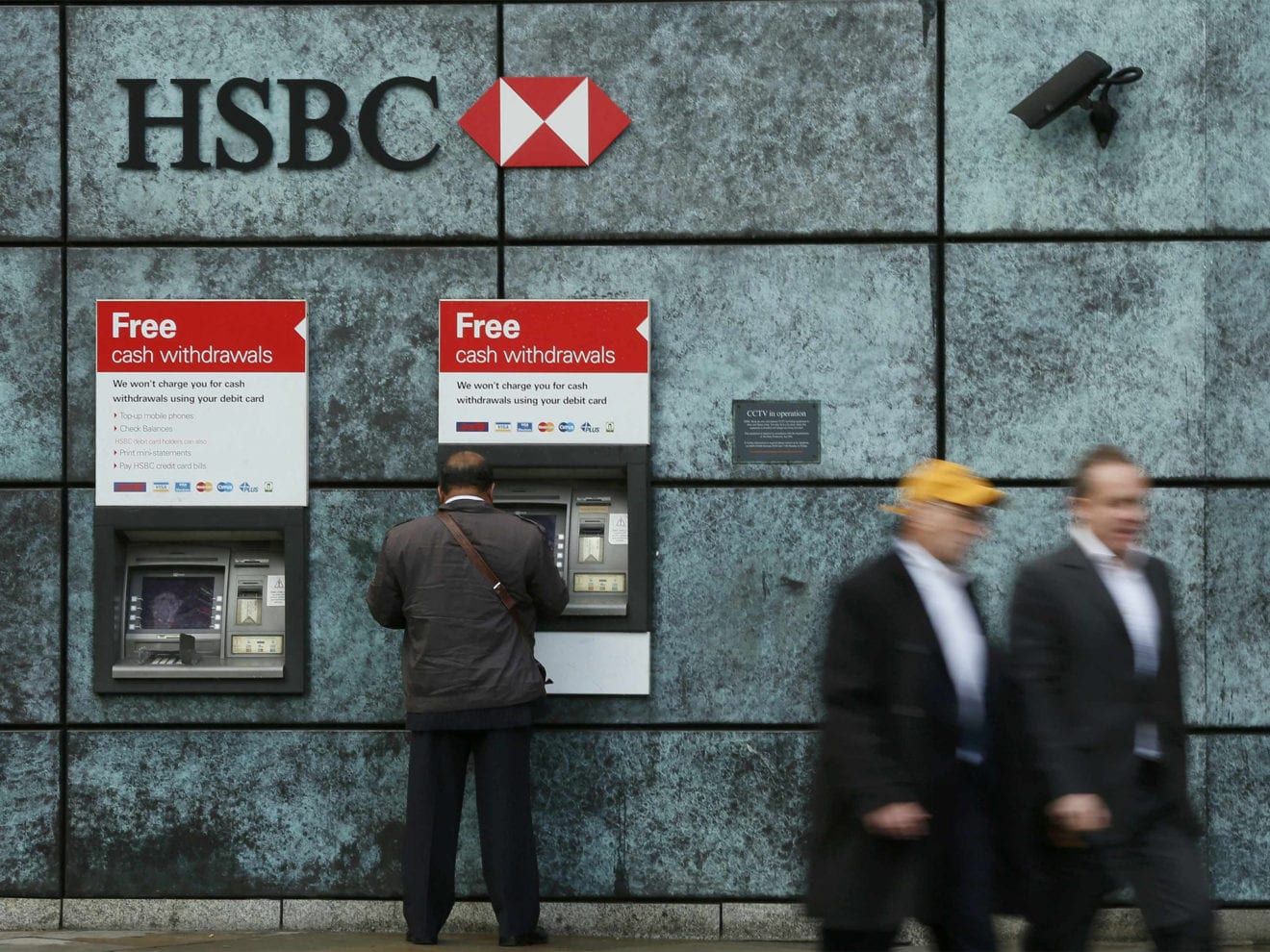
  • Huawei Lawyers Accuse U.S. for Overlooking HSBC Misconduct

    Huawei Lawyers Accuse U.S. for Overlooking HSBC Misconduct

    Huawei’s legal representatives claim that U.S. authorities had knowledge of the bank’s violations against Iran sanctions but chose not to pursue the matter.

    In exchange, HSBC allegedly cooperated to support the American federal prosecutor’s case against the Chinese telecom tech giant.

    The government agreed to overlook HSBC’s continued misconduct, electing not to punish the bank, prosecute its executives or even extend the monitorship,» according to a report citing a letter filed by Huawei’s lawyers. «[In return], HSBC agreed to cooperate with the government’s efforts to depict Huawei as the mastermind of HSBC’s sanctions violations and supply witnesses to the government’s stalled investigation of Huawei.»

    This is the latest development in the legal battle involving allegations against Huawei of bank fraud and Iran sanction violations with more charges coming later this month. In an indictment unsealed last year, Huawei’s chief financial officer Meng Wanzhou – currently fighting extradition from Canada to the U.S. – was accused of defrauding banks by misrepresenting the smartphone maker’s relationship with Skycom Tech Co Ltd, a suspected front company in Iran.

    The timing couldn’t be worse for HSBC’s interim chief executive Noel Quinn who is not only fighting to regain shareholder confidence after 2019 profits plummeted but also for his job, as the bank has yet to name a permanent chief.

  • Huawei powers AI technology in Singapore with opening of ground-breaking AI lab

    Huawei powers AI technology in Singapore with opening of ground-breaking AI lab

    “In response to the Singapore government’s call for industry transformation, Huawei is extending its 5G, Cloud and AI capabilities to local government agencies, SMEs, and Institutes of Higher Learning, to help accelerate Singapore’s 5G application and nation-wide intelligent transformation,” said Nicholas Ma, Chief Executive of Huawei International.

    Globally acknowledged to be the next big leap in mobile and wireless communications, 5G technology is widely touted to enable the development of new business models and advanced applications, fostering business innovation and spurring economic growth. Communities, businesses, and industries are expected to benefit from the transformative impact that 5G enables.

    Singapore has earmarked S$40 million to build an open, inclusive 5G ecosystem, where the funds will be used to support 5G tech trials for enterprise use, create new open testbeds and for R&D in areas like cybersecurity for the next-generation mobile network, across six strategic clusters.

    Huawei is launching its AI lab on the back of Singapore’s National AI Strategy announced on 13 November, which maps out how Singapore will develop and use AI to transform the economy and improve people’s lives.

    Through this lab, Huawei aims to nurture a flourishing local AI ecosystem with its 5G, Cloud and Intelligent Computing capabilities, enabling Singapore’s industry players, with a focus on local SMEs, to boost Singapore’s AI capabilities towards its smart future, and the digital economy. Huawei is also launching its talent, innovation, and Singapore-China bridging programs through this lab.

    In line with the three programs, the lab includes trainings and workshops opportunities for hands-on practice, with testing and integration facilities, and serves as an open and advanced platform to industry players for ecosystem development and industry collaboration.

    “At Huawei, we believe that AI and its solutions should be accessible to everyone, and that the convergence of AI, Cloud, and 5G, lays the foundation of the technology ecosystem for the digital economy of the future,” said Neo Teck Guan, Chief Marketing Officer of Huawei Cloud Asia Pacific Region.

    The lab launch program includes artificial intelligence case studies by Huawei key customers DIGI and Ulearning, as well as the signing of five memoranda of understandings (MoU), between Huawei and several local institutions and companies across various industries – Nanyang Polytechnic; MI Robotic, Navinfo Datatech, OTSAW and Neolix Technologies; Shanghai Zhenhua Heavy Industries Company (ZPMC) and Shanghai Enfon Robotics Co; and local Augmented Reality and Virtual Reality (ARVR) companies, Hiverlab and Hellohold – to solidify Huawei’s commitment in supporting 5G deployment and enablement towards industry transformation in Singapore.

    The program also paired with a 5G technology panel discussion joined by a few of Huawei’s partners – MI Robotic and the National University of Singapore (NUS), and PSA Singapore and Capitaland – to discuss 5G capabilities and solutions and how they will change industries and businesses, followed by an immersive technology workshop using the lab’s facilities.

    This launch marks another step towards Singapore’s Smart Nation initiative and its potential of becoming a 5G hub for the region and the world.

  • US gives green light to ‘several’ firms to sell to Huawei

    US gives green light to ‘several’ firms to sell to Huawei

    A Commerce Department spokesman said the agency had granted “narrow licenses to authorize limited and specific activities which do not pose a significant risk to the national security or foreign policy interests of the United States.”

    The administration earlier this week said it had extended for another 90 days the full implementation of the sanctions as part of an effort to make a transition easier for Huawei’s US partners. Commerce Secretary Wilbur Ross said any exemptions from the ban would be allowed only for older wireless systems and not for 5G networks, which have raised a range of security concerns in Washington.

    President Donald Trump in May effectively barred Huawei from American communications networks after Washington found the company had violated US sanctions on Iran and attempted to block a subsequent investigation.

    The latest 90-day extension “will allow carriers to continue to service customers in some of the most remote areas of the United States who would otherwise be left in the dark,” Ross said in a statement. “The department will continue to rigorously monitor sensitive technology exports to ensure that our innovations are not harnessed by those who would threaten our national security.”

    Huawei said Monday the decision did nothing to alter the company’s view that Washington has treated it unfairly and called on the Trump administration to remove Huawei from a foreign technology blacklist.

  • Huawei’s position looks promising with potential licenses underway for US companies

    Huawei’s position looks promising with potential licenses underway for US companies

    Trump has placed Huawei on the Commerce Department’s “entity list” for national security reasons. Huawei has repeatedly stated that the US claims are not based on any proven evidence. Entities on the list are prohibited from purchasing American software and components without being granted a U.S. government license. Trump has promised in June to provide some facilities to companies that deal with Huawei.

    Ross’s latest statements come shortly after Huawei announced its business results for the third quarter of 2019. During the first three quarters of this year, Huawei global revenues increased by 24.4% year-on-year, underlining that its business growth and technology development path was unaffected by the US ban.

    The company is committed to providing state-of-the-art innovations in new fields such as artificial intelligence and cloud computing, which will have a major impact in advancing the future development of many sectors and industries. This will also contribute the building of digital economies, smarter cities, and improving the efficiency of organizations in the future.

    By the end of Q3 2019, more than 700 cities, 228 Fortune Global 500 companies, and 58 Fortune Global 100 companies had selected Huawei as their partner for digital transformation.

  • Huawei’s global flagship opens in Shenzhen

    Huawei’s global flagship opens in Shenzhen

    Huawei’s global flagship store has opened in Shenzhen’s MixC World as the brand’s first direct-sale store globally.

    The 1300sqm store, which has been in preparation since 2017, allows customers to explore Huawei’s latest and most comprehensive product range, as well as experience a fast 5G connection, relax and meet up with friends.

    “Shenzhen is an international technology and innovation centre, we believe that Huawei Global Flagship Store will become the new connecting hub between Huawei and customers,” said Huawei Consumer Business Group CEO Richard Yu. “MixC World is a gathering place where fashion, technology and liberal art meet together and Huawei’s global flagship store will become Huawei’s city living room connecting the consumers.”

    The three-storey building combines traditional Chinese and Western architectural philosophies, with a facade that adopts a large area of high transmission glass with rounded corners and a unique semi-open staircase connecting the square and the surrounding environment.

    Free courses are offered by the Huawei community covering topics such as photography, videography, sports and health care. Technical enthusiasts and app developers can learn how to build the Huawei global ecosystem from technical experts.

    “We no longer call it a retail store, we call it community plaza, an open community for everyone,” said Huawei Consumer Business Group CMO Herman Zhu. “Consumers can come and create, learn about the most advanced technology and trends, or just connect again with one another.”

    Huawei’s global flagship uses a large number of environmentally friendly and recyclable materials. The felt used for ceilings and walls is made of recyclable plastic parts; the table uses nanoboard, which can be used for more than ten years; the floor is made of marble with natural ingredients and zero resin.

  • Huawei Battling for Chinese consumers

    Huawei Battling for Chinese consumers

    When 23-year-old Chinese student Aaron Huang started his hunt for an Android replacement for his Apple iPhone in April this year, it was clear which brand was trying hardest to win him over.

    Promotional campaigns by Huawei Technologies and from local retailers supporting the brand were everywhere, said Huang, adding he was influenced by domestic media coverage that portrayed the US as unfairly targeting the Chinese tech giant in its trade war.

    “I felt like I should choose Huawei,” he said.

    The advertising blitz and grassroots patriotism have proven to be a potent mix, amplifying the brand’s existing broad appeal in its home market – a market it is increasingly dependent on as Washington’s ban on sales of US components and software to Huawei hammers overseas demand.

    Second-quarter China smartphone shipments for Huawei surged by a nearly a third from the same period a year earlier, with its market share rocketing 10.6 percentage points to a record 38 percent, according to research firm Canalys. Shipments for domestic rivals and Apple plummeted.

    Huawei has lifted its China sales target for its consumer business group, said a company source, who was not authorised to speak on the matter and declined to be identified.

    Within Huawei, employees refer to current strategies as ‘Battle Mode’ and it has stepped up the opening of new stores including Experience Centers in the style of Apple shops, other company sources said. One Experience Center near its South China headquarters opened last month while a bigger one in Shenzhen’s tech district of Nanshan will open next month.

    Analysts say Huawei has also been transferring unsold smartphone stock from other regions to China and even offering some rare discounting in its home and overseas markets as it seeks to offset sales declines in Europe and the US.

    Huawei declined to comment on its strategies for marketing and managing inventories, or its China sales target. It reiterated an earlier statement that it was not trying to trade on patriotic fervor.

    Lotteries and bullfrogs

    Sales promotions have included interest-free installment payment plans and lotteries for its premium P30 and Mate series. Analysts add that products from its three brands – Huawei, Nova, and Honor – outnumber those from rivals in every market segment.

    Firms like Chinese electronics retailer Gome and small businesses have been eager to lend a hand, linking Huawei phones with patriotic support.

    Fang Xia, a 38-year-old restaurant owner in Shanghai, said she was motivated by recent coverage of Huawei’s dispute with the US to offer her customers a special deal.

    “Tables that have four or more people with Huawei smartphones will get one free plate of Emperor Bullfrog,” proclaims an advertisement for her restaurant’s signature 88 yuan ($12.50) deep-fried frog dish.

    Huawei’s overseas smartphone sales tumbled 28 percent in the second quarter from the previous quarter, Canalys data showed, but the full impact of the ban is not yet known.

    Warning that Huawei products could be a vehicle for Chinese espionage, the Trump administration now requires that US corporations which conduct business with Huawei gain a special license to do so. US government responses to requests for those licenses could come this week, US Commerce Secretary Wilbur Ross said last Tuesday.

    In other measures to counter the ban which could strip its access to Google’s Android, Huawei is accelerating efforts to develop its own operating system called Hongmeng. It is looking to roll out a low-end smartphone equipped with Hongmeng in the fourth quarter, state-media outlet Global Times reported on Sunday.

    Huawei declined to comment. It has previously said Hongmeng is designed for internet-of-things products and it prefers Android for its smartphones.

    Even before the US ban, Huawei had been making big strides in China, moving upmarket into the $500-800 price range and luring customers away from the likes of Apple with improved camera quality.

    “In any segment, it has several options for consumers, that is more than any other brand has to offer,” said Canalys analyst Mo Jia, describing Huawei’s strategy as one of “bombardment”.

    Rivals are hurting. Xiaomi saw its second-quarter China shipments tumble 20 per cent from the same period a year earlier, Vivo’s slid 19 per cent while Oppo’s dropped 18 per cent. Apple’s shipments fell 14 per cent, and analysts and Chinese consumers say the US firm could be hit further amid an intensifying US-China trade war.

    Xiaomi, Apple, Oppo and Vivo declined to comment.

    While Huawei has managed a huge boost in its home market, analysts said China sales may not always stay unscathed as it could struggle to replace US components and software.

    “Without the original supply chain, we may see its speed of development start to slow down,” said James Yan, research director at Counterpoint Research.
  • Huawei promo video explains why mobile gamers can’t wait for 5G

    Huawei promo video explains why mobile gamers can’t wait for 5G

    What is the first thing that comes to mind when you think about 5G? Most likely you think about the faster download speeds that have peaked thus far at over 2Gbps (according to AT&T). With these data speeds, users will be able to download an HD movie in seconds instead of minutes. New businesses and industries will spring up to take advantage of the speed of the new networks similar to how 4G LTE connectivity enabled the creation of the ride-sharing industry; the latter now has two billion-dollar companies in Uber and Lyft.

    Another advantage of 5G, one that you don’t hear about often, is low latency. Latency measures the time it takes you to get a response to information that you send. For example, if you’re playing a game and shoot the opponent, latency measures the lag between the time you fire the blast and the time you know whether you’ve succeeded in hitting your target. So 5G is obviously positive for those playing mobile games in the cloud.

    Today, Huawei released a promo video for its Mate 20 X 5G that not only shows the huge difference in speed between 4G LTE and 5G, it also mentions the reduction in latency. In fact, the clip claims that game players won’t experience any lag at all when this phone runs on a 5G network.

    The Mate 20 X 5G features a 7.2-inch AMOLED display sporting a 1080 x 2244 resolution. Huawei’s Kirin 980 SoC is under the hood and the device employs Huawei’s own Baloong 5000 5G modem chip. A triple camera setup is in the back (40MP primary + 8MP telephoto with a 3x optical zoom + 20MP Ultra-wide) and a 24MP selfie snapper is in the front. A 4200mAh battery keeps the lights on, and the handset supports the Huawei M-Pen.

    No, you’re not going to see this phone sold in the U.S., but the video does point out a reason why mobile game players in the states should be looking forward to getting 5G up and running in their city.

  • Huawei discount phone promotion leads to anger

    Huawei discount phone promotion leads to anger

    Huawei discount phone promotion has backfired causing shops to be shuttered and one indignant shopper arrested.

    The Chinese company promoted that its Huawei Y6 Pro 2019 model would be discounted from S$198 to $54 for consumers aged over 50 for three days beginning last Friday. But when hundreds of would-be buyers arrived at the company’s 27 stores across the island on Friday morning they were told stock had run out before opening hour, causing many to wonder if there was ever any stock in the first place, or the brand was adopting a bait-and-click tactic to get customers into stores. Instead of the $54 Y6, disappointed shoppers were offered another discount on a Huawei Mate 20, a promotion due to start on Saturday and since canceled.

    Police were called to some of the stores where angry customers were demanding Huawei stick to its promise. A woman, aged 53, was arrested for trespass after refusing to leave one store.

    A Huawei spokesperson said the ‘Sold Out’ signs were put up by store employees before opening time in response to seeing the long queues formed outside.

    “We are truly sorry to have disappointed those who have shown your support from early morning… Y6 Pro 2019 handsets have been sold out island-wide and have recorded an unprecedented surge of demand,” Huawei said.

    “The company would like to thank members of the public for their continued support and regrets the insufficient supply for the masses.”

    “How can it be that you are telling the public there is no stock before the store opens or the promotion starts?,” one customer asked. “Are you trying to fool people and make use of the nation’s 54th anniversary?”

    Huawei launched the promotion celebrate the generation of Singaporeans that made great contributions to the nation’s development, ahead of the country’s 54th National Day on August 9.

    The company did not reveal how many of the handsets were sold during the Huawei discount phone promotion or how many were available at each outlet.

  • Huawei opens flagship store outside of China

    Huawei opens flagship store outside of China

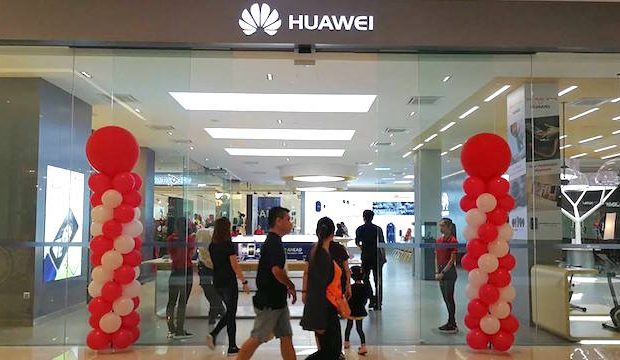
    Chinese tech firm Huawei has launched its largest international flagship store in Madrid.

    The new centrally located 1100sqm store showcases the company’s 5G and AI technologies as well as its range of smartphones and computers. More than 1000 people attended the launch.

    Huawei recently cooperated with Vodafone Espana to roll out the first commercial 5G service in Spain, which is now offering 5G roaming in four European countries. Huawei has already provided equipment for Britain’s new 5G network.

    The Chinese firm has already won 50 5G contracts around the world, but is at the centre of controversy in the US and Australia, among other markets, over allegations its systems can be used by Chinese government agencies to spy on users.

  • Huawei reportedly cuts shipments of its phones

    Huawei reportedly cuts shipments of its phones

    After being banned from accessing its U.S. supply chain, Huawei decided in May to stop taking orders for its low and mid-range handsets that aren’t powered by the company’s Kirin chipsets. Huawei has reportedly stockpiled a year’s worth of chips and components in anticipation of such a ban, it is now cutting shipments of its higher-end handsets. The report states that earlier this month, the company started cutting orders for the Huawei P30 line, which includes the P30 Pro. The latter is the manufacturer’s most premium handset at the moment. While U.S. carriers can’t stock Huawei’s phones,  earlier this year retailer B&H offered U.S. consumers the Latin American version of the P30, P30 Pro and P30 Lite adding a one-year U.S. warranty. However, since the U.S. ban, B&H has stopped selling these models.

    Today’s report notes that Huawei has also started cutting orders for the upcoming Mate 30 series. Not expected out until October, the line includes the Huawei Mate 30 Pro; this model would normally be considered Huawei’s most technologically advanced phone of the year. With the ban, it isn’t clear what new features will be included in the device. Currently, expectations call for the Mate 30 Pro to sport a 6.7-inch AMOLED display with a QHD+ resolution. The device could be equipped with a pair of chips from Huawei’s HiSilicon unit, namely the Kirin 985 SoC and the Balong 5000 5G modem chip.

    Barring a sudden removal from the U.S. Entity List, Huawei’s new phones will most likely ship with its own HongmengOS (aka ArkOS) pre-installed. Huawei has its own app distribution platform called App Gallery, but it remains to be seen how much developer support ArkOS will get.

    Internally, Huawei expects its international phone shipments to drop by 40% to 60% this year. Of the 206 million units it delivered in 2018, about half were shipped out of China; that means that the company believes it will see total shipments drop by as many as 60 million handsets this year. Just last quarter, the manufacturer shipped 59 million smartphones worldwide, up over 50% year-over-year. At that pace, Huawei was on track to deliver just under 240 million units for 2019. Now the company is looking at a figure in the neighborhood of 140 million to 160 million smartphones. While Huawei planned on becoming the top smartphone manufacturer in the world next year, that goal will have to be scrapped for now.

    Once Huawei uses up the inventory of Kirin chips it does have, things are going to get tough for the company. With chip design firm ARM Holdings cutting ties with Huawei (the company is headquartered in the U.K. but uses some American technology), the company might have to turn to an open source replacement. And the software from U.S. companies that the manufacturer uses to design its chips will also have to be replaced. While Huawei apparently did have the foresight to develop its own operating system and stockpile chips and key parts, it appears that the company might not have alternate plans for everything it needs to be self-sufficient.

    For those coming in late, Huawei ended up in this predicament because of U.S. lawmakers’ fears that the company’s products will spy on American corporations and consumers. Under Chinese law, the communist government can demand that Huawei gather intelligence on its behalf. Huawei has repeatedly denied that its phones and networking equipment contain any sort of backdoors; its chairman, Liang Hua, said back in February that if the Chinese government asks him to spy, he will defy them. The executive added last month that he would sign a no-spy document with any country. Ironically, that took place on the same day that the U.S. first announced Huawei’s placement on the Entity List.

    While U.S. President Donald Trump admitted in May that Huawei was placed on the list for security reasons, he added that “it’s possible that Huawei even would be included in some kind of a trade deal. If we made a deal, I could imagine Huawei being possibly included in some form, some part of a trade deal. It would look very good for us.” At this point, Huawei brass is probably hoping that the U.S. uses the company as a bargaining chip to obtain better terms from China in a new trade agreement. After all, the president was able to save ZTE from its U.S. export ban and it too is considered a national security threat.

  • Facebook, Instagram, and WhatsApp will no longer be pre-loaded on Huawei phones

    Facebook, Instagram, and WhatsApp will no longer be pre-loaded on Huawei phones

    While Huawei continues to see a road ahead for its US government-threatened smartphone division, the exodus of major business partners, key components suppliers, and allies is far from over, posing new difficulties and creating bigger and bigger problems almost every single day.

    The latest bridge to be reportedly burned as a direct consequence of President Trump’s controversial executive order last month (which was since suspended for a period of 90 days) is arguably less critical than similar decisions previously made by the likes of Google, Qualcomm, Intel, and Arm. But it’s yet another thing that complicates Huawei’s existence, threatening to severely damage its Western brand image.

    Facebook is getting ready to pull out its support for future Huawei handsets, planning to no longer allow the pre-installation of the social networking giant’s crazy popular apps on the Chinese tech behemoth’s mobile devices. We’re obviously talking about the main Facebook platform first and foremost, but also WhatsApp and Instagram, all three of which are typically available for users of existing Huawei phones at first boot.

    The handsets that are already in circulation are unlikely to be affected by Facebook’s decision, as they will continue to receive any and all updates delivered to social networking and instant messaging apps. But Huawei phones that are not yet released and have not yet left factories are expected to come without the aforementioned services pre-loaded. That wouldn’t be such a big problem if Google wasn’t intent on cutting off access to the Play Store for future Huawei devices as well in compliance with the US ban expected to be enforced in a couple of months.

    Without Facebook, possibly Twitter, and other Western-leading apps and services, it seems Huawei truly needs to build its Android and Google Play alternatives from scratch. That’s probably going to take a while (if it’s even doable to begin with), during which time the company’s sales numbers could fall off a cliff. Of course, Facebook is still blocked in China, so at least there’s that.

  • Huawei insists global smartphone production levels are as Expected

    Huawei insists global smartphone production levels are as Expected

    There’s been much ado about Huawei’s tough road ahead as key US partners and major parts suppliers are prepared to turn their backs on the world’s second-largest smartphone vendor at the end of a 90-day reprieve granted shortly after President Trump’s announcement of a potentially business-ending ban.

    But although it’s pretty obvious the political tensions are already negatively impacting the Chinese company’s sales and brand image in the Western Hemisphere, Huawei reps and executives continue to insist the situation is not as bad as certain reports make it out to be. After essentially suggesting the White House didn’t do the tech giant any favors by giving it the aforementioned “stay of execution”, Huawei is adamantly denying a fresh rumor regarding current smartphone production.

    In a short statement issued to Cnet and a number of other international news outlets, the company specifically and explicitly refuted the claims made in a Chinese media report about a Foxconn manufacturing shutdown of Huawei mobile devices. Apparently, “global production levels are normal, with no notable adjustments in either direction.”

    At first glance, that may seem reassuring, but clearly, these are extremely volatile circumstances, with lots of moving parts and unpredictable future developments. Just because Huawei might be going about its business like nothing has happened or is about to happen, that doesn’t mean a production halt or at least a downgrade are not in the pipeline. If the embargo on collaborations with US companies stands, market researchers expect a significant slowdown of the Chinese tech giant’s incredible recent growth.

    For the time being, it looks like Huawei is working on the assumption the US-China trade war will somehow cool down in the next couple of months, allowing it to continue selling hundreds of millions of Android phones around the world.

  • Huawei reassesses goal of overtaking Samsung

    Huawei reassesses goal of overtaking Samsung

    Huawei has made no secret of its plans to overtake Samsung as the world’s largest smartphone manufacturer by the first quarter of 2020. But in light of its recent US trade ban, the company is reassessing its goal.

    According to Honor President Zhao Ming, Huawei is currently looking into the possibility of adjusting its internal goals. He says it’s still “too early” to say whether or not the Chinese company is capable of achieving the goals it currently has set, although things aren’t looking too good.

    Per sources familiar with the matter, Taiwanese manufacturer Foxconn that also assembles iPhones and Xiaomi devices recently shut down Huawei production lines. This happened because the company suddenly reduced its orders for new phones in light of weakened demand due to the US ban.

    It’s unclear at this point if Huawei’s production cut is temporary or long-term, but the request could negatively impact Foxconn. After all, the latter reportedly hired lots of new workers earlier this year in order to cope with the growing demand for Huawei’s smartphones.

    On a related note, analyst Ming-Chi Kuo recently forecast a significant drop in sales for Huawei this year. The best-case scenario, which involves launching an Android replacement at some point in the near future, would see Huawei ship between 240 and 250 million smartphones by the end of the year, down from the previous estimates of 270 million devices. However, if the company fails to release an in-house OS by the end of the year, Huawei’s shipments could fall to just 180 million devices.