Tag: Huawei

  • The Huawei Mate X won’t be Delayed

    The Huawei Mate X won’t be Delayed

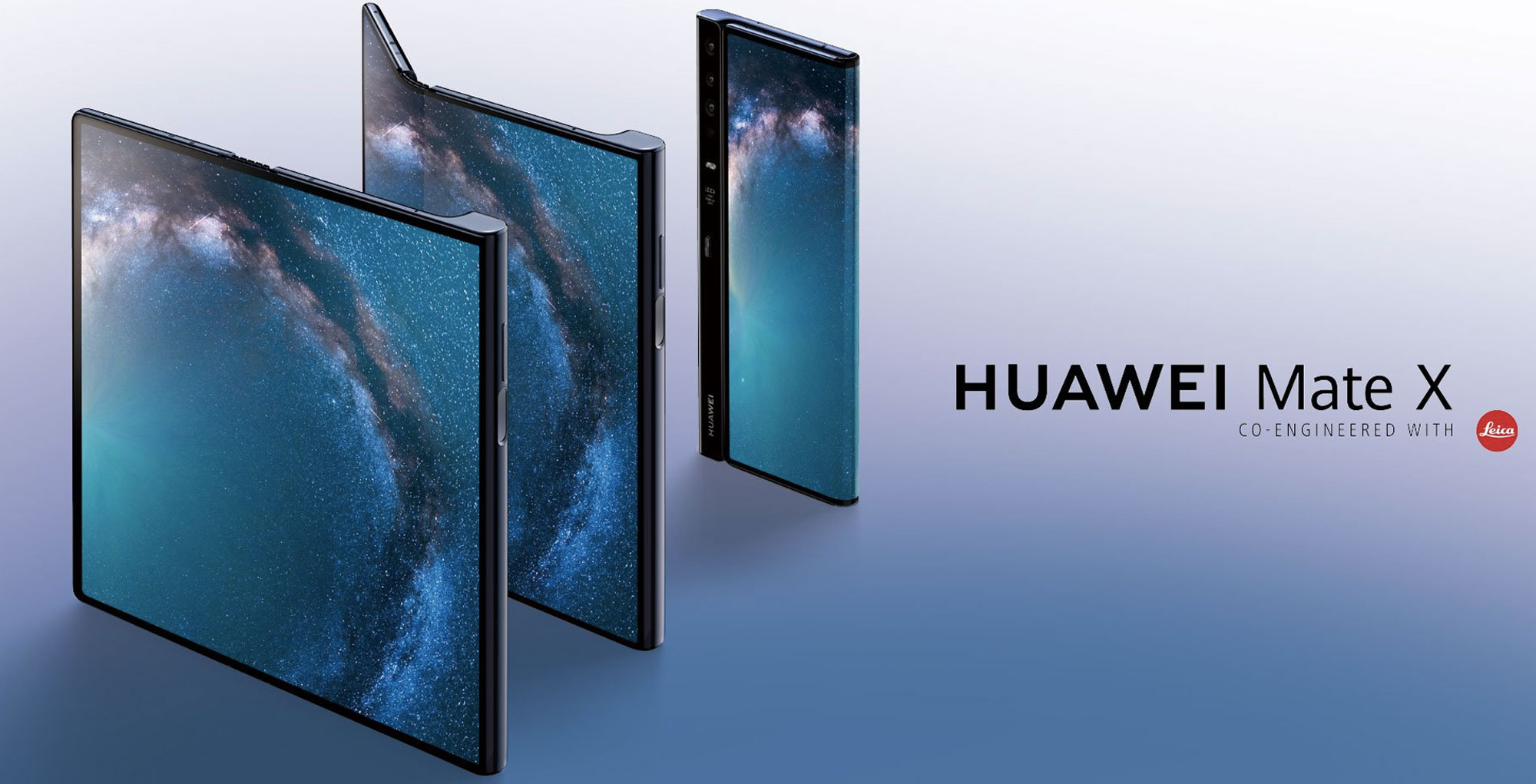
    The Samsung Galaxy Fold has been delayed indefinitely following a number of display issues, but it seems as though the Huawei Mate X is still on track for a release in June.

    Following Samsung’s announcement yesterday, rumors began floating around about a potential Huawei Mate X delay until September in order to iron out any issues and ensure a high level of durability, but today sources within the Chinese company have confirmed to Phoenix Technology that reports suggesting this are false and simply rumors. They went on to state that the company’s foldable flagship will be made available to purchase in June, as previously announced.

    The Huawei Mate X’s design did raise some durability questions when first unveiled. After all, it leaves the flexible OLED panel exposed at all times, thus making the plastic coating on top more prone to scratching. Nevertheless, Huawei seems confident in its design and apparently sees no reason for a delay.

    Samsung’s Galaxy Fold, on the other hand, seemingly presented a much sleeker and studier design from the get-go. However, the South Korean giant’s initial findings suggest the “impact on the top and bottom exposed areas of the hinge” could be the cause of the display issues. In one instance, “substances found inside the device” also affected the performance of the display.

  • Huawei continues to close in on Samsung with impressive Sales Results

    Huawei continues to close in on Samsung with impressive Sales Results

    2018 has been something of a roller coaster for Huawei, the highly controversial telecommunications equipment vendor that also somehow managed to beat Apple for second place in global smartphone shipments for two consecutive quarters. Ultimately, the China-based tech giant ranked third overall in the mobile device market last year, selling however a colossal 206 million units or so around the world, up from “only” 153 million in 2017.

    While market research firms like Strategy Analytics and the International Data Corporation (IDC) are not yet ready to release their full Q1 2019 reports, Huawei has just confirmed another impressive new set of numbers that puts the company on track to substantially narrowing the gap to Samsung by the end of the year and possibly reaching its most ambitious goal yet in 2020.

    No less than 59 million Huawei smartphones were shipped between January and March 2019 worldwide, up a staggering 50 percent or so from the 39 million third-party estimate of Q1 2018. That should be enough to open a big gap between the Chinese company and Apple, since only around 52 million iPhones were sold globally during Q1 2018, a number most analysts expect to take a bit of a plunge when 2019’s first-quarter reports start rolling in.

    It will then be pretty much impossible for Apple to catch up to the market’s silver medalist, as iPhone shipments may need a couple more quarters to start recovering, while Huawei’s figures are expected to continue growing. In total, Huawei could sell anywhere between 250 and 260 million units in 2019, which probably won’t be enough to secure the company first place over Samsung, but it might hint at a new leader next year.

    Until then, we should point out Huawei’s substantial boost in Q1 smartphone volumes crucially contributed to overall revenues of close to $27 billion, representing a 39 percent year-on-year jump. Incredibly enough, the company reported massive growth for its carrier and enterprise business departments, as well as the consumer electronics group, expecting all three divisions to post double digit increases in revenue throughout 2019. That means both smartphone and 5G equipment sales are going well, despite strong opposition from the US government.

  • Huawei Launches ‘World’s First’ 5G Communications Hardware For Automotive Industry

    Huawei Launches ‘World’s First’ 5G Communications Hardware For Automotive Industry

    China’s Huawei Technologies launched on Monday what it said was the world’s first 5G communications hardware for the automotive industry, in a sign of its growing ambitions to become a key supplier to the sector for self-driving technology.

    Huawei said in a statement that the so-called MH5000 module is based on the Balong 5000 5G chip which it launched in January. “Based on this chip, Huawei has developed the world’s first 5G car module with high speed and high quality,” it said.

    It launched the module at the Shanghai Autoshow, which began last week and runs until Thursday.

    “As an important communication product for future intelligent car transportation, this 5G car module will promote the automotive industry to move towards the 5G era,” Huawei said.

    It said the module will aid its plans to start commercializing 5G network technology for the automotive sector in the second half of this year.

    Huawei has in recent years been testing technology for intelligent connected cars in Chinese cities such as Shanghai, Shenzhen and Wuxi and has signed cooperation deals with a swathe of car makers including FAW, Dongfeng and Changan.

    The company, which is also the world’s biggest telecoms equipment maker, is striving to lead the global race for next-generation 5G networks but has come under increasing scrutiny from Washington which alleges that its equipment could be used for espionage. Huawei has repeatedly denied the allegations.

  • Apple had a Plan to end Qualcomm’s licensing policies

    Apple had a Plan to end Qualcomm’s licensing policies

    When Apple agreed to use only Qualcomm’s modem chips for the iPhone, it worked out an annual $1 billion “incentive fee” that it would receive from the chip maker. But there was an important condition. If Apple decided to use a second modem chip supplier, it would have to pay Qualcomm back the “incentive fees” it received. Apple then attended a hearing held by the South Korea Fair Trade Commission and spoke out against Qualcomm’s chip licensing practices. As a result, the $1 billion checks stopped. At the same time, Qualcomm learned that Apple was planning on using Qualcomm and Intel modem chips for the iPhone 7.

    In January 2017, Apple sued Qualcomm over the $1 billion checks it was no longer receiving, setting off a chain reaction of lawsuits filed by both sides against each other. But that is all water under the bridge following the settlement that both companies agreed to last week. All lawsuits are dropped, and Apple will pay Qualcomm an undisclosed amount. Apple now has a six-year licensing agreement with Qualcomm and a multi-year pact that will guarantee it modem chips from the San Diego based chip maker. According to one analyst, Apple could be paying Qualcomm as much as $9 per iPhone for the component.

    During the two years before the settlement, Apple publicly derided the quality of Qualcomm’s modem chips while in private it called them “the best.” These complementary comments were made by Apple executives in memos that also praised Qualcomm’s “unique patent share” and “significant (intellectual property) holdings.” The memos were obtained by Qualcomm during the discovery process. That is when both parties in a lawsuit hand over evidence to each other before a trial starts.

    Apple called Qualcomm’s chips worthless in arguments it made to lawmakers, regulators, judges, and juries while privately raving about the company’s components. This has many wondering how deeply Apple believed what it was saying when it tried to get courts to change the methods that Qualcomm uses to sell its chips. Apple’s true feelings about Qualcomm might explain why it might be paying Qualcomm as much as $9 per iPhone for its chips.

    Previously, Apple derided Qualcomm’s royalty deals that force phone manufacturers to pay a percentage of the retail price of each phone sold. In fact, just before the settlement was announced, Apple and Qualcomm were squaring off in a San Diego courtroom with billions of dollars in play. On Tuesday, during his opening statements, Apple’s attorney (Ruffin Cordell from Fish & Richardson) was trying to prove that the iPhone didn’t rely on Qualcomm’s component. He did this by pointing out that an iPhone can function using a Wi-Fi connection. And Apple has wondered in the past why Qualcomm should receive royalties for parts of a phone that it has nothing to do with.

    Apple’s attorney also pointed out Tuesday that licensing deals Apple made with Ericsson and Huawei were for twice the number of patents that Apple licensed from Qualcomm, but for a small percentage of what Apple was paying the chip supplier. However, an internal Apple document later obtained by Qualcomm showed that Apple licensed less expensive patents on purpose in order to create evidence that showed how much more Qualcomm was seeking to license its patents.-

    “While it’s very common for companies who are engaged in legal disputes to play hardball, the disclosure of these documents is very unsettling. It potentially reveals that Apple was engaging in a bad faith argument both in front of antitrust enforcers as well as the legal courts about the actual value and nature of Qualcomm’s patented innovation.”-Adam Mossoff, law professor at George Mason University, director of the Center for the Protection of Intellectual Property

    Documents received by Qualcomm during discovery revealed that Apple had planned on suing Qualcomm as far back as 2014; the tech giant decided to wait so it could continue to collect the billion-dollar payments from the chip maker. One document, produced by Apple six months before it lobbed the first salvo in their court battles, revealed Apple’s game plan to reduce the amount of the royalties it was paying to Qualcomm. Apple would “hurt Qualcomm financially,” and “put Qualcomm’s licensing model at risk.”

    Qualcomm’s licensing model is at risk, but not necessarily because of Apple. Earlier this year the Federal Trade Commission and Qualcomm squared off in a non-jury trial held before Judge Lucy Koh. Apple did have some executives testify against Qualcomm’s licensing practices, but other phone manufacturers did so as well. If Judge Koh, who presided over the Apple v. Samsung patent trial, rules in favor of the FTC, Qualcomm might have to change the way it sells its chips.
  • FCC may ban China Mobile from US market

    FCC may ban China Mobile from US market

    The chairman of the US FCC has urged the agency to reject China Mobile’s applications to provide telecom services in the US market on national security grounds, in the latest salvo in the telecom trade war between China and the US.

    Federal Communications chairman Ajit Pai has released a statement urging his fellow FCC executives to vote for an order that would deny China Mobile’s application during the scheduled vote at its May Open Meeting.

    “Safeguarding our communications networks is critical to our national security. After reviewing the evidence in this proceeding, including the input provided by other federal agencies, it is clear that China Mobile’s application to provide telecommunications services in our country raises substantial and serious national security and law enforcement risks,” Pai’s statement reads.

    “Therefore, I do not believe that approving it would be in the public interest. I hope that my colleagues will join me in voting to reject China Mobile’s application. ”

    The draft order proposed by Pai would stipulate that China Mobile has not demonstrated that its application is in the public interest, but more importantly it would assert that “China Mobile is vulnerable to exploitation, influence, and control by the Chinese government.”

    China Mobile first applied back in September 2011 for a license to provide facilities based and resale telecommunications services between the US and overseas destinations.

    After a long review of the application, agencies within the US government’s Executive Branch recommended in July 2018 that China Mobile deny that application, citing “substantial national security and law enforcement risks that cannot be resolved through a voluntary mitigation agreement.”

    The proposed objection comes the month after Chinese vendor Huawei revealed it was taking the US government to court over an order banning federal agencies from buying its products due to national security fears.

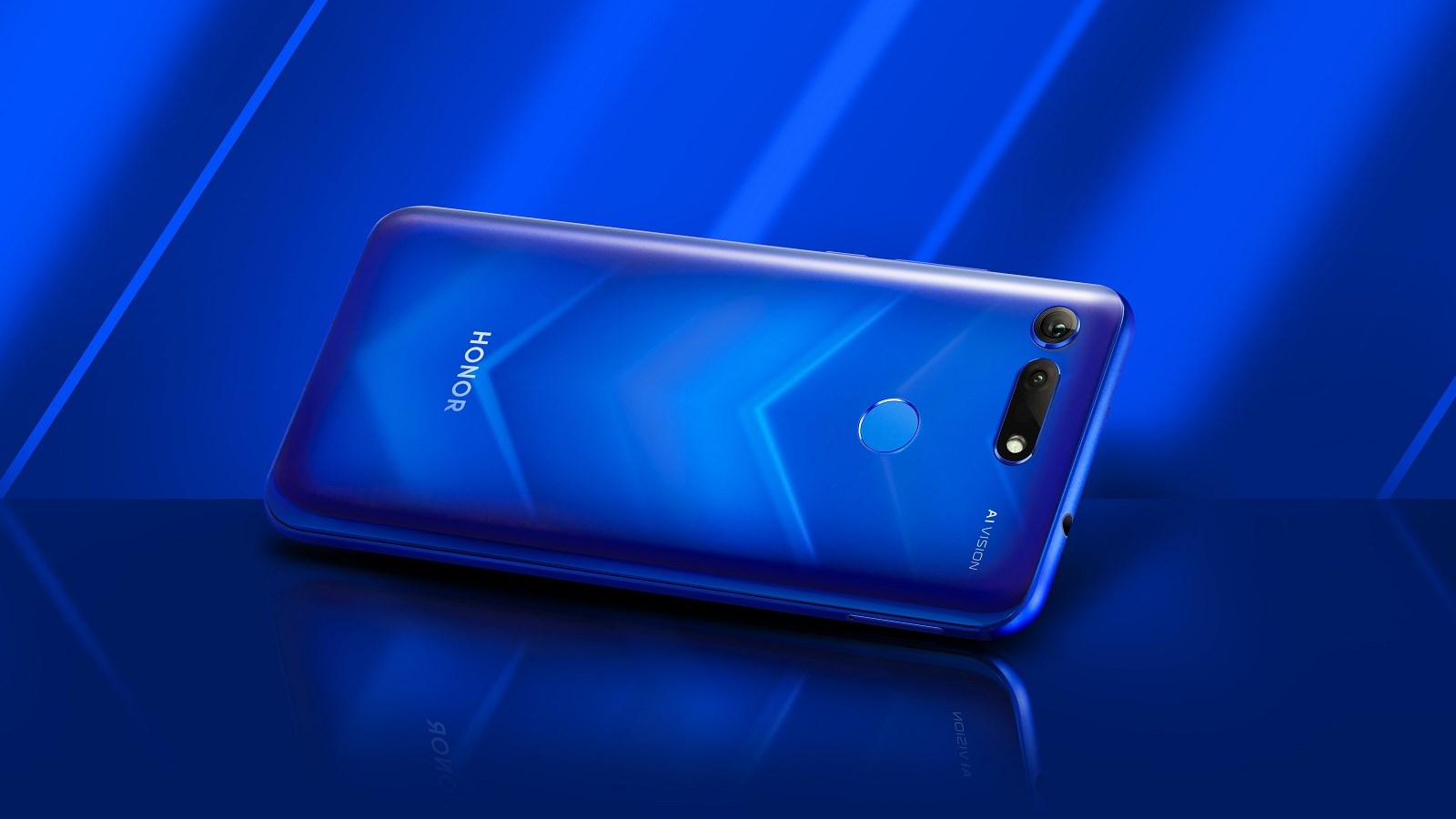
  • Honor Starts Looking for Market Dominance

    Honor Starts Looking for Market Dominance

    Huawei’s CEO has revealed details of how the telecommunications giant will foster its spin-off Honor brand in Asia.

    The strategy includes store rollouts, an increasing focus on online sales and revised price positioning differentiating the two brands.

    Richard Yu, CEO of Huawei Consumer BG, posted details on his Sina Weibo account, predicting Huawei will become the world’s largest smartphone maker this year through its two-brand strategy. Honor on its own is tipped to become China’s second largest-selling smartphone brand and fourth in the world.

    “The company will support Honor in the development of cutting-edge products and continue its investments in technology innovation, channel distribution and retail strategies while maintaining a firm dual-brand strategy between Honor and Huawei,” said Yu.

    Both brands will maintain “a forward-thinking mindset and help create an intelligent, fully-connected world”.

    While IDC figures show global shipments of smartphones fell by 3.1 per cent in the first three quarters of last year, Honor’s volumes soared 27.1 per cent.

    Last year, Huawei’s consumer business grew by 48.4 per cent, outperforming the company’s carrier-network business and becoming the company’s largest revenue earner.

    George Zhao, Honor’s president, told the recent Mobile World Congress that Honor is “on the brink of yet another breakthrough and there is no slowing down for us”.

    “As the going gets tough, the tough get going. We’ll treat each day as an opportunity to deliver greater value to our fans. For Honor, the best is yet to come,” he said.

  • Apple could end up buying 5G modem chips from unlikely sources

    Apple could end up buying 5G modem chips from unlikely sources

    You might know that Huawei manufacturers handsets and networking equipment. At the end of last year, it was the third largest smartphone company in the world and the top provider of networking gear. What you might not know is that Huawei designs its own chips. Its Hi-Silicon unit created the Kirin 980 SoC which is currently found powering up the Huawei Mate 20 Pro and the Huawei P30 series. It also will be used to drive the foldable Huawei Mate X. While Huawei designs the chips, they are actually manufactured by TSMC.

    Now as we discussed yesterday, Apple is relying on Intel to have its XMM 8160 5G modem chip ready in time for its 2020 iPhone models. There are conflicting reports about whether Intel will deliver the component in time, and as a result, we have seen rumors that a 5G iPhone might not surface until 2021. Intel says that it will be shipping the chip later this year, but just in case there is a problem, Apple has found an unlikely friend in Huawei.

    Huawei would consider selling its 5G Balong 5000 modem chips to Apple. The report cites a source who has “knowledge of the situation.” This is an unusual thing for Huawei to do considering that an executive said earlier this year that “Balong is mainly for supporting Huawei’s smart products, such as phones and IoT products, and is currently for Huawei’s internal use only.” It also seems strange considering that Huawei is looking to leapfrog over both Apple and Samsung to become the global leader in smartphones by 2020.

    Apple could turn to Qualcomm, but that is unlikely to happen since both firms have been squaring off in court over patent infringements, antitrust claims, and royalty payments, In fact, a week from today a courtroom in San Diego will host a multi-billion dollar trial between Apple, its contract manufacturers like Foxconn and Wistron, and Qualcomm. At stake are unpaid royalties amounting to billions of dollars. Qualcomm CEO Steve Mollenkopf said back in November that his company was “on the doorstep” of resolving its differences with Apple; we now know that this was not the case.

    While it seems that Huawei would be “open” to selling Apple its 5G modem chips, the other side of the equation is whether the gang in Cupertino would be willing to buy them. During the FTC v. Qualcomm case, Apple supply chain executive Tony Blevins testified that Apple was considering the use of 5G modem chips from Samsung or MediaTekfor the iPhone. Even though Apple currently uses only Intel modem chips for its handsets, Blevins talked on the stand about “Project Antique.” This was Apple’s attempt to find a second supplier to provide it with modem chips. As Blevins noted, “No offense to (Intel) but we don’t want to be single supplier with them. We wanted both Qualcomm and (Intel) in the mix.”

    Huawei’s Balong 5000 modem chip supports both mmWave and sub-6GHz 5G networks. It also is compatible with 4G LTE, 3G, and 2G networks. The important thing about using Huawei’s modem chip is that Apple could get its hands on it earlier than Intel’s chip and have more time to test a 5G iPhone. The Balong 5000 5G modem chip will debut on Huawei’s first phone to support the next generation of wireless connectivity. That device happens to be the foldable Mate X.

    Apple wouldn’t be the only one in such a partnership to benefit. Huawei would get to widen the use of its chips beyond its own devices, and you can just imagine how much revenue would flow into the company’s coffers. It also might play well in China after U.S. government attacks on Huawei have led some Chinese consumers to unofficially boycott Apple products.

    There is a huge unknown here, and that is how the Trump administration might react. Huawei is considered a threat to U.S. national security and allies have been warned not to use Huawei’s networking gear to build out 5G networks. That’s because the law in China requires a company like Huawei to gather intelligence if requested to do so. Considering that we are talking about the modem chip, a major component in communicating voice and data, there are bound to be concerns about the use of Huawei’s component inside the iPhone.

  • Indonesia’s FiberStar extends collaboration with Huawei

    Indonesia’s FiberStar extends collaboration with Huawei

    Indonesia’s FiberStar has signed an agreement with Huawei to jointly expand high-speed fiber network services in the market.

    FiberStar recently partnered with Huawei to build a 1Tbps backbone DWDM network linking Jakarta with Surabaya. The network consists of submarine and terrestrial cables that form a ring network with a total length of more than 3000 kilometers.

    Building on this cooperation, the companies signed a memorandum of understanding at the Huawei ISP Summit Asia Pacific 2019 in Bali to strengthen collaboration in the field of fixed networks and data centers.

    FiberStar co-founder and director Thomas Dragono said Huawei shares the company’s vision for the digital transformation of Indonesia.

    “Being the pioneer of Indonesia’s neutral infrastructure service, and considering Huawei’s advancement in the optical communications field, we have both decided to explore a deeper and stronger partnership,” he said.

    “The consensus on the advantages of optical network technologies and evolution trends are the basis of cooperation between both parties. We will leverage the advanced DWDM and MPLS technology to expand the coverage of networks in Indonesia, and further facilitate the growth of the digital economy in Indonesia.”

    FiberStar was established in 2014 as a subsidiary of Indonesia’s biggest conglomerate the Salim Group.

    The company is Indonesia’s biggest carrier-neutral infrastructure provider, offering coverage to 92 Indonesian cities across the nation’s main islands including Sumatra, Java, Bali, Kalimantan, and Sulawesi.

  • Huawei says half of its flagships could have foldable displays by 2021

    Huawei says half of its flagships could have foldable displays by 2021

    Huawei is betting pretty heavily on foldable smartphones and in a recent interview the CEO of the company’s Consumer Business Group, Richard Yu, revealed Huawei’s short-term expectations for the new device format. Because the foldable segment is so new, Huawei’s primary focus at the moment is the recently-announced Mate X, which will go on sale in June. This device, as the company openly admits, is rather expensive but as foldable devices start to gain traction Huawei expects pricing to begin falling. In fact, in just two years’ time, Huawei’s foldable flagships should cost no more than regular smartphones.

    This gradual drop in price will also result in Huawei bringing more devices to the market and, by 2021, half of the smartphone giant’s flagship offerings could sport foldable displays, with one of these being a compact device that’s smaller than both the Huawei Mate X and Huawei P30 Pro.

    Obviously, foldable devices will become increasingly more important to Huawei in the years to come. The company does, however, recognize that not everyone will be interested in the new format and that some will prefer traditional smartphones. This would suggest that regular devices, like the ones in our hands today, will be sticking around for quite some time and are under no threat at the moment.

  • Huawei profit grows 25.1% Last Year

    Huawei profit grows 25.1% Last Year

    Huawei has reported a solid 25.1% increase in net profit for 2018 despite the continuing political challenges the vendor has been facing in the US and other markets.

    The Chinese vendor reported a net profit for the year of 59.3 billion yuan ($8.83 billion), on the back of a 19.5% increase in revenue to 721.2 billion yuan.

    Sales in the vendors’ core carrier business declined slightly to 294 billion yuan, but consumer business revenue surged 45.1% from 2017 to reach 348.9 billion yuan as Huawei carved out a higher share of the global smartphone market.

    Enterprise revenue also grew 23.8% to 74.4 billion yuan, due to demand for the company’s cloud, big data, AI and IoT solutions.

    Commenting on the results, Huawei rotating chairman Guo Ping appeared confident that the company can weather the impact of decisions by regulators in markets including the US, Australia and New Zealand  to restrict the vendor from providing equipment to segments of their respective markets over national security concerns.

    “Through heavy, consistent investment in 5G innovation, alongside large-scale commercial deployment, Huawei is committed to building the world’s best network connections,” he said.

    “Throughout this process, Huawei will continue to strictly comply with all relevant standards to build secure, trustworthy, and high-quality products. As we work towards this goal, we have been explicitly clear: Cyber security and user privacy protection are at the absolute top of our agenda.”

    He added that the company is “confident that the companies that choose to work with Huawei will be the most competitive in the 5G era, and countries that choose to work with Huawei will gain an advantage for the next wave of growth in the digital economy.”

  • Gentle Monster, Huawei team up over smart eyewear

    Gentle Monster, Huawei team up over smart eyewear

    South Korean eyewear label Gentle Monster has partnered with Chinese tech giant Huawei to produced connected eyewear.

    The networked eyeglass frames allow wearers to answer calls without picking up their phone, and feature antennae, noise-reduction microphones and speakers tucked behind the ear.

    “Smart eyewear is different than the smart phone or the smart watch,” said Gentle Monster co founder and CEO Hankook Kim. “The smart eyewear is on our face … It is normal but actually it is slightly different. We believe the small difference changes everything.”

    The label, known for its trendy and futuristic individualised store designs, has 18 locations selling both futuristic and more conservative eyewear.

    “If you want to see how it looks on normal people, you can look at me,” said Kim.

    “I really appreciate Huawei because they realise that eyewear comes first and smart comes later,” he added.

  • Huawei, ZTE consider local manufacturing in India

    Huawei, ZTE consider local manufacturing in India

    Both Huawei and ZTE are evaluating plans to establish local manufacturing facilities in India to avoid the 20% tariff imposed on the import of telecommunications equipment.

    ZTE is carefully evaluating the feasibility of local manufacturing in India, including of mobile devices, the company’s president of global sales Xiao Ming told.

    If the government offers enough incentives to support a cost advantage, ZTE would love to shift many of its manufacturing factories in India.

    Meanwhile Huawei is progressing a plan to resume Indian manufacturing of telecom equipment and enterprise products, the report states.

    Huawei ceased production from its Indian facilities last year due in part to low demand, but the company is evaluating establishing a new plant for its carrier business and enterprise as a result of the tariffs.

    Meanwhile Ericsson, which already has manufacturing facilities in India, plans to expand these capabilities to commence exports of locally-manufactured equipment to more countries.

    Nokia also manufactures equipment in India, and has developed a local supply chain for components to minimize the 10% duty on imports of components to be manufactured locally.

  • Huawei Mate 30 line can be first to use chips made with new energy technology

    Huawei Mate 30 line can be first to use chips made with new energy technology

    Extreme Ultraviolet lithography (EUV) uses light to etch out the layout of transistors and other components on a silicon wafer. Consider that today’s modern chipsets employ billions of transistors on a single chip. If you think that this is an over exaggeration, the Apple A12X chipset used on the the 2018 iPad Pro tablets feature 10 billion transistors. And that is without the use of EUV. The latter technology will make the placement of these transistors more precise, allowing for a 20% increase in the density of transistors on a chip, making these components more powerful with less energy consumption.

    The first smartphone chip to use EUV will most likely be Huawei’s Kirin 985 SoC, which will be fabricated by TSMC. The latter was the first to roll out chips using the 7nm process, an improvement from the previous generation of 10nm chips. That change alone, which signifies denser deployment of transistors, brings more power and less energy consumption to the newest smartphones; add in the capabilities of EUV and the next generation of chips will be faster while conserving more battery life.

    EUV will really show its worth in succeeding generations of chips (5nm and forward) because on 7nm chips, it really doesn’t show its true potential. So while Moore’s law, the observation made by former Intel CEO Gordon Moore that the number of transistors on a chip doubles every other year, might soon reach its physical limitations, EUV will help chip designers and manufacturers draw up and produce the components that will make current phones seem slow and inefficient in comparison.

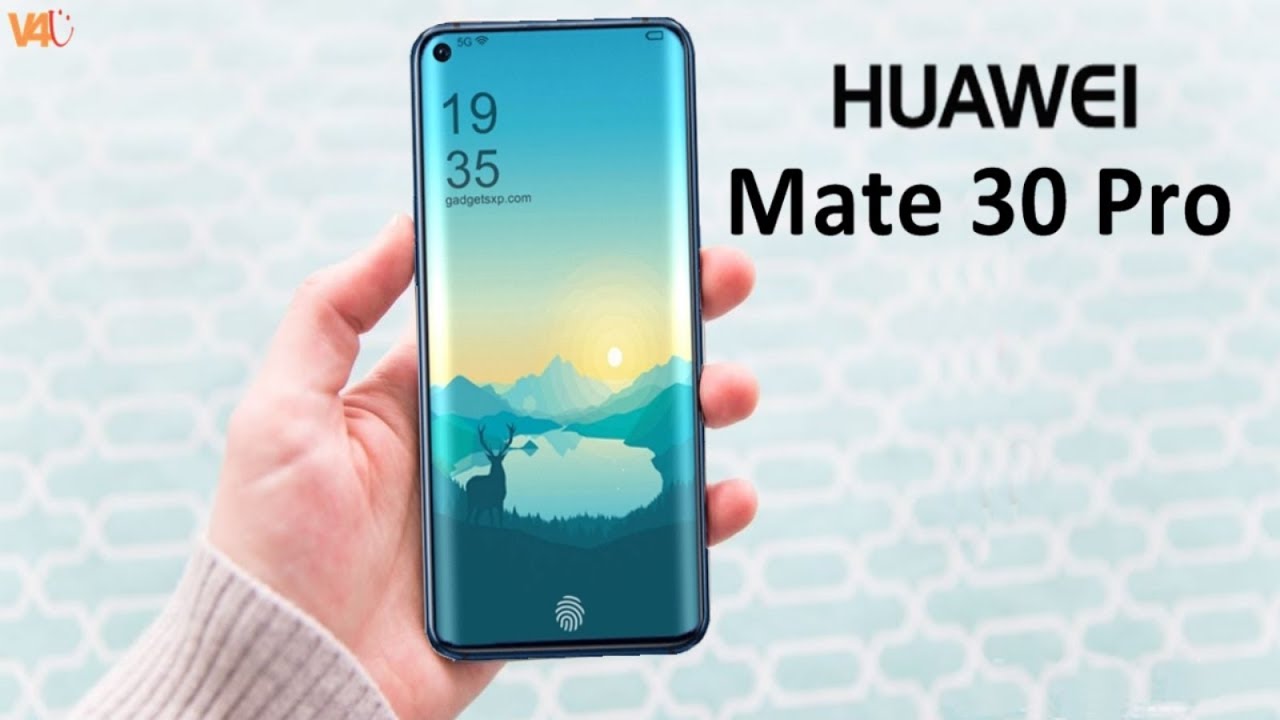
    We could see the Kirin 985 chipset hit the market sometime during the first half of this year. The Kirin 985 will arrive too late for the soon to be unveiled Huawei P30 series, which will be unveiled on March 26th and launch on April 5th, powered by the Kirin 980. Perhaps we will see the Kirin 985 SoC make its debut on the Huawei Mate 30 range due out later this year.

  • Huawei adopts Open Rack for cloud data centers

    Huawei adopts Open Rack for cloud data centers

    Huawei has revealed plans to adopt the Open Compute Project’s (OCP) Open Rack standard for rack and power delivery architecture for its new public cloud data centers worldwide.

    The Open Rack initiative seeks to redefine the data center rack to significantly reduce energy consumption, while driving operational efficiency by reducing the time it takes to install and maintain racks.

    Huawei will be joining major hyperscale internet companies such as Facebook, Google and Microsoft in adopting the Open Rack standard, which is designed to integrate the rack into data center infrastructure.

    This marks the first OCP standard adopted by Huawei since the Chinese vendor joined the project last year. The vendor is also contributing to a number of OCP projects including rack and power, system management and server projects, and has developed an OCP-based compute module.

    “Huawei’s strategic investment and commitment to OCP is a win-win,” commented Kenneth Zhang, general manager of FusionServer within the Huawei Intelligent Computing Business Department.

    “Combining Huawei’s extensive experience in Telco and Cloud deployments together with the knowledge of the vast OCP community will help Huawei to provide cutting edge, flexible and open solutions to its global customers. In turn, Huawei can leverage its market leadership and global datacenter infrastructure to help introduce OCP to new geographies and new market segments worldwide.”

  • Huawei ready to replace Android if it loses legal battle

    Huawei ready to replace Android if it loses legal battle

    Huawei is being attacked from all sides, and even though the Chinese company seems to have been cornered, it still has the will to fight. Huawei recently sued the United States, as a means to fight a ban that prevents its telecom equipment from being purchased and used by government institutions.

    The same ban prohibits major US government contractors from using Huawei equipment, a major blow for the Chinese company’s local telecom business. Although the legal battle between Huawei and the US is just beginning, the former has everything prepared in case of a negative outcome.

    Huawei’s executive Richard Yu said in a recent interview with Die Welt that his company already has its own operating system ready to replace Android and Windows.

    We have prepared our own operating system, if it turns out we can no longer use these systems, we will be ready and have our plan B. Huawei started working on its proprietary ecosystem seven years ago, following a US investigation that also targeted ZTE. According to Yu, Huawei will continue to use Google and Microsoft operating systems, but if the legal battle intensifies, it won’t hesitate to switch to its own ecosystem.

    The bad news for fans of the Chinese brand is that not even Huawei believes in the success of its own ecosystem. A Huawei spokesperson was cited saying that the company doesn’t expect to use its “backup systems” and that it doesn’t actually want to use them.