Tag: Huawei

  • Korea’s KT skips Huawei for 5G

    Korea’s KT skips Huawei for 5G

    KT has chosen Samsung Electronics, Ericsson and Nokia as suppliers of 5G network equipment. As expected, Huawei was excluded from the list.  “In choosing 5G equipment providers, the company considered a wide range of factors: the level of technology, investment costs and management stability based on the compatibility with the existing LTE network,” KT said in a statement.

    The bid results, announced by the company Thursday, come a month after SK Telecom named Samsung Electronics, Ericsson and Nokia as its 5G equipment providers.

    This is the second time Huawei was left out despite having participated in internal tests along with the three selected.

    SKT and KT’s choices were anticipated because both had used equipment from Samsung, Ericsson and Nokia for their 4G LTE networks.

    Compatibility of equipment is an advantage for mobile carriers in terms of cost and maintenance, especially in the early stages when 5G equipment is not fully installed nationwide.

    LG U+ is the only one among Korea’s three mobile carriers that has not yet announced 5G equipment suppliers. The smallest mobile carrier is likely to include Huawei on its list. It partnered with the Chinese company for its 4G LTE network, along with Samsung, Ericsson and Nokia.

    An LG spokesman said Thursday that the company “does not have plans to openly disclose selected bidders for 5G network equipment at the moment,” as it is not mandatory.

    However, LG U+ Vice Chairman Ha Hyun-hwoi gave a strong hint at the parliamentary audit late last month when he gave a positive answer to a lawmaker’s question on whether it was “unavoidable” to use Huawei’s 5G equipment as its 4G equipment was from the same company.

    The biggest advantage of Huawei’s 5G equipment is cost efficiency. The Chinese company is known to charge prices that are 20 to 30 percent lower than other global competitors for high-quality 5G equipment. A factor that argues against Huawei is security concerns.

    Due to its ties to the Chinese government, there have been worries that the company’s equipment is being used for spying. In August, the U.S. and Australian governments banned Huawei from supplying equipment for their 5G wireless infrastructure citing security reasons. Britain said in July it “is less confident” about the integrity of Huawei products.

    The concern is shared by some local customers as well. Online petitions at the Blue House’s official website have been posted since June requesting a stop to LG’s adoption of Huawei’s 5G equipment. Huawei has been denying such allegations.

    In a press release last month, the Chinese tech company highlighted that, despite ongoing security concerns, there has been zero cases of actual information leakage in the past.

    “We have supplied LTE equipment for LG U+ since 2013, and until now, there were no cases of security accidents,” said the statement. “After multiple verifications by the government, it has been proved that there have been no problems.”
  • Bosch to launch IoT software services in China

    Bosch to launch IoT software services in China

    Bosch and Huawei have struck a partnership to accelerate the development of the Internet of Things (IoT) in China. The collaboration will see the pair makes Bosch’s IoT Suite software services available in China on Huawei Cloud. The software platform of Bosch connects web-enabled objects to facilitate data sharing across a multitude of digital services and business models. The first service made available to Chinese consumers via Huawei Cloud will be the Bosch IoT Remote Manager – a service for managing and controlling gateways, sensors, and devices. Additional services from the Bosch IoT Suite will follow in 2019.

    The pair also said a Chinese automotive manufacturer has chosen to deploy the Bosch IoT Suite on Huawei Cloud for updating its vehicles’ firmware over the air (FOTA). The service is expected to be rolled out to millions of connected cars in China over the coming years.

    “The demand for IoT solutions in China is rising. The partnership between Bosch and Huawei Cloud marks a decisive step for Bosch in one of the fastest growing IoT markets in Asia,” said Dr. Stefan Ferber, CEO of Bosch Software Innovations, a wholly-owned subsidiary of Bosch.

    Bosch Software Innovations has been active in China since 2012 and has implemented IoT projects ranging from Industry 4.0 to connected transportation. The company expects China’s market for IoT platforms to grow by close to 70% over the coming years, Ferber said.

    Bosch and Huawei also intend to develop an integrated end-to-end IoT offering as a result of the partnership.

    Huawei is developing IoT hardware gateways that will be pre-configured with Bosch IoT Gateway Software and managed through the Bosch IoT Remote Manager to run on Huawei Cloud.

    This close integration will provide customers with a more complete IoT solution that is easier to deploy and manage, the companies said.

  • Huawei lays out AI roadmap

    Huawei lays out AI roadmap

    AI has disrupted many industries and enterprises in recent years.  Huawei believes AI will soon become a “general-purpose technology”, which combines different technologies like cloud, IoT, and big data to help tackle existing and future problems.

    The ICT solutions provider unveils its AI strategy and AI portfolio at the recent Huawei Connect conference in Shanghai.

    “AI offers new business opportunities, strengthens our products and services to become more competitive and future-oriented, and improves our internal operational management and efficiency,” said Eric Xu, rotating chairman at Huawei.

    10 changes shaping the future

    Huawei has identified 10 changes that will help shape the future of AI. They are faster model training; abundant and affordable computing power; AI deployment in different scenarios and the protection of user privacy; data-efficient, energy-efficient, and explainable algorithms; AI automation especially during processes like data labeling, data collection, and model design; practical applications to meet the needs of real-world execution; real-time and closed-loop system; multi-tech synergy between AI and other technologies; one-stop platform; and talent availability.

    Five areas of AI focus

    To pave the way for these changes, Huawei has unveiled its AI strategy in five areas of focus—AI research investment, full-stack AI portfolio, open ecosystem and talent, existing portfolio enhancement, and operational efficiency in Huawei.

    “Our AI strategy is to invest in basic research and talent development, build a full-stack and all-scenario AI portfolio, and foster an open global ecosystem,” said Xu.

    Huawei’s full-stack AI portfolio includes chips, chip enablement, a training and inference framework, and application enablement. Its portfolio can be deployed in various scenarios including public clouds, private clouds, edge computing in all forms, industrial IoT devices, and consumer devices, according to Huawei.

    On the chip level, Huawei announced the launch of two chips—Ascend 910 and Ascend 310, which are touted to accelerate AI adoption in different industries. Xu touted that Ascend 910 has the world’s greatest computing density in a single chip, which can be applied in large-scale distributed training system. Ascend 310 is an efficient AI chip for low-power computing. The chips will be deployed to offer cloud services to customers next year. Its AI portfolio also includes an AI acceleration card, AI server, and AI appliance.

    To foster an open global ecosystem, Huawei aims to develop industry and business alliances with one million AI developers and partners over the next three years. “We believe this target can be achieved through our talent training program, full-stack AI portfolio, and technical collaboration,” said William Xu, chief strategy marketing officer at Huawei.

  • StanChart and Huawei Team Up

    StanChart and Huawei Team Up

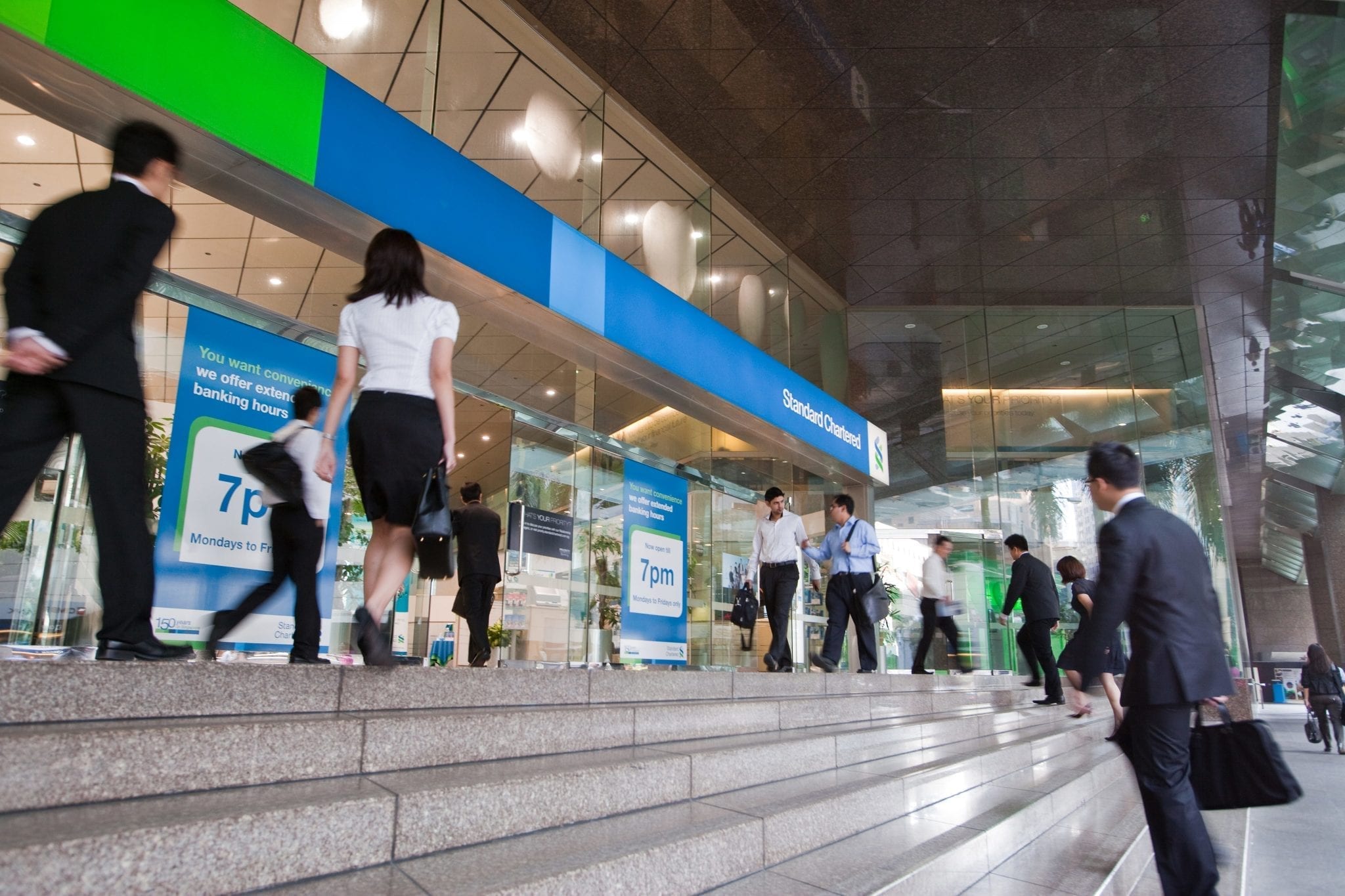
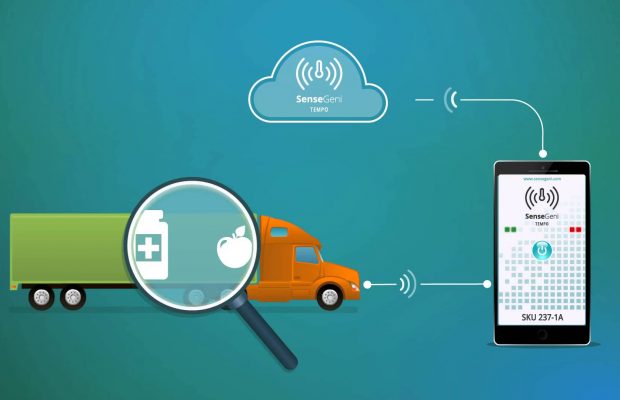
    The solution combines Internet of Things (IoT) and cloud capabilities so the bank will be able to track the movement of goods on a real-time basis, reducing operational risks and providing reliable data that can be used in financing decisions, Standard Chartered and Huawei said on Wednesday.

    Rather than corporates having to manually initiate these transactions through paper-based or emailed instructions, corporates’ and banks systems will be able to «speak» to each other in real-time, triggering financing or payment instructions through Application Programming Interfaces, or APIs.

    Fundamental Change

    «Technology can change the fundamental way we do banking. We look forward to piloting the solution with clients and working with Huawei and other technology partners to explore new use cases, Michael Gorriz, information chief at Standard Chartered, said.

    The IoT solution uses Huawei’s OceanConnect, an open platform built on IoT, cloud computing, and big data technologies. With a cloud-based unified IoT device management capability as its core, it links up with connected devices and collects real-time data through a series of agents while providing user-friendly open APIs to application developers to design and orchestrate the business process.

  • Huawei launches 5G power solutions

    Huawei launches 5G power solutions

    Huawei has launched what it says is the industry’s first full-range 5G power solutions for global operators to address an expected 100% increase in energy consumption with 5G compared to 4G.

    The 5G Power series of products are designed to deliver an end-to-end, scalable energy solution for both newly built and upgradeable cell sites.

    It has been designed utilizing technology including peak shaving, linked voltage boosting and energy slicing to provide a ‘one site one cabinet’ design.

    Huawei said its research suggests that more than 70% of cell sites will face challenges such as insufficient power, battery and distribution capacity, and more than 30% of sites need grid modernization to match the power demands of 5G.

    Its solution has been designed to help operators reduce capex and opex while improving energy reliability to meet the high reliability and low latency requirements of future mobile applications.

    “Based on deep understanding of pain points carriers are facing in the progress of network evolving, Huawei 5G Power Solution achieve end-to-end synergy from wireless network to telecom energy, which will further enable carriers to build networks quickly, reduce site energy consumption, and maximize their investment value,” Huawei president of telecom energy Tao Hongming said.

    “As a telecom energy supplier who is able to provide end-to-end ICT solutions, Huawei is willing to work with carriers and industry partners on continuous innovation and exploration, and jointly solve the energy challenges in 5G era.”

  • Huawei insists it’s not a 5G espionage risk

    Huawei insists it’s not a 5G espionage risk

    Two Korean mobile carriers are trying to decide whether to choose Huawei as their next-generation 5G network equipment provider, and the Chinese electronics giant sent a press release Monday to downplay potential spying issues.

    Huawei said there has never been any information leakage over its devices and vowed to follow any Korean government demands for security verifications.

    “Huawei’s products and solutions are used by customers and consumers in over 170 countries, Fortune 500 companies and major mobile operators around the world,” said Huawei in the release. “Huawei is doing its best to offer stringent cyber security and has received zero complaints concerning the issue.”

    Huawei is now the world’s second-largest smartphone vendor after Samsung Electronics and the No. 1 maker of telecom network equipment. It noted in the release that it is “abiding by laws and regulations in the regions it offers ICT solutions.”

    The release came as KT and LG U+, the two smaller players in Korea’s mobile market, are set to announce which telecom equipment suppliers they have chosen for their 5G service. Announcements are expected this month.

    Given that LG U+ is already using 4G long-term evolution network devices from Huawei, it is highly likely Korea’s smallest telecom might choose the Chinese manufacturer for compatibility’s sake. It also uses network devices by Samsung, Nokia and Ericsson.

    LG is likely to choose all four, including Huawei, for its 5G networks.

    Sources say KT isn’t likely to opt for Huawei. The second-largest carrier in Korea has been using Samsung, Ericsson and Nokia equipment for its 4G LTE network.

    Deals involving trillions of won in orders were supposed to be closed by August but have been delayed. Korea aims to commercialize 5G network as early as next March, but Korean telecom authorities are in a dilemma over the Chinese issue.

    They realize Beijing could retaliate through trade sanctions if Korea decides not to choose the Huawei equipment.

    Korea’s top telecom, SK Telecom picked Samsung Electronics, Ericsson and Nokia as the suppliers for its 5G network equipment on Sept. 14 despite Huawei’s lower offer. Huawei is known to charge prices that are 20 to 30 percent lower than other global competitors for high-quality 5G equipment.

    Huawei’s security problem stems from its ties to the Chinese government, and the worry that its equipment being used for spying purposes isn’t confined to Korea. Britain’s National Cyber Security Centre said in July that it “is less confident” about the integrity of Huawei products.

    The U.S. and Australian governments in August banned Huawei and ZTE from supplying equipment to develop the country’s 5G wireless infrastructure for security reasons.

    One of the main reasons for the escalating trade war between the United States and China is their desire to win in the 5G race to become a global leader.

    Huawei is already a supplier of 4G networks in Australia and refuted the August decision, saying Canberra should not use the excuse of national security to erect trade barriers.

  • Huawei invited to participate in India’s 5G use case trials

    Huawei invited to participate in India’s 5G use case trials

    Huawei has reportedly received an invitation from the Indian government to participate in the telecom ministry’s 5G technology trials, after being initially left out of the list of vendors asked to take part.

    Huawei India CEO Jay Chen told that the company has received an invitation after approaching the government to express an interest in taking part.

    The telecom ministry’s earlier decision to exclude Huawei and ZTE from the list of vendors approached to take part in the trials led to speculation that India could follow Australia and the US in preventing Chinese vendors from participating in their respective nation’s 5G rollouts.

    But after Huawei expressed an interest in participating in the trials, the telecoms ministry announced that it will evaluate the vendor’s proposal and consider including Huawei in the planned 5G field trials.

    According to Huawei’s Chen, Huawei has a collaborative relationship with the Indian government and has already been working with various Indian operators in laying the groundwork for 5G deployments.

    The vendor has expressed an interest in running 5G trials in two Indian cities, including Delhi, and plans to partner with operators, academia and companies in adjacent industries to identify relevant 5G use cases for the Indian market.

    According to the report, ZTE has yet to receive an invitation from the ministry.

  • Huawei says US ban would delay 5G deployment

    Huawei says US ban would delay 5G deployment

    China’s Huawei is now arguing that US regulators should allow the company to sell its equipment to US telecom companies because not doing so could “ultimately delay 5G deployment.”

    The argument is contained in Huawei’s latest filing with the FCC, detailing a series of meetings between top US Huawei executives, including Tom Dowding, SVP of the company’s US wireless business, and FCC officials including Kris Anne Monteith, chief of the agency’s Wireline Competition Bureau.

    “Huawei’s lack of presence in the US would raise prices, harm competition, hinder innovation, and ultimately delay 5G deployment,” the company summarized in a filing to the FCC.

    “Huawei’s entry into the US market provided much-needed competition,” argued Huawei’s Dowding in the filing. “As a result of the lack of competition, equipment prices in the US market in general tend to be about 20-30% higher than they are in other developed regions, for example in Europe. However, various studies have shown that the United States’ telecommunication infrastructure is falling behind those in other developed countries … In [Speedtest’s] 2018 rankings, the US ranked #44 for mobile network speed and #9 for fixed broadband. A 2016 report shows the mobile network speed of United States is about 2/3 of China’s.”

    Huawei’s filing stands as opposition to an attempt by the FCC to block sales of its equipment to US telecom operators that receive government funding. The FCC embarked on a proposal to tacitly block any network operator—big and small—from using Universal Service Funds to purchase equipment from companies that may pose a security threat. That proceeding at the FCC is widely seen as an attempt by the US government to block Chinese network equipment vendors Huawei from competing in the market.

    Critics of Huawei argue that, if the Chinese company sells its equipment to US telecom companies, that would open a backdoor into US networks for Chinese espionage. Huawei, for its part, has strenuously argued against that notion.

    “A blacklist on certain equipment vendors does not address the reality that cybersecurity risks arise from various points of vulnerabilities in an international supply chain,” Huawei wrote in its filing. “In response to a staff question as to the FCC’s role in securing US telecommunications equipment, Huawei emphasized that the global and complex nature of the telecommunications supply chain necessitates a comprehensive security framework to protect against threats. This framework should be developed as part of an inter-agency effort involving government entities with the authority and expertise to consider security issues. Huawei has been active in promoting cybersecurity both internally and alongside government bodies, and welcomes the opportunity to continue contributing to the development and promulgation of security standards and best practices.”

    Importantly, Huawei has noted that roughly half a dozen rural wireless network operators—including United TelCom and SI Wireless—have come out in support of Huawei.

    Huawei’s use of 5G as leverage in its argument is particularly noteworthy considering officials from the FCC and the wireless industry have been warning that China could embark on significant 5G deployments, and would thus beat the United States in the “race to 5G.” Now Huawei, a major Chinese company, is urging officials to allow it to sell its equipment in the United States so that the nation can more quickly build out 5G networks.

    Verizon, AT&T, T-Mobile and Sprint have all announced 5G deployments, using equipment from the likes of Ericsson, Nokia and Samsung.

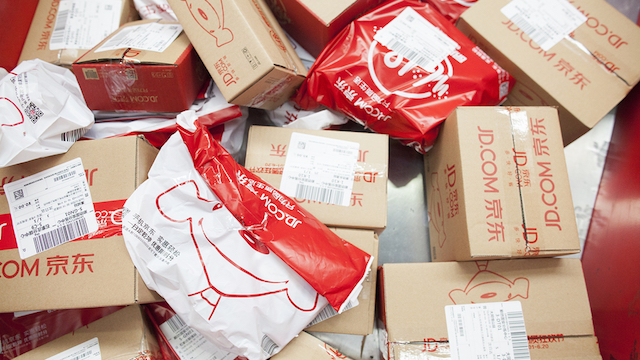
  • JD.com e-commerce joint venture launches officially in Thailand

    JD.com e-commerce joint venture launches officially in Thailand

    The JD Thai JV with Central Group has been formally launched this week under the brand JD Central.

    “Our partnership with Central Group – a one-of-a-kind union between China’s biggest retailer and Thailand’s strongest retail player – will provide Thai customers with a truly world-class e-commerce experience and guarantee 100 per cent product authenticity,” said Vincent Yang, CEO at JD Central.

    The new online platform officially debuts today, September 28, and will further extend JD’s footprint in the Southeast Asia region, which already includes an established e-commerce platform in Indonesia and a strategic investment in Tiki, Vietnam’s leading B2C e-commerce business.

    Central Group, Thailand’s largest retail conglomerate, offers JD instant critical mass through customer loyalty program and brand recognition, as well as merchandise. The site has been in testing mode since June 18, offering both direct sales and marketplace models. Pre-launch sales were described as having “exceeded expectations”.

    The JD Thai JV site includes categories for electronics, digital products, fashion, home appliances, books and music through to groceries, cosmetics, toiletries, beverages and processed foods.

    During the pre-launch phase, about 80 per cent of shopper accessed the site via phones, with FMCG products, mobile phones and fashion the most popular items purchased. Products from Chinese companies have proved especially popular, with leading brands including Xiaomi, Huawei, OnePlus and Lenovo.

    Yang said the JD Thai JV will “transform the local market and unlock the boundless consumer potential of the nation’s large population, with the ultimate goal of becoming the most trusted brand in Thailand”.

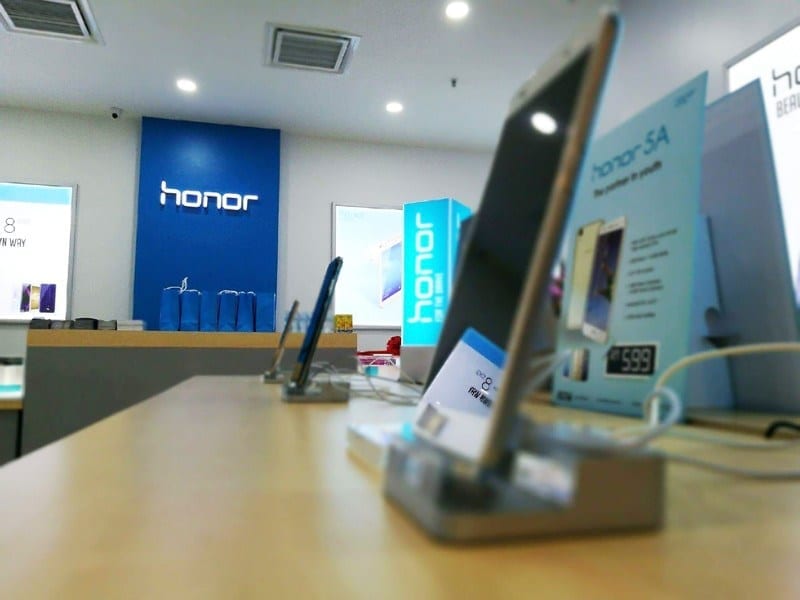
  • Honor debuts in Vietnam with first offline store

    Honor debuts in Vietnam with first offline store

    Huawei sub-brand Honor Vietnam has opened its first physical store in the country after three years selling online and via distributors.

    Located on Nguyen Hue Street in downtown, the new store attracted hundreds of Honor’s fans from the early morning.

    Apart from products already on sale in the country, Honor introduced its newest lines, including the Honor MagicBook.

    Vietnam is a part of Honor’s overseas expansion in Asia Pacific, along with Europe and the Middle East.

    Zhao Ming, Honor president, said overseas sales have doubled during the past five months, and he expects them to rise further in the second half of the year.

    The brand entered the Philippines last month.

  • Huawei launches intent-driven network solution

    Huawei launches intent-driven network solution

    Huawei has launched a new industry-oriented intent driven network (IDN) solution at CEBIT 2018, targeted at vertical industries including ISPs, retailers and government customers.

    The new solution aims to drive in-depth integration of ICT infrastructure, AI and industry-specific production systems to help customers accelerate digital transformation.

    Huawei’s IDN solution is customized to the needs of various verticals and applications. For high-performance AI computing, the solution incorporates an ultra-high-speed lossless Ethernet AI fabric to shorten AI training times by up to 40%.

    For the finance industry, the solution has been designed to help financial services organizations build ultra-large cloud data center networks scalable to up to 100,000 servers per cluster system.

    For retailers, the solution converges Wi-Fi and IoT technology to allow all-wireless support for both networks, while for government and enterprise campus networks, the solution provides full lifecycle cloud based management leveraging big data analytics and AI.

    Meanwhile Huawei has also announced an upgrade to its CloudFabric solution designed to make it easier for customers to adopt intent-driven networking for their data centers.

    The intent-driven networking for CloudFabric solution helps enterprises identify intent to implement automatic network configuration, predictive analysis, and intelligent operations and maintenance with continuous verification and optimization, the company said.

  • Huawei tests 3GPP R16 standards

    Huawei tests 3GPP R16 standards

    Huawei has announced it has completed verification testing for a series of new technologies and functions due to be introduced in the 3GPP Release 16 5G phase 2 standards.

    The company has tested and verified ultra-reliable and low latency communications (URLLC) scenarios including cellular vehicle to everything (C-V2X), as well as massive machine type communication (mMTC) and enhanced mobile broadband (eMBB).

    The C-V2X test involved a roadside unit and mobile edge computing technologies in a self-driving vehicle scenario including reacting to a car in front conducting an emergency lane change.

    Video signals were sent to a vehicle-to-everything control center to make a decision such as implementing a lane change or braking, and transmitted back to the vehicle as instructions.

    Meanwhile mMTC involved using 5G NR for uplink to enable video enabled services over 5G networks as well as 5G-enabled AI on university campuses.

    “Currently, the formation of 5G standards is at a critical juncture. June 2018 is a pivotal moment in history with the formation of standalone (SA) standards and the release of R15,” Huawei said in a statement.

    “It also serves as a great starting point for researches on R16 study items and work items. December 2019 is expected to see the completion of a full set of 5G standards meeting all ITU. Huawei is fully committed to preparing for the finalization of R16 standards and supporting the standardization of 5G enhanced technologies.”

  • Huawei releases SAP HANA TDI solution

    Huawei releases SAP HANA TDI solution

    Huawei has launched a tailored data center integration (TDI) solution for SAP HANA designed to meet the data center and business consolidation needs of large enterprises.

    The HANA TDI solution is based on Huawei’s all-flash high performance storage platforms, and has been designed to support up to 200 SAP HANA nodes, each expandable to 32TB.

    The solution is designed to allow SAP HANA databases to be seamlessly integrated into existing data enter infrastructure to improve flexibility, reliability, management and maintenance and allow for the reuse of existing data center IT investments.

    Dedicated management plugins allow the solution to work with the SAP Landscape Management platform.

    The solution is also capable of automatically manage SAP applications, databases, networks and IT infrastructures, and uses Huawei storage snapshots to greatly improve setup speeds.

    “Huawei’s all-flash storage meets the storage requirements of enterprise-class applications such as databases, virtual desktops, and server virtualization. This allows it to effectively meet solid-reliability and high-performance standards in SAP HANA scenarios,” Huawei president of storage products Meng Guangbin said.

    “This allows it to effectively meet solid-reliability and high-performance standards in SAP HANA scenarios. Huawei will work with SAP to build a high-performance data processing platform that helps enterprises accelerate core data processing.”

  • Huawei launches Internet of Vehicles platform

    Huawei launches Internet of Vehicles platform

    Huawei has launched a new Internet of Vehicles (IoV) platform designed to allow the development of intelligent and connected vehicles.

    The OceanConnect IoV Platform is designed to support hundreds of millions of connections and millions of simultaneous connections to support the evolution of intelligent transportation.

    The platform will help automotive manufacturers pursue digital transformation by introducing capabilities including cloud-based data analytics.

    Specifically, the platform analyzes vehicle big data such as vehicle conditions and driving behaviors to enable the intelligent distribution of content as well as service recommendations based on an analysis of driving behaviors and travel scenarios.

    The IoV platform will also be developed in tandem with vehicle-to-everything (V2X) connectivity to enable vehicles to communicate with each other and their environment, helping to pave the way for the development of intelligent and safe transport systems of the future.

    “The Internet of Vehicles (IoV) leads to in-depth convergence of ICT and the automobile industry. The IoV empowers connected vehicles and intelligent services which enables faster digital transformation for the automobile industry,” Huawei president of cloud core network products Ma Haixu said.

    “During this important transition, Huawei is dedicated to building a fully connected, intelligent world that connects people, vehicles, roads, and other things. Huawei is proud to become a preferred strategic partner of global automobile manufacturers.”

    The first vehicle developed on the OceanConnect platform, the DS 7 CROSSBACK, has been launched in China and Europe, the company said.

  • Huawei Marine, EGS launch PEACE project marine survey

    Huawei Marine, EGS launch PEACE project marine survey

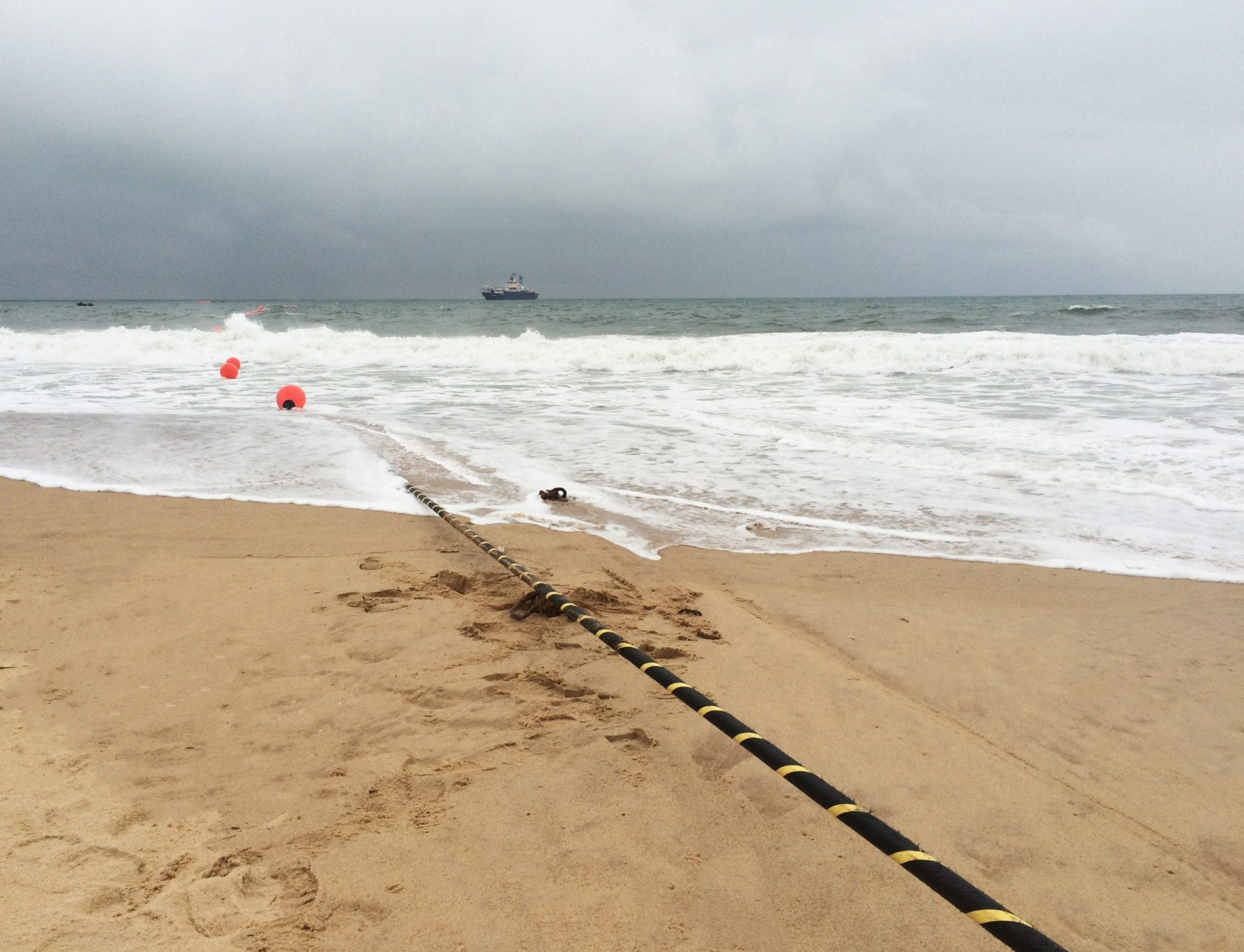
    Huawei Marine announced Wednesday that the marine survey for the Pakistan East Africa Cable Express (PEACE) submarine cable, which connects South Asia with East Africa, is now underway.

    The PEACE submarine cable system will connect Pakistan, Djibouti, Kenya, Egypt, and other countries along the Red Sea with a total system length of 8,800km.

    Huawei Marine said it is working with its long-term partner EGS Ltd. to conduct a hydrographic and geophysical survey of the seabed along the planned cable route.

    According to Huawei Marine, EGS’ specialized survey vessel the RV Ridley Thomas, has arrived in the region to commence offshore survey operations.

    The PEACE project, signed in November 2017 between Huawei Marine and Tropical Science, is expected to be delivered in the fourth quarter of 2019.

    Zhang Hongxiang, project director for Huawei Marine, said the cable system, which is  based on 200G WDM technology, will support the rapid development of the East African regional economy and facilitate connectivity between Asia, Africa and Europe.