Tag: Huawei

  • LG U+, Huawei validate 4G-5G dual connectivity

    LG U+, Huawei validate 4G-5G dual connectivity

    South Korea’s LG U+ has collaborated with Huawei to complete technology verification for 4G-5G dual-connectivity technology.

    The field test involved linking a 3.5-GHz base station with a 28-GHz base station to allow terminals to simultaneously connect to both, achieving a peak downlink rate of around 20Gbps.

    It involved the use of two base stations at a LG U+ 5G testbed in Seoul. The operator had already verified the technology in a laboratory environment.

    LG U+ director of 5G strategy Kim Dae Hee said dual connectivity technology will provide the foundation for 4G-5G heterogeneous networks.

    “By demonstrating ‘Dual-Connectivity’ technology, which will play a key role in multi-operation of 4G and 5G wireless base stations, we will develop various next-generation technologies to provide a 5G service.”

    LG U+ and Huawei have been collaborating on 5G development since the two companies signed a 5G collaboration agreement in July 2015. Last month, the companies completed the first phase of an urban field test of 5G over the 28-GHz band.

    The companies pledged to continue to carry out 5G technical cooperation and verification activities in advance of the planned commercial deployment of the technology in time for the 2018 Winter Olympics in PyeongChang.

  • Huawei unveils APAC enterprise cloud strategy

    Huawei unveils APAC enterprise cloud strategy

    Huawei has announced its newest enterprise service strategy designed to support companies undergoing cloud transformation in Asia Pacific.

    The enterprise cloud strategy will focus on four key areas including cloud innovation, creating a digital platform, supporting smart operations and enabling businesses.

    As enterprises embrace digital transformation, they will face a new set of challenges across strategy, planning, requirement analysis, business integration, application system evaluation, technology selection, roadmap design, deployment, operations & maintenance (O&M) management, and information security.

    Cementing the company’s commitment to becoming an industry cloud enabler and strategic partner to enterprises in Asia Pacific, Huawei is investing $500 million globally in the development of cloud-based professional services, a cloud platform and cloud ecosystem. This will provide customers with end-to-end cloud transformation service solutions enabling them to build, use, and manage their cloud platforms effectively.

    To drive this strategy forward, Huawei will continue to increase its investment in the development of service solutions and Global Service Centers (GSC), as well as tools, platforms and verification labs for professional services. In the next five years, Huawei will also focus on research and development of industry clouds, increasing their annual investment by more than 50%.

    Additionally, to meet enterprise demand for ICT talent in the cloud era, Huawei will provide a new certification scheme to train ICT architects, ICT developers and industry-specific ICT experts. By 2021, it is estimated that more than 150,000 cloud and industry-specific ICT professionals will have been certified by Huawei.

    Huawei has made strategic investments and works with partners to build a cloud network that has global coverage, providing complete solutions that help Chinese companies go global, as well as help companies outside China enter the Chinese market.

    One of these partners is Orange Business Services (OBS), who has launched a global public cloud offering together with Huawei, that includes consulting, auditing and managed services for cloud infrastructure and applications.

    Named Flexible Engine, the new IaaS/PaaS platform is offered in combination with specialist support (‘Cloud Expert Services’) to assist enterprises in their migration to the cloud, featuring optional managed services to run applications. The suite of services will equip enterprises with the technology to digitally transform their business operations and support businesses in their expansion plans across China, Southeast Asia and Europe.

    The services run on the strength of OpenStack technology, an open-source software platform for cloud computing. Open standards and interoperability are key to meeting the demands for large, scalable public cloud solutions by delivering economies of scale and avoiding the danger of propriety lock-in.

  • ZTE, Huawei sign circular design commitment with KPN

    ZTE, Huawei sign circular design commitment with KPN

    ZTE and Huawei have both committed to producing telecoms equipment for Dutch operator KPN that is circular by design by 2025, to reduce waste and emissions and improve energy efficiency.

    A circular design involves minimizing waste, emissions and energy leakage by recycling, repairing and reusing components and employing a long-lasting design.

    Huawei, ZTE and five other KPN suppliers have now signed the KPN Circular Manifesto, agreeing to implement a circular design for products manufactured for the operator by 2025.

    “Climate change is one of the most pressing challenges in our society and it’s time for action, not words.  As the Netherland’s largest ICT provider, we recognize that we have a leading role to play to enable the necessary transition towards a sustainable and increasingly circular economy. That’s why we’re implementing our own circular economy target with a demanding timeline,” KPN CEO Eelco Blok said.

    Huawei said that to achieve its commitment, the vendor plans to incorporate design principles of easy take-bake, maintenance, recycling reuse and maximizing product lifespan.

    “For years Huawei and KPN have been working together successfully to improve KPN’s energy efficiency and reduce CO2 emissions. Now we need to transition from a linear to a circular way of working,” Huawei Netherlands CEO Steven Cai said.

    “It is very commendable that KPN is taking a lead and involving partners in the process. Together with KPN, we’ll take joint responsibility to proactively drive an energy-saving, environmentally friendly, and low-carbon society.”

    KPN was recently recognized by the Dow Jones Sustainability Index as the world’s most sustainable operator, after having lowered its annual energy consumption over the past six years. The operator is on track to reduce its energy consumption by 50% by 2030 compared to 2010, despite the anticipated continued exponential growth in data traffic.

  • Huawei, SUSE building mission-critical server

    Huawei, SUSE building mission-critical server

    At SUSECON 2017, Huawei and Linux-based operating system developer SUSE announced a expanded partnership to build a more reliable Mission Critical Server for enterprise customers.

    The server will support memory module hot swap, helping customers slash unplanned maintenance time while keeping their production systems up and running.

    The solution will run on Huawei’s 16-/32-socket KunLun Mission Critical Server and SUSE Linux Enterprise Server for SAP Applications. It strengthens both companies’ lineup of enterprise mission-critical offerings.

    The Huawei KunLun Mission Critical Server is specifically engineered for critical workloads such as enterprise database, decision support, and business processing. Supporting 8, 16, or 32 Intel processors with up to 32 TB in-memory computing, the KunLun server is capable of processing massive amounts of data even in large-scale in-memory database systems.

    “Huawei is teaming up with SUSE to jointly launch the in-memory computing hot swap solution built on the Huawei 16-/32-socket KunLun Mission Critical Server and the SUSE Linux Enterprise Server RAS enhanced feature package,” Huawei IT server product line president Qiu Long said.

    “This solution will ensure continuous, stable running of enterprise business-critical applications and reduce unplanned downtime. Supporting memory online maintenance, it reduces unplanned system outage caused by memory faults to almost zero, thereby boosting the reliability of enterprise critical applications.”

  • Huawei to deploy gigabit network for Brisbane Skytower

    Huawei to deploy gigabit network for Brisbane Skytower

    Honeywell and Huawei, are deploying a gigabit network and a Passive Optical LAN (POL) solution for the Brisbane Skytower in Australia.

    Brisbane Skytower is a landmark building under construction in Brisbane, Queensland, Australia. Located in Brisbane’s central business district, this iconic residential tower will become Brisbane’s tallest building when completed in 2018/2019.

    Honeywell will provide Skytower with its Enterprise Buildings Integrator, a building automation system that takes charge of system integration, covering the Heating, Ventilation, and Air Conditioning, security protection facilities, etc.

    Additionally, Honeywell will centrally manage various building sub-systems, provide a visualized management portal and alarm management and work-order management services, designed to deliver efficient facility management, fast response, and predictive maintenance.

    Huawei will meanwhile deliver the gigabit network to achieve smart network inside the Skytower. In contrast to a traditional complex LAN which limits the performance of bandwidth-intensive applications, using POL technology, an enterprise can combine data, voice, video, and other weak-current systems into one optical network.

    Huawei’s solution will bear all services through a single fiber that will be upgradable to 10G PON while reusing existing cables.

    Prominent features include high bandwidth, high reliability, comprehensive security authentication, easy deployment and Wi-Fi coverage.

    “We’re excited to work with Huawei to build a gigabit network for Skytower, Brisbane’s iconic 270-meter, 90-story residential tower. The network is the first-ever installation to utilize one common fiber optic cable for telephony/data and building services,” Honeywell Building Solutions executive GM Mark Dunn said.

  • Startups beat Ericsson, Huawei, Nokia in telco cloud market

    Startups beat Ericsson, Huawei, Nokia in telco cloud market

    The telco network is starting to provide opportunities for much smaller companies and even startups are now winning business against the established giants Ericsson, Huawei and Nokia, according to ABI Research.

    Findings of ABI Research’s Telco Cloud Hot Tech Innovators report show 15 companies that are creating new types of innovation and bringing fresh ideas to the telco market.

    These companies include cloud players, new entrants, network specialists, and software developers, which were previously barred from entering the telecoms market.

    “The 15 companies we have profiled illustrate a completely new way of developing network technology. In some cases, they have even won business against Tier-1 vendors, which are 100 times their size, have 100 times their R&D budget and have a formidable sales organization,” said Dimitris Mavrakis, research director at ABI Research.

    “These companies win with software skills, cloud computing, open sourcing, and being free of a legacy business to support,” said Mavrakis.

    The 15 companies ABI Research has profiled, and the new wave of startups go directly opposite the established norm as some of them are 10-people companies and rely on open source projects to win business.

    ABI Research said that only by embracing this new trend can telcos break free from their connectivity-driven business model. Frinx, inManta, Metaswitch, Netrolix, NFWare and Yotta Communications are a few examples of startups that would have no place in the market five years ago.

  • Huawei to pour $1b into digital transformation

    Huawei to pour $1b into digital transformation

    Huawei Technologies is planning to invest $1 billion over the next three years on developing solutions and platforms to help telecoms operators speed up their digital transformation and monetize digital services, said Ryan Ding, president of the company’s carrier group.

    “Digital transformation is now a common goal, but digital services are different in many ways. In the past three years we used to talk about the architecture and direction of digital transformation. This year our focus has already shifted to digital business and services. This is a very encouraging change,” Ding told audience at company’s annual Operations Transformation Forum in Hong Kong on Monday.

    Citing an IDC survey commissioned by Huawei, Ding said 72% of carriers believe that digitalization is a mid-to-long term process which will take around three to five years to complete. And more than half of them are planning to provide products and services in the near future.

    While such change will affect telcos’ traditional voice and data business, Ding noted that enterprise IT and private line, video, IoT services will boost operators’ business growth and become the most important new business opportunities in the coming one to two years.

    “Communication network is the core asset for carriers, which brings telcos three major advantages: wide coverage, massive connection, and centralized operation,” he said. “Enterprise IT and connectivity, video, and IoT services allow operators to give full play to their network advantages and are also well combined with digital technologies.”

    Yet these services present different challenges to telcos. For example, for enterprise private line, how to reduce time to market, whereas for video is high bandwidth and NB-IoT service is battery life.

    That said, operators must redefine their network capabilities end to end and adopt new technologies in order to fully tap the new business opportunities, Ding said.

    He said Huawei will continue to build solution-oriented business and technical capabilities, solution development processes, and digital business enabler platforms, and realize the implementation and close-loop from strategy and execution.

    Howard Liang, senior vice president and chairman of Open ROADS community, pointed out telcos’ focus of digital transformation has now been shifted to the how and where to get started.

    “Digital operational transformation touches on many issues, but ultimately it’s about creating values [to the company]. Last year we talked about why we [the industry] need to move into digital transformation. This year the focus has shifted to the questions of how and where to begin,” Liang said at an opening keynote.

    Liang indicated that there are three key ingredients needed for the success of digital transformation. First is to follow a “Digital Mastermind”, which he recommended telecoms operator follow a comprehensive set of prescriptive methods for transformation built on the work of the Open ROADS community.

    Second is to create an industry reference model that allows best-in-class solutions to be incorporated into the “to-be-solution”. Finally, telcos need to prioritize transformation activities to ensure real value is delivered throughout the process.

    Liang said the three ingredients are based on Huawei’s own transformation activities and its experience working with operators over the past few years.

    “Building on the experience of digital transformation within Huawei over the past two years, together with findings and best practices identified by the both the Open ROADS Community and from wider industry, we have created a clear methodology to guide us, which we call the Digital Mastermind,” the executive noted.

    He said digital operations transformation ultimately is about creating additional business value, while providing a better, more compelling experience for customers. But operators have many different objectives for transforming their digital operations.

    Liang said Huawei has already put its Digital Mastermind into practice at HKT’s digital operations transformation project, Project Earth.

  • SoftBank, Huawei demonstrate 5G use cases

    SoftBank, Huawei demonstrate 5G use cases

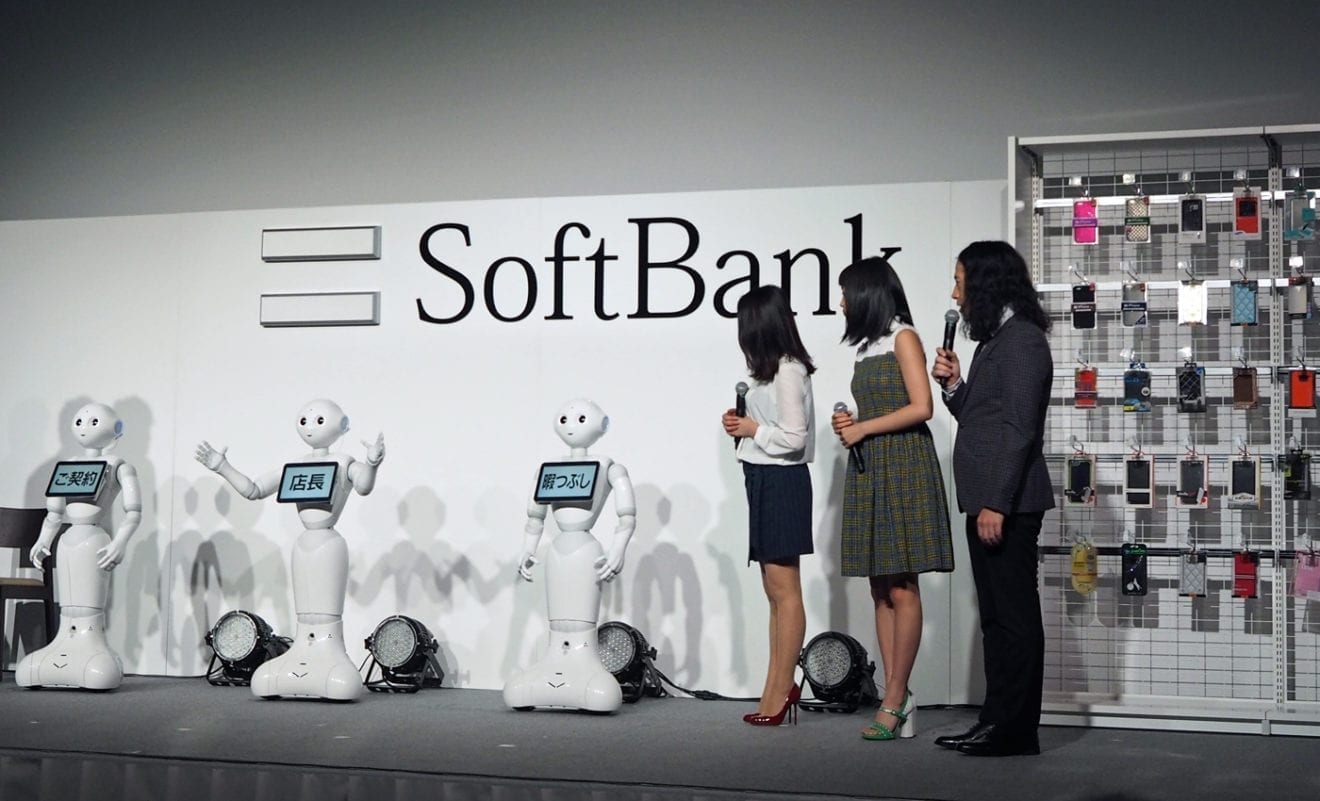
    Japan’s SoftBank teamed up with Huawei to demonstrate various real-world use cases for 5G.

    The companies demonstrated real-time ultra high definition (UHD) video transmission with a throughput of over 800Mbps, as well as remote rendering via a GPU server using edge computing.

    During the video tests, SoftBank and Huawei installed a UHD camera outside the demonstration room, then compressed the data from the camera in real-time using an encoder and transmitted it via 5G to a UHD monitor via a decoder.

    Scenery was also captured via a 180-degree camera equipped with four lenses pointed in different directions. Captured input was sent to smartphones and tablets over the 5G network to create a 180-degree panoramic video image. Huawei said this technology can be applied to virtual or augmented reality.

    In addition, the demonstration involved remote manipulation of a robotic arm with an ultra-low latency of less than 2ms for near real-time control.

    The technology was used to allow a robotic arm to play a game of air hockey, detecting the position and projected trajectory of the puck and returning the shot to the human player.a

  • Huawei tantalizes users with AI flagship phone

    Huawei tantalizes users with AI flagship phone

    Huawei aims to use artificial intelligence-powered features such as instant image recognition to take on Samsung and Apple when it launches its new flagship phone in October 2017, a top executive said on Saturday 2 September.

    Richard Yu, chief executive of Huawei’s consumer business, on Saturday 2 September 2017 revealed a powerful new mobile phone chip the company is betting on for its upcoming flagship Mate 10 and other high-end phones to deliver faster processing and lower power consumption.

    Huawei will launch the Mate 10 and its sister phone, the Mate 10 Pro, in Munich on October 16 2017, Yu confirmed.

    He declined to detail new features, but the phones are expected to boast large, 6-inch-plus full-screen displays, tech blogs predict.

    Artificial intelligence built into its new chips can help make phones more personalized, or anticipate the actions and interests of their users, Yu said.

    As examples, he said AI can enable real-time language translation, heed voice commands, or take advantage of augmented reality, which overlays text, sounds, graphics and video on real-world images phone users see in front of them.

    Yu believes the new Kirin 970 chip’s speed and low power can translate into features that will give its phones an edge over the Apple iPhone 8, set to be unveiled on September 12 2017, and Samsung’s range of top-line phones announced this year.

    Huawei is the world’s No. 3 smartphone maker behind Samsung and Apple.

    “Compared with Samsung and Apple, we have advantages,” Yu said in an interview during the annual IFA consumer electronics fair in Berlin.

    “Users are in for much faster (feature) performance, longer battery life and more compact design,” Yu added.

    The company asserts its newly announced Kirin 970 chip will preserve battery life on phones by up to 50 percent.

    Huawei describes the new chip as the first Neural Processing Unit for smartphones.

    It brings together classic computing, graphics, image and digital signal processing power that have typically required separate chips, taking up more space and slowing interaction between features within phones.

    Most importantly, Huawei aims to use the Kirin chips to differentiate its phones from a vast sea of competitors, including Samsung, who overwhelmingly rely on rival Snapdragon chips from Qualcomm, the market leader in mobile chip design.

    Among major phone makers, only Apple and Huawei now rely on their own core processors.

    The 970 is designed by Huawei’s HiSilicon chip design business.

  • Huawei bites Apple in smartphone sales rankings

    Huawei bites Apple in smartphone sales rankings

    Chinese brand Huawei has overtaken Apple in global smartphone sales rankings for two consecutive months – and is set to achieve a trifecta, according to research house Counterpoint.

    “With August sales looking strong for the Chinese vendor, a hat-trick for Huawei could be on the cards,”says Counterpoint research director Peter Richardson..

    “This is a significant milestone for Huawei, the largest Chinese smartphone brand with a growing global presence. It speaks volumes for this primarily network infrastructure vendor on how far it has grown in the consumer mobile handset space in the last three to four years,” said Richardson.

    “The global scale Huawei has been able to achieve can be attributed to its consistent investment in research and development and manufacturing, coupled with aggressive marketing and sales channel expansion.”

    But Richardson cautions Apple should regain its second spot given a new edition of the iPhone is set for launch in September.

  • Huawei promos cloud alliances with operators at annual event

    Huawei promos cloud alliances with operators at annual event

    “In 1943, IBM’s Thomas Watson said the world market for computers would be about five,” said rotating CEO Guo Ping during his keynote at Huawei Connect 2017.

    That number is significant, said Guo, as he spoke of Huawei’s vision to build one of the five major world clouds it predicts will be created in the future. The concept is based on airline alliances—Ping said that his firm would build a “cloud alliance” in partnership with operators like BT, Deutsche Telekom, Telefónica and Orange.

    “Only 2-3 companies can do what we do, he said.” About 50% of people globally use Huawei networks.”

    In a later press conference, Guo reiterated a point he made during his keynote. “The biggest difference between Huawei & traditional OTT companies is that Huawei does not monetize user data,” he said. “We monetize our technology.”

    Guo also provided details on Huawei’s hybrid cloud solutions that target the needs of governments and enterprises. “Huawei Cloud builds on the company’s decades of experience in devices, networks, clouds, and other digital domains, and is better equipped to achieve synergy between devices and the cloud,” said the company in a statement.

    Zheng Yelai, president of Huawei’s Cloud Business Unit, mentioned case studies from 12 automobile companies (including Volkswagen and Mercedes-Benz), Philips, ICBC, and several Chinese government service platforms currently using Huawei Cloud and cloud services from Huawei’s partners.

    “Our people have an in-depth understanding of our customers’ business scenarios,” said Zheng. The aim is to “help enterprises go digital more smoothly, and help ensure the success of more companies who are willing to innovate,” he said.

    At the event, Huawei also announced the launch of its new Enterprise Intelligence cloud services, which the company will provide with a platform of general and scenario-specific solutions. “To prevent vendor lock-in, Huawei offers hybrid cloud solutions that enable integration with third-party public cloud platforms, including those from Amazon and Microsoft,” said Huawei in a statement.

    “Huawei has worked with its partners to build a cloud network that has global coverage, providing complete solutions that help Chinese companies go global, and that also help companies outside China enter the Chinese market,” said the firm.

    Yang Xiaoling, CDO of China Pacific Insurance Company (CPIC), also spoke on his firm’s use of Huawei technology—specifically, using OCR technology to handle health insurance claims. Customers are able to take photos of their medical documents and upload the images to CPIC’s system, which will automatically read them and create structured claims documents.

    Li Qiang, division chief from the Shenzhen Traffic Police Bureau, referred to his analysis of intelligent urban transportation as Shenzhen’s “Traffic Brain.” Li claimed a ten-fold increase in image screening efficiency by using Huawei’s AI platform. “The intelligent traffic solution jointly developed by Huawei and the Shenzhen Traffic Police Bureau was honored with the ‘2017 Innovative Road Traffic Offering’ award from the Chinese Road Traffic Safety Association,” said Huawei.

  • Huawei consumer revenue grows 36.2% in 1H17

    Huawei consumer revenue grows 36.2% in 1H17

    Huawei has reported a 36.2% increase in revenue from its consumer business for the first six months of the year on the back of strong smartphone sales.

    Sales revenue increased to 105.4 billion yuan, with smartphone shipments up 20.6% year-on-year to 73 million. IDC estimates that Huawei’s share of the global smartphone market grew to 9.8% during the first quarter.

    In Greater China meanwhile, Huawei grew its shipments by 24% year-on-year to claim 22.1% of the global market, while Canalys recently estimated that the company maintained its lead in the market for the second straight quarter in Q2.

    Huawei also reported growth in APAC markets including Thailand, Malaysia, Japan and South Korea for the period.

    Huawei is accelerating its sales strategy in light of its growing brand presence, revealing plans to increase its global retail network to 56,000 stores worldwide by the end of the year, up from 35,000 in May 2016.

    ABI Research director David McQueen said Huawei’s results “document a company that is outperforming the smartphone market, showing solid growth in shipments and healthy development in its revenues.”

    He said Huawei aims to break 10% global market share for the full year, consolidating its position as the world’s third largest smartphone vendor after Samsung and Apple.

    “The company has managed to achieve this continued growth through a focus on providing advanced, innovative products at the high-end, with its P and Mate series of smartphones to the fore with shipments for the two growing 100% year-on-year,” McQueen said.

    “This high-end mix in its portfolio has also helped drive up average selling prices by 28% year-on-year, and the provision of a premium design and experience has worked to strengthen its brand image and awareness in the consumer market. It is this premium brand image that the company needs to foster as a central tenant if it is to continue with this success as it allows it to command higher prices and create much needed profit in a highly competitive marketplace.”

  • Huawei maintains China smartphone lead

    Huawei maintains China smartphone lead

    Huawei maintained its lead in China’s smartphone market for the second straight quarter during Q2, while Xiaomi supplanted Apple to take fourth place, according to Canalys.

    Huawei shipped over 23 million handsets during the quarter, the research firm said. China’s smartphone market is now firmly dominated by local vendors, with Oppo taking second place after increasing its shipments by 37% year-on-year to 21 million, and Vivo taking third place with 16 million.

    Likewise, Xiaomi reported a strong 60% quarter-on-quarter growth in handset shipments to 15 million, taking over from Apple in fourth place. Xiaomi is achieving this momentum by focusing on low-cost handsets, according to Canalys research analyst Lucio Chen.

    “Xiaomi still offers the best value in the Chinese market, and it remains the preferred choice for price-conscious consumers. The online channel continues to be a key route to market for Xiaomi and this quarter saw it take the lead in the 618 online sales events across online retail platforms, such as JD.com and Tmall,” he said.

    The rest of China’s top ten smartphone vendors, including Apple, Samsung and Meizu all suffered annual shipment declines during the quarter.

    With the top five brands accounting for almost three quarters of shipments for the quarter, the smartphone market is showing signs of continuing to consolidate, Canalys said.

    Total shipments also fell 3% during the quarter to 113 million, putting an end to six consecutive quarters of growth.

  • Huawei to help drive Singapore’s digital economy push

    Huawei to help drive Singapore’s digital economy push

    Huawei has entered a strategic partnership with Singapore’s Infocomm Media Development Authority (IMDA) to accelerate the nation’s digital economy thrust.

    The company has likewise entered agreements with Keppel Data Centres, and Ascent Solutions also related to Singapore’s digital economy future for a Smart Nation.

    The partnerships aim to enhance industry collaboration, enable local companies to scale globally, empower the workforce with skills relevant for the digital economy as well as equipping companies with the technology and knowledge to build strong digital capabilities in a sustainable manner.

    Huawei, IMDA, and Keppel Data Centres will focus on a two-year strategic collaboration to explore the technical feasibility of a first-of-its-kind high-rise green data center building.

    Huawei and IMDA will also collaborate to accelerate the growth of local SMEs by leveraging Huawei’s technical expertise and facilities, go-to-market opportunities and global business network.

    Further, Huawei will support Ascent Solutions as its technology enabler, allowing the local company to tap Huawei’s global business network and explore overseas opportunities.

    In addition, IMDA and Huawei will jointly promote deeper talent and capability building among local ICT students.

    This initiative will include 45 overseas training stints and internship opportunities for students to explore new capabilities in technology areas critical to the future such as the IoT, 5G, and cybersecurity.

  • Huawei joins CTO as ICT Sector member

    Huawei joins CTO as ICT Sector member

    Huawei has joined the Commonwealth Telecommunications Organisation (CTO) as an ICT Sector member, the membership category open to the private sector.

    The Commonwealth Telecommunications Organisation (CTO) is the oldest and largest Commonwealth intergovernmental organisation in the ICT field, representing 36 of the member states of the Commonwealth.

    “It gives me great pleasure to welcome Huawei Technologies as one of our members. Members of the CTO greatly benefit from knowledge and experience sharing,” CTO sectretary general Shola Taylor said.

    “Huawei’s membership will help strengthen our organization and its contribution to the use of ICTs for development across the Commonwealth.”

    Huawei president of global government affairs Victor Zhang added that the CTO “is a highly respected international body and it provides a strong platform for both the public and private sectors to exchange best practices related to the promotion and use of ICT innovation in the world today.”

    Full member countries of the CTO include Malaysia, India, Pakistan, Sri Lanka and the UK. ICT sector members include the GSMA, Intelsat, BSNL, Vodafone and Facebook.