Tag: Huawei

  • Huawei Marine secures SAIL subsea cable contract

    Huawei Marine secures SAIL subsea cable contract

    For a segment of the market that doesn’t yet actually exist, the South Atlantic subsea cable business seems to be quite popular. Yesterday Huawei Marine inked a deal with China Unicom and Camtel to build the South Atlantic Inter Link, or SAIL, which will be a cable between Africa and South America.

    SAIL will connect the popular landing city of Fortaleza, Brazil with Cameroon, spanning some 6,000km. The plans call for four fiber pairs with an initial design capacity of 32Tbps.

    Camtel and Cameroon are aiming to make the country an infrastructure hub for Africa, and have Chinese backing to help make it happen.

    Readers may recall that a few months back, construction of SACS got underway in a rival project that will connect Fortaleza to Angola. That project has the Japanese giant NEC doing the heavy lifting for Angola Cables, and is expected to bring 40Tbps to bear.

    Both projects are aimed at being complete next year sometime. If both come to fruition on schedule, that route will go from zero to 72Tbps in a matter of months, although I rather doubt the traffic itself will spike so quickly.

  • China Mobile, SAIC, Huawei demo 5G remote driving

    China Mobile, SAIC, Huawei demo 5G remote driving

    China Mobile, SAIC Motor and Huawei have jointly demonstrated the first 5G-based remote driving technology with a consumer car.

    The demonstration at Mobile World Congress Shanghai involved using a Huawei-provided 5G solution connecting SAIC Motor’s smart concept car the iGS, with China Mobile providing the connectivity.

    The remote driving field test involved a driver located over 30km away from the vehicle, and used HD video cameras installed on the vehicle to send multiple real-time video feeds to provide the driver with a 240-degree view of the vehicle’s surroundings, more than the average binocular peripheral vision.

    Control signals for steering, acceleration and brakes were also transmitted over the 5G network in real time using 5G’s ultra-low latency capabilities.

    End-to-end latency for all vehicle control functions was less than 10 milliseconds, providing an eight centimeter distance between breaking and actual deceleration when the vehicle was traveling at 30km/h.

    Remote driving can be used to augment autonomous vehicles and has a range of potential applications, particularly in harsh or dangerous environments like mining or waste disposal sites, Huawei said.

    The technology could allow a single person to manage a fleet of autonomous vehicles, providing human intervention as needed such as in emergency situations.

  • China Mobile, Huawei showcase 5G SBA proto

    China Mobile, Huawei showcase 5G SBA proto

    China Mobile and Huawei have used Mobile World Congress Shanghai to showcase the world’s first 5G core network prototype using service-based architecture (SBA).

    The prototype is based on the 3GPP’s 5G SBA standard. Under SBA, core network functions are defined as loosely coupled, combinable services that can be flexibly scheduled based on standard interface protocol. These elements are self-contained, reusable and able to be independently managed.

    Functions of the 5G SBA prototype include service registration, discovery and authorization, as well as service operations and service-oriented 5G basic business processes such as device registration and connection establishment and release.

    “The service-based architecture shows that 5G is a truly Cloud Native design. It makes carrier networks more agile, flexible, scalable, and open,” China Mobile Research Institute GM Yang Zhiqiang said.

    “We will work to reduce its complexity, and look forward to working with all industry players to accelerate completion of international standards and product R&D. Our goal is to quickly put SBA into large-scale commercial use and enable 5G operations.”

    The companies said the successful demonstration of the 5G SBA prototype provides a foundation for the IMT-2020 Promotion Group’s 5G core network testing.

  • Huawei teams with Tableau on big data

    Huawei teams with Tableau on big data

    Huawei has teamed up with business intelligence and analytics company Tableau Software to provide comprehensive big data services for various industries.

    The companies have announced the mutual authentication of Tableau’s data visualization software with Huawei’s FusionInsight big data platform.

    FusionInsight is a converged data processing and service platform integrating the Hadoop ecosystem, a massively parallel processing database and big data cloud services. Tableau’s data visualization software can help customers analyze and share the collected data.

    “Tableau is the leading global visual analytics company,” Huawei president for IT cloud computing and big data products  Ren Zhipeng said.

    “Our collaboration with Tableau extends the value to our customers with even more comprehensive and diversified big data solutions, helping them to utilize the value of data effectively, as well as explore new business growth.”

    Tableau director of product management Robert Green added that the collaboration “aims to enable more people to see and understand their data more easily. Tableau’s wide range of technology partners help our customers make the most out of their analytics investments.”

  • Huawei will leapfrog Apple and HP to lead the PC market in five years

    Huawei will leapfrog Apple and HP to lead the PC market in five years

    Huawei will become the top personal computer maker in the world in three to five years, leapfrogging the likes of Apple, Lenovo and HP, a top executive at the firm told on Wednesday, just days after launching new notebook devices.

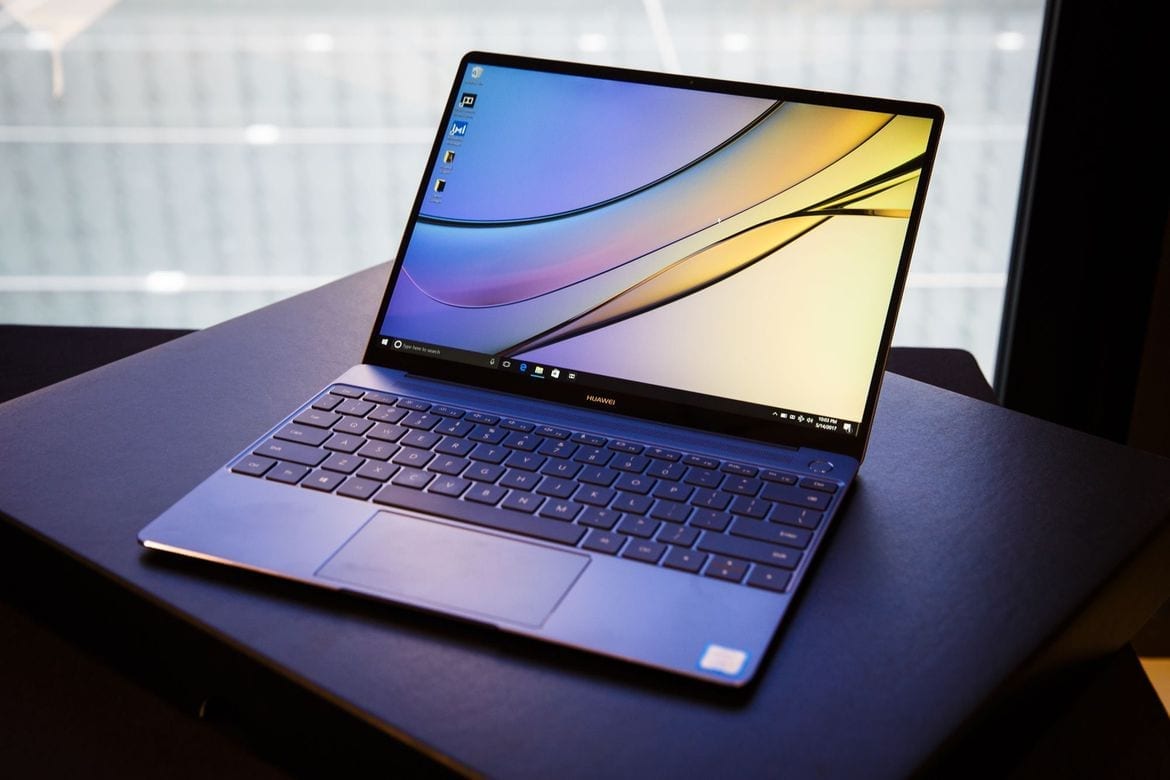
    In May, the Chinese firm took the wraps off of the MateBook X, MateBook D and MateBook E — the X is a laptop that competes directly with Apple’s MacBook line of products. For its part, the company says it is bullish on its plans in the PC space.

    “Whenever Huawei decides to enter an area, make a product, our target is always to be a global leader,” said Wan Biao, chief operating officer of Huawei’s consumer business group. “I think this comes from Huawei’s unswerving input in R&D, and our innovation capabilities. I think these has already been proven in our smartphone products.”

    When asked how long it will take to sit at the top spot in the market, Wan said the “process would take about three to five years.”

    The PC market has been declining for several years, but it recorded 0.6 percent growth in the first quarter of 2017, according to data from IDC. Given that low growth, it’s an incredibly tough market.

    HP, Lenovo, Dell, Apple, and Acer make up the top five players in the world by market share, IDC said. So if Huawei becomes number one, that would mean beating out those top players. Wan, however, said he’s confident.

    “Of course, we are confident because of Huawei’s powerful innovation capabilities. In fact, in the laptop space some technologies are the same with smartphone. In the meantime, with the development of AI, AR and VR [artificial intelligence, augmented reality and virtual reality] technologies, the chance to succeed will only grow bigger for a strong innovative company,” Wan told.

    Huawei’s consumer business is relatively young and began with smartphones. The Chinese giant is seeing success: reported revenues in its consumer business group were up 42 percent year-on-year in 2016 to 178 billion yuan ($26.19 billion). Smartphone shipments were up 29 percent to 139 million units, and Huawei is now the third-largest smartphone vendor in the world by market share.

    Wan’s projection of being the top PC maker in only a few years mirrors similar bullishness from the company about smartphones. In 2016, Richard Yu, the CEO of the consumer division at Huawei, told that the firm would be number one in smartphones by 2021.

    It may seem odd that Huawei is entering a stagnant market, but the tactic is to try and create an ecosystem of products for consumers. Not only does Huawei have smartphones, but it also sells smartwatches and Wi-Fi routers. Laptops are another edition to the portfolio.

    “I think for Huawei’s strategy, one of the most crucial points is the connectivity of all things. Every object in the world should be able to connect … Therefore Huawei is also developing our business over these notions,” Wan said.

  • Huawei, Henan Unicom develop smart hotel solution

    Huawei, Henan Unicom develop smart hotel solution

    Huawei has teamed up with China Unicom’s Henan branch Henan Unicom to develop a smart hotel connectivity solution based on all-optical access.

    The solution involves the delivery of broadband capability based on a large-capacity converged optical line terminal, fibers routed inside buildings and converged smart gateways.

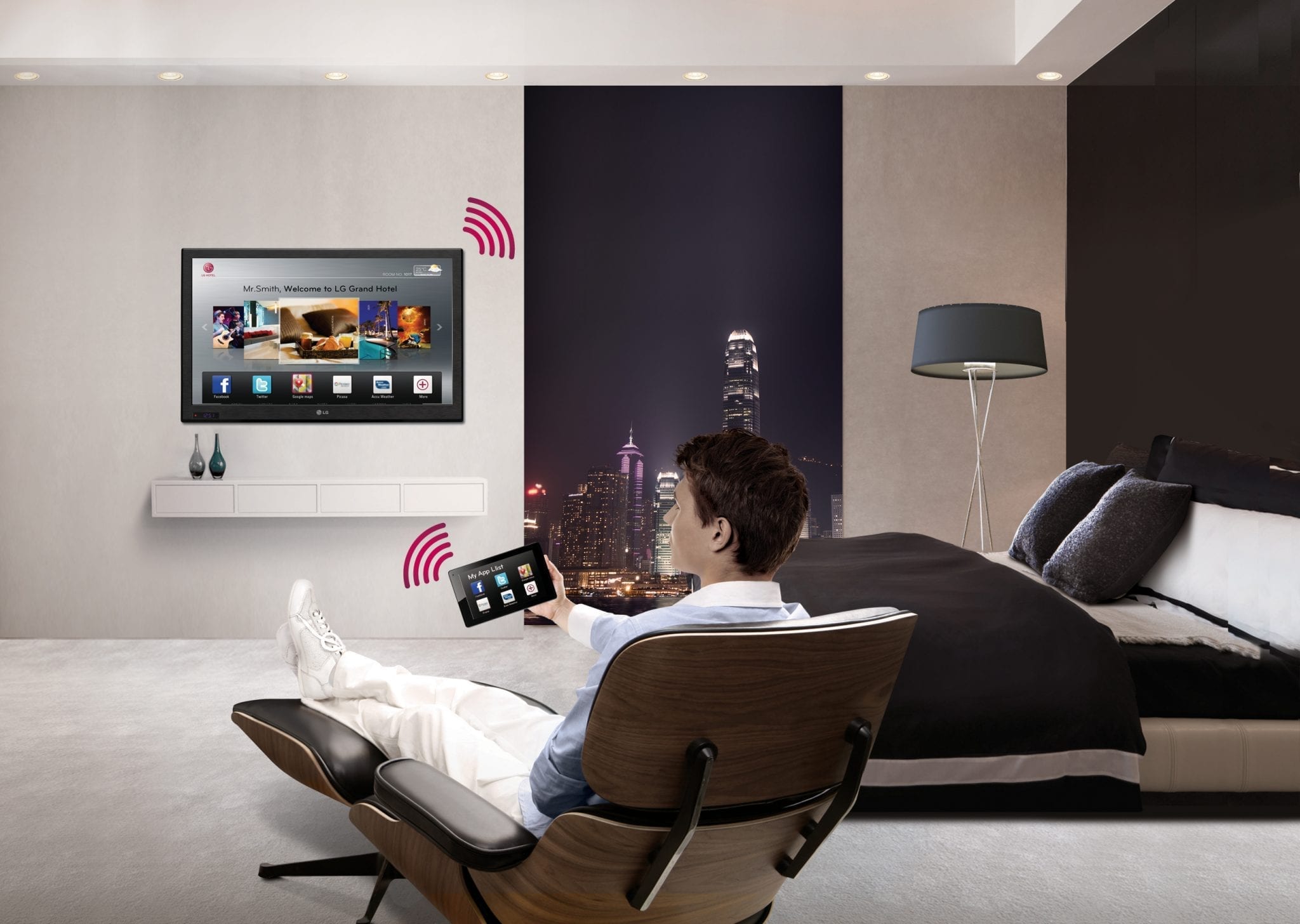
    Each hotel room will be provided exclusive Wi-Fi access, eliminating issues involving poor coverage or congestion. The converged smart gateways will deliver both wired broadband and Wi-Fi access, and hotel users will be provided dedicated IPTV access.

    The solution also supports centralized managed operation and maintenance (O&M) to eliminate the requirement for dedicated IT support personnel, and delivers an access rate of 10GE. It can support control of lights, home appliances, and curtains using external intelligent devices.

    “Huawei’s all-optical access smart hotel solution has obvious advantages in terms of deployment, service experience, and uniform O&M,” Henan Unicom Zhao Songhui said.

    “This solution enables Henan Unicom to accelerate hotel informatization effectively, and has earned high recognition from both hotels and their guests. In the future, we plan to spread this solution to more hotels and provide users with more intelligent services.”

  • Huawei, REDtone, Fuisonex form cloud partnership

    Huawei, REDtone, Fuisonex form cloud partnership

    Huawei, REDtone and Fusionex have formed a three-way partnership to help  meet the rapid increase in demand for big data and analytics cloud solutions in Asia Pacific.

    According to Huawei’s Global Connectivity Index 2017, a yearly survey conducted by Huawei to track key countries in their progress towards connectivity, having a robust ICT infrastructure is foundational to digital transformation.

    While broadband networks and data centers form the basis of a digitized world, cloud services power the use and analysis of Big Data and Internet of Things (IoT) where actionable insights are driven.

    The collaboration aims to leverage on all partners’ unique expertise to intelligently identify pain points and opportunities for users while lowering opex and capex with on-demand one-stop cloud service solution.

    Under the partnership, Huawei will act as the cloud solution provider and the go-to-market advisor. REDtone flexiCloud, the next generation business-to-business cloud, will offer enterprise cloud services that runs on the Huawei’s cloud platform. Fusionex, an international software provider for analytics, big data and the IoT, will contribute business insights and analytics-as-a-service to complete the full-suite of cloud solutions tailored for verticals including healthcare, retail and more.

    “With this strategic partnership, we are moving towards swift digital transformation together with our partners and customers, as well as enabling business success of our customers by helping them to cloudify their business through our global experience and professional services. We see this as a future model of growth for enterprises in the digital era,” said George Pan, CTO of Huawei Malaysia.

    He added, “We are appreciative that REDtone and Fusionex have set their sights in helping their customers from different industries to digitalize their businesses. It excites us to launch the services with our partners beyond Malaysia through our innovative business model above IaaS, focusing on what customer want, business agility, cost efficiency and service aggregation.”

    “Businesses facing digital transformation are no longer “going it alone.” Finding the right technology partner is mission critical. At REDtone, we leverage cloud computing, Big Data, IoT and enhanced vertical applications to facilitate enterprise digitalization towards agile and smart operations, to ultimately deliver an extraordinary experience to the customer,” said Lau Bik Soon, Group Chief Executive Officer of REDtone International Berhad.

  • Huawei, Toshiba to work on NB-IoT for ‘smart factory’

    Huawei, Toshiba to work on NB-IoT for ‘smart factory’

    Huawei has signed a MoU with Toshiba to collaborate on the integration of NB-IoT (Narrowband Internet of Things) for the development of “smart factory” solutions.

    The cooperation between Huawei and Toshiba will accelerate the commercial availability of NB-IoT in a diverse range of vertical industries, supporting a range of applications and deployment scenarios as operators are looking ahead towards new business opportunities in vertical industries.

    Both companies will work together to develop enhanced wireless product life cycle management solutions based on NB-IoT technology applied to real-world manufacturing scenarios.

    As a first step, Huawei will work closely with Toshiba by providing the communications technology expertise and help facilitate the integration of NB-IoT technology within Toshiba’s current IoT gateway, with initial testing scheduled to be performed in Huawei’s NB-IoT Open Lab located in Shanghai.

    The next phase will see actual live field tests being performed with expectations from both companies to develop a suite of smart factory solutions based on NB-IoT technology ready for global commercialization.

    With the number of connections in smart factories possibly reaching 100 million by 2020, the integration of NB-IoT within the smart factory will greatly enhance the data collection ability over wider areas in factories worldwide using cellular network connectivity, further improving management efficiency of the manufacturing process, and the ability to enhance product lifecycle management.

  • Huawei signs MoU with Infosys to explore joint BSS solution

    Huawei signs MoU with Infosys to explore joint BSS solution

    Huawei has signed an Alliance Memorandum of Understanding with Infosys to explore joint solutions in the Business Support Systems (BSS) domain.

    The company has also announced to expand its Telco OS Partner Program to stimulate joint go-to-market approaches and solutions with Service (SI) partners.

    The Huawei Telco OS Partner Program is a communications industry-specific partner program designed to establish partner relationships which accelerate the digital transformation of communication service providers (CSPs) across their BSS, Operations Support System (OSS) and big data functional domains.

    The program was initially focused on Delivery Service Vendors (DSV) to augment project delivery, and Solution (ISV) partners to augment the productized solutions being delivered.

    To date over 1,000 engineers have been certified under the program, working across 57 different projects, in 39 countries around the world, leveraging over 30 ISV products.

    As part of the agreement, the parties will explore joint solution innovation and labs, and promote joint solutions to customers and business partners.

  • China Telecom, Huawei lead group exploring AI in networks

    China Telecom, Huawei lead group exploring AI in networks

    China Telecom and Huawei will lead a new industry working group exploring the use of AI in the deployment and optimization of telecoms networks.

    The European Telecommunications Standards Institute’s (ETSI) Industry Specification Group on Experiential Networked Intelligence (ISG ENI) held their first meeting last week, electing a new chair and vice chair.

    Huawei UK’s Raymond Forbes has been selected as chairman and China Telecom’s Haining Wang will serve as vice-chair.

    Other members of the group include Samsung, the China Academy of Telecommunications Research of MIIT, Verizon UK and Samsung R&D Institute UK.

    Forbes said the purpose of the group is to “improve operators’ experience regarding network deployment and operation, by using AI techniques.”

    Wang added that while SDN, NFV and network slicing technologies are helping networks become more flexible, the complexity of network management is not being reduced, but merely transferred from hardware to software. Experimental Networked Intelligence helps to address this complexity.

    ETSI ENI will work with other major standards groups including ETSI NFV, ETSI MEC, ETSI NGP, IETF, MEF, 3GPP and BBF on the development of the industry specification, and is inviting new members to join the group.

  • Jay Mart launches Jaycamera chain

    Jay Mart launches Jaycamera chain

    Thai mobile handset distributor Jay Mart plans to spend THB50 million (US$1.4 million) opening up to 10 Jaycamera shops by the end of this year.

    The outlets are forecast to initially draw in revenue of THB800 million, and within three years the company hopes to claim 40 per cent of the camera market for the lead position in Thailand, with revenue of THB4 billion.

    Chief marketing officer Narathip Wirunechatapant says growth potential in the Thai camera market prompted the company to set up the chain, providing mid- to high-range models and accessories. It will focus mainly on mirrorless and digital single-lens reflex (DSLR) cameras in the THB20,000 to THB200,000 range with young people as the target market.

    The main brands are Canon, Casio, FujiFilm, GoPro, Nikon, Olympus and Sony. In May, the chain will start selling upmarket smartphones such as the Huawei P10.

    Jaycamera launched in the Fashion Island department store, with other outlets to follow in Central and The Mall department stores in and around Bangkok.

    Narathip says that by the end of this year the Thai camera market could reach about THB8 billion and the company hopes to gain about 10 per cent of that.

    By the end of 2019, the company says it will have about 50 Jaycamera shops nationwide, and will also sell camera products at more than 200 Jaymart shops.

  • Huawei pushing into public cloud market

    Huawei pushing into public cloud market

    Huawei is entering the public cloud market, placing the company in competition with AliCloud, AWS and other major global public cloud providers.

    At the Huawei Global Analyst Summit in Shenzhen yesterday, Huawei said it will work with industry partners to promote ten scenario-specific cloud services covering HPC Cloud, SAP Cloud, IoT Cloud and other common scenarios.

    “Cloud technology is becoming the new growth engine as digital transformations accelerate,” Huawei president of cloud business unit and IT product line Zheng Yelai said at the event.

    “Huawei has continued to step up its R&D, one result culminating in the cloud service offering. Huawei has become the preferred partner for many of the world’s top customers and will continue to provide high-quality cloud services with our partners as we persist in building a healthy ecology in the sector.”

    The vendor is establishing a dedicated cloud division with 2,000 staff and last month launched 54 full-stack public cloud services in ten categories. Huawei said since the launch it has attracted customers in China, Europe, North America, Latin America and the South Pacific.

    Huawei is also working with operators including China Mobile, Deutsche Telekom and Telefonica to provide tailored public cloud services to their respective customers.

  • China Telecom, Huawei hold NB-IoT symposium

    China Telecom, Huawei hold NB-IoT symposium

    China Telecom and Huawei co-hosted a symposium in Shenzhen yesterday aimed at exploring the potential of narrowband IoT (NB-IoT) technology in smart city applications.

    The symposium attracted participants from the China Academy of Information and Communications Technology (CAICT) as well as representatives from industries including water, gas, smart meters and other fields.

    Attendees were told that the wide coverage and massive simultaneous connection capabilities of NB-IoT meke it ideally suited for deployment in smart city areas including water and gas management, street lighting and car parking.

    “NB-IoT-based Smart Water and Smart Gas are the main components in Smart City, fully exhibiting the informatization level in the public service provisioning sector of a city,” China Telecom GM of government and enterprise Sun Jian commented.

    “China Telecom and Huawei have initiated together pilot NB-IoT applications on Smart Water and Smart Gas with industry partners, including Shenzhen Water and Shenzhen Gas. Through comprehensive cooperation on standards formulation, technological research, network construction, service development, business model exploration, and associated aspects, all parties wish to jointly promote informatization construction for water and gas industries.”

    Huawei president of marketing and solutions Zhang Shunmao added that Huawei is currently shipping 200,000 NB-IoT capable chips per month, and expects to increase this to 1 million per month in the future.

    This year the company is also scheduled to deploy more than 30 NB-IoT networks for Smart City applications – particularly for public service provisioning – in over 20 countries this year.

    Separately, IoT provider Thinxtra has announced a partnership with Hong Kong wireless technology company Victory Concept to develop IoT devices for Asia-Pacific enterprises to implement using the low-power-wide area (LPWA) Sigfox network.

    Thinxtra recently announced plans to deploy a Sigfox network throughout Hong Kong by June. The devices will also be compatible with Sigfox networks in 32 countries worldwide.

    “The Thinxtra network will offer companies and researchers in Hong Kong the chance to create new products and services based on IoT. We believe that Hong Kong has the potential to be a world-leading IoT design and manufacturing hub,” Thinxtra Asia MD Murray Hankinson said.

    “With the skills and facilities to provide a reliable supply of high-quality, low-cost devices in Hong Kong, Victory Concept is helping us create the right conditions for IoT innovation to flourish here and spread around Asia Pacific and to the world.”

  • Huawei revenue grows 32% in 2016

    Huawei revenue grows 32% in 2016

    Huawei has reported a 32% increase in revenue for 2016, but profit grew just 0.4% as the company invested heavily in R&D.

    Group annual revenue for the year was 521.6 billion yuan ($75.7 billion), while net profit reached 37.1 billion yuan.

    Carrier business group revenues grew 24% to 290.6 billion yuan, as the operator focused on digital transformation as well as exploring opportunities in emerging categories including cloud and the IoT.

    Enterprise revenues meanwhile grew 47% to $5.9 billion yuan. Consumer revenues likewise increased 44% to 179.8 billion yuan due to strong smartphone shipments of 139 million.

    But the company’s 76.4 billion yuan in R&D spending muted profit growth for the year. Huawei rotating CEO Eric Xu said the spending marked an investment in future growth.

    “As humanity continues to explore and make new breakthroughs in the digital world, digitization and increasing intelligence present huge business opportunities for all industries, and are also paving the road for new growth for the ICT industry,” he said.

    “We will stay customer-centric and will support digital transformation in all industries, in order to create value for our customers and to grow sustainably.”

  • M1 to deploy vEPC solution from Huawei

    M1 to deploy vEPC solution from Huawei

    Singapore’s M1 Limited has announced plans to launch the nation’s first cloud-based virtual enhanced packet core (vEPC) network solution with Huawei.

    The deployment is aimed at further enhancing M1’s core network resiliency, while also enabling dynamic and more efficient use of network resources to support wide-ranging Smart Nation use cases, and shortening the time to market in the deployment of new IoT services.

    By harnessing the latest cloud-computing and Network Function Virtualization (NFV) technologies, M1’s fully distributed and agile packet core network will be able to dynamically deploy core resources wherever they are needed, and provide flexibility to swiftly scale up and down resources based on customer demands.

    Furthermore, with software functions separated from the underlying hardware platforms, the cloud-based virtualized core network allows faster “in-service” software upgrades, as well as significantly reducing downtime for maintenance and testing of new services. Through this, M1 expects to improve its operational efficiency and strengthen network resiliency.

    “The deployment of our agile cloud-based virtualised core network will strengthen our network resiliency and enable us to deploy our resources more efficiently, M1 CTO Denis Seek said.

    “The highly scalable nature of the network will also enable us to meet the dynamic resources demands of new products, shorten the time-to-market innovative products, and enable us to reduce implementation and maintenance costs.”