Retail News CRM

Tag: Huawei

  • Huawei forges 5G research partnership with BT

    Huawei forges 5G research partnership with BT

    Huawei has announced a partnership with UK-based operator BT to conduct joint research into potential new 5G applications.

    The companies will work at the BT Labs in Ipswich and other locations in the UK to explore aspects of 5G including future network architecture, a new air interface between devices and base stations, network slicing to proportion resources for specific services, 5G IoT applications and security technologies.

    The partners said they hope that the research will drive the development and industry-wide standardization of 5G technologies.

    “[Working with BT] we can explore the potential of 5G networks and analyze how this vital technology can best be delivered,” Huawei rotating CEO Ken Hu said.

    “The partnership also demonstrates Huawei’s continued commitment to partnering with world-leading business and academic organizations in the UK to further research and development. We have operated in the UK for 15 years and we look forward to continuing to help build a better connected UK in partnership with BT.”

    Huawei and BT have been collaborating on telecommunications R&D for 11 years. Most recently, the companies announced breakthroughs including a 3Tbps data transfer over BT’s core network, as well as research into 40Gbps speeds on the Openreach access network.
  • Huawei opens new concept store

    Huawei opens new concept store

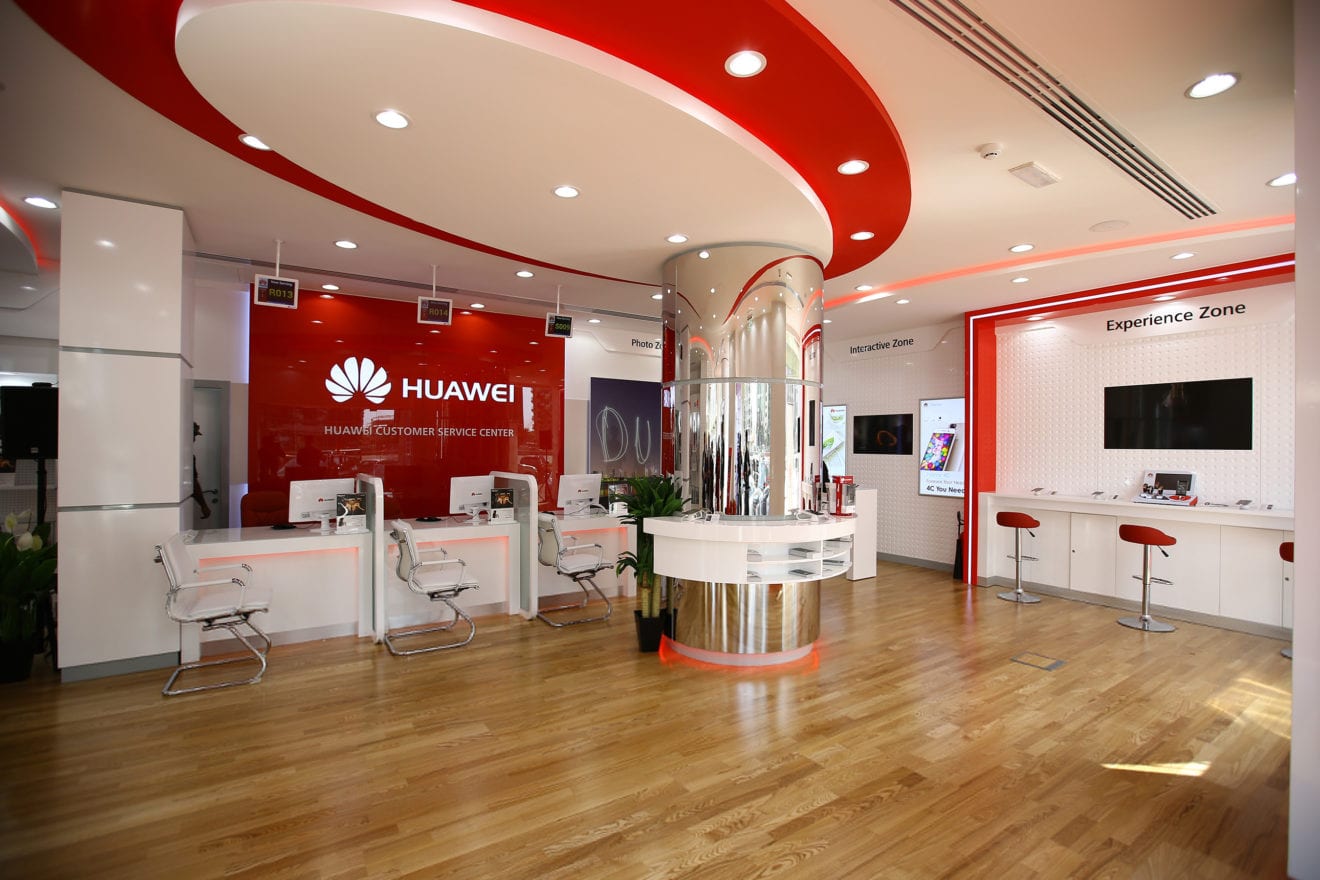
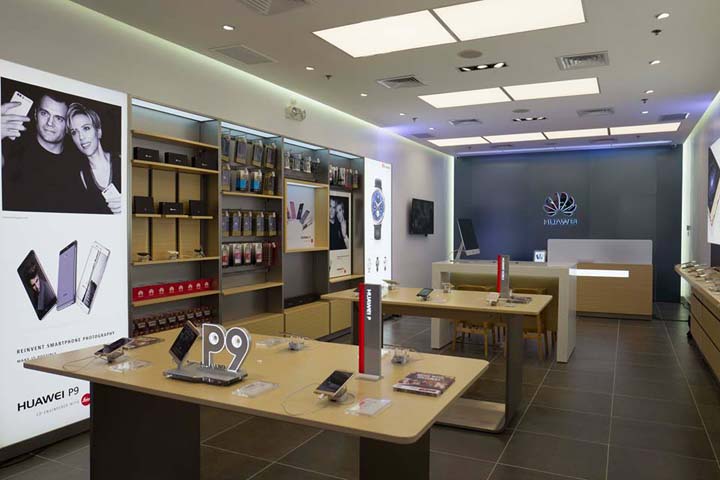
    Huawei introduced a new retail concept in its line-up of experience stores during a recent opening at SM City San Lazaro, Manila. The newly opened branch is the first in the city of Manila and the 44th in the country.

    SI 3.0, the design blueprint of the Huawei SM San Lazaro store is guided by four traits – simple, premium, warm, and comfortable. Relative to its predecessor, the SI 2.0, the new design is marked with wider spaces and lighter ventilation promising an enhanced and more welcoming customer experience.

    “Huawei continues to prove to be a game changer in the smartphone industry this year, and we have big plans to take advantage of this momentum. Our high-end premium phones such as the P9 and Mate 8 have been the drivers of this smashing success. As such, we would like to extend this premium, high-quality identity to consumer experience at our stores,” said Andy Fang, Country Head at Huawei Philippines.

  • Huawei, LG U+ achieve 31Gbps peak in 5G tests

    Huawei, LG U+ achieve 31Gbps peak in 5G tests

    Huawei and South Korea’s LG U+ have completed a series of joint 5G tests based on three commercial scenarios – enhanced mobile broadband, ultra-reliable low latency communications (uRLLC) and massive machine-type communications (mMTC).

    The various tests achieved a cell peak rate of 31Gbps on high-frequency bandwidth and Massive MIMO, as well as latency under 0.5ms and mMTC single-cell massive connections.

    During the test procedures the two companies also verified key 5G New Radio technologies, including simultaneous use of short transmission time intervals and filtered orthogonal frequency-division multiplexing (f-OFDM), as well as sparse-code multiple access (SCMA).

    Huawei and LG U+ signed an agreement in July 2015 to jointly develop 5G technologies. The companies had already opened a joint R&D lab in Seoul dedicated to research into LTE-A and 5G.

    “LG U+ is dedicated to creating new better life for our customers through maximized value and improved experience,” LG U+ VP Kang Jung Ho said.

    “We hope to provide the availability of 5G services for Korean users by 2018, and Huawei’s innovation insights and accumulated expertise will help us in achieving this goal.”

    Huawei VP for wireless networks Gan Bin added that the companies plan to strengthen their 5G collaboration in the future.

  • Huawei demos 5G-LTE dual connectivity for 4K VOD

    Huawei demos 5G-LTE dual connectivity for 4K VOD

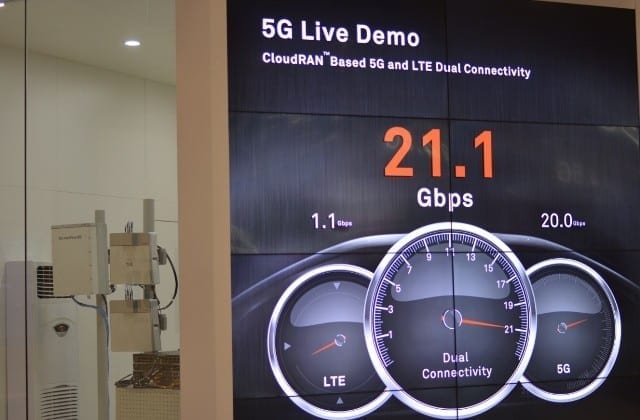
    Huawei has conducted a live demonstration involving 5G and LTE dual connectivity for a 4K video-on-demand service, achieving single user peak throughput of 21.1Gbps.

    At last week’s Global Mobile Broadband Forum, Huawei conducted a demonstration based on its CloudRAN architecture.

    With the development of new high-bandwidth services such as AR/VR and 4K video streaming and cloud-based services, Huawei said 5G new radio technologies will need to be deployed in central hotspots first to deliver the required capacity.

    LTE networks are meanwhile continuing to evolve with the introduction of new technologies including 3D Massive MIMO.

    Combining 5G and 4G networks has the potential to help operators protect their existing investments while improving network capacity, spectrum efficiency and coverage in urban areas.

    “It is of vital importance to guarantee end users with a ubiquitous high data rate experience in densely populated urban city areas with high buildings and complex roadways,” Huawei CMO of wireless network products Dr Yuefeng Zhou said.

    “Recently, 3GPP standardization has made significant progress in 5G and LTE dual connectivity. We expect to strengthen our cooperation with industry partners on 5G innovations based on these real application scenarios.”

  • Huawei announces mobile app X Labs

    Huawei announces mobile app X Labs

    Huawei has announced a new research platform that aims to bring together operators, technology providers and vertical industry partners to explore future use cases for mobile applications.

    The X Labs initiative will aim to encourage mobile operators to build application-centric networks and help establish an open industry ecosystem.

    The research platform is designed to explore three areas of mobile communications – people, verticals and the household, Huawei said. The mLab focuses on creating immersive user experiences for emerging mobile applications including live video, VR and AR.

    A second lab, vLab, focuses on ways mobile technology can enable digital transformation across all industries. The third is hLab, which will concentrate on connecting more households with smart home applications utilizing broadband connections.

    During a keynote speech announcing the initiative, Huawei rotating CEO Ken Hu said mobile applications are reshaping everything in the world.

    “I firmly believe that in the future, all services will be delivered through mobile applications,” he said. “I would say that we are living in a wild world of mobile applications.”

    Hu noted that when Apple’s App Store launched eight years ago, it had just 500 apps. It took just six years for that number to reach 1 million, and this figure doubled in another two years. Android app stores have even more apps – around 5 million.

    “At Huawei, we aim to support and enable the mobile ecosystem. We have made a lot of progress, and we want to do more,” he said.

  • China Telecom Shanghai, Huawei test network slicing

    China Telecom Shanghai, Huawei test network slicing

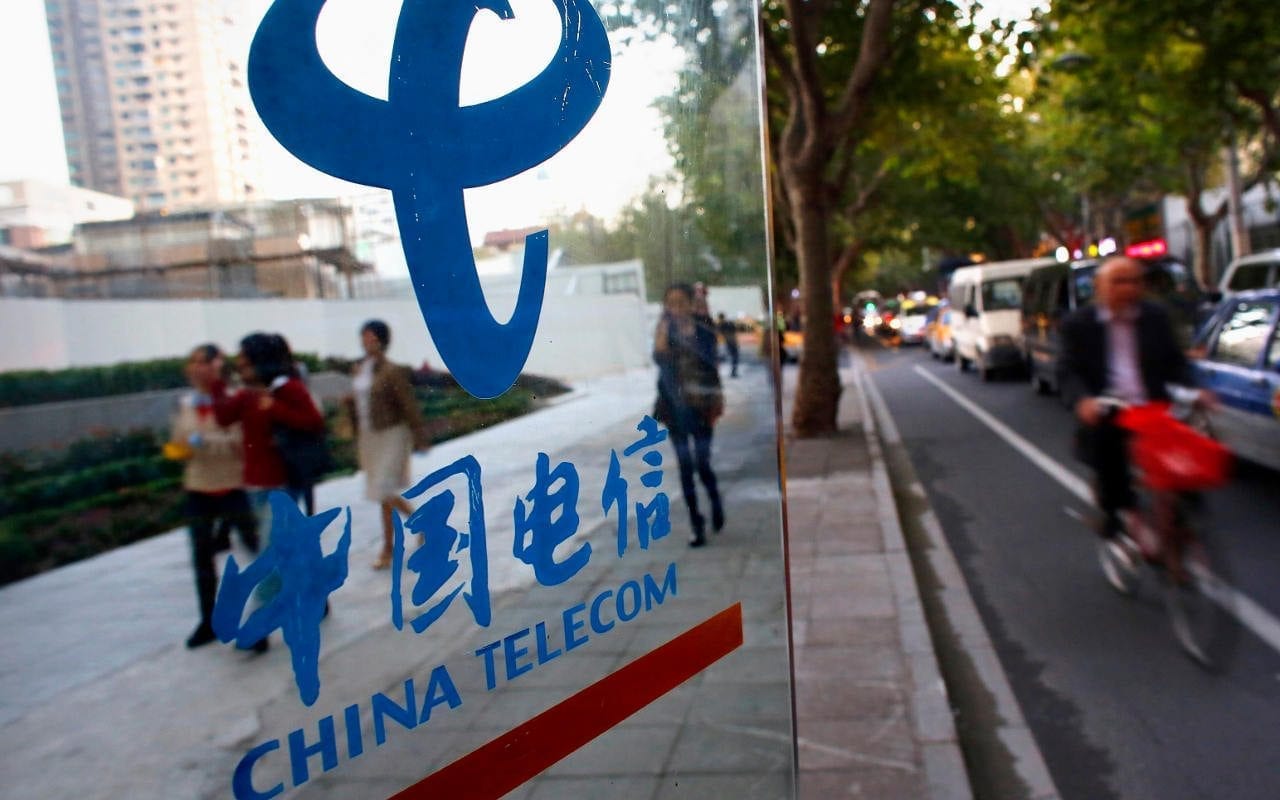
    China Telecom Shanghai and Huawei have successfully jointly implemented access network slicing at a trial site.

    The trial solution involves slicing the access network into home, enterprise and campus connections, which will potentially allow the operator to use a single network to deliver all types of services.

    OLT hardware is shared by services, and all segments are isolated from each other in order to improve service reliability and network security.

    China Telecom Shanghai engaged Huawei to develop an access network slicing solution to address issues including insufficient equipment room space and runaway power consumption associated with rapid user base growth.

    “Traditional OLTs do not support the access of full services. Network slicing enables service isolation and optimizes resource utilization,” China Telecom Shanghai vice chief engineer Zhang Jun said.

    “Network slicing is our first step toward cloud. It is now being including in the related technical standards of China Telecom. In the future, we will cooperate with Huawei to further optimize network slicing.”

    The companies expect that network slicing will propel the development of gigabit networks. This will be essential to helping operators meet the enormous capacity demands of the cloud era.

  • Huawei launches cloud VPN integration service

    Huawei launches cloud VPN integration service

    Huawei has launched a new service which it says can resolve problems in enterprise leased line services that have affected telecoms operators, such as slow provisioning, lack of services, and difficult operation.

    According to Huawei, the CloudVPN Integration Service Solution can quickly meet the customized ICT needs of enterprise and enable operators to boost enterprise revenue by delivering a variety of value-added services.

    “A lot of operators are starting to think how to carry out CloudVPN business to market for their customers. But when they started this journey, they faced a lot of challenge,” said Bruce Xun, vice president of Global Technical Services Department at Huawei.

    By integrating a variety of value-added services, combining cloud, leased line, and value-added services, operators can provide one-stop CloudVPN for their enterprise customers, Xun noted.

    The CloudVPN Integration Service provides accurate network planning, helping carriers reduce time to market for new services over the overlay network architecture. Multi-vendor ICT resource orchestration allows enterprises to use cloud and network resources on demand and in real time, shortening the services provisioning time to minutes.

    Operators can reduce service delivery time from a month to 15 minutes with the CloudVPN Integration Service solution.

    The solution can meanwhile accurately identify the network bandwidth bottlenecks based on enterprise service prospects, optimizing networks accordingly to ensure services quality.

    At the launch, Huawei also announced it completed integration and certification with 20 ecosystem partners, including Fortinet, Check Point, Citrix, Red Hat, Riverbed and Infoblox, via its Cloud Open Labs. The company aims to expand the number of partners to 30 by the end of the year.

    Xun said Huawei’s Cloud Open Labs gives operators access to a range of third-party value-added services that have been pre-integrated by its partners.

    The agile integration capability of the CloudVPN Integration Service solution allows operators to add new VAS in just seven days.

    Huawei is planning to enhance its multi-vendor integration tool by increasing the development and testing team with 60 more senior engineers to support multi-level multi-vendor integration tool development.

    The service is expected to be commercially available by the end of the year.

  • Honor Malaysia launches first concept store

    Honor Malaysia launches first concept store

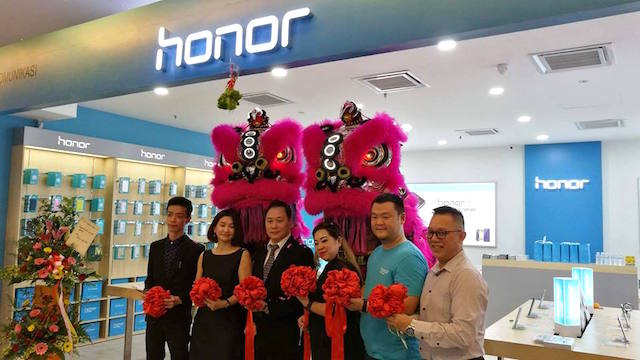
    In collaboration with mobile phone retailer TF Mobile Enterprise, technology brand Honor Malaysia has opened its first concept store at Plaza Low Yat in Kuala Lumpur.

    Honor Malaysia instore

    A spokesman says the move aims to strengthen the company’s interactions with consumers by complementing its eCommerce presence with retail stores.

    Honor Malaysia 1

    Featuring its line-up of Honor devices, the store has a launch promotion until November 21 during which buyers will receive gifts. They can also enter a draw to win Honor products.

    Honor Malaysia is a subsidiary of Huawei Technologies (Malaysia).

    honor-malaysia-open

  • Huawei launches IoT accelerator in Singapore

    Huawei launches IoT accelerator in Singapore

    Huawei has teamed up with the National University of Singapore (NUS) to launch its first IoT-focused accelerator in Singapore.

    The vendor will work with NUS’ entrepreneurial arm NUS Enterprise to provide start-ups with mentorship, access to investors, access to industry-grade test beds, and global co-marketing opportunities.

    Known as i5Lab, the accelerator seeks to support the development of Singapore’s next unicorn company by nurturing promising start-ups with Huawei’s real network environment and open platform as well as its global Go-to-Market channel capability.

    Huawei said i5Lab will follow the model of established Huawei collaborations with leading software and industry partners to develop solutions that will build a competitive industry ecosystem.

    As a global leading ICT player in 170 countries, Huawei works with 45 of the world’s top 50 telecommunications providers that provides connection to two-thirds of the world’s population.

    Start-ups will be able to leverage Huawei’s global partner ecosystem, and will also be invited to participate in joint marketing through Huawei’s Customer Solution Innovation & Integration Experience Center (CSIC), and large-scale events such as NUS Enterprise’s flagship event InnovFest unbound and CommunicAsia.

    “With one of the most connected societies, open data sets and high-skilled ready talent, Singapore is an excellent test bed to nurture IoT ideas that will bring us closer to a smarter future. We hope that start-ups will make full use of this collaborative platform and leverage on accumulated knowledge of industry-leading technology and expertise from Huawei and our global partners,” Huawei CMO for Southern Pacific Lim Chee Siong said.

  • CityOn.Zhengzhou to open fully leased

    CityOn.Zhengzhou to open fully leased

    Taubman Asia, a subsidiary of US shopping centre group Taubman Centers, and China’s Wangfujing Group, have announced the line-up of retailers for its CityOn.Zhengzhou mall in Henan province, set to open on March 16.

    When it opens, the centre will be 100 per cent leased and 90 per cent occupied with nearly 200 stores and restaurants. In the heart of Zhengdong New District, the six-level, 94,000 sqm shopping and dining destination will offer domestic, international and lifestyle brands from fast fashion to accessible luxury, anchored by a four-level Wangfujing department store.

    “We are thrilled to see our second China project coming to life in Zhengzhou,” says Taubman Asia president Rene Tremblay.

    Local, regional and international cuisine at all price points and in both seated restaurants and quick-serve formats will be a feature of the centre, which will also offer family-friendly experiential, educational and entertainment offerings.

    Many international brands will be making their central China debut at the centre, says Taubman Asia group VP Paul Wright.

    Outlets at the mall include…

    Fashion: Adidas, Ajidou, Basic House, Bershka, Charles & Keith, Columbia, Converse, Ecco, Five Plus, Forever 21, H&M, Innisfree, Jack & Jones, KIKC, Kipling, La Chapelle, Lee, Levi’s, Mango, Massimo Dutti, Miniso, Mishka, Mobi Garden, Nike, Pandora, Polo, Sand & Foam, Sephora, Skechers, Stradivarius, The North Face, Uniqlo, Vans, Vero Moda, Westlink and Zara.

    F&B/entertainment/kids/lifestyle/electronics: Acasia Food Village (featuring 14 food vendors), Benfu Sushi, Boat Noodle, Chatime, Chez Choux, Chicken Container, Coco, Dollar Shop, FrozenYo, GB Kids Station, Gong Cha, Grandma’s Kitchen, Guoguo Mutton Soup Restaurant, Guxiang No. 9 Catering, Hallmark Babies, Homao, Huawei, iSpace, La Chapelle Kids, Lenovo, MagicSalad, MM by Haircode, Mr Wish, NaughtyKids, New York Fries, Oscar CityOn Cinema, PapaBubble, Pizza Zone, Rbike, Siwuke Tea, Starbucks, Strawberry Forever, Subway, Teppanyaki Xiang, Toot Science, Udon & Tempura, Uncle, Wan Quan Bu Tong, Xiang Tian Xia Huo Guo, Xiao Liu Jia, Xiao Zhu Zhu Kao Rou, Xue Mi Da, Yang Xiang Dou Pi Shuan Niu Du, YuYuTo, ZBX Fresh Fish Hot Pot, Zheng Shi Yi and Zoo Steak.

  • Huawei to launch NB-IoT solution in early 2017

    Huawei to launch NB-IoT solution in early 2017

    Huawei has revealed plans to commercialize its end-to-end narrowband IoT solution early next year, to help operators expand their IoT services into new markets.

    The vendor plans to release the world’s first 3GPP standards-based NB-IoT commercial system-on-a-chip, Boudica, that can be deployed with the Huawei LightOS operating system.

    Huawei has meanwhile unveiled SoftRadio, a software suite to help developers access NB-IoT open labs via the internet.

    The solution will also involve eNodeB base stations, an IoT packet core supporting flexible deployment of Core in a Box and NFV, as well as a cloud-based IoT connection management platform with big data capabilities.

    The converged NB-IoT offering will be tested in a large commercial trial this quarter before being released to the market in early 2017.

    “NB-IoT has unique advantages in supporting IoT applications. Huawei will help carriers accelerate the commercial adoption of NB-IoT and the maturing of the industry chain,” Huawei VP of marketing and solutions Jiang Wangcheng said.

    “The IoT project and the success achieved so far fully demonstrate this commitment of ours.”

    Huawei’s launch plans were announced at the Huawei eco-CONNECT Europe 2016 conference held in Paris last week.

  • Huawei applies machine learning to network control

    Huawei applies machine learning to network control

    Huawei has developed a prototype technology involving using machine learning to achieve intelligent, automated network traffic control.

    The vendor’s Noah’s Ark Laboratory has announced results of tests into Network Mind, a prototype technology designed to enable automatic detection and accurate prediction of traffic changes on a network, applying optimizations based on service changes.

    Huawei said Network Mind can facilitate the management of millions of network elements with millisecond response time.

    It uses cutting edge machine learning technologies such as online deep reinforcement learning and real-time big data mining

    The technology is being designed for operators and enterprises maintaining ultra-large networks. The prototype was first developed in December last year, and is being tested in collaboration with operators.

    Tests indicate that Network Mind is is up to 500% more efficient in realizing KPIs such as task completion or policy generation compared to existing template or heuristic algorithm-based optimization methods.

    Network Mind is also over 50 times more efficient when analyzing paths of large optical networks, which has the potential to reduce the time it takes to analyze use cases such as optical network failure prevention from 5 hours to as little as 6 minutes.

  • Why Apple China is struggling

    Why Apple China is struggling

    Apple’s sales decline is slowing – but there are several reasons why it is doing so badly in China…

    While the iPhone 7 has not been out long enough to have had a full impact on this quarter’s numbers, it has helped Apple to moderate the pace of revenue decline.

    Even so, global revenues are still down by 9 per cent over last year indicating that Apple is a long way off the steep growth trajectory it once enjoyed. With more investment going into stores, and with those store selling fewer products than they once did, it is not surprising that net income is on the slide. Indeed, Apple will be particularly disappointed with its rare full-year profit decline.

    China is an interesting, and worrying, example of some of these points. Across this quarter Apple saw revenues fall by 30 per cent in Greater China. In part this is down to the fact the market is more mature and ownership of iPhones is higher than it once was. But it is not the whole story: domestic brands like Huawei and Vivo have gained share thanks to the fact that they have, in design and technical terms, caught up with Apple and are now seen more favorably by consumers. In essence, in China and elsewhere, while Apple’s products are still seen favorably, the distance between Apple and its competitors is nowhere near as great as it once was.

    “No longer firing on all cylinders”

    Globally, the change in Apple’s fortunes is partly down to the fact that it is no longer firing on all cylinders. Previously, Apple was able to rely on strong sales of phones, tablets and computers to drive up revenue and profit across all geographies. This is no longer the case. Tablet sales are in decline. Growth from computers, which are long overdue a refresh, is weak. And consumers in some markets are saturated with product which makes growth much more difficult to attain. The latter is exacerbated by the fact that new releases, such as the iPhone 7, have been iterative rather than innovative.

    Unfortunately, Apple’s attempts to add new strings to its fiddle have not counteracted some of the strings that are now playing out of tune. In particular the Apple Watch, while a triumph of engineering, has simply not become a mass market product in the way that the iPhone, iPad, or iPod did. The one bright spot comes from service revenue, which includes streams of sales from Apple Pay, Apple Music and other services, and is up 24 per cent year-on-year. Over the longer term, this is a very lucrative part of Apple’s business and growth story, but it is not yet at the point where it is offsetting revenue declines in other areas.

    Despite this relatively gloomy view, it is important to note that Apple is being judged by its own incredibly high standards. Even with the dips in growth it remains a phenomenally successful business that is far from running out of steam.

    Complexity over simplicity

    That said, there is a complexity creeping into the firm that runs counter to Apple’s underlying philosophy of simplicity. The recent launch of the iPhone 7 in the US is a case in point: the buying process has been dreadful. The cumbersome system of placing orders via the website, where users have had to enter carrier information, has frustrated many customers. Meanwhile the vast array of different models, color options and payment and upgrade methods has contributed to a shortage of the right stock in the right place and has inevitably slowed sales.

    For a brand like Apple these things matter. As the company has always maintained, the experience of purchasing is almost as important as the product itself. While there is no doubt Apple continues to be committed to this mantra – especially with the store upgrades it is now rolling out – it needs to look more carefully at issues of stock availability and to make the purchase process simpler and easier.

    Looking ahead, Apple’s prospects give cause for optimism. In the next fiscal year the company will come up against softer comparatives which will flatter performance. However, the unveiling, later this week, of new computers will help to ease up Mac sales. And as the iPhone 7 becomes more widely available, Apple will receive a nice growth spurt over the holiday quarter.

    Longer term, the company will be helped by the natural replacement cycle of older iPhones as these break, are damaged, or become less attractive to their users. Furthermore, Apple will, at some point, come up with a new phone – or maybe another device – that represents a significant leap forward and puts it on a better growth footing.

    As such, this current period is a hiatus rather than representing a material change in Apple’s long term prospects.


    -Neil Saunders

  • Huawei Marine to build backbone network for PNG

    Huawei Marine to build backbone network for PNG

    Huawei Marine has secured a contract to build a national subsea cable backbone network for the Papua New Guinea government.

    The company will work with PNG DataCo, an operator established by the Papua New Guinea government, to construct a national backbone network linking major coastal centers and islands in the nation.

    The 5,457km cable network will provide domestic connectivity across the nation’s 14 largest cities, as well as international connectivity via a link to Jayapura in Indonesia.

    With a design capacity of 8Tbps, the cable will be designed provide more than 70% of Papua New Guinea’s domestic bandwidth requirements. Currently domestic telecoms capacity largely relies on satellite and microwave communications due to the country’s unique geography.

    “This new system is very important to Papua New Guinea as it not only includes a new submarine cable network but also provides internet gateways and data centers,” DataCo managing director Paul Komboi said.

    “This will improve the whole ICT infrastructure in the country and greatly increase network coverage, capacity and the availability of Internet and broadband services to end users.”

    He said Huawei Marine was selected for the project through a competitive tender process.

  • Huawei achieves 27Gbps 5G speeds with Polar Code

    Huawei achieves 27Gbps 5G speeds with Polar Code

    Huawei announced it has achieved downlink speeds of 27Gbps using Polar Code, a new innovation in 5G channel coding technology.

    During a field trial in both static and mobile environments, Huawei was able to demonstrate that polar code technology can simultaneously meet the typical use cases of the ITU’s 5G definition, which involves speeds in the tens of gigabits, 1ms latency and billions of connections.

    The company said polar code demonstrated three times the spectrum efficiency compared to current RAN networks.

    Polar code is designed to allow significantly higher spectrum efficiency than current cellular access technologies and to enable decoding with linear complexity.

    On the encoding side, polar code can optimize channel capacity close to the Shannon Limit, the theoretical highest capacity of a communications channel before noise introduces faults.

    The field trial also took into account the use of millimeter-wave and multiple parallel sessions based on short and large packet sizes.

    Last week Huawei and Canada’s Telus also announced the results of 5G lab trialsachieving peak speeds of 29.3Gbps, close to 200 times faster than the current LTE standard. The trials at the Telus and Huawei 5G Living Lab in Vancouver were designed to simulate real-world conditions.