Tag: Huawei

  • Huawei may face criminal probe from US DoJ

    Huawei may face criminal probe from US DoJ

    The building US-China trade war could have an even more substantial impact on the telecommunications sector following reports that Huawei may be facing a criminal probe from the US Department of Justice.

    The Department of Justice is investigating allegations that Huawei violated US sanctions by selling equipment with US components to Iran.

    This is the same offense for which ZTE was recently hit with a seven year export ban prohibiting the company from procuring US components, although the ban was only put into effect after the department accused ZTE of violating its settlement agreement over the initial investigation.

    Huawei’s ambitions of gaining a foothold in the US already faced a potentially fatal blow earlier this month following a vote by the US FCC to prohibit US government departments from acquiring equipment from the vendor and rival ZTE. Now the company could face even more significant consequences.

    Neither the department or Huawei have publicly confirmed that an investigation is underway, but analysts are already exploring the potential impact of the imposition of US sanctions on Huawei.

    The worst case scenario would involve Huawei being banned from acquiring US components just like ZTE. But while the sanctions imposed on ZTE have put the vendor in survival mode, Huawei is thought to be in a better position to weather the potential impact.

    One reason for this is that Huawei has been investing heavily in developing its own components, including with its Kirin chips. According to the South China Morning Post, Huawei has confirmed that it will be able to substitute its Kirin chips for the more high-end chips it acquires from the US should need arise.

    Meanwhile the vendor is also said to have been developing its own smartphone OS since 2012 as a preparation for worst-case scenarios that would leave the vendor unable to continue licensing Android.

    But according to sources cited in the report, the company has not yet released it because it is not as good or has as many third party apps available as Android.

    The Chinese government is nevertheless appealing to the US to avoid undermining investor confidence by imposing any unilateral sanctions on Huawei.

    The government is also making moves to reduce the nation’s reliance on US semiconductors by establishing a nearly $19 billion fund to support the domestic chip sector.

    The second fund from the National Integrated Circuitry Investment Fund would focus on boosting local chip production and technologies, three sources told the news agency.

    While the fund has been in the pipeline since before the flare-up of the US China trade war and the ZTE sanctions, the government now plans to invest more in the sector due to these tensions.

  • Huawei details latest HK partner programs

    Huawei details latest HK partner programs

    Huawei has unveiled its latest partner programs and strategic digitalization plans at the Huawei Enterprise Partner Summit 2018 in Hong Kong.

    The Chinese ICT infrastructure provider’s partner programs in Hong Kong will be focused on business development in fintech, smart city, healthcare, and large enterprises.

    Huawei meanwhile plans to deploy 20 open labs worldwide to develop solutions catered to local needs, as the company seeks evolve its partner ecosystem to explore new opportunities for continued digital transformation.

    “Huawei embraces digital transformation with its ‘platform and ecosystem; strategy and we strive to integrate the cloud, pipe, and device, in order to build an open, flexible, secure and full-stack ICT platform,” Huawei Hong Kong managing director for enterprise Steven Pan said.

    “Huawei has established a public cloud node in Hong Kong to provide customers with hybrid cloud offerings under a unified architecture, API, and set of service, including more than 60 solutions for different vertical sectors and more than 100 IaaS and PaaS services.”

    At the summit, Huawei also a announced the winners of its Partner Summit awards for 2017.

    Best Distributor was awarded to Karin Electronic Supplies, Best Value Added Partner went to China Comservice (HK), Best Innovation Solution Partner went to PCCW Solutions and Best Industry Solution Partner was awarded to IT Channel (Asia).

    Meanwhile BoardWare Information System won Best Performance Excellence Partner, HKTwon Best Commercial Partner and Automated Systems Holdings was named Best Solution Partner and Best Certified Services Partner.

  • Huawei chief downplays 5G expectations

    Huawei chief downplays 5G expectations

    Eric Xu, rotating chairman of Huawei, has downplayed the expectations on 5G, warning that consumers will not likely see a fundamental difference between 5G and 4G.

    “Over the last couple years the entire industry, especially governments around the world, regards 5G too high, as if it’s a digital infrastructure for everything, Xu told attendees at Huawei’s Analyst Summit in Shenzhen on Tuesday.

    He said Huawei did have expectations on 5G, but they were not as big as some people might think. “[5G]It’s just a natural evolution of technology, from 2G to 3G to 4G, and now 5G,” he said. “If you look across the entire portfolio of Huawei business, 5G is just one product.”

    “We’re going to have 5G, but you don’t have a fundamental difference between 5G and 4G… you don’t’ have a material difference between 4G and 5G.” he said

    For the average consumer, he noted, they would only perceive a difference in speed.

    He pointed out that the full 3GPP Release 15 – which is expected in June this year – will only address part of future use cases for 5G, which is the enhanced mobile broadband for consumers. Only until 2019 will the industry have full 5G-compliant standards that cover massive connectivity and lower latency.

    Xu said the current 4G infrastructure is “pretty robust” and good enough to support most use cases and he doesn’t see many clear use cases or applications which can only be supported with 5G.

    That said, Xu is not expecting 5G to be used for nationwide coverage, at least to begin with. Instead, he expects 5G to be used for specific, more localized deployments where there is a need for increased speed and bandwidth.

    However, he noted, this doesn’t mean it’s not worth investing in 5G. “If you’re not investing in 5G, your customers won’t invest in your 4G,” Xu said.

    “It’s the same case for telecoms operators. They are driven by competition, if one telco in the market says, ‘I have 5G-enabled services,’ the other service providers will have to launch 5G, for marketing and branding reasons.”

    Xu said Huawei will continue to be committed in 5G investment and the company’s progress in this area is quite “encouraging.”

    “By the second half of this year we will launch end to end 5G solution to cater our operators customers who do have requirements for 5G. And we are going to launch 5G-capable smartphones in the third quarter of next year.”

  • Huawei appears to give up on the US market

    Huawei appears to give up on the US market

    Huawei appears to have largely given up on the US market. The company has reportedly laid off a chunk of its top US officials including William Plummer—actions that preceded a vote by the FCC yesterday to withhold federal money from equipment suppliers “that raise national security concerns,” according to the agency.

    Huawei last week laid off five American employees including Plummer, who had served for years as Huawei’s top representative in the US market in Washington and at various industry and media events.

    Further, this this week at a Huawei analyst event in China, the company’s deputy chairman Eric Xu essentially acknowledged that Huawei has been largely blocked from the US market, noting that “with some things, when you let them go, you actually feel more at ease.”

    It’s worth noting, though, that Huawei continues to move forward as the world’s largest supplier of network equipment. During its event this week, the company announced its 5G-oriented SingleRAN Pro solution that supports 2G, 3G, 4G and 5G, and the company also said its first 5G smartphone will be released in the third quarter of next year. Interestingly, though, the company’s management also sought to lighten the focus on 5G: “If you look across our entire portfolio, 5G is just one product,” Huawei’s Eric Xu said. “It’s just a natural evolution of the technology from 2G to 3G to 4G, and now we’re going to have 5G, but you don’t have a fundamental difference between 5G and 4G.”

    Huawei’s apparent final withdrawal from the US market is noteworthy considering the rising momentum against the company. Huawei and ZTE were singled out in a 2012 government report warning that equipment from the two Chinese companies could be used by the Chinese government for espionage. More recently, both AT&T and Verizon reportedly dropped plans to sell smartphones from Huawei, and the FCC embarked on a proposal to tacitly block any network operator—big and small—from using Universal Service Funds to purchase equipment from companies that pose a security threat.

    Indeed, that last issue was brought to a vote today during the FCC’s monthly open meeting, and the five-member commission voted unanimously to move forward with the action. The agency said it will also consider how best to implement the proposal, what types of equipment and services should be covered by the proposed rule, and “how the FCC should identify, and how USF recipients can learn, which suppliers are covered by the proposed rule.”

    Indeed, the FCC’s notice goes slightly beyond its initial scope to include potential additional threats: “The Notice now explores a broader set of options for remedying any threats that we identify,” explained Commissioner Brandan Carr in a statement. “For instance, we now ask about more than just USF-funded equipment. And the Notice now tees up additional remedies from testing regimes (which have been employed by some of our closest allies) to actions related to the removal or prospective deployment of equipment.”

    For example, Commissioner Jessica Rosenworcel pointed to recent reports that foreign powers are using “Stingrays” to eavesdrop on cell phone communications in Washington, DC. “These surveillance tools can transform cell phones into real-time tracking devices by mimicking legitimate cell towers and some may even have the technical capability to record the content of calls,” Rosenworcel said in her own statement. “If these reports are true, someone needs to explain how foreign actors are transmitting over our airwaves without approval from this agency. Someone also needs to explain whether the devices being used have been certified by the FCC. The security of our communications is at stake right here, right now in Washington and this agency owes the public more than silence.”

    The FCC’s vote on the issue generated both cheers and criticism.

    “Many small carriers serve the most costly, remote and hard-to-reach areas, and provide low-income Americans with affordable device options,” said CCA President and CEO Steven Berry in a statement. “Any proposed solution should be cognizant of significant economic hardships on many operators, but also, and perhaps most concerningly, must consider rural and low-income consumers’ choice of viable, affordable devices, in an already very limited market. The government’s actions have injected uncertainty at a time when carriers need stability, and CCA fears this will impact the United States’ efforts to bring wireless broadband services to rural areas and win the global race to 5G.”

    “NTCA continues to evaluate the extent to which proposals and questions in the notice might affect member operations,” noted NTCA CEO Shirley Bloomfield in a statement. “NTCA is hopeful that this process will identify with precision any concerns about security of the nation’s networks and seek to address them thoughtfully and appropriately.”

    “Any effective solution will require close partnership with all parts of the broader technology sector, as well as government agencies that have the necessary deep expertise and experience to evaluate national security risks associated with particular vendors, equipment and services,” said USTelecom President and CEO Jonathan Spalter in a statement. “If the Commission prevents the use of universal service support for purchases of communications equipment from vendors deemed to pose a national security threat, rural carriers will continue to benefit from a competitive marketplace for equipment that includes a number of trusted suppliers.

    And Cinnamon Rogers, TIA’s Senior Vice President of Government Affairs, said in a statement: “TIA takes supply chain security very seriously and supports the Commission’s efforts to address concerns regarding specific vendors. However, we also appreciate the Commission’s recognition that addressing security concerns requires cooperation across the federal government in partnership with industry. We look forward to working with the Commission on these issues.”
  • Huawei store for Hong Kong

    Huawei store for Hong Kong

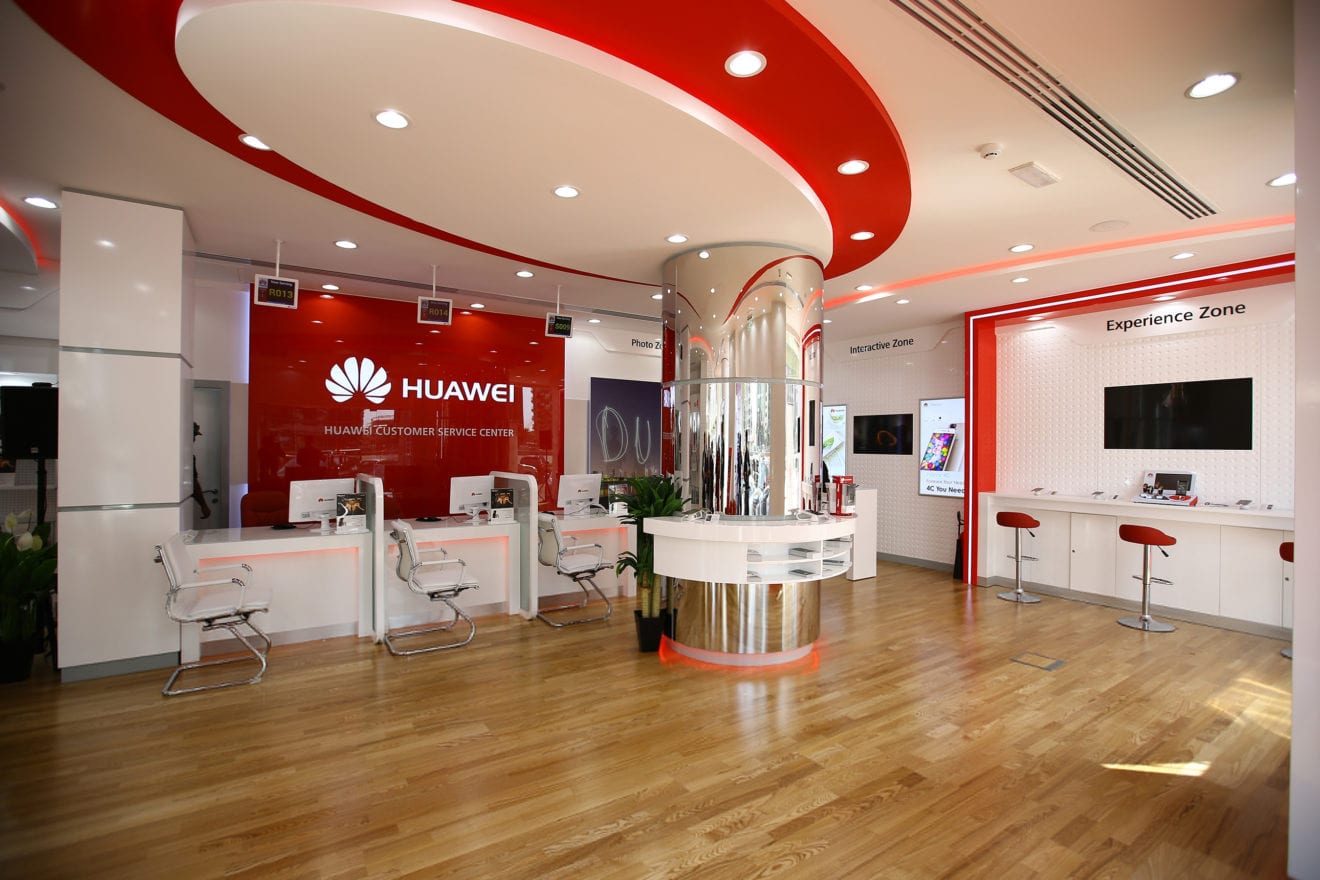
    Chinese smartphone maker Huawei Technologies will open its first retail store in Hong Kong by the end of July.

    Just a week after unveiling its flagship P20 Series smartphones in Hong Kong, the Shenzhen-based company has revealed its plans for a 2000sqft store in Tsim Sha Tsui.

    Huawei has a market share of around 10 per cent in Hong Kong, behind Apple and Samsung, but says it is working hard to achieve 15 per cent by the end of the year.

    Its latest products at the new store will have prices starting from HK$4980 (US$635), and include the P20 Pro, which has a three-camera system that takes photos with a far higher resolution than the iPhone, reports EJInsight. Huawei senior executive Richard Yu has described it as “the iPhone killer”.

    Huawei aims to boost its public exposure in Hong Kong with its own retail store, rather than relying on third-party channels. Already Apple has five stores in the territory since arriving in 2011, while Samsung has its Galaxy Studio. Beijing-based Xiaomi is set to open its third store in Mong Kok next year.

    With its store, Huawei will be able to showcase its technological advancements, such as its 5G development and its Kirin mobile processor. Its P20 Pro and Mate 10 have hardware specifications that surpass those of Apple.

    Worldwide, Huawei is growing faster than most of its rivals and is in a neck-and-neck race with Apple, says EJInsight. In fact, at one point last year it surpassed Apple in shipping volumes, but then the iPhone X and iPhone 8 series were released.

  • Huawei completes 5G NSA core network test

    Huawei completes 5G NSA core network test

    Huawei said it has become the first vendor to pass China’s 5G Non-Standalone (NSA) core network test, which constitutes an important part of the country’s 5G R&D trials for operators that hope to deploy 5G commercial networks early and quickly.

    The test, which covers key core network technologies and service processes, was part of the third phase trial organized by the IMT-2020 Promotion Group and conducted at the Beijing lab of the China Academy of Information and Communications Technology (CAICT).

    The test is based on the commercial 5G core network solution released by Huawei at the Mobile World Congress 2018. Technologies tested include: gateway selection in control and user plane separation (CUPS) architecture, 5G ultra-high bandwidth, dual-connection to LTE and new radio (NR), independent billing for 5G NR, and terminal access management.

    The key service processes include: terminal registration, service requests, mobility management, and session management.

    China’s three major carriers – China Mobile, China Telecom and China Unicom – as well as the network technology workgroup of the CAICT were involved in the network test, Huawei said.

    As of year-end 2017, Huawei had built 15 pre-commercial 5G core sites around the globe.

  • Huawei Marine to deploy subsea cable for NGCP

    Huawei Marine to deploy subsea cable for NGCP

    Huawei Marine has commenced the second phase of its Sorsogon-Samar Submarine Fiber Optical Interconnection Project (SSSFOIP) for the National Grid Corporation of the Philippines (NGCP).

    The phase two rollout, which involves the deployment of a 12.8Tbps subsea cable connecting Sorsogon and Samar, is expected to be complete in the third quarter.

    The dedicated cable will replace the existing microwave technology for the power transmission network.

    NGCP selected Huawei for the upgrade project through a public tender in 2016, aimed at enhancing branch network data exchange capabilities for the national grid. The first phase of the project, involving a marine route survey, was completed in 2016.

    “The transmission line between Sorsogon-Samar is an important branch of the network for the country,” NGCP network director for telecoms Ferdinand Dicon said.

    “During the first phase of exploration, Huawei Marine demonstrated their project delivery capabilities and experience as a world-class turnkey submarine cable supplier. We believe that in the second phase of construction, Huawei Marine will successfully deploy their leading-edge product technology with their customer focus support services.”

    Huawei Marine chief executive Mike Constable added that this project is the company’s first power grid project.

    “Based on the results of the first phase of exploration, we will deploy the latest technology to build a fit-for-purpose communication network which will transform the NGCP’s network capabilities,” he said.

  • Huawei might rebrand Honor 8 Pro and launch it in China

    Huawei might rebrand Honor 8 Pro and launch it in China

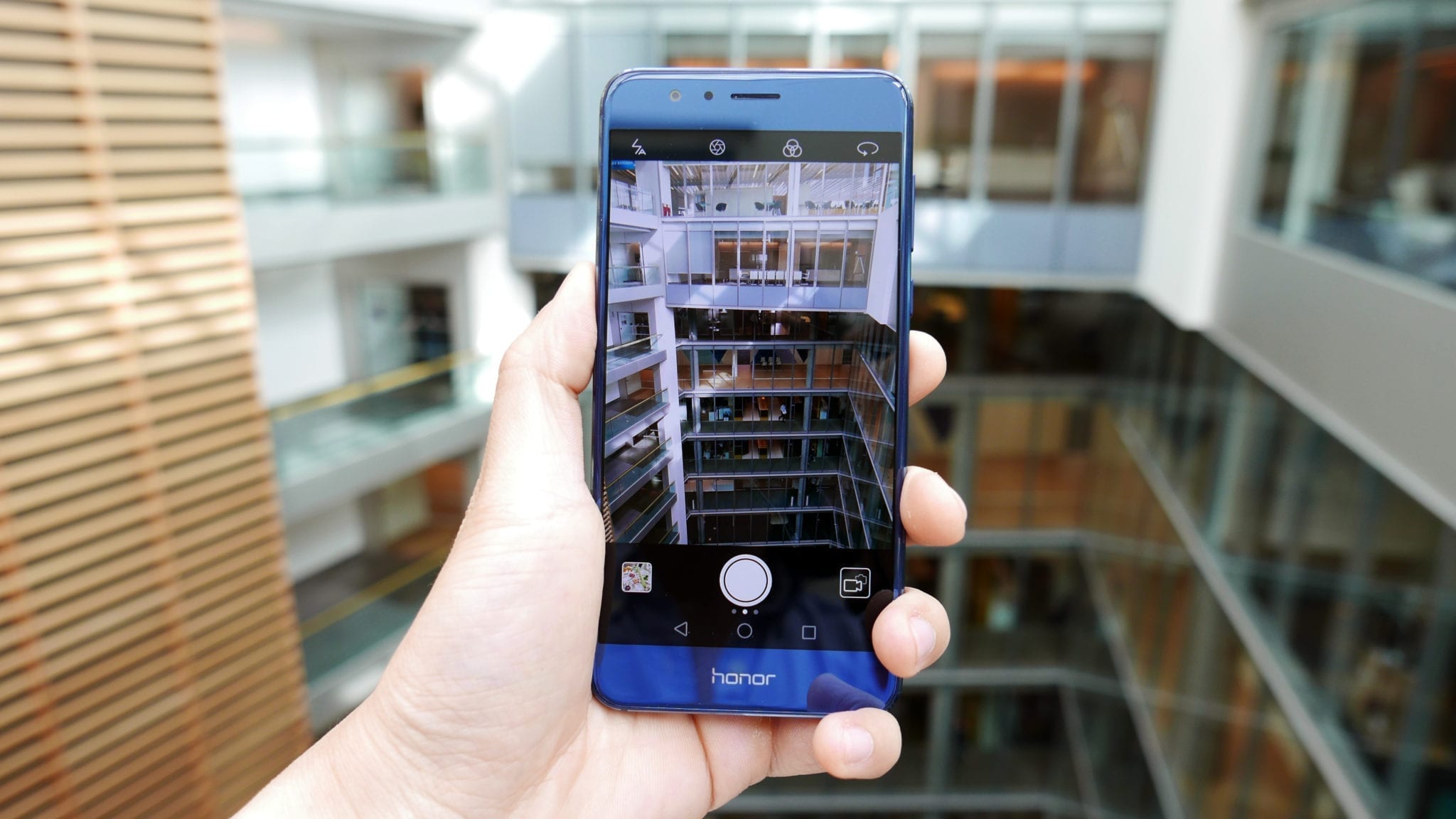
    Huawei, China’s leading smartphone maker, might be planning to rebrand Honor 8 Pro and relaunch it this year. Honor is Huawei’s online-only brand and the company might be putting its own branding on Honor 8 Pro at the time of its launch.

    The details of Huawei’s plan to launch a rebranded version of Honor 8 Pro were tweeted by Evan Blass. There is a possibility that the Chinese smartphone maker might be targeting the offline retail segment with its branding on Honor 8 Pro. To recall, Honor 8 Pro was launched in 2016 as company’s device competing with OnePlus 3 and OnePlus 3T in the premium mid-range segment.

    The Honor 8 Pro was one of the successful devices for Honor brand, and it helped the company establish itself in key markets including India. In terms of features, the Honor 8 Pro gets a 5.7-inch IPS LCD display with a resolution of 2560×1440 pixels. The smartphone is powered by company’s own Kirin 960 chipset coupled with 6GB RAM and 64GB storage.

    The Honor 8 Pro features a dual 12-megapixel rear camera setup with one color sensor and another monochrome sensor. It also offers an 8-megapixel selfie camera with f/2.0 aperture and support for 1080p video recording.

    Other features include Wi-Fi, Bluetooth, GPS, NFC, 4G LTE with VoLTE support. The smartphone was launched with EMUI 5.1 based on Android Nougat, but has since been upgraded to EMUI 8.0 based on Android 8.0 Oreo. The Honor 8 Pro packed a 4,000mAh battery, and was available in white, black and blue color variants.

    Huawei often rebrands Honor-branded smartphones in its home market, and targets them in the offline retail space since Honor already has strong presence in online segment. With rebranded version of Honor 8 Pro, Huawei might be planning to target those who are not getting Honor View10 and will fill a gap in the price segment.

  • Honor Opens its First Flagship Store in Myanmar

    Honor Opens its First Flagship Store in Myanmar

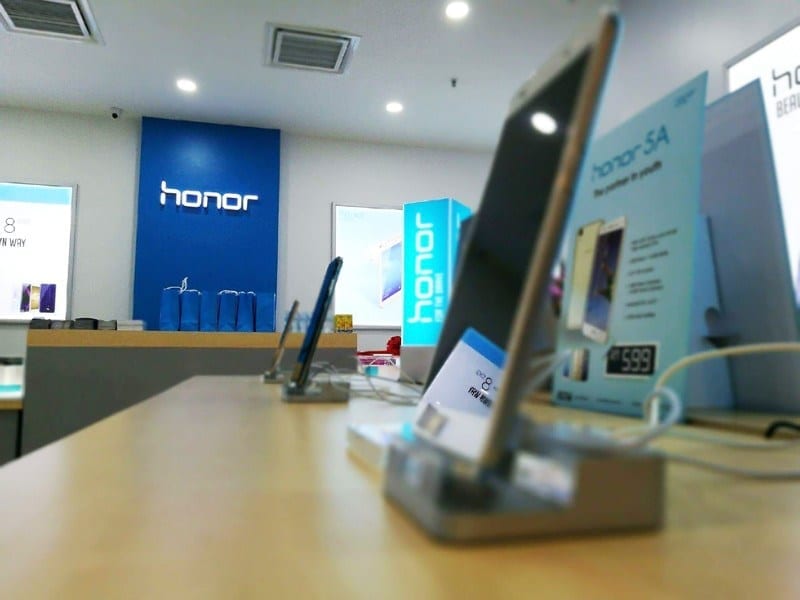
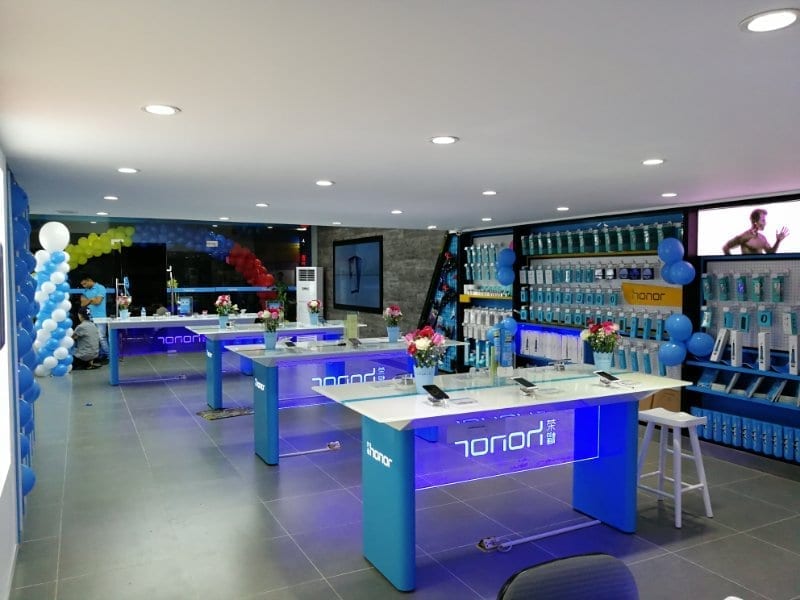
    A flagship store for Honor, a smartphone brand from China’s Huawei Group, has opened in Yangon.

    With its slogan “For the brave”, the brand was created for digital natives and offers internet-optimised products and high specifications at an accessible price level.

    Honor president George Zhao says the Myanmar flagship is a milestone for the brand’s Southeast Asia expansion journey. “Globally, we are confident we will see Honor rise to become a top-five smartphone brand within three years.”

    Four of Honor’s top-rated products feature in the new store: Honor 7X, its first FullView Display smartphone aimed at gamers; Honor V9 Play, a minimalist Scandinavian-style smartphone; Honor 6X, offering budget technology for digital natives; and Honor Holly 6, am affordable high-performance model.

  • Hybrid Smartwatches to Make Up Over 50% of Smartwatch Shipments by 2022

    Hybrid Smartwatches to Make Up Over 50% of Smartwatch Shipments by 2022

    Watches that appear to be analogue models but integrate smartwatch features will make up more than half of the smartwatch market by 2022, according to Juniper Research.

    This means that nearly 80 million hybrid smartwatches, such as Fossil Q and Nokia Steel, will be shipped by 2022, up 460 per cent from an estimated 14 million last year. However, for digital-display smartwatches like Apple Watch and Fitbit Ionic, Juniper lowers the rate of growth to 160 per cent.

    This slower growth has caused several manufacturers, including Huawei, Motorola and Sony, to leave the space, says Juniper’s new report, Smartwatches: Trends, Vendor Strategies & Forecasts 2018-2022. Those staying in play are pivoting toward specific uses, mainly fitness, which Apple, Casio, Samsung and others have emphasised in recent releases.

    “The smartwatch market is refining itself into a series of specific-use cases”, says research author James Moar. “This is having an impact on every aspect of smartwatches, from their design for increasingly specialised uses to their sale through specific retailers. While most vendors cannot necessarily hope to reach a broad coverage, the industry as a whole is here to stay.”

    Despite the renewed interest in hybrids, Juniper expects individual players to produce few smartwatches. Hybrid watch manufacturers generally ship fewer than 2 million units annually.

    An exception is Fossil, which has released many display and hybrid smartwatches. It is forecast to ship more than 6 million smartwatches annually by 2020.

    Meanwhile, the report has found that different connectivity technologies are becoming more prevalent for smartwatches, with GPS expected to be an element for nearly half of all smartwatches by 2022. In comparison, growth will be limited for near-field communication NFC technology as this is currently locked into specific ecosystems. Juniper does not foresee any change to this in the foreseeable future.

    Juniper Research provides research and analytical services for the global hi-tech communications sector, and has also just issued a complimentary white paper for vendors, Why Most Smartwatches ‘Fail’.

  • China’s Huawei setback in US market amid national security concerns

    China’s Huawei setback in US market amid national security concerns

    Chinese tech giant Huawei faces a major setback in efforts to expand in the U.S. smartphone market following renewed national security concerns, documents showed.

    Huawei, which appeared to lose a deal with AT&T that would have given it an improved foothold in the handset market, faced criticism from U.S. lawmakers over its intellectual property protection and its ties to Chinese intelligence, according to a letter seen by AFP this week.

    The letter, signed by 18 members of the House and Senate intelligence panels, expressed concerns first voiced in 2013 by congressional investigators.

    The document said that later information obtained by the committees “only reinforces our concerns regarding Huawei and Chinese espionage.”

    The letter dated December 20 was sent to the U.S. Federal Communications Commission with copies to the Justice Department, FBI, CIA and Department of Homeland Security.

    It said the FCC “would benefit from Intelligence Community briefings on the threat Huawei and other Chinese technology companies pose.”

    Huawei has become the world’s third largest smartphone maker — but its U.S. presence has been limited by a lack of agreements with wireless carriers, which sell most devices.

    The company’s consumer business chief Richard Yu was a keynote speaker Monday at the Consumer Electronics Show, where an expected announcement with AT&T failed to happen.

    Yu did not directly address concerns in the letter, but said it was “unfortunate” that Huawei would not be selling in the U.S. through carrier channels.

    “It’s a big loss for us and also for carriers,” he said. “But the more big loss is for consumers.”

    In addition to the AT&T deal, a potential agreement with another major wireless carrier, Verizon, was also in jeopardy, according to media reports.

    A Huawei spokesman said the company would not comment on rumors or speculation and did not respond to the letter, which was revealed earlier this week by U.S. media.

    The company said it would release new products to U.S. consumers as unlocked devices through retail channels, reaching a smaller market.

    “We have the strongest confidence in our products and will continue to innovate and break new ground,” Huawei said in a written statement.

    “At the same time, we believe that U.S. consumers deserve equal opportunity and the choice to enjoy the best technology and more smartphone options through more channels… At Huawei, privacy and security are always our first priority.”

    The statement added: “We are compliant with the world’s most stringent privacy protection frameworks… We have gained the trust of over 150 million customers in the past year alone, and now sell our devices through more than 45 of the top 50 global carriers.”

  • Huawei aims to ride tech wave to N° 1 brand status in Thailand

    Huawei aims to ride tech wave to N° 1 brand status in Thailand

    Richard Yu, chief executive officer of Huawei Consumer Business Group, said that the firm provides Huawei smartphones as a premium brand to cover mid-tier and the high-end global market. The firm’s new intelligence phone will bring together artificial intelligence (AI), Augmented Reality (AR), Mixed Reality (MR), and Virtual Reality (VR). With the AR technology, the future phone will be paired with an AI processor, an AI camera and an AI operating system. The new intelligence phone will have long battery life and super-fast charging ability.

    “My plan for the next five years: With AI, AR, VR and MR, we will have an intelligent phone. We want to provide the future and next-generation phone. In addition, we will try to improve our marketing, branding, retail and services. Every year, we continue to improve our marketing, branding, retail and services in the Thai market and worldwide. We aim to be the leader in artificial intelligence, VR and MR,” said Yu.

    He said the firm next year would launch its new flagship smartphone with new technology such as improved camera and super-fast charging features.

    The firm now provides smartphone with two brands: Huawei for the mid-tier and high-end market, and Honor for young people, e-commerce, mass market, low-end and mid-tier market. The Honor smartphone is available only in China.

    “We want to enhance our technology and innovation and improve the users’ experience,” said the CEO.

    He said the firm in 2017 gained market share in China, totalling 23.8 per cent. It also became number one in Italy, Spain, and Poland.

    In China, it aims for market share of more than 40 per cent in the next three years. Therefore, the firm wants to build its marketing, enhance branding, build better ecosystem and retail system in the Chinese market.

    He added that Thailand is still a growing market, especially in the premium segment. The overall Thai market is growing. The current market share is around 10 per cent. It aims to be No 1 in market share in Thailand for mid-range and high-end smartphones in the next three years with market share of more than 30 per cent.

    He said the firm plans to invest in Thailand in |marketing, branding, premium stores and shops and services.

    “We have committed to the Thai market for the long term. We want to be the leader as a brand and in market share within three years,” said Yu.

    The firm this year expects 30 per cent revenue growth year on year and expects the trend to continue next year. The firm is targeting 1,000 per cent growth in the global market over the next decade. The firm sees high potential in China, Europe and Japan.

    Regarding upcoming smartphone trends, he said next year consumers will buy smart phones with high storage capacity and memory to support more applications, bigger screen, better camera and processor to support customers who love game. He said AI would become more popular. He said battery life would also become more important for consumers. The firm will come out with smartphone with a battery life improvement of around 20 per cent with super-fast charging and digital single-lens reflex (DSLR) camera features.

    He also said that the smart phone manufacturers would have to consolidate in the future in order to survive.

    The firm continues to cooperate with its business partners to improve its smartphone features and productivity such as Microsoft, Porsche and Leica.

    Last year, the firm invested US$11 billion in research and development.

  • Huawei teams with Baidu on AI development

    Huawei teams with Baidu on AI development

    Huawei has entered a partnership agreement with Chinese search giant Baidu covering AI platforms and technology, internet services and content ecosystems.
    The two companies plan to develop an open mobile and AI ecosystem using Huawei’s HiAI platform and Baidu Brian, a collection of AI assets and services.
    The HiAI platform is being developed on Huawei’s embedded AI chipset, the Kirin 970. The chipset was used in the Huawei Mate 10, the world’s first smartphone powered by an embedded AI chipset, which launched earlier this year.
    The planned joint AI ecosystem will use Huawei’s neural network processing unit and Baidu’s PaddlePaddle deep learning framework to empower AI developers and provide consumers with a rage of AI offerings and smart services.
    In addition, the partners will work together on voice and image recognition for smart devices to enable more efficient human-machine interaction, and jointly build an augmented reality ecosystem for consumers.
    “The future is all about smart devices that will actively serve us, not just respond to what we tell them to do,” commented Richard Yu, CEO of Huawei’s consumer business group.
    “With a strong background in R&D, Huawei will work with Baidu to accelerate innovation in the industry, develop the next generation of smartphones, and provide global consumers with AI that knows you better.”
  • The most expensive, in-demand phone in China right now isn’t the iPhone X

    The most expensive, in-demand phone in China right now isn’t the iPhone X

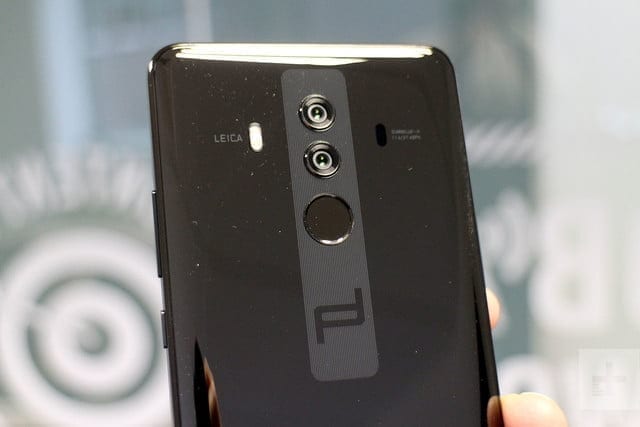
    Even if you don’t intend to buy one, there’s a good chance you know how much the iPhone X costs, due to its $1,000-plus price gaining plenty of attention. Despite being one of the most expensive phones you can buy, it’s apparently not the one that’s most expensive, in-demand phone in China right now. That dubious honor goes to Huawei, and its Porsche Design-branded spin-off of the Mate 10 Pro.

    Even at standard retail price the Huawei Mate 10 Pro Porsche Design is more expensive than the iPhone X, but a high degree of demand has seen prices double, as people clamor to get their hands on the phone. In China, the Porsche Design version costs 9,000 yuan, or about $1,370 at today’s exchange rate. That’s if you can find one for sale at all.

    The limited edition phone has found plenty of buyers, and its rarity is pushing prices on the resale market up. Online retailers are selling the phone for between 18,500 yuan and 27,000 yuan, or $2,800 and $4,100. By comparison, the iPhone X is readily available on Taobao and JD.com for around 9,000 yuan, only slightly more than its official, cheapest retail price.

    A retailer selling the Mate 10 Pro Porsche Design on Chinese online site Taobao said he has received many enquires for the device, but few have been able to actually buy it. A 38 year-old who tried, but ultimately failed, to buy the phone through the official Huawei sales channel said the phone sold out in seconds. Huawei and Porsche Design have never said how many of the phone will be produced.

    In addition to China, the Porsche Design phone is sold in Europe, where it’s priced at 1,395 euros and is expected to ship at the beginning of December if you pre-order now. The European Porsche Design store also sells a Chinese version of the device, and orders will ship in January if placed now.

    Is the Porsche Design Mate 10 Pro worth not only the trouble of finding one, but also paying considerably more than the regular price, or even the standard Huawei Mate 10 Pro? We’ve used the phone, and definitely concluded that you’re better off saving some cash and just buying the superb standard Mate 10 Pro.

  • LG U+ and Huawei trial UHD IPTV

    LG U+ and Huawei trial UHD IPTV

    South Korea’s LG U+ and Huawei have completed a trial involving ultra-high definition IPTV streaming over 5G fixed wireless access with chipset based 5G millimeter wave customer premise equipment.

    The world-first trial demonstrated UHD (3840 x 2160) resolution IPTV over 5G, achieving up to a 2Gbps capacity over an end-to-end 5G network operating in the 28-GHz band.

    It used Huawei’s end-to-end 5G portfolio including 5G gNodeB, NG Core and 5G CPE offerings. Huawei said its new 5G CPE is the world’s first chipset based CPE ready for commercial engineering, including both outdoor and indoor equipment

    “This world’s first end-to-end FWA test shows that, following LG U+ and Huawei’s successful cooperation in the LTE era, the investment of the two sides in 5G research has had breakthrough results,” LG U+ 5G network strategy VP Kim Dae Hee said.

    “We will work with Huawei to maintain in-depth cooperation, and prepare for the coming 5G commercial launch.”