Tag: Huawei

  • Huawei Mate 20 sales achievement proves the company doesn’t need the US

    Huawei Mate 20 sales achievement proves the company doesn’t need the US

    With a little over two weeks left until Huawei will finally take the wraps off the P30 flagship series, the company is mainly busy building hype around a quad camera setup that might take mobile zoom photography to a whole new level of excellence. But at the same time, the world’s second-largest smartphone vendor continues to boast impressive achievements on its way to the global market’s first place. Despite not being officially available in the US, which remains one of the world’s biggest and most profitable smartphone markets, the Huawei Mate 20 “Series” has managed to rack up a grand total of 10 million shipments in just four and a half months. That’s obviously not the first time one of the company’s flagship families has reached 10 million unit sales, but the P20 and Mate 10 got to that number pretty much simultaneously back in August 2018.

    While the P20/P20 Pro duo needed roughly five months on store shelves to cross the milestone, the Mate 10 and Mate 10 Pro were nowhere near as popular, taking twice as long to score a combined 10 million shipments. And yes, we’re talking about the same Huawei Mate 10 Pro that you could buy unlocked from a number of authorized US retailers with a valid warranty included.<where more or less reliable vendors can hook you up with "international" stock at decent prices, but with no warranty. What this all suggests is that Huawei really doesn't need the US to succeed. The Chinese tech giant is huge in Asia, growing at a crazy pace in Europe, and even decently popular in Canada, where the Mate 20 Pro is sold through major carriers like Rogers, Bell, and Telus. If the company continues its progress in both the high-end and mid-range categories, there's definitely a good chance the smartphone market will have a new leader soon.

  • Samsung patent reveals its next foldable smartphone

    Samsung patent reveals its next foldable smartphone

    Two major smartphone vendors, Samsung and Huawei, revealed their first foldable phones – Samsung Galaxy Foldand Huawei Mate X. Although both are based on the same foldable concept, they’re using different technology, which led to some rivalries between the companies and their fans, of course.

    Specs aside, the major difference between these two smartphones is the way their displays fold. First off, we have the Samsung Galaxy Fold, which features a big display that folds to the inside of the device. Secondly, there’s the Huawei Mate X which folds outward, with the part of the display that becomes the back side of the folded phone turning off.

    Many say that Huawei’s solution is much better in terms of design, even though the Chinese company’s foldable smartphone is prone to scratches due to the design. Samsung and Huawei have been arguing about who’s got the best overall foldable smartphone design, but that might not last too long.

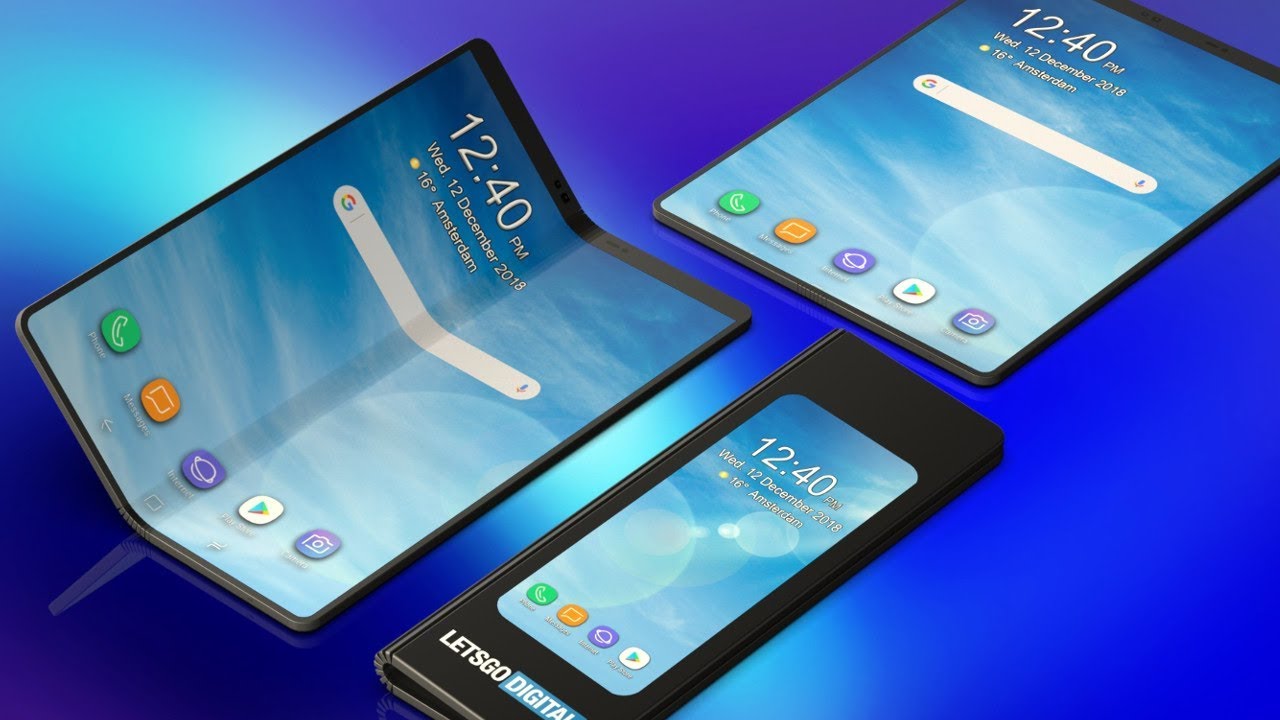
    Samsung is reportedly readying two other foldable smartphones, one of which will feature the same foldable design as the Mate X. One of Samsung’s patents spotted by LetsGoDigital reveals what the upcoming Samsung foldable smartphone might look like.

    It’s definitely a step up from the current model, the Galaxy Fold since it comes with a flexible segment in the middle that makes it possible to close it seamlessly when completely unfolded. The images also reveal some sort of slide that works like a lock to make sure that the phone remains flat when opened.

    This removes the need of having to implement a more sturdy hinge to keep the phone completely flat when you open it. If Samsung does plan to launch such a device, it will be the company’s first foldable smartphone to feature an outward-facing display, in the same vein as Huawei’s Mate X.

    picture by: letsgodigital.org

  • Huawei takes US government to court

    Huawei takes US government to court

    Huawei lost its trade mark reticence when it announced yesterday that it is suing the US government for banning federal agencies from buying its products.

    The complaint filed in a U.S. federal court challenges the constitutionality of Section 889 of the 2019 National Defense Authorization Act (NDAA). Through this action, Huawei seeks a declaratory judgment that the restrictions targeting Huawei are unconstitutional, and a permanent injunction against these restrictions.

    From Huawei’s perspective, the NDAA restrictions prevent the company from providing more advanced 5G technologies to U.S. consumers, which will delay the commercial application of 5G, in turn, impeding efforts to improve the performance of 5G networks in the U.S.

    “The U.S. Congress has repeatedly failed to produce any evidence to support its restrictions on Huawei products. We are compelled to take this legal action as a proper and last resort,” Guo Ping, Huawei rotating chairman said in a press conference held yesterday at company’s Shenzhen campus.

    “This ban not only is unlawful, but also restricts Huawei from engaging in fair competition, ultimately harming U.S. consumers,” he said.

    The lawsuit was filed in a U.S. District Court in Plano, Texas. According to the complaint, Section 889 of the 2019 NDAA not only bars all U.S. Government agencies from buying Huawei equipment and services, but also bars them from contracting with or awarding grants or loans to third parties who buy Huawei equipment or services, without any executive or judicial process.

    The Chinese telecoms and IT equipment vender claims this violates the Bill of Attainder Clause and the Due Process Clause. The Huawei lawsuit also claims the violation of the Separation-of-Powers principles enshrined in the U.S. Constitution, because Congress is both making the law, and attempting to adjudicate and execute it.

    “Section 889 is based on numerous false, unproven, and untested propositions,’ said Song Liuping, Huawei’s chief legal officer.” Contrary to the statute’s premise, Huawei is not owned, controlled, or influenced by the Chinese government.”

    He added: “Moreover, Huawei has an excellent security record and program. No contrary evidence has been offered.”

    Citing industry sources, Huawei claims that allowing them to compete would reduce the cost of wireless infrastructure by between 15% and 40%. This would save North America at least US$20 billion over the next four years.

    “If this law is set aside, as it should be, Huawei can bring more advanced technologies to the United States and help it build the best 5G networks,” Guo Ping said. “Huawei is willing to address the U.S. Government’s security concerns. Lifting the NDAA ban will give the U.S. Government the flexibility it needs to work with Huawei and solve real security issues.”

  • Maxis to launch full 5G trials with Huawei

    Maxis to launch full 5G trials with Huawei

    Malaysia’s Maxis has signed an agreement with Huawei during Mobile World Congress in Barcelona to accelerate 5G development in Malaysia.

    Under the agreement, the companies plan to collaborate on full-fledged 5G trials involving end-to-end systems and services.

    The memorandum of understanding was signed by Maxis CEO-designate Gokhan Ogut and CTO Morten Bangsgaard, as well as Huawei rotating chairman Guo Ping, president of Southern Pacific Jeffery Liu and CEO of Malaysia Michael Yuan.

    “Maxis has long started its 5G journey, and we are already focusing on live trials, investments and evolving our network infrastructure to be ready for a future where smart solutions will be part of everyday life,” Ogut commented.

    “We are pleased to be working with world class technology leader and long term partner Huawei on our 5G trials, and to be a pioneer in bringing the latest technologies to Malaysia once again.”

    Huawei said that to date it has signed over 30 commercial 5G contracts and shipped more than 40,000 5G base stations across Europe, Asia and the Middle East.

  • New Zealand bans Huawei from 5G mobile network

    New Zealand bans Huawei from 5G mobile network

    From offering mobile payment services such as WePay and Alipay to hiring front-desk staff proficient in Mandarin, the New Zealand Chinese Travel and Tourism Association was not short of advice for Kiwi tourism operators on how to benefit from an influx of mainland Chinese visitors to New Zealand this year.

    “Chinese tourists enjoy spontaneous travel so there are a lot of last minute bookings. For businesses who’d like to attract Chinese tourists, this is the major challenge for them,” association chairman Simon Cheung said in a promotional video.

    But preparations for the 2019 China-New Zealand Year of Tourism – a campaign by both governments to strengthen economic and bilateral ties – were cast in doubt when China postponed the launch event, which was expected to take place in Wellington next week. Huawei is banned, but where is the backlash in New Zealand?

    New Zealand Prime Minister Jacinda Ardern on Tuesday acknowledged that the country’s relationship was complex and not without challenges, but dismissed talk there was a rift. But she revealed that dates for her first official trip to China, planned for the end of last year, still had not been finalised.

    “I have been issued with an invitation to visit China, that has not changed. We continue to find dates that would work,” she said.

    Her admission fuelled concerns from opposition parties and the media that ties, already tense after Ardern’s government blocked Chinese telecom giant Huawei from the nationwide roll-out of a 5G data network over “significant national security concerns”, were deteriorating further.

    Last weekend, an Air New Zealand flight en route to Shanghai was turned back to Auckland, with some reports suggesting it was due to how paperwork on board the plane had referred to Taiwan. According to Bloomberg, the airline said the Boeing 787-9 Dreamliner was not yet certified to fly to China, but had been “unfortunately assigned” the flight.

    The Civil Aviation Administration of China last year told foreign firms and airlines not to refer to Taiwan as anything other than a Chinese territory on their websites.

    Former New Zealand government trade consultant Robert Scollay said from the point of view of those in the country, China’s latest actions “raised the question of whether this is a temporary expression of displeasure or if it means something more significant”.

    After Wellington’s decision on Huawei, which it took in support of its fellow members in the Five Eyes intelligence alliance, there was a debate on whether it had finally chosen a side in its long-running balancing act between the United States and China – its two most important economic partners.

    But Chinese foreign ministry spokesman Geng Shuang on Friday dismissed the suggestion, saying both countries had a common interest in ensuring healthy and stable ties. “China is willing to work with New Zealand on the basis of mutual respect, equality and mutual benefit to promote the continued development of China-New Zealand relations,” Geng said.

    Noakes from the University of Auckland said he was not convinced ties had deteriorated, despite recent events. “The really unlucky thing is that the perceived souring of ties dovetails with commonly held misperceptions of what China is and what engagement with China means for New Zealanders.”

    Jason Young, director of New Zealand Contemporary China Research Centre at the Victoria University of Wellington, had a more ominous take.

    “This can become a self-fulfilling prophecy,” he said. “We talk ourselves into having a bad relationship with China, and that’s quite dangerous.”

  • Smartwatch market set for a shakeup: Juniper Research

    Smartwatch market set for a shakeup: Juniper Research

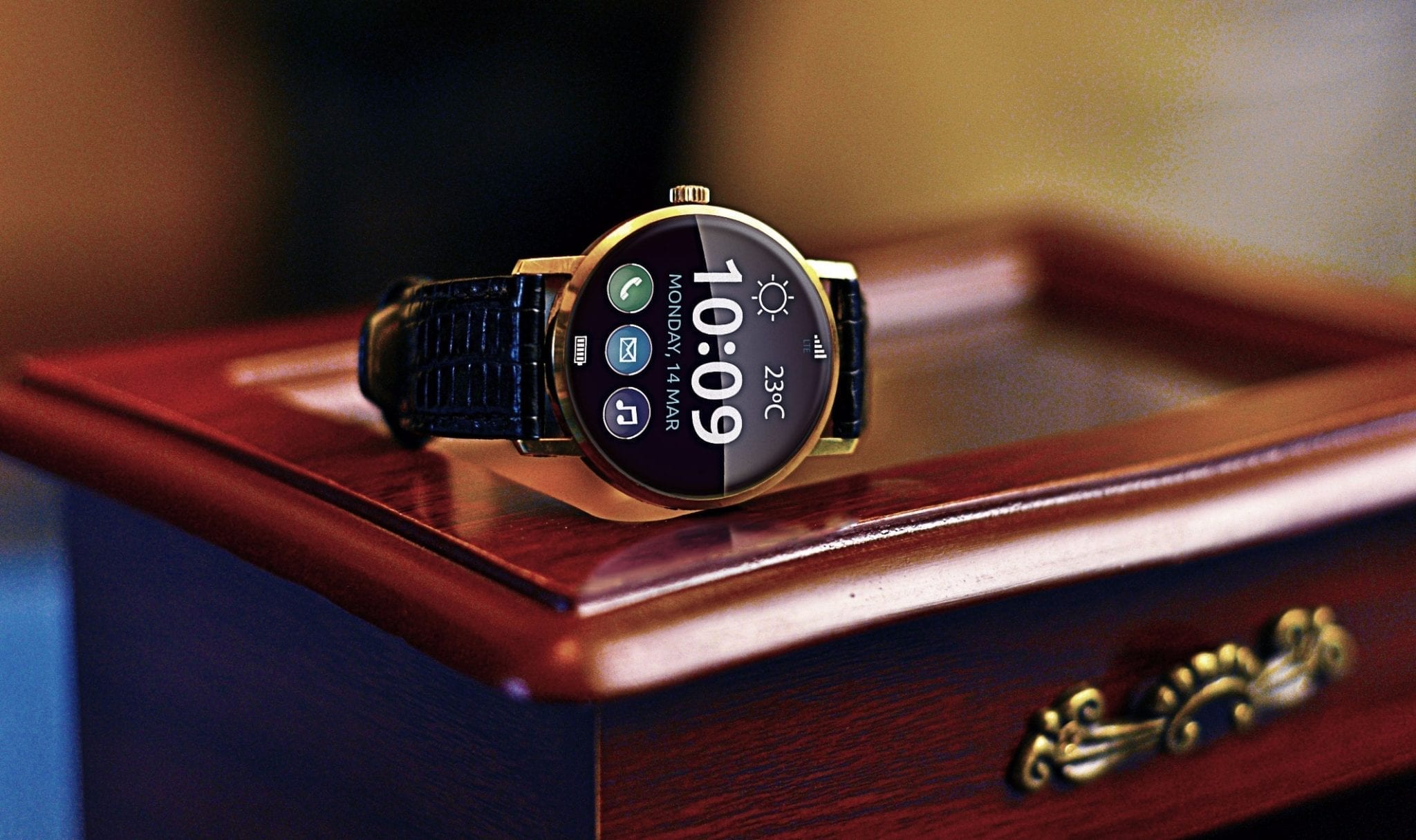
    Big brands are set to lose share in a major shakeup of the smartwatch market. According to Juniper Research, the largest brands in the category now will see their market share fall by 2023 as new niche players gain ground. Four leading brands including Apple, Samsung, Fitbit, and Fossil will see sales decline from an estimated 58 per cent of the market last year to 47 per cent by 2023. The decline is due to the growth of smaller players such as Garmin, Huami and Huawei.

    Smaller players will thrive thanks to strategies tailored for niche markets, their choice of cases or price points, while other brands are releasing premium smartwatches combining the best of fitness, outdoor activity and health features. While Apple will remain the largest single vendor in terms of shipments over the next four years, Huawei will enjoy the fastest growth, at a CAGR of 20 per cent.

    An intensified focus on healthcare integration will also contribute to an increase in smartwatch shipments over the next few years. Juniper forecasts that Apple and Withings will lead this section, followed by Fitbit and Garmin.

    China to become the biggest market

    The rise of smaller players is linked to the rapid expansion of the Chinese market offering lower-priced smartwatches. The Far East and China have now overtaken North America as the largest geographical market, with more than 24 million smartwatches shipped last year, compared to 19.5 million in North America.

    The gap between these two markets will widen by 2023, with the Far East and China trebling its shipments by then.

    Slower hybrid market

    The adoption of hybrid smartwatches will be slower than expected. Last year, hybrid smartwatches represented about 22 per cent of all smartwatch sales. The slower growth is linked to smaller players focusing on digital smartwatches offering more possibilities in terms of apps, connectivity and sensors than hybrid watches, which remain limited in their functionality.

  • Huawei confident of 5G role in Vietnam

    Huawei confident of 5G role in Vietnam

    Huawei Technologies says it has a good chance to be a supplier of 5G equipment to Vietnamese service providers. Fine Fan, CEO of Huawei Vietnam, said that the Chinese company is in talks with Vietnamese partners on conducting 5G trials later this year. “We are confident of expanding in Vietnam,” Fan said, adding that Vietnamese Minister of Information and Communications Nguyen Manh Hung “is open to every provider.”

    Fan said that Huawei cannot be beaten on quality or cost in Vietnam. “Huawei will provide better technology and solutions, along with financial support to local operators to deploy 5G.”

    Huawei’s expression of confidence comes as major mobile carriers in Vietnam have previously announced plans to develop 5G networks using equipment from other suppliers, including Ericsson, Nokia and Samsung Electronics.

    Viettel, the country’s largest telecommunications company, became the first firm to receive permission to trial 5G services last month.

    The company has earmarked $40 million for the development of its own 5G chipset, but was also considering using technology from Ericsson and Nokia, its president and CEO Le Dang Dung said.

    Last November, Minister Hung said at a conference that Vietnam should test 5G in 2019 and ensure nationwide coverage by 2020.

    “Vietnam should be one of the first to launch the network, at least in Hanoi and HCMC,” Hung said. The country had been one of the last in Southeast Asia to roll out 4G services.

    Huawei has been the largest provider of 2G and 3G network equipment in Vietnam, though the company lost its lead when 4G arrived, CEO Fan said.

    Vietnam’s telecom market was estimated at more than $16 billion in 2016, with the three state-owned providers, Viettel, MobiFone, and VNPT, accounting for 95 percent of the market.

    5G is said to offer speeds 100 times faster than 4G, primarily used for smartphones and other similar devices. 5G is also expected to support new applications like remote medical procedures and autonomous driving.

  • Time for China’s smartphone brands to bloom

    Time for China’s smartphone brands to bloom

    Like many urban Chinese consumers, Shenzhen civil servant Gao Jian has had a long-held belief that the quality of domestic smartphone brands paled in comparison with foreign brands, especially Apple. But in December, Gao joined the growing number of mainland consumers who have made the switch from Apple’s iPhone to a premium Android smartphone from a major Chinese brand. He bought a Mate 20 Pro, the flagship model from the country’s largest smartphone supplier Huawei Technologies.

    “Its design and cameras are better than what I expected,” Gao said. “Also, iPhones have become increasingly unaffordable.”

    His experience reflects the broader success of the Chinese mobile phone industry in smashing people’s perception that domestic suppliers are only good for inexpensive, low-quality products.

    That stereotype has beset many Chinese brands in the home appliances, consumer electronics, personal computer, car and mobile phone markets, where products from more established brands in the US, Japan or Europe were preferred by mainland consumers for many years.

    But brands like Haier Group Corp, Lenovo Group and, more recently, Huawei, have expanded their operations, increased research and development, and made advanced products to change that impression around the world.

    China is now home to some of the most successful smartphone brands, which rival the likes of Samsung Electronics, Apple and LG Electronics.

    Shenzhen-based Huawei, the top global supplier of telecommunications network equipment, was ranked the world’s second biggest smartphone vendor – behind Samsung and ahead of Apple – for the second consecutive quarter in the three months ended September 30, according to research firm IDC. Xiaomi Corp and Oppo took the No 4 and 5 spots in the same quarter.

    The emergence of Chinese smartphone brands on the global stage has mirrored the rising competitiveness of the country’s telecoms network equipment suppliers, which have won market share with value-for-money offerings as well as on heavy investments in research and development.

    The gains have also sparked increasing pushback by the US, which is persuading its allies to boycott Chinese telecoms gear suppliers such as Huawei on grounds of national security.

    With the world’s biggest internet population and smartphone market, China had as many as 300 domestic mobile phone companies about three years ago. Cutthroat competition reduced that number to about 200 last year, as Chinese consumers bought fewer smartphones and the economy grew at a slower pace.

  • Klang Valley malls performed slower last year due to competition

    Klang Valley malls performed slower last year due to competition

    Stronger performances from Gurney Plaza and East Coast Mall compensated for a lower contribution from CapitaLand Malaysia Mall Trust’s Klang Valley shopping malls last year. CapitaLand Malaysia Mall REIT Management (CMRM), which manages CapitaLand Malaysia Mall Trust (CMMT), released its results this week, revealing net property income of RM215 million (US$52.57 million) for the year. Its distributable income was RM161.3 million.

    “Gurney Plaza and East Coast Mall, which collectively accounted for about 68 per cent of CMMT’s net property income, continued their growth momentum last year,” said Low Peck Chen, CEO of CMRM. “This helped to moderate the lower contribution from our Klang Valley malls, which continued to be affected by increasing competition in the vicinity, as well as downtime for asset enhancement works and lower rents at Sungei Wang and The Mines.”

    During the final quarter of last year,  the company completed the asset enhancement works at Gurney Plaza’s Level 4 and improved the tenant mix at East Coast Mall’s ground floor. Tenants, several of them new to Penang and Kuantan, have progressively commenced operations at the newly renovated spaces.

    “We expect the completed asset enhancement initiatives at both malls to contribute positively to our performance going forward,” said Chen.

    In Kuala Lumpur, Sungei Wang’s reconfiguration of its annex is on track and new-to-market and novel experiential concepts will feature in the Jumpa lifestyle zone when it opens in the second half of this year.

    “We continue to refresh our tenant mix to meet the diverse needs of our shoppers, who can now find popular stores like Huawei, Sport Planet and Mr DIY at 3 Damansara, as well as home improvement store SSF and children activity centre Olympic Kids Club at The Mines,” said Chen. “At Sungei Wang, the newly renovated main anchor Giant will soon unveil a fresh concept to draw more shoppers.”

    David Wong, chairman of CMRM, said that against a backdrop of “increasing uncertainties in the global economy and concerns around the rising cost of living,” the company expects consumer and business sentiments to remain cautious this year.

    “Despite the challenging operating environment, we will continue to strengthen CMMT’s performance by proactively managing lease renewals and exploring opportunities in asset enhancement initiatives and acquisitions that will create value for our Unitholders.”

    CMMT is a shopping mall-focused Reit with five shopping malls: Gurney Plaza in Penang, a majority interest in Sungei Wang in Kuala Lumpur, 3 Damansara and Tropicana City Office Tower in Petaling Jaya, The Mines in Seri Kembangan and East Coast Mall in Kuantan, Pahang. The portfolio has a total net lettable area of more than 2.9 million sqft and was valued at RM4.1 billion at the end of last year.

  • Asia shares slip as China’s Huawei in legal hot water; focus on Sino-US talks

    Asia shares slip as China’s Huawei in legal hot water; focus on Sino-US talks

    Asian shares stumbled on Tuesday and the dollar hovered near two-week lows as prospects for a long-awaited Sino-US trade deal was dealt another blow after the United States levelled sweeping criminal charges against China’s telecom giant Huawei. MSCI’s broadest index of Asia-Pacific shares outside Japan got off to a shaky start with losses accelerating as other regional markets opened.

    Australia and New Zealand led the losses, with their benchmark indices down 0.7% each while South Korea’s KOSPI was off 0.3%. Chinese shares opened in the red too, with the blue-chip index down 0.2%.

    Japan’s Nikkei slid about 1%. US stock futures also lost ground following from a torrid overnight session on Wall Street, with E-Minis for the S&P 500 down 0.4%.

    Investor sentiment, already shaken by pessimism over global growth, took another hit after the US Justice Department unsealed indictments against China’s top telecom equipment maker, Huawei, accusing it of bank and wire fraud to evade Iran sanctions and conspiring to steal trade secrets from T-Mobile US Inc.

    The jolt to Huawei could undermine prospects for a trade deal between the economic giants as markets nervously await a fresh round of trade talks with Chinese Vice Premier Liu He set to meet US officials on Wednesday and Thursday.

    Further complicating matters, China triggered the legal process on Monday for the World Trade Organization to hear Beijing’s challenge to US tariffs, and berated the United States for blocking the appointment of judges who could rule on it.

    Souring US-China relations roiled global markets for much of last year, and have kept investors on the back foot this month. The trade war’s broadening impact on world growth is one reason the US Federal Reserve has signalled it will be patient on policy after raising rates four times in 2018.

    Overnight, markets got a reminder of the potentially damaging economic impact of the Sino-US trade war as Wall Street stocks were hit by profit warnings.

    The losses came as shares of Caterpillar and Nvidia Corp nosedived after the two manufacturers joined a growing list of companies cautioning about the crippling effects of softening Chinese demand.

    Caterpillar plunged more than 9% for its worst single-day drop since August 2011 while chipmaker Nvidia slid 13.8%.

    “Both companies are seen as industry bellwethers and their disappointing results provide further evidence that this time China’s slowdown is for real,” said Rodrigo Catril, Sydney-based strategist at National Australia Bank.

    The downbeat global growth impulse mean investors will look for further confirmation the Fed will pause its rate-hike cycle at a two-day policy meeting ending Wednesday.

    Overnight on Wall Street, the Dow and S&P 500 each closed down 0.8% and the Nasdaq was off more than 1%.

    WARNING BELLS

    Worryingly, earnings at China’s industrial firms too shrank in December, pointing to more troubles for the country’s vast manufacturing sector already struggling with a decline in orders, job layoffs and factory closures.

    Slowdown fears slugged the US dollar which faltered to its lowest in two weeks on Monday. The dollar’s index, which measures the greenback against a basket of major currencies, was last at 95.758.

    Against the safe haven Japanese yen, the dollar was down at 109.17, on track for a third straight session of losses.

    Markets will have more catalysts this week with over a 100 of the S&P500 companies reporting results, including Amazon, Apple and Facebook.

    Many economists, including the International Monetary Fund, have cut their forecasts for global growth this year citing the US-China trade war.

    “Slowdown is feeding into some acute areas of economic unease,” US investment bank Citi said in a note, citing recent disappointing factory output data out of Europe and China.

    “In some respects, markets seem to have reacted more to recent negative changes in economic data than at other points in recent decades,” it added, while noting investors are now pricing in a 1% contraction in global earnings per share (EPS) this year.

    “This would be the worst year-on-year percentage change in EPS since 2015” even though economic growth is seen much higher this year than in 2015.

    Elsewhere, Sterling dithered against the dollar ahead of voting in Britain’s parliament on Tuesday that aims to break the Brexit deadlock. It was last at $1.3148

    Oil bounced after hefty overnight losses. US crude was last up 16 cents at $52.15 a barrel while Brent gained 18 cents to $60.11.

    US gold futures hovered near a seven-month high around $1,302.3 per ounce. Spot gold was last at 1,303.3 after breaking above a key psychological barrier of $1,300 an ounce on Friday.
  • Samsung to release feature-rich phone to take on Huawei

    Samsung to release feature-rich phone to take on Huawei

    Samsung is releasing a phone with robust functions specifically designed to meet the challenge posed by Huawei. It has fast internet speeds — utilizing 5G wireless — is foldable and has an innovative screen design. Last year’s smartphone market can be summarized in one sentence: Apple’s defense, Huawei’s catch-up and the fall of Samsung Electronics.

    According Counterpoint Research, Apple’s share in the super high-end smartphone market, those priced over $900 (880,000 won), was 79 percent in the third quarter of 2018. In the $600-$900 market (660,000 to 880,000 won), Apple (61%) surpassed Samsung Electronics (21%) by a large margin, and in the $400-$600 range (440,000 to 660,000 won), Huawei (17%) was right behind Samsung (25%).

    At this critical moment, Samsung Electronics celebrates the 10th anniversary of the release of its “Galaxy” smartphone. The Galaxy Black came to market in April 2009. A new Galaxy S10, a commemorative issued for the anniversary, will be unveiled at the Mobile World Congress (MWC) 2019 in Barcelona, Spain this February. The name of the new S10 is “Beyond.”

    Samsung’s says it wants to outdo itself with the latest release.

    In the new S10, Samsung’s Infinity-O Display will be embedded. The display has a small hole in the screen for the selfie lens, so almost the entire face of the device is screen. The proportion that is screen is more than in Apple products, which utilize more real estate for the lens.

    The fingerprint-identifying sensor does not require separate hardware, but is found within the screen. The sensor itself utilizes Qualcomm ultrasonic-wave technology, which can identify prints that are less readable due to water or soil on the screen. Instead of scanning the user’s iris, the new model will utilize facial recognition, as is done with iPhones.

    It is expected that Samsung will maintain the 3.5mm-earphone jack, which has been scrapped on iPhones. It will also be 5G capable, allowing for a 1.5-gigabyte movie to be downloaded in less than a second. Samsung announced last month it will supply the world’s first 5G phones to Verizon and AT&T.

    Huawei is expected to release its own 5G phone in the first half of the year.

    Early versions of the new Galaxy S10, to be released in February, will not be 5G capable. It is possible that the S10 with a 5G communications chip will be released separately, as was done with the Galaxy S5 broadband LTE-A model, which was separately released in 2014.

    It was expected that LG Electronics will release its 5G smartphone this April or May, but it changed its goal for release to late March. Apple might not equip new iPhones, which will be released this year, with a 5G-communications chip.

    A telecommunications industry source said, “Apple originally did not really care about the speed of telecommunications that much. Apple might embed 5G in the iPhone in fall.”

    Smartphone competitors are seen pushing foldable phones in 2019. According to market research firm Strategic Analysis (SA), shipments of foldable smartphones globally will increase gradually from 3 million in 2019 to 14 million in 2020, and ultimately to 30 million in 2022.

    Chinese phone market Royole released a foldable first, in October last year, ahead of Samsung Electronics and Huawei. Royole will release its 7.8-inch Flex Pie foldable phone at the 2019 Consumer Electronics Show (CES), to be held in Las Vegas from Jan. 8-Jan. 11. Royole led the market but has received criticism about the quality of its device.

    The Galaxy foldable phone will be released in February. It will have a 7.3-inch screen as well as a 4.58-inch screen. The initial run will be about 1 million units.

  • LG U+ CEO says Huawei gear is not a risk

    LG U+ CEO says Huawei gear is not a risk

    LG U+ CEO and Vice Chairman Ha Hyun-hwoi has made it clear that the carrier does not think there are any security threats related to its use of Huawei equipment in its 5G infrastructure. Ha made the statement during a year-end press briefing on Wednesday in Yongsan District, central Seoul, rebuffing claims by some lawmakers that there is a risk of security leaks through the use of the Chinese tech giant’s equipment in the network. LG U+ currently partners with Huawei as well as Samsung Electronics, Ericsson and Nokia for its 5G infrastructure.

    According to Ha, the Chinese IT company has already applied for security certification of its 5G network equipment from an international certifying body in Spain. The CEO added the public will be able to see how secure the equipment is once the evaluations are complete next year.

    “Security concerns apply to every equipment vendor we partner with, not only Huawei, and we need to thoroughly verify all the equipment [we use] is secure,” Ha said. “There are roughly 170 countries that are already using Huawei’s network equipment, and there hasn’t been any security problems reported so far.”

    Locally, Huawei has set up equipment that abides by over 70 security guidelines set by the Korea Internet & Security Agency, according to LG U+.

    The main reason for the carrier taking the risk of using the controversial equipment is because 5G infrastructure needs to be built in conjunction with the existing network equipment for 4G long term evolution (LTE), some of which LG U+ also bought from Huawei. Ha said price, technological competitiveness and the ability to deliver the equipment in a timely manner were also considered when choosing the vendor.

    LG U+ has built 5,500 base stations to service the next-generation 5G network as of Wednesday, while its local competitors have reportedly established less than 1,000 5G base stations.

    On why the mobile carrier is rushing to establish its 5G infrastructure, Ha said, “It is important to have a head start to have a competitive edge in [5G] services considering the quality tests we need to go through before March [when the high-speed network is commercialized for smartphones].”

    Ha said the company invested roughly 4 trillion won ($3.6 billion) to set up its 5G infrastructure, including at 5G spectrum auctions.

    The company said it hopes to take up a larger share of the market, which is dominated by SK Telecom, with 50 percent, and KT, with 30 percent.

    “In July 2011, when we first began the LTE service, our local market share was 17.7 percent, but the share increased to 21.2 percent over time as of the end of October,” LG U+ said in statement. “We think next year could be the best time to shake up the competing structure.”

    The carrier is preparing a 5G-based smart factory service with its affiliates LG Electronics and IT service company LG CNS, targeting enterprise customers. For individual customers, LG U+ is focusing on augmented reality and virtual reality content that can offer an immersive experience of watching sports games and K-pop concerts at home.

    The CEO also commented on speculations that the carrier will acquire paid TV service operator CJ Hello. Ha said it has opened up its options to cable TV operators other than CJ Hello and plans to finalize the deal within the first half of next year. Industry sources, however, still say negotiations between the two parties have nearly come to a close and final results are likely to come out around March.

  • China Canada Goose flagship opening delayed after Meng arrest

    China Canada Goose flagship opening delayed after Meng arrest

    The arrest of Huawei CFO Sabrina Meng Wanzhou in Canada has prompted down jacket retailer Canada Goose to delay launching its Chinese flagship store. Diplomatic tensions between the two countries have already contributed to a 20.6 per cent drop in the brand’s share price this month amidst calls for a boycott in China and the Meng arrest only worsened the situation.

    The brand had been poised to open the 600sqm flagship in fashionable Taikoo Li Sanlitun this Saturday, following a pop-up event last month and a promotional campaign on Alibaba’s Taobao online mall. It opened a branch in Hong Kong last month, and is planning a regional office in Shanghai.

    “Our Beijing store has been delayed slightly due to ongoing construction. We look forward to opening our newest store in the near future.”

    A statement published : “Our Beijing store has been delayed slightly due to ongoing construction. We look forward to opening our newest store in the near future.”

    The Meng arrest took place at the request of the US on fraud charges related to alleged breaches of Iran sanctions.

  • Huawei’s woes in U.S. give pause to Korea, too

    Huawei’s woes in U.S. give pause to Korea, too

    The arrest of Huawei’s Chief Financial Officer Meng Wanzhou in Canada has triggered alarms in the Korean telecommunications industry, especially after LG U+ moved onto a fifth-generation (5G) network this month that uses Huawei network devices.

    The Chinese telecommunications giant has maintained a sizeable influence since it first entered the Korean market in 2002. While it was originally focused on the cable infrastructure business, Huawei moved on to offering wireless telecommunications devices in 2007 as local telecommunications companies introduced third-generation wide-band code-division multiple access services.

    In 2013, Huawei received orders for fourth-generation 4G long-term evolution (LTE) wireless base stations from LG U+ for services in Seoul, Incheon, and areas in Gyeonggi and Gangwon.

    The 5G equipment market in Korea is estimated to be worth 10 trillion won ($8.89 billion).

    While Huawei is a leading supplier to the telecommunication industry, concerns about the security of its devices has held the company back. Only LG U+ decided to use Huawei equipment for 5G. Huawei has claimed that it had no such security problems in the 170 countries that it operates in and would follow inspection requests by the Korean government.

    LG U+ signed a deal with Huawei to introduce around 30,000 base stations in the Seoul, Incheon, and the Gyeonggi and Gangwon regions by next March. The deal is reportedly worth around 300 billion won, not including maintenance fees.

    The decision by Korea’s smallest telecommunications company made business sense as it used Huawei equipment for its 4G network.

    Huawei’s equipment, however, will not be installed in areas occupied by United States Forces Korea (USFK) such as in Pyeongtaek, Dongducheon, Yongin in Gyeonggi. The U.S. government has requested that Huawei equipment not be used out of concerns about a Chinese cyberattack. USFK has been suspicious about Huawei equipment. When LG U+ chose Huawei equipment for its 4G network, around 10,000 USFK soldiers switched carriers.

    The current situation has left LG U+ in a difficult position. Its deal with Huawei is already inked, and the 5G service works in sync with the existing 4G system, so it is impossible for the company to simply not use Huawei equipment.

    The recent banning of Huawei equipment by Britain, Australia, Canada, New Zealand and Japan, along with growing worries in Korea, places more pressure on the telecommunications unit.

    A senior LG U+ official expressed frustration at the current situation and the Korean government’s inaction.

    “Our government is just trying to not upset either China or the United States,” said the official. “Shouldn’t the government come forward and clear things up?”

    Meanwhile, the government maintains its stance that the selection of telecommunications equipment is an issue for companies to decide.

    “Inspecting security is the responsibility of the business operator. It is not appropriate for the government to take part in an area that a company should make a decision on,” said Park Jun-guk, an official at the Cyber Security Industry Bureau in the Ministry of Science and ICT.

    “[We] will, however, strengthen security inspections in the form of a technology advisory conference.”

    While 5G has stirred controversy, Huawei has an even stronger presence in the country with its cable and optical transmission equipment businesses. In the cable business, all three telecommunications companies, SK Telecom, KT and LG U+, are customers of Huawei.

    Huawei has also won orders from Koscom, a state-run financial IT solution company, and from electric utility Kepco.

    Last month, the Chinese company won an order with KT to connect the sales network of the National Agricultural Cooperative Federation and the National Livestock Cooperatives Federation worth around 120 billion won.

    According to market researcher IHS Markit, Huawei is the biggest global telecommunications equipment maker, with a market share of 22 percent. While Samsung Electronics holds a strong position in the Korean market, a 45 percent market share, it commands a paltry 4 percent share of the global market.

  • Huawei India revealed massive expansion plan by 2020

    Huawei India revealed massive expansion plan by 2020

    Huawei India plans to open 1000 experience stores across the country by 2020. The first 100 such stores are already in planning or construction in partnership with the brand’s retail partners, offering consumers the chance to try out its flagship handsets. They will also display Huawei’s growing range of smart devices including laptops, speakers and watches.

    “We are initiating the offline expansion with our new flagship device… we are aggressive globally with our offline strategy and we are replicating the same in India,” said Wally Yang, senior marketing director at Huawei Consumer Business Group.

    He said Huawei was experiencing strong growth in the premium smartphone market globally and believes India will give similar results.

    “Our positioning is different, and so is the target audience. We are targeting consumers that are looking for high-end tech,” he said.

    Huawei is investing US$100 million in tackling the Indian market. Its low-cost brand Honor is already selling there both offline and online and the two brands already account for 3 per cent of Indian smartphone sales. From next year it is targeting market share growth of between 5 per cent and 10 per cent, said Yang.

    “India is important for the company’s global product strategy.”