Tag: Huawei

  • Samsung rumored to team up with top camera supplier

    Samsung rumored to team up with top camera supplier

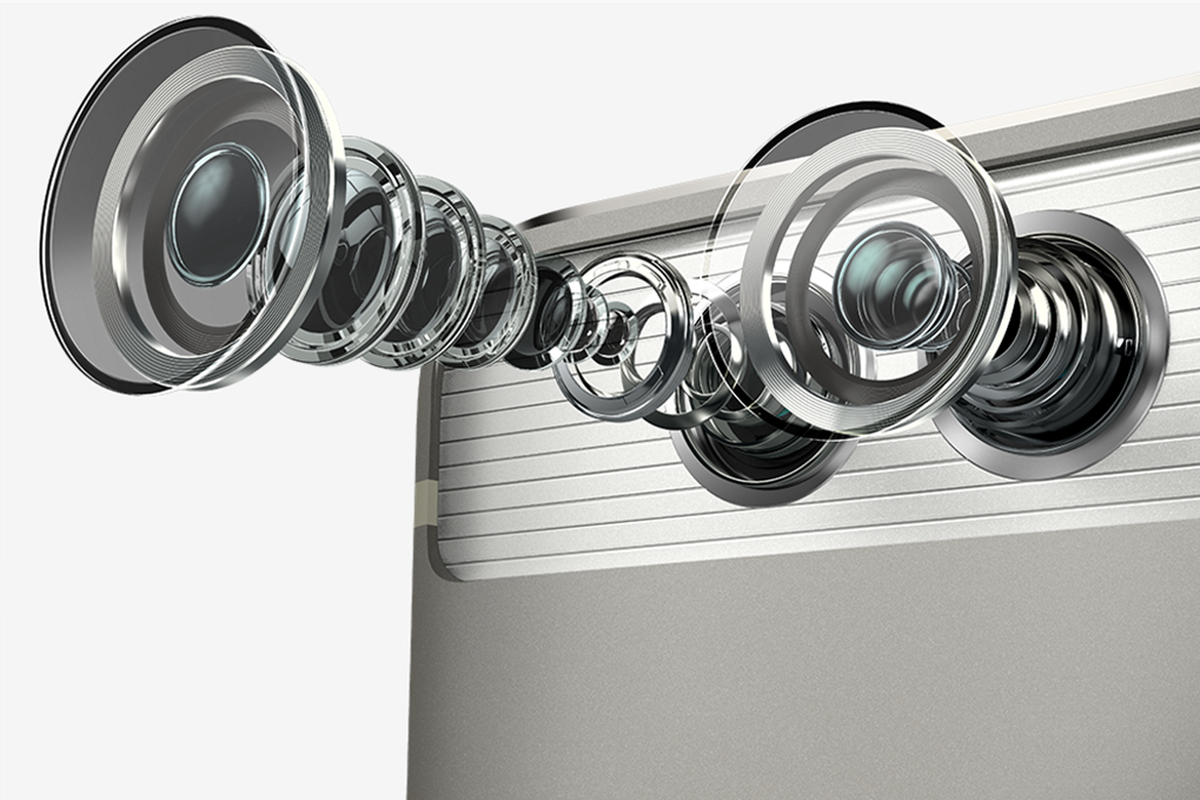
    Having a world-famous camera company supply a phone manufacturer with parts for the photography system on the firm’s handsets is not new. Huawei uses lenses supplied by Leica, and in the latest partnership, OnePlus uses camera parts from Hasselblad. The public might not know that name, but among professionals it is well known and the company has a great reputation.

    Tipster Ice Universe posted an interesting rumor on Weibo the other day that was seconded on Twitter by another (albeit lesser-known) tipster using the handle @heyitsyogesh. Both say that Samsung is in talks with Olympus about supplying Samsung with cameras for future smartphone models. The cameras provided under the rumored partnership will be high quality with Samsung continuing to use its own image signal processors (ISP).

    A tweet sent by @heyitdyogesh mentions that an Olympus camera might end up on a special edition model of the Galaxy Fold. Turning to regular production models, we could see Olympus take over Samsung’s camera module for the first time with next year’s Galaxy S22 flagship series. If tradition holds, we could see that line launch sometime during the first quarter of 2022.

    Samsung is believed to be working on the successor to its current top-of-the-line Exynos chipset which it has codenamed Olympus. Reportedly, the chip will deliver improved performance compared to the Exynos 2100. Do you believe that the use of the Olympus codename is a clue Sammy is giving us or is it just a coincidence?

    Despite the rumors, we would be amiss if we didn’t point out that Olympus sold its camera and imaging business to Japan Industrial Partners last year. That would seem to put the kibosh on the rumors, and so far no partnership has been announced anyway. If it turns out just to be a failed rumor, it isn’t clear anyway whether the use of a high-profile camera brand actually helps to generate smartphone sales.

  • Huawei and China Mobile support one-of-a-kind 5G smart port in China

    Huawei and China Mobile support one-of-a-kind 5G smart port in China

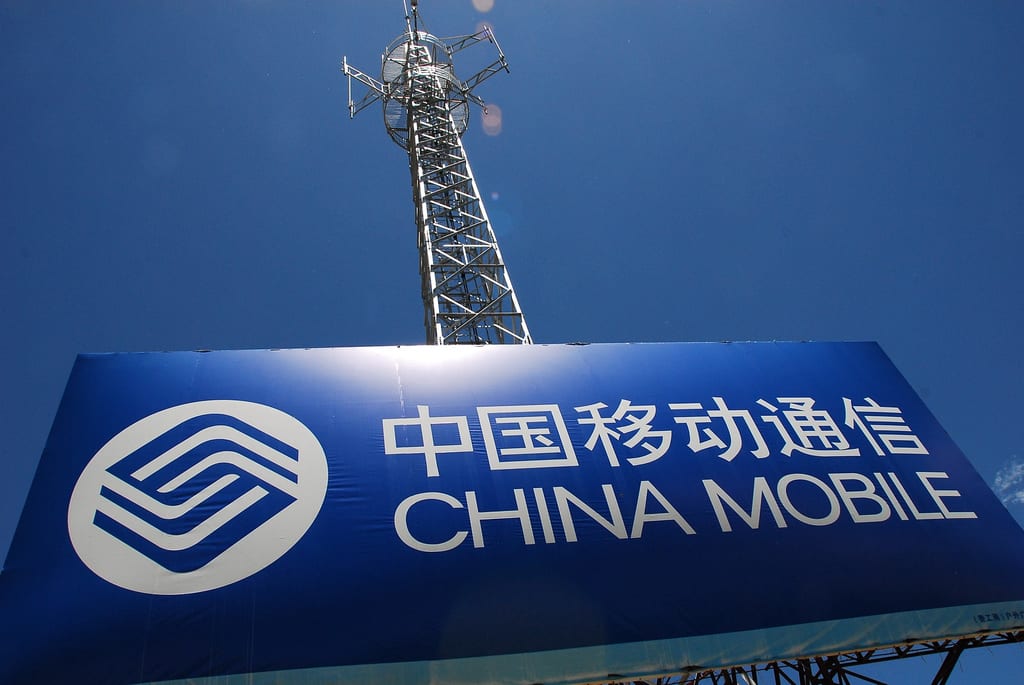
    Ningbo is a time-honored international port city in east China’s Zhejiang province. Its port, the Ningbo-Zhoushan Port, is the largest port in the world. Recently, the port worked with China Mobile Ningbo and Huawei to showcase the hybrid platooning of 5G smart and traditional container trucks. The platooning is a stride towards realizing the goal of becoming a world-class port. With this solution, in berth 8 of its busy Meishan container terminal, 13 5G smart container trucks run automatically and smoothly, greatly improving automation and safety in the port.

    Due to the collaboration of Zhejiang Seaport Group, China Mobile Zhejiang, Huawei, and other leading players, the Ningbo-Zhoushan Port has been transformed into a smart 5G port. To date, the port has reached a number of milestones, becoming the first in the industry to integrate 5G automated rubber-tired gantry (RTG) cranes into routine operation and implement 5G network slicing and 5G Super Uplink in port businesses.

    Smart container trucks represent a new breakthrough in the smart port transformation. Their scaled application offers an effective solution to driver shortage and fatigue while improving efficiency and reducing safety risks. They will play an important role in replacing intensive labor in the port with unmanned, automated, and intelligent operations.

    Smart container trucks require real-time 5G smart sensing, truck-road and truck-truck synergy, and video transmission. One container truck requires an uplink bandwidth of 20 to 30 Mbps and a low latency of below 20 ms. During peak hours, more than 40 container trucks will be working at the same time. This requires the network to ensure an uplink bandwidth of 1,200 Mbps.

    5G can provide better network support for these applications. Based on 3GPP Release 16, China Mobile and Huawei have developed a 5GtoB solution for port applications. Ample verification tests have been conducted, with results showing that the solution meets the requirements of smart container trucks on both network performance and stability. With CPEs deployed to support dual feeding and selective receiving solution, the network further improves the quality and latency stability of smart container trucks’ signal transmission. As such, 5G has become a preferred network solution for full-function applications of smart container trucks.

    In the Ningbo-Zhoushan Port, container trucks no longer have drivers — an important indicator of the automated logistics of 5G smart trucks in modern ports. Powered by 5G and AI, upon detecting that containers unloaded from bridge cranes are properly loaded, container trucks automatically power on to move the containers to their destinations. During this process, they automatically identify nearby objects, machinery, and lighthouses and respond intelligently, such as decelerating, braking, steering, bypassing, and parking. They can also accurately move to the RTG-specified positions along optimal routes provided by the smart dispatching system, meeting the demand for horizontal transfer in closed areas.

    Looking to the future, the Ningbo-Zhoushan Port will continue to work with China Mobile Ningbo and Huawei as well as other industrial partners to further integrate upstream and downstream resources and promote the pilot and promotion of remote device control, smart tallying, unmanned driving, online AI port monitoring, and trunking communication based on 5G networks so as to build a comprehensive benchmark of 5G smart port.

  • Chinese manufacturer will reportedly use Huawei’s ecosystem in case it too loses access to Google

    Chinese manufacturer will reportedly use Huawei’s ecosystem in case it too loses access to Google

    In May 2019, the U.S. placed Huawei on the Entity List. Not only did this ban Huawei from accessing its U.S. supply chain, it also banned Huawei from using Google’s Android apps on Huawei handsets. Not that this really mattered since many of these apps such as YouTube, Search, Google Maps, Drive, and others were already banned from the Chinese versions of Huawei’s phones by the government. Google’s apps were allowed on the international versions of Huawei’s phones.

    Huawei’s Entity List placement means that Google Mobile Services is not allowed on Huawei handsets and had to be replaced. Huawei developed its own ecosystem called Huawei Mobile Service (HMS). As of last December, HMS covered 500 million monthly active users in over 170 countries; the buzz around the water cooler is that a non-Huawei handset will soon be available with HMS pre-installed (more on this below).

    Huawei also had to replace the Google-licensed version of Android with the open-source version of Android and will now switch to its homegrown HarmonyOS. The company’s first 2021 flagship, the camera-centric Huawei P50 series, could be the first smartphones to run HarmonyOS. According to Huawei staff member Akiba Ziluo, Chinese smartphone manufacturer Meizu will have the first non-Huawei handset to support HMS Core through the Huawei Mobile Service. According to Huawei, “HMS Core offers a rich array of open device and cloud capabilities, which facilitate efficient development, fast growth, and flexible monetization. This enables global developers to pursue groundbreaking innovation, deliver next-level user experiences, and make premium content and services broadly accessible.”

    Each Chinese phone manufacturer has a secret fear; they worry about becoming the next Huawei and ending up in a similar predicament. That is why many of them are looking for Chinese technology that could be used in a jiff to replace American software in case they are banned from using U.S. technology like Huawei is.

  • Huawei Pushes for HSBC Disclosure in Hong Kong

    Huawei Pushes for HSBC Disclosure in Hong Kong

    After being rejected in the U.K., Huawei lawyers seek to make a similar push to pressure HSBC to unveil documents they claim will disprove accusations of fraud against chief financial officer Meng Wanzhou.

    After a 30-minute hearing at Hong Kong High Court, no ruling was deliberated on whether or not HSBC must provide specific documents related to accusations that Meng misled the British lender about business dealings with Iran during a 2013 meeting.

    If proven true, this could help prevent the Huawei CFO and daughter of founder Ren Zhengfei from being extradited to the U.S. to face trial.

    The information that Meng is seeking will «go to the heart of her ability to demonstrate that there were material omissions and misstatements» made in the attempt to extradite her to the U.S., according to a report citing a Huawei spokesperson, and that she has no other means to obtain them other than through court approval.

    The legal pressure against HSBC to disclose the allegedly revealing documents follow similar attempts made in the U.K. by Huawei lawyers which were rejected by a high court judge.

    Another one-day hearing for the case in Hong Kong is scheduled for April 12.

  • Huawei launches “Make any room a data center” products

    Huawei launches “Make any room a data center” products

    In his opening remarks, Brandon Wu, Chief Technology Officer (CTO) of Huawei’s Asia Pacific Enterprise Business Unit, emphasized the need to ensure enhanced resiliency across all industries, given the impact of the global pandemic.

    Wu explored the key trends emerging in edge computing, namely: better-connected infrastructure, increased resiliency through the use of edge computing, and enhanced reliability through the use of Artificial Intelligence (AI).

    According to the estimation by Gartner, within four years, 75% of data generated by enterprises will be processed at the edge. Demand for real-time interaction is driving businesses to bring computing power closer to end-users.

    • Small and edge data center are therefore making an appearance in several industries and scenarios:Retail: Small and edge data centers can exist within retail outlets as retailers close the gap between online and offline sales.
    • Manufacturing: Edge data centers deployed in distribution warehouses are capable of managing growing volumes of inventory and shipping data; in factories, such data centers manage data generated from sensors as well as communications between equipment, contributing to a growing IIoT.
    • Telecoms: Central offices of telco companies are being converted to computing rooms and used as edge data centers to make networks more dynamic.

    Mahesh Choudhary, Solution Architect for the Huawei Digital Power Line, launched the new solution directly from the Huawei Digital Power Innovation Experience Center, offering a real-life demonstration for event attendees. Changing the game with SmartLi inside —Huawei’s smart lithium battery Uninterruptible Power Supply (UPS) —now any room can be made into a data center.

    With far lower requirements placed on ceiling height, the Huawei Modular Data Center Solution has no need for a traditional raised floor design. Instead, air conditioner pipes and strong-and weak-current cables are routed from top-down, meaning that equipment can be accommodated in ceiling heights as low as 2.6 m, far below the 3 m minimum height required for a traditional data center.

    At the Smart Modular Data Center Product Launch, Huawei’s partner — NetCraft Information Technology (Macau) Co., Ltd. — shared its experiences cooperating with Huawei. Benjiman Wong, the company’s Sales Director, said: “With the Huawei Modular Data Center Solution, all required components are modular. An easy way for customers to understand this solution is to consider that each component is like a building block: you can build up your castle by adding different blocks together, so you can add more blocks in the future when needed.”

  • Huawei AppGallery is rising fast, attracting millions of developers

    Huawei AppGallery is rising fast, attracting millions of developers

    Huawei’s AppGallery seems to have done quite well for itself this past year despite everything, according to recently released numbers. In a press release this week, Huawei revealed that the platform boasts 2.3 million registered developers today—nearly 80% more than last year. Globally, 530 million users are using the platform on a monthly basis, spread over 42 countries compared to 25 in 2019.

    Huawei’s fast-growing mobile ecosystem has been particularly attractive to Chinese developers, who have released over 10,000 apps to the world, many of which are known titles such as Clash of Kings, Game of Thrones, and Asphalt 9.

    In fact, gaming has been at the forefront of Huawei’s expansion initiatives, with the AppGallery boasting five times more games than last year. App downloads in total reached 384.4 billion in 2020, nearly doubling the previous year’s numbers.

    “We continue to see strong growth across markets in Europe, Latin America, Asia Pacific, Middle East, and Africa.” -Mr. Zhang Zhe

    Having established itself solidly in the top three app marketplaces in the world, Huawei has developed its own HMS Core mobile service framework to provide basic infrastructure services such as HUAWEI ID and in-app purchases, allowing for smooth app integration across different devices. Now, Huawei has announced that it offers 120,000 apps integrated with HMS Core on the AppGallery: a 118% increase from last year. One of Huawei’s main objectives is to maximize the relevant apps it offers in every area of news, entertainment, social media, and productivity.

    They have also spoken out about their 1+8+N strategy—а vision for developing a full-fledged mobile ecosystem consisting of the smartphone (1), Huawei-developed peripherals (8) and third-party IoT devices that are connected using Huawei HiLink and Huawei Share technologies. Huawei is essentially striving to be able to offer an all-in-one package to equal what Samsung and Apple can provide, and its exponential growth this past year has at least proved it can stand on its own two feet.

  • Huawei launches 5GtoB solution to facilitate industry digitalisation

    Huawei launches 5GtoB solution to facilitate industry digitalisation

    The 5G industry has been developing faster than expected, with operators already seeing commercial returns from the first wave of 5G rollouts. The 5G user base and the number of 5G devices in commercial use have exploded since 2019. By the end of 2020, 380 5G devices had hit the market, 8 times more than there were the year before. The mobile 5G user base had also reached 220 million and wireless home broadband connections reached 1.05 million, a 17 and 21 times YoY increase, respectively. Ding claims these numbers will triple in 2021.

    The prices of 5G phones are also dropping rapidly. There are already multiple units on the market priced at under US$150 and about 30 mid-range and low-end phones priced below US$300. According to Ding, the 5G mobile phone ecosystem will become as mature as 4G over the next one to two years as network rollouts continue and the user base keeps growing.

    In the markets that deployed 5G first, operators have already begun reaping commercial returns. In China and South Korea, operator revenue continued to increase as their 5G user base grew faster than in other countries. Finnish operator DNA and Saudi operator Zain also achieved impressive financial results in the early phases of their commercial 5G deployment.

    At the event, Huawei also officially released its 5GtoB solution which is aimed at creating new value for every player across the industry value chain. Ding stated that building on its experience in connectivity, computing, and industry digitalization, Huawei has worked with operators and other industry partners to develop a one-stop solution that covers sales, operations, and services – the 5GtoB solution. This solution will simplify transactions for enterprise users, help operators monetize their network capabilities, and allow partners to innovate more efficiently, creating new value for every player involved.

    The Huawei 5GtoB Solution includes four parts: 5GtoB Network, 5GtoB NaaS, 5GtoB App Engine, and 5GtoB Marketplace. With 5GtoB Network serving as the infrastructure of the 5G solution, Huawei will continue building its capabilities in providing scenario-based 5GtoB services, including network planning, construction, maintenance, and optimization.

    With 5GtoB NaaS, network capabilities can be orchestrated into offerings before they are released, making it easier for enterprise users and application developers to use 5G networks and enabling enterprise users to manage 5G campus networks themselves.

    The 5GtoB App Engine is an application innovation center, where application developers and system integrators can access operators’ 5G network capabilities. It makes 5GtoB application development more efficient and application integration easier. It also serves as a bridge between 5G network capabilities and 5GtoB applications, enabling agile service development and launch.

    The 5GtoB Marketplace is an all-in-one digital supermarket on the cloud, where enterprise users can purchase the industrial 5G solutions they need.

    Ding said that Huawei has worked with operators, partners, and enterprise users to apply the 5GtoB solution first in the steel industry. With their capabilities and experience embedded into this platform, industrial 5G solutions like automated billet rotation, AR-assisted remote assembly, and steel surface quality inspection, can be standardized and rapidly replicated.

    At the end of his speech, Ding emphasized that industry digitalization will be a huge market, but that digital infrastructure developments vary greatly across industries and application scenarios also vary. In addition, related digital standards are not in place yet. As such, he called on all industry players to work together to establish comprehensive 5GtoB standards and ecosystem to drive further industry digitalization. He closed his speech by reiterating Huawei’s commitment to investing in the ecosystem and standards and supporting industry digitalization.
  • Looking to replace lost smartphone sales, Huawei turns to pig farming

    Looking to replace lost smartphone sales, Huawei turns to pig farming

    Huawei should have been the top smartphone manufacturer in the world last year. The company had a plan in place to take over the top spot by 2021 and despite losing access to its U.S. suppliers (including Google) in 2019, by early 2020 the company had topped Samsung and Apple to become the largest smartphone manufacturer in the world. But then the other shoe dropped. Exactly one year to the day that the U.S. Commerce Department put Huawei on the entity list forcing the Chinese firm to stop doing business with Google, the U.S. made an export rule change. All of a sudden, foundries using American sourced tech were no longer allowed to ship to Huawei without a license.

    Obtaining the most cutting-edge chipsets for its phones and 5G base stations became impossible. In an ironic twist, even chips designed by Huawei were off-limits to it and the firm’s smartphone sales plunged 42% during the fourth quarter when the ban started. The U.S. considered Huawei, ZTE, and some other Chinese firms to be national security threats due to its alleged ties with the Communist Chinese government.

    In November, Huawei sold its Honor sub brand so that the latter would not be banned from obtaining chips and U.S. components because of its association with Huawei. The $15 billion that Huawei received in the sale was certainly needed and now the company could end up the seventh-largest smartphone manufacturer this year. Huawei’s smartphone production could drop by 60% this year although the company could not confirm the figure. A Huawei spokesman said, “The issue here is not like there’s any problems with our quality or experiences of the Huawei products. It’s not a level playing field for Huawei as Huawei is caught in between the geopolitical tensions.”

    The company has been looking for other sources of income which has led it to the pig farming industry. That’s right, Huawei, the company behind one of the most technologically advanced smartphone lines in the world, is in the business of farming pigs. This is a major industry in China where 50% of the world’s live hogs are located. Huawei is actually bringing tech to the industry with facial recognition used to identify individual pigs. Farms are using other technology to monitor pigs’ diet, weight and exercise. A Huawei spokesman, discussing the tech firm’s entry into pig farming, said, “The pig farming is yet another example of how we try to revitalize some traditional industries with ICT (Information and Communications Technology) technologies to create more value for the industries in the 5G era.”

    Besides pig farming, Huawei wants to branch out into the mining industry. Company founder and CEO Ren Zhengfei introduced a mining lab earlier this month. Using Huawei technology, Ren wants to turn miners into white collar workers allowing them to wear suits and ties to work. With the company’s technology, the mining industry will see “fewer workers, greater safety, and higher efficiency.” The executive added that Huawei will continue expanding its television, tablet, and computer lines.

    This is important because Ren doesn’t see the U.S. removing his company from the entity list. Even so, he states that “We can still survive even without relying on phone sales.” And even though the company is looking at new sources to bring in revenue, it hasn’t given up on the phone business. Huawei is still expected to release its two flagship models this year, the P50 and the Mate 50 lines. The company is expected to use its home-grown HarmonyOS for both models.

    While Huawei might be losing market share in smartphones, it still remains the top provider of networking equipment in the world. Still, Huawei needs to be careful with how it proceeds. After all, there is a long-time saying on Wall Street: “Bears make money, bulls make money and pigs get slaughtered.”

  • Huawei and China Mobile deploy world’s first 4.9 Ghz 5G indoor network with peak rate exceeding 3Gbps

    Huawei and China Mobile deploy world’s first 4.9 Ghz 5G indoor network with peak rate exceeding 3Gbps

    Huawei and China Mobile Shanghai deployed the world’s first 4.9 GHz commercial LampSite network in Shanghai, China. This is the first time that an aggregate bandwidth of 200 MHz on the 2.6 and 4.9 GHz bands and distributed Massive MIMO have been simultaneously implemented in digital indoor networks. With the peak rate exceeding 3 Gbps, the performance is comparable to that of an active antenna unit (AAU), satisfying the network requirements to provide premium service experience at large stadiums where the traffic demand and user density are high.

    This deployment was completed at the Shanghai New International Expo Center (SNIEC) where Mobile World Congress (MWC) Shanghai, an annual telecom industry event, is hosted. In 2019, nearly 60,000 people attended this event. The latest 4.9 GHz LampSite units supporting a bandwidth of 100 MHz were adopted to work together with the incumbent 2.6 GHz band to ensure a bandwidth of 200 MHz through carrier aggregation. This enhances the coverage of indoor networks at capacity-demanding indoor hotspots, including stadiums, airports, and railway stations, to deliver premium experience to mobile users.

    China Mobile Shanghai has been a leading telecom carrier in developing 5G networks. To date, it has constructed more than 13,000 5G sites, basically achieving continuous coverage in the city.

    This telecom carrier boasts leading networks and evident technological advantages. It has been working with Huawei to explore innovative solutions to guarantee mobile excellent user experience in various scenarios. 4.9 GHz is an ideal option for telecom carriers to enhance coverage in indoor hotspots, ensuring premium indoor experience for toC services. This band is also important to ensure 5G coverage in high-quality toB applications.

    China Mobile Shanghai will continue to work with Huawei to accelerate the deployment of 5G sites to deliver the continuous coverage required to ensure premium service experience across the city. It will also continue to promote the collaboration of the telecom industry with other industries, such as finance, shipping, and trade to cement Shanghai’s leadership in applying 5G to vertical industries by leveraging their respective leading advantages.

  • Huawei founder and CEO says Apple makes the best 5G phones

    Huawei founder and CEO says Apple makes the best 5G phones

    Huawei is not the company it was a couple of years ago when it was on its way to becoming the world’s largest smartphone manufacturer. Restrictions placed on the firm by the U.S. forced Huawei to sell its Honor sub-brand in order to get Honor out from under the thumb of the U.S. The manufacturer that could have been number one this year is more likely to be number seven by the end of the year.

    Huawei is aware that in one major regard, it is much closer to being like Apple than it is to be like other Android manufacturers in its class such as Samsung and arguably Google. Like Apple, Huawei has more control over both the hardware and software used on its phones. The head of Huawei’s U.K. consumer business told Forbes last year that “we are one of only two companies globally that can have this hardware and software solution for our own ecosystem… Only Huawei and Apple can do this—it’s our long-term strategy.”

    A couple of years ago, Huawei founder and CEO Ren Zhengfei admitted that he uses an iPhone and even buys them for his family. Ren said in 2019, “iPhone has a good ecosystem and when my family are abroad, I still buy them iPhones, so one can’t narrowly think the love for Huawei should mean loving Huawei phones.” That same year, the executive said,”Apple is the world’s leading company… Apple is my teacher; it is advancing in front of us.” When Ren’s daughter, Huawei CFO Meng Wanzhou, was arrested in 2018 under a U.S. warrant for fraud and conspiracy to commit fraud, she had in her possession a MacBook, an iPad, and an iPhone.

    Zhengfei says that the 5G iPhone 12 series features the best 5G enabled handsets currently available. He calls them “the world’s best” 5G phones and has talked up the quality of the technology found in the 2020 iPhone lineup. He has also used Apple’s 5G iPhone models as a way to promote the quality of Huawei’s 5G networking equipment; Huawei remains the world’s largest supplier of networking equipment. “We support the progress made by Apple’s iPhone 12,” Ren said, pointing out that the device “has been able to achieve download speeds of 1.82 Gbps, making it the best in the world… We helped build the best 5G networks in many cities around the world: Berlin, Munich, Madrid, Zurich, Geneva, Amsterdam, Vienna, Barcelona, Seoul, Bangkok, Hong Kong, Riyadh… Our networks in Europe top global network performance tests.” As the company started just last week, “Huawei has undertaken hundreds of 5G networks worldwide. According to the results of 5G network experience test in global major cities conducted by many third-party organizations around the world, in cities such as Seoul, Amsterdam, Madrid, Zurich, Hong Kong, and Riyadh, Huawei’s contracted operators ranked number one in 5G network experience.”

    Ren also complimented Apple’s dominance of the high-end premium phone sector and said that Huawei’s networking equipment is good for iPhone users. Ren commented that “Many high-end device users in Europe use iPhones, and the way those phones operate on our networks in Europe actually is a sign we are also doing well. The fact high-end users can use the iPhone 12 to its fullest effect on our 5G networks in Europe is a testament to the quality of our networks. This is helping balance opinions towards Huawei in Europe.” Zhengfei pointed out last year that “there are only two big players with ecosystems,” he said, “Apple and Google. It will not be a problem to have a third one. In any industry, three top players is reasonable.” Huawei has since added its own ecosystem and we could see the company’s own HarmonyOS debut on a smartphone with the upcoming P50 line.

  • Huawei’s founder reveals plan to beat U.S. sanctions

    Huawei’s founder reveals plan to beat U.S. sanctions

    Last week we told you that starting on March 31st, Android phones uncertified by Google, including those made by Huawei, will no longer have access to the Google Messages app. While not too many Android handsets are uncertified by Google, Huawei’s newer models are because of its inclusion on the U.S. Commerce Department’s Entity List which prevents the Chinese manufacturer from using parts made by American suppliers. That includes software and since Google is a U.S. firm, Huawei cannot have the version of Android that is certified by the company.

    One Google app that Huawei users have been able to use without certification from Google is video chat app Duo. But just as Messages will be unavailable on uncertified Huawei devices this coming Spring, the same fate will befall the Duo app. According to XDA, strings of code found on version 123 of Duo reveal sentences that say, “Duo is going away soon,” and “Because you’re using an unsupported device, Duo will unregister your account on this device soon. Download your Clips and call history to avoid losing them.

    Note that the strings of code for Duo refer to unsupported devices as opposed to uncertified devices as with Messages. While unsupported phones do not comply with the Google Mobile Service ecosystem and are treated mostly the same as uncertified models, the difference is that after Duo shuts down for these handsets on March 31st, there will be a grace period of 14 days during which users will be able to save and download their data from Duo before the service shuts down.

    Right now, Duo can be installed and used on the Huawei P40 Pro series without requiring the phone to be running Google Mobile Services (GMS). This will end on March 31st unless Huawei is removed from the Entity List and is allowed to install GMS on its models missing Google’s ecosystem. For this to happen, the new U.S. president will have to decide what to do about the Chinese manufacturer in general. So far, there hasn’t been any word from the new administration on how it plans to treat Huawei, TikTok, Xiaomi, SMIC and other Chinese tech firms.

    Meanwhile, Huawei founder Ren Zhenfei had given a speech last June explaining how Huawei could survive the sanctions placed on it by the U.S. The speech was just published last week and ended up in the South China Morning Post (SCMP). Zhenfei, who is also Huawei’s CEO, said that the company needs to decentralize its operations, focus on making profits, simplify product lines, and freeze pay for three to five years. The 76-year old executive said that U.S. actions against Huawei have made it hard for the company to put its original globalization plans into play and have forced Huawei to develop its own production lines. As Zhenfei said, “There’s a big mismatch between our ability and strategy. It’s our weak link, and we are forced to start from the beginning like elementary school students.”

    Zhenfei says that Huawei will not be defeated, nor will it become resentful of the U.S. Speaking to Huawei back during the summer, Ren stated, “Please don’t be upset because of the temporary US pressure, or give up on our globalization strategy. There’s no future without embracing globalization (in development and research).” Besides having to motivate employees while keeping pay frozen for the next three to five years, Ren said that Huawei needs to focus on the bottom line. “We must gradually shift focus from the top line to the bottom line. All product lines … must not blindly pursue becoming No 1 … we don’t have the conditions to always fight to be No 1,” Ren said. “We must create value and reasonable profits to ensure healthy growth.” So instead of worrying about the number of units Huawei is shipping, the company’s founder says that it needs to focus on profitability.

    According to Ren, the U.S. wants Huawei to die. He said, “At the beginning, we thought we might have done something wrong in compliance and we carried out self-examination; but then the second blow and third blow followed. Then we realized that they want our death … but the desire to survive has also motivated us”

  • Uncertified Android phones will lose support for an important app in March

    Uncertified Android phones will lose support for an important app in March

    The latter is making changes to its Messages app that will prevent some devices from receiving texts. One group of Android users that won’t be able to receive new texts will be those who own one of the latest Huawei models. Starting this coming March, Android phones considered to be “uncertified” will not be allowed to install and use the Messages app; this will affect millions.<

    Because of its placement on the U.S. Commerce Department's Entity List (due to its alleged ties to the Communist Chinese government), Huawei is not allowed to access its U.S. supply chain. That means that its phones cannot use Google software including the licensed version of Android. Because recent Huawei models like the P40 series and the Mate 40 series no longer feature security permissions from Google, the latter considers those Huawei models to be uncertified. Certified Android models are allowed to have Google's Android apps installed along with the Google Play Services ecosystem.

    Uncertified Android handsets are hard to find. But in the case of Huawei, the manufacturer's newer models are impacted by the firm's placement on the Entity List. If you install the latest listing of Google Messages from the Play Store (which is version 7.2, by the way) on an uncertified device, a message will appear that reads, "On March 31, Messages will stop working on uncertified devices, including this one." The warning is intended to prevent Huawei owners from sideloading Google Play Services onto their device which could allow them to install Google Messages on it despite any ban. The Messages app is not preinstalled on most Android phones and must be downloaded from the Play Store.

    Google might have decided to make this change because of the end-to-end encryption that has recently been added to the Messages app. Android phones without certification, including newer Huawei devices that have Play Services sideloaded, have not been able to have their security vetted. Thus, users who think that messages they are sending to friends, family members, co-workers and others using an "uncertified" device are protected by encryption, could actually be disseminating secrets that strangers are viewing.

    While there has been some hope that the punishments received by Huawei might be reversed under the Biden administration, so far there has been no word from the new president about his intentions vis-a-vis Huawei.

  • Trump takes one last shot at maiming Huawei before he leaves the White House this week

    Trump takes one last shot at maiming Huawei before he leaves the White House this week

    Even though President Donald Trump will be leaving the White House this coming Wednesday, he took the time to spank the Chinese phone and networking equipment manufacturer Huawei one last time. In May 2019, Trump cited security issues for his decision to put Huawei on the Entity List. This move prevented the firm from accessing its U.S. suppliers without permission from the Commerce Department. Despite this move which resulted in the loss of Google as a supplier, Huawei persevered; for a brief period of time this year, it was the top phone manufacturer on the planet in terms of shipments.

    Exactly one year to the day that it was placed on the Entity List, Huawei received another big blow from the Trump administration. Starting last September, any foundry manufacturing chips using American-sourced technology needs a license from the U.S. to ship to Huawei. The latter was the second-largest customer of the world’s largest foundry, TSMC, and was blocked from receiving cutting-edge chips that it had designed itself. The U.S. also browbeat its allies over the last few years in an attempt to prevent them from using Huawei’s networking equipment on their 5G networks.

    American lawmakers were quick to call Huawei a national security risk because of the company’s alleged tie to the Communist Chinese government. Concerns that Huawei’s phones and base stations contain backdoors used to spy on U.S. consumers and corporations have never been proven. The U.S. also banned rural carriers from using the Universal Service Fund (managed by the FCC) to purchase networking gear from Huawei and is forcing these firms to remove any Huawei equipment used in their networks.

    In the final days of the Trump administration, licenses allowing U.S. firms to sell to the Chinese manufacturer are being revoked and applications from U.S. suppliers to obtain such licenses are being rejected. Reuters has seen an email sent from the Semiconductor Industry Association (SIA) that documents the Commerce Department’s recent actions. In the email, the SIA notes that the Commerce Department had released “intents to deny a significant number of license requests for exports to Huawei and a revocation of at least one previously issued license.” The SIA email stated that a broad range of products was included in the latest action and many U.S. companies have been waiting months to hear whether they would be allowed to sell to Huawei. More than 150 license requests were pending amounting to $120 billion worth of goods and technology.

    Just last week, the Trump administration blacklisted Chinese phone manufacturer Xiaomi by demanding that U.S. investors divest themselves from any investments made in the company by November 11th, 2021.

  • Huawei will end up among the globe’s top smartphone manufacturers this year

    Huawei will end up among the globe’s top smartphone manufacturers this year

    Back in 2015, the head of Huawei’s consumer products unit, Richard Yu, made a bold forecast. He said that in two to three years, Huawei would surpass Apple to become the second-largest smartphone manufacturer in the world. He added that in five years, Huawei would top Samsung to become the world’s largest producer of smartphones. And sure enough, that is basically what happened. Huawei passed Apple and last year it finished second to Samsung. Earlier during the second quarter of this year, Huawei outshopped Samsung and for a brief period of time it was the top smartphone manufacturer on the planet.

    Despite meeting its goals for a short period of time, the long term outlook for the phone and networking equipment manufacturer is not good. That’s because the U.S., considering Huawei to be a national security threat, has made doing business difficult for the company. Last year, it placed Huawei on the Entity List preventing it from accessing its U.S. supply chain without permission from the Commerce Department. As a result, heavyweights like Micron and Google have stopped supplying memory chips and software to Huawei respectively.

    And the Trump administration aimed right at Huawei’s Achilles heel this year by adding new export rules that prevent foundries using American sourced technology from shipping chips to Huawei, The latter can’t even take delivery of cutting-edge chips that it designed itself. The U.S. actions against Huawei led it to sell its sub-brand Honor division for $15 billion. And even if President-elect Joe Biden, when he takes office in two-weeks, were to remove all sanctions against Huawei, the company will still see a sharp drop in shipments. Part of that will be due to Honor becoming a rival of Huawei instead of a sub-brand. Research firms IDC and Strategy Analytics estimated that in the first half of last year, Honor made up 28% and 38% of Huawei’s shipments respectively.

    So what is expected from Huawei this year? According to research firm TrendForce, Huawei will drop from its third-place finish last year to seventh place this year. That is a rather large fall for a company that has been considered one of the top smartphone manufacturers in the world. In 2018, Huawei delivered 208 million handsets. In 2020 that figure declined to 170 million and a further decline to 45 million is forecast for this year; that is a 73.5% decline for this year. The decline will also result in Huawei losing much of its share of the 5G market from 30% last year to 8% this year, also a 73.3% decline.

    TrendForce says that global smartphone shipments will rise 9% this year to 1.36 billion units, an anemic rebound from the 11% decline in smartphone production last year. The top six smartphone manufacturers this year could be, in order, Samsung, Apple, Xiaomi, Oppo, Vivo and Transsion. These six brands will make up 80% of global smartphone shipments this year. Transsion is a phone manufacturer based in Shenzhen, China and is popular in Africa. The researchers also say that the number of 5G phones produced will rise this year to 500 million units from the 240 million made in 2020. Chinese brands could make up as much as 60% of 5G phones produced in 2021.

    Huawei recently released its new Mate 40 flagship series and early next quarter we could see the unveiling of the photography-based P50 line. This year, Huawei could finish seventh with Honor right behind at number eight. Besides its one-time standing as a top global smartphone producer, the company is also the world’s top networking equipment manufacturer.

    The U.S. considers Huawei to be a national security threat because of its alleged ties to the Communist Chinese government.

  • Huawei, Qualcomm, and Oppo are arguably the three most innovative firms in wireless technology

    Huawei, Qualcomm, and Oppo are arguably the three most innovative firms in wireless technology

    This might not come as a surprise to some people living in China, or to those who make a living by following the goings on of the wireless world, but there is a good case for calling Huawei the most innovative outfit in this realm. The company’s Mate series phones are traditionally one of the top technologically based smartphones in the world each year. However, the powerful 5nm chips it designed for this year’s Mate 40 line can no longer be shipped to the company because of a new U.S. export rule. The rule bans foundries like TSMC from shipping cutting-edge chips to Huawei without a license if said chips were produced using American technology.

    An industry report cited by the South China Morning Post states that from the beginning of this year through the end of October, Huawei filed 8,607 patent applications related to wireless technology. That put the firm at the top of the pack, well ahead of San Diego, California based chip designer Qualcomm; the latter sought 5,807 patents during the same January to October time period. Chinese smartphone manufacturer Oppo was third with 5,353 patent applications. Database provider incoPat, headquartered in Beijing, is responsible for the data used to compile the list.

    According to incoPat, both China and the U.S. led the way with each making up 32% of the patents filed from January through October. Japan was next with 15% followed by the 7% submitted by South Korea. IncoPat says that the information it uses comes from patent filings available to the public in the field of wireless communications. This includes patents filed to protect inventions related to 5G technology. The report issued by incoPat notes “As a key area of modern communications, wireless communication network technology has always been a very important part in the 5G research and development process. With the new technological competition and new globalisation situation, wireless communication network technology is becoming an important strategic choice for enterprises to face international competition.”

    5G is the next generation of wireless connectivity and the countries that control 5G will have an advantage economically. That is why, seeing how innovative Huawei is and not wanting to be left behind, back in June the U.S. Commerce Department amended the entity list ruling that prevents Huawei from working and doing business with U.S. based firms. Now, American tech companies are allowed to work alongside Huawei to help create global 5G standards. The U.S. feared that being left out of the meetings attended by Huawei would hold the U.S. back in terms of the development of 5G.

    Huawei is also the leader in helping the 3GPP develop standards for 5G. 3GPP (the 3rd Generation Partnership Project) is a term that covers standards organizations that help create protocols for mobile telecom. After Huawei, Ericsson and Qualcomm provide the most contributions to 3GPP for 5G standards. According to SCMP, this year 3GPP completed its next set of standards for 5G which include possible applications for 5G such as autonomous driving, smart factories, and remote surgery.

    Earlier this month, China’s Ministry of Industry and Information Technology (MIIT) said that the country has built nearly 700,000 base stations in 2020 topping its original target of 500,000 for the whole year. As the world’s leading provider of networking equipment, Huawei is also an important supplier of 5G base stations. In fact, published reports indicate that Huawei will replace Ericsson this year to become number one in 5G base stations. Ericsson is expected to see its market share decline from 30% last year to 26.5% in 2020. Huawei, on the other hand, should see its 5G base station share rise from 27.5% last year to a leading 28.5% in 2020. That is, along as it can find enough 5nm Kirin 9000 chipsets to power these base stations. As we mentioned earlier in this article, the U.S. is preventing Huawei from receiving cutting-edge chips from TSMC.