Retail News CRM

Tag: hugo boss

  • Frasers Group Boldly Bids $2.3 Billion for Complete Control of Hugo Boss

    Frasers Group Boldly Bids $2.3 Billion for Complete Control of Hugo Boss

    Frasers Group, a prominent UK retail corporation, recently unveiled an unexpected voluntary takeover bid for Hugo Boss. Their goal is to procure the remaining shares of the renowned German fashion brand and obtain complete ownership. Currently, Frasers Group possesses a 26.06% stake in Hugo Boss, and their proposal to acquire the unowned 73.94% stake stands at €38 per share in cash. This proposition elevates the total bid value to roughly US$2.3 billion.

    Frasers Group’s Confidence in Hugo Boss

    Frasers Group’s proposed takeover reflects its sustained assurance in Hugo Boss’s potential and facilitates possibilities for additional business investment. The company regards Hugo Boss as one of its most critical strategic brand associates. Furthermore, Frasers Group continues to back the growth strategy and management team of the fashion firm.

    However, Hugo Boss confirmed that it had received the unrequested bid and emphasized that the company had no prior involvement in coordinating the proposal. The fashion group’s management board and supervisory board will assess the proposal document once it is officially available. Subsequently, they will issue an informed viewpoint for the shareholders.

    The company also assured that it would keep its shareholders and the public updated about any future developments and the following steps as per the legal and regulatory stipulations.

    Frasers’ Association with Hugo Boss

    The affiliation between Frasers Group and Hugo Boss traces back to 2020. This was when Mike Ashley, the founder of Frasers, initiated an investment in the German fashion company. The group also secured representation on Hugo Boss’s supervisory board through its CEO, Michael Murray.

    Questions & Answers

    What is Frasers Group’s current stake in Hugo Boss?
    Frasers Group currently holds a 26.06% stake in Hugo Boss.

    What is the proposed offer per share by Frasers Group for the remaining stake in Hugo Boss?
    The proposed offer by Frasers Group for the remaining stake in Hugo Boss is €38 per share in cash.

    What is the history of the relationship between Frasers Group and Hugo Boss?
    The relationship between the two companies began in 2020 when Frasers Group’s founder, Mike Ashley, started investing in Hugo Boss. Additionally, Frasers Group has representation on Hugo Boss’s supervisory board through CEO Michael Murray.

  • Hugo Boss thrives as it successfully connects with Gen Z

    Hugo Boss thrives as it successfully connects with Gen Z

    Hugo Boss is making an executive decision. Under the leadership of CEO Daniel Grieder, who joined the almost 100-year-old German company in June of 2021, the clothing brand will get a new look aimed at millennials and Gen Z, who tend to be a more digitally wired audience. The executive who spent two decades at Tommy Hilfiger, reveals the new direction for its brand which effectively more clearly delineates Hugo Boss into two brands, Boss and Hugo, complete with new logos as part of its ambitious growth plan 2025 goal.

    While the split will result in two distinct labels, Boss and Hugo, it’s not the first time the brand had derivatives of the main brand Hugo Boss. Case in point, Hugo, Boss and Hugo Boss have all existed prior under the group with various labels such as Orange, Green, Red to denote the product’s use. In this new version, Boss will be firmly aimed at Millennials age 25-40 and Hugo at under 25 Gen Zs. It’s not clear where that leaves Boomers and Get X who appreciate the brand. Theoretically, Boss would be their go-to.

    Boss launched the new look with the Spring/Summer 2022 #BeYourOwnBoss campaign. The portrait-based series was shot by fashion photographer Mikael Jansson and shot on sets around the globe with celebrity lineup including Future, Hailey Bieber, Kendall Jenner, Joan Smalls, and more. The creative release is the first visual representation of the brand refresh. After almost 50 years, Hugo Boss is introducing a new logo for its core brand Boss along with a rebrand across all consumer touchpoints.

    The #HowDoYouHUGO campaign, also shot by Jansson, features South Sudanese top model Adut Akech, rappers Big Matthew, SAINt JHN, and American dancer Maddie Ziegler. A couple in real life, this is the very first time Akech and SAINt JHN are featured together in a campaign. Hugo also sports a new look for the first time since being first introduced in the early 1990s. Both logos feature a bolder, more graphic typeface conveying a more contemporary look and impactful visual experience.

    Grieder, based in Zurich, corresponded with me via email to share what’s driving this new shift for the slick, stylish label worn by ‘bosses’ of all kinds and genders for the last century.

  • Hugo Boss the latest lux brand to launch resale offer

    Hugo Boss the latest lux brand to launch resale offer

    Luxury fashion brand Hugo Boss has committed to a premium resale platform, which is set to launch in the third quarter of this year, encouraging customers to buy pre-owned items.

    According to the company, resale is a fast-growing market that helps reduce the fashion industry’s impact on the environment. Hugo Boss expects the initiative to extend its products’ life cycle and help limit its resource consumption.

    The online platform allows customers to return their used items to Hugo Boss in return for a credit that can be spent online on new or pre-owned items, or in-store. After a quality check, the pre-owned products will be sold on Hugo Boss Pre-Loved and ready for their second life in a new wardrobe.

    In addition, Hugo Boss will also launch a care and repair service to help customers cover the repair of their clothes and ensure the items can last longer.

    These are parts of Hugo Boss’s broader strategy unveiled on Earth Day to enhance its circular business model. The German fashion house also reports its circular products must meet three requirements: being made from renewable or recycled materials, being fully recyclable, and designed for longevity.

    “The high quality of our products allows them to have several lives, and our entry into the growing resale market is a natural step for us as a company,” said Heiko Schafer, COO of Hugo Boss.

  • Hugo Boss showcasts its first Japanese flagship store

    Hugo Boss showcasts its first Japanese flagship store

    German luxury fashion house Hugo Boss has launched its first Boss flagship store on Tokyo’s famous shopping street the Ginza.

    Spanning two stories, the Hugo Boss Japan flagship occupies 480sqm of the Tokyu Plaza Ginza shopping centre. The store features a giant glass facade where a digital wall is installed to showcase campaign videos and content.

    Meanwhile, the store interior design follows a white, black, and beige colour palette, using materials such as marble, wood and chrome. While the first floor houses men’s and women’s apparel, accessories, and fragrances, the second floor features a personalization space called ‘Made to Measure’, where customers can enjoy tailoring services.

    Marking the launch, the Hugo Boss Japan flagship store also houses a limited-edition capsule collection and a corner offering limited items with HB-Moji graphics, including hoodies, T-shirts, shorts, and caps.

  • Hugo Boss on the look for China growth as it returns to profit

    Hugo Boss on the look for China growth as it returns to profit

    German fashion giant Hugo Boss returned to profitability in Q3, after having reported losses in Q2, and also said that it was focused on business recovery via digital channels and in China as pandemic-linked uncertainty continues.

    Overall, it’s quarterly revenue fell 24% on a currency-adjusted basis to €533 million, which was lower than analysts had expected. But its operating profit was €15 million and that managed to beat analyst predictions. However, it was still down from €83 million a year ago.

    The company’s digital and Chinese focus is perfectly understandable given that sales in mainland China rose 27% during the quarter and online sales saw a massive leap of 66% as the company opened 24 more markets to e-tail sales between June and August.

    “Supported by the accelerated consumer demand shift towards digital, sales on hugoboss.com and the group’s self-managed offerings on key partner websites recorded strong improvements in both traffic and conversion rates,” it said. The period from July to September marks the 12th consecutive quarter with “significant double-digit online sales growth” for the firm.

    And while physical stores remained challenged, the company was upbeat. With the vast majority of its own stores back in operation, the group’s own retail business recorded a “considerably more robust performance” compared to the first half of the year, with its own retail revenues down by ‘only’ 20%, currency-adjusted.

    But the quarter clearly wasn’t all about good news. While local demand in key markets picked up noticeably as compared to the previous quarter, sales to tourists continued to suffer from international travel restrictions.

    Sales dropped 21% in Europe despite encouraging signs of demand bouncing back in key markets such as the UK and France. The tourism downturn that has had such a big impact on many luxury companies obviously weighed heavily on Hugo Boss.

    And like other companies at all price levels, the group has been adjusting its offer to meet the new normal with a bigger focus on casual clothing that had already started before the pandemic hit. The company said that its more youth-focused Hugo label saw casualwear sales down only in mid-single-digits during the quarter.

  • Hugo Boss China sales up again last June

    Hugo Boss China sales up again last June

    Hugo Boss sales returned to strong growth in China in June and global online sales jumped 74 percent in the second quarter, even as the German fashion house reported an overall 59-per-cent fall in sales for the period due to lockdowns.

    Analysts at Baader Helvea noted the company was particularly exposed as people have been shifting to more casual wear during the coronavirus pandemic, cutting demand for the smart suits for which it is particularly known.

    Hugo Boss reported quarterly revenue of €275 million, missing an average analyst forecast for €288 million, while its operating loss of €124 million euros was ahead of consensus for a loss of €133 million.

    The company said it had seen a less pronounced fall in sales of casual wear and “athleisure” than in formal wear, with products like T-shirts, polo shirts, trousers and loungewear proving their resilience.

    Hugo Boss is currently led by finance chief Yves Mueller after Mark Langer stepped down as CEO. Daniel Grieder, the former CEO of Tommy Hilfiger Global & PVH Europe, is due to take over as CEO on June 1, next year.

    Hugo Boss China sales rose by 4 percent in the quarter, including double-digit growth in June, a similar trend to that reported by LVMH , the world’s biggest luxury goods group, which said last week that momentum had especially improved in China.

    By contrast, sales fell 59 percent in Europe and 82 percent in the Americas, with unrest and demonstrations in the US in May and June putting more strain on its business.

    The company expects a gradual improvement for the second half of this year, but declined to provide a full-year forecast.

  • Hugo Boss expands online reach into Asia, Australia

    Hugo Boss expands online reach into Asia, Australia

    Fashion label Hugo Boss is expanding its online reach to the Asia Pacific market.

    The German brand has added 22 more countries to its e-commerce portfolio, including Australia, New Zealand, Japan, and Singapore, along with markets in Europe. Customers from those countries can now access Hugo Boss’ latest collections from their home and have products shipped directly.

    “The importance of digital distribution channels for the global apparel industry is growing rapidly,” said Mark Langer, chairman of the company’s managing board.

    “The coronavirus crisis has further accelerated this trend. We are therefore rolling out our online store in additional countries as quickly as possible and … systematically pushing ahead with the digitization of our business model.

    The fashion label plans to add three more countries – India, Mexico, and Canada – later this year.

    Meanwhile, Hugo Boss says it plans to focus on the European and Asia-Pacific markets for growth, via concession stores, during the coming years.

  • Hugo Boss sales soar in China and online

    Hugo Boss sales soar in China and online

    Fashion label Hugo Boss has reported a staggering 52-per-cent leap in online sales which helped drive a 9 percent boost in operating profit.

    The German brand, which has been struggling lately, says the fourth-quarter sales growth of 4 percent to euro 825 million reflects the impact of store renovations and a new focus online.

    Operating profit for the quarter was euro 122 million, which compensated for a decline in the preceding three quarters.

    The company said the retail market in Hong Kong remained “difficult” in the latest quarter, but the company achieved double-digit sales growth in Mainland China.

    Currency-adjusted sales in the Americas fell by 7 percent after, which was a 1-per-cent improvement on its third-quarter performance there.

  • Hugo Boss in Asia Down in latest Quarter

    Hugo Boss in Asia Down in latest Quarter

    Sales by Hugo Boss in Asia rose by 4 percent in the latest quarter.

    However, the German fashion company observed that double-digit growth in Mainland China overshadowed a “tougher” market environment in Hong Kong and Macau.

    Worldwide sales rose by 4 percent, a rate tempered by an 8 percent decline in currency-adjusted terms in the US market.

    First-quarter operating profit fell 22 percent to €55 million on sales of €664 million.

    While Hugo Boss’ share price has slumped by 19 percent over the past year, the company says its performance has been impacted by reorganization costs, higher marketing spends and the strength of the dollar.

    Finance chief Yves Mueller said the revamp of key stores should boost the company’s performance with New York and Tokyo flagships already performing well since their reopening and renovations of others in Paris and Chicago soon to be completed.

    “Store optimizations will drive performance,” he told an analysts briefing.

    A shift in focus to a younger target demographic is also paying dividends for Hugo Boss. Sales of its Hugo brand of casual wear rose in the double digits, compensating for flat sales of the core Boss brand and a marginal decline in business apparel.

    First-quarter online sales rose by 26 percent and the company plans to continue to invest in digitalization.

  • Hugo Boss Asia-Pacific boosted sales

    Hugo Boss Asia-Pacific boosted sales

    German menswear retailer Hugo Boss has seen sales growth accelerate in the fourth quarter of 2018, driven by Asia. Comparable-store sales rose 4 per cent compared to the previous corresponding period and online sales rose 37 per cent, marking the fifth consecutive quarter of double-digit e-commerce sales growth. Group sales also grew 6 per cent in the fourth quarter, adjusted for currency differences, to €783 million – compared to €735 million in the previous corresponding period.

    On a comparable-store basis, Asia Pacific was the fastest growing region for the brand, with China achieving high single-digit currency-adjusted store-sales growth for the period.

    Europe and the Americas saw comparable-store sales growth in the mid-single-digit and low-single-digit rates respectively, while sales in the business’ wholesale division increased 15 per cent.

    The brand issued a preliminary full-year total sales figure of €2.79 billion for 2018 – an increase of 2 per cent compared to 2017 – with the “dynamic growth” of the brand’s retail business seen as the key contributor.

    Hugo Boss expects operating income to remain flat at approximately €491 million – the same figure seen in 2017.

    “We look back on a successful 2018. We increased our pace of growth and achieved our full-year targets, supported by a very good fourth quarter,” Hugo Boss CEO Mark Langer said.

    The brand is to focus on sustainable growth and profitability this year, according to Langer, who notes that the new year will be focused on the execution of the business plan until 2020.

    “We will personalise our offerings even more and accelerate important business processes. In doing so, we drive brand desirability and set an important milestone for achieving our mid-term targets,” Langer said.

  • Hugo Boss growth relies on Asia sales

    Hugo Boss growth relies on Asia sales

    German fashion retailer Hugo Boss sees Asia as a cornerstone of its growth strategy, saying while it already enjoys above-average growth in the region, there is potential for more. In a briefing to investors in London, the company’s managing board said it expects Asia will account for 20 per cent of its global sales by 2022, up one third from the current 15 per cent.

    “The board is convinced the group still has considerable growth potential particularly in Asia. Sales in the region are expected to increase on average at a double-digit percentage rate per year by 2022, with China playing a key role,” the company said in a statement.

    “In addition to the optimisation and expansion of the local retail network, the online business, also in cooperation with various multi-brand platforms, should contribute to above-average sales growth in particular.”

    Globally, Hugo Boss will focus on personalisation and speed to boost brand desirability between now and 2022. The company plans to increase currency-adjusted sales by between 5 per cent and 7 per cent annually for the next four years and grow its operating margin to 15 per cent. Operating profit will grow “significantly faster than sales,” the company said.

    “We have set ourselves high targets for the coming years”, said CEO Mark Langer.

    “We want to grow faster than the market, and expect our operating profit to develop significantly better than our sales. The successful realignment of our brands Boss and Hugo has laid the foundation for this. We will further increase the personalisation of our offerings in the future and speed up central processes in the course of further developing our strategy. Our overall aim is clear: We want to be the most desirable premium fashion and lifestyle brand globally.”

    Personalisation will be developed by adopting a more individualised customer approach, a personalised product range, “a unique shopping experience” and by building on its extensive experience in made-to-measure clothing.
    On the speed front, Hugo Boss plans to make its business processes “considerably more agile”.

    “This will enable the company to react to customer needs and to new market trends even more quickly and flexibly in the future. The existing skills of Hugo Boss in product design and development, our modern logistics and IT infrastructure and the use of digital showrooms will be the key levers,” the company said.

    It also plans to quadruple its own online sales by 2022.

  • Hugo Boss Singapore flagship opens

    Hugo Boss Singapore flagship opens

    International fashion brand Hugo has launched a standalone flagship in Singapore. The Ion Orchard store showcases the brand’s latest Autumn/Winter 2018 collection in a 146sqm retail space. A promotional Hugo Reversed personalised t-shirt will be available in store for a limited time.

    The brand’s new expansion into the Singapore market is not expected to be aggressive, with a focus on sustainable growth and a gradual development of its casualwear line and affordable offerings.

    The firm has recently merged its labels into a core Hugo Boss branding in response to increasing competition in the industry.

  • More brands join anti-fur movement

    More brands join anti-fur movement

    Among the investors who snapped up shares in luxury e-commerce marketplace Farfetch after its September IPO was one buyer with little interest in operating profits or projected revenue. People for the Ethical Treatment of Animals pounced on shares in the newly public company so it could make its case directly to ban fur sales on the platform. They needn’t have bothered.

    Farfetch quietly committed to going fur free in May, inserting a promise in the terms and conditions section of its website to stop selling items made with fur by the end of next year.

    Farfetch joins a growing list of luxury brands and retailers turning their backs on animal fur.

    Within the past 18 months, Yoox Net-a-Porter, GucciMichael Kors, Versace, Furla, Burberry and DVF have all announced anti-fur policies, while this year’s September London Fashion Week became the first of the major fashion weeks not to show any fur on the catwalk.

    Within the luxury space, the balance has tilted against fur.

    In the 1980s, fur was synonymous with luxury, representing a status symbol for many women.

    The global fur trade is valued at $40 billion, but today fur is central to the image — and revenue — of only a handful of major brands.

    Meanwhile, anti-fur messaging is being amplified by social media and a millennial customer base that is paying closer attention to the values represented by the products they buy.

    For brands like Gucci, the goodwill generated by banning fur outweighs the sacrifice of a few million dollars in sales of fur-trimmed loafers.

    “[It’s about] being more modern in our thinking and our approach to business and how we talk and engage with our consumer and our community of women,” Sandra Campos, chief executive at DVF, said of the decision earlier this month to stop using fur, exotic skins, mohair and angora in upcoming collections.

    “No one really wanted to associate the brand with [fur]. We don’t need real fur to have a status symbol anymore.”

    The anti-fur movement has ebbed and flowed for decades.

    Calvin Klein stopped using fur in 1994, the same year Peta ran a campaign featuring supermodels including Naomi Campbell and Christy Turlington, who claimed they would “rather go naked than wear fur.”

    Ralph LaurenTommy Hilfiger and Selfridges barred fur in the mid-2000s.

    More recently, Hugo Boss joined the no-fur list in 2015, followed by Armani the following year.

    Gucci kicked off the latest wave of brands announcing fur bans in October 2017.

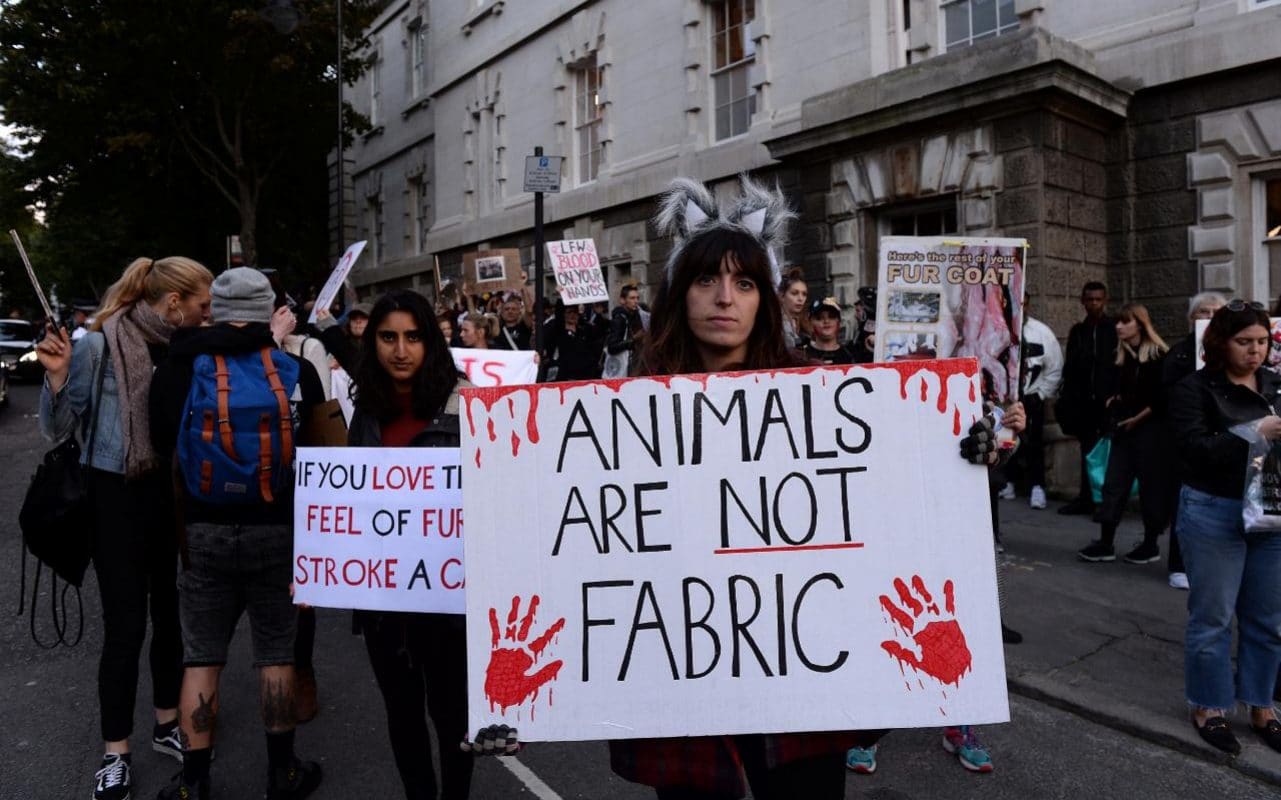
    Winning over luxury’s hottest brand was a coup for animal-rights activists who had been targeting specific companies for almost a decade via a mix of behind-the-scenes talk and public protest.

    In July 2017, more than 20 animal rights activists heckled Michael Kors during a speech, while in September 2017, Burberry’s London Fashion Week show was disrupted by about 250 anti-fur protesters.

    Michael Kors agreed to ban fur in December, Burberry last month.

    The rise of social media has provided the general public with a direct line of communication to companies and a platform for opinions and protest, making it harder for brands to ignore targeted activism.

    It’s also given animal rights organisations a platform for mobilising consumers into action.

    The global fur industry is fighting back, launching its own campaign making the case for fur as a natural, sustainable product that is better for the environment than alternatives, which are often made from plastic.

    One recent campaign featured Fendi and Oscar de la Renta, among other brands.

    “Brands are under huge pressure to respond to social media and avoid any controversy,” says Mark Oaten, chief executive of the IFF.

    “Even in a five year period that has changed … the fear of reputational damage is increased at the moment.”

    Studies show activism is impacting purchasing decisions.

    Prior to announcing its fur-free policy last June, Yoox Net-a-Porter surveyed 24,000 customers: 72 percent said social or environmental considerations drove their purchasing decisions at least some of the time, while 58 percent said having more information about the ethics and sustainability of a product would influence their shopping choices.

    Indeed, the idea of what luxury means to consumers today has evolved.

    “It’s become synonymous with social responsibility and innovation,” said PJ Smith, fashion director at the Humane Society US.

    “Companies that want to position themselves as corporate social responsibility leaders are seeing the marketing potential of going fur free, especially with new luxury consumers.”

    For a brand like Michael Kors or Burberry, going fur free won’t have much impact on the bottom line, while providing a marketing boost.

    For DVF, fur was “a very minimal percentage” of the overall business, said Campos.

    “It wasn’t something we relied on heavily at all,” she said. “It made sense for us to walk away from it in total.”

    Similarly, Gucci’s decision to bet on animal rights activism wasn’t much of a trade-off, as the brand sold only €10 million ($12 million) in fur products last year, less than 0.2 percent of revenue.

    Gucci’s Instagram post announcing the news was among the brand’s top performing posts at the time of the announcement, amassing 179,524 likes.

    Even brands that still use fur are acknowledging shifting attitudes.

    Fendi, which started as a furrier in 1925, rebranded its Couture Week show this past July as haute couture, rather than the haute fourrure description it used in recent seasons.

    And while fur was still present in the label’s Spring 2019 collection, it was less prominent than in past seasons.

    Prada, too, has been decreasing its use of fur.

    Recently the brand has come under pressure as a result of a targeted campaign spearheaded by the Fur Free Alliance, a coalition of 40 animal rights groups.

    According to the company, thousands of e-mails demanding it bans animal fur have been sent to the Prada Group and personal addresses of employees.

    However, the company has not announced plans to stop using fur.

    “We believe it is important to stress that all the advertising campaigns of the Group’s brands, together with the fashion shows and displays in the shop windows, have not been presenting these products for some time, in order to discourage demand from consumers,” the Italian house said in a statement.
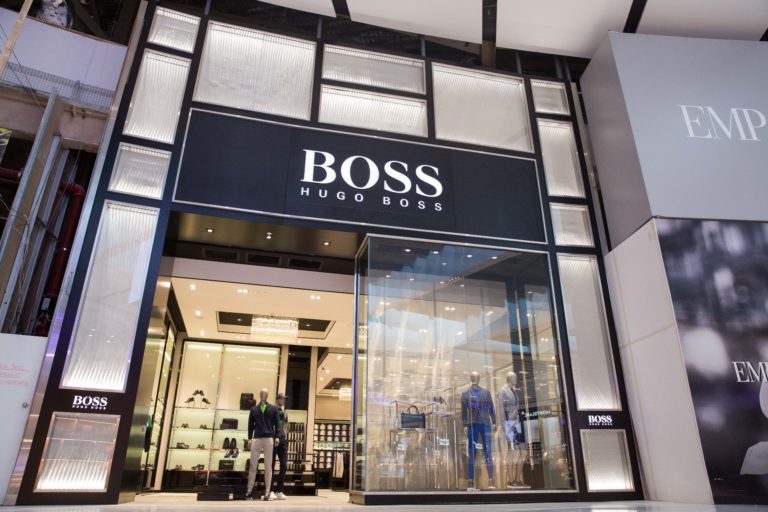
  • Hugo Boss Hong Kong shines the brightest growth

    Hugo Boss Hong Kong shines the brightest growth

    Hong Kong provided German fashion group Hugo Boss with its strongest market growth terms in the second quarter

    Sales in Hong Kong and Macau were not disclosed, but the company described growth as being in the double-digits. Sales in Mainland China rose 8 per cent, overshadowed slightly by Europe, where Hugo Boss enjoyed 9 per cent growth, proving that its strategic brand repositioning to focus on Hugo and Boss is starting to pay dividends. Sales also rose in Japan.

    Globally, Hugo Boss experienced a 6 per cent lift in sales in the second quarter, to €653 million with same-store sales up 5 per cent. Included in that was a 47 per cent surge in online revenue.

    “Our strategic realignment is taking effect. We are right on track,” said CEO Mark Langer.

    “The sales growth in the second quarter speaks for itself: we achieved almost double-digit growth in Europe and were also able to continue our recovery in the challenging German market. Our collections are very well received at home and abroad. This is reflected both in the positive feedback from our wholesale partners and in the robust momentum of our retail business. The performance of our online store is particularly encouraging.”

    For the first half-year, currency-adjusted sales growth reached 5 per cent and earnings reached €205 million, unchanged from the same period last year.

    As part of its new brand strategy, the company has opened more new Boss stores in Singapore, London and Munich, featuring a new ambiance and a variety of digital services.

    The first new Hugo store concept opened in Amsterdam at the beginning of June, featuring unconventional fittings and firmly integrated social-media offers, targeting fashion-forward customers. More will follow in selected European cities this year, including Paris and London.

  • Hugo Boss Men Vietnam introduces new concept

    Hugo Boss Men Vietnam introduces new concept

    Hugo Boss Vietnam has opened its first standalone store for men – Hugo – at Vincom Ba Trieu, Hanoi.

    Located at the front of the Vincom shopping centre, the 100sqm store displays basic items from the brand’s business and casual collections, along with Hugo’s Spring-Summer 2018 range.

    According to insider, Vietnam is the first market to get this new concept, with Singapore to follow in September.