Tag: ikea

  • IKEA, A.O. Smith and Moen Reshape China Footprints as Direct Retail Retreats

    IKEA, A.O. Smith and Moen Reshape China Footprints as Direct Retail Retreats

    IKEA China, water-heating brand A.O. Smith, and Fortune Brands, the parent company of Moen, have carried out sweeping operational shifts across China in 2026. IKEA announced in January that it would close seven shopping malls to focus on urban small formats, A.O. Smith agreed in late October to transfer an 81 per cent controlling stake in its local business, and Moen confirmed in early November that it will exit regional commercial operations.

    The moves dismantle traditional consumer-facing retail setups across three distinct home improvement sectors. A.O. Smith’s transaction with private equity firm CPE Yuanfeng carries a 400 million US dollar valuation, while Moen’s parent Fortune Brands is winding down local commercial sales desks through 2027.

    Multinational suppliers are moving away from capital-heavy suburban flagships and company-run showrooms to curb direct commercial overhead. Operators are shifting toward neighborhood boutique stores, long-term brand licensing, or converting mainland production sites entirely into export back offices.

    IKEA Shrinks Store Formats and Accelerates Digital Pilots

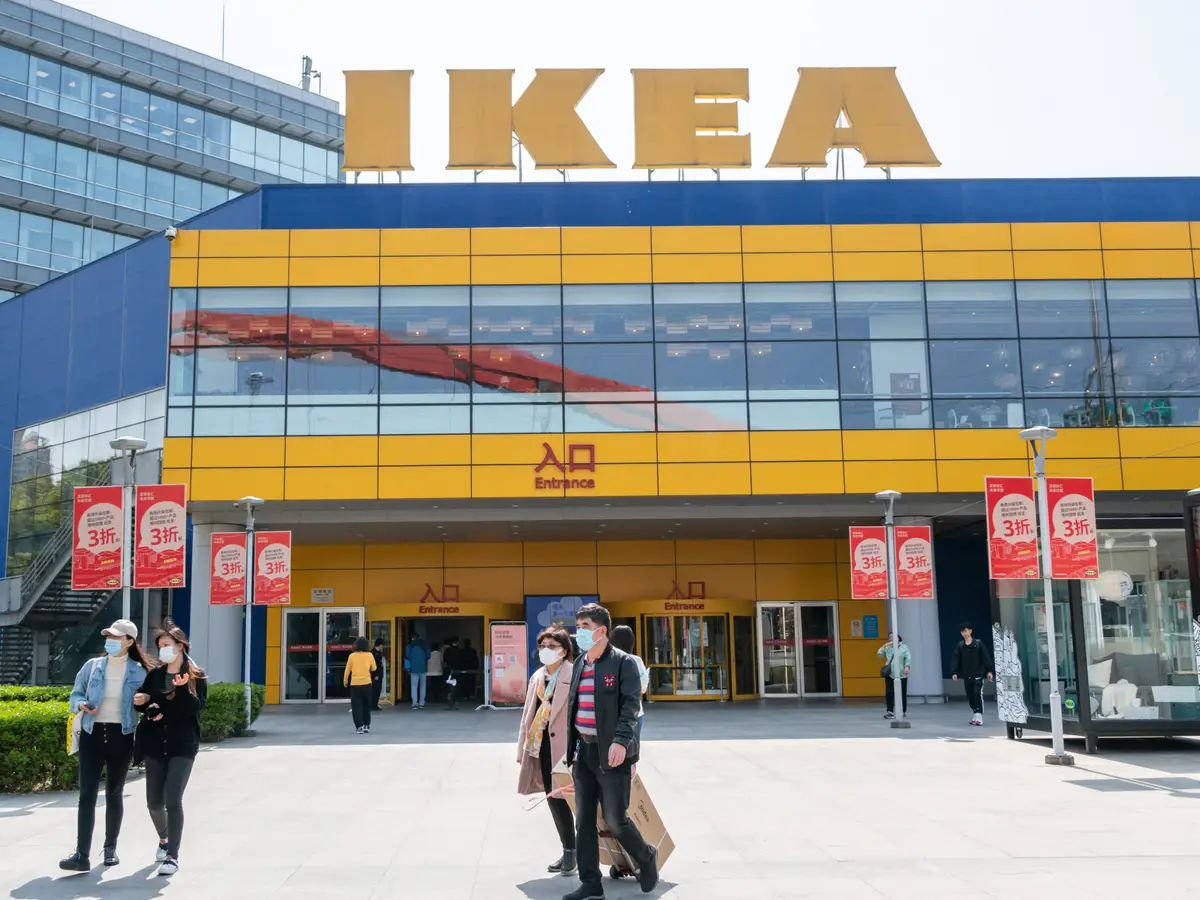
    IKEA dismantled part of its traditional suburban destination model in January 2026, closing large retail properties including sites in Baoshan, Shanghai and Panyu, Guangzhou. The Swedish furniture group is replacing them with urban small-format stores ranging between 1,500 and 4,000 square meters.

    The company opened four small-format outlets during the 2026 fiscal year in Dongguan, Changying, Changping, and Tongzhou in Beijing. These downsized urban formats generated roughly 7 million visits, while IKEA’s digital sales reached 29.7 per cent of total China revenue in fiscal 2026.

    Online expansion has supported the network reduction. IKEA established flagship digital channels on Tmall in 2020, opened an official storefront on JD.com in August 2025, and tested an instant retail delivery network through JD.com across nine cities in January 2026. Subsequent rollouts included a Taobao flash shopping trial in July 2026 and a live-commerce storefront on Douyin in October 2026, paired with its proprietary website and WeChat mini-programs.

    Fortune Brands Cuts Asian Sales to Feed North American Supply

    Fortune Brands confirmed an internal directive in early November 2026 to shutter local commercial selling operations for its Moen plumbing and fittings brand across Asia. The group will terminate most of its Asian regional sales and marketing jobs by the end of the second quarter of 2027.

    Remaining commercial cuts will finish by the end of 2027. The brand owner will not close its regional industrial base, choosing instead to retain its manufacturing and logistics facility in Changshu, its research and development centre in Guangzhou, and its regional procurement divisions.

    Those operational assets will shift exclusively to supplying products for Moen’s core North American market. Fortune Brands reported group sales of 1.1137 billion US dollars during the third quarter of 2026, down 3.1 per cent year-on-year, or 2.4 per cent lower when stripping out the Chinese market, prompting headquarters to eliminate low-margin Asian retail overhead.

    A.O. Smith Converts Direct Sales to Private Equity Licensing

    Water-heating and appliance manufacturer A.O. Smith took a separate path to strip out operating risk, agreeing on October 27 to sell 81 per cent of its China business to private equity firm CPE Yuanfeng for 400 million US dollars. Including the net present value of long-term brand licensing, the total valuation tops 500 million US dollars.

    Headquarters retreated after successive sales contractions. Revenue from A.O. Smith’s China operations slid 12.9 per cent year-on-year in 2025 to 690 million US dollars, dropping its contribution to total group turnover down to 18 per cent. Local-currency sales in the Chinese market fell a further 17 per cent in the third quarter of 2026.

    The Shift to Refurbishment and Maintenance Operations

    The simultaneous retreats expose how the end of China’s residential construction boom broke the economics of traditional home retail. Suburban big-box stores and company-owned showroom networks relied on new homeowners buying complete packages of plumbing, water heaters and flat-pack furniture. Today, residential property demand centers on partial renovations, product replacements and aging apartment upgrades.

    Operating single large suburban warehouses carrying high floor-space lease costs makes little financial sense when consumer visits skew toward replacement parts and minor cosmetic changes. Running direct dealership tiers also leaves multinational headquarters exposed to regional receivables and inventory burdens that local buyout funds can manage more aggressively.

    Earlier earnings from global home appliance and fixture suppliers showed steady margin compression in mainland retail channels as domestic competitors captured entry-level and mid-tier renovation budgets. That margin erosion pushed boards to choose between funding complex store overhauls or transferring direct retail execution to domestic distributors.

    The next phase of the transition rests on network execution. IKEA plans to open more than 10 additional small-format urban stores across Beijing and Shenzhen over the next two years, while A.O. Smith and CPE Yuanfeng must resolve distributor terms ahead of their planned mid-2027 closing date.

  • Ikea Thailand Targets 2029 for Relocated Phuket Store

    Ikea Thailand Targets 2029 for Relocated Phuket Store

    Ikea Thailand is prioritizing small-format stores across secondary provinces while partnering with Thailand Post to establish parcel collection points, curbing the high capital expenditure required for suburban big-box sites.

    E-commerce now generates 26 to 30 per cent of Ikea’s sales in Thailand, shifting consumer traffic patterns and forcing the furniture giant to rethink how it deploys physical space outside Bangkok.

    Large destination stores demand extensive land acquisition, substantial civil works, and protracted planning cycles. Leonie Hoskin, retail business manager of Ikea Thailand and Vietnam, confirmed that the Swedish home furnishing retailer views compact formats as low-capital beachheads in provincial markets where customer density does not yet justify an industrial-scale warehouse footprint, ahead of a planned store opening targeted within the next year or two.

    Sizing Down the Footprint

    The retailer currently operates three small-format locations across the country. These include a 700-square-metre showroom in Chiang Mai, an 800-square-metre unit in Khon Kaen, and a 2,000-square-metre outlet in Phuket.

    Those footprints stand in stark contrast to the brand’s established base around the capital. The medium-sized Sukhumvit city store covers 12,000 square metres, while the suburban flagship complexes at Megabangna in Samut Prakan and Bang Yai in Nonthaburi each measure 25,000 square metres.

    Compact footprints reduce opening overheads, but they remove the self-serve warehouse floor that defines standard Ikea operations. Without on-site storage, small stores function primarily as display galleries and planning studios, requiring continuous replenishment and regional parcel fulfillment to complete sales.

    Fulfillment Pressures and Postal Partnerships

    Operating furniture showrooms without inventory reserves exposes retailers to higher last-mile delivery costs. Bulky home goods restrict carrier options, raise parcel handling fees, and increase merchandise transit damage.

    To protect margins, the company is preparing a distribution framework with state-owned carrier Thailand Post. Under the arrangement, customers can collect parcels from postal pick-up points rather than paying for direct home delivery, shifting the final stage of freight expenses off the retailer’s balance sheet.

    Physical locations remain essential for customer acquisition, even as digital transactions approach one-third of total revenue. Shoppers consistently inspect materials, confirm dimensions, and test colour palettes in showrooms before checking out online, turning local branches into customer service anchors rather than cash-and-carry points.

    Phuket Expansion and Capital Allocation

    In tourist-heavy Phuket, where Ikea has traded for roughly a decade from its 2,000-square-metre base, the brand has decided that the small format has reached its limit. Hoskin stated the company wants to relocate the branch into a standalone facility of 10,000 to 12,000 square metres.

    “We are looking to relocate the Phuket branch into a space of 10,000 to 12,000 sq m,”

    she said.

    The southern relocation is penciled in for around 2029, reflecting the long gestation periods of regional real estate projects. In the near term, management intends to open another outlet within one to two years, though site locations have not been disclosed.

    Balancing Provincial Reach Against Bangkok Assets

    Across Southeast Asia, home furnishing operators face escalating construction costs and shifting lease dynamics. The traditional model, building massive 25,000-square-metre stores on city fringes, locks up capital for years and relies on consumers owning vehicles capable of hauling flat-pack boxes. By relying on smaller showroom formats, Ikea cuts pre-opening cash burn and tests consumer appetite in provincial hubs before committing to heavy land investments.

    Yet stripping warehouses out of retail units transfers commercial risk directly into the supply chain. If third-party logistics networks encounter delays or mishandle fragile stock, delivery penalties and return rates quickly consume the rent savings gained from downsized floorplates. Commercial success now rests on whether Thailand Post’s network can process heavy parcels at acceptable service levels.

    The company also holds an undeveloped land parcel in Rangsit, north of Bangkok. That plot offers the option for a third full-sized metropolitan flagship or a consolidated national fulfillment hub, though management expects any major development there to remain several years away.

  • Ikea Opens Douyin Store in China with 6,500 Products Across 301 Cities

    Ikea Opens Douyin Store in China with 6,500 Products Across 301 Cities

    Ikea opened an official flagship store on ByteDance video platform Douyin on 11 October 2026, offering more than 6,500 home furnishing products across 301 Chinese cities.

    The catalogue covers 179 merchandise categories and links video discovery directly to fulfillment across the mainland.

    Ingka Group, which operates Ikea retail across 32 markets and accounts for 87 per cent of global Ikea retail sales, runs the digital shopfront. The operation runs alongside the retailer’s physical warehouse stores, proprietary mobile app, website, and WeChat mini-programs in China. Orders placed inside Douyin feed into Ikea’s existing national logistics network to handle deliveries across the 301 supported municipalities.

    Channel Shift to Video Commerce

    Global brands in China face a clear migration of shopper traffic away from traditional search-based marketplaces toward algorithmic feed platforms. Douyin has turned short-form video and livestreaming into primary sales drivers for consumer goods, pulling market share from established online storefronts. For furniture retailers, content-driven selling shortens the distance between lifestyle inspiration and immediate checkout.

    Selling flat-pack furniture through social video carries distinct operational demands. Bulky freight logistics and higher assembly-related return rates punish merchants that treat short-video channels as pure promotional feeds. Ikea is betting its localised delivery footprint can absorb the volume without eroding margins through fulfillment delays.

    Lessons for Global Retail Networks

    Parent company Ingka Group intends to export operational insights gathered from Douyin to its broader digital operations. The retailer has introduced digital planning formats such as Ikea Kreativ and artificial intelligence tools for customer assistance in other regions. Douyin provides high-frequency consumer feedback on pricing, product bundles, and live visual merchandising that purely transactional websites rarely generate.

    “Retail is increasingly about being present wherever and whenever people want to meet us, while making those experiences feel like one connected IKEA. What is particularly interesting about new platforms like Douyin E-commerce is the opportunity to learn. They help us understand how inspiration, interaction and commerce are coming closer together, and what that could mean for how we continue to develop the IKEA omnichannel experience.”

    Parag Parekh, chief digital officer at Ikea Retail within Ingka Group, confirmed the company will funnel feedback from Chinese shoppers into digital development programs across other territories.

    Building the Multi-Channel Network

    The Douyin store launch follows a multi-year effort by Ikea China to dismantle its historical reliance on destination suburban big-box stores. The Swedish retailer first opened its official Tmall storefront in 2020 before rolling out bespoke WeChat shopping mini-programs and urban small-format locations across tier-one cities.

    Lydia Song, Ikea China acting chief executive officer, president, and chief sustainability officer, oversees the integration of the video platform into the brand’s local store fleet. The retailer will monitor conversion rates and city-level delivery performance ahead of the upcoming fourth-quarter promotional calendar in China.

  • Ikea Installs Miniature Home Exhibits Across Melbourne, Beijing and Chengdu

    Ikea Installs Miniature Home Exhibits Across Melbourne, Beijing and Chengdu

    Ikea has installed miniature home displays across stores in Melbourne, Beijing and Chengdu to promote compact, affordable living.

    Stockholm artist Christopher Nordstrom built the three displays at a one-to-12 scale. They serve as the Swedish retailer’s latest visual merchandising test in the Asia-Pacific region.

    Scale Models for Compact Urban Spaces

    Each model tailors its interior details to local culture. In Melbourne, the display features a bookcase filled with novels, art prints and nods to local sports.

    Storage and decluttering for smaller homes sit at the centre of the push. “When you build in miniature, you cannot include everything,” Nordstrom said. “Every object has to earn its place.”

    Ingka Group, Ikea’s primary global operator, is steering marketing funds toward entry-level home organisation. Urban shoppers face increasingly tight quarters across major metro markets.

    Shifting Formats in Asia-Pacific

    This rollout ties into broader footprint adjustments across the region. Ikea continues to balance compact city-centre locations against traditional suburban big-box warehouses.

    Regional home furnishing chains are leaning on interactive features to lift foot traffic and basket sizes. Discretionary spending has seen several volatile quarters.

    Next, Ingka Group will track customer engagement around the three micro-exhibits across its Australian and Chinese locations.

  • Ikea Fuels Indian Expansion with $2.2B Investment by 2030

    Ikea Fuels Indian Expansion with $2.2B Investment by 2030

    Swedish furniture giant, Ikea, anticipates a substantial increase in its investment in India, aiming to reach a total of US$2.2 billion by 2030 as part of its aggressive expansion strategy.

    Doubling Investments

    Patrik Antoni, the CEO of Ikea India, revealed that the company has already surpassed the initial commitment of $1.1 billion made in 2013 post the approval to establish single-brand retail outlets in India. He added, “We will likely double this investment in future. By 2030, we should have at least accomplished that.”

    The additional investment is set to be utilized to facilitate the expansion of Ikea’s physical store footprint and develop mixed-use retail centers. Further, it will support increased local sourcing, renewable energy ventures, and advanced technology capabilities.

    Future Expansion Plans

    The upcoming major projects include the inauguration of a large-format store in Noida next year, with another planned in Gurgaon for 2028. In tandem with its retail growth, Ikea also plans to enhance local manufacturing to bolster domestic sales and exports. Antoni concluded by stating, “We plan to produce more and also increase our exports. Thus, we hope to do a lot more.”

    Questions & Answers

    What is Ikea’s investment plan for India by 2030?
    Ikea plans to more than double its investment in India to reach US$2.2 billion by 2030.

    What will the additional investment be used for?
    The additional investment will be used to expand Ikea’s physical store network, develop mixed-use retail centers, increase local sourcing, fund renewable energy projects, and enhance technology capabilities.

    What are Ikea’s future expansion plans in India?
    The company plans to open a large-format store in Noida next year, followed by another in Gurgaon in 2028. It also plans to increase local manufacturing to support domestic sales and exports.

  • Ikea’s Strategic Shift: Smaller Stores Propel China Expansion

    Ikea’s Strategic Shift: Smaller Stores Propel China Expansion

    Swedish furniture giant, Ikea, is intensifying its expansion strategy in China by launching a more compact store model in the eastern part of Beijing. This move is part of the company’s shift from its traditional large-scale stores towards smaller and more accessible locations.

    The New Small-Format Store

    The new Ikea outlet is managed by the Ingka Group and situated in Beijing’s Tongzhou District. It spans over an area of approximately 1,500 square meters, quite a downsize from the standard Ikea store which generally covers around 30,000 square meters. Despite its smaller size, the store still offers an impressive assortment of about 3,000 products.

    Ikea’s latest outlet puts more emphasis on services like home planning, rather than maintaining a large-scale inventory on-site. This innovative approach marks Ikea’s fifth presence in Beijing, and its inaugural location in the city’s eastern region. It also signifies a broader shift in the way the company is tackling the market.

    Shifting from Megastores to Compact, Accessible Locations

    Instead of depending on large-scale destination stores, Ikea is pivoting towards smaller, more accessible locations that are in closer proximity to residential areas.

    Javier Quiñones, the global commercial manager at Ingka Group, commented on this strategic shift. He noted, “The one-size-fits-all approach no longer applies. This makes our current expansion more relevant. We are getting closer to more people than ever, and continually learning how to fine-tune our offerings and presence.”

    This compact store model has already been successfully piloted in Shenzhen, with plans to introduce similar outlets across other major cities.

    Ikea’s Global Expansion

    So far in the current year, Ikea has inaugurated 21 new outlets worldwide, with sizes ranging from a few hundred square meters to over 4,000 square meters. These new outlets are spread across Europe, North America, and Asia. The company also plans to unveil additional locations in forthcoming months.

    Questions & Answers

    What is the size of the new Ikea store in eastern Beijing?

    The new Ikea store in eastern Beijing covers approximately 1,500 square meters.

    What differentiates the new Ikea store from the traditional ones?

    The new Ikea store emphasizes more on services like home planning rather than maintaining a large on-site inventory, and it’s located closer to residential areas.

    How many new Ikea locations have opened globally this year?

    Ikea has opened 21 new locations globally this year.

  • Ikea’s Savory Surprise: Meatball-Flavored Chupa Chups Coming to Stores Worldwide

    Ikea’s Savory Surprise: Meatball-Flavored Chupa Chups Coming to Stores Worldwide

    Ingka Group has collaborated with confectionery brand Chupa Chups to bring a novel, meatball-inspired treat to Ikea stores across the globe this June. The peculiar confection, which was initially teased as an April Fools’ Day prank, garnered substantial customer interest, promoting the companies to make the concept a reality.

    From April Fool’s Joke to Reality

    On April 1st, the idea of a meatball-flavored lollipop was pitched, amusing customers and sparking curiosity. The response was so positive that the companies decided to turn the playful concept into a limited-edition treat. They plan to produce and distribute one million of these unique lollipops at numerous Ikea locations worldwide.

    The Flavor Inspiration

    The development of this product is in the hands of Chupa Chups. The confection is designed to mimic the taste of Ikea’s renowned Swedish meatballs paired with lingonberry. Rather than serving as a retail item, the lollipop is seen as an engaging extension of Ikea’s food offerings, intending to enhance the customer’s in-store experience.

    Javier Quiñones, commercial manager at Ingka Group, shared his enthusiasm about their partnership with Chupa Chups. He expressed that the lollipop is a delightful interpretation of their original idea and a unique way of celebrating their passion for food. He also noted the power of humor, remarking that even a simple joke could evolve into a tangible product and engage people in unexpected ways.

    Availability

    These intriguing lollipops won’t be up for sale. Instead, Ikea plans to treat customers by offering them as complimentary samples in stores throughout June.

    Questions & Answers

    What is the origin of the meatball-inspired lollipop?
    The concept started as an April Fool’s joke but due to the strong response from customers, the companies decided to make it a reality.

    What flavor will the lollipop have?
    The lollipop, developed by Chupa Chups, is intended to mimic the taste of Ikea’s popular Swedish meatballs coupled with lingonberry.

    Will these lollipops be available for purchase?
    No, they will not be available for sale. The lollipops will be given out as free samples to customers visiting Ikea stores in June.

  • End of an Era: Ikea Titan Martin Lindstrom Bids Farewell After 36-Year Tenure

    End of an Era: Ikea Titan Martin Lindstrom Bids Farewell After 36-Year Tenure

    Martin Lindstrom, the current CEO of Ikea under the DFI Retail Group, has announced his decision to step down from his position by the end of May. This move marks the end of his impressive 36-year tenure at the world-renowned Swedish furniture retailer.

    Career Overview

    Lindstrom’s journey with Ikea commenced in 1993, when he joined the organization as an operations manager in Poland. His leadership skills soon led him to helm the company’s Hong Kong operations, a role he effectively performed for four years, beginning in 1996.

    Subsequently, Lindstrom relocated to Taiwan where he held the position of deputy manager from 1999 to 2000. His career trajectory then saw him dedicating seven years of service as a franchise development manager. In this capacity, he played an instrumental role in spearheading the company’s expansion into new Asian markets.

    In 2013, Lindstrom ascended to the position of CEO of Ikea under the DFI Retail Group. Here, he was responsible for supervising the franchised operations across Taiwan, Hong Kong, and Indonesia.

    Parting Thoughts

    Reflecting on his departure, Lindstrom expressed that he believed it was the right time to move on and open the door for future opportunities. Throughout his tenure, he stated that the foundational concept behind Ikea was what kept him intrigued and dedicated.

    Lindstrom emphasized that the aim of Ikea’s founder, Ingvar Kamprad, was to enhance daily life for a large number of people. Being a part of a brand and a corporation with such an inspiring mission, according to Lindstrom, was indeed a privilege.

    In an homage to the Ikea founder, Lindstrom quoted, “Most things remain to be done. Glorious future.”

    Questions & Answers

    When did Martin Lindstrom start working for Ikea?
    Martin Lindstrom began his journey at Ikea in 1993, starting as an operations manager in Poland.

    What positions did Lindstrom hold during his tenure at Ikea?
    Lindstrom held several key positions during his career at Ikea. He started as an operations manager in Poland, later headed the company’s Hong Kong operations, served as a deputy manager in Taiwan, and spent seven years as a franchise development manager. His most recent role was the CEO of Ikea under the DFI Retail Group.

    What was Lindstrom’s reason for leaving Ikea?
    Lindstrom felt it was the appropriate time to step forward, make way for fresh opportunities, and let the next phase unfold.

  • IKEA Revolutionizes Green Logistics with Autonomous Electric Trucks in China

    IKEA Revolutionizes Green Logistics with Autonomous Electric Trucks in China

    Ikea China has recently introduced electric autonomous trucks into its Shanghai logistics network, following the successful completion of a preliminary 35,000-kilometer trial program. The trial program, initiated in April of 2024, has since evolved into daily utilization for customer deliveries, creating a connection between the Ikea Xuhui store and the Shanghai distribution center.

    Autonomous Trucks in Action

    The electric autonomous trucks are tasked with the transportation of goods along a 40-kilometer course. The pilot phase of this initiative spanned a ten-month period, throughout which the vehicles were responsible for the successful delivery of over a thousand shipments. Now, having transitioned to full-scale operations, the primary objectives are to enhance logistics efficiency and minimize carbon emissions within the supply chain.

    Impact of Autonomous Software

    The implementation of autonomous software has had a profound impact on the optimization of routing and timing, thereby reducing the strain on Shanghai’s congested road networks caused by retail logistics. The transition to a fully electric, autonomous fleet aligns directly with Ikea’s ongoing global objective to become a climate-positive entity by the year 2030. This is achieved by curtailing energy consumption and reducing tailpipe emissions.

    Logistics Network Integration

    Fredrik Axén, a representative from Ikea China, stated the successful trial affirms the feasibility of integrating autonomous technology into their pre-existing logistics network. He emphasized that this progress enables Ikea to enhance its delivery capacity while simultaneously aligning their transport operations with their broader objectives to lower emissions.

    Questions & Answers

    What was the purpose of integrating electric autonomous trucks into Ikea China’s logistics network?
    The primary aim was to increase logistics efficiency and decrease carbon emissions within the supply chain.

    What was the outcome of the 35,000-kilometer trial program?
    The pilot program was successful, leading to the daily use of these electric autonomous trucks for customer deliveries between the Ikea Xuhui store and the Shanghai distribution center.

    How does this integration align with Ikea’s global goals?
    The successful integration of autonomous technology into their logistics network supports Ikea’s global goal to become climate-positive by 2030, by reducing energy consumption and tailpipe emissions.

  • Ikea Japan Bids Farewell to Harajuku and Shinjuku Outlets: A New Chapter in Urban Retail Strategy

    Ikea Japan Bids Farewell to Harajuku and Shinjuku Outlets: A New Chapter in Urban Retail Strategy

    IKEA Japan is set to shut down its Harajuku and Shinjuku city-format stores later this month. This brings an end to the retailer’s brief yet notable venture in two of Tokyo’s bustling shopping districts.

    Details of the Store Closures

    The renowned Swedish home furnishings group has confirmed that operations at both locations will cease on February 8, with doors shutting at 6 pm. This decision is part of a larger examination of IKEA Japan’s urban store network and its multichannel strategy.

    The Harajuku store was inaugurated in 2020, followed by the Shinjuku store in 2021. IKEA’s objective was to engage with younger, urban consumers by introducing smaller-format stores.

    IKEA’s Future Plans

    Despite the closures, IKEA has expressed plans to further solidify its presence in central Tokyo. The IKEA Shibuya will serve as the main city store, supplemented by larger suburban stores and its digital platform.

    In addition to these changes, IKEA also declared last month that it plans to close seven stores in China as of February 2. The list includes one suburban Shanghai location, another in Guangzhou, and multiple others in the second-tier Chinese cities of Nantong, Xuzhou, and Harbin.

    Questions & Answers

    When are the IKEA stores in Harajuku and Shinjuku closing?
    The stores are scheduled to close on February 8, with operations ending at 6 pm.

    What is the reason behind IKEA’s decision to close these stores?
    The decision to close the Harajuku and Shinjuku stores is part of a comprehensive review of IKEA Japan’s urban store network and omnichannel strategy.

    What are IKEA’s plans for its presence in Tokyo following these closures?
    IKEA plans to enhance its presence in central Tokyo, with the IKEA Shibuya serving as the main city store. This will be supplemented by larger suburban stores and the company’s online platform.

  • Ikea Eyes Massive Expansion in India: Aims for over $2.2 Billion Investment and Online Presence Boost

    Ikea Eyes Massive Expansion in India: Aims for over $2.2 Billion Investment and Online Presence Boost

    Swedish furniture behemoth Ikea is set to intensify its commitment to India, with plans to double its current investment to over 200 billion rupees, or approximately US$2.2 billion, within the next five years.

    Expanding Physical and Online Footprint

    In order to make the most of this investment, Ikea has aspirations to significantly increase its in-person retail locations, from six to 30 stores. Additionally, the company has plans to boost its annual sales in India, aiming to quadruple the current figure, which stood at $204 million as of August in the previous year.

    As an integral part of its expansion strategy, Ikea will prioritize the establishment of an online presence before it launches new brick-and-mortar stores in untapped cities. The firm is also striving to increase the proportion of online sales from the existing 30% of total sales to 40%.

    The company is set to begin accepting online orders in four cities where it currently does not have a physical presence, including Chennai and Coimbatore in the state of Tamil Nadu.

    Previous Successes and Future Plans

    Ikea’s inaugural Indian store was launched in 2018 in the city of Hyderabad. Since then, the company has opened three outlets in Navi Mumbai and Bengaluru and has added two small-format locations in Mumbai and New Delhi.

    Looking ahead, Ikea is planning to double its production for domestic stores and its exports, with the aim of reaching a value of around $930 million.

    Patrik Antoni, CEO of Ikea India, expresses strong faith in the potential of the Indian market, despite it not being a large Ikea market yet. He views India as a future central player in Ikea’s global market.

    Despite the decision by the former US President Donald Trump to double tariffs on imports from India up to 50%, Antoni maintains that this move has had minimal impact on Ikea’s Indian suppliers, as the brand primarily exports to other markets.

    Questions & Answers

    What is Ikea’s investment plan for India over the next five years?
    Ikea plans to double its current investment in India to over 200 billion rupees, or approximately US$2.2 billion, within the next five years.

    What is Ikea’s strategy for expanding in India?
    Ikea is planning to increase its number of physical stores from six to 30 and aims to quadruple its annual sales. The company also plans to boost its online presence before launching brick-and-mortar stores in new cities.

    What effect has the increase in tariffs on imports from India had on Ikea?
    According to Ikea India’s CEO, Patrik Antoni, the doubling of tariffs on imports from India to 50% has had little effect on Ikea’s Indian suppliers, as the company primarily exports to other markets.

  • Ikea to Close Seven Stores in China Amid Retail Struggles, Focuses on Online Growth and Precise Market Cultivation

    Ikea to Close Seven Stores in China Amid Retail Struggles, Focuses on Online Growth and Precise Market Cultivation

    Swedish furniture giant, Ikea, has announced that it will be shutting down seven of its outlets in China, effective from February 2. The decision was revealed in a statement issued by the company on Wednesday.

    The targeted locations for the shutdown include a branch in Shanghai’s suburbs, another in Guangzhou, as well as several others scattered across secondary cities such as Nantong, Xuzhou, and Harbin.

    Retail businesses, in general, have been grappling with sales growth in China, as consumer confidence continues to wane, stemming from a long-standing property crisis, job security worries, and stagnant wages.

    Presently, Ikea has approximately 40 stores operating on the Chinese mainland. The company disclosed in its statement that five new stores of varying sizes have commenced operations recently.

    China, being the world’s second-largest economy, contributes approximately 3.5% to Ikea’s global sales. However, an increasing proportion of these sales originates from online flagship stores. To further nurture this online sales growth, Ikea inaugurated a new store on JD in August of the previous year.

    The company stated that it will be shifting its strategy from large-scale expansion to precise cultivation, focusing on major markets such as Beijing and Shenzhen. This strategy includes the launch of over ten smaller stores within the next two years. The company also stated that it anticipates new store openings in the cities of Dongguan and Beijing during the first half of 2026.

    Questions & Answers

    Which Ikea stores in China are slated for closure?
    Ikea plans to close stores in suburban Shanghai, Guangzhou, and several other locations in secondary cities such as Nantong, Xuzhou, and Harbin.

    What proportion of Ikea’s global sales does China account for?
    China accounts for about 3.5% of Ikea’s global sales.

    What is Ikea’s strategy going forward in China?
    Ikea plans to shift from large-scale expansion to precise cultivation, focusing on major markets like Beijing and Shenzhen, and opening more than ten small stores over the next two years. There are also plans for new store openings in Dongguan and Beijing in the first half of 2026.

  • Ikea Expands In Philippines With Strategic Ayala Malls Collaboration: Design Services & Online Pick-up At New Outlet

    Ikea Expands In Philippines With Strategic Ayala Malls Collaboration: Design Services & Online Pick-up At New Outlet

    Ikea is expanding its presence in the Philippines by inaugurating its inaugural Plan and Order Shop through a strategic collaboration with Ayala Malls. This initiative aims to provide more convenient access to northern Metro Manila residents.

    The 500-square-meter store, situated in Ayala Malls TriNoma in Quezon City, will avail customers the opportunity to purchase selected items in-store and also function as a complimentary pick-up point for online orders.

    Ricardo Pinheiro, Ikea Philippines’ Country Retail Manager, expressed his elation about being able to serve more Filipinos, especially those in northern Manila. He noted the partnership between Ikea and Ayala Malls as an effective means to create spaces that are not only accessible but also convenient and inspiring.

    Adding to its unique features, the new store will house a design service. Here, customers can seek expert assistance in planning their home interiors from a team of 14 Ikea employees, each trained in interior design.

    Pinheiro highlighted that the new Plan and Order Shop at TriNoma encapsulates Ikea’s democratic design philosophy. He mentioned that it provides a convenient option for those residing in northern Metro Manila. He also acknowledged the strategic location of TriNoma as being in line with Ikea’s sustainability philosophy.

    He emphasized, “TriNoma’s strategic location aligns with our sustainable philosophy in the most practical sense—it saves our customers gas, time, and effort while still giving access to Ikea’s well-designed, affordable home solutions.”

    The TriNoma outlet, set to open its doors on October 23, marks Ikea’s second store in the country.

    Questions & Answers

    Where will the new Ikea Plan and Order Shop be located?
    The new Ikea Plan and Order Shop will be located at Ayala Malls TriNoma in Quezon City, northern Metro Manila, Philippines.

    What unique features will the new Ikea store offer?
    The new Ikea store will feature a design service where customers can work with Ikea employees trained in interior design to plan their home interiors. The store will also serve as a free collection point for online orders.

    When is the Ikea TriNoma outlet slated to open?
    The Ikea TriNoma outlet is scheduled to open on October 23.

  • Ikea Acquires Us Tech Firm Locus To Reinforce Delivery Services And Optimize Online Shopping Experience

    Ikea Acquires Us Tech Firm Locus To Reinforce Delivery Services And Optimize Online Shopping Experience

    Swedish furniture giant Ikea has announced the acquisition of US-based logistics technology company, Locus. This strategic move is aimed at enhancing Ikea’s delivery services and facilitating a faster and more streamlined online shopping experience.

    The Strategic Acquisition

    The acquisition is part of a broader $2.2 billion strategic investment by the Ingka Group, the world’s largest Ikea franchisee, in the US market. In the highly competitive US retail sector, Ikea is up against major players like Wayfair and Walmart, while also grappling with increased costs due to higher import tariffs.

    While the specifics of the deal have not been made public by Ikea, Locus was valued at $300 million during its most recent investment round in 2021. Ikea’s decision to acquire Locus is projected to simplify its logistics framework and decrease delivery costs by an estimated 100 million euros ($117.41 million) globally each year.

    Utilizing Artificial Intelligence

    Locus employs artificial intelligence to optimize the grouping of orders and define routes that reduce time spent in traffic by delivery vehicles. This is a significant improvement over the current manual planning process carried out by Ikea employees, according to Parag Parekh, Chief Digital Officer at Ingka Group.

    In addition to delivering faster, Locus will also facilitate Ikea in providing customers with more delivery windows and options. Shoppers will also receive live updates on the location of their packages. Initially, Ikea plans to pilot this technology in the US and UK before implementing it worldwide.

    Improving the Customer Experience

    “Apart from the aspect of speed, the flexibility and the ability to track will significantly improve customer experience,” explained Parekh. As part of the agreement, Locus will continue operating independently and servicing clients beyond Ikea.

    Expansion in the US Market

    With a reputation for its large, blue suburban stores featuring an array of furniture in a maze-like layout, Ikea has been shifting its focus towards its online business and investing in smaller city-center stores to attract younger, urban shoppers.

    Online sales constituted 28% of Ikea’s total retail sales in the 2024 financial year, a significant increase from 11% in 2019. This strategic acquisition follows Ingka Investments’ purchase of a Manhattan building for $213 million, indicating a commitment to US expansion, despite higher furniture import tariffs.

    Questions & Answers

    What is Ikea’s aim with the acquisition of Locus?
    Ikea aims to enhance its delivery services and facilitate a faster, more efficient online shopping experience with the acquisition of Locus.

    How will Locus’ technology benefit Ikea’s operations?
    Locus’ artificial intelligence technology will allow Ikea to optimize the grouping of orders and define delivery routes, reducing delivery times and associated costs. It also enables Ikea to offer customers more delivery options and real-time tracking of their packages.

    What impact has the focus on online sales had on Ikea’s business?
    The focus on online sales has significantly boosted Ikea’s retail sales, accounting for 28% of total sales in the 2024 financial year, up from 11% in 2019.

  • Ikea Boosts E-commerce And Introduces Localized Store Formats In Ambitious Asian Expansion

    Ikea Boosts E-commerce And Introduces Localized Store Formats In Ambitious Asian Expansion

    In a strategic shift poised to reshape its footprint in Asia, IKEA has unveiled plans to enhance its e-commerce capabilities as part of a broader effort to adapt to the evolving retail landscape. With the pandemic forcing many consumers into digital shopping, the home furnishings giant recognizes that ease of access and streamlined purchasing options are key to engaging today’s customer.

    Expanding Online Reach in Asia

    The Swedish retail powerhouse announced it will invest significantly in bolstering its online platforms across various Asian markets. This ambitious initiative aims to cater to the increasing demand for online shopping, particularly in markets like China and India, where digital adoption has surged. By enhancing its website functionality and expanding delivery services, IKEA hopes to transform the way customers interact with the brand.

    It’s clear that IKEA isn’t just jumping into the online fray; it’s doing so with a sense of urgency and innovation. Imagine, for a moment, picking out your favorite sofa from the comfort of your own couch — a scenario that feels almost too good to be true for many shoppers.

    New Store Formats and Localized Offerings

    In tandem with its digital enhancements, IKEA is also looking to reimagine its physical presence in Asia. Plans are underway to launch a series of smaller store formats designed to penetrate urban centers where traditional mega-stores might not be feasible. These new locations will not only display a curated selection of products but also serve as community hubs for design consultations and workshops, fostering a deeper connection with local consumers.

    Additionally, IKEA plans to tailor its product lineup to meet the unique tastes and preferences of Asian consumers. This regional approach is expected to resonate well with shoppers who appreciate local influences in home decor, allowing IKEA to blend its global identity with regional flair.

    Sustainability at the Forefront

    IKEA’s commitment to sustainability will continue to guide its efforts in Asia. The company aims to enhance its circular business model, striving for products that are not only stylish but also environmentally friendly. Initiatives like recycling and sustainable sourcing are on the horizon, appealing to increasingly eco-conscious consumers who want to support brands with strong environmental ethics.

    As Asia’s retail landscape evolves, IKEA’s proactive strategies underline its determination to stay ahead of the curve. The combination of enhanced online shopping experiences and localized in-store formats paints a promising picture for the brand’s future in the region, inviting shoppers to rethink where, how, and what they purchase for their homes.

    Questions & Answers

    What are IKEA’s main objectives in enhancing its e-commerce capabilities in Asia?
    IKEA aims to provide a more accessible and streamlined shopping experience, responding to the growing demand for online retail, especially in fast-developing markets like China and India.

    How will new store formats impact IKEA’s presence in urban areas?
    The introduction of smaller store formats will allow IKEA to effectively penetrate densely populated urban centers, offering a curated product selection and serving as community hubs for consumers.

    What sustainability initiatives is IKEA pursuing as part of its expansion in Asia?
    IKEA is committed to enhancing its circular business model, focusing on environmentally friendly products and initiatives like recycling and sustainable sourcing to appeal to eco-conscious consumers.